Kategorie: WCJ

  • 🍾🧉🍹Dewi’s daily routine as a bartender (text, reading comprehension, A2)🍹🧉🍾

    • meeting guests and serving drinks in a five-star hotel

    Dewi works as a bartender in a five-star hotel. She usually starts work in the afternoon. When she arrives, she puts on her uniform and goes to the bar.

    First, Dewi checks the bar. She makes sure that the glasses are clean and that everything is in the right place. She checks the bottles and makes sure there are enough drinks. She also prepares ice, cuts fruit and prepares lemons and oranges.

    When the bar opens, Dewi welcomes the guests with a smile. She says hello and asks them what they would like to drink. She listens carefully and prepares their drinks.

    Dewi often talks to the guests while she works. Some guests ask about the drinks menu. Others want to know about local drinks. Sometimes, they ask Dewi to choose a drink for them. She gives simple advice and helps them choose.

    Dewi also talks to guests about their holiday, their day or places to visit. She remembers regular guests and often remembers what they like to drink. She is friendly and polite, but she also gives guests space when they want to relax.

    Sometimes, a guest has had too much to drink. Dewi stays calm and speaks to the guest politely. She may offer the guest some water and ask them to sit down. If necessary, she asks her manager for help. She always wants to keep the guest and other people safe.

    In the evening, the bar can be very busy. Dewi works quickly, but she stays calm and friendly. She keeps the bar clean and makes sure that the guests have good service.

    At the end of her shift, Dewi cleans the bar. She washes the glasses, checks the bottles and puts everything away. Then she changes her clothes and goes home.

    Dewi likes her job because she meets people from many different countries. She enjoys talking to guests and making them feel welcome.

    ____________________________

    Vocabulary:

    Word / PhraseSimple A1 definition
    reading comprehensionunderstanding what you read
    to serve a drinkto give a drink to a guest
    a bartendera person who works in a bar and makes drinks
    in the right placewhere something should be
    a bottlea container for drinks
    to make sureto check that something is OK
    to prepare a drinkto make a drink ready
    the drinks menua list of drinks in a bar
    to give adviceto tell someone what you think is good
    to chooseto say which thing you want
    a regular guesta guest who comes often
    to be politeto be nice and respectful to people
    to give somebody spaceto let someone be alone
    to relaxto rest and feel calm
    to stay calmto not become angry or worried
    to speak politelyto speak in a nice and respectful way
    to keep somebody safeto help someone stay safe
    a shiftthe time when you work
    to change clothesto take off your old clothes and put on other clothes
    to enjoy talkingto like talking to people
    to make somebody feel welcometo make someone feel happy and comfortable in a place

    ######################

    Match the words with the definitions

    1. a bartender
    2. to relax
    3. a regular guest
    4. to prepare a drink
    5. to stay calm
    6. a shift
    7. to give advice
    8. a bottle
    9. to serve a drink
    10. to choose
    11. to be polite
    12. the drinks menu
    13. to make sure
    14. to give somebody space
    15. in the right place
    16. to keep somebody safe
    17. reading comprehension
    18. to change clothes
    19. to speak politely
    20. to enjoy talking
    21. to make somebody feel welcome

    A. to help someone stay safe
    B. to like talking to people
    C. a person who works in a bar and makes drinks
    D. to check that something is OK
    E. a list of drinks in a bar
    F. to let someone be alone
    G. to take off your old clothes and put on other clothes
    H. a guest who comes often
    I. to make a drink ready
    J. where something should be
    K. to give a drink to a guest
    L. a container for drinks
    M. to say which thing you want
    N. to rest and feel calm
    O. the time when you work
    P. to speak in a nice and respectful way
    Q. understanding what you read
    R. to make someone feel happy and comfortable in a place
    S. to tell someone what you think is good
    T. to be nice and respectful to people
    U. to not become angry or worried

    ___________________________

    Answer:
    1-C, 2-N, 3-H, 4-I, 5-U, 6-O, 7-S, 8-L,
    9-K, 10-M, 11-T, 12-E, 13-D, 14-F, 15-J,
    16-A, 17-Q, 18-G, 19-P, 20-B, 21-R

    ###################

    Match the definitions with the words:

    1. to help someone stay safe
    2. to like talking to people
    3. a person who works in a bar and makes drinks
    4. to check that something is OK
    5. a list of drinks in a bar
    6. to let someone be alone
    7. to take off your old clothes and put on other clothes
    8. a guest who comes often
    9. to make a drink ready
    10. where something should be
    11. to give a drink to a guest
    12. a container for drinks
    13. to say which thing you want
    14. to rest and feel calm
    15. the time when you work
    16. to speak in a nice and respectful way
    17. understanding what you read
    18. to make someone feel happy and comfortable in a place
    19. to tell someone what you think is good
    20. to be nice and respectful to people
    21. to not become angry or worried

    A. to serve a drink
    B. a bartender
    C. in the right place
    D. a bottle
    E. to make sure
    F. to prepare a drink
    G. the drinks menu
    H. to give advice
    I. to choose
    J. a regular guest
    K. to be polite
    L. to give somebody space
    M. to relax
    N. to stay calm
    O. to speak politely
    P. to keep somebody safe
    Q. a shift
    R. to change clothes
    S. to enjoy talking
    T. to make somebody feel welcome
    U. reading comprehension

    _____________________________

    Answer:

    1-P, 2-S, 3-B, 4-E, 5-G, 6-L, 7-R, 8-J,
    9-F, 10-C, 11-A, 12-D, 13-I, 14-M, 15-Q,
    16-O, 17-U, 18-T, 19-H, 20-K, 21-N

    #####################

    True or false:

    1. Dewi talks to guests about places to visit.
    2. Dewi makes breakfast for the hotel guests.
    3. She checks the bottles before the bar opens.
    4. Dewi has a dog at the hotel bar.
    5. She gives guests space when they want to relax.
    6. Dewi changes her clothes before she goes home.
    7. Dewi arrives at work by bicycle every afternoon.
    8. Some guests ask her to choose a drink for them.
    9. Dewi washes the glasses at the end of her shift.
    10. Dewi works as a receptionist at the hotel.
    11. She asks guests what they would like to drink.
    12. Dewi finishes work at lunchtime every day.
    13. She can ask her manager for help when there is a problem.
    14. Dewi prepares lemons and oranges for the bar.
    15. Dewi spends her free time playing football.
    16. Dewi works as a bartender in a five-star hotel.
    17. Dewi studies English during her shift.
    18. Dewi never speaks to tourists.
    19. Dewi takes the bottles home after work.
    20. Dewi always works outside the hotel.

    __________________________

    True: 1,3,5,6,8,9,11,13,14,16,

    _________________________

    Correct version:

    1. Dewi talks to guests about places to visit.
    2. Dewi makes breakfast for the hotel guests. True is: Dewi prepares drinks for the hotel guests.
    3. She checks the bottles before the bar opens.
    4. Dewi has a dog at the hotel bar. True is: Dewi works at the hotel bar without a dog.
    5. She gives guests space when they want to relax.
    6. Dewi changes her clothes before she goes home.
    7. Dewi arrives at work by bicycle every afternoon. True is: Dewi usually starts work in the afternoon.
    8. Some guests ask her to choose a drink for them.
    9. Dewi washes the glasses at the end of her shift.
    10. Dewi works as a receptionist at the hotel. True is: Dewi works as a bartender at the hotel.
    11. She asks guests what they would like to drink.
    12. Dewi finishes work at lunchtime every day. True is: Dewi usually works in the afternoon and evening.
    13. She can ask her manager for help when there is a problem.
    14. Dewi prepares lemons and oranges for the bar.
    15. Dewi spends her free time playing football. True is: Dewi enjoys meeting and talking to guests.
    16. Dewi works as a bartender in a five-star hotel.
    17. Dewi studies English during her shift. True is: Dewi talks to guests during her shift.
    18. Dewi never speaks to tourists. True is: Dewi often talks to guests from different countries.
    19. Dewi takes the bottles home after work. True is: Dewi checks the bottles and puts everything away at the end of her shift.
    20. Dewi always works outside the hotel. True is: Dewi works inside the hotel bar.

    ######################

    Multiple choice – one answer only

    1. When does Dewi usually start work?
      a) In the afternoon
      b) In the morning
      c) At midnight
    2. What does Dewi check before the bar opens?
      a) The hotel rooms
      b) The swimming pool
      c) The glasses and bottles
    3. What do some guests ask Dewi to do?
      a) Choose a drink
      b) Clean their room
      c) Call a taxi
    4. What does Dewi sometimes offer a guest who has had too much to drink?
      a) Coffee
      b) Water
      c) Food
    5. What does Dewi do at the end of her shift?
      a) Opens the bar
      b) Goes to another hotel
      c) Cleans the bar
    6. What does Dewi prepare before the bar opens?
      a) Ice and fruit
      b) Breakfast
      c) Hotel rooms
    7. What does Dewi do when guests arrive?
      a) She closes the bar.
      b) She welcomes them with a smile.
      c) She asks them to leave.
    8. What do some guests want to know about?
      a) Hotel jobs
      b) Sports games
      c) Local drinks
    9. What does Dewi do when the bar is very busy?
      a) She works quickly and stays calm.
      b) She goes home.
      c) She stops serving guests.
    10. Why does Dewi like her job?
      a) She gets free drinks.
      b) She meets people from many different countries.
      c) She works only in the morning.

    ____________________________

    Answer:
    1-A, 2-C, 3-A, 4-B, 5-C, 6-A, 7-B, 8-C, 9-A, 10-B

    ####################

    Who or What?

    1. Who checks the bar before it opens?

      YOU WRITE:
      Dewi

    2. Who welcomes the guests with a smile?
    3. What does Dewi cut before the bar opens?
    4. What does Dewi prepare for the drinks?
    5. Who asks about local drinks?
    6. What does Dewi offer a guest who has had too much to drink?
    7. Who can Dewi ask for help?
    8. What does Dewi wash at the end of her shift?
    9. What does Dewi check at the end of her shift?
    10. Who does Dewi enjoy talking to?

    ___________________________

    Answer:
    1. Dewi, 2. Dewi, 3. fruit, 4. ice, 5. Some guests, 6. water,
    7. her manager, 8. the glasses, 9. the bottles, 10. guests.

    ###################

    Put the events in the correct order

    a) Dewi talks to the guests.
    b) Dewi goes home.
    c) Dewi checks the bar.
    d) Dewi cleans the bar.
    e) Dewi welcomes the guests.
    f) Dewi prepares ice and cuts fruit.
    g) Dewi washes the glasses and checks the bottles.

    __________________________

    Answer: 1-c, 2-f, 3-e, 4-a, 5-d, 6-g, 7-b

    ###################

    Match sentence halves

    1. Dewi works
    2. She prepares
    3. She welcomes
    4. Some guests ask
    5. Dewi remembers
    6. She gives guests
    7. She asks her manager
    8. She washes
    9. Dewi talks
    10. She checks

    a) the glasses.
    b) in a five-star hotel.
    c) ice and fruit.
    d) regular guests.
    e) for help.
    f) space when they want to relax.
    g) the guests with a smile.
    h) about local drinks.
    i) to guests about their holiday.
    j) the bottles before the bar opens.

    ___________________________

    Answer:
    1-b, 2-c, 3-g, 4-h, 5-d, 6-f, 7-e, 8-a, 9-i, 10-j
    ___________________________

    Correct order:

    1. Dewi works in a five-star hotel.

    2. She prepares ice and fruit.

    3. She welcomes the guests with a smile.

    4. Some guests ask about local drinks.

    5. Dewi remembers regular guests.

    6. She gives guests space when they want to relax.

    7. She asks her manager for help.

    8. She washes the glasses.

    9. Dewi talks to guests about their holiday.

    10. She checks the bottles before the bar opens.

    #################

    Find the information:

    1. Something Dewi checks: __________
    2. Something she prepares: __________
    3. Something she cuts: __________
    4. Something she talks to guests about: __________
    5. Something guests ask about: __________
    6. Something she offers: __________
    7. Someone she asks for help: __________
    8. Something she washes: __________
    9. Something she puts away: __________
    10. Something she remembers about regular guests: __________

    ————————————-

    Answers:

    1. Something Dewi checks: the bottles
    2. Something she prepares: ice
    3. Something she cuts: fruit
    4. Something she talks to guests about: their holiday
    5. Something guests ask about: local drinks
    6. Something she offers: water
    7. Someone she asks for help: her manager
    8. Something she washes: the glasses
    9. Something she puts away: everything
    10. Something she remembers about regular guests: what they like to drink

    #################

    Find the word that does not belong in each group:

    1. glass – manager – bottle – ice
    2. lemon – orange – water – fruit
    3. guest – bottle – bartender – manager
    4. friendly – quickly – polite – smile
    5. uniform – holiday – local drinks – places to visit
    6. wash – country – cut – prepare
    7. drink – bar – hotel – restaurant
    8. calm – bottle – friendly – polite
    9. guest – water – ice – lemon
    10. country – check – prepare – welcome

    _______________________

    Answer:
    1. manager, 2. water, 3. bottle, 4. quickly,
    5. uniform, 6. country, 7. drink, 8. bottle,
    9. guest, 10. country

    ______________________

    Correct answers:

    1. glass – manager – bottle – ice
      manager – The other three are things in a bar.
    2. lemon – orange – water – fruit
      water – The other three are connected with fruit.
    3. guest – bottle – bartender – manager
      bottle – The other three are people.
    4. friendly – quickly – polite – calm
      quickly – The other three describe a person.
    5. holiday – local drinks – places to visit – uniform
      uniform – The other three are topics Dewi talks about with guests.
    6. wash – country – cut – prepare
      country – The other three are actions.
    7. bar – hotel – restaurant – drink
      drink – The other three are places.
    8. calm – bottle – friendly – polite
      bottle – The other three describe Dewi’s behaviour.
    9. water – ice – guest – lemon
      guest – The other three are connected with drinks.
    10. check – prepare – welcome – country
      country – The other three are actions.

    ##################

    Complete each sentence with information from the text – one word only:

    1. Dewi usually starts work in the __________.
    2. Before the bar opens, she checks the __________.
    3. She cuts fruit and prepares __________.
    4. Dewi welcomes guests with a __________.
    5. Some guests ask about the __________ menu.
    6. Dewi remembers what regular guests like to __________.
    7. If a guest has had too much to drink, Dewi may offer __________.
    8. When the bar is busy, Dewi works quickly but stays __________.
    9. At the end of her shift, she washes the __________.
    10. Dewi likes her job because she meets people from many different __________.
    11. Dewi sometimes talks to guests about their __________.
    12. Before she goes home, Dewi puts everything __________.

    ——————————————

    Correct version:

    1. Dewi usually starts work in the afternoon.
    2. Before the bar opens, she checks the bottles.
    3. She cuts fruit and prepares ice.
    4. Dewi welcomes guests with a smile.
    5. Some guests ask about the drinks menu.
    6. Dewi remembers what regular guests like to drink.
    7. If a guest has had too much to drink, Dewi may offer water.
    8. When the bar is busy, Dewi works quickly but stays calm.
    9. At the end of her shift, she washes the glasses.
    10. Dewi likes her job because she meets people from many different countries.
    11. Dewi sometimes talks to guests about their holiday.
    12. Before she goes home, Dewi puts everything away.

    ###################

    Complete the table with information from the text:

    Before the bar opensWhen guests arriveAt the end of the shift
    Checks the bar____________________
    ______________________________
    ______________________________
    __________

    —————————————-

    Full version:

    Before the bar opensWhen guests arriveAt the end of the shift
    Checks the barWelcomes the guestsCleans the bar
    Checks the bottlesPrepares their drinksWashes the glasses
    Prepares ice and fruitTalks to the guestsChecks the bottles
    Puts everything away

    ###################

    Find a word or phrase in the text with the opposite meaning:

    1. dirty → _c_l_e_a_n_
    2. slowly → __________
    3. forget → __________
    4. impolite → __________
    5. unsafe → __________
    6. dislike → __________

    _________________________

    Answers:
    1. clean, 2. quickly, 3. remembers, 4. polite, 5. safe, 6. like
    ##################

    What happens next?

    1. Dewi checks the bar before it opens. What does she do after that?
      a) She goes home.
      b) She welcomes the guests.
      c) She changes her clothes again.
    2. A guest has had too much to drink. What might Dewi do?
      a) She brings the guest another drink.
      b) She offers the guest some water.
      c) She asks the guest to serve other people.
    3. The bar is very busy. What does Dewi do?
      a) She stops working for a few minutes.
      b) She asks all the guests to leave.
      c) She works quickly and stays calm.
    4. A guest asks about local drinks. What does Dewi do?
      a) She tells the guest to read a book.
      b) She gives the guest some simple advice.
      c) She changes the drinks menu.
    5. A regular guest comes to the bar. What does Dewi remember?
      a) What the guest likes to drink.
      b) Where the guest lives.
      c) When the guest goes to work.
    6. A guest wants to relax. What does Dewi do?
      a) She gives the guest some space.
      b) She talks to the guest all evening.
      c) She asks the guest to help her.
    7. Dewi has a problem with a guest. What does she do if she needs help?
      a) She asks another guest for help.
      b) She goes home.
      c) She asks her manager for help.
    8. The bar is going to open. What does Dewi prepare?
      a) Hotel rooms and beds.
      b) Ice and fruit.
      c) Breakfast and lunch.
    9. Dewi finishes her shift. What does she do before she goes home?
      a) She cleans the bar and washes the glasses.
      b) She leaves the bar quickly.
      c) She talks to every guest again.
    10. Dewi talks to guests about their holiday. What else can she talk about?
      a) Hotel jobs in other countries.
      b) Places to visit.
      c) Her plans for the next year.

    ___________________________

    Answer:
    1-B, 2-B, 3-C, 4-B, 5-A, 6-A,
    7-C, 8-B, 9-A, 10-C

    ___________________________

    Corrrect answers:

    1. Dewi checks the bar before it opens. What does she do after that? She welcomes the guests.
    2. A guest has had too much to drink. What might Dewi do? She offers the guest some water.
    3. The bar is very busy. What does Dewi do? She works quickly and stays calm.
    4. A guest asks about local drinks. What does Dewi do? She gives the guest some simple advice.
    5. A regular guest comes to the bar. What does Dewi remember? What the guest likes to drink.
    6. A guest wants to relax. What does Dewi do? She gives the guest some space.
    7. Dewi has a problem with a guest. What does she do if she needs help? She asks her manager for help.
    8. The bar is going to open. What does Dewi prepare? Ice and fruit.
    9. Dewi finishes her shift. What does she do before she goes home? She cleans the bar and washes the glasses.
    10. Dewi talks to guests about their holiday. What else can she talk about? Places to visit.

    ##################

    Yes, no or not in the text

    1. Dewi prepares ice before the bar opens. ___
    2. Dewi works only with guests from her own country. ___
    3. Dewi sometimes talks to guests about their holiday. ___
    4. Dewi has worked at the hotel for ten years. ___
    5. Dewi checks that the glasses are clean. ___
    6. Dewi never helps guests choose a drink. ___
    7. Dewi cuts fruit before the bar opens. ___
    8. Dewi gives every guest the same drink. ___
    9. Dewi sometimes offers water to a guest. ___
    10. Dewi wears a uniform when she works. ___
    11. Dewi remembers some regular guests. ___
    12. Dewi always sits down when the bar is busy. ___
    13. Dewi asks her manager for help when necessary. ___
    14. Dewi talks to guests about places to visit. ___
    15. Dewi cleans the swimming pool after her shift. ___
    16. Dewi washes the glasses at the end of her shift. ___
    17. Dewi goes home by bus after work. ___
    18. Dewi enjoys meeting people from different countries. ___
    19. Dewi checks the weather before she starts work. ___
    20. Dewi has a favourite drink. ___

    —————————————

    Correct answers:

    1. Dewi prepares ice before the bar opens. YES
    2. Dewi works only with guests from her own country. NO
    3. Dewi sometimes talks to guests about their holiday. YES
    4. Dewi has worked at the hotel for ten years. NOT IN THE TEXT
    5. Dewi checks that the glasses are clean. YES
    6. Dewi never helps guests choose a drink. NO
    7. Dewi cuts fruit before the bar opens. YES
    8. Dewi gives every guest the same drink. NO
    9. Dewi sometimes offers water to a guest. YES
    10. Dewi wears a uniform when she works. YES
    11. Dewi remembers some regular guests. YES
    12. Dewi always sits down when the bar is busy. NO
    13. Dewi asks her manager for help when necessary. YES
    14. Dewi talks to guests about places to visit. YES
    15. Dewi cleans the swimming pool after her shift. NO
    16. Dewi washes the glasses at the end of her shift. YES
    17. Dewi goes home by bus after work. NOT IN THE TEXT
    18. Dewi enjoys meeting people from different countries. YES
    19. Dewi checks the weather before she starts work. NOT IN THE TEXT
    20. Dewi has a favourite drink. NOT IN THE TEXT

    #####################

    Interview with Dewi – match the questions and answers

    Questions

    1. What is your job?
    2. When does your working day begin?
    3. What happens before the bar opens?
    4. How do you greet hotel guests?
    5. What information do visitors sometimes ask for?
    6. How do you help guests with their choice?
    7. What subjects come up in your conversations?
    8. What happens when someone has had too much alcohol?
    9. Who can support you in a difficult situation?
    10. How is the bar in the evening?
    11. What happens when your working time ends?
    12. What do you like about your job?

    Answers

    a) I listen to them and give simple advice.
    b) I enjoy meeting people from many countries and making them feel welcome.
    c) I usually start in the afternoon.
    d) My manager can help me when necessary.
    e) I clean the bar, wash the glasses, check the bottles, and put things away.
    f) I am a bartender in a five-star hotel.
    g) I stay calm, speak politely, and may give the person some water.
    h) They sometimes want to know about local drinks and the drinks menu.
    i) We talk about their holiday, their day, and places to visit.
    j) It can be very busy, but I work quickly and stay friendly.
    k) I smile, say hello, and ask what they would like.
    l) I check the glasses and bottles, prepare ice, and cut fruit.

    __________________________
    Answers:
    1-F, 2-C, 3-L, 4-K, 5-H, 6-A,
    7-I, 8-G, 9-D, 10-J, 11-E, 12-B
    __________________________

    Full dialogue:

    Interviewer: What is your job?
    Dewi: I am a bartender in a five-star hotel.

    Interviewer: When does your working day begin?
    Dewi: I usually start in the afternoon.

    Interviewer: What happens before the bar opens?
    Dewi: I check the glasses and bottles, prepare ice, and cut fruit.

    Interviewer: How do you greet hotel guests?
    Dewi: I smile, say hello, and ask what they would like.

    Interviewer: What information do visitors sometimes ask for?
    Dewi: They sometimes want to know about local drinks and the drinks menu.

    Interviewer: How do you help guests with their choice?
    Dewi: I listen to them and give simple advice.

    Interviewer: What subjects come up in your conversations?
    Dewi: We talk about their holiday, their day, and places to visit.

    Interviewer: What happens when someone has had too much alcohol?
    Dewi: I stay calm, speak politely, and may give the person some water.

    Interviewer: Who can support you in a difficult situation?
    Dewi: My manager can help me when necessary.

    Interviewer: How is the bar in the evening?
    Dewi: It can be very busy, but I work quickly and stay friendly.

    Interviewer: What happens when your working time ends?
    Dewi: I clean the bar, wash the glasses, check the bottles, and put things away.

    Interviewer: What do you like about your job?
    Dewi: I enjoy meeting people from many countries and making them feel welcome.

    ####################

    ####################


    ####################

    ####################

    BONUS TEXT IN B2:

    Interviewer: What does your job involve?
    Dewi: I work as a bartender in a five-star hotel, where I am responsible for preparing drinks, looking after guests, and maintaining a high standard of service.

    Interviewer: What does a typical working day look like for you?
    Dewi: I usually begin my shift in the afternoon. Before the bar opens, I make sure everything is properly prepared, including the glasses, bottles, ice, and fresh fruit.

    Interviewer: How do you approach guests when they arrive?
    Dewi: I greet them warmly, ask what they would like, and pay close attention to their requests. I try to create a friendly atmosphere from the moment they arrive.

    Interviewer: What kind of questions do guests usually ask you?
    Dewi: Many guests want to know more about the drinks on our menu. They may also ask about local drinks or ask me to recommend something suitable for them.

    Interviewer: How do you help guests who are unsure what to order?
    Dewi: I ask a few simple questions about their preferences and then make a recommendation. I try to give useful advice without making the decision for them.

    Interviewer: Do you often have conversations with guests?
    Dewi: Yes, especially when the bar is not too busy. We might talk about their holiday, their plans for the day, or interesting places they could visit.

    Interviewer: How do you deal with regular guests?
    Dewi: I try to remember their preferences, particularly the drinks they usually order. Guests appreciate it when you remember small details about them.

    Interviewer: What do you do if a guest has had too much to drink?
    Dewi: I remain calm and speak to the guest politely. I may offer some water and suggest that they sit down. If the situation becomes difficult, I ask my manager for assistance.

    Interviewer: What is it like when the bar becomes very busy?
    Dewi: It can be stressful, but I have learned to stay organized and work efficiently. Even during busy periods, I try to remain friendly and give every guest good service.

    Interviewer: What do you do at the end of your shift?
    Dewi: I clean the bar, wash the glasses, check the bottles, and make sure everything is stored properly. After that, I change my clothes and go home.

    Interviewer: What do you enjoy most about your profession?
    Dewi: I particularly enjoy meeting people from different countries. Every guest is different, and I like making people feel comfortable and welcome during their stay.

    #################

    #################

    #################

    Please use the box below
    to write your feedback.
    Only I can read it.
    It is not public.

    Please tell me:

    • Are the texts and exercises OK?
    • Are the topics OK?
    • Is the level OK?
    • Is it too easy or too difficult?
    • Do you want texts about other topics?

    Thank you! I appreciate your feedback.

    ##################

    ##################

    ##################

    Remember how babies
    learn a language:

    Babies learn a language by listening.
    They use their ears to hear sounds.
    Their brain remembers these sounds.
    Babies connect sounds with people and things.
    They listen to their parents.
    Then they copy the sounds they hear. They imitate words.
    Slowly, babies learn to speak.


    So,
    LISTEN, LISTEN, LISTEN, LISTEN………………
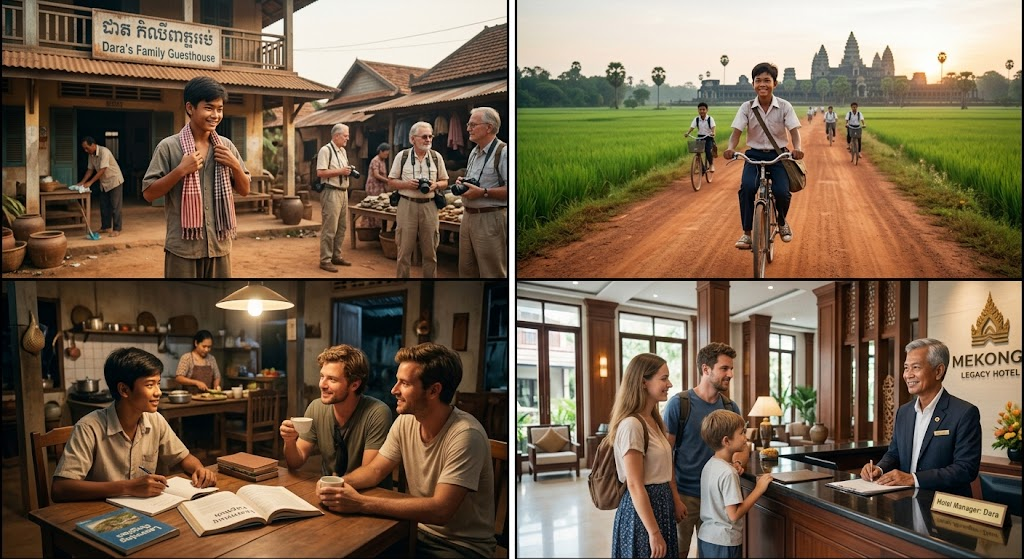
  • 👍⏭️A day at Dara’s family’s guesthouse, a long time ago (text, exercises, sound files, grammar: past simple, A1, beginners)⏮️👍

    • Dara remembers his life when he was 15.

    Past Simple

    We use the Past Simple for an action that started and finished in the past.

    Example:

    • I lived in Cambodia when I was 15.
    • My father cleaned the rooms.
    • I went to school at seven o’clock.

    1. Regular verbs

    For most verbs, add -ed:

    PresentPast
    workworked
    cleancleaned
    helphelped
    visitvisited
    wantwanted

    Some spelling changes are needed:

    • like → liked
    • study → studied
    • stop → stopped

    2. Irregular verbs

    Some verbs do not use -ed. You must learn their past forms.

    • go → went
    • have → had
    • eat → ate
    • come → came
    • speak → spoke
    • bring → brought
    • do → did

    3. Positive sentences

    Subject + past verb

    • I worked.
    • She helped her mother.
    • We visited the temple.
    • They went to school.

    The past verb is the same for all subjects:

    • I worked.
    • He worked.
    • They worked.

    4. Negative sentences

    Use did not (didn’t) + infinitive:

    • I didn’t work.
    • She didn’t go to school.
    • We didn’t eat breakfast.

    ⚠️ After didn’t, use the infinitive, not the past form.

    ❌ I didn’t went.
    ✅ I didn’t go.

    5. Questions

    Use Did + subject + infinitive?

    • Did you work?
    • Did she go to school?
    • Did they visit Cambodia?

    Short answers:

    • Yes, I did.
    • No, I didn’t.
    • Yes, I was.
    • No, they weren’t.

    6. When do we use it?

    Use the Past Simple when we talk about finished actions or situations in the past.

    Common past-time words are:

    • yesterday
    • last week
    • last year
    • two days ago
    • when I was 15
    • in 1980

    Example:
    “I worked at my family’s guesthouse when I was 15.”

    The action happened in the past and is finished now.

    #####################

    InfinitivePastA1 definition
    bewas / wereto exist or to say what someone or something is
    livelivedto have your home in a place
    havehadto own or to get something
    comecameto move to a place
    visitvisitedto go to a person or place for a short time
    eatateto put food in your mouth and swallow it
    workworkedto do a job
    makemadeto create or prepare something
    cleancleanedto make something not dirty
    helphelpedto do something for another person
    get upgot upto leave your bed
    openopenedto move something so you can enter or see inside
    putputto move something to a place
    askaskedto say something when you want information
    speakspoketo talk in a language
    gowentto move from one place to another
    likelikedto enjoy something
    wantwantedto have a wish for something
    talktalkedto speak with someone
    changechangedto put on different clothes or make something different
    bringbroughtto take something with you to a place
    dodidto perform an action or activity
    meetmetto see and talk to someone for the first time or at a planned time
    learnlearnedto get new knowledge or skill

    __________________________

    Vocabulary:

    • a guesthouse – a small place where people can stay and sleep.
    • a visitor – a person who comes to a place.
    • breakfast – the first meal of the day, in the morning.
    • a cup – a small container for drinking tea, coffee, or water.
    • sometimes – not always; on some days.
    • a bag – something you use to carry things.
    • a bicycle – a vehicle with two wheels. You ride it.
    • clothes – things you wear, like a shirt, trousers, or a dress.
    • countries – places like Cambodia, France, Japan, or Australia.
    • to be tired – to need rest because you have worked or done a lot.

    ##################

    Fill in, past simple:

    My name is Dara. I am 63 years old. When I _____ (be) 15 years old, I _____ (live) with my family in a small town in Cambodia. Many visitors _____ (come) to our town. They _____ (visit) old temples and _____ (eat) Cambodian food.

    My family _____ (have) a small guesthouse. It _____ (be) near the market. We _____ (have) eight rooms. My father and mother _____ (work) there every day. My mother _____ (make) breakfast for the guests. My father _____ (clean) the rooms. My older sister _____ (help) them.

    I _____ (get up) at six o’clock every morning. Before school, I _____ (help) my family. First, I _____ (open) the windows. Then I _____ (clean) the tables and chairs. I _____ (put) water and cups in the rooms. Sometimes, I _____ (help) my father with the guests’ bags.

    At seven o’clock, I _____ (have) breakfast with my family. Then I _____ (go) to school by bicycle. My school _____ (be) three kilometres from our guesthouse. I like school. I _____ (like) English very much. I _____ (want) to speak English well because some guests _____ (speak) English.

    I _____ (come) home at four o’clock. I _____ (change) my clothes and _____ (go) to the guesthouse. I _____ (help) my mother. I _____ (bring) food and drinks to the guests. I also _____ (talk) to them. I _____ (ask) them where they _____ (come) from. I _____ (like) talking to people from other countries.

    In the evening, I _____ (do) my homework. Then I _____ (help) my parents again. I _____ (be) sometimes tired, but I _____ (be) happy.

    I _____ (like) working at our guesthouse. I _____ (meet) many people and _____ (learn) many new things. I _____ (want) to work in a hotel when I _____ (be) older.

    Now I am 63 years old. I work in a hotel. I still like meeting people and helping guests. I am happy with my job.

    ——————————————-

    Correct version:

    My name is Dara. I am 63 years old. When I was 15 years old, I lived with my family in a small town in Cambodia. Many visitors came to our town. They visited old temples and ate Cambodian food.

    My family had a small guesthouse. It was near the market. We had eight rooms. My father and mother worked there every day. My mother made breakfast for the guests. My father cleaned the rooms. My older sister helped them.

    I got up at six o’clock every morning. Before school, I helped my family. First, I opened the windows. Then I cleaned the tables and chairs. I put water and cups in the rooms. Sometimes, I helped my father with the guests’ bags.

    At seven o’clock, I had breakfast with my family. Then I went to school by bicycle. My school was three kilometres from our guesthouse. I like school. I liked English very much. I wanted to speak English well because some guests spoke English.

    I came home at four o’clock. I changed my clothes and went to the guesthouse. I helped my mother. I brought food and drinks to the guests. I also talked to them. I asked them where they came from. I liked talking to people from other countries.

    In the evening, I did my homework. Then I helped my parents again. I was sometimes tired, but I was happy.

    I liked working at our guesthouse. I met many people and learned many new things. I wanted to work in a hotel when I was older.

    Now I am 63 years old. I work in a hotel. I still like meeting people and helping guests. I am happy with my job.

    ######################

    True or False

    1. Dara asked guests where they came from.
    2. Dara’s father made breakfast for the guests.
    3. Dara did his homework in the evening.
    4. Dara travelled to school by train.
    5. His school was three kilometres from the guesthouse.
    6. Dara is 63 years old now.
    7. The family had twelve rooms.
    8. Dara brought food and drinks to the guests.
    9. Dara played football after school.
    10. His father cleaned the rooms.
    11. Dara wanted to become a doctor.
    12. Some guests spoke English.
    13. Dara studied at home every morning.
    14. Dara wanted to work in a hotel when he was older.
    15. Dara’s mother cleaned the guesthouse rooms.
    16. Dara got up at six o’clock every morning.
    17. Dara never talked to the guests.
    18. His family had a small guesthouse.
    19. Dara now works in a restaurant.
    20. Dara lived in a large city as a teenager.

    ____________________________

    True: 1,3,5,6,8,10,12,14,16,18

    ___________________________

    Correct version:

    Dara lived in a large city as a teenager. True is: Dara lived in a small town in Cambodia.

    Dara asked guests where they came from.

    Dara’s father made breakfast for the guests. True is: Dara’s mother made breakfast for the guests.

    Dara did his homework in the evening.

    Dara travelled to school by train. True is: Dara went to school by bicycle.

    His school was three kilometres from the guesthouse.

    Dara is 63 years old now.

    The family had twelve rooms. True is: The family had eight rooms.

    Dara brought food and drinks to the guests.

    Dara played football after school. True is: Dara helped his mother after school.

    His father cleaned the rooms.

    Dara wanted to become a doctor. True is: Dara wanted to work in a hotel when he was older.

    Some guests spoke English.

    Dara studied at home every morning. True is: Dara helped his family before school.

    Dara wanted to work in a hotel when he was older.

    Dara’s mother cleaned the guesthouse rooms. True is: Dara’s mother made breakfast for the guests.

    Dara got up at six o’clock every morning.

    Dara never talked to the guests. True is: Dara talked to the guests.

    His family had a small guesthouse.

    Dara now works in a restaurant. True is: Dara now works in a hotel.

    Dara lived in a large city as a teenager. True is: Dara lived in a small town in Cambodia.

    ####################

    Match the word with the definition

    1. guesthouse
    2. visitor
    3. breakfast
    4. cup
    5. bag
    6. bicycle
    7. clothes
    8. country
    9. market
    10. guest
    11. tired
    12. school
    13. hotel
    14. room
    15. family

    a. a place where people learn
    b. a person who stays at a hotel or guesthouse
    c. things you wear
    d. a place where people can buy and sell things
    e. a place where people sleep or stay
    f. a small place where visitors can stay
    g. a person who comes to a place
    h. the first meal of the day
    i. a vehicle with two wheels
    j. a group of parents and children
    k. a place such as Cambodia or Japan
    l. a place where people can stay when they travel
    m. needing rest
    n. a container for drinking
    o. something used to carry things

    ___________________________

    Answer key:
    1-f · 2-g · 3-h · 4-n · 5-o · 6-i ·
    7-c · 8-k · 9-d · 10-b · 11-m ·
    12-a · 13-l · 14-e · 15-j

    ###################

    Fill in, word below:


    came · ate · had · went · got up · put · spoke · met ·
    guesthouse · visitor · breakfast · cup ·
    bag · bicycle · clothes ·
    tired · market

    1. Dara _____ at six o’clock every morning.
    2. Many visitors _____ to the town.
    3. They _____ Cambodian food.
    4. Dara’s family _____ eight rooms.
    5. He _____ water and cups in the rooms.
    6. Dara _____ to school by bicycle.
    7. Some guests _____ English.
    8. Dara _____ many people from other countries.
    9. His family had a small _____ near the market.
    10. A _____ is a person who comes to a place.
    11. Dara had _____ with his family at seven o’clock.
    12. He put water in a _____.
    13. Dara helped his father with the guests’ _____.
    14. He changed his _____ after school.
    15. Dara was sometimes _____ in the evening.

    —————————————–

    Correct version:

    1. Dara got up at six o’clock every morning.
    2. Many visitors came to the town.
    3. They ate Cambodian food.
    4. Dara’s family had eight rooms.
    5. He put water and cups in the rooms.
    6. Dara went to school by bicycle.
    7. Some guests spoke English.
    8. Dara met many people from other countries.
    9. His family had a small guesthouse near the market.
    10. A visitor is a person who comes to a place.
    11. Dara had breakfast with his family at seven o’clock.
    12. He put water in a cup.
    13. Dara helped his father with the guests’ bag.
    14. He changed his clothes after school.
    15. Dara was sometimes tired in the evening.

    ###################

    Answer:

    1. Was Dara 15 or 25 years old when he lived with his family?

      YOU WRITE:
      Dara was 15 years old when he lived with his family.

    2. Did many or few visitors come to his town?
    3. Did his family have eight or ten rooms?
    4. Was the guesthouse near the market or the school?
    5. Did his mother or father make breakfast?
    6. Did his father clean the rooms or the windows?
    7. Did his older sister help him or his parents?
    8. Did Dara get up at six or seven o’clock?
    9. Did he clean the tables or the floors before school?
    10. Did he put water and cups or books in the rooms?
    11. Did he go to school by bicycle or bus?
    12. Was his school three or five kilometres from the guesthouse?
    13. Did Dara like English or French very much?
    14. Did some guests speak English or German?
    15. Did Dara come home at four or five o’clock?
    16. Did he bring food and drinks or books to the guests?
    17. Did he ask the guests where they came from or where they worked?
    18. Did Dara do his homework in the evening or in the morning?
    19. Did he want to work in a hotel or a school when he was older?
    20. Does Dara work in a hotel or a restaurant now?

    _________________________

    Correct answers:

    1. Dara was 15 years old when he lived with his family.
    2. Many visitors came to his town.
    3. His family had eight rooms.
    4. The guesthouse was near the market.
    5. His mother made breakfast.
    6. His father cleaned the rooms.
    7. His older sister helped his parents.
    8. Dara got up at six o’clock.
    9. He cleaned the tables and chairs before school.
    10. He put water and cups in the rooms.
    11. He went to school by bicycle.
    12. His school was three kilometres from the guesthouse.
    13. Dara liked English very much.
    14. Some guests spoke English.
    15. Dara came home at four o’clock.
    16. He brought food and drinks to the guests.
    17. He asked the guests where they came from.
    18. Dara did his homework in the evening.
    19. He wanted to work in a hotel when he was older.
    20. Dara works in a hotel now.

    ######################

    Short answers, past simple, basics:

    Example SentenceYesNo
    I learned letters.Yes, I did.No, I didn’t.
    You read signs.Yes, you did.No, you didn’t.
    He spoke English.Yes, he did.No, he didn’t.
    She watched TV.Yes, she did.No, she didn’t.
    It helped me.Yes, it did.No, it didn’t.
    We used an app.Yes, we did.No, we didn’t.
    You read words.Yes, you did.No, you didn’t.
    They made mistakes.Yes, they did.No, they didn’t.

    Questions (Past Simple)

    QuestionYesNo
    Did I learn letters?Yes, I did.No, I didn’t.
    Did you read signs?Yes, you did.No, you didn’t.
    Did he speak English?Yes, he did.No, he didn’t.
    Did she watch TV?Yes, she did.No, she didn’t.
    Did it help me?Yes, it did.No, it didn’t.
    Did we use an app?Yes, we did.No, we didn’t.
    Did you read words?Yes, you did.No, you didn’t.
    Did they make mistakes?Yes, they did.No, they didn’t.

    Was / Were

    QuestionYesNo
    Was I happy?Yes, I was.No, I wasn’t.
    Were you happy?Yes, you were.No, you weren’t.
    Was he happy?Yes, he was.No, he wasn’t.
    Was she happy?Yes, she was.No, she wasn’t.
    Was it good?Yes, it was.No, it wasn’t.
    Were we happy?Yes, we were.No, we weren’t.
    Were you happy?Yes, you were.No, you weren’t.
    Were they happy?Yes, they were.No, they weren’t.

    #################

    Short answers:

    1. Dara brought food and drinks to the guests.

      YOU WRITE:
      Yes, she did.

    2. Dara was 18 years old when he lived in Cambodia.
    3. His father cleaned the rooms.
    4. Dara went to school by bus.
    5. The guesthouse had eight rooms.
    6. Dara’s mother liked talking to people from other countries.
    7. His mother worked in a school.
    8. Dara got up at six o’clock every morning.
    9. His school was five kilometres from the guesthouse.
    10. Dara did his homework in the evening.
    11. Many visitors came to the town.
    12. Dara’s family had a large hotel.
    13. Dara wanted to work in a hotel when he was older.
    14. His older sister helped his parents.
    15. Dara came home at five o’clock.
    16. Some guests spoke English.
    17. Dara put books and pencils in the rooms.
    18. The guesthouse was near the market.
    19. Dara worked in a restaurant when he was young.
    20. Dara asked guests where they came from.
    21. Dara was sometimes tired in the evening.
    22. Dara went to school on foot.
    23. Dara is 63 years old now.
    24. Dara stopped working with guests when he became older.
    25. He still likes meeting people and helping guests.
    26. Dara’s parents were farmers.

    ___________________________

    Correct answers:

    1. Dara brought food and drinks to the guests.
      Yes, he did.
    2. Dara was 18 years old when he lived in Cambodia.
      No, he wasn’t.
    3. His father cleaned the rooms.
      Yes, he did.
    4. Dara went to school by bus.
      No, he didn’t.
    5. The guesthouse had eight rooms.
      Yes, it did.
    6. Dara’s mother liked talking to people from other countries.
      No, she didn’t.
    7. His mother worked in a school.
      No, she didn’t.
    8. Dara got up at six o’clock every morning.
      Yes, he did.
    9. His school was five kilometres from the guesthouse.
      No, it wasn’t.
    10. Dara did his homework in the evening.
      Yes, he did.
    11. Many visitors came to the town.
      Yes, they did.
    12. Dara’s family had a large hotel.
      No, they didn’t.
    13. Dara wanted to work in a hotel when he was older.
      Yes, he did.
    14. His older sister helped his parents.
      Yes, she did.
    15. Dara came home at five o’clock.
      No, he didn’t.
    16. Some guests spoke English.
      Yes, they did.
    17. Dara put books and pencils in the rooms.
      No, he didn’t.
    18. The guesthouse was near the market.
      Yes, it was.
    19. Dara worked in a restaurant when he was young.
      No, he didn’t.
    20. Dara asked guests where they came from.
      Yes, he did.
    21. Dara was sometimes tired in the evening.
      Yes, he was.
    22. Dara went to school on foot.
      No, he didn’t.
    23. Dara is 63 years old now.
      Yes, he is.
    24. Dara stopped working with guests when he became older.
      No, he didn’t.
    25. He still likes meeting people and helping guests.
      Yes, he does.
    26. Dara’s parents were farmers.
      No, they weren’t.

    ####################

    Basics in past simple:

    Personal PronounVerb (Past)Object
    Iateapples
    Youateapples
    Heateapples
    Sheateapples
    Itateapples
    Weateapples
    You (plural)ateapples
    Theyateapples
    Iplayedfootball
    Youplayedfootball
    Heplayedfootball
    Sheplayedfootball
    Itplayedfootball
    Weplayedfootball
    You (plural)playedfootball
    Theyplayedfootball
    Personal PronounVerb (Past Negative)Object
    Idid not eatapples
    Youdid not eatapples
    Hedid not eatapples
    Shedid not eatapples
    Itdid not eatapples
    Wedid not eatapples
    You (plural)did not eatapples
    Theydid not eatapples
    Idid not playfootball
    Youdid not playfootball
    Hedid not playfootball
    Shedid not playfootball
    Itdid not playfootball
    Wedid not playfootball
    You (plural)did not playfootball
    Theydid not playfootball
    Did + PronounVerbObject
    Did Ieatapples?
    Did youeatapples?
    Did heeatapples?
    Did sheeatapples?
    Did iteatapples?
    Did weeatapples?
    Did youeatapples?
    Did theyeatapples?
    Did Iplayfootball?
    Did youplayfootball?
    Did heplayfootball?
    Did sheplayfootball?
    Did itplayfootball?
    Did weplayfootball?
    Did youplayfootball?
    Did theyplayfootball?
    Didn’t + PronounVerbObject
    Didn’t Ieatapples?
    Didn’t youeatapples?
    Didn’t heeatapples?
    Didn’t sheeatapples?
    Didn’t iteatapples?
    Didn’t weeatapples?
    Didn’t youeatapples?
    Didn’t theyeatapples?
    Didn’t Iplayfootball?
    Didn’t youplayfootball?
    Didn’t heplayfootball?
    Didn’t sheplayfootball?
    Didn’t itplayfootball?
    Didn’t weplayfootball?
    Didn’t youplayfootball?
    Didn’t theyplayfootball?

    ##################

    Past simple forms of ‚to be‘:

    PersonPast
    Iwas
    Youwere
    He/She/Itwas
    Wewere
    You (pl)were
    Theywere
    PersonQuestion
    IWas I …?
    YouWere you …?
    He/She/ItWas he/she/it …?
    WeWere we …?
    You (pl)Were you …?
    TheyWere they …?
    PersonNegative
    II was not (I wasn’t)
    YouYou were not (You weren’t)
    He/She/ItHe/She/It was not (He/She/It wasn’t)
    WeWe were not (We weren’t)
    You (pl)You were not (You weren’t)
    TheyThey were not (They weren’t)
    PersonNegative Question
    IWasn’t I …?
    YouWeren’t you …?
    He/She/ItWasn’t he/she/it …?
    WeWeren’t we …?
    You (pl)Weren’t you …?
    TheyWeren’t they …?

    ##################

    Answer as shown in #1:

    1. Dara was 15 years old when he lived with his family in Cambodia.

      YOU WRITE:
      a) question: Was Dara 15 years old when he lived with his family in Cambodia?
      b) negation: Dara was not 15 years old when he lived with his family in Cambodia.
      c) negative question: Wasn’t Dara 15 years old when he lived with his family in Cambodia?

    2. His father cleaned the rooms every day.
    3. Dara got up at six o’clock every morning.
    4. He went to school by bicycle.
    5. His school was three kilometres from the guesthouse.
    6. Some guests spoke English.
    7. Dara brought food and drinks to the guests.
    8. Dara asked guests where they came from.
    9. Dara and his family were happy at the guesthouse.
    10. He wanted to work in a hotel when he was older.

    ____________________________

    Correct version:

    1. Dara was 15 years old when he lived with his family in Cambodia.
      a) question: Was Dara 15 years old when he lived with his family in Cambodia?
      b) negation: Dara was not 15 years old when he lived with his family in Cambodia.
      c) negative question: Wasn’t Dara 15 years old when he lived with his family in Cambodia?
    2. His father cleaned the rooms every day.
      a) question: Did his father clean the rooms every day?
      b) negation: His father did not clean the rooms every day.
      c) negative question: Didn’t his father clean the rooms every day?
    3. Dara got up at six o’clock every morning.
      a) question: Did Dara get up at six o’clock every morning?
      b) negation: Dara did not get up at six o’clock every morning.
      c) negative question: Didn’t Dara get up at six o’clock every morning?
    4. He went to school by bicycle.
      a) question: Did he go to school by bicycle?
      b) negation: He did not go to school by bicycle.
      c) negative question: Didn’t he go to school by bicycle?
    5. His school was three kilometres from the guesthouse.
      a) question: Was his school three kilometres from the guesthouse?
      b) negation: His school was not three kilometres from the guesthouse.
      c) negative question: Wasn’t his school three kilometres from the guesthouse?
    6. Some guests spoke English.
      a) question: Did some guests speak English?
      b) negation: Some guests did not speak English.
      c) negative question: Didn’t some guests speak English?
    7. Dara brought food and drinks to the guests.
      a) question: Did Dara bring food and drinks to the guests?
      b) negation: Dara did not bring food and drinks to the guests.
      c) negative question: Didn’t Dara bring food and drinks to the guests?
    8. Dara asked guests where they came from.
      a) question: Did Dara ask guests where they came from?
      b) negation: Dara did not ask guests where they came from.
      c) negative question: Didn’t Dara ask guests where they came from?
    9. Dara and his family were happy at the guesthouse.
      a) question: Were Dara and his family happy at the guesthouse?
      b) negation: Dara and his family were not happy at the guesthouse.
      c) negative question: Weren’t Dara and his family happy at the guesthouse?
    10. He wanted to work in a hotel when he was older.

    a) question: Did he want to work in a hotel when he was older?
    b) negation: He did not want to work in a hotel when he was older.
    c) negative question: Didn’t he want to work in a hotel when he was older?

    ####################

    Who + past verb — no “did”

    When who is the person who does the action, do not use did.

    • Who made breakfast?
    • Who cleaned the rooms?
    • Who helped Dara?
    • Who brought the food?
    • Who opened the windows?
    • Who worked at the guesthouse?

    The structure is:

    Who + past verb + …?

    ❌ Who did make breakfast?
    ✅ Who made breakfast?

    ####################

    Complete each question with the correct form of the verb in brackets.

    1. Where __________ (live) Dara?

      YOU WRITE:
      Where did Dara live?

    2. How old __________ (be) Dara?
    3. What time __________ (get up) Dara?
    4. How __________ (go) Dara to school?
    5. How far __________ (be) his school from the guesthouse?
    6. What __________ (eat) the visitors?
    7. Who __________ (make) breakfast?
    8. How many rooms __________ (have) the family?
    9. When __________ (do) Dara his homework?
    10. What __________ (bring) Dara to the guests?
    11. Who __________ (help) his older sister?
    12. What language __________ (speak) some guests?
    13. What time __________ (come) Dara home?
    14. Who __________ (meet) Dara?
    15. Why __________ (want) Dara to speak English well?

    ———————————————

    Correct questions:

    1. Where did Dara live?
    2. How old was Dara?
    3. What time did Dara get up?
    4. How did Dara go to school?
    5. How far was his school from the guesthouse?
    6. What did the visitors eat?
    7. Who made breakfast?
    8. How many rooms did the family have?
    9. When did Dara do his homework?
    10. What did Dara bring to the guests?
    11. Who did his older sister help?
    12. What language did some guests speak?
    13. What time did Dara come home?
    14. Who did Dara meet?
    15. Why did Dara want to speak English well?

    ####################

    Interview with Dara – match question and answer:

    Questions

    1. How old were you when you lived in Cambodia?
    2. Where did you live when you were 15?
    3. What was your family’s business?
    4. How many rooms did you have?
    5. What was your mother’s job?
    6. What was your father’s job?
    7. What time did your day start?
    8. How did you travel to school?
    9. What was your favourite subject?
    10. Why was English important to you?
    11. How did you help your mother after school?
    12. What information did you want from the guests?
    13. How did you spend your evening?
    14. What was your dream for the future?
    15. Where did you work when you were young?
    16. What did you enjoy at the guesthouse?


    Answers

    a) I brought food and drinks to the guests.

    b) I was 15 years old.

    c) I wanted to work in a hotel.

    d) I liked English very much.

    e) I liked meeting people and helping guests.

    f) He cleaned the rooms.

    g) I lived in a small town in Cambodia.

    h) I did my homework and helped my parents.

    i) We had eight rooms.

    j) I asked them where they came from.

    k) Some guests spoke English.

    l) She made breakfast for the guests.

    m) I got up at six o’clock.

    n) I worked at our guesthouse.

    o) We had a small guesthouse.

    p) I went to school by bicycle.

    __________________________

    Full dialogue:

    Interviewer: How old were you when you lived in Cambodia?
    Dara: I was 15 years old.

    Interviewer: Where did you live when you were 15?
    Dara: I lived in a small town in Cambodia.

    Interviewer: What was your family’s business?
    Dara: We had a small guesthouse.

    Interviewer: How many rooms did you have?
    Dara: We had eight rooms.

    Interviewer: What was your mother’s job?
    Dara: She made breakfast for the guests.

    Interviewer: What was your father’s job?
    Dara: He cleaned the rooms.

    Interviewer: What time did your day start?
    Dara: I got up at six o’clock.

    Interviewer: How did you travel to school?
    Dara: I went to school by bicycle.

    Interviewer: What was your favourite subject?
    Dara: I liked English very much.

    Interviewer: Why was English important to you?
    Dara: Some guests spoke English.

    Interviewer: How did you help your mother after school?
    Dara: I brought food and drinks to the guests.

    Interviewer: What information did you want from the guests?
    Dara: I asked them where they came from.

    Interviewer: How did you spend your evening?
    Dara: I did my homework and helped my parents.

    Interviewer: What was your dream for the future?
    Dara: I wanted to work in a hotel.

    Interviewer: Where did you work when you were young?
    Dara: I worked at our guesthouse.

    Interviewer: What did you enjoy at the guesthouse?
    Dara: I liked meeting people and helping guests.

    ###################

    ##################

    ##################

    Please use the box below
    to write your feedback.
    Only I can read it.
    It is not public.

    Please tell me:

    • Are the texts and exercises OK?
    • Are the topics OK?
    • Is the level OK?
    • Is it too easy or too difficult?
    • Do you want texts about other topics?

    Thank you! I appreciate your feedback.

    ##################

    ##################

    ##################

    Remember how babies
    learn a language:

    Babies learn a language by listening.
    They use their ears to hear sounds.
    Their brain remembers these sounds.
    Babies connect sounds with people and things.
    They listen to their parents.
    Then they copy the sounds they hear. They imitate words.
    Slowly, babies learn to speak.


    So,
    LISTEN, LISTEN, LISTEN, LISTEN………………
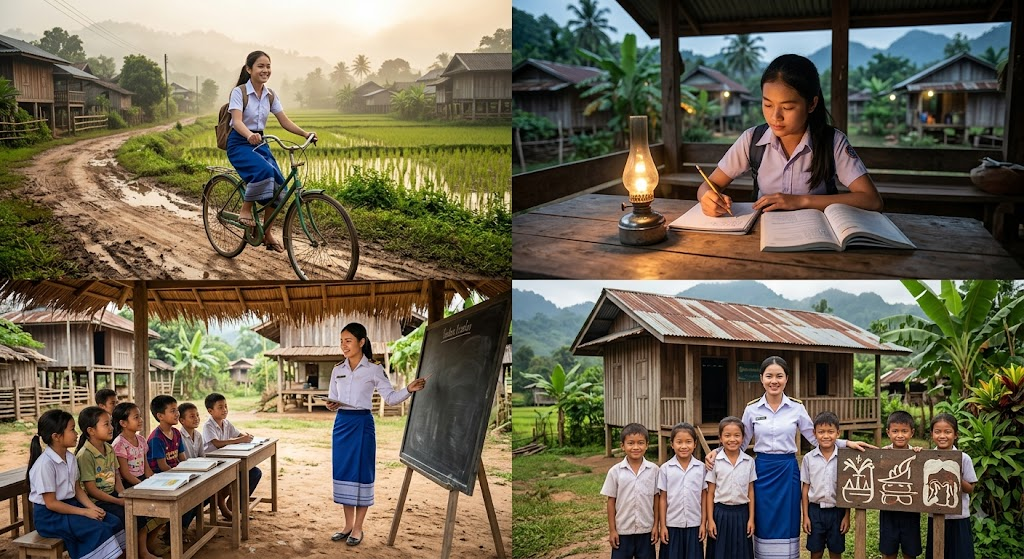
  • 🥳🚲🥳A bicycle and a dream (text, exercises, sound files, present simple, questions, negations, short answers, A1 beginners)🥳🚲🥳

    – living a dream

    Present Simple

    We use the present simple for things that happen regularly, every day, or are generally true.

    • Lina rides her bicycle every morning.
    • She studies English every day.
    • She likes her bicycle.

    1. I / You / We / They

    Use the basic form of the verb.

    • I live in a village.
    • You like English.
    • We study every day.
    • They work hard.

    2. He / She / It

    Usually, add -s.

    • She lives in a village.
    • He likes English.
    • She wants to be a teacher.
    • It works well.

    Most verbs: add -s

    Basic verbHe / She / It
    livelives
    likelikes
    wantwants
    workworks
    helphelps
    readreads
    listenlistens
    talktalks
    learnlearns

    3. Verbs ending in -y

    If a verb ends in consonant + y, change y to ies.

    • study → studies
    • try → tries
    • carry → carries

    Examples:

    • I study English.
    • She studies English.
    • They try hard.
    • He tries hard.

    But: vowel [a,e,i,o,u] + y → just add -s

    • play → plays
    • stay → stays
    • enjoy → enjoys

    Example:

    • I play football.
    • She plays football.

    4. Have → Has

    Have is different.

    • I have a bicycle.
    • You have a bicycle.
    • We have a bicycle.
    • They have a bicycle.
    • She has a bicycle.
    • He has a bicycle.
    • It has four legs.

    5. Be → am / is / are

    Be is also different.

    SubjectBe
    Iam
    Youare
    Weare
    Theyare
    Heis
    Sheis
    Itis

    Examples:

    • I am 16 years old.
    • You are happy.
    • We are students.
    • They are from Cambodia.
    • She is 16 years old.
    • He is a teacher.

    6. Questions

    With most verbs, use do or does.

    I / you / we / they → DO

    • Do you like English?
    • Do they study every day?

    he / she / it → DOES

    • Does Lina like English?
    • Does she study every day?

    Important!

    After does, use the basic verb.

    ❌ Does she studies English?
    ✅ Does she study English?

    ❌ Does Lina likes her bicycle?
    ✅ Does Lina like her bicycle?

    7. Negative sentences

    Use don’t or doesn’t.

    I / you / we / they → don’t

    • I don’t like English.
    • They don’t study every day.

    he / she / it → doesn’t

    • She doesn’t like English.
    • Lina doesn’t study every day.

    Again, after doesn’t, use the basic verb.

    ❌ She doesn’t studies English.
    ✅ She doesn’t study English.

    ❌ Lina doesn’t likes her bicycle.
    ✅ Lina doesn’t like her bicycle.

    The most important rule

    Positive sentences:

    I / You / We / They → basic verb

    I study.

    He / She / It → verb + s

    She studies.

    Questions and negatives:

    do / does + basic verb

    Does she study?
    She doesn’t study.

    Remember:

    I study → She studies
    I live → She lives
    I like → She likes
    I have → She has
    I am → She is

    ##################

    Vocabulary:

    • a village – a small place where people live, smaller than a town
    • to ride a bicycle – to sit on a bicycle and move with it
    • to be far from home – to be a long way from your house
    • at first – at the beginning
    • short stories – stories that are not long
    • to listen to songs – to hear songs carefully
    • to work hard – to do a lot of work and try very much
    • to believe in a dream – to think that your dream can happen
    • to teach English – to help people learn English
    • a dream comes true – something you want really happens
    • a small step – a small action that helps you move forward
    • tomorrow – the day after today

    __________________________

    My name is Lina. I am 16 years old. I live in a small village with my family.

    Every morning, I ride my bicycle to school. My school is far from my home, so I ride many kilometres every day. I like my bicycle very much.

    I love English. I want to be an English teacher. I want to help the children in my village.

    At first, English is difficult for me. I know only a few English words. But I study every day. I learn new words. I read short English stories. I listen to English songs. When tourists come to my village, I talk to them in English.

    I work hard. I am happy when I learn new words. My English gets better every day. I believe in my dream.

    Many years later, I come back to my village. I am an English teacher now.

    The children are happy to see me. I teach them English. I help them read, write and speak.

    I am happy too. I have a good job, and I help the children in my village.

    My dream comes true.

    ####################

    Now rewrite the story, make all changes necessary:

    Her name is Lina. She _____ (be) 16 years old. She _____ (live) in a small village with her family.

    Every morning, Lina _____ (ride) her bicycle to school. Her school is far from her home, so she _____ (ride) many kilometres every day. She _____ (like) her bicycle very much.

    Lina _____ (love) English. She _____ (want) to be an English teacher. She _____ (want) to help the children in her village.

    At first, English is difficult for Lina. She _____ (know) only a few English words. But she _____ (study) every day. She _____ (learn) new words. She reads short English stories. She listens to English songs. When tourists come to her village, she _____ (talk) to them in English.

    Lina _____ (work) hard. She is happy when she _____ (learn) new words. Her English _____ (get) better every day. She _____ (believe) in her dream.

    Many years later, Lina _____ (come) back to her village. She is an English teacher now.

    The children are happy to see her. Lina _____ (teach) them English. She _____ (help) them read, write and speak.

    Lina is happy too. She _____ (have) a good job, and she _____ (help) the children in her village.

    Her dream _____ (come) true.

    ———————————

    Correct version:

    Her name is Lina. She is 16 years old. She lives in a small village with her family.

    Every morning, Lina rides her bicycle to school. Her school is far from her home, so she rides many kilometres every day. She likes her bicycle very much.

    Lina loves English. She wants to be an English teacher. She wants to help the children in her village.

    At first, English is difficult for Lina. She knows only a few English words. But she studies every day. She learns new words. She reads short English stories. She listens to English songs. When tourists come to her village, she talks to them in English.

    Lina works hard. She is happy when she learns new words. Her English gets better every day. She believes in her dream.

    Many years later, Lina comes back to her village. She is an English teacher now.

    The children are happy to see her. Lina teaches them English. She helps them read, write and speak.

    Lina is happy too. She has a good job, and she helps the children in her village.

    Her dream comes true.

    ##################

    Match the words and definitions

    Words

    1. a village
    2. to ride a bicycle
    3. to be far from home
    4. at first
    5. short stories
    6. to listen to songs
    7. to work hard
    8. to believe in a dream
    9. to teach English
    10. a dream comes true
    11. a small step
    12. tomorrow

    Definitions

    A. The day after today.
    B. To help people learn English.
    C. A small action that helps you move forward.
    D. To sit on a bicycle and move with it.
    E. To do a lot of work and try very much.
    F. Stories that are not long.
    G. At the beginning.
    H. To think that your dream can happen.
    I. A small place where people live, smaller than a town.
    J. Something you want really happens.
    K. To hear songs carefully.
    L. To be a long way from your house.

    _____________________

    Answers:
    1–I, 2–D, 3–L, 4–G, 5–F, 6–K,
    7–E, 8–H, 9–B, 10–J, 11–C, 12–A

    ###############

    Match the definitions with the words

    Definitions

    1. At the beginning.
    2. To hear songs carefully.
    3. A small place where people live, smaller than a town.
    4. To think that your dream can happen.
    5. The day after today.
    6. To do a lot of work and try very much.
    7. Something you want really happens.
    8. To sit on a bicycle and move with it.
    9. A small action that helps you move forward.
    10. Stories that are not long.
    11. To help people learn English.
    12. To be a long way from your house.

    Words

    A. tomorrow
    B. to work hard
    C. a dream comes true
    D. short stories
    E. to ride a bicycle
    F. a small step
    G. to teach English
    H. a village
    I. to believe in a dream
    J. to listen to songs
    K. to be far from home
    L. at first

    ______________________

    Answers:
    1–L, 2–J, 3–H, 4–I, 5–A, 6–B,
    7–C, 8–E, 9–F, 10–D, 11–G, 12–K
    ################

    True or false

    1. Lina works hard for her dream.
    2. Lina wants to become a doctor.
    3. She comes back to her village many years later.
    4. Lina stops studying when English is difficult.
    5. She talks to tourists in English.
    6. Lina has a bad job when she becomes a teacher.
    7. Lina lives with her family.
    8. She never speaks to tourists.
    9. Lina knows only a few English words at first.
    10. Lina wants to be an English teacher.
    11. The children are angry when Lina returns.
    12. She learns new words every day.
    13. Lina rides a bicycle only on weekends.
    14. Lina forgets her dream after leaving school.
    15. She teaches English in another country.
    16. Lina helps the children read, write and speak.

    ________________________

    True: 1,3,5,7,9,10,12,16

    ________________________

    Correct version:


    Lina works hard for her dream.

    Lina wants to become a doctor. True is: Lina wants to be an English teacher.

    She comes back to her village many years later.

    Lina stops studying when English is difficult. True is: Lina studies every day when English is difficult.

    She talks to tourists in English.

    Lina has a bad job when she becomes a teacher. True is: Lina has a good job when she becomes a teacher.

    Lina lives with her family.

    She never speaks to tourists. True is: She talks to tourists in English.

    Lina knows only a few English words at first.

    Lina wants to be an English teacher.

    The children are angry when Lina returns. True is: The children are happy when Lina returns.

    She learns new words every day.

    Lina rides a bicycle only on weekends. True is: Lina rides her bicycle to school every morning.

    Lina forgets her dream after leaving school. True is: Lina believes in her dream.

    She teaches English in another country. True is: She teaches English in her village.

    Lina helps the children read, write and speak.

    #################

    What is the correct answer?

    1. How old is Lina?
      a) 14
      b) 16
      c) 18
    2. Where does Lina live?
      a) In a city
      b) In a village
      c) In a hotel
    3. How does Lina go to school?
      a) By bus
      b) By car
      c) By bicycle
    4. What does Lina love?
      a) English
      b) Maths
      c) Music
    5. What does Lina want to be?
      a) A teacher
      b) A doctor
      c) A tourist
    6. What does Lina listen to?
      a) The radio
      b) The news
      c) English songs
    7. Who does Lina talk to?
      a) Doctors
      b) Tourists
      c) Farmers
    8. What does Lina become?
      a) A writer
      b) A doctor
      c) An English teacher
    9. How does Lina feel when she learns new words?
      a) Happy
      b) Angry
      c) Tired
    10. What does Lina read?
      a) Short English stories
      b) Long newspapers
      c) School books
    11. When is English difficult for Lina?
      a) Tomorrow
      b) At the end
      c) At first
    12. What does Lina want to help the children do?
      a) Run and swim
      b) Read, write and speak
      c) Cook and dance
    13. What does Lina do every morning?
      a) Plays with her friends
      b) Walks to the market
      c) Rides her bicycle to school
    14. What happens to Lina’s English?
      a) It gets better every day
      b) It gets worse every day
      c) It stays the same
    15. Where does Lina teach English?
      a) In another country
      b) In a big city
      c) In her village
    16. What happens to Lina’s dream?
      a) It disappears
      b) It comes true
      c) It changes completely

    ________________________

    Answers:
    1–b, 2–b, 3–c, 4–a, 5–a, 6–c,
    7–b, 8–c, 9–a, 10–a, 11–c, 12–b,
    13–c, 14–a, 15–c, 16–b

    _______________________

    Correct version:

    1. How old is Lina? – 16
    2. Where does Lina live? – In a village
    3. How does Lina go to school? – By bicycle
    4. What does Lina love? – English
    5. What does Lina want to be? – A teacher
    6. What does Lina listen to? – English songs
    7. Who does Lina talk to? – Tourists
    8. What does Lina become? – An English teacher
    9. How does Lina feel when she learns new words? – Happy
    10. What does Lina read? – Short English stories
    11. When is English difficult for Lina? – At first
    12. What does Lina want to help the children do? – Read, write and speak
    13. What does Lina do every morning? – Rides her bicycle to school
    14. What happens to Lina’s English? – It gets better every day
    15. Where does Lina teach English? – In her village
    16. What happens to Lina’s dream? – It comes true

    ##################

    Fill in, words below:

    tomorrow – tourists – reads – bicycle – dream – children –
    studies – school – songs – teacher – village –
    listens – English – teaches –
    words – stories

    1. Lina lives in a small __________.
    2. Every morning, Lina rides her __________ to school.
    3. Her __________ is far from her home.
    4. Lina loves __________.
    5. She wants to be an English __________.
    6. She wants to help the __________ in her village.
    7. She learns new __________ every day.
    8. Lina __________ short English stories.
    9. She __________ to English songs.
    10. Lina talks to __________ in her village.
    11. Lina believes in her __________.
    12. She __________ English every day.
    13. Lina __________ English to the children.
    14. Her English gets better every day, and her __________ comes true.
    15. A small step today can help make a better __________.
    16. Lina has a good job, and she __________ the children in her village.

    ————————————-

    Full version:

    1. Lina lives in a small village.
    2. Every morning, Lina rides her bicycle to school.
    3. Her school is far from her home.
    4. Lina loves English.
    5. She wants to be an English teacher.
    6. She wants to help the children in her village.
    7. She learns new words every day.
    8. Lina reads short English stories.
    9. She listens to English songs.
    10. Lina talks to tourists in her village.
    11. Lina believes in her dream.
    12. She studies English every day.
    13. Lina teaches English to the children.
    14. Her English gets better every day, and her dream comes true.
    15. A small step today can help make a better tomorrow.
    16. Lina has a good job, and she teaches the children in her village.

    #################

    Short answers, basics:

    Example SentenceYesNo
    I learn the alphabet.Yes, I do.No, I don’t.
    You read signs.Yes, you do.No, you don’t.
    He practices speaking.Yes, he does.No, he doesn’t.
    She watches cartoons.Yes, she does.No, she doesn’t.
    It helps us learn English.Yes, it does.No, it doesn’t.
    We use apps like Duolingo.Yes, we do.No, we don’t.
    You read labels.Yes, you do.No, you don’t.
    They make mistakes sometimes.Yes, they do.No, they don’t.
    QuestionYesNo
    Do I learn the alphabet?Yes, I do.No, I don’t.
    Do you read signs?Yes, you do.No, you don’t.
    Does he practice speaking?Yes, he does.No, he doesn’t.
    Does she watch cartoons?Yes, she does.No, she doesn’t.
    Does it help us learn English?Yes, it does.No, it doesn’t.
    Do we use apps like Duolingo?Yes, we do.No, we don’t.
    Do you read labels?Yes, you do.No, you don’t.
    Do they make mistakes sometimes?Yes, they do.No, they don’t.
    QuestionYesNo
    Am I big?Yes, I am.No, I am not.
    Are you big?Yes, you are.No, you aren’t.
    Is he big?Yes, he is.No, he isn’t.
    Is she big?Yes, she is.No, she isn’t.
    Is it big?Yes, it is.No, it isn’t.
    Are we big?Yes, we are.No, we aren’t.
    Are you big?Yes, you are.No, you aren’t.
    Are they big?Yes, they are.No, they aren’t.

    #################

    Short answers:

    1. Lina works hard for her dream.

      YOU WRITE:
      Yes, she does.

    2. Lina wants to become a doctor.
    3. Lina is 14 years old.
    4. She comes back to her village many years later.
    5. Lina stops studying when English is difficult.
    6. She talks to tourists in English.
    7. Lina has a bad job when she becomes a teacher.
    8. Lina lives with her family.
    9. She never speaks to tourists.
    10. Lina knows only a few English words at first.
    11. Lina wants to be an English teacher.
    12. The children are angry when Lina returns.
    13. She learns new words every day.
    14. Lina rides a bicycle only on weekends.
    15. Lina forgets her dream after leaving school.
    16. She teaches English in another country.
    17. Lina helps the children read, write and speak.
    18. The children are happy with a great teacher.

    _________________________

    Correct version:

    1. Lina works hard for her dream. Yes, she does.
    2. Lina wants to become a doctor. No, she doesn’t.
    3. Lina is 14 years old. No, she isn’t.
    4. She comes back to her village many years later. Yes, she does.
    5. Lina stops studying when English is difficult. No, she doesn’t.
    6. She talks to tourists in English. Yes, she does.
    7. Lina has a bad job when she becomes a teacher. No, she doesn’t.
    8. Lina lives with her family. Yes, she does.
    9. She never speaks to tourists. No, she doesn’t.
    10. Lina knows only a few English words at first. Yes, she does.
    11. Lina wants to be an English teacher. Yes, she does.
    12. The children are angry when Lina returns. No, they aren’t.
    13. She learns new words every day. Yes, she does.
    14. Lina rides a bicycle only on weekends. No, she doesn’t.
    15. Lina forgets her dream after leaving school. No, she doesn’t.
    16. She teaches English in another country. No, she doesn’t.
    17. Lina helps the children read, write and speak. Yes, she does.
    18. The children are happy with a great teacher. Yes, they are.

    #################

    Answer in full sentences:

    1. Who is Lina?

      YOU WRITE:
      Lina is a girl.

    2. How old is Lina?
    3. Where does Lina live?
    4. Who does Lina live with?
    5. How does Lina go to school?
    6. When does Lina ride her bicycle to school?
    7. How far is her school from her home?
    8. What does Lina like very much?
    9. What subject does Lina love?
    10. What does Lina want to be?
    11. Why does Lina want to be an English teacher?
    12. What is difficult for Lina at first?
    13. How many English words does Lina know at first?
    14. What does Lina learn every day?
    15. What does Lina read?
    16. What does Lina listen to?
    17. Who does Lina talk to in English?
    18. How does Lina feel when she learns new words?
    19. When does Lina come back to her village?
    20. What does Lina do for the children

    __________________________

    Correct answers:

    1. Who is Lina? Lina is a girl.
    2. How old is Lina? Lina is 16 years old.
    3. Where does Lina live? Lina lives in a small village.
    4. Who does Lina live with? Lina lives with her family.
    5. How does Lina go to school? Lina goes to school by bicycle.
    6. When does Lina ride her bicycle to school? Lina rides her bicycle to school every morning.
    7. How far is her school from her home? Her school is far from her home.
    8. What does Lina like very much? Lina likes her bicycle very much.
    9. What subject does Lina love? Lina loves English.
    10. What does Lina want to be? Lina wants to be an English teacher.
    11. Why does Lina want to be an English teacher? Lina wants to help the children in her village.
    12. What is difficult for Lina at first? English is difficult for Lina at first.
    13. How many English words does Lina know at first? Lina knows only a few English words at first.
    14. What does Lina learn every day? Lina learns new words every day.
    15. What does Lina read? Lina reads short English stories.
    16. What does Lina listen to? Lina listens to English songs.
    17. Who does Lina talk to in English? Lina talks to tourists in English.
    18. How does Lina feel when she learns new words? Lina is happy when she learns new words.
    19. When does Lina come back to her village? Lina comes back to her village many years later.
    20. What does Lina do for the children? Lina teaches the children English and helps them read, write and speak.

    #################

    Answer:

    1. Is Lina a boy or a girl?

      YOU WRITE:
      Lina is a girl.

    2. Does she live in a city or in a village?
    3. Is Lina 16 or 18 years old?
    4. Does Lina live with her family or her friends?
    5. Does she go to school by bicycle or by bus?
    6. Is her school near or far from her home?
    7. Does Lina like her bicycle or her school?
    8. Does Lina love English or maths?
    9. Does Lina want to be an English teacher or a doctor?
    10. Does she want to help the children or the tourists?
    11. Is English easy or difficult for Lina at first?
    12. Does Lina know many English words or only a few?
    13. Does Lina study English every day or every week?
    14. Does she read short English stories or long books?
    15. Does Lina listen to English songs or watch English films?
    16. Does Lina talk to tourists in English or German?
    17. Is Lina happy or sad when she learns new words?
    18. Does Lina come back to her village many years later or the next day?
    19. Does Lina teach English or maths?
    20. Does Lina help the children read, write and speak or only listen?

    ________________________

    Correct version:

    1. Is Lina a boy or a girl? Lina is a girl.
    2. Does she live in a city or in a village? She lives in a village.
    3. Is Lina 16 or 18 years old? Lina is 16 years old.
    4. Does Lina live with her family or her friends? Lina lives with her family.
    5. Does she go to school by bicycle or by bus? She goes to school by bicycle.
    6. Is her school near or far from her home? Her school is far from her home.
    7. Does Lina like her bicycle or her school? Lina likes her bicycle.
    8. Does Lina love English or maths? Lina loves English.
    9. Does Lina want to be an English teacher or a doctor? Lina wants to be an English teacher.
    10. Does she want to help the children or the tourists? She wants to help the children.
    11. Is English easy or difficult for Lina at first? English is difficult for Lina at first.
    12. Does Lina know many English words or only a few? Lina knows only a few English words.
    13. Does Lina study English every day or every week? Lina studies English every day.
    14. Does she read short English stories or long books? She reads short English stories.
    15. Does Lina listen to English songs or watch English films? Lina listens to English songs.
    16. Does Lina talk to tourists in English or German? Lina talks to tourists in English.
    17. Is Lina happy or sad when she learns new words? Lina is happy when she learns new words.
    18. Does Lina come back to her village many years later or the next day? Lina comes back to her village many years later.
    19. Does Lina teach English or maths? Lina teaches English.
    20. Does Lina help the children read, write and speak or only listen? Lina helps the children read, write and speak.

    #################

    Answer as shown:

    1. Lina is 18 years old.

      YOU WRITE:
      No, she isn’t. She is 16 years old.

    2. Lina lives in a big city.
    3. Lina lives with her friends.
    4. Lina goes to school by bus.
    5. Her school is near her home.
    6. Lina likes her school very much.
    7. Lina loves maths.
    8. Lina wants to be a doctor.
    9. Lina wants to help tourists.
    10. English is easy for Lina at first.
    11. Lina knows many English words at first.
    12. Lina studies English once a week.
    13. Lina reads long English books.
    14. Lina listens to English news.
    15. Lina becomes a doctor many years later.

    _______________________

    Correct answers:

    1. Lina is 18 years old. No, she isn’t. She is 16 years old.
    2. Lina lives in a big city. No, she doesn’t. She lives in a small village.
    3. Lina lives with her friends. No, she doesn’t. She lives with her family.
    4. Lina goes to school by bus. No, she doesn’t. She goes to school by bicycle.
    5. Her school is near her home. No, it isn’t. Her school is far from her home.
    6. Lina likes her school very much. No, she doesn’t. She likes her bicycle very much.
    7. Lina loves maths. No, she doesn’t. She loves English.
    8. Lina wants to be a doctor. No, she doesn’t. She wants to be an English teacher.
    9. Lina wants to help tourists. No, she doesn’t. She wants to help the children.
    10. English is easy for Lina at first. No, it isn’t. English is difficult for Lina at first.
    11. Lina knows many English words at first. No, she doesn’t. She knows only a few English words.
    12. Lina studies English once a week. No, she doesn’t. She studies English every day.
    13. Lina reads long English books. No, she doesn’t. She reads short English stories.
    14. Lina listens to English news. No, she doesn’t. She listens to English songs.
    15. Lina becomes a doctor many years later. No, she doesn’t. She becomes an English teacher.

    ####################

    Match the first half of each sentence with the correct second half.

    A

    1. Lina is 16
    2. She lives in a small
    3. Every morning, Lina rides
    4. Her school is far
    5. Lina loves
    6. She wants to be an English
    7. She wants to help the children
    8. Lina studies English
    9. She reads short English
    10. She listens to English
    11. She talks to tourists
    12. Lina works
    13. Many years later, Lina comes back
    14. She is an English teacher

    B

    a. in her village.
    b. every day.
    c. years old.
    d. to her village.
    e. hard.
    f. her bicycle to school.
    g. in English.
    h. from her home.
    i. stories.
    j. songs.
    k. village with her family.
    l. teacher.
    m. now.
    n. English.

    _______________________

    Answer key:
    1c, 2k, 3f, 4h, 5n, 6l, 7a, 8b,
    9i, 10j, 11g, 12e, 13d, 14m

    _______________________

    Correct version:


    Lina is 16 years old.

    She lives in a small village with her family.

    Every morning, Lina rides her bicycle to school.

    Her school is far from her home.

    Lina loves English.

    She wants to be an English teacher.

    She wants to help the children in her village.

    Lina studies English every day.

    She reads short English stories.

    She listens to English songs.

    She talks to tourists in English.

    Lina works hard.

    Many years later, Lina comes back to her village.

    She is an English teacher now.

    #################

    Basics of present simple:

    Personal Pronounam / is / are
    Iam8 years old
    Youare8 years old
    Heis8 years old
    Sheis8 years old
    Itis8 years old
    Weare8 years old
    You (plural)are8 years old
    Theyare8 years old
    Personal Pronounam not / is not / are not
    Iam not8 years old
    Youare not8 years old
    Heis not8 years old
    Sheis not8 years old
    Itis not8 years old
    Weare not8 years old
    You (plural)are not8 years old
    Theyare not8 years old

    Question:

    Question WordPersonal Pronoun
    AmI8 years old?
    Areyou8 years old?
    Ishe8 years old?
    Isshe8 years old?
    Isit8 years old?
    Arewe8 years old?
    Areyou (plural)8 years old?
    Arethey8 years old?

    Statement:

    Personal PronounVerb
    Ilikeice cream
    Youlikeice cream
    Helikesice cream
    Shelikesice cream
    Itlikesice cream
    Welikeice cream
    You (plural)likeice cream
    Theylikeice cream

    Negation:

    Personal PronounVerb (negative)
    Ido not likeice cream
    Youdo not likeice cream
    Hedoes not likeice cream
    Shedoes not likeice cream
    Itdoes not likeice cream
    Wedo not likeice cream
    You (plural)do not likeice cream
    Theydo not likeice cream

    Question:

    Do / DoesPersonal PronounVerbSugar?
    DoIlikesugar?
    Doyoulikesugar?
    Doeshelikesugar?
    Doesshelikesugar?
    Doesitlikesugar?
    Dowelikesugar?
    Doyou (plural)likesugar?
    Dotheylikesugar?

    ########################

    Rewrite as shown in 1:

    1. Lina is 16 years old.

      YOU WRITE:
      a) negation: Lina is not 16 years old.
      b) question: Is Lina 16 years old?
      c) negative question: Isn’t Lina 16 years old?

    2. She lives in a small village with her family.
    3. Her school is far from her home.
    4. Lina loves English.
    5. She wants to be an English teacher.
    6. English is difficult for Lina at first.
    7. She knows only a few English words.
    8. Lina studies English every day.
    9. She reads short English stories.
    10. She listens to English songs.
    11. Lina talks to tourists in English.
    12. Her English gets better every day.
    13. The children are happy to see Lina.
    14. Lina has a good job.
    15. Her dream comes true.

    _________________________________

    Correct answers:

    1. Lina is 16 years old.
      a) negation: Lina is not 16 years old.
      b) question: Is Lina 16 years old?
      c) negative question: Isn’t Lina 16 years old?
    2. She lives in a small village with her family.
      a) negation: She does not live in a small village with her family.
      b) question: Does she live in a small village with her family?
      c) negative question: Doesn’t she live in a small village with her family?
    3. Her school is far from her home.
      a) negation: Her school is not far from her home.
      b) question: Is her school far from her home?
      c) negative question: Isn’t her school far from her home?
    4. Lina loves English.
      a) negation: Lina does not love English.
      b) question: Does Lina love English?
      c) negative question: Doesn’t Lina love English?
    5. She wants to be an English teacher.
      a) negation: She does not want to be an English teacher.
      b) question: Does she want to be an English teacher?
      c) negative question: Doesn’t she want to be an English teacher?
    6. English is difficult for Lina at first.
      a) negation: English is not difficult for Lina at first.
      b) question: Is English difficult for Lina at first?
      c) negative question: Isn’t English difficult for Lina at first?
    7. She knows only a few English words.
      a) negation: She does not know only a few English words.
      b) question: Does she know only a few English words?
      c) negative question: Doesn’t she know only a few English words?
    8. Lina studies English every day.
      a) negation: Lina does not study English every day.
      b) question: Does Lina study English every day?
      c) negative question: Doesn’t Lina study English every day?
    9. She reads short English stories.
      a) negation: She does not read short English stories.
      b) question: Does she read short English stories?
      c) negative question: Doesn’t she read short English stories?
    10. She listens to English songs.
      a) negation: She does not listen to English songs.
      b) question: Does she listen to English songs?
      c) negative question: Doesn’t she listen to English songs?

    11. Lina talks to tourists in English.
      a) negation: Lina does not talk to tourists in English.
      b) question: Does Lina talk to tourists in English?
      c) negative question: Doesn’t Lina talk to tourists in English?
    12. Her English gets better every day.
      a) negation: Her English does not get better every day.
      b) question: Does her English get better every day?
      c) negative question: Doesn’t her English get better every day?
    13. The children are happy to see Lina.
      a) negation: The children are not happy to see Lina.
      b) question: Are the children happy to see Lina?
      c) negative question: Aren’t the children happy to see Lina?
    14. Lina has a good job.
      a) negation: Lina does not have a good job.
      b) question: Does Lina have a good job?
      c) negative question: Doesn’t Lina have a good job?
    15. Her dream comes true.
      a) negation: Her dream does not come true.
      b) question: Does her dream come true?
      c) negative question: Doesn’t her dream come true?

    ###################

    Find the word in the story

    1. a person who visits a place → __________
    2. a place where people live → __________
    3. a two-wheeled vehicle → __________
    4. a person who teaches → __________
    5. young persons under 18 → __________
    6. a place where children learn → __________
    7. to get knowledge about something → __________
    8. something you want to do or become in the future → __________
    9. a group of people who live together → __________
    10. to use your eyes to understand words → __________
    11. to hear music or sounds → __________
    12. to give lessons to children → __________
    13. a job that Lina has → __________

    ————————————-

    Correct answers:

    1. a person who visits a place → tourist
    2. a place where people live → village
    3. a two-wheeled vehicle → bicycle
    4. a person who teaches → teacher
    5. young persons under 18 → children
    6. a place where children learn → school
    7. to get knowledge about something → learn
    8. something you want to do or become in the future → dream
    9. a group of people who live together → family
    10. to use your eyes to understand words → read
    11. to hear music or sounds → listen
    12. to give lessons to children → teach
    13. a job that Lina has → teacher

    ##################

    Choose the word that does not belong, the odd one:

    1. bicycle – banana – school – teacher
    2. bicycle – English – stories – songs
    3. village – family – teacher – children
    4. village – read – listen – talk
    5. happy – difficult – school – good
    6. bicycle – English – car – bus
    7. bicycle – teacher – student – tourist
    8. learn – family – study – read
    9. song – village – school – home
    10. children – tourists – family – bicycle
    11. doctor – teacher – student – tourist
    12. bicycle – school – English – village
    13. read – listen – family – talk
    14. city – village – home – school
    15. happy – bicycle – good – difficult

    _________________________

    Correct answers:

    1. bicycle – banana – school – teacher → banana is the odd one out because it is a fruit.
    2. bicycle – English – stories – songs → bicycle is the odd one out because the other words are connected with English.
    3. village – family – teacher – children → teacher is the odd one out because the other words are connected with people or a place in Lina’s village.
    4. village – read – listen – talk → village is the odd one out because the other words are actions.
    5. happy – difficult – school – good → school is the odd one out because the other words are describing words.
    6. bicycle – English – car – bus → English is the odd one out because the other words are vehicles.
    7. bicycle – teacher – student – tourist → bicycle is the odd one out because the other words are people.
    8. learn – family – study – read → family is the odd one out because the other words are actions.
    9. song – village – school – home → song is the odd one out because the other words are places.
    10. children – tourists – family – bicycle → bicycle is the odd one out because the other words are people.
    11. doctor – teacher – student – tourist → doctor is the odd one out because the other words are in the Lina story.
    12. bicycle – school – English – village → English is the odd one out because the other words are places or things.
    13. read – listen – family – talk → family is the odd one out because the other words are actions.
    14. city – village – home – school → city is the odd one out because Lina lives in a village.
    15. happy – bicycle – good – difficult → bicycle is the odd one out because the other words are describing words.

    ################

    Fill in, words below

    songs, teacher, village, dream, words, bicycle,
    job, tourists, study, children,
    family, English, stories,
    learn, school

    Lina is 16 years old. She lives in a small __________ with her __________. Every morning, she rides her __________ to __________. Her school is far from her home.

    Lina loves __________. She wants to be an English __________ because she wants to help the __________ in her village. At first, English is difficult for her. She knows only a few English __________, but she __________ every day.

    Lina reads short English __________ and listens to English __________. She also talks to __________ in English. Her English gets better every day. She __________ new words.

    Many years later, Lina comes back to her village. She is an English teacher now. She has a good __________. Her __________ comes true.

    ————————————–

    Correct version:

    Lina is 16 years old. She lives in a small <village> with her <family>. Every morning, she rides her <bicycle> to <school>. Her school is far from her home.

    Lina loves <English>. She wants to be an English <teacher> because she wants to help the <children> in her village. At first, English is difficult for her. She knows only a few English <words>, but she <studies> every day.

    Lina reads short English <stories> and listens to English <songs>. She also talks to <tourists> in English. Her English gets better every day. She <learns> new words.

    Many years later, Lina comes back to her village. She is an English teacher now. She has a good <job>.
    Her <dream> comes true.

    #################

    Rewrite the interview with Lina as shown below:

    1. Interviewer: How old are you?
      Lina: I am 16 years old.
    2. Interviewer: Where do you live?
      Lina: I live in a small village.
    3. Interviewer: Who do you live with?
      Lina: I live with my family.
    4. Interviewer: How do you go to school?
      Lina: I go to school by bicycle.
    5. Interviewer: What subject do you love?
      Lina: I love English.
    6. Interviewer: What do you want to be?
      Lina: I want to be an English teacher.
    7. Interviewer: Why do you want to be a teacher?
      Lina: I want to help the children in my village.
    8. Interviewer: What do you do every day?
      Lina: I study English every day.
    9. Interviewer: What do you do when tourists come to your village?
      Lina: I talk to them in English.
    10. Interviewer: What is your dream?
      Lina: My dream is to be an English teacher and help the children.

    ________________________

    Interview with Lina’s friend,

    YOU WRITE:

    1. Interviewer: How old is she?
    Friend: She is 16 years old.

    2. Interviewer: Where does she live?
    Friend:_____________

    ————————————

    Correct version:

    1. Interviewer: How old is she?
      Friend: She is 16 years old.
    2. Interviewer: Where does she live?
      Friend: She lives in a small village.
    3. Interviewer: Who does she live with?
      Friend: She lives with her family.
    4. Interviewer: How does she go to school?
      Friend: She goes to school by bicycle.
    5. Interviewer: What subject does she love?
      Friend: She loves English.
    6. Interviewer: What does she want to be?
      Friend: She wants to be an English teacher.
    7. Interviewer: Why does she want to be a teacher?
      Friend: She wants to help the children in her village.
    8. Interviewer: What does she do every day?
      Friend: She studies English every day.
    9. Interviewer: What does she do when tourists come to the village?
      Friend: She talks to them in English.
    10. Interviewer: What is her dream?
      Friend: Her dream is to be an English teacher.

    ####################

    Bonus text in B1

    Her name is Lina, and she is 16 years old. She lives with her family in a small village.

    Every morning, Lina cycles to school. Since her school is a long way from home, she rides several kilometres each day. She is very fond of her bicycle.

    Lina has always loved English, and she dreams of becoming an English teacher. Her main goal is to help the children in her village have better opportunities.

    In the beginning, English is quite difficult for Lina, and she knows only a few words. However, she works hard and studies every day. She learns new vocabulary, reads short English stories and listens to English songs. Whenever tourists visit her village, she takes the opportunity to speak English with them.

    Lina is happy when she learns new words, and her English gradually improves. She believes that hard work can help her achieve her dream.

    Many years later, Lina returns to her village as a qualified English teacher. The children are delighted to see her. She teaches them English and helps them improve their reading, writing and speaking skills.

    Lina is happy with her life. She has a good job, and she can support the children in her village. In the end, her dream becomes a reality.

    ####################

    Please use the box below
    to write your feedback.
    Only I can read it.
    It is not public.

    Please tell me:

    • Are the texts and exercises OK?
    • Are the topics OK?
    • Is the level OK?
    • Is it too easy or too difficult?
    • Do you want texts about other topics?

    Thank you! I appreciate your feedback.

    ##################

    ##################

    ##################

    Remember how babies
    learn a language:

    Babies learn a language by listening.
    They use their ears to hear sounds.
    Their brain remembers these sounds.
    Babies connect sounds with people and things.
    They listen to their parents.
    Then they copy the sounds they hear. They imitate words.
    Slowly, babies learn to speak.


    So,
    LISTEN, LISTEN, LISTEN, LISTEN………………


  • 🥳🎁⚜️A Toraja wedding – being the only non-local, European guest – an experience (reading comprehension, A2)⚜️🎁🥳

    • Toraja, a must-see

    Before starting the exercise make sure you are familiar
    with past simple
    (negation, question, short answer)!

    InfinitivePastA1 definition
    traveltravelledto go to another place
    bewas / wereto exist or to be in a place
    havehadto own or experience something
    seesawto look at something
    holdheldto have an event
    gowentto move to another place
    comecameto move to a place
    wearworeto have clothes on your body
    leadledto guide people
    saysaidto speak words
    exchangeexchangedto give something and get something back
    prayprayedto speak to God
    changechangedto make something different
    sitsatto be on a chair or seat
    taketookto get or carry something
    watchwatchedto look at something for some time
    looklookedto use your eyes to see something
    fillfilledto make a place full
    playplayedto make music with an instrument
    dancedancedto move your body to music
    movemovedto change your position
    enjoyenjoyedto have a good time
    walkwalkedto move on your feet
    congratulatecongratulatedto say something nice after good news
    wishwishedto want something good for someone
    askaskedto say something to get an answer
    cookcookedto make food
    preparepreparedto make something ready
    givegaveto hand something to someone
    talktalkedto speak with someone
    eatateto put food in your mouth
    spendspentto use time doing something
    learnlearnedto get new knowledge

    In 2023, I _____ (travel) to Tana Toraja in South Sulawesi, Indonesia. During my visit, I _____ (have) the chance to see a Toraja funeral and a Toraja wedding. It _____ (be) a very special experience. The wedding _____ (have) two parts. First, the couple _____ (have) a Christian wedding ceremony in a church. After that, the family _____ (hold) a traditional Toraja wedding.

    In the morning, the bride and groom _____ (go) to the church with their parents and other family members. Many friends and relatives also _____ (come). The bride _____ (wear) a beautiful white dress, and the groom _____ (wear) a dark suit. The pastor _____ (lead) the ceremony. The couple _____ (say) their wedding promises and _____ (exchange) rings. They also _____ (pray) with their families.

    After the church ceremony, everyone _____ (go) to the village for the traditional wedding. The bride and groom _____ (change) into traditional Toraja clothes. Their clothes _____ (have) beautiful colours and special designs.

    The traditional wedding _____ (take) place in the village square. Around the square, there _____ (be) open huts where local people _____ (sit) and _____ (watch) the celebration. The couple and their parents _____ (sit) on a kind of terrace above the square. From there, they _____ (can) look down at the people below.

    Music _____ (fill) the village square. People _____ (play) traditional instruments, and groups of people _____ (dance). The dancers _____ (move) to the music while many people _____ (watch) them. Family members, friends and local people _____ (enjoy) the celebration together.

    After the ceremony, the guests _____ (walk) up to the couple. We _____ (congratulate) the bride and groom and _____ (wish) them a happy life together. I _____ (be) the only European guest at the wedding. The family _____ (be) very happy to have me there. They _____ (be) interested in me and _____ (ask) me to take a photo with the couple. I _____ (be) very happy about this special moment.

    In the background, many women _____ (be) busy preparing the food for the guests. They _____ (cook) and _____ (prepare) many dishes for the large group of people. Everyone _____ (have) an important job at the wedding.

    I really _____ (enjoy) the wedding. It _____ (be) a wonderful way to see Toraja family life, music, dancing and traditions.

    ____________________________

    Correct version:

    In 2023, I >travelled< to Tana Toraja in South Sulawesi, Indonesia. During my visit, I >had< the chance to see a Toraja funeral and a Toraja wedding. It >was< a very special experience. The wedding >had< two parts. First, the couple >had< a Christian wedding ceremony in a church. After that, the family >held< a traditional Toraja wedding.

    In the morning, the bride and groom >went< to the church with their parents and other family members. Many friends and relatives also >came<. The bride >wore< a beautiful white dress, and the groom >wore< a dark suit. The pastor >led< the ceremony. The couple >said< their wedding promises and >exchanged< rings. They also >prayed< with their families.

    After the church ceremony, everyone >went< to the village for the traditional wedding. The bride and groom >changed< into traditional Toraja clothes. Their clothes >had< beautiful colours and special designs.

    The traditional wedding >took< place in the village square. Around the square, there >were< open huts where local people >sat< and >watched< the celebration. The couple and their parents >sat< on a kind of terrace above the square. From there, they >could< look down at the people below.

    Music >filled< the village square. People >played< traditional instruments, and groups of people >danced<. The dancers >moved< to the music while many people >watched< them. Family members, friends and local people >enjoyed< the celebration together.

    After the ceremony, the guests >walked< up to the couple. We >congratulated< the bride and groom and >wished< them a happy life together. I >was< the only European guest at the wedding. The family >was< very happy to have me there. They >were< interested in me and >asked< me to take a photo with the couple. I >was< very happy about this special moment.

    In the background, many women >were< busy preparing the food for the guests. They >cooked< and >prepared< many dishes for the large group of people. Everyone >had< an important job at the wedding.

    I really >enjoyed< the wedding. It >was< a wonderful way to see Toraja family life, music, dancing and traditions.

    ___________________________

    Vocabulary:

    • a funeral – a time when people come together after someone dies
    • a wedding – a day when two people get married
    • an experience – something that happens to you
    • a bride – a woman who is getting married
    • a groom – a man who is getting married
    • a family member – a person in your family
    • a relative – a person in your family
    • a suit – a set of clothes, usually a jacket and trousers
    • a pastor – a Christian person who leads church services
    • a wedding promise – words that a couple says at a wedding
    • a special design – a special way something is made or looks
    • a village square – an open place in the middle of a village
    • an open hut – a simple building with a roof and open sides
    • a celebration – a happy event for a special day
    • a terrace – a flat area outside or above the ground
    • in the background – behind the main person or thing in a picture
    • a dish – food served on a plate or in a bowl

    ###################

    Answer each question with ONE word from the text:

    1. Where did the writer travel in 2023?

      >>>YOU WRITE:
      >>>Tana

    2. Where did the Christian wedding ceremony take place?
    3. Who led the ceremony?
    4. What did the bride wear?
    5. What did the groom wear?
    6. What did the couple exchange?
    7. Where did the traditional wedding take place?
    8. What did the couple wear at the traditional wedding?
    9. What had beautiful colours and special designs?
    10. What was around the village square?
    11. Who sat in the open huts?
    12. Who sat on the terrace?
    13. What filled the village square?
    14. What did people play?
    15. What did groups of people do?
    16. Who congratulated the bride and groom?
    17. Who was the only European guest?
    18. What did the family ask the writer to take?
    19. What did the women prepare?
    20. What did everyone have at the wedding?

    _________________________

    Correct answers:

    1. Where did the writer travel in 2023?
      Tana
    2. Where did the Christian wedding ceremony take place?
      church
    3. Who led the ceremony?
      pastor
    4. What did the bride wear?
      dress
    5. What did the groom wear?
      suit
    6. What did the couple exchange?
      rings
    7. Where did the traditional wedding take place?
      square
    8. What did the couple wear at the traditional wedding?
      clothes
    9. What had beautiful colours and special designs?
      clothes
    10. What was around the village square?
      huts
    11. Who sat in the open huts?
      people
    12. Who sat on the terrace?
      couple
    13. What filled the village square?
      Music
    14. What did people play?
      instruments
    15. What did groups of people do?
      danced
    16. Who congratulated the bride and groom?
      We
    17. Who was the only European guest?
      writer
    18. What did the family ask the writer to take?
      photo
    19. What did the women prepare?
      food
    20. What did everyone have at the wedding?
      job

    ###################

    Find the information in the text and complete the sentences:

    1. The writer travelled to __________ __________ in 2023.
    2. Tana Toraja is in __________ __________.
    3. The writer saw a Toraja funeral and a Toraja __________.
    4. The wedding had __________ parts.
    5. The couple had a Christian wedding ceremony in a __________.
    6. The bride wore a beautiful __________ dress.
    7. The groom wore a dark __________.
    8. The couple exchanged __________.
    9. The traditional wedding took place in the village __________.
    10. The couple changed into traditional Toraja __________.
    11. Around the square, there were open __________.
    12. The couple and their parents sat on a kind of __________.
    13. People played traditional __________.
    14. Groups of people __________.
    15. The writer was the only __________ guest.
    16. The family asked the writer to take a __________ with the couple.
    17. Many women were busy preparing the __________.
    18. The women __________ and prepared many dishes.
    19. Everyone had an important __________ at the wedding.
    20. The writer really __________ the wedding.

    —————————————

    Correct version:

    1. The writer travelled to Tana Toraja in 2023.
    2. Tana Toraja is in South Sulawesi.
    3. The writer saw a Toraja funeral and a Toraja wedding.
    4. The wedding had two parts.
    5. The couple had a Christian wedding ceremony in a church.
    6. The bride wore a beautiful white dress.
    7. The groom wore a dark suit.
    8. The couple exchanged rings.
    9. The traditional wedding took place in the village square.
    10. The couple changed into traditional Toraja clothes.
    11. Around the square, there were open huts.
    12. The couple and their parents sat on a kind of terrace.
    13. People played traditional instruments.
    14. Groups of people danced.
    15. The writer was the only European guest.
    16. The family asked the writer to take a photo with the couple.
    17. Many women were busy preparing the food.
    18. The women cooked and prepared many dishes.
    19. Everyone had an important job at the wedding.
    20. The writer really enjoyed the wedding.

    ##################

    True or false:

    1. The traditional wedding took place in the village square.
    2. The writer travelled to Tana Toraja during the rainy season.
    3. The bride and groom went to the church alone.
    4. The pastor led the Christian ceremony.
    5. The couple prayed with their families.
    6. The couple and their parents sat below the people in the square.
    7. Many women were preparing food in the background.
    8. The writer was one of several European guests at the wedding.
    9. The bride wore a beautiful red dress.
    10. The family asked the writer to take a photo with the couple.
    11. The writer saw both a Toraja funeral and a Toraja wedding.
    12. The wedding had three parts.
    13. The dancers moved to the traditional music.
    14. The couple exchanged flowers during the church ceremony.
    15. The traditional wedding took place after the church ceremony.
    16. The writer travelled to Tana Toraja in 2025.
    17. The family was very happy to have the writer there.
    18. The women prepared food only for the bride and groom.
    19. The groom wore a white shirt and jeans.
    20. The wedding gave the writer a chance to see Toraja family life and traditions.

    ________________________

    True: 1,4,5,7,10,11,13,15,17,20

    ________________________

    Correct version:

    1. The traditional wedding took place in the village square.
    2. The writer travelled to Tana Toraja during the rainy season.
      True is: The writer travelled to Tana Toraja in 2023.
    3. The bride and groom went to the church alone.
      True is: The bride and groom went to the church with their parents and other family members.
    4. The pastor led the Christian ceremony.
    5. The couple prayed with their families.
    6. The couple and their parents sat below the people in the square.
      True is: The couple and their parents sat on a kind of terrace above the square.
    7. Many women were preparing food in the background.
    8. The writer was one of several European guests at the wedding.
      True is: The writer was the only European guest at the wedding.
    9. The bride wore a beautiful red dress.
      True is: The bride wore a beautiful white dress.
    10. The family asked the writer to take a photo with the couple.
    11. The writer saw both a Toraja funeral and a Toraja wedding.
    12. The wedding had three parts.
      True is: The wedding had two parts.
    13. The dancers moved to the traditional music.
    14. The couple exchanged flowers during the church ceremony.
      True is: The couple exchanged rings during the church ceremony.
    15. The traditional wedding took place after the church ceremony.
    16. The writer travelled to Tana Toraja in 2025.
      True is: The writer travelled to Tana Toraja in 2023.
    17. The family was very happy to have the writer there.
    18. The women prepared food only for the bride and groom.
      True is: The women prepared many dishes for the large group of guests.
    19. The groom wore a white shirt and jeans.
      True is: The groom wore a dark suit.
    20. The wedding gave the writer a chance to see Toraja family life and traditions.

    ###################

    Match the people (1–10) with the correct actions (a–j):

    1. The pastor
    2. The bride
    3. The groom
    4. The couple
    5. The dancers
    6. Local people
    7. The guests
    8. The family
    9. The writer
    10. The women


    a. prepared many dishes
    b. wore a beautiful white dress
    c. led the church ceremony
    d. moved to the music
    e. wore a dark suit
    f. asked the writer to take a photo
    g. played traditional instruments
    h. exchanged rings
    i. congratulated the bride and groom
    j. enjoyed the special moment

    ____________________________

    Answer key:
    1 c, 2 b, 3 e, 4 h, 5 d, 6 g, 7 i, 8 f, 9 j, 10 a

    ____________________________

    Full version:


    The pastor led the church ceremony.

    The bride wore a beautiful white dress.

    The groom wore a dark suit.

    The couple exchanged rings.

    The dancers moved to the music.

    Local people played traditional instruments.

    The guests congratulated the bride and groom.

    The family asked the writer to take a photo with the couple.

    The writer was very happy about the special moment.

    The women prepared many dishes for the guests.

    ####################

    Number the events from 1–10 in the correct order:

    1. The bride and groom changed into traditional Toraja clothes.
    2. The couple exchanged rings in the church.
    3. The guests congratulated the bride and groom.
    4. The bride and groom went to the church with their families.
    5. The women prepared food for the guests.
    6. The family held the traditional Toraja wedding.
    7. People played traditional instruments and danced.
    8. The couple and their parents sat on a terrace above the square.
    9. The family asked the writer to take a photo with the couple.
    10. The pastor led the church ceremony.

    _________________________

    Answer key: 4, 3, 8, 1, 10, 6, 7, 5, 9, 2
    _________________________

    Correct version:

    The bride and groom went to the church with their families.

    The pastor led the church ceremony.

    The couple exchanged rings in the church.

    The bride and groom changed into traditional Toraja clothes.

    The family held the traditional Toraja wedding.

    The couple and their parents sat on a terrace above the square.

    People played traditional instruments and danced.

    The guests congratulated the bride and groom.

    The family asked the writer to take a photo with the couple.

    The women prepared food for the guests.

    ##################

    What Happened? – Match the Two Halves

    1. In the morning, the bride and groom went to the church
    2. The pastor
    3. The couple said their wedding promises
    4. After the church ceremony, everyone went to the village
    5. The bride and groom changed
    6. The traditional wedding took place
    7. The couple and their parents sat
    8. People played traditional instruments
    9. The dancers moved to the music
    10. After the ceremony, the guests walked up
    11. We congratulated the bride and groom
    12. The family asked the writer
    13. Many women were busy preparing the food
    14. The women cooked and prepared many dishes

    a. and wished them a happy life together.
    b. to take a photo with the couple.
    c. in the village square.
    d. with their parents and other family members.
    e. to traditional Toraja clothes.
    f. to the couple.
    g. and groups of people danced.
    h. and prepared many dishes for the large group of people.
    i. led the ceremony.
    j. while many people watched them.
    k. on a kind of terrace above the square.
    l. for the traditional wedding.
    m. for the guests.
    n. and exchanged rings.

    ________________________

    Answer key:
    1 d, 2 i, 3 n, 4 l, 5 e, 6 c, 7 k, 8 g,
    9 j, 10 f, 11 a, 12 b, 13 m, 14 h
    ________________________

    Full version:

    1. In the morning, the bride and groom went to the church with their parents and other family members.
    2. The pastor led the ceremony.
    3. The couple said their wedding promises and exchanged rings.
    4. After the church ceremony, everyone went to the village for the traditional wedding.
    5. The bride and groom changed into traditional Toraja clothes.
    6. The traditional wedding took place in the village square.
    7. The couple and their parents sat on a kind of terrace above the square.
    8. People played traditional instruments and groups of people danced.
    9. The dancers moved to the music while many people watched them.
    10. After the ceremony, the guests walked up to the couple.
    11. We congratulated the bride and groom and wished them a happy life together.
    12. The family asked the writer to take a photo with the couple.
    13. Many women were busy preparing the food for the guests.
    14. The women cooked and prepared many dishes for the large group of people.

    ##################

    Interview – match the questions and answers

    Questions

    1. Where did you travel in 2023?
    2. What did you see during your visit?
    3. How many parts did the wedding have?
    4. Where was the Christian ceremony?
    5. Who led the ceremony?
    6. What did the couple exchange?
    7. What clothes did the bride and groom wear?
    8. Where did the traditional wedding take place?
    9. What did people do during the celebration?
    10. Who congratulated the bride and groom?
    11. Why did the family ask you to take a photo?
    12. How did you feel about the wedding?


    Answers

    a. The village square was the place for the traditional wedding.
    b. The guests gave their congratulations to the bride and groom.
    c. I was very happy about this special moment.
    d. Traditional Toraja clothes were their clothes for the second ceremony.
    e. The pastor was the leader of the ceremony.
    f. There were two parts to the wedding.
    g. Traditional music and dancing were part of the celebration.
    h. A Toraja funeral and a Toraja wedding were part of my visit.
    i. The family was interested in me and wanted a photo with the couple.
    j. The Christian ceremony took place in a church.
    k. The couple exchanged rings.
    l. My destination was Tana Toraja in South Sulawesi, Indonesia.

    _________________________

    Answer key:
    1 l, 2 h, 3 f, 4 j, 5 e, 6 k, 7 d,
    8 a, 9 g, 10 b, 11 i, 12 c
    ________________________

    Correct version:

    1. Interviewer: Where did you travel in 2023?
      Writer: My destination was Tana Toraja in South Sulawesi, Indonesia.
    2. Interviewer: What did you see during your visit?
      Writer: A Toraja funeral and a Toraja wedding were part of my visit.
    3. Interviewer: How many parts did the wedding have?
      Writer: There were two parts to the wedding.
    4. Interviewer: Where was the Christian ceremony?
      Writer: The Christian ceremony took place in a church.
    5. Interviewer: Who led the ceremony?
      Writer: The pastor was the leader of the ceremony.
    6. Interviewer: What did the couple exchange?
      Writer: The couple exchanged rings.
    7. Interviewer: What clothes did the bride and groom wear?
      Writer: Traditional Toraja clothes were their clothes for the second ceremony.
    8. Interviewer: Where did the traditional wedding take place?
      Writer: The village square was the place for the traditional wedding.
    9. Interviewer: What did people do during the celebration?
      Writer: Traditional music and dancing were part of the celebration.
    10. Interviewer: Who congratulated the bride and groom?
      Writer: The guests gave their congratulations to the bride and groom.
    11. Interviewer: Why did the family ask you to take a photo?
      Writer: The family was interested in me and wanted a photo with the couple.
    12. Interviewer: How did you feel about the wedding?
      Writer: I was very happy about this special moment.

    ##################

    Fill in, words below:


    travelled · wedding · two · church · led · exchanged ·
    village · clothes · square · danced ·
    terrace · congratulated ·
    photo · food

    1. In 2023, I __________ to Tana Toraja in South Sulawesi, Indonesia.
    2. During my visit, I had the chance to see a Toraja funeral and a Toraja __________.
    3. The wedding had __________ parts.
    4. The couple had a Christian wedding ceremony in a __________.
    5. The pastor __________ the ceremony.
    6. The couple said their wedding promises and __________ rings.
    7. After the church ceremony, everyone went to the __________ for the traditional wedding.
    8. The bride and groom changed into traditional Toraja __________.
    9. The traditional wedding took place in the village __________.
    10. People played traditional instruments, and groups of people __________.
    11. The couple and their parents sat on a kind of __________ above the square.
    12. The guests walked up to the couple and __________ them.
    13. The family asked me to take a __________ with the couple.
    14. Many women were busy preparing the __________ for the guests.

    ——————————————

    Correct version:

    1. In 2023, I –travelled– to Tana Toraja in South Sulawesi, Indonesia.
    2. During my visit, I had the chance to see a Toraja funeral and a Toraja –wedding-.
    3. The wedding had –two– parts.
    4. The couple had a Christian wedding ceremony in a –church-.
    5. The pastor –led– the ceremony.
    6. The couple said their wedding promises and –exchanged– rings.
    7. After the church ceremony, everyone went to the –village– for the traditional wedding.
    8. The bride and groom changed into traditional Toraja –clothes-.
    9. The traditional wedding took place in the village –square-.
    10. People played traditional instruments, and groups of people –danced-.
    11. The couple and their parents sat on a kind of –terrace– above the square.
    12. The guests walked up to the couple and –congratulated– them.
    13. The family asked me to take a –photo– with the couple.
    14. Many women were busy preparing the –food– for the guests.

    ##################

    ##################

    Summary in B2:

    A Toraja Wedding

    In 2023, I travelled to Tana Toraja in South Sulawesi, Indonesia, where I had the opportunity to experience both a Toraja funeral and a traditional wedding. The wedding was particularly memorable because it brought together Christian traditions and important elements of Toraja culture.

    The day began with a Christian ceremony in a local church. The bride wore an elegant white dress, while the groom was dressed in a dark suit. Their parents, relatives, and friends attended the ceremony. The pastor led the service, during which the couple exchanged rings, made their wedding promises, and prayed together with their families.

    After the church ceremony, the celebrations continued in the village. The bride and groom changed into colourful traditional Toraja clothes featuring distinctive designs. The main celebration took place in the village square, which was surrounded by open huts where local people gathered to watch. The couple and their parents sat on a raised terrace overlooking the square.

    Traditional music and dancing created a lively atmosphere as family members, friends, and villagers celebrated together. Afterwards, guests approached the couple to offer their congratulations and good wishes.

    As the only European guest, I attracted considerable interest from the family. They invited me to have a photograph taken with the newlyweds, which became one of the most memorable moments of my visit. Meanwhile, women prepared a variety of dishes for the guests.

    The wedding gave me a fascinating insight into Toraja family life, traditions, and community spirit.

    ##################

    ##################

    Please use the box below
    to write your feedback.
    Only I can read it.
    It is not public.

    Please tell me:

    • Are the texts and exercises OK?
    • Are the topics OK?
    • Is the level OK?
    • Is it too easy or too difficult?
    • Do you want texts about other topics?

    Thank you! I appreciate your feedback.

    ##################

    ##################

    ##################

    Remember how babies
    learn a language:

    Babies learn a language by listening.
    They use their ears to hear sounds.
    Their brain remembers these sounds.
    Babies connect sounds with people and things.
    They listen to their parents.
    Then they copy the sounds they hear. They imitate words.
    Slowly, babies learn to speak.


    So,
    LISTEN, LISTEN, LISTEN, LISTEN………………
  • 😥🐾🪆My visit to the Baduy people on Java/Indonesia – pure exhaustion (text, reading comprehension, A2+)🪆🐾😥

    • very exhausting, very……………..

    Before starting the exercise make sure you are familiar
    with past simple
    (negation, question, short answer)!

    Fill in, verbs in past simple:

    In 2023, I _____ (visit) the Baduy people in Banten, Indonesia. It _____ (be) a very special experience, but it _____ (be) also one of the most exhausting journeys I have ever made.

    When I _____ (arrive), I first _____ (meet) the oldest and most important man in the village. He _____ (be) the village leader. Before I could visit the area, I _____ (have) to ask him for permission. He _____ (welcome) me and _____ (explain) some of the rules. I _____ (learn) that the Baduy area has two main parts, or circles.

    The Outer Baduy area is open to visitors. Tourists can walk through the villages, meet people and learn about their traditional way of life. The Inner Baduy area is much more traditional. Tourists are not allowed to enter this area. The people there follow their old traditions very strictly.

    After getting permission, I _____ (start) my walk through the Outer Baduy area. The walk _____ (take) about five hours, and it _____ (be) extremely difficult. I _____ (have) to walk thousands of steps. The path _____ (go) constantly up and down, with steep hills in both directions. I _____ (climb) up one hill and then _____ (walk) down again, only to climb another hill a few minutes later.

    The path _____ (go) through the jungle, across small streams and over rough ground. There _____ (be) no normal roads and no cars. Some parts _____ (be) narrow, uneven and slippery. After several hours, my legs _____ (become) very tired. The heat and humidity _____ (make) everything even harder. I _____ (be) sweating heavily and _____ (need) to stop several times to rest.

    When I _____ (reach) the villages, I _____ (see) how different the Baduy way of life _____ (be). The traditional Baduy do not use metal and avoid many modern things. There are no TVs, radios or mobile phones in their traditional communities. They live in simple houses and use natural materials. They have very few modern things and follow the traditions of their ancestors.

    Despite the difficult walk, I _____ (enjoy) the beautiful nature. I _____ (see) green forests, traditional houses and people living a very simple life. The area _____ (be) quiet, and I _____ (feel) very far away from modern life.

    After five hours, I _____ (be) completely exhausted. My legs _____ (be) tired, but I _____ (be) very happy that I _____ (make) the journey. Visiting the Baduy people _____ (show) me a very different way of life. The thousands of steps, the jungle and the constant climb up and down _____ (make) the journey extremely hard, but it _____ (be) an experience I will never forget.

    ——————————

    Correct version:

    In 2023, I visited the Baduy people in Banten, Indonesia. It was a very special experience, but it was also one of the most exhausting journeys I have ever made.

    When I arrived, I first met the oldest and most important man in the village. He was the village leader. Before I could visit the area, I had to ask him for permission. He welcomed me and explained some of the rules. I learned that the Baduy area has two main parts, or circles.

    The Outer Baduy area is open to visitors. Tourists can walk through the villages, meet people and learn about their traditional way of life. The Inner Baduy area is much more traditional. Tourists are not allowed to enter this area. The people there follow their old traditions very strictly.

    After getting permission, I started my walk through the Outer Baduy area. The walk took about five hours, and it was extremely difficult. I had to walk thousands of steps. The path went constantly up and down, with steep hills in both directions. I climbed up one hill and then walked down again, only to climb another hill a few minutes later.

    The path went through the jungle, across small streams and over rough ground. There were no normal roads and no cars. Some parts were narrow, uneven and slippery. After several hours, my legs became very tired. The heat and humidity made everything even harder. I was sweating heavily and needed to stop several times to rest.

    When I reached the villages, I saw how different the Baduy way of life was. The traditional Baduy do not use metal and avoid many modern things. There are no TVs, radios or mobile phones in their traditional communities. They live in simple houses and use natural materials. They have very few modern things and follow the traditions of their ancestors.

    Despite the difficult walk, I enjoyed the beautiful nature. I saw green forests, traditional houses and people living a very simple life. The area was quiet, and I felt very far away from modern life.

    After five hours, I was completely exhausted. My legs were tired, but I was very happy that I had made the journey. Visiting the Baduy people showed me a very different way of life. The thousands of steps, the jungle and the constant climb up and down made the journey extremely hard, but it was an experience I will never forget.

    #####################

    #####################

    Verbs in text, irregular ones in bold:

    InfinitivePast simpleA1 definition
    visitvisitedto go to a place
    bewas / wereto exist or to happen
    makemadeto do or create something
    arrivearrivedto come to a place
    meetmetto see someone for the first time
    havehadto own or experience something
    askaskedto say something because you want an answer
    welcomewelcomedto say you are happy someone has come
    explainexplainedto make something clear
    learnlearnedto get new information
    cancouldto be able to do something
    walkwalkedto move on your feet
    allowallowedto say someone can do something
    enterenteredto go into a place
    followfollowedto do what rules or traditions say
    getgotto receive or obtain something
    startstartedto begin something
    taketookto need a certain amount of time
    gowentto move to another place
    climbclimbedto go up something
    crosscrossedto go from one side to another
    becomebecameto start to be something
    needneededto have to have something
    stopstoppedto finish moving or doing something
    restrestedto relax after activity
    reachreachedto arrive at a place
    seesawto look at something and notice it
    dodidto perform an action
    useusedto do something with a thing
    avoidavoidedto stay away from something
    livelivedto have your home in a place
    enjoyenjoyedto like something
    feelfeltto have a feeling
    showshowedto let someone see something
    willwouldto talk about what someone expects to happen
    forgetforgotto not remember something

    #####################

    Vocabulary:

    • exhaustion – a very tired feeling
    • an experience – something that happens to you
    • exhausting – making you very tired
    • a journey – a trip from one place to another
    • to ask for permission – to ask if you can do something
    • rules – things that tell you what you can or cannot do
    • to enter an area – to go into a place
    • to follow traditions strictly – to do traditions exactly as people usually do them
    • permission – the right to do something
    • a stream – a small river
    • rough ground – ground that is not smooth
    • narrow – not wide
    • uneven – not flat or smooth
    • slippery – difficult to stand or walk on because it is smooth or wet
    • humidity – water in the air
    • a community – a group of people who live in the same place
    • an ancestor – a person in your family who lived a long time ago
    • despite – even though something is true

    #####################

    True or false

    1. The path crossed small streams and rough ground.
    2. The village leader gave the writer a map of the area.
    3. The writer enjoyed seeing the beautiful nature.
    4. The writer travelled to the Baduy area during the rainy season.
    5. The Inner Baduy area is much more traditional than the Outer Baduy area.
    6. The writer’s legs felt fresh after several hours of walking.
    7. Traditional Baduy communities do not use TVs, radios or mobile phones.
    8. The writer had to ask for permission before visiting the area.
    9. The writer decided that the difficult journey was not worth making.
    10. The writer had to walk thousands of steps during the journey.
    11. The village leader was the oldest and most important man in the village.
    12. The path through the area was wide and completely smooth.
    13. The writer was happy that he had made the journey.
    14. The writer learned that the Baduy area has three main parts.
    15. The writer visited the Baduy people in Banten, Indonesia.
    16. The writer’s legs became very tired after several hours.
    17. The people in the Inner Baduy area follow modern lifestyles.
    18. The writer spent the whole journey travelling by car.
    19. The writer thought the natural surroundings were boring.
    20. Traditional Baduy communities have many modern electronic devices.

    ____________________________

    True: 1,3,5,7,8,10,11,13,15,16,

    ____________________________

    Full version:

    1. The path crossed small streams and rough ground.
    2. The village leader gave the writer a map of the area. True is: The village leader explained some of the rules.
    3. The writer enjoyed seeing the beautiful nature.
    4. The writer travelled to the Baduy area during the rainy season. True is: The writer visited the Baduy people in 2023.
    5. The Inner Baduy area is much more traditional than the Outer Baduy area.
    6. The writer’s legs felt fresh after several hours of walking. True is: The writer’s legs became very tired after several hours.
    7. Traditional Baduy communities do not use TVs, radios or mobile phones.
    8. The writer had to ask for permission before visiting the area.
    9. The writer decided that the difficult journey was not worth making. True is: The writer was happy that he had made the journey.
    10. The writer had to walk thousands of steps during the journey.
    11. The village leader was the oldest and most important man in the village.
    12. The path through the area was wide and completely smooth. True is: Some parts were narrow, uneven and slippery.
    13. The writer was happy that he had made the journey.
    14. The writer learned that the Baduy area has three main parts. True is: The Baduy area has two main parts, or circles.
    15. The writer visited the Baduy people in Banten, Indonesia.
    16. The writer’s legs became very tired after several hours.
    17. The people in the Inner Baduy area follow modern lifestyles. True is: The people there follow their old traditions very strictly.
    18. The writer spent the whole journey travelling by car. True is: The path went through the jungle, across small streams and over rough ground.
    19. The writer thought the natural surroundings were boring. True is: The writer enjoyed the beautiful nature.
    20. Traditional Baduy communities have many modern electronic devices. True is: There are no TVs, radios or mobile phones in their traditional communities.

    ####################

    Matching questions and answers

    Questions

    1. Where did the writer visit the Baduy people?
    2. When did the writer visit the Baduy people?
    3. Who was the oldest and most important man in the village?
    4. What did the writer have to ask for before visiting the area?
    5. How many main parts does the Baduy area have?
    6. Which Baduy area is open to visitors?
    7. How long did the walk take?
    8. What did the path go through?
    9. What made the walk even harder?
    10. What modern things are not found in traditional Baduy communities?
    11. What did the writer see during the journey?
    12. How did the writer feel after five hours?

    Answers

    A. The village leader.
    B. Five hours.
    C. Banten, Indonesia.
    D. Green forests, traditional houses and people living a simple life.
    E. In 2023.
    F. Permission.
    G. Two main parts, or circles.
    H. The Outer Baduy area.
    I. The jungle, small streams and rough ground.
    J. The heat and humidity.
    K. TVs, radios and mobile phones.
    L. Completely exhausted.

    ____________________________

    Answers:

    ____________________________

    Correct matches:

    1. Where did the writer visit the Baduy people? – Banten, Indonesia.
    2. When did the writer visit the Baduy people? – In 2023.
    3. Who was the oldest and most important man in the village? – The village leader.
    4. What did the writer have to ask for before visiting the area? – Permission.
    5. How many main parts does the Baduy area have? – Two main parts, or circles.
    6. Which Baduy area is open to visitors? – The Outer Baduy area.
    7. How long did the walk take? – Five hours.
    8. What did the path go through? – The jungle, small streams and rough ground.
    9. What made the walk even harder? – The heat and humidity.
    10. What modern things are not found in traditional Baduy communities? – TVs, radios and mobile phones.
    11. What did the writer see during the journey? – Green forests, traditional houses and people living a simple life.
    12. How did the writer feel after five hours? – Completely exhausted.

    #####################

    Find what the bold word refers to in the text:

    1. “It was a very special experience.”
      It = __________________
    2. “He was the village leader.”
      He = __________________
    3. “I had to ask him for permission.”
      him = __________________
    4. “He welcomed me and explained some of the rules.”
      He = __________________
    5. “The people there follow their old traditions very strictly.”
      there = __________________
    6. “The walk took about five hours, and it was extremely difficult.”
      it = __________________
    7. “I had to walk thousands of steps.”
      I = __________________
    8. “The path went constantly up and down…”
      The path = __________________
    9. “Some parts were narrow, uneven and slippery.”
      Some parts = __________________
    10. “They live in simple houses and use natural materials.”
      They = __________________
    11. “They have very few modern things…”
      They = __________________
    12. “The area was quiet…”
      The area = __________________
    13. “…and I felt very far away from modern life.”
      I = __________________
    14. “My legs were tired, but I was very happy…”
      My legs = __________________
    15. “…but it was an experience I will never forget.”
      it = __________________

    ———————————————–

    Correct version:

    1. “It was a very special experience.”
      It = the journey
    2. “He was the village leader.”
      He = the village leader
    3. “I had to ask him for permission.”
      him = the village leader
    4. “He welcomed me and explained some of the rules.”
      He = the village leader
    5. “The people there follow their old traditions very strictly.”
      there = in the Inner Baduy area
    6. “The walk took about five hours, and it was extremely difficult.”
      it = the walk
    7. “I had to walk thousands of steps.”
      I = the writer
    8. “The path went constantly up and down…”
      The path = the path through the Outer Baduy area
    9. “Some parts were narrow, uneven and slippery.”
      Some parts = some parts of the path
    10. “They live in simple houses and use natural materials.”
      They = the traditional Baduy
    11. “They have very few modern things…”
      They = the traditional Baduy
    12. “The area was quiet…”
      The area = the Baduy area
    13. “…and I felt very far away from modern life.”
      I = the writer
    14. “My legs were tired, but I was very happy…”
      My legs = the writer’s legs
    15. “…but it was an experience I will never forget.”
      it = the journey

    #########################

    Choose the correct ending

    1. In 2023, the writer visited …
    2. The village leader was …
    3. Before visiting the area, the writer had to …
    4. The Baduy area has …
    5. The Outer Baduy area …
    6. The Inner Baduy area …
    7. The walk through the Outer Baduy area took …
    8. The path went constantly …
    9. Some parts of the path were …
    10. The heat and humidity …
    11. Traditional Baduy communities do not use …
    12. The traditional Baduy live …
    13. The writer saw …
    14. After five hours, the writer was …
    15. The journey showed the writer …

    Endings

    A. completely exhausted.
    B. up and down.
    C. two main parts, or circles.
    D. very few modern things.
    E. the Baduy people in Banten, Indonesia.
    F. ask the village leader for permission.
    G. about five hours.
    H. made everything even harder.
    I. green forests and traditional houses.
    J. is open to visitors.
    K. a very different way of life.
    L. the oldest and most important man in the village.
    M. in simple houses and use natural materials.
    N. narrow, uneven and slippery.
    O. TVs, radios or mobile phones.

    _____________________________

    Answers:
    1 E, 2 L, 3 F, 4 C, 5 J, 6 D,
    7 G, 8 B, 9 N, 10 H, 11 O,
    12 M, 13 I, 14 A, 15 K
    _____________________________

    Correct version:

    1. In 2023, the writer visited the Baduy people in Banten, Indonesia.
    2. The village leader was the oldest and most important man in the village.
    3. Before visiting the area, the writer had to ask the village leader for permission.
    4. The Baduy area has two main parts, or circles.
    5. The Outer Baduy area is open to visitors.
    6. The Inner Baduy area has very few modern things.
    7. The walk through the Outer Baduy area took about five hours.
    8. The path went constantly up and down.
    9. Some parts of the path were narrow, uneven and slippery.
    10. The heat and humidity made everything even harder.
    11. Traditional Baduy communities do not use TVs, radios or mobile phones.
    12. The traditional Baduy live in simple houses and use natural materials.
    13. The writer saw green forests and traditional houses.
    14. After five hours, the writer was completely exhausted.
    15. The journey showed the writer a very different way of life.

    ######################

    Cause and Effect

    Cause = why something happens.
    Effect = what happens because of it.

    Example:
    Cause: The path was steep.
    Effect: The walk was very difficult.

    Now match each cause (1–12) with the correct effect (A–L).

    Causes

    1. The writer wanted to visit the Baduy area.
    2. The village leader welcomed the writer.
    3. The Outer Baduy area is open to visitors.
    4. The path went constantly up and down.
    5. The writer walked thousands of steps.
    6. The path went through the jungle, across small streams and over rough ground.
    7. Some parts of the path were narrow, uneven and slippery.
    8. The heat and humidity made the walk harder.
    9. The writer walked for several hours.
    10. Traditional Baduy communities avoid many modern things.
    11. The writer saw the beautiful nature.
    12. The journey was extremely difficult.

    Effects

    A. The writer learned some of the rules.
    B. Tourists can walk through the villages.
    C. The writer had to ask the village leader for permission.
    D. The writer enjoyed the beautiful nature.
    E. The writer had to walk carefully.
    F. The area had no normal roads and no cars.
    G. The writer climbed up and down hills many times.
    H. The writer’s legs became very tired.
    I. The writer needed to stop several times to rest.
    J. There were no TVs, radios or mobile phones in their traditional communities.
    K. The writer felt very far away from modern life.
    L. The writer was completely exhausted.

    ___________________________

    Answers:
    1 C, 2 A, 3 B, 4 G, 5 H, 6 F,
    7 E, 8 I, 9 I, 10 J, 11 D, 12 L
    __________________________

    Correct matches:


    The writer wanted to visit the Baduy area. The Effect is: The writer had to ask the village leader for permission.

    The village leader welcomed the writer. The Effect is: The writer learned some of the rules.

    The Outer Baduy area is open to visitors. The Effect is: Tourists can walk through the villages.

    The path went constantly up and down. The Effect is: The writer climbed up and down hills many times.

    The writer walked thousands of steps. The Effect is: The writer’s legs became very tired.

    The path went through the jungle, across small streams and over rough ground. The Effect is: The area had no normal roads and no cars.

    Some parts of the path were narrow, uneven and slippery. The Effect is: The writer had to walk carefully.

    The heat and humidity made the walk harder. The Effect is: The writer needed to stop several times to rest.

    The writer walked for several hours. The Effect is: The writer was sweating heavily.

    Traditional Baduy communities avoid many modern things. The Effect is: There were no TVs, radios or mobile phones in their traditional communities.

    The writer saw the beautiful nature. The Effect is: The writer enjoyed the beautiful nature.

    The journey was extremely difficult. The Effect is: The writer was completely exhausted.

    #####################

    Compare the Outer Baduy area and the Inner Baduy area. Complete the sentences using information from the text.

    1. The Outer Baduy area is open to __________, but tourists are not allowed to enter the Inner Baduy __________.
    2. Tourists can walk through the Outer Baduy __________, but they cannot enter the Inner Baduy __________.
    3. In the Outer Baduy area, tourists can meet __________, but they are not allowed to enter the Inner Baduy area.
    4. The Outer Baduy area is open to visitors, while the Inner Baduy area is much more __________.
    5. People in the Inner Baduy area follow their old __________ very strictly, while tourists can learn about the Baduy traditional way of __________.
    6. The Outer Baduy area is open to __________, but the Inner Baduy area is not open to __________.
    7. Tourists can visit the __________ Baduy area, but they are not allowed to enter the __________ Baduy area.
    8. The Outer Baduy area allows tourists to walk through the __________, while tourists cannot enter the Inner Baduy __________.
    9. The Baduy area has two main __________, or circles: the Outer Baduy and the Inner Baduy.
    10. Tourists can enter the Outer Baduy area, but they are not allowed to __________ the Inner Baduy area.

    ——————————————–

    Answers: 1 visitors, area; 2 villages, area; 3 people; 4 traditional; 5 traditions, life; 6 visitors, visitors; 7 Outer, Inner; 8 villages, area; 9 parts; 10 enter

    ___________________________

    Correct version:

    The Outer Baduy area is open to visitors, but tourists are not allowed to enter the Inner Baduy area.

    Tourists can walk through the Outer Baduy villages, but they cannot enter the Inner Baduy area.

    In the Outer Baduy area, tourists can meet people, but they are not allowed to enter the Inner Baduy area.

    The Outer Baduy area is open to visitors, while the Inner Baduy area is much more traditional.

    People in the Inner Baduy area follow their old traditions very strictly, while tourists can learn about the Baduy traditional way of life.

    The Outer Baduy area is open to visitors, but the Inner Baduy area is not open to visitors.

    Tourists can visit the Outer Baduy area, but they are not allowed to enter the Inner Baduy area.

    The Outer Baduy area allows tourists to walk through the villages, while tourists cannot enter the Inner Baduy area.

    The Baduy area has two main parts, or circles: the Outer Baduy and the Inner Baduy.

    Tourists can enter the Outer Baduy area, but they are not allowed to enter the Inner Baduy area.

    ######################

    Matching questions and answers

    Questions

    1. Where did the writer travel in 2023?
    2. Who was the village leader?
    3. What did the writer need before visiting the area?
    4. How many main parts does the Baduy area have?
    5. Which part is open to tourists?
    6. How long did the walk take?
    7. What did the path go through?
    8. What made the journey harder?
    9. What happened to the writer’s legs after several hours?
    10. What modern things are missing in traditional Baduy communities?
    11. What did the writer see in the area?
    12. How did the writer feel after the journey?

    Answers

    A. Green forests, traditional houses and people living a simple life.
    B. The oldest and most important man in the village.
    C. Permission from the village leader.
    D. Two main parts, or circles.
    E. The Outer Baduy area.
    F. About five hours.
    G. The jungle, small streams and rough ground.
    H. The heat and humidity.
    I. They became very tired.
    J. TVs, radios and mobile phones.
    K. Beautiful nature and a different way of life.
    L. Completely exhausted but very happy.

    __________________________

    Answers:
    1 E, 2 B, 3 C, 4 D, 5 E, 6 F,
    7 G, 8 H, 9 I, 10 J, 11 A, 12 L

    ###################

    Put the events in order

    A. The writer started the walk through the Outer Baduy area.
    B. The writer became completely exhausted.
    C. The writer met the village leader.
    D. The writer saw traditional houses and green forests.
    E. The writer asked for permission to visit the area.
    F. The writer learned about the two main parts of the Baduy area.
    G. The writer walked through the jungle and across small streams.
    H. The writer reached the villages.

    __________________________

    Answers: C, E, F, A, G, H, D, B

    __________________________

    Correct version:

    1. (C) The writer met the village leader.
    2. (E) The writer asked for permission to visit the area.
    3. (F) The writer learned about the two main parts of the Baduy area.
    4. (A) The writer started the walk through the Outer Baduy area.
    5. (G) The writer walked through the jungle and across small streams.
    6. (H) The writer reached the villages.
    7. (D) The writer saw traditional houses and green forests.
    8. (B) The writer became completely exhausted.

    ###################

    Read each statement. Match it with the correct evidence from the text.

    Statements

    1. The writer had a very special time in Banten.
    2. The village leader had an important role.
    3. The writer needed approval before going into the area.
    4. There are two different parts of the Baduy land.
    5. Visitors can go into one part of the Baduy area.
    6. The five-hour walk was very hard.
    7. The path was difficult in some places.
    8. The weather conditions made the walk more difficult.
    9. Traditional Baduy people have very few things from modern life.
    10. The writer liked the natural surroundings.

    Evidence

    A. “The heat and humidity made everything even harder.”
    B. “I learned that the Baduy area has two main parts, or circles.”
    C. “They have very few modern things and follow the traditions of their ancestors.”
    D. “He was the village leader.”
    E. “Despite the difficult walk, I enjoyed the beautiful nature.”
    F. “Some parts were narrow, uneven and slippery.”
    G. “Before I could visit the area, I had to ask him for permission.”
    H. “The Outer Baduy area is open to visitors.”
    I. “The walk took about five hours, and it was extremely difficult.”
    J. “It was a very special experience, but it was also one of the most exhausting journeys I have ever made.”

    ____________________________

    Answers:
    1 J, 2 D, 3 G, 4 B, 5 H,
    6 I, 7 F, 8 A, 9 C, 10 E

    ___________________________

    Full version:

    1. The writer had a very special time in Banten. Evidence: “It was a very special experience, but it was also one of the most exhausting journeys I have ever made.”
    2. The village leader had an important role. Evidence: “He was the village leader.”
    3. The writer needed approval before going into the area. Evidence: “Before I could visit the area, I had to ask him for permission.”
    4. There are two different parts of the Baduy land. Evidence: “I learned that the Baduy area has two main parts, or circles.”
    5. Visitors can go into one part of the Baduy area. Evidence: “The Outer Baduy area is open to visitors.”
    6. The five-hour walk was very hard. Evidence: “The walk took about five hours, and it was extremely difficult.”
    7. The path was difficult in some places. Evidence: “Some parts were narrow, uneven and slippery.”
    8. The weather conditions made the walk more difficult. Evidence: “The heat and humidity made everything even harder.”
    9. Traditional Baduy people have very few things from modern life. Evidence: “They have very few modern things and follow the traditions of their ancestors.”
    10. The writer liked the natural surroundings. Evidence: “Despite the difficult walk, I enjoyed the beautiful nature.”

    #####################

    Interview, match question and answer:

    Questions

    1. Where did you travel in 2023?
    2. Who was the oldest and most important man in the village?
    3. What did you need before the visit?
    4. How many main parts does the Baduy area have?
    5. Which part is open to tourists?
    6. How long did the walk take?
    7. What was the path like?
    8. What made the journey harder?
    9. What happened to your legs after several hours?
    10. What modern things are not in traditional Baduy communities?
    11. What did you see in the area?
    12. How did you feel after five hours?

    Answers

    A. The heat and humidity made the journey harder.
    B. I visited the Baduy area in Banten, Indonesia.
    C. The Outer Baduy area is open to tourists.
    D. I was completely exhausted, but I was very happy.
    E. The village leader was the oldest and most important man in the village.
    F. The path had narrow, uneven and slippery parts.
    G. Traditional Baduy communities have no TVs, radios or mobile phones.
    H. The Baduy area has two main parts, or circles.
    I. I had permission from the village leader.
    J. My legs became very tired.
    K. I noticed green forests, traditional houses and people living a simple life.
    L. The walk lasted about five hours.

    ____________________________

    Answers:
    1 B, 2 E, 3 I, 4 H, 5 C, 6 L, 7 F,
    8 A, 9 J, 10 G, 11 K, 12 D

    ____________________________

    Corrrect dialogue:

    Interviewer: Where did you travel in 2023?
    Writer: I visited the Baduy area in Banten, Indonesia.

    Interviewer: Who was the oldest and most important man in the village?
    Writer: The village leader was the oldest and most important man in the village.

    Interviewer: What did you need before the visit?
    Writer: I had permission from the village leader.

    Interviewer: How many main parts does the Baduy area have?
    Writer: The Baduy area has two main parts, or circles.

    Interviewer: Which part is open to tourists?
    Writer: The Outer Baduy area is open to tourists.

    Interviewer: How long did the walk take?
    Writer: The walk lasted about five hours.

    Interviewer: What was the path like?
    Writer: The path had narrow, uneven and slippery parts.

    Interviewer: What made the journey harder?
    Writer: The heat and humidity made everything harder.

    Interviewer: What happened to your legs after several hours?
    Writer: My legs became very tired.

    Interviewer: What modern things are not in traditional Baduy communities?
    Writer: Traditional Baduy communities have no TVs, radios or mobile phones.

    Interviewer: What did you see in the area?
    Writer: I noticed green forests, traditional houses and people living a simple life.

    Interviewer: How did you feel after five hours?
    Writer: I was completely exhausted, but I was very happy.

    ##################

    ##################

    ##################

    ##################

    Please use the box below
    to write your feedback.
    Only I can read it.
    It is not public.

    Please tell me:

    • Are the texts and exercises OK?
    • Are the topics OK?
    • Is the level OK?
    • Is it too easy or too difficult?
    • Do you want texts about other topics?

    Thank you! I appreciate your feedback.

    ##################

    ##################

    ##################

    Remember how babies
    learn a language:

    Babies learn a language by listening.
    They use their ears to hear sounds.
    Their brain remembers these sounds.
    Babies connect sounds with people and things.
    They listen to their parents.
    Then they copy the sounds they hear. They imitate words.
    Slowly, babies learn to speak.


    So,
    LISTEN, LISTEN, LISTEN, LISTEN………………
  • 😪🐃My visit to a Toraja funeral ceremony (text, exercises, sound files, reading comprehension, A2)🐃😪

    • Toraja, a must-see

    Before starting the exercise make sure you are familiar
    with past simple
    (negation, question, short answer)!

    #################

    InfinitivePastA1 definition
    traveltravelledto go from one place to another
    visitvisitedto go to a place for a short time
    seesawto look at something with your eyes
    bewas / wereto exist or to say what someone or something is
    learnlearnedto get new knowledge
    arrivearrivedto get to a place
    comecameto go to a place
    preparepreparedto get something ready
    helphelpedto do something for someone
    lastlastedto continue for a time
    talktalkedto speak with someone
    eatateto have food
    prayprayedto speak to God
    rememberrememberedto think about someone or something from the past
    wearworeto have clothes on your body
    killkilledto make a person or animal die
    sharesharedto give part of something to other people
    understandunderstoodto know what something means
    havehadto own or hold something
    wantwantedto wish to have or do something
    keepkeptto have something and not give it away
    placeplacedto put something somewhere
    walkwalkedto move on your feet
    showshowedto let someone see something
    diediedto stop living
    representrepresentedto show or stand for someone or something
    findfoundto get or see something that you looked for
    enjoyenjoyedto like something
    respectrespectedto show that you think someone is important
    workworkedto do a job or do something useful
    spendspentto use time doing something
    telltoldto give information to someone
    supportsupportedto help someone

    #################

    Word / phraseA1 definition
    a funeral ceremonya special event when people say goodbye to a person who has died
    an experiencesomething that happens to you
    traditional clothesclothes that people wear as part of their culture
    meatfood from an animal
    a communitypeople who live in the same place or area
    a buffalo hornthe hard, curved part on the head of a buffalo
    wealthhaving a lot of money or valuable things
    social positionthe place a person or family has in society
    in generalusually; in most cases
    societyall the people who live together in a country or place
    a gravea place where a dead person is put
    a rocka hard natural stone

    ###################

    Fill in the correct form of the verb in brackets – past simple:

    In 2023, I ______ (travel) to Tana Toraja in South Sulawesi, Indonesia. I ______ (visit) the area during the dry season and ______ (see) a traditional Rambu Solo funeral ceremony. It ______ (be) a very special experience, and I ______ (learn) a lot about Toraja culture.

    When I ______ (arrive), many people ______ (be) already there. Family members ______ (come) from different places for the ceremony. They ______ (prepare) food and places for the guests. People from the village also ______ (help) the family.

    The ceremony ______ (last) for several days. Many people ______ (come) to the funeral. They ______ (talk), ______ (eat) together, ______ (pray), and ______ (remember) the person who ______ (die). I also ______ (see) traditional clothes, songs, and dances.

    I ______ (see) many buffaloes and pigs at the ceremony. Some animals ______ (be) killed during the funeral. Their meat ______ (be) shared with family members, guests, and people from the village. The animals ______ (be) an important part of the ceremony, and I ______ (understand) that the family ______ (want) to share the food with the community.

    I also ______ (learn) something interesting about buffalo horns. After a buffalo ______ (be) killed, its horns ______ (could / be) kept and placed on the front of a traditional house. When I ______ (walk) past some houses, I ______ (see) many horns next to each other. The horns ______ (show) the family’s wealth and social position. In general, a house with more buffalo horns ______ (show) that the family ______ (have) a higher position in society.

    Later, I ______ (visit) an area with graves in rocks. I ______ (see) wooden figures called tau tau near some graves. They ______ (represent) people who ______ (die). I ______ (find) the graves and the wooden figures very interesting.

    The funeral ______ (show) me how important family and community ______ (be) in Toraja culture. Many people ______ (come) together to remember a family member and ______ (support) each other. It ______ (be) one of the most interesting cultural experiences of my trip to Indonesia.

    ———————————-

    Correct version:

    In 2023, I __t_r_a_v_e_l_l_e_d__ (travel) to Tana Toraja in South Sulawesi, Indonesia. I __v_i_s_i_t_e_d__ (visit) the area during the dry season and __s_a_w__ (see) a traditional Rambu Solo funeral ceremony. It __w_a_s__ (be) a very special experience, and I __l_e_a_r_n_e_d__ (learn) a lot about Toraja culture.

    When I __a_r_r_i_v_e_d__ (arrive), many people __w_e_r_e__ (be) already there. Family members __c_a_m_e__ (come) from different places for the ceremony. They __p_r_e_p_a_r_e_d__ (prepare) food and places for the guests. People from the village also __h_e_l_p_e_d__ (help) the family.

    The ceremony __l_a_s_t_e_d__ (last) for several days. Many people __c_a_m_e__ (come) to the funeral. They __t_a_l_k_e_d__ (talk), __e_a_t__ (eat) together, __p_r_a_y_e_d__ (pray), and __r_e_m_e_m_b_e_r_e_d__ (remember) the person who __d_i_e_d__ (die). I also __s_a_w__ (see) traditional clothes, songs, and dances.

    I __s_a_w__ (see) many buffaloes and pigs at the ceremony. Some animals __w_e_r_e__ (be) killed during the funeral. Their meat __w_a_s__ (be) shared with family members, guests, and people from the village. The animals __w_e_r_e__ (be) an important part of the ceremony, and I __u_n_d_e_r_s_t_o_o_d__ (understand) that the family __w_a_n_t_e_d__ (want) to share the food with the community.

    I also __l_e_a_r_n_e_d__ (learn) something interesting about buffalo horns. After a buffalo __w_a_s__ (be) killed, its horns __c_o_u_l_d__ (could) be kept and placed on the front of a traditional house. When I __w_a_l_k_e_d__ (walk) past some houses, I __s_a_w__ (see) many horns next to each other. The horns __s_h_o_w_e_d__ (show) the family’s wealth and social position. In general, a house with more buffalo horns __s_h_o_w_e_d__ (show) that the family __h_a_d__ (have) a higher position in society.

    Later, I __v_i_s_i_t_e_d__ (visit) an area with graves in rocks. I __s_a_w__ (see) wooden figures called tau tau near some graves. They __r_e_p_r_e_s_e_n_t_e_d__ (represent) people who __d_i_e_d__ (die). I __f_o_u_n_d__ (find) the graves and the wooden figures very interesting.

    The funeral __s_h_o_w_e_d__ (show) me how important family and community __w_e_r_e__ (be) in Toraja culture. Many people __c_a_m_e__ (come) together to remember a family member and __s_u_p_p_o_r_t_e_d__ (support) each other. It __w_a_s__ (be) one of the most interesting cultural experiences of my trip to Indonesia.

    #####################

    True or false:

    1. The ceremony lasted for only one day.
    2. The writer saw a traditional Rambu Solo funeral ceremony.
    3. The writer travelled to Tana Toraja in 2023.
    4. The meat was kept only for the family.
    5. The writer visited the area during the rainy season.
    6. Buffalo horns showed the family’s wealth and social position.
    7. Family members came from different places for the ceremony.
    8. The wooden figures near the graves were called buffaloes.
    9. The writer saw traditional clothes, songs, and dances.
    10. Tana Toraja is in Java, Indonesia.
    11. The writer saw a traditional wedding ceremony.
    12. People from the village helped the family.
    13. The writer saw modern clothes, songs, and dances.
    14. The writer saw wooden figures called tau tau near some graves.
    15. Tana Toraja is in South Sulawesi, Indonesia.
    16. Family members stayed at home during the ceremony.
    17. Buffalo horns showed the family’s age.
    18. The ceremony lasted for several days.
    19. The writer visited the area during the dry season.
    20. The writer travelled to Tana Toraja in 2022.

    _________________________

    False: 1,4,5,8,10,11,13,16,17,20

    __________________________

    Correct version:

    1. The ceremony lasted for only one day. True is: The ceremony lasted for several days.
    2. The writer saw a traditional Rambu Solo funeral ceremony.
    3. The writer travelled to Tana Toraja in 2023.
    4. The meat was kept only for the family. True is: The meat was shared with family members, guests, and people from the village.
    5. The writer visited the area during the rainy season. True is: The writer visited the area during the dry season.
    6. Buffalo horns showed the family’s wealth and social position.
    7. Family members came from different places for the ceremony.
    8. The wooden figures near the graves were called buffaloes. True is: The wooden figures near the graves were called tau tau.
    9. The writer saw traditional clothes, songs, and dances.
    10. Tana Toraja is in Java, Indonesia. True is: Tana Toraja is in South Sulawesi, Indonesia.
    11. The writer saw a traditional wedding ceremony. True is: The writer saw a traditional Rambu Solo funeral ceremony.
    12. People from the village helped the family.
    13. The writer saw modern clothes, songs, and dances. True is: The writer saw traditional clothes, songs, and dances.
    14. The writer saw wooden figures called tau tau near some graves.
    15. Tana Toraja is in South Sulawesi, Indonesia.
    16. Family members stayed at home during the ceremony. True is: Family members came from different places for the ceremony.
    17. Buffalo horns showed the family’s age. True is: Buffalo horns showed the family’s wealth and social position.
    18. The ceremony lasted for several days.
    19. The writer visited the area during the dry season.
    20. The writer travelled to Tana Toraja in 2022. True is: The writer travelled to Tana Toraja in 2023.

    #######################

    Match the sentence halves:

    1. The writer travelled to Tana Toraja
    2. The writer visited the area
    3. Family members came from different places
    4. People from the village
    5. The ceremony lasted
    6. Many people came to the funeral
    7. The meat was shared with
    8. Buffalo horns showed the family’s
    9. The wooden figures were called
    10. The funeral showed the writer how important family and community

    A. for the ceremony.
    B. wealth and social position.
    C. tau tau.
    D. during the dry season.
    E. helped the family.
    F. were in Toraja culture.
    G. family members, guests, and people from the village.
    H. for several days.
    I. in 2023.
    J. to remember the person who died.

    ____________________________

    Answers:
    1–I, 2–D, 3–A, 4–E, 5–H,
    6–J, 7–G, 8–B, 9–C, 10–F
    ____________________________

    Correct version:

    The writer travelled to Tana Toraja I. in 2023.

    The writer visited the area D. during the dry season.

    Family members came from different places A. for the ceremony.

    People from the village E. helped the family.

    The ceremony lasted H. for several days.

    Many people came to the funeral J. to remember the person who died.

    The meat was shared with G. family members, guests, and people from the village.

    Buffalo horns showed the family’s B. wealth and social position.

    The wooden figures were called C. tau tau.

    The funeral showed the writer how important family and community F. were in Toraja culture.

    #################

    Put the events in the correct order:

    A. The writer saw wooden figures called tau tau near some graves.
    B. The writer learned about buffalo horns and their meaning.
    C. The writer travelled to Tana Toraja in South Sulawesi.
    D. The writer saw buffaloes and pigs at the funeral.
    E. The writer arrived and saw many people at the ceremony.
    F. The writer learned how important family and community were in Toraja culture.
    G. The writer saw traditional clothes, songs, and dances.

    ______________________

    Answers: C – E – G – D – B – A – F
    ______________________

    (C) The writer travelled to Tana Toraja in South Sulawesi.

    (E) The writer arrived and saw many people at the ceremony.

    (G) The writer saw traditional clothes, songs, and dances.

    (D) The writer saw buffaloes and pigs at the funeral.

    (B) The writer learned about buffalo horns and their meaning.

    (A) The writer saw wooden figures called tau tau near some graves.

    (F) The writer learned how important family and community were in Toraja culture.

    ################

    Find the differences between text A and text B.

    Text A

    In 2023, I travelled to Tana Toraja in South Sulawesi, Indonesia. I visited the area during the dry season and saw a traditional Rambu Solo funeral ceremony. It was a very special experience, and I learned a lot about Toraja culture.

    Text B

    In 2022, I travelled to Tana Toraja in West Sulawesi, Indonesia. I visited the area during the rainy season and saw a traditional wedding ceremony. It was a very interesting experience, and I learned a lot about Toraja history.

    _______________________

    Differences:

    1. 2023 → 2022
    2. South Sulawesi → West Sulawesi
    3. dry season → rainy season
    4. Rambu Solo funeral ceremony → wedding ceremony
    5. special → interesting
    6. culture → history

    #################

    What do the words refer to?

    1. “< It > was a very special experience.” _____________
    2. “< They > prepared food and places for the guests.” _____________
    3. “People from the village also helped < the family >.” _____________
    4. “< Their > meat was shared with family members, guests, and people from the village.” _____________
    5. “< Its > horns could be kept and placed on the front of a traditional house.” _____________
    6. “< The horns > showed the family’s wealth and social position.”
    7. “< They > represented people who died.” _____________
    8. “I found < the graves and the wooden figures > very interesting.” _____________
    9. “< It > was one of the most interesting cultural experiences of my trip to Indonesia.” _____________
    10. “Many people came together to remember a family member and supported < each other >.” _____________
    11. “< The animals > were an important part of the ceremony.” _____________
    12. “< This > showed me how important family and community were in Toraja culture.” _____________

    ——————————————–

    Answers:

    1. < It > : the visit to Tana Toraja
    2. < They > : family members
    3. < the family > : the family of the person who died
    4. < Their > : the buffaloes and pigs
    5. < its > : a buffalo
    6. < The horns > : the buffalo horns
    7. < They > : the wooden figures called tau tau
    8. < their > : the family and community members
    9. < The animals > : the buffaloes and pigs
    10. < They > : many people who came to the funeral
    11. < each other > : the people who came together
    12. < It > : the funeral experience

    ##################

    Read the text, find the information.
    Write the answers in the table.

    No.TopicAnswer
    1Year of the trip__________
    2Country__________
    3Place__________
    4Season__________
    5Name of the funeral__________
    6Length of the ceremony__________
    7People who came from different places__________
    8People who helped the family__________
    9Animals at the ceremony__________
    10What people did with the meat__________
    11What the buffalo horns showed__________
    12Where the graves were__________
    13Name of the wooden figures__________
    14What the wooden figures represented__________
    15Important parts of Toraja culture__________

    ____________________________

    Correct answers:

    No.TopicAnswer
    1Year2023
    2CountryIndonesia
    3PlaceTana Toraja, South Sulawesi
    4Seasondry season
    5FuneralRambu Solo
    6Lengthseveral days
    7Family memberscame from different places
    8Village peoplehelped the family
    9Animalsbuffaloes and pigs
    10Meatwas shared with family members, guests, and people from the village
    11Buffalo hornsshowed the family’s wealth and social position
    12Wealthmore buffalo horns showed higher wealth and social position
    13Gravesin rocks
    14Wooden figurestau tau
    15Culturefamily and community were important

    ###################

    Fact or Opinion

    A fact is something that is true and can be checked in the text.

    An opinion is what someone thinks or feels.
    Different people can have different opinions.

    1. The buffalo horns were very interesting.
    2. Family members came from different places.
    3. The ceremony lasted for several days.
    4. The graves in the rocks were amazing.
    5. Some animals were killed during the funeral.
    6. The traditional clothes were beautiful.
    7. The writer travelled to Tana Toraja in 2023.
    8. The funeral was very special.
    9. The meat was shared with family members, guests, and people from the village.
    10. The funeral was one of the most interesting cultural experiences of the writer’s trip.

    ___________________________

    Answers:
    1. Opinion, 2. Fact, 3. Fact, 4. Opinion, 5. Fact,
    6. Opinion, 7. Fact, 8. Opinion, 9. Fact, 10. Opinion.
    ___________________________

    1. Opinion – The buffalo horns were very interesting. → It describes what the writer thought.
    2. Fact – Family members came from different places. → This information is stated in the text.
    3. Fact – The ceremony lasted for several days. → This information is stated in the text.
    4. Opinion – The graves in the rocks were amazing. → It describes what the writer thought.
    5. Fact – Some animals were killed during the funeral. → This information is stated in the text.
    6. Opinion – The traditional clothes were beautiful. → It describes what someone thinks about the clothes.
    7. Fact – The writer travelled to Tana Toraja in 2023. → This information is stated in the text.
    8. Opinion – The funeral was very special. → It describes the writer’s feeling about the funeral.
    9. Fact – The meat was shared with family members, guests, and people from the village. → This information is stated in the text.
    10. Opinion – The funeral was one of the most interesting cultural experiences of the writer’s trip. → It describes the writer’s opinion.

    ##################

    Choose the correct ending A or B.

    1. The writer travelled to Tana Toraja
      A. in 2023.
      B. in 2022.
    2. The writer visited the area
      A. during the rainy season.
      B. during the dry season.
    3. Family members came from different places
      A. for the ceremony.
      B. for a holiday.
    4. The family prepared food and places
      A. for the guests.
      B. for the animals.
    5. People from the village
      A. helped the family.
      B. watched from far away.
    6. During the funeral, people
      A. talked, ate, prayed, and remembered the person who died.
      B. worked in the fields and went home.
    7. The writer saw
      A. traditional clothes, songs, and dances.
      B. modern clothes, music, and films.
    8. Some buffaloes and pigs
      A. were killed during the funeral.
      B. were taken to another village.
    9. The meat from the animals
      A. was shared with family members, guests, and village people.
      B. was kept only for the family.
    10. Buffalo horns could be placed
      A. on the front of a traditional house.
      B. inside a guest room.
    11. More buffalo horns on a house showed
      A. a higher family position in society.
      B. a bigger family house.
    12. The writer saw many horns
      A. next to each other on some houses.
      B. on the ground near the graves.
    13. The wooden figures near some graves were called
      A. tau tau.
      B. Rambu Solo.
    14. The graves the writer visited were
      A. in rocks.
      B. under the houses.
    15. The funeral showed the writer that
      A. family and community were important in Toraja culture.
      B. people in the village lived far from each other.

    ________________________

    Correct version:

    1. The writer travelled to Tana Toraja in 2023.
    2. The writer visited the area during the dry season.
    3. Family members came from different places for the ceremony.
    4. The family prepared food and places for the guests.
    5. People from the village helped the family.
    6. During the funeral, people talked, ate, prayed, and remembered the person who died.
    7. The writer saw traditional clothes, songs, and dances.
    8. Some buffaloes and pigs were killed during the funeral.
    9. The meat from the animals was shared with family members, guests, and village people.
    10. Buffalo horns could be placed on the front of a traditional house.
    11. More buffalo horns on a house showed a higher family position in society.
    12. The writer saw many horns next to each other on some houses.
    13. The wooden figures near some graves were called tau tau.
    14. The graves the writer visited were in rocks.
    15. The funeral showed the writer that family and community were important in Toraja culture.

    ##################

    Match question and answer:

    Questions

    1. When did you visit Tana Toraja?
    2. Where did you travel?
    3. When did you visit the area?
    4. What happened there?
    5. Who arrived from different places?
    6. What did the family do for the guests?
    7. How long did the ceremony last?
    8. What did people do during the funeral?
    9. What happened to some of the animals?
    10. Who received the meat?
    11. What did the buffalo horns show?
    12. Where could the horns go after a buffalo was killed?
    13. What name did the wooden figures have?
    14. Who did the wooden figures stand for?
    15. What was one thing you understood from the funeral?

    Answers

    a. They were called tau tau.
    b. I travelled there in 2023.
    c. Family members, guests, and people from the village shared [to give some of something to another person; to use something together with others] the meat.
    d. I saw a traditional Rambu Solo funeral ceremony.
    e. They could be placed on the front of a traditional house.
    f. It continued for several days.
    g. Family members came from different places.
    h. I learned that family and community were important in Toraja culture.
    i. They showed the family’s wealth and social position.
    j. I was there during the dry season.
    k. Some buffaloes and pigs were killed during the funeral.
    l. I visited Tana Toraja in South Sulawesi, Indonesia.
    m. They talked, ate together, prayed, and remembered the person who died.
    n. They represented people who died.
    o. They prepared food and places for the guests.

    __________________________

    Answers:
    1-b, 2-l, 3-j, 4-d, 5-g, 6-o,
    7-f, 8-m, 9-k, 10-c, 11-i,
    12-e, 13-a, 14-n, 15-h

    _________________________

    Correct dialogue:

    1. Interviewer: When did you visit Tana Toraja?
      Writer: I travelled there in 2023.
    2. Interviewer: Where did you travel?
      Writer: I visited Tana Toraja in South Sulawesi, Indonesia.
    3. Interviewer: When did you visit the area?
      Writer: I was there during the dry season.
    4. Interviewer: What happened there?
      Writer: I saw a traditional Rambu Solo funeral ceremony.
    5. Interviewer: Who arrived from different places?
      Writer: Family members came from different places.
    6. Interviewer: What did the family do for the guests?
      Writer: They prepared food and places for the guests.
    7. Interviewer: How long did the ceremony last?
      Writer: It continued for several days.
    8. Interviewer: What did people do during the funeral?
      Writer: They talked, ate together, prayed, and remembered the person who died.
    9. Interviewer: What happened to some of the animals?
      Writer: Some buffaloes and pigs were killed during the funeral.
    10. Interviewer: Who received the meat?
      Writer: Family members, guests, and people from the village shared the meat.
    11. Interviewer: What did the buffalo horns show?
      Writer: They showed the family’s wealth and social position.
    12. Interviewer: Where could the horns go after a buffalo was killed?
      Writer: They could be placed on the front of a traditional house.
    13. Interviewer: What name did the wooden figures have?
      Writer: They were called tau tau.
    14. Interviewer: Who did the wooden figures stand for?
      Writer: They represented people who died.
    15. Interviewer: What was one thing you understood from the funeral?
      Writer: I learned that family and community were important in Toraja culture.

    ##################

    ##################

    ##################

    Please use the box below
    to write your feedback.
    Only I can read it.
    It is not public.

    Please tell me:

    • Are the texts and exercises OK?
    • Are the topics OK?
    • Is the level OK?
    • Is it too easy or too difficult?
    • Do you want texts about other topics?

    Thank you! I appreciate your feedback.

    ##################

    ##################

    ##################

    Remember how babies
    learn a language:

    Babies learn a language by listening.
    They use their ears to hear sounds.
    Their brain remembers these sounds.
    Babies connect sounds with people and things.
    They listen to their parents.
    Then they copy the sounds they hear. They imitate words.
    Slowly, babies learn to speak.


    So,
    LISTEN, LISTEN, LISTEN, LISTEN………………
  • 🩷👍Pchum Ben – an email to a friend (text, exercises, sound files, present simple, A2)👍🩷

    • October 10 – 12, 2026

    Hi Anna,

    How are you? I want to tell you about a typical day during Pchum Ben in Cambodia. It is a special time for families, and we visit the pagoda to remember our family members who are no longer alive.

    I get up early because the day starts early. My mother prepares rice and other food for the pagoda. My father helps her in the kitchen. My sister and I help too. We put fruit, rice and other food into baskets.

    At about seven o’clock, we have breakfast together. Then we put on clean clothes and get ready to leave. We take the food with us and go to the pagoda. Sometimes we walk, and sometimes we go by motorbike.

    When we arrive, we take off our shoes and go inside. We sit with other families. We give food to the monks and listen to prayers. We also think about our grandparents and other family members who have died.

    After the prayers, we talk to our relatives and friends. There are many people at the pagoda, and everyone is friendly. My sister meets some of her friends, and they play together outside.

    Around midday, we go home. My mother prepares lunch, and we eat together. In the afternoon, we rest and visit some relatives.

    Pchum Ben is not only about going to the pagoda. It is also a time for families to be together. I really like these days because we spend a lot of time with our family.

    Best wishes,

    Sokha

    ______________________________

    Vocabulary:

    • to remember – to think about a person or thing from the past
    • to be alive – to still live; not to be dead
    • to prepare something – to make something ready
    • a basket – a container for carrying things
    • to put on clothes – to dress yourself
    • to get ready – to prepare yourself for something
    • to take off shoes – to remove your shoes
    • to listen to something – to hear something carefully
    • a prayer – words that people say to God
    • a relative – a person in your family
    • to be friendly – to be kind and nice to other people
    • to meet friends – to see your friends
    • around midday – at about 12 o’clock
    • to prepare lunch – to make lunch ready
    • to rest – to relax and do nothing for some time

    #######################

    Match the words with the definitions

    1. to remember
    2. to be alive
    3. to prepare something
    4. a basket
    5. to put on clothes
    6. to get ready
    7. to take off shoes
    8. to listen to something
    9. a prayer
    10. a relative
    11. to be friendly
    12. to meet friends
    13. around midday
    14. to prepare lunch
    15. to rest

    A. to relax and do nothing for some time
    B. to think about a person or thing from the past
    C. a person in your family
    D. to make something ready
    E. to see your friends
    F. at about 12 o’clock
    G. to remove your shoes
    H. words that people say to God
    I. a container for carrying things
    J. to dress yourself
    K. to still live; not to be dead
    L. to hear something carefully
    M. to be kind and nice to other people
    N. to make lunch ready
    O. to prepare yourself for something

    _______________________________

    Answers: 1–B, 2–K, 3–D, 4–I, 5–J, 6–O, 7–G,
    8–L, 9–H, 10–C, 11–M, 12–E, 13–F, 14–N, 15–A

    ######################

    Match the definitions with the words

    1. to relax and do nothing for some time
    2. to think about a person or thing from the past
    3. a person in your family
    4. to make something ready
    5. to see your friends
    6. at about 12 o’clock
    7. to remove your shoes
    8. words that people say to God
    9. a container for carrying things
    10. to dress yourself
    11. to still live; not to be dead
    12. to hear something carefully
    13. to be kind and nice to other people
    14. to make lunch ready
    15. to prepare yourself for something

    A. a prayer
    B. to get ready
    C. to remember
    D. to prepare lunch
    E. a basket
    F. to be friendly
    G. to meet friends
    H. to rest
    I. to put on clothes
    J. to be alive
    K. to take off shoes
    L. around midday
    M. to prepare something
    N. to listen to something
    O. a relative

    ____________________________

    Answers: 1–H, 2–C, 3–O, 4–M, 5–G, 6–L, 7–K,
    8–A, 9–E, 10–I, 11–J, 12–N, 13–F, 14–D, 15–B
    ####################

    True or false

    1. The family visits relatives in the afternoon.
    2. Sokha gets up late during Pchum Ben.
    3. The family gives food to the monks.
    4. The family goes home in the evening.
    5. Sokha’s father helps in the kitchen.
    6. The family has breakfast at noon.
    7. Sokha’s sister meets some friends at the pagoda.
    8. Pchum Ben is a special time for families.
    9. The family keeps their shoes on inside the pagoda.
    10. The family sometimes goes to the pagoda by motorbike.
    11. Sokha spends the day alone.
    12. Sokha gets up early during Pchum Ben.
    13. The family prepares dinner at midday.
    14. The family has breakfast at about seven o’clock.
    15. The family gives food to the children.
    16. Sokha’s mother prepares food for the pagoda.
    17. The family goes home around midday.
    18. Sokha’s sister stays at home during the visit.
    19. The family visits relatives in the afternoon.
    20. Sokha’s father cooks all the food alone.

    _____________________________

    Answers: 1 T, 2 F, 3 T, 4 F, 5 T, 6 F, 7 T, 8 T, 9 F,
    10 T, 11 F, 12 T, 13 F, 14 T, 15 F, 16 T, 17 T, 18 F, 19 T, 20 F
    _____________________________

    Correct version

    1. The family visits relatives in the afternoon.
    2. Sokha gets up late during Pchum Ben. True is: Sokha gets up early during Pchum Ben.
    3. The family gives food to the monks.
    4. The family goes home in the evening. True is: The family goes home around midday.
    5. Sokha’s father helps in the kitchen.
    6. The family has breakfast at noon. True is: The family has breakfast at about seven o’clock.
    7. Sokha’s sister meets some friends at the pagoda.
    8. Pchum Ben is a special time for families.
    9. The family keeps their shoes on inside the pagoda. True is: The family takes off their shoes inside the pagoda.
    10. The family sometimes goes to the pagoda by motorbike.
    11. Sokha spends the day alone. True is: Sokha spends a lot of time with the family.
    12. Sokha gets up early during Pchum Ben.
    13. The family prepares dinner at midday. True is: The family prepares lunch at midday.
    14. The family has breakfast at about seven o’clock.
    15. The family gives food to the children. True is: The family gives food to the monks.
    16. Sokha’s mother prepares food for the pagoda.
    17. The family goes home around midday.
    18. Sokha’s sister stays at home during the visit. True is: Sokha’s sister meets some friends at the pagoda.
    19. The family visits relatives in the afternoon.
    20. Sokha’s father cooks all the food alone. True is: Sokha’s father helps in the kitchen.

    ###################

    Fill in, words below:


    a prayer – alive – around midday – baskets – friendly –
    get ready – listen to – meet – prepare –
    prepare lunch – put on – remember –
    rest – take off –
    relatives

    1. We go to the pagoda to __________ our family members who are no longer alive.
    2. My mother __________ rice and other food for the pagoda.
    3. We put the food into __________ before we leave.
    4. We __________ clean clothes before breakfast.
    5. Then we __________ to leave for the pagoda.
    6. When we arrive, we __________ our shoes.
    7. We sit quietly and __________ the prayers.
    8. We give food to the monks and listen to a __________.
    9. After the prayers, we talk to our __________ and friends.
    10. Everyone at the pagoda is __________ and kind.
    11. My sister __________ some of her friends at the pagoda.
    12. __________, we go home and have lunch.
    13. My mother __________ for the family at home.
    14. In the afternoon, we __________ and visit some relatives.
    15. We remember our family members who are no longer __________.

    —————————————-

    Correct version:

    1. We go to the pagoda to remember our family members who are no longer alive.
    2. My mother prepares rice and other food for the pagoda.
    3. We put the food into baskets before we leave.
    4. We put on clean clothes before breakfast.
    5. Then we get ready to leave for the pagoda.
    6. When we arrive, we take off our shoes.
    7. We sit quietly and listen to the prayers.
    8. We give food to the monks and listen to a prayer.
    9. After the prayers, we talk to our relatives and friends.
    10. Everyone at the pagoda is friendly and kind.
    11. My sister meets some of her friends at the pagoda.
    12. Around midday, we go home and have lunch.
    13. My mother prepares lunch for the family at home.
    14. In the afternoon, we rest and visit some relatives.
    15. We remember our family members who are no longer alive.

    ######################

    Put the sentences in the correct order

    Put the sentences in the correct order to describe Sokha’s day during Pchum Ben.

    A. The family gives food to the monks and listens to prayers.
    B. Sokha’s mother prepares rice and other food for the pagoda.
    C. The family has breakfast together at about seven o’clock.
    D. The family goes home around midday and has lunch.
    E. Sokha gets up early and helps in the kitchen.
    F. The family puts on clean clothes and gets ready to leave.
    G. The family goes to the pagoda with the food.
    H. Sokha talks to relatives and friends after the prayers.
    I. In the afternoon, the family rests and visits relatives.

    ______________________________

    Correct order: E → B → C → F → G → A → H → D → I

    ______________________________

    Correct order:


    (E) Sokha gets up early and helps in the kitchen.

    (B) Sokha’s mother prepares rice and other food for the pagoda.

    (C) The family has breakfast together at about seven o’clock.

    (F) The family puts on clean clothes and gets ready to leave.

    (G) The family goes to the pagoda with the food.

    (A) The family gives food to the monks and listens to prayers.

    (H) Sokha talks to relatives and friends after the prayers.

    (D) The family goes home around midday and has lunch.

    (I) In the afternoon, the family rests and visits relatives.

    ######################

    Read the text and write Sokha, mother, father, sister, or the family.

    1. Who gets up early?
    2. Who prepares rice and other food for the pagoda?
    3. Who helps in the kitchen?
    4. Who has breakfast together at about seven o’clock?
    5. Who puts on clean clothes?
    6. Who takes the food to the pagoda?
    7. Who meets some friends at the pagoda?
    8. Who prepares lunch at home?
    9. Who puts fruit, rice and other food into baskets?
    10. Who gives food to the monks?
    11. Who thinks about grandparents and other family members?
    12. Who plays with friends outside?

    _______________________________

    Correct answers:

    Who plays with friends outside? Sister

    Who gets up early? Sokha

    Who prepares rice and other food for the pagoda? Mother

    Who helps in the kitchen? Father

    Who has breakfast together at about seven o’clock? the family

    Who puts on clean clothes? the family

    Who takes the food to the pagoda? the family

    Who meets some friends at the pagoda? Sister

    Who prepares lunch at home? Mother

    Who puts fruit, rice and other food into baskets? Sokha and her family

    Who gives food to the monks? the family

    Who thinks about grandparents and other family members? Sokha and her family

    ######################

    Who Says/Does It? Sokha, mother, father, sister, or the family.

    1. __________ prepares rice and other food for the pagoda.
    2. __________ helps Mother in the kitchen.
    3. __________ puts fruit, rice and other food into baskets.
    4. __________ gets up early.
    5. __________ prepares lunch at home.
    6. __________ gives food to the monks.
    7. __________ listens to prayers.
    8. __________ meets some friends at the pagoda.
    9. __________ plays with friends outside.
    10. __________ visits relatives in the afternoon.

    —————————————-

    Correct answers:

    The family visits relatives in the afternoon.

    Mother prepares rice and other food for the pagoda.

    Father helps Mother in the kitchen.

    Sokha and Sister put fruit, rice and other food into baskets.

    Sokha gets up early.

    Mother prepares lunch at home.

    The family gives food to the monks.

    The family listens to prayers.

    Sister meets some friends at the pagoda.

    Sister plays with friends outside.

    ###################

    Choose the Correct Ending

    Match the sentence beginnings (1–10) with the correct endings (A–J).

    1. Sokha gets up early
    2. Her mother prepares rice and other food
    3. The family has breakfast together
    4. They put on clean clothes
    5. The family goes to the pagoda
    6. They give food to the monks
    7. They think about their grandparents
    8. Sokha’s sister meets some friends
    9. Around midday, the family goes home
    10. In the afternoon, they rest

    A. and other family members who have died.
    B. and get ready to leave.
    C. because the day starts early.
    D. at about seven o’clock.
    E. for the pagoda.
    F. and listen to prayers.
    G. at the pagoda.
    H. and have lunch together.
    I. and visit some relatives.
    J. and other family members.

    ______________________________

    Answers: 1–C, 2–E, 3–D, 4–B, 5–J,
    6–F, 7–A, 8–G, 9–H, 10–I
    ______________________________

    Correct version:

    1. Sokha gets up early because the day starts early.
    2. Her mother prepares rice and other food for the pagoda.
    3. The family has breakfast together at about seven o’clock.
    4. They put on clean clothes and get ready to leave.
    5. The family goes to the pagoda with the food.
    6. They give food to the monks and listen to prayers.
    7. They think about their grandparents and other family members who have died.
    8. Sokha’s sister meets some friends at the pagoda.
    9. Around midday, the family goes home and has lunch together.
    10. In the afternoon, they rest and visit some relatives.

    #####################

    Read the questions. Then find the sentence in the text that gives the answer. Write the sentence from the text.

    1. Why does Sokha get up early?

      YOU WRITE:
      I get up early because the day starts early.

    2. What does Sokha’s mother prepare?
    3. How does the family travel to the pagoda?
    4. What does the family do when they arrive?
    5. What do they give to the monks?
    6. What do they listen to at the pagoda?
    7. Who does Sokha think about at the pagoda?
    8. What does Sokha’s sister do after the prayers?
    9. When does the family go home?
    10. What does the family do in the afternoon?

    __________________________

    Correct version:

    1. Why does Sokha get up early?
      I get up early because the day starts early.
    2. What does Sokha’s mother prepare?
      My mother prepares rice and other food for the pagoda.
    3. How does the family travel to the pagoda?
      Sometimes we walk, and sometimes we go by motorbike.
    4. What does the family do when they arrive?
      When we arrive, we take off our shoes and go inside.
    5. What do they give to the monks?
      We give food to the monks and listen to prayers.
    6. What do they listen to at the pagoda?
      We give food to the monks and listen to prayers.
    7. Who does Sokha think about at the pagoda?
      We also think about our grandparents and other family members who have died.
    8. What does Sokha’s sister do after the prayers?
      My sister meets some of her friends, and they play together outside.
    9. When does the family go home?
      Around midday, we go home.
    10. What does the family do in the afternoon?
      In the afternoon, we rest and visit some relatives.

    ##################

    ##################

    ##################

    ##################

    Please use the box below
    to write your feedback.
    Only I can read it.
    It is not public.

    Please tell me:

    • Are the texts and exercises OK?
    • Are the topics OK?
    • Is the level OK?
    • Is it too easy or too difficult?
    • tIs it oo short, too long?
    • Do you want texts about other topics?

    Thank you! I appreciate your feedback.

    ##################

    ##################

    ##################

    Remember how babies
    learn a language:

    Babies learn a language by listening.
    They use their ears to hear sounds.
    Their brain remembers these sounds.
    Babies connect sounds with people and things.
    They listen to their parents.
    Then they copy the sounds they hear. They imitate words.
    Slowly, babies learn to speak.


    So,
    LISTEN, LISTEN, LISTEN, LISTEN………………
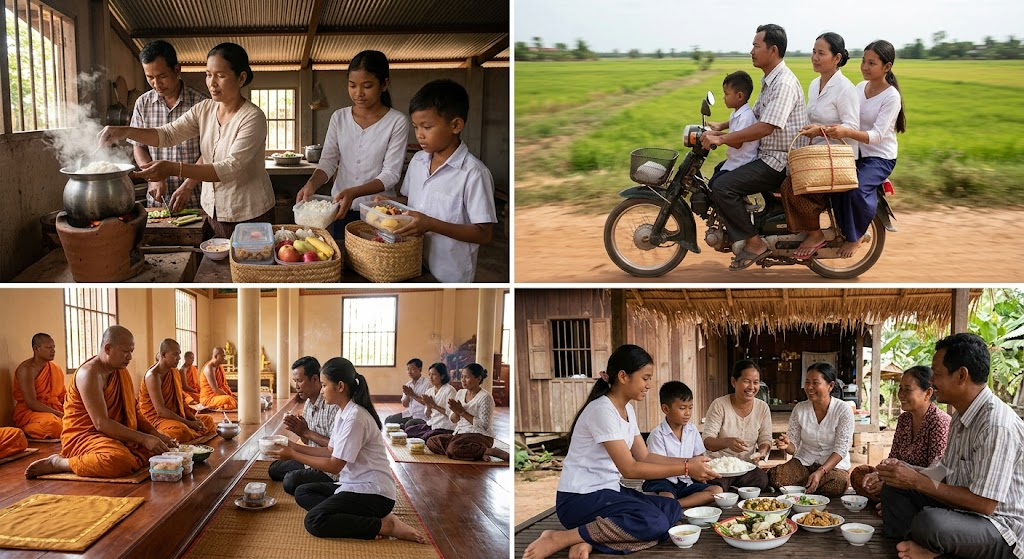
    SMFrockZ@gmx.at

  • ➡️The sacred procession from Kelusa to Ubud (text, exercises, sound files, present simple, A2+)⬅️

    The Sacred Procession of the Deities is an important Balinese religious ceremony. It takes place between Pura Dalem in Kelusa Traditional Village and the Great Temple of Puri Ubud. The ceremony brings people together and shows their respect for the gods and their traditions.

    Before the procession starts, people prepare the temple and the sacred objects. Men and women wear traditional Balinese clothes. The women often carry offerings with flowers, fruit, and food. The men help prepare the sacred objects and the procession.

    The sacred pretima, or holy image of a deity, is carefully carried from Pura Dalem in Kelusa. People walk together in a large group. They pray and show respect during the journey. Traditional music can be heard along the way. Gamelan musicians play their instruments, and the sound gives the procession a special feeling.

    The journey to Ubud is not only a walk from one place to another. It is a spiritual journey. People believe that the sacred objects must be treated with great care. Family members and other people from the village take part in the ceremony.

    When the procession arrives at the Great Temple of Puri Ubud, people continue their prayers. They bring the sacred pretima into the temple. Offerings are placed in special areas. People pray together and ask for peace, safety, and good health.

    The ceremony is also an important part of Balinese culture. Older people can teach younger people about the traditions of their community. Children can see how people prepare and take part in the ceremony.

    For the people of Kelusa and Ubud, this sacred procession is a special time. It connects religion, community, family, and tradition. It also shows how Balinese people continue to respect their spiritual and cultural heritage.

    ______________________________

    Vocabulary:

    heritage – the culture and traditions that people get from older generations

    a sacred procession – a special religious walk with many people

    a ceremony – a special event for a religious or important day

    to show respect – to show that you think someone or something is important

    an offering – food, flowers, or other things given to a god

    a deity – a god or goddess

    a journey – a trip from one place to another

    gamelan – traditional Balinese music played on instruments

    to treat with care – to be very careful with someone or something

    to ask for peace – to ask for a time without war or fighting

    safety – being safe and not in danger

    a community – people who live in the same place or share the same life

    to take part in something – to join an activity or event

    to connect – to bring people or things together

    ##################

    Match the words with the definitions

    1. a sacred procession
    2. a ceremony
    3. to show respect
    4. an offering
    5. a deity
    6. a journey
    7. gamelan
    8. to treat with care
    9. to ask for peace
    10. safety
    11. a community
    12. to take part in something
    13. to connect
    14. heritage


    A. to join an activity or event
    B. traditional Balinese music played on instruments
    C. food, flowers, or other things given to a god
    D. being safe and not in danger
    E. to bring people or things together
    F. a special event for a religious or important day
    G. a trip from one place to another
    H. a god or goddess
    I. a special religious walk with many people
    J. the culture and traditions that people get from older generations
    K. to be very careful with someone or something
    L. to show that you think someone or something is important
    M. people who live in the same place or share the same life
    N. to ask for a time without war or fighting

    ________________________

    Answers:
    1-I, 2-F, 3-L, 4-C, 5-H, 6-G, 7-B, 8-K,
    9-N, 10-D, 11-M, 12-A, 13-E, 14-J

    #################

    Match the definitions with the words

    1. A special religious walk with many people.
    2. A special event for a religious or important day.
    3. To show that you think someone or something is important.
    4. Food, flowers, or other things given to a god.
    5. A god or goddess.
    6. A trip from one place to another.
    7. Traditional Balinese music played on instruments.
    8. To be very careful with someone or something.
    9. To ask for a time without war or fighting.
    10. Being safe and not in danger.
    11. People who live in the same place or share the same life.
    12. To join an activity or event.
    13. To bring people or things together.
    14. The culture and traditions that people get from older generations.

    A. a deity
    B. a journey
    C. safety
    D. to connect
    E. an offering
    F. a community
    G. to take part in something
    H. a ceremony
    I. heritage
    J. to show respect
    K. a sacred procession
    L. gamelan
    M. to ask for peace
    N. to treat with care

    _______________________

    Answers:
    1-K, 2-H, 3-J, 4-E, 5-A, 6-B, 7-L, 8-N,
    9-M, 10-C, 11-F, 12-G, 13-D, 14-I

    #################

    Choose the correct answer: A, B, or C.

    1. A sacred procession is …
      • A. a special religious walk with many people
      • B. a group of people who live in one place
      • C. a trip from one place to another
    2. A ceremony is …
      • A. traditional music played on instruments
      • B. a special event for a religious or important day
      • C. food or flowers given to a god
    3. To show respect means …
      • A. to join an activity or event
      • B. to bring people or things together
      • C. to show that someone or something is important
    4. An offering is …
      • A. a trip from one place to another
      • B. food, flowers, or other things given to a god
      • C. a special religious walk
    5. A deity is …
      • A. a god or goddess
      • B. a person who plays traditional music
      • C. a person who takes part in a ceremony
    6. A journey is …
      • A. a special religious event
      • B. a group of people from the same place
      • C. a trip from one place to another
    7. Gamelan is …
      • A. a special offering
      • B. traditional Balinese music played on instruments
      • C. a religious walk
    8. To treat something with care means …
      • A. to be very careful with it
      • B. to carry it to another place
      • C. to give it to another person
    9. To ask for peace means …
      • A. to ask people to join a ceremony
      • B. to ask for food and flowers
      • C. to ask for a time without war or fighting
    10. Safety means …
    • A. being safe and not in danger
    • B. being part of a community
    • C. being careful with sacred objects
    1. A community is …
    • A. people who play traditional instruments
    • B. people who live in the same place or share the same life
    • C. people who carry offerings
    1. To take part in something means …
    • A. to watch an event
    • B. to prepare something carefully
    • C. to join an activity or event
    1. To connect means …
    • A. to bring people or things together
    • B. to move from one place to another
    • C. to protect something from danger
    1. Heritage means …
    • A. a special place for religious events
    • B. the culture and traditions from older generations
    • C. food and flowers given to a god

    _______________________

    Answers:
    1-A, 2-B, 3-C, 4-B, 5-A, 6-C, 7-B, 8-A,
    9-C, 10-A, 11-B, 12-C, 13-A, 14-B

    _______________________

    Correct version:

    1. A sacred procession is a special religious walk with many people
    2. A ceremony is a special event for a religious or important day
    3. To show respect means to show that you think someone or something is important
    4. An offering is food, flowers, or other things given to a god
    5. A deity is a god or goddess
    6. A journey is a trip from one place to another
    7. Gamelan is traditional Balinese music played on instruments
    8. To treat something with care means to be very careful with someone or something
    9. To ask for peace means to ask for a time without war or fighting
    10. Safety is being safe and not in danger
    11. A community is people who live in the same place or share the same life
    12. To take part in something means to join an activity or event
    13. To connect means to bring people or things together
    14. Heritage is the culture and traditions that people get from older generations

    ################

    Fill in – words below:


    a sacred procession · a ceremony · to show respect · an offering ·
    a deity · a journey · gamelan · to treat with care ·
    to ask for peace · safety · a community ·
    to take part in something ·
    to connect · heritage

    1. The __________ is an important Balinese religious event.
    2. The people prepare for the __________ before the procession starts.
    3. The women often carry __________ with flowers, fruit, and food.
    4. The sacred pretima is a holy image of __________.
    5. People walk together during the __________ to Ubud.
    6. Traditional __________ can be heard along the way.
    7. People pray and __________ during the journey.
    8. People believe that the sacred objects must be __________.
    9. The people pray together and __________, __________, and good health.
    10. Family members and other people from the village __________ the ceremony.
    11. The ceremony brings people together and helps __________ religion, family, and tradition.
    12. The people of Kelusa and Ubud are part of the same __________.
    13. The ceremony helps young people learn about their cultural __________.
    14. The journey is more than a walk; it is a special religious __________.
    15. The ceremony shows how people continue to respect their spiritual and cultural __________.

    ————————————–

    Correct version:

    1. The sacred procession is an important Balinese religious event.
    2. The people prepare for the ceremony before the procession starts.
    3. The women often carry offerings with flowers, fruit, and food.
    4. The sacred pretima is a holy image of a deity.
    5. People walk together during the journey to Ubud.
    6. Traditional gamelan can be heard along the way.
    7. People pray and show respect during the journey.
    8. People believe that the sacred objects must be treated with care.
    9. The people pray together and ask for peace, safety, and good health.
    10. Family members and other people from the village take part in the ceremony.
    11. The ceremony helps connect religion, family, and tradition.
    12. The people of Kelusa and Ubud are part of the same community.
    13. The ceremony helps young people learn about their cultural heritage.
    14. The journey is more than a walk; it is a special religious journey.
    15. The ceremony shows how people continue to respect their spiritual and cultural heritage.

    ####################

    Read each statement.
    Find the exact sentence in the text that gives this information.

    1. People put on traditional clothes before the procession.

      You write – evidence:
      Men and women wear traditional Balinese clothes.

    2. Women bring flowers, fruit, and food as gifts.
      → Evidence: ______________________________
    3. The pretima represents a god.
      → Evidence: ______________________________
    4. Music is part of the procession.
      → Evidence: ______________________________
    5. The journey has a religious meaning.
      → Evidence: ______________________________
    6. People handle the sacred objects very carefully.
      → Evidence: ______________________________
    7. The prayers include wishes for peace, safety, and good health.
      → Evidence: ______________________________
    8. People from the village join the ceremony.
      → Evidence: ______________________________
    9. The sacred pretima enters the temple in Ubud.
      → Evidence: ______________________________
    10. People leave offerings at special places in the temple.
      → Evidence: ______________________________
    11. Older people pass their traditions to younger people.
      → Evidence: ______________________________
    12. Children watch how people prepare for the ceremony.
      → Evidence: ______________________________
    13. The ceremony brings religion, family, community, and tradition together.
      → Evidence: ______________________________
    14. The ceremony helps keep Balinese culture and traditions alive.
      → Evidence: ______________________________

    ——————————————-

    Correct version:

    1. People put on traditional clothes before the procession.
      → “Men and women wear traditional Balinese clothes.”
    2. Women bring flowers, fruit, and food as gifts.
      → “The women often carry offerings with flowers, fruit, and food.”
    3. The pretima represents a god.
      → “The sacred pretima, or holy image of a deity, is carefully carried from Pura Dalem in Kelusa.”
    4. Music is part of the procession.
      → “Traditional music can be heard along the way.”
    5. The journey has a religious meaning.
      → “It is a spiritual journey.”
    6. People handle the sacred objects very carefully.
      → “People believe that the sacred objects must be treated with great care.”
    7. The prayers include wishes for peace, safety, and good health.
      → “People pray together and ask for peace, safety, and good health.”
    8. People from the village join the ceremony.
      → “Family members and other people from the village take part in the ceremony.”
    9. The sacred pretima enters the temple in Ubud.
      → “They bring the sacred pretima into the temple.”
    10. People leave offerings at special places in the temple.
      → “Offerings are placed in special areas.”
    11. Older people pass their traditions to younger people.
      → “Older people can teach younger people about the traditions of their community.”
    12. Children watch how people prepare for the ceremony.
      → “Children can see how people prepare and take part in the ceremony.”
    13. The ceremony brings religion, family, community, and tradition together.
      → “It connects religion, community, family, and tradition.”
    14. The ceremony helps keep Balinese culture and traditions alive.
      → “It also shows how Balinese people continue to respect their spiritual and cultural heritage.”

    ##################

    Read each sentence from the text. Identify who or what the word/s refer/s to.

    1. They pray and show respect during the journey.
      → Who are “they”?

      YOU WRITE:
      The people in the procession

    2. It is a spiritual journey.
      → What is “it”? ______________________
    3. They bring the sacred pretima into the temple.
      → Who are “they”? ______________________
    4. They place offerings in special areas.
      → Who are “they”? ______________________
    5. It connects religion, community, family, and tradition.
      → What is “it”? ______________________
    6. They walk together in a large group.
      → Who are “they”? ______________________
    7. Their sound gives the procession a special feeling.
      → Whose sound is it? ______________________
    8. They prepare the sacred objects and the procession.
      → Who are “they”? ______________________
    9. It is carefully carried from Pura Dalem in Kelusa.
      → What is “it”? ______________________
    10. They pray together and ask for peace, safety, and good health.
      → Who are “they”? ______________________
    11. They take part in the ceremony.
      → Who are “they”? ______________________
    12. They can see how people prepare and take part in the ceremony.
      → Who are “they”? ______________________
    13. Their community has important traditions.
      → Whose community is it? ______________________
    14. It also shows how Balinese people continue to respect their spiritual and cultural heritage.
      → What is “it”? ______________________
    15. They wear traditional Balinese clothes.
      → Who are “they”? ______________________

    ————————————-

    Correct answers:

    They wear traditional Balinese clothes.
    → Who are “they”? Men and women.

    They pray and show respect during the journey.
    → Who are “they”? The people in the procession.

    It is a spiritual journey.
    → What is “it”? The journey to Ubud.

    They bring the sacred pretima into the temple.
    → Who are “they”? The people in the procession.

    They place offerings in special areas.
    → Who are “they”? The people at the temple.

    It connects religion, community, family, and tradition.
    → What is “it”? The ceremony.

    They walk together in a large group.
    → Who are “they”? The people in the procession.

    Their sound gives the procession a special feeling.
    → Whose sound is it? The gamelan musicians‘ sound.

    They prepare the sacred objects and the procession.
    → Who are “they”? The men.

    It is carefully carried from Pura Dalem in Kelusa.
    → What is “it”? The sacred pretima.

    They pray together and ask for peace, safety, and good health.
    → Who are “they”? The people in the ceremony.

    They take part in the ceremony.
    → Who are “they”? Family members and other people from the village.

    They can see how people prepare and take part in the ceremony.
    → Who are “they”? Children.

    Their community has important traditions.
    → Whose community is it? The people of Kelusa and Ubud.

    It also shows how Balinese people continue to respect their spiritual and cultural heritage.
    → What is “it”? The ceremony.

    ###################

    Put the events in order:

    A. People bring the sacred pretima into the temple.
    B. People prepare the temple and sacred objects.
    C. People walk together from Kelusa towards Ubud.
    D. People continue their prayers at the Great Temple of Puri Ubud.
    E. Women carry offerings with flowers, fruit, and food.
    F. Gamelan musicians play their instruments during the procession.
    G. People wear traditional Balinese clothes.
    H. People pray and show respect during the journey.

    _________________________

    Answers: B-1, G-2, E-3, C-4, F-5, H-6, A-7, D-8

    _________________________

    Correct order:

    People prepare the temple and sacred objects.

    People wear traditional Balinese clothes.

    Women carry offerings with flowers, fruit, and food.

    People walk together from Kelusa towards Ubud.

    Gamelan musicians play their instruments during the procession.

    People pray and show respect during the journey.

    People bring the sacred pretima into the temple.

    People continue their prayers at the Great Temple of Puri Ubud.

    ####################

    Find two pieces of information in the text for each question.

    1. What do women carry?
      → ______________________________
      → ______________________________
    2. What do people do during the journey?
      → ______________________________
      → ______________________________
    3. What do people ask for in their prayers?
      → ______________________________
      → ______________________________
    4. What can children learn from the ceremony?
      → ______________________________
      → ______________________________
    5. What do people prepare before the procession starts?
      → ______________________________
      → ______________________________
    6. What do people do when the procession arrives at the temple?
      → ______________________________
      → ______________________________
    7. What does the ceremony connect?
      → ______________________________
      → ______________________________
    8. What can older people teach younger people?
      → ______________________________
      → ______________________________

    ————————————-

    Correct answers:

    1. What do women carry?
      → Flowers
      → Fruit and food
    2. What do people do during the journey?
      → They pray.
      → They show respect.
    3. What do people ask for in their prayers?
      → Peace
      → Safety and good health
    4. What can children learn from the ceremony?
      → They can learn about the traditions of their community.
      → They can see how people prepare and take part in the ceremony.
    5. What do people prepare before the procession starts?
      → The temple
      → The sacred objects
    6. What do people do when the procession arrives at the temple?
      → They continue their prayers.
      → They bring the sacred pretima into the temple.
    7. What does the ceremony connect?
      → Religion and community
      → Family and tradition
    8. What can older people teach younger people?
      → The traditions of their community.
      → How to respect their culture and traditions.

    ##################

    General idea or specific detail?

    When you read a text, you can find general ideas and specific details.

    A general idea gives the big picture. It tells you something important about the whole text or a larger part of it.

    A specific detail gives one exact piece of information. It can tell you about a person, place, thing, action, or event.

    Remember:

    General idea = the big picture
    Specific detail = one exact fact

    1. The ceremony is an important part of Balinese culture.
      → __________________
    2. Women often carry offerings with flowers, fruit, and food.
      → __________________
    3. The procession brings people together.
      → __________________
    4. Gamelan musicians play their instruments along the way.
      → __________________
    5. People pray for peace, safety, and good health.
      → __________________
    6. The ceremony connects religion, community, family, and tradition.
      → __________________
    7. The sacred pretima is carried from Pura Dalem in Kelusa.
      → __________________
    8. Older people teach younger people about their traditions.
      → __________________
    9. The procession is an important religious event.
      → __________________
    10. The women carry flowers, fruit, and food.
      → __________________

    ———————————-

    Correct answers:

    1. The ceremony is an important part of Balinese culture.
      → GENERAL IDEA
      Why? It tells us about the importance of the ceremony as a whole.
    2. Women often carry offerings with flowers, fruit, and food.
      → SPECIFIC DETAIL
      Why? It gives exact information about what the women carry.
    3. The procession brings people together.
      → GENERAL IDEA
      Why? It tells us one important general purpose of the ceremony.
    4. Gamelan musicians play their instruments along the way.
      → SPECIFIC DETAIL
      Why? It gives one exact action during the procession.
    5. People pray for peace, safety, and good health.
      → SPECIFIC DETAIL
      Why? It tells us exactly what people ask for in their prayers.
    6. The ceremony connects religion, community, family, and tradition.
      → GENERAL IDEA
      Why? It describes the wider meaning of the ceremony.
    7. The sacred pretima is carried from Pura Dalem in Kelusa.
      → SPECIFIC DETAIL
      Why? It gives exact information about the pretima and its starting place.
    8. Older people teach younger people about their traditions.
      → SPECIFIC DETAIL
      Why? It describes one particular way the ceremony helps younger people.
    9. The procession is an important religious event.
      → GENERAL IDEA
      Why? It gives a broad idea about the importance of the procession.
    10. The women carry flowers, fruit, and food.
      → SPECIFIC DETAIL
      Why? It gives exact information about what the women carry.

    #####################

    What Happens Where?
    Match each place or part of the ceremony with what happens there.


    Places and parts

    1. Pura Dalem in Kelusa
    2. Before the procession starts
    3. The temple
    4. During the journey
    5. Along the way
    6. The Great Temple of Puri Ubud
    7. Special areas in the temple
    8. The village
    9. The community
    10. The procession
    11. The ceremony
    12. The journey to Ubud

    What happens?

    A. People place offerings in special areas.
    B. People pray and show respect.
    C. The sacred pretima is carefully carried from there.
    D. People prepare the temple and sacred objects.
    E. Gamelan musicians play their instruments.
    F. People bring the sacred pretima into the temple.
    G. People learn about their traditions.
    H. People from the village take part in the ceremony.
    I. People walk together in a large group.
    J. People continue their prayers.
    K. It connects religion, community, family, and tradition.
    L. It is a spiritual journey.

    ______________________

    Answers:
    1-C, 2-D, 3-J, 4-B, 5-E, 6-F,
    7-A, 8-H, 9-G, 10-I, 11-K, 12-L
    ______________________

    Correct version:

    Pura Dalem in Kelusa – The sacred pretima is carefully carried from there.

    Before the procession starts – People prepare the temple and sacred objects.

    The temple – People continue their prayers.

    During the journey – People pray and show respect.

    Along the way – Gamelan musicians play their instruments.

    The Great Temple of Puri Ubud – People bring the sacred pretima into the temple.

    Special areas in the temple – People place offerings there.

    The village – People from the village take part in the ceremony.

    The community – People learn about their traditions.

    The procession – People walk together in a large group.

    The ceremony – It connects religion, community, family, and tradition.

    The journey to Ubud – It is a spiritual journey.

    ##################

    Use this cheat sheet,
    give a speech,
    record it on your mobile phone,
    listen to it……

    1. Introduction

    • Name of the ceremony
    • Balinese religious ceremony
    • Kelusa and Ubud
    • Importance for the people

    2. Before the Procession

    • Preparing the temple
    • Preparing sacred objects
    • Traditional Balinese clothes
    • Women and offerings
    • Men and sacred objects

    3. The Procession

    • Sacred pretima
    • Pura Dalem in Kelusa
    • People walking together
    • Prayers and respect
    • Gamelan music
    • Spiritual journey

    4. At the Great Temple

    • Arrival at Puri Ubud
    • Continuing prayers
    • Sacred pretima entering the temple
    • Offerings
    • Peace, safety, and good health

    5. People and Tradition

    • Families
    • Village community
    • Older people and younger people
    • Children
    • Learning traditions
    • Balinese culture

    6. Importance

    • Religion
    • Community
    • Family
    • Tradition
    • Spiritual and cultural heritage
    • Respect for the gods and traditions

    7. Conclusion

    • Special time for Kelusa and Ubud
    • Importance of the ceremony
    • Continuing traditions
    • Connection between people, religion, and culture

    ##################

    ##################

    ##################

    ##################

    Please use the box below
    to write your feedback.
    Only I can read it.
    It is not public.

    Please tell me:

    • Are the texts and exercises OK?
    • Are the topics OK?
    • Is the level OK?
    • Is it too easy or too difficult?
    • Do you want texts about other topics?

    Thank you! I appreciate your feedback.

    ##################

    ##################

    ##################

    Remember how babies
    learn a language:

    Babies learn a language by listening.
    They use their ears to hear sounds.
    Their brain remembers these sounds.
    Babies connect sounds with people and things.
    They listen to their parents.
    Then they copy the sounds they hear. They imitate words.
    Slowly, babies learn to speak.


    So,
    LISTEN, LISTEN, LISTEN, LISTEN………………

  • 🩷🩷🩷Vienna, my hometown (text, exercises, sound files, present simple, A2)🩷🩷🩷

    Vienna is the capital of Austria. It is a large and beautiful city. About two million people live in Vienna. The city lies on the Danube River. Vienna is famous for its old buildings, music, parks, cafés and history.

    The centre of Vienna is very interesting. St. Stephen’s Cathedral stands in the heart of the city. It has a very large roof with colourful tiles. Visitors can walk around the cathedral and see many old streets nearby.

    Another famous place is Hofburg Palace. It is in the centre of Vienna and has many beautiful buildings. The Hofburg is connected with the history of the Austrian emperors. Today, it is also an important place for the Austrian government.

    Schönbrunn Palace is one of the most popular sights in Vienna. The palace has many rooms and a large garden. People walk through the garden and enjoy the beautiful views. There is also a zoo called Tiergarten Schönbrunn. It is one of the oldest zoos in the world.

    Vienna also has many interesting squares and streets. Stephansplatz, Graben and Kärntner Straße are busy places with shops, cafés and restaurants. At the Hoher Markt, visitors see the famous Anker Clock. The figures move every day at noon.

    Vienna is also a city of music. Famous composers such as Mozart, Beethoven and Strauss live and work here. Today, people can still hear classical music in concert halls and churches.

    Vienna has many green places too. Prater is a large park with walking paths and the famous Giant Ferris Wheel. People enjoy the park, especially on sunny days.

    Vienna is easy to explore by underground trains, trams and buses. Many sights are close to each other in the city centre. Visitors can walk, take a tram or use the underground.

    Vienna offers history, beautiful buildings, music, parks and good food. It is a city that gives visitors many things to see and enjoy.

    ________________________

    Vocabulary:

    Word / phraseDefinition
    a capitalThe main city of a country.
    to lie on a riverTo be next to a river.
    a buildingA place with walls and a roof where people live or work.
    a caféA small place where you can buy coffee, drinks and food.
    the heart of a cityThe centre of a city, often calla the City.
    a roofThe top part of a building.
    tilesSmall flat pieces used to cover a roof or a floor.
    nearbyNot far away.
    an emperorA man who is the ruler of an empire.
    a governmentThe people who run a country.
    to enjoy a viewTo like looking at a beautiful place.
    a squareAn open place in a city, often with buildings and shops around it.
    a busy placeA place with many people or cars.
    at noonAt 12 o’clock in the middle of the day.
    a composerA person who writes music.
    classical musicMusic written by famous composers, often a long time ago.
    a concert hallA large building where people listen to music.
    a churchA building where Christians go to pray.
    a walking pathA path where people can walk.
    a Giant Ferris WheelA very large wheel with small seats that moves around and gives a high view.
    especiallyMore than other things or people.
    to exploreTo go around a place and learn about it.
    a tramA vehicle that carries people in a city and runs on tracks.
    to offerTo give or provide something.
    a visitorA person who comes to a place for a short time.

    ##################

    Match the words with the definitions

    Words

    1. a capital
    2. to lie on a river
    3. a building
    4. a café
    5. the heart of a city
    6. a roof
    7. tiles
    8. nearby
    9. an emperor
    10. a government
    11. to enjoy a view
    12. a square
    13. a busy place
    14. at noon
    15. a composer
    16. classical music
    17. a concert hall
    18. a church
    19. a walking path
    20. a Giant Ferris Wheel
    21. especially
    22. to explore
    23. a tram
    24. to offer
    25. a visitor


    Definitions

    A. A place where Christians go to pray.
    B. A person who comes to a place for a short time.
    C. The top part of a building.
    D. To give or provide something.
    E. A person who writes music.
    F. Not far away.
    G. A large building where people listen to music.
    H. The main city of a country.
    I. A path where people can walk.
    J. To go around a place and learn about it.
    K. A small place where you can buy coffee, drinks and food.
    L. At 12 o’clock in the middle of the day.
    M. Small flat pieces used to cover a roof or a floor.
    N. A place with many people or cars.
    O. To like looking at a beautiful place.
    P. A man who is the ruler of an empire.
    Q. An open place in a city, often with buildings around it.
    R. A vehicle that carries people in a city and runs on tracks.
    S. Music written by famous composers, often a long time ago.
    T. A place with walls and a roof where people live or work.
    U. More than other things or people.
    V. To be next to a river.
    W. The centre of a city.
    X. A very large wheel with small seats that moves around.
    Y. The people who run a country.

    __________________________

    Answers:
    1-H, 2-V, 3-T, 4-K, 5-W, 6-C,
    7-M, 8-F, 9-P, 10-Y, 11-O, 12-Q,
    13-N, 14-L, 15-E, 16-S, 17-G,
    18-A, 19-I, 20-X, 21-U, 22-J,
    23-R, 24-D, 25-B

    ##################

    Match the definitions with the words

    Definitions

    1. The main city of a country.
    2. A place with walls and a roof where people live or work.
    3. To like looking at a beautiful place.
    4. A man who is the ruler of an empire.
    5. A vehicle that carries people in a city and runs on tracks.
    6. Not far away.
    7. A large building where people listen to music.
    8. Small flat pieces used to cover a roof or a floor.
    9. The centre of a city.
    10. A person who comes to a place for a short time.
    11. At 12 o’clock in the middle of the day.
    12. A place where Christians go to pray.
    13. To give or provide something.
    14. A path where people can walk.
    15. A small place where you can buy coffee, drinks and food.
    16. A person who writes music.
    17. An open place in a city, often with buildings around it.
    18. To be next to a river.
    19. Music written by famous composers, often a long time ago.
    20. A very large wheel with small seats that moves around.
    21. More than other things or people.
    22. A place with many people or cars.
    23. The people who run a country.
    24. To go around a place and learn about it.
    25. The top part of a building.


    Words

    A. a tram
    B. a roof
    C. a visitor
    D. a capital
    E. a busy place
    F. to explore
    G. a composer
    H. tiles
    I. to lie on a river
    J. a church
    K. classical music
    L. a square
    M. nearby
    N. a government
    O. a concert hall
    P. especially
    Q. a building
    R. to enjoy a view
    S. a café
    T. a Giant Ferris Wheel
    U. the heart of a city
    V. an emperor
    W. to offer
    X. at noon
    Y. a walking path

    ___________________________

    Answers:
    1-D, 2-Q, 3-R, 4-V, 5-A, 6-M,
    7-O, 8-H, 9-U, 10-C, 11-X, 12-J,
    13-W, 14-Y, 15-S, 16-G, 17-L,
    18-I, 19-K, 20-T, 21-P, 22-E,
    23-N, 24-F, 25-B

    ###################

    Choose the correct word/s

    1. If you travel to Austria, is Vienna the capital or the government?
    2. If you are in the centre of Vienna, are you in the heart of the city or a walking path?
    3. What do you see on the roof of St. Stephen’s Cathedral: tiles or walking paths?
    4. In the time of the Austrian rulers, was the ruler an emperor or a visitor?
    5. Who writes music for an orchestra: a composer or a visitor?
    6. When you listen to Mozart or Beethoven, are you listening to classical music or pop music?
    7. Where can you sit and listen to an orchestra: in a concert hall or a café?
    8. Where can people meet in an open place in the city: in a square or a building?
    9. If there are many people, cars and shops, is it a busy place or a walking path?
    10. If you walk around a new city and discover interesting places, do you explore or offer the city?
    11. If a city is next to the Danube, does it lie on a river or walk on a river?
    12. Which attraction can you ride high above the Prater: the Giant Ferris Wheel or the tram?
    13. If you stand on a hill and look at Vienna, can you enjoy a view or build a view?
    14. If a café is only a short walk from your hotel, is it nearby or far away?
    15. If a hotel gives guests breakfast, does the hotel offer or explore breakfast?
    16. If you come to Vienna for a holiday, are you a visitor or an emperor?
    17. Where can Christians go to pray: in a church or a concert hall?
    18. What can you take through Vienna on tracks: a tram or a bus?
    19. If you like one place more than the others, can you say you like it especially or nearby?
    20. When do the figures on the Anker Clock move: at noon or at midnight?

    __________________________

    Answers:

    1. If you travel to Austria, is Vienna the capital or the government?
      the capital
    2. If you are in the centre of Vienna, are you in the heart of the city or in a walking path?
      the heart of the city
    3. What do you see on the roof of St. Stephen’s Cathedral: tiles or walking paths?
      tiles
    4. In the time of the Austrian emperors, was the ruler an emperor or a visitor?
      an emperor
    5. Who writes music for an orchestra: a composer or a visitor?
      a composer
    6. When you listen to Mozart or Beethoven, are you listening to classical music or pop music?
      classical music
    7. Where can you sit and listen to an orchestra: in a concert hall or a café?
      a concert hall
    8. Where can people meet in an open place in the city: in a square or a building?
      a square
    9. If there are many people, cars and shops, is it a busy place or a walking path?
      a busy place
    10. If you walk around a new city and discover interesting places, do you explore the city or offer the city?
      explore
    11. If a city is next to the Danube, does it lie on a river or walk on a river?
      lie on a river
    12. Which attraction can you ride high above the Prater: the Giant Ferris Wheel or the tram?
      the Giant Ferris Wheel
    13. If you stand on a hill and look at Vienna, can you enjoy a view or build a view?
      enjoy a view
    14. If a café is only a short walk from your hotel, is it nearby or far away?
      nearby
    15. If a hotel gives guests breakfast, does the hotel offer breakfast or explore breakfast?
      offer
    16. If you come to Vienna for a holiday, are you a visitor or an emperor?
      a visitor
    17. Where can Christians go to pray: in a church or a concert hall?
      a church
    18. What can you take through Vienna on tracks: a tram or a bus?
      a tram
    19. If you like one place more than the others, can you say you like it especially or nearby?
      especially
    20. When do the figures on the Anker Clock move: at noon or at midnight?
      at noon

    ###################

    True or false:

    1. The Anker Clock moves every day at noon.
    2. The Prater is a small park.
    3. The Hofburg is connected with the history of the Austrian emperors.
    4. Vienna has no underground trains.
    5. Mozart, Beethoven and Strauss are connected with Vienna.
    6. Schönbrunn Palace has a large garden.
    7. The Giant Ferris Wheel is at Schönbrunn Palace.
    8. About two million people live in Vienna.
    9. Stephansplatz, Graben and Kärntner Straße have no shops or cafés.
    10. Vienna is the capital of Austria.
    11. Visitors can only travel around Vienna by bus.
    12. Tiergarten Schönbrunn is one of the oldest zoos in the world.
    13. The Prater is a large park.
    14. St. Stephen’s Cathedral is outside the centre of Vienna.
    15. Vienna has no green places.
    16. The Hofburg is outside the centre of Vienna.
    17. Vienna lies on the Danube River.
    18. Schönbrunn Palace has no garden.
    19. The Anker Clock is at the Hoher Markt.
    20. St. Stephen’s Cathedral is in the heart of Vienna.

    ________________________

    True: 1,3,5,6,8,10,12,13,17,19,20

    ________________________

    Correct version:
    The Anker Clock moves every day at noon.

    The Prater is a small park.
    True is: The Prater is a large park.

    The Hofburg is connected with the history of the Austrian emperors.

    Vienna has no underground trains.
    True is: Vienna has underground trains.

    Mozart, Beethoven and Strauss are connected with Vienna.

    Schönbrunn Palace has a large garden.

    The Giant Ferris Wheel is at Schönbrunn Palace.
    True is: The Giant Ferris Wheel is in the Prater.

    About two million people live in Vienna.

    Stephansplatz, Graben and Kärntner Straße have no shops or cafés.
    True is: Stephansplatz, Graben and Kärntner Straße have shops, cafés and restaurants.

    Vienna is the capital of Austria.

    Visitors can only travel around Vienna by bus.
    True is: Visitors can travel around Vienna by underground trains, trams and buses.

    Tiergarten Schönbrunn is one of the oldest zoos in the world.

    The Prater is a large park.

    St. Stephen’s Cathedral is outside the centre of Vienna.
    True is: St. Stephen’s Cathedral is in the heart of Vienna.

    Vienna has no green places.
    True is: Vienna has many green places.

    The Hofburg is outside the centre of Vienna.
    True is: The Hofburg is in the centre of Vienna.

    Vienna lies on the Danube River.

    Schönbrunn Palace has no garden.
    True is: Schönbrunn Palace has a large garden.

    The Anker Clock is at the Hoher Markt.

    St. Stephen’s Cathedral is in the heart of Vienna.

    ################
    Connect the halves:

    First:

    1. Vienna is famous for
    2. About two million people
    3. St. Stephen’s Cathedral has
    4. Visitors can walk around
    5. The Hofburg is in
    6. Today, the Hofburg is also
    7. Schönbrunn Palace is one of
    8. People can walk through
    9. The Anker Clock is at
    10. The figures on the Anker Clock
    11. Vienna is also a city
    12. The Prater has
    13. Vienna is easy to explore
    14. Many sights are close
    15. Visitors can walk, take a tram

    Second:

    A. the garden at Schönbrunn Palace.
    B. with underground trains, trams and buses.
    C. the Hoher Markt.
    D. its very large roof with colourful tiles.
    E. live in Vienna.
    F. of music.
    G. an important place for the Austrian government.
    H. history, music, parks and cafés.
    I. to each other in the city centre.
    J. one of the most popular sights in Vienna.
    K. the cathedral and see many old streets nearby.
    L. move every day at noon.
    M. the famous Giant Ferris Wheel.
    N. the centre of Vienna.
    O. or use the underground.

    ____________________

    Answers:
    1-H, 2-E, 3-D, 4-K, 5-N, 6-G,
    7-J, 8-A, 9-C, 10-L, 11-F, 12-M,
    13-B, 14-I, 15-O

    ____________________

    Connect the two halves

    1. Vienna is famous for history, music, parks and cafés.
    2. About two million people live in Vienna.
    3. St. Stephen’s Cathedral has a very large roof with colourful tiles.
    4. Visitors can walk around the cathedral and see many old streets nearby.
    5. The Hofburg is in the centre of Vienna.
    6. Today, the Hofburg is also an important place for the Austrian government.
    7. Schönbrunn Palace is one of the most popular sights in Vienna.
    8. People can walk through the garden at Schönbrunn Palace.
    9. The Anker Clock is at the Hoher Markt.
    10. The figures on the Anker Clock move every day at noon.
    11. Vienna is also a city of music.
    12. The Prater has the famous Giant Ferris Wheel.
    13. Vienna is easy to explore with underground trains, trams and buses.
    14. Many sights are close to each other in the city centre.
    15. Visitors can walk, take a tram or use the underground.

    ###################

    Find the place

    St. Stephen’s Cathedral – Hofburg – Schönbrunn Palace – Hoher Markt – Prater

    1. __________ has the famous Anker Clock.
    2. __________ has a large garden and a zoo nearby.
    3. __________ is connected with the Austrian emperors.
    4. __________ has the famous Giant Ferris Wheel.
    5. __________ has a very large roof with colourful tiles.
    6. __________ is in the centre of Vienna and has many beautiful buildings.
    7. __________ is one of the most popular sights in Vienna.
    8. __________ is a busy place with shops, cafés and restaurants nearby.
    9. __________ is in the heart of the city.
    10. __________ is a large park with walking paths.

    —————————————-

    Answers:
    1. Hoher Markt, 2. Schönbrunn Palace, 3. Hofburg, 4. Prater, 5. St. Stephen’s Cathedral, 6. Hofburg, 7. Schönbrunn Palace, 8. Hoher Markt, 9. St. Stephen’s Cathedral, 10. Prater.

    _________________________
    Correct version:


    Hoher Markt has the famous Anker Clock.

    Schönbrunn Palace has a large garden and a zoo nearby.

    The Hofburg is connected with the Austrian emperors.

    The Prater has the famous Giant Ferris Wheel.

    St. Stephen’s Cathedral has a very large roof with colourful tiles.

    The Hofburg is in the centre of Vienna and has many beautiful buildings.

    Schönbrunn Palace is one of the most popular sights in Vienna.

    Hoher Markt is a busy place with shops, cafés and restaurants nearby.

    St. Stephen’s Cathedral is in the heart of the city.

    The Prater is a large park with walking paths.

    ##################

    Write the correct answer from the text

    1. What is the capital of Austria? __________
    2. What river is Vienna next to? __________
    3. What building has a large roof with colourful tiles? __________
    4. What palace is connected with the Austrian emperors? __________
    5. What palace has a large garden? __________
    6. What clock is at the Hoher Markt? __________
    7. What park has the Giant Ferris Wheel? __________
    8. What zoo is at Schönbrunn? __________
    9. Which three composers are mentioned? __________
    10. What transport runs on tracks? __________

    ————————————–

    Correct answers:

    1. What is the capital of Austria? Vienna
    2. What river is Vienna next to? the Danube River
    3. What building has a large roof with colourful tiles? St. Stephen’s Cathedral
    4. What palace is connected with the Austrian emperors? the Hofburg Palace
    5. What palace has a large garden? Schönbrunn Palace
    6. What clock is at the Hoher Markt? the Anker Clock
    7. What park has the Giant Ferris Wheel? the Prater
    8. What zoo is at Schönbrunn? Tiergarten Schönbrunn
    9. Which three composers are mentioned? Mozart, Beethoven and Strauss
    10. What transport runs on tracks? a tram
    11. What is the centre of Vienna called? the heart of the city
    12. What famous wheel is in the Prater? the Giant Ferris Wheel
    13. What three places have shops, cafés and restaurants? Stephansplatz, Graben and Kärntner Straße
    14. Where can people hear classical music? in concert halls and churches
    15. What three types of transport can visitors use in Vienna? underground trains, trams and buses

    #####################

    Match the questions with the answers

    Questions

    1. What kind of city is Vienna?
    2. Where does Vienna lie?
    3. Which building stands in the heart of the city?
    4. What is the Hofburg connected with?
    5. What makes Schönbrunn Palace special?
    6. Where is the Anker Clock?
    7. What are Stephansplatz, Graben and Kärntner Straße like?
    8. Which famous composers lived and worked in Vienna?
    9. What makes the Prater special?
    10. Which types of transport are available in Vienna?
    11. Why is Vienna easy to explore?
    12. What does Vienna offer visitors?

    Answers

    A. The famous clock is located at the Hoher Markt.

    B. The Hofburg has a strong connection with the Austrian emperors.

    C. Vienna has about two million people and many beautiful places.

    D. Visitors find history, beautiful buildings, music, parks and good food.

    E. The Prater contains walking paths and the famous Giant Ferris Wheel.

    F. Mozart, Beethoven and Strauss worked in Vienna.

    G. Many sights are close to each other in the city centre.

    H. St. Stephen’s Cathedral stands there, with its large roof and colourful tiles.

    I. Schönbrunn Palace contains many rooms and a large garden, and a zoo is nearby.

    J. Visitors have underground trains, trams and buses.

    K. The city lies beside the Danube River.

    L. They contain shops, cafés and restaurants.

    _______________________

    Answers:
    1-C, 2-K, 3-H, 4-B, 5-I, 6-A,
    7-L, 8-F, 9-E, 10-J, 11-G, 12-D
    _______________________

    Full version:

    1. Interviewer: What kind of city is Vienna?
    Tourist Manager: Vienna has about two million people and many beautiful places. It is the capital of Austria.

    2. Interviewer: Where does Vienna lie?
    Tourist Manager: The city lies beside the Danube River.

    3. Interviewer: Which building stands in the heart of the city?
    Tourist Manager: St. Stephen’s Cathedral stands there. It has a very large roof with colourful tiles.

    4. Interviewer: What is the Hofburg connected with?
    Tourist Manager: The Hofburg has a strong connection with the Austrian emperors.

    5. Interviewer: What makes Schönbrunn Palace special?
    Tourist Manager: The palace contains many rooms and a large garden. A famous zoo is nearby.

    6. Interviewer: Where is the Anker Clock?
    Tourist Manager: The famous clock is located at the Hoher Markt. Its figures move every day at noon.

    7. Interviewer: What are Stephansplatz, Graben and Kärntner Straße like?
    Tourist Manager: They contain shops, cafés and restaurants.

    8. Interviewer: Which famous composers lived and worked in Vienna?
    Tourist Manager: Mozart, Beethoven and Strauss worked in Vienna.

    9. Interviewer: What makes the Prater special?
    Tourist Manager: The Prater contains walking paths and the famous Giant Ferris Wheel.

    10. Interviewer: Which types of transport are available in Vienna?
    Tourist Manager: Visitors have underground trains, trams and buses.

    11. Interviewer: Why is Vienna easy to explore?
    Tourist Manager: Many sights are close to each other in the city centre.

    12. Interviewer: What does Vienna offer visitors?
    Tourist Manager: Visitors find history, beautiful buildings, music, parks and good food.

    ################

    ##################

    ##################

    ##################

    ##################

    Please use the box below
    to write your feedback.
    Only I can read it.
    It is not public.

    Please tell me:

    • Are the texts and exercises OK?
    • Are the topics OK?
    • Is the level OK?
    • Is it too easy or too difficult?
    • Do you want texts about other topics?

    Thank you! I appreciate your feedback.

    ##################

    ##################

    ##################

    Remember how babies
    learn a language:

    Babies learn a language by listening.
    They use their ears to hear sounds.
    Their brain remembers these sounds.
    Babies connect sounds with people and things.
    They listen to their parents.
    Then they copy the sounds they hear. They imitate words.
    Slowly, babies learn to speak.


    So,
    LISTEN, LISTEN, LISTEN, LISTEN………………
  • 🥳🏖️🥰Sita’s happy day (text, exercises, sound files, past simple, A1, beginners)🥰🏖️🥰

    – A simple story about a girl in Bali

    WordA1 definition
    earlybefore the usual time
    a facethe front part of your head with eyes, nose, and mouth
    breakfastthe first meal of the day
    a fruitfood from a plant, often sweet
    a beacha place with sand next to the sea
    a good timea happy and fun time
    lunchthe meal you eat in the middle of the day
    eveningthe time after the afternoon and before night
    outside the housenot inside the house
    a skythe space above the Earth
    a stara bright light in the night sky

    ##################

    Regular and irregular verbs in text:

    Verb (infinitive)Past simpleDefinition
    to livelivedto have your home in a place
    to bewas / wereto exist or to say what someone or something is
    to get upgot upto leave your bed after sleeping
    to washwashedto make something clean with water
    to eatateto put food in your mouth and swallow it
    to walkwalkedto move on your feet
    to seesawto look with your eyes and notice something
    to playplayedto do something for fun
    to talktalkedto speak with someone
    to smilesmiledto show happiness with your face
    to havehadto own something or experience something
    to gowentto move from one place to another
    to cookcookedto make food
    to sitsatto be on a chair or another place
    to looklookedto use your eyes to see something
    to sleepsleptto rest with your eyes closed

    #################

    Past simple – how to form it

    We use the past simple to talk about things that happened before now, e.g. yesterday

    1. Regular verbs

    For most verbs, add -ed.

    Verb + ed = past simple

    Examples:

    • I worked yesterday.
    • She played tennis.

    2. Verbs ending in -e

    Add only -d.

    Examples:

    • He lived in London.
    • She liked the film.

    3. Short verbs: double the last letter

    Some short verbs double the last letter before adding -ed.

    Examples:

    • to stop => The bus stopped.
    • ro plan => He planned a trip.

    4. Irregular verbs

    Some verbs do not use -ed. The verb changes. You must learn these forms.

    Examples:

    • to go => I went home.
    • to see => She saw a bird.
    • to be => She was 10 years old. They were in the garden.

    5. Negative sentences

    Use:

    did not (didn’t) + verb
    was/were not

    The verb goes back to the normal form.

    Examples:

    • I didn’t watch TV.
    • They didn’t go outside.
    • She was not 10 years old. They were not in the garden.

    6. Questions

    Use:

    Did + person + verb?
    Was?
    Were?

    Examples:

    • Did you visit your friend?
    • Did he cook dinner?
    • Was she 10 years old? Were they in the garden?

    Past Simple Signal Words

    • yesterday
    • last night
    • last week
    • last year
    • two days ago
    • when I was young

    #################

    Fill in the verbs in the past simple.

    Sita _____ (live) in a small village in Bali, Indonesia. She _____ (be) a young girl. She _____ (live) with her mother and father. Her house _____ (be) near the sea.

    One morning, Sita _____ (get up) early. She _____ (wash) her face and _____ (eat) breakfast. She _____ (eat) rice and fruit. Then she _____ (walk) to the beach.

    At the beach, Sita _____ (see) her friend Ana. They _____ (play) with a ball. They _____ (talk) and _____ (smile). They _____ (have) a good time.

    After that, Sita _____ (go) home. Her mother _____ (cook) lunch. Sita _____ (eat) rice with her family. She _____ (be) very happy.

    In the evening, Sita _____ (sit) outside her house. She _____ (look) at the sky. She _____ (see) the stars. Then she _____ (go) to bed and _____ (sleep).

    Sita _____ (have) a nice day.

    _______________________

    Correct version:

    Sita lived in a small village in Bali, Indonesia. She was a young girl. She lived with her mother and father. Her house was near the sea.

    One morning, Sita got up early. She washed her face and ate breakfast. She ate rice and fruit. Then she walked to the beach.

    At the beach, Sita saw her friend Ana. They played with a ball. They talked and smiled. They had a good time.

    After that, Sita went home. Her mother cooked lunch. Sita ate rice with her family. She was very happy.

    In the evening, Sita sat outside her house. She looked at the sky. She saw the stars. Then she went to bed and slept.

    Sita had a nice day.

    #################

    Short answers, past simple, basics:

    Example SentenceYesNo
    I learned letters.Yes, I did.No, I didn’t.
    You read signs.Yes, you did.No, you didn’t.
    He spoke English.Yes, he did.No, he didn’t.
    She watched TV.Yes, she did.No, she didn’t.
    It helped me.Yes, it did.No, it didn’t.
    We used an app.Yes, we did.No, we didn’t.
    You read words.Yes, you did.No, you didn’t.
    They made mistakes.Yes, they did.No, they didn’t.

    Questions (Past Simple)

    QuestionYesNo
    Did I learn letters?Yes, I did.No, I didn’t.
    Did you read signs?Yes, you did.No, you didn’t.
    Did he speak English?Yes, he did.No, he didn’t.
    Did she watch TV?Yes, she did.No, she didn’t.
    Did it help me?Yes, it did.No, it didn’t.
    Did we use an app?Yes, we did.No, we didn’t.
    Did you read words?Yes, you did.No, you didn’t.
    Did they make mistakes?Yes, they did.No, they didn’t.

    #################

    Give short answers:

    1. Sita walked to the beach.

      YOU WRITE:
      Yes, she did.

    2. She was an old woman.
    3. Her mother cooked lunch.
    4. Sita lived in a city.
    5. She ate rice and fruit for breakfast.
    6. She looked at the moon.
    7. Sita got up early in the morning.
    8. They played with a toy car.
    9. Her house was near the sea.
    10. Sita slept in the garden.
    11. She was a young girl.
    12. Sita went to school.
    13. She walked to the forest.
    14. Sita lived in a small village.
    15. She ate vegetables for breakfast.
    16. Sita looked at the sky in the evening.
    17. Sita got up late.
    18. She played with a ball with Ana.
    19. She went to bed and slept.
    20. She washed her hands.

    _______________________
    Answer key:
    1 T, 2 F, 3 T, 4 F, 5 T, 6 F, 7 T, 8 F,
    9 T, 10 F, 11 T, 12 F, 13 F, 14 T,
    15 F, 16 T, 17 F, 18 T, 19 T, 20 F

    _______________________
    Correct answers:

    1. Sita walked to the beach. Yes, she did.
    2. She was an old woman. No, she wasn’t.
    3. Her mother cooked lunch. Yes, she did.
    4. Sita lived in a city. No, she didn’t.
    5. She ate rice and fruit for breakfast. Yes, she did.
    6. She looked at the moon. No, she didn’t.
    7. Sita got up early in the morning. Yes, she did.
    8. They played with a toy car. No, they didn’t.
    9. Her house was near the sea. Yes, it was.
    10. Sita slept in the garden. No, she didn’t.
    11. She was a young girl. Yes, she was.
    12. Sita went to school. No, she didn’t.
    13. She walked to the forest. No, she didn’t.
    14. Sita lived in a small village. Yes, she did.
    15. She ate vegetables for breakfast. No, she didn’t.
    16. Sita looked at the sky in the evening. Yes, she did.
    17. Sita got up late. No, she didn’t.
    18. She played with a ball with Ana. Yes, she did.
    19. She went to bed and slept. Yes, she did.
    20. She washed her hands. No, she didn’t.

    #################

    Answer as shown:

    1. Did she walk to the beach or to the shop?

      YOU WRITE:
      She walked to the beach.
    2. Was she a young girl or an old woman?
    3. Did Sita live in a village or a city?
    4. Was her house near the sea or near a mountain?
    5. Did she get up early or late?
    6. Did she wash her face or her hands?
    7. Did she eat rice and fruit or bread and eggs?
    8. Did she walk to the beach or the forest?
    9. Did Sita see Ana or her teacher?
    10. Were Sita and Ana friends or sisters?
    11. Were they at the beach or at the park?
    12. Did they talk and smile or cry and shout?
    13. Did they have a good time or a bad time?
    14. Did Sita go home or go to school?
    15. Did her mother cook lunch or dinner?
    16. Did Sita eat with her family or alone?
    17. Did she sit outside her house or inside her house?
    18. Did she look at the sky or the ground?
    19. Did she see stars or clouds?
    20. Did Sita sleep or play at night?

    _______________________

    Correct answers:

    1. Did she walk to the beach or to the shop? – She walked to the beach.
    2. Was she a young girl or an old woman? – She was a young girl.
    3. Did Sita live in a village or a city? – Sita lived in a village.
    4. Was her house near the sea or near a mountain? – Her house was near the sea.
    5. Did she get up early or late? – She got up early.
    6. Did she wash her face or her hands? – She washed her face.
    7. Did she eat rice and fruit or bread and eggs? – She ate rice and fruit.
    8. Did she walk to the beach or the forest? – She walked to the beach.
    9. Did Sita see Ana or her teacher? – Sita saw Ana.
    10. Were Sita and Ana friends or sisters? – Sita and Ana were friends.
    11. Were they at the beach or at the park? – They were at the beach.
    12. Did they talk and smile or cry and shout? – They talked and smiled.
    13. Did they have a good time or a bad time? – They had a good time.
    14. Did Sita go home or go to school? – Sita went home.
    15. Did her mother cook lunch or dinner? – Her mother cooked lunch.
    16. Did Sita eat with her family or alone? – Sita ate with her family.
    17. Did she sit outside her house or inside her house? – She sat outside her house.
    18. Did she look at the sky or the ground? – She looked at the sky.
    19. Did she see stars or clouds? – She saw the stars.
    20. Did Sita sleep or play at night? – Sita slept at night.

    #################

    Rewrite as shown:

    1. Sita lived in a small village.

      YOU WRITE:

      a) Negation: Sita did not live in a small village.
      b) Question: Did Sita live in a small village?
      c) Negative question: Didn’t Sita live in a small village?

    2. She was a young girl.
      a) Negation: ________
      b) Question: ________
      c) Negative question: ________
    3. She got up early.
      a) Negation: ________
      b) Question: ________
      c) Negative question: ________
    4. She washed her face.
      a) Negation: ________
      b) Question: ________
      c) Negative question: ________
    5. She ate breakfast.
      a) Negation: ________
      b) Question: ________
      c) Negative question: ________
    6. She walked to the beach.
      a) Negation: ________
      b) Question: ________
      c) Negative question: ________
    7. They played with a ball.
      a) Negation: ________
      b) Question: ________
      c) Negative question: ________
    8. Sita went home.
      a) Negation: ________
      b) Question: ________
      c) Negative question: ________
    9. She looked at the sky.
      a) Negation: ________
      b) Question: ________
      c) Negative question: ________
    10. Sita slept well.
      a) Negation: ________
      b) Question: ________
      c) Negative question: ________

    ———————————–

    Correct answers:

    Sita slept well.
    a) Negation: Sita did not sleep well.
    b) Question: Did Sita sleep well?
    c) Negative question: Didn’t Sita sleep well?

    Sita lived in a small village.
    a) Negation: Sita did not live in a small village.
    b) Question: Did Sita live in a small village?
    c) Negative question: Didn’t Sita live in a small village?

    She was a young girl.
    a) Negation: She was not a young girl.
    b) Question: Was she a young girl?
    c) Negative question: Wasn’t she a young girl?

    Sita got up early.
    a) Negation: Sita did not get up early.
    b) Question: Did Sita get up early?
    c) Negative question: Didn’t Sita get up early?

    She washed her face.
    a) Negation: She did not wash her face.
    b) Question: Did she wash her face?
    c) Negative question: Didn’t she wash her face?

    She ate breakfast.
    a) Negation: She did not eat breakfast.
    b) Question: Did she eat breakfast?
    c) Negative question: Didn’t she eat breakfast?

    She walked to the beach.
    a) Negation: She did not walk to the beach.
    b) Question: Did she walk to the beach?
    c) Negative question: Didn’t she walk to the beach?

    They played with a ball.
    a) Negation: They did not play with a ball.
    b) Question: Did they play with a ball?
    c) Negative question: Didn’t they play with a ball?

    Sita went home.
    a) Negation: Sita did not go home.
    b) Question: Did Sita go home?
    c) Negative question: Didn’t Sita go home?

    She looked at the sky.
    a) Negation: She did not look at the sky.
    b) Question: Did she look at the sky?
    c) Negative question: Didn’t she look at the sky?

    ###################

    Use: Who – Where – When – What,
    and give correct answer:

    1. ______ did Sita live?

      YOU WRITE:
      Where did Sita live?
      Sita lived in a village in Bali.

    2. ______ did she eat for breakfast?
    3. ______ did she see at the beach?
    4. ______ did she walk in the morning?
    5. ______ did her mother cook?
    6. ______ did Sita get up?
    7. ______ did she play with?
    8. ______ did they have at the beach?
    9. ______ did Sita go after the beach?
    10. ______ did she sit in the evening?
    11. ______ did she look at?
    12. ______ did she see in the sky?
    13. ______ did Sita live with?
    14. ______ did she eat with?
    15. ______ did she wash?
    16. ______ did Sita go to bed?
    17. ______ did she walk to the beach with?
    18. ______ did Ana play with Sita?
    19. ______ did Sita sleep?
    20. ______ was Sita?

    __________________________

    Correct answers:

    1. Where did Sita live?
      Sita lived in a village in Bali.
    2. What did she eat for breakfast?
      She ate rice and fruit for breakfast.
    3. Who did she see at the beach?
      She saw Ana at the beach.
    4. Where did she walk in the morning?
      She walked to the beach in the morning.
    5. What did her mother cook?
      Her mother cooked lunch.
    6. When did Sita get up?
      Sita got up early in the morning.
    7. What did she play with?
      She played with a ball.
    8. What did they have at the beach?
      They had a good time at the beach.
    9. Where did Sita go after the beach?
      Sita went home after the beach.
    10. Where did she sit in the evening?
      She sat outside her house in the evening.
    11. What did she look at?
      She looked at the sky.
    12. What did she see in the sky?
      She saw the stars in the sky.
    13. Who did Sita live with?
      Sita lived with her mother and father.
    14. Who did she eat with?
      She ate with her family.
    15. What did she wash?
      She washed her face.
    16. When did Sita go to bed?
      Sita went to bed in the evening.
    17. Who did she walk to the beach with?
      She walked to the beach alone.
    18. Who did Ana play with?
      Ana played with Sita.
    19. When did Sita sleep?
      Sita slept at night.
    20. Who was Sita?
      Sita was a young girl.

    ##################

    Interview – now Sita is 24 years old, she remembers the time when she was young:

    1. What _______ (be) your name?
      My name _______ (be) Sita.
    2. Where _______ you _______ (live)?
      I _______ (live) in a small village in Bali, Indonesia.
    3. Who _______ you _______ (live) with?
      I _______ (live) with my mother and father.
    4. Where _______ (be) your house?
      My house _______ (be) near the sea.
    5. What _______ you _______ (eat) for breakfast?
      I _______ (eat) rice and fruit for breakfast.
    6. What _______ you _______ (do) in the morning?
      I _______ (get up) early and _______ (walk) to the beach.
    7. Who _______ you _______ (see) at the beach?
      I _______ (see) my friend Ana at the beach.
    8. What _______ you _______ (do) with Ana?
      We _______ (play) with a ball and _______ (talk).
    9. What _______ you _______ (do) after the beach?
      I _______ (go) home and _______ (eat) lunch with my family.
    10. What _______ you _______ (do) in the evening?
      I _______ (sit) outside my house and _______ (look) at the sky.
    11. What _______ you _______ (see) in the sky?
      I _______ (see) the stars.
    12. _______ you _______ (have) a good day?
      Yes, I _______ (have) a nice day.

    ————————————-

    Correct version:

    1. What is your name?
    My name is Sita.

    2. Where did you live?
    I lived in a small village in Bali, Indonesia.

    3. Who did you live with?
    I lived with my mother and father.

    4. Where was your house?
    My house was near the sea.

    5. What did you eat for breakfast?
    I ate rice and fruit for breakfast.

    6. What did you do in the morning?
    I got up early and walked to the beach.

    7. Who did you see at the beach?
    I saw my friend Ana at the beach.

    8. What did you do with Ana?
    We played with a ball and talked.

    9. What did you do after the beach?
    I went home and ate lunch with my family.

    10. What did you do in the evening?
    I sat outside my house and looked at the sky.

    11. What did you see in the sky?
    I saw the stars.

    12. Did you have a good day?
    Yes, I had a nice day.

    ##################

    ##################

    ##################

    ##################

    ##################

    Please use the box below
    to write your feedback.
    Only I can read it.
    It is not public.

    Please tell me:

    • Are the texts and exercises OK?
    • Are the topics OK?
    • Is the level OK?
    • Is it too easy or too difficult?
    • Do you want texts about other topics?

    Thank you! I appreciate your feedback.

    ##################

    ##################

    ##################

    Remember how babies
    learn a language:

    Babies learn a language by listening.
    They use their ears to hear sounds.
    Their brain remembers these sounds.
    Babies connect sounds with people and things.
    They listen to their parents.
    Then they copy the sounds they hear. They imitate words.
    Slowly, babies learn to speak.


    So,
    LISTEN, LISTEN, LISTEN, LISTEN………………