- Toraja, a must-see
Before starting the exercise make sure you are familiar
with past simple
(negation, question, short answer)!
#################
| Infinitive | Past | A1 definition |
|---|---|---|
| travel | travelled | to go from one place to another |
| visit | visited | to go to a place for a short time |
| see | saw | to look at something with your eyes |
| be | was / were | to exist or to say what someone or something is |
| learn | learned | to get new knowledge |
| arrive | arrived | to get to a place |
| come | came | to go to a place |
| prepare | prepared | to get something ready |
| help | helped | to do something for someone |
| last | lasted | to continue for a time |
| talk | talked | to speak with someone |
| eat | ate | to have food |
| pray | prayed | to speak to God |
| remember | remembered | to think about someone or something from the past |
| wear | wore | to have clothes on your body |
| kill | killed | to make a person or animal die |
| share | shared | to give part of something to other people |
| understand | understood | to know what something means |
| have | had | to own or hold something |
| want | wanted | to wish to have or do something |
| keep | kept | to have something and not give it away |
| place | placed | to put something somewhere |
| walk | walked | to move on your feet |
| show | showed | to let someone see something |
| die | died | to stop living |
| represent | represented | to show or stand for someone or something |
| find | found | to get or see something that you looked for |
| enjoy | enjoyed | to like something |
| respect | respected | to show that you think someone is important |
| work | worked | to do a job or do something useful |
| spend | spent | to use time doing something |
| tell | told | to give information to someone |
| support | supported | to help someone |
#################
| Word / phrase | A1 definition |
|---|---|
| a funeral ceremony | a special event when people say goodbye to a person who has died |
| an experience | something that happens to you |
| traditional clothes | clothes that people wear as part of their culture |
| meat | food from an animal |
| a community | people who live in the same place or area |
| a buffalo horn | the hard, curved part on the head of a buffalo |
| wealth | having a lot of money or valuable things |
| social position | the place a person or family has in society |
| in general | usually; in most cases |
| society | all the people who live together in a country or place |
| a grave | a place where a dead person is put |
| a rock | a hard natural stone |
###################
Fill in the correct form of the verb in brackets – past simple:
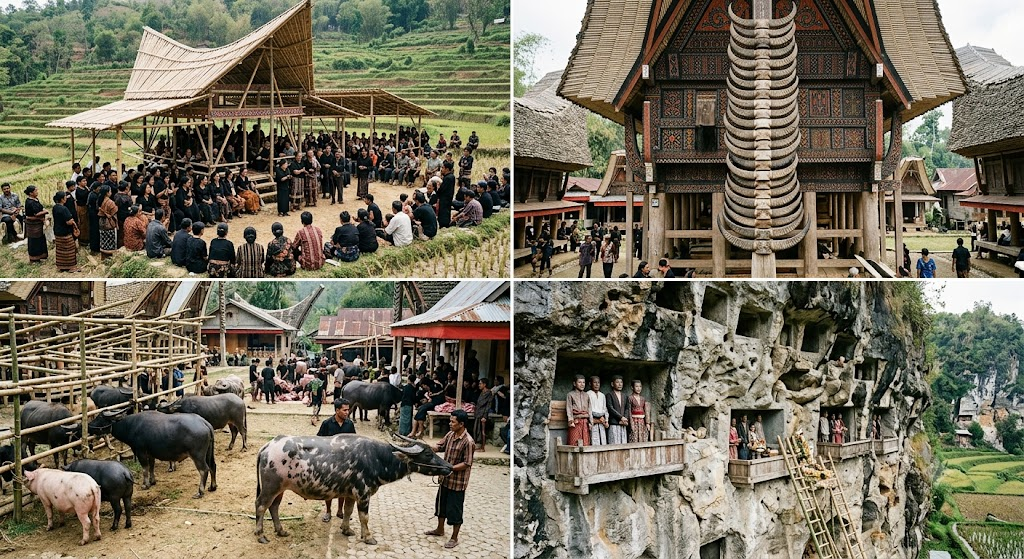
In 2023, I ______ (travel) to Tana Toraja in South Sulawesi, Indonesia. I ______ (visit) the area during the dry season and ______ (see) a traditional Rambu Solo funeral ceremony. It ______ (be) a very special experience, and I ______ (learn) a lot about Toraja culture.
When I ______ (arrive), many people ______ (be) already there. Family members ______ (come) from different places for the ceremony. They ______ (prepare) food and places for the guests. People from the village also ______ (help) the family.
The ceremony ______ (last) for several days. Many people ______ (come) to the funeral. They ______ (talk), ______ (eat) together, ______ (pray), and ______ (remember) the person who ______ (die). I also ______ (see) traditional clothes, songs, and dances.
I ______ (see) many buffaloes and pigs at the ceremony. Some animals ______ (be) killed during the funeral. Their meat ______ (be) shared with family members, guests, and people from the village. The animals ______ (be) an important part of the ceremony, and I ______ (understand) that the family ______ (want) to share the food with the community.
I also ______ (learn) something interesting about buffalo horns. After a buffalo ______ (be) killed, its horns ______ (could / be) kept and placed on the front of a traditional house. When I ______ (walk) past some houses, I ______ (see) many horns next to each other. The horns ______ (show) the family’s wealth and social position. In general, a house with more buffalo horns ______ (show) that the family ______ (have) a higher position in society.
Later, I ______ (visit) an area with graves in rocks. I ______ (see) wooden figures called tau tau near some graves. They ______ (represent) people who ______ (die). I ______ (find) the graves and the wooden figures very interesting.
The funeral ______ (show) me how important family and community ______ (be) in Toraja culture. Many people ______ (come) together to remember a family member and ______ (support) each other. It ______ (be) one of the most interesting cultural experiences of my trip to Indonesia.
———————————-
Correct version:
In 2023, I __t_r_a_v_e_l_l_e_d__ (travel) to Tana Toraja in South Sulawesi, Indonesia. I __v_i_s_i_t_e_d__ (visit) the area during the dry season and __s_a_w__ (see) a traditional Rambu Solo funeral ceremony. It __w_a_s__ (be) a very special experience, and I __l_e_a_r_n_e_d__ (learn) a lot about Toraja culture.
When I __a_r_r_i_v_e_d__ (arrive), many people __w_e_r_e__ (be) already there. Family members __c_a_m_e__ (come) from different places for the ceremony. They __p_r_e_p_a_r_e_d__ (prepare) food and places for the guests. People from the village also __h_e_l_p_e_d__ (help) the family.
The ceremony __l_a_s_t_e_d__ (last) for several days. Many people __c_a_m_e__ (come) to the funeral. They __t_a_l_k_e_d__ (talk), __e_a_t__ (eat) together, __p_r_a_y_e_d__ (pray), and __r_e_m_e_m_b_e_r_e_d__ (remember) the person who __d_i_e_d__ (die). I also __s_a_w__ (see) traditional clothes, songs, and dances.
I __s_a_w__ (see) many buffaloes and pigs at the ceremony. Some animals __w_e_r_e__ (be) killed during the funeral. Their meat __w_a_s__ (be) shared with family members, guests, and people from the village. The animals __w_e_r_e__ (be) an important part of the ceremony, and I __u_n_d_e_r_s_t_o_o_d__ (understand) that the family __w_a_n_t_e_d__ (want) to share the food with the community.
I also __l_e_a_r_n_e_d__ (learn) something interesting about buffalo horns. After a buffalo __w_a_s__ (be) killed, its horns __c_o_u_l_d__ (could) be kept and placed on the front of a traditional house. When I __w_a_l_k_e_d__ (walk) past some houses, I __s_a_w__ (see) many horns next to each other. The horns __s_h_o_w_e_d__ (show) the family’s wealth and social position. In general, a house with more buffalo horns __s_h_o_w_e_d__ (show) that the family __h_a_d__ (have) a higher position in society.
Later, I __v_i_s_i_t_e_d__ (visit) an area with graves in rocks. I __s_a_w__ (see) wooden figures called tau tau near some graves. They __r_e_p_r_e_s_e_n_t_e_d__ (represent) people who __d_i_e_d__ (die). I __f_o_u_n_d__ (find) the graves and the wooden figures very interesting.
The funeral __s_h_o_w_e_d__ (show) me how important family and community __w_e_r_e__ (be) in Toraja culture. Many people __c_a_m_e__ (come) together to remember a family member and __s_u_p_p_o_r_t_e_d__ (support) each other. It __w_a_s__ (be) one of the most interesting cultural experiences of my trip to Indonesia.
#####################
True or false:
- The ceremony lasted for only one day.
- The writer saw a traditional Rambu Solo funeral ceremony.
- The writer travelled to Tana Toraja in 2023.
- The meat was kept only for the family.
- The writer visited the area during the rainy season.
- Buffalo horns showed the family’s wealth and social position.
- Family members came from different places for the ceremony.
- The wooden figures near the graves were called buffaloes.
- The writer saw traditional clothes, songs, and dances.
- Tana Toraja is in Java, Indonesia.
- The writer saw a traditional wedding ceremony.
- People from the village helped the family.
- The writer saw modern clothes, songs, and dances.
- The writer saw wooden figures called tau tau near some graves.
- Tana Toraja is in South Sulawesi, Indonesia.
- Family members stayed at home during the ceremony.
- Buffalo horns showed the family’s age.
- The ceremony lasted for several days.
- The writer visited the area during the dry season.
- The writer travelled to Tana Toraja in 2022.
_________________________
False: 1,4,5,8,10,11,13,16,17,20
__________________________
Correct version:
- The ceremony lasted for only one day. True is: The ceremony lasted for several days.
- The writer saw a traditional Rambu Solo funeral ceremony.
- The writer travelled to Tana Toraja in 2023.
- The meat was kept only for the family. True is: The meat was shared with family members, guests, and people from the village.
- The writer visited the area during the rainy season. True is: The writer visited the area during the dry season.
- Buffalo horns showed the family’s wealth and social position.
- Family members came from different places for the ceremony.
- The wooden figures near the graves were called buffaloes. True is: The wooden figures near the graves were called tau tau.
- The writer saw traditional clothes, songs, and dances.
- Tana Toraja is in Java, Indonesia. True is: Tana Toraja is in South Sulawesi, Indonesia.
- The writer saw a traditional wedding ceremony. True is: The writer saw a traditional Rambu Solo funeral ceremony.
- People from the village helped the family.
- The writer saw modern clothes, songs, and dances. True is: The writer saw traditional clothes, songs, and dances.
- The writer saw wooden figures called tau tau near some graves.
- Tana Toraja is in South Sulawesi, Indonesia.
- Family members stayed at home during the ceremony. True is: Family members came from different places for the ceremony.
- Buffalo horns showed the family’s age. True is: Buffalo horns showed the family’s wealth and social position.
- The ceremony lasted for several days.
- The writer visited the area during the dry season.
- The writer travelled to Tana Toraja in 2022. True is: The writer travelled to Tana Toraja in 2023.
#######################
Match the sentence halves:
- The writer travelled to Tana Toraja
- The writer visited the area
- Family members came from different places
- People from the village
- The ceremony lasted
- Many people came to the funeral
- The meat was shared with
- Buffalo horns showed the family’s
- The wooden figures were called
- The funeral showed the writer how important family and community
A. for the ceremony.
B. wealth and social position.
C. tau tau.
D. during the dry season.
E. helped the family.
F. were in Toraja culture.
G. family members, guests, and people from the village.
H. for several days.
I. in 2023.
J. to remember the person who died.
____________________________
Answers:
1–I, 2–D, 3–A, 4–E, 5–H,
6–J, 7–G, 8–B, 9–C, 10–F
____________________________
Correct version:
The writer travelled to Tana Toraja I. in 2023.
The writer visited the area D. during the dry season.
Family members came from different places A. for the ceremony.
People from the village E. helped the family.
The ceremony lasted H. for several days.
Many people came to the funeral J. to remember the person who died.
The meat was shared with G. family members, guests, and people from the village.
Buffalo horns showed the family’s B. wealth and social position.
The wooden figures were called C. tau tau.
The funeral showed the writer how important family and community F. were in Toraja culture.
#################
Put the events in the correct order:
A. The writer saw wooden figures called tau tau near some graves.
B. The writer learned about buffalo horns and their meaning.
C. The writer travelled to Tana Toraja in South Sulawesi.
D. The writer saw buffaloes and pigs at the funeral.
E. The writer arrived and saw many people at the ceremony.
F. The writer learned how important family and community were in Toraja culture.
G. The writer saw traditional clothes, songs, and dances.
______________________
Answers: C – E – G – D – B – A – F
______________________
(C) The writer travelled to Tana Toraja in South Sulawesi.
(E) The writer arrived and saw many people at the ceremony.
(G) The writer saw traditional clothes, songs, and dances.
(D) The writer saw buffaloes and pigs at the funeral.
(B) The writer learned about buffalo horns and their meaning.
(A) The writer saw wooden figures called tau tau near some graves.
(F) The writer learned how important family and community were in Toraja culture.
################
Find the differences between text A and text B.
Text A
In 2023, I travelled to Tana Toraja in South Sulawesi, Indonesia. I visited the area during the dry season and saw a traditional Rambu Solo funeral ceremony. It was a very special experience, and I learned a lot about Toraja culture.
Text B
In 2022, I travelled to Tana Toraja in West Sulawesi, Indonesia. I visited the area during the rainy season and saw a traditional wedding ceremony. It was a very interesting experience, and I learned a lot about Toraja history.
_______________________
Differences:
- 2023 → 2022
- South Sulawesi → West Sulawesi
- dry season → rainy season
- Rambu Solo funeral ceremony → wedding ceremony
- special → interesting
- culture → history
#################
What do the words refer to?
- “< It > was a very special experience.” _____________
- “< They > prepared food and places for the guests.” _____________
- “People from the village also helped < the family >.” _____________
- “< Their > meat was shared with family members, guests, and people from the village.” _____________
- “< Its > horns could be kept and placed on the front of a traditional house.” _____________
- “< The horns > showed the family’s wealth and social position.”
- “< They > represented people who died.” _____________
- “I found < the graves and the wooden figures > very interesting.” _____________
- “< It > was one of the most interesting cultural experiences of my trip to Indonesia.” _____________
- “Many people came together to remember a family member and supported < each other >.” _____________
- “< The animals > were an important part of the ceremony.” _____________
- “< This > showed me how important family and community were in Toraja culture.” _____________
——————————————–
Answers:
- < It > : the visit to Tana Toraja
- < They > : family members
- < the family > : the family of the person who died
- < Their > : the buffaloes and pigs
- < its > : a buffalo
- < The horns > : the buffalo horns
- < They > : the wooden figures called tau tau
- < their > : the family and community members
- < The animals > : the buffaloes and pigs
- < They > : many people who came to the funeral
- < each other > : the people who came together
- < It > : the funeral experience
##################
Read the text, find the information.
Write the answers in the table.
| No. | Topic | Answer |
|---|---|---|
| 1 | Year of the trip | __________ |
| 2 | Country | __________ |
| 3 | Place | __________ |
| 4 | Season | __________ |
| 5 | Name of the funeral | __________ |
| 6 | Length of the ceremony | __________ |
| 7 | People who came from different places | __________ |
| 8 | People who helped the family | __________ |
| 9 | Animals at the ceremony | __________ |
| 10 | What people did with the meat | __________ |
| 11 | What the buffalo horns showed | __________ |
| 12 | Where the graves were | __________ |
| 13 | Name of the wooden figures | __________ |
| 14 | What the wooden figures represented | __________ |
| 15 | Important parts of Toraja culture | __________ |
____________________________
Correct answers:
| No. | Topic | Answer |
|---|---|---|
| 1 | Year | 2023 |
| 2 | Country | Indonesia |
| 3 | Place | Tana Toraja, South Sulawesi |
| 4 | Season | dry season |
| 5 | Funeral | Rambu Solo |
| 6 | Length | several days |
| 7 | Family members | came from different places |
| 8 | Village people | helped the family |
| 9 | Animals | buffaloes and pigs |
| 10 | Meat | was shared with family members, guests, and people from the village |
| 11 | Buffalo horns | showed the family’s wealth and social position |
| 12 | Wealth | more buffalo horns showed higher wealth and social position |
| 13 | Graves | in rocks |
| 14 | Wooden figures | tau tau |
| 15 | Culture | family and community were important |
###################
Fact or Opinion
A fact is something that is true and can be checked in the text.
An opinion is what someone thinks or feels.
Different people can have different opinions.
- The buffalo horns were very interesting.
- Family members came from different places.
- The ceremony lasted for several days.
- The graves in the rocks were amazing.
- Some animals were killed during the funeral.
- The traditional clothes were beautiful.
- The writer travelled to Tana Toraja in 2023.
- The funeral was very special.
- The meat was shared with family members, guests, and people from the village.
- The funeral was one of the most interesting cultural experiences of the writer’s trip.
___________________________
Answers:
1. Opinion, 2. Fact, 3. Fact, 4. Opinion, 5. Fact,
6. Opinion, 7. Fact, 8. Opinion, 9. Fact, 10. Opinion.
___________________________
- Opinion – The buffalo horns were very interesting. → It describes what the writer thought.
- Fact – Family members came from different places. → This information is stated in the text.
- Fact – The ceremony lasted for several days. → This information is stated in the text.
- Opinion – The graves in the rocks were amazing. → It describes what the writer thought.
- Fact – Some animals were killed during the funeral. → This information is stated in the text.
- Opinion – The traditional clothes were beautiful. → It describes what someone thinks about the clothes.
- Fact – The writer travelled to Tana Toraja in 2023. → This information is stated in the text.
- Opinion – The funeral was very special. → It describes the writer’s feeling about the funeral.
- Fact – The meat was shared with family members, guests, and people from the village. → This information is stated in the text.
- Opinion – The funeral was one of the most interesting cultural experiences of the writer’s trip. → It describes the writer’s opinion.
##################
Choose the correct ending A or B.
- The writer travelled to Tana Toraja
A. in 2023.
B. in 2022. - The writer visited the area
A. during the rainy season.
B. during the dry season. - Family members came from different places
A. for the ceremony.
B. for a holiday. - The family prepared food and places
A. for the guests.
B. for the animals. - People from the village
A. helped the family.
B. watched from far away. - During the funeral, people
A. talked, ate, prayed, and remembered the person who died.
B. worked in the fields and went home. - The writer saw
A. traditional clothes, songs, and dances.
B. modern clothes, music, and films. - Some buffaloes and pigs
A. were killed during the funeral.
B. were taken to another village. - The meat from the animals
A. was shared with family members, guests, and village people.
B. was kept only for the family. - Buffalo horns could be placed
A. on the front of a traditional house.
B. inside a guest room. - More buffalo horns on a house showed
A. a higher family position in society.
B. a bigger family house. - The writer saw many horns
A. next to each other on some houses.
B. on the ground near the graves. - The wooden figures near some graves were called
A. tau tau.
B. Rambu Solo. - The graves the writer visited were
A. in rocks.
B. under the houses. - The funeral showed the writer that
A. family and community were important in Toraja culture.
B. people in the village lived far from each other.
________________________
Correct version:
- The writer travelled to Tana Toraja in 2023.
- The writer visited the area during the dry season.
- Family members came from different places for the ceremony.
- The family prepared food and places for the guests.
- People from the village helped the family.
- During the funeral, people talked, ate, prayed, and remembered the person who died.
- The writer saw traditional clothes, songs, and dances.
- Some buffaloes and pigs were killed during the funeral.
- The meat from the animals was shared with family members, guests, and village people.
- Buffalo horns could be placed on the front of a traditional house.
- More buffalo horns on a house showed a higher family position in society.
- The writer saw many horns next to each other on some houses.
- The wooden figures near some graves were called tau tau.
- The graves the writer visited were in rocks.
- The funeral showed the writer that family and community were important in Toraja culture.
##################
Match question and answer:
Questions
- When did you visit Tana Toraja?
- Where did you travel?
- When did you visit the area?
- What happened there?
- Who arrived from different places?
- What did the family do for the guests?
- How long did the ceremony last?
- What did people do during the funeral?
- What happened to some of the animals?
- Who received the meat?
- What did the buffalo horns show?
- Where could the horns go after a buffalo was killed?
- What name did the wooden figures have?
- Who did the wooden figures stand for?
- What was one thing you understood from the funeral?
Answers
a. They were called tau tau.
b. I travelled there in 2023.
c. Family members, guests, and people from the village shared [to give some of something to another person; to use something together with others] the meat.
d. I saw a traditional Rambu Solo funeral ceremony.
e. They could be placed on the front of a traditional house.
f. It continued for several days.
g. Family members came from different places.
h. I learned that family and community were important in Toraja culture.
i. They showed the family’s wealth and social position.
j. I was there during the dry season.
k. Some buffaloes and pigs were killed during the funeral.
l. I visited Tana Toraja in South Sulawesi, Indonesia.
m. They talked, ate together, prayed, and remembered the person who died.
n. They represented people who died.
o. They prepared food and places for the guests.
__________________________
Answers:
1-b, 2-l, 3-j, 4-d, 5-g, 6-o,
7-f, 8-m, 9-k, 10-c, 11-i,
12-e, 13-a, 14-n, 15-h
_________________________
Correct dialogue:
- Interviewer: When did you visit Tana Toraja?
Writer: I travelled there in 2023. - Interviewer: Where did you travel?
Writer: I visited Tana Toraja in South Sulawesi, Indonesia. - Interviewer: When did you visit the area?
Writer: I was there during the dry season. - Interviewer: What happened there?
Writer: I saw a traditional Rambu Solo funeral ceremony. - Interviewer: Who arrived from different places?
Writer: Family members came from different places. - Interviewer: What did the family do for the guests?
Writer: They prepared food and places for the guests. - Interviewer: How long did the ceremony last?
Writer: It continued for several days. - Interviewer: What did people do during the funeral?
Writer: They talked, ate together, prayed, and remembered the person who died. - Interviewer: What happened to some of the animals?
Writer: Some buffaloes and pigs were killed during the funeral. - Interviewer: Who received the meat?
Writer: Family members, guests, and people from the village shared the meat. - Interviewer: What did the buffalo horns show?
Writer: They showed the family’s wealth and social position. - Interviewer: Where could the horns go after a buffalo was killed?
Writer: They could be placed on the front of a traditional house. - Interviewer: What name did the wooden figures have?
Writer: They were called tau tau. - Interviewer: Who did the wooden figures stand for?
Writer: They represented people who died. - Interviewer: What was one thing you understood from the funeral?
Writer: I learned that family and community were important in Toraja culture.
##################
##################
##################
Please use the box below
to write your feedback.
Only I can read it.
It is not public.
Please tell me:
- Are the texts and exercises OK?
- Are the topics OK?
- Is the level OK?
- Is it too easy or too difficult?
- Do you want texts about other topics?
Thank you! I appreciate your feedback.
##################
##################
##################
Remember how babies
learn a language:
Babies learn a language by listening.
They use their ears to hear sounds.
Their brain remembers these sounds.
Babies connect sounds with people and things.
They listen to their parents.
Then they copy the sounds they hear. They imitate words.
Slowly, babies learn to speak.
So,
LISTEN, LISTEN, LISTEN, LISTEN………………
Schreibe einen Kommentar