- very exhausting, very……………..
Before starting the exercise make sure you are familiar
with past simple
(negation, question, short answer)!
Fill in, verbs in past simple:
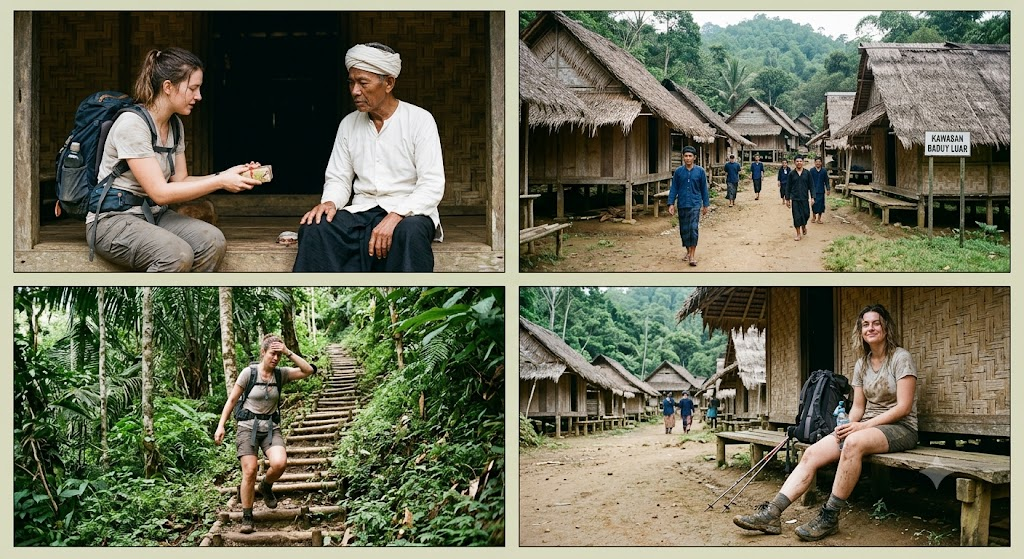
In 2023, I _____ (visit) the Baduy people in Banten, Indonesia. It _____ (be) a very special experience, but it _____ (be) also one of the most exhausting journeys I have ever made.
When I _____ (arrive), I first _____ (meet) the oldest and most important man in the village. He _____ (be) the village leader. Before I could visit the area, I _____ (have) to ask him for permission. He _____ (welcome) me and _____ (explain) some of the rules. I _____ (learn) that the Baduy area has two main parts, or circles.
The Outer Baduy area is open to visitors. Tourists can walk through the villages, meet people and learn about their traditional way of life. The Inner Baduy area is much more traditional. Tourists are not allowed to enter this area. The people there follow their old traditions very strictly.
After getting permission, I _____ (start) my walk through the Outer Baduy area. The walk _____ (take) about five hours, and it _____ (be) extremely difficult. I _____ (have) to walk thousands of steps. The path _____ (go) constantly up and down, with steep hills in both directions. I _____ (climb) up one hill and then _____ (walk) down again, only to climb another hill a few minutes later.
The path _____ (go) through the jungle, across small streams and over rough ground. There _____ (be) no normal roads and no cars. Some parts _____ (be) narrow, uneven and slippery. After several hours, my legs _____ (become) very tired. The heat and humidity _____ (make) everything even harder. I _____ (be) sweating heavily and _____ (need) to stop several times to rest.
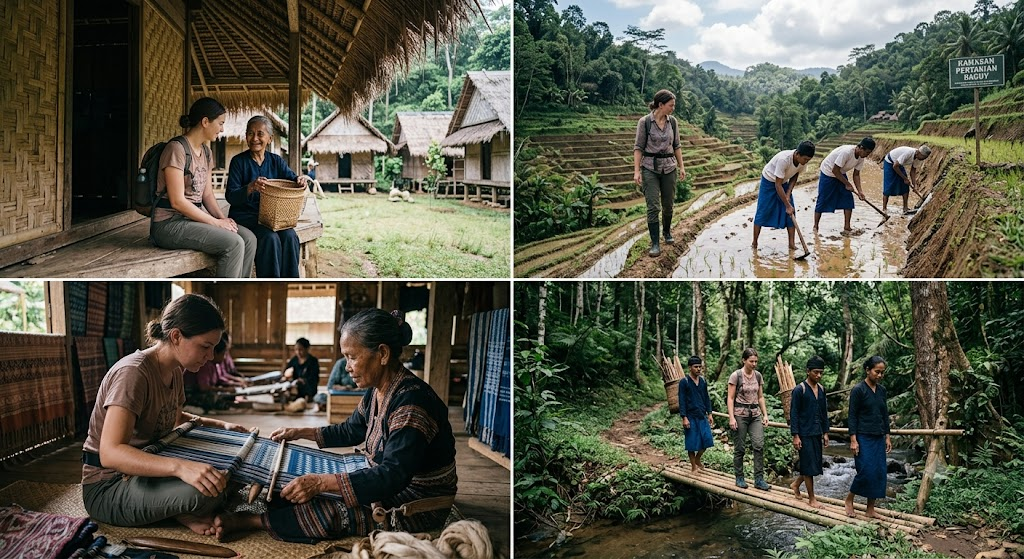
When I _____ (reach) the villages, I _____ (see) how different the Baduy way of life _____ (be). The traditional Baduy do not use metal and avoid many modern things. There are no TVs, radios or mobile phones in their traditional communities. They live in simple houses and use natural materials. They have very few modern things and follow the traditions of their ancestors.
Despite the difficult walk, I _____ (enjoy) the beautiful nature. I _____ (see) green forests, traditional houses and people living a very simple life. The area _____ (be) quiet, and I _____ (feel) very far away from modern life.
After five hours, I _____ (be) completely exhausted. My legs _____ (be) tired, but I _____ (be) very happy that I _____ (make) the journey. Visiting the Baduy people _____ (show) me a very different way of life. The thousands of steps, the jungle and the constant climb up and down _____ (make) the journey extremely hard, but it _____ (be) an experience I will never forget.
——————————
Correct version:
In 2023, I visited the Baduy people in Banten, Indonesia. It was a very special experience, but it was also one of the most exhausting journeys I have ever made.
When I arrived, I first met the oldest and most important man in the village. He was the village leader. Before I could visit the area, I had to ask him for permission. He welcomed me and explained some of the rules. I learned that the Baduy area has two main parts, or circles.
The Outer Baduy area is open to visitors. Tourists can walk through the villages, meet people and learn about their traditional way of life. The Inner Baduy area is much more traditional. Tourists are not allowed to enter this area. The people there follow their old traditions very strictly.
After getting permission, I started my walk through the Outer Baduy area. The walk took about five hours, and it was extremely difficult. I had to walk thousands of steps. The path went constantly up and down, with steep hills in both directions. I climbed up one hill and then walked down again, only to climb another hill a few minutes later.
The path went through the jungle, across small streams and over rough ground. There were no normal roads and no cars. Some parts were narrow, uneven and slippery. After several hours, my legs became very tired. The heat and humidity made everything even harder. I was sweating heavily and needed to stop several times to rest.
When I reached the villages, I saw how different the Baduy way of life was. The traditional Baduy do not use metal and avoid many modern things. There are no TVs, radios or mobile phones in their traditional communities. They live in simple houses and use natural materials. They have very few modern things and follow the traditions of their ancestors.
Despite the difficult walk, I enjoyed the beautiful nature. I saw green forests, traditional houses and people living a very simple life. The area was quiet, and I felt very far away from modern life.
After five hours, I was completely exhausted. My legs were tired, but I was very happy that I had made the journey. Visiting the Baduy people showed me a very different way of life. The thousands of steps, the jungle and the constant climb up and down made the journey extremely hard, but it was an experience I will never forget.
#####################
#####################
Verbs in text, irregular ones in bold:
| Infinitive | Past simple | A1 definition |
|---|---|---|
| visit | visited | to go to a place |
| be | was / were | to exist or to happen |
| make | made | to do or create something |
| arrive | arrived | to come to a place |
| meet | met | to see someone for the first time |
| have | had | to own or experience something |
| ask | asked | to say something because you want an answer |
| welcome | welcomed | to say you are happy someone has come |
| explain | explained | to make something clear |
| learn | learned | to get new information |
| can | could | to be able to do something |
| walk | walked | to move on your feet |
| allow | allowed | to say someone can do something |
| enter | entered | to go into a place |
| follow | followed | to do what rules or traditions say |
| get | got | to receive or obtain something |
| start | started | to begin something |
| take | took | to need a certain amount of time |
| go | went | to move to another place |
| climb | climbed | to go up something |
| cross | crossed | to go from one side to another |
| become | became | to start to be something |
| need | needed | to have to have something |
| stop | stopped | to finish moving or doing something |
| rest | rested | to relax after activity |
| reach | reached | to arrive at a place |
| see | saw | to look at something and notice it |
| do | did | to perform an action |
| use | used | to do something with a thing |
| avoid | avoided | to stay away from something |
| live | lived | to have your home in a place |
| enjoy | enjoyed | to like something |
| feel | felt | to have a feeling |
| show | showed | to let someone see something |
| will | would | to talk about what someone expects to happen |
| forget | forgot | to not remember something |
#####################
Vocabulary:
- exhaustion – a very tired feeling
- an experience – something that happens to you
- exhausting – making you very tired
- a journey – a trip from one place to another
- to ask for permission – to ask if you can do something
- rules – things that tell you what you can or cannot do
- to enter an area – to go into a place
- to follow traditions strictly – to do traditions exactly as people usually do them
- permission – the right to do something
- a stream – a small river
- rough ground – ground that is not smooth
- narrow – not wide
- uneven – not flat or smooth
- slippery – difficult to stand or walk on because it is smooth or wet
- humidity – water in the air
- a community – a group of people who live in the same place
- an ancestor – a person in your family who lived a long time ago
- despite – even though something is true
#####################
True or false
- The path crossed small streams and rough ground.
- The village leader gave the writer a map of the area.
- The writer enjoyed seeing the beautiful nature.
- The writer travelled to the Baduy area during the rainy season.
- The Inner Baduy area is much more traditional than the Outer Baduy area.
- The writer’s legs felt fresh after several hours of walking.
- Traditional Baduy communities do not use TVs, radios or mobile phones.
- The writer had to ask for permission before visiting the area.
- The writer decided that the difficult journey was not worth making.
- The writer had to walk thousands of steps during the journey.
- The village leader was the oldest and most important man in the village.
- The path through the area was wide and completely smooth.
- The writer was happy that he had made the journey.
- The writer learned that the Baduy area has three main parts.
- The writer visited the Baduy people in Banten, Indonesia.
- The writer’s legs became very tired after several hours.
- The people in the Inner Baduy area follow modern lifestyles.
- The writer spent the whole journey travelling by car.
- The writer thought the natural surroundings were boring.
- Traditional Baduy communities have many modern electronic devices.
____________________________
True: 1,3,5,7,8,10,11,13,15,16,
____________________________
Full version:
- The path crossed small streams and rough ground.
- The village leader gave the writer a map of the area. True is: The village leader explained some of the rules.
- The writer enjoyed seeing the beautiful nature.
- The writer travelled to the Baduy area during the rainy season. True is: The writer visited the Baduy people in 2023.
- The Inner Baduy area is much more traditional than the Outer Baduy area.
- The writer’s legs felt fresh after several hours of walking. True is: The writer’s legs became very tired after several hours.
- Traditional Baduy communities do not use TVs, radios or mobile phones.
- The writer had to ask for permission before visiting the area.
- The writer decided that the difficult journey was not worth making. True is: The writer was happy that he had made the journey.
- The writer had to walk thousands of steps during the journey.
- The village leader was the oldest and most important man in the village.
- The path through the area was wide and completely smooth. True is: Some parts were narrow, uneven and slippery.
- The writer was happy that he had made the journey.
- The writer learned that the Baduy area has three main parts. True is: The Baduy area has two main parts, or circles.
- The writer visited the Baduy people in Banten, Indonesia.
- The writer’s legs became very tired after several hours.
- The people in the Inner Baduy area follow modern lifestyles. True is: The people there follow their old traditions very strictly.
- The writer spent the whole journey travelling by car. True is: The path went through the jungle, across small streams and over rough ground.
- The writer thought the natural surroundings were boring. True is: The writer enjoyed the beautiful nature.
- Traditional Baduy communities have many modern electronic devices. True is: There are no TVs, radios or mobile phones in their traditional communities.
####################
Matching questions and answers
Questions
- Where did the writer visit the Baduy people?
- When did the writer visit the Baduy people?
- Who was the oldest and most important man in the village?
- What did the writer have to ask for before visiting the area?
- How many main parts does the Baduy area have?
- Which Baduy area is open to visitors?
- How long did the walk take?
- What did the path go through?
- What made the walk even harder?
- What modern things are not found in traditional Baduy communities?
- What did the writer see during the journey?
- How did the writer feel after five hours?
Answers
A. The village leader.
B. Five hours.
C. Banten, Indonesia.
D. Green forests, traditional houses and people living a simple life.
E. In 2023.
F. Permission.
G. Two main parts, or circles.
H. The Outer Baduy area.
I. The jungle, small streams and rough ground.
J. The heat and humidity.
K. TVs, radios and mobile phones.
L. Completely exhausted.
____________________________
Answers:
____________________________
Correct matches:
- Where did the writer visit the Baduy people? – Banten, Indonesia.
- When did the writer visit the Baduy people? – In 2023.
- Who was the oldest and most important man in the village? – The village leader.
- What did the writer have to ask for before visiting the area? – Permission.
- How many main parts does the Baduy area have? – Two main parts, or circles.
- Which Baduy area is open to visitors? – The Outer Baduy area.
- How long did the walk take? – Five hours.
- What did the path go through? – The jungle, small streams and rough ground.
- What made the walk even harder? – The heat and humidity.
- What modern things are not found in traditional Baduy communities? – TVs, radios and mobile phones.
- What did the writer see during the journey? – Green forests, traditional houses and people living a simple life.
- How did the writer feel after five hours? – Completely exhausted.
#####################
Find what the bold word refers to in the text:
- “It was a very special experience.”
It = __________________ - “He was the village leader.”
He = __________________ - “I had to ask him for permission.”
him = __________________ - “He welcomed me and explained some of the rules.”
He = __________________ - “The people there follow their old traditions very strictly.”
there = __________________ - “The walk took about five hours, and it was extremely difficult.”
it = __________________ - “I had to walk thousands of steps.”
I = __________________ - “The path went constantly up and down…”
The path = __________________ - “Some parts were narrow, uneven and slippery.”
Some parts = __________________ - “They live in simple houses and use natural materials.”
They = __________________ - “They have very few modern things…”
They = __________________ - “The area was quiet…”
The area = __________________ - “…and I felt very far away from modern life.”
I = __________________ - “My legs were tired, but I was very happy…”
My legs = __________________ - “…but it was an experience I will never forget.”
it = __________________
———————————————–
Correct version:
- “It was a very special experience.”
It = the journey - “He was the village leader.”
He = the village leader - “I had to ask him for permission.”
him = the village leader - “He welcomed me and explained some of the rules.”
He = the village leader - “The people there follow their old traditions very strictly.”
there = in the Inner Baduy area - “The walk took about five hours, and it was extremely difficult.”
it = the walk - “I had to walk thousands of steps.”
I = the writer - “The path went constantly up and down…”
The path = the path through the Outer Baduy area - “Some parts were narrow, uneven and slippery.”
Some parts = some parts of the path - “They live in simple houses and use natural materials.”
They = the traditional Baduy - “They have very few modern things…”
They = the traditional Baduy - “The area was quiet…”
The area = the Baduy area - “…and I felt very far away from modern life.”
I = the writer - “My legs were tired, but I was very happy…”
My legs = the writer’s legs - “…but it was an experience I will never forget.”
it = the journey
#########################
Choose the correct ending
- In 2023, the writer visited …
- The village leader was …
- Before visiting the area, the writer had to …
- The Baduy area has …
- The Outer Baduy area …
- The Inner Baduy area …
- The walk through the Outer Baduy area took …
- The path went constantly …
- Some parts of the path were …
- The heat and humidity …
- Traditional Baduy communities do not use …
- The traditional Baduy live …
- The writer saw …
- After five hours, the writer was …
- The journey showed the writer …
Endings
A. completely exhausted.
B. up and down.
C. two main parts, or circles.
D. very few modern things.
E. the Baduy people in Banten, Indonesia.
F. ask the village leader for permission.
G. about five hours.
H. made everything even harder.
I. green forests and traditional houses.
J. is open to visitors.
K. a very different way of life.
L. the oldest and most important man in the village.
M. in simple houses and use natural materials.
N. narrow, uneven and slippery.
O. TVs, radios or mobile phones.
_____________________________
Answers:
1 E, 2 L, 3 F, 4 C, 5 J, 6 D,
7 G, 8 B, 9 N, 10 H, 11 O,
12 M, 13 I, 14 A, 15 K
_____________________________
Correct version:
- In 2023, the writer visited the Baduy people in Banten, Indonesia.
- The village leader was the oldest and most important man in the village.
- Before visiting the area, the writer had to ask the village leader for permission.
- The Baduy area has two main parts, or circles.
- The Outer Baduy area is open to visitors.
- The Inner Baduy area has very few modern things.
- The walk through the Outer Baduy area took about five hours.
- The path went constantly up and down.
- Some parts of the path were narrow, uneven and slippery.
- The heat and humidity made everything even harder.
- Traditional Baduy communities do not use TVs, radios or mobile phones.
- The traditional Baduy live in simple houses and use natural materials.
- The writer saw green forests and traditional houses.
- After five hours, the writer was completely exhausted.
- The journey showed the writer a very different way of life.
######################
Cause and Effect
Cause = why something happens.
Effect = what happens because of it.
Example:
Cause: The path was steep.
Effect: The walk was very difficult.
Now match each cause (1–12) with the correct effect (A–L).
Causes
- The writer wanted to visit the Baduy area.
- The village leader welcomed the writer.
- The Outer Baduy area is open to visitors.
- The path went constantly up and down.
- The writer walked thousands of steps.
- The path went through the jungle, across small streams and over rough ground.
- Some parts of the path were narrow, uneven and slippery.
- The heat and humidity made the walk harder.
- The writer walked for several hours.
- Traditional Baduy communities avoid many modern things.
- The writer saw the beautiful nature.
- The journey was extremely difficult.
Effects
A. The writer learned some of the rules.
B. Tourists can walk through the villages.
C. The writer had to ask the village leader for permission.
D. The writer enjoyed the beautiful nature.
E. The writer had to walk carefully.
F. The area had no normal roads and no cars.
G. The writer climbed up and down hills many times.
H. The writer’s legs became very tired.
I. The writer needed to stop several times to rest.
J. There were no TVs, radios or mobile phones in their traditional communities.
K. The writer felt very far away from modern life.
L. The writer was completely exhausted.
___________________________
Answers:
1 C, 2 A, 3 B, 4 G, 5 H, 6 F,
7 E, 8 I, 9 I, 10 J, 11 D, 12 L
__________________________
Correct matches:
The writer wanted to visit the Baduy area. The Effect is: The writer had to ask the village leader for permission.
The village leader welcomed the writer. The Effect is: The writer learned some of the rules.
The Outer Baduy area is open to visitors. The Effect is: Tourists can walk through the villages.
The path went constantly up and down. The Effect is: The writer climbed up and down hills many times.
The writer walked thousands of steps. The Effect is: The writer’s legs became very tired.
The path went through the jungle, across small streams and over rough ground. The Effect is: The area had no normal roads and no cars.
Some parts of the path were narrow, uneven and slippery. The Effect is: The writer had to walk carefully.
The heat and humidity made the walk harder. The Effect is: The writer needed to stop several times to rest.
The writer walked for several hours. The Effect is: The writer was sweating heavily.
Traditional Baduy communities avoid many modern things. The Effect is: There were no TVs, radios or mobile phones in their traditional communities.
The writer saw the beautiful nature. The Effect is: The writer enjoyed the beautiful nature.
The journey was extremely difficult. The Effect is: The writer was completely exhausted.
#####################
Compare the Outer Baduy area and the Inner Baduy area. Complete the sentences using information from the text.
- The Outer Baduy area is open to __________, but tourists are not allowed to enter the Inner Baduy __________.
- Tourists can walk through the Outer Baduy __________, but they cannot enter the Inner Baduy __________.
- In the Outer Baduy area, tourists can meet __________, but they are not allowed to enter the Inner Baduy area.
- The Outer Baduy area is open to visitors, while the Inner Baduy area is much more __________.
- People in the Inner Baduy area follow their old __________ very strictly, while tourists can learn about the Baduy traditional way of __________.
- The Outer Baduy area is open to __________, but the Inner Baduy area is not open to __________.
- Tourists can visit the __________ Baduy area, but they are not allowed to enter the __________ Baduy area.
- The Outer Baduy area allows tourists to walk through the __________, while tourists cannot enter the Inner Baduy __________.
- The Baduy area has two main __________, or circles: the Outer Baduy and the Inner Baduy.
- Tourists can enter the Outer Baduy area, but they are not allowed to __________ the Inner Baduy area.
——————————————–
Answers: 1 visitors, area; 2 villages, area; 3 people; 4 traditional; 5 traditions, life; 6 visitors, visitors; 7 Outer, Inner; 8 villages, area; 9 parts; 10 enter
___________________________
Correct version:
The Outer Baduy area is open to visitors, but tourists are not allowed to enter the Inner Baduy area.
Tourists can walk through the Outer Baduy villages, but they cannot enter the Inner Baduy area.
In the Outer Baduy area, tourists can meet people, but they are not allowed to enter the Inner Baduy area.
The Outer Baduy area is open to visitors, while the Inner Baduy area is much more traditional.
People in the Inner Baduy area follow their old traditions very strictly, while tourists can learn about the Baduy traditional way of life.
The Outer Baduy area is open to visitors, but the Inner Baduy area is not open to visitors.
Tourists can visit the Outer Baduy area, but they are not allowed to enter the Inner Baduy area.
The Outer Baduy area allows tourists to walk through the villages, while tourists cannot enter the Inner Baduy area.
The Baduy area has two main parts, or circles: the Outer Baduy and the Inner Baduy.
Tourists can enter the Outer Baduy area, but they are not allowed to enter the Inner Baduy area.
######################
Matching questions and answers
Questions
- Where did the writer travel in 2023?
- Who was the village leader?
- What did the writer need before visiting the area?
- How many main parts does the Baduy area have?
- Which part is open to tourists?
- How long did the walk take?
- What did the path go through?
- What made the journey harder?
- What happened to the writer’s legs after several hours?
- What modern things are missing in traditional Baduy communities?
- What did the writer see in the area?
- How did the writer feel after the journey?
Answers
A. Green forests, traditional houses and people living a simple life.
B. The oldest and most important man in the village.
C. Permission from the village leader.
D. Two main parts, or circles.
E. The Outer Baduy area.
F. About five hours.
G. The jungle, small streams and rough ground.
H. The heat and humidity.
I. They became very tired.
J. TVs, radios and mobile phones.
K. Beautiful nature and a different way of life.
L. Completely exhausted but very happy.
__________________________
Answers:
1 E, 2 B, 3 C, 4 D, 5 E, 6 F,
7 G, 8 H, 9 I, 10 J, 11 A, 12 L
###################
Put the events in order
A. The writer started the walk through the Outer Baduy area.
B. The writer became completely exhausted.
C. The writer met the village leader.
D. The writer saw traditional houses and green forests.
E. The writer asked for permission to visit the area.
F. The writer learned about the two main parts of the Baduy area.
G. The writer walked through the jungle and across small streams.
H. The writer reached the villages.
__________________________
Answers: C, E, F, A, G, H, D, B
__________________________
Correct version:
- (C) The writer met the village leader.
- (E) The writer asked for permission to visit the area.
- (F) The writer learned about the two main parts of the Baduy area.
- (A) The writer started the walk through the Outer Baduy area.
- (G) The writer walked through the jungle and across small streams.
- (H) The writer reached the villages.
- (D) The writer saw traditional houses and green forests.
- (B) The writer became completely exhausted.
###################
Read each statement. Match it with the correct evidence from the text.
Statements
- The writer had a very special time in Banten.
- The village leader had an important role.
- The writer needed approval before going into the area.
- There are two different parts of the Baduy land.
- Visitors can go into one part of the Baduy area.
- The five-hour walk was very hard.
- The path was difficult in some places.
- The weather conditions made the walk more difficult.
- Traditional Baduy people have very few things from modern life.
- The writer liked the natural surroundings.
Evidence
A. “The heat and humidity made everything even harder.”
B. “I learned that the Baduy area has two main parts, or circles.”
C. “They have very few modern things and follow the traditions of their ancestors.”
D. “He was the village leader.”
E. “Despite the difficult walk, I enjoyed the beautiful nature.”
F. “Some parts were narrow, uneven and slippery.”
G. “Before I could visit the area, I had to ask him for permission.”
H. “The Outer Baduy area is open to visitors.”
I. “The walk took about five hours, and it was extremely difficult.”
J. “It was a very special experience, but it was also one of the most exhausting journeys I have ever made.”
____________________________
Answers:
1 J, 2 D, 3 G, 4 B, 5 H,
6 I, 7 F, 8 A, 9 C, 10 E
___________________________
Full version:
- The writer had a very special time in Banten. Evidence: “It was a very special experience, but it was also one of the most exhausting journeys I have ever made.”
- The village leader had an important role. Evidence: “He was the village leader.”
- The writer needed approval before going into the area. Evidence: “Before I could visit the area, I had to ask him for permission.”
- There are two different parts of the Baduy land. Evidence: “I learned that the Baduy area has two main parts, or circles.”
- Visitors can go into one part of the Baduy area. Evidence: “The Outer Baduy area is open to visitors.”
- The five-hour walk was very hard. Evidence: “The walk took about five hours, and it was extremely difficult.”
- The path was difficult in some places. Evidence: “Some parts were narrow, uneven and slippery.”
- The weather conditions made the walk more difficult. Evidence: “The heat and humidity made everything even harder.”
- Traditional Baduy people have very few things from modern life. Evidence: “They have very few modern things and follow the traditions of their ancestors.”
- The writer liked the natural surroundings. Evidence: “Despite the difficult walk, I enjoyed the beautiful nature.”
#####################
Interview, match question and answer:
Questions
- Where did you travel in 2023?
- Who was the oldest and most important man in the village?
- What did you need before the visit?
- How many main parts does the Baduy area have?
- Which part is open to tourists?
- How long did the walk take?
- What was the path like?
- What made the journey harder?
- What happened to your legs after several hours?
- What modern things are not in traditional Baduy communities?
- What did you see in the area?
- How did you feel after five hours?
Answers
A. The heat and humidity made the journey harder.
B. I visited the Baduy area in Banten, Indonesia.
C. The Outer Baduy area is open to tourists.
D. I was completely exhausted, but I was very happy.
E. The village leader was the oldest and most important man in the village.
F. The path had narrow, uneven and slippery parts.
G. Traditional Baduy communities have no TVs, radios or mobile phones.
H. The Baduy area has two main parts, or circles.
I. I had permission from the village leader.
J. My legs became very tired.
K. I noticed green forests, traditional houses and people living a simple life.
L. The walk lasted about five hours.
____________________________
Answers:
1 B, 2 E, 3 I, 4 H, 5 C, 6 L, 7 F,
8 A, 9 J, 10 G, 11 K, 12 D
____________________________
Corrrect dialogue:
Interviewer: Where did you travel in 2023?
Writer: I visited the Baduy area in Banten, Indonesia.
Interviewer: Who was the oldest and most important man in the village?
Writer: The village leader was the oldest and most important man in the village.
Interviewer: What did you need before the visit?
Writer: I had permission from the village leader.
Interviewer: How many main parts does the Baduy area have?
Writer: The Baduy area has two main parts, or circles.
Interviewer: Which part is open to tourists?
Writer: The Outer Baduy area is open to tourists.
Interviewer: How long did the walk take?
Writer: The walk lasted about five hours.
Interviewer: What was the path like?
Writer: The path had narrow, uneven and slippery parts.
Interviewer: What made the journey harder?
Writer: The heat and humidity made everything harder.
Interviewer: What happened to your legs after several hours?
Writer: My legs became very tired.
Interviewer: What modern things are not in traditional Baduy communities?
Writer: Traditional Baduy communities have no TVs, radios or mobile phones.
Interviewer: What did you see in the area?
Writer: I noticed green forests, traditional houses and people living a simple life.
Interviewer: How did you feel after five hours?
Writer: I was completely exhausted, but I was very happy.
##################
##################
##################
##################
Please use the box below
to write your feedback.
Only I can read it.
It is not public.
Please tell me:
- Are the texts and exercises OK?
- Are the topics OK?
- Is the level OK?
- Is it too easy or too difficult?
- Do you want texts about other topics?
Thank you! I appreciate your feedback.
##################
##################
##################
Remember how babies
learn a language:
Babies learn a language by listening.
They use their ears to hear sounds.
Their brain remembers these sounds.
Babies connect sounds with people and things.
They listen to their parents.
Then they copy the sounds they hear. They imitate words.
Slowly, babies learn to speak.
So,
LISTEN, LISTEN, LISTEN, LISTEN………………
Schreibe einen Kommentar