- DOs and DON’Ts
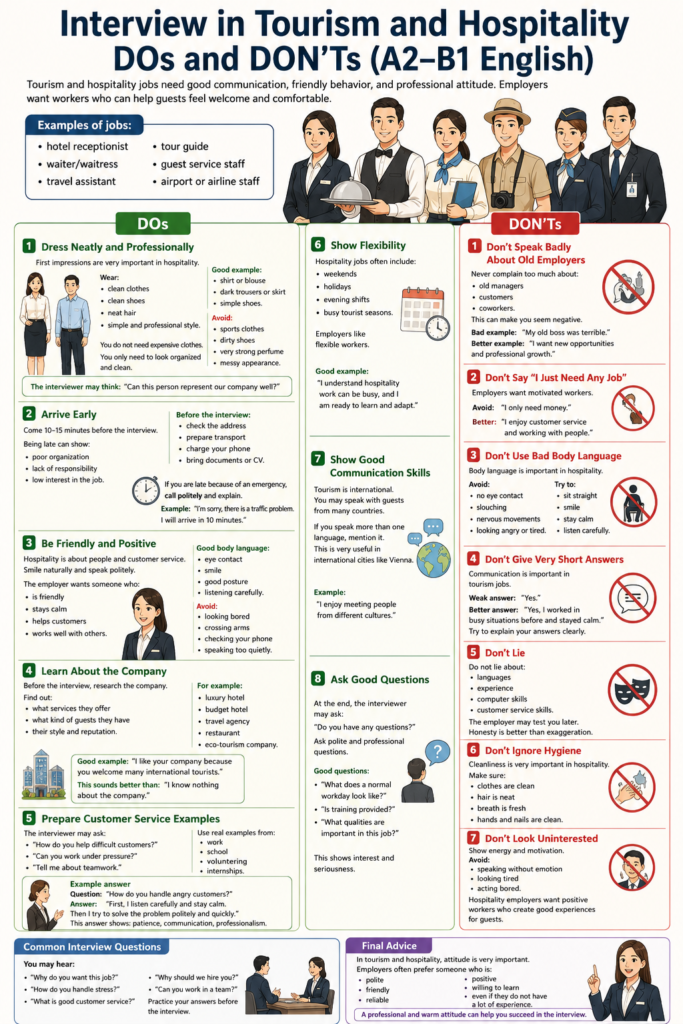
Tourism and hospitality jobs need good communication, friendly behavior, and professional attitude. Employers want workers who can help guests feel welcome and comfortable.
Examples of jobs:
- hotel receptionist,
- waiter/waitress,
- travel assistant,
- tour guide,
- guest service staff,
- airport or airline staff.
DOs
1. Dress Neatly and Professionally
First impressions are very important in hospitality.
Wear:
- clean clothes,
- clean shoes,
- neat hair,
- simple and professional style.
You do not need expensive clothes.
You only need to look organized and clean.
Good example:
- shirt or blouse,
- dark trousers or skirt,
- simple shoes.
Avoid:
- sports clothes,
- dirty shoes,
- very strong perfume,
- messy appearance.
The interviewer may think:
“Can this person represent our company well?”
2. Arrive Early
Come 10–15 minutes before the interview.
Being late can show:
- poor organization,
- lack of responsibility,
- low interest in the job.
Before the interview:
- check the address,
- prepare transport,
- charge your phone,
- bring documents or CV.
If you are late because of an emergency, call politely and explain.
Example:
“I’m sorry, there is a traffic problem. I will arrive in 10 minutes.”
3. Be Friendly and Positive
Hospitality is about people and customer service.
Smile naturally and speak politely.
The employer wants someone who:
- is friendly,
- stays calm,
- helps customers,
- works well with others.
Good body language:
- eye contact,
- smile,
- good posture,
- listening carefully.
Avoid:
- looking bored,
- crossing arms,
- checking your phone,
- speaking too quietly.
4. Learn About the Company
Before the interview, research the company.
Find out:
- what services they offer,
- what kind of guests they have,
- their style and reputation.
For example:
- luxury hotel,
- budget hotel,
- travel agency,
- restaurant,
- eco-tourism company.
This shows motivation and preparation.
Good example:
“I like your company because you welcome many international tourists.”
This sounds better than:
“I know nothing about the company.”
5. Prepare Customer Service Examples
The interviewer may ask:
- “How do you help difficult customers?”
- “Can you work under pressure?”
- “Tell me about teamwork.”
Use real examples from:
- work,
- school,
- volunteering,
- internships.
Example answer
Question:
“How do you handle angry customers?”
Answer:
“First, I listen carefully and stay calm. Then I try to solve the problem politely and quickly.”
This answer shows:
- patience,
- communication,
- professionalism.
6. Show Flexibility
Hospitality jobs often include:
- weekends,
- holidays,
- evening shifts,
- busy tourist seasons.
Employers like flexible workers.
Good example:
“I understand hospitality work can be busy, and I am ready to learn and adapt.”
7. Show Good Communication Skills
Tourism is international.
You may speak with guests from many countries.
If you speak more than one language, mention it.
This is very useful in international cities like Vienna.
Example:
“I enjoy meeting people from different cultures.”
8. Ask Good Questions
At the end, the interviewer may ask:
“Do you have any questions?”
Ask polite and professional questions.
Good questions:
- “What does a normal workday look like?”
- “Is training provided?”
- “What qualities are important in this job?”
This shows interest and seriousness.
DON’Ts
1. Don’t Speak Badly About Old Employers
Never complain too much about:
- old managers,
- customers,
- coworkers.
This can make you seem negative.
Bad example:
“My old boss was terrible.”
Better example:
“I want new opportunities and professional growth.”
2. Don’t Say “I Just Need Any Job”
Employers want motivated workers.
Avoid:
“I only need money.”
Better:
“I enjoy customer service and working with people.”
3. Don’t Use Bad Body Language
Body language is important in hospitality.
Avoid:
- no eye contact,
- slouching,
- nervous movements,
- looking angry or tired.
Try to:
- sit straight,
- smile,
- stay calm,
- listen carefully.
4. Don’t Give Very Short Answers
Communication is important in tourism jobs.
Weak answer:
“Yes.”
Better answer:
“Yes, I worked in busy situations before and stayed calm.”
Try to explain your answers clearly.
5. Don’t Lie
Do not lie about:
- languages,
- experience,
- computer skills,
- customer service skills.
The employer may test you later.
Honesty is better than exaggeration.
6. Don’t Ignore Hygiene
Cleanliness is very important in hospitality.
Make sure:
- clothes are clean,
- hair is neat,
- breath is fresh,
- hands and nails are clean.
Small details matter.
7. Don’t Look Uninterested
Show energy and motivation.
Avoid:
- speaking without emotion,
- looking tired,
- acting bored.
Hospitality employers want positive workers who create good experiences for guests.
Common Interview Questions
You may hear:
- “Why do you want this job?”
- “How do you handle stress?”
- “What is good customer service?”
- “Why should we hire you?”
- “Can you work in a team?”
Practice your answers before the interview.
Final Advice
In tourism and hospitality, attitude is very important.
Employers often prefer someone who is:
- polite,
- friendly,
- reliable,
- positive,
- willing to learn,
even if they do not have a lot of experience.
A professional and warm attitude can help you succeed in the interview.
Schreibe einen Kommentar