- a big festival, lots of fun
Last year, Vong was in Phnom Penh for Khmer New Year. It was in April and lasted for three days. It was a very big and happy festival, and many people were there.
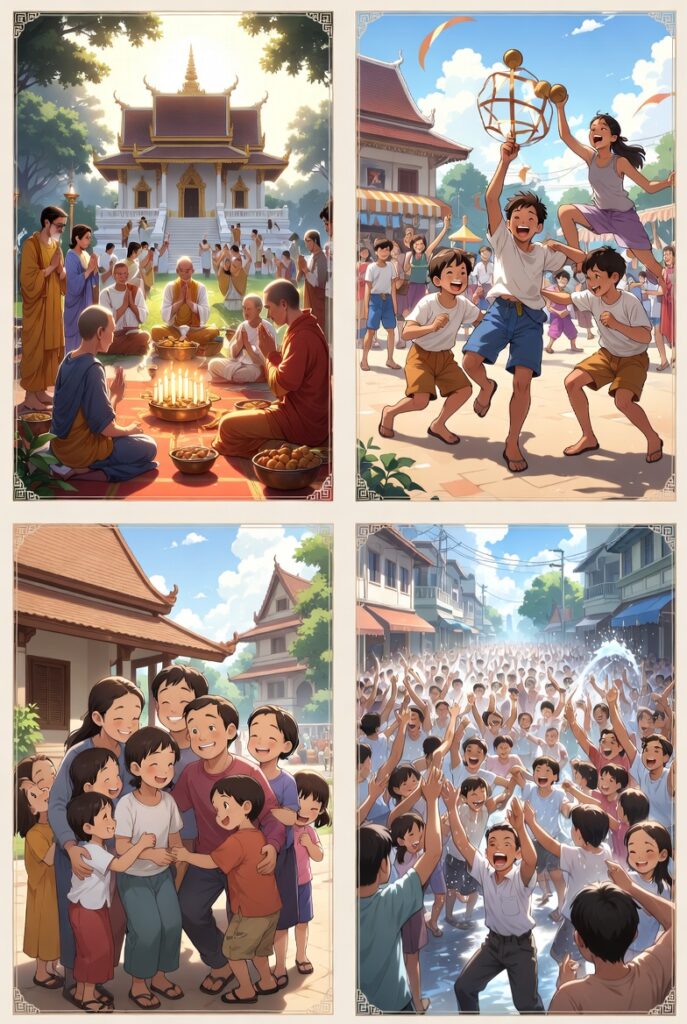
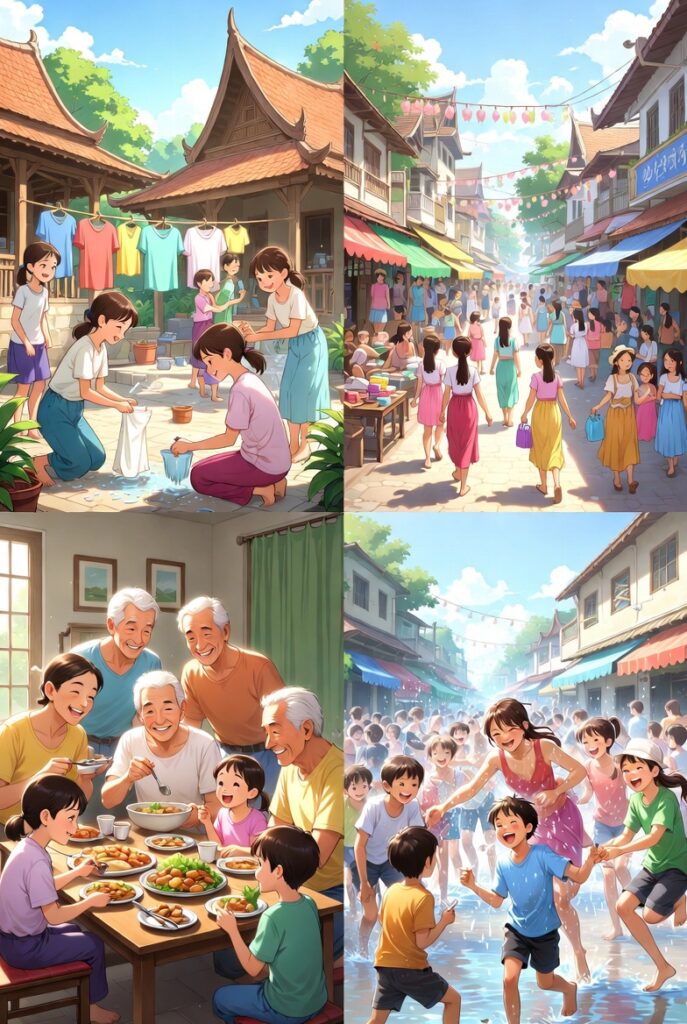
Before the New Year, people cleaned their houses. They washed the floors, walls, and clothes. They wanted a clean home for the new year. Many people also bought new clothes. I saw families in markets. They smiled and looked happy. The streets were very busy and full of people.
During the festival, many people went to their hometowns. They visited their families. I saw parents, grandparents, and children together. They talked, laughed, and ate food. People were very friendly, and they were nice to me. I felt happy to meet them.
People also went to the temple every day. They prayed and gave food to monks. They lit candles and incense. The temple was quiet. I sat there and felt calm. Many people stayed there for some time and prayed.
There were many games. Children and young people played together. I saw a game called Bos Angkunh. It was simple and fun. People also danced and listened to music. They sang songs and smiled. Everyone looked very happy.
Water was part of the festival. People threw water on each other in the streets. It was fun because the weather was hot. People laughed, ran, and played with water.
Families cooked special food at home. They gave food to family and friends. They ate together and talked. The food was very good, and I tried new food.
I felt very happy to be there. It was a beautiful festival with kind people.
___________________________
Vocabulary:
kind people: people who are nice and helpful
joyful: very happy
to last for three days: to continue for three days
to clean something: to make something clean
to buy clothes: to pay money for clothes and take them
a market: a place where people buy and sell things
to be busy: to have many people or things happening
full of people: many people are in one place
a hometown: the town or city where you were born or grew up
to eat food: to put food in your mouth and swallow it
to pray: to talk to God or a holy spirit
a monk: a man who lives in a temple and prays
to throw water on each other: to splash water onto other people
special food: food made for an important day or festival
################
Verbs in text, regular, irregular verbs:
| Infinitive | Past simple |
|---|---|
| be | was / were |
| to last | lasted |
| to clean | cleaned |
| to wash | washed |
| to want | wanted |
| to buy | bought |
| to see | saw |
| to smile | smiled |
| to look | looked |
| to go | went |
| to visit | visited |
| to talk | talked |
| to laugh | laughed |
| to eat | ate |
| to feel | felt |
| to meet | met |
| to pray | prayed |
| to give | gave |
| to light | lit |
| to sit | sat |
| to stay | stayed |
| to play | played |
| to dance | danced |
| to listen | listened |
| to sing | sang |
| to throw | threw |
| to run | ran |
| to cook | cooked |
####################
Basics in past simple:
Past Simple – Regular Verbs
Rules:
- Most verbs: add -ed
play → played - Verbs ending in -e: add -d
live → lived - Verbs ending in consonant + y: change y to i and add -ed
study → studied - Short verbs ending in vowel + consonant: double the final consonant and add -ed
stop → stopped - List of irregular verbs => LINK
Use:
The past simple is used to talk about finished actions in the past.
##################
Fill in the correct form of the verb
Last year, Vong __________ (be) in Phnom Penh for Khmer New Year.
The festival __________ (be) in April and __________ (last) for three days.
It __________ (be) a very big and happy festival, and many people __________ (be) there.
Before the New Year, people __________ (clean) their houses. They __________ (wash) the floors, walls, and clothes. They __________ (want) a clean home for the new year. Many people also __________ (buy) new clothes. I __________ (see) families in markets. They __________ (smile) and __________ (look) happy. The streets __________ (be) very busy and full of people.
During the festival, many people __________ (go) to their hometowns. They __________ (visit) their families. I __________ (see) parents, grandparents, and children together. They __________ (talk), __________ (laugh), and __________ (eat) food. People __________ (be) very friendly, and they __________ (be) nice to me. I __________ (feel) happy to meet them.
People also __________ (go) to the temple every day. They __________ (pray) and __________ (give) food to monks. They __________ (light) candles and incense. The temple __________ (be) quiet. I __________ (sit) there and __________ (feel) calm.
There __________ (be) many games. Children and young people __________ (play) together. I __________ (see) a game called Bos Angkunh. People also __________ (dance) and __________ (listen) to music. They __________ (sing) songs and __________ (smile). Everyone __________ (look) very happy.
People __________ (throw) water on each other in the streets. It __________ (be) fun because the weather __________ (be) hot. People __________ (laugh), __________ (run), and __________ (play) with water.
Families __________ (cook) special food at home. They __________ (give) food to family and friends. They __________ (eat) together and __________ (talk). The food __________ (be) very good.
Vong __________ (feel) very happy. It __________ (be) a beautiful festival with kind people.
—————————————-
Correct version:
Last year, Vong was in Phnom Penh for Khmer New Year.
The festival was in April and lasted for three days.
It was a very big and happy festival, and many people were there.
Before the New Year, people cleaned their houses. They washed the floors, walls, and clothes. They wanted a clean home for the new year. Many people also bought new clothes. I saw families in markets. They smiled and looked happy. The streets were very busy and full of people.
During the festival, many people went to their hometowns. They visited their families. I saw parents, grandparents, and children together. They talked, laughed, and ate food. People were very friendly, and they were nice to me. I felt happy to meet them.
People also went to the temple every day. They prayed and gave food to monks. They lit candles and incense. The temple was quiet. I sat there and felt calm.
There were many games. Children and young people played together. I saw a game called Bos Angkunh. People also danced and listened to music. They sang songs and smiled. Everyone looked very happy.
People threw water on each other in the streets. It was fun because the weather was hot. People laughed, ran, and played with water.
Families cooked special food at home. They gave food to family and friends. They ate together and talked. The food was very good.
Vong felt very happy. It was a beautiful festival with kind people.
##################
Short answers, past simple, basics:
| Example Sentence | Yes | No |
|---|---|---|
| I learned letters. | Yes, I did. | No, I didn’t. |
| You read signs. | Yes, you did. | No, you didn’t. |
| He spoke English. | Yes, he did. | No, he didn’t. |
| She watched TV. | Yes, she did. | No, she didn’t. |
| It helped me. | Yes, it did. | No, it didn’t. |
| We used an app. | Yes, we did. | No, we didn’t. |
| You read words. | Yes, you did. | No, you didn’t. |
| They made mistakes. | Yes, they did. | No, they didn’t. |
Questions (Past Simple)
| Question | Yes | No |
|---|---|---|
| Did I learn letters? | Yes, I did. | No, I didn’t. |
| Did you read signs? | Yes, you did. | No, you didn’t. |
| Did he speak English? | Yes, he did. | No, he didn’t. |
| Did she watch TV? | Yes, she did. | No, she didn’t. |
| Did it help me? | Yes, it did. | No, it didn’t. |
| Did we use an app? | Yes, we did. | No, we didn’t. |
| Did you read words? | Yes, you did. | No, you didn’t. |
| Did they make mistakes? | Yes, they did. | No, they didn’t. |
Was / Were
| Question | Yes | No |
|---|---|---|
| Was I happy? | Yes, I was. | No, I wasn’t. |
| Were you happy? | Yes, you were. | No, you weren’t. |
| Was he happy? | Yes, he was. | No, he wasn’t. |
| Was she happy? | Yes, she was. | No, she wasn’t. |
| Was it good? | Yes, it was. | No, it wasn’t. |
| Were we happy? | Yes, we were. | No, we weren’t. |
| Were you happy? | Yes, you were. | No, you weren’t. |
| Were they happy? | Yes, they were. | No, they weren’t. |
#################
Short answers:
- People went to the cinema every day.
YOU WRITE:
No, they didn’t. - Many people went to their hometowns.
- The festival was in April.
- The streets were empty and quiet.
- Vong was in Phnom Penh for Khmer New Year.
- People cleaned their houses before the New Year.
- People studied in school during the festival.
- Many people bought new clothes.
- The festival lasted for ten days.
- People threw water on each other in the streets.
- Children and young people worked in the fields.
- The festival lasted for three days.
- Vong felt sad during the festival.
- People went to the temple every day.
- The festival was in December.
- The streets were very busy and full of people.
- Nobody bought new clothes.
- Many people were in the city.
- People cleaned their houses after the New Year.
- People stayed only in Phnom Penh and did not visit families.
_______________________
True: 2,3,5,6,8,10,12,14,16,18
_______________________
Correct version:
- People went to the cinema every day. – No, they didn’t.
- Many people went to their hometowns. – Yes, they did.
- The festival was in April. – Yes, it was.
- The streets were empty and quiet. – No, they weren’t.
- Vong was in Phnom Penh for Khmer New Year. – Yes, he was.
- People cleaned their houses before the New Year. – Yes, they did.
- People studied in school during the festival. – No, they didn’t.
- Many people bought new clothes. – Yes, they did.
- The festival lasted for ten days. – No, it didn’t.
- People threw water on each other in the streets. – Yes, they did.
- Children and young people worked in the fields. – No, they didn’t.
- The festival lasted for three days. – Yes, it did.
- Vong felt sad during the festival. – No, he didn’t.
- People went to the temple every day. – Yes, they did.
- The festival was in December. – No, it wasn’t.
- The streets were very busy and full of people. – Yes, they were.
- Nobody bought new clothes. – No, they didn’t.
- Many people were in the city. – Yes, they were.
- People cleaned their houses after the New Year. – No, they didn’t.
- People stayed only in Phnom Penh and did not visit families. – No, they didn’t.
################
Past simple – basics
| Personal Pronoun | Verb (Past) | Object |
|---|---|---|
| I | ate | apples |
| You | ate | apples |
| He | ate | apples |
| She | ate | apples |
| It | ate | apples |
| We | ate | apples |
| You (plural) | ate | apples |
| They | ate | apples |
| I | played | football |
| You | played | football |
| He | played | football |
| She | played | football |
| It | played | football |
| We | played | football |
| You (plural) | played | football |
| They | played | football |
| Personal Pronoun | Verb (Past Negative) | Object |
|---|---|---|
| I | did not eat | apples |
| You | did not eat | apples |
| He | did not eat | apples |
| She | did not eat | apples |
| It | did not eat | apples |
| We | did not eat | apples |
| You (plural) | did not eat | apples |
| They | did not eat | apples |
| I | did not play | football |
| You | did not play | football |
| He | did not play | football |
| She | did not play | football |
| It | did not play | football |
| We | did not play | football |
| You (plural) | did not play | football |
| They | did not play | football |
| Did + Pronoun | Verb | Object |
|---|---|---|
| Did I | eat | apples? |
| Did you | eat | apples? |
| Did he | eat | apples? |
| Did she | eat | apples? |
| Did it | eat | apples? |
| Did we | eat | apples? |
| Did you | eat | apples? |
| Did they | eat | apples? |
| Did I | play | football? |
| Did you | play | football? |
| Did he | play | football? |
| Did she | play | football? |
| Did it | play | football? |
| Did we | play | football? |
| Did you | play | football? |
| Did they | play | football? |
| Didn’t + Pronoun | Verb | Object |
|---|---|---|
| Didn’t I | eat | apples? |
| Didn’t you | eat | apples? |
| Didn’t he | eat | apples? |
| Didn’t she | eat | apples? |
| Didn’t it | eat | apples? |
| Didn’t we | eat | apples? |
| Didn’t you | eat | apples? |
| Didn’t they | eat | apples? |
| Didn’t I | play | football? |
| Didn’t you | play | football? |
| Didn’t he | play | football? |
| Didn’t she | play | football? |
| Didn’t it | play | football? |
| Didn’t we | play | football? |
| Didn’t you | play | football? |
| Didn’t they | play | football? |
Forms of ‚to be‘
| Personal Pronoun | Positive | Negative | Question |
|---|---|---|---|
| I | I was happy. | I was not happy. | Was I happy? |
| You (singular) | You were excited. | You were not excited. | Were you excited? |
| He | He was at home. | He was not at home. | Was he at home? |
| She | She was tired. | She was not tired. | Was she tired? |
| It | It was cold. | It was not cold. | Was it cold? |
| We | We were at the party. | We were not at the party. | Were we at the party? |
| You (plural) | You were friends. | You were not friends. | Were you friends? |
| They | They were in the garden. | They were not in the garden. | Were they in the garden? |
###################
Ten statements, correct them, as shown in 1:
- Khmer New Year lasted for one day in Phnom Penh.
YOU WRITE:
No, it didn’t. It lasted for three days. - People stayed in dirty houses before the New Year.
- Many people bought old clothes for the festival.
- The streets were empty and quiet during the festival.
- Families stayed only in Phnom Penh and never visited hometowns.
- People went to the cinema instead of the temple during Khmer New Year.
- There were no games, dancing, or music at the festival.
- Throwing sand was part of the celebrations in hot weather.
- Families cooked no special food during the festival.
- Vong felt sad and lonely during the festival.
__________________________
Correct version:
Khmer New Year lasted for one day in Phnom Penh. – No, it didn’t. It lasted for three days.
People stayed in dirty houses before the New Year. – No, they didn’t. They cleaned their houses before the New Year.
Many people bought old clothes for the festival. – No, they didn’t. They bought new clothes.
The streets were empty and quiet during the festival. – No, they weren’t. They were very busy and full of people.
Families stayed only in Phnom Penh and never visited hometowns. – No, they didn’t. They went to their hometowns and visited families.
People went to the cinema instead of the temple during Khmer New Year. – No, they didn’t. They went to the temple every day.
There were no games, dancing, or music at the festival. – No, there were. There were games, dancing, and music.
Throwing sand was part of the celebrations in hot weather. – No, it wasn’t. People threw water on each other.
Families cooked no special food during the festival. – No, they did. They cooked special food and shared it.
Vong felt sad and lonely during the festival. – No, he didn’t. He felt very happy.
###################
Rewrite as shown in 1:
- Vong was in Phnom Penh for Khmer New Year.
a) Vong was not in Phnom Penh for Khmer New Year.
b) Was Vong in Phnom Penh for Khmer New Year?
c) Wasn’t Vong in Phnom Penh for Khmer New Year? - Many people were in Phnom Penh during the festival.
- The festival lasted for three days.
- The festival was in April.
- People cleaned their houses before the New Year.
- Many people bought new clothes.
- Families went to their hometowns during the festival.
- People went to the temple every day.
- Children and young people played games, danced, and listened to music.
- People threw water on each other in the streets.
________________________
Correct version:
2. Many people were in Phnom Penh during the festival.
a) Many people were not in Phnom Penh during the festival.
b) Were many people in Phnom Penh during the festival?
c) Weren’t many people in Phnom Penh during the festival?
3. The festival lasted for three days.
a) The festival did not last for three days.
b) Did the festival last for three days?
c) Didn’t the festival last for three days?
4. The festival was in April.
a) The festival was not in April.
b) Was the festival in April?
c) Wasn’t the festival in April?
5. People cleaned their houses before the New Year.
a) People did not clean their houses before the New Year.
b) Did people clean their houses before the New Year?
c) Didn’t people clean their houses before the New Year?
6. Many people bought new clothes.
a) Many people did not buy new clothes.
b) Did many people buy new clothes?
c) Didn’t many people buy new clothes?
7. Families went to their hometowns during the festival.
a) Families did not go to their hometowns during the festival.
b) Did families go to their hometowns during the festival?
c) Didn’t families go to their hometowns during the festival?
8. People went to the temple every day.
a) People did not go to the temple every day.
b) Did people go to the temple every day?
c) Didn’t people go to the temple every day?
9. Children and young people played games, danced, and listened to music.
a) Children and young people did not play games, dance, and listen to music.
b) Did children and young people play games, dance, and listen to music?
c) Didn’t children and young people play games, dance, and listen to music?
10. People threw water on each other in the streets.
a) People did not throw water on each other in the streets.
b) Did people throw water on each other in the streets?
c) Didn’t people throw water on each other in the streets?
#######################
Match questions with answers – could you answer without looking at the answers?
Questions
- Where were you last year during Khmer New Year?
- What festival did you join last year?
- When did the festival happen last year?
- How long did the festival last?
- What did people do before the New Year?
- What did people do in the markets?
- How were the streets during the festival?
- Where did many families go during the festival?
- What did people do with their families?
- What did people do at the temple?
- How did the temple feel during the festival?
- What games did children play?
- What did people do with water in the streets?
- What did people do at home during the festival?
Answers
A. They prayed, gave food to monks, and lit candles.
B. It continued for three days with many happy moments.
C. They travelled to their hometowns to meet relatives.
D. It stayed very quiet and calm.
E. I stayed in Phnom Penh in Cambodia with many people in the city.
F. They cooked special food and shared it with family.
G. They threw water on friends in the hot weather.
H. They chose new clothes and paid money for them.
I. They ate food, talked, and laughed together.
J. They looked very busy with many people everywhere.
K. They played Bos Angkunh with friends.
L. They made their houses clean for the new year.
M. I took part in Khmer New Year with families and friends.
N. It took place in April last year in Phnom Penh.
_______________________________
Answer Key
1-E, 2-M, 3-N, 4-B, 5-L,
6-H, 7-J, 8-C, 9-I, 10-A,
11-D, 12-K, 13-G, 14-F
_______________________________
Correct version:
1. Where were you last year during Khmer New Year?
I stayed in Phnom Penh in Cambodia with many people in the city.
2. What festival did you join last year?
I took part in Khmer New Year with families and friends.
3. When did the festival happen last year?
It took place in April last year in Phnom Penh.
4. How long did the festival last?
It continued for three days with many happy moments.
5. What did people do before the New Year?
They made their houses clean for the new year.
6. What did people do in the markets?
They chose new clothes and paid money for them.
7. How were the streets during the festival?
They looked very busy with many people everywhere.
8. Where did many families go during the festival?
They travelled to their hometowns to meet relatives.
9. What did people do with their families?
They ate food, talked, and laughed together.
10. What did people do at the temple?
They prayed, gave food to monks, and lit candles.
11. How did the temple feel during the festival?
It stayed very quiet and calm.
12. What games did children play?
They played Bos Angkunh with friends.
13. What did people do with water in the streets?
They threw water on friends in the hot weather.
14. What did people do at home during the festival?
They cooked special food and shared it with family.
Schreibe einen Kommentar