Why Listening Is Important When Learning a Language
When you learn a new language, you can read, write, listen, and speak. Listening is the most important at the beginning.
1. Your brain learns to listen first People learned to speak and listen before reading and writing. Babies hear words before they can read. Listening is natural for your brain.
2. Listening helps you talk You can understand people when they speak. If you understand, you can join conversations. Then you can speak better.
3. Listening helps you say words correctly If you only read, you may say words wrong. Listening helps you learn the right sounds.
Listening is easy and fun You can listen to music, movies, or videos anytime. You do not need a teacher or friend.
In short:
Your brain learns listening first.
Listening helps you speak with people.
Listening teaches correct sounds.
Listening is easy and fun!
################
################
A2:
Why Listening Is Important When Learning a Language
When you learn a new language, you can practice reading, writing, listening, and speaking. Listening is very important, especially at the beginning. Here are three reasons why:
Our brains learn listening first People learned to speak and listen before they learned to read and write. Babies understand sounds and words before they can read. This is because speaking is older than writing. Your brain can understand spoken words before written words.
Listening helps you talk with others To learn a language, you need to talk with people. Even if you don’t speak much at first, you can listen and understand. If you cannot understand, you may feel left out. Listening helps you join conversations and speak later.
Listening helps with pronunciation When you read, you say words in your head. Sometimes you say them wrong. If you listen first, you hear the correct sounds. This helps you speak better.
Listening is easy and fun You can listen to music, movies, or videos anytime. You don’t need a partner. You can enjoy YouTube, Netflix, or songs in the language you learn.
In short:
Your brain can learn listening first.
Listening helps you talk with people.
Listening teaches the correct pronunciation.
You can listen every day and have fun.
Start listening more to learn a language faster!
################
################
B1:
Why Listening is the Most Important Skill to Learn First in a New Language
When learning a new language, it’s best to focus on listening first. Here are three reasons why listening is very important, especially at the beginning.
1) Our brains are made to understand spoken language first People learned to understand and speak long before they learned to read and write. Humans talked to each other for thousands of years before writing was invented. Because of this, our brains naturally learn listening skills first, even when learning a second language.
2) Listening helps you start talking with others To learn a language well, you need to speak with people. But even if your speaking is not good yet, you can still join conversations if you understand what others say. If you can’t understand, you might feel left out and stop trying. So, listening skills help you join social life in the new language, which is very important for learning.
3) Listening helps you learn correct pronunciation early When you read in a new language, your brain tries to “say” the words silently in your head. If you never listen to how words really sound, you might learn wrong pronunciation. This makes it harder to speak well later. Listening first helps you hear the right sounds and say words correctly in your mind.
Why listening is also the easiest skill to practice Listening is easier to do often because you can do it anytime and anywhere. You don’t need a partner or special effort. You can listen while watching movies, YouTube videos, music, or radio. Many fun and interesting listening materials are available for most languages. This makes practicing listening easy and enjoyable.
The main message Your brain learns listening first, and this helps you speak and read better later. Listening is easy to practice a lot, so start listening to your target language right away to improve fast. Find listening materials that you like, and enjoy learning while doing it!
#################
#################
B2:
Why Listening is the Most Important Language Skill to Learn First—and Why It’s the Easiest to Practice
When learning a new language, it’s important to work on all four skills—reading, writing, listening, and speaking—but listening should be your top priority at the start. Here’s why.
1) Our brains are made to learn listening first. Humans evolved speaking long before writing. Our brains developed alongside spoken language over hundreds of thousands of years. Reading and writing appeared only about 5,000 years ago. That’s why babies learn to understand spoken language long before they can read. The same applies to learning a second language: listening naturally comes first.
2) Listening helps you join social interactions. Research shows that talking with others is crucial to learning a language. People who socialize more with native speakers learn faster. Even if you don’t speak well yet, understanding what others say lets you take part in conversations. Without good listening skills, you might feel left out and stop trying.
3) Listening gives you the right “mental pronunciation.” When you read in a new language, your brain “hears” the words in your mind. If you haven’t listened enough, you might imagine the wrong pronunciation, making speaking and understanding harder later. Listening early helps your brain learn correct sounds and improves your pronunciation naturally.
Why is listening the easiest skill to practice? Listening doesn’t need special effort or conditions. You don’t always need someone to talk to, and you can listen while relaxing or doing other things. There is lots of interesting content online—movies, series, YouTube videos, music—in almost every language. This makes listening a fun and easy way to practice regularly.
The main idea: Start practicing listening as soon as possible. It helps your brain learn language naturally, supports social interaction, and builds good pronunciation habits. Plus, it’s easy to do because there is endless enjoyable material available at your fingertips.
###############
###############
C1:
Listening is the most crucial language skill to prioritize early in language learning, and it is also the easiest to practice extensively. This is because human brains evolved primarily for oral comprehension long before the advent of written language. Spoken communication developed alongside the evolution of Homo sapiens hundreds of thousands of years ago, whereas written language emerged only around five thousand years ago. Consequently, infants naturally acquire listening skills earlier and more effortlessly than reading or writing. This evolutionary background also applies to second-language acquisition, as early humans likely developed oral comprehension skills first when encountering new languages.
Listening skills are essential for initiating social interaction, which neuroscience research shows is necessary for effective language acquisition. Engaging with native speakers socially accelerates learning, but this interaction depends fundamentally on understanding spoken language. Even if speaking abilities are limited, the ability to comprehend others prevents isolation and fosters participation. Therefore, strong listening skills are the gateway to meaningful communication and overall language progress.
Another key reason to emphasize listening early on is to develop an accurate “mental pronunciation.” Reading without sufficient listening input risks ingraining incorrect pronunciation patterns in the mind because people tend to mentally vocalize written words based on their native language’s phonetics. Listening helps form correct auditory representations of words, which later improves speaking and comprehension. This prevents the difficulty of unlearning bad pronunciation habits later.
Practically, listening is the easiest skill to practice regularly. Unlike writing, which demands effort and motivation, or speaking, which requires conversational partners and confidence, listening can be done effortlessly anytime—while relaxing with movies, music, podcasts, or YouTube videos. There is an abundance of engaging content in most languages, making it accessible and enjoyable. Listening does not require special conditions, and it can be integrated seamlessly into daily life.
In summary, because the brain is wired to acquire listening first, social interaction depends on comprehension, and mental pronunciation must be formed early, listening should be prioritized at the start of language learning. Moreover, its ease of practice and abundance of available content make it a highly effective and sustainable skill to develop for long-term language mastery.
###############
###############
C2:
Why Listening Is the Most Crucial and Accessible Skill in Language Learning
Listening should be prioritized early in language acquisition because it aligns with how the human brain naturally evolved to process language. Spoken communication predates writing by hundreds of thousands of years, making oral comprehension the foundational skill humans develop first. This evolutionary background also suggests that second-language learners benefit most by focusing initially on listening, mirroring how early humans acquired new languages through oral interaction.
Furthermore, listening is essential for social engagement, which neuroscience confirms as a critical catalyst for effective language acquisition. Even learners with limited speaking ability can participate socially if they understand spoken language. Without adequate listening skills, learners risk disengagement and isolation, severely hindering their progress. Therefore, cultivating listening proficiency fosters meaningful interaction and accelerates overall language development.
Another vital reason to emphasize listening early is the formation of correct “mental pronunciation.” As we read, we internally vocalize words, and if this inner speech is based solely on the learner’s native language phonetics, it entrenches inaccurate pronunciation habits. Regular listening exposure helps the brain develop authentic phonetic representations, which improves both comprehension and speaking accuracy over time. This synergy between listening and reading ensures learners internalize correct pronunciation before bad habits solidify.
Practically, listening is also the easiest language skill to practice extensively. Unlike writing or speaking—which require motivation, effort, or interlocutors—listening can be integrated seamlessly into daily life. Entertainment media such as movies, series, podcasts, and YouTube videos in the target language provide endless engaging input without demanding extra effort. This accessibility allows learners to absorb large quantities of natural language effortlessly, which is vital for mastery.
In sum, listening is the cornerstone of language acquisition because it taps into our brain’s natural design, enables social interaction, and shapes accurate mental pronunciation. Its ease of practice through abundant, enjoyable content makes it the most effective starting point. Learners should therefore prioritize listening from the outset to build a strong foundation for all other language skills and long-term mastery.
The “learn like a baby” method is a simple and natural way to learn English. It follows the same way babies learn their first language. Babies do not start with grammar books, vocabulary lists, or exercises. They only listen. Every day, they hear their parents, family, and other people speaking. They hear words, sentences, questions, and short stories many times. Their brain works quietly in the background. It connects sounds to meaning without using rules. Slowly, babies begin to understand the language naturally.
After a long time, babies start to speak. Their first words may be small, but they sound correct. This is because they have copied the words and sentences they heard many times. They do not need to think about grammar. They speak naturally.
Adults and learners of English can use the same method. First, listen a lot. Listen to simple stories, clear conversations, songs, or short talks every day. Do not try to read difficult texts or speak too early. When you hear the same words and sentences often, your brain starts to understand them naturally. You learn correct pronunciation, the right rhythm, and how sentences flow. Later, when you speak, your English comes out more easily and sounds natural. You make fewer mistakes and feel more confident.
Listening is also relaxing and enjoyable. You can listen anywhere, for example while walking, cooking, travelling, or resting. Slowly, you understand more and your speaking improves.
In short, start with listening, just like a baby. Then speaking, reading, and writing will be easier and better.
_____________________
Vocabulary:
to follow – to go after someone or something
a language – a way people speak and write to communicate
to listen – to use your ears to hear sounds or words
a sentence – a group of words that make a complete thought
a short story – a small story with a beginning, middle, and end
a brain – the organ in your head that thinks and remembers
to work quietly – to do work without making noise
to connect – to join or link two things or people
a meaning – what a word, sentence, or idea shows or tells
a rule – something you must follow
naturally – in a normal or usual way
to sound correct – to be right when you say or write something
to copy – to do the same as someone else
to think about grammar – to pay attention to the rules of a language
an adult – a grown-up person
a lot – many or much
a conversation – talking with someone
to understand – to know the meaning of something
correct pronunciation – saying words the right way
When you hear a sound in a foreign language, this is what happens in your brain:
Your ear hears the sound. The sound goes inside your ear and moves to your brain.
Your brain finds the sound pattern. Your brain tries to remember: “Have I heard this sound before?”
You connect the sound to a word. If you have learned the word before, your brain says, “Ah! This sound means this word!”
You remember the meaning. Then you think of what the word means in your own language.
So: 👉 Sound → Ear → Brain → Word → Meaning
—————————-
If you haven’t heard the word before, this happens:
Your ear hears the sound.
Your brain listens carefully, but it doesn’t know the sound pattern yet.
You don’t know the word’s meaning. It’s just a strange sound.
You may ask or check what the word means.
When you learn it, your brain saves the sound and its meaning together.
Next time you hear it, your brain will remember: 👉 “I know this sound — it means this word!”
When you learn a new language, listening is very important. At the beginner level, you should listen a lot every day. Listening helps you learn the sounds, words, and sentences. You hear how people speak in real life.
Listening is more important than reading at the start. Reading uses your eyes. Listening uses your ears and your brain. When you listen, you hear the right way to say words. You hear the rhythm and speed of the language. Reading does not help you hear these sounds.
If you listen a lot, you remember words and phrases more easily. Even if you do not understand every word, you will understand more and more. Your brain learns the language patterns. This is how children learn their first language. They listen for a long time before they read or write.
What about speaking? Speaking is important too. But if you speak too early without listening enough, it can be hard. You might say words wrong or use words in the wrong way. Listening first helps you speak better. You copy the right sounds and sentences.
If you only read or learn grammar, it is hard to talk to people. But if you listen often, you feel more confident to speak. At the beginner level, it is best to listen more than speak. Listening is the first step to learning. It helps you learn fast and well.
________________________
Vocabulary:
a soundfile: a computer file with recorded sounds or speech
a language: words and rules people use to talk or write
to listen: to use your ears to hear carefully
important: something that matters a lot
a beginner level: the first stage of learning something new
a sound: something you can hear
a sentence: a group of words that tell a complete idea
to hear: to notice a sound with your ears
to speak: to say words with your mouth
an eye: the part of your body you see with
an ear: the part of your body you hear with
a brain: the part inside your head that thinks and learns
a rhythm: a pattern of sounds that repeat in music or talking
speed: how fast or slow something happens
to remember: to keep information in your mind
easily: something you can do without problems
to understand: to know the meaning of something
a language pattern: a usual way words and sentences are made in a language
enough: as much as you need
wrong: not correct or not right
to copy: to do or say the same as someone else
grammar: rules for making sentences in a language
to feel confident: to feel sure you can do something well
####################
Multiple choice, one answer correct:
part 1: 1-16
part 2: 17-20
What is a soundfile? a) A computer file with recorded sounds b) A book with pictures c) A paper with words
What does to listen mean? a) To close your eyes b) To use your ears to hear carefully c) To speak loudly
What is a sentence? a) A single letter b) A group of words that tell a complete idea c) A color
What is an ear? a) The part of your body you hear with b) The part of your body you see with c) The part of your body you use to write
What is grammar? a) A kind of food b) Rules for making sentences in a language c) A place to read books
What does to copy mean? a) To sleep b) To say or do the same as someone else c) To run very fast
What is a brain? a) Something you wear b) The part inside your head that thinks and learns c) The name of a city
What is important? a) Something that is very small b) Something that matters a lot c) Something that does not matter
What does to speak mean? a) To write a letter b) To listen carefully c) To say words with your mouth
What does to remember mean? a) To keep information in your mind b) To forget something c) To eat food
What is a language? a) A kind of animal b) Words and rules people use to talk or write c) A type of music
What is speed? a) A kind of fruit b) A type of dance c) How fast or slow something happens
What does wrong mean? a) Very good b) Very old c) Not correct or not right
What is a rhythm? a) A color b) A pattern of sounds that repeat in music or talking c) A kind of food
What does enough mean? a) More than you need b) Less than you want c) As much as you need
What does to feel confident mean? a) To feel scared b) To feel tired c) To feel sure you can do something well
What is an eye? a) The part of your body you use to walk b) The part of your body you see with c) The part of your body you hear with
What does to understand mean? a) To not know something b) To know the meaning of something c) To forget something
What is a beginner level? a) The last stage of learning b) The first stage of learning something new c) A very difficult stage
What does easily mean? a) Something impossible to do b) Something very hard to do c) Something you can do without problems
a) The part of your body you see with b) Rules for making sentences in a language c) A group of words that tell a complete idea d) A computer file with recorded sounds e) To say words with your mouth f) Something that matters a lot g) The first stage of learning something new h) The part of your body you hear with i) To use your ears to hear carefully j) To keep information in your mind k) Not correct or not right l) How fast or slow something happens m) The part inside your head that thinks and learns n) To do the same as someone else o) A pattern of sounds that repeat in music or talking p) Words and rules people use to talk or write q) To know the meaning of something r) To hear sounds with your ears s) The part of your body you hear with t) As much as you need u) Something you can do without problems v) To feel sure you can do something well w) A sound that you can hear x) The first stage of learning a new language
first – hear – easily – language – important – speak – brain – grammar – remember
When you learn a new language, listening is very __________, especially at the beginner level. Listening helps you __________ sounds, words, and sentences the right way. It uses your ears and __________, and helps you learn the rhythm and speed of the language. If you listen a lot every day, you ________ words more __________ and understand more, even if you don’t know every word. Speaking is important too, but it is better to listen __________. Listening helps you __________ better and feel confident. Reading and __________ are not enough to speak well. Listening is the first step to learning a __________ fast and well.
______________________
Correct version:
When you learn a new language, listening is very important, especially at the beginner level. Listening helps you hear sounds, words, and sentences the right way. It uses your ears and brain, and helps you learn the rhythm and speed of the language. If you listen a lot every day, you remember words more easily and understand more, even if you don’t know every word. Speaking is important too, but it is better to listen first. Listening helps you speak better and feel confident. Reading and grammar are not enough to speak well. Listening is the first step to learning a language fast and well. #################
Interview – complete, words below:
Rhythm – brain – first – listening – more – too – beginner – sentences – language – wrong
1. Q: What is very important when you learn a new language? A: Listening is very important.
2. Q: When should you listen a lot? A: At the __________ level.
3. Q: What does listening help you learn? A: Sounds, words, and __________.
4. Q: What parts of the body do you use to listen? A: Ears and __________.
5. Q: Is listening more important than reading at the start? A: Yes,___________ is more important.
6. Q: Can reading help you hear the right sounds? A: No, reading does not help.
7. Q: What do you learn when you listen a lot? A: __________ and speed of the language.
8. Q: Do you understand more when you listen a lot? A: Yes, you understand __________.
9. Q: Is speaking important? A: Yes, speaking is important__________.
10. Q: Should you speak too early? A: No, you should listen _________.
11. Q: What happens if you speak too early? A: You might say words __________.
12. Q: What is the first step to learn a __________? A: Listening is the first step.
###################
Correct version:
1. Q: What is very important when you learn a new language? A: Listening is very important.
2. Q: When should you listen a lot? A: At the beginner level.
3. Q: What does listening help you learn? A: Sounds, words, and sentences.
4. Q: What parts of the body do you use to listen? A: Ears and brain.
5. Q: Is listening more important than reading at the start? A: Yes, listening is more important.
6. Q: Can reading help you hear the right sounds? A: No, reading does not help.
7. Q: What do you learn when you listen a lot? A: Rhythm and speed of the language.
8. Q: Do you understand more when you listen a lot? A: Yes, you understand more.
9. Q: Is speaking important? A: Yes, speaking is important too.
10. Q: Should you speak too early? A: No, you should listen first.
11. Q: What happens if you speak too early? A: You might say words wrong.
12. Q: What is the first step to learn a language? A: Listening is the first step.
When you learn a new language, listening is very important. Beginners should listen a lot every day. Listening helps you learn sounds, words, and sentences. You hear how people speak in real life.
At the start, listening is more important than reading. Reading uses your eyes. Listening uses your ears and brain. When you listen, you hear how words are said, and the rhythm and speed of the language. Reading does not teach these.
Listening a lot helps you remember words and phrases. Even if you do not understand everything, you will understand more over time. Your brain learns the language like children learn their first language—they listen a long time before reading or writing.
Speaking is important too. But if you speak too early, it can be hard. You might say words wrong or use them in the wrong way. Listening first helps you speak better because you copy the right sounds and sentences.
If you only read or study grammar, it is hard to talk to people. Listening often helps you feel confident to speak. Beginners should listen more than speak. Listening is the first step to learning and helps you learn faster. ##############
Even simpler text:
When you learn a new language, listening is very important. Beginners should listen every day. Listening helps you learn words, sounds, and sentences. You hear how people speak.
Listening is more important than reading at the start. Reading uses your eyes. Listening uses your ears and brain. Listening helps you hear the right way to say words.
If you listen a lot, you remember words and phrases. Even if you do not understand everything, your brain learns the language. Children learn this way too.
Speaking is important, but it is better to listen first. If you speak too early, you can make mistakes. Listening helps you speak better.
If you only read or study grammar, it is hard to talk. Beginners should listen more than speak. Listening is the first step to learning. ##############
For beginners:
When you learn a new language, listen every day. Listening helps you learn words and sounds. You hear how people speak.
Listening is better than reading at first. It helps you say words correctly.
If you listen a lot, you remember more. Speaking is important, but listen first. Listening helps you speak better.
##############
A longer version, more elaborate
When you learn a new language, listening is very important. Listening is the first step. You should listen every day. Even a little time is good. Listening helps you learn the new language in a simple way.
At the start, reading is not the most important thing. Listening is more important. When you listen, you use your ears. You hear real people speaking. You hear real words and real sentences. This is very helpful.
Listening helps you learn sounds. Every language has different sounds. Some sounds are new for you. At first, they can be hard. But if you listen many times, they become easy. Your ears learn the sounds step by step.
Listening also helps you learn words. You hear words again and again. You do not need to study long word lists. You just hear the words in real speech. This helps you remember them better.
At the beginning, you do not need to understand everything. This is normal. You can understand only a little. Maybe you understand a few words. Maybe you understand the topic. This is still good learning.
Slowly, you will understand more. Your brain learns the language little by little. You start to know common words. You start to know common sentences. You feel more comfortable with the language.
Listening also helps your speaking. If you listen first, you hear the correct way to speak. You hear how people say words. You hear the speed of speech. Then you can copy it.
If you do not listen enough, speaking is harder. You may say words in a wrong way. You may feel shy. But if you listen more, speaking becomes easier.
You can listen to many things. You can listen to short stories. You can listen to simple videos. You can listen to songs. You can listen to easy podcasts. All of this is good practice.
You can also watch videos with subtitles. Subtitles can help you. At first, you can use subtitles in your language. Later, you can use subtitles in the new language. This helps you match words and sounds.
It is good to listen every day. Even 10 minutes is good. Even 15 minutes is good. Small practice every day is better than long practice once a week. Daily listening helps your brain remember better.
Listening also helps your confidence. When you hear the language many times, it feels normal. It does not feel strange anymore. You feel more safe with the language.
Children learn languages by listening first. They listen before they speak well. You can learn in a similar way. You can listen first and speak later.
Reading and grammar are also useful. But they are not enough alone. You need listening to understand real people. Real people speak fast and natural.
When you listen a lot, your brain learns patterns. You start to know what comes next in a sentence. You start to guess meaning. This is very helpful.
In the end, listening is the most important start. It helps you learn sounds, words, and sentences. It helps you speak better later. It helps you feel confident. If you listen every day, you will learn the language step by step in a simple and good way.
My statistics show that many people around the world use the materials presented to improve their English.
I offer texts, exercises and sound files. Until now, you had to download the sound files. But many users have told me they need to save mobile data. That is why, from now on, there often are fewer sound files online.
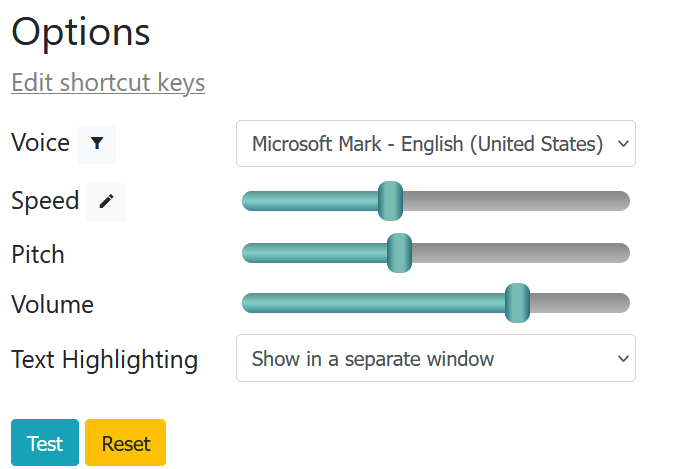
Instead, you can use free text-to-speech add-ons, e.g. for FIREFOX:
This tool reads any text aloud for you – you do not need to download anything. You can choose the speaker (female/male) and the speed.
I am trying this new way now with some of the texts.
At the end of this text, you can provide feedback.
Tell me: Is this new option better for saving your mobile data than downloading sound files?
Thank you for your help and attention to that matter!
#####################
For WINDOWS and FIREFOX users:
go to the list of FIREFOX add-ons, and add
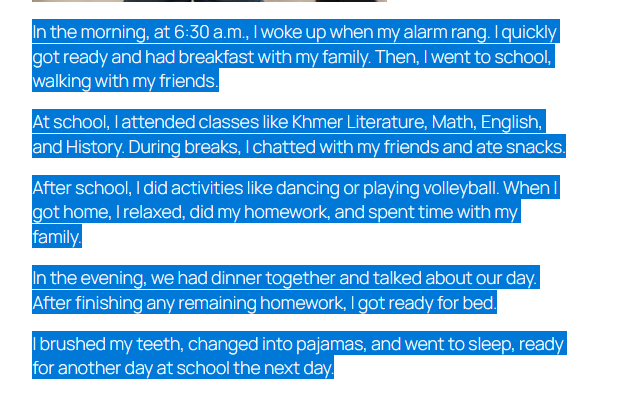
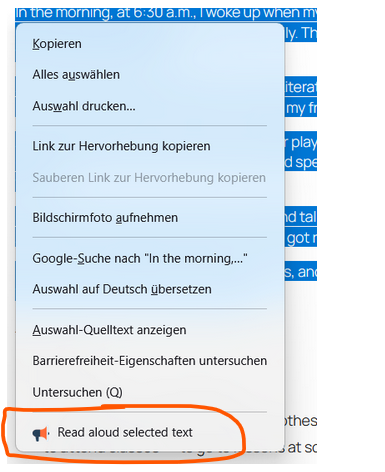
go to the text you want to listen to, mark it, e.g.
then
click on ‚Read aloud selected texts‘.
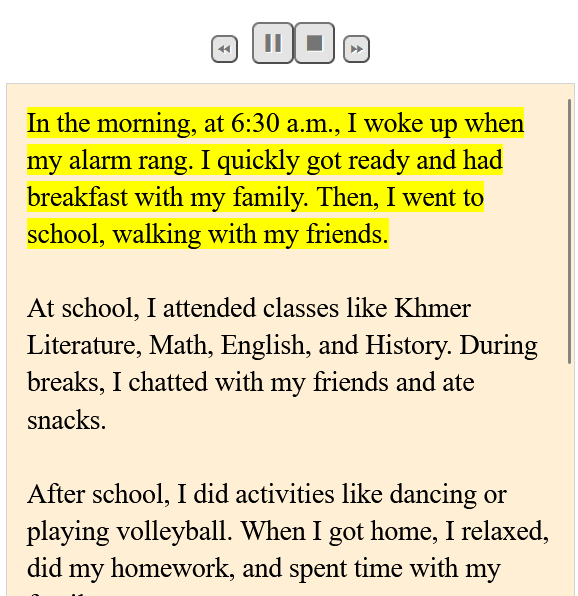
a new window opens, a speaker starts reading.
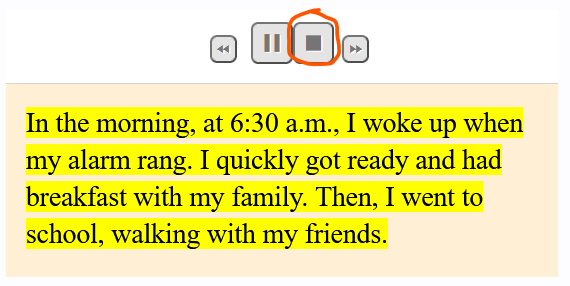
if you do not like the way he/she speaks, click on
and you get
when you click on it a new window opens
now it is up to you, to find your best speaker, just try.
#################
#################
You can also use MicrosoftEdge, e.g. instead of #Firefox – follow the instructions below, and you do not have to download the mp3 files – save data.
The incredible story of a friendship between a man and a deer.
Many years ago, a park ranger named Jack was walking in the snowy woods of Alaska. He found a young deer lying on the ground near a tree. The poor animal was hurt in its leg and could not stand up.
Jack saw that the deer was bigger than all the other deer in that area, but it was almost dead.
“When I first saw the deer, I wanted to show the animal that not all humans are bad,” Jack told us. “So I gave it food and I stayed with it and spoke to it. I was happy to see that the next day the animal was already a little stronger than it was the day before. I gave it a name too, Swift.”
A few weeks later, the deer was much healthier. It went into the deep woods and started to walk away. It went into a part of the forest where the snow was deeper.
“I was a little sad when it was gone. But the next day, the deer was back. It was near my porch when I opened the door in the morning!”
The ranger and the wild animal became friends forever, and soon they started walking in the woods together.
“When I went into the woods, the deer came close to me,” Jack said. “I was a little scared first, but I felt better when I saw that. I knew it liked me. And I never felt scared again when the animal was near me.”
_________________________
Vocabulary:
Word/phrase
Definition in A1
a ranger
A person who works in a park or forest to protect nature.
to save something
To stop something from dying or getting hurt.
a deer
A wild animal with long legs that lives in the forest.
to be hurt
To feel pain or have a problem with your body.
to stay with somebody
To remain near a person or animal and not go away.
to be healthy
To be well, strong, and not sick or hurt.
deep woods
A big forest with a lot of trees together.
deep snow
A thick layer of snow on the ground.
a porch
A covered area outside the door of a house.
forever
For all time; without ending.
to be scared
To feel afraid or frightened.
######################
Troe or false:
The deer left and never came back again.
The animal found in the woods is a deer.
Jack gave the deer food and spoke to it.
The deer was smaller than all the other deer in the area.
The main character in the story is a fisherman.
A few weeks later, the deer was much healthier.
Jack and the deer started walking in the woods together.
Jack shot the deer with a gun.
The deer was back near Jack’s porch in the morning.
The man and the animal became enemies.
Jack named the deer Pocho.
The deer could not stand up because it was completely healthy.
Jack was a park ranger.
The story takes place in the country of Costa Rica.
The deer got a little stronger the next day.
The story takes place in a warm tropical jungle.
Jack felt better when he saw that the deer liked him.
Jack was never scared at any point in the story.
The deer’s leg was hurt.
Jack never felt scared again when the animal was near him.
a pouch: a small, soft pocket on an animal’s body to carry its baby.
a habitat: the natural home where an animal or plant lives.
a toad: a small, frog-like animal that lives on land and hops.
a goat: a farm or mountain animal with horns that gives milk.
a tortoise: a slow animal with a hard shell on its back that lives on land.
– Tasmanian Tiger (Thylacine)
The Tasmanian tiger was a wild animal with dark stripes on its back.It looked like a dog, but it carried its babies in a pouch.It lived in Australia and Tasmania.People hunted this animal, and it lost its habitat.The last Tasmanian tiger died in a zoo in 1936.
– Golden Toad
The golden toad was a small, bright orange toad. It lived in the high, wet forests of Costa Rica. Visitors loved its beautiful color. However, the weather changed, and the forest became too dry. The last golden toad was seen in 1989.
– Pyrenean Ibex (Bucardo)
The Pyrenean ibex was a wild mountain goat with long, curved horns. It lived in the cold Pyrenees mountains in Spain. People hunted the ibex for many years, and its numbers became very small. The very last Pyrenean ibex died in the year 2000.
– Pinta Island Tortoise
The Pinta Island tortoise was a very large, slow tortoise from the Galápagos Islands. People brought goats to the island, and the goats ate all the food. The last tortoise of this kind was named Lonesome George. He lived for over 100 years and died in 2012.
____________________________
True or false
The Tasmanian tiger looked like a dog and had dark stripes on its back.
The golden toad was a very large, slow reptile from the Galápagos Islands.
The Pinta Island tortoise lived in the cold Pyrenees mountains in Spain.
The Pyrenean ibex was a wild mountain goat with long, curved horns.
The last Tasmanian tiger died in a zoo in the year 1936.
The golden toad lived in the high, wet forests of Costa Rica.
People brought goats to Pinta Island, and the goats ate all the food.
The Pyrenean ibex died out because the climate became too dry for it.
The Tasmanian tiger carried its babies in a pouch.
The last golden toad was seen in the year 2000.
The last Pinta Island tortoise was named Lonesome George.
People hunted the Pyrenean ibex for many years, making its numbers very small.
The golden toad was famous for its bright orange color.
The last Tasmanian tiger died in the wild in the year 2012.
The Pyrenean ibex was a type of wild cat.
The Pinta Island tortoise lived for over 100 years.
Our school football team needs a new mascot to bring us good luck in our matches. Students are talking about two different animals to see which one is best.
First, some students want to choose a cheetah.
Good sides: Cheetahs are the fastest land animals in the world. Speed is great for a football team because players need to run fast and score goals.
Bad sides: Cheetahs are not very big or strong, and they get tired very quickly after running fast.
Second, other students suggest choosing a bear.
Good sides: Bears are huge, strong, and brave. A bear mascot shows power and can make the other team feel scared.
Bad sides: Bears can be slow and lazy, and they like to sleep for a long time during the winter.
Both animals have good and bad sides. In the end, the team must decide if speed or strength is more important for winning games.
___________________________
Multiple choice:
What kind of team needs a new mascot?
A) A professional football team
B) A football team
C) A school basketball team
What is the main good side of a cheetah?
A) It is very strong
B) It is the fastest land animal in the whole world
C) It is big
Why might a cheetah be a bad mascot choice?
A) It gets tired
B) It cannot run fast at all
C) It sleeps all day in the winter
What is one good side of a bear?
A) It can run very fast
B) It is small
C) It is huge, strong, and brave
What can a bear make the other team feel?
A) Scared
B) Extremely happy and relaxed
C) Very sleepy and tired
Why might a bear be a bad mascot choice?
A) It is very fast
B) It can be slow and lazy
C) It is tiny and weak
What do bears like to do for a long time during winter?
A) Play games
B) Sleep
C) Run outside
What is speed great for in a football game?
A) Sleeping
B) Scoring goals
C) Feeling tired
What must the team decide in the end?
A) If speed or strength is more important
B) Which animal is the tallest in the entire forest
C) Who will coach the players for the big championship
An adjective describes a person, animal, place or thing. It tells us what something is like.
Examples:
The pig is fat.
The giraffe is tall.
The cheetah is fast.
The mosquito is small.
2. What is a comparative?
We use a comparative to compare two people, animals, places or things.
We often add -er to the adjective. We use than to compare two things.
The giraffe is taller than the pig.
The cheetah is faster than the ostrich.
The mosquito is smaller than the antelope.
3. What is a superlative?
We use a superlative to say that someone or something has the highest or lowest quality in a group.
We often add the and -est to the adjective.
The giraffe is the tallest animal here.
The cheetah is the fastest animal on land.
The mosquito is the smallest animal in this group.
How do we make comparatives and superlatives?
Adjective
Comparative
Superlative
tall
taller
the tallest
fast
faster
the fastest
small
smaller
the smallest
long
longer
the longest
big
bigger
the biggest
fat
fatter
the fattest
funny
funnier
the funniest
good
better
the best
Remember!
Adjective: The pig is fat.
Comparative: The pig is fatter than the chimpanzee.
Superlative: The pig is the fattest animal in the group.
For long adjectives, we often use more and the most:
beautiful → more beautiful → the most beautiful
####################
Complete the sentences with the correct form of the adjective in brackets.
1. A dolphin is __________ than a crocodile. (friendly)
2. A mosquito is __________ than a pig. (small)
3. A cheetah is __________ than an antelope. (fast)
4. A whale is __________ than a rhino. (big)
5. A rhino is __________ than a chimpanzee. (heavy)
6. An anaconda is __________ than a mosquito. (dangerous)
7. A chimpanzee is __________ than a pig. (clever)
8. A giraffe is __________ than an ostrich. (tall)
9. A crocodile is __________ than a mosquito. (strong)
10. An ostrich is __________ than a chimpanzee. (heavy)
11. A pig is __________ than a mosquito. (hairy)
12. A cheetah is __________ than a whale. (small)
13. A rhino is __________ than an ostrich. (strong)
14. A dolphin is __________ than a pig. (clever)
15. A crocodile is __________ than an antelope. (dangerous)
16. A giraffe is __________ than a chimpanzee. (big)
————————————-
Answer key
friendlier
smaller
faster
bigger
heavier
more dangerous
cleverer
taller
stronger
heavier
hairier
smaller
stronger
cleverer
more dangerous
bigger
#########################
Complete the sentences: comparatives and superlatives
1. A pig is big, a rhino is ……………….., but a whale is the ………………..
2. An ostrich is small, a chimpanzee is ……………….., but a mosquito is the ………………..
3. An ostrich is heavy, a rhino is ……………….., but a whale is the ………………..
4. A mosquito is strong, a chimpanzee is ……………….., but a rhino is the ………………..
5. A pig is clever, a dolphin is ……………….., but a chimpanzee is the ………………..
6. An antelope is dangerous, a crocodile is ……………….., but an anaconda is the ………………..
7. A crocodile is friendly, a pig is ……………….., but a dolphin is the ………………..
8. A pig is hairy, an ostrich is ……………….., but a chimpanzee is the ………………..
9. An antelope is fast, an ostrich is ……………….., but a cheetah is the ………………..
10. An ostrich is tall, a rhino is ……………….., but a giraffe is the ………………..
__________________________________
Correct version:
1. Big – bigger – the biggest: A pig is big, a rhino is bigger, but a whale is the biggest.
2. Small – smaller – the smallest: An ostrich is small, a chimpanzee is smaller, but a mosquito is the smallest.
3. Heavy – heavier – the heaviest: An ostrich is heavy, a rhino is heavier, but a whale is the heaviest.
4. Strong – stronger – the strongest: A mosquito is strong, a chimpanzee is stronger, but a rhino is the strongest.
5. Clever – cleverer – the cleverest: A pig is clever, a dolphin is cleverer, but a chimpanzee is the cleverest.
6. Dangerous – more dangerous – the most dangerous: An antelope is dangerous, a crocodile is more dangerous, but an anaconda is the most dangerous.
7. Friendly – friendlier – the friendliest: A crocodile can be friendly, a pig can be friendlier, but a dolphin is the friendliest.
8. Hairy – hairier – the hairiest: A pig is hairy, an ostrich is hairier, but a chimpanzee is the hairiest.
9. Fast – faster – the fastest: An antelope is fast, an ostrich is faster, but a cheetah is the fastest.
10. Tall – taller – the tallest: An ostrich is tall, a rhino is taller, but a giraffe is the tallest.
###################
###################
Exercise 1: adjectives and comparisons – animals, complete with as … as
Example: A pig is as fat as a small rhino. (fat)
A dolphin is __________________ a chimpanzee. (clever)
A mosquito is __________________ a small fly. (small)
An ostrich is __________________ a giraffe. (fast)
A rhino is __________________ a large pig. (heavy)
A cheetah is __________________ an antelope. (fast)
A whale is __________________ a very large rhino. (big)
A chimpanzee is __________________ a monkey. (clever)
An anaconda is __________________ a large snake. (long)
A crocodile is __________________ a rhino. (dangerous)
A giraffe is __________________ another giraffe. (tall)
A pig is __________________ a chimpanzee. (hairy)
A dolphin is __________________ a friendly dog. (friendly)
######### Exercise 2: complete with the comparative
Example: A rhino is greater than a pig. (great)
A whale is __________________ than a rhino. (big)
A mosquito is __________________ than an ostrich. (small)
A cheetah is __________________ than an antelope. (fast)
A giraffe is __________________ than a chimpanzee. (tall)
A rhino is __________________ than a pig. (heavy)
A dolphin is __________________ than a pig. (clever)
An anaconda is __________________ than a mosquito. (dangerous)
A chimpanzee is __________________ than a pig. (hairy)
A crocodile is __________________ than a mosquito. (strong)
A whale is __________________ than an ostrich. (great)
A cheetah is __________________ than a rhino. (fast)
A giraffe is __________________ than an antelope. (big)
######### Exercise 3: complete with the … -est or the most …
The mosquito is __________________ animal in this group. (small)
The giraffe is __________________ animal here. (tall)
The whale is __________________ animal in this group. (big)
The cheetah is __________________ land animal here. (fast)
The rhino is __________________ animal here. (heavy)
The chimpanzee is __________________ animal in this group. (clever)
The anaconda is __________________ snake here. (long)
The crocodile is __________________ animal for a mosquito. (dangerous)
The ostrich is __________________ bird in this group. (great)
The dolphin is __________________ sea animal here. (friendly)
######### Exercise 4: complete with as … as, a comparative or a superlative
Example: A pig is big, but a rhino is bigger. (big)
A mosquito is not __________________ a pig. (big)
A cheetah is __________________ than an ostrich. (fast)
The giraffe is __________________ animal in this group. (tall)
A dolphin is __________________ a chimpanzee. (clever)
A whale is __________________ than a rhino. (big)
An ostrich is not __________________ a giraffe. (tall)
A rhino is __________________ than a pig. (heavy)
The mosquito is __________________ animal in this group. (small)
An anaconda is __________________ than a mosquito. (dangerous)
A cheetah is __________________ land animal here. (fast)
A pig is not __________________ a rhino. (strong)
A dolphin is __________________ than a crocodile. (friendly)
The chimpanzee is __________________ animal in this group. (clever)
An ostrich is __________________ a cheetah. (fast)
A whale is __________________ animal in this group. (great)
############ Exercise 5: Complete the adjective table
Adjective
Comparative
Superlative
great
__________
the greatest
small
smaller
__________
tall
__________
the tallest
big
bigger
__________
fast
__________
the fastest
heavy
heavier
__________
clever
__________
the cleverest
friendly
friendlier
__________
dangerous
more dangerous
__________
good
better
__________
strong
__________
the strongest
hairy
hairier
__________
################ Answer key
Exercise 1:
as clever as
as small as
as fast as
as heavy as
as fast as
as big as
as clever as
as long as
as dangerous as
as tall as
as hairy as
as friendly as
Exercise 2:
bigger
smaller
faster
taller
heavier
cleverer
more dangerous
hairier
stronger
greater
faster
bigger
Exercise 3:
the smallest
the tallest
the biggest
the fastest
the heaviest
the cleverest
the longest
the most dangerous
the greatest
the friendliest
Exercise 4:
as big as
faster
the tallest
as clever as
bigger
as tall as
heavier
the smallest
more dangerous
the fastest
as strong as
friendlier
the cleverest
as fast as
the greatest
Exercise 5: great – greater – the greatest small – smaller – the smallest tall – taller – the tallest big – bigger – the biggest fast – faster – the fastest heavy – heavier – the heaviest clever – cleverer – the cleverest friendly – friendlier – the friendliest dangerous – more dangerous – the most dangerous good – better – the best strong – stronger – the strongest hairy – hairier – the hairiest
#######################
#######################
My Trip to Tanzania
Last year, my family and I went to Tanzania for a safari. I loved taking pictures of all the bright birds we saw—it was a wonderful holiday!
On our first morning, we saw a very big elephant. It was around three metres tall, and I am sure it was heavy. Our guide told us that big elephants can weigh up to 6,000 kilograms! However, I was not scared at all. My dad said that elephants are usually friendly and calm. They have big ears and a long trunk to drink water and find food. I even saw one elephant using its trunk to throw dirt on its body to cool down.
Later in the afternoon, we saw a group of chimpanzees sitting in the trees. They looked very funny and cute, but we stayed far away. You must be careful because wild chimps can be very loud and strong. Many people think chimpanzees are really smart. I think they are smarter than elephants because they can use small sticks to pick up food!
When we returned to our tent in the evening, we had a big surprise. There was a fat green frog sitting on my bed! My dad was afraid of it, but my mum picked it up with her hands and put it in the grass outside. She is really brave! _______________________ Vocabulary:
to be scared: When you are afraid because something is dangerous or scary.
to be calm: When you are quiet, relaxed, and not afraid or angry.
a trunk: The long nose of an elephant.
dirt: Brown earth or dust on the ground.
to be cute: When an animal or baby is small, sweet, and nice to look at.
to be smart: When a person or animal learns fast and thinks very well.
a stick: A small, thin piece of wood from a tree.
a tent: A simple house made of cloth that you use for sleeping outside.
a surprise: Something exciting that happens when you do not expect it.
to be brave: When you do something scary without being afraid.
#################
True or false:
The family went on safari to Kenya last year.
The speaker liked taking pictures of bright birds.
They saw an elephant on their first morning.
The elephant was about five metres tall.
Big elephants can weigh up to 6,000 kilograms.
The speaker was very scared when they saw the elephant.
Elephants use their long trunks to drink water and find food.
The elephant threw water on its back to cool down.
The family saw a group of chimpanzees in the afternoon.
The family went very close to the chimpanzees.
Wild chimpanzees can be loud and strong.
The speaker thinks elephants are smarter than chimpanzees.
Chimpanzees can use small sticks to pick up food.
There was a spider on the bed at the end of the day.
The speaker liked taking pictures of bright birds.
They saw an elephant on their first morning.
The elephant was about five metres tall.
Big elephants can weigh up to 6,000 kilograms.
The speaker was very scared when they saw the elephant.
Elephants use their long trunks to drink water and find food.
The elephant threw water on its back to cool down.
The family saw a group of chimpanzees in the afternoon.
The family went very close to the chimpanzees.
Wild chimpanzees can be loud and strong.
The speaker thinks elephants are smarter than chimpanzees.
Chimpanzees can use small sticks to pick up food.
There was a spider on the bed at the end of the day.
The dad picked up the frog and put it outside.
The speaker thinks their mum is very brave.
#################### Multiple choice:
Where did the family go on safari? a) Kenyab) Tanzaniac) South Africa
What did the speaker like taking pictures of? a) Bright birdsb) Big elephantsc) Small insects on the trees
When did they see the elephant? a) On their first morningb) At night before going to sleepc) During a walk in the afternoon
How tall was the elephant? a) Five metres tallb) Six metres tallc) Around three metres tall
How much can big elephants weigh? a) 500 kilogramsb) About 2,000 kilogramsc) Up to 6,000 kilograms
How did the speaker feel when they saw the elephant? a) Very scared because it was hugeb) Not scared at allc) Angry because it was noisy
What do elephants use their long trunks for? a) To drink water and find foodb) To catch small insects in the airc) To climb trees and sleep on branches
What did the elephant throw on its body to cool down? a) Cold waterb) Wet leavesc) Dirt
When did they see the chimpanzees? a) Early in the morningb) In the afternoonc) Late at night
How did the family react when they saw the chimpanzees? a) They went very close to take photosb) They stayed far awayc) They ran away screaming
What can wild chimpanzees be like?a) Quiet and slowb) Loud and strongc) Small and weak
Why does the speaker think chimpanzees are smart?a) Because they talk to humansb) Because they build large wooden housesc) Because they can use small sticks to pick up food
What was on the speaker’s bed in the tent?a) A spiderb) A snakec) A green frog
Who reacted to the animal on the bed?a) The mum picked it up and put it outsideb) The dad caught it with a big netc) The guide came inside to remove it
What does the speaker think of their mum?a) Very funnyb) A bit scaredc) Really brave
A safe home is very important for every family. It is a place where people can sleep, eat, rest, and spend time together. A safe home can also make people feel happy and calm. For 14 families, a new home has now made their lives better.
The Shinta Mani Foundation helped 14 families get safe and secure homes. Before this, life was difficult for these families. They did not have a safe place to live. Now they have a home where they can live with their families and feel safe.
A new home can change many things. Parents do not have to worry so much about where their family will sleep. Children have a safe place to play and study. Families can cook their food, keep their things, and spend time together. They can also think about their future.
The new homes were possible because people supported Bill Bensley’s artwork. Their support helped the Shinta Mani Foundation give these families a safe place to live. This is a good example of how people can help other people. When many people give a little help, they can do something very good together.
For these families, the new homes are much more than four walls. They are places where parents and children can live together. They can sleep safely at night and wake up in the morning without the same worries as before. They now have a good place to live and care for their families.
The Shinta Mani Foundation works to help people and local communities. Helping families get safe homes is an important part of this work. A safe home can help families have a better daily life.
The story of these 14 families shows that help from other people can change lives. Thanks to the Shinta Mani Foundation, Bill Bensley, and the people who supported his artwork, these families now have safe homes and a new start in life.
_________________________
Vocabulary:
Word / phrase
A1 definition
to be safe
to have no danger
to be calm
to feel quiet and relaxed
to make a life better
to make life easier or happier
a secure home
a home where people are safe
to worry
to feel afraid or not calm about something
to support
to help someone or something
artwork
a picture or other work made by an artist
worries
things that make you feel afraid or unhappy
to care for one’s family
to look after and help your family
a community
a group of people who live in the same place
#####################
Match the words with the definitions
to be safe
to be calm
to make a life better
a secure home
to worry
to support
artwork
worries
to care for one’s family
a community
A. to help someone or something B. a group of people who live in the same place C. to feel quiet and relaxed D. things that make you feel afraid or unhappy E. a picture or other work made by an artist F. to look after and help your family G. to have no danger H. to feel afraid or not calm about something I. a home where people are safe J. to make life easier or happier
A. to worry B. artwork C. a community D. to be safe E. to support F. to care for one’s family G. to make a life better H. worries I. a secure home J. to be calm
The 14 families already had safe homes before receiving help. True is: The 14 families did not have safe homes before receiving help.
A home is a place where people can sleep, eat, and rest.
The Shinta Mani Foundation helped 14 families get safe homes.
The children now have a safe place to play and study.
The families moved to new homes because they wanted to live alone. True is: The families can live together in their new homes.
Parents can worry less about where their family will sleep.
The new homes are only places with four walls. True is: The new homes are much more than four walls.
Families can cook their food and keep their things in their new homes.
Bill Bensley built all 14 homes himself. True is: People who supported Bill Bensley’s artwork helped make the new homes possible.
The support for Bill Bensley’s artwork helped make the new homes possible.
The families now have to live separately from their children. True is: Parents and children can live together in their new homes.
The new homes can help families think about their future.
The Shinta Mani Foundation only works to help artists. True is: The Shinta Mani Foundation works to help people and local communities.
The families can sleep safely at night in their new homes.
The story says that helping other people cannot change lives. True is: Helping other people can change lives.
The new homes give the families a new start in life.
Forty families received new homes. True is: Fourteen families received new homes.
Bill Bensley’s artwork had nothing to do with the new homes. True is: Support for Bill Bensley’s artwork helped make the new homes possible.
The new homes are mainly places for families to store their things. True is: The new homes are places where families can live together, sleep safely, cook, keep their things, and spend time together.
#####################
Multiple Choice
Why is a safe home important? A. It gives people a safe place to live. B. It gives people a place to travel. C. It gives people a place to work.
How many families received safe homes? A. 40 families B. 14 families C. 4 families
Who helped the 14 families? A. The local school B. Bill Bensley’s family C. The Shinta Mani Foundation
What can children do in their new homes? A. Travel and swim B. Work and shop C. Play and study
What did the families not have before? A. Food to cook B. A safe place to live C. Things to keep
What can parents worry less about now? A. Where their family will sleep B. Where their children will study C. Where their family will travel
What can families do in their new homes? A. Build schools B. Cook their food C. Sell artwork
What helped make the new homes possible? A. Support for Bill Bensley’s artwork B. A new school C. A government program
What can families now think about? A. Their next holiday B. A new business C. Their future
What can people do when they give a little help together? A. Travel to new places B. Do something very good together C. Build a large hotel
What are the new homes more than? A. Four walls B. Places for tourists C. Places to work
What can families do safely at night? A. Cook for visitors B. Travel C. Sleep
What does the Shinta Mani Foundation work to help? A. Tourists and hotels B. Artists and teachers C. People and local communities
What can a safe home give a family? A. A new job B. A better daily life C. A long holiday
What do the 14 families now have? A. A new business B. A new school C. Safe homes and a new start in life
_____________________________
Answer key: 1 A, 2 B, 3 C, 4 C, 5 B, 6 A, 7 B, 8 A, 9 C, 10 B, 11 A, 12 C, 13 C, 14 B, 15 C
#####################
Match the sentence halves
A safe home is important
The Shinta Mani Foundation helped
Before this, life was difficult
Children now have a safe place
Families can cook their food
The support for Bill Bensley’s artwork
Parents do not have to worry so much
The new homes are more than
The Shinta Mani Foundation works
These families now have safe homes
A. to help people and local communities. B. and a new start in life. C. for every family. D. about where their family will sleep. E. and keep their things. F. 14 families get safe and secure homes. G. to play and study. H. four walls. I. made the new homes possible. J. for these families.
____________________________
Answer key: 1 C, 2 F, 3 J, 4 G, 5 E, 6 I, 7 D, 8 H, 9 A, 10 B ____________________________
Correct version:
A safe home is important for every family.
The Shinta Mani Foundation helped 14 families get safe and secure homes.
Before this, life was difficult for these families.
Children now have a safe place to play and study.
Families can cook their food and keep their things.
The support for Bill Bensley’s artwork made the new homes possible.
Parents do not have to worry so much about where their family will sleep.
The new homes are more than four walls.
The Shinta Mani Foundation works to help people and local communities.
These families now have safe homes and a new start in life. #######################
Match each cause (1–8) with the correct effect (A–H).
The Shinta Mani Foundation helped 14 families.
The families now have safe homes.
Children have a safe place to live.
Parents have a safe home for their families.
People supported Bill Bensley’s artwork.
Families have homes where they can cook and keep their things.
People give a little help together.
The families have a safe place to live.
A. They can sleep safely at night. B. The families can think more about their future. C. The new homes became possible. D. Children can play and study safely. E. They can spend time together. F. The families received safe and secure homes. G. They can worry less about where their family will sleep. H. They can have a better daily life.
________________________________
Answer key: 1 F, 2 H, 3 D, 4 G, 5 C, 6 E, 7 B, 8 A #######################
Problem and solution – match each problem (1–5) with the correct solution (A–E).
The families did not have a safe place to live.
Parents worried about where their families would sleep.
Children did not have a safe place to play and study.
Families needed a place to cook and keep their things.
The families had many worries about their daily lives.
A. They received safe and secure homes. B. They can now cook their food and keep their things at home. C. They can now have a better daily life. D. Children now have a safe place to play and study. E. Parents can now worry less about where their families will sleep.
Answer key: 1 A, 2 E, 3 D, 4 B, 5 C
######################
Choose the Correct Statement
A. The Shinta Mani Foundation helped 14 families get safe homes. B. The Shinta Mani Foundation helped 40 families get safe homes.
A. The families already had safe homes before they received help. B. The families did not have a safe place to live before they received help.
A. Children can now play and study in a safe place. B. Children now have to study outside their homes.
A. The new homes are only places to store things. B. The new homes are places where families can live and spend time together.
A. Support for Bill Bensley’s artwork helped make the new homes possible. B. Bill Bensley’s artwork had nothing to do with the new homes.
A. Families can now cook their food and keep their things in their homes. B. Families cannot cook or keep their things in their new homes.
A. The new homes give the families a new start in life. B. The new homes give the families more problems.
_________________________________
Answer key: 1 A, 2 B, 3 A, 4 B, 5 A, 6 A, 7 A ########################
Match the questions and answers
Questions
How many families received new homes?
Why are safe homes important for families?
Who helped the families get safe homes?
What was life like for these families before?
Where is a safe place for children to play and study now?
Where do families sleep safely now?
How did people help make the new homes possible?
Whose artwork helped make the new homes possible?
What activities are possible for families in their new homes?
Why are the new homes more than four walls?
How do the new homes change daily life?
Where does the Shinta Mani Foundation direct its work?
Answers
A. Their new homes provide a safe place for them at night. B. They give families a better daily life and fewer worries. C. Life was difficult because they had no safe place to live. D. People’s support for Bill Bensley’s artwork made the new homes possible. E. Fourteen families got new homes. F. They gave support for Bill Bensley’s artwork. G. Their new homes provide a safe place for play and study. H. They give families a safe place for living, sleeping, and family time. I. Its work goes to people and local communities. J. The Shinta Mani Foundation gave them support. K. They are places for families to live together and feel safe. L. Cooking, keeping their things, and family time are possible there.
_________________________________
Answer key: 1 E, 2 H, 3 J, 4 C, 5 G, 6 A, 7 F, 8 D, 9 L, 10 K, 11 B, 12 I
_________________________________
Correct dialogue:
1. How many families received new homes? Fourteen families got new homes.
2. Why are safe homes important for families? They give families a safe place for living, sleeping, and family time.
3. Who helped the families get safe homes? The Shinta Mani Foundation gave them support.
4. What was life like for these families before? Life was difficult because they had no safe place to live.
5. Where is a safe place for children to play and study now? Their new homes provide a safe place for play and study.
6. Where do families sleep safely now? Their new homes provide a safe place for them at night.
7. How did people help make the new homes possible? They gave support for Bill Bensley’s artwork.
8. Whose artwork helped make the new homes possible? People’s support for Bill Bensley’s artwork made the new homes possible.
9. What activities are possible for families in their new homes? Cooking, keeping their things, and family time are possible there.
10. Why are the new homes more than four walls? They are places for families to live together and feel safe.
11. How do the new homes change daily life? They give families a better daily life and fewer worries.
12. Where does the Shinta Mani Foundation direct its work? Its work goes to people and local communities.
###################
##################
################
Please use the box below to write your feedback. Only I can read it. It is not public.
Babies learn a language by listening. They use their ears to hear sounds. Their brain remembers these sounds. Babies connect sounds with people and things. They listen to their parents. Then they copy the sounds they hear. They imitate words. Slowly, babies learn to speak.
Babies learn a language by listening. They use their ears to hear sounds. Their brain remembers these sounds. Babies connect sounds with people and things. They listen to their parents. Then they copy the sounds they hear. They imitate words. Slowly, babies learn to speak.
What is the most important thing when you learn English? Is it reading? Is it listening? Or is it speaking? There is no single answer. All three are important. But they do different things.
Listening
Listening is very important. You need to hear English many times. You listen to people at school, at work, in shops, in hotels, and on the phone.
At first, you may not understand every word. That is normal. Do not worry. Listen to short and easy English. Listen to the same text many times. After some time, you can understand more.
Listening also helps you learn how English sounds. You hear words, questions, and answers. You hear how people speak. This can help you speak English too.
Speaking
Speaking is also very important. If you want to use English with other people, you must speak English.
You do not need perfect English. You can start with very short sentences.
For example:
“Hello.”
“My name is Anna.”
“I am from Austria.”
“I work in a hotel.”
“Can I help you?”
“What would you like?”
These sentences are simple, but they are useful. You can use them in real life.
Do not be afraid of mistakes. Mistakes are part of learning. Try to speak every day. Speak with your teacher, a friend, a colleague, or another learner.
Reading
Reading is another important part of learning English. Reading helps you learn new words. It also helps you see how English sentences work.
Read short and easy texts. Read about people, places, work, school, food, travel, or everyday life.
When you see a new word many times, it becomes easier to remember.
You can also read a text and then listen to the same text. This is a very good way to learn.
Reading, listening and speaking together
These three things can work together.
First, listen to a short text. Then read the text. Listen again. Next, say some sentences from the text. Finally, talk to another person about the same subject.
For example, you can listen to a conversation in a restaurant. Then you can read it. After that, you can practise the conversation with another learner.
This is better than only learning words from a list.
So, what should you do?
Listen to English every day. Read short texts. Speak English as often as you can. You do not need to wait until your English is perfect.
The most important thing is to use English.
Listen. Read. Speak. Learn new words. Make mistakes. Try again.
Little by little, your English will become better.
################################
Why you cannot learn English from a book only
The Latin word lingua is the key starting point. It meant both the physical tongue and, by extension, speech or language.
A book is very useful for learning English. You can learn new words from a book. You can learn simple grammar. You can read short texts. You can do exercises. A book can help you learn many things.
But a book is not enough.
English is a language. You need to use the language. You need to hear English. You need to speak English. You also need to listen to other people.
When you read only, you learn to understand words on a page. But real people do not speak like a book. They speak fast. They use short forms. They use different words. You need to hear real English.
You also need to speak. At first, you may make many mistakes. That is normal. You need to speak again and again. You learn from your mistakes.
Listening is also important. You can listen to teachers, friends, videos, or simple English stories.
So, a book is a good tool. But it is only one tool. To learn English, you need to read, listen, speak, and practise.
A book can teach you English. But you must use English to really learn it.
#####################
#####################
##################
################
Please use the box below to write your feedback. Only I can read it. It is not public.
Babies learn a language by listening. They use their ears to hear sounds. Their brain remembers these sounds. Babies connect sounds with people and things. They listen to their parents. Then they copy the sounds they hear. They imitate words. Slowly, babies learn to speak.