- accident insurance for visitors:
protect healthcare system amid rising tourist accident costs
Text based on article in Bangkok Post
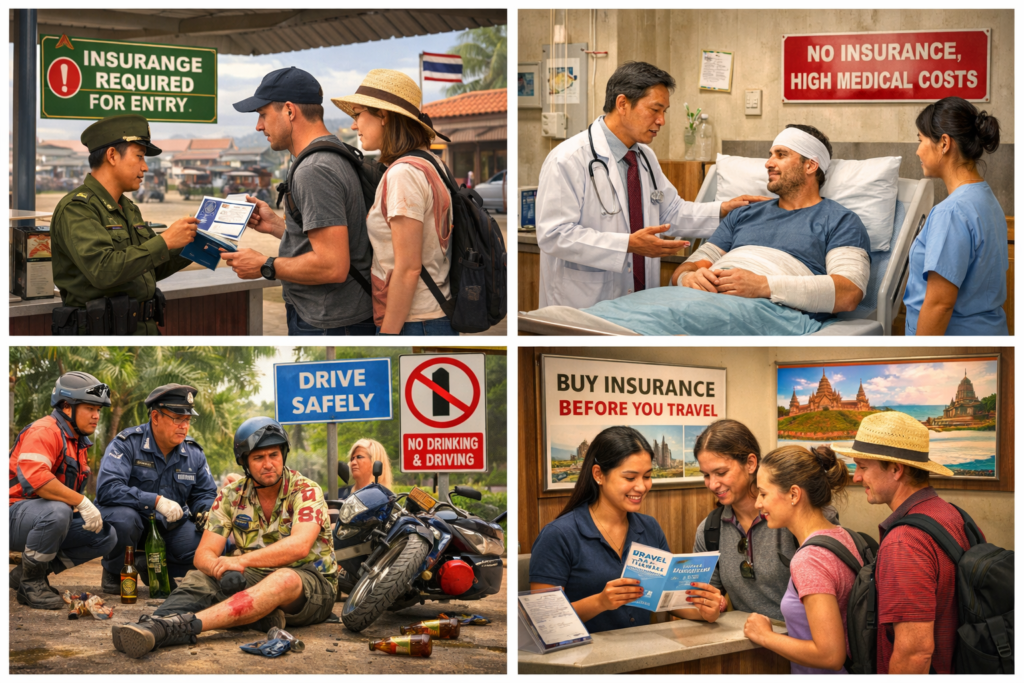
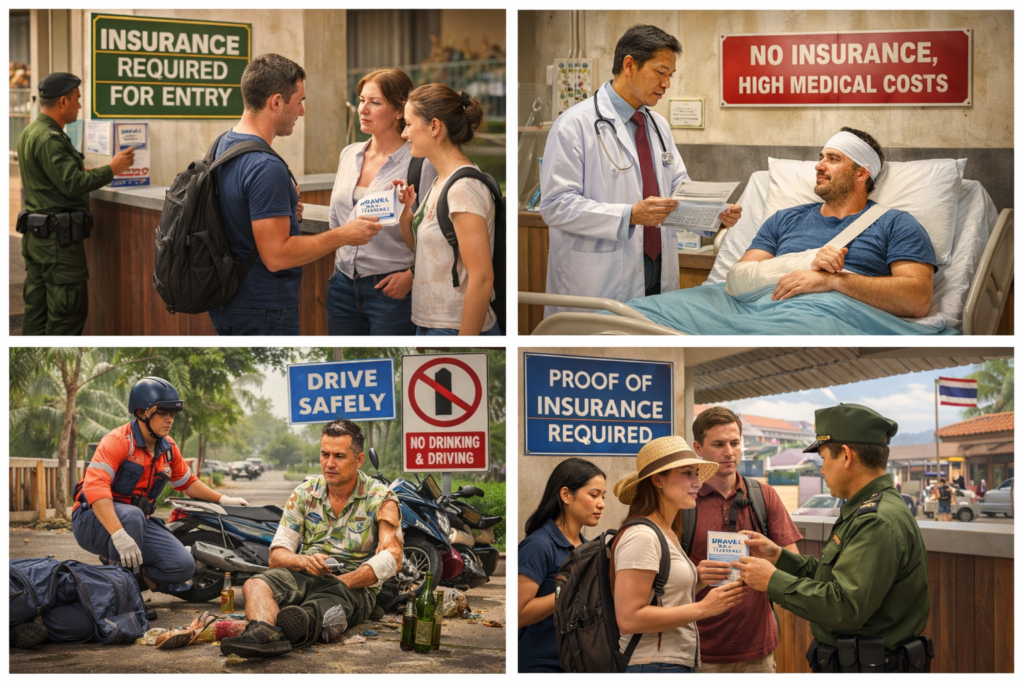
A government in South-East Asia wants all visitors to have accident insurance before they enter the country. The main reason is that hospitals spend a lot of money when visitors have accidents but do not have insurance. This costs the hospitals and the government a lot of money.
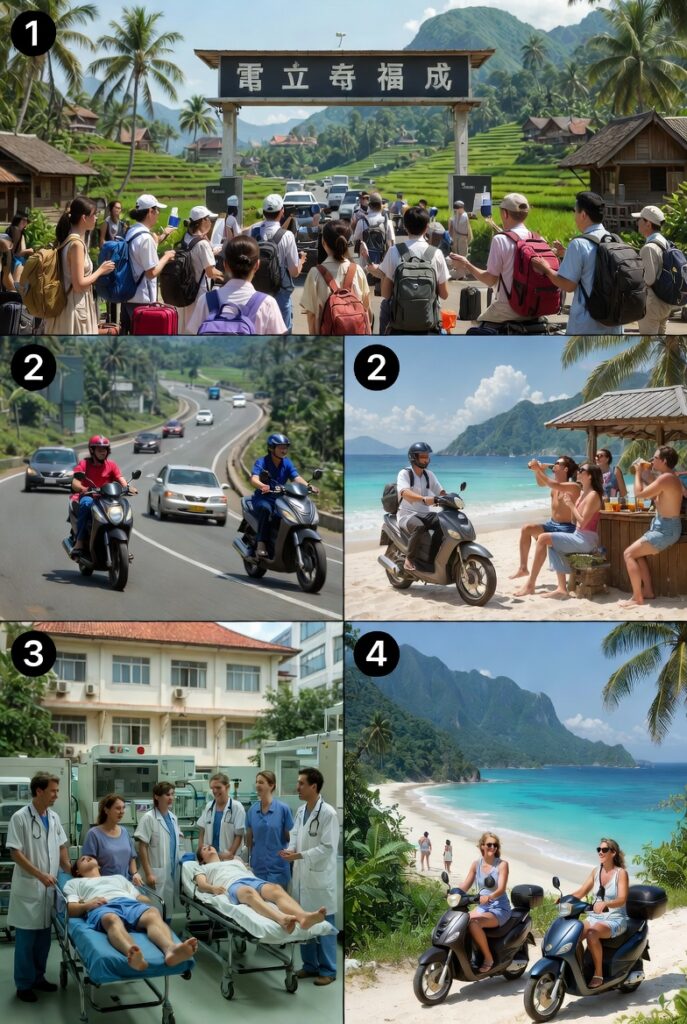
Many visitors have accidents because they do not know local rules. Some ride motorcycles or drive in ways that are unsafe. Others have accidents because they drink alcohol. When visitors are hurt, hospitals must give them medical care. Without insurance, the hospital pays all the cost. Insurance helps hospitals get money to pay for treatment.
The plan says that visitors must show proof of insurance at the border. The insurance must pay for accidents. The government may check insurance papers before visitors can enter. This will help hospitals and visitors.
This rule can help in different ways. First, hospitals will not lose money. Second, visitors are safer because they can get treatment without paying a lot of money. Third, visitors will think about safety before their trip. Some countries already have rules like this, and it works well. Visitors may need to buy insurance before traveling. This is a small cost for safety.
In conclusion, accident insurance for visitors is a good idea. It helps hospitals, protects visitors, and makes travel safer. Visitors will know they have help if they are hurt. Hospitals will not lose money. Everyone will be safer with this rule.
___________________________
| Pros ✅ | Cons ❌ |
|---|---|
| Hospitals get money for visitor accidents | Visitors must buy insurance before travel |
| Visitors are safer and get medical help | Some visitors may pay more money |
| Less financial pressure on government and hospitals | Some travelers may not want to travel because of the rule |
| Visitors think more about safety | Extra paperwork at the border |
| Similar rules exist in other countries | Small risk of confusion or mistakes with insurance |
| Helps hospitals care for local people too | Travelers may not know which insurance to buy |
###################
| Word/Phrase | Definition |
|---|---|
| to be insured | To have insurance [a plan that pays money] that can pay if something bad happens. |
| an accident insurance | A paper or plan that pays money if you get hurt in an accident. |
| healthcare system | Hospitals, doctors, and nurses that help sick or hurt people. |
| to protect | To keep someone or something safe. |
| amid | In the middle of something or during something. |
| to enter a country | To go into a country. |
| an insurance | A plan that pays money if something bad happens. |
| local rules | Laws or rules in one place. |
| to be unsafe | Not safe; can cause danger or harm. |
| to be hurt | To have pain or an injury. |
| medical care | Help from doctors or nurses when you are sick or hurt. |
| to pay for treatment | To give money for help from doctors or hospitals. |
| to show proof | To give something that shows it is true. |
| the border | The line between two countries. |
| to lose money | To not have money you had before. |
| safety | The state of being safe and not in danger. |
| in conclusion | A phrase used to show the final idea or summary. |
| financial pressure | Stress or problems with money. |
| to exist | To be; to live or be real. |
| a risk of confusion | A chance that people may not understand or may make mistakes. |
| to care for people | To help people and make sure they are safe and healthy. |
##################
Match the word to the definition:
Words:
- to be insured
- an accident insurance
- healthcare system
- to protect
- amid
- to enter a country
- an insurance
- local rules
- to be unsafe
- to be hurt
- medical care
- to pay for treatment
- to show proof
- the border
- to lose money
- safety
- in conclusion
- financial pressure
- to exist
- a risk of confusion
- to care for people
Definitions:
A. Not safe; can cause danger or harm
B. Stress or problems with money
C. To give money for help from doctors or hospitals
D. Hospitals, doctors, and nurses that help sick or hurt people
E. A chance that people may not understand or may make mistakes
F. In the middle of something or during something
G. To keep someone or something safe
H. To go into a country
I. Help from doctors or nurses when you are sick or hurt
J. To have pain or an injury
K. To have insurance that can pay if something bad happens
L. A plan that pays money if something bad happens
M. To give something that shows it is true
N. The line between two countries
O. A phrase used to show the final idea or summary
P. To help people and make sure they are safe and healthy
Q. The state of being safe and not in danger
R. To not have money you had before
S. To be; to live or be real
T. Laws or rules in one place
U. A paper or plan that pays money if you get hurt in an accident
___________________
Answer:
1-K, 2-U, 3-D, 4-G, 5-F, 6-H, 7-L,
8-T, 9-A, 10-J, 11-I, 12-C, 13-M, 14-N, 15-R,
16-Q, 17-O, 18-B, 19-S, 20-E, 21-P
##############
Matching exercise:
Definitions:
- To give money for help from doctors or hospitals
- To keep someone or something safe
- Hospitals, doctors, and nurses that help sick or hurt people
- Not safe; can cause danger or harm
- A phrase used to show the final idea or summary
- To have pain or an injury
- Stress or problems with money
- The line between two countries
- To help people and make sure they are safe and healthy
- A plan that pays money if something bad happens
- To give something that shows it is true
- To go into a country
- The state of being safe and not in danger
- A chance that people may not understand or may make mistakes
Words:
A. the border
B. safety
C. to pay for treatment
D. financial pressure
E. in conclusion
F. to be hurt
G. to protect
H. to care for people
I. healthcare system
J. an insurance
K. a risk of confusion
L. to enter a country
M. to show proof
N. to be unsafe
______________________
Answer:
1→C, 2→G, 3→I, 4→N, 5→E, 6→F, 7→D,
8→A, 9→H, 10→J, 11→M, 12→L, 13→B, 14→K
################
True or false:
- To be hurt means to have pain or an injury.
- To show proof means to lose money.
- To protect means to keep someone or something safe.
- Safety means the state of being safe and not in danger.
- An insurance means to be unsafe.
- In conclusion is a phrase used to show the final idea or summary.
- To enter a country means to help people and make sure they are safe.
- The border is the line between two countries.
- Healthcare system is a plan that pays money if you get hurt.
- To pay for treatment means to go into a country.
- To be unsafe means something can cause danger or harm.
- To be insured means you have a plan that can pay if something bad happens.
- Safety means stress or problems with money.
- An insurance is a plan that pays money if something bad happens.
____________________
True: 1,3,4,6,8,11,12,14
##############
True or false:
- Accidents are more likely if visitors do not know local rules.
- Visitors never need medical care when they travel.
- Mandatory [something you must do] insurance protects both visitors and local healthcare systems.
- Motorcycle accidents are not common among visitors.
- Hospitals sometimes face financial problems if visitors are uninsured.
- Visitors always know local traffic rules perfectly.
- Travelers can enter the country without any documents or checks.
- Visitors with insurance reduce the financial pressure on hospitals.
- Visitors need proof of insurance before entering the country.
- All hospitals always get paid, even if visitors have no insurance.
- The government plans to make accident insurance mandatory for visitors.
- The government wants to remove all rules for travelers.
- Insurance helps pay for visitors’ medical care.
- Visitors are never at risk of accidents while traveling.
_________________________
True: 1,3,5,8,9,11,13
##################
Short answers:
- Why does the government want visitors to have accident insurance?
YOU WRITE:
To protect hospitals and visitors - What can happen if visitors do not have insurance?
- Who helps visitors when they have an accident?
- Why are visitors more likely to have accidents?
- What type of accidents are common among visitors?
- How does insurance help hospitals?
- What do visitors need to show before entering the country?
- What is the main purpose of mandatory insurance?
- How does mandatory insurance protect visitors?
- How does mandatory insurance protect the healthcare system?
- What could happen to hospitals if visitors are uninsured?
- Who pays for medical care if a visitor has insurance?
- What might happen if visitors ignore local traffic rules?
- What rule does the government plan to make for visitors?
______________________
Correct answers:
- Why does the government want visitors to have accident insurance?
To protect hospitals and visitors - What can happen if visitors do not have insurance?
Hospitals may lose money - Who helps visitors when they have an accident?
Doctors and nurses - Why are visitors more likely to have accidents?
They do not know local rules - What type of accidents are common among visitors?
Motorcycle and traffic accidents - How does insurance help hospitals?
It pays for visitors’ medical care - What do visitors need to show before entering the country?
Proof of insurance - What is the main purpose of mandatory insurance?
To cover accident costs - How does mandatory insurance protect visitors?
It pays for their treatment - How does mandatory insurance protect the healthcare system?
Reduces financial pressure on hospitals - What could happen to hospitals if visitors are uninsured?
They may have financial problems - Who pays for medical care if a visitor has insurance?
The insurance company - What might happen if visitors ignore local traffic rules?
They may have accidents - What rule does the government plan to make for visitors?
Accident insurance is mandatory
###############
Fill in, words below:
insurance – treatment – accidents – rules – mandatory –
rules – hospitals – medical care – motorcycle –
money – hurt – entering –
problems – safer
- The government plans to make accident insurance __________ for visitors.
- Visitors sometimes have _________ while traveling.
- Hospitals care for visitors when they are __________.
- Visitors who do not know local __________ are more likely to have accidents.
- __________ accidents are common among visitors.
- Insurance helps pay for visitors’ _________.
- Visitors must show proof of insurance before _________ the country.
- Mandatory __________ protects both visitors and hospitals.
- Hospitals face financial __________ if visitors are uninsured.
- Accident insurance reduces financial pressure on __________.
- Visitors are __________ when they have insurance.
- The rule ensures that hospitals get _________ for treatment.
- Insurance helps visitors get __________ without paying too much money.
- Mandatory insurance encourages visitors to follow safety __________.
———————————-
Correct version:
- The government plans to make accident insurance mandatory for visitors.
- Visitors sometimes have accidents while traveling.
- Hospitals care for visitors when they are hurt.
- Visitors who do not know local rules are more likely to have accidents.
- Motorcycle accidents are common among visitors.
- Insurance helps pay for visitors’ medical care.
- Visitors must show proof of insurance before entering the country.
- Mandatory insurance protects both visitors and hospitals.
- Hospitals face financial problems if visitors are uninsured.
- Accident insurance reduces financial pressure on hospitals.
- Visitors are safer when they have insurance.
- The rule ensures that hospitals get money for treatment.
- Insurance helps visitors get treatment without paying too much money.
- Mandatory insurance encourages visitors to follow safety rules.
##################
Match question and answer – rewrite the interview:
Questions:
- Who requires visitors to have accident insurance?
- What does the government introduce for visitors?
- Why do many visitors need insurance?
- Who pays for treatment if visitors have no insurance?
- How does insurance support hospitals?
- How does insurance help visitors?
- When must visitors have valid insurance?
- What does the insurance include?
- How do visitors confirm they have insurance?
- What do visitors receive if they are hurt?
- How does the rule support hospitals financially?
- How do hospitals get payment for treatment?
- Is this rule new in the country?
- Do similar rules exist in other countries?
Answers:
A. Insurance gives visitors safety and medical help if they are hurt.
B. The government enforces that all visitors carry insurance.
C. Hospitals cover the treatment costs when visitors do not have insurance.
D. The insurance covers hospital treatment and doctors’ fees.
E. Yes, other countries require visitors to have accident insurance.
F. Visitors present proof to show they are insured.
G. Hospitals collect money from the visitor’s insurance plan.
H. Yes, the government introduces it this year.
I. Visitors need insurance to get medical care if they are hurt.
J. The government creates a rule about mandatory insurance.
K. Visitors show proof of insurance at the border before entry.
L. Hospitals avoid financial pressure because insurance pays for treatment.
M. Visitors obtain medical care from hospitals and doctors.
N. Insurance provides payment so hospitals do not lose money.
Answers;
1→B, 2→J, 3→I, 4→C, 5→N, 6→A, 7→K,
8→D, 9→F, 10→M, 11→L, 12→G, 13→H, 14→E
_________________________
Correct dialogue:
- Who requires visitors to have accident insurance?
The government enforces that all visitors carry insurance. - What does the government introduce for visitors?
The government creates a rule about mandatory insurance. - Why do many visitors need insurance?
Visitors need insurance to get medical care if they are hurt. - Who pays for treatment if visitors have no insurance?
Hospitals cover the treatment costs when visitors do not have insurance. - How does insurance support hospitals?
Insurance provides payment so hospitals do not lose money. - How does insurance help visitors?
Insurance gives visitors safety and medical help if they are hurt. - When must visitors have valid insurance?
Visitors show proof of insurance at the border before entry. - What does the insurance include?
The insurance covers hospital treatment and doctors’ fees. - How do visitors confirm they have insurance?
Visitors present proof to show they are insured. - What do visitors receive if they are hurt?
Visitors obtain medical care from hospitals and doctors. - How does the rule support hospitals financially?
Hospitals avoid financial pressure because insurance pays for treatment. - How do hospitals get payment for treatment?
Hospitals collect money from the visitor’s insurance plan. - Is this rule new in the country?
Yes, the government introduces it this year. - Do similar rules exist in other countries?
Yes, other countries require visitors to have accident insurance.
##################
What is correct?
- Does the government or the hospital require visitors to have accident insurance?
YOU WRITE:
the government - Do visitors or hospitals show proof at the border?
- Does insurance or the visitor pay for treatment first?
- Does the government or a doctor decide the rules for insurance?
- Does the government or a visitor create mandatory insurance?
- Do hospitals or visitors cover the cost if there is no insurance?
- Does insurance or the government provide medical care directly?
- Do visitors or insurance companies pay doctors’ fees?
- Does the government or a visitor check proof of insurance?
- Do hospitals or insurance companies reduce financial pressure on hospitals?
- Does the rule help visitors or visitors’ families more?
- Does a visitor or the government receive treatment first?
- Does mandatory insurance protect hospitals or visitors only?
- Do other countries or visitors also require accident insurance?
__________________________
Correct answers:
- Does the government or the hospital require visitors to have accident insurance?
The government - Do visitors or hospitals show proof at the border?
Visitors - Does insurance or the visitor pay for treatment first?
Insurance - Does the government or a doctor decide the rules for insurance?
The government - Does the government or a visitor create mandatory insurance?
The government - Do hospitals or visitors cover the cost if there is no insurance?
Hospitals - Does insurance or the government provide medical care directly?
The government - Do visitors or insurance companies pay doctors’ fees?
Insurance companies - Does the government or a visitor check proof of insurance?
A visitor - Do hospitals or insurance companies reduce financial pressure on hospitals?
Insurance companies - Does the rule help visitors or visitors’ families more?
Visitors - Does a visitor or the government receive treatment first?
A visitor - Does mandatory insurance protect hospitals or visitors only?
Both hospitals and visitors - Do other countries or visitors also require accident insurance?
Other countries
################
Who Says What?
- “Visitors must have accident insurance before entering the country.”
- “We provide treatment to visitors when they are hurt.”
- “I always carry proof of my insurance at the border.”
- “Hospitals receive payment through insurance for visitor treatment.”
- “The government creates rules to protect both visitors and hospitals.”
- “Visitors should follow local traffic rules to stay safe.”
- “We help visitors pay for medical care when they are injured.”
__________________________
Answer Key:
1 → Government, 2 → Hospital, 3 → Visitor, 4 → Hospital, 5 → Government, 6 → Visitor, 7 → Hospital
###################
Schreibe einen Kommentar