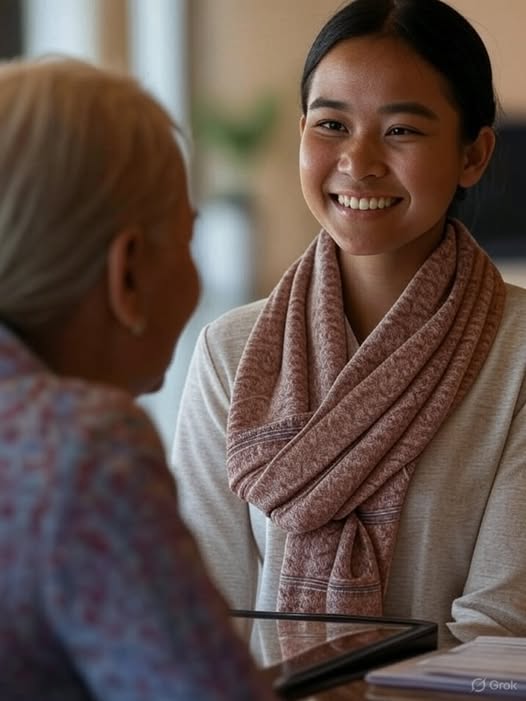
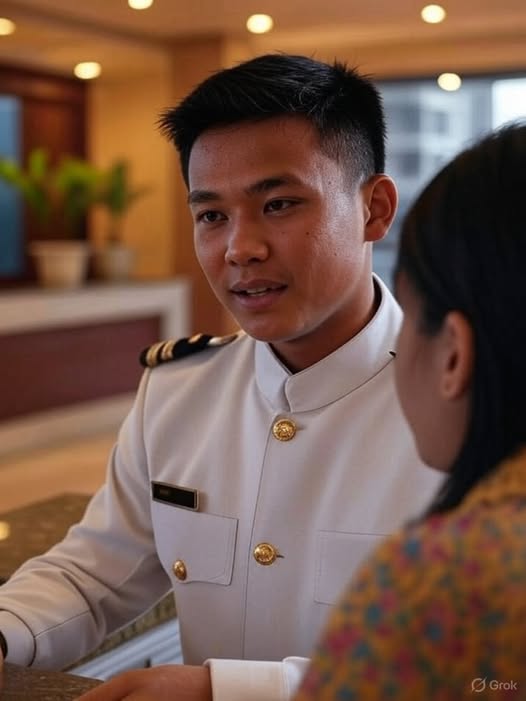
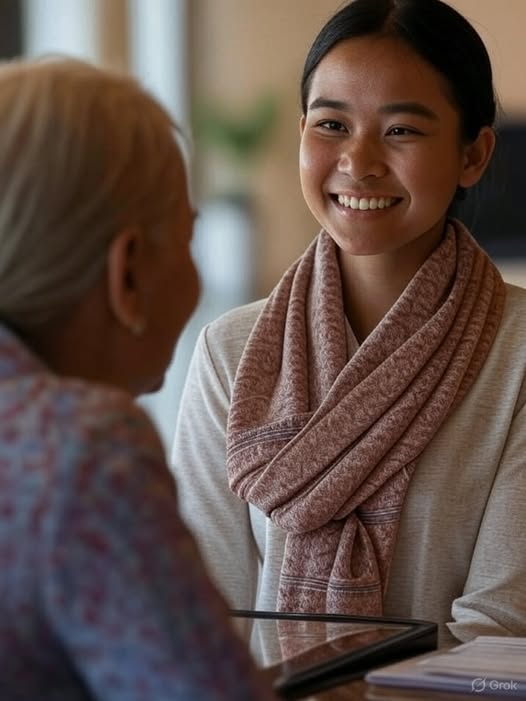
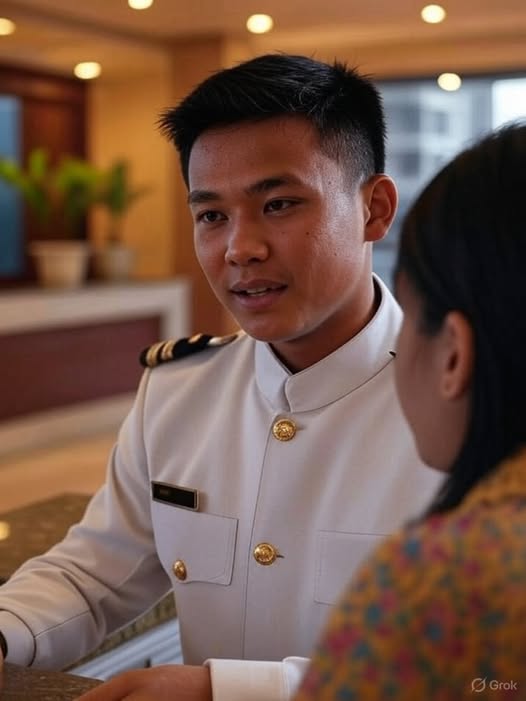
They are the face of the hotel and often the first and last point of contact. Here’s what makes them exceptional:
🧑💼 Professionalism and Poise
Always well-groomed and impeccably dressed.
Maintains calm and composure under pressure.
Demonstrates strong time management and multitasking skills.
🗣️ Excellent Communication Skills
Speaks clearly, politely, and confidently in multiple languages (or at least fluent English).
Listens attentively and communicates with warmth and respect.
Understands how to adapt tone and vocabulary for different guests (VIPs, families, business travelers).
🌟 Hospitality Mindset
Genuinely enjoys serving and helping people.
Anticipates guest needs and personalizes service.
Remembers returning guests, their preferences, and makes them feel at home.
🤝 Problem Solving and Initiative
Handles complaints and issues gracefully without escalating.
Thinks quickly and offers practical, proactive solutions.
Takes ownership of guest problems and follows up until resolved.
🧭 Thorough Local Knowledge
Can confidently recommend local attractions, restaurants, and events.
Knows how to arrange transport, book restaurants, and offer cultural tips.
Understands guests’ expectations based on cultural backgrounds.
🛎️ Attention to Detail
Gets guest names, preferences, and room details right every time.
Double-checks bookings, special requests, and VIP amenities.
Notices and acts on small cues (e.g., offering a tissue to a sneezing guest or adjusting tone for tired arrivals).
💼 Teamwork and Coordination
Works seamlessly with housekeeping, concierge, security, and management.
Shares critical information during shift handovers.
Supports colleagues under pressure while maintaining own responsibilities.
💻 Technology and System Mastery
Quickly navigates hotel PMS (like Opera), POS systems, and email.
Manages check-in/out efficiently and accurately.
Uses CRM tools to enhance guest personalization.
❤️ Emotional Intelligence
Empathizes with guests’ feelings and moods.
Adjusts behavior based on each guest’s emotional cues.
Maintains discretion and confidentiality at all times.
In short:
a great front desk staff member in a luxury hotel is a calm, sharp, and genuinely caring ambassador of the hotel, able to blend warmth with efficiency and attention to detail with big-picture guest satisfaction.
– a guest approaches the front desk and tells you he wants to tour the Angkor Wat temples. You provide some usefull information to make his tour an enjoyable one.
Good morning! I’m happy to help you with your Angkor Wat tour.
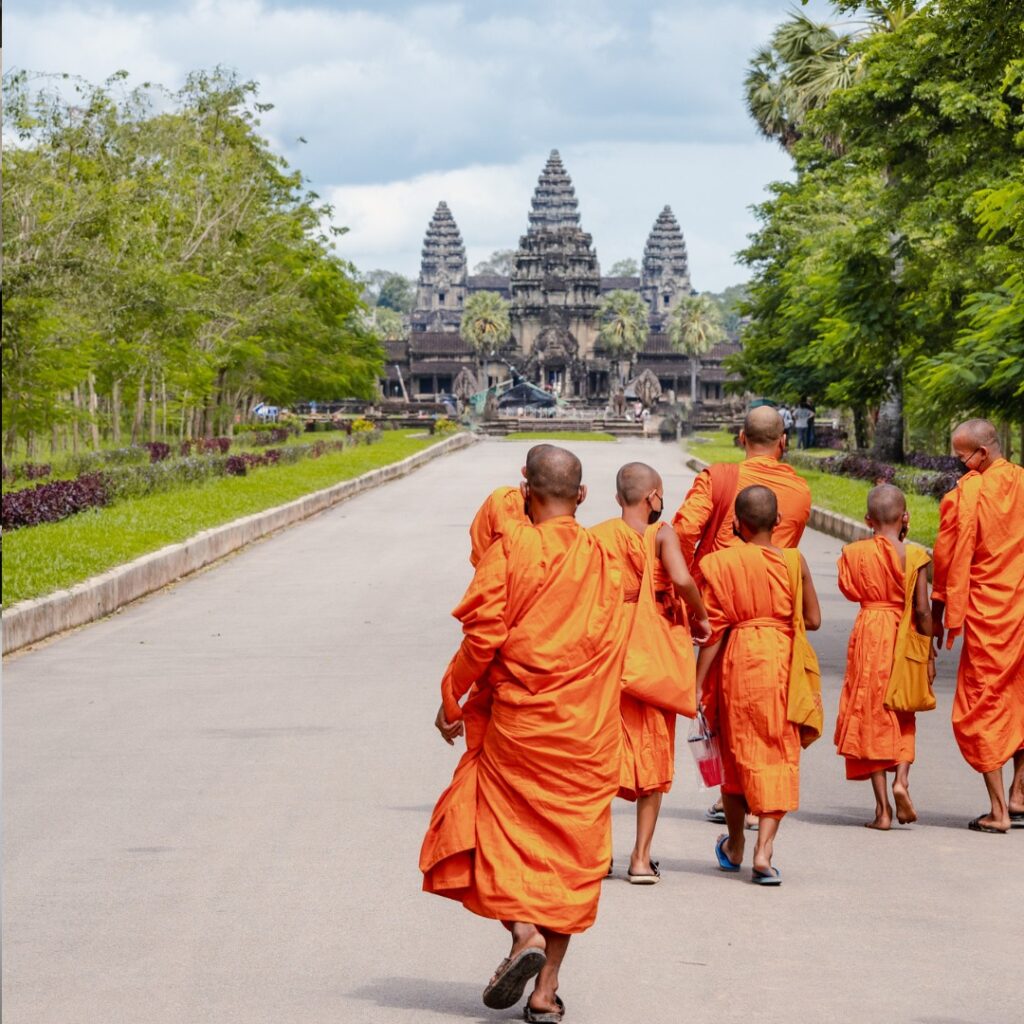
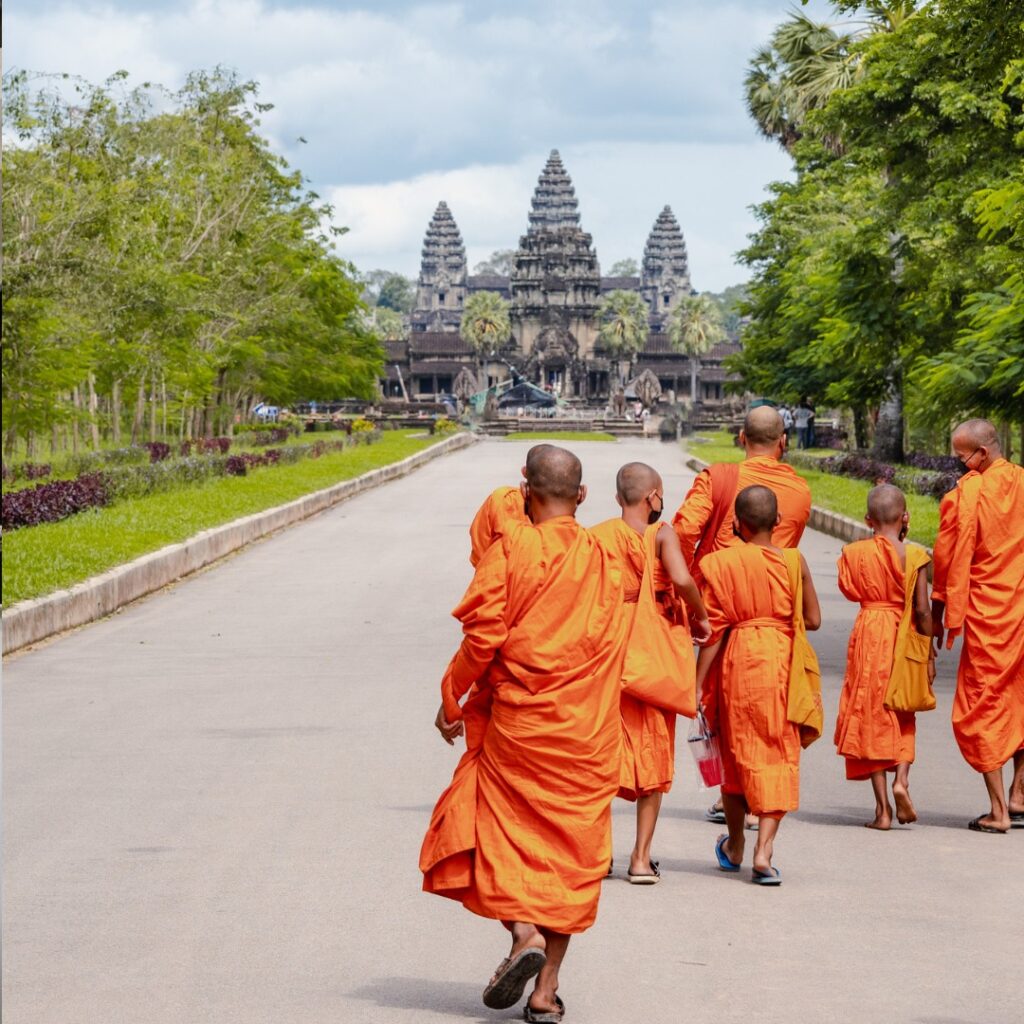
Angkor Wat is the most famous temple in Cambodia. It is very big and very old. Many people visit it every day. The temple is a special place for Cambodian people.
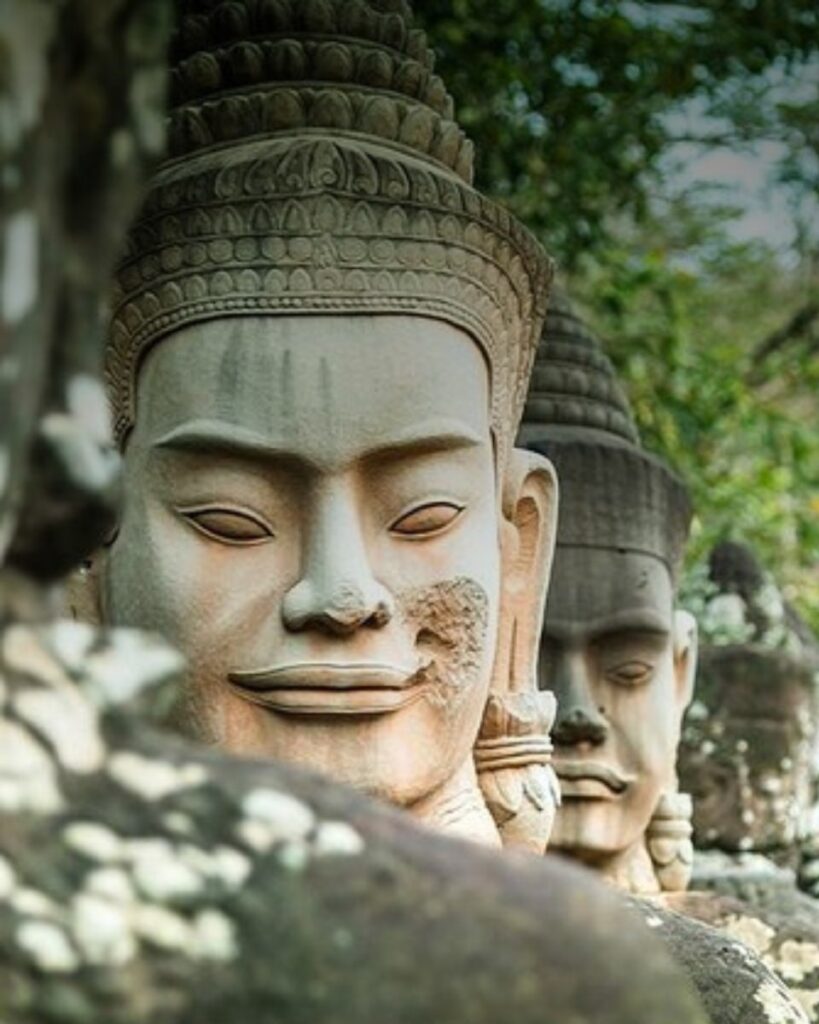
Most tours start in the morning. You visit Angkor Wat first. Later, you go to other temples like Bayon and Ta Prohm. Each temple is different. Bayon has many faces on the towers. Ta Prohm has big trees growing on the walls.
You walk a lot during the tour, so please wear comfortable shoes. It is also a good idea to wear light clothes and bring a hat, sunglasses, and water.
You need a ticket for the temples. You can buy it before the tour starts. One-day, three-day, and seven-day tickets are available. You must keep your ticket with you during the tour.
Many people take a guide. A guide tells you about the temples and the history. You can take many photos, but please be respectful. Some temples are still holy.
If you have any questions or need help with your tour, we at the front desk are always happy to help you. Enjoy your visit!
______________________________
Vocabulary:
some advice – ideas or help to make a good choice
to approach – to go to someone and talk to them
front desk – the place in a hotel where you ask questions or check in
to tour – to visit and look at interesting places
to provide information – to give facts or answers
enjoyable – fun or nice
to be different – to not be the same
a tower – a tall part of a building
to grow – to get bigger or to live and become bigger (like a tree)
a ticket – a small paper or card that lets you go into a place or ride something
to be available – to be ready or there to use
to keep something – to hold or have something and not lose it
to take a guide – to go with a person who shows you a place and gives information
to be respectful – to be polite and kind
to be holy – to be special in religion
to enjoy – to like something and feel happy about it
##################
Only 1 answer is correct!
1. What is some advice? a) Ideas to help make a good choice b) A thing you buy at a shop c) A question for help
2. What does it mean to approach someone? a) To go to a person and talk b) To run away from a person c) To sing to a person
3. Where is the front desk in a hotel? a) In the kitchen b) At the entrance where you ask questions c) In the guest room
4. What does it mean to tour a place? a) To live in a hotel b) To clean your room c) To visit and look at interesting places
5. What do you do when you provide information? a) You give facts or answers b) You take pictures c) You buy something
6. What is an enjoyable trip? a) A trip with no people b) A trip that is very long c) A trip that is fun and nice
7. What does it mean when something is different? a) It is not the same b) It is very old c) It is very big
8. What is a tower? a) A tall part of a building b) A small house c) A place under the ground
9. What does a tree do when it grows? a) It moves to a new place b) It goes to sleep c) It gets bigger
10. What is a ticket? a) A bag for travel b) A card or paper to enter a place c) A chair in a bus
11. What does it mean when something is available? a) It is not real b) It is heavy c) It is ready to use
12. What do you do when you keep something? a) You give it away b) You break it c) You have it and don’t lose it
13. What does it mean to take a guide? a) To go alone b) To go with a person who shows you a place c) To bring food
14. What does it mean to be respectful? a) To be polite and kind b) To be loud and angry c) To play games
15. What is a holy place? a) A place with food b) A place for shopping c) A place that is special in religion
16. What does it mean to enjoy something? a) To like it and feel happy b) To look at it and walk away c) To leave it at home
a) To go to someone and talk to them b) To hold or have something and not lose it c) A small paper or card to enter a place d) Ideas or help to make a good choice e) To like something and feel happy f) The place in a hotel where you ask questions or get help g) To give facts or answers h) To be polite and kind i) Fun or nice j) To become bigger or live and get bigger k) To be ready or there to use l) To be special in religion m) A tall part of a building n) To visit and look at interesting places o) Not the same p) To go with a person who shows you a place
Guest: Hello. Can you tell me about the Angkor Wat tour? Front Desk: Yes, of course. The tour __________ many temples in Angkor.
Guest: What do I need for the tour? Front Desk: You need a __________ to enter the temples.
Guest: How do I get a ticket? Front Desk: You can buy a ticket at the __________ or the entrance.
Guest: Is it hot during the tour? Front Desk: Yes, it is usually hot, so bring water and wear a __________.
Guest: Can I take a guide with me? Front Desk: Yes, you can take a guide to help you __________ the temples.
Guest: How long is the tour? Front Desk: The tour __________ most of the day, about 6 to 8 hours.
Guest: What clothes do I wear? Front Desk: Wear comfortable clothes and shoes. Please be __________ and cover your shoulders.
Guest: Is there a place to __________ during the tour? Front Desk: Yes, there are small restaurants and shops near the temples.
Guest: Can I take photos? Front Desk: Yes, you can take photos, but do not touch the __________ places.
Guest: Is the tour enjoyable for children? Front Desk: Yes, many children enjoy the tour because it is exciting and __________
______________________
hat – respectful – different – visits – holy – ticket – eat – front desk – takes – understand #######################
A story:
I visit Angkor Wat today. The weather is hot, so I wear a hat and take water with me. I buy a ticket at the entrance. A guide shows me the temples and tells me about their history. I see tall towers and old walls. The temples are holy places, so I am respectful. I take many photos but do not touch anything. The tour is long but enjoyable. I learn a lot and see many different temples. After the tour, I feel happy and tired. I enjoy the day and the beautiful place very much.
==>>Rewrite the story in 3rd person singular, start with
=> He visits Angkor Wat…………
and make all changes necessary!
____________________
Answer:
He visits Angkor Wat today. The weather is hot, so he wears a hat and takes water with him. He buys a ticket at the entrance. A guide shows him the temples and tells him about their history. He sees tall towers and old walls. The temples are holy places, so he is respectful. He takes many photos but does not touch anything. The tour is long but enjoyable. He learns a lot and sees many different temples. After the tour, he feels happy and tired. He enjoys the day and the beautiful place very much.
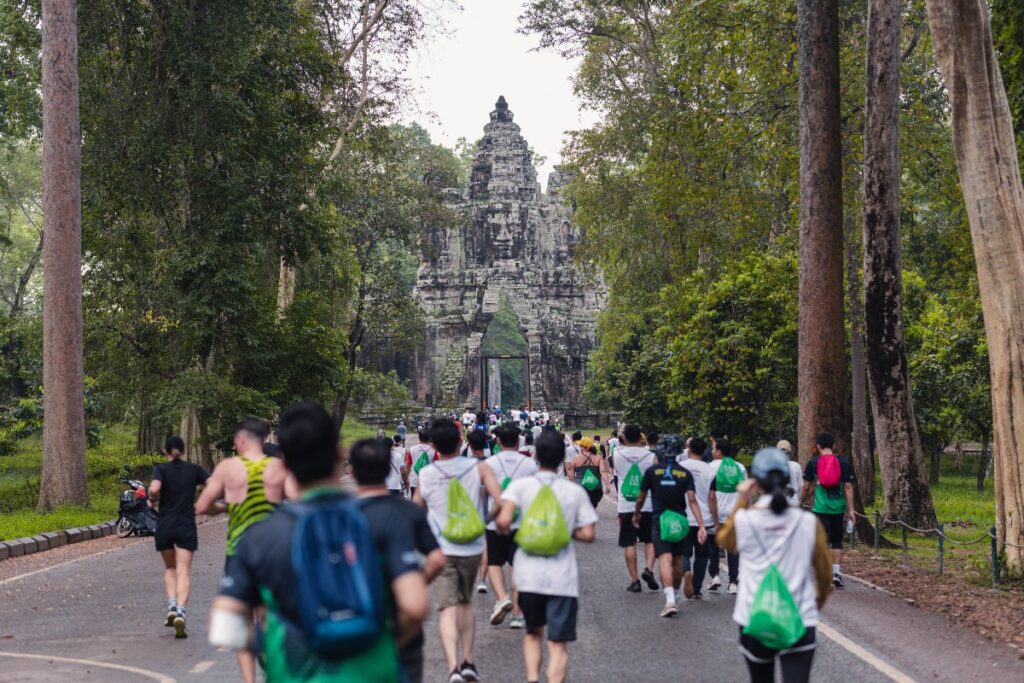
The term marathon originates from a blend of history and legend rooted in ancient Greece. It refers to the long-distance foot race of 42.195 kilometers, named after the Battle of Marathon in 490 BCE. According to legend, a Greek soldier named Pheidippides ran from the battlefield near the town of Marathon to Athens to announce the Greek victory over the Persians. Upon delivering his message, he allegedly collapsed and died from exhaustion. Although historians debate the accuracy of this tale, it inspired the naming of the modern race.
The marathon was first introduced as an Olympic event during the inaugural modern Games in Athens in 1896. The original distance was approximately 40 kilometers, echoing the mythic run. However, in the 1908 London Olympics, the course was extended to 42.195 kilometers to accommodate the British royal family’s viewing preferences. This distance eventually became the official standard.
Over time, the marathon has evolved from a commemorative race into a global phenomenon, symbolizing endurance, determination, and personal achievement. Major international marathons attract both elite athletes and amateurs, reflecting the event’s broad appeal. Its name, born from ancient heroism and myth, remains a powerful testament to human resilience and the enduring spirit of competition.
################
C1:
The word marathon comes from a famous story in ancient Greek history. In 490 BCE, the Greeks won a major battle against the Persians at a place called Marathon. According to legend, a Greek soldier named Pheidippides ran from Marathon to Athens, about 40 kilometers, to report the victory. After delivering the message, he collapsed and died from exhaustion. While the story may not be completely true, it became a powerful symbol of endurance.
When the modern Olympic Games were created in 1896, the marathon was added to honor this legend. The first race was about 40 kilometers, the same distance as the legendary run. However, during the 1908 London Olympics, the race was extended to 42.195 kilometers so it could start at Windsor Castle and end in front of the royal box. This distance was later made official.
Today, marathons are held all over the world and attract runners of all levels. The event is not just a race; it is a test of physical and mental strength. Many people train for months to complete it. The name marathon has come to represent human determination and the will to overcome challenges, just like the ancient Greek hero. ##############
B2:
The word marathon comes from a story from ancient Greece. In 490 BCE, there was a big battle between the Greeks and the Persians at a place called Marathon. After the Greeks won, a soldier named Pheidippides ran from Marathon to Athens to bring the news of victory. The distance was about 40 kilometers. After he arrived and gave the message, he fell to the ground and died. This story became very famous, even though it may not be completely true.
When the modern Olympic Games started in 1896 in Athens, the organizers included a long-distance race to remember this story. The first marathon race was about 40 kilometers long. Later, during the 1908 Olympic Games in London, the race was made longer so it could start at Windsor Castle and finish in front of the royal family’s seats. This made the distance 42.195 kilometers, which became the official marathon length.
Today, marathons take place in cities around the world. People of all ages and levels run in them, not just professional athletes. A marathon is seen as a symbol of strength, hard work, and never giving up. Running a marathon is a big goal for many people, and finishing one is a great achievement. ###############
B1:
The word marathon comes from a story in ancient Greece. In 490 BCE, the Greeks fought a big battle against the Persians at a place called Marathon. After the Greeks won the battle, a soldier named Pheidippides ran from Marathon to Athens to tell the people about the victory. The distance was about 40 kilometers. When he arrived and gave the message, he fell down and died. This story became very famous, even if it may not be completely true.
In 1896, the modern Olympic Games started in Athens. The organizers wanted to remember the old story, so they created a long-distance race and called it the marathon. The first race was about 40 kilometers long. In the 1908 Olympic Games in London, the race became longer—42.195 kilometers—because the British royal family wanted the race to start at Windsor Castle and finish in front of their seats. That is the official distance of a marathon today.
Now, marathons happen in many countries around the world. People run them to test their strength and to feel proud. Many people train for months to finish the race. A marathon is a great challenge and a big achievement for anyone who finishes it.
###############
A2:
The word marathon comes from a story in ancient Greece. A long time ago, in 490 BCE, the Greeks had a big fight with the Persians. This fight happened in a place called Marathon. The Greeks won the battle. A Greek soldier named Pheidippides ran from Marathon to Athens to tell the people that the Greeks won. He ran about 40 kilometers. After he gave the message, he fell down and died. This story is very famous, even if it may not be 100% true.
In 1896, the modern Olympic Games began in Athens. The people who made the Olympics wanted to remember the story, so they made a new race called the marathon. The first marathon was about 40 kilometers long. Later, in 1908 in London, the race became a little longer—42.195 kilometers—so it could start at Windsor Castle and finish in front of the king’s family. Today, that is the official marathon distance.
Now, people all over the world run marathons. Some are professional runners, but many are just normal people. A marathon is not easy. People train for many months. Running a marathon shows strength and courage. It is a great goal and a big success to finish one.
################
A1:
The word marathon comes from a story in old Greece. A long time ago, in 490 BCE, there was a big fight between the Greeks and the Persians. This fight was in a place called Marathon. The Greeks won the fight. A soldier named Pheidippides ran from Marathon to Athens to tell the people about the win. He ran about 40 kilometers. After he said, “We won,” he fell down and died. This story is very old and famous.
In 1896, the modern Olympic Games started in Athens. The people who made the Olympics wanted to remember the old story. They made a long race and called it the marathon. The first marathon was about 40 kilometers long. In 1908, at the London Olympic Games, the race became a little longer—42.195 kilometers. It started at Windsor Castle and finished near the king’s family. Today, this is the official distance.
Now, people run marathons all over the world. Some runners are fast, but many people run just for fun or for a personal goal. Running a marathon is very hard. People train for many weeks or months. It is a big success to finish. A marathon shows strength and a strong heart. #####################
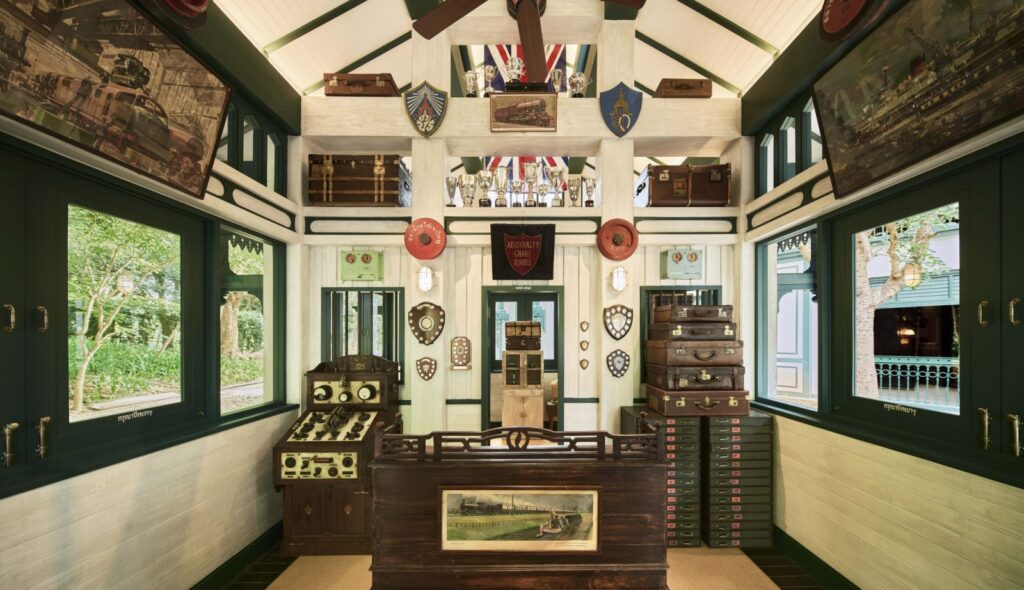
Just 2.5 hours from Bangkok, InterContinental Khao Yai Resort offers a quiet, nature-filled escape in Thailand’s Nakhon Ratchasima province. Designed by famous architect Bill Bensley, the resort celebrates old train travel, with many rooms made from real heritage railcars. The theme continues throughout the property—from the train station-style lobby to suites that feel like luxurious train carriages.
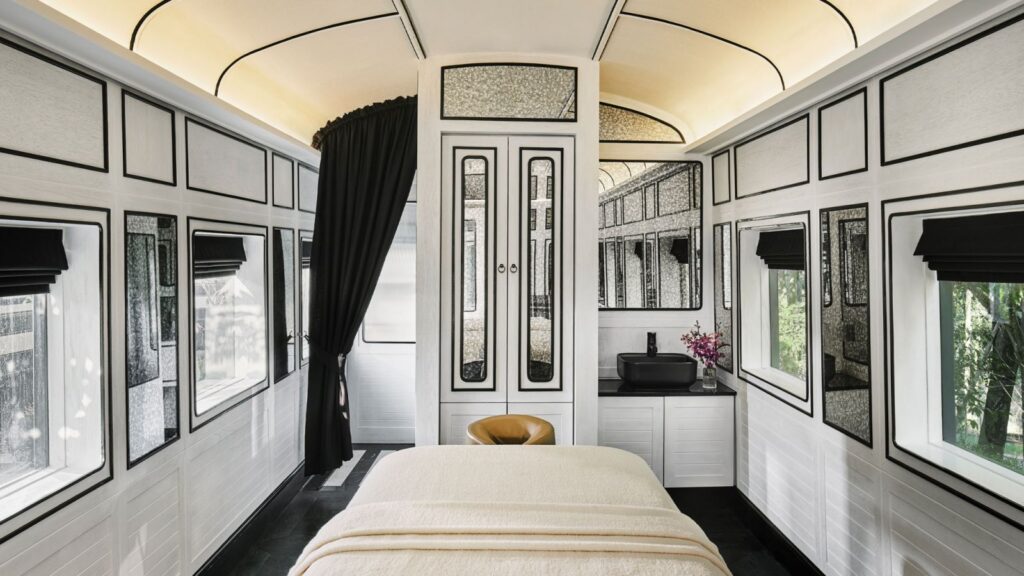
The resort has 64 rooms, set among lakes and trees, with swans adding to the charm. Suites include lake views, outdoor bathtubs, and train-themed décor. Guests can enjoy relaxing and fun activities like yoga, bike tours around Swan Lake, and family-friendly games. The spa, also in a train car, offers massages with local oils.
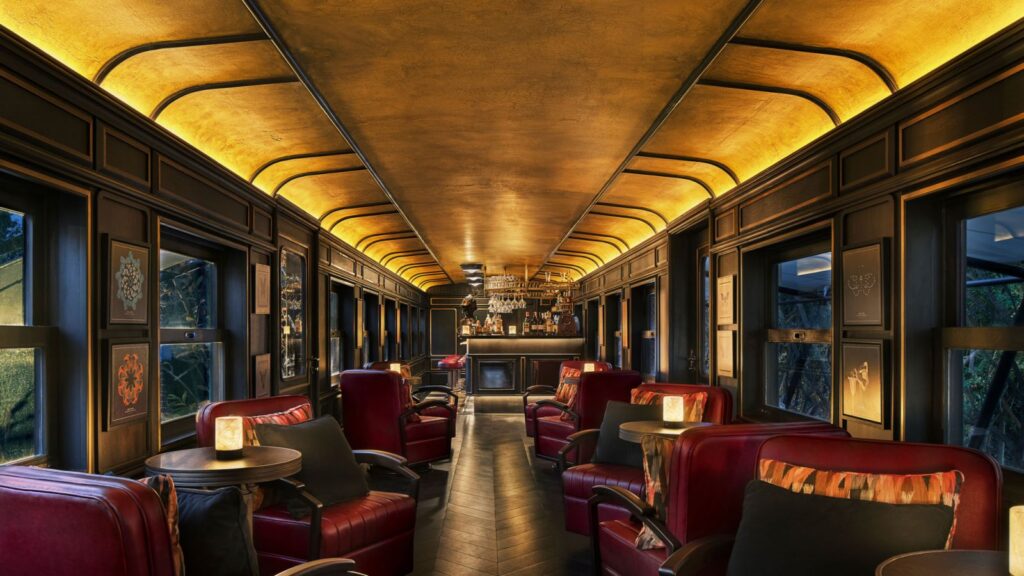
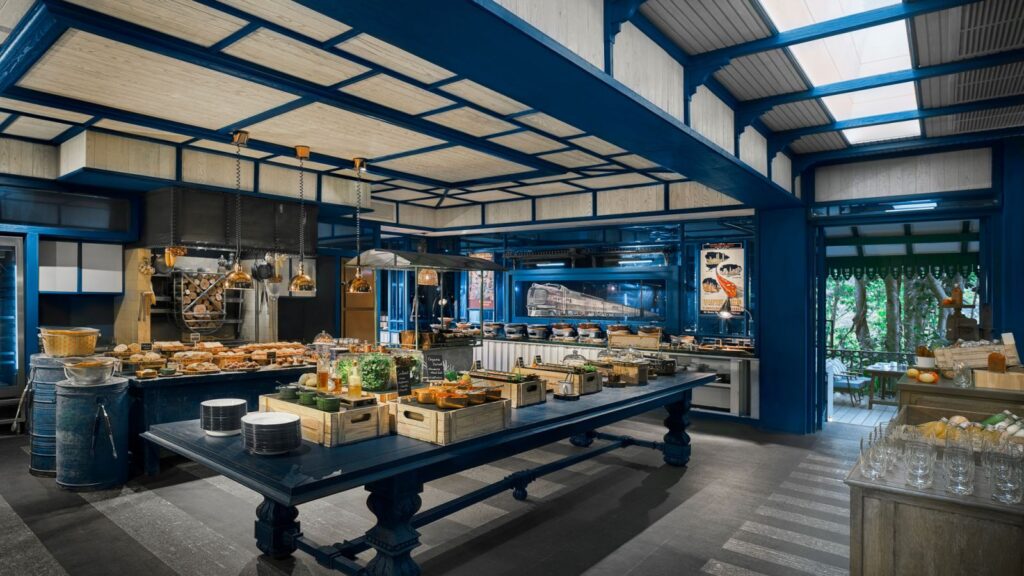
Food and drink options are unique and well-curated. Somying’s Kitchen serves Thai and international food, including dishes once served on Thai trains. The Tea Carriage offers creative afternoon teas with local flavors like mango sticky rice and tom yum goong snacks. For drinks, Papillon Bar serves cocktails in a jazzy train setting.
Overall, the InterContinental Khao Yai Resort is a creative and peaceful retreat perfect for families, couples, and anyone who loves nature and train history.
enjoying the Shinta Mani and more (questions and answers in present simple!)
Subject: A Day in Siem Reap
Hi Oliver,
I want to tell you about a typical day here in Cambodia.
Mia, my sister, gets up at 7 o’clock. I get up at the same time. We brush our teeth and get dressed. Then we go to breakfast with Mum and Dad. I eat pancakes and fruit. Mia drinks orange juice.
After breakfast, we visit a temple. We take photos and walk around. The temples are big and old. I like them a lot.
At noon, we go to a market. We see many things – clothes, toys, and food. I buy a small bag.
In the afternoon, we swim in the hotel pool. Mia jumps in the water. I play with her. It is very fun.
In the evening, we eat dinner at a restaurant. I eat noodles. After dinner, we walk in the night market. It is busy and loud.
At 8 o’clock, we watch an Apsara dance show. It is very pretty.
See you soon!
Lara
____________________ Vocabulary:
to get up – to leave your bed in the morning
to brush teeth – to clean your teeth with a toothbrush
to get dressed – to put on clothes
a pancake – a flat, round cake you eat for breakfast
orange juice – a drink made from oranges
to visit – to go to a place to see it
to walk around – to go from place to place on foot
at noon – at 12 o’clock in the day
clothes – things you wear like shirts, pants, or dresses
a toy – something children play with
a bag – something you use to carry things
to jump in the water – to go into water quickly with your feet off the ground
to be fun – to be nice and make you happy
to be busy – to have many people or things happening
to be loud – to make a lot of noise
to be pretty – to look nice or beautiful
#########################
Multiple-choice test – only one answer is correct:
1. What does „to get up“ mean? A) To leave your bed in the morning B) To go to school C) To eat lunch
2. What does „to brush teeth“ mean? A) To paint your face B) To clean your teeth with a toothbrush C) To play a game
3. What does „to get dressed“ mean? A) To take a shower B) To eat dinner C) To put on clothes
4. What is „a pancake“? A) A soft toy B) A round fruit C) A flat cake you eat for breakfast
5. What is „orange juice“? A) A drink made from oranges B) A yellow fruit C) A drink made from apples
6. What does „to visit“ mean? A) To go to a place to see it B) To sleep at home C) To buy something
7. What does „to walk around“ mean? A) To go from place to place on foot B) To run very fast C) To stay in one place
8. What does „at noon“ mean? A) At 8 in the morning B) At 12 o’clock in the day C) At 6 in the evening
9. What are „clothes“? A) Toys for children B) Food for breakfast C) Things you wear like shirts and pants
10. What is „a toy“? A) Something you drink B) Something to clean your teeth C) Something children play with
11. What is „a bag“? A) A drink B) Something you use to carry things C) A box for toys
12. What does „to jump in the water“ mean? A) To look at the water B) To go into water quickly C) To drink water
13. What does „to be fun“ mean? A) To be nice and make you happy B) To make you sad C) To be very cold
14. What does „to be busy“ mean? A) To be very quiet B) To be slow C) To have many people or things happening
15. What does „to be loud“ mean? A) To walk slowly B) To make a lot of noise C) To be dark
16. What does „to be pretty“ mean? A) To look nice or beautiful B) To be heavy C) To be small
____________________- A, 2. B, 3. C, 4. C, 5. A, 6. A, 7. A, 8. B, 9. C, 10. C, 11. B, 12. B, 13. A, 14. C, 15. B, 16. A
####################
Gap sentences – which answer is correct?
Mia always ________ at 7 o’clock in the morning. (gets up / brushes teeth / eats)
I ________ my teeth after breakfast every day. (jump in the water / brush / visit)
After I shower, I ________ quickly. (get dressed / walk around / eat)
For breakfast, I like to eat a ________. (pancake / toy / bag)
I drink ________ with my breakfast. (orange juice / clothes / lunch)
We ________ temples and markets during our holiday. (visit / get up / be loud)
After sightseeing, we often ________ around the market. (jump in the water / walk / get dressed)
We eat lunch at ________, when the sun is high. (noon / pretty / busy)
Mia likes to buy new ________ at the market. (toys / clothes / pancakes)
My sister has many ________ to play with in the hotel. (toys / bags / oranges)
I carry my things in a small ________. (bag / pancake / juice)
In the afternoon, we like to ________ in the pool. (jump / visit / brush teeth)
Swimming and playing is always ________. (fun / busy / loud)
The market is very ________ because many people come there. (pretty / busy / quiet)
Sometimes the market is ________ because of music and people. (loud / small / fun)
The dancers at the show wear ________ clothes. (pretty / busy / loud)
A) Things you wear like shirts and pants B) To clean your teeth with a toothbrush C) To go into water quickly with your feet off the ground D) To put on clothes E) To go to a place to see it F) A flat, round cake you eat for breakfast G) Something you use to carry things H) To make a lot of noise I) A drink made from oranges J) To have many people or things happening K) To leave your bed in the morning L) Something children play with M) To go from place to place on foot N) To look nice or beautiful O) To be nice and make you happy P) At 12 o’clock in the day
____________________
Answers: 1 C, 2 I, 3 N, 4 A, 5 E, 6 F, 7 G, 8 B, 9 J, 10 D, 11 K, 12 L, 13 M, 14 H, 15 O, 16 P
######################
Fill in, no words given:
Every morning, Mia ________ at 7 o’clock.
After getting up, I ________ my teeth before breakfast.
We like to ________ temples and markets when we travel.
At breakfast, I eat a ________ with syrup.
I drink fresh ________ every morning because it is healthy.
After breakfast, I ________ quickly and get ready to go out.
When we go to the pool, we love to ________ in the water.
My sister has many ________ to play with in the hotel.
I carry my clothes and toys in a small ________.
We ________ around the market to see many things.
The market is very ________ because many people come there.
The dancers at the show wear ________ clothes with bright colors.
Form questions – ASK LARA (!) (present simple – if you need help => link)
When / get up?
What / eat / for breakfast?
Where / jump / in the water?
Who / visit / on holiday?
Why / like / orange juice?
How / get dressed / every day?
What / carry / in your bag?
Which / clothes / wear?
How often / brush / your teeth?
Where / walk around?
What / toys / have?
When / visit / the market?
How loud / be / the market?
Who / swim / with / at the pool?
What / do / after dinner?
____________________ Answers – ask LARA!
When do you get up?
What do you eat for breakfast?
Where do you jump in the water?
Who do you visit on holiday?
Why do you like orange juice?
How do you get dressed every day?
What do you carry in your bag?
Which clothes do you wear?
How often do you brush your teeth?
Where do you walk around?
What toys do you have?
When do you visit the market?
How loud is the market?
Who do you swim with at the pool?
What do you do after dinner?
###################
Now ask OLIVER, her friend, about Lara’s holiday:
When / get up? => When DOES Lara get up?
What / eat / for breakfast?
Where / jump / in the water?
Who / visit / on holiday?
Why / like / orange juice?
How / get dressed / every day?
What / carry / in your bag?
Which / clothes / wear?
How often / brush / your teeth?
Where / walk around?
What / toys / have?
When / visit / the market?
How loud / be / the market?
Who / swim / with / at the pool?
What / do / after dinner?
___________________
Answers:
When does Lara get up?
What does Lara eat for breakfast?
Where does Lara jump in the water?
Who does Lara visit on holiday?
Why does Lara like orange juice?
How does Lara get dressed every day?
What does Lara carry in her bag?
Which clothes does Lara wear?
How often does Lara brush her teeth?
Where does Lara walk around?
What toys does Lara have?
When does Lara visit the market?
How loud is the market?
Who does Laraswim with at the pool?
What does Lara do after dinner?
#############
Oliver talks to Mia on WhatsApp – fill in the missing words, words below
Oliver: When do you get up? Mia: I get up at 7 __________.
Oliver: What do you eat for breakfast? Mia: I eat __________ and drink orange juice.
Oliver: Where do you jump in the water? Mia: I jump in the water at the __________.
Oliver: Who do you visit on holiday? Mia: I visit temples and the market with my __________.
Oliver: How do you get dressed? Mia: I get dressed quickly after __________.
Oliver: What do you carry in your bag? Mia: I carry __________ and clothes in my bag.
Oliver: Where do you walk around? Mia: I walk around the __________.
Oliver: How often do you brush your teeth? Mia: I brush my teeth two __________ a day.
Oliver: What toys do you have? Mia: I have many toys to __________with.
Oliver: When do you visit the market? Mia: I visit the market in the __________.
Oliver: How loud is the market? Mia: The market is very loud and __________
Oliver: What do you do after dinner? Mia: After dinner, I go to the night market or __________ the Apsara show.
______________________________ busy – breakfast – o’clock – afternoon – market – pool – watch – times – family – play – pancakes – toys
______________________________
Correct version:
Oliver: When do you get up? Mia: I get up at 7 o’clock.
Oliver: What do you eat for breakfast? Mia: I eat pancakes and drink orange juice.
Oliver: Where do you jump in the water? Mia: I jump in the water at the pool.
Oliver: Who do you visit on holiday? Mia: I visit temples and the market with my family.
Oliver: How do you get dressed? Mia: I get dressed quickly after breakfast.
Oliver: What do you carry in your bag? Mia: I carry toys and clothes in my bag.
Oliver: Where do you walk around? Mia: I walk around the market.
Oliver: How often do you brush your teeth? Mia: I brush my teeth two times a day.
Oliver: What toys do you have? Mia: I have many toys to play with.
Oliver: When do you visit the market? Mia: I visit the market in the afternoon.
Oliver: How loud is the market? Mia: The market is very loud and busy.
Oliver: What do you do after dinner? Mia: After dinner, I go to the night market or watch the Apsara show.
###################
Oliver’s friend Tim wants to know how Mia spends her holidays, so he asks Oliver – rewrite the dialogue:
Oliver: When do you get up? Mia: I get up at 7 o’clock. ==>>Tim: When does she get up? ==>> Oliver: She gets up at 7 o’clock.
Oliver: What do you eat for breakfast? Mia: I eat pancakes and drink orange juice. ==>>Tim: What does she______________? ==>> Oliver: She ____________________.
Oliver: Where do you jump in the water? Mia: I jump in the water at the pool.
Oliver: Who do you visit on holiday? Mia: I visit temples and the market with my family.
Oliver: How do you get dressed? Mia: I get dressed quickly after breakfast.
Oliver: What do you carry in your bag? Mia: I carry toys and clothes in my bag.
Oliver: Where do you walk around? Mia: I walk around the market.
Oliver: How often do you brush your teeth? Mia: I brush my teeth two times a day.
Oliver: What toys do you have? Mia: I have many toys to play with.
Oliver: When do you visit the market? Mia: I visit the market in the afternoon.
Oliver: How loud is the market? Mia: The market is very loud and busy.
Oliver: What do you do after dinner? Mia: After dinner, I go to the night market or watch the Apsara show.
____________________
Correct dialogue:
Tim: When does Mia get up? Oliver: She gets up at 7 o’clock.
Tim: What does Mia eat for breakfast? Oliver: She eats pancakes and drinks orange juice.
Tim: Where does Mia jump in the water? Oliver: She jumps in the water at the pool.
Tim: Who does Mia visit on holiday? Oliver: She visits temples and the market with her family.
Tim: How does Mia get dressed? Oliver: She gets dressed quickly after breakfast.
Tim: What does Mia carry in her bag? Oliver: She carries toys and clothes in her bag.
Tim: Where does Mia walk around? Oliver: She walks around the market.
Tim: How often does Mia brush her teeth? Oliver: She brushes her teeth two times a day.
Tim: What toys does Mia have? Oliver: She has many toys to play with.
Tim: When does Mia visit the market? Oliver: She visits the market in the afternoon.
Tim: How loud is the market? Oliver: The market is very loud and busy.
Tim: What does Mia do after dinner? Oliver: She goes to the night market or watches the Apsara show.
Students who study hospitality and tourism need many life skills. These skills help them at work and in their daily life. Life skills are not only for school—they are for real life too.
One important skill is speaking and listening. Students must talk to guests clearly and politely. Smiling and using body language is also helpful. Another skill is working with people. Students should be kind, friendly, and work well in a team.
Sometimes problems happen. Students must learn how to solve problems. They should stay calm and try to find good answers. Time skills are also important. Students must come to work on time and make simple plans.
Students also need to understand feelings. They must be patient, kind, and polite, even when things are difficult. Flexibility is another skill. Students must work in different places and with new people.
Being a good worker means being honest and careful. Students should also know how to use phones and computers for work. Finally, they should be friendly to people from all cultures.
In conclusion, life skills help students become good workers and good people. These skills are important for every job in hospitality and tourism.
___________________
Vocabulary:
Hospitality: Helping guests or visitors in hotels, restaurants, or tours.
Life skills: Important skills you use every day to live and work well.
Daily life: The things you do every day, like eating, talking, and working.
To talk clearly: To speak so people can hear and understand you.
Polite: Being nice and using good manners when you talk to people.
To smile: To make your face happy by lifting your lips.
Body language: Using your face, hands, or body to show feelings without words.
To be kind: To help people and treat them nicely.
Friendly: Acting in a nice and welcoming way to others.
To solve problems: To find a good answer when something is wrong.
To stay calm: To be quiet and not angry or worried.
Time skills: Knowing how to use your time well.
To be on time: To come when you should, not late.
To be patient: To wait without getting angry.
To be polite: To use nice words and manners.
Flexibility: Being able to change your plans or work in different places.
To be honest: To tell the truth.
Careful: To do things safely and not make mistakes.
Finally: The last thing you say or do.
In conclusion: When you finish and say the most important things again.
######################
Multiple choice, only one answer is correct:
1. What is hospitality? a) Helping guests in hotels and restaurants b) Cooking food c) Driving a car
2. What are life skills? a) Playing games b) Skills to live and work well every day c) Learning math
3. What is daily life? a) Things you do every day b) Going on vacation c) Sleeping all day
4. What does “to talk clearly” mean? a) Speak very fast b) Speak so people understand you c) Speak quietly
5. What does polite mean? a) Use nice words and manners b) Be loud c) Ignore people
6. What does it mean “to smile”? a) Cry with tears b) Frown c) Make your face happy by lifting your lips
7. What is body language? a) Talking with your mouth b) Writing letters c) Using your face or hands to show feelings without words
8. What does “to be kind” mean? a) Be mean to others b) Help people and be nice c) Ignore people
9. What does friendly mean? a) Be angry b) Act nice and welcoming to others c) Stay quiet
10. What does “to solve problems” mean? a) Make problems worse b) Ignore problems c) Find a good answer when something is wrong
11. What does “to stay calm” mean? a) Be quiet and not angry or worried b) Yell loudly c) Run away
12. What are time skills? a) Forget time b) Know how to use your time well c) Sleep a lot
13. What does “to be on time” mean? a) Come late b) Wait too long c) Come when you should, not late
14. What does “to be patient” mean? a) Get angry quickly b) Wait without getting angry c) Run very fast
15. What does “to be polite” mean? a) Shout at people b) Ignore people c) Use nice words and manners
16. What does flexibility mean? a) Be able to change your plans or work in different places b) Never change c) Be angry when things change
17. What does “to be honest” mean? a) Tell lies b) Hide the truth c) Tell the truth
18. What does careful mean? a) Do things safely and not make mistakes b) Be careless c) Do things fast and careless
19. What does “finally” mean? a) The first thing you say b) The last thing you say or do c) Something you forget
20. What does “in conclusion” mean? a) When you finish and say important things again b) When you start talking c) When you stop listening
Answers: 1 a 2 b 3 a 4 b 5 a 6 c 7 c 8 b 9 b 10 c 11 a 12 b 13 c 14 b 15 c 16 a 17 c 18 a 19 b 20 a #######################
Match the words with the correct definitions
Words:
To smile
Polite
Hospitality
Flexibility
To talk clearly
Careful
Life skills
To be patient
To be honest
Friendly
Body language
To solve problems
Daily life
To stay calm
Time skills
To be kind
To be on time
Professionalism
Finally
In conclusion
Definitions:
a) The things you do every day b) A friendly and welcoming way to help guests c) To wait without getting angry d) Being nice and using good manners e) Skills to live and work well every day f) Doing things safely and not making mistakes g) To come when you should, not late h) The last thing you say or do i) To find a good answer when something is wrong j) Smile by lifting your lips and looking happy k) The ability to change your plans or work in different places l) To talk in a friendly and kind way to others m) When you finish and say important things again n) To be truthful and not lie o) Using your face or hands to show feelings without words p) Say things so people understand easily q) Be quiet and not angry or worried r) Know how to use your time well s) Help people and be nice t) Showing respect and behaving well at work
_________________- Answers:
1 j 2 d 3 b 4 k 5 p 6 f 7 e 8 c 9 n 10 l 11 o 12 i 13 a 14 q 15 r 16 s 17 g 18 t 19 h 20 m
#####################
Gap fill exercise , only 1 answer correct
Fill in the blanks with the correct word from the choices.
When you _____, you lift your lips to show happiness. a) run b) smile c) sleep
It is important to be _____ when you listen to others and use kind words. a) polite b) angry c) loud
_____ means helping guests with kindness in hotels or restaurants. a) Cooking b) Driving c) Hospitality
If you can change plans or work in many places, you have _____. a) honesty b) flexibility c) patience
To speak so people understand is called _____. a) shouting loudly b) talking clearly c) whispering
When you are careful, you do things ____ and safely. a) fast b) carefully c) careless
_____ are the skills you need to live and work well every day. a) Life skills b) Sports c) Games
You must be _____ and wait without getting angry. a) late b) patient c) angry
Being _____ means telling the truth and not lying. a) shy b) honest c) rude
_____ is using your face or hands to show feelings without words. a) Writing b) Speaking c) Body language
To _____ problems means to find good answers when something is wrong. a) solve b) ignore c) create
Your _____ is what you do every day, like going to school or work. a) weekend b) holiday c) daily life
If you _____, you stay quiet and do not get angry or worried. a) run b) stay calm c) shout
_____ means coming when you should, not late. a) Being on time b) Being slow c) Being early
_____ is when you finish and say important things again at the end. a) Beginning b) Middle c) Finally
____________________________ Answers
1 b 2 a 3 c 4 b 5 b 6 b 7 a 8 b 9 b 10 c 11 a 12 c 13 b 14 a 15 c #################
True or false?
Being polite means using kind words and good manners.
To smile means to show sadness on your face.
Hospitality is helping guests in hotels and restaurants.
Flexibility means you cannot change your plans.
Body language is how you use your face and hands to show feelings.
Being patient means waiting without getting angry.
To solve problems means to find good answers.
Talking clearly helps people understand you.
Time skills mean being late all the time.
To stay calm means to get angry quickly.
Being honest means telling the truth.
Daily life means what you do every day.
To be on time means to come late.
Finally means at the end of something.
To be kind and friendly means to be rude to others.
A student’s interview with a teacher on life skills: – complete, fill in, words below
Student: What are life skills? Teacher: Life skills are skills you need for work and __________ life.
Student: Why do we need life skills? Teacher: We need life skills to do our jobs well and live __________.
Student: Where do we use hospitality? Teacher: We use hospitality in hotels, restaurants, and __________.
Student: Who works in hospitality? Teacher: People who help __________ work in hospitality.
Student: How do you show kindness? Teacher: You show kindness by being friendly and __________.
Student: When do you use body language? Teacher: You use body language to show __________ without words.
Student: What does it mean to be patient? Teacher: Being patient means waiting __________getting angry.
Student: How can you __________ problems? Teacher: You listen and think to find good answers.
Student: Why is it important to talk clearly? Teacher: Talking clearly helps people __________you.
Student: What is honesty? Teacher: Honesty means telling the __________.
Student: When do we use time skills? Teacher: We use time skills when we are busy and need to be __________.
Student: What does finally mean? Teacher: Finally means at the __________ of something.
__________________
Fill in above:
guests – truth – feelings – end – daily – understand – happily – on time – tours – solve – polite – without
_________________
Correct version:
Student: What are life skills? Teacher: Life skills are skills you need for work and daily life.
Student: Why do we need life skills? Teacher: We need life skills to do our jobs well and live happily.
Student: Where do we use hospitality? Teacher: We use hospitality in hotels, restaurants, and tours.
Student: Who works in hospitality? Teacher: People who help guests work in hospitality.
Student: How do you show kindness? Teacher: You show kindness by being friendly and polite.
Student: When do you use body language? Teacher: You use body language to show feelings without words.
Student: What does it mean to be patient? Teacher: Being patient means waiting without getting angry.
Student: How can you solve problems? Teacher: You listen and think to find good answers.
Student: Why is it important to talk clearly? Teacher: Talking clearly helps people understand you.
Student: What is honesty? Teacher: Honesty means telling the truth.
Student: When do we use time skills? Teacher: We use time skills when we are busy and need to be on time.
Student: What does finally mean? Teacher: Finally means at the end of something.
##################
I use life skills every day in tourism. I talk clearly to guests so they understand me. I am polite and smile to make them happy. I listen carefully when guests have questions. If there is a problem, I stay calm and try to solve it. I am patient when guests need time. I am honest and friendly with everyone. I work with my team and help each other. I am on time for my work. I use body language to show I care. These life skills help me do a good job in tourism and make guests feel welcome.
Rewrite the story in third person singular, present simple, make changes necessary:
He uses life skills every day……
__________________________ Correct version:
He uses life skills every day in tourism. He talks clearly to guests so they understand him. He is polite and smiles to make them happy. He listens carefully when guests have questions. If there is a problem, he stays calm and tries to solve it. He is patient when guests need time. He is honest and friendly with everyone. He works with his team and helps each other. He is on time for his work. He uses body language to show he cares. These life skills help him do a good job in tourism and make guests feel welcome.
Work in different places (hotel, restaurant, tour)
Work with different people
Change your plan if needed
7. Being Responsible
Be honest
Come to work on time
Keep secrets (for example, guest information)
Be careful with money
8. Being a Leader
Help your team
Take action
Give ideas
Support others
9. Using Technology
Use computers or phones for work
Use booking systems
Know about social media
10. Knowing the World
Respect other cultures and people
Understand different ways of life
Be friendly to all guests
These life skills help students do well in hospitality jobs, and also help them in real life. They help students become strong, kind, and confident people.
– ahead of her, 10 months of education by the Foundation, some thoughts ´……
How to make the most of my 10 months at Shinta Mani Foundation
Studying at the Shinta Mani Foundation is a great opportunity for me. I feel proud and excited to be part of this program. In these 10 months, I want to learn as much as possible. To do that, I will come to school every day and always arrive on time. I will listen carefully to my teachers, take notes, and ask questions when I don’t understand something.
English is very important in the hospitality and tourism industry, so I will practice it every day. I will try to speak and write in English as much as I can. If I meet tourists, I will try to talk to them to improve my speaking skills.
I will also be respectful, polite, and friendly to my teachers, classmates, and guests. In hospitality, it’s important to be helpful and work well in a team.
I will study hard in both theory and practice. I want to learn how to clean rooms, welcome guests, and solve problems in a hotel.
After the course, I hope to get a good job and help my family. My dream is to become a professional and successful person.
________________
Vocabulary:
To be accepted – to be allowed to join something.
Education – learning from school or teachers.
A foundation – an organization that gives help or support.
An opportunity – a good chance to do something.
To feel proud – to be happy because of a good result.
To be excited – to feel happy and interested about something.
To arrive on time – to come at the right time.
To listen carefully – to pay close attention when someone speaks.
To take notes – to write important information.
To ask questions – to say or write something to get information.
Hospitality – work of helping and serving guests.
To practice – to do something again to get better.
To meet somebody – to see and talk to someone for the first time.
To improve – to become better or make something better.
Speaking skills – the ability to speak a language well.
To be respectful – to show care and honor to others.
To be polite – to act in a nice and kind way.
A classmate – a person in the same class.
To solve a problem – to find the answer to something difficult.
A professional person – someone who works well and seriously.
To be successful – to reach goals and do well.
##############
Match the words (A) with their correct definitions (B):
A. Words
___ To solve a problem
___ A foundation
___ To be respectful
___ To take notes
___ Speaking skills
___ To arrive on time
___ To be accepted
___ A classmate
___ To be excited
___ To improve
___ Hospitality
___ To meet somebody
___ To ask questions
___ To practice
___ A professional person
___ To listen carefully
___ To be polite
___ To be successful
___ An opportunity
___ Education
___ To feel proud
B. Definitions
a. To be allowed to join something b. The ability to speak a language well c. A good chance to do something d. Someone who works well and seriously e. To come at the right time f. To act in a nice and kind way g. To pay close attention when someone speaks h. To become better or make something better i. To see and talk to someone for the first time j. An organization that gives help or support k. Learning from school or teachers l. The work of helping and serving guests m. A person in the same class n. To do something again to get better o. To find the answer to something difficult p. To write important information q. To feel happy and interested about something r. To say or write something to get information s. To show care and honor to others t. To reach goals and do well u. To be happy because of a good result
Interviewer: Leakana, how do you feel about studying at the Shinta Mani Foundation? Leakana: I feel proud and excited to be part of this program.
Interviewer: What will you do to learn a lot in these 10 months? Leakana: I will come to school every day and arrive on time.
Interviewer: How will you behave in class? Leakana: I will listen carefully to my teachers and take notes.
Interviewer: What will you do if you don’t understand something? Leakana: I will ask questions to learn better.
Interviewer: Why is English important for you? Leakana: English is important in hospitality and tourism.
Interviewer: How will you practice your English? Leakana: I will speak and write in English every day.
Interviewer: What will you do if you meet tourists? Leakana: I will try to talk to them to improve my speaking.
Interviewer: How will you treat your teachers and classmates? Leakana: I will be respectful, polite, and friendly to everyone.
Interviewer: What skills do you want to learn? Leakana: I want to learn how to clean rooms and welcome guests.
Interviewer: What is your dream after finishing the course? Leakana: I hope to get a good job and be successful.
##################
I am Leakana. Every day, I come to school and arrive on time. I listen carefully to my teachers and take notes. If I don’t understand something, I ask questions. I practice speaking and writing in English every day. When I meet tourists, I try to talk to them to improve my English speaking. I am always polite, respectful, and friendly to my teachers and classmates. I work hard to learn how to clean rooms, welcome guests, and solve problems in a hotel. I want to be successful and get a good job after my course.
Rewrite the text, start with
„She is Leakana. Every day she comes to school…..“
and make all changes necessary.
___________________________
Correct version:
She is Leakana. Every day, she comes to school and arrives on time. She listens carefully to her teachers and takes notes. If she doesn’t understand something, she asks questions. She practices speaking and writing in English every day. When she meets tourists, she tries to talk to them to improve her English speaking. She is always polite, respectful, and friendly to her teachers and classmates. She works hard to learn how to clean rooms, welcome guests, and solve problems in a hotel. She wants to be successful and get a good job after her course.