´
I’ve started adding audio versions of the stories and texts, allowing you to listen as you read or simply focus on listening comprehension.
Enjoy.

´
I’ve started adding audio versions of the stories and texts, allowing you to listen as you read or simply focus on listening comprehension.
Enjoy.
some thoughts – what would you say/do?
#################
Confessions of a great waiter/waitress:
How I Make Guests Happy at Breakfast
I work as a waiter in a five-star hotel in Siem Reap. Every morning, I help guests who come to have breakfast. I always smile and say, “Good morning!” I speak politely and try to make them feel welcome. I show them to a clean table and ask, “Would you like coffee or tea?”
I listen carefully to what they want. Some guests like their coffee with milk, some with sugar. I try to remember their choice if I see them again the next day. I think this makes them feel special.
At the buffet, I help them if they look confused. I say, “Can I help you?” or “Would you like eggs?” If they want eggs, I ask, “How would you like them? Fried or boiled?” I always try to speak clearly and be kind.
Sometimes I ask, “Are you enjoying Siem Reap?” Many guests like to talk. I like to hear their stories. When they finish eating, I say, “Thank you. Have a nice day.”
I feel happy when guests smile or say thank you. I want them to have a good morning. I do my best every day to make their breakfast a nice experience.
______________________-
###################
Multiple choice, only one answer correct:
___________________
1 a 2 b 3 b 4 a 5 c 6 b 7 a 8 c 9 b 10 c 11 c 12 a 13 a 14 b 15 a
##################
____________________
1 waiter 2 guest 3 politely 4 table 5 tea 6 buffet 7 help 8 boiled 9 proud 10 stories 11 politely 12 story 13 welcome 14 Thank you 15 waiter
#################
Match word and definition:
a. not sure or not understanding
b. cooked in hot oil or fat
c. a visitor or customer in a hotel
d. in a kind and respectful way
e. a food from a chicken
f. a polite way to show you are grateful
g. a thing you tell about something that happened
h. a hot drink made from beans
i. a piece of furniture where you put food
j. to do something to make it easier for someone
k. a person who serves food and drinks
l. in a way easy to understand
m. cooked in hot water
n. to look happy by moving your mouth up
o. a meal where you can choose many foods yourself
______________________
1 k 2 c 3 n 4 d 5 i 6 h 7 o 8 a 9 j 10 e 11 b 12 m 13 l 14 g 15 f
#################
True or false?
_____________________
True: 1,3,5,6,9,11
###################
Fill in, words below:
____________________
confused – serve – day – smile – breakfast – comes – clean – listen – politely – wish – boiled – sugar
____________________
Correct version:
2. politely
3. comes
4. sugar
5. confused
6. boiled
7. breakfast
8. listen
9. wish
10. serve
11. clean
12. day
###############
Sentences got mixed up – find original version:
____________________
Correct versions:
################
How I Make Guests Happy at Breakfast
I work as a waiter in a five-star hotel in Siem Reap. Every morning, I help guests who come to have breakfast. I always smile and say, “Good morning!” I speak politely and try to make them feel welcome. I show them to a clean table and ask, “Would you like coffee or tea?”
I listen carefully to what they want. Some guests like their coffee with milk, some with sugar. I try to remember their choice if I see them again the next day. I think this makes them feel special.
At the buffet, I help them if they look confused. I say, “Can I help you?” or “Would you like eggs?” If they want eggs, I ask, “How would you like them? Fried or boiled?” I always try to speak clearly and be kind.
Sometimes I ask, “Are you enjoying Siem Reap?” Many guests like to talk. I like to hear their stories. When they finish eating, I say, “Thank you. Have a nice day.”
I feel happy when guests smile or say thank you. I want them to have a good morning. I do my best every day to make their breakfast a nice experience.
_________________
Chantrea is the waitress who has told you the story about her work above. Now rewrite the story starting with
How Chantrea makes guests happy at breakfast.
She works as a waiter……
und make all changes necessary.
__________________-
Chanthea works as a waiter in a five-star hotel in Siem Reap. Every morning, she helps guests who come to have breakfast. She always smiles and says, “Good morning!” She speaks politely and tries to make them feel welcome. She shows them to a clean table and asks, “Would you like coffee or tea?”
She listens carefully to what they want. Some guests like their coffee with milk, some with sugar. She tries to remember their choice if she sees them again the next day. She thinks this makes them feel special.
At the buffet, she helps guests if they look confused. She says, “Can I help you?” or “Would you like eggs?” If they want eggs, she asks, “How would you like them? Fried or boiled?” She always tries to speak clearly and be kind.
Sometimes she asks, “Are you enjoying Siem Reap?” Many guests like to talk. She likes to hear their stories. When they finish eating, she says, “Thank you. Have a nice day.”
She feels happy when guests smile or say thank you. She wants them to have a good morning. She does her best every day to make their breakfast a nice experience.
____________________
Rap 1 (click to listen)
Rap 2 (click to listen)
In Siem Reap where dreams seemed far,
A guiding light became their star.
Shinta Mani lends a hand,
To help young hopes rise and stand.
They learn to cook, to greet, to grow,
With tools and skills the world will know.
A bike, a book, a voice to speak,
Support for those once lost and weak.
From village farms to hotel halls,
Each dreamer answers brighter calls.
A future built on care and grace—
New hope for every time and place.
>>>>>>a song (click to listen)
In Siem Reap where hopes run thin,
A light begins to shine within.
The Shinta Mani Foundation stands,
With open hearts and helping hands.
To youth who dream but cannot pay,
They offer paths, a brand-new way.
In kitchens bright and front desks wide,
New futures bloom with skill and pride.
They teach with care, provide with grace—
A bike, a meal, a learning place.
English words and dreams take flight,
From darkest pasts to futures bright.
Micro-loans and business tools,
Replace despair with wiser rules.
Fields once dry now grow and yield,
As knowledge spreads across the field.
Not just a school, but hope’s own stream,
Where young hearts dare to chase a dream.
A better world begins right here,
Where kindness overcomes all fear.
00:10
Listen to the text:
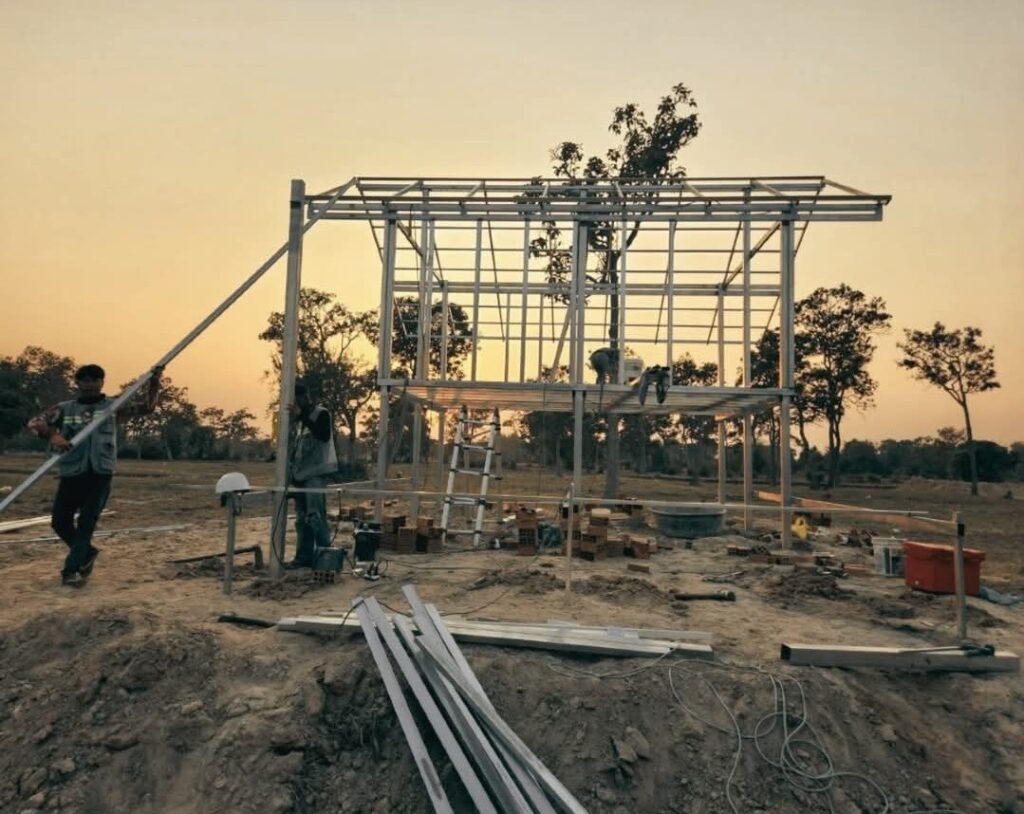
The Shinta Mani Foundation is a non-profit organization in Cambodia. It started in 2004 and helps people in many ways. One of its most important projects is building houses for poor families in the countryside. These families often live in very bad conditions or have no home at all.
So far, the foundation has already built 123 homes. These houses are simple, but they are safe and strong. They give families a clean and dry place to live. Many people feel happy and safe in their new homes. Some even help with the building, which creates a strong sense of community.
The foundation was started by Mr. Sokoun Chanpreda. His goal is to improve people’s lives, not only by giving them homes but also by creating better opportunities for the future.
When a family receives a new home, it changes their life. Children can sleep well, study, and stay healthy. Parents can work and plan for a better future.
The work of the Shinta Mani Foundation is a great example of how one organization can make a big difference. It does not just build houses—it builds hope and a better tomorrow for many Cambodian families.
_______________________
Vocabularies:
###############
1. What is a project?
a) A plan or activity to do something new
b) A type of animal
c) A place to sleep
2. What does to feel safe mean?
a) To feel hungry
b) To feel protected and secure
c) To feel tired
3. What is the countryside?
a) A busy city street
b) Land with farms and nature outside cities
c) A large building
4. What does to improve mean?
a) To stop something
b) To make something better
c) To make something worse
5. What does to create opportunities mean?
a) To give people chances to do better things
b) To break something
c) To close all doors
6. What does to change life mean?
a) To make life different or better
b) To go to sleep early
c) To forget your name
7. What does a non-profit organization do?
a) Makes money by selling products
b) Helps people without making money for itself
c) Plays sports
8. What does clean and dry mean?
a) Dirty and wet
b) Not dirty and not wet
c) Hot and cold
9. What does to receive mean?
a) To jump
b) To run quickly
c) To get something
10. What is a sense of community?
a) Feeling alone
b) Feeling part of a group
c) Cleaning a building
11. What does to build hope mean?
a) To paint a house
b) To help people believe things will get better
c) To write a story
12. What does in many ways mean?
a) Only one way
b) Using different methods
c) Doing nothing
13. What does to stay healthy mean?
a) To eat well and not get sick
b) To sleep all day
c) To stop working
14. What does to make a difference mean?
a) To take a photo
b) To help in a big or good way
c) To break a rule
15. What does the future mean?
a) The time before now
b) The time that comes after now
c) The time when we sleep
16. What does to live in bad conditions mean?
a) To live in a nice hotel
b) To live in a place that is not safe or clean
c) To live in a car
17. What does important mean?
a) Something you eat
b) Something very small
c) Something that matters a lot
18. What does to create a better tomorrow mean?
a) A good life in the future
b) A holiday last year
c) A fun game
____________________
Answers
1 a, 2 b, 3 c, 4 b, 5 a, 6 a, 7 b, 8 b, 9 c, 10 b, 11 c, 12 c, 13 a, 14 b, 15 b, 16 c, 17 c, 18 a
###############
Word-definition match exercise:
Words:
Definitions:
a) To feel protected and secure
b) Using different methods or doing different things
c) To live in a place that is not safe or clean
d) To get something
e) To help people believe things will get better
f) Land with farms and nature outside cities
g) To make life different or better
h) To give people chances to do better things
i) To make something better
j) An organization that helps people without making money for itself
k) To eat well and not get sick
l) To help in a big or good way
m) A good life in the future
n) To feel alone
o) To take a photo
p) A plan or activity to do something new
q) Feeling part of a group
r) The time that comes after now
____________________
1 p, 2 a, 3 f, 4 i, 5 h, 6 g, 7 j, 8 b, 9 d, 10 q,
11 e, 12 b, 13 k, 14 l, 15 r, 16 c, 17 n, 18 m
###############

True, false
___________________
True: 2,4,6,8,9,11
#################
Fill in, words below:
______________
good – lives – today – safe – healthy. – learn – clean – communities – money. – change – create – farms
_________________
2. money.
3. clean
4. farms
5. safe
6. create
7. healthy.
8. change
9. good
10. communities
11. learn
12. today
################
Match the beginnings (1–10) with the correct endings (A–J)
NOT EASY:
Beginnings:
Endings :
A. when they feel protected.
B. a place with farms and small villages.
C. believe things will get better.
D. by helping other people.
E. people stay healthy.
F. helps people feel connected.
G. helps people in need.
H. in dirty and unsafe places.
I. help a community grow.
J. the time after today.
__________________
Answers:
1 G, 2 A, 3 I, 4 B, 5 E, 6 F, 7 D, 8 H, 9 C, 10 J
#############
Interview with a representative o f the Shinta Mani Foundation, fill in, words below:
Interviewer: Hello! Can you tell us about your foundation?
Representative: Yes, our foundation is a non-profit group. We help people in need.
1. What does your foundation do?
We help people live in better and safer __________.
2. Who do you help?
We help families who live in __________ conditions.
3. How do you help them?
We build projects to give them clean and __________homes.
4. Do you make money from this work?
No, we do not make money. We just want to __________.
5. Where do you work?
We work in the __________ and small towns.
6. Why is clean and dry important?
It helps people stay __________ and feel safe.
7. What is a “sense of community”?
It means people feel they are __________ of a group.
8. Can small projects make a big difference?
Yes! Even small help can __________ someone’s life.
9. What do you mean by “a better tomorrow”?
We want people to have __________ and a good future.
10. How can others help your foundation?
They can join our projects or __________ support to families.
_____________________
healthy – hope – help – part – conditions – give – bad – change – countryside – dry
_____________________
Answers:
1. conditions
2. bad
3. dry
4. help
5. countryside
6. healthy
7. part
8. change
9. hope
10. give
#################
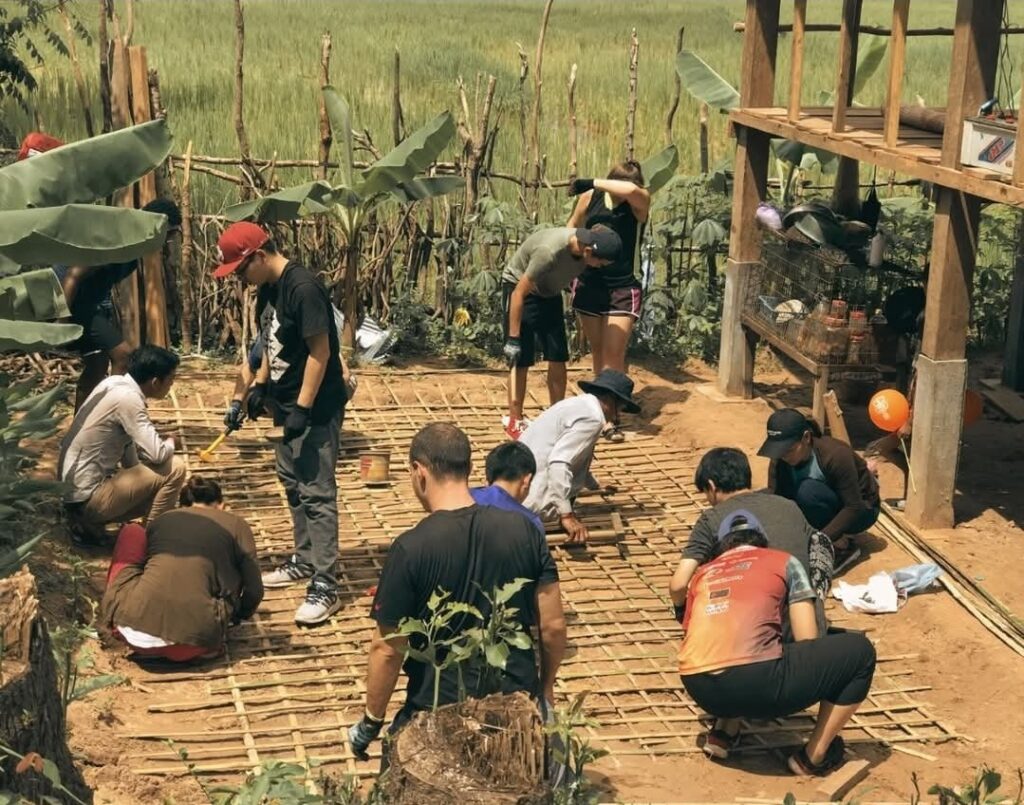
I work for a non-profit foundation. Every day, I help people who live in bad conditions. In the morning, I visit families in the countryside. I talk to them and listen to their needs. Then, I plan small projects with my team. We try to build clean and dry homes. Sometimes we bring clothes or school things for children. I write reports and call other people who want to help. My work is not easy, but I like it. I feel happy when people smile. I know I make a difference. I want to help build a better tomorrow.
_________________
Rewrite the story in the 3rd person singular present simple, start with
He works for a non-profit…………
and make all changes necessary.
__________________
Correct version:
He works for a non-profit foundation. Every day, he helps people who live in bad conditions. In the morning, he visits families in the countryside. He talks to them and listens to their needs. Then, he plans small projects with his team. They try to build clean and dry homes. Sometimes they bring clothes or school things for children. He writes reports and calls other people who want to help. His work is not easy, but he likes it. He feels happy when people smile. He knows he makes a difference. He wants to help build a better tomorrow.
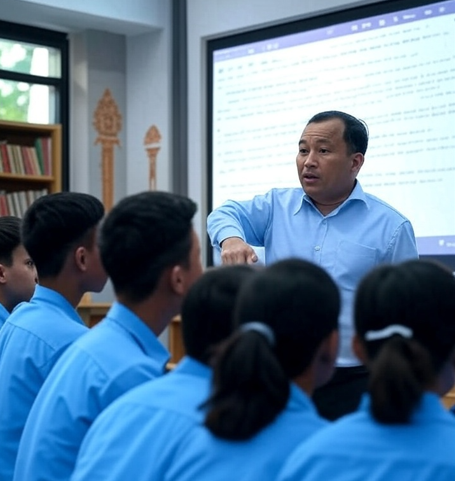
A university and a community organization work together to help young people. They want to give students good education and teach important life skills. These skills help students make good decisions and prepare for their future.
People from the university visit the community organization to talk with the students. They give advice about how to think clearly, communicate well, and plan goals. This helps the students to be ready for college and work.
The university shares knowledge and helps with training. The community organization gives a place where students can learn and practice new skills. Both groups support each other to make a positive difference in young people’s lives.
They want to keep working together in the future. They plan to do more workshops, talks, and mentoring sessions. Sometimes, they may offer internships or scholarships to help students more.
This cooperation helps young people feel confident and ready for their future. It shows how schools and community groups can join hands to support education and personal growth. Together, they help young people build better lives.
_______________________
Vocabulary:
Cooperation
Working together with other people.
Community
A group of people who live or work near each other.
Confident
Feeling sure about yourself.
Education
Learning at school or from teachers.
Skills
Things you can do well.
A decision
Choosing what to do.
To prepare for the future
Getting ready for what will happen later.
To give advice
To help someone by telling them what to do.
To think clearly
To understand and decide without confusion.
To communicate
To talk or share ideas with others.
A goal
Something you want to do or achieve.
To share knowledge
To give information or teach others.
To practice
To do something many times to get better.
To support
To help someone.
A difference in life
A change that makes life better.
A workshop
A class where you learn by doing.
A talk
Someone speaking to teach or explain something.
A mentoring session
A meeting where an older person helps and advises a younger person.
An internship
A short job to learn work skills.
A scholarship
Money to help pay for school or study.
To join hands
To work together with other people.
Personal growth
Getting better and learning new things about yourself.
###################
Multiple-choice test – one answer correct:
1. What is “cooperation”?
a) Working together with others
b) Working alone
c) Playing games
2. What is a “community”?
a) A single person
b) A group of people who live or work near each other
c) A city far away
3. What does “confident” mean?
a) Feeling tired
b) Feeling unsure about yourself
c) Feeling sure about yourself
4. What is “education”?
a) Learning at school or from teachers
b) Sleeping at home
c) Eating food
5. What are “skills”?
a) Things you can do well
b) Things you don’t like
c) Things you buy
6. What is “a decision”?
a) Doing nothing
b) Choosing what to do
c) Sleeping
7. What does “to prepare for the future” mean?
a) Getting ready for what will happen later
b) Forgetting what to do
c) Watching TV
8. What does “to give advice” mean?
a) To help someone by telling what to do
b) To ignore someone
c) To ask questions
9. What does “to think clearly” mean?
a) To talk loudly
b) To be very tired
c) To decide without confusion
10. What does “to communicate” mean?
a) To keep secrets
b) To share ideas with others
c) To run fast
11. What is “a goal”?
a) Something you want to do or achieve
b) Something you want to eat
c) Something you want to forget
12. What does “to share knowledge” mean?
a) To play games with friends
b) To keep information only to yourself
c) To teach others or give information
13. What does “to practice” mean?
a) To sleep all day
b) To do something many times to get better
c) To do something once and stop
14. What does “to support” mean?
a) To leave someone
b) To help someone
c) To ignore someone
15. What is “a difference in life”?
a) A day without school
b) A change that makes life better
c) A place far away
16. What is “a workshop”?
a) A class where you learn by doing
b) A park to play
c) A place to watch movies
17. What is “a talk”?
a) Someone running
b) Someone speaking to teach or explain
c) Someone singing a song
18. What is “a mentoring session”?
a) A meeting where an older person helps a younger person
b) A sports game
c) A party with friends
19. What is “an internship”?
a) A short job to learn work skills
b) A holiday trip
c) A movie to watch
20. What is “a scholarship”?
a) Money to buy clothes
b) Money to help pay for school or study
c) Money to buy food
21. What does “to join hands” mean?
a) To work together with other people
b) To fight with others
c) To run alone
22. What is “personal growth”?
a) Getting better and learning new things about yourself
b) Playing games all day
c) Staying the same all the time
_______________________
Answers:
1 a 2 b 3 c 4 a 5 a 6 b 7 a 8 a 9 c 10 b 11 a
12 c 13 b 14 b 15 b 16 a 17 b 18 a 19 a 20 b 21 a 22 a
###############
Gap-fill test, one answer correct:
Answers:
1 together
2 near
3 sure
4 school
5 badly
6 do
7 happen
8 run
9 confusion
10 others
11 achieve
12 teach
13 lost
14 help
15 sleep
################
True or false?
_______________
True: 1, 3, 5, 6, 8, 10, 11, 13, 15
#################
Match word/s and definition:
Words:
Definitions:
a. to help someone or give help
b. a group of people living or working together
c. to get ready for what will happen later
d. to do something many times to improve
e. a meeting to learn or do a particular activity
f. to say or show ideas to others
g. the ability to do something well
h. to give ideas to help someone make a choice
i. to speak with someone to give advice or information
j. being sure about yourself
k. a choice you make
l. to work with others for a common purpose
m. to teach or tell others what you know
n. something you want to achieve
o. to understand and decide without confusion
p. a talk where an experienced person helps another
q. a change that affects life
r. the process of learning at school or elsewhere
________________
Answers: 1 l 2 b 3 j 4 r 5 g 6 k 7 c 8 h
9 o 10 f 11 n 12 m 13 d 14 a
15 q 16 e 17 i 18 p
#############
Which goes with which?
Sentence starts:
Sentence endings:
a. a meeting to learn new things.
b. a place where people live or work together.
c. to get ready for what will happen later.
d. to help someone.
e. to tell others what you know.
f. to understand and decide well.
g. to learn important life skills.
h. to help people grow and improve.
i. to work well with others.
j. to make good choices.
___________________
Answers: 1 i 2 b 3 d 4 g 5 c 6 j 7 f 8 e 9 h 10 a
####################
Fill in, words below:
_________________
supports – skills – together – teachers – teaches – students – help – goals – make – confident – knowledge – practice
_________________
Correct answers:
2. make
3. teachers
4. practice
5. students
6. knowledge
7. supports
8. confident
9. teaches
10. goals
11. help
12. together.
#################
At the meeting, I learn many important life skills. I get advice that helps me make good decisions. I learn how to think clearly and stay confident. I practice sharing my ideas with others. The workshops teach me how to work well with people. The talks help me understand my goals. I also get support to grow and prepare for my future. This meeting helps me feel ready and strong for what comes next in my life.
______________
Rewrite the story, starting with
At the meeting, he learns…..
and make all changes necessary.
________________
At the meeting, he learns many important life skills. He gets advice that helps him make good decisions. He learns how to think clearly and stay confident. He practices sharing his ideas with others. The workshops teach him how to work well with people. The talks help him understand his goals. He also gets support to grow and prepare for his future. This meeting helps him feel ready and strong for what comes next in his life.
################
Complete, fill in:
meeting – skills – teach – well – mentors – goal – good – after – grow
1. Q: Do you like the meeting?
A: Yes, I like the meeting very much.
2. Q: What do you learn at the meeting?
A: I learn important life __________.
3. Q: Who gives you advice?
A: The teachers and __________ give me advice.
4. Q: How does the advice help you?
A: It helps me make __________ decisions.
5. Q: What do you practice at the __________?
A: I practice thinking clearly and sharing knowledge.
6. Q: Do you feel more confident _________ the meeting?
A: Yes, I feel more confident.
7. Q: What do workshops do?
A: Workshops __________ me new skills.
8. Q: How does the community help you?
A: The community supports me to ___________ and learn.
9. Q: What is your goal after the meeting?
A: My __________ is to prepare for the future.
10. Q: Do you think cooperation is important?
A: Yes, cooperation helps me work __________ with others.
____________________
Correct version:
1. Q: Do you like the meeting?
A: Yes, I like the meeting very much.
2. Q: What do you learn at the meeting?
A: I learn important life skills.
3. Q: Who gives you advice?
A: The teachers and mentors give me advice.
4. Q: How does the advice help you?
A: It helps me make good decisions.
5. Q: What do you practice at the meeting?
A: I practice thinking clearly and sharing knowledge.
6. Q: Do you feel more confident after the meeting?
A: Yes, I feel more confident.
7. Q: What do workshops do?
A: Workshops teach me new skills.
8. Q: How does the community help you?
A: The community supports me to grow and learn.
9. Q: What is your goal after the meeting?
A: My goal is to prepare for the future.
10. Q: Do you think cooperation is important?
A: Yes, cooperation helps me work well with others.
################
– some important points ,
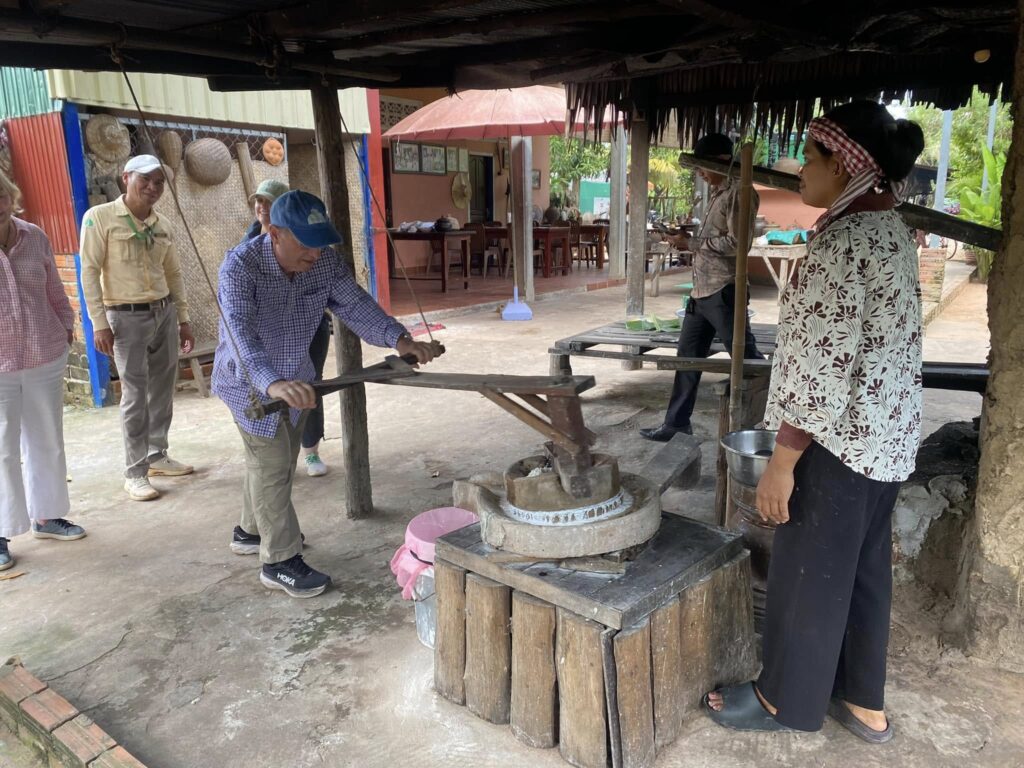
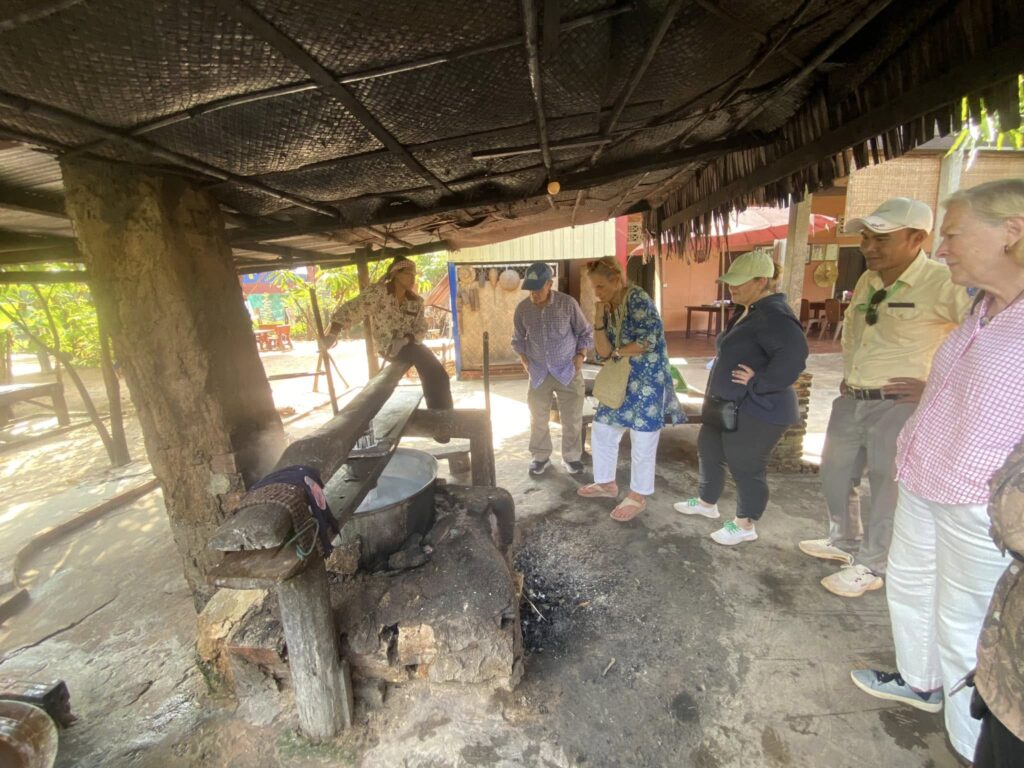
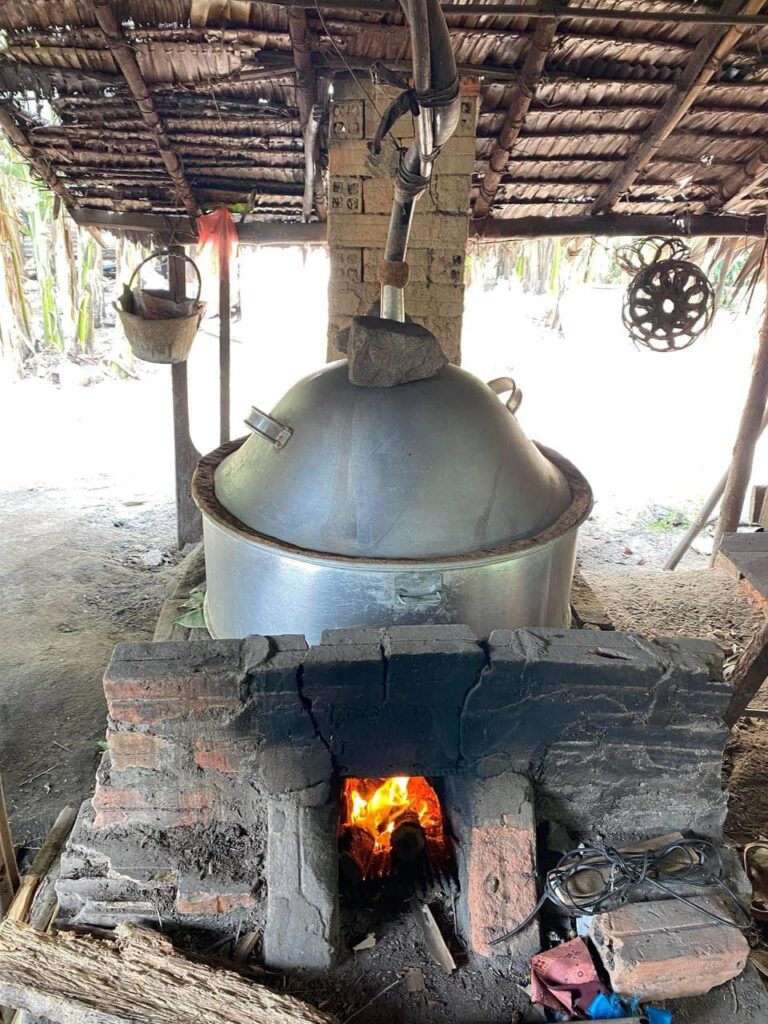
e.g. Preah Dak Community Experience, a great project
_____________________
Vocabulary:
1. to offer a tour – to give people the chance to go on a trip or visit a place with a guide.
2. countryside – land outside the city with farms, fields, and small villages.
3. an experience – something you do or see that helps you learn or remember.
4. local people – the people who live in a place.
5. a village – a small group of houses where people live, smaller than a town.
6. a community – a group of people living in the same place or area.
7. to run a tour – to plan and guide a trip for visitors.
8. an income – money you get from working or selling something.
9. to support – to help someone or something.
10. an activity – something people do for fun or learning.
11. to join – to take part in something.
12. farming – working with animals or plants to get food.
13. to make crafts – to create things with your hands, like baskets or clothes.
14. a meal – food you eat at one time (for example, lunch or dinner).
15. to watch a ceremony – to look at a special event like a wedding or religious activity.
16. to answer a question – to say something when someone asks you something.
17. to respect nature – to care for the earth, animals, and plants.
18. to damage – to break or hurt something.
19. to be polite – to be nice and show good manners.
20. to feel happy – to have a good feeling or be glad.
21. safety – being free from danger or harm.
22. comfort – feeling good, warm, or relaxed.
23. easy instructions – simple steps that are not hard to follow.
24. to hurt somebody – to cause pain or injury to someone.
25. to protect something – to keep something safe from harm.
################
Multiple-choice test, one answer correct
1. What does to offer a tour mean?
a) To give people the chance to go on a trip with a guide
b) To buy food for a visitor
c) To take care of a hotel room
2. What is the countryside?
a) A place with many big shops
b) A busy street in a city
c) A quiet place with farms and small villages
3. What is an experience?
a) A food you eat once
b) A thing you buy at the market
c) Something you do and learn from
4. Who are local people?
a) People who come from other countries
b) People who live in the area
c) People who teach in schools
5. What is a village?
a) A large town with many buses
b) A place with many tall buildings
c) A small group of homes in the countryside
6. What does a community mean?
a) A group of people living in the same area
b) A meal eaten in a restaurant
c) A sport you play with friends
7. What does it mean to run a tour?
a) To sleep during the day
b) To organize and lead a visit for people
c) To write about a place
8. What is an income?
a) A letter from a friend
b) A gift from a tourist
c) Money earned from work
9. What does to support mean?
a) To help someone or a group
b) To clean a house
c) To sell drinks to visitors
10. What is an activity?
a) Something you do like making or learning
b) A shop where people buy clothes
c) A car for driving tourists
11. What does to join mean?
a) To leave early
b) To become part of a group or activity
c) To sit and wait
12. What is farming?
a) Working with animals and crops
b) Eating food with a family
c) Drawing pictures of trees
13. What does to make crafts mean?
a) To talk to a group of people
b) To build houses with machines
c) To create things with your hands
14. What is a meal?
a) A plan for traveling
b) Food you eat at one time
c) A tool for farming
15. What does to watch a ceremony mean?
a) To look at a special event
b) To cook a traditional food
c) To clean a village
16. What does to answer a question mean?
a) To say something after someone asks
b) To sit in a group
c) To wait for a guide
17. What does to respect nature mean?
a) To throw trash on the ground
b) To keep the environment clean
c) To take photos of animals
18. What does to damage mean?
a) To break or hurt something
b) To fix something
c) To share something
19. What does to be polite mean?
a) To speak nicely and show good manners
b) To walk slowly in the sun
c) To run through a village
20. What does to feel happy mean?
a) To cry a lot
b) To feel tired after walking
c) To enjoy and smile
21. What is safety?
a) A way to make friends
b) Being away from danger
c) Having a job
22. What is comfort?
a) Feeling good and relaxed
b) Getting ready to travel
c) Playing a game with others
23. What are easy instructions?
a) Steps that are simple to follow
b) Questions about a place
c) A short story about a person
24. What does to hurt somebody mean?
a) To make someone feel better
b) To cause pain
c) To give someone a tour
25. What does to protect something mean?
a) To break it by mistake
b) To give it away
c) To keep it safe
____________________
1a 2c 3c 4b 5c 6a 7b 8c 9a 10a 11b
12a 13c 14b 15a 16a 17b 18a 19a
20c 21b 22a 23a 24b 25c
###################
Gap-fill exercise, one answer correct only
_____________________________
1 a, 2 c, 3 b, 4 c, 5 b, 6 c, 7 b, 8 a, 9 a,
10 b, 11 a, 12 c, 13 c, 14 a, 15 c, 16 c, 17 b, 18 a,
19 c, 20 b, 21 b, 22 c, 23 a, 24 a, 25 c
###############
True or false statements:
True: 1,3,4,5,8,10,11,13,15
#######################
Match the word to its definition:
Words:
Definitions:
a) A small group of houses in the countryside
b) To keep someone or something safe from harm
c) The natural world, including plants and animals
d) A task or event that people do for fun or learning
e) Showing good manners toward others
f) Help or assistance given to someone or something
g) Money earned from work or business
h) A person who helps others understand or do something
i) Rules or directions given to explain how to do something
j) The way of life or customs passed down from older generations
k) A special event or celebration with rituals
l) A handmade object made with skill
m) The feeling of being relaxed and free from pain
n) The act of growing crops and raising animals for food
o) The act of honoring or valuing someone or something
p) The feeling or knowledge gained from doing something
q) Being free from danger or harm
r) A group of people living in the same area
_______________________
Answers:
1 r, 2 d, 3 g, 4 e, 5 m, 6 p, 7 a, 8 b, 9 q, 10 o,
11 n, 12 j, 13 h, 14 k, 15 l, 16 f, 17 c, 18 i#
#################
Fill in, words below:
________________
community – guides – eat – local – polite – pagoda – village – nature.- learn – important – tour – countryside
________________
2. village
3. guides
4. countryside
5. pagoda
6. tour
7. eat
8. nature.
9. important
10. community
11. learn
12. polite
##################
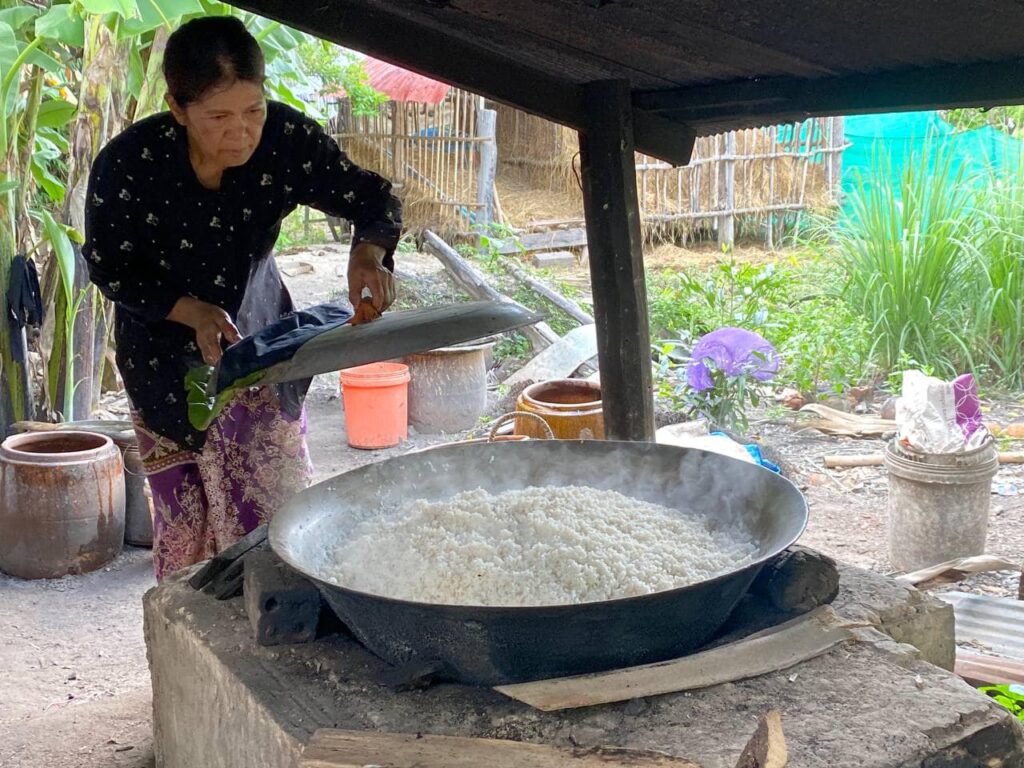
You talk to Thorn Bun Thoeng, who offers the Preah Dak Village Experience tour; he has got lots of useful information on that topic – complete, words below:
________________
understand – money – village – answers – help – pagodas – families – fake – helping – people – safe – nature. – crafts – instructions
________________
2. community
3. crafts
4. families
5. people
6. help
7. instructions
8. nature.
9. fake
10. money
11. pagodas
12. safe
13. answers
14. understand
15. helping
###############
A tour-guide:
I start the tour by going to the local market. I see fresh fruits and vegetables there. Then, I visit a farm where I help with farming activities like planting or picking crops. After that, I go to a family home and eat a home-cooked meal with them. I watch a traditional ceremony at the village pagoda. I listen to stories about local customs and ask questions when I want. I feel safe and comfortable during the tour. This tour shows real village life and how local people live.
Rewrite the story, starting with
He starts the tour by going to….
and make all chages necessary!
________________
Correct version:
He starts the tour by going to the local market. He sees fresh fruits and vegetables there. Then, he visits a farm where he helps with farming activities like planting or picking crops. After that, he goes to a family home and eats a home-cooked meal with them. He watches a traditional ceremony at the village pagoda. He listens to stories about local customs and asks questions when he wants. He feels safe and comfortable during the tour. This tour shows real village life and how local people live.
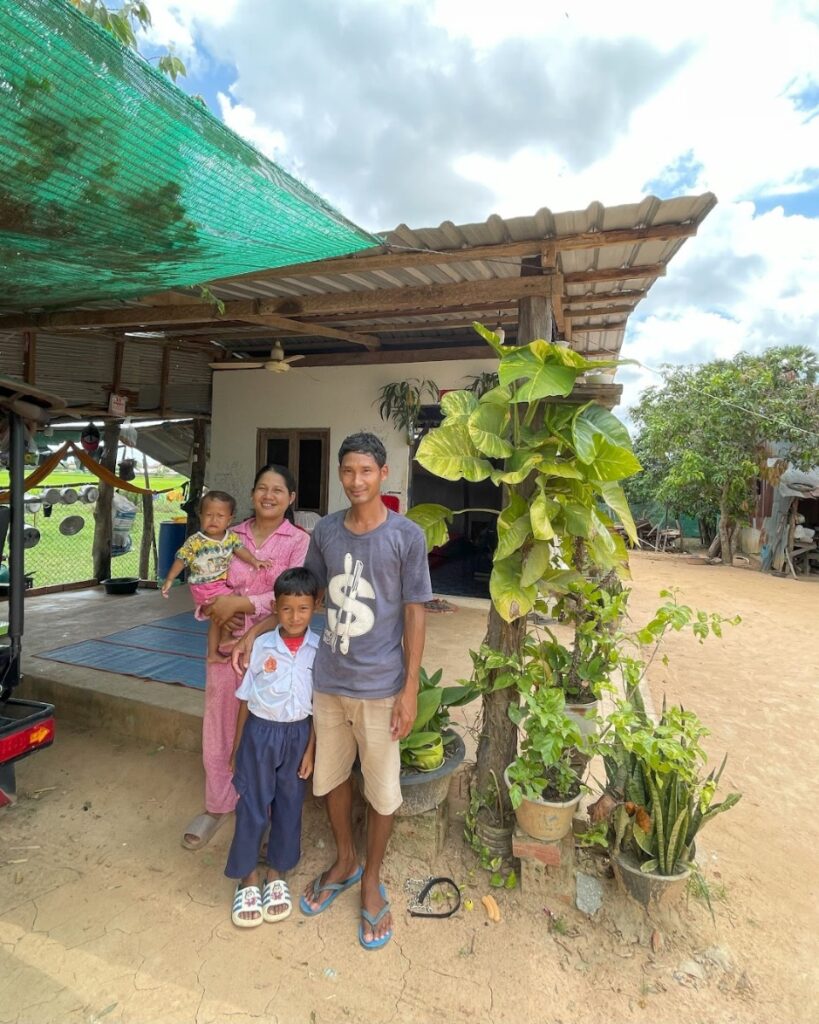
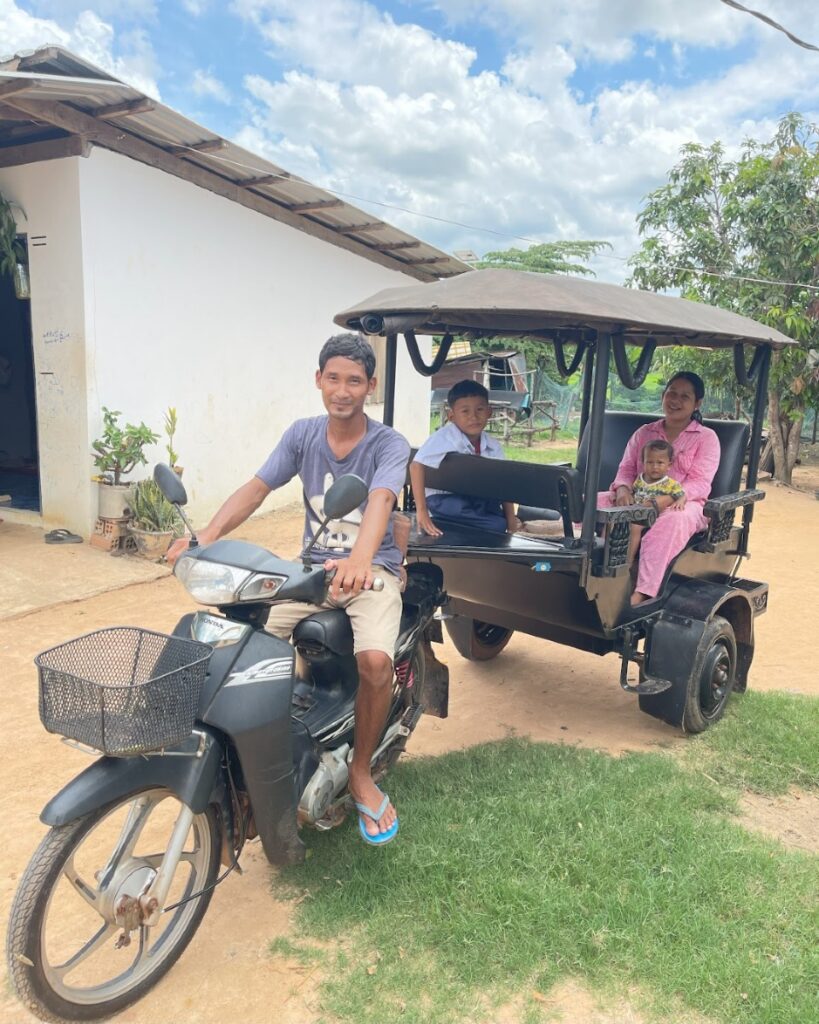
Pov lives in a small village in Cambodia. He has a wife and two children. His wife waits for a baby. Life is hard. Pov has no job. He has no money. He feels worried and sad. He wants to help his family, but he does not know how.
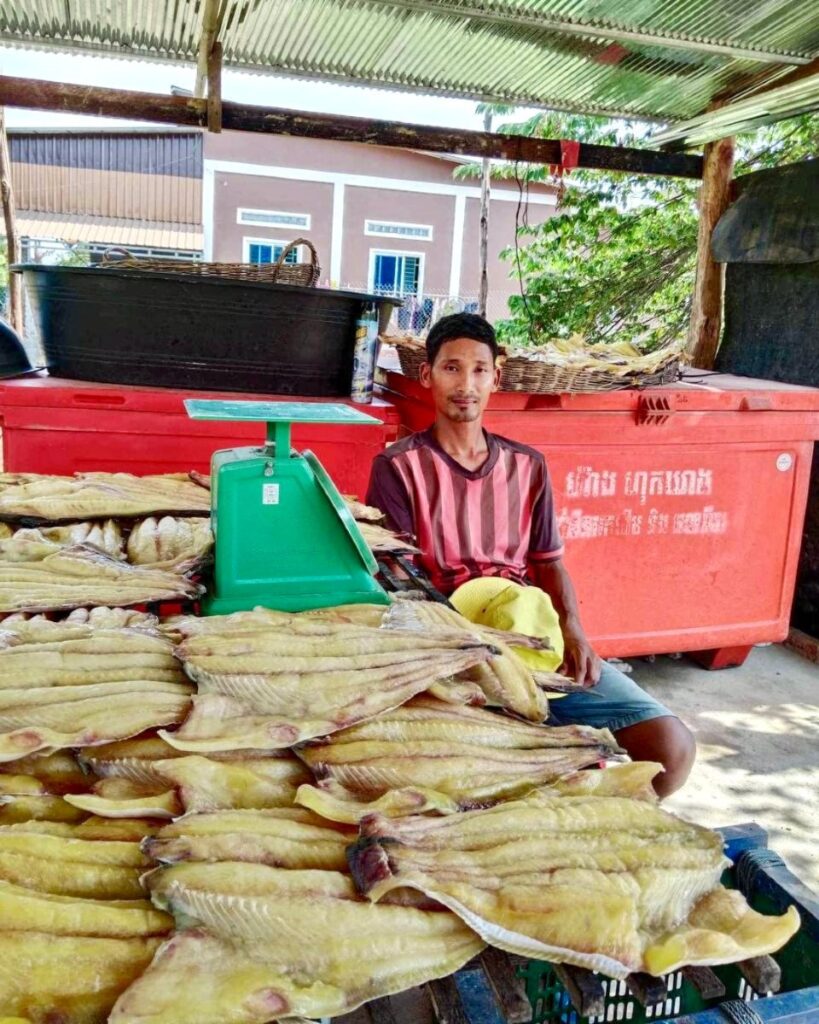
Then, the Shinta Mani Foundation gives him a small loan. He does not pay interest. Pov feels happy. He starts a small business. He sells dried fish.
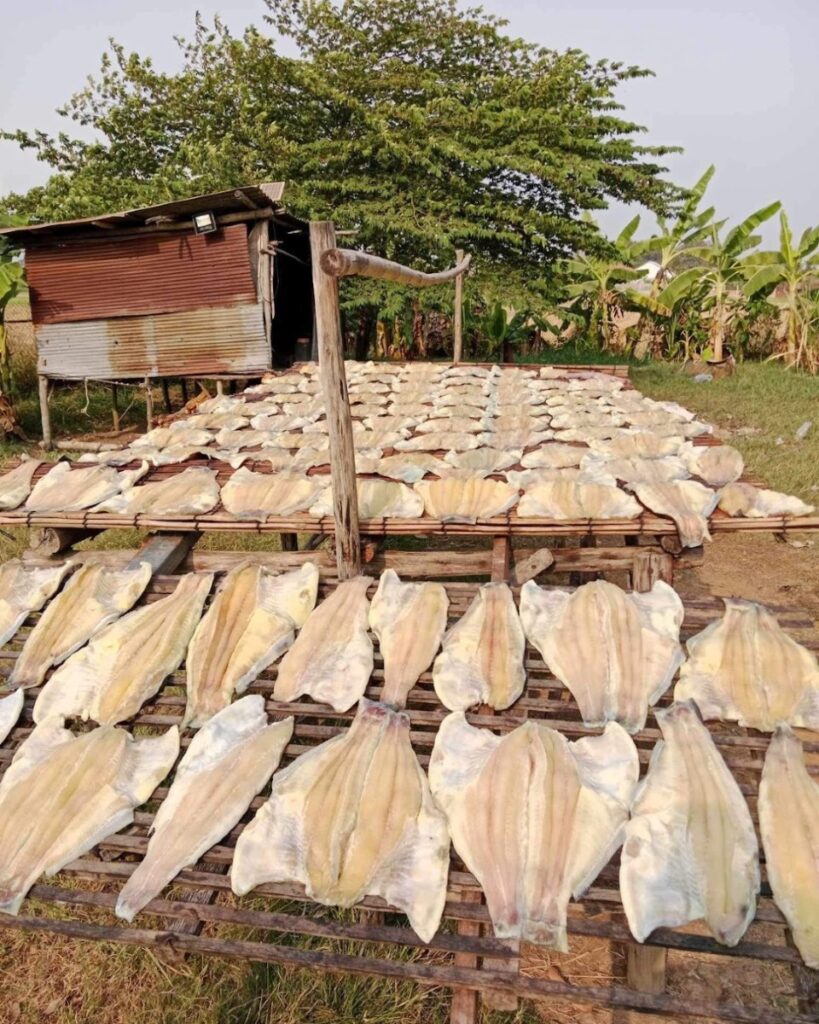
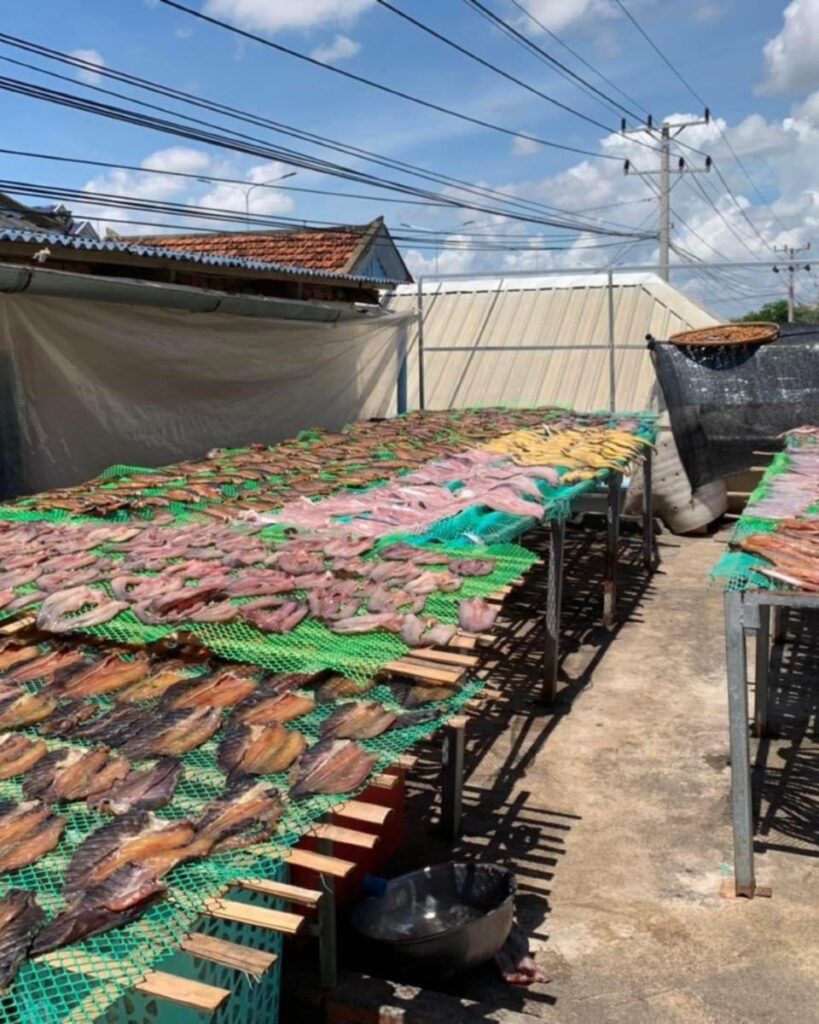
Every day, Pov works hard. He buys fish. He cleans the fish. He dries the fish in the sun. Then he goes to the market. Many people like his fish. Some shops ask for big orders. His business grows.
Now, Pov makes money. He builds a strong house for his family. They feel safe. He buys a tuk-tuk. He uses it for work. He also drives his children to school.
Pov feels proud. He helps his family. He has a job. He has a good home. He smiles more. He feels strong. His wife is happy. His children are happy. Pov has hope. He makes his life better, step by step.
___________________
Vocabularies:
1. to receive support – to get help
2. a struggle – something that is very hard to do
3. to wait for a baby – to be pregnant (a baby is growing inside the mother)
4. to feel worried – to think something bad may happen
5. to be sad – to feel not happy
6. a loan – money someone gives you, and you give it back later
7. to pay interest – to pay extra money for a loan
8. dried fish – fish with no water inside, kept in the sun to make it dry
9. to clean something – to make something not dirty
10. to dry something – to take water away from something
11. a big order – when a person or shop asks for many things to buy
12. to grow – to become bigger or better
13. to make money – to get money from working
14. to feel safe – to feel okay and not in danger
15. to feel proud – to feel good about what you do
16. to smile – to move your mouth to show you are happy
17. to have hope – to believe something good can happen
18. step by step – slowly, one part at a time
##################
Multiple-choice test, one answer correct:
1. What does „to smile“ mean?
A. to jump
B. to run
C. to show you are happy with your mouth
2. What does „to feel proud“ mean?
A. to feel good about what you do
B. to feel sick
C. to feel bored
3. What does „to dry something“ mean?
A. to cut it
B. to take water away
C. to make it wet
4. What is „support“?
A. a story
B. help from someone
C. a school
5. What does „to wait for a baby“ mean?
A. to cry for a baby
B. to want a baby
C. to be pregnant
6. What does „to feel safe“ mean?
A. to feel cold
B. to feel tired
C. to feel okay and not in danger
7. What does „to pay interest“ mean?
A. to pay extra money on a loan
B. to get free money
C. to read a book
8. What does „step by step“ mean?
A. very fast
B. without shoes
C. slowly, one part at a time
9. What does „to feel worried“ mean?
A. to think something bad may happen
B. to sleep
C. to be tired
10. What is „a big order“?
A. a short walk
B. one small thing
C. when someone wants many things
11. What does „to grow“ mean?
A. to become bigger
B. to go away
C. to play outside
12. What does „to clean something“ mean?
A. to make something big
B. to hide something
C. to make something not dirty
13. What is „dried fish“?
A. fish in the river
B. fish that sings
C. fish with no water inside
14. What does „to be sad“ mean?
A. to be loud
B. to dance
C. to feel not happy
15. What does „to make money“ mean?
A. to lose money
B. to give money
C. to get money from work
16. What does „to receive support“ mean?
A. to read a letter
B. to get help
C. to give a gift
17. What is „a loan“?
A. a kind of food
B. money you get and give back later
C. a tool
18. What is „a struggle“?
A. something you buy
B. something that is very hard
C. something that is easy
_____________________
1 C, 2 A, 3 B, 4 B, 5 C, 6 C, 7 A, 8 C, 9 A,
10 C, 11 A, 12 C, 13 C, 14 C, 15 C, 16 B, 17 B, 18 B
##################
Gap-fill test, one answer correct:
_____________________
Answers:
1 safe, 2 must, 3 tuk-tuk, 4 make, 5 loan, 6 feel, 7 dry, 8 interest, 9 clean, 10 will, 11 happy, 12 grows, 13 wait, 14 big, 15 receive, 16 feels, 17 hard, 18 interest, 19 support, 20 can, 21 step, 22 feels, 23 loan, 24 feel, 25 struggle
###############
Words:
Definitions:
A. A small vehicle used for transport
B. To feel unhappy
C. To become bigger
D. To give help to someone
E. To remove dirt
F. To borrow money that you must pay back
G. To look happy with your mouth turned up
H. To have patience before something happens
I. Fish that has no water inside because it dries
J. To produce money by working or selling
K. Feeling nervous about something bad
L. To be safe from danger or harm
M. A young child who is not yet able to walk
N. Something that you buy in large amounts
O. To lose water or become not wet
P. To feel good about what you do or have
Q. A hard time or difficulty doing something
R. To wait and do things slowly, one after another
S. The money you pay to borrow money
T. To move your foot in walking
_____________________
1 F, 2 S, 3 D, 4 Q, 5 K, 6 B, 7 I, 8 E, 9 O, 10 N,
11 C, 12 J, 13 L, 14 P, 15 G, 16 H, 17 H, 18 R, 19 M, 20 A
################
Fill in, words below:
______________________
uses – start – family – dries – hard – takes – dried – waiting – money – job – new – future – buys – sell – loan
______________________
1. family
2. waiting
3. job
4. hard
5. future
6. loan
7. start
8. sell
9. dries
10. dried
11. money
12. new
13. buys
14. uses
15. takes
###################
True or false?
__________________
True: 2, 4, 5, 6, 8, 10, 11
#################
Complete, words below:
Interviewer: Who is in your family?
Pov: I have a wife and __________.
Interviewer: What job do you do?
Pov: I sell __________ fish.
Interviewer: Where do you sell your fish?
Pov: I sell fish at the __________.
Interviewer: When do you start your __________?
Pov: I start after I get the loan.
Interviewer: Why do you need a __________?
Pov: I need money to start my business.
Interviewer: How do you dry the fish?
Pov: I __________ the fish and leave it in the sun.
Interviewer: Who helps you with your family?
Pov: My __________ helps me.
Interviewer: What do you buy with your money?
Pov: I buy a safe __________ and a tuk-tuk.
Interviewer: Where do you take your children?
Pov: I take them to __________ with the tuk-tuk.
Interviewer: How do you feel about your life now?
Pov: I feel __________ and proud.
_________________
house – loan – children – wife – school – dried – happy – clean – market – business
_________________
Interviewer: Who is in your family?
Pov: I have a wife and children.
Interviewer: What job do you do?
Pov: I sell dried fish.
Interviewer: Where do you sell your fish?
Pov: I sell fish at the market.
Interviewer: When do you start your business?
Pov: I start after I get the loan.
Interviewer: Why do you need a loan?
Pov: I need money to start my business.
Interviewer: How do you dry the fish?
Pov: I clean the fish and leave it in the sun.
Interviewer: Who helps you with your family?
Pov: My wife helps me.
Interviewer: What do you buy with your money?
Pov: I buy a safe house and a tuk-tuk.
Interviewer: Where do you take your children?
Pov: I take them to school with the tuk-tuk.
Interviewer: How do you feel about your life now?
Pov: I feel happy and proud.
#################
Pov tells about his life:
I wake up early every day. I clean the fish and dry them in the sun. I work hard to make good dried fish. After drying, I sell fish at the market. Many people buy my fish. I use the money to help my family. I drive my tuk-tuk to take my children to school. I feel happy when my family is safe. I build a new house for them. In the evening, I spend time with my wife and children. I smile and feel proud of my work. I have hope for the future.
_______________
Rewrite the story starting with
He wakes up earyl every day. He cleans…..
and make all changes necessary!
_____________________
Correct version:
He wakes up early every day. He cleans the fish and dries them in the sun. He works hard to make good dried fish. After drying, he sells fish at the market. Many people buy his fish. He uses the money to help his family. He drives his tuk-tuk to take his children to school. He feels happy when his family is safe. He builds a new house for them. In the evening, he spends time with his wife and children. He smiles and feels proud of his work. He has hope for the future.
a guest approaches the front desk of a *****hotel;
he wants to book a ticket for an apsara show in the Apsara Theatre in Siem Reap; however, he doesn’t have much information on what apsara is.
So you, member of the front desk team, explain to him.
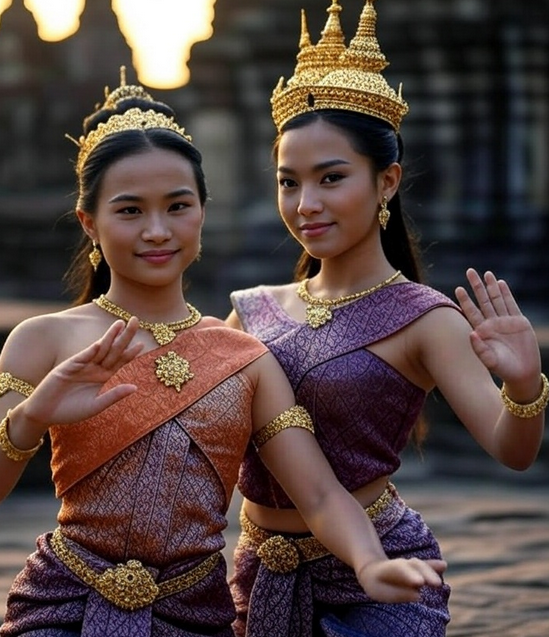
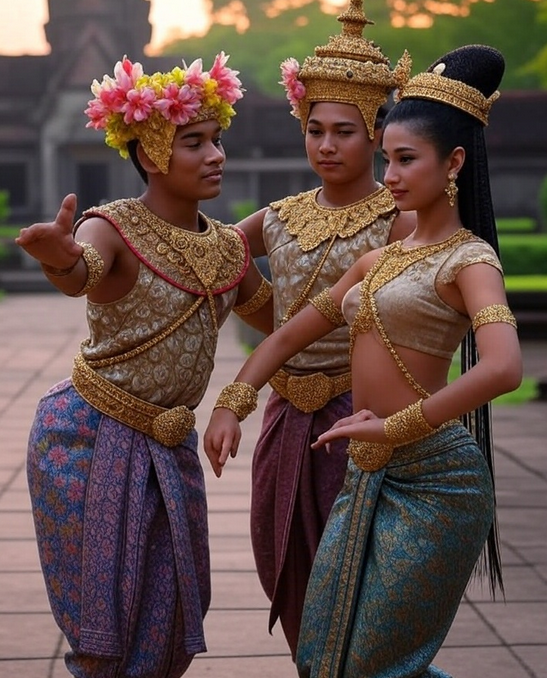
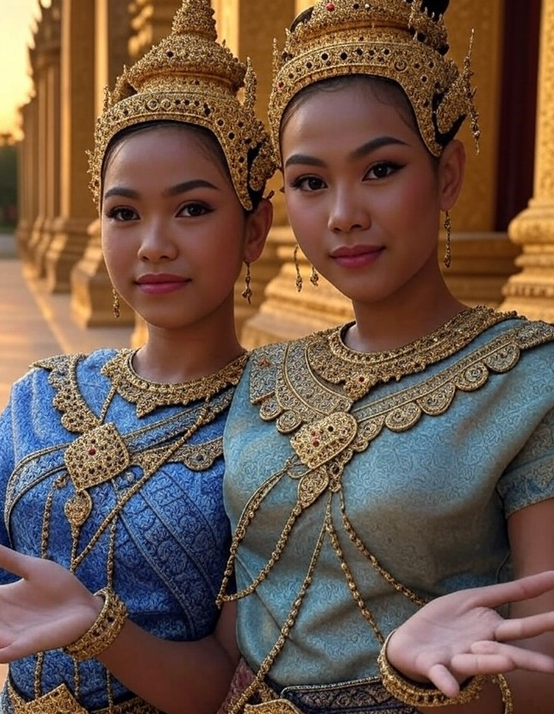
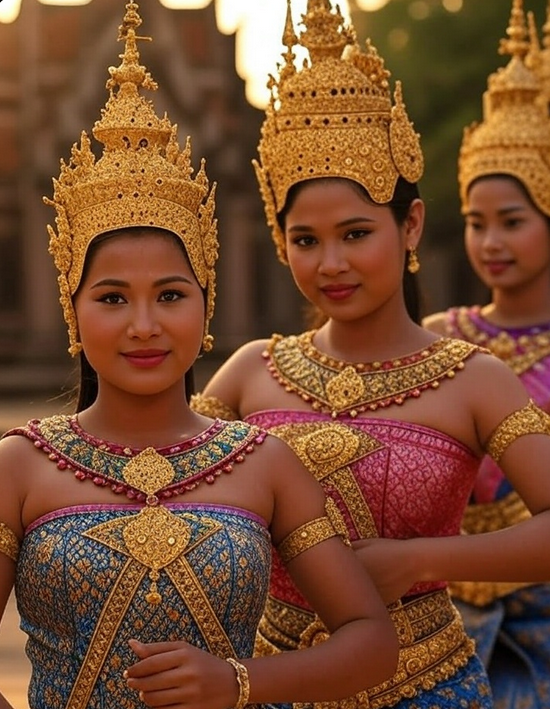
An Apsara show is a traditional Cambodian dance performance. It is very famous in Cambodia and many visitors enjoy watching it. The Apsara dance is slow, graceful, and beautiful. The dancers wear long, colorful dresses, golden crowns, and special jewelry. They move their hands, arms, and fingers in a soft and elegant way. Every movement has meaning and tells a story from old legends, nature, or daily life.
Apsara dancers are usually women, and they start training when they are very young. The dance is part of Cambodia’s ancient culture. You can even see Apsara dancers carved on the walls of Angkor Wat, the famous temple near Siem Reap. The stories in the dance are often about gods, love, animals, and the natural world.
The music during the show is also traditional. It is played with Cambodian instruments like drums, flutes, and gongs. The music is soft and matches the slow movements of the dancers.
In Siem Reap, one of the best places to watch the show is the Apsara Theatre. It is a comfortable place with a beautiful stage. Some shows also offer a Khmer dinner before the performance.
Watching an Apsara show is a wonderful way to enjoy Cambodian culture. It is peaceful, artistic, and very special.
______________________________
Vocabulary:
################
Multiple-choice test, only one answer correct:
1. What does „to approach“ mean?
a) to come near to someone or something
b) to run away from something
c) to sit down quickly
2. What does „to explain“ mean?
a) to play a game
b) to make something easy to understand
c) to write a letter
3. What is „a performance“?
a) a place to sleep
b) a kind of food
c) a show with dancing, music, or acting
4. What does „to enjoy watching something“ mean?
a) to not look at it
b) to feel tired while watching
c) to like looking at a show or movie
5. What does „graceful“ mean?
a) moving in a slow and nice way
b) speaking very loudly
c) jumping quickly
6. What is „a colorful dress“?
a) a dress for sleeping
b) a dress with many bright colors
c) a dress that is only black
7. What is „jewelry“?
a) bags and books
b) things people wear like rings or necklaces
c) shoes and socks
8. What is „a soft movement“?
a) a loud sound
b) a light and gentle move
c) a strong and fast move
9. What is „a meaning“?
a) what something wants to say or show
b) a kind of animal
c) the price of something
10. What is „a legend“?
a) a new phone
b) an old story about heroes or gods
c) a type of food
11. What does „ancient“ mean?
a) very big
b) very fast
c) very, very old
12. What does „to carve on walls“ mean?
a) to cut shapes or pictures into a wall
b) to draw with a pen
c) to paint with water
13. What does „traditional“ mean?
a) something from a new movie
b) something used for driving
c) something people in a country always do
14. What is „a drum“?
a) a drink
b) a round instrument you hit to make sound
c) a kind of fruit
15. What is „a flute“?
a) a small animal
b) a toy for babies
c) a long thing you blow to make music
16. What is „soft music“?
a) music that is quiet and gentle
b) music that is loud and fast
c) music with no instruments
17. What does „to match something“ mean?
a) to clean it
b) to break it
c) to go well with something
18. What does „comfortable“ mean?
a) very strong
b) cold and wet
c) easy and nice to sit in
19. What is „a stage“?
a) a bed for sleeping
b) a place for cooking
c) the place where people dance or sing
20. What does „peaceful“ mean?
a) very noisy
b) quiet and calm
c) very exciting
21. What does „artistic“ mean?
a) good at sports
b) fast at running
c) full of art or creativity
____________________
Answers:
1 a 2 b 3 c 4 c 5 a 6 b 7 b 8 b 9 a 10 b
11 c 12 a 13 c 14 b 15 c 16 a 17 c 18 c
19 c 20 b 21 c
####################
Gap fill exercise – only 1 answer correct:
Answer key
1 approach 2 explain 3 performance 4 enjoy 5 gracefully 6 colorful 7 jewelry 8 soft 9 meaning 10 legend 11 ancient 12 carve 13 traditional 14 drum 15 flute
###################
Match the word to its definition:
Words:
Definitions:
a) A show with music, dance, or acting
b) To come near to someone or something
c) Very old, from a long time ago
d) A place where people sing or dance
e) Moving in a smooth and nice way
f) Things like rings or necklaces worn for decoration
g) A story about heroes or gods from the past
h) To cut shapes or pictures into a surface
i) A long musical instrument you blow into
j) Quiet and gentle, not loud or hard
k) To make something clear or easy to understand
l) A round musical instrument you hit
m) Something with many bright colors
n) Something people do the same way for a long time
o) What a word or action means
_________________
Answers:
1 e 2 c 3 f 4 i 5 a 6 n 7 g 8 l 9 h 10 o 11 b 12 j 13 k 14 m 15 d
##############
True or false ?
____________________
True: 1,3,4,6,8,9,11,12
##################
Fill in, words below:
___________________________
carved – colorful – enjoy – front desk – explain – meaning – drums – know – stage – gracefully – traditional – legends
___________________________
1 front desk
2 know
3 explain
4 legends
5 colorful
6 gracefully
7 traditional
8 carved
9 drums
10 meaning
11 stage
12 enjoy
################
Dialogue between a guest and a front desk staff member on the apsara show – complete, no words given, try!
Guest: Hello, I heard about an Apsara show. Can you tell me what it is?
Staff: Of course! Apsara is a __________ Cambodian dance. It is very beautiful and artistic.
Guest: What do the dancers wear in the show?
Staff: The dancers wear colorful __________ and special jewelry. They look very elegant.
Guest: How do they move in the show?
Staff: They move slowly with soft and __________hands and arms. Every movement is important.
Guest: Does the dance have a meaning?
Staff: Yes, it does. The dance tells old __________ from Cambodian history.
Guest: Where can I see pictures of Apsara dancers?
Staff: You can see them __________on the walls of ancient temples, like Angkor Wat.
Guest: What music do they play during the show?
Staff: The music is soft. It is played with traditional instruments like drums and __________.
Guest: Where is the Apsara ___________?
Staff: It is at the Apsara Theatre here in Siem Reap. It is not far from the hotel.
Guest: Is it a good experience for visitors?
Staff: Yes, many guests _________ watching the performance. It is peaceful and very special.
Guest: Can you help me book a __________?
Staff: Yes, of course! I can help you with that right now.
_____________________
Full dialogue:
Guest: Hello, I heard about an Apsara show. Can you tell me what it is?
Staff: Of course! Apsara is a traditional Cambodian dance. It is very beautiful and artistic.
Guest: What do the dancers wear in the show?
Staff: The dancers wear colorful dresses and special jewelry. They look very elegant.
Guest: How do they move in the show?
Staff: They move slowly with soft and graceful hands and arms. Every movement is important.
Guest: Does the dance have a meaning?
Staff: Yes, it does. The dance tells old legends from Cambodian history.
Guest: Where can I see pictures of Apsara dancers?
Staff: You can see them carved on the walls of ancient temples, like Angkor Wat.
Guest: What music do they play during the show?
Staff: The music is soft. It is played with traditional instruments like drums and flutes.
Guest: Where is the Apsara show?
Staff: It is at the Apsara Theatre here in Siem Reap. It is not far from the hotel.
Guest: Is it a good experience for visitors?
Staff: Yes, many guests enjoy watching the performance. It is peaceful and very special.
Guest: Can you help me book a ticket?
Staff: Yes, of course! I can help you with that right now.
important for several reasons in the tourism business, some thoughts
#####################
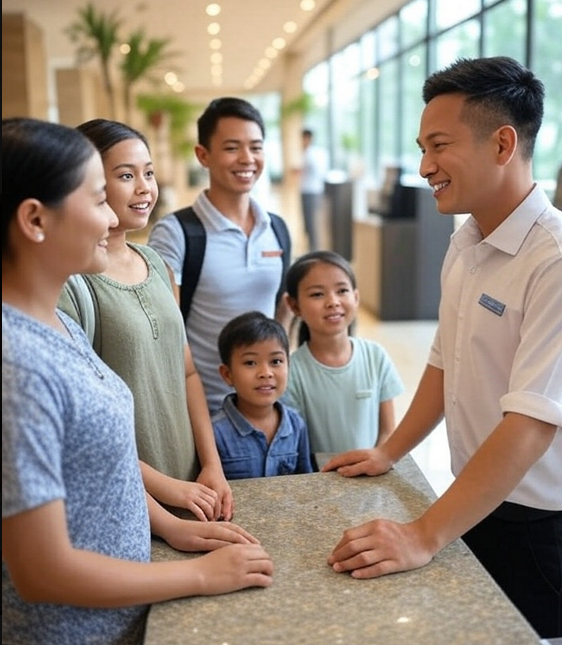
Understanding guests’ culture is very important in tourism.
People from different countries have different ways and habits. When workers know this, they can help guests better and make them feel happy.
Knowing culture helps to stop problems. Some guests need special food or a quiet place to pray. Some cultures are strict, some are easy. If workers respect this, guests feel welcome.
Good talking is also important. Guests speak different languages and use different body signs. Workers who know this can talk clearly and wait calmly. This makes guests feel good.
When guests feel happy and safe, they like their stay. They can come back or tell friends. This brings more guests and helps the business grow.
Also, giving guests traditional food and fun cultural things makes them feel at home. It shows respect and makes the stay special.
Many people travel from many countries today. Tourism places that know cultures get more guests. They stop mistakes and make good friends with visitors.
In short, knowing guests’ culture helps workers give good help, talk well, and make guests happy. This is good for guests and good for business.
______________
Vocabularies:
##################

Multiple choice – only one answer correct:
1. To understand means:
A) To know or learn about something
B) To forget something
C) To jump high
2. A habit is:
A) Something new every day
B) Something you do again and again
C) A big animal
3. Quiet means:
A) Very loud music
B) No noise or very little noise
C) Bright light
4. To pray means:
A) To eat food
B) To talk to God or a spirit
C) To sleep
5. To be strict means:
A) To be very kind
B) To have many rules
C) To run fast
6. To be easy means:
A) Not hard or not strict
B) Very difficult
C) To shout loudly
7. To respect means:
A) To ignore someone
B) To be kind and polite to someone
C) To fight with someone
8. To feel welcome means:
A) To feel angry
B) To feel happy and safe in a place
C) To feel lost
9. A body sign is:
A) A movement with your body to show feelings
B) A kind of house
C) A type of food
10. To wait calmly means:
A) To run fast
B) To wait without being angry or worried
C) To sleep all day
11. To feel good means:
A) To jump high
B) To feel sick
C) To be happy or comfortable
12. To stay means:
A) To leave immediately
B) To travel far away
C) To be in a place for some time
13. To grow means:
A) To break something
B) To become bigger or better
C) To become smaller
14. Traditional means:
A) Something new and modern
B) Something from a culture or old customs
C) Something very fast
15. To feel at home means:
A) To feel scared
B) To feel tired
C) To feel comfortable like you are in your own house
16. To show respect means:
A) To act in a polite and kind way
B) To be rude
C) To be quiet
17. To know a culture means:
A) To forget a language
B) To learn about the habits and life of a group of people
C) To run away
18. A mistake is:
A) Something fun
B) Something done wrong
C) Something perfect
19. In short means:
A) To talk a lot
B) To say something in a few words
C) To sleep
20. To be good for business means:
A) To lose money
B) To help a company do well and get more customers
C) To close a shop
_________________________-
Answers:
1-A, 2-B, 3-C, 4-B, 5-B, 6-A, 7-B, 8-B, 9-A,
10-B, 11-C, 12-C, 13-B, 14-C, 15-C, 16-A,
17-B, 18-B, 19-B, 20-B
####################
Gap-fill exercise – fill in:
_________________________
Answers:
1 understand, 2 calmly, 3 strict, 4 better,
5 body, 6 respect, 7 little, 8 customs, 9 habit,
10 good, 11 pray, 12 time
##################
True or false?
_____________________
True: 2,4,5,7,9,10
#################
Match the words (A–O) with the correct definitions (1–15).
Words:
A. respect
B. quiet
C. habit
D. pray
E. grow
F. understand
G. strict
H. wait calmly
I. body sign
J. feel welcome
K. traditional
L. stay
M. mistake
N. to be easy
O. to know a culture
Definitions:
___________________________
Answers:
A5, B8, C3, D2, E11, F14, G4, H10,
I12, J7, K13, L6, M1, N15, O9
###################
Fill in, words below:
________________
kind – loud – stay – talk – calmly – service – grow – traditional – people – without – comfortable – strict
________________
Answers:
1 service
2 people
3 loud
4 talk
5 strict
6 grow
7 without
8 kind
9 calmly
10 Traditional
11 comfortable
12 stay
################
Complete – words below:
Interviewer: Why is it important to understand guests’ culture?
Expert: It is important because we can give better __________ to guests.
Interviewer: How does culture help in communication?
Expert: Culture helps us know how to __________ and listen well.
Interviewer: Can culture help us avoid mistakes?
Expert: Yes, __________ culture helps us not to make mistakes with guests.
Interviewer: Does culture affect what guests like?
Expert: Yes, guests like __________ things because of their culture.
Interviewer: How does respect relate to culture?
Expert: Respect means we see and value the guests’ __________.
Interviewer: Can understanding culture make guests feel welcome?
Expert: Yes, guests feel happy and __________ when we understand them.
Interviewer: Is it good for business to know culture?
Expert: Yes, it helps us have more __________ and good reviews.
Interviewer: Do different cultures have different habits?
Expert: Yes, every culture has its own __________ habits.
Interviewer: How can we learn about guests’ culture?
Expert: We can ask guests or __________ their country and customs.
Interviewer: What is one thing you always do with guests?
Expert: I always listen carefully and try to __________ their culture.
___________________-
study – guests – different – comfortable – understand – culture – service – special – knowing – talk
___________________
Correct version:
Interviewer: Why is it important to understand guests’ culture?
Expert: It is important because we can give better service to guests.
Interviewer: How does culture help in communication?
Expert: Culture helps us know how to talk and listen well.
Interviewer: Can culture help us avoid mistakes?
Expert: Yes, knowing culture helps us not to make mistakes with guests.
Interviewer: Does culture affect what guests like?
Expert: Yes, guests like different things because of their culture.
Interviewer: How does respect relate to culture?
Expert: Respect means we see and value the guests’ culture.
Interviewer: Can understanding culture make guests feel welcome?
Expert: Yes, guests feel happy and comfortable when we understand them.
Interviewer: Is it good for business to know culture?
Expert: Yes, it helps us have more guests and good reviews.
Interviewer: Do different cultures have different habits?
Expert: Yes, every culture has its own special habits.
Interviewer: How can we learn about guests’ culture?
Expert: We can ask guests or study their country and customs.
Interviewer: What is one thing you always do with guests?
Expert: I always listen carefully and try to understand their culture.
##################
I understand that guests from different countries have many ways of life. I learn about their culture to give good service. I listen carefully when guests talk to me. I watch their body signs to know how they feel. I respect their habits and rules. I wait calmly when they need time. I try to make them feel welcome and happy. I use quiet words and speak clearly. I do not make mistakes with guests. I know that understanding culture is good for my work. This helps guests enjoy their stay with us.
Rewrite the text starting with
He understands that guests…………..
and make all changes necessary.
_______________________
Correct version:
He understands that guests from different countries have many ways of life. He learns about their culture to give good service. He listens carefully when guests talk to him. He watches their body signs to know how they feel. He respects their habits and rules. He waits calmly when they need time. He tries to make them feel welcome and happy. He uses quiet words and speaks clearly. He does not make mistakes with guests. He knows that understanding culture is good for his work. This helps guests enjoy their stay with them.