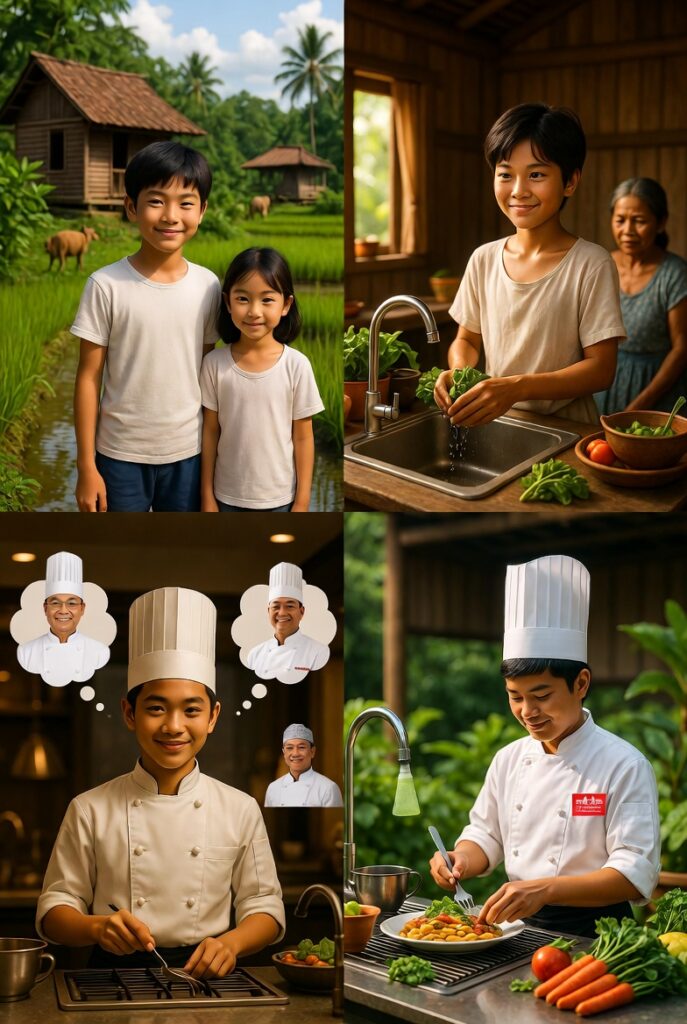
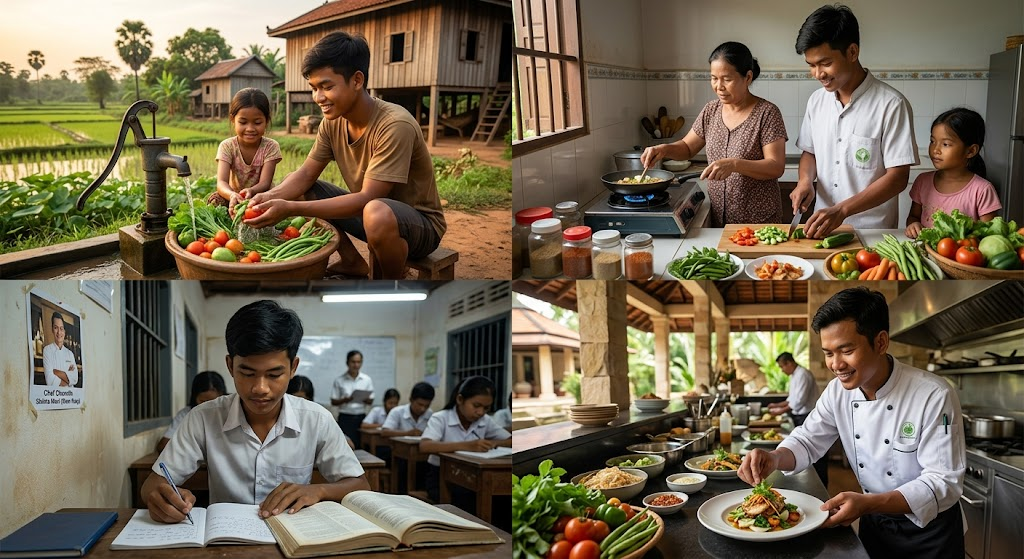
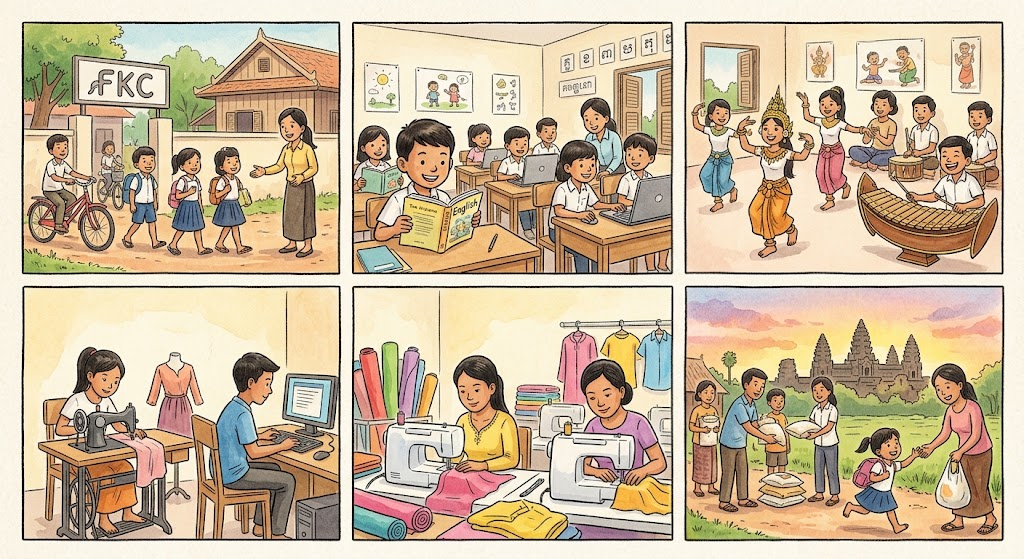
Lina and Salas love school. They are happy every morning. Their favorite subjects are English, Maths, and Drawing. They like learning new things with their teacher and friends.
In English class, they learn new words every day. They read easy stories and write simple sentences. They spell words and practice the alphabet. They sing songs and play word games. Lina likes reading. Salas likes speaking English with his classmates.
In Maths class, they count from 1 to 100. They add and subtract numbers. They write the answers in their notebooks. They use pencils, rulers, and number cards. Lina likes counting. Salas likes solving easy maths problems.
In Drawing class, they use paper, pencils, crayons, and colored pencils. They draw animals, flowers, trees, houses, and their families. Lina draws a cat and a bird. Salas draws a farm with cows, chickens, and a tractor. The teacher says, „Very good!“ Lina and Salas smile. They love learning every day and always do their best at school.
________________________
Vocabulary:
Word / Phrase
Meaning
a favorite subject
a school subject you like the most
a simple sentence
a group of easy words with a meaning
to spell a word
to say or write the letters in a word
to practice the alphabet
to learn and use letters again and again
a word game
a fun game with words
a classmate
a student in your class
to count
to say numbers in order
to add
to put numbers together
to subtract
to take a number away
a number
a symbol for counting, like 1, 2, or 3
a notebook
a book for writing
a pencil
a tool for writing
a ruler
a tool for measuring and drawing straight lines
counting
saying numbers in order
to solve a problem
to find an answer
a crayon
a colored stick for drawing
a colored pencil
a pencil with color for drawing
a chicken
a farm bird
a tractor
a farm vehicle
to smile
to show you are happy
#############
Word
Picture
school
🏫
teacher
👩🏫
children
🧒
friends
🧑🤝🧑
English
🔤
words
💬
alphabet
🔤
letters
🅰️🅱️🅲️
book
📖
story
📖
song
🎵
Maths
🔢
numbers
🔢
add
➕
subtract
➖
question
❓
answer
✅
pencil
✏️
ruler
📏
cards
🃏
Drawing
🎨
crayon
🖍️
paper
📄
picture
🖼️
animal
🐾
cat
🐱
bird
🐦
flower
🌸
house
🏠
tree
🌳
farm
🌾
cow
🐄
tractor
🚜
wall
🧱
classroom
🏫
##################
🏫 :__________________
👩🏫 :__________________
🧒 :__________________
🧑🤝🧑 :__________________
🔤 :__________________
💬 :__________________
🅰️🅱️🅲️ :__________________
📖 :__________________
📚 :__________________
🎵 :__________________
🔢 :__________________
➕ :__________________
➖ :__________________
❓ :__________________
✅ :__________________
✏️ :__________________
📏 :__________________
🃏 :__________________
🎨 :__________________
🖍️ :__________________
📄 :__________________
🖼️ :__________________
🐾 :__________________
🐱 :__________________
🐦 :__________________
🌸 :__________________
🏠 :__________________
🌳 :__________________
🌾 :__________________
🐄 :__________________
🚜 :__________________
🧱 :__________________
🏫 :__________________
———————————
Answers:
🏫 : school
👩🏫 : teacher
🧒 : child
🧑🤝🧑 : friends
🔤 : alphabet
💬 : words
🅰️🅱️🅲️ : letters
📖 : book
📚 : story
🎵 : song
🔢 : numbers
➕ : add
➖ : subtract
❓ : question
✅ : answer
✏️ : pencil
📏 : ruler
🃏 : cards
🎨 : Drawing
🖍️ : crayon
📄 : paper
🖼️ : picture
🐾 : animal
🐱 : cat
🐦 : bird
🌸 : flower
🏠 : house
🌳 : tree
🌾 : farm
🐄 : cow
🚜 : tractor
🧱 : wall
🏫 : classroom #################
Match the words with the correct definitions:
Words
a notebook
to subtract
a classmate
a favorite subject
a tractor
to smile
a pencil
to spell a word
a word game
to add
a chicken
counting
a simple sentence
a ruler
to practice the alphabet
a crayon
to solve a problem
a number
a colored pencil
to count
Definitions
A. a student in your class B. a tool for writing C. a fun game with words D. to find an answer E. a book for writing F. to show you are happy G. a farm bird H. a colored stick for drawing I. to say numbers in order J. a group of easy words with a meaning K. to put numbers together L. a symbol for counting, like 1, 2, or 3 M. to say or write the letters in a word N. a tool for measuring and drawing straight lines O. a school subject you like the most P. to take a number away Q. to learn and use letters again and again R. a pencil with color for drawing S. a farm vehicle T. saying numbers in order
A. a crayon B. to spell a word C. a tractor D. counting E. a pencil F. to subtract G. a favorite subject H. a chicken I. a notebook J. a number K. to solve a problem L. a ruler M. a colored pencil N. a simple sentence O. to add P. a classmate Q. a word game R. to count S. to practice the alphabet T. to smile
Lina and Salas _______ school. Their_______ subject is English. They _______ the alphabet and spell a word. They read a simple _______ and play a word game. They learn with _______ in class. In Maths, they count and do _______ with numbers. They add and _______ numbers to solve a problem. They use a notebook, a pencil, and a_______. In Drawing, they use a _______ and a colored pencil. They draw a chicken and a_______. They _______ because they like school.
————————————-
Correct version:
Lina and Salas love school. Their favorite subject is English. They practice the alphabet and spell a word. They read a simple sentence and play a word game. They learn with a classmate in class. In Maths, they count and do counting with numbers. They add and subtract numbers to solve a problem. They use a notebook, a pencil, and a ruler. In Drawing, they use a crayon and a colored pencil. They draw a chicken and a tractor. They smile because they like school.
################
Choose the Right Word
Circle the correct answer.
Lina and Salas ______ school. a) love b) leave c) visit
Their favorite subjects are English, Maths, and ______. a) Science b) Music c) Drawing
In English class, they say the ______. a) ruler b) alphabet c) tractor
They read short ______ in English class. a) numbers b) stories c) pictures
They sing easy ______. a) songs b) cards c) problems
In Maths class, they ______ numbers. a) draw b) sing c) count
They use a ______ to write. a) crayon b) pencil c) ruler
They use a ruler to draw ______ lines. a) straight b) colorful c) easy
Lina likes drawing ______ and birds. a) cows b) tractors c) cats
Salas likes drawing farms, cows, and ______. a) flowers b) tractors c) houses
On Sunday, Lina and Salas wake up at eight o’clock.
They get up and brush their teeth. They wash their faces and get dressed.
For breakfast, they eat bread and eggs. Salas drinks milk. Lina eats an apple.
After breakfast, they go outside. They play with their animals. Salas talks to his yellow bird. Lina plays with her cat.
Then they go for a walk near the farm. They see flowers, trees, and cows. They visit their grandparents and say hello.
At noon, the family eats lunch together. They talk and laugh.
In the afternoon, Lina reads a book. Salas draws a picture of the farm.
In the evening, they eat dinner. Before bed, they brush their teeth again. They go to bed and sleep.
They have a happy Sunday.
_________________________
Vocabs:
to wake up – to stop sleeping
to get up – to leave your bed
to brush teeth – to clean your teeth with a toothbrush
a vase – a container for flowers
to get dressed – to put on your clothes
an egg – a food from a chicken
to talk to somebody – to speak with a person
a tree – a big plant with a trunk and leaves
to visit – to go and see a person or a place
at noon – at 12 o’clock in the middle of the day
to eat lunch – to have the meal in the middle of the day
to talk – to speak
to laugh – to make a happy sound
to draw a picture – to make a picture with a pencil or pen
to sleep – to rest with your eyes closed
###################
Match the words with the definitions
Words
to wake up
to get up
to brush teeth
a vase
to get dressed
an egg
to talk to somebody
a tree
to visit
at noon
to eat lunch
to talk
to laugh
to draw a picture
to sleep
Definitions
a. to make a picture with a pencil or pen b. to leave your bed c. a food from a chicken d. to speak with a person e. to rest with your eyes closed f. to clean your teeth with a toothbrush g. to go and see a person or a place h. a big plant with a trunk and leaves i. to stop sleeping j. to have the meal in the middle of the day k. a container for flowers l. to speak m. at 12 o’clock in the middle of the day n. to put on your clothes o. to make a happy sound
a. to draw a picture b. to visit c. to sleep d. a tree e. to talk f. to wake up g. an egg h. to brush teeth i. to laugh j. to get dressed k. at noon l. to talk to somebody m. to eat lunch n. a vase o. to get up
a. They are tired but happy. b. A picture of a farm. c. Their grandparents. d. In the garden. e. Dinner with their family. f. Soccer. g. Milk. h. A book about animals. i. A cat. j. At eight o’clock.
The Lee family lives in a small village in the Asian countryside. They are farmers. The father and mother work on the farm every day. They grow rice and vegetables. They also have two chickens and one cow.
The family has two children. Their names are Min and Lila. They are eight and ten years old. They go to the village school. The school is three kilometers from their home. Every morning, they walk three kilometers to school. After school, they walk three kilometers home again. They walk six kilometers every day.
The children like school. They learn to read, write, count, and draw. They like their teacher and their friends. Sometimes it is hot. Sometimes it rains. They still walk to school with happy smiles.
After they get home, Min and Lila help their parents. They give water to the vegetables. They feed the chickens and the cow. Then they do their homework together.
In the evening, the family eats rice, vegetables, and eggs. They talk about their day. They laugh and tell stories. After dinner, the children read a book for a short time. Then everyone goes to bed early. They are happy because they work hard, learn new things, and help each other every day.
______________________
Vocabulary:
countryside – an area outside a city with farms, fields, trees, and nature.
a village – a small place where people live, smaller than a town.
to grow vegetables – to plant and take care of vegetables so they become bigger.
a chicken – a small farm bird that gives eggs.
a cow – a large farm animal that gives milk.
to count – to say numbers to know how many things there are.
to draw – to make a picture with a pencil, pen, or other tool.
a smile – a happy expression on your face.
to give water to plants – to put water on plants so they can grow.
to feed the chicken – to give food to a chicken.
to laugh – to make a happy sound when something is funny or you feel happy.
################
Match the words with the correct definitions
Words
countryside
a village
to grow vegetables
a chicken
a cow
to count
to draw
a smile
to give water to plants
to feed the chicken
to laugh
Definitions
A. To make a happy sound when something is funny or you feel happy. B. A large farm animal that gives milk. C. To put water on plants so they can grow. D. A small place where people live, smaller than a town. E. To give food to a chicken. F. To say numbers to know how many things there are. G. An area outside a city with farms, fields, trees, and nature. H. To make a picture with a pencil, pen, or other tool. I. A small farm bird that gives eggs. J. A happy expression on your face. K. To plant and take care of vegetables so they become bigger.
To make a happy sound when something is funny or you feel happy: ___________
A large farm animal that gives milk: ___________
To put water on plants so they can grow: ___________
A small place where people live, smaller than a town: ___________
To give food to a chicken: ___________
To say numbers to know how many things there are: ___________
An area outside a city with farms, fields, trees, and nature: ___________
To make a picture with a pencil, pen, or other tool: ___________
A small farm bird that gives eggs: ___________
A happy expression on your face: ___________
To plant and take care of vegetables so they become bigger: ___________
————————–
Answers:
To make a happy sound when something is funny or you feel happy: to laugh
A large farm animal that gives milk: a cow
To put water on plants so they can grow: to give water to plants
A small place where people live, smaller than a town: a village
To give food to a chicken: to feed the chicken
To say numbers to know how many things there are: to count
An area outside a city with farms, fields, trees, and nature: countryside
To make a picture with a pencil, pen, or other tool: to draw
A small farm bird that gives eggs: a chicken
A happy expression on your face: a smile
To plant and take care of vegetables so they become bigger: to grow vegetables
##################
True or false:
The family lives in the countryside.
The family has three chickens and two cows.
Min and Lila walk three kilometers to school every morning.
The children learn to read, write, count, and draw at school.
Sometimes the children do not go to school when it rains.
After school, Min and Lila help their parents at home.
The children feed the vegetables and water the chickens.
The family eats rice, vegetables, and eggs in the evening.
The children watch TV after dinner before going to bed.
The family is happy because they help each other every day.
______________________
True: 1,3,4,6,8,10
______________________
Correct version:
The family lives in the countryside.
The family has three chickens and two cows. True is: The family has two chickens and one cow.
Min and Lila walk three kilometers to school every morning.
The children learn to read, write, count, and draw at school.
Sometimes the children do not go to school when it rains. True is: Sometimes it rains, but they still walk to school with happy smiles.
After school, Min and Lila help their parents at home.
The children feed the vegetables and water the chickens. True is: They give water to the vegetables and feed the chickens and the cow.
The family eats rice, vegetables, and eggs in the evening.
The children watch TV after dinner before going to bed. True is: After dinner, the children read a book for a short time.
The family is happy because they help each other every day.
##############
Scrambled Sentences (Put the words in the correct order)
countryside / the / lives / family / in / the
two / family / has / children / the
school / walk / every / they / morning / to
kilometers / home / their / is / three / from / school
learn / children / the / write / and / read / to
after / help / parents / their / Min / and / Lila / school
water / vegetables / give / they / the / to
chickens / feed / they / the / and / cow / the
and / eats / family / the / vegetables / rice / eggs
each / help / they / other / every / day
____________________
Answers:
The family lives in the countryside.
The family has two children.
They walk to school every morning.
Their school is three kilometers from home.
The children learn to read and write.
After school, Min and Lila help their parents.
They give water to the vegetables.
They feed the chickens and the cow.
The family eats rice, vegetables, and eggs.
They help each other every day.
##############
Short answers, basics:
Example Sentence
Yes
No
I learn the alphabet.
Yes, I do.
No, I don’t.
You read signs.
Yes, you do.
No, you don’t.
He practices speaking.
Yes, he does.
No, he doesn’t.
She watches cartoons.
Yes, she does.
No, she doesn’t.
It helps us learn English.
Yes, it does.
No, it doesn’t.
We use apps like Duolingo.
Yes, we do.
No, we don’t.
You read labels.
Yes, you do.
No, you don’t.
They make mistakes sometimes.
Yes, they do.
No, they don’t.
Question
Yes
No
Do I learn the alphabet?
Yes, I do.
No, I don’t.
Do you read signs?
Yes, you do.
No, you don’t.
Does he practice speaking?
Yes, he does.
No, he doesn’t.
Does she watch cartoons?
Yes, she does.
No, she doesn’t.
Does it help us learn English?
Yes, it does.
No, it doesn’t.
Do we use apps like Duolingo?
Yes, we do.
No, we don’t.
Do you read labels?
Yes, you do.
No, you don’t.
Do they make mistakes sometimes?
Yes, they do.
No, they don’t.
Question
Yes
No
Am I big?
Yes, I am.
No, I am not.
Are you big?
Yes, you are.
No, you aren’t.
Is he big?
Yes, he is.
No, he isn’t.
Is she big?
Yes, she is.
No, she isn’t.
Is it big?
Yes, it is.
No, it isn’t.
Are we big?
Yes, we are.
No, we aren’t.
Are you big?
Yes, you are.
No, you aren’t.
Are they big?
Yes, they are.
No, they aren’t.
Gie a short answer, as shown:
He grows rice and vegetables.
YOU WRITE: Yes, he does.
She has two chickens and one cow.
They are eight and ten years old.
She walks three kilometers to school every morning.
He learns to read, write, count, and draw at school.
They like their teacher and their friends.
He helps his parents after school.
She gives water to the chickens after school.
They walk ten kilometers every day.
He feeds only the cow after school.
She eats rice, vegetables, and eggs in the evening.
They play games after dinner.
He reads a book after dinner.
She goes to bed early every evening.
____________________
Correct answers ( you can also write ‚doesn’t‘, ‚don’t)
He grows rice and vegetables. Yes, he does.
She has two chickens and one cow. Yes, she does.
They are eight and ten years old. Yes, they are.
She walks three kilometers to school every morning. Yes, she does.
He learns to read, write, count, and draw at school. Yes, he does.
They like their teacher and their friends. Yes, they do.
He helps his parents after school. Yes, he does.
She gives water to the chickens after school. No, she does not.
They walk ten kilometers every day. No, they do not.
He feeds only the cow after school. No, he does not.
She eats rice, vegetables, and eggs in the evening. Yes, she does.
They play games after dinner. No, they do not.
He reads a book after dinner. Yes, he does.
She goes to bed early every evening. Yes, she does.
################
Answer as shown:
He grows rice and fruit in the countryside.
YOU WRITE: No, he doesn’t. He grows rice and vegetables in the countryside.
She has three chickens and two cows.
They are twelve and fourteen years old.
Her father is a teacher at the village school.
She walks five kilometers to school every morning.
They learn only to sing and dance at school.
He feeds the vegetables and waters the chickens after school.
She reads a newspaper after dinner.
_____________________
Correct answer:
He grows rice and fruit in the countryside. No, he doesn’t. He grows rice and vegetables in the countryside.
She has three chickens and two cows. No, she doesn’t. She has two chickens and one cow.
They are twelve and fourteen years old. No, they aren’t. They are eight and ten years old.
Her father is a teacher at the village school. No, he isn’t. Her father grows rice and vegetables.
She walks five kilometers to school every morning. No, she doesn’t. She walks three kilometers to school every morning.
They learn only to sing and dance at school. No, they don’t. They learn to read, write, count, and draw at school.
He feeds the vegetables and waters the chickens after school. No, he doesn’t. He gives water to the vegetables and feeds the chickens and the cow.
She reads a newspaper after dinner. No, she doesn’t. She reads a book after dinner.
##################
Odd one out, choose the word that does not belong
school – home – village – book
water – feed – draw – help
chicken – cow – teacher – farm animal
countryside – village – city – chicken
morning – evening – dinner – kilometer
rice – vegetables – eggs – milk
Min – Lila – teacher – cow
read – write – count – walk
________________________
Correct answers:
school – home – village – book Answer: book – A book is something you read. The others are places.
water – feed – draw – help Answer: draw – Draw is a school activity. The others are things you do to help or care for something.
chicken – cow – teacher – farm animal Answer: teacher – A teacher is a person. The others are animals or describe farm animals.
countryside – village – city – chicken Answer: chicken – A chicken is an animal. The others are places.
morning – evening – dinner – kilometer Answer: kilometer – A kilometer is a unit of distance. The others relate to time or a meal time.
rice – vegetables – eggs – milk Answer: milk – Milk is a drink. The others are foods mentioned in the text.
Min – Lila – teacher – cow Answer: cow – A cow is an animal. The others are people.
read – write – count – walk Answer: walk – Walking is a movement activity. The others are things learned at school.
################
Fill in, words below:
rains – teacher – chickens – walk – vegetables – feed – watch – village – count – eggs – every day – old – everyone – parents – family
The ________ grows rice and vegetables.
The family has two ________ and one cow.
Min and Lila are eight and ten years ________.
The ________ school is three kilometers from their home.
The children ________ to school every morning.
They walk six kilometers ________.
The children learn to read, write, ________, and draw.
They like their ________ and their friends.
Sometimes it ________, but they still walk to school.
After school, Min and Lila help their ________.
They give water to the ________ and ________ the chickens and the cow.
The family eats rice, vegetables, and __________ in the evening.
After dinner, the children do not ________ television.
________ goes to bed early.
————————–
Correct version:
The family grows rice and vegetables.
The family has two chickens and one cow.
Min and Lila are eight and ten years old.
The village school is three kilometers from their home.
The children walk to school every morning.
They walk six kilometers every day.
The children learn to read, write, count, and draw.
They like their teacher and their friends.
Sometimes it rains, but they still walk to school.
After school, Min and Lila help their parents.
They give water to the vegetables and feed the chickens and the cow.
The family eats rice, vegetables, and eggs in the evening.
After dinner, the children do not watch television.
Everyone goes to bed early.
###############
Basics of present simple:
Personal Pronoun
am / is / are
I
am
8 years old
You
are
8 years old
He
is
8 years old
She
is
8 years old
It
is
8 years old
We
are
8 years old
You (plural)
are
8 years old
They
are
8 years old
Personal Pronoun
am not / is not / are not
I
am not
8 years old
You
are not
8 years old
He
is not
8 years old
She
is not
8 years old
It
is not
8 years old
We
are not
8 years old
You (plural)
are not
8 years old
They
are not
8 years old
Question:
Question Word
Personal Pronoun
Am
I
8 years old?
Are
you
8 years old?
Is
he
8 years old?
Is
she
8 years old?
Is
it
8 years old?
Are
we
8 years old?
Are
you (plural)
8 years old?
Are
they
8 years old?
Statement:
Personal Pronoun
Verb
I
like
ice cream
You
like
ice cream
He
likes
ice cream
She
likes
ice cream
It
likes
ice cream
We
like
ice cream
You (plural)
like
ice cream
They
like
ice cream
Negation:
Personal Pronoun
Verb (negative)
I
do not like
ice cream
You
do not like
ice cream
He
does not like
ice cream
She
does not like
ice cream
It
does not like
ice cream
We
do not like
ice cream
You (plural)
do not like
ice cream
They
do not like
ice cream
Question:
Do / Does
Personal Pronoun
Verb
Sugar?
Do
I
like
sugar?
Do
you
like
sugar?
Does
he
like
sugar?
Does
she
like
sugar?
Does
it
like
sugar?
Do
we
like
sugar?
Do
you (plural)
like
sugar?
Do
they
like
sugar?
################
Rewrite as shown in 1:
Her father grows rice and vegetables.
YOU WRITE: negation: Her father does not grow rice and vegetable. question: Does her father grow rice and vegatables? negative questions: Doesn’t her father grow rice and vegetables?
Min and Lila are eight and ten years old.
They learn to read, write, count, and draw at school.
The school is three kilometers from their home.
After school, Min and Lila help their parents.
They have two chickens and one cow.
The family eats rice, vegetables, and eggs in the evening.
The children walk to school every morning.
When it rains, they still walk to school.
Everyone goes to bed early.
_______________________
Correct version:
1-8
Her father grows rice and vegetables. Negation: Her father does not grow rice and vegetables. Question: Does her father grow rice and vegetables? Negative question: Doesn’t her father grow rice and vegetables?
Min and Lila are eight and ten years old. Negation: Min and Lila are not eight and ten years old. Question: Are Min and Lila eight and ten years old? Negative question: Aren’t Min and Lila eight and ten years old?
They learn to read, write, count, and draw at school. Negation: They do not learn to read, write, count, and draw at school. Question: Do they learn to read, write, count, and draw at school? Negative question: Don’t they learn to read, write, count, and draw at school?
The school is three kilometers from their home. Negation: The school is not three kilometers from their home. Question: Is the school three kilometers from their home? Negative question: Isn’t the school three kilometers from their home?
After school, Min and Lila help their parents. Negation: After school, Min and Lila do not help their parents. Question: Do Min and Lila help their parents after school? Negative question: Don’t Min and Lila help their parents after school?
They have two chickens and one cow. Negation: They do not have two chickens and one cow. Question: Do they have two chickens and one cow? Negative question: Don’t they have two chickens and one cow?
The family eats rice, vegetables, and eggs in the evening. Negation: The family does not eat rice, vegetables, and eggs in the evening. Question: Does the family eat rice, vegetables, and eggs in the evening? Negative question: Doesn’t the family eat rice, vegetables, and eggs in the evening?
The children walk to school every morning. Negation: The children do not walk to school every morning. Question: Do the children walk to school every morning? Negative question: Don’t the children walk to school every morning. ###################
When it rains, they still walk to school. Negation: When it rains, they do not walk to school. Question: Do they still walk to school when it rains, ? Negative question: Don’t they still walk to school when it rains?
Everyone goes to bed early. Negation: Everyone does not go to bed early. Question: Does everyone go to bed early? Negative question: Doesn’t everyone go to bed early?
9-10
################
Form questions with the question words given:
The family grows rice and vegetables. (What)
Min and Lila are eight and ten years old. (Who)
They learn to read, write, count, and draw at school. (Where)
The school is three kilometers from their home. (How far away)
After school, Min and Lila help their parents. (When)
They have two chickens and one cow. (How many chickens)
The family eats rice, vegetables, and eggs in the evening. (What)
The children walk to school every morning. (Who)
When it rains, they still walk to school. (When)
Everyone goes to bed early. (When)
______________________
Correct version:
The family grows rice and vegetables. (What) Question: What does the family grow?
Min and Lila are eight and ten years old. (Who) Question: Who are eight and ten years old?
They learn to read, write, count, and draw at school. (Where) Question: Where do they learn to read, write, count, and draw?
The school is three kilometers from their home. (How far away) Question: How far away is the school from their home?
After school, Min and Lila help their parents. (When) Question: When do Min and Lila help their parents?
They have two chickens and one cow. (How many chickens) Question: How many chickens do they have?
The family eats rice, vegetables, and eggs in the evening. (What) Question: What does the family eat in the evening?
The children walk to school every morning. (Who) Question: Who walks to school every morning?
When it rains, they still walk to school. (When) Question: When do they still walk to school?
Everyone goes to bed early. (When) Question: When does everyone go to bed?
################
Form questions:
Min’s family lives in the countryside.
YOU WRITE: a) Min’s family: Who lives in the countryside? b) in the countryside: Where does Min’s family live? c) Min’s: Whose family lives in the countryside?
2. The village school is three kilometers from their home.
a) The village school: b) village: c) three: d) three kilometers:
3. Min and his sister live in the countryside.
a) Min and his sister: b) in the countryside:
4. They walk to school every morning.
a) They: b) walk to school every morning: c) school d) every morning
5. The children like their teacher and their friends.
a) The children: b) like their teacher and their friends: c) their teacher and their friends: d) their:
6. Their father grows rice and vegetables.
a) Their father: b) Their: c) grows rice and vegetables d) rice and vegetables
7. They feed the chickens and the cow after school.
a) They: b) feed the chickens and the cow : c) the chickens and the cow: d) after school:
8. The family talks and laughs together in the evening.
a) The family: b) talks and laughs together in the evening: c) in the evening:
_________________________
Correct questions:
Min’s family lives in the countryside.
a) Min’s family: Who lives in the countryside? b) in the countryside: Where does Min’s family live? c) Min’s: Whose family lives in the countryside?
The village school is three kilometers from their home.
a) The village school: What is three kilometers from their home? b) village: What kind of/ Which school is three kilometers from their home? c) three: How many kilometers is the village school from their home? d) three kilometers: How far is the village school from their home?
Min and his sister live in the countryside.
a) Min and his sister: Who lives in the countryside? b) in the countryside: Where do Min and his sister live?
They walk to school every morning.
a) They: Who walks to school every morning? b) walk to school every morning: What do they do every morning? c) school: Where do they walk to every morning? d) every morning: When do they walk to school?
The children like their teacher and their friends.
a) The children: Who likes their teacher and their friends? b) like their teacher and their friends: What do the children do? c) their teacher and their friends: Who do the children like? d) their: Whose teacher and friends do the children like?
Their father grows rice and vegetables.
a) Their father: Who grows rice and vegetables? b) Their: Whose father grows rice and vegetables? c) grows rice and vegetables: What does their father do? d) rice and vegetables: What does their father grow?
They feed the chickens and the cow after school.
a) They: Who feeds the chickens and the cow after school? b) feed the chickens and the cow: What do they do after school? c) the chickens and the cow: What do they feed? d) after school: When do they feed the chickens and the cow?
The family talks and laughs together in the evening.
a) The family: Who talks and laughs together in the evening? b) talks and laughs together in the evening: What does the family do? c) in the evening: When does the family talk and laugh together?
##################
Rewrite the following story as instructed below:
I live in the countryside with my family. My father grows rice and vegetables. We have two chickens and one cow. My sister Lila and I go to the village school every day. We walk three kilometers to school. We learn to read, write, count, and draw. After school, we help our parents, feed the animals, and water the vegetables. In the evening, we eat together, talk, laugh, read a book, and go to bed early.
= > Continue, complete, make all changes necessary:
She lives in the countryside with her family…………..
_______________________
Correct version:
She lives in the countryside with her family. Her father grows rice and vegetables. They have two chickens and one cow. She and her sister Lila go to the village school every day. They walk three kilometers to school. They learn to read, write, count, and draw. After school, they help their parents, feed the animals, and water the vegetables. In the evening, they eat together, talk, laugh, read a book, and go to bed early.
#################
Interview with Min – complete:
Interviewer: Hello, Min. Can you tell me about your family? Min: I live in the ________with my family. My father ________ rice and vegetables.
Interviewer: Do you ________any animals? Min: Yes, we have two ________and one ________.
Interviewer: ________old are you? Min: I am eight years old. My ________ Lila is ten years old.
Interviewer: ________do you go to school? Min: I go to the ________ school.
Interviewer: How do you get to ________? Min: I ________ three kilometers to school every ________.
Interviewer: ________ do you learn at school? Min: I learn to ________ write, ________, and draw.
Interviewer: What do you do after ________? Min: I help my ________. I give________to the vegetables and ________ the chickens and the cow.
Interviewer: What do you do in the ________? Min: I eat ________ with my family, read a ________, and go to ________ early.
_______________________
Correct dialogue:
Interview with Mr. Min
Interviewer: Hello, Min. Can you tell me about your family? Min: I live in the countryside with my family. My father grows rice and vegetables.
Interviewer: Do you have any animals? Min: Yes, we have two chickens and one cow.
Interviewer: How old are you? Min: I am eight years old. My sister Lila is ten years old.
Interviewer: Where do you go to school? Min: I go to the village school.
Interviewer: How do you get to school? Min: I walk three kilometers to school every morning.
Interviewer: What do you learn at school? Min: I learn to read, write, count, and draw.
Interviewer: What do you do after school? Min: I help my parents. I give water to the vegetables and feed the chickens and the cow.
Interviewer: What do you do in the evening? Min: I eat dinner with my family, read a book, and go to bed early.
##################
Complete – interview with Min about his sister:
Interview with Min About His Sister
Interviewer: Hello, Min. Can you ________ me about your sister?
Min: Yes. My sister’s ________ is Lila.
Interviewer: How ________ is Lila?
Min: She is ten ________ old.
Interviewer: Does ________ go to school?
Min: Yes, she goes to the ________ with me.
Interviewer: How does she ________to school?
Min: She ________ three kilometers to ________ every morning.
Interviewer: What does Lila ________ at school?
Min: She ________ to read, ________, count, and draw.
Interviewer: Does Lila ________ school?
Min: Yes, she ________ school, her teacher, and her ________.
Interviewer: What does Lila ________ after school?
Min: She ________ our parents. She gives water to the ________ and feeds the ________ and the cow.
Interviewer: What does Lila do in the ________?
Min: She ________ dinner with our family, ________ a book, and ________ to bed early.
—————————————-
Complete dialogue:
Interviewer: Hello, Min . Can you tell me about your sister?
Min : Yes. My sister’s name is Lila.
Interviewer: How old is Lila?
Min : She is ten years old.
Interviewer: Does Lila go to school?
Min : Yes, she goes to the village school with me.
Interviewer: How does she get to school?
Min : She walks three kilometers to school every morning.
Interviewer: What does Lila learn at school?
Min : She learns to read, write, count, and draw.
Interviewer: Does Lila like school?
Min : Yes, she likes school, her teacher, and her friends.
Interviewer: What does Lila do after school?
Min : She helps our parents. She gives water to the vegetables and feeds the chickens and the cow.
Interviewer: What does Lila do in the evening?
Min : She eats dinner with our family, reads a book, and goes to bed early.
##################
##################
Please use the box below to write your feedback. Only I can read it. It is not public.
Lina and Salas go home after school. They walk home together.
At home, they eat a snack. Lina eats an apple. Salas drinks milk.
In the afternoon, Lina and Salas play in the garden. Salas plays soccer with a ball. Lina plays with her cat. The cat runs in the garden.
Then Lina reads a book. The book is about animals. Salas draws a picture of a farm.
After that, they help their parents. Lina gives water to the chickens. Salas washes vegetables.
Then they visit their grandparents. The grandparents smile and say hello. Lina pets the friendly cows. Salas carries a small box. Everyone talks and laughs together.
In the evening, the family eats dinner together. They talk about their day. The food is very good. Everyone smiles.
At night, Lina and Salas go to bed. They are tired but happy. They are excited for another fun day at school and on the farm.
___________________________
New vocabulary:
new word
picture
definition
snack
🍎
a small meal between meals
together
🧑🤝🧑
with another person
soccer
⚽
a game with a ball
ball
⚽
a round toy for games
run
🏃
to move fast with your legs
read
📖
to look at words in a book
draw
✏️
to make a picture with a pencil
picture
🖼️
a drawing or a photo
visit
🚶🏡
to go and see someone
smile
😊
to look happy with your face
say hello
👋
to greet someone
pet
🐄❤️
to touch an animal gently
carry
📦
to hold and move something
laugh
😂
to make a happy sound
food
🍽️
things that people eat
another
➕
one more
fun
🎉
nice and enjoyable
###################
Verbs in text:
verb
definition
to go
to move to a place
to walk
to move with your feet
to eat
to put food in your mouth
to drink
to take a liquid into your mouth
to play
to have fun with a game or activity
to run
to move fast with your legs
to read
to look at words and understand them
to be
to exist; to be something
to draw
to make a picture with a pencil or pen
to help
to do something good for someone
to give
to put something in someone’s hands
to wash
to clean with water
to visit
to go to see a person or place
to smile
to show happiness with your face
to say
to speak words
to pet
to touch an animal in a kind way
to carry
to hold and take something somewhere
to talk
to speak with someone
to laugh
to make a happy sound
to cook
to make food ready to eat
to have
to own or experience something
to feel
to have an emotion or feeling
to get
to receive or become something
to sleep
to rest with your eyes closed
to tire
to make someone need rest
to excite
to make someone feel happy and interested
#####################
Match word with definition:
Verbs
A. to go B. to walk C. to eat D. to drink E. to play F. to run G. to read H. to be I. to draw J. to help K. to give L. to wash M. to visit
Definitions
___ to clean something with water
___ to move fast with your legs
___ to put something in someone’s hands
___ to look at words and understand them
___ to go to see a person or place
___ to move to a place
___ to make a picture with a pencil or pen
___ to have fun with a game or activity
___ to take a liquid into your mouth
___ to do something good for someone
___ to exist or show what someone/something is
___ to put food in your mouth and swallow it
___ to move with your feet from one place to another
A. something with pages that you read B. a place where people grow food and keep animals C. a round fruit D. a small animal that people keep at home E. a place where children learn F. a drawing or image G. a drink from animals H. a living thing like a cat or cow I. the place where you live J. a game with a ball K. the time after lunch L. a small amount of food M. a round object used in games N. a place with plants and flowers
A. grandparents 👵👴 B. chickens 🐔🐔 C. food 🍎🍞🥗 D. family 👨👩👧👦 E. vegetables 🥕🥦🥬 F. parents 👩👧👦 G. night 🌙⭐ H. water 💧🥤 I. dinner 🍽️🍲 J. cows 🐄🐄 K. box 📦 L. bed 🛏️ M. day ☀️🌳
Gives water to chickens: Lina gives water to the chickens.
Washes vegetables: Salas washes vegetables.
Carries a small box: Salas carries a small box.
Reads a book: Lina reads a book about animals.
Draws a picture of a farm: Salas draws a picture of a farm.
Pets the friendly cows: Lina pets the friendly cows.
##################
Final exercise – checking your vocabulary – fill in:
Lina and Salas go home after _______. They _______ home together.
At home, they eat a _______. Lina _______ an apple. Salas drinks _______.
In the afternoon, Lina and Salas _______ in the garden. Salas plays _______ with a ball. Lina plays with her _______. The cat runs in the _______.
Then Lina reads a _______. The book is _______ animals. Salas _______ a picture of a farm.
After that, they help their _______. Lina gives water to the _______. Salas _______ vegetables.
Then they _______ their grandparents. The grandparents smile and _______ hello. Lina pets the friendly _______. Salas carries a small _______. Everyone talks and _______ together.
In the evening, the family eats _______ together. They _______ about their day. The _______is very good. Everyone smiles.
At night, Lina and Salas go to _______. They are tired but _______. They are _______for another fun day at school and on the farm.
Lina and Salas go home after school. They walk home together.
At home, they eat a snack. Lina eats an apple. Salas drinks milk.
In the afternoon, Lina and Salas play in the garden. Salas plays soccer with a ball. Lina plays with her cat. The cat runs in the garden.
Then Lina reads a book. The book is about animals. Salas draws a picture of a farm.
After that, they help their parents. Lina gives water to the chickens. Salas washes vegetables.
Then they visit their grandparents. The grandparents smile and say hello. Lina pets the friendly cows. Salas carries a small box. Everyone talks and laughs together.
In the evening, the family eats dinner together. They talk about their day. The food is very good. Everyone smiles.
At night, Lina and Salas go to bed. They are tired but happy. They are excited for another fun day at school and on the farm.
#####################
Tell the story of Lina and Salas:
Please use the box below to write your feedback. Only I can read it. It is not public.
Lina and Salas are sister and brother. They live with their mother and father on a small farm. Their parents are busy farmers. They grow vegetables and collect fresh eggs every day.
Lina and Salas go to school from Monday to Friday.
After school, they help their parents. Lina carries water to the chickens. Salas washes the vegetables and puts them into big boxes.
Their grandparents live near the farm. They have four friendly cows. Sometimes Lina and Salas visit them after school. They help feed the cows and drink fresh milk. The grandparents are kind and tell funny stories. They also have a small garden with beautiful flowers.
On Saturdays, the family works together on the farm. In the evening, everyone eats dinner together. They talk about school, the animals, and the farm. Everyone is tired, proud, and happy.
################
new word
picture
definition
sister
👧
a girl who has the same parents as you
brother
👦
a boy who has the same parents as you
father
👨
your male parent
parents
👨👩👧
your mother and father
grandparents
👵👴
mother and father of your parents
family
👨👩👧👦
people in your home who love you
farm
🌾
a place with animals and plants
farmer
👨🌾
a person who works on a farm
live
🏠
to have your home in a place
work
👩🌾
to do a job
grow
🌱
to make plants become bigger
vegetables
🥕
food from plants
collect
🧺
to get things together
eggs
🥚
food from chickens
chickens
🐔
birds that give eggs
animals
🐾
living things like cows and chickens
cows
🐄
big farm animals that give milk
carry
🪣
to take something with your hands
wash
💦
to clean with water
boxes
📦
things for putting objects inside
visit
🚶
to go and see someone
tell stories
📖
to say stories to people
water
💧
liquid that plants and people need
flowers
🌸
colorful plants
small
🔎
not big
busy
⏰
having a lot to do
fresh
🍎
new and good
friendly
😊
nice to people
kind
❤️
nice and helpful
beautiful
🌸
very nice to look at
proud
⭐
happy because you did something good
Monday
📅
the first school day of the week
Friday
📅
the day before Saturday
Saturday
📅
a day after Friday
#################
A) Match the definitions with the words
Definitions
A place with animals and plants.
A person who works on a farm.
Your male parent.
Your mother and father.
Your grandmother and grandfather.
A girl who has the same parents as you.
A boy who has the same parents as you.
People in your home who love you.
To have your home in a place.
To do a job.
To make plants become bigger.
Food from plants.
To get things together.
Food from chickens.
Birds that give eggs.
Living things like cows and chickens.
Big farm animals that give milk.
To take something with your hands.
Words
a. vegetables b. farm c. brother d. collect e. cows f. parents g. grow h. chickens i. farmer j. family k. work l. animals m. eggs n. sister o. live p. grandparents q. father r. carry
a. beautiful b. Friday c. kind d. boxes e. Saturday f. proud g. visit h. fresh i. friendly j. flowers k. wash l. Monday m. water n. tell stories o. busy p. small
Lina is a girl. Lina is twelve years old. She has a cat. The cat is white. The cat is cute. Lina loves her cat. She feeds her cat every day. She plays with her cat in the garden. Every morning, Lina gets dressed. She puts on her shoes. She eats toast for breakfast. She drinks milk. She walks to school. Lina talks to her classmates. She learns math and English. After school, Lina helps her mother. She cleans her room. She does her homework. In the evening, Lina watches TV. She goes to bed at night. Lina is tired but happy.
Sentence
Graphics to explain sentence
Lina is a girl.
👧 a girl
Lina is twelve years old.
1️⃣2️⃣ twelve years old
She has a cat.
🐱 a cat
The cat is white.
⚪ white
The cat is cute.
🥰 cute
Lina loves her cat.
❤️ to love
She feeds her cat every day.
🍽️ to feed / 📅 every day
She plays with her cat in the garden.
🎾 to play / 🌳 garden
Every morning, Lina gets dressed.
🌅 every morning / 👕 to get dressed
She puts on her shoes.
👟 shoes / 🦶 to put on
She eats toast for breakfast.
🍞 toast / 🍽️ breakfast
She drinks milk.
🥛 milk / 🥤 to drink
She walks to school.
🚶 to walk / 🏫 school
Lina talks to her classmates.
🗣️ to talk / 🧑🤝🧑 classmates
She learns math and English.
➕ math / 🔤 English / 📚 to learn
After school, Lina helps her mother.
🏫➡️🏠 after school / 🤝 to help / 👩 mother
She cleans her room.
🧹 to clean / 🛏️ room
She does her homework.
📝 homework
In the evening, Lina watches TV.
🌆 evening / 📺 to watch TV
She goes to bed at night.
🌙 night / 🛏️ to go to bed
Lina is tired but happy.
😴 tired / 😊 happy
Write the letter next to each word:
garden → _____
milk → _____
shoes → _____
tired → _____
cat → _____
homework → _____
cute → _____
school → _____
mother → _____
toast → _____
happy → _____
watch TV → _____
feed → _____
classmates → _____
room → _____
drink → _____
girl → _____
bed → _____
math → _____
help → _____
——————————-
Pictures :
A. 📺 B. 🥛 C. 👩 D. 🛏️ E. 🐱 F. 🧹 G. 👧 H. 🍞 I. 😊 J. 🏫 K. 🥰 L. 📝 M. 👟 N. 🤝 O. 🌳 P. 😴 Q. 🗣️🧑🤝🧑 R. 🥤 S. 🍽️🐱 T. ➕📚
Salas is a boy. Salas is eleven years old. Salas has a bird. The bird is yellow. The bird is loud. Salas loves his bird. He talks to his bird. Every morning, Salas wakes up. He eats cereal. He takes the bus to school. He listens to his teacher. He writes in his notebook. After school, Salas walks home. He plays soccer. He eats an apple. He reads a book. He goes to bed. Salas is excited.
Sentence
Salas is a boy.
👦 a boy
Salas is eleven years old.
1️⃣1️⃣ eleven years old
Salas has a bird.
🐦 a bird
The bird is yellow.
🟡 yellow
The bird is loud.
🔊 loud
Salas loves his bird.
❤️ to love
He talks to his bird.
🗣️ to talk
Every morning, Salas wakes up.
🌅 every morning / 🛏️ to wake up
He eats cereal.
🥣 cereal / 🍽️ to eat
He takes the bus to school.
🚌 a bus / 🏫 a school
He listens to his teacher.
👂 to listen / 👩🏫 a teacher
He writes in his notebook.
✏️ to write / 📒 a notebook
After school, Salas walks home.
🏫 a school / 🚶 to walk / 🏠 a home
He plays soccer.
⚽ soccer / 🎲 to play
He eats an apple.
🍎 an apple / 🍽️ to eat
He reads a book.
📖 a book / 👀 to read
He goes to bed.
🛏️ to go to bed
Salas is excited.
😄 excited
##################
Match the words with the pictures
a boy ______
eleven years old ______
a bird ______
yellow ______
loud ______
to love ______
to talk ______
to wake up ______
cereal ______
a bus ______
a teacher ______
to listen ______
a notebook ______
to write ______
to walk ______
a home ______
soccer ______
an apple ______
a book ______
to sleep ______
excited ______
Pictures: A 🚌 B 🐦 C 📖 D ⚽ E 👦 F 🍎 G 👩🏫 H 🟡 I 🥣 J 🏠 K 📒 L 😄 M 🗣️ N ❤️ O 🔊 P 🛏️ Q 🚶 R 👂 S 1️⃣1️⃣ T 🌅 U 😴
Char is a young lady in South East Asia. She is twenty-one and remembers her first school year very well.
Her teacher was kind and friendly. Char liked her class because the children were nice. They learned the alphabet, simple words, and numbers. They read short stories and wrote easy sentences. They sang songs together and played games in the classroom. Char liked drawing pictures with coloured pencils. She always listened to her teacher and finished her work.
At break time, Char ate rice and fruit. She talked with her friends and laughed with them. After the break, the class went back to the room. Char enjoyed every school day. She felt happy because she learned something new every week.
At the end of the school year, the school had a small ceremony. The teacher called every child to the front. Char walked to her teacher with a big smile. The teacher gave her a certificate for her good work. Char held it carefully in her hands. Her parents smiled and clapped for her. They were very happy.
Char went home with her certificate. She showed it to her family. They were happy and proud. They looked at it together and smiled. Char felt proud. She kept the certificate in a safe place.
________________________
Vocabulary:
to remember – to keep something in your mind from the past.
a sound – something that you hear.
to be kind – to be nice and helpful to other people.
numbers (in school) – 1, 2, 3, 4, 5, and other counting words.
to write a sentence – to write a group of words that makes a complete idea.
to draw pictures – to make pictures with a pencil, pen, or crayons.
to clap for somebody – to hit your hands together to show you are happy for someone.
to be proud – to feel happy because you or another person did something well.
coloured pencils – pencils in different colours for drawing and colouring.
to listen to somebody – to hear and pay attention to what a person says.
to finish work – to complete your work.
break time (school) – a short time when children stop lessons to eat, play, or rest.
to laugh – to make a happy sound because something is funny or makes you happy.
to enjoy something – to like something and feel happy doing it.
a ceremony (school) – a special school event to celebrate something.
to call to the front (school) – to ask a student to come to the front of the classroom or room.
a certificate (school) – a paper that shows a student did something well or finished something.
a safe place – a place where something is protected and will not be lost or damaged.
################
Verbs in text, regular, irregular:
Infinitive
Past Simple
Definition
to be
was / were
to exist or describe a person or thing
to remember
remembered
to keep something in your mind from the past
to like
liked
to think something is good or nice
to learn
learned
to get new knowledge or skills
to read [ri:d]
read [red]
to look at words and understand them
to write
wrote
to put words on paper with a pen or pencil
to sing
sang
to make music with your voice
to play
played
to do a game or have fun
to draw
drew
to make a picture with a pencil or pen
to listen (to)
listened
to hear and pay attention
to finish
finished
to complete something
to eat
ate
to have food
to talk
talked
to speak with someone
to laugh
laughed
to make a happy sound because something is funny
to go
went
to move from one place to another
to enjoy
enjoyed
to like something and feel happy doing it
to feel
felt
to have an emotion or a feeling
to have
had
to own or experience something
to call
called
to ask someone to come
to walk
walked
to move on your feet
to give
gave
to let someone have something
to hold
held
to keep something in your hands
to smile
smiled
to show happiness with your face
to clap
clapped
to hit your hands together to show you are happy
to show
showed
to let someone see something
to keep
kept
to leave something in a place or continue to have it
################
Match word and definition:
Words
to remember
a sound
to be kind
numbers (in school)
to write a sentence
to draw pictures
to clap for somebody
to be proud
coloured pencils
to listen to somebody
to finish work
break time (school)
to laugh
to enjoy something
a ceremony (school)
to call to the front (school)
a certificate (school)
a safe place
Definitions
A. to hit your hands together to show you are happy for someone. B. a paper that shows a student did something well or finished something. C. to make pictures with a pencil, pen, or crayons. D. to keep something in your mind from the past. E. a short time when children stop lessons to eat, play, or rest. F. to ask a student to come to the front of the classroom or room. G. to feel happy because you or another person did something well. H. 1, 2, 3, 4, 5, and other counting words. I. to make a happy sound because something is funny or makes you happy. J. to be nice and helpful to other people. K. to hear and pay attention to what a person says. L. to complete your work. M. to like something and feel happy doing it. N. a sound that you hear. O. a special school event to celebrate something. P. to write a group of words that makes a complete idea. Q. pencils in different colours for drawing and colouring. R. a place where something is protected and will not be lost or damaged.
Char _____ (remember) her first school year yesterday. YOU WRITE: Char _remembered_ her first school year yesterday.
She _____ (hear) a sound in the classroom.
The teacher _____ (be) kind to all children.
The children _____ (learn) numbers in school like 1, 2, 3.
Char _____ (write) a sentence in class.
She _____ (draw) pictures with coloured pencils.
The class _____ (clap for somebody) after the song.
Char _____ (be) proud of her certificate.
She _____ (use) coloured pencils to draw.
The children _____ (listen) in class.
Char always _____ (finish work) before break.
Break time _____ (be) fun for all children.
The children _____ (laugh) in the playground.
Char _____ (enjoy) every lesson.
The school _____ (have) a ceremony at the end of the year.
The teacher _____ (call) a student to the front.
Char _____ (receive) a certificate for good work.
Char _____ (keep) it in a safe place at home.
——————————-
Correct version:
Char remembered her first school year yesterday.
She heard a sound in the classroom.
The teacher was kind to all children.
The children learned numbers in school like 1, 2, 3.
Char wrote a sentence in class.
She drew pictures with coloured pencils.
The class clapped after the song.
Char was proud of her certificate.
She used coloured pencils to draw.
The children listened in class.
Char always finished work before break.
Break time was fun for all children.
The children laughed in the playground.
Char enjoyed every lesson.
The school had a ceremony at the end of the year.
The teacher called a student to the front
Char received a certificate for good work.
Char kept it in a safe place at home.
################
True or false:
Char moved to a new school in another country during the year.
The teacher gave each child a certificate at the ceremony.
Char remembered her first school year very well.
The children studied only mathematics during lessons.
Char showed her certificate to her family at home.
The ceremony happened in a large stadium with many schools.
The teacher was kind and friendly.
Char liked drawing pictures with coloured pencils.
Char spent break time eating noodles alone in the classroom.
The children learned the alphabet, simple words, and numbers.
Char returned home without speaking to her family.
The teacher gave certificates before the school year started.
______________________ False: 1, 4,6, 9, 11, 12
______________________
Correct answers:
Char moved to a new school in another country during the year. True is: Char went home with her certificate, showed it to her family, and they were proud.
The teacher gave each child a certificate at the ceremony.
Char remembered her first school year very well.
The children studied only mathematics during lessons. True is: The children learned the alphabet, simple words, and numbers, read short stories, and wrote easy sentences.
Char showed her certificate to her family at home.
The ceremony happened in a large stadium with many schools. True is: The school had a small ceremony at the end of the school year.
The teacher was kind and friendly.
Char liked drawing pictures with coloured pencils.
Char spent break time eating noodles alone in the classroom. True is: Char spent break time eating rice and fruit, talking and laughing with her friends.
The children learned the alphabet, simple words, and numbers.
Char returned home without speaking to her family. True is: Char went home with her certificate, showed it to her family, and they were proud.
The teacher gave certificates before the school year started. True is: The teacher called every child to the front at the end of the school year and gave them a certificate.
#################
Short answers, past simple, basics:
Example Sentence
Yes
No
I learned letters.
Yes, I did.
No, I didn’t.
You read signs.
Yes, you did.
No, you didn’t.
He spoke English.
Yes, he did.
No, he didn’t.
She watched TV.
Yes, she did.
No, she didn’t.
It helped me.
Yes, it did.
No, it didn’t.
We used an app.
Yes, we did.
No, we didn’t.
You read words.
Yes, you did.
No, you didn’t.
They made mistakes.
Yes, they did.
No, they didn’t.
Questions (Past Simple)
Question
Yes
No
Did I learn letters?
Yes, I did.
No, I didn’t.
Did you read signs?
Yes, you did.
No, you didn’t.
Did he speak English?
Yes, he did.
No, he didn’t.
Did she watch TV?
Yes, she did.
No, she didn’t.
Did it help me?
Yes, it did.
No, it didn’t.
Did we use an app?
Yes, we did.
No, we didn’t.
Did you read words?
Yes, you did.
No, you didn’t.
Did they make mistakes?
Yes, they did.
No, they didn’t.
Was / Were
Question
Yes
No
Was I happy?
Yes, I was.
No, I wasn’t.
Were you happy?
Yes, you were.
No, you weren’t.
Was he happy?
Yes, he was.
No, he wasn’t.
Was she happy?
Yes, she was.
No, she wasn’t.
Was it good?
Yes, it was.
No, it wasn’t.
Were we happy?
Yes, we were.
No, we weren’t.
Were you happy?
Yes, you were.
No, you weren’t.
Were they happy?
Yes, they were.
No, they weren’t.
#################
Give short answers:
Char was a young student in Southeast Asia.
YOU WRITE: Yes, she was.
Char travelled to school by boat every day.
Her teacher was very kind.
The class studied advanced chemistry in the first year.
Char went to school when she was young.
The children were unhappy in the classroom.
The students sang songs together.
Char ate pizza and burgers at break time.
She read short stories with her class.
The teacher gave Char a certificate.
The school had a large sports tournament every week.
Char liked drawing with coloured pencils.
The class learned the alphabet and simple words.
Char never attended school.
Her parents smiled and clapped proudly.
The teacher punished all students every day.
Char kept her certificate in a safe place.
The class wrote only long essays every day.
The school year ended with a small ceremony.
Char forgot everything she learned at school.
_______________________
Correct answers:
Char was a young student in Southeast Asia. Yes, she was.
Char travelled to school by boat every day. No, she didn’t.
Her teacher was very kind. Yes, she was.
The class studied advanced chemistry in the first year. No, they didn’t.
Char went to school when she was young. Yes, she did.
The children were unhappy in the classroom. No, they weren’t.
The students sang songs together. Yes, they did.
Char ate pizza and burgers at break time. No, she didn’t.
She read short stories with her class. Yes, she did.
The teacher gave Char a certificate. Yes, she did.
The school had a large sports tournament every week. No, it didn’t.
Char liked drawing with coloured pencils. Yes, she did.
The class learned the alphabet and simple words. Yes, they did.
Char never attended school. No, she didn’t.
Her parents smiled and clapped proudly. Yes, they did.
The teacher punished [to feel pain or feel bad] all students every day. No, she didn’t.
Char kept her certificate in a safe place. Yes, she did.
The class wrote only long essays every day. No, they didn’t.
The school year ended with a small ceremony. Yes, it did.
Char forgot everything she learned at school. No, she didn’t.
###############
Basics in past simple:
Personal Pronoun
Verb (Past)
Object
I
ate
apples
You
ate
apples
He
ate
apples
She
ate
apples
It
ate
apples
We
ate
apples
You (plural)
ate
apples
They
ate
apples
I
played
football
You
played
football
He
played
football
She
played
football
It
played
football
We
played
football
You (plural)
played
football
They
played
football
Personal Pronoun
Verb (Past Negative)
Object
I
did not eat
apples
You
did not eat
apples
He
did not eat
apples
She
did not eat
apples
It
did not eat
apples
We
did not eat
apples
You (plural)
did not eat
apples
They
did not eat
apples
I
did not play
football
You
did not play
football
He
did not play
football
She
did not play
football
It
did not play
football
We
did not play
football
You (plural)
did not play
football
They
did not play
football
Did
Personal Pronoun
Verb (Infinitive)
Object
Did
I
eat
an apple?
Did
you
eat
an apple?
Did
he
eat
an apple?
Did
she
eat
an apple?
Did
it
eat
an apple?
Did
we
eat
an apple?
Did
you
eat
an apple?
Did
they
eat
an apple?
##################
Forms of ‚to be‘
Personal Pronoun
Positive
Negative
Question
I
I was happy.
I was not happy.
Was I happy?
You
You were excited.
You were not excited.
Were you excited?
He
He was at home.
He was not at home.
Was he at home?
She
She was tired.
She was not tired.
Was she tired?
It
It was cold.
It was not cold.
Was it cold?
We
We were at the party.
We were not at the party.
Were we at the party?
You
You were friends.
You were not friends.
Were you friends?
They
They were in the garden.
They were not in the garden.
Were they in the garden?
Was/Were
Personal Pronoun
Place
Was
I
in America?
Were
you
in America?
Was
he
in America?
Was
she
in America?
Was
it
in America?
Were
we
in America?
Were
you
in America?
Were
they
in America?
#############
Answer as shown:
Char lived in Europe when she went to school.
YOU WRITE: Char did not live in Euope when she went to school. She lived in South East Asia.
Her teacher was strict.
The children learned science.
The class read long books.
Char wrote long stories.
Char painted with watercolours.
Char ate bread and cheese at break time.
The class played football after the break.
Char learned something new every day.
The school had a big sports festival.
The teacher gave Char a medal.
Char went home with a new book.
Char put the certificate on the wall.
Her family gave her a bicycle.
________________________
Answers:
Char did not live in Europe when she went to school. She lived in South East Asia.
Her teacher was not strict. She was kind and friendly.
The children did not learn science. They learned the alphabet, simple words, and numbers.
The class did not read long books. They read short stories.
Char did not write long stories. She wrote easy sentences.
Char did not paint with watercolours. She drew pictures with coloured pencils.
Char did not eat bread and cheese at break time. She ate rice and fruit.
The class did not play football after the break. They went back to the room.
Char did not learn something new every day. She learned something new every week.
The school did not have a big sports festival. It had a small ceremony.
The teacher did not give Char a medal. She gave her a certificate.
Char did not go home with a new book. She went home with her certificate.
Char did not put the certificate on the wall. She kept it in a safe place.
Her family did not give her a bicycle. They smiled and looked at her certificate together.
################
Form questions to which the word/s given is/are the answer:
Char went home.
YOU WRITE: a) Char: Who went home? b) went home: What did Char do? c) home: Where did she go?
Char showed her family the certificate. a) Char: b) showed her family the certificate: c) her family: d) her: e) the certficate:
Her family were proud a) Her family: b) Her:
They looked at the certificate. a) They: b) looked at the certificate: c) th certificate:
Char smiled. a) Char: b) smiled:
The teacher called every child to the front. a) The teacher: b) called every child to the front: c) every child: d) every: e) the front:
Char walked to her teacher. a) Char: b) walked to her teacher: c) her teacher:
The children sang songs. a) The children: b) sang songs: c) songs:
Char played 5 games. a) Char: b) played 5 games: c) 5 games: d) 5:
Char kept the certificate in a safe place. a) Char: b) kept the certificate in a safe place: c) the certificate: d) in a safe place: e) safe:
________________________
Answers:
Char showed her family the certificate. a) Char: Who showed her family the certificate? b) showed her family the certificate: What did Char do? c) her family: Who did Char show the certificate to? d) her: Whose family did Char show the certificate to? e) the certificate: What did Char show her family?
Her family were proud. a) Her family: Who were proud? b) Her: Whose family were proud?
They looked at the certificate. a) They: Who looked at the certificate? b) looked at the certificate: What did they do? c) the certificate: What did they look at?
Char smiled. a) Char: Who smiled? b) smiled: What did Char do?
The teacher called every child to the front. a) The teacher: Who called every child to the front? b) called every child to the front: What did the teacher do? c) every child: Who did the teacher call to the front? d) every: Which child did the teacher call to the front? e) the front: Where did the teacher call every child to?
Char walked to her teacher. a) Char: Who walked to her teacher? b) walked to her teacher: What did Char do? c) her teacher: To whom did Char walk?
The children sang songs. a) The children: Who sang songs? b) sang songs: What did the children do? c) songs: What did the children sing?
Char played 5 games. a) Char: Who played 5 games? b) played 5 games: What did Char do? c) 5 games: What did Char play? d) 5: How many games did Char play?
Char kept the certificate in a safe place. a) Char: Who kept the certificate in a safe place? b) kept the certificate in a safe place: What did Char do? c) the certificate: What did Char keep in a safe place? d) in a safe place: Where did Char keep the certificate? e) safe: What kind of place did she keep the certificate?
#################
Fill in, past simple:
The children _______ (be) nice.
Char _______ (go) home with her certificate.
Her teacher _______ (be) kind and friendly.
The school _______ (have) a small ceremony.
Char _______ (learn) the alphabet.
The children _______ (sing) songs.
The classroom _______ (be) happy.
Char _______ (hold) the certificate carefully.
The children _______ (play) games in the classroom.
Char _______ (feel) happy.
The school _______ (be) small.
The teacher _______ (give) a certificate to Char.
Her parents _______ (smile) and _______ (clap).
The class _______ (read) short stories.
Char _______ (write) easy sentences.
The children _______ (be) in the classroom.
Char _______ (draw) pictures with coloured pencils.
The teacher _______ (be) friendly.
Char _______ (eat) rice and fruit.
The school _______ (be) a nice place.
_____________________
Answers:
The children were nice.
Char went home with her certificate.
Her teacher was kind and friendly.
The school had a small ceremony.
Char learned the alphabet.
The children sang songs.
The classroom was happy.
Char held the certificate carefully.
The children played games in the classroom.
Char felt happy.
The school was small.
The teacher gave a certificate to Char.
Her parents smiled and clapped.
The class read short stories.
Char wrote easy sentences.
The children were in the classroom.
Char drew pictures with coloured pencils.
The teacher was friendly.
Char ate rice and fruit.
The school was a nice place.
###############
Fill in, words below:
certificate – learned – break time – looked – friendly – safe – drew – new – played – sentences – ceremony
Char was a young student in Southeast Asia. Her teacher was kind and ________. The children were nice and ________ the alphabet, simple words, and numbers. They read short stories and wrote easy ________. They sang songs and ________ games in the classroom. Char ________ pictures and listened carefully. At ________, she ate rice and fruit and talked with friends. She felt happy every day because she learned ________ things. At the end of the school year, the school had a small ________. The teacher gave Char a ________. Char held it and went home. She showed it to her family. They were proud and smiled. They________ at the certificate together. Char kept it in a ________ place and felt very happy about her first school year.
—————————- Correct version:
Char was a young student in Southeast Asia. Her teacher was kind and friendly. The children were nice and learned the alphabet, simple words, and numbers. They read short stories and wrote easy sentences. They sang songs and played games in the classroom. Char drew pictures and listened carefully. At break time, she ate rice and fruit and talked with friends. She felt happy every day because she learned new things. At the end of the school year, the school had a small ceremony. The teacher gave Char a certificate. Char held it and went home. She showed it to her family. They were proud and smiled. They looked at the certificate together. Char kept it in a safe place and felt very happy about her first school year.
#############
Match the questions with the answers (Char interview)
Questions
Who was your teacher?
Where did you go to school?
How was your teacher?
What did you learn in class?
What did you read?
What did you write?
When did you sing songs?
How did you feel at school?
What did you eat at break time?
Who did you talk with?
What did the teacher give you?
How did your family react?
Where did you keep the certificate?
Answers (mixed order)
a. I felt very happy. b. I placed it in a safe box. c. Miss Lee taught us in class. d. I had rice and fruit. e. I spoke with my friends. f. I studied in Southeast Asia. g. I received a certificate. h. I made easy sentences. i. They showed pride and smiled. j. I looked at short stories. k. She helped us and smiled a lot. l. I knew the alphabet, simple words, and numbers. m. I sang during lessons.
before doing that exercise check out part 1 and part 2
###############
###############
When to use which tense….
🔵 Present Simple (habit, facts)
Signal words:
every day
always
often
usually
sometimes
never
on Mondays
in the morning / evening
Example:
I always go to school.
🟢 Past Simple (finished past)
Signal words:
yesterday
last night
last week / month / year
ago
in 2020
then
Example:
I went home yesterday.
🟡 Present Progressive (NOW, AT THE MOMENT OF SPEAKING)
Signal words:
now
right now
at the moment
today (sometimes)
Look!
Listen!
Example:
She is studying now.
🟣 Future (plan = present progressive)
Signal words:
tomorrow
next week / month / year
tonight
on Monday (future meaning)
this evening
Example:
I am meeting him tomorrow.
🔴 Future with WILL (no plan / prediction (saying what you think will happen in the future))
Signal words:
I think…
maybe
probably
I’m sure
tomorrow (prediction)
one day
Example:
I think it will rain tomorrow.
⭐ Super simple rule:
🟢 present simple = every day / often
🟡 present progressive = now / at the moment
🔵 past = yesterday / last / ago
🟣 future with a plan = present progressive, tomorrow / next
🔴 will future = maybe / I think
###############
###############
Fill in:
Mr. Vongg is at school now. He is in his classroom.
Interviewer: Hello, Mr. Vongg. Mr. Vongg: Hello.
Interviewer: What time ______ you ______ (wake up)? Mr. Vongg: I ______ (wake up) at 6:00.
Interviewer: Where ______ you ______ (work)? Mr. Vongg: I ______ (work) at a school.
Interviewer: What ______ you ______ (teach)? Mr. Vongg: I ______ (teach) English.
Interviewer: What ______ you ______ (do) now? Mr. Vongg: I ______ (teach) grammar.
Interviewer: What ______ the students ______ (do)? Mr. Vongg: They ______ (listen and write).
Interviewer: ______ you ______ (like) your job? Mr. Vongg: Yes, I ______ (like) my job. I ______ (like) teaching students.
Interviewer: How many students ______ (be) there in your class? Mr. Vongg: There ______ (be) 20 students in my class.
Interviewer: What time ______ your school ______ (start)? Mr. Vongg: My school ______ (start) at 8:00.
Interviewer: What ______ you ______ (do) yesterday? Mr. Vongg: Yesterday, I ______ (give) a test.
Interviewer: ______ (be) the students good? Mr. Vongg: Yes, they ______ (be) good.
Interviewer: ______ (be) teaching difficult for you? Mr. Vongg: Sometimes it ______ (be) difficult, but I enjoy it.
Interviewer: What ______ you ______ (do) after class yesterday? Mr. Vongg: I ______ (check) homework.
Interviewer: What ______ you ______ (do) tomorrow? Mr. Vongg: I ______ (have) a meeting with other teachers.
Interviewer: What ______ you usually ______ (do) after school? Mr. Vongg: I ______ (go) home and rest.
Interviewer: What ______ you ______ (do) last week? Mr. Vongg: Last week, I ______ (organize) a school activity.
———————————
Correct version:
Interviewer: Hello, Mr. Vongg. Mr. Vongg: Hello.
Interviewer: What time do you wake up? Mr. Vongg: I wake up at 6:00.
Interviewer: Where do you work? Mr. Vongg: I work at a school.
Interviewer: What do you teach? Mr. Vongg: I teach English.
Interviewer: What are you doing now? Mr. Vongg: I am teaching grammar.
Interviewer: What are the students doing? Mr. Vongg: They are listening and writing.
Interviewer: Do you like your job? Mr. Vongg: Yes, I like my job. I like teaching students.
Interviewer: How many students are there in your class? Mr. Vongg: There are 20 students in my class.
Interviewer: What time does your school start? Mr. Vongg: My school starts at 8:00.
Interviewer: What did you do yesterday? Mr. Vongg: Yesterday, I gave a test.
Interviewer: Were the students good? Mr. Vongg: Yes, they were good.
Interviewer: Is teaching difficult for you? Mr. Vongg: Sometimes it is difficult, but I enjoy it.
Interviewer: What did you do after class yesterday? Mr. Vongg: I checked homework.
Interviewer: What are you having tomorrow? Mr. Vongg: I am having a meeting with other teachers.
Interviewer: What do you usually do after school? Mr. Vongg: I go home and rest.
Interviewer: What did you do last week? Mr. Vongg: Last week, I organized a school activity.
#################
Fill in:
Interviewer: Hello, Oum. Oum: Hello.
Interviewer: What time ______ you usually ______ (wake up)? Oum: I usually ______ (wake up) at 7:00.
Interviewer: What ______ you usually ______ (do) in the morning? Oum: I ______ (eat) breakfast with my sister.
Interviewer: What ______ you ______ (do) now? Oum: I ______ (run) to the bus stop.
Interviewer: Why ______ you ______ (run)? Oum: Because I ______ (be) late for school.
Interviewer: Where ______ (be) your friends now? Oum: They ______ (be) at school.
Interviewer: What ______ you ______ (do) yesterday? Oum: Yesterday, I ______ (study) for a math test. I also ______ (watch) a movie.
Interviewer: What ______ you ______ (do) in the evening then? Oum: I ______ (go) to bed late.
Interviewer: What ______ your teacher ______ (do) today? Oum: My teacher ______ (teach) animals in class.
Interviewer: What ______ you ______ (think) about now? Oum: I ______ (think) about the weekend.
Interviewer: Why ______ (be) you excited? Oum: Because we always ______ (have) fun together.
Interviewer: What ______ you ______ (do) for this Saturday? Oum: I ______ (meet) my cousin in Salzburg. We ______ (go) to Salzburg by train at 10:00.
Interviewer: What ______ you ______ (do) last weekend? Oum: We ______ (play) volleyball, ______ (cook) pizza, and ______ (dance) at a party.
Interviewer: Thank you, Oum. Oum: You’re welcome.
———————————
Correct version:
Interviewer: Hello, Oum. Oum: Hello.
Interviewer: What time do you usually wake up? Oum: I usually wake up at 7:00.
Interviewer: What do you usually do in the morning? Oum: I eat breakfast with my sister.
Interviewer: What are you doing now? Oum: I am running to the bus stop.
Interviewer: Why are you running? Oum: Because I am late for school.
Interviewer: Where are your friends now? Oum: They are at school.
Interviewer: What did you do yesterday? Oum: Yesterday, I studied for a math test. I also watched a movie.
Interviewer: What did you do in the evening then? Oum: I went to bed late.
Interviewer: What is your teacher doing today? Oum: My teacher is teaching animals in class.
Interviewer: What are you thinking about now? Oum: I am thinking about the weekend.
Interviewer: Why are you excited? Oum: Because we always have fun together.
Interviewer: What are you doing for this Saturday? Oum: I am meeting my cousin in Salzburg. We are going to Salzburg by train at 10:00.
Interviewer: What did you do last weekend? Oum: We played volleyball, cooked pizza, and danced at a party.
Interviewer: Thank you, Oum. Oum: You’re welcome.
################# Fill in:
Interviewer: What time ___________ you usually __________ (wake up)? Salas: I usually __________ (wake up) at 6:30.
Interviewer: How ___________ you __________ (go) to school? Salas: I __________ (go) to school by bus.
Interviewer: What ___________ you usually __________ (eat) in the morning? Salas: I __________ (eat) breakfast quickly.
Interviewer: What ___________ you __________ (do) now? Salas: I __________ (sit) in the classroom and __________ (listen) to my teacher.
Interviewer: What ___________ your classmates __________ (do) now? Salas: They __________ (write) a test.
Interviewer: What ___________ you __________ (do) yesterday? Salas: Yesterday, I __________ (visit) my uncle in the city, I______________ (spend) some time in the park..
Interviewer: What ___________ you __________ (do) in the park? Salas: We __________ (walk) in the park and __________ (eat) ice cream.
Interviewer: ___________ you __________ (take) photos yesterday? Salas: Yes, I __________ (take) many photos.
Interviewer: What ___________ your mother __________ (do) now? Salas: She __________ (cook) lunch.
Interviewer: What ___________ your father __________ (do) now? Salas: He __________ (work) at home.
Interviewer: What ___________ you __________ (think) about now? Salas: I __________ (think) about my homework.
Interviewer: What ___________ you __________ (do) next Sunday? Salas: I __________ (meet) my best friend in the city center. We __________ (go) to the cinema.
Interviewer: Why ___________ (be) you excited? Salas: Because we always __________ (have) a great time together.
Interviewer: What ___________ you __________ (do) last weekend? Salas: We __________ (play) football, __________ (watch) a match, and __________ (laugh) a lot.
Interviewer: Thank you, Salas. Salas: You’re welcome.
——————————
Correct version:
Interviewer: What time do you usually wake up? Salas: I usually wake up at 6:30.
Interviewer: How do you go to school? Salas: I go to school by bus.
Interviewer: What do you usually eat in the morning? Salas: I eat breakfast quickly.
Interviewer: What are you doing now? Salas: I am sitting in the classroom and am listening to my teacher.
Interviewer: What are your classmates doing now? Salas: They are writing a test.
Interviewer: What did you do yesterday? Salas: Yesterday, I visited my uncle in the city, I spent some time in the park.
Interviewer: What did you do in the park? Salas: We walked in the park and ate ice cream.
Interviewer: Did you take photos yesterday? Salas: Yes, I took many photos.
Interviewer: What is your mother doing now? Salas: She is cooking lunch.
Interviewer: What is your father doing now? Salas: He is working at home.
Interviewer: What are you thinking about now? Salas: I am thinking about my homework.
Interviewer: What are you doing next Sunday? Salas: I am meeting my best friend in the city center. We are going to the cinema.
Interviewer: Why are you excited? Salas: Because we always have a great time together.
Interviewer: What did you do last weekend? Salas: We played football, watched a match, and laughed a lot.
Interviewer: Thank you, Salas. Salas: You’re welcome.
##################
Fill in:
Interviewer: What time ____________ you usually ____________ (wake up)? Somalena: I usually ____________ (wake up) at 6:00.
Interviewer: Where ____________ you ____________ (work)? Somalena: I ____________ (work) at a luxury hotel.
Interviewer: What ____________ you ____________ (do) in your job? Somalena: I ____________ (help) guests and ____________ (organize) the spa schedule.
Interviewer: What ____________ you ____________ (do) now? Somalena: I ____________ (talk) to a guest at the reception.
Interviewer: What ____________ your team ____________ (do) now? Somalena: My team ____________ (clean) the spa rooms.
Interviewer: What ____________ you ____________ (do) yesterday? Somalena: Yesterday, I ____________ (have) a very busy day. I ____________ (meet) many guests and ____________ (solve) problems.
Interviewer: What time ____________ you ____________ (finish) work yesterday? Somalena: I ____________ (finish) work late.
Interviewer: What ____________ (happen) at the hotel now? Somalena: The hotel ____________ (be) very busy, and new guests ____________ (arrive).
Interviewer: What ____________ you ____________ (do) now at work? Somalena: I ____________ (check) the bookings.
Interviewer: What ____________ you ____________ (do) tomorrow? Somalena: I ____________ (have) an important meeting with the hotel director. I ____________ (prepare) new plans for the spa.
Interviewer: What ____________ you ____________ (do) last weekend? Somalena: I ____________ (work) on Saturday and Sunday.
Interviewer: How ____________ (be) you today? Somalena: I ____________ (be) tired but happy.
Interviewer: Why ____________ (be) you happy? Somalena: Because many guests ____________ (enjoy) the spa now.