Many people speak English too fast when they feel nervous. They want to answer quickly, but other people may not understand them well. Speaking English is not only about knowing words and grammar. It is also important to speak clearly. There are five simple ways to practise and improve your speaking.
______________________________
Key Words
Small groups of words: Pause briefly, do not rush, words that belong together.
Clear pronunciation: Pronounce final sounds, practise difficult words, watch your mouth.
Record your voice: Read aloud, record, listen, compare.
Stop, breathe and think: Pause, relax, think before answering.
Remember: Clear speech is more important than fast speech. Practise every day.
________________________________
1. Speak in small groups of words
Do not say a whole sentence too quickly. Divide it into small groups of words. Stop for a short time between the groups. For example, say, “Good morning, sir. / How can I help you today?” This helps other people understand you. Do not stop after every word. Say words that belong together in one group.
2. Say words clearly
When people speak too fast, some sounds are not clear. They may not say the last sounds of words. This can make words difficult to understand. Practise words like “guest” and “guests” or “work” and “worked”. Listen carefully to the sounds. Try to say each word clearly. You can practise in front of a mirror and watch how your mouth moves.
3. Record your voice
Use your mobile phone to record yourself speaking English. Choose a short text and read it aloud. Then listen to your recording. Can you hear every word clearly? Do you speak too fast? Are the last sounds clear? Now read the same text again, more slowly. Record yourself again and listen to both recordings. This helps you hear the difference.
4. Stop, breathe and think
Some people feel nervous when they speak English. They want to answer quickly, so they speak too fast. Instead, stop for a moment and take a gentle breath. Think about your answer before you speak. A short pause is normal. You can also say, “Let me think for a moment, please.” This gives you time to think and helps you feel calmer.
5. Practise slowly before speaking faster
First, say sentences slowly and clearly. You can listen to a recording of someone speaking English and repeat the sentences. Try to say the words in the same way. Copy the sounds and pauses. When you can speak clearly, try to speak a little faster. You can also practise with a friend. Ask questions and answer them in English. Remember, clear speech is more important than fast speech.
In summary, you can improve your English by practising every day. Speak in small groups of words, say words clearly, record your voice, stop and think before answering, and practise speaking slowly. Do not worry about speaking fast. The most important thing is that other people can understand you easily. With regular practice, you can speak English more clearly and feel less nervous.
###################
1. Teacher’s checklist
Speaking Practice – Teacher’s Checklist
Before the exercise
Explain the speaking task clearly.
Remind students to pause before answering.
Remind students to speak slowly and in groups of words.
During the exercise
Listen for clear pronunciation.
Check that students pronounce the ends of words clearly.
Check that students do not drop important words.
Encourage students to finish one sentence before starting the next.
Give students time to think before answering.
After the exercise
Ask students to complete their own checklist.
Give short, positive feedback.
Choose one speaking habit to practise again.
Encourage students to record themselves and listen to their recordings.
Important: Focus on clear speaking, not fast speaking. Praise progress, not perfection.
2. Student’s checklist
My Clear-Speaking Checklist
After each speaking exercise, check yourself.
Tick one box for each sentence.
I pause briefly before I answer.
I speak in groups of words, not in a rush.
I pronounce the ends of words clearly.
I open my mouth enough to make the sounds clear.
I do not drop important words.
I finish my sentence before starting the next one.
My score: _____ / 6
My Reset Checklist
If I feel nervous or speak too fast, I stop and start again.
I take a gentle breath.
I relax my shoulders.
I pause and think.
I speak slowly and clearly.
I finish my sentence.
I try again if I need to.
My goal for the next exercise:
Today, I want to improve: __________________________
Remember: You do not have to answer immediately. You do not have to speak fast. Take your time, think, pause and speak clearly.
###################
##################
#################
################
##############
#############
Please use the box below to write your feedback. Only I can read it. It is not public.
Babies learn a language by listening. They use their ears to hear sounds. Their brain remembers these sounds. Babies connect sounds with people and things. They listen to their parents. Then they copy the sounds they hear. They imitate words. Slowly, babies learn to speak.
how our ears hear and our brain understands when we learn a new language
The Ears and the Brain in Language Learning
When we learn a new language, listening is very important. Our body has two helpers for listening: the ears and the brain. They work together all the time.
The ears hear sounds from outside. They hear words, voices, and sentences. The ears do not understand the meaning, but they bring all sounds to the brain. The ears are like doors. They open and let the sounds go inside.
The brain takes the sounds from the ears. Then it starts to work. The brain listens again inside, and it looks for meaning. It remembers old words and connects them with new ones. When the brain finds the meaning, we understand.
When we listen many times, the brain becomes faster. It learns the correct sounds, the right stress, and the rhythm of the language. Later, this helps us to speak more clearly and with more confidence.
So, the ears and the brain are a team. The ears bring the sounds, and the brain builds the meaning. Without ears, no sounds come in. Without the brain, no meaning comes out. Together, they make language learning possible.
____________________
Vocabulary:
brain – the part inside your head that thinks and remembers. to listen – to pay attention with your ears. important – something we really need. a helper – a person or thing that helps. to work together – to do something with another person or thing. all the time – always, every moment. to hear – to get sounds with your ears. sounds – noises we hear with our ears. from outside – not inside, but in the world around us. a voice – the sound from a person when they speak. a sentence – a group of words that go together. a meaning – what a word or sentence tells us. to listen again inside – the brain hears the sounds one more time and thinks. to look for meaning – to try to find what the words want to say. to remember – to keep something in your mind. to connect – to join things together. stress (pronunciation) – the part of a word we say stronger or louder. rhythm of a language – the music or beat of how people speak. to speak clearly – to say words in a way that people can understand. confidence – to feel strong and sure, not afraid. to make possible – to help something happen.
###############
Multiple choice, one answer correct:
What is the brain? a) The part inside the head that thinks b) A sound from outside c) A group of words together
What does to listen mean? a) To speak loudly b) To pay attention with your ears c) To write words on paper
What does important mean? a) Something very big b) Something funny c) Something we really need
What is a helper? a) A person or thing that helps b) A strong feeling c) A word in a sentence
What does to work together mean? a) To do something alone b) To say words clearly c) To do something with another person or thing
What does all the time mean? a) Always, every moment b) Only one time c) Sometimes
What does to hear mean? a) To look with your eyes b) To get sounds with your ears c) To remember something
What are sounds? a) Pictures we see with our eyes b) Words we write on paper c) Noises we hear with our ears
What does from outside mean? a) In the world around us b) Inside your head c) Something we remember
What is a voice? a) A place to study b) The sound from a person when they speak c) The brain inside the head
What is a sentence? a) A group of words that go together b) A word we say louder c) A sound from outside
What is a meaning? a) A kind of rhythm b) What a word or sentence tells us c) A strong voice
What does to listen again inside mean? a) To write the words again b) To speak in a loud voice c) The brain hears the sounds one more time and thinks
What does to look for meaning mean? a) To speak with stress b) To connect two things together c) To try to find what the words want to say
What does to remember mean? a) To keep something in your mind b) To forget something c) To speak very clearly
What does to connect mean? a) To say a word louder b) To join things together c) To work alone
What is stress (pronunciation)? a) The beat of a language b) The part of a word we say stronger or louder c) A group of words
What is rhythm of a language? a) A helper in the brain b) The sound of one voice c) The music or beat of how people speak ———————————-
What does to speak clearly mean? a) To say words in a way people understand b) To say words very quickly c) To read silently
What is confidence? a) To work with a helper b) To feel strong and sure, not afraid c) To listen to sounds again
What does to make possible mean? a) To remember something important b) To stop something from happening c) To help something happen.
The ears and the brain do not need to work together for language learning. F True is: The ears and the brain do need to work together for language learning.
Listening many times improves understanding and speaking confidently. T
Without the ears, no sounds come into the brain. T
The brain listens again inside and looks for meaning. T
The ears understand the meaning of the words they hear. F True is: The ears do not understand meaning; the brain finds the meaning.
Repeated listening helps the brain learn the correct sounds, stress, and rhythm. T
Listening does not help with speaking clearly. F True is: Listening does help with speaking clearly.
The brain and the ears work together in language learning. T
Without the brain, the sounds from the ears have no meaning. T
The ears can connect old words with new words by themselves. F True is: The brain connects old words with new words, not the ears.
Language learning is only possible when the ears bring sounds and the brain builds meaning. T
The brain remembers old words and connects them with new ones through repeated listening. T
Repeated listening does not help the brain remember old words. F True is: Repeated listening does help the brain remember old words.
################
Gap-fill exercise, one answer correct:
The ears _____ sounds from the outside world. (a) hear (b) ignore (c) confuse
Listening many times helps the brain _____ old words with new ones. (a) connect (b) forget (c) ignore
The brain listens again inside and tries to _____ the meaning. (a) find (b) hide (c) repeat
Without the ears, no _____ would reach the brain. (a) words (b) sounds (c) meaning
The ears and the brain work together _____ learning a language_____. (a) to make possible (b) to confuse (c) to avoid
Repeated listening helps improve the correct _____ and rhythm of words. (a) stress (b) voice (c) noise
The ears alone cannot _____ the meaning of the words. (a) understand (b) hear (c) connect
The brain helps us speak more clearly and with more _____. (a) fear (b) confidence (c) mistakes
Sounds enter through the ears, but the brain gives them _____. (a) rhythm (b) stress (c) meaning
The ears do not _____ words; they only bring sounds to the brain. (a) connect (b) understand (c) remember
The brain becomes faster at processing sounds after _____ listening sessions. (a) little (b) many (c) no
Without the brain, sounds from the ears have no _____. (a) voice (b) meaning (c) noise
Listening helps the brain remember words and _____ them with others. (a) ignore (b) connect (c) confuse
Both the ears and the brain are _____ in making language learning possible. (a) helpers (b) obstacles (c) noise
Listening many times helps the brain connect old words with new ones.
The brain listens again inside and tries to find the meaning.
Without the ears, no sounds would reach the brain.
The ears and the brain work together to make possible learning a language.
Repeated listening helps improve the correct stress and rhythm of words.
The ears alone cannot understand the meaning of the words.
The brain helps us speak more clearly and with more confidence.
Sounds enter through the ears, but the brain gives them meaning.
The ears do not understand words; they only bring sounds to the brain.
The brain becomes faster at processing sounds after many listening sessions.
Without the brain, sounds from the ears have no meaning.
Listening helps the brain remember words and connect them with others.
Both the ears and the brain are helpers in making language learning possible.
#################
Interview with an expert on learning a language, ears, and brain, fill in, words below:
meaning – remembers – words – sounds – brain – stress – important – hear – understand – speak – confidence – many times – word
________________________
1. Q: Why is listening important when learning a new language? A: Listening helps us hear __________ and understand meaning.
2. Q: What do the ears do in language learning? A: The ears hear sounds and send them to the __________ .
3. Q: Can the ears __________ words alone? A: No, the ears only hear sounds. The brain finds the meaning.
4. Q: What does the brain do with the sounds? A: The brain listens again and looks for __________.
5. Q: Why should we listen many times? A: Listening many times helps us learn correct sounds and __________.
6. Q: How does listening help speaking? A: Listening helps us speak clearly and with __________.
7. Q: What happens if we only read words and do not listen? A: We can read words but cannot __________ well or understand spoken words.
8. Q: How does the brain connect old and new words? A: The brain __________ old words and joins them with new words.
9. Q: Does the brain work faster with practice? A: Yes, listening __________ makes the brain faster.
10. Q: Can we learn language without listening? A: No, listening is very __________.
11. Q: What is stress in a __________? A: Stress is the strong part of the word we say louder.
12. Q: Why do we need both ears and the brain? A: The ears bring __________ and the brain finds meaning.
___________________
Full version in A1:
1. Q: Why is listening important when learning a new language? A: Listening helps us hear words and understand meaning.
2. Q: What do the ears do in language learning? A: The ears hear sounds and send them to the brain.
3. Q: Can the ears understand words alone? A: No, the ears only hear sounds. The brain finds the meaning.
4. Q: What does the brain do with the sounds? A: The brain listens again and looks for meaning.
5. Q: Why should we listen many times? A: Listening many times helps us learn correct sounds and stress.
6. Q: How does listening help speaking? A: Listening helps us speak clearly and with confidence.
7. Q: What happens if we only read words and do not listen? A: We can read words but cannot speak well or understand spoken words.
8. Q: How does the brain connect old and new words? A: The brain remembers old words and joins them with new words.
9. Q: Does the brain work faster with practice? A: Yes, listening many times makes the brain faster.
10. Q: Can we learn language without listening? A: No, listening is very important.
11. Q: What is stress in a word? A: Stress is the strong part of the word we say louder.
12. Q: Why do we need both ears and the brain? A: The ears bring sounds and the brain finds meaning.
###############
The same dialogue in A2:
1. Q: Why is listening important when learning a new language? A: Listening is very important because it helps us understand words, sentences, and meaning.
2. Q: What do the ears do in language learning? A: The ears hear sounds, words, and sentences, and send them to the brain.
3. Q: Can the ears understand words alone? A: No, ears cannot understand meaning. The brain finds the meaning of the sounds.
4. Q: What does the brain do with the sounds? A: The brain listens again inside, remembers old words, and looks for meaning.
5. Q: Why should we listen many times? A: Listening many times helps the brain learn the correct sounds, stress, and rhythm.
6. Q: How does listening help speaking? A: Listening helps us speak clearly and with confidence.
7. Q: What happens if we only read words and do not listen? A: We can read and write, but we cannot speak well or understand spoken language.
8. Q: How does the brain connect old and new words? A: The brain remembers old words and joins them with new words.
9. Q: Does the brain work faster with practice? A: Yes, listening many times makes the brain faster and stronger.
10. Q: Can we learn a language without listening? A: No, listening is necessary for learning a language.
11. Q: What is stress in a word? A: Stress is the part of the word we say stronger or louder.
12. Q: Why do we need both ears and the brain? A: The ears bring sounds and the brain gives them meaning.
##############
The same dialogue in B1:
1. Q: Why is listening important when learning a new language? A: Listening is very important because it helps us understand not only words but also sentences and overall meaning.
2. Q: What do the ears do in language learning? A: The ears receive sounds, words, and sentences from the environment and pass them to the brain.
3. Q: Can the ears understand words on their own? A: No, ears cannot understand the meaning by themselves; the brain interprets the sounds.
4. Q: What does the brain do with the sounds? A: The brain listens again internally, connects new words with words you already know, and searches for meaning.
5. Q: Why should we listen repeatedly? A: Listening repeatedly helps the brain learn correct pronunciation, stress, and the rhythm of the language.
6. Q: How does listening help speaking? A: Listening trains the brain to recognize language patterns, which improves clarity and confidence when speaking.
7. Q: What happens if we only read words and do not listen? A: We may understand written words, but we will have difficulties pronouncing them correctly and understanding spoken language.
8. Q: How does the brain connect old and new words? A: The brain remembers old words and links them with new words to build understanding.
9. Q: Does the brain become faster at processing language with practice? A: Yes, repeated listening strengthens neural connections, allowing the brain to process language more quickly.
10. Q: Can someone learn a language without listening? A: No, listening is essential for acquiring proper pronunciation, rhythm, and comprehension.
11. Q: What is stress in a word? A: Stress is the part of the word we pronounce more strongly or louder than the other parts.
12. Q: Why do we need both ears and the brain? A: The ears bring in sounds, and the brain interprets them to create understanding and meaning.
When we learn a new language, listening is very important. Our body has two helpers for listening: the ears and the brain. They work together all the time.
The ears hear sounds from outside. They hear words, voices, and sentences. The ears do not understand the meaning, but they bring all sounds to the brain. The ears are like doors. They open and let the sounds go inside.
The brain takes the sounds from the ears. Then it starts to work. The brain listens again inside, and it looks for meaning. It remembers old words and connects them with new ones. When the brain finds the meaning, we understand.
When we listen many times, the brain becomes faster. It learns the correct sounds, the right stress, and the rhythm of the language. Later, this helps us to speak more clearly and with more confidence.
So, the ears and the brain are a team. The ears bring the sounds, and the brain builds the meaning. Without ears, no sounds come in. Without the brain, no meaning comes out. Together, they make language learning possible.
Doing texts and exercises helps you learn English. You can get better and know more words.
A2 (Elementary)
Non-native speakers should do texts and exercises. This helps them improve their English and learn new vocabulary.
B1 (Intermediate)
Learners of all levels should practice with texts and exercises because this will help them improve their English skills and increase their vocabulary.
B2 (Upper-Intermediate)
Non-native speakers at every level should engage in texts and exercises as these activities enhance their language proficiency and expand their vocabulary.
C1 (Advanced)
It is essential for non-native speakers across all proficiency levels to work with texts and exercises, as doing so significantly boosts their command of the language and enriches their lexical knowledge.
C2 (Proficient)
Regardless of their current proficiency, non-native speakers benefit greatly from engaging with texts and exercises, as these practices profoundly refine their linguistic abilities and considerably broaden their vocabulary repertoire.
Why Listening Is Important When Learning a Language
When you learn a new language, you can read, write, listen, and speak. Listening is the most important at the beginning.
1. Your brain learns to listen first People learned to speak and listen before reading and writing. Babies hear words before they can read. Listening is natural for your brain.
2. Listening helps you talk You can understand people when they speak. If you understand, you can join conversations. Then you can speak better.
3. Listening helps you say words correctly If you only read, you may say words wrong. Listening helps you learn the right sounds.
Listening is easy and fun You can listen to music, movies, or videos anytime. You do not need a teacher or friend.
In short:
Your brain learns listening first.
Listening helps you speak with people.
Listening teaches correct sounds.
Listening is easy and fun!
################
################
A2:
Why Listening Is Important When Learning a Language
When you learn a new language, you can practice reading, writing, listening, and speaking. Listening is very important, especially at the beginning. Here are three reasons why:
Our brains learn listening first People learned to speak and listen before they learned to read and write. Babies understand sounds and words before they can read. This is because speaking is older than writing. Your brain can understand spoken words before written words.
Listening helps you talk with others To learn a language, you need to talk with people. Even if you don’t speak much at first, you can listen and understand. If you cannot understand, you may feel left out. Listening helps you join conversations and speak later.
Listening helps with pronunciation When you read, you say words in your head. Sometimes you say them wrong. If you listen first, you hear the correct sounds. This helps you speak better.
Listening is easy and fun You can listen to music, movies, or videos anytime. You don’t need a partner. You can enjoy YouTube, Netflix, or songs in the language you learn.
In short:
Your brain can learn listening first.
Listening helps you talk with people.
Listening teaches the correct pronunciation.
You can listen every day and have fun.
Start listening more to learn a language faster!
################
################
B1:
Why Listening is the Most Important Skill to Learn First in a New Language
When learning a new language, it’s best to focus on listening first. Here are three reasons why listening is very important, especially at the beginning.
1) Our brains are made to understand spoken language first People learned to understand and speak long before they learned to read and write. Humans talked to each other for thousands of years before writing was invented. Because of this, our brains naturally learn listening skills first, even when learning a second language.
2) Listening helps you start talking with others To learn a language well, you need to speak with people. But even if your speaking is not good yet, you can still join conversations if you understand what others say. If you can’t understand, you might feel left out and stop trying. So, listening skills help you join social life in the new language, which is very important for learning.
3) Listening helps you learn correct pronunciation early When you read in a new language, your brain tries to “say” the words silently in your head. If you never listen to how words really sound, you might learn wrong pronunciation. This makes it harder to speak well later. Listening first helps you hear the right sounds and say words correctly in your mind.
Why listening is also the easiest skill to practice Listening is easier to do often because you can do it anytime and anywhere. You don’t need a partner or special effort. You can listen while watching movies, YouTube videos, music, or radio. Many fun and interesting listening materials are available for most languages. This makes practicing listening easy and enjoyable.
The main message Your brain learns listening first, and this helps you speak and read better later. Listening is easy to practice a lot, so start listening to your target language right away to improve fast. Find listening materials that you like, and enjoy learning while doing it!
#################
#################
B2:
Why Listening is the Most Important Language Skill to Learn First—and Why It’s the Easiest to Practice
When learning a new language, it’s important to work on all four skills—reading, writing, listening, and speaking—but listening should be your top priority at the start. Here’s why.
1) Our brains are made to learn listening first. Humans evolved speaking long before writing. Our brains developed alongside spoken language over hundreds of thousands of years. Reading and writing appeared only about 5,000 years ago. That’s why babies learn to understand spoken language long before they can read. The same applies to learning a second language: listening naturally comes first.
2) Listening helps you join social interactions. Research shows that talking with others is crucial to learning a language. People who socialize more with native speakers learn faster. Even if you don’t speak well yet, understanding what others say lets you take part in conversations. Without good listening skills, you might feel left out and stop trying.
3) Listening gives you the right “mental pronunciation.” When you read in a new language, your brain “hears” the words in your mind. If you haven’t listened enough, you might imagine the wrong pronunciation, making speaking and understanding harder later. Listening early helps your brain learn correct sounds and improves your pronunciation naturally.
Why is listening the easiest skill to practice? Listening doesn’t need special effort or conditions. You don’t always need someone to talk to, and you can listen while relaxing or doing other things. There is lots of interesting content online—movies, series, YouTube videos, music—in almost every language. This makes listening a fun and easy way to practice regularly.
The main idea: Start practicing listening as soon as possible. It helps your brain learn language naturally, supports social interaction, and builds good pronunciation habits. Plus, it’s easy to do because there is endless enjoyable material available at your fingertips.
###############
###############
C1:
Listening is the most crucial language skill to prioritize early in language learning, and it is also the easiest to practice extensively. This is because human brains evolved primarily for oral comprehension long before the advent of written language. Spoken communication developed alongside the evolution of Homo sapiens hundreds of thousands of years ago, whereas written language emerged only around five thousand years ago. Consequently, infants naturally acquire listening skills earlier and more effortlessly than reading or writing. This evolutionary background also applies to second-language acquisition, as early humans likely developed oral comprehension skills first when encountering new languages.
Listening skills are essential for initiating social interaction, which neuroscience research shows is necessary for effective language acquisition. Engaging with native speakers socially accelerates learning, but this interaction depends fundamentally on understanding spoken language. Even if speaking abilities are limited, the ability to comprehend others prevents isolation and fosters participation. Therefore, strong listening skills are the gateway to meaningful communication and overall language progress.
Another key reason to emphasize listening early on is to develop an accurate “mental pronunciation.” Reading without sufficient listening input risks ingraining incorrect pronunciation patterns in the mind because people tend to mentally vocalize written words based on their native language’s phonetics. Listening helps form correct auditory representations of words, which later improves speaking and comprehension. This prevents the difficulty of unlearning bad pronunciation habits later.
Practically, listening is the easiest skill to practice regularly. Unlike writing, which demands effort and motivation, or speaking, which requires conversational partners and confidence, listening can be done effortlessly anytime—while relaxing with movies, music, podcasts, or YouTube videos. There is an abundance of engaging content in most languages, making it accessible and enjoyable. Listening does not require special conditions, and it can be integrated seamlessly into daily life.
In summary, because the brain is wired to acquire listening first, social interaction depends on comprehension, and mental pronunciation must be formed early, listening should be prioritized at the start of language learning. Moreover, its ease of practice and abundance of available content make it a highly effective and sustainable skill to develop for long-term language mastery.
###############
###############
C2:
Why Listening Is the Most Crucial and Accessible Skill in Language Learning
Listening should be prioritized early in language acquisition because it aligns with how the human brain naturally evolved to process language. Spoken communication predates writing by hundreds of thousands of years, making oral comprehension the foundational skill humans develop first. This evolutionary background also suggests that second-language learners benefit most by focusing initially on listening, mirroring how early humans acquired new languages through oral interaction.
Furthermore, listening is essential for social engagement, which neuroscience confirms as a critical catalyst for effective language acquisition. Even learners with limited speaking ability can participate socially if they understand spoken language. Without adequate listening skills, learners risk disengagement and isolation, severely hindering their progress. Therefore, cultivating listening proficiency fosters meaningful interaction and accelerates overall language development.
Another vital reason to emphasize listening early is the formation of correct “mental pronunciation.” As we read, we internally vocalize words, and if this inner speech is based solely on the learner’s native language phonetics, it entrenches inaccurate pronunciation habits. Regular listening exposure helps the brain develop authentic phonetic representations, which improves both comprehension and speaking accuracy over time. This synergy between listening and reading ensures learners internalize correct pronunciation before bad habits solidify.
Practically, listening is also the easiest language skill to practice extensively. Unlike writing or speaking—which require motivation, effort, or interlocutors—listening can be integrated seamlessly into daily life. Entertainment media such as movies, series, podcasts, and YouTube videos in the target language provide endless engaging input without demanding extra effort. This accessibility allows learners to absorb large quantities of natural language effortlessly, which is vital for mastery.
In sum, listening is the cornerstone of language acquisition because it taps into our brain’s natural design, enables social interaction, and shapes accurate mental pronunciation. Its ease of practice through abundant, enjoyable content makes it the most effective starting point. Learners should therefore prioritize listening from the outset to build a strong foundation for all other language skills and long-term mastery.
The “learn like a baby” method is a simple and natural way to learn English. It follows the same way babies learn their first language. Babies do not start with grammar books, vocabulary lists, or exercises. They only listen. Every day, they hear their parents, family, and other people speaking. They hear words, sentences, questions, and short stories many times. Their brain works quietly in the background. It connects sounds to meaning without using rules. Slowly, babies begin to understand the language naturally.
After a long time, babies start to speak. Their first words may be small, but they sound correct. This is because they have copied the words and sentences they heard many times. They do not need to think about grammar. They speak naturally.
Adults and learners of English can use the same method. First, listen a lot. Listen to simple stories, clear conversations, songs, or short talks every day. Do not try to read difficult texts or speak too early. When you hear the same words and sentences often, your brain starts to understand them naturally. You learn correct pronunciation, the right rhythm, and how sentences flow. Later, when you speak, your English comes out more easily and sounds natural. You make fewer mistakes and feel more confident.
Listening is also relaxing and enjoyable. You can listen anywhere, for example while walking, cooking, travelling, or resting. Slowly, you understand more and your speaking improves.
In short, start with listening, just like a baby. Then speaking, reading, and writing will be easier and better.
_____________________
Vocabulary:
to follow – to go after someone or something
a language – a way people speak and write to communicate
to listen – to use your ears to hear sounds or words
a sentence – a group of words that make a complete thought
a short story – a small story with a beginning, middle, and end
a brain – the organ in your head that thinks and remembers
to work quietly – to do work without making noise
to connect – to join or link two things or people
a meaning – what a word, sentence, or idea shows or tells
a rule – something you must follow
naturally – in a normal or usual way
to sound correct – to be right when you say or write something
to copy – to do the same as someone else
to think about grammar – to pay attention to the rules of a language
an adult – a grown-up person
a lot – many or much
a conversation – talking with someone
to understand – to know the meaning of something
correct pronunciation – saying words the right way
When you hear a sound in a foreign language, this is what happens in your brain:
Your ear hears the sound. The sound goes inside your ear and moves to your brain.
Your brain finds the sound pattern. Your brain tries to remember: “Have I heard this sound before?”
You connect the sound to a word. If you have learned the word before, your brain says, “Ah! This sound means this word!”
You remember the meaning. Then you think of what the word means in your own language.
So: 👉 Sound → Ear → Brain → Word → Meaning
—————————-
If you haven’t heard the word before, this happens:
Your ear hears the sound.
Your brain listens carefully, but it doesn’t know the sound pattern yet.
You don’t know the word’s meaning. It’s just a strange sound.
You may ask or check what the word means.
When you learn it, your brain saves the sound and its meaning together.
Next time you hear it, your brain will remember: 👉 “I know this sound — it means this word!”
When you learn a new language, listening is very important. At the beginner level, you should listen a lot every day. Listening helps you learn the sounds, words, and sentences. You hear how people speak in real life.
Listening is more important than reading at the start. Reading uses your eyes. Listening uses your ears and your brain. When you listen, you hear the right way to say words. You hear the rhythm and speed of the language. Reading does not help you hear these sounds.
If you listen a lot, you remember words and phrases more easily. Even if you do not understand every word, you will understand more and more. Your brain learns the language patterns. This is how children learn their first language. They listen for a long time before they read or write.
What about speaking? Speaking is important too. But if you speak too early without listening enough, it can be hard. You might say words wrong or use words in the wrong way. Listening first helps you speak better. You copy the right sounds and sentences.
If you only read or learn grammar, it is hard to talk to people. But if you listen often, you feel more confident to speak. At the beginner level, it is best to listen more than speak. Listening is the first step to learning. It helps you learn fast and well.
________________________
Vocabulary:
a soundfile: a computer file with recorded sounds or speech
a language: words and rules people use to talk or write
to listen: to use your ears to hear carefully
important: something that matters a lot
a beginner level: the first stage of learning something new
a sound: something you can hear
a sentence: a group of words that tell a complete idea
to hear: to notice a sound with your ears
to speak: to say words with your mouth
an eye: the part of your body you see with
an ear: the part of your body you hear with
a brain: the part inside your head that thinks and learns
a rhythm: a pattern of sounds that repeat in music or talking
speed: how fast or slow something happens
to remember: to keep information in your mind
easily: something you can do without problems
to understand: to know the meaning of something
a language pattern: a usual way words and sentences are made in a language
enough: as much as you need
wrong: not correct or not right
to copy: to do or say the same as someone else
grammar: rules for making sentences in a language
to feel confident: to feel sure you can do something well
####################
Multiple choice, one answer correct:
part 1: 1-16
part 2: 17-20
What is a soundfile? a) A computer file with recorded sounds b) A book with pictures c) A paper with words
What does to listen mean? a) To close your eyes b) To use your ears to hear carefully c) To speak loudly
What is a sentence? a) A single letter b) A group of words that tell a complete idea c) A color
What is an ear? a) The part of your body you hear with b) The part of your body you see with c) The part of your body you use to write
What is grammar? a) A kind of food b) Rules for making sentences in a language c) A place to read books
What does to copy mean? a) To sleep b) To say or do the same as someone else c) To run very fast
What is a brain? a) Something you wear b) The part inside your head that thinks and learns c) The name of a city
What is important? a) Something that is very small b) Something that matters a lot c) Something that does not matter
What does to speak mean? a) To write a letter b) To listen carefully c) To say words with your mouth
What does to remember mean? a) To keep information in your mind b) To forget something c) To eat food
What is a language? a) A kind of animal b) Words and rules people use to talk or write c) A type of music
What is speed? a) A kind of fruit b) A type of dance c) How fast or slow something happens
What does wrong mean? a) Very good b) Very old c) Not correct or not right
What is a rhythm? a) A color b) A pattern of sounds that repeat in music or talking c) A kind of food
What does enough mean? a) More than you need b) Less than you want c) As much as you need
What does to feel confident mean? a) To feel scared b) To feel tired c) To feel sure you can do something well
What is an eye? a) The part of your body you use to walk b) The part of your body you see with c) The part of your body you hear with
What does to understand mean? a) To not know something b) To know the meaning of something c) To forget something
What is a beginner level? a) The last stage of learning b) The first stage of learning something new c) A very difficult stage
What does easily mean? a) Something impossible to do b) Something very hard to do c) Something you can do without problems
a) The part of your body you see with b) Rules for making sentences in a language c) A group of words that tell a complete idea d) A computer file with recorded sounds e) To say words with your mouth f) Something that matters a lot g) The first stage of learning something new h) The part of your body you hear with i) To use your ears to hear carefully j) To keep information in your mind k) Not correct or not right l) How fast or slow something happens m) The part inside your head that thinks and learns n) To do the same as someone else o) A pattern of sounds that repeat in music or talking p) Words and rules people use to talk or write q) To know the meaning of something r) To hear sounds with your ears s) The part of your body you hear with t) As much as you need u) Something you can do without problems v) To feel sure you can do something well w) A sound that you can hear x) The first stage of learning a new language
first – hear – easily – language – important – speak – brain – grammar – remember
When you learn a new language, listening is very __________, especially at the beginner level. Listening helps you __________ sounds, words, and sentences the right way. It uses your ears and __________, and helps you learn the rhythm and speed of the language. If you listen a lot every day, you ________ words more __________ and understand more, even if you don’t know every word. Speaking is important too, but it is better to listen __________. Listening helps you __________ better and feel confident. Reading and __________ are not enough to speak well. Listening is the first step to learning a __________ fast and well.
______________________
Correct version:
When you learn a new language, listening is very important, especially at the beginner level. Listening helps you hear sounds, words, and sentences the right way. It uses your ears and brain, and helps you learn the rhythm and speed of the language. If you listen a lot every day, you remember words more easily and understand more, even if you don’t know every word. Speaking is important too, but it is better to listen first. Listening helps you speak better and feel confident. Reading and grammar are not enough to speak well. Listening is the first step to learning a language fast and well. #################
Interview – complete, words below:
Rhythm – brain – first – listening – more – too – beginner – sentences – language – wrong
1. Q: What is very important when you learn a new language? A: Listening is very important.
2. Q: When should you listen a lot? A: At the __________ level.
3. Q: What does listening help you learn? A: Sounds, words, and __________.
4. Q: What parts of the body do you use to listen? A: Ears and __________.
5. Q: Is listening more important than reading at the start? A: Yes,___________ is more important.
6. Q: Can reading help you hear the right sounds? A: No, reading does not help.
7. Q: What do you learn when you listen a lot? A: __________ and speed of the language.
8. Q: Do you understand more when you listen a lot? A: Yes, you understand __________.
9. Q: Is speaking important? A: Yes, speaking is important__________.
10. Q: Should you speak too early? A: No, you should listen _________.
11. Q: What happens if you speak too early? A: You might say words __________.
12. Q: What is the first step to learn a __________? A: Listening is the first step.
###################
Correct version:
1. Q: What is very important when you learn a new language? A: Listening is very important.
2. Q: When should you listen a lot? A: At the beginner level.
3. Q: What does listening help you learn? A: Sounds, words, and sentences.
4. Q: What parts of the body do you use to listen? A: Ears and brain.
5. Q: Is listening more important than reading at the start? A: Yes, listening is more important.
6. Q: Can reading help you hear the right sounds? A: No, reading does not help.
7. Q: What do you learn when you listen a lot? A: Rhythm and speed of the language.
8. Q: Do you understand more when you listen a lot? A: Yes, you understand more.
9. Q: Is speaking important? A: Yes, speaking is important too.
10. Q: Should you speak too early? A: No, you should listen first.
11. Q: What happens if you speak too early? A: You might say words wrong.
12. Q: What is the first step to learn a language? A: Listening is the first step.
When you learn a new language, listening is very important. Beginners should listen a lot every day. Listening helps you learn sounds, words, and sentences. You hear how people speak in real life.
At the start, listening is more important than reading. Reading uses your eyes. Listening uses your ears and brain. When you listen, you hear how words are said, and the rhythm and speed of the language. Reading does not teach these.
Listening a lot helps you remember words and phrases. Even if you do not understand everything, you will understand more over time. Your brain learns the language like children learn their first language—they listen a long time before reading or writing.
Speaking is important too. But if you speak too early, it can be hard. You might say words wrong or use them in the wrong way. Listening first helps you speak better because you copy the right sounds and sentences.
If you only read or study grammar, it is hard to talk to people. Listening often helps you feel confident to speak. Beginners should listen more than speak. Listening is the first step to learning and helps you learn faster. ##############
Even simpler text:
When you learn a new language, listening is very important. Beginners should listen every day. Listening helps you learn words, sounds, and sentences. You hear how people speak.
Listening is more important than reading at the start. Reading uses your eyes. Listening uses your ears and brain. Listening helps you hear the right way to say words.
If you listen a lot, you remember words and phrases. Even if you do not understand everything, your brain learns the language. Children learn this way too.
Speaking is important, but it is better to listen first. If you speak too early, you can make mistakes. Listening helps you speak better.
If you only read or study grammar, it is hard to talk. Beginners should listen more than speak. Listening is the first step to learning. ##############
For beginners:
When you learn a new language, listen every day. Listening helps you learn words and sounds. You hear how people speak.
Listening is better than reading at first. It helps you say words correctly.
If you listen a lot, you remember more. Speaking is important, but listen first. Listening helps you speak better.
##############
A longer version, more elaborate
When you learn a new language, listening is very important. Listening is the first step. You should listen every day. Even a little time is good. Listening helps you learn the new language in a simple way.
At the start, reading is not the most important thing. Listening is more important. When you listen, you use your ears. You hear real people speaking. You hear real words and real sentences. This is very helpful.
Listening helps you learn sounds. Every language has different sounds. Some sounds are new for you. At first, they can be hard. But if you listen many times, they become easy. Your ears learn the sounds step by step.
Listening also helps you learn words. You hear words again and again. You do not need to study long word lists. You just hear the words in real speech. This helps you remember them better.
At the beginning, you do not need to understand everything. This is normal. You can understand only a little. Maybe you understand a few words. Maybe you understand the topic. This is still good learning.
Slowly, you will understand more. Your brain learns the language little by little. You start to know common words. You start to know common sentences. You feel more comfortable with the language.
Listening also helps your speaking. If you listen first, you hear the correct way to speak. You hear how people say words. You hear the speed of speech. Then you can copy it.
If you do not listen enough, speaking is harder. You may say words in a wrong way. You may feel shy. But if you listen more, speaking becomes easier.
You can listen to many things. You can listen to short stories. You can listen to simple videos. You can listen to songs. You can listen to easy podcasts. All of this is good practice.
You can also watch videos with subtitles. Subtitles can help you. At first, you can use subtitles in your language. Later, you can use subtitles in the new language. This helps you match words and sounds.
It is good to listen every day. Even 10 minutes is good. Even 15 minutes is good. Small practice every day is better than long practice once a week. Daily listening helps your brain remember better.
Listening also helps your confidence. When you hear the language many times, it feels normal. It does not feel strange anymore. You feel more safe with the language.
Children learn languages by listening first. They listen before they speak well. You can learn in a similar way. You can listen first and speak later.
Reading and grammar are also useful. But they are not enough alone. You need listening to understand real people. Real people speak fast and natural.
When you listen a lot, your brain learns patterns. You start to know what comes next in a sentence. You start to guess meaning. This is very helpful.
In the end, listening is the most important start. It helps you learn sounds, words, and sentences. It helps you speak better later. It helps you feel confident. If you listen every day, you will learn the language step by step in a simple and good way.
My statistics show that many people around the world use the materials presented to improve their English.
I offer texts, exercises and sound files. Until now, you had to download the sound files. But many users have told me they need to save mobile data. That is why, from now on, there often are fewer sound files online.
Instead, you can use free text-to-speech add-ons, e.g. for FIREFOX:
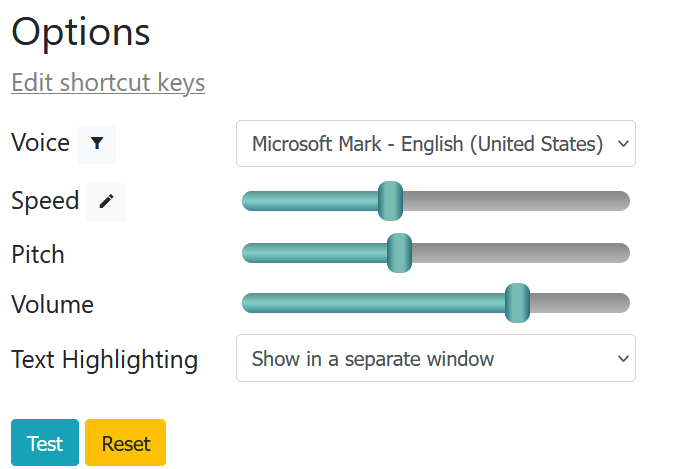
This tool reads any text aloud for you – you do not need to download anything. You can choose the speaker (female/male) and the speed.
I am trying this new way now with some of the texts.
At the end of this text, you can provide feedback.
Tell me: Is this new option better for saving your mobile data than downloading sound files?
Thank you for your help and attention to that matter!
#####################
For WINDOWS and FIREFOX users:
go to the list of FIREFOX add-ons, and add
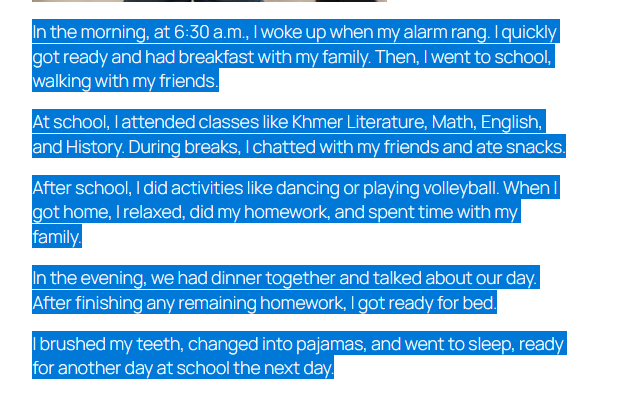
go to the text you want to listen to, mark it, e.g.
then
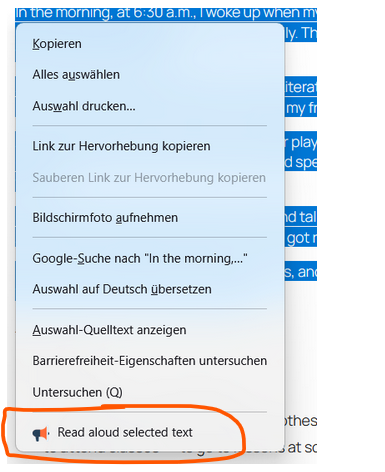
click on ‚Read aloud selected texts‘.
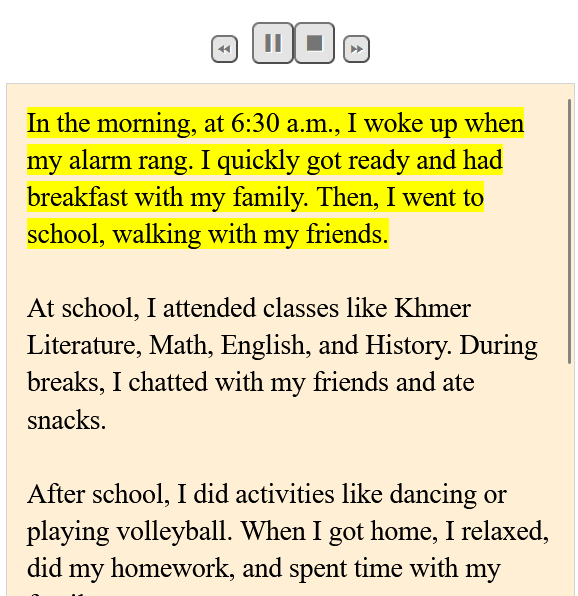
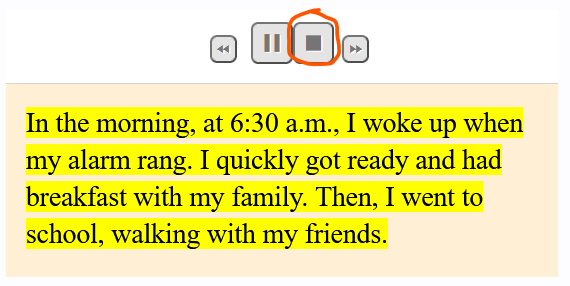
a new window opens, a speaker starts reading.
if you do not like the way he/she speaks, click on
and you get
when you click on it a new window opens
now it is up to you, to find your best speaker, just try.
#################
#################
You can also use MicrosoftEdge, e.g. instead of #Firefox – follow the instructions below, and you do not have to download the mp3 files – save data.
A very long time ago (more than 2,000 years ago), an ancient group of people called the Celts lived in Europe. They celebrated a festival called Samhain on November 1st to mark the end of summer and the beginning of a cold, dark winter. They believed that on the night before the new year (October 31st), the spirits of dead people could visit the living world.
To protect themselves from bad spirits, people built big fires and wore costumes made of animal skins. Over time, these old traditions mixed with Christian holidays (like All Saints‘ Day or All Hallows‘ Day). The word „Hallow“ means saint, and „Eve“ means evening. The night before became known as All Hallows‘ Eve, which later became Halloween.
What is Celebrated on Halloween?
Today, Halloween is not usually a religious or scary holiday for most people. Instead, it is a fun autumn tradition celebrated in many countries around the world (especially in the US, Canada, the UK, and Ireland).
People celebrate:
Autumn and Harvest: The changing of seasons and the pumpkin harvest.
Fun and Imagination: Dressing up as monsters, superheroes, or movie characters.
Community: Visiting neighbors and playing games together.
How Do People Celebrate Halloween?
There are several traditional activities people do on October 31st:
Trick-or-Treating Children put on costumes and walk from house to house in their neighborhood. They knock on doors and say, „Trick or treat!“ People give them candy, chocolates, or sweets.
Carving Jack-o‘-Lanterns People buy big orange pumpkins, cut off the top, and remove the seeds inside. Then, they cut a face (scary or funny) into the pumpkin and put a light or candle inside. These illuminated pumpkins are placed outside homes for decoration.
Wearing Costumes Children and adults dress up in creative clothes. Some choose scary costumes like ghosts, witches, or vampires, while others dress up as animals, princesses, or superheroes.
Decorating Houses Many families decorate the outside of their houses with fake spider webs, paper bats, skeletons, and orange lights to make their homes look festive and spooky.
Playing Halloween Games At Halloween parties, people like to play games such as apple bobbing—trying to catch floating apples in a tub of water using only their teeth. They also watch scary movies or tell ghost stories.
___________________________
Vocabulary:
Word / Phrase
Definition
ancient
very, very old; from a long time ago.
to celebrate
to do something fun on a special day.
to believe
to think that something is real or true.
a spirit
a ghost or soul of a person who is not alive.
to protect oneself from something
to keep yourself safe from danger or bad things.
to wear a costume
to put on special clothes to look like a different character or animal.
animal skin
the outside cover of an animal.
to be scary
making you feel afraid.
autumn
the season between summer and winter.
a pumpkin
a large, round, orange vegetable that grows in autumn.
harvest
the time when farmers collect fruits and vegetables from the field.
trick-or-treat
an activity where children dress up, go to houses, and ask for candy.
to carve Jack-o‘-Lanterns
to cut shapes or faces into a pumpkin to make a light decoration.
seeds
small hard parts inside a fruit or vegetable that can grow into new plants.
to illuminate something
to put light on something so it is bright.
a witch
a magic woman in stories who wears a black hat and flies on a broom.
a fake spider web
a decoration made of thin threads that looks like a spider’s home.
a bat
a small animal with wings that flies at night.
spooky
a little bit scary, strange, or mysterious.
apple bobbing
a game where you try to catch floating apples in water using your teeth.
a tub of water
a large, open container filled with water.
Match each word or phrase with its correct definition
1. ancient
2. to celebrate
3. to believe
4. a spirit
5. to protect oneself from something
6. to wear a costume
7. animal skin
8. to be scary
9. autumn
10. a pumpkin
11. harvest
12. trick-or-treat
13. to carve Jack-o‘-Lanterns
14. seeds
15. to illuminate something
16. a witch
17. a fake spider web
18. a bat
19. spooky
20. apple bobbing
21. a tub of water
Definitions:
A. a small animal with wings that flies at night.
B. small hard parts inside a fruit or vegetable that can grow into new plants.
C. to cut shapes or faces into a pumpkin to make a light decoration.
D. to put light on something so it is bright.
E. a decoration made of thin threads that looks like a spider’s home.
F. making you feel afraid.
G. very, very old; from a long time ago.
H. the time when farmers collect fruits and vegetables from the field.
I. a ghost or soul of a person who is not alive.
J. to put on special clothes to look like a different character or animal.
K. a magic woman in stories who wears a black hat and flies on a broom.
L. a game where you try to catch floating apples in water using your teeth.
M. to keep yourself safe from danger or bad things.
N. an activity where children dress up, go to houses, and ask for candy.
O. a large, round, orange vegetable that grows in autumn.
(Details: 1. spring — Samhain/Halloween marks autumn, winter, and harvest; 2. bottom — people cut off the top, not the bottom; 3. apples — given in a game, not given to trick-or-treaters at doors; 4. saints — the others are scary/dead spirits; 5. France — not mentioned in the text; 6. hands — hands are not used in apple bobbing; 7. animal skins — worn by Celts, not house decorations; 8. morning — text defines „Hallow“ as saint, „Eve“ as evening, and mentions spirits/ghosts; 9. sports — not mentioned as a Halloween activity; 10. sweets — sweets are modern, whereas fires, costumes, and skins were Celtic protections)
##################
Fill in each blank with the correct word from the box below. Use each word only once.
Babies learn a language by listening. They use their ears to hear sounds. Their brain remembers these sounds. Babies connect sounds with people and things. They listen to their parents. Then they copy the sounds they hear. They imitate words. Slowly, babies learn to speak.