When students complete upper secondary/high school, they are required to sit a series of standardised examinations, including an English test (5 hours). This assessment is administered nationwide across Austria on the same day and at the same time. Attached you will find the reading (LESEN) paper, while the second PDF contains the answer key, allowing you to check and evaluate your own performance.
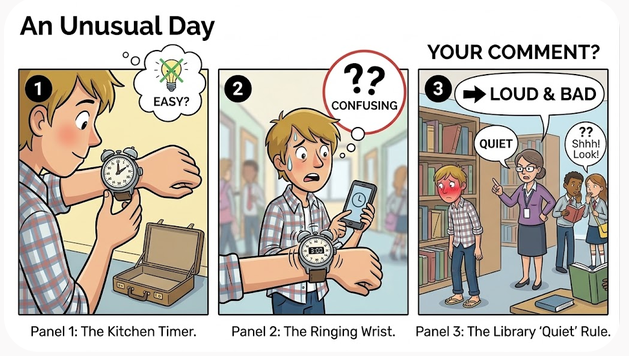
Mobile phones are very common today. Many people have a mobile phone. Children, students, workers, and old people use them every day. Mobile phones help people in many ways, but they also bring some problems.
One good thing about mobile phones is talking to people. People can call family and friends very fast. They can also send text messages. A person can talk to someone in another city or another country. This helps people stay close to family and friends.
Mobile phones also help people at school and work. Students can look for information on the internet. They can read and learn new things. Workers can read emails and talk to people from work. Many people use phones to check the time, write notes, or use a map.
Another good thing is help in danger. If a person has a problem, they can call for help quickly. For example, after a car accident, a person can call the police or a doctor. This can save time and help people stay safe.
People also use mobile phones for fun. They can listen to music, watch videos, play games, and take photos. Many people enjoy sharing photos with family and friends. Phones can make free time more fun.
However, mobile phones also have bad sides. One problem is that some people use them too much. They look at the phone all day and do not talk much to people near them. Some children play games for many hours and do not study enough.
Another problem is health. Looking at a phone for a long time can hurt the eyes. Some people sleep late because they use the phone at night. This can make them tired in the morning.
Mobile phones can also cost a lot of money. New phones are often very expensive. People also pay money every month for internet and calls. Some families do not have enough money for this.
There is also danger on the internet. Some people send bad messages or try to take money from others online. Because of this, people must be careful when they use mobile phones and the internet.
In conclusion, mobile phones are useful in many ways. They help people talk, learn, work, and have fun. At the same time, they can bring problems with health, money, and too much use. People should use mobile phones in a smart and careful way.
__________________
Vocabulary:
to be common — to happen often or exist in many places
in many ways — in different manners or forms
to bring problems — to cause difficulties
to stay close to somebody — to remain near a person
to check the time — to look at a clock or phone to know the hour
to write a note — to write a short message or reminder
to use a map — to look at a map [picture or drawing that shows places, roads, or directions]for directions
help in danger — assistance when someone is in a risky situation
an accident — an unexpected bad event, often causing damage or injury
to save time — to make something quicker or use less time
to stay safe — to avoid danger or harm
to enjoy sharing photos — to like posting or showing pictures to others
free time — time when you are not working or studying
however — but; used to show contrast
enough — as much as needed
health — the condition of your body and mind
to hurt the eyes — to cause pain or discomfort in the eyes
to be tired — to feel that you need rest or sleep
to be expensive — to cost a lot of money
in conclusion — finally; to finish an opinion [what a person thinks or believes about something] or text
to use in a smart way — to use carefully and effectively
in a careful way — with attention and caution
#############
Match the words with the definitions:
Words
to be common
in many ways
to bring problems
to stay close to somebody
to check the time
to write a note
to use a map
help in danger
an accident
to save time
to stay safe
to enjoy sharing photos
free time
however
enough
health
to hurt the eyes
to be tired
to be expensive
in conclusion
to use in a smart way
in a careful way
Definitions
A. to cause difficulties B. to remain near a person C. to look at a clock or phone to know the hour D. to write a short message or reminder E. assistance when someone is in a risky situation F. to make something quicker or use less time G. to avoid danger or harm H. an unexpected bad event, often causing damage or injury I. to like posting or showing pictures to others J. but; used to show contrast K. as much as needed L. the condition of your body and mind M. to cause pain or discomfort in the eyes N. to feel that you need rest or sleep O. to cost a lot of money P. finally; to finish an opinion or text Q. to use carefully and effectively R. in different manners or forms S. to happen often or exist in many places T. time when you are not working or studying U. doing something slowly and safely so you do not make mistakes or get hurt
Email, sandwich, work, office — Odd one: sandwich (others are related to work or communication)
Family, chatting, television, friends — Odd one: television (others involve people or communication)
Save time, fast, chair, quick — Odd one: chair (others describe speed or efficiency)
Safe, danger, book, careful — Odd one: book (others relate to safety or risk)
#############
Match the halves (based on the text)
A
Mobile phones are very common today because…
People can stay close to family and friends by…
Students use mobile phones to…
Mobile phones can help in danger because…
People use mobile phones in free time to…
One problem of mobile phones is that…
Mobile phones should be used in a smart way because…
B
A. they are useful in modern life. B. calling and sending messages. C. learn and find information. D. enjoy music, videos, and games. E. they can call for help after an accident. F. they can hurt the eyes if used too much. G. they help people in many ways.
Answer Key
1-G, 2-B, 3-C, 4-E, 5-D, 6-F, 7-A
#############
Mobile phones are very a) common b) broken c) rare
People use phones to stay a) far b) close c) asleep
Students use mobile phones to a) sleep b) cook c) learn
Mobile phones can help in a) danger b) weather c) lunch
Free time is when people are a) working b) relaxing c) driving
A map is used to find a) food b) music c) places
Mobile phones can help to a) lose b) save c) waste
Too much phone use can hurt the a) books b) shoes c) eyes
Workers use phones to read a) chairs b) emails c) sandwiches
Mobile phones help people stay a) heavy b) slow c) safe
People can use phones to a) eat b) send c) build messages
In danger, people can a) call b) sing c) draw
Phones are useful in a) no b) many c) few ways
In conclusion, mobile phones are very a) useful b) broken c) useless
Mobile phones help people a) stay b) forget c) leave close to others
Students can a) learn b) sleep c) cook from mobile phones
A phone can be used to a) check b) break c) hide the time
Mobile phones are used for a) games b) stones c) water and music
People use phones to send a) tables b) messages c) chairs
Mobile phones can be a) natural b) dangerous c) useless if used too much
Today, many people use mobile phones every day. Mobile phones help people talk to family and friends, learn new things, and have fun. They are very important for school, work, and free time. However, some people think mobile phones can also bring problems. In this dialogue, Anna and Mark talk about the good and bad sides of mobile phones. Mark likes mobile phones very much, but Anna is more careful and does not like some things about them.
Anna: Hi Mark! What are you doing on your phone?
Mark: Hi Anna! I am watching a video. I love my mobile phone. I use it every day.
Anna: Really? I do not like mobile phones very much.
Mark: Why not? Mobile phones are very useful.
Anna: Sometimes yes, but sometimes they are bad too.
Mark: I think they are great. I can call my family and friends very fast. Yesterday I called my cousin in Spain.
Anna: Yes, that is good. I also call my grandmother every week. But many people use phones too much.
Mark: Maybe, but phones help people stay close. I talk to my friends every day.
Anna: But do you talk face to face?
Mark: Yes, of course! I talk face to face and on the phone too.
Anna: Some people only look at their phones. At lunch they do not talk. They only look at the screen.
Mark: That is true for some people, but not for everyone.
Anna: My little brother plays games on his phone for many hours. He does not do his homework first.
Mark: I understand. Too many games are not good. But games can also be fun after school.
Anna: Yes, maybe for a short time.
Mark: Phones also help at school. I use my phone to read and learn English words.
Anna: I sometimes use my phone for school too. I look for information on the internet.
Mark: You see? Phones are helpful!
Anna: Yes, but there are also dangers on the internet.
Mark: What kind of dangers?
Anna: Bad people can send bad messages. Some people want money from others online.
Mark: That is true. People must be careful.
Anna: Also, phones are very expensive now. New phones cost a lot of money.
Mark: Yes, some phones are very expensive. But people do not always need a new phone.
Anna: My friend buys a new phone every year.
Mark: That is too much. I use my phone for many years.
Anna: Another problem is sleep. Many people use phones late at night.
Mark: I sometimes do that too. Then I feel tired in the morning.
Anna: You see! Phones can cause problems.
Mark: Yes, but many things can cause problems if people use them too much.
Anna: Maybe you are right.
Mark: Phones can also help in danger. One time my father had a car problem, and he called for help with his phone.
Anna: That is very useful. In an emergency, phones are very important.
Mark: Phones also have maps. When I visit a new place, I use my phone to find streets and shops.
Anna: I use maps too. They help me a lot in big cities.
Mark: And I love taking photos with my phone.
Anna: Me too! I take photos of my dog every day.
Mark: So maybe you like mobile phones a little.
Anna: Maybe a little! I think phones are good when people use them in a smart way.
Mark: I agree. Phones are very useful, but people must not use them all day.
Anna: Yes. People need time for family, friends, sports, and school too.
Mark: That is true. A mobile phone is good, but life without the phone is important too.
Anna: I like that idea.
Mark: Me too!
#############
BONUS DIALOGUE in B2
Today, mobile phones play a significant role in modern society. People rely on them for communication, education, entertainment, and work-related tasks. They make it possible to stay in contact with others instantly, access information online, and complete many daily activities more efficiently. Nevertheless, despite their numerous advantages, mobile phones also have certain disadvantages that concern many people. In this conversation, Anna and Mark exchange their opinions about the positive and negative effects of mobile phones. Mark strongly appreciates the benefits they provide, whereas Anna is more critical and believes that excessive phone usage can create serious problems.
Anna: Hi Mark! What are you doing on your phone?
Mark: Hi Anna! I’m watching a video online. I absolutely love my mobile phone and use it constantly throughout the day.
Anna: Really? To be honest, I’m not particularly fond of mobile phones.
Mark: Why do you feel that way? In my opinion, mobile phones are incredibly practical and convenient.
Anna: They certainly have advantages, but they can also cause a variety of problems.
Mark: Personally, I think they are excellent devices. For example, I can communicate with my family and friends immediately whenever I want. Yesterday, I even called my cousin who lives in Spain.
Anna: I agree that this is very beneficial. I also call my grandmother regularly every week. However, many individuals spend an unreasonable amount of time using their phones.
Mark: That might be true in some cases, but mobile phones allow people to maintain close relationships even when they live far away. I communicate with my friends daily because of my phone.
Anna: But do you still interact with people in person and have real face-to-face conversations?
Mark: Of course I do! I enjoy speaking to people directly as well as communicating digitally.
Anna: Unfortunately, some people become completely absorbed in their phones. For instance, during meals they ignore everyone around them and focus entirely on their screens instead of having conversations.
Mark: I admit that this happens quite often, but it certainly does not apply to everybody.
Anna: My younger brother spends several hours playing games on his phone every day. Instead of concentrating on his homework, he wastes time online.
Mark: I understand your concern. Excessive gaming can definitely become unhealthy. Nevertheless, playing games occasionally after school can still be entertaining and relaxing.
Anna: Perhaps, but only in moderation.
Mark: Mobile phones can also be extremely useful in education. I frequently use mine to read articles and improve my English vocabulary.
Anna: I sometimes use my phone for academic purposes as well. I often search the internet for information when I need to complete school assignments.
Mark: Exactly! That clearly demonstrates how helpful mobile phones can be.
Anna: That may be true, but the internet also contains many dangers and risks.
Mark: What kind of dangers are you referring to?
Anna: Some dishonest individuals send harmful or threatening messages online, while others attempt to deceive people in order to steal money from them.
Mark: You’re absolutely right. People need to behave carefully and responsibly when they use the internet.
Anna: Another issue is the price of modern smartphones. Many new models are extremely expensive nowadays.
Mark: I completely agree. Some phones cost far too much money, although I don’t think people need to replace their phones so frequently.
Anna: One of my friends buys a brand-new phone every single year.
Mark: In my opinion, that’s completely unnecessary. I usually keep the same phone for many years before replacing it.
Anna: Lack of sleep is another serious problem connected to mobile phones. Many people spend hours using them late at night.
Mark: I sometimes make the same mistake myself, and then I feel exhausted and unable to concentrate the following morning.
Anna: Exactly! That proves mobile phones can negatively affect people’s daily lives.
Mark: That’s true, but almost anything can become harmful if people use it excessively and without self-control.
Anna: Perhaps you have a point.
Mark: Mobile phones can also be extremely valuable in emergency situations. Once, my father experienced car trouble and immediately used his phone to call for assistance.
Anna: That’s definitely very useful. In emergencies, mobile phones can be absolutely essential.
Mark: They also provide navigation and maps. Whenever I travel to an unfamiliar place, I use my phone to locate streets, shops, and restaurants.
Anna: I use map applications as well, especially when I visit large cities. They make travelling much easier.
Mark: Another thing I enjoy is taking photographs with my phone.
Anna: Me too! I take pictures of my dog almost every day because he always does something funny.
Mark: So perhaps you actually like mobile phones more than you admit.
Anna: Maybe just a little! I believe phones are beneficial as long as people use them wisely and responsibly.
Mark: I completely agree with you. Mobile phones are extremely useful tools, but people should not spend their entire lives staring at screens.
Anna: Exactly. People also need to dedicate time to their families, friends, education, hobbies, and physical activities.
Mark: That’s absolutely true. Although mobile phones are important and practical, life beyond technology is equally important.
Find the correct order of the story – regroup the paragraphs
a) Many people come to watch. They wear nice clothes and pray for good rice. It is a happy and important day.
b) The cows help make lines in the ground. This means farmers can now plant rice.
c) In Cambodia, there is a special day. It is called the Royal Ploughing Ceremony. It is the start of the rice-growing season.
d) The king or a royal person comes to the field. They wear beautiful clothes. They take a plough and walk with two big cows.
e) After that, people give food to the cows. There is rice, corn, grass, water, and beans. If the cows eat a lot, the rice season will be good.
———————————-
The Royal Ploughing Ceremony
In Cambodia, there is a special day. It is called the Royal Ploughing Ceremony. It is the start of the rice-growing season.
The king or a royal person comes to the field. They wear beautiful clothes. They take a plough and walk with two big cows.
The cows help make lines in the ground. This means farmers can now plant rice.
After that, people give food to the cows. There is rice, corn, grass, water, and beans. If the cows eat a lot, the rice season will be good.
Many people come to watch. They wear nice clothes and pray for good rice. It is a happy and important day.
###############
Vocabulary:
to plough – to break the ground so farmers can grow food
a season – a part of the year (like hot time or rainy time)
to wear – to put clothes on your body
a plough – a thing that helps cut the ground for farming
to plant – to put seeds in the ground to grow
corn – a yellow food that grows on a plant
beans – small foods that grow on plants
clothes – things we put on our body, like shirts and pants
to pray – to talk to God or ask for help from the sky
#################
True or false?
The Royal Ploughing Ceremony happens in Cambodia.
The ceremony starts the rice-growing season.
A farmer wears old clothes for the ceremony.
Two cows help with the ploughing.
The cows eat hamburgers and pizza.
People come to watch the ceremony.
The cows do not get any food.
People wear nice clothes and pray.
The ceremony is a sad day.
The plough makes lines in the ground.
————————
The Royal Ploughing Ceremony happens in Cambodia. ✅
The ceremony starts the rice-growing season. ✅
A farmer wears old clothes for the ceremony. ❌
Two cows help with the ploughing. ✅
The cows eat hamburgers and pizza. ❌
People come to watch the ceremony. ✅
The cows do not get any food. ❌
People wear nice clothes and pray. ✅
The ceremony is a sad day. ❌
The plough makes lines in the ground. ✅
#################
More than one answer may be correct:
What is the Royal Ploughing Ceremony in Cambodia? a) The start of the rice-growing season b) A celebration of harvest c) A day to pray for rain d) A royal wedding celebration
Who participates in the Royal Ploughing Ceremony? a) The king or a royal person b) Local farmers c) The cows d) Foreign guests
What does the king or royal person do during the ceremony? a) Watches the cows plough the field b) Wears beautiful clothes c) Takes a plough and walks with two cows d) Sings a song for the rice season
What do the cows help with during the ceremony? a) Plough the field b) Eat rice c) Make lines in the ground d) Carry the king’s crown
What happens after the ploughing is done? a) People give food to the cows b) The cows are taken to a farm c) The king leaves the field d) People celebrate with fireworks
Which of the following foods are given to the cows? a) Rice b) Corn c) Grass d) Cake
What does it mean if the cows eat a lot? a) The rice season will be bad b) The rice season will be good c) The cows are tired d) The ceremony is over
Who comes to watch the Royal Ploughing Ceremony? a) Many people b) Farmers only c) Foreign tourists d) People who pray for good rice
What do the people wear during the ceremony? a) Simple clothes b) Nice clothes c) Traditional clothing d) Festival costumes
What do people do at the ceremony besides watching? a) Pray for good rice b) Eat food with the cows c) Plant rice d) Dance and sing
———————-
#####################
Fill in:
The Royal Ploughing __________ is a special day.
It is the start of the rice-growing __________.
The king or a__________ person comes to the field.
They wear __________ clothes.
They take a __________ and walk with two big cows.
The cows help make __________in the ground.
This means farmers can now __________ rice.
After that, people give __________ to the cows.
There is rice, corn, grass, __________, and beans.
Many __________ come to watch.
———— a) plant
b) food
c) season
d) Ceremony
e) water
f) lines
g) beautiful
h) plough
i) people
j) royal
_________________________________
Correct answers:
The Royal Ploughing Ceremony is a special day.
It is the start of the rice-growing season.
The king or a royal person comes to the field.
They wear beautiful clothes.
They take a plough and walk with two big cows.
The cows help make lines in the ground.
This means farmers can now plant rice.
After that, people give food to the cows.
There is rice, corn, grass, water, and beans.
Many people come to watch.
########################
Complete:
It is called the Royal __________ Ceremony.
The king or a royal __________ comes to the field.
They __________ beautiful clothes.
They take a __________ to make lines in the field.
The __________ help make lines.
Farmers can plant __________
People give __________ to the cows.
If the cows eat a lot, the rice __________ will be good.
Many people come to __________.
It is a __________and important day.
——————————
It is called the Royal Ploughing Ceremony.
The king or a royal person comes to the field.
They wear beautiful clothes.
They take a plough.
The cows help make lines.
Farmers can plant rice.
People give food to the cows.
If the cows eat a lot, the rice season will be good.
Many people come to watch.
It is a happy and important day.
#################### What is wrong?
Interviewer: Hello! Can you tell us about the Royal Planting Ceremony?
Organizer: It is the start of the corn-growing season.
Interviewer: Why is this ceremony important?
Organizer: It is important for a good rice season.
Interviewer: Who takes part in the ceremony?
Organizer: The king or a royal person comes to the home of people..
Interviewer: What happens during the ceremony?
Organizer: The king walks with four big horses and uses a plough.
Interviewer: What do the cows do in the ceremony?
Organizer: The cows help make circles in the ground.
Interviewer: What do people do after the ploughing?
Organizer: People give fruits to the cows.
Interviewer: How do the cows‘ actions affect the rice season?
Organizer: If the cows eat little, the rice season will be good.
Interviewer: How do people dress for the ceremony?
Organizer: People wear old clothes.
Interviewer: What is the overall feeling of the day?
Organizer: It is a happy and important day. ———————-
The original:
Interviewer: Hello! Can you tell us about the Royal Ploughing Ceremony?
Organizer: It is the start of the rice-growing season.
Interviewer: Why is this ceremony important?
Organizer: It is important for a good rice season.
Interviewer: Who takes part in the ceremony?
Organizer: The king or a royal person comes to the field.
Interviewer: What happens during the ceremony?
Organizer: The king walks with two big cows and uses a plough.
Interviewer: What do the cows do in the ceremony?
Organizer: The cows help make lines in the ground.
Interviewer: What do people do after the ploughing?
Organizer: People give food to the cows.
Interviewer: How do the cows‘ actions affect the rice season?
Organizer: If the cows eat a lot, the rice season will be good.
Interviewer: How do people dress for the ceremony?
Organizer: People wear nice clothes.
Interviewer: What is the overall feeling of the day?
Organizer: It is a happy and important day.
######################
What is the correct order?
People give food to the cows, such as rice, corn, grass, water, and beans.
If the cows eat a lot, the rice season will be good, and people pray for a good harvest.
The cows help make lines in the ground.
The Royal Ploughing Ceremony starts the rice-growing season.
The king or royal person walks with two big cows and uses a plough.
————————————-
The Royal Ploughing Ceremony starts the rice-growing season.
The king or royal person walks with two big cows and uses a plough.
The cows help make lines in the ground.
People give food to the cows, such as rice, corn, grass, water, and beans.
If the cows eat a lot, the rice season will be good, and people pray for a good harvest. #################
Answer these questions:
When does the Royal Ploughing Ceremony take place?
What does the ploughing signal for farmers?
What kind of clothes do the king or royal person wear?
What food is given to the cows?
What happens if the cows eat a lot?
How do people celebrate the day?
Why is the ceremony important for farmers?
Answers:
The Royal Ploughing Ceremony takes place at the start of the rice-growing season.
The ploughing signals that farmers can begin planting rice.
The king or royal person wears beautiful clothes.
The cows are given rice, corn, grass, water, and beans.
If the cows eat a lot, it means the rice harvest will be good.
People celebrate by watching the ceremony, wearing nice clothes, and praying for a good harvest.
The ceremony is important for farmers because it marks the beginning of the farming season and is believed to predict the success of the rice harvest.
Rina lived with her brother and her parents in a small village in the countryside. Their house was made of wood with a tin roof. Near her house were rice fields, trees, and a dirt path. Life in the village was quiet and simple.
Rina had a white cat named Mimi. Mimi was small and friendly. The cat often slept under the house or walked in the garden. It liked warm places and quiet corners.
One morning, Rina and her brother woke up early. They could not find Mimi. They looked inside the house, under the table, and near the kitchen, but Mimi was not there. Rina and her brother felt worried. Then Rina went outside and looked around the yard and the garden. The sun rose over the rice fields.
Rina walked along the dirt path near the fields. She looked near the grass and small trees. After a while, she heard a soft sound near a wooden cart. Mimi hid there. The cat was safe but a little scared.
Rina carefully carried Mimi back home. She and her brother gave it food and water. Mimi ate and rested. Rina and her family felt happy again. The village became quiet, and the day continued peacefully.
____________________________
Vocabulary:
a village – a small place where many people live, with houses and farms
countryside – land outside cities, with fields, trees, and nature
to be made of wood – built using wood
a tin roof – a roof made from thin metal sheets
a dirt path – a small road made of soil, not concrete
to be quiet – with little or no noise
a corner – a small place where two sides meet
to wake up – to stop sleeping
to feel worried – to feel not calm because something may be wrong
a yard – open space around a house
sunrise – when the sun comes up in the morning
a soft sound – a quiet, gentle noise
a wooden cart – a small vehicle made of wood, used to carry things
to hide – to stay in a place where others cannot see you
to be safe – to not be in danger
to be scared – to feel afraid
carefully – doing something slowly and with attention
to carry – to hold and move something
to rest – to relax or sleep
to continue – to keep going
to be peaceful – to be calm and quiet, with no problems
################ Basics in past simple:
Past Simple – Regular Verbs
Rules:
Most verbs: add -ed play → played
Verbs ending in -e: add -d live → lived
Verbs ending in consonant + y: change y to i and add -ed study → studied
Short verbs ending in vowel + consonant: double the final consonant and add -ed stop → stopped
Use: The past simple is used to talk about finished actions in the past.
###############
Verbs in text:
Infinitive
Past simple
A1 definition
live
lived
to have your home in a place
be
was / were
to exist; used to describe people or things
have
had
to own or possess something
sleep
slept
to rest with eyes closed
walk
walked
to move on foot
like
liked
to enjoy something
wake up
woke up
to stop sleeping
can
could
to be able to do something
look
looked
to try to see something carefully
feel
felt
to experience an emotion or physical state
go
went
to move from one place to another
rise
rose
(sun) to move up in the sky
hear
heard
to notice sound with your ears
hide
hid
to put something or yourself out of sight
carry
carried
to hold and move something
give
gave
to hand something to someone
eat
ate
to take food into the body
rest
rested
to relax after activity
become
became
to change into something
continue
continued
to keep doing something
#################
Fill in the correct form of the verb in past simple:
Rina ________ (live) with her brother and her parents in a small village in the countryside. Their house ________ (be) made of wood with a tin roof. Near her house ________ (be) rice fields, trees, and a dirt path. Life in the village ________ (be) quiet and simple.
Rina ________ (have) a white cat named Mimi. Mimi ________ (be) small and friendly. The cat often ________ (sleep) under the house or ________ (walk) in the garden. It ________ (like) warm places and quiet corners.
One morning, Rina and her brother ________ (wake up) early. They ________ (can find) Mimi. They ________ (look) inside the house, under the table, and near the kitchen, but Mimi ________ (be) not there. Rina and her brother ________ (feel) worried. Then Rina ________ (go) outside and ________ (look) around the yard and the garden. The sun ________ (rise) over the rice fields.
Rina ________ (walk) along the dirt path near the fields. She ________ (look) near the grass and small trees. After a while, she ________ (hear) a soft sound near a wooden cart. Mimi ________ (hide) there. The cat ________ (be) safe but a little scared.
Rina carefully ________ (carry) Mimi back home. She and her brother ________ (give) it food and water. Mimi ________ (eat) and ________ (rest). Rina and her family ________ (feel) happy again. The village ________ (become) quiet, and the day ________ (continue) peacefully.
Correct version, see text above
##################
Short answers, past simple, basics:
Example Sentence
Yes
No
I learned letters.
Yes, I did.
No, I didn’t.
You read signs.
Yes, you did.
No, you didn’t.
He spoke English.
Yes, he did.
No, he didn’t.
She watched TV.
Yes, she did.
No, she didn’t.
It helped me.
Yes, it did.
No, it didn’t.
We used an app.
Yes, we did.
No, we didn’t.
You read words.
Yes, you did.
No, you didn’t.
They made mistakes.
Yes, they did.
No, they didn’t.
Questions (Past Simple)
Question
Yes
No
Did I learn letters?
Yes, I did.
No, I didn’t.
Did you read signs?
Yes, you did.
No, you didn’t.
Did he speak English?
Yes, he did.
No, he didn’t.
Did she watch TV?
Yes, she did.
No, she didn’t.
Did it help me?
Yes, it did.
No, it didn’t.
Did we use an app?
Yes, we did.
No, we didn’t.
Did you read words?
Yes, you did.
No, you didn’t.
Did they make mistakes?
Yes, they did.
No, they didn’t.
Was / Were
Question
Yes
No
Was I happy?
Yes, I was.
No, I wasn’t.
Were you happy?
Yes, you were.
No, you weren’t.
Was he happy?
Yes, he was.
No, he wasn’t.
Was she happy?
Yes, she was.
No, she wasn’t.
Was it good?
Yes, it was.
No, it wasn’t.
Were we happy?
Yes, we were.
No, we weren’t.
Were you happy?
Yes, you were.
No, you weren’t.
Were they happy?
Yes, they were.
No, they weren’t.
#################
Short answers:
Mimi was large and unfriendly.
YOU WRITE: No, it wasn’t.
Rina had a white cat named Mimi.
Her house was made of stone with a metal roof.
Rina lived in a small village in the countryside.
The cat always slept inside the kitchen.
Rina walked along a dirt path near the fields.
Rice fields were near her house.
Mimi was a black cat with long fur [the soft hair on an animal’s body].
Rina and her brother woke up early.
The cat sometimes slept under the house.
Rina found Mimi near a wooden cart.
They found Mimi immediately in the garden.
Mimi was small and friendly.
Rina walked through a forest instead of a dirt path.
Rice fields were far away from her house.
Rina lived in a village by the sea instead of the countryside.
One morning, Rina and her brother woke up early.
Rina had a white cat named Mimi.
Mimi was hiding inside the house behind a cupboard.
Her house was made of wood with a tin roof.
_________________________
True: 2,4,6,7,9,10,11,13,17,18,20
_________________________
Mimi was large and unfriendly. — No, it wasn’t.
Rina had a white cat named Mimi. — Yes, she did.
Her house was made of stone with a metal roof. — No, it wasn’t.
Rina lived in a small village in the countryside. — Yes, she did.
The cat always slept inside the kitchen. — No, it didn’t.
Rina walked along a dirt path near the fields. — Yes, she did.
Rice fields were near her house. — Yes, they were.
Mimi was a black cat with long fur. — No, it wasn’t.
Rina and her brother woke up early. — Yes, they did.
The cat sometimes slept under the house. — Yes, it did.
Rina found Mimi near a wooden cart. — Yes, i did.
They found Mimi immediately in the garden. — No, they didn’t.
Mimi was small and friendly. — Yes, it was.
Rina walked through a forest instead of a dirt path. — No, she didn’t.
Rice fields were far away from her house. — No, they weren’t.
Rina lived in a village by the sea instead of the countryside. — No, she didn’t.
One morning, Rina and her brother woke up early. — Yes, they did.
Rina had a white cat named Mimi. — Yes, she did.
Mimi hid inside the house behind a cupboard. — No, it didn’t.
Her house was made of wood with a tin roof. — Yes, it was.
#################
Past simple – basics
Personal Pronoun
Verb (Past)
Object
I
ate
apples
You
ate
apples
He
ate
apples
She
ate
apples
It
ate
apples
We
ate
apples
You (plural)
ate
apples
They
ate
apples
I
played
football
You
played
football
He
played
football
She
played
football
It
played
football
We
played
football
You (plural)
played
football
They
played
football
Personal Pronoun
Verb (Past Negative)
Object
I
did not eat
apples
You
did not eat
apples
He
did not eat
apples
She
did not eat
apples
It
did not eat
apples
We
did not eat
apples
You (plural)
did not eat
apples
They
did not eat
apples
I
did not play
football
You
did not play
football
He
did not play
football
She
did not play
football
It
did not play
football
We
did not play
football
You (plural)
did not play
football
They
did not play
football
Did + Pronoun
Verb
Object
Did I
eat
apples?
Did you
eat
apples?
Did he
eat
apples?
Did she
eat
apples?
Did it
eat
apples?
Did we
eat
apples?
Did you
eat
apples?
Did they
eat
apples?
Did I
play
football?
Did you
play
football?
Did he
play
football?
Did she
play
football?
Did it
play
football?
Did we
play
football?
Did you
play
football?
Did they
play
football?
Didn’t + Pronoun
Verb
Object
Didn’t I
eat
apples?
Didn’t you
eat
apples?
Didn’t he
eat
apples?
Didn’t she
eat
apples?
Didn’t it
eat
apples?
Didn’t we
eat
apples?
Didn’t you
eat
apples?
Didn’t they
eat
apples?
Didn’t I
play
football?
Didn’t you
play
football?
Didn’t he
play
football?
Didn’t she
play
football?
Didn’t it
play
football?
Didn’t we
play
football?
Didn’t you
play
football?
Didn’t they
play
football?
Forms of ‚to be‘
Personal Pronoun
Positive
Negative
Question
I
I was happy.
I was not happy.
Was I happy?
You (singular)
You were excited.
You were not excited.
Were you excited?
He
He was at home.
He was not at home.
Was he at home?
She
She was tired.
She was not tired.
Was she tired?
It
It was cold.
It was not cold.
Was it cold?
We
We were at the party.
We were not at the party.
Were we at the party?
You (plural)
You were friends.
You were not friends.
Were you friends?
They
They were in the garden.
They were not in the garden.
Were they in the garden?
############## Answer as shown, question, negation:
Rina lived in a small village in the countryside.
YOU WRITE: a) Did Rina live in a small village in the countryside? b) Rina did not live in a small village in the countryside.
Her house was made of wood with a tin roof.
Rice fields were near her house.
Rina had a white cat named Mimi.
Mimi was small and friendly.
The cat sometimes slept under the house.
The cat walked in the garden.
Mimi liked warm places and quiet corners.
Rina and her brother woke up early one morning.
Rina went outside to look for Mimi.
The sun rose over the rice fields.
Rina walked along a dirt path near the fields.
Rina heard a soft sound near a wooden cart.
Mimi was safe near the wooden cart.
_____________________
Correct answers:
Rina lived in a small village in the countryside. a) Did Rina live in a small village in the countryside? b) Rina did not live in a small village in the countryside.
Her house was made of wood with a tin roof. a) Was her house made of wood with a tin roof? b) Her house was not made of wood with a tin roof.
Rice fields were near her house. a) Were rice fields near her house? b) Rice fields were not near her house.
Rina had a white cat named Mimi. a) Did Rina have a white cat named Mimi? b) Rina did not have a white cat named Mimi.
Mimi was small and friendly. a) Was Mimi small and friendly? b) Mimi was not small and friendly.
The cat sometimes slept under the house. a) Did the cat sometimes sleep under the house? b) The cat did not sometimes sleep under the house.
The cat walked in the garden. a) Did the cat walk in the garden? b) The cat did not walk in the garden.
Mimi liked warm places and quiet corners. a) Did Mimi like warm places and quiet corners? b) Mimi did not like warm places and quiet corners.
Rina and her brother woke up early one morning. a) Did Rina and her brother wake up early one morning? b) Rina and her brother did not wake up early one morning.
Rina went outside to look for Mimi. a) Did Rina go outside to look for Mimi? b) Rina did not go outside to look for Mimi.
The sun rose over the rice fields. a) Did the sun rise over the rice fields? b) The sun did not rise over the rice fields.
Rina walked along a dirt path near the fields. a) Did Rina walk along a dirt path near the fields? b) Rina did not walk along a dirt path near the fields.
Rina heard a soft sound near a wooden cart. a) Did Rina hear a soft sound near a wooden cart? b) Rina did not hear a soft sound near a wooden cart.
———-end of audio file———–
Mimi was safe near the wooden cart. a) Was Mimi safe near the wooden cart? b) Mimi was not safe near the wooden cart.
#################
Answer as shown:
Rina lived in a big city with tall buildings.
YOU WRITE: No, she didn’t live in a big city with tall buildings. She lived in a small village in the countryside.
Her house was made of brick and glass.
There were mango fields near her house.
Rina had a brown dog named Mimi.
Mimi was large and unfriendly.
The cat always slept on the roof of the house.
Rina and her brother woke up late in the afternoon.
They found Mimi inside the kitchen.
The sun set over the village in the morning.
Rina heard a loud noise instead of a soft sound near the wooden cart.
____________________
Correct version:
Rina lived in a big city with tall buildings. No, she didn’t live in a big city with tall buildings. She lived in a small village in the countryside.
Her house was made of brick and glass. No, her house was not made of brick and glass. It was made of wood with a tin roof.
There were mango fields near her house. No, there weren’t mango fields near her house. There were rice fields near her house.
Rina had a brown dog named Mimi. No, she did not have a brown dog named Mimi. She had a white cat named Mimi.
Mimi was large and unfriendly. No, Mimi was not large and unfriendly. Mimi was small and friendly.
The cat always slept on the roof of the house. No, the cat did not always sleep on the roof of the house. It sometimes slept under the house.
Rina and her brother woke up late in the afternoon. No, they did not wake up late in the afternoon. They woke up early in the morning.
They found Mimi inside the kitchen. No, they did not find Mimi inside the kitchen. They could not find Mimi in the house.
The sun set over the village in the morning. No, the sun did not set over the village in the morning. The sun rose over the rice fields.
Rina heard a loud noise instead of a soft sound near the wooden cart. No, she did not hear a loud noise. She heard a soft sound near the wooden cart.
################
Fill in the correct form of the verb in past simple:
Q: Where did you live when you were young? A: I __________ (live) in a small village in the countryside.
Q: What was your house like? A: My house __________ (be) made of wood with a tin roof.
Q: Did you live near nature? A: Yes, rice fields and trees __________ (be) near my house.
Q: Did you have any pets? A: Yes, I __________ (have) a white cat named Mimi.
Q: What was Mimi like? A: Mimi __________ (be) small and friendly.
Q: Where did Mimi usually sleep? A: Mimi sometimes __________ (sleep) under the house.
Q: Did you have a brother or sister? A: Yes, I __________ (have) a brother.
Q: What did you do in the mornings? A: I __________ (wake) up early in the mornings.
Q: Did you have a busy life? A: No, my life __________ (be) quiet and simple.
Q: What did you do when Mimi was lost? A: I __________ (look) for Mimi in the house and outside.
Q: Where did you find Mimi? A: I __________ (find) Mimi near a wooden cart.
Q: How did you feel when you found her? A: I __________ (feel) happy.
Q: What did you do after you found Mimi? A: I __________ (take) Mimi back home.
Q: How was your life in the village? A: My life in the village __________ (be) peaceful.
————————————
Correct version:
Q: Where did you live when you were young? A: I lived in a small village in the countryside.
Q: What was your house like? A: My house was made of wood with a tin roof.
Q: Did you live near nature? A: Yes, rice fields and trees were near my house.
Q: Did you have any pets? A: Yes, I had a white cat named Mimi.
Q: What was Mimi like? A: Mimi was small and friendly.
Q: Where did Mimi usually sleep? A: Mimi sometimes slept under the house.
Q: Did you have a brother or sister? A: Yes, I had a brother.
Q: What did you do in the mornings? A: I woke up early in the mornings.
Q: Did you have a busy life? A: No, my life was quiet and simple.
Q: What did you do when Mimi was lost? A: I looked for Mimi in the house and outside.
Q: Where did you find Mimi? A: I found Mimi near a wooden cart.
Q: How did you feel when you found her? A: I felt happy.
Q: What did you do after you found Mimi? A: I took Mimi back home.
Q: How was your life in the village? A: My life in the village was peaceful.
##################
Form questions as shown in 1:
Rina lived in a small village in the countryside. (Where)
YOU WRITE: Where did Rina live?
Rina lived with her brother and her parents. (Who)
Her house was made of wood with a tin roof. (What)
Rice fields were near her house. (Where)
Rina had a white cat named Mimi. (What)
Mimi was small and friendly. (What)
The cat sometimes slept under the house. (Where)
The cat walked in the garden. (Where)
Mimi liked warm places and quiet corners. (What)
Rina and her brother woke up early one morning. (When)
They could not find Mimi in the house. (Where)
Rina went outside to look for Mimi. (Why)
The sun rose over the rice fields. (What)
Rina walked along a dirt path near the fields. (Who)
Rina looked near the grass and small trees. (Where)
Rina heard a soft sound near a wooden cart. (What)
Mimi hid near a wooden cart. (Where)
Mimi was safe but a little scared. (How)
Rina carried Mimi back home. (Where)
Rina had a white cat named Mimi. (What)
_____________________
Correct version:
Rina lived in a small village in the countryside. Where did Rina live?
Rina lived with her brother and her parents. Who did Rina live with? Who lived with her brother and her parents?
Her house was made of wood with a tin roof. What was her house made of?
Rice fields were near her house. Where were rice fields?
Rina had a white cat named Mimi. What did Rina have?
Mimi was small and friendly. What was small and friendly?
The cat sometimes slept under the house. Where did the cat sometimes sleep?
The cat walked in the garden. Where did the cat walk?
Mimi liked warm places and quiet corners. What did Mimi like?
Rina and her brother woke up early one morning. When did Rina and her brother wake up?
They could not find Mimi in the house. Where could they not find Mimi?
Rina went outside to look for Mimi. Why did Rina go outside?
The sun rose over the rice fields. What rose over the rice fields?
Rina walked along a dirt path near the fields. Who walked along a dirt path near the fields?
Rina looked near the grass and small trees. Where did Rina look?
Rina heard a soft sound near a wooden cart. What did Rina hear?
Mimi hid near a wooden cart. Where did Mimi hide?
Mimi was safe but a little scared. How was Mimi?
Rina carried Mimi back home. Where did Rina carry Mimi?
Rina had a white cat named Mimi. What did Rina have?
Rina lives with her brother and her parents in a small village in the countryside. Their house is made of wood with a tin roof. Near her house are rice fields, trees, and a dirt path. Life in the village is quiet and simple.
Rina has a white cat named Mimi. Mimi is small and friendly. The cat often sleeps under the house or walks in the garden. It likes warm places and quiet corners.
One morning, Rina and her brother wake up early. They cannot find Mimi. They look inside the house, under the table, and near the kitchen, but Mimi is not there. Rina and her brother feel worried. Then Rina goes outside and looks around the yard and the garden. The sun rises over the rice fields.
Rina walks along the dirt path near the fields. She looks near the grass and small trees. After a while, she hears a soft sound near a wooden cart. Mimi hides there. The cat is safe but a little scared.
Rina carefully carries Mimi back home. She and her brother give it food and water. Mimi eats and rests. Rina and her family feel happy again. The village becomes quiet, and the day continues peacefully.
________________
Vocabulary:
a village – a small place where many people live, with houses and farms
countryside – land outside cities, with fields, trees, and nature
to be made of wood – built using wood
a tin roof – a roof made from thin metal sheets
a dirt path – a small road made of soil, not concrete
to be quiet – with little or no noise
a corner – a small place where two sides meet
to wake up – to stop sleeping
to feel worried – to feel not calm because something may be wrong
a yard – open space around a house
sunrise – when the sun comes up in the morning
a soft sound – a quiet, gentle noise
a wooden cart – a small vehicle made of wood, used to carry things
to hide – to stay in a place where others cannot see you
to be safe – to not be in danger
to be scared – to feel afraid
carefully – doing something slowly and with attention
to carry – to hold and move something
to rest – to relax or sleep
to continue – to keep going
to be peaceful – to be calm and quiet, with no problems
################
Match the words with the correct definitions :
Words:
a village
countryside
to be made of wood
a tin roof
a dirt path
to be quiet
a corner
to wake up
to feel worried
a yard
sunrise
a soft sound
a wooden cart
to hide
to be safe
to be scared
carefully
to carry
to rest
to continue
Definitions:
A. to feel afraid B. a small road made of soil C. to hold and move something D. land outside cities with nature and fields E. to relax or sleep F. to stay in a place where others cannot see you G. a roof made from thin metal sheets H. to stop sleeping I. a small place where many people live J. a quiet gentle noise K. to keep going L. a small vehicle made of wood for carrying things M. to be calm and have no danger N. open space around a house O. with attention and slowly P. when the sun comes up in the morning Q. a small place where two sides meet R. to feel not calm because something may be wrong S. to be built using wood T. with little or no noise
Words (mixed order): A. to be made of wood B. countryside C. to carry D. a tin roof E. to feel scared F. a village G. to rest H. a dirt path I. a soft sound J. to continue K. carefully L. sunrise M. to be safe N. a yard O. a corner P. to wake up Q. to hide R. to feel worried S. a wooden cart T. to be quiet
tin roof / wood / house / a / with / is / made / of / the
near / rice fields / the / are / house / the
sleeps / under / Mimi / house / the
wakes up / Rina / early
looks / Rina / yard / the / in
wooden cart / near / Mimi / a / is found
brother / Rina / and / search / Mimi / for / her
feels / happy / family / Rina / and / her
goes / Rina / outside
there / dirt path / a / near / house / the / is
garden / looks / Rina / in / the
soft sound / hears / Rina / a
Mimi / safe / is
_________________
Correct order:
Rina lives in a small village.
The house is made of wood with a tin roof.
The rice fields are near the house.
Mimi sleeps under the house.
Rina wakes up early.
Rina looks in the yard.
Mimi is found near a wooden cart.
Rina and her brother search for Mimi.
Rina and her family feel happy.
Rina goes outside.
There is a dirt path near the house.
Rina looks in the garden.
Rina hears a soft sound.
Mimi is safe.
############
Odd one out, which?
village – city – house – countryside
wood – glass – dirt path – tin roof
rice fields – computer – garden – trees
Mimi – cat – dog – Rina
wake up – run – tin roof – sleep
yard – sunrise – kitchen – garden
wooden cart – rice fields – dirt path – car
quiet – loud – soft sound – peaceful
wood – happy – scared – safe
carry – walk – rest – tin roof
____________________
Answers:
village – city – house – countryside Odd one: house → because it is a building, others are areas/places
wood – glass – dirt path – tin roof Odd one: dirt path → because it is a road outside, others are materials
rice fields – computer – garden – trees Odd one: computer → because it is not part of nature or village life
Mimi – cat – dog – Rina Odd one: Rina → because Rina is a person, others are animals/names for animals
wake up – run – tin roof – sleep Odd one: tin roof → because it is an object, others are actions
yard – sunrise – kitchen – garden Odd one: sunrise → because it is a time/event, others are places
wooden cart – rice fields – dirt path – car Odd one: car → because it is a modern vehicle, others are village things
quiet – loud – soft sound – peaceful Odd one: loud → because it is the opposite meaning of the others
wood – happy – scared – safe Odd one: wood → because it is a material, others are feelings
carry – walk – rest – tin roof Odd one: tin roof → because it is an object, others are actions
If you want next level, I can make:
trickier A2 “odd one out”
or student worksheet version (no answers first, then answer key)
############
Short answers, basics:
Example Sentence
Yes
No
I learn the alphabet.
Yes, I do.
No, I don’t.
You read signs.
Yes, you do.
No, you don’t.
He practices speaking.
Yes, he does.
No, he doesn’t.
She watches cartoons.
Yes, she does.
No, she doesn’t.
It helps us learn English.
Yes, it does.
No, it doesn’t.
We use apps like Duolingo.
Yes, we do.
No, we don’t.
You read labels.
Yes, you do.
No, you don’t.
They make mistakes sometimes.
Yes, they do.
No, they don’t.
Question
Yes
No
Do I learn the alphabet?
Yes, I do.
No, I don’t.
Do you read signs?
Yes, you do.
No, you don’t.
Does he practice speaking?
Yes, he does.
No, he doesn’t.
Does she watch cartoons?
Yes, she does.
No, she doesn’t.
Does it help us learn English?
Yes, it does.
No, it doesn’t.
Do we use apps like Duolingo?
Yes, we do.
No, we don’t.
Do you read labels?
Yes, you do.
No, you don’t.
Do they make mistakes sometimes?
Yes, they do.
No, they don’t.
Question
Yes
No
Am I big?
Yes, I am.
No, I am not.
Are you big?
Yes, you are.
No, you aren’t.
Is he big?
Yes, he is.
No, he isn’t.
Is she big?
Yes, she is.
No, she isn’t.
Is it big?
Yes, it is.
No, it isn’t.
Are we big?
Yes, we are.
No, we aren’t.
Are you big?
Yes, you are.
No, you aren’t.
Are they big?
Yes, they are.
No, they aren’t.
####################
Short answers:
Mimi is very big.
YOU WRITE: No, it isn’t.
Rina finds Mimi near a wooden cart.
YOU WRITE: Yes, she does.
The house is made of stone and glass.
Rina lives with her family in a small village.
Mimi sleeps under the house.
Rina goes to school and forgets Mimi.
There are rice fields near the house.
Rina has a cat named Mimi.
The area has only buildings and roads.
Rina and her brother look for Mimi in the morning.
Mimi works in the rice fields.
Rina finds Mimi at a shop in the village.
Mimi is small and white.
Rina does not take Mimi home.
Their house is made of wood with a tin roof.
Rina lives alone in the city.
Mimi likes quiet corners.
Rina has a dog named Mimi.
Rina and her brother look for Mimi in the morning.
Mimi goes back home with Rina.
####################
Correct the false statements, give short answer, followed by correct statement:
Rina lives in a big city.
YOU WRITE: No, she doens’t. She lives in a small village.
Her house is made of stone.
The house has a grass roof.
There are cars near the house.
Mimi is a big black dog.
Mimi sleeps on the roof.
Rina wakes up in the evening.
Rina walks in the river.
Mimi sits in a tree.
Her father and mother eat in the rice fields.
Rina walks on the road in the city.
Mimi plays on the table all day.
Rina finds Mimi near the kitchen.
Mimi stays in the house all day.
___________________________
Answers:
Rina lives in a big city. No, she doesn’t. She lives in a small village in the countryside.
Her house is made of stone. No, it isn’t. Her house is made of wood.
The house has a grass roof. No, it doesn’t. The house has a tin roof.
There are cars near the house. No, there aren’t. There are rice fields and trees near the house.
Mimi is a big black dog. No, it isn’t. Mimi is a small white cat.
Mimi sleeps on the roof. No, it doesn’t. Mimi sleeps under the house.
Rina wakes up in the evening. No, she doesn’t. Rina wakes up in the morning.
Rina walks in the river. No, she doesn’t. Rina walks along the dirt path.
Mimi sits in a tree. No, it doesn’t. Mimi hides near a wooden cart.
Her father and mother eat in the rice fields. No, they don’t. They eat at home.
Rina walks on the road in the city. No, she doesn’t. Rina walks on a dirt path near the fields.
Mimi plays on the table all day. No, it doesn’t. Mimi sleeps under the house or walks in the garden.
Rina finds Mimi near the kitchen. No, she doesn’t. Rina finds Mimi near a wooden cart.
Mimi stays in the house all day. No, it doesn’t. Mimi walks in the garden and sleeps under the house.
####################
Basics of present simple:
Personal Pronoun
am / is / are
I
am
8 years old
You
are
8 years old
He
is
8 years old
She
is
8 years old
It
is
8 years old
We
are
8 years old
You (plural)
are
8 years old
They
are
8 years old
Personal Pronoun
am not / is not / are not
I
am not
8 years old
You
are not
8 years old
He
is not
8 years old
She
is not
8 years old
It
is not
8 years old
We
are not
8 years old
You (plural)
are not
8 years old
They
are not
8 years old
Question:
Question Word
Personal Pronoun
Am
I
8 years old?
Are
you
8 years old?
Is
he
8 years old?
Is
she
8 years old?
Is
it
8 years old?
Are
we
8 years old?
Are
you (plural)
8 years old?
Are
they
8 years old?
Statement:
Personal Pronoun
Verb
I
like
ice cream
You
like
ice cream
He
likes
ice cream
She
likes
ice cream
It
likes
ice cream
We
like
ice cream
You (plural)
like
ice cream
They
like
ice cream
Negation:
Personal Pronoun
Verb (negative)
I
do not like
ice cream
You
do not like
ice cream
He
does not like
ice cream
She
does not like
ice cream
It
does not like
ice cream
We
do not like
ice cream
You (plural)
do not like
ice cream
They
do not like
ice cream
Question:
Do / Does
Personal Pronoun
Verb
Sugar?
Do
I
like
sugar?
Do
you
like
sugar?
Does
he
like
sugar?
Does
she
like
sugar?
Does
it
like
sugar?
Do
we
like
sugar?
Do
you (plural)
like
sugar?
Do
they
like
sugar?
################
Form (a)a negation, (b) a question as shown in #1:
Rina lives in a small village.
YOU WRITE: a) Rina does not live in a small village. b) Does Rina live in a small viallge.
Rina and her family live in the countryside.
The house is made of wood with a tin roof.
Rice fields are near the house.
Trees grow near the dirt path.
Mimi is a small white cat.
Mimi sleeps under the house.
Rina and her brother wake up early.
Rina looks around the yard.
The garden is near the house.
Rina and her brother search for Mimi.
A wooden cart is near the fields.
Mimi rests at home after the search.
Rina and her family feel happy at the end of the day.
______________________
Correct answers:
Rina lives in a small village. a) Rina does not live in a small village. b) Does Rina live in a small village?
Rina and her family live in the countryside. a) Rina and her family do not live in the countryside. b) Do Rina and her family live in the countryside?
The house is made of wood with a tin roof. a) The house is not made of wood with a tin roof. b) Is the house made of wood with a tin roof?
Rice fields are near the house. a) Rice fields are not near the house. b) Are rice fields near the house?
Trees grow near the dirt path. a) Trees do not grow near the dirt path. b) Do trees grow near the dirt path?
Mimi is a small white cat. a) Mimi is not a small white cat. b) Is Mimi a small white cat?
Mimi sleeps under the house. a) Mimi does not sleep under the house. b) Does Mimi sleep under the house?
Rina and her brother wake up early. a) Rina and her brother do not wake up early. b) Do Rina and her brother wake up early?
Rina looks around the yard. a) Rina does not look around the yard. b) Does Rina look around the yard?
The garden is near the house. a) The garden is not near the house. b) Is the garden near the house?
Rina and her brother search for Mimi. a) Rina and her brother do not search for Mimi. b) Do Rina and her brother search for Mimi?
A wooden cart is near the fields. a) A wooden cart is not near the fields. b) Is a wooden cart near the fields?
Mimi rests at home after the search. a) Mimi does not rest at home after the search. b) Does Mimi rest at home after the search?
Rina and her family feel happy at the end of the day. a) Rina and her family do not feel happy at the end of the day. b) Do Rina and her family feel happy at the end of the day?
################
Form questions, no answers:
Rina and her family feel happy. (How)
YOU WRITE: How do Rina and her family feel?
Rina lives in a small village. (Where)
Rina and her brother live with their parents. (Who)
The house is made of wood. (What)
All the houses have tin roofs. (How many)
There is a dirt path near the house. (Where)
There are rice fields near the house. (What)
Mimi is a small cat. (What kind of)
The cats are friendly animals. (What kind of)
Rina wakes up early. (When)
Rina and her brother wake up early. (Who)
Rina looks in the yard. (Where)
Rina and her brother look for Mimi. (Who)
Mimi is safe. (How)
____________________________
Answers:
Rina lives in a small village. (Where) Where does Rina live?
Rina and her brother live with their parents. (Who) Who lives with their parents?
The house is made of wood. (What) What is the house made of?
All the houses have tin roofs. (How many) How many roofs have tin roofs?
There is a dirt path near the house. (Where) Where is there a dirt path?
There are rice fields near the house. (What) What is near the house?
Mimi is a small cat. (What kind of) What kind of cat is Mimi?
The cats are friendly animals. (What kind of) What kind of animals are the cats?
Rina wakes up early. (When) When does Rina wake up?
Rina and her brother wake up early. (Who) Who wakes up early?
Rina looks in the yard. (Where) Where does Rina look?
Rina and her brother look for Mimi. (Who) Who do Rina and her brother look for? Who looks for Mimi.
Mimi is safe. (How) How is Mimi?
Rina and her family feel happy. (How) How do Rina and her family feel?
####################
Interview with Rina about what they do when they cannot find the cat – complete, words below:
white – happy – tin – village – wood – house – your – yard – family – under – brother – cart
Q: Where do you live? A: I live in a small __________.
Q: Who do you live with? A: I live with my __________.
Q: What is your house made of? A: My house is made of __________.
Q: What is on your roof? A: I have a _________ roof.
Q: What is near your house? A: Rice fields are near my house.
Q: Do you like __________ village? A: Yes, I like my village.
Q: What is your cat’s name? A: My cat’s name is Mimi.
Q: What does Mimi look like? A: Mimi is small and __________.
Q: Where does Mimi sleep? A: Mimi sleeps __________ the house.
Q: What happens one morning? A: Mimi is not in the __________.
Q: Who looks for Mimi? A: My __________ and I look for Mimi.
Q: Where do you look for Mimi? A: We look in the __________ and garden.
Q: Where do you find Mimi? A: I find Mimi near a wooden __________.
Q: How do you feel at the end? A: I feel _________.
———————————– Correct version:
Q: Where do you live? A: I live in a small village.
Q: Who do you live with? A: I live with my family.
Q: What is your house made of? A: My house is made of wood.
Q: What is on your roof? A: I have a tin roof.
Q: What is near your house? A: Rice fields are near my house.
Q: Do you like your village? A: Yes, I like my village.
Q: What is your cat’s name? A: My cat’s name is Mimi.
Q: What does Mimi look like? A: Mimi is small and white.
Q: Where does Mimi sleep? A: Mimi sleeps under the house.
Q: What happens one morning? A: Mimi is not in the house.
Q: Who looks for Mimi? A: My brother and I look for Mimi.
Q: Where do you look for Mimi? A: We look in the yard and garden.
Q: Where do you find Mimi? A: I find Mimi near a wooden cart.
Q: How do you feel at the end? A: I feel happy.
################
Raed, then rewrite story as shown below:
My name is Rina. I live in a small village in the countryside with my family. My house is made of wood and has a tin roof. Near my house there are rice fields, trees, and a dirt path. I have a small white cat named Mimi. It is friendly and likes quiet places. One morning, I wake up and cannot find Mimi. My brother and I search in the house, the yard, and the garden. We feel worried. I go outside and walk along the dirt path. I hear a soft sound near a wooden cart. I find Mimi there. It is safe but a little scared. I carefully carry her home. We give it food and water. Mimi rests, and I feel happy. The village becomes quiet again, and our day continues peacefully. _______________________
>>>>>Continue and >>>>>make all changes >>>>>necessary!
Her name is Rina. She lives in a small village in the countryside with her family. …………………………………………………..
_______________________
Correct version:
Her name is Rina. She lives in a small village in the countryside with her family. Her house is made of wood and has a tin roof. Near her house there are rice fields, trees, and a dirt path. She has a small white cat named Mimi. Mimi is friendly and likes quiet places. One morning, Rina wakes up and cannot find Mimi. Rina and her brother search in the house, the yard, and the garden. They feel worried. Rina goes outside and walks along the dirt path. She hears a soft sound near a wooden cart. She finds Mimi there. The cat is safe but a little scared. Rina carefully carries Mimi home. They give her food and water. Mimi rests, and Rina feels happy. The village becomes quiet again, and their day continues peacefully.
Qiu Jin was a woman from China. She was born in 1875 and died in 1907. She is a hero in China. She worked for change and helped women.
She was born in a rich family and went to school. At that time, many girls could not study, but she could. She saw this was not fair. She did not like old ideas about women. Women had to stay at home and could not choose their life. Qiu Jin said this was wrong.
She told women to study, work, and be strong. She wrote texts and gave talks. She wanted women to be free and not follow all old rules.
She went to Japan to study. There, she learned new ideas about freedom. When she came back, she helped other women learn and think in a new way.
Qiu Jin also worked against the Qing dynasty. She wanted a new China where women and men are equal. She worked with a group to start a fight, but the plan failed. The government found out, and many people were caught.
She was arrested and did not give names to the officials. The government saw her as a danger. She was executed in 1907. People remember her as a brave woman and a symbol of women’s rights.
#################
Vocabulary:
a hero: a very good and brave [to not be afraid] person
to work for change: to try to make things different or better
to be fair: to be right and equal for everyone
to stay at home: to not go out and live in the house
to choose one’s life: to decide how you want to live
to give a talk: to speak to people about something
to be free: to have no control from others
to follow rules: to do what rules [statements that tell you what you can or cannot do] say
freedom: the feeling of being free
to be equal: to be the same as others in rights
to fail: to not succeed [to do something well and reach your goal]
to find out: to learn something new
to be caught: to be taken and stopped by others
to be arrested: when police take you because you did something wrong
to give a name to others: to tell the names of other people
to see as a danger: to think someone is not safe or is bad
to be executed: to be killed by the government as a punishment [something bad that happens to you because you did something wrong]
to remember: to keep someone in your mind
to be brave: to not be afraid
women’s rights: rights that women should have, like men
###############
Match word and defintion:
Words:
hero
work for change
fair
stay at home
choose one’s life
give a talk
free
follow rules
freedom
equal
fail
find out
caught
arrested
give a name to others
danger
executed
remember
brave
women’s rights
Definitions:
a. to not succeed b. to think someone is not safe c. to keep someone in your mind d. rights that women should have e. to be taken by police or others f. to be killed as punishment g. to be the same as others h. to live in the house and not go out i. to speak to people j. to be free k. to tell names of other people l. to learn something new m. not afraid n. a very good and brave person o. to try to make things better p. to be taken and stopped q. to be free from control r. a statement about what you can or cannot do s. to decide your own life t. to be seen as unsafe
a. arrested b. hero c. freedom d. danger e. brave f. follow rules g. fail h. women’s rights i. give a talk j. equal k. executed l. free m. stay at home n. work for change o. find out p. choose one’s life q. give a name to others r. caught s. remember t. rule
Use: The past simple is used to talk about finished actions in the past
############### Verbs in text:
Infinitive
Past simple
A1 definition
be
was / were
to exist / to be something
work
worked
to do a job or activity
help
helped
to make something easier for someone
go
went
to move from one place to another
see
saw
to look and notice something
can
could
to be able to do something
like
liked
to feel something is good
say
said
to speak or tell something
tell
told
to give information to someone
study
studied
to learn in school or books
stay
stayed
to not leave a place
choose
chose
to decide between things
write
wrote
to make words on paper
give
gave
to hand something to someone
want
wanted
to have a wish for something
learn
learned
to get new knowledge
come
came
to move to a place
find
found
to discover something
arrest
arrested
to take someone by police
support
supported
to help or agree with someone
die
died
to stop living
remember
remembered
to keep someone in your mind
################
Fill in verb in past simple:
Qiu Jin _____________ (be) a woman from China.
She _____________ (be) born in 1875.
Her parents _____________ (be) rich.
She _____________ (go) to school when she was young.
She _____________ (can) read and write.
She _____________ (see) that girls did not have fair chances.
She _____________ (like) new ideas about women.
She _____________ (say) women should be free.
She _____________ (tell) women to study and work.
She _____________ (write) texts about women’s rights.
She _____________ (give) talks to people.
She _____________ (go) to Japan to study.
She _____________ (learn) new ideas in Japan.
She _____________ (come) back to China.
She _____________ (work against) the Qing dynasty.
She _____________ (want) change in China.
She _____________ (help) other women learn.
She _____________ (find) new ideas about freedom.
The police _____________ (arrest) her after a failed plan.
They _____________ (execute) her in 1907.
———————————– Correct answers:
Qiu Jin was a woman from China.
She was born in 1875.
Her parents were rich.
She went to school when she was young.
She could read and write.
She saw that girls did not have fair chances.
She liked new ideas about women.
She said women should be free.
She told women to study and work.
She wrote texts about women’s rights.
She gave talks to people.
She went to Japan to study.
She learned new ideas in Japan.
She came back to China.
She worked against the Qing dynasty.
She wanted change in China.
She helped other women learn.
She found new ideas about freedom.
The police arrested her after a failed plan.
They executed her in 1907.
#################
Short answers, past simple, basics:
Example Sentence
Yes
No
I learned letters.
Yes, I did.
No, I didn’t.
You read signs.
Yes, you did.
No, you didn’t.
He spoke English.
Yes, he did.
No, he didn’t.
She watched TV.
Yes, she did.
No, she didn’t.
It helped me.
Yes, it did.
No, it didn’t.
We used an app.
Yes, we did.
No, we didn’t.
You read words.
Yes, you did.
No, you didn’t.
They made mistakes.
Yes, they did.
No, they didn’t.
Questions (Past Simple)
Question
Yes
No
Did I learn letters?
Yes, I did.
No, I didn’t.
Did you read signs?
Yes, you did.
No, you didn’t.
Did he speak English?
Yes, he did.
No, he didn’t.
Did she watch TV?
Yes, she did.
No, she didn’t.
Did it help me?
Yes, it did.
No, it didn’t.
Did we use an app?
Yes, we did.
No, we didn’t.
Did you read words?
Yes, you did.
No, you didn’t.
Did they make mistakes?
Yes, they did.
No, they didn’t.
Was / Were
Question
Yes
No
Was I happy?
Yes, I was.
No, I wasn’t.
Were you happy?
Yes, you were.
No, you weren’t.
Was he happy?
Yes, he was.
No, he wasn’t.
Was she happy?
Yes, she was.
No, she wasn’t.
Was it good?
Yes, it was.
No, it wasn’t.
Were we happy?
Yes, we were.
No, we weren’t.
Were you happy?
Yes, you were.
No, you weren’t.
Were they happy?
Yes, they were.
No, they weren’t.
#################
Short answers:
She worked for the Qing government.
YOU WRITE: No, she didn’t.
Qiu Jin was a woman from China.
She studied in Japan.
She became a queen in China.
She was born in Fuzhou.
She lived her whole life in one village.
She gave talks about women’s education.
She stopped learning as a child.
She came from a rich family.
She opened factories for the government.
She was executed in 1907.
She worked against the Qing dynasty.
She wrote texts about women’s rights.
She led the government army.
She learned reading and writing as a child.
She studied only in China.
She went to school when she was young.
She worked only as a farmer.
She wrote books about housework.
She retired peacefully and lived without public work.
_______________________
Correct answers:
She worked for the Qing government. — No, she didn’t.
Qiu Jin was a woman from China. — Yes, she did.
She studied in Japan. — Yes, she did.
She became a queen in China. — No, she didn’t.
She was born in Fuzhou. — Yes, she did.
She lived her whole life in one village. — No, she didn’t.
She gave talks about women’s education. — Yes, she did.
She stopped learning as a child. — No, she didn’t.
She came from a rich family. — Yes, she did.
She opened factories for the government. — No, she didn’t.
She was executed in 1907. — Yes, she did.
She worked against the Qing dynasty. — Yes, she did.
She wrote texts about women’s rights. — Yes, she did.
She led the government army. — No, she didn’t.
She learned reading and writing as a child. — Yes, she did.
She studied only in China. — No, she didn’t.
She went to school when she was young. — Yes, she did.
She worked only as a farmer. — No, she didn’t.
She wrote books about housework. — No, she didn’t.
She retired and lived without public work. — No, she didn’t.
#################
Basics in past simple:
Personal Pronoun
Verb (Past)
Object
I
ate
apples
You
ate
apples
He
ate
apples
She
ate
apples
It
ate
apples
We
ate
apples
You (plural)
ate
apples
They
ate
apples
I
played
football
You
played
football
He
played
football
She
played
football
It
played
football
We
played
football
You (plural)
played
football
They
played
football
Personal Pronoun
Verb (Past Negative)
Object
I
did not eat
apples
You
did not eat
apples
He
did not eat
apples
She
did not eat
apples
It
did not eat
apples
We
did not eat
apples
You (plural)
did not eat
apples
They
did not eat
apples
I
did not play
football
You
did not play
football
He
did not play
football
She
did not play
football
It
did not play
football
We
did not play
football
You (plural)
did not play
football
They
did not play
football
##################
Forms of ‚to be‘
Personal Pronoun
Positive
Negative
Question
I
I was happy.
I was not happy.
Was I happy?
You (singular)
You were excited.
You were not excited.
Were you excited?
He
He was at home.
He was not at home.
Was he at home?
She
She was tired.
She was not tired.
Was she tired?
It
It was cold.
It was not cold.
Was it cold?
We
We were at the party.
We were not at the party.
Were we at the party?
You (plural)
You were friends.
You were not friends.
Were you friends?
They
They were in the garden.
They were not in the garden.
Were they in the garden?
###############
Rewrite as shown:
Qiu Jin was a woman from China.
YOU WRITE: question: Was Qiu Jin a woman from China? negation: Qiu Jin was not a woman from China.
She was born in 1875.
She was born in Fuzhou.
She came from a rich family.
YOU WRITE: question: Did she come from a rich family? negation: She didn’t come from a rich family.
She went to school when she was young.
She learned to read and write.
She saw unfair treatment of girls.
She did not like old ideas about women.
She said women should be free.
She told women to study and work.
She wrote texts about women’s rights.
She gave talks about women’s education.
She went to Japan to study.
She learned new ideas in Japan.
She came back to China.
She worked against the Qing dynasty.
She wanted change in China.
She helped other women learn.
She was arrested after a failed plan.
She was executed in 1907.
_____________________
Correct answers:
Qiu Jin was a woman from China. Was Qiu Jin a woman from China? Qiu Jin was not a woman from China.
She was born in 1875. Was she born in 1875? She was not born in 1875.
She was born in Fuzhou. Was she born in Fuzhou? She was not born in Fuzhou.
She came from a rich family. Did she come from a rich family? She did not come from a rich family.
She went to school when she was young. Did she go to school when she was young? She did not go to school when she was young.
She learned to read and write. Did she learn to read and write? She did not learn to read and write.
She saw unfair treatment of girls. Did she see unfair treatment of girls? She did not see unfair treatment of girls.
She did not like old ideas about women. Did she like old ideas about women? She liked old ideas about women.
She said women should be free. Did she say women should be free? She did not say women should be free.
She told women to study and work. Did she tell women to study and work? She did not tell women to study and work.
She wrote texts about women’s rights. Did she write texts about women’s rights? She did not write texts about women’s rights.
She gave talks about women’s education. Did she give talks about women’s education? She did not give talks about women’s education.
She went to Japan to study. Did she go to Japan to study? She did not go to Japan to study.
She learned new ideas in Japan. Did she learn new ideas in Japan? She did not learn new ideas in Japan.
She came back to China. Did she come back to China? She did not come back to China.
She worked against the Qing dynasty. Did she work against the Qing dynasty? She did not work against the Qing dynasty.
She wanted change in China. Did she want change in China? She did not want change in China.
She helped other women learn. Did she help other women learn? She did not help other women learn.
She was arrested after a failed plan. Was she arrested after a failed plan? She was not arrested after a failed plan.
—————-end of audio—————-
She was executed in 1907. Was she executed in 1907? She was not executed in 1907.
###############
Form questions as shown:
Qiu Jin was a woman from China. (Who) YOU WRITE: Who was a woamn in China?
She was born in 1875. (When)
She went to school in China when she was young. (Where)
She learned to read and write. (What)
She saw unfair treatment of girls. (What)
She liked new ideas about women. (Who)
She said women should be free. (What)
She told women to study and work. (Who → women)
She wrote texts about women’s rights. (What)
She gave talks about women’s education. (What)
She went to Japan to study. (Where)
She learned new ideas in Japan. (What)
She came back to China. (Where)
She worked against the Qing dynasty. (Who → Qing dynasty)
She wanted change in China. (What)
She helped other women learn. (Who)
She found new ideas about freedom. (What)
The police arrested her after a failed plan. (When)
She died in 1907. (When)
_______________________
Correct questions:
Qiu Jin was a woman from China. (Who) Who was a woman from China?
She was born in 1875. (When) When was she born?
She went to school in China when she was young. (Where) Where did she go to school when she was young?
She learned to read and write. (What) What did she learn?
She saw unfair treatment of girls. (What) What did she see?
She liked new ideas about women. (Who) Who liked new ideas about women?
She said women should be free. (What) What did she say?
She told women to study and work. (Who => women) Who did she tell to study and work?
She wrote texts about women’s rights. (What) What did she write?
She gave talks about women’s education. (What) What did she give?
She went to Japan to study. (Where) Where did she go to study?
She learned new ideas in Japan. (What) What did she learn in Japan?
She came back to China. (Where) Where did she come back to?
She worked against the Qing dynasty. (Who => Qing dynasty) Who did she work against?
She wanted change in China. (What) What did she want?
She helped other women learn. (Who) Who helped other women learn?
She found new ideas about freedom. (What) What did she find?
The police arrested her after a failed plan. (When) When did the police arrest her?
—————–end of audio file—————
She died in 1907. (When) When did she die?
####################
Odd one out – tricky:
Japan – study – China – Fuzhou
write – banana – learn – think
women – freedom – girls – men
school – China – talk – Japan
help – idea – arrest – work
read – car – write – speak
equality – rights – table – change
give – chair – tell – write
bottle – brave – hero – woman
China – apple – Fuzhou – Japan
_____________________
Corrrect answers:
Japan – study – China – Fuzhou Answer: study Why: The others are places.
write – banana – learn – think Answer: banana Why: The others are actions.
women – freedom – girls – men Answer: freedom Why: The others are people.
school – China – talk – Japan Answer: talk Why: The others are places.
help – idea – arrest – work Answer: idea Why: The others are actions.
read – car – write – speak Answer: car Why: The others are skills.
equality – rights – table – change Answer: table Why: The others are ideas.
give – chair – tell – write Answer: chair Why: The others are verbs.
bottle – brave – hero – woman Answer: bottle Why: The others describe people or ideas.
China – apple – Fuzhou – Japan Answer: apple Why: The others are places.
##################
Match questions and answers:
Questions
When was Qiu Jin born?
Where was she from?
What kind of family did she have?
Did she go to school?
What could she do?
What did she think about girls?
What did she think about old rules?
What did she say to women?
What did she do for women?
Where did she study later?
What did she learn there?
What did she do after returning?
What happened to her later?
How is she remembered?
Answers:
A. She attended classes when she was young. B. She was taken by the police. C. She came into the world in 1875. D. Her family had a lot of money. E. She supported women to learn and grow. F. She spent time in Japan for education. G. She saw problems in their lives. H. People see her as a brave hero. I. She spoke about freedom for women. J. She gained [to get something or to receive something, like new things] new ideas about society. K. Her home was in China. L. She was able to read and write. M. She continued work for change in China. N. She did not agree [to have the same idea as someone or to say “yes” to something] with them.
1. When was Qiu Jin born? She came into the world in 1875.
2. Where was she from? Her home was in China.
3. What kind of family did she have? Her family had a lot of money.
4. Did she go to school? She attended classes when she was young.
5. What could she do? She was able to read and write.
6. What did she think about girls? She saw problems in their lives.
7. What did she think about old rules? She did not agree with them.
8. What did she say to women? She spoke about freedom for women.
9. What did she do for women? She supported women to learn and grow.
10. Where did she study later? She spent time in Japan for education.
11. What did she learn there? She gained new ideas about society.
12. What did she do after returning? She continued work for change in China.
13. What happened to her later? She was taken by the police.
14. How is she remembered? People see her as a brave hero.
#####################
What a lady!
Qiu Jin joined revolutionary groups that wanted to change the government. These groups planned to start an uprising against the Qing dynasty. Qiu Jin supported these ideas and helped organize activities. Because of this, the government saw her as a danger.
In 1907, the police arrested her after discovering the plans. She did not give information to the police about others. She stayed firm in her beliefs. After a short trial, she was sentenced to death and executed.
Today, she is remembered as a brave hero in China because she fought for change and for women’s rights.
Malis was 12 years old when she he lived in the countryside with her parents. Her parents were farmers. She woke up early in the morning. She helped her parents at home. She fed the chickens and brought water. Sometimes she helped in the field. After that, she got ready for school. She wore her uniform and went to school. She walked or rode a bike. She met her friends on the way. At school, she studied English, math, and science. She liked learning new things. She listened to her teacher and worked hard. At noon, she went home for lunch. She ate rice, vegetables, and sometimes fish. Then she rested for a short time. In the afternoon, she helped her parents again or did her homework. In the evening, she had dinner with her family. They talked together. Then she went to bed early.
____________________________
Vocabulary:
countryside → the area in the country, not the city
to wake up → to stop sleeping
early → before the usual time (not late)
at home → in your house
to feed the chickens → to give food to chickens
to get ready for school → to prepare for school (wash, dress, etc.)
to wear a uniform → to have special school clothes on
to ride a bike → to go on a bicycle
to meet friends → to see friends
to study science → to learn about science [subject where students learn about the natural world, about plants, animals, the human body, weather, and do simple experiments.]
to listen to somebody → to hear and pay attention to someone
at noon → at 12:00 in the day
lunch → the meal in the middle of the day
vegetables → plants we eat (like carrots, tomatoes)
to rest → to relax or stop working
for a short time → for a little time
afternoon → the time after 12:00 (after noon)
to do homework → to do school work at home
to go to bed → to lie down and sleep
#################
Basics in past simple:
Past Simple – Regular Verbs
Rules:
Most verbs: add -ed play → played
Verbs ending in -e: add -d live → lived
Verbs ending in consonant + y: change y to i and add -ed study → studied
Short verbs ending in vowel + consonant: double the final consonant and add -ed stop → stopped
Use: The past simple is used to talk about finished actions in the past
#################
Verbs in text – past tense forms & definitions (A1)
Infinitive
Past Simple
A1 Definition
be
was / were
to exist or live
live
lived
to stay in a place
wake up
woke up
to stop sleeping
help
helped
to do something for someone
feed
fed
to give food to animals or people
bring
brought
to take something to a place
help
helped
to do something for someone
get ready
got ready
to prepare
wear
wore
to have clothes on your body
go
went
to move to a place
walk
walked
to move on foot
ride
rode
to travel on a bike
meet
met
to see someone
study
studied
to learn
like
liked
to enjoy something
learn
learned
to get knowledge
listen
listened
to hear carefully
work
worked
to do a job or task
go
went
to move to a place
eat
ate
to have food
rest
rested
to relax
help
helped
to do something for someone
do
did
to make or complete something
have
had
to eat or own something
talk
talked
to speak
go
went
to move to a place
##################
Fill in the correct past tense form, then say if statement is true or false:
She ________ (use) a bicycle on weekends for fun. T/F?
She ________ (have) dinner with her family in the evening. T/F?
She ________ (study) only science at school. T/F?
Malis ________ (be) 12 years old. T/F?
She ________ (wake up) early in the morning. T/F?
She ________ (carry) food from the kitchen to the chickens every day. T/F?
She ________ (live) in a town near the sea. T/F?
She ________ (get ready) for school after her morning tasks. T/F?
She ________ (eat) dinner alone in her room. T/F?
She ________ (feed) the chickens and ________ (bring) water. T/F?
She ________ (change) clothes at school after arriving. T/F?
Her parents ________ (work) in a shop in the evening. T/F?
She ________ (help) her parents at home. T/F?
She ________ (wear) a uniform for school. T/F?
She ________ (study) English, math, and science. T/F?
She ________ (start) her day by going straight to school. T/F?
She ________ (live) in the countryside with her parents. T/F?
She ________ (spend) the morning reading books at home only. T/F?
Her parents ________ (be) farmers. T/F?
———————————- Correct version:
She used a bicycle on weekends for fun. F
She had dinner with her family in the evening. T
She studied only science at school. F
Malis was 12 years old. T
She woke up early in the morning. T
She carried food from the kitchen to the chickens every day. F
She lived in a town near the sea. F
She got ready for school after her morning tasks. T
She ate dinner alone in her room. F
She fed the chickens and brought water. T
She changed clothes at school after arriving. F
Her parents worked in a shop in the evening. F
She helped her parents at home. T
She wore a uniform for school. T
She studied English, math, and science. T
She started her day by going straight to school. F
She lived in the countryside with her parents. T
She spent the morning reading books at home only. F
Her parents were farmers. T
################ Basics in past simple:
Personal Pronoun
Verb (Past)
Object
I
ate
apples
You
ate
apples
He
ate
apples
She
ate
apples
It
ate
apples
We
ate
apples
You (plural)
ate
apples
They
ate
apples
I
played
football
You
played
football
He
played
football
She
played
football
It
played
football
We
played
football
You (plural)
played
football
They
played
football
Personal Pronoun
Verb (Past Negative)
Object
I
did not eat
apples
You
did not eat
apples
He
did not eat
apples
She
did not eat
apples
It
did not eat
apples
We
did not eat
apples
You (plural)
did not eat
apples
They
did not eat
apples
I
did not play
football
You
did not play
football
He
did not play
football
She
did not play
football
It
did not play
football
We
did not play
football
You (plural)
did not play
football
They
did not play
football
##################
Forms of ‚to be‘
Personal Pronoun
Positive
Negative
Question
I
I was happy.
I was not happy.
Was I happy?
You (singular)
You were excited.
You were not excited.
Were you excited?
He
He was at home.
He was not at home.
Was he at home?
She
She was tired.
She was not tired.
Was she tired?
It
It was cold.
It was not cold.
Was it cold?
We
We were at the party.
We were not at the party.
Were we at the party?
You (plural)
You were friends.
You were not friends.
Were you friends?
They
They were in the garden.
They were not in the garden.
Were they in the garden?
###############
Rewrite the false statements as shown:
Malis was 15 years old.
YOU WRITE: Malis was not 15 years old. She was eleven years old.
She lived in a city with her parents.
Her parents were teachers.
She woke up late in the morning.
She played all morning instead of helping at home.
She fed dogs on the farm.
She brought toys for the chickens.
She spent the morning only reading books at home.
She went to school before doing her morning tasks.
She wore casual clothes to school.
She went to school by car every day.
She stayed alone on the way to school.
She studied only cooking at school.
She ate fast food for lunch every day.
She had lunch in the evening.
She played games all afternoon after lunch.
She did sports all afternoon instead of homework.
She went shopping after school every day.
She ignored her teacher in class.
She went to bed very late every night.
__________________________
Correct version:
Malis was not 15 years old. She was 12 years old.
She did not live in a city with her parents. She lived in the countryside with her parents.
Her parents were not teachers. They were farmers.
She did not wake up late in the morning. She woke up early in the morning.
She did not play all morning instead of helping at home. She helped her parents at home in the morning.
She did not feed dogs on the farm. She fed chickens.
She did not bring toys for the chickens. She brought water for the chickens.
She did not spend the morning only reading books at home. She helped at home and sometimes worked in the field.
She did not go to school before doing her morning tasks. She went to school after her morning tasks.
She did not wear casual clothes to school. She wore a uniform to school.
She did not go to school by car every day. She walked or rode a bike to school.
She did not stay alone on the way to school. She met her friends on the way to school.
She did not study only cooking at school. She studied English, math, and science.
She did not eat fast food for lunch every day. She ate rice and vegetables.
She did not have lunch in the evening. She had lunch at noon.
She did not play games all afternoon after lunch. She rested and did her homework.
She did not do sports all afternoon instead of homework. She did her homework after lunch.
She did not go shopping after school every day. She went home after school.
She did not ignore her teacher in class. She listened to her teacher.
She did not go to bed very late every night. She went to bed early every night.
###############
Form correct questions in past simple, and give full answer:
___________ (be) Malis 11 or 12 years old? YOU WRITE: Was Malis 11 or 12 years old? She was 11 years old.
___________ (she wake up) late or early every day?
___________ (her parents live) in a city or in the countryside?
___________ (be) her parents teachers or farmers?
___________ (she help) her parents at home or only at school?
___________ (her mother and father work) in a shop or in the fields?
___________ (she bring) water or toys to the chickens?
___________ (she and her brother get ready) for school after or before helping at home?
___________ (she wear) casual clothes or a uniform for school?
___________ (she and her friends go) to school by car or by walking/riding a bike?
___________ (she meet) friends on the way to school or stay alone?
___________ (the students study) English or cooking at school?
___________ (she study) cooking or math at school?
___________ (she study) painting or science at school?
___________ (she and her friends listen) to the teacher in class?
___________ (she have) lunch in the evening or at noon?
___________ (she eat) fast food or rice and vegetables for lunch?
___________ (she work) all afternoon or rest for a short time after lunch?
___________ (she play) only games or do homework in the afternoon?
___________ (she go) to bed very late or early every night?
————————————– Correct version:
Was Malis 11 or 12 years old? – Malis was 12 years old.
Did she wake up late or early every day? – She woke up early every day.
Did her parents live in a city or in the countryside? – Her parents lived in the countryside.
Were her parents teachers or farmers? – Her parents were farmers.
Did she help her parents at home or only at school? – She helped her parents at home.
Did her mother and father work in a shop or in the fields? – Her parents worked in the fields as farmers.
Did she bring water or toys to the chickens? – She brought water to the chickens.
Did she and her brother get ready for school after or before helping at home? – She and her brother got ready for school after helping at home.
Did she wear casual clothes or a uniform for school? – She wore a uniform for school.
Did she and her friends go to school by car or by walking/riding a bike? – She and her friends went to school by walking or riding a bike.
Did she meet friends on the way to school or stay alone? – She met friends on the way to school.
Did the students study English or cooking at school? – The students studied English at school.
Did she study cooking or math at school? – She studied math at school.
Did she study painting or science at school? – She studied science at school.
Did she and her friends ignore the teacher or listen to the teacher in class? – She and her friends listened to the teacher in class.
Did she have lunch in the evening or at noon? – She had lunch at noon.
Did she eat fast food or rice and vegetables for lunch? – She ate rice and vegetables for lunch.
Did she work all afternoon or rest for a short time after lunch? – She rested for a short time after lunch.
Did she only play games or do homework in the afternoon? – She did homework in the afternoon.
Did she go to bed very late or early every night? – She went to bed early every night.
###############
Short answers, past simple, basics:
Example Sentence
Yes
No
I learned letters.
Yes, I did.
No, I didn’t.
You read signs.
Yes, you did.
No, you didn’t.
He spoke English.
Yes, he did.
No, he didn’t.
She watched TV.
Yes, she did.
No, she didn’t.
It helped me.
Yes, it did.
No, it didn’t.
We used an app.
Yes, we did.
No, we didn’t.
You read words.
Yes, you did.
No, you didn’t.
They made mistakes.
Yes, they did.
No, they didn’t.
Questions (Past Simple)
Question
Yes
No
Did I learn letters?
Yes, I did.
No, I didn’t.
Did you read signs?
Yes, you did.
No, you didn’t.
Did he speak English?
Yes, he did.
No, he didn’t.
Did she watch TV?
Yes, she did.
No, she didn’t.
Did it help me?
Yes, it did.
No, it didn’t.
Did we use an app?
Yes, we did.
No, we didn’t.
Did you read words?
Yes, you did.
No, you didn’t.
Did they make mistakes?
Yes, they did.
No, they didn’t.
Was / Were
Question
Yes
No
Was I happy?
Yes, I was.
No, I wasn’t.
Were you happy?
Yes, you were.
No, you weren’t.
Was he happy?
Yes, he was.
No, he wasn’t.
Was she happy?
Yes, she was.
No, she wasn’t.
Was it good?
Yes, it was.
No, it wasn’t.
Were we happy?
Yes, we were.
No, we weren’t.
Were you happy?
Yes, you were.
No, you weren’t.
Were they happy?
Yes, they were.
No, they weren’t.
####################
Give short answers:
1. Malis was 15 years old.
YOU WRITE: No, she wasn’t. She was 12 years old.
2. She lived in a city with her parents.
3. Her parents were teachers.
4. She woke up late in the morning.
5. She played all morning instead of helping at home.
6. She fed dogs on the farm.
7. She brought toys for the chickens.
8. She spent the morning only reading books at home.
9. She went to school before doing her morning tasks.
10. She wore casual clothes to school.
11. She went to school by car every day.
12.She stayed alone on the way to school.
13. She studied only cooking at school.
14. She ate fast food for lunch every day.
15. She had lunch in the evening.
16. She played games all afternoon after lunch.
17. She did sports all afternoon instead of homework.
18. She went shopping after school every day.
19. She ignored her teacher in class.
20. She went to bed very late every night.
_______________________
Correct answers:
Malis was 15 years old. – No, she wasn’t. She was 12 years old.
She lived in a city with her parents. – No, she didn’t. She lived in the countryside with her parents.
Her parents were teachers. – No, they weren’t. They were farmers.
She woke up late in the morning. – No, she didn’t. She woke up early in the morning.
She played all morning instead of helping at home. – No, she didn’t. She helped her parents at home.
She fed dogs on the farm. – No, she didn’t. She fed chickens.
She brought toys for the chickens. – No, she didn’t. She brought water for the chickens.
She spent the morning only reading books at home. – No, she didn’t. She helped at home and sometimes worked in the field.
She went to school before doing her morning tasks. – No, she didn’t. She went to school after her morning tasks.
She wore casual clothes to school. – No, she didn’t. She wore a uniform to school.
She went to school by car every day. – No, she didn’t. She walked or rode a bike to school.
She stayed alone on the way to school. – No, she didn’t. She met her friends on the way to school.
She studied only cooking at school. – No, she didn’t. She studied English, math, and science.
She ate fast food for lunch every day. – No, she didn’t. She ate rice and vegetables for lunch.
She had lunch in the evening. – No, she didn’t. She had lunch at noon.
She played games all afternoon after lunch. – No, she didn’t. She rested and did her homework.
She did sports all afternoon instead of homework. – No, she didn’t. She did her homework after lunch.
She went shopping after school every day. – No, she didn’t. She went home after school.
She ignored her teacher in class. – No, she didn’t. She listened to her teacher.
She went to bed very late every night. – No, she didn’t. She went to bed early every night.
#################
Form questions – write as shown in 1:
Malis / wake up early in the morning YOU WRITE: → Did Malis wake up early in the morning ?
she / feed the chickens → __________________________________ ?
she and her friends / wear uniforms for school → __________________________________ ?
she / ride a bike to school → __________________________________ ?
she and her friends / study English, math, science → __________________________________ ?
Malis / live in the countryside with her parents → __________________________________ ?
her parents / be farmers → __________________________________ ?
Malis and her parents / help at home → __________________________________ ?
she and her parents / bring water every morning → __________________________________ ?
Malis / get ready for school after her morning tasks → __________________________________ ?
she and her friends / meet on the way to school → __________________________________ ?
Malis / have lunch at noon → __________________________________ ?
she and her friends / do homework in the afternoon → __________________________________ ?
Malis / go to bed early → __________________________________ ?
———————————- Correct answers:
Malis / wake up early in the morning → Did Malis wake up early in the morning?
she / feed the chickens → Did she feed the chickens?
she and her friends / wear uniforms for school → Did she and her friends wear uniforms for school?
she / ride a bike to school → Did she ride a bike to school?
she and her friends / study English, math, science → Did she and her friends study English, math, and science?
Malis / live in the countryside with her parents → Did Malis live in the countryside with her parents?
her parents / be farmers → Were her parents farmers?
Malis and her parents / help at home → Did Malis and her parents help at home?
she and her parents / bring water every morning → Did she and her parents bring water every morning?
Malis / get ready for school after her morning tasks → Did Malis get ready for school after her morning tasks?
#################
Fill in, past simple forms:
Malis __________ (be) 12 years old and _______ (live) in the countryside with her parents, who __________ (be) farmers.
She __________ (wake up) early every morning and __________ (help) her parents at home.
She __________ (feed) the chickens and __________ (bring) water.
Sometimes she __________ (work) in the field.
After her tasks, she __________ (get ready) for school, __________ (wear) a uniform, and __________ (go) to school by walking or riding a bike.
She __________ (meet) her friends on the way.
At school she __________ (study) English, math, and science, __________ (listen) to her teacher, and __________ (work) hard.
At noon she __________ (have) lunch and __________ (rest).
She __________ (do) homework in the afternoon.
In the evening she __________ (have) dinner and __________ (go) to bed early.
———————————— Correct version:
Malis was 12 years old and lived in the countryside with her parents, who were farmers.
She woke up early every morning and helped her parents at home.
She fed the chickens and brought water.
Sometimes she worked in the field.
After her tasks, she got ready for school, wore a uniform, and went to school by walking or riding a bike.
She met her friends on the way.
At school she studied English, math, and science, listened to her teacher, and worked hard.
At noon she had lunch.
She rested and did homework in the afternoon.
In the evening she had dinner and went to bed early.
#################
Sentence transformation, change the form, as shown:
She fed the chickens every day. (What)
→ YOU WRITE: What did she feed every day?
She went to school by bike. (How) → __________________________________________
She studied science at school. (Did) → __________________________________________
She had lunch at noon. (When) → __________________________________________
She wore a uniform for school. (Did) → __________________________________________
She met her friends on the way to school. (Who) → __________________________________________
She did homework in the afternoon. (When) → __________________________________________
She went to bed early. (Did) → __________________________________________
Malis helped her parents at home. (Where) → __________________________________________
She brought water for the chickens. (What) → __________________________________________
She rode a bike to school every day. (How) → __________________________________________
She studied English, math, and science. (Did) → __________________________________________
She ate rice and vegetables for lunch. (What) → __________________________________________
She rested for a short time after lunch. (When) → __________________________________________
She got ready for school after her morning tasks. (When) → __________________________________________
She woke up early every day. (Did) → __________________________________________
Malis fed chickens in the morning. (Who) → __________________________________________
She walked or rode a bike to school. (How) → __________________________________________
She met friends on the way to school. (Who) → __________________________________________
She studied English at school. (Did) → __________________________________________
She had dinner with her family. (Who) → __________________________________________
She went to school after helping at home. (When) → __________________________________________
She wore a uniform every day. (Did) → __________________________________________
She brought water every morning. (What) → __________________________________________
She helped in the field sometimes. (Where) → __________________________________________
She ate fish sometimes for lunch. (What) → __________________________________________
She went to bed in the evening. (When) → __________________________________________
—————end of sound file—————
She lived with her parents. (Who) → __________________________________________
—————————- Correct version:
She fed the chickens every day. (What) → What did she feed every day?
She went to school by bike. (How) → How did she go to school?
She studied science at school. (Did) → Did she study science at school?
She had lunch at noon. (When) → When did she have lunch?
She wore a uniform for school. (Did) → Did she wear a uniform for school?
She met her friends on the way to school. (Who) → Who did she meet on the way to school?
She did homework in the afternoon. (When) → When did she do homework?
She went to bed early. (Did) → Did she go to bed early?
Malis helped her parents at home. (Where) → Where did Malis help her parents?
She brought water for the chickens. (What) → What did she bring for the chickens?
She rode a bike to school every day. (How) → How did she go to school every day?
She studied English, math, and science. (Did) → Did she study English, math, and science?
She ate rice and vegetables for lunch. (What) → What did she eat for lunch?
She rested for a short time after lunch. (When) → When did she rest?
She got ready for school after her morning tasks. (When) → When did she get ready for school?
She woke up early every day. (Did) → Did she wake up early every day?
Malis fed chickens in the morning. (Who) → Who fed chickens in the morning?
She walked or rode a bike to school. (How) → How did she go to school?
She met friends on the way to school. (Who) → Who did she meet on the way to school?
She studied English at school. (Did) → Did she study English at school?
She had dinner with her family. (Who) → Who did she have dinner with?
She went to school after helping at home. (When) → When did she go to school?
She wore a uniform every day. (Did) → Did she wear a uniform every day?
She brought water every morning. (What) → What did she bring every morning?
She helped in the field sometimes. (Where) → Where did she help sometimes?
She ate fish sometimes for lunch. (What) → What did she eat sometimes for lunch?
She went to bed in the evening. (When) → When did she go to bed?
—————end of sound file—————
She lived with her parents. (Who) → Who did she live with?
############### Rewrite interview, match question and answer:
Where did you live when you were a child?
Who were your parents?
What time did you wake up every day?
What did you do after waking up?
How did you go to school?
Who did you meet on the way to school?
What did you study at school?
Did you like school?
What did you eat for lunch?
When did you have lunch?
What did you do after lunch?
Did you help your parents in the afternoon?
What did you wear to school?
What time did you go to bed?
A. I enjoyed learning and going to class. B. I lived in a village with my family. C. I ate rice and vegetables every day. D. I saw my classmates on the road. E. I finished my homework and then relaxed. F. I slept early in the evening. G. I had lessons in English, math, and science. H. I went on foot or used a bicycle. I. I wore a school outfit. J. I spent time helping at home and caring for animals. K. I came from a family of farmers. L. I got up very early in the morning. M. I had lunch around midday. N. I supported my parents in the afternoon.
After having completed this unit, go to „A day in Malis’s life„, the story in in past simple
Malis is 12 years old. She lives in the countryside with her parents. Her parents are farmers.
She wakes up early in the morning. She helps her parents at home. She feeds the chickens and brings water. Sometimes she helps in the field.
After that, she gets ready for school. She wears her uniform and goes to school. She walks or rides a bike. She meets her friends on the way.
At school, she studies English, math, and science. She likes learning new things. She listens to her teacher and works hard.
At noon, she goes home for lunch. She eats rice, vegetables, and sometimes fish. Then she rests for a short time.
In the afternoon, she helps her parents again or does her homework.
In the evening, she has dinner with her family. They talk together. Then she goes to bed early.
________________________
Vocabulary:
countryside → the area in the country, not the city
to wake up → to stop sleeping
early → before the usual time (not late)
at home → in your house
to feed the chickens → to give food to chickens
to get ready for school → to prepare for school (wash, dress, etc.)
to wear a uniform → to have special school clothes on
to ride a bike → to go on a bicycle
to meet friends → to see friends
to study science → to learn about science [subject where students learn about the natural world, about plants, animals, the human body, weather, and do simple experiments.]
to listen to somebody → to hear and pay attention to someone
at noon → at 12:00 in the day
lunch → the meal in the middle of the day
vegetables → plants we eat (like carrots, tomatoes)
to rest → to relax or stop working
for a short time → for a little time
afternoon → the time after 12:00 (after noon)
to do homework → to do school work at home
to go to bed → to lie down and sleep
#################
Match the words with the definitions
Words:
countryside
to wake up
early
at home
to feed the chickens
to get ready for school
to wear a uniform
to ride a bike
to meet friends
to study science
to listen to somebody
at noon
lunch
vegetables
to rest
for a short time
afternoon
to do homework
to go to bed
Definitions:
A. to relax or stop working B. the meal in the middle of the day C. to stop sleeping D. to prepare for school E. plants we eat F. after 12:00 in the day G. in your house H. to give food to chickens I. to learn about science J. to see friends K. to lie down and sleep L. before the usual time M. at 12:00 in the day N. the area in the country, not the city O. to hear and pay attention to someone P. to go on a bicycle Q. to do school work at home R. for a little time S. to have special school clothes on
A. countryside B. to wake up C. early D. at home E. to feed the chickens F. to get ready for school G. to wear a uniform H. to ride a bike I. to meet friends J. to study science K. to listen to somebody L. at noon M. lunch N. vegetables O. to rest P. for a short time Q. afternoon R. to do homework S. to go to bed
to feed the chickens means to give food to chickens.
vegetables means animals we eat.
to wake up means to stop sleeping.
to ride a bike means to go on a bicycle.
at noon means at 6:00 in the evening.
countryside means the area in the country, not the city.
for a short time means for a very long time.
to study science means to learn about science.
lunch means the meal in the morning.
to meet friends means to see friends.
to listen to somebody means to ignore someone speaking.
afternoon means the time before 12:00.
to get ready for school means to prepare for school (wash, dress, etc.).
early means before the usual time (not late).
to do homework means to play games at school.
at home means in your house.
to rest means to work hard.
to wear a uniform means to have special school clothes on.
_____________________
True: 2,4,5,7,9,11,14,15,17,19
###############
True or false:
She uses a bicycle only on weekends for fun.
She has dinner with her family in the evening.
She studies only science at school.
Malis is 12 years old.
She wakes up early in the morning.
She carries food from the kitchen to the chickens every day.
She lives in a town near the sea.
She gets ready for school after her morning tasks.
She eats dinner alone in her room.
She feeds the chickens and brings water.
She changes clothes at school after arriving.
Her parents work in a shop in the evening.
She helps her parents at home.
She wears a uniform for school.
She studies English, math, and science.
She starts her day by going straight to school.
She lives in the countryside with her parents.
She spends the morning reading books at home only.
Her parents are farmers.
____________________
True: 2,4,5,8,10,13,14,15,17,19
##############
True is – short answers only:
Is Malis 11 or 12 years old?
Does she wake up late or early every day?
Does she live in a city or in the countryside?
Are her parents teachers or farmers?
Does she help her parents at home or only at school?
Does she feed dogs or chickens?
Does she bring water or toys to the chickens?
Does she get ready for school after or before helping at home?
Does she wear casual clothes or a uniform for school?
Does she go to school by car or by walking/riding a bike?
Does she meet friends on the way to school or stay alone?
Does she study English or cooking at school?
Does she study cooking or math at school?
Does she study painting or science at school?
Does she ignore the teacher or listen to the teacher in class?
Does she have lunch in the evening or at noon?
Does she eat fast food or rice and vegetables for lunch?
Does she work all afternoon or rest for a short time after lunch?
Does she only play games or do homework in the afternoon?
Does she go to bed very late or early every night?
_________________________
Correct version:
Is Malis 11 or 12 years old? 12
Does she wake up late or early every day? early
Does she live in a city or in the countryside? countryside
Are her parents teachers or farmers? farmers
Does she help her parents at home or only at school? at home
Does she feed dogs or chickens? chickens
Does she bring water or toys to the chickens? water
Does she get ready for school after or before helping at home? after
Does she wear casual clothes or a uniform for school? uniform
Does she go to school by car or by walking/riding a bike? walking/riding a bike
Does she meet friends on the way to school or stay alone? meet friends
Does she study English or cooking at school? English
Does she study cooking or math at school? math
Does she study painting or science at school? science
Does she ignore the teacher or listen to the teacher in class? listen
Does she have lunch in the evening or at noon? noon
Does she eat fast food or rice and vegetables for lunch? rice and vegetables
Does she work all afternoon or rest for a short time after lunch? rest
Does she only play games or do homework in the afternoon? do homework
Does she go to bed very late or early every night? early
################
Odd one out:
city – countryside – village – farm
eat – sleep – wake up – get up
rice – vegetables – water – fish
pajamas – uniform – school clothes – shoes
ride a bike – walk – drive a car – run
cooking – English – math – science
breakfast – lunch – school – dinner
bicycle – morning – afternoon – evening
rest – relax – work – sleep
home – school – kitchen – science
______________________
Correct version:
city – countryside – village – farm Odd one: city Why: the others are rural places linked to farming life in the story, while a city is not.
eat – sleep – wake up – get up Odd one: eat Why: the others are sleeping or starting-day actions, but “eat” is a meal activity.
rice – vegetables – water – fish Odd one: water Why: rice, vegetables, and fish are foods; water is a drink, not food.
pajamas – uniform – school clothes – shoes Odd one: pajamas Why: the others are worn for school, but pajamas are for sleeping.
ride a bike – walk – drive a car – run Odd one: drive a car Why: the story mentions walking and biking; driving a car is not used.
cooking – English – math – science Odd one: cooking Why: English, math, and science are school subjects; cooking is not.
breakfast – lunch – school – dinner Odd one: school Why: the others are meals; school is a place/activity.
bicycle – morning – afternoon – evening Odd one: bicycle Why: morning, afternoon, and evening are times of day; bicycle is a vehicle.
rest – relax – work – sleep Odd one: work Why: rest, relax, and sleep are recovery actions; work is activity/effort.
home – school – kitchen – science Odd one: science Why: home, school, and kitchen are places; science is a subject.
##################
Short answers, basics:
Example Sentence
Yes
No
I learn the alphabet.
Yes, I do.
No, I don’t.
You read signs.
Yes, you do.
No, you don’t.
He practices speaking.
Yes, he does.
No, he doesn’t.
She watches cartoons.
Yes, she does.
No, she doesn’t.
It helps us learn English.
Yes, it does.
No, it doesn’t.
We use apps like Duolingo.
Yes, we do.
No, we don’t.
You read labels.
Yes, you do.
No, you don’t.
They make mistakes sometimes.
Yes, they do.
No, they don’t.
Question
Yes
No
Do I learn the alphabet?
Yes, I do.
No, I don’t.
Do you read signs?
Yes, you do.
No, you don’t.
Does he practice speaking?
Yes, he does.
No, he doesn’t.
Does she watch cartoons?
Yes, she does.
No, she doesn’t.
Does it help us learn English?
Yes, it does.
No, it doesn’t.
Do we use apps like Duolingo?
Yes, we do.
No, we don’t.
Do you read labels?
Yes, you do.
No, you don’t.
Do they make mistakes sometimes?
Yes, they do.
No, they don’t.
Question
Yes
No
Am I big?
Yes, I am.
No, I am not.
Are you big?
Yes, you are.
No, you aren’t.
Is he big?
Yes, he is.
No, he isn’t.
Is she big?
Yes, she is.
No, she isn’t.
Is it big?
Yes, it is.
No, it isn’t.
Are we big?
Yes, we are.
No, we aren’t.
Are you big?
Yes, you are.
No, you aren’t.
Are they big?
Yes, they are.
No, they aren’t.
####################
Provide short answers as shown in 1.:
She uses a bicycle only on weekends for fun. YOU WRITE: No, she doesn’t.
She has dinner with her family in the evening.
She studies only science at school.
Malis is 12 years old.
She wakes up early in the morning.
She carries food from the kitchen to the chickens every day.
She lives in a town near the sea.
She gets ready for school after her morning tasks.
She eats dinner alone in her room.
She feeds the chickens and brings water.
She changes clothes at school after arriving.
Her parents work in a shop in the evening.
She helps her parents at home.
She wears a uniform for school.
She studies English, math, and science.
She starts her day by going straight to school.
She lives in the countryside with her parents.
She spends the morning reading books at home only.
Her parents are farmers.
_______________________
Correct answers:
She uses a bicycle only on weekends for fun. — No, she doesn’t.
She has dinner with her family in the evening. — Yes, she does.
She studies only science at school. — No, she doesn’t.
Malis is 12 years old. — Yes, she is.
She wakes up early in the morning. — Yes, she does.
She carries food from the kitchen to the chickens every day. — No, she doesn’t.
She lives in a town near the sea. — No, she doesn’t.
She gets ready for school after her morning tasks. — Yes, she does.
She eats dinner alone in her room. — No, she doesn’t.
She feeds the chickens and brings water. — Yes, she does.
She changes clothes at school after arriving. — No, she doesn’t.
Her parents work in a shop in the evening. — No, they don’t.
She helps her parents at home. — Yes, she does.
She wears a uniform for school. — Yes, she does.
She studies English, math, and science. — Yes, she does.
She starts her day by going straight to school. — No, she doesn’t.
She lives in the countryside with her parents. — Yes, she does.
She spends the morning reading books at home only. — No, she doesn’t.
Her parents are farmers. — Yes, they are.
#####################
Basics of present simple:
Personal Pronoun
am / is / are
I
am
8 years old
You
are
8 years old
He
is
8 years old
She
is
8 years old
It
is
8 years old
We
are
8 years old
You (plural)
are
8 years old
They
are
8 years old
Personal Pronoun
am not / is not / are not
I
am not
8 years old
You
are not
8 years old
He
is not
8 years old
She
is not
8 years old
It
is not
8 years old
We
are not
8 years old
You (plural)
are not
8 years old
They
are not
8 years old
Question:
Question Word
Personal Pronoun
Am
I
8 years old?
Are
you
8 years old?
Is
he
8 years old?
Is
she
8 years old?
Is
it
8 years old?
Are
we
8 years old?
Are
you (plural)
8 years old?
Are
they
8 years old?
Statement:
Personal Pronoun
Verb
I
like
ice cream
You
like
ice cream
He
likes
ice cream
She
likes
ice cream
It
likes
ice cream
We
like
ice cream
You (plural)
like
ice cream
They
like
ice cream
Negation:
Personal Pronoun
Verb (negative)
I
do not like
ice cream
You
do not like
ice cream
He
does not like
ice cream
She
does not like
ice cream
It
does not like
ice cream
We
do not like
ice cream
You (plural)
do not like
ice cream
They
do not like
ice cream
Question:
Do / Does
Personal Pronoun
Verb
Sugar?
Do
I
like
sugar?
Do
you
like
sugar?
Does
he
like
sugar?
Does
she
like
sugar?
Does
it
like
sugar?
Do
we
like
sugar?
Do
you (plural)
like
sugar?
Do
they
like
sugar?
################
Make the following sentences negative:
Malis is 15 years old. YOU WRITE: Malis is not 15 years old.
She lives in a city with her grandparents.
Her parents work in a shop.
She wakes up late in the afternoon.
She never helps her parents at home.
She feeds cows instead of chickens.
She does not bring water for animals.
She gets ready for school before doing any morning tasks.
She wears casual clothes to school.
She goes to school by car every day.
She meets friends only at home, not on the way to school.
She studies only music at school.
She eats pizza and drinks soda for lunch.
She goes to bed very late every night.
_________________________
Correct version:
Malis is not 15 years old.
She does not live in a city with her grandparents.
Her parents do not work in a shop.
She does not wake up late in the afternoon.
She does not help her parents at home.
She does not feed cows instead of chickens.
She does not bring water for animals.
She does not get ready for school before doing any morning tasks.
She does not wear casual clothes to school.
She does not go to school by car every day.
She does not meet friends only at home, not on the way to school.
She does not study only music at school.
She does not eat pizza and drink soda for lunch.
She does not go to bed very late every night.
##################
Rewrite as questions:
Malis is 12 years old.
YOU WRITE: Is Malis 12 years old?
She lives in the countryside with her parents.
Her parents are farmers.
She wakes up early in the morning.
She and her brother help their parents at home.
She feeds the chickens.
She brings water.
She sometimes helps in the field.
She gets ready for school after her morning tasks.
She and her friends wear uniforms for school.
She walks or rides a bike to school.
She and her brother meet their friends on the way to school.
She studies English, math, and science.
She goes to bed early.
_____________________ Correct questions:
Is Malis 12 years old?
Does she live in the countryside with her parents?
Are her parents farmers?
Does she wake up early in the morning?
Do she and her brother help their parents at home?
Does she feed the chickens?
Does she bring water?
Does she sometimes help in the field?
Does she get ready for school after her morning tasks?
Do she and her friends wear uniforms for school?
Does she walk or ride a bike to school?
Do she and her brother meet their friends on the way to school?
Does she study English, math, and science?
Does she go to bed early?
################
Answer as shown in 1:
Malis is 15 years old. YOU WRITE: No, she isn’t. She is 12 years old.
She lives in a city with her grandparents.
Her parents are doctors.
She and her parents wake up late in the afternoon.
She often helps her grandparents.
She feeds cows instead of chickens.
Her father works in a shop.
She helps in the field on Sundays only.
She gets ready for school before doing any morning tasks.
She and her friends wear casual clothes for school.
She goes to school by car every day.
She meets her friends only at home.
She and her friends study only music at school.
She goes to bed very late every night.
______________________
Correct answers:
Malis is 15 years old. No, she isn’t. She is 12 years old.
She lives in a city with her grandparents. No, she doesn’t. She lives in the countryside with her parents.
Her parents are doctors. No, they aren’t. They are farmers.
She and her parents wake up late in the afternoon. No, they don’t. She wakes up early in the morning.
She often helps her grandparents. No, she doesn’t. She helps her parents at home.
She feeds cows instead of chickens. No, she doesn’t. She feeds the chickens.
Her father works in a shop. No, he doesn’t. He is a farmer.
She helps in the field on Sundays only. No, she doesn’t. She sometimes helps in the field.
She gets ready for school before doing any morning tasks. No, she doesn’t. She gets ready for school after her morning tasks.
She and her friends wear casual clothes for school. No, they don’t. She wears a uniform for school.
She goes to school by car every day. No, she doesn’t. She walks or rides a bike to school.
She meets her friends only at home. No, she doesn’t. She meets her friends on the way to school.
She and her friends study only music at school. No, they don’t. She studies English, math, and science.
She goes to bed very late every night. No, she doesn’t. She goes to bed early.
###################
Form questions – write as shown in 1:
Malis / wake up early in the morning YOU WRITE: → Does Malis wake up early in the morning ?
she / feed the chickens → __________________________________ ?
she and her friends / wear uniforms for school → __________________________________ ?
she / ride a bike to school → __________________________________ ?
she and her friends / study English, math, science → __________________________________ ?
Malis / live in the countryside with her parents → __________________________________ ?
her parents / be farmers → __________________________________ ?
Malis and her parents / help at home → __________________________________ ?
she and her parents / bring water every morning → __________________________________ ?
Malis / get ready for school after her morning tasks → __________________________________ ?
she and her friends / meet on the way to school → __________________________________ ?
Malis / have lunch at noon → __________________________________ ?
she and her friends / do homework in the afternoon → __________________________________ ?
Malis / go to bed early → __________________________________ ?
_________________________
Correct version:
Malis / wake up early in the morning → Does Malis wake up early in the morning?
she / feed the chickens → Does she feed the chickens?
she and her friends / wear uniforms for school → Do she and her friends wear uniforms for school?
she / ride a bike to school → Does she ride a bike to school?
she and her friends / study English, math, science → Do she and her friends study English, math, and science?
Malis / live in the countryside with her parents → Does Malis live in the countryside with her parents?
her parents / be farmers → Are her parents farmers?
Malis and her parents / help at home → Do Malis and her parents help at home?
she and her parents / bring water every morning → Do she and her parents bring water every morning?
Malis / get ready for school after her morning tasks → Does Malis get ready for school after her morning tasks?
she and her friends / meet on the way to school → Do she and her friends meet on the way to school?
Malis / have lunch at noon → Does Malis have lunch at noon?
she and her friends / do homework in the afternoon → Do she and her friends do homework in the afternoon?
Malis / go to bed early → Does Malis go to bed early?
##################
Complete, words below:
at home, countryside, ride a bike, science, vegetables, lunch, bed, field, friends, early, homework, at home, uniform, wake up, short time, afternoon, feeds the chickens, school, class
Malis lives in the __________ with her parents.
She __________ early in the morning.
She helps her parents __________.
She __________.
She gets ready for __________.
She wears a __________ for school.
She __________ or walks to school.
She meets her __________ on the way to school.
She studies __________ at school.
She listens to somebody in __________.
She has __________ at noon.
She eats rice, __________, and sometimes fish.
She rests for a __________ after lunch.
In the __________, she does homework or helps at home.
She does __________ at home.
She goes to __________ early in the evening.
She wakes up __________ every morning.
She is __________ in the morning before school.
She sometimes helps in the __________.
————————————
Correct version:
Malis lives in the countryside with her parents.
She wakes up early in the morning.
She helps her parents at home.
She feeds the chickens.
She gets ready for school.
She wears a uniform for school.
She rides a bike or walks to school.
She meets her friends on the way to school.
She studies science at school.
She listens to somebody in class.
She has lunch at noon.
She eats rice, vegetables, and sometimes fish.
She rests for a short time after lunch.
In the afternoon, she does homework or helps at home.
She does homework at home.
She goes to bed early in the evening.
She wakes up early every morning.
She is at home in the morning before school.
She sometimes helps in the field.
###################
Sentence transformation, change the form, as shown, short answers:
Malis lives in the countryside. (Where)
→ YOU WRITE: Where does she live? >>in the countryside
She wakes up early in the morning. (Does)
→ YOU WRITE: Does she wake up early in the morning? >>Yes, she does.
She feeds the chickens every day. (What) → __________________________________________
She goes to school by bike. (How) → __________________________________________
She studies science at school. (Does) → __________________________________________
She has lunch at noon. (When) → __________________________________________
She wears a uniform for school. (Does) → __________________________________________
She meets her friends on the way to school. (Who) → __________________________________________
She does homework in the afternoon. (When) → __________________________________________
She goes to bed early. (Does) → __________________________________________
Malis helps her parents at home. (Where) → __________________________________________
She brings water for the chickens. (What) → __________________________________________
She rides a bike to school every day. (How) → __________________________________________
She studies English, math, and science. (Does) → __________________________________________
She eats rice and vegetables for lunch. (What) → __________________________________________
She rests for a short time after lunch. (When) → __________________________________________
She gets ready for school after her morning tasks. (When) → __________________________________________
She wakes up early every day. (Does) → __________________________________________
Malis feeds chickens in the morning. (Who) → __________________________________________
She walks or rides a bike to school. (How) → __________________________________________
She meets friends on the way to school. (Who) → __________________________________________
She studies English at school. (Does) → __________________________________________
She has dinner with her family. (Who) → __________________________________________
She goes to school after helping at home. (When) → __________________________________________
She wears a uniform every day. (Does) → __________________________________________
She brings water every morning. (What) → __________________________________________
She helps in the field sometimes. (Where) → __________________________________________
She eats fish sometimes for lunch. (What) → __________________________________________
She goes to bed in the evening. (When) → __________________________________________
She lives with her parents. (Who) → __________________________________________
————————– Correct version:
Where does Malis live? → In the countryside.
Does she wake up early in the morning? → Yes, she does.
What does she feed every day? → The chickens.
How does she go to school? → By bike (or walks / rides a bike).
Does she study science at school? → Yes, she does.
When does she have lunch? → At noon.
Does she wear a uniform for school? → Yes, she does.
Who does she meet on the way to school? → Her friends.
When does she do homework? → In the afternoon.
Does she go to bed early? → Yes, she does.
Where does Malis help her parents? → At home.
What does she bring for the chickens? → Water.
How does she go to school every day? → By bike or on foot.
Does she study English, math, and science? → Yes, she does.
What does she eat for lunch? → Rice and vegetables.
When does she rest for a short time? → After lunch.
When does she get ready for school? → After her morning tasks.
Does she wake up early every day? → Yes, she does.
Who feeds chickens in the morning? → Malis does
How does she travel to school? → By walking or riding a bike.
Who does she meet on the way to school? → Her friends.
Does she study English at school? → Yes, she does.
Who does she have dinner with? → Her family.
When does she go to school? → After helping at home.
Does she wear a uniform every day? → Yes, she does.
What does she bring every morning? → Water.
Where does she sometimes help? → In the field.
What does she sometimes eat for lunch? → Fish.
When does she go to bed? → In the evening.
Who does she live with? → Her parents.
###############
Interview with Malis:
1. Interviewer: Where do you live? Malis: I live in the countryside with my parents.
2. Interviewer: Who do you live with? Malis: I live with my parents.
3. Interviewer: What do your parents do? Malis: They are farmers.
4. Interviewer: Do you wake up early in the morning? Malis: Yes, I do.
5. Interviewer: What do you usually do before school? Malis: I help my parents at home.
6. Interviewer: What animals do you take care of? Malis: I feed the chickens.
7. Interviewer: How do you travel to school? Malis: I walk or ride a bike to school.
8. Interviewer: What do you wear for school? Malis: I wear a uniform.
9. Interviewer: Which subjects do you study at school? Malis: I study English, math, and science.
10. Interviewer: When do you have lunch? Malis: I have lunch at noon.
11. Interviewer: What do you eat for lunch? Malis: I eat rice, vegetables, and sometimes fish.
12. Interviewer: Do you rest after lunch? Malis: Yes, I rest for a short time.
13. Interviewer: What do you do in the afternoon? Malis: I do homework or help at home.
14. Interviewer: When do you go to bed? Malis: I go to bed early in the evening.
###################
Interview with Malis’s teacher – use interview above, make all changes necessary:
1. Interviewer: Where ______________ (she live)? Teacher: ______________in the countryside with my parents.
YOU WRITE: Where does she live? She lives in the countryside with her parents.
2. Interviewer: Who _____________(she live) with? Teacher:She__________________
3. Interviewer: What __________ (parents do)? Teacher: _____________
4. Interviewer: _________ (wake up )early in the morning? Teacher: Yes,__________
5. Interviewer: What ___________ (usually do) before school? Teacher: _______________ (help) parents at home.
6. Interviewer: What animals ____________ (take care of)? Teacher: _____________ (feed) the chickens.
7. Interviewer: How ___________ (travel) to school? Teacher:________ (walk) or __________ (ride) a bike to school.
8. Interviewer: What ________ (wear) for school? Teacher: ___________ (wear) a uniform.
9. Interviewer: Which subjects ________ (study) at school? Teacher: __________ (study) English, math, and science.
10. Interviewer: When _________ (have) lunch? Teacher: _________ (have) lunch at noon.
11. Interviewer: What __________ (eat) for lunch? Teacher: _________ (eat) rice, vegetables, and sometimes fish.
12. Interviewer:__________ (rest) after lunch? Teacher: Yes,__________ (rest) for a short time.
13. Interviewer: What ____________ (do)in the afternoon? Teacher: ____________ (do) homework or help at home.
14. Interviewer: When _______ (go) to bed? Teacher:___________ (go) to bed early in the evening
Raichō Hiratsuka was a woman from Japan. She wanted more rights for women.
In her time, women had very few rights. Women could not speak in public. Women could not go to political meetings. Many people said women must stay at home. Raichō did not like this. She wanted change.
In 1911, she made a magazine called Seito. It was for women. Women wrote in it. They wrote about their lives and ideas. This helped women speak. It gave women a voice.
Raichō also worked to change the law. Women could not go to political meetings. Raichō worked with other women. They asked for change. They spoke and wrote.
In 1922, the law changed. Women could go to meetings. This was very good for women. Women could listen and talk about politics.
Raichō said women can choose their life. Women can work. Women can speak. Women can think.
She helped many women in Japan. She helped women have a voice and more rights.
___________________________
Vocabulary:
a right – something you can do
in public – in a place with other people
a meeting – people come together and talk
to stay at home – to be at home, not go out
to want change – to want things to be different
to give women a voice – to help women speak
to change a law – to make a new law or make it different
to ask for a change – to say “please change this”
politics – ideas and talk about how a country works
to choose – to pick what you want
###################
Basics in past simple:
Past Simple – Regular Verbs
Rules:
Most verbs: add -ed play → played
Verbs ending in -e: add -d live → lived
Verbs ending in consonant + y: change y to i and add -ed study → studied
Short verbs ending in vowel + consonant: double the final consonant and add -ed stop → stopped
Use: The past simple is used to talk about finished actions in the past.
################
Verbs in text:
Infinitive
Past Simple
be
was / were
can
could
want
wanted
have
had
say
said
stay
stayed
like
liked
make
made
write
wrote
help
helped
give
gave
work
worked
change
changed
go
went
listen
listened
talk
talked
ask
asked
speak
spoke
choose
chose
think
thought
###################
Match the words with the definitions:
Words:
a right
in public
a meeting
to stay at home
to want change [when something becomes different, or when you make something different]
to give women a voice
to change a law
to ask for a change
politics
to choose
Definitions:
A. to say “please change this” B. ideas and talk about how a country works C. to be at home, not go out D. something you can do E. people come together and talk F. to help women speak G. to want things to be different H. in a place with other people I. to make a new law or make it different J. to pick what you want
when things become different or you make them different
to say “please change this”
to help women speak
Definitions:
A. to choose B. a meeting C. change D. a right E. politics F. in public G. to stay at home H. to give women a voice I. to change a law J. to ask for a change
Fill in the correct form of the verb in past simple:
Raichō Hiratsuka __________(be) a writer from Japan. She __________(want) more rights for women. Women __________(have) few rights in her time. Women __________(speak) in public. Women __________(go) to political meetings. Many people __________(say) women __________ (have) to stay at home. Raichō __________(like) change. She __________(want) change in society. She __________(make) a magazine called Seito in 1911. Women __________(write) in Seito magazine. Women __________(write) about their lives. The magazine __________(help) women speak. Raichō __________(work) with other women. She __________(ask) for changes in laws. Women __________(join) her work for change. In 1922, women __________(go) to meetings. The law __________(change) in 1922. Raichō __________(say) women __________ (have) to choose their life. She __________(say) women __________(think) and __________(work) freely. She __________(help) many women have more rights.
———————————–
Correct version:
Raichō Hiratsuka was a writer from Japan.
She wanted more rights for women.
Women had few rights in her time.
Women spoke in public.
Women went to political meetings.
Many people said women had to stay at home.
Raichō liked change.
She wanted change in society.
She made a magazine called Seito in 1911.
Women wrote in Seito magazine.
Women wrote about their lives.
The magazine helped women speak.
Raichō worked with other women.
She asked for changes in laws.
Women joined her work for change.
In 1922, women went to meetings.
The law changed in 1922.
Raichō said women had to choose their life.
She said women thought and worked freely.
She helped many women have more rights.
###############
True or false:
To change a law means to make a law different or new.
To stay at home means to travel to another country.
In public means in a place with other people.
Politics is ideas and talk about how a country works.
A meeting is when people come together and talk.
A right means something you are not allowed to do.
To give women a voice means to stop women from speaking.
To ask for a change means to forget about a problem.
To choose means to pick what you want.
Change means everything stays the same.
_______________
True: 1,3,4,5,9
###########
True or false:
Raichō Hiratsuka was a writer from Japan.
She helped create a magazine for women.
The magazine Seito was made only for men.
She worked for women’s rights in Japan.
In 1922, women could go to political meetings in Japan.
She wanted women to stay silent in public life.
She did not support changes in laws for women.
She believed women should have a voice.
She worked alone and did not work with other women.
She helped women have more rights and speak more freely.
__________________
True: 1,2,4,5,8,10
#############
Short answers, past simple, basics:
Example Sentence
Yes
No
I learned letters.
Yes, I did.
No, I didn’t.
You read signs.
Yes, you did.
No, you didn’t.
He spoke English.
Yes, he did.
No, he didn’t.
She watched TV.
Yes, she did.
No, she didn’t.
It helped me.
Yes, it did.
No, it didn’t.
We used an app.
Yes, we did.
No, we didn’t.
You read words.
Yes, you did.
No, you didn’t.
They made mistakes.
Yes, they did.
No, they didn’t.
Questions (Past Simple)
Question
Yes
No
Did I learn letters?
Yes, I did.
No, I didn’t.
Did you read signs?
Yes, you did.
No, you didn’t.
Did he speak English?
Yes, he did.
No, he didn’t.
Did she watch TV?
Yes, she did.
No, she didn’t.
Did it help me?
Yes, it did.
No, it didn’t.
Did we use an app?
Yes, we did.
No, we didn’t.
Did you read words?
Yes, you did.
No, you didn’t.
Did they make mistakes?
Yes, they did.
No, they didn’t.
Was / Were
Question
Yes
No
Was I happy?
Yes, I was.
No, I wasn’t.
Were you happy?
Yes, you were.
No, you weren’t.
Was he happy?
Yes, he was.
No, he wasn’t.
Was she happy?
Yes, she was.
No, she wasn’t.
Was it good?
Yes, it was.
No, it wasn’t.
Were we happy?
Yes, we were.
No, we weren’t.
Were you happy?
Yes, you were.
No, you weren’t.
Were they happy?
Yes, they were.
No, they weren’t.
#################
Short answers:
Raichō Hiratsuka was a writer from Japan.
YOU WRITE: Yes, she was.
Women could always speak in public.
She made a magazine called Seito in 1911.
Raichō worked only alone.
Women had few rights in her time.
The magazine stopped women from speaking.
She wanted more rights for women.
Men wrote in Seito magazine.
Many people said women must stay at home.
Raichō worked with other women.
Women wrote in Seito magazine.
She never asked for changes in laws.
The magazine helped women speak.
Raichō Hiratsuka was a farmer from Japan.
She asked for changes in laws.
Women had many rights in her time.
Raichō made a magazine about food only.
Women could not speak in public.
She wanted to stop women from learning.
People said women must always travel.
______________________
Answers:
Raichō Hiratsuka was a writer from Japan. – Yes, she was.
Women could always speak in public. – No, they couldn’t.
She made a magazine called Seito in 1911. – Yes, she did.
Raichō worked only alone. – No, she didn’t.
Women had few rights in her time. – Yes, they did.
The magazine stopped women from speaking. – No, it didn’t.
She wanted more rights for women. – Yes, she did.
Men wrote in Seito magazine. – No, they didn’t.
Many people said women must stay at home. – Yes, they did.
Raichō worked with other women. – Yes, she did.
Women wrote in Seito magazine. – Yes, they did.
She never asked for changes in laws. – No, she didn’t.
The magazine helped women speak. – Yes, it did.
Raichō Hiratsuka was a farmer from Japan. – No, she wasn’t.
She asked for changes in laws. – Yes, she did.
Women had many rights in her time. – No, they didn’t.
Raichō made a magazine about food only. – No, it wasn’t.
Women could not speak in public. – Yes, they did.
She wanted to stop women from learning. – No, she didn’t.
People said women must always travel. – No, they didn’t.
################ Answer as shown:
Raichō Hiratsuka was a queen from Japan. YOU WRITE: No, she wasn’t. She was a writer in Japan.
She wanted to stop women from writing and speaking.
Women had full rights in her time.
Women could always go to political meetings.
Seito magazine was written only by men.
The magazine was about cooking and fashion only.
Raichō worked only as a teacher in a school.
She did not care about women’s rights.
Women did not write in Seito magazine.
Raichō said women should not have a voice.
_____________________
Answers:
No, she wasn’t. Raichō Hiratsuka was a writer in Japan.
No, she didn’t. She wanted more rights for women.
No, they didn’t. Women had few rights in her time.
No, they couldn’t. Women could not always go to political meetings.
No, it wasn’t. Seito magazine was written by women.
No, it wasn’t. The magazine was for women’s ideas and lives.
No, she didn’t. She was a writer and activist for women’s rights.
No, she didn’t. She worked for women’s rights.
No, they did. Women wrote in Seito magazine.
No, she didn’t. Raichō said women should have a voice.
##############
Past simple – basics
Personal Pronoun
Verb (Past)
Object
I
ate
apples
You
ate
apples
He
ate
apples
She
ate
apples
It
ate
apples
We
ate
apples
You (plural)
ate
apples
They
ate
apples
I
played
football
You
played
football
He
played
football
She
played
football
It
played
football
We
played
football
You (plural)
played
football
They
played
football
Personal Pronoun
Verb (Past Negative)
Object
I
did not eat
apples
You
did not eat
apples
He
did not eat
apples
She
did not eat
apples
It
did not eat
apples
We
did not eat
apples
You (plural)
did not eat
apples
They
did not eat
apples
I
did not play
football
You
did not play
football
He
did not play
football
She
did not play
football
It
did not play
football
We
did not play
football
You (plural)
did not play
football
They
did not play
football
Did + Pronoun
Verb
Object
Did I
eat
apples?
Did you
eat
apples?
Did he
eat
apples?
Did she
eat
apples?
Did it
eat
apples?
Did we
eat
apples?
Did you
eat
apples?
Did they
eat
apples?
Did I
play
football?
Did you
play
football?
Did he
play
football?
Did she
play
football?
Did it
play
football?
Did we
play
football?
Did you
play
football?
Did they
play
football?
Didn’t + Pronoun
Verb
Object
Didn’t I
eat
apples?
Didn’t you
eat
apples?
Didn’t he
eat
apples?
Didn’t she
eat
apples?
Didn’t it
eat
apples?
Didn’t we
eat
apples?
Didn’t you
eat
apples?
Didn’t they
eat
apples?
Didn’t I
play
football?
Didn’t you
play
football?
Didn’t he
play
football?
Didn’t she
play
football?
Didn’t it
play
football?
Didn’t we
play
football?
Didn’t you
play
football?
Didn’t they
play
football?
Forms of ‚to be‘
Personal Pronoun
Positive
Negative
Question
I
I was happy.
I was not happy.
Was I happy?
You (singular)
You were excited.
You were not excited.
Were you excited?
He
He was at home.
He was not at home.
Was he at home?
She
She was tired.
She was not tired.
Was she tired?
It
It was cold.
It was not cold.
Was it cold?
We
We were at the party.
We were not at the party.
Were we at the party?
You (plural)
You were friends.
You were not friends.
Were you friends?
They
They were in the garden.
They were not in the garden.
Were they in the garden?
##############
Answer in full sentences:
Was Raichō Hiratsuka a writer or a queen in Japan?
Did she want to support men or women?
Did women have many rights or few rights in her time?
Could women speak in public or not speak in public?
Did women go to political meetings or stay at home?
Was Seito a magazine or a book?
Did women or men write in Seito magazine?
Did the magazine help women speak or stop women speaking?
Did Raichō work alone or with other women?
Did she ask for changes in laws or ignore laws?
In 1922, did women go to meetings or stay away from meetings?
Did Raichō want women to have a voice or no voice?
Did she support women’s rights or stop women’s rights?
Did Raichō help many women or few women?
____________________
Correct answers:
Was Raichō Hiratsuka a writer or a queen in Japan? – She was a writer in Japan, not a queen.
Did she want to support men or women? – She wanted to support women.
Did women have many rights or few rights in her time? – Women had few rights in her time.
Could women speak in public or not speak in public? – Women could not speak in public.
Did women go to political meetings or stay at home? – Women stayed at home and did not go to political meetings.
Was Seito a magazine or a book? – Seito was a magazine.
Did women or men write in Seito magazine? – Women wrote in Seito magazine.
Did the magazine help women speak or stop women speaking? – The magazine helped women speak.
Did Raichō work alone or with other women? – She worked with other women.
Did she ask for changes in laws or ignore laws? – She asked for changes in laws.
In 1922, did women go to meetings or stay away from meetings? – Women went to meetings.
Did Raichō want women to have a voice or no voice? – She wanted women to have a voice.
Did she support women’s rights or stop women’s rights? – She supported women’s rights.
Did Raichō help many women or few women? – She helped many women.
#################
Make the following sentences negative:
Raichō Hiratsuka was a queen from Japan.
YOU WRITE: Raichō Hiratsuka was not a queen from Japan.
She wanted to stop women from speaking in public.
Women had full rights in her time.
Women could always go to political meetings.
Seito magazine was written only by men.
The magazine was about cooking only.
Raichō worked only as a farmer.
She did not support women’s rights.
Women did not write in Seito magazine.
Raichō said women should not have a voice.
Women were free to vote in all elections at that time.
Raichō ignored problems about women in society.
Seito was a newspaper about sports only.
Raichō believed women should not read or learn.
________________________
Correct version:
Raichō Hiratsuka was not a queen from Japan.
She did not want to stop women from speaking in public.
Women did not have full rights in her time.
Women could not always go to political meetings.
Seito magazine was not written only by men.
The magazine was not about cooking only.
Raichō did not work only as a farmer.
She did support women’s rights.
Women did write in Seito magazine.
Raichō did not say women should not have a voice.
Women were not free to vote in all elections at that time.
Raichō did not ignore problems about women in society.
Seito was not a newspaper about sports only.
Raichō did not believe women should not read or learn.
#################
Answer as shown:
1.Was Raichō Hiratsuka a queen from Japan?
2.Did she want to stop women from speaking in public?
3.Did women have full rights in her time?
4.Could women always go to political meetings?
5.Was Seito magazine written by men?
6.Was the magazine about cooking?
7.Did Raichō work as a farmer?
8.Did she support women’s rights?
9.Did women write in Seito magazine?
10.Did Raichō say women should not have a voice?
11.Were women free to vote in all elections at that time?
12.Did Raichō ignore problems about women in society?
13.Was Seito a newspaper about sports?
14.Did Raichō believe women should not read or learn? ______________________
Correct answers:
Was Raichō Hiratsuka a queen from Japan?
Did she want to stop women from speaking in public?
Did women have full rights in her time?
Could women always go to political meetings?
Was Seito magazine written by men?
Was the magazine about cooking?
Did Raichō work as a farmer?
Did she support women’s rights?
Did women write in Seito magazine?
Did Raichō say women should not have a voice?
Were women free to vote in all elections at that time?
Did Raichō ignore problems about women in society?
Was Seito a newspaper about sports?
Did Raichō believe women should not read or learn?
#################
Form questions to which the word/s is/are the answer:
Raichō Hiratsuka was a writer in Japan. a) Raichō Hiratsuka b) a writer c) in Japan
She wanted more rights for women. a) She b) wanted more rights for women: c) more rights
Women had few rights in her time. a) Women: b) few rights: d) in her time: e) her:
She made a magazine called Seito. a) She: b) made a magazine called Seito c) a magazine
The magazine helped women speak. a) The magazine: b) women:
6. Women wrote in Seito magazine. a) Women: b) wrote in Seito magazine: c) in Seito magazine: d) Seito:
________________________
Correct version:
Raichō Hiratsuka was a writer in Japan. a) Who was a writer from Japan? b) What was she? c) Where was she a writer ?
She wanted more rights for women. a) Who wanted more rights for women? b) What did she do for women? c) What did she want for women?
Women had few rights in her time. a) Who had few rights? b) What did women have? d) When did they have few rights? e) In whose time did they have few rights?
She made a magazine called Seito. a) Who made a magazine called Seito? b) What did she do? c) What did she make?
The magazine helped women speak. a) What helped women speak? b) Who did the magazine help speak?
Women wrote in Seito magazine. a) Who wrote in Seito magazine? b) What did women do in Seito magazine? c) Where did women write? d) In which magazine did women write?
################
Fill in, words below:
called – rights – changes – meetings – changed – gave – wrote – voice -choose – women – stay
Raichō Hiratsuka was a woman from Japan. She wanted more rights for __________.
In her time, women had few __________. Women could not speak in public. Women could not go to political __________ .
Many people said women must _________ at home. She did not like this. She wanted change.
In 1911, she made a magazine __________ Seito. Women wrote in the magazine. They __________ about their lives and ideas.
This helped women speak. It gave them a __________.
She worked with other women. They asked for__________ in the law.
In 1922, the law __________. Women could go to meetings.
She said women can __________, think, and work freely. She helped many women in Japan. She __________ them more rights and a stronger voice.
—————————————
Correct version:
Raichō Hiratsuka was a woman from Japan. She wanted more rights for women.
In her time, women had few rights. Women could not speak in public. Women could not go to political meetings.
Many people said women must stay at home. She did not like this. She wanted change.
In 1911, she made a magazine called Seito. Women wrote in the magazine. They wrote about their lives and ideas.
This helped women speak. It gave them a voice.
She worked with other women. They asked for changes in the law.
In 1922, the law changed. Women could go to meetings.
She said women can choose, think, and work freely. She helped many women in Japan. She gave them more rights and a stronger voice.
################
Interview – just listen:
Q: Who was Raichō Hiratsuka? A: She was a woman from Japan and a writer.
Q: Did she want more rights for women? A: Yes, she wanted more rights for women.
Q: What was life like for women in her time? A: Women had few rights in her time.
Q: Could women speak in public? A: No, women could not speak in public.
Q: Could women go to political meetings? A: No, women could not go to political meetings.
Q: What did many people say about women? A: Many people said women must stay at home.
Q: Did Raichō like this situation? A: No, she did not like this situation.
Q: What did she want? A: She wanted change.
Q: What did she make in 1911? A: She made a magazine called Seito.
Q: Who wrote in Seito magazine? A: Women wrote in Seito magazine.
Q: What did women write about? A: They wrote about their lives and ideas.
Q: Did the magazine help women? A: Yes, it helped women speak.
Q: Did she work alone? A: No, she worked with other women.
Q: What changed in 1922? A: Women could go to political meetings.