- core principles for workplace respect, clear communication, and teamwork
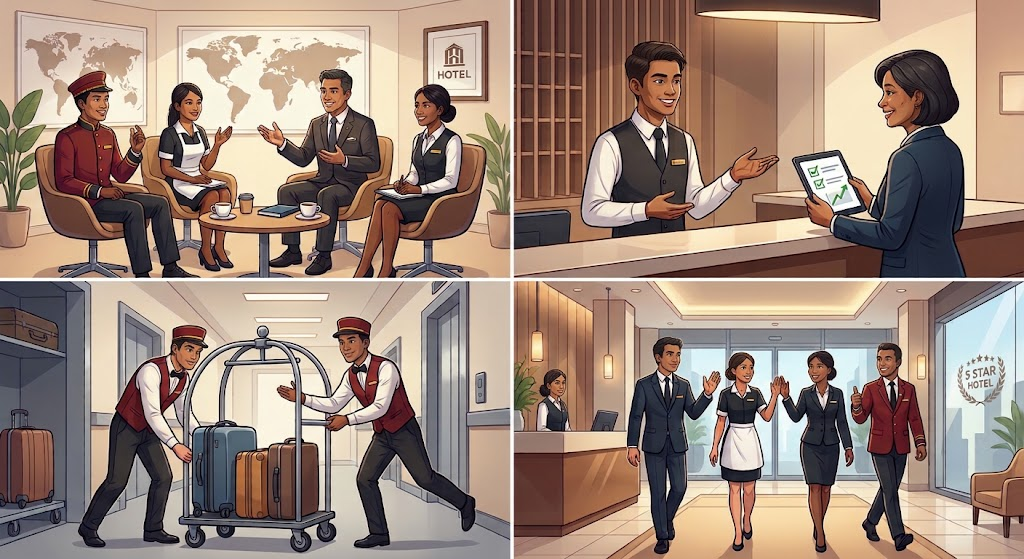
Good morning, everyone. Thank you for coming today.
In a 5-star hotel, our guests expect everything to be perfect. But that great experience starts before guests enter the hotel. It starts right here, with how we talk to, respect, and help each other every day. Excellent service needs a strong team, and today I want to share a few basic rules to help us build a good working environment.
First, communication is very important. During busy hours, we are under stress and time is short. But always stay polite, calm, and respectful. When you get or give a task, ask questions to be sure. Never guess the details. Listening is also very important. When a coworker or boss speaks, pay full attention. Repeat their words to make sure you understand correctly.
Second, respect the rules and show initiative. Every department works well because we have clear roles and managers. If you have a problem, talk to your direct supervisor first before you talk to higher managers. Also, when you talk to your manager about a problem, bring one or two ideas to solve it. This shows you take responsibility and helps the whole team.
Third, keep learning and stay calm. Good advice is not an attack on you. It is a helpful tool to improve your skills and grow your career. Say thank you when your manager gives you advice. Also, if a coworker is angry or stressed, do not get upset. Stay calm and focus only on solving the problem together.
Finally, protect trust in the team and help each other. Office gossip hurts feelings and breaks trust. Do not talk about personal lives or criticize others. This keeps our workplace safe and professional. Remember, a 5-star hotel cannot work if people work alone. When you finish your work, help your teammates immediately during busy moments.
When we communicate clearly, respect each other, and work together, we do not only give guests a great stay. We also create a happy workplace where we can all succeed. Thank you for your hard work. Let’s have a great day today.
__________________________________
Vocabulary:
| Word / Phrase | Definition |
| core principles | the most important rules for doing a job well. |
| to expect | to think that something will happen or someone will do something. |
| to share basic rules | to tell everyone the simple rules so people work together well. |
| working environment | the place where you work and the feel of that space. |
| to be respectful | to be polite and treat other people nicely. |
| to pay attention | to listen carefully and look at the person who is speaking. |
| to repeat | to say the same words again to be sure you understand. |
| to show initiative | to do helpful work without waiting for someone to tell you. |
| to take responsibility | to care for your job and fix your own mistakes. |
| to improve one’s skills | to learn and become better at doing your job tasks. |
| to grow one’s career | to get a better job or higher position over time. |
| to protect trust in a team | to be honest so your coworkers can rely on you. |
| gossip | talking about other people’s private lives in a bad way. |
| to succeed | to do a good job and reach your goals. |
#####################
Multiple choice
1. What kind of establishment is mentioned in the text?
A) A hotel
B) A large international airport resort and conference center
C) A luxury five-star restaurant with accommodation facilities
2. According to the speaker, where does an excellent guest experience actually start?
A) Inside the main dining hall when guests arrive for breakfast
B) With how staff treat each other
C) At the front desk during the check-in process on busy days
3. What is identified as the first basic rule for a good working environment?
A) Wearing your complete uniform properly at all times during your shift
B) Arriving fifteen minutes early before every scheduled shift begins
C) Communication
4. How are working conditions described during busy hours?
A) Stressful and fast
B) Extremely difficult and completely unmanageable for single workers
C) Relaxed and full of extra time to complete tasks carefully
5. What should you do when you receive or give a task?
A) Never ask questions and try to figure out everything by yourself
B) Ask questions
C) Guess all the hidden details to save valuable time
6. What should you do when a coworker or boss speaks to you?
A) Think about your next tasks and ignore what they are saying
B) Nod your head quickly without paying attention to the details
C) Pay full attention
7. How can you make sure you understand someone correctly?
A) Repeat their words
B) Write a long report about everything they said to you
C) Ask another coworker to explain it to you later in the day
8. What is part of the second rule mentioned in the speech?
A) Changing your department whenever you feel bored with your tasks
B) Respecting the rules
C) Ignoring company guidelines when you want to work faster
9. Who should you talk to first if you have a problem?
A) The general manager of the entire hotel building
B) The human resources department director immediately
C) Your direct supervisor
10. What should you bring when you talk to your manager about a problem?
A) One or two solutions
B) A detailed list of complaints about other employees
C) Complete documentation of every mistake that happened last week
11. How should you view good advice from a manager?
A) As a personal attack on your character and ability
B) As a helpful tool
C) As an unnecessary interruption during your busy workday
12. What should you say when your manager gives you advice?
A) Nothing at all because it is better to stay silent
B) That you already knew everything they just explained
C) Thank you
13. What should you do if a coworker is angry or stressed?
A) Stay calm
B) Get angry back and start an argument in front of the guests
C) Walk away immediately and refuse to work with them ever again
14. What does office gossip do to the team?
A) Makes everyone laugh and improves the general atmosphere
B) Hurts feelings and breaks trust
C) Helps people share important news about each other
15. What subject should you avoid talking about at work?
A) The daily weather forecast and upcoming weekend plans
B) Professional hotel management strategies and guest services
C) Personal lives
16. Avoiding gossip keeps the workplace safe and what else?
A) Professional
B) Entertaining for everyone who works during the evening shift
C) Relaxed enough to sleep during your break time
17. According to the text, why can’t a 5-star hotel function properly?
A) If employees do not wear expensive uniforms
B) If people work alone
C) If management does not buy new equipment
18. What should you do when you finish your work during busy moments?
A) Sit down in the staff room and check your mobile phone
B) Leave the building early without telling your manager
C) Help your teammates
19. Good communication and teamwork help create what kind of workplace?
A) A happy workplace
B) A strict military-style environment with zero communication allowed
C) A quiet library-like space where nobody ever speaks a word
20. What does the speaker wish everyone at the end of the speech?
A) A very difficult shift filled with many complicated problems
B) A great day
C) An early dismissal and extra vacation pay
_____________________________
Answer key:
1. A | 2. B | 3. C | 4. A | 5. B | 6. C | 7. A | 8. B |
9. C | 10. A | 11. B | 12. C | 13. A | 14. B | 15. C |
16. A | 17. B | 18. C | 19. A | 20. B
#####################
True or false
- Excellent hotel service starts before guests enter the hotel.
- The speaker believes that team members should only focus on their own work.
- Communication is described as being very important during busy hours.
- When under stress, staff are advised to stay polite, calm, and respectful.
- You should guess task details if time is short.
- To make sure you understand a coworker or boss, you should repeat their words.
- Clear roles and managers help every department work well.
- If you have a problem, you should talk directly to higher managers first.
- When discussing a problem with your manager, you should bring one or two ideas to solve it.
- Bringing solutions to a manager shows that you take responsibility.
- Good advice should be seen as a personal attack.
- Advice from a manager is a helpful tool to grow your career.
- You should say thank you when your manager gives you advice.
- If a coworker is angry, you should get upset too.
- When a coworker is stressed, the focus should remain on solving the problem together.
- Office gossip helps build trust within the hotel team.
- Employees should avoid talking about personal lives or criticizing others.
- A 5-star hotel can work well even if staff members work alone.
- You should help your teammates immediately during busy moments after finishing your work.
- Clear communication and respect create a happy workplace where everyone can succeed.
____________________________
Answer Key:
1. True 2. False 3. True 4. True 5. False 6. True 7. True 8. False
9. True 10. True 11. False 12. True 13. True 14. False 15. True
16. False 17. True 18. False 19. True 20. True
####################
Fill in
- In a 5-star hotel, guests expect everything to be ______.
A) difficult
B) perfect
C) stressful - A great guest experience starts right here with how we ______, respect, and help each other.
A) talk to
B) ignore
C) argue with - Excellent service needs a strong ______ to succeed.
A) guest
B) rule
C) team - During busy hours, employees are under ______ and time is short.
A) success
B) stress
C) safety - When giving or getting a task, you should ask questions and never ______ the details.
A) guess
B) repeat
C) respect - When a coworker or boss speaks, pay full ______.
A) gossip
B) attention
C) initiative - Every department works well because we have clear ______ and managers.
A) feelings
B) attacks
C) roles - Talk to your direct ______ first before you talk to higher managers.
A) supervisor
B) teammate
C) guest - Bringing ideas to solve a problem shows that you take ______.
A) gossip
B) stress
C) responsibility - Good advice is not an attack, but a helpful tool to ______ your skills.
A) hurt
B) break
C) improve - Advice from your manager can help you grow your ______.
A) career
B) gossip
C) moment - If a coworker is angry or stressed, stay ______ and focus on solving the problem.
A) upset
B) calm
C) polite - Office ______ hurts feelings and breaks trust.
A) initiative
B) gossip
C) communication - Do not talk about personal lives or ______ others.
A) respect
B) criticize
C) thank - When you finish your work, help your ______ immediately during busy moments.
A) supervisors
B) guests
C) teammates
——————————————
Answer key:
1. B 2. A 3. C 4. B 5. A 6. B 7. C 8. A 9. C
10. C 11. A 12. B 13. B 14. B 15. C
###################
Exercise 1: Matching paragraph headings – read the text sections (1–4) and match each one with the correct heading (A–E). There is one extra heading that you do not need.
Headings:
A) Listening and Talking Well at Work
B) Cleaning Rooms and Preparing Guest Beds
C) Listening to Advice and Staying Calm
D) Following Your Supervisor and Offering Solutions
E) Stopping Gossip and Helping Teammates
Paragraphs:
- [ ] „First, communication is very important. During busy hours, we are under stress and time is short. But always stay polite, calm, and respectful. When you get or give a task, ask questions to be sure. Never guess the details. Listening is also very important. When a coworker or boss speaks, pay full attention. Repeat their words to make sure you understand correctly.“
- [ ] „Second, respect the rules and show initiative. Every department works well because we have clear roles and managers. If you have a problem, talk to your direct supervisor first before you talk to higher managers. Also, when you talk to your manager about a problem, bring one or two ideas to solve it. This shows you take responsibility and helps the whole team.“
- [ ] „Third, keep learning and stay calm. Good advice is not an attack on you. It is a helpful tool to improve your skills and grow your career. Say thank you when your manager gives you advice. Also, if a coworker is angry or stressed, do not get upset. Stay calm and focus only on solving the problem together.“
- [ ] „Finally, protect trust in the team and help each other. Office gossip hurts feelings and breaks trust. Do not talk about personal lives or criticize others. This keeps our workplace safe and professional. Remember, a 5-star hotel cannot work if people work alone. When you finish your work, help your teammates immediately during busy moments.“
___________________________
Answer key:
1. A 2. D 3. C 4. E (Extra: B)
####################
Short answers
1. What do guests expect everything to be in a 5-star hotel?
2. What three qualities must you keep during busy hours?
3. What should you do when a coworker or boss speaks to you?
4. How can you make sure you understand a task correctly?
5. Who is the first person you must speak to about a work problem?
6. What shows that you take responsibility when you have a problem?
7. Why should you say thank you for manager advice?
8. What should you focus on when a coworker is angry?
9. What two things should you never talk about at work?
10. Who should you help as soon as your work is done?
_____________________________
Answer key:
1. Perfect 2. Polite calm and respectful 3. Pay full attention
4. Repeat their words 5. Your direct supervisor
6. Bringing ideas to solve it 7. It improves your skills
8. Solving the problem together
9. Personal lives or criticize others
10. Help your teammates
#####################
Put the scrambled words in order to make complete, correct sentences
- polite / stay / busy / during / always / hours
- never / details / task / a / guess / the / of
- when / attention / full / pay / speaks / boss / your
- direct / first / talk / supervisor / to / your
- a / bring / problem / solution / to / a
- grow / advice / helps / career / your
- when / calm / coworker / stay / is / angry / a
- trust / breaks / gossip / team / the / in
- criticize / do / not / workplace / at / others
- your / teammates / after / your / finish / work / you / help
_________________________
Answer key:
1. Always stay polite during busy hours
2. Never guess the details of a task
3. Pay full attention when your boss speaks
4. Talk to your direct supervisor first
5. Bring a solution to a problem
6. Advice helps grow your career
7. Stay calm when a coworker is angry
8. Gossip breaks trust in the team
9. Do not criticize others at workplace
10. Help your teammates after you finish your work
########################
########################
B2/C1 version
Good morning, everyone. Thank you for making the time to gather today.
In a 5-star hotel, our guests expect absolute perfection. Yet, that world-class experience begins long before a guest steps into the lobby—it starts right here, in how we interact with, respect, and support one another every single day. Delivering excellence requires a seamless, unified team, and today I want to share a few core principles that will help us build the best possible workplace environment.
First, communication is our foundation. During peak operational hours, energy runs high and time is limited. However, maintaining a polite, calm, and respectful tone—even under pressure—is non-negotiable. When you receive or assign a task, never leave details to assumption. Confirm instructions immediately. Equally critical is active listening. When a colleague or supervisor speaks, give them your full focus without interrupting, and paraphrase what they have said to guarantee you are completely aligned.
Second, respect our workplace structure and take initiative. Every department operates smoothly because of defined roles and clear hierarchy. If a conflict or operational issue arises, address it with your direct supervisor first before escalating to higher management. Furthermore, when you approach your manager with a challenge, do not bring just the problem—bring one or two potential solutions as well. Showing that kind of ownership drives our entire property forward.
Third, embrace continuous improvement and de-escalate tension. Constructive feedback is never a personal attack; it is an invaluable tool designed to refine your professional skills and elevate your hospitality career. Thank your leaders when they offer guidance. By the same token, if a coworker is visibly stressed or overwhelmed, do not absorb that emotional energy. Stay composed, remain objective, and keep your joint focus strictly on resolving the task at hand.
Finally, protect team trust and champion true collaboration. Workplace gossip severely damages morale and destroys trust; keeping personal lives and performance critiques out of daily conversation creates a safe, professional standard for everyone. Remember that a 5-star hotel cannot function in silos. The moment your immediate duties are finished, step in to assist your teammates during heavy rushes without waiting to be asked.
When we practice clear communication, mutual respect, and active teamwork, we do not simply deliver an unforgettable experience for our guests—we cultivate a positive, rewarding workplace where every single one of us can thrive. Thank you for your continued commitment and hard work. Let’s make today’s shift exceptional.
#######################
#######################
#######################
Please use the box below
to write your feedback.
Only I can read it.
It is not public.
Please tell me:
- Are the texts and exercises OK?
- Are the topics OK?
- Is the level OK?
- Is it too easy or too difficult?
- Is it too short, too long?
- Do you want texts about other topics?
Thank you! I appreciate your feedback.
##################
##################
##################
Remember how babies
learn a language:
Babies learn a language by listening.
They use their ears to hear sounds.
Their brain remembers these sounds.
Babies connect sounds with people and things.
They listen to their parents.
Then they copy the sounds they hear. They imitate words.
Slowly, babies learn to speak.
So,
LISTEN, LISTEN, LISTEN, LISTEN………………

SMFrockZ@gmx.at
Schreibe einen Kommentar