- Budi’s experience at the Kaghati Kolope Festival in August 2025
Before you do that text make sure you are familiar with
past simple,
and you’ve done the
other text on the festival (part 1/2).
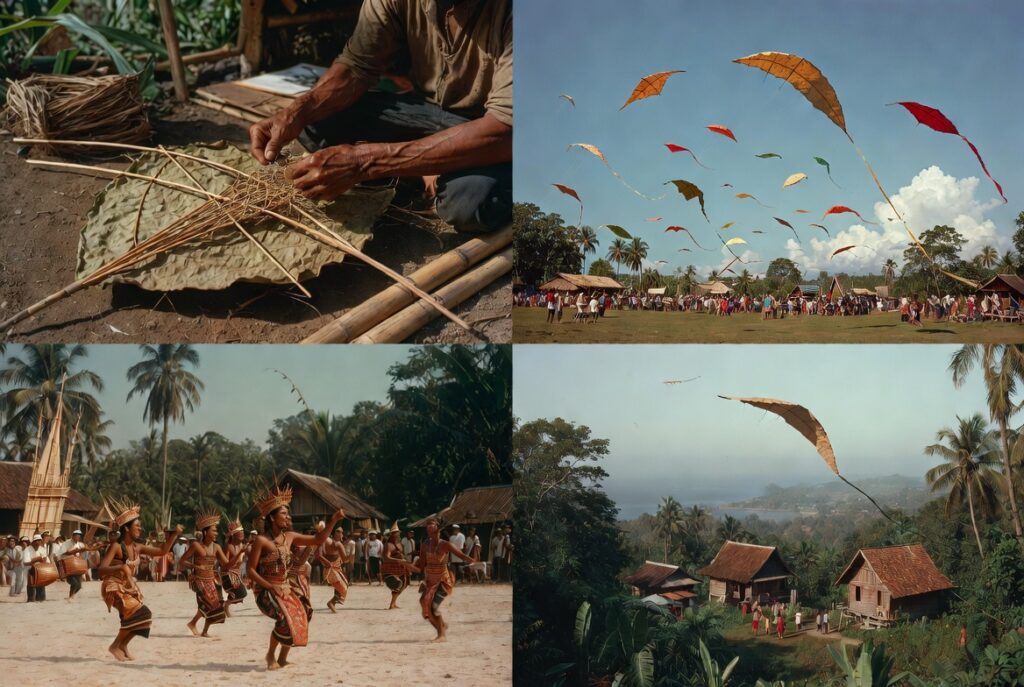
In August 2025, I visited the Kaghati Kolope Festival on Muna Island in Southeast Sulawesi, Indonesia. It was a traditional festival that celebrated the special kite culture of the Muna people.
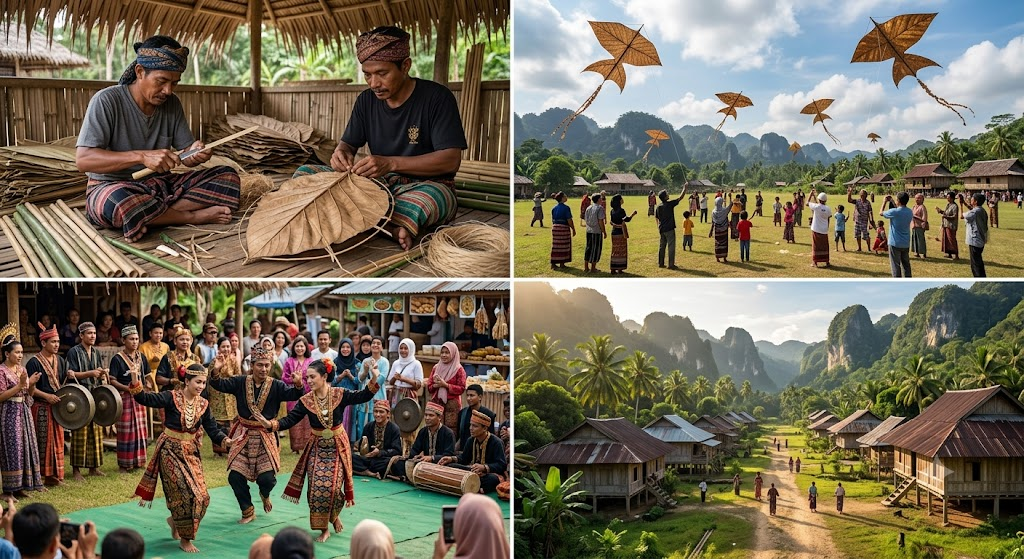
During my visit, I learned that the Kaghati Kolope was a very special kite because local people made it by hand using natural materials. They used kolope leaves, bamboo, and plant fibres from nature. I watched local craftsmen carefully prepare the materials and build the traditional kites. They showed visitors how they created these beautiful kites.
One of the most exciting moments was watching the traditional kites flying high in the sky. Many people came to the festival to see the colourful kites and enjoyed the friendly atmosphere. I also watched traditional dances, listened to music performances, and tried some local food.
The festival was not only about kites. It was also a wonderful opportunity to learn about Muna culture and meet local people. Families and friends came together to celebrate their traditions. People were very friendly and were happy to share their stories and customs with visitors.
During my stay, I also visited Liangkabori Village, an important place for the Kaghati Kolope tradition. I enjoyed the beautiful nature, saw local life, and learned more about the history of the area.
My visit to the Kaghati Kolope Festival was a unique experience. I discovered a different side of Indonesia and enjoyed a traditional event that was not known by many tourists. I hoped I could visit Muna Island again in the future.
##################
#Regular verbs
Rules:
- Most verbs: add -ed
play → played - Verbs ending in -e: add -d
live → lived - Verbs ending in consonant + y: change y to i and add -ed
study → studied - Short verbs ending in vowel + consonant: double the final consonant and add -ed
stop → stopped
#Irregular verbs (the complete list)
Irregular verbs change their form in the past tense. They do not add “-ed.”
Examples:
- go → went
- eat → ate
- have → had
- see → saw
- come → came
###################
| Infinitive | Past simple | A1 definition |
|---|---|---|
| be | was / were | to exist or happen |
| visit | visited | to go to a place for a short time |
| celebrate | celebrated | to do something special for an event |
| learn | learned | to get new knowledge |
| make | made | to create something |
| use | used | to take something and do something with it |
| watch | watched | to look at something for some time |
| prepare | prepared | to get something ready |
| build | built | to make something by putting parts together |
| show | showed | to let someone see something |
| create | created | to make something new |
| fly | flew | to move through the air |
| come | came | to move to a place |
| see | saw | to notice something with your eyes |
| enjoy | enjoyed | to like something and have a good time |
| listen | listened | to hear something carefully |
| try | tried | to do or taste something for the first time |
| meet | met | to see and talk to someone |
| share | shared | to give something to other people |
| know | knew | to have information about something |
| discover | discovered | to find or learn something new |
| experience | experienced | to have something happen to you |
| hope | hoped | to want something to happen |
| can | could | to be able to do something |
################
Fill in, correct form of the verb in past simple:
In August 2025, I _____ (visit) the Kaghati Kolope Festival on Muna Island in Southeast Sulawesi, Indonesia. It _____ (be) a traditional festival that _____ (celebrate) the special kite culture of the Muna people.
During my visit, I _____ (learn) that the Kaghati Kolope _____ (be) a very special kite because local people _____ (make) it by hand using natural materials. They _____ (use) kolope leaves, bamboo, and plant fibres from nature. I _____ (watch) local craftsmen carefully _____ (prepare) the materials and _____ (build) the traditional kites. They _____ (show) visitors how they _____ (create) these beautiful kites.
One of the most exciting moments _____ (be) watching the traditional kites _____ (fly) high in the sky. Many people _____ (come) to the festival to _____ (see) the colourful kites and _____ (enjoy) the friendly atmosphere. I also _____ (watch) traditional dances, _____ (listen) to music performances, and _____ (try) some local food.
The festival _____ (be) not only about kites. It also _____ (be) a wonderful opportunity to _____ (learn) about Muna culture and _____ (meet) local people. Families and friends _____ (come) together to _____ (celebrate) their traditions. People _____ (be) very friendly and _____ (be) happy to _____ (share) their stories and customs with visitors.
During my stay, I also _____ (visit) Liangkabori Village, an important place for the Kaghati Kolope tradition. I _____ (enjoy) the beautiful nature, _____ (see) local life, and _____ (learn) more about the history of the area.
My visit to the Kaghati Kolope Festival _____ (be) a unique experience. I _____ (discover) a different side of Indonesia and _____ (enjoy) a traditional event that _____ (be) not known by many tourists. I _____ (hope) I _____ (can) visit Muna Island again in the future.
——————————————–
Correct version: see text above
####################
True or False?
Read the statements. Write T (True) or F (False).
- The writer visited the Kaghati Kolope Festival in August 2025. _____
- The festival took place on Bali Island. _____
- The Kaghati Kolope was a special traditional kite of the Muna people. _____
- Local craftsmen prepared materials and built traditional kites. _____
- The writer travelled to Sumatra to visit the festival. _____
- The writer watched traditional dances and listened to music performances. _____
- The kites were made using natural materials from nature. _____
- The festival was about modern machines and technology. _____
- The writer visited Liangkabori Village during the stay. _____
- The writer bought all the kites from a large factory. _____
- Many people came to see the colourful kites flying in the sky. _____
- The writer learned about Muna culture and local traditions. _____
- The festival happened in December 2025. _____
- The writer tried some local food during the festival. _____
- Families and friends came together to celebrate their traditions. _____
- The writer worked as a kite maker during the festival. _____
- The writer discovered a different side of Indonesia. _____
- The writer stayed on Muna Island for several years. _____
- People shared their stories and customs with visitors. _____
- The writer hoped to visit Muna Island again in the future. _____
————————————
False: 2,5,8,10,13,16,18
_______________________
Full version:
The writer visited the Kaghati Kolope Festival in August 2025.
The festival took place on Bali Island.
-True is: The festival took place on Muna Island in Southeast Sulawesi, Indonesia.
The Kaghati Kolope was a special traditional kite of the Muna people.
Local craftsmen prepared materials and built traditional kites.
The writer travelled to Sumatra to visit the festival.
-True is: The writer travelled to Muna Island in Southeast Sulawesi, Indonesia, to visit the festival.
The writer watched traditional dances and listened to music performances.
The kites were made using natural materials from nature.
The festival was about modern machines and technology.
-True is: The festival was about traditional kites, Muna culture, and local traditions.
The writer visited Liangkabori Village during the stay.
The writer bought all the kites from a large factory.
-True is: Local people made the kites by hand using natural materials.
Many people came to see the colourful kites flying in the sky.
The writer learned about Muna culture and local traditions.
The festival happened in December 2025.
-True is: The festival happened in August 2025.
The writer tried some local food during the festival.
Families and friends came together to celebrate their traditions.
The writer worked as a kite maker during the festival.
-True is: The writer watched local craftsmen create traditional kites.
The writer discovered a different side of Indonesia.
The writer stayed on Muna Island for several years.
-True is: The writer stayed on Muna Island during the festival visit.
People shared their stories and customs with visitors.
The writer hoped to visit Muna Island again in the future.
###################
Match the statements with the correct evidence from the text:
Statements
- The festival was connected to a special tradition of the Muna people.
- The writer visited the festival during a specific month and year.
- Local people created the kites with their own hands.
- The kites used materials from the natural world.
- The writer observed people making traditional kites.
- The festival attracted many people who wanted to see the kites.
- The writer experienced more than just kite activities.
- The festival helped the writer understand local culture.
- People at the festival welcomed visitors.
- The writer went to another important place connected with the tradition.
- The writer saw the beauty of the area around the village.
- The writer found the experience special and memorable.
- The festival was an opportunity to discover a different part of Indonesia.
- The writer wanted to return to the island one day.
- The event was not well known among many tourists.
Evidence from the text
A. The writer hoped to visit Muna Island again in the future.
B. The festival celebrated the special kite culture of the Muna people.
C. The writer watched local craftsmen carefully prepare the materials and build the traditional kites.
D. The visit happened in August 2025.
E. They used kolope leaves, bamboo, and plant fibres from nature.
F. Many people came to the festival to see the colourful kites.
G. The writer watched traditional dances, listened to music performances, and tried local food.
H. The writer learned more about the history of the area.
I. People were friendly and happy to share their stories and customs with visitors.
J. The writer visited Liangkabori Village during the stay.
K. The writer enjoyed the beautiful nature and saw local life.
L. The visit was a unique experience.
M. The writer discovered a different side of Indonesia.
N. The event was not known by many tourists.
O. The festival was also a wonderful opportunity to learn about Muna culture.
____________________________
Answers:
1-B 2-D 3-C 4-E 5-C 6-F
7-G 😯 9-I 10-J 11-K
12-L 13-M 14-A 15-N
####################
Match sentences 1–15 with the correct endings A–O.
Sentences
- In August 2025, the writer visited the Kaghati Kolope Festival because _____
- The Kaghati Kolope was special because _____
- Local people made the traditional kites by hand using _____
- During the festival, the writer watched craftsmen who _____
- The traditional kites flew high in the sky and _____
- Many people came to the festival to _____
- The writer also enjoyed the festival activities because _____
- The event was a good opportunity to learn about _____
- People at the festival were friendly and _____
- During the stay, the writer visited Liangkabori Village, which _____
- In Liangkabori Village, the writer enjoyed nature and _____
- The festival gave the writer a chance to discover _____
- The writer thought the visit was unique because _____
- The Kaghati Kolope Festival was different from many tourist events because _____
- At the end of the story, the writer hoped that _____
Endings
A. they wanted to see the colourful kites and enjoy the atmosphere.
B. the special kite culture of the Muna people was celebrated there.
C. they used kolope leaves, bamboo, and plant fibres.
D. they showed visitors how they created beautiful kites.
E. it was an important place for the Kaghati Kolope tradition.
F. it helped the writer understand Muna culture and local traditions.
G. it was not known by many tourists.
H. they shared their stories and customs with visitors.
I. the writer could visit Muna Island again in the future.
J. it showed a different side of Indonesia.
K. the writer learned about local life in the area.
L. the kites were part of a traditional event.
M. it was a special experience with culture, nature, and local people.
N. the writer saw activities connected with the traditional kite culture.
O. the writer wanted to experience this traditional festival.
_________________________
Answers:
1-B 2-L 3-C 4-D 5-A 6-A
7-N 8-F 9-H 10-E 11-K
12-J 13-M 14-G 15-I
________________________
Correct version:
- In August 2025, the writer visited the Kaghati Kolope Festival because (B) the special kite culture of the Muna people was celebrated there.
- The Kaghati Kolope was special because (L) it was a traditional event.
- Local people made the traditional kites by hand using (C) they used kolope leaves, bamboo, and plant fibres.
- During the festival, the writer watched craftsmen who (D) showed visitors how they created beautiful kites.
- The traditional kites flew high in the sky and (A) they wanted to see the colourful kites and enjoy the atmosphere.
- Many people came to the festival to (A) they wanted to see the colourful kites and enjoy the atmosphere.
- The writer also enjoyed the festival activities because (N) the writer saw activities connected with the traditional kite culture.
- The event was a good opportunity to learn about (F) Muna culture and local traditions.
- People at the festival were friendly and (H) they shared their stories and customs with visitors.
- During the stay, the writer visited Liangkabori Village, which (E) was an important place for the Kaghati Kolope tradition.
- In Liangkabori Village, the writer enjoyed nature and (K) the writer learned about local life in the area.
- The festival gave the writer a chance to discover (J) a different side of Indonesia.
- The writer thought the visit was unique because (M) it was a special experience with culture, nature, and local people.
- The Kaghati Kolope Festival was different from many tourist events because (G) it was not known by many tourists.
- At the end of the story, the writer hoped that (I) the writer could visit Muna Island again in the future.
######################
Who or What Does It Refer To?
- The Kaghati Kolope was a special kite because it was made by hand using natural materials.
It = _______________________
YOU WRITE:
=The Kaghati Kolope - Local people used kolope leaves, bamboo, and plant fibres. They created beautiful traditional kites.
They = _______________________ - The writer watched local craftsmen. They showed visitors how they built the kites.
They = _______________________ - Many people came to the festival because they wanted to see the colourful kites.
They = _______________________ - The writer visited Liangkabori Village. It was an important place for the tradition.
It = _______________________ - The festival celebrated Muna culture. It was a special event for local people.
It = _______________________ - Families and friends came together. They celebrated their traditions.
They = _______________________ - The writer met local people. They shared their stories and customs.
They = _______________________ - The craftsmen prepared materials carefully. They built the traditional kites.
They = _______________________ - The writer tried local food during the festival. It was part of the cultural experience.
It = _______________________ - The writer saw the traditional kites flying in the sky. They looked colourful and beautiful.
They = _______________________ - The festival was not known by many tourists. It was still a unique experience.
It = _______________________ - The writer learned about the history of the area. It helped the writer understand the tradition better.
It = _______________________ - The Kaghati Kolope tradition was important for the Muna people. It connected people with their culture.
It = _______________________ - The writer hoped to visit Muna Island again. It was a place with special memories.
It = _______________________
———————————
Answer Key
- The Kaghati Kolope
- Local people
- Local craftsmen
- Many people / festival visitors
- Liangkabori Village
- The festival
- Families and friends
- Local people
- Local craftsmen
- Local food
- Traditional kites
- The festival
- The history of the area
- The Kaghati Kolope tradition
- Muna Island
__________________________
Full version:
- The Kaghati Kolope was a special kite because it was made by hand using natural materials.
It = The Kaghati Kolope - Local people used kolope leaves, bamboo, and plant fibres. They created beautiful traditional kites.
They = Local people - The writer watched local craftsmen. They showed visitors how they built the kites.
They = Local craftsmen - Many people came to the festival because they wanted to see the colourful kites.
They = Many people - The writer visited Liangkabori Village. It was an important place for the tradition.
It = Liangkabori Village - The festival celebrated Muna culture. It was a special event for local people.
It = The festival - Families and friends came together. They celebrated their traditions.
They = Families and friends - The writer met local people. They shared their stories and customs.
They = Local people - The craftsmen prepared materials carefully. They built the traditional kites.
They = The craftsmen - The writer tried local food during the festival. It was part of the cultural experience.
It = Local food - The writer saw the traditional kites flying in the sky. They looked colourful and beautiful.
They = The traditional kites - The festival was not known by many tourists. It was still a unique experience.
It = The festival - The writer learned about the history of the area. It helped the writer understand the tradition better.
It = The history of the area - The Kaghati Kolope tradition was important for the Muna people. It connected people with their culture.
It = The Kaghati Kolope tradition - The writer hoped to visit Muna Island again. It was a place with special memories.
It = Muna Island
###################
Fill in, verbs below:
discovered – came – showed – used – visited –
tried – built – shared – was – enjoyed –
made – gave – watched –
came – visited
- In August 2025, I ______ the Kaghati Kolope Festival on Muna Island.
- It ______ a traditional festival about the kite culture of the Muna people.
- Local people ______ the traditional kites by hand.
- They ______ natural materials such as kolope leaves, bamboo, and plant fibres.
- I ______ local craftsmen prepare the materials carefully.
- The craftsmen ______ beautiful traditional kites for visitors.
- They ______ visitors how they created the kites.
- Many people ______ to the festival to see the colourful kites.
- I ______ traditional dances and music performances.
- I also ______ some local food during the festival.
- The festival ______ me an opportunity to learn about Muna culture.
- Families and friends ______ together to celebrate their traditions.
- People ______ their stories and customs with visitors.
- I ______ Liangkabori Village during my stay.
- I ______ a different side of Indonesia during this unique experience.
————————————-
Full version:
- In August 2025, I visited the Kaghati Kolope Festival on Muna Island.
- It was a traditional festival about the kite culture of the Muna people.
- Local people made the traditional kites by hand.
- They used natural materials such as kolope leaves, bamboo, and plant fibres.
- I watched local craftsmen prepare the materials carefully.
- The craftsmen built beautiful traditional kites for visitors.
- They showed visitors how they created the kites.
- Many people came to the festival to see the colourful kites.
- I enjoyed traditional dances and music performances.
- I also tried some local food during the festival.
- The festival gave me an opportunity to learn about Muna culture.
- Families and friends came together to celebrate their traditions.
- People shared their stories and customs with visitors.
- I visited Liangkabori Village during my stay.
- I discovered a different side of Indonesia during this unique experience.
###################
Match questions 1–12 with the correct answers A–L.
Questions
- When did the writer visit the Kaghati Kolope Festival?
- Where was the event held?
- What was the main idea of the festival?
- What made the Kaghati Kolope unusual?
- Which natural items were part of the kite-making process?
- Who helped visitors understand the kite-making process?
- What could visitors see in the sky during the event?
- Which cultural experiences did the writer enjoy?
- What was one important result of the festival experience?
- Which place was part of the writer’s journey?
- What new view of Indonesia did the writer find?
- What future plan did the writer mention?
Answers
A. The writer wanted another visit to Muna Island.
B. It happened in August 2025.
C. It focused on the traditional kite culture of the Muna people.
D. The kites had a special handmade design with natural materials.
E. Kolope leaves, bamboo, and plant fibres were part of the materials.
F. Local craftsmen explained the process to visitors.
G. Colourful traditional kites appeared high above the area.
H. Traditional dances, music performances, and local food were part of the experience.
I. The trip gave the writer more knowledge about local culture and customs.
J. Liangkabori Village was included in the trip.
K. The writer found a different side of the country.
L. The writer hoped to return to the island in the future.
__________________________
Answers:
1-B 2-J 3-C 4-D 5-E 6-F
7-G 8-H 9-I 10-J 11-K 12-L
_________________________
Full version:
- When did the writer visit the Kaghati Kolope Festival? — (B) It happened in August 2025.
- Where was the event held? — (J) It took place on Muna Island in Southeast Sulawesi, Indonesia.
- What was the main idea of the festival? — (C) It focused on the traditional kite culture of the Muna people.
- What made the Kaghati Kolope unusual? — (D) The kites had a special handmade design with natural materials.
- Which natural items were part of the kite-making process? — (E) Kolope leaves, bamboo, and plant fibres were part of the materials.
- Who helped visitors understand the kite-making process? — (F) Local craftsmen explained the process to visitors.
- What could visitors see in the sky during the event? — (G) Colourful traditional kites appeared high above the area.
- Which cultural experiences did the writer enjoy? — (H) Traditional dances, music performances, and local food were part of the experience.
- What was one important result of the festival experience? — (I) It gave the writer more knowledge about local culture and customs.
- Which place was part of the writer’s journey? — (J) Liangkabori Village was included in the trip.
- What new view of Indonesia did the writer find? — (K) The writer found a different side of the country.
- What future plan did the writer mention? — (L) The writer hoped to return to the island in the future.
##################
Speech cheat sheet:
My Experience at the
Kaghati Kolope Festival
(August 2025)
1. Introduction
- When? → August 2025
- Where? → Muna Island, Southeast Sulawesi, Indonesia
- Event? → Kaghati Kolope Festival
- Topic? → traditional kite culture of the Muna people
2. The Kaghati Kolope Kite
- special kite
- made by hand
- natural materials
- kolope leaves
- bamboo
- plant fibres
- local craftsmen → prepare materials → build kites
3. Festival Activities
- watched:
- traditional kites flying high
- colourful kites in the sky
- craftsmen creating kites
- enjoyed:
- traditional dances
- music performances
- local food
4. People and Culture
- festival = more than kites
- learned about:
- Muna culture
- traditions
- local customs
- families and friends:
- celebrated together
- shared stories
- people:
- friendly
- welcomed visitors
5. Liangkabori Village
- visited Liangkabori Village
- important place:
- Kaghati Kolope tradition
- saw:
- beautiful nature
- local life
- learned:
- history of the area
6. Personal Experience / Ending
- unique experience
- discovered:
- different side of Indonesia
- traditional event:
- not known by many tourists
- future:
- hope to visit Muna Island again
Useful Speech Connectors
Beginning
- In August 2025, I visited…
- I would like to talk about…
During the visit
- First,…
- During my visit,…
- One exciting moment was…
Adding information
- Also,…
- In addition,…
- Another interesting thing was…
Ending
- Overall,…
- It was a unique experience because…
- I hope to visit again in the future.
#################
#################
Please use the box below
to write your feedback.
Only I can read it.
It is not public.
Please tell me:
- Are the texts and exercises OK?
- Are the topics OK?
- Is the level OK?
- Is it too easy or too difficult?
- Do you want texts about other topics?
Thank you! I appreciate your feedback.
##################
##################
##################
Remember how babies
learn a language
Babies learn a language by listening.
They use their ears to hear sounds.
Their brain remembers these sounds.
Babies connect sounds with people and things.
They listen to their parents.
Then they copy the sounds they hear. They imitate words.
Slowly, babies learn to speak.
So,
LISTEN, LISTEN, LISTEN, LISTEN………………
Schreibe einen Kommentar