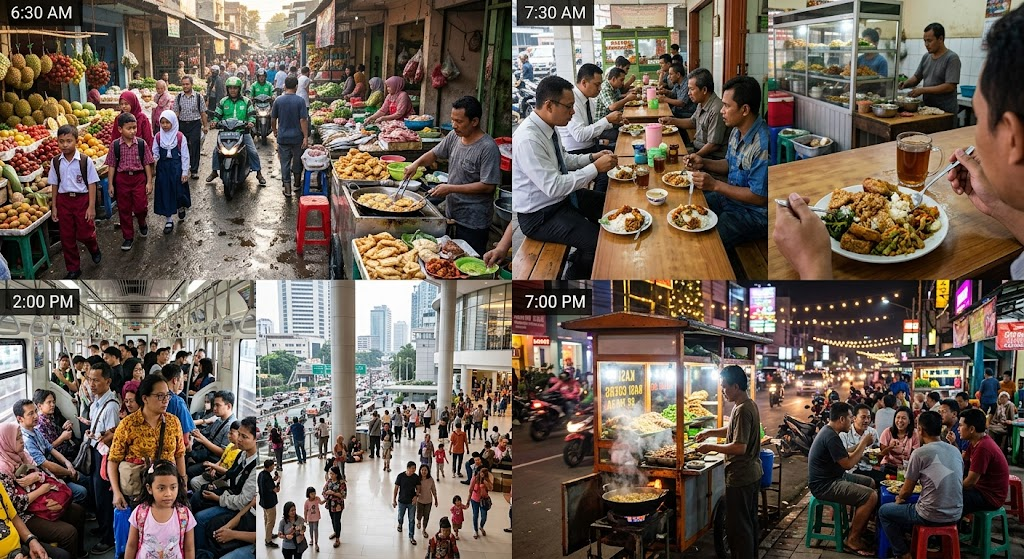
Jakarta is a big city in Indonesia. As a tourist, I want to see the city like local people do. I do not only visit tourist places. I want to see normal daily life from morning to evening.
In the morning, I get up early at my hotel. I walk outside and see people start their day. Many workers go to work, and children go to school. Small shops open, and food sellers prepare breakfast. I visit a local market and see people buy fruit, vegetables, fish, and meat. The market is busy, and many people talk and smile.
For breakfast, I eat at a small warung. A warung is a small food shop. I eat rice, chicken, vegetables, and drink tea or coffee. Many local people eat there before work. I sit down, watch the people, and enjoy the simple morning.
In the afternoon, I walk around the city. I take a bus or train because many people use public transport every day. I visit small shops and see people buy clothes, food, and other things. I also go to a shopping mall. Many people in Jakarta like malls because they can shop, eat, and meet friends there.
In the evening, I try local food from a street food place. I eat fried rice, noodles, or meat on sticks. Families and friends sit together, talk, and enjoy their meals. After dinner, I walk through the city and see the lights.
A day in Jakarta like a local is a great way to learn about the city. I see how people live, eat, work, and spend time together.
_____________________________
| Word / Phrase | Definition |
|---|---|
| to enjoy | to like something and have a good time |
| local life | the normal life of people who live in a place |
| to walk outside | to go on foot in the open air |
| a food seller | a person who sells food |
| to prepare breakfast | to make food for the morning meal |
| vegetables | plants that people eat, like carrots, beans, or potatoes |
| meat | food from animals, like chicken, beef, or fish |
| to be busy | to have many things happening or many people around |
| to smile | to show happiness with your face |
| to take a bus | to travel by bus |
| clothes | things people wear, like shirts, trousers, and dresses |
| a shopping mall | a big building with many shops and restaurants |
| meat on sticks | small pieces of meat on a stick, often cooked over a fire |
#################
Match words 1–13 with the correct definitions A–M.
Words:
- to enjoy
- local life
- to walk outside
- a food seller
- to prepare breakfast
- vegetables
- meat
- to be busy
- to smile
- to take a bus
- clothes
- a shopping mall
- meat on sticks
Definitions:
A. things people wear, like shirts, trousers, and dresses
B. to show happiness with your face
C. a person who sells food
D. a big building with many shops and restaurants
E. to travel by bus
F. small pieces of meat on a stick, often cooked over a fire
G. plants that people eat, like carrots, beans, or potatoes
H. to go on foot in the open air
I. the normal life of people who live in a place
J. to like something and have a good time
K. to have many things happening or many people around
L. to make food for the morning meal
M. food from animals, like chicken or beef
_______________________
Answers:
1-J, 2-I, 3-H, 4-C, 5-L, 6-G, 7-M,
8-K, 9-B, 10-E, 11-A, 12-D, 13-F
#################
Match words 1–13 with the correct definitions A–M.
Words:
- to enjoy
- local life
- to walk outside
- a food seller
- to prepare breakfast
- vegetables
- meat
- to be busy
- to smile
- to take a bus
- clothes
- a shopping mall
- meat on sticks
Definitions:
A. things people wear, like shirts, trousers, and dresses
B. to show happiness with your face
C. a person who sells food
D. a big building with many shops and restaurants
E. to travel by bus
F. small pieces of meat on a stick, often cooked over a fire
G. plants that people eat, like carrots, beans, or potatoes
H. to go on foot in the open air
I. the normal life of people who live in a place
J. to like something and have a good time
K. to have many things happening or many people around
L. to make food for the morning meal
M. food from animals, like chicken or beef
____________________________
Answers:
1-J, 2-I, 3-H, 4-C, 5-L, 6-G, 7-M,
8-K, 9-B, 10-E, 11-A, 12-D, 13-F
####################
True or false:
- The tourist wants to see Jakarta like local people do.
- Many workers go to work in the morning.
- The tourist travels around Jakarta by airplane.
- Small shops open in the morning.
- A warung is a large international restaurant.
- The tourist eats pizza at a street food place.
- The tourist eats rice, chicken, and vegetables for breakfast.
- Shopping malls are places to shop, eat, and meet friends.
- The tourist starts the day at a beach in Jakarta.
- Many people use public transport every day.
- The tourist visits a museum in the afternoon.
- Street food can include fried rice, noodles, and meat on sticks.
- The tourist walks outside in the morning.
- The tourist works as a food seller in Jakarta.
- The tourist sees the city lights after dinner.
- The local market sells cars and computers.
- Children go to the local market to buy fish before school.
- The tourist learns how people live, eat, work, and spend time together.
- The tourist sleeps all day at the hotel.
- Families and friends sit together at shopping malls after breakfast.
_________________________
Answers:
1-T, 2-T, 3-F, 4-T, 5-F, 6-F, 7-T, 8-T,
9-F, 10-T, 11-F, 12-T, 13-T, 14-F,
15-T, 16-F, 17-F, 18-T, 19-F, 20-F
_________________________
Full version:
- The tourist wants to see Jakarta like local people do.
- Many workers go to work in the morning.
- The tourist travels around Jakarta by airplane.
True is: The tourist travels around Jakarta by bus or train. - Small shops open in the morning.
- A warung is a large international restaurant.
True is: A warung is a small food shop. - The tourist eats pizza at a street food place.
True is: The tourist eats fried rice, noodles, or meat on sticks at a street food place. - The tourist eats rice, chicken, and vegetables for breakfast.
- Shopping malls are places to shop, eat, and meet friends.
- The tourist starts the day at a beach in Jakarta.
True is: The tourist starts the day at the hotel and walks outside. - Many people use public transport every day.
- The tourist visits a museum in the afternoon.
True is: The tourist visits small shops and a shopping mall in the afternoon. - Street food can include fried rice, noodles, and meat on sticks.
- The tourist walks outside in the morning.
- The tourist works as a food seller in Jakarta.
True is: The tourist visits food sellers and eats local food. - The tourist sees the city lights after dinner.
- The local market sells cars and computers.
True is: The local market sells fruit, vegetables, fish, and meat. - Children go to the local market to buy fish before school.
True is: Children go to school in the morning. - The tourist learns how people live, eat, work, and spend time together.
- The tourist sleeps all day at the hotel.
True is: The tourist gets up early at the hotel and explores the city. - Families and friends sit together at shopping malls after breakfast.
True is: Families and friends sit together at street food places, talk, and enjoy their meals.
##################
Fill in, words below
to take a bus – meat – to smile – clothes – local life –
a shopping mall – to enjoy – vegetables –
a food seller – to prepare breakfast –
to be busy – meat on sticks –
to walk outside
- I want to learn about __________ and see how people in Jakarta live every day.
- In the morning, I like __________ and watch people start their day.
- The person who sells food at the market is called __________.
- The cook gets up early __________ for the customers.
- The market is full of people, so it can __________.
- People buy fruit and __________ at the local market.
- Chicken, beef, and fish are different types of __________.
- Many people __________ because it is an easy way to travel around the city.
- A large building with many shops and restaurants is called __________.
- People buy shirts, trousers, and other __________ in shops.
- Tourists __________ their time when they discover a new city.
- Friendly people often __________ when they meet other people.
- At the street food place, I eat __________ with a special sauce.
———————————–
Full version:
- I want to learn about local life and see how people in Jakarta live every day.
- In the morning, I like to walk outside and watch people start their day.
- The person who sells food at the market is called a food seller.
- The cook gets up early to prepare breakfast for the customers.
- The market is full of people, so it can be busy.
- People buy fruit and vegetables at the local market.
- Chicken, beef, and fish are different types of meat.
- Many people take a bus because it is an easy way to travel around the city.
- A large building with many shops and restaurants is called a shopping mall.
- People buy shirts, trousers, and other clothes in shops.
- Tourists enjoy their time when they discover a new city.
- Friendly people often smile when they meet other people.
- At the street food place, I eat meat on sticks with a special sauce.
####################
Match the first half of each sentence (1–12) with the correct second half (A–L)
First half
- Jakarta is a big city in Indonesia,
- The tourist wants to see the city
- In the morning, many workers go to work
- The tourist visits a local market
- For breakfast, the tourist eats at a small warung
- In the afternoon, the tourist takes a bus or train
- Many people in Jakarta like shopping malls
- In the evening, the tourist tries local food
- Families and friends sit together,
- After dinner, the tourist walks through the city
- A day in Jakarta like a local helps the tourist
- The tourist wants to see normal daily life
Second half
A. because they can shop, eat, and meet friends there.
B. and see the city lights.
C. from morning to evening.
D. where people buy fruit, vegetables, fish, and meat.
E. talk, and enjoy their meals.
F. learn about how people live, eat, work, and spend time together.
G. and children go to school.
H. like local people do.
I. because many people use public transport every day.
J. and eats fried rice, noodles, or meat on sticks.
K. where the tourist eats rice, chicken, vegetables, and drinks tea or coffee.
L. with many different people, shops, and places to visit.
____________________
Answers:
1-L, 2-H, 3-G, 4-D, 5-K, 6-I,
7-A, 8-J, 9-E, 10-B, 11-F, 12-C
____________________
Full version:
- Jakarta is a big city in Indonesia, with many different people, shops, and places to visit.
- The tourist wants to see the city like local people do.
- In the morning, many workers go to work and children go to school.
- The tourist visits a local market where people buy fruit, vegetables, fish, and meat.
- For breakfast, the tourist eats at a small warung where the tourist eats rice, chicken, vegetables, and drinks tea or coffee.
- In the afternoon, the tourist takes a bus or train because many people use public transport every day.
- Many people in Jakarta like shopping malls because they can shop, eat, and meet friends there.
- In the evening, the tourist tries local food and eats fried rice, noodles, or meat on sticks.
- Families and friends sit together, talk, and enjoy their meals.
- After dinner, the tourist walks through the city and sees the city lights.
- A day in Jakarta like a local helps the tourist learn about how people live, eat, work, and spend time together.
- The tourist wants to see normal daily life from morning to evening.
###################
Answer the questions:
- Why does the tourist want to see Jakarta like a local?
- When does the tourist get up at the hotel?
- Who goes to work and school in the morning?
- Where does the tourist go to see people buy food?
- What do people buy at the local market?
- What does the tourist eat and drink for breakfast?
- What is a warung?
- How does the tourist travel around the city in the afternoon?
- Why do many people like shopping malls in Jakarta?
- What food does the tourist try in the evening?
- Who sits together, talks, and enjoys meals?
- What does the tourist learn from a day in Jakarta like a local?
__________________________
Answers:
- Why does the tourist want to see Jakarta like a local? – The tourist wants to learn about normal daily life in Jakarta.
- When does the tourist get up at the hotel? – The tourist gets up early at the hotel.
- Who goes to work and school in the morning? – Many workers go to work, and children go to school in the morning.
- Where does the tourist go to see people buy food? – The tourist goes to a local market to see people buy food.
- What do people buy at the local market? – People buy fruit, vegetables, fish, and meat at the local market.
- What does the tourist eat and drink for breakfast? – The tourist eats rice, chicken, and vegetables and drinks tea or coffee for breakfast.
- What is a warung? – A warung is a small food shop.
- How does the tourist travel around the city in the afternoon? – The tourist travels around the city by bus or train in the afternoon.
- Why do many people like shopping malls in Jakarta? – Many people like shopping malls because they can shop, eat, and meet friends there.
- What food does the tourist try in the evening? – The tourist tries fried rice, noodles, or meat on sticks in the evening.
- Who sits together, talks, and enjoys meals? – Families and friends sit together, talk, and enjoy their meals.
- What does the tourist learn from a day in Jakarta like a local? – The tourist learns how people live, eat, work, and spend time together.
####################
Match the statements (1–10) with the correct evidence in text (A–J)
Statements
- The tourist wants to understand everyday activities in Jakarta.
- The city becomes active early in the day.
- The tourist visits a place where people buy fresh products.
- The tourist has a simple morning meal with local people.
- Public transport is an important part of daily travel.
- People enjoy spending time in large shopping areas.
- The tourist tries traditional street meals at night.
- People spend the evening together with others.
- The tourist explores the city after eating.
- The experience teaches the tourist about the city.
Evidence
A. Many people in Jakarta use buses and trains every day.
B. Families and friends sit together, talk, and enjoy their meals.
C. The tourist sees how people live, eat, work, and spend time together.
D. The tourist walks through the streets and sees the lights.
E. Workers leave home and children start their school day.
F. The tourist eats rice, chicken, vegetables, and drinks tea or coffee at a warung.
G. The visitor goes to a market and watches customers choose fruit, vegetables, fish, and meat.
H. The traveller wants to see normal life from morning to evening, not only famous places.
I. The visitor eats fried rice, noodles, or meat on sticks at a food place.
J. Many residents go there to shop, eat, and meet friends.
_______________________
Answers:
1-H, 2-E, 3-G, 4-F, 5-A,
6-J, 7-I, 8-B, 9-D, 10-C
______________________
Full version:
- The tourist wants to understand everyday activities in Jakarta. – The tourist wants to see normal daily life from morning to evening.
- The city becomes active early in the day. – Many workers go to work, and children go to school.
- The tourist visits a place where people buy fresh products. – The tourist goes to a local market and sees people buy fruit, vegetables, fish, and meat.
- The tourist has a simple morning meal with local people. – The tourist eats rice, chicken, vegetables, and drinks tea or coffee at a small warung.
- Public transport is an important part of daily travel. – The tourist takes a bus or train because many people use public transport every day.
- People enjoy spending time in large shopping areas. – Many people in Jakarta like malls because they can shop, eat, and meet friends there.
- The tourist tries traditional street meals at night. – The tourist eats fried rice, noodles, or meat on sticks from a street food place.
- People spend the evening together with others. – Families and friends sit together, talk, and enjoy their meals.
- The tourist explores the city after eating. – After dinner, the tourist walks through the city and sees the lights.
- The experience teaches the tourist about the city. – The tourist learns how people live, eat, work, and spend time together.
####################
Who or What? – Match the words with the correct information.
Words
- Workers
- Children
- Food sellers
- Local people
- Families and friends
- Tourists
- People at the market
- The tourist
- People in Jakarta
- People at street food places
Information
A. eat together, talk, and enjoy their meals
B. prepare breakfast for customers
C. go to school in the morning
D. go to work in the morning
E. use buses, trains, and visit shopping malls
F. buy fruit, vegetables, fish, and meat
G. learn about daily life in the city
H. visit markets, shops, and food places
I. meet friends and spend time in shopping malls
J. enjoy local meals in the evening
________________________
Answers:
1-D, 2-C, 3-B, 4-E, 5-A,
6-G, 7-F, 8-H, 9-I, 10-J
_______________________
Full version:
- Workers – go to work in the morning.
- Children – go to school in the morning.
- Food sellers – prepare breakfast for customers.
- Local people – use buses, trains, and visit shopping malls.
- Families and friends – eat together, talk, and enjoy their meals.
- Tourists – learn about daily life in the city.
- People at the market – buy fruit, vegetables, fish, and meat.
- The tourist – visits markets, shops, and food places.
- People in Jakarta – meet friends and spend time in shopping malls.
- People at street food places – enjoy local meals in the evening.
#################
Match the questions (1–12) with the correct answers (A–L):
Questions
- Why do you want to see Jakarta like a local?
- When do you start your day in Jakarta?
- Who do you see in the streets in the morning?
- Where do you go to watch people buy food?
- What do you have for your first meal of the day?
- What is a warung?
- How do you move around the city in the afternoon?
- Why do people like shopping malls in Jakarta?
- What do you try in the evening?
- Who enjoys meals together at night?
- What do you see after dinner?
- What do you learn from this experience?
Answers
A. I notice workers going to their jobs and children going to school.
B. It is a small food shop where many local people eat.
C. I taste fried rice, noodles, and meat on sticks at a street food place.
D. I get up early at my hotel and go outside in the morning.
E. I want to discover normal daily life and understand how people live in the city.
F. I understand more about the way people live, eat, work, and spend time together.
G. I visit a local market with fruit, vegetables, fish, and meat.
H. I travel by bus or train because many residents use these every day.
I. They offer places for shopping, eating, and meeting friends.
J. My morning meal is rice, chicken, vegetables, and tea or coffee at a small warung.
K. Families and friends sit together, talk, and share their food.
L. I look at the city lights during my evening walk.
_______________________
Answers:
1-E, 2-D, 3-A, 4-G, 5-J, 6-B,
7-H, 8-I, 9-C, 10-K, 11-L, 12-F
_______________________
Full version:
Interviewer: 1. Why do you want to see Jakarta like a local?
Tourist: I want to discover normal daily life and understand how people live in the city.
Interviewer: 2. When do you start your day in Jakarta?
Tourist: I get up early at my hotel and go outside in the morning.
Interviewer: 3. Who do you see in the streets in the morning?
Tourist: I notice workers going to their jobs and children going to school.
Interviewer: 4. Where do you go to watch people buy food?
Tourist: I visit a local market with fruit, vegetables, fish, and meat.
Interviewer: 5. What do you have for breakfast?
Tourist: My morning meal is rice, chicken, vegetables, and tea or coffee at a small warung.
Interviewer: 6. What is a warung?
Tourist: It is a small food shop where many local people eat.
Interviewer: 7. How do you move around the city in the afternoon?
Tourist: I travel by bus or train because many residents use these every day.
Interviewer: 8. Why do people like shopping malls in Jakarta?
Tourist: They offer places for shopping, eating, and meeting friends.
Interviewer: 9. What do you try in the evening?
Tourist: I taste fried rice, noodles, and meat on sticks at a street food place.
Interviewer: 10. Who enjoys meals together at night?
Tourist: Families and friends sit together, talk, and share their food.
Interviewer: 11. What do you see after dinner?
Tourist: I look at the city lights during my evening walk.
Interviewer: 12. What do you learn from this experience?
Tourist: I understand more about the way people live, eat, work, and spend time together.
##################
##################
##################
##################
##################
Please use the box below
to write your feedback.
Only I can read it.
It is not public.
Please tell me:
- Are the texts and exercises OK?
- Are the topics OK?
- Is the level OK?
- Is it too easy or too difficult?
- Do you want texts about other topics?
Thank you! I appreciate your feedback.
##################
##################
##################
Remember how babies
learn a language:
Babies learn a language by listening.
They use their ears to hear sounds.
Their brain remembers these sounds.
Babies connect sounds with people and things.
They listen to their parents.
Then they copy the sounds they hear. They imitate words.
Slowly, babies learn to speak.
So,
LISTEN, LISTEN, LISTEN, LISTEN………………
Schreibe einen Kommentar