- she worked for women and change in China
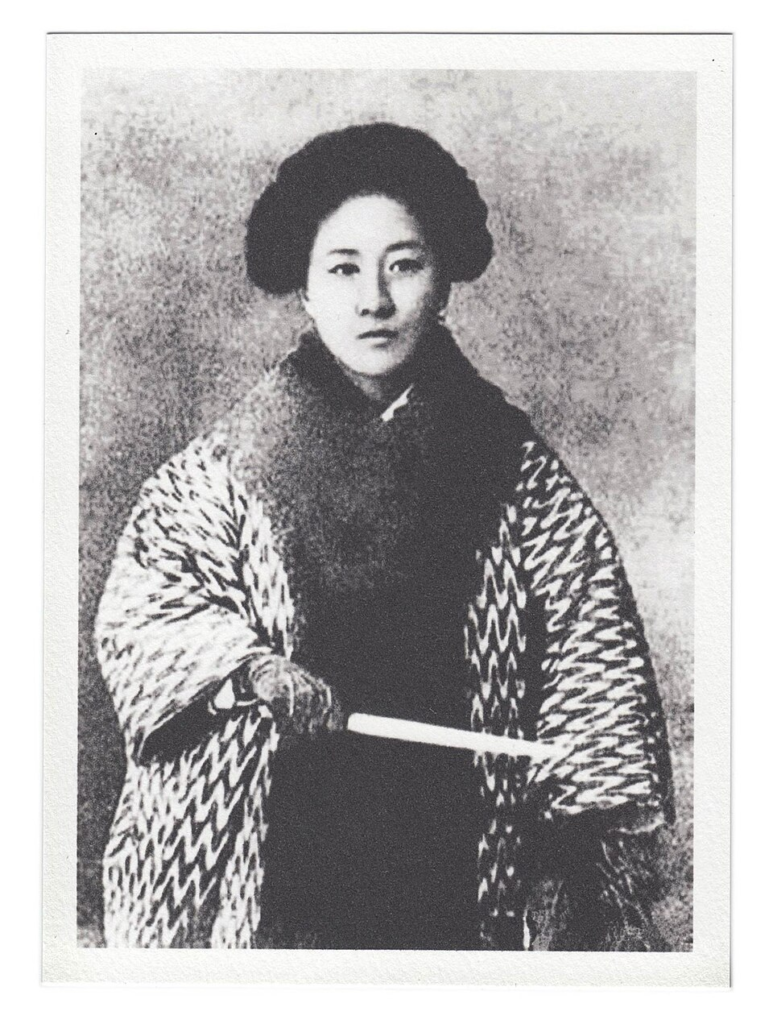
Qiu Jin was a woman from China. She was born in 1875 and died in 1907. She is a hero in China. She worked for change and helped women.
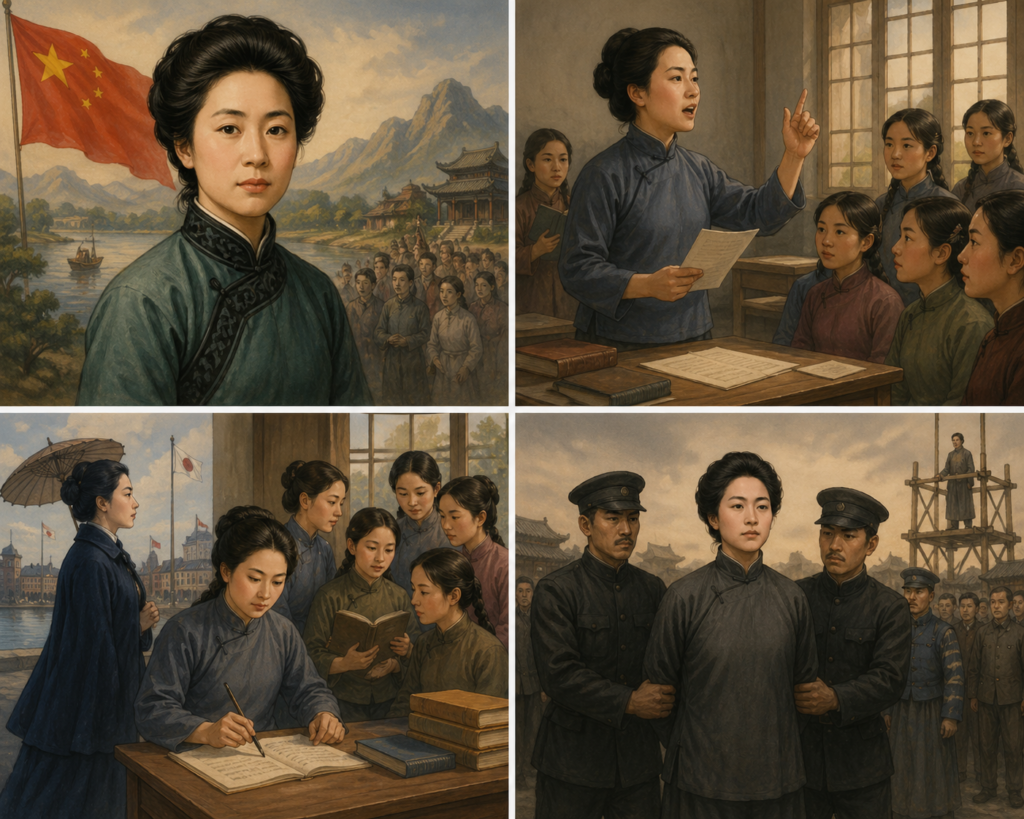
She was born in a rich family and went to school. At that time, many girls could not study, but she could. She saw this was not fair. She did not like old ideas about women. Women had to stay at home and could not choose their life. Qiu Jin said this was wrong.
She told women to study, work, and be strong. She wrote texts and gave talks. She wanted women to be free and not follow all old rules.
She went to Japan to study. There, she learned new ideas about freedom. When she came back, she helped other women learn and think in a new way.
Qiu Jin also worked against the Qing dynasty. She wanted a new China where women and men are equal. She worked with a group to start a fight, but the plan failed. The government found out, and many people were caught.
She was arrested and did not give names to the officials. The government saw her as a danger. She was executed in 1907. People remember her as a brave woman and a symbol of women’s rights.
#################
Vocabulary:
- a hero: a very good and brave [to not be afraid] person
- to work for change: to try to make things different or better
- to be fair: to be right and equal for everyone
- to stay at home: to not go out and live in the house
- to choose one’s life: to decide how you want to live
- to give a talk: to speak to people about something
- to be free: to have no control from others
- to follow rules: to do what rules [statements that tell you what you can or cannot do] say
- freedom: the feeling of being free
- to be equal: to be the same as others in rights
- to fail: to not succeed [to do something well and reach your goal]
- to find out: to learn something new
- to be caught: to be taken and stopped by others
- to be arrested: when police take you because you did something wrong
- to give a name to others: to tell the names of other people
- to see as a danger: to think someone is not safe or is bad
- to be executed: to be killed by the government as a punishment [something bad that happens to you because you did something wrong]
- to remember: to keep someone in your mind
- to be brave: to not be afraid
- women’s rights: rights that women should have, like men
###############
Match word and defintion:
Words:
- hero
- work for change
- fair
- stay at home
- choose one’s life
- give a talk
- free
- follow rules
- freedom
- equal
- fail
- find out
- caught
- arrested
- give a name to others
- danger
- executed
- remember
- brave
- women’s rights
Definitions:
a. to not succeed
b. to think someone is not safe
c. to keep someone in your mind
d. rights that women should have
e. to be taken by police or others
f. to be killed as punishment
g. to be the same as others
h. to live in the house and not go out
i. to speak to people
j. to be free
k. to tell names of other people
l. to learn something new
m. not afraid
n. a very good and brave person
o. to try to make things better
p. to be taken and stopped
q. to be free from control
r. a statement about what you can or cannot do
s. to decide your own life
t. to be seen as unsafe
_______________________
Answers:
1-n, 2-o, 3-r, 4-h, 5-s, 6-i,
7-j, 8-r, 9-q, 10-g, 11-a, 12-l,
13-p, 14-e, 15-k, 16-t, 17-f,
18-c, 19-m, 20-d
################
Match definitions and words:
- rights that women should have
- to be taken and stopped
- to think someone is not safe
- to not succeed
- to be free from control
- to learn something new
- to be taken by police or others
- to speak to people
- not afraid
- a very good and brave person
- to try to make things better
- to live in the house and not go out
- to be free
- a statement about what you can or cannot do
- to decide your own life
- to tell names of other people
- to do what rules say
- to be the same as others
- to keep someone in your mind
- to be killed as punishment
Words:
a. arrested
b. hero
c. freedom
d. danger
e. brave
f. follow rules
g. fail
h. women’s rights
i. give a talk
j. equal
k. executed
l. free
m. stay at home
n. work for change
o. find out
p. choose one’s life
q. give a name to others
r. caught
s. remember
t. rule
_____________________
Answer key:
1-h, 2-a, 3-d, 4-g, 5-c, 6-o,
7-r, 8-i, 9-e, 10-b, 11-n, 12-m,
13-l, 14-t, 15-p, 16-q, 17-f,
18-j, 19-s, 20-k
###############
True or false:
- She studied in Japan.
- Qiu Jin was born in 1875.
- She worked against the Qing dynasty.
- She refused to learn reading and writing.
- She spoke in public about women’s education.
- She was born in Fuzhou, China.
- She came from a rich family.
- She worked for the Qing government.
- She wrote texts about women’s rights.
- She became a military leader for the government.
- She learned to read and write when she was young.
- She stopped working for women’s rights early in life.
- She left her family to study and learn.
- She was executed in 1907.
- She spent her whole life in one village.
- She wrote books supporting old women’s roles.
- She helped the government arrest revolutionaries [who want big change in a country, often by fighting or acting against the government].
- She became a teacher in Japan.
- She led peaceful schools supported [to help someone or something, or to say that you agree with them] by the Qing dynasty.
- She retired [to stop working, usually when you are older] and lived without public activity.
_____________________
True: 1,2,3,5,6,7,9,11,13,14
###############
Basics in past simple:
Past Simple – Regular Verbs
Rules:
- Most verbs: add -ed
play → played - Verbs ending in -e: add -d
live → lived - Verbs ending in consonant + y: change y to i and add -ed
study → studied - Short verbs ending in vowel + consonant: double the final consonant and add -ed
stop → stopped - List of irregular verbs => LINK
Use:
The past simple is used to talk about finished actions in the past
###############
Verbs in text:
| Infinitive | Past simple | A1 definition |
|---|---|---|
| be | was / were | to exist / to be something |
| work | worked | to do a job or activity |
| help | helped | to make something easier for someone |
| go | went | to move from one place to another |
| see | saw | to look and notice something |
| can | could | to be able to do something |
| like | liked | to feel something is good |
| say | said | to speak or tell something |
| tell | told | to give information to someone |
| study | studied | to learn in school or books |
| stay | stayed | to not leave a place |
| choose | chose | to decide between things |
| write | wrote | to make words on paper |
| give | gave | to hand something to someone |
| want | wanted | to have a wish for something |
| learn | learned | to get new knowledge |
| come | came | to move to a place |
| find | found | to discover something |
| arrest | arrested | to take someone by police |
| support | supported | to help or agree with someone |
| die | died | to stop living |
| remember | remembered | to keep someone in your mind |
################
Fill in verb in past simple:
- Qiu Jin _____________ (be) a woman from China.
- She _____________ (be) born in 1875.
- Her parents _____________ (be) rich.
- She _____________ (go) to school when she was young.
- She _____________ (can) read and write.
- She _____________ (see) that girls did not have fair chances.
- She _____________ (like) new ideas about women.
- She _____________ (say) women should be free.
- She _____________ (tell) women to study and work.
- She _____________ (write) texts about women’s rights.
- She _____________ (give) talks to people.
- She _____________ (go) to Japan to study.
- She _____________ (learn) new ideas in Japan.
- She _____________ (come) back to China.
- She _____________ (work against) the Qing dynasty.
- She _____________ (want) change in China.
- She _____________ (help) other women learn.
- She _____________ (find) new ideas about freedom.
- The police _____________ (arrest) her after a failed plan.
- They _____________ (execute) her in 1907.
———————————–
Correct answers:
Qiu Jin was a woman from China.
She was born in 1875.
Her parents were rich.
She went to school when she was young.
She could read and write.
She saw that girls did not have fair chances.
She liked new ideas about women.
She said women should be free.
She told women to study and work.
She wrote texts about women’s rights.
She gave talks to people.
She went to Japan to study.
She learned new ideas in Japan.
She came back to China.
She worked against the Qing dynasty.
She wanted change in China.
She helped other women learn.
She found new ideas about freedom.
The police arrested her after a failed plan.
They executed her in 1907.
#################
Short answers, past simple, basics:
| Example Sentence | Yes | No |
|---|---|---|
| I learned letters. | Yes, I did. | No, I didn’t. |
| You read signs. | Yes, you did. | No, you didn’t. |
| He spoke English. | Yes, he did. | No, he didn’t. |
| She watched TV. | Yes, she did. | No, she didn’t. |
| It helped me. | Yes, it did. | No, it didn’t. |
| We used an app. | Yes, we did. | No, we didn’t. |
| You read words. | Yes, you did. | No, you didn’t. |
| They made mistakes. | Yes, they did. | No, they didn’t. |
Questions (Past Simple)
| Question | Yes | No |
|---|---|---|
| Did I learn letters? | Yes, I did. | No, I didn’t. |
| Did you read signs? | Yes, you did. | No, you didn’t. |
| Did he speak English? | Yes, he did. | No, he didn’t. |
| Did she watch TV? | Yes, she did. | No, she didn’t. |
| Did it help me? | Yes, it did. | No, it didn’t. |
| Did we use an app? | Yes, we did. | No, we didn’t. |
| Did you read words? | Yes, you did. | No, you didn’t. |
| Did they make mistakes? | Yes, they did. | No, they didn’t. |
Was / Were
| Question | Yes | No |
|---|---|---|
| Was I happy? | Yes, I was. | No, I wasn’t. |
| Were you happy? | Yes, you were. | No, you weren’t. |
| Was he happy? | Yes, he was. | No, he wasn’t. |
| Was she happy? | Yes, she was. | No, she wasn’t. |
| Was it good? | Yes, it was. | No, it wasn’t. |
| Were we happy? | Yes, we were. | No, we weren’t. |
| Were you happy? | Yes, you were. | No, you weren’t. |
| Were they happy? | Yes, they were. | No, they weren’t. |
#################
Short answers:
- She worked for the Qing government.
YOU WRITE:
No, she didn’t. - Qiu Jin was a woman from China.
- She studied in Japan.
- She became a queen in China.
- She was born in Fuzhou.
- She lived her whole life in one village.
- She gave talks about women’s education.
- She stopped learning as a child.
- She came from a rich family.
- She opened factories for the government.
- She was executed in 1907.
- She worked against the Qing dynasty.
- She wrote texts about women’s rights.
- She led the government army.
- She learned reading and writing as a child.
- She studied only in China.
- She went to school when she was young.
- She worked only as a farmer.
- She wrote books about housework.
- She retired peacefully and lived without public work.
_______________________
Correct answers:
- She worked for the Qing government. — No, she didn’t.
- Qiu Jin was a woman from China. — Yes, she did.
- She studied in Japan. — Yes, she did.
- She became a queen in China. — No, she didn’t.
- She was born in Fuzhou. — Yes, she did.
- She lived her whole life in one village. — No, she didn’t.
- She gave talks about women’s education. — Yes, she did.
- She stopped learning as a child. — No, she didn’t.
- She came from a rich family. — Yes, she did.
- She opened factories for the government. — No, she didn’t.
- She was executed in 1907. — Yes, she did.
- She worked against the Qing dynasty. — Yes, she did.
- She wrote texts about women’s rights. — Yes, she did.
- She led the government army. — No, she didn’t.
- She learned reading and writing as a child. — Yes, she did.
- She studied only in China. — No, she didn’t.
- She went to school when she was young. — Yes, she did.
- She worked only as a farmer. — No, she didn’t.
- She wrote books about housework. — No, she didn’t.
- She retired and lived without public work. — No, she didn’t.
#################
Basics in past simple:
| Personal Pronoun | Verb (Past) | Object |
|---|---|---|
| I | ate | apples |
| You | ate | apples |
| He | ate | apples |
| She | ate | apples |
| It | ate | apples |
| We | ate | apples |
| You (plural) | ate | apples |
| They | ate | apples |
| I | played | football |
| You | played | football |
| He | played | football |
| She | played | football |
| It | played | football |
| We | played | football |
| You (plural) | played | football |
| They | played | football |
| Personal Pronoun | Verb (Past Negative) | Object |
|---|---|---|
| I | did not eat | apples |
| You | did not eat | apples |
| He | did not eat | apples |
| She | did not eat | apples |
| It | did not eat | apples |
| We | did not eat | apples |
| You (plural) | did not eat | apples |
| They | did not eat | apples |
| I | did not play | football |
| You | did not play | football |
| He | did not play | football |
| She | did not play | football |
| It | did not play | football |
| We | did not play | football |
| You (plural) | did not play | football |
| They | did not play | football |
##################
Forms of ‚to be‘
| Personal Pronoun | Positive | Negative | Question |
|---|---|---|---|
| I | I was happy. | I was not happy. | Was I happy? |
| You (singular) | You were excited. | You were not excited. | Were you excited? |
| He | He was at home. | He was not at home. | Was he at home? |
| She | She was tired. | She was not tired. | Was she tired? |
| It | It was cold. | It was not cold. | Was it cold? |
| We | We were at the party. | We were not at the party. | Were we at the party? |
| You (plural) | You were friends. | You were not friends. | Were you friends? |
| They | They were in the garden. | They were not in the garden. | Were they in the garden? |
###############
Rewrite as shown:
- Qiu Jin was a woman from China.
YOU WRITE:
question: Was Qiu Jin a woman from China?
negation: Qiu Jin was not a woman from China. - She was born in 1875.
- She was born in Fuzhou.
- She came from a rich family.
YOU WRITE:
question: Did she come from a rich family?
negation: She didn’t come from a rich family. - She went to school when she was young.
- She learned to read and write.
- She saw unfair treatment of girls.
- She did not like old ideas about women.
- She said women should be free.
- She told women to study and work.
- She wrote texts about women’s rights.
- She gave talks about women’s education.
- She went to Japan to study.
- She learned new ideas in Japan.
- She came back to China.
- She worked against the Qing dynasty.
- She wanted change in China.
- She helped other women learn.
- She was arrested after a failed plan.
- She was executed in 1907.
_____________________
Correct answers:
- Qiu Jin was a woman from China.
Was Qiu Jin a woman from China?
Qiu Jin was not a woman from China. - She was born in 1875.
Was she born in 1875?
She was not born in 1875. - She was born in Fuzhou.
Was she born in Fuzhou?
She was not born in Fuzhou. - She came from a rich family.
Did she come from a rich family?
She did not come from a rich family. - She went to school when she was young.
Did she go to school when she was young?
She did not go to school when she was young. - She learned to read and write.
Did she learn to read and write?
She did not learn to read and write. - She saw unfair treatment of girls.
Did she see unfair treatment of girls?
She did not see unfair treatment of girls. - She did not like old ideas about women.
Did she like old ideas about women?
She liked old ideas about women. - She said women should be free.
Did she say women should be free?
She did not say women should be free. - She told women to study and work.
Did she tell women to study and work?
She did not tell women to study and work. - She wrote texts about women’s rights.
Did she write texts about women’s rights?
She did not write texts about women’s rights. - She gave talks about women’s education.
Did she give talks about women’s education?
She did not give talks about women’s education. - She went to Japan to study.
Did she go to Japan to study?
She did not go to Japan to study. - She learned new ideas in Japan.
Did she learn new ideas in Japan?
She did not learn new ideas in Japan. - She came back to China.
Did she come back to China?
She did not come back to China. - She worked against the Qing dynasty.
Did she work against the Qing dynasty?
She did not work against the Qing dynasty. - She wanted change in China.
Did she want change in China?
She did not want change in China. - She helped other women learn.
Did she help other women learn?
She did not help other women learn. - She was arrested after a failed plan.
Was she arrested after a failed plan?
She was not arrested after a failed plan.
—————-end of audio—————-
- She was executed in 1907.
Was she executed in 1907?
She was not executed in 1907.
###############
Form questions as shown:
- Qiu Jin was a woman from China. (Who)
YOU WRITE:
Who was a woamn in China? - She was born in 1875. (When)
- She went to school in China when she was young. (Where)
- She learned to read and write. (What)
- She saw unfair treatment of girls. (What)
- She liked new ideas about women. (Who)
- She said women should be free. (What)
- She told women to study and work. (Who → women)
- She wrote texts about women’s rights. (What)
- She gave talks about women’s education. (What)
- She went to Japan to study. (Where)
- She learned new ideas in Japan. (What)
- She came back to China. (Where)
- She worked against the Qing dynasty. (Who → Qing dynasty)
- She wanted change in China. (What)
- She helped other women learn. (Who)
- She found new ideas about freedom. (What)
- The police arrested her after a failed plan. (When)
- She died in 1907. (When)
_______________________
Correct questions:
Qiu Jin was a woman from China. (Who)
Who was a woman from China?
She was born in 1875. (When)
When was she born?
She went to school in China when she was young. (Where)
Where did she go to school when she was young?
She learned to read and write. (What)
What did she learn?
She saw unfair treatment of girls. (What)
What did she see?
She liked new ideas about women. (Who)
Who liked new ideas about women?
She said women should be free. (What)
What did she say?
She told women to study and work. (Who => women)
Who did she tell to study and work?
She wrote texts about women’s rights. (What)
What did she write?
She gave talks about women’s education. (What)
What did she give?
She went to Japan to study. (Where)
Where did she go to study?
She learned new ideas in Japan. (What)
What did she learn in Japan?
She came back to China. (Where)
Where did she come back to?
She worked against the Qing dynasty. (Who => Qing dynasty)
Who did she work against?
She wanted change in China. (What)
What did she want?
She helped other women learn. (Who)
Who helped other women learn?
She found new ideas about freedom. (What)
What did she find?
The police arrested her after a failed plan. (When)
When did the police arrest her?
—————–end of audio file—————
She died in 1907. (When)
When did she die?
####################
Odd one out – tricky:
- Japan – study – China – Fuzhou
- write – banana – learn – think
- women – freedom – girls – men
- school – China – talk – Japan
- help – idea – arrest – work
- read – car – write – speak
- equality – rights – table – change
- give – chair – tell – write
- bottle – brave – hero – woman
- China – apple – Fuzhou – Japan
_____________________
Corrrect answers:
- Japan – study – China – Fuzhou
Answer: study
Why: The others are places. - write – banana – learn – think
Answer: banana
Why: The others are actions. - women – freedom – girls – men
Answer: freedom
Why: The others are people. - school – China – talk – Japan
Answer: talk
Why: The others are places. - help – idea – arrest – work
Answer: idea
Why: The others are actions. - read – car – write – speak
Answer: car
Why: The others are skills. - equality – rights – table – change
Answer: table
Why: The others are ideas. - give – chair – tell – write
Answer: chair
Why: The others are verbs. - bottle – brave – hero – woman
Answer: bottle
Why: The others describe people or ideas. - China – apple – Fuzhou – Japan
Answer: apple
Why: The others are places.
##################
Match questions and answers:
Questions
- When was Qiu Jin born?
- Where was she from?
- What kind of family did she have?
- Did she go to school?
- What could she do?
- What did she think about girls?
- What did she think about old rules?
- What did she say to women?
- What did she do for women?
- Where did she study later?
- What did she learn there?
- What did she do after returning?
- What happened to her later?
- How is she remembered?
Answers:
A. She attended classes when she was young.
B. She was taken by the police.
C. She came into the world in 1875.
D. Her family had a lot of money.
E. She supported women to learn and grow.
F. She spent time in Japan for education.
G. She saw problems in their lives.
H. People see her as a brave hero.
I. She spoke about freedom for women.
J. She gained [to get something or to receive something, like new things] new ideas about society.
K. Her home was in China.
L. She was able to read and write.
M. She continued work for change in China.
N. She did not agree [to have the same idea as someone or to say “yes” to something] with them.
Answer key (one line):
1-C, 2-K, 3-D, 4-A, 5-L, 6-G, 7-N,
8-I, 9-E, 10-F, 11-J, 12-M, 13-B, 14-H
________________________
Correct dialogue:
1. When was Qiu Jin born?
She came into the world in 1875.
2. Where was she from?
Her home was in China.
3. What kind of family did she have?
Her family had a lot of money.
4. Did she go to school?
She attended classes when she was young.
5. What could she do?
She was able to read and write.
6. What did she think about girls?
She saw problems in their lives.
7. What did she think about old rules?
She did not agree with them.
8. What did she say to women?
She spoke about freedom for women.
9. What did she do for women?
She supported women to learn and grow.
10. Where did she study later?
She spent time in Japan for education.
11. What did she learn there?
She gained new ideas about society.
12. What did she do after returning?
She continued work for change in China.
13. What happened to her later?
She was taken by the police.
14. How is she remembered?
People see her as a brave hero.
#####################
What a lady!
Qiu Jin joined revolutionary groups that wanted to change the government. These groups planned to start an uprising against the Qing dynasty. Qiu Jin supported these ideas and helped organize activities. Because of this, the government saw her as a danger.
In 1907, the police arrested her after discovering the plans. She did not give information to the police about others. She stayed firm in her beliefs. After a short trial, she was sentenced to death and executed.
Today, she is remembered as a brave hero in China because she fought for change and for women’s rights.
Schreibe einen Kommentar