- what an experience
Before going through that story,
do this one first
(check out vocabulary!).
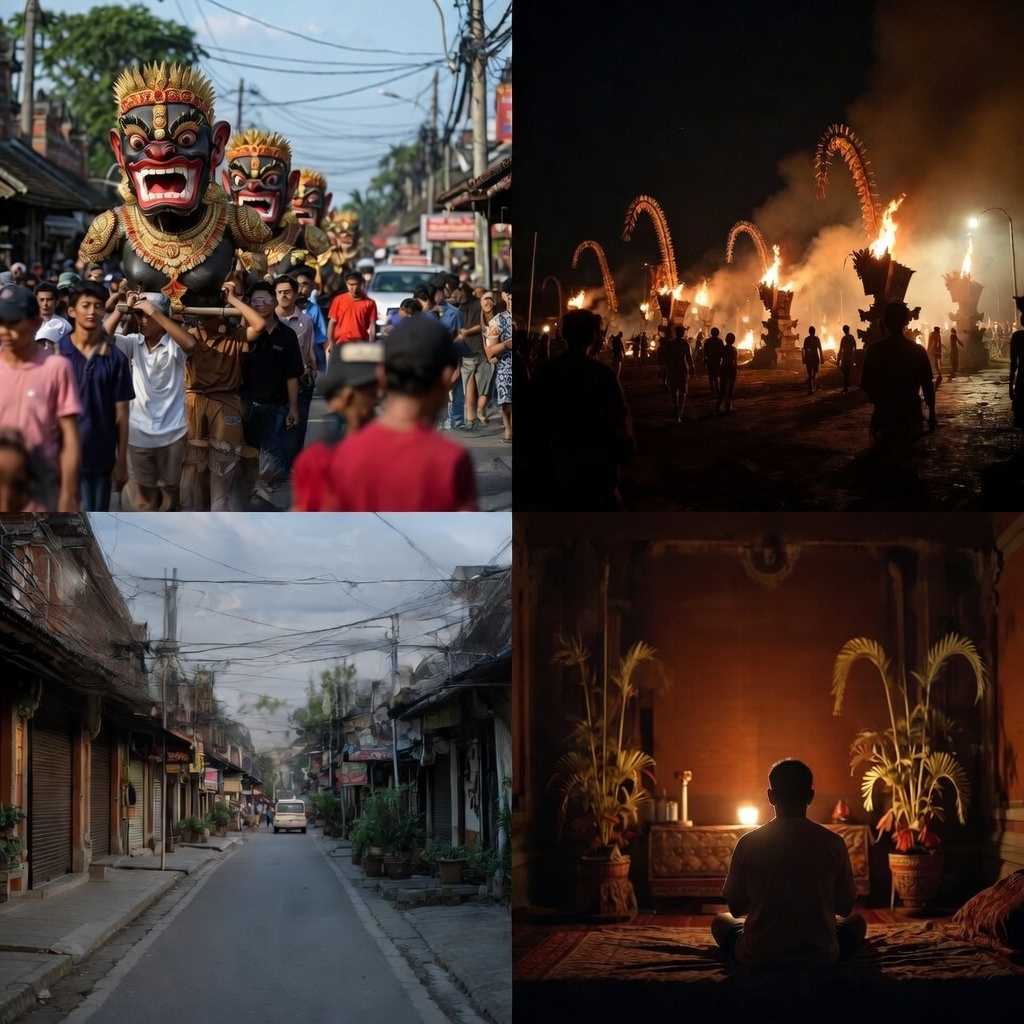
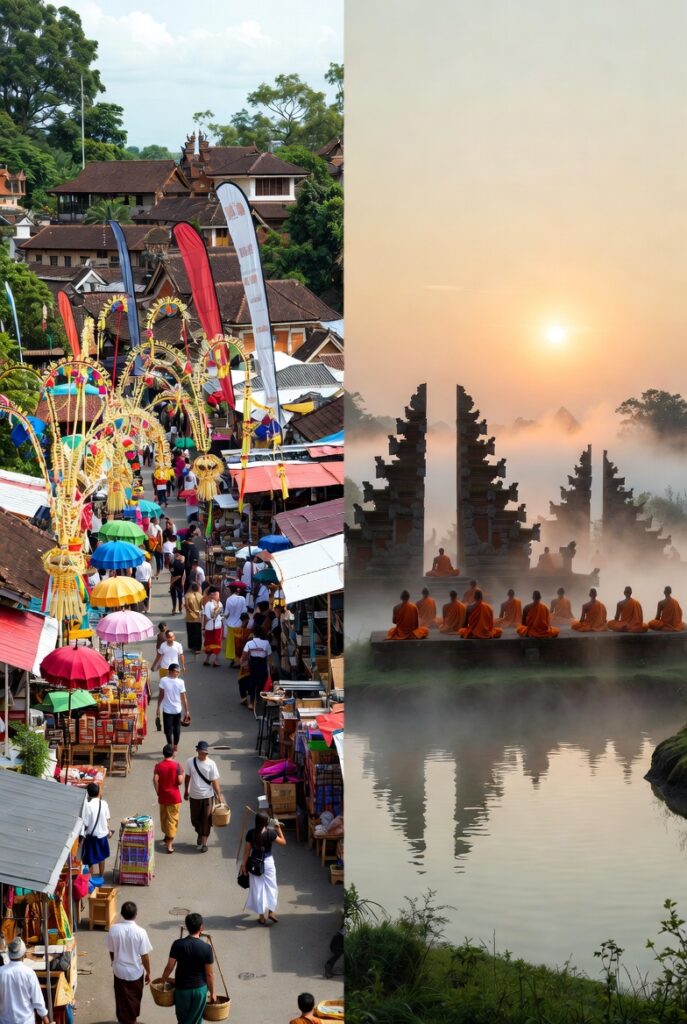
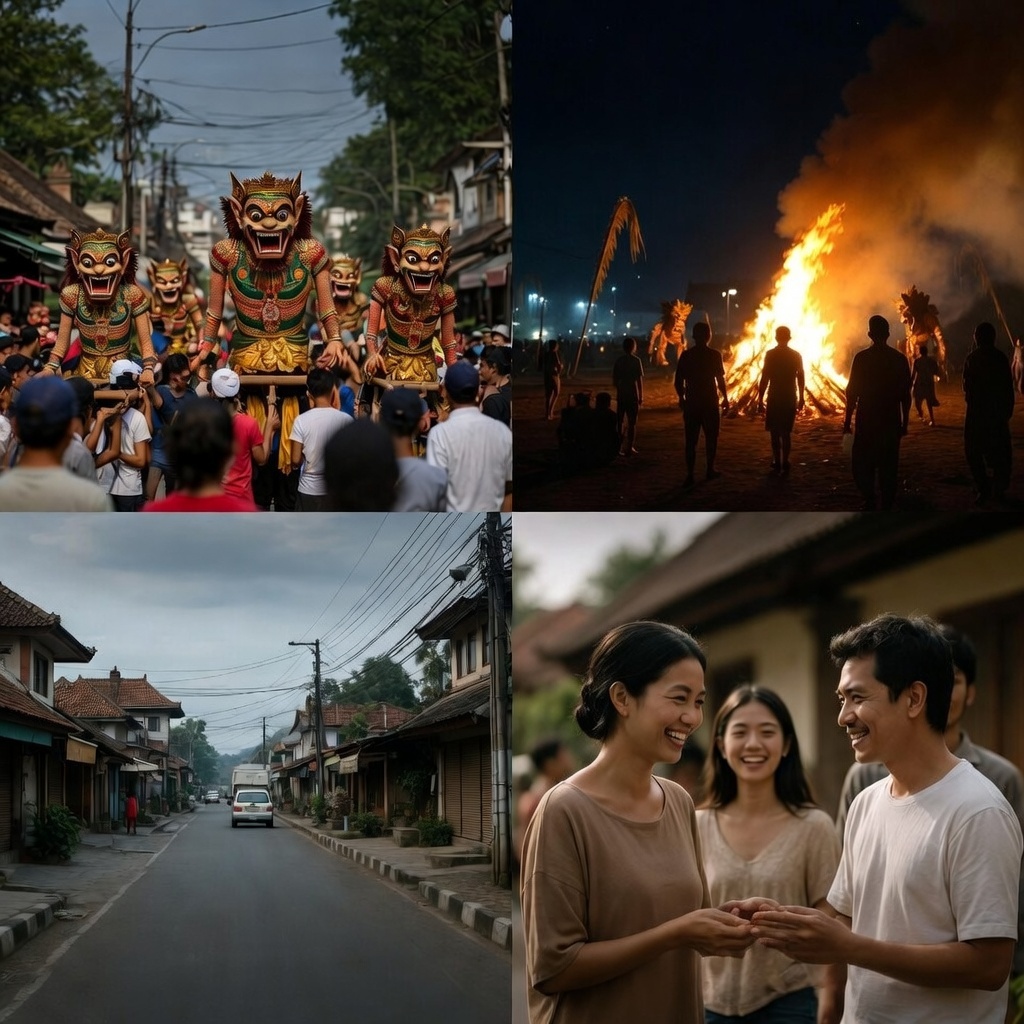
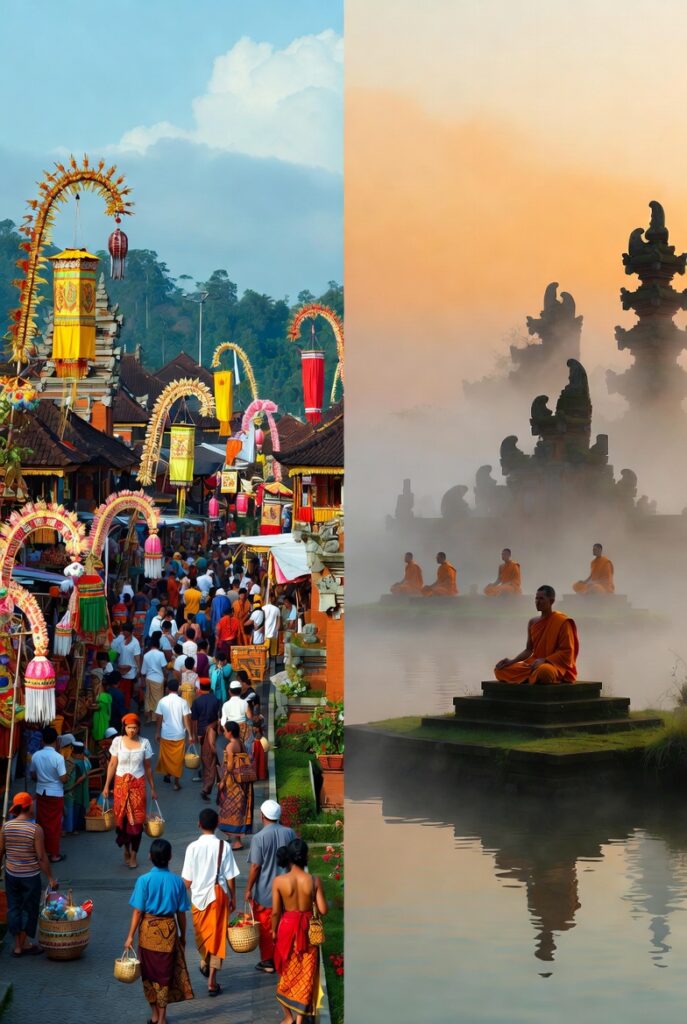
Last year, I went to Bali, and I saw Nyepi. It was very interesting. The day before Nyepi, the streets were busy. People made big statues. They called them ogoh‑ogoh. The statues looked like demons. At night, people walked with the statues and then they burned them. The fire was big, and the smoke was everywhere. It was very exciting.
On Nyepi day, everything was quiet. I stayed at home. I did not use lights, and I did not go outside. I did not work or watch TV. The streets were empty. Shops were closed. Even the airport did not have planes. I felt calm and peaceful. I prayed and thought about my life. I liked the silence.
The day after Nyepi was Ngembak Geni. Families went to each other’s houses. They said sorry for mistakes. I visited a family, and we smiled and talked. It was a happy day.
Nyepi is a very special holiday. I liked it a lot. I learned about Balinese culture. I think it is good to have one day for quiet and thinking. I will remember it forever.
#################
Basics in past simple:
Past Simple –
- Regular Verbs:
- Most verbs: add -ed
play → played - Verbs ending in -e: add -d
live → lived - Verbs ending in consonant + y: change y to i and add -ed
study → studied - Short verbs ending in vowel + consonant: double the final consonant and add -ed
stop → stopped - List of irregular verbs => LINK
Use:
The past simple is used to talk about finished actions in the past.
####################
Verbs in text:
| Infinitive (to…) | Past tense | Definition |
|---|---|---|
| to go | went | move from one place to another |
| to see | saw | look at something |
| to be | was/were | exist / feel (singular/plural) |
| to make | made | create or do something |
| to call | called | give a name |
| to look | looked | use your eyes to see |
| to walk | walked | move with your feet |
| to burn | burned | use fire to destroy something |
| to be | was/were | exist / feel (singular) (second occurrence) |
| to stay | stayed | remain in one place |
| to use | used | do something with an object |
| to go | went | move somewhere (repeated) |
| to work | worked | do a job or task |
| to watch | watched | look at TV or something for time |
| to be | were | exist / feel (plural) |
| to have | had | own or possess something |
| to feel | felt | experience a feeling |
| to pray | prayed | talk to God or show respect |
| to think | thought | use your mind |
| to like | liked | enjoy or want something |
| to visit | visited | go to see someone |
| to smile | smiled | make a happy face |
| to talk | talked | speak with someone |
| to be | was/were | exist / feel (singular) (Ngembak Geni day) |
| to learn | learned | get knowledge |
| to think | thought | use your mind (repeated) |
| to remember | remembered | keep something in your mind |
####################
| Personal Pronoun | Verb (Past) | Object |
|---|---|---|
| I | ate | apples |
| You | ate | apples |
| He | ate | apples |
| She | ate | apples |
| It | ate | apples |
| We | ate | apples |
| You (plural) | ate | apples |
| They | ate | apples |
| I | played | football |
| You | played | football |
| He | played | football |
| She | played | football |
| It | played | football |
| We | played | football |
| You (plural) | played | football |
| They | played | football |
| Personal Pronoun | Verb (Past Negative) | Object |
|---|---|---|
| I | did not eat | apples |
| You | did not eat | apples |
| He | did not eat | apples |
| She | did not eat | apples |
| It | did not eat | apples |
| We | did not eat | apples |
| You (plural) | did not eat | apples |
| They | did not eat | apples |
| I | did not play | football |
| You | did not play | football |
| He | did not play | football |
| She | did not play | football |
| It | did not play | football |
| We | did not play | football |
| You (plural) | did not play | football |
| They | did not play | football |
| Did + Pronoun | Verb | Object |
|---|---|---|
| Did I | eat | apples? |
| Did you | eat | apples? |
| Did he | eat | apples? |
| Did she | eat | apples? |
| Did it | eat | apples? |
| Did we | eat | apples? |
| Did you | eat | apples? |
| Did they | eat | apples? |
| Did I | play | football? |
| Did you | play | football? |
| Did he | play | football? |
| Did she | play | football? |
| Did it | play | football? |
| Did we | play | football? |
| Did you | play | football? |
| Did they | play | football? |
| Didn’t + Pronoun | Verb | Object |
|---|---|---|
| Didn’t I | eat | apples? |
| Didn’t you | eat | apples? |
| Didn’t he | eat | apples? |
| Didn’t she | eat | apples? |
| Didn’t it | eat | apples? |
| Didn’t we | eat | apples? |
| Didn’t you | eat | apples? |
| Didn’t they | eat | apples? |
| Didn’t I | play | football? |
| Didn’t you | play | football? |
| Didn’t he | play | football? |
| Didn’t she | play | football? |
| Didn’t it | play | football? |
| Didn’t we | play | football? |
| Didn’t you | play | football? |
| Didn’t they | play | football? |
##################
Past simple forms of ‚to be‘:
| Person | Past |
|---|---|
| I | was |
| You | were |
| He/She/It | was |
| We | were |
| You (pl) | were |
| They | were |
| Person | Question |
|---|---|
| I | Was I …? |
| You | Were you …? |
| He/She/It | Was he/she/it …? |
| We | Were we …? |
| You (pl) | Were you …? |
| They | Were they …? |
| Person | Negative |
|---|---|
| I | I was not (I wasn’t) |
| You | You were not (You weren’t) |
| He/She/It | He/She/It was not (He/She/It wasn’t) |
| We | We were not (We weren’t) |
| You (pl) | You were not (You weren’t) |
| They | They were not (They weren’t) |
| Person | Negative Question |
|---|---|
| I | Wasn’t I …? |
| You | Weren’t you …? |
| He/She/It | Wasn’t he/she/it …? |
| We | Weren’t we …? |
| You (pl) | Weren’t you …? |
| They | Weren’t they …? |
##################
Short answers in past simple:
| Question | Short Answer (Yes/Positive) | Short Answer (No/Negative) |
|---|---|---|
| Did she check reservations? | Yes, she did. | No, she didn’t. |
| Did she give keys to guests? | Yes, she did. | No, she didn’t. |
| Did she talk to many guests? | Yes, she did. | No, she didn’t. |
| Was she happy? | Yes, she was. | No, she wasn’t. |
| Were the guests satisfied? | Yes, they were. | No, they weren’t. |
##################
Fill in the correct past simple tense:
- Last year, I __________ (go) to Bali.
- I __________ (see) Nyepi for the first time.
- It __________ (be) very interesting.
- The day before Nyepi, the streets __________ (be) busy.
- People __________ (make) big statues called ogoh‑ogoh.
- They __________ (call) them ogoh‑ogoh.
- The statues __________ (look) like demons.
- At night, people __________ (walk) with the statues.
- Then they __________ (burn) the statues.
- The fire __________ (be) big and the smoke __________ (be) everywhere.
- On Nyepi day, everything __________ (be) quiet.
- I __________ (stay) at home.
- I __________ (not/use) lights and I __________ (not/go) outside.
- I __________ (not/work) or __________ (watch) TV.
- The streets __________ (be) empty.
- I __________ (feel) calm and peaceful.
- I __________ (pray) and __________ (think) about my life.
- The day after Nyepi, families __________ (visit) each other.
- I __________ (smile) and __________ (talk) with a family.
- I __________ (learn) about Balinese culture and I __________ (remember) it forever.
——————————————
Correct Version:
- Last year, I went to Bali.
- I saw Nyepi for the first time.
- It was very interesting.
- The day before Nyepi, the streets were busy.
- People made big statues called ogoh‑ogoh.
- They called them ogoh‑ogoh.
- The statues looked like demons.
- At night, people walked with the statues.
- Then they burned the statues.
- The fire was big and the smoke was everywhere.
- On Nyepi day, everything was quiet.
- I stayed at home.
- I did not use lights and I did not go outside.
- I did not work or watch TV.
- The streets were empty.
- I felt calm and peaceful.
- I prayed and thought about my life.
- The day after Nyepi, families visited each other.
- I smiled and talked with a family.
- I learned about Balinese culture and I remembered it forever.
##################
True or false:
- Nyepi was a day when people stayed at home.
- People traveled a lot on Nyepi day.
- Ogoh‑ogoh were big statues made before Nyepi.
- The airport worked normally on Nyepi.
- People prayed and thought about life on Nyepi.
- Families visited each other the day before Nyepi.
- The streets were quiet and empty on Nyepi.
- Oum went to Bali last year and saw Nyepi.
- Nyepi happened in December every year.
- People used bright lights and watched TV on Nyepi.
- The fire and smoke were part of burning ogoh‑ogoh statues.
- The day after Nyepi was called Ngembak Geni.
- Shops and streets were busy on Nyepi.
- Nyepi was a holiday for shopping and parties.
_________________________
True: 1,3,5,7,8,11,12
_________________________
Correct version:
- Nyepi was a day when people stayed at home.
- People traveled a lot on Nyepi day. True is: People did not travel on Nyepi day.
- Ogoh‑ogoh were big statues made before Nyepi.
- The airport worked normally on Nyepi. True is: The airport did not operate on Nyepi.
- People prayed and thought about life on Nyepi.
- Families visited each other the day before Nyepi. True is: Families visited each other the day after Nyepi.
- The streets were quiet and empty on Nyepi.
- Oum went to Bali last year and saw Nyepi.
- Nyepi happened in December every year. True is: Nyepi usually happened in March.
- People used bright lights and watched TV on Nyepi. True is: People did not use bright lights or watch TV on Nyepi.
- The fire and smoke were part of burning ogoh‑ogoh statues.
- The day after Nyepi was called Ngembak Geni.
- Shops and streets were busy on Nyepi. True is: Shops and streets were empty on Nyepi.
- Nyepi was a holiday for shopping and parties. True is: Nyepi was a holiday for quiet and thinking.
##################
Give a short answer and then the corrected statement:
- People walked outside all day on Nyepi.
YOU WRITE:
No, they didn’t. People stayed at home. - Oum saw many shops open on Nyepi.
- Families talked and visited each other before Nyepi.
- People made small statues for Nyepi.
- People burned nothing at night before Nyepi.
- The streets carried many cars and planes on Nyepi.
- Oum went to see bright lights and TV on Nyepi.
- People prayed and thought nothing on Nyepi.
- Oum smiled and talked before Nyepi started.
- People worked and used lights during Nyepi.
- Families visited other families before Ngembak Geni.
- People walked with nothing at night.
- Oum learned nothing about Balinese culture.
- The streets were full of people on Nyepi.
- Nyepi was a holiday for parties and shopping.
_________________________
Correct version:
- People walked outside all day on Nyepi.
No, they didn’t. People stayed at home. - Oum saw many shops open on Nyepi.
No, they didn’t. Shops were closed. - Families talked and visited each other before Nyepi.
No, they didn’t. Families visited each other the day after Nyepi. - People made small statues for Nyepi.
No, they didn’t. People made big statues called ogoh‑ogoh. - People burned nothing at night before Nyepi.
No, they didn’t. People burned the ogoh‑ogoh statues at night. - The streets carried many cars and planes on Nyepi.
No, they didn’t. The streets were empty and quiet on Nyepi. - Oum went to see bright lights and TV on Nyepi.
No, they didn’t. People stayed at home and did not use bright lights or watch TV. - People prayed and thought nothing on Nyepi.
No, they didn’t. People prayed and thought about life on Nyepi. - Oum smiled and talked before Nyepi started.
No, they didn’t. Oum smiled and talked after Nyepi. - People worked and used lights during Nyepi.
No, they didn’t. People stayed at home and did not work on Nyepi. - Families visited other families before Ngembak Geni.
No, they didn’t. Families visited each other the day after Nyepi. - People walked with nothing at night.
No, they didn’t. People walked with the ogoh‑ogoh statues at night. - Oum learned nothing about Balinese culture.
No, they didn’t. Oum learned about Balinese culture. - The streets were full of people on Nyepi.
No, they weren’t. The streets were quiet on Nyepi. - Nyepi was a holiday for parties and shopping.
No, it wasn’t. Nyepi was a holiday for quiet and thinking.
##################
Form questions to which the word/words given is/are the answer:
- People made big statues the day before Nyepi.
a) People:___________________
b) made big statues the day before Nyepi:___________________
c) big statues:___________________
d) the day before Nyepi:___________________ - Oum went to Bali last year.
a) Oum:___________________
b) went to Bali last year:___________________
c) to Bali:___________________
d) last year:___________________ - Families visited each other the day after Nyepi.
a) Families:___________________
b) visited each other the day after Nyepi:___________________
c) each other:___________________
d) the day after Nyepi - People stayed at home on Nyepi day.
a) People:___________________
b) stayed at home om Nyepi day:___________________
c) at home:___________________
d) on Nyepi day:___________________ - Oum learned about Balinese culture after Nyepi.
a) Oum:___________________
b) learned about Balinese culture after Nyepi:___________________
c) Balinese culture:___________________
d) after Nyepi:___________________
——————————————
Correct version:
1. People made big statues the day before Nyepi.
a) Who made big statues the day before Nyepi?
b) What did people do the day before Nyepi?
c) What did people make the day before Nyepi?
d) When did people make big statues?
2. Oum went to Bali last year.
a) Who went to Bali last year?
b) What did Oum do last year?
c) Where did Oum go last year?
d) When did Oum go to Bali?
3. Families visited each other the day after Nyepi.
a) Who visited each other the day after Nyepi?
b) What did families do the day after Nyepi?
c) Whom did families visit the day after Nyepi?
d) When did families visit each other?
4. People stayed at home on Nyepi day.
a) Who stayed at home on Nyepi day?
b) What did people do on Nyepi day?
c) Where did people stay on Nyepi day?
d) When did people stay at home?
5. Oum learned about Balinese culture after Nyepi.
a) Who learned about Balinese culture after Nyepi?
b) What did Oum do after Nyepi?
c) What did Oum learn about after Nyepi?
d) When did Oum learn about Balinese culture?
##################
Answer in complete sentences:
- What did Oum see in Bali?
- When did people burn the ogoh‑ogoh statues?
- How did Oum feel on Nyepi day?
- Who visited families on Ngembak Geni?
- Why did people make ogoh‑ogoh?
- Did the streets have many people on Nyepi?
- Where did Oum stay on Nyepi day?
- Which activities did Oum not do on Nyepi?
- How big was the fire during the ogoh‑ogoh celebration?
- Did the airport work on Nyepi?
- What did families say to each other on Ngembak Geni?
- How did Oum describe the day after Nyepi?
- Did Oum like the holiday?
- Why is Nyepi a special holiday?
_________________________
Answers:
- What did Oum see in Bali?
- She saw Nyepi.
- When did people burn the ogoh‑ogoh statues?
- They burned them at night.
- How did Oum feel on Nyepi day?
- She felt calm.
- Who visited families on Ngembak Geni?
- Families visited each other.
- Why did people make ogoh‑ogoh?
- To show bad spirits.
- Did the streets have many people on Nyepi?
- No, they were empty.
- Where did Oum stay on Nyepi day?
- She stayed at home.
- Which activities did Oum not do on Nyepi?
- She did not go outside or watch TV.
- How big was the fire during the ogoh‑ogoh celebration?
- It was big.
- Did the airport work on Nyepi?
- No, it did not.
- What did families say to each other on Ngembak Geni?
- They said sorry.
- How did Oum describe the day after Nyepi?
- She said it was happy.
- Did Oum like the holiday?
- Yes, she did.
- Why is Nyepi a special holiday?
- It is for quiet and thinking.
####################
Schreibe einen Kommentar