The Ancient Olympic Games
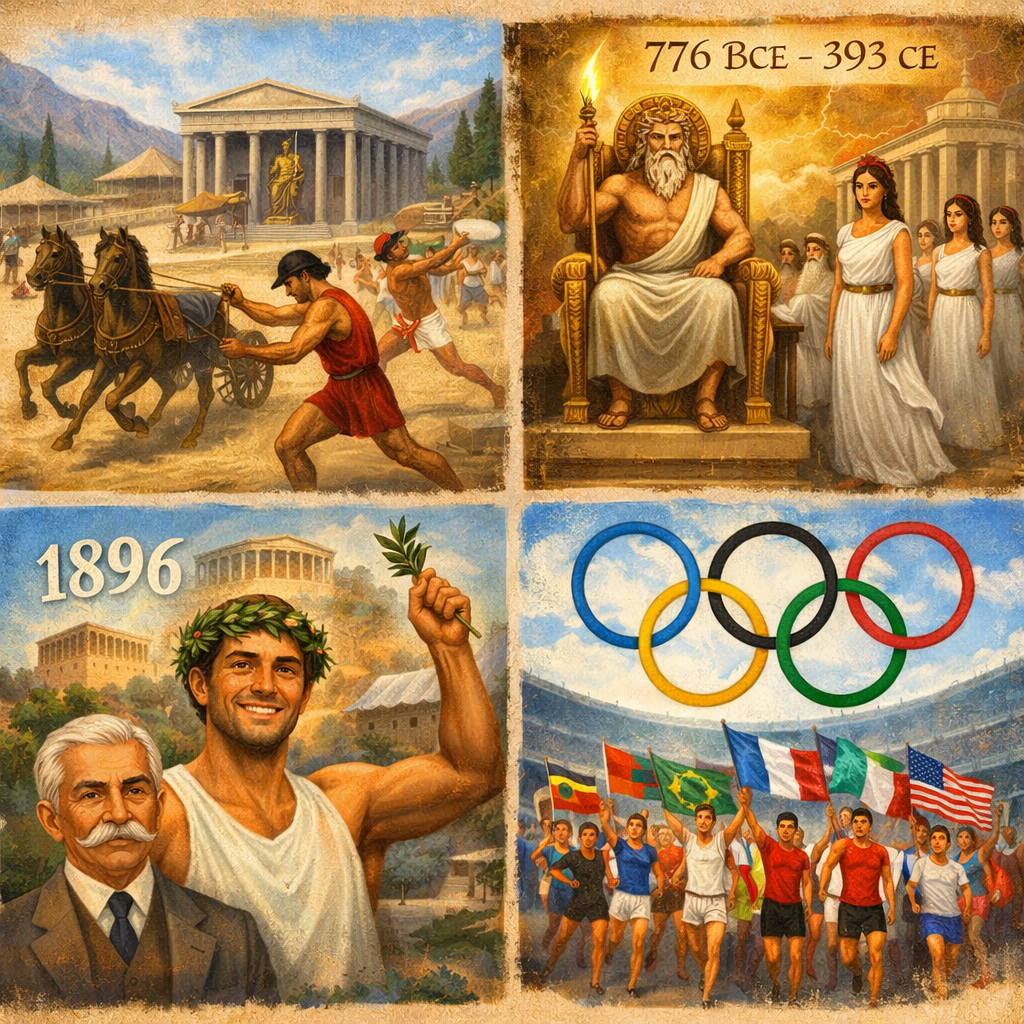
The Ancient Olympic Games started in 776 BCE in Olympia, Greece. They were held every four years to honor Zeus, the king of the gods. Athletes from different Greek cities came to compete. The games were very important for showing strength, skill, and courage.
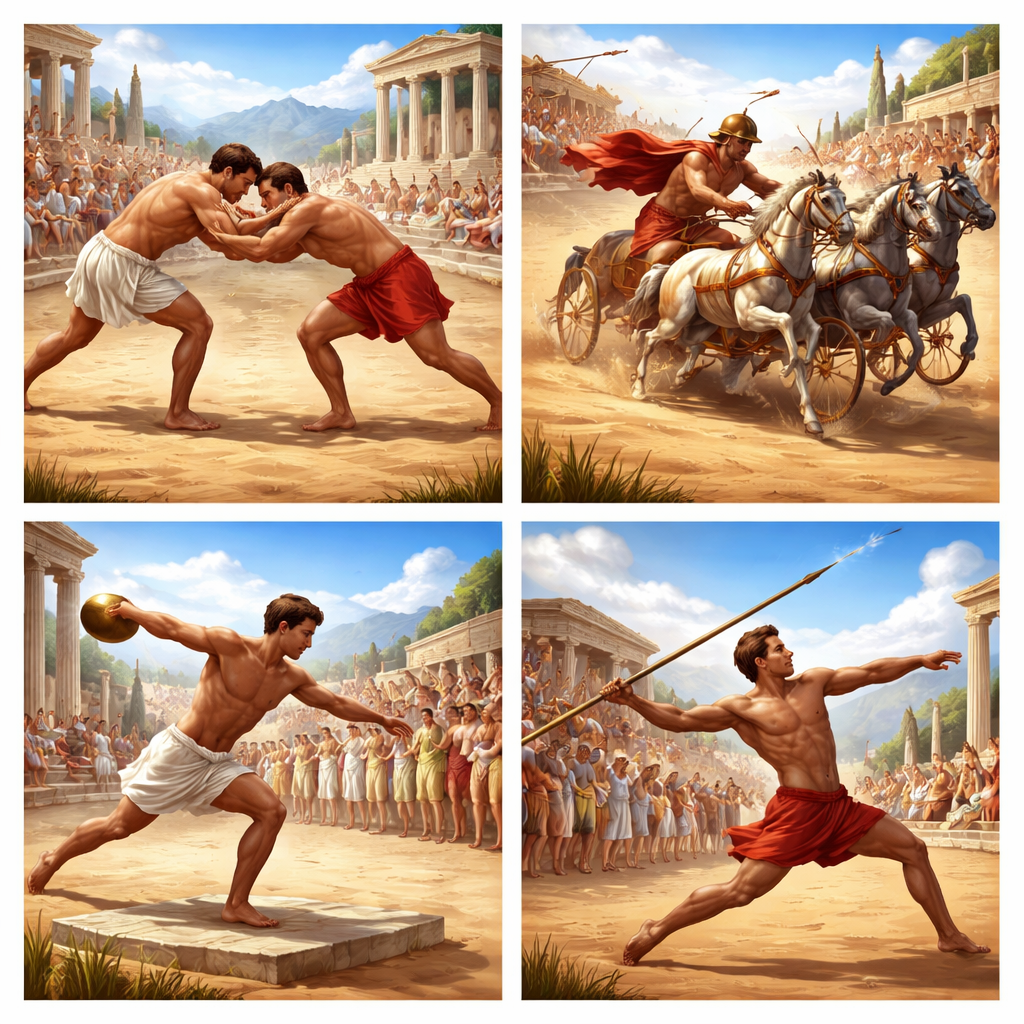
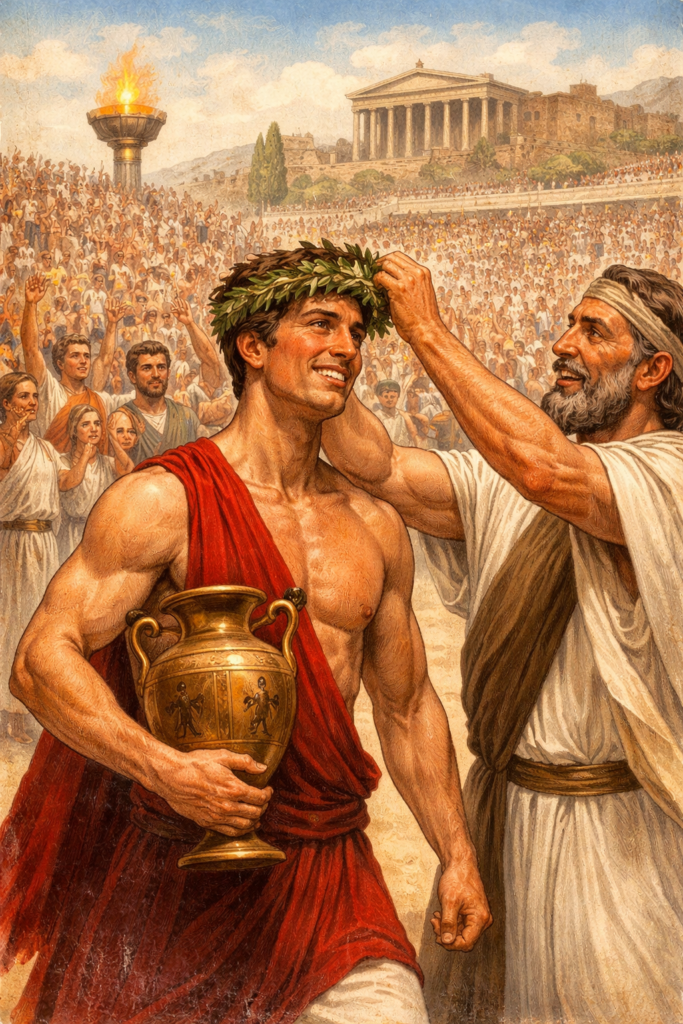
Events included running, wrestling, javelin and discus throw, long jump, and chariot racing. Winners received olive wreaths and became famous in their cities. Women were not allowed to compete or watch the games, but there were special games for women in honor of Hera. The ancient games continued for over 1,000 years until 393 CE, when the Roman Emperor Theodosius I stopped them.
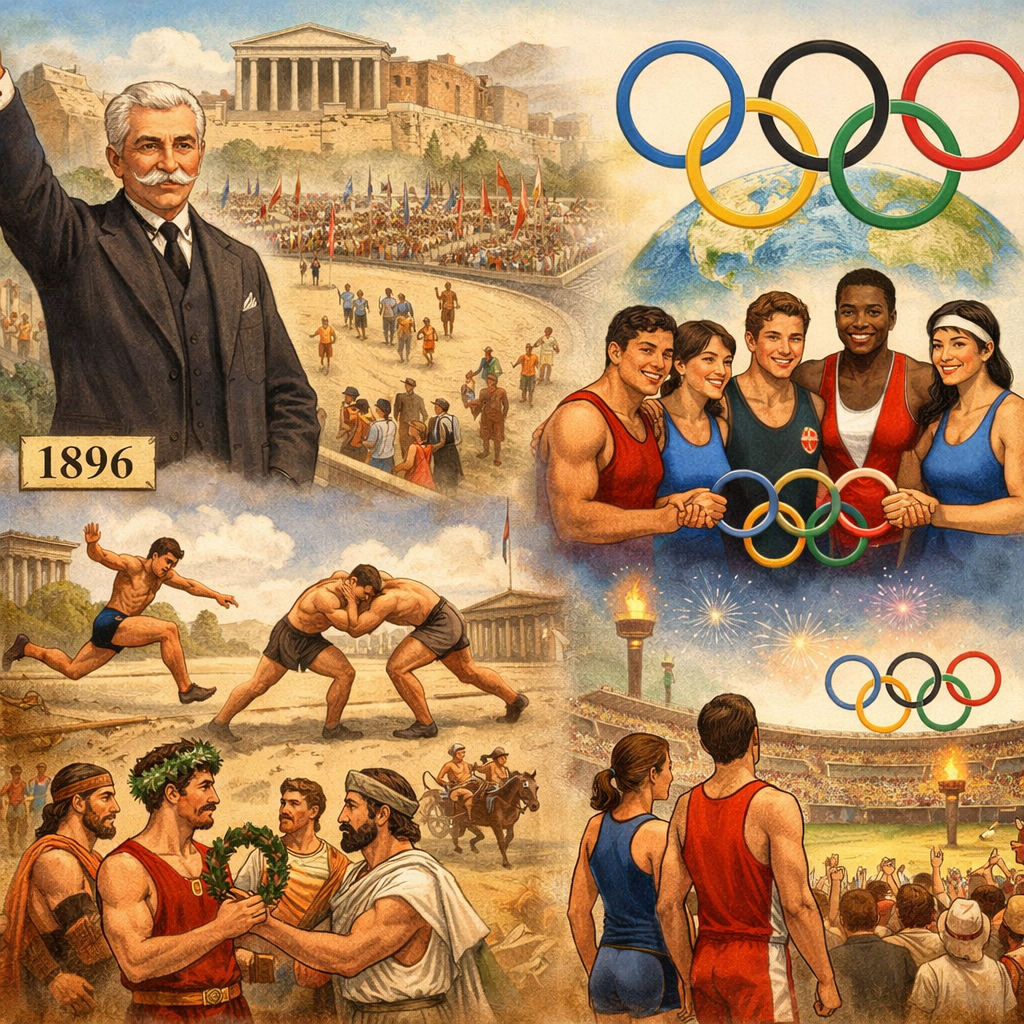
Many centuries later, the Olympics were brought back in 1896 by Pierre de Coubertin. Today, the games are international and include athletes from all over the world. One famous symbol of the Olympics is the five rings, created in 1913. Each ring stands for one continent, and the rings are linked to show friendship and unity between all nations.
The Ancient Olympic Games were not only about sports but also about culture, honor, and bringing people together—a tradition that still inspires the modern Olympics.
______________________
Vocabulary:
- olympic games – big sports events where athletes from many countries play games every four years.
- olympics – short word for “olympic games.”
- olympiad – the four years between olympic games.
- ancient – very old, from a long time ago.
- 776 bce – the year a long time ago when the first olympic games happened.
- bce (before common era) – a way to say “before year 1,” same as BC. Example: The first olympic games were in 776 bce.
- to compete – to try to win in a game or sport.
- strength – how strong a person is.
- skill – the ability to do something well.
- courage – being brave and not afraid.
- javelin – a long stick that athletes throw in a sport.
- discus throw – a sport where athletes throw a round flat object called a discus.
- chariot racing – racing with a cart pulled by horses.
- to receive – to get something.
- an olive wreath – a circle of olive leaves given as a prize in the ancient olympics.
- in honor of somebody – to show respect to someone.
- 393 ce – the year when the ancient olympic games stopped.
- ce (common era) – a way to count years after year 1, same as AD. Example: The year 2026 ce is today.
- an emperor – a man who rules a large empire.
- a century – 100 years.
- to include – to have something as part of a group.
- to be linked – to be joined together.
- friendship – a good relationship between people.
- unity – being together and working as one.
- honor – respect and high regard.
- to inspire somebody – to make someone feel excited or want to do something.
##################
Match the word to the correct definition:
Words:
- olympic games
- olympics
- olympiad
- ancient
- 776 bce
- bce
- ce
- to compete
- strength
- skill
- courage
- javelin
- discus throw
- chariot racing
- to receive
- an olive wreath
- in honor of somebody
- 393 ce
- an emperor
- a century
- to include
- to be linked
- friendship
- unity
- honor
- to inspire somebody
Definitions:
a. a way to count years after year 1, same as A
b. the ability to do something well
c. big sports events every four years
d. a circle of olive leaves given as a prize
e. very old, from a long time ago
f. the four years between olympic games
g. how strong a person is
h. a good relationship between people
i. to try to win in a game or sport
j. before year 1, same as BC
k. to make someone feel excited or want to do something
l. racing with a cart pulled by horses
m. the year of the first olympic games
n. to have something as part of a group
o. respect and high regard
p. short word for olympic games
q. being brave and not afraid
r. the year when the ancient olympic games stopped
s. a long stick that athletes throw
t. a sport where athletes throw a round flat object
u. a man who rules a large empire
v. being together and working as one
w. to be joined together
x. to get something
y. to show respect to someone
z. 100 years
________________________
Answers:
1-c, 2-p, 3-f, 4-e, 5-m, 6-j, 7-a,
8-i, 9-g, 10-b, 11-q, 12-s, 13-t, 14-l,
15-x, 16-d, 17-y, 18-r, 19-u, 20-z,
21-n, 22-w, 23-h, 24-v, 25-o, 26-k
________________________
Correct version:
- olympic games – big sports events every four years
- olympics – short word for olympic games
- olympiad – the four years between olympic games
- ancient – very old, from a long time ago
- 776 bce – the year of the first olympic games
- bce (before common era) – before year 1, same as BC
- ce (common era) – a way to count years after year 1, same as AD
- to compete – to try to win in a game or sport
- strength – how strong a person is
- skill – the ability to do something well
- courage – being brave and not afraid
- javelin – a long stick that athletes throw
- discus throw – a sport where athletes throw a round flat object
- chariot racing – racing with a cart pulled by horses
- to receive – to get something
- an olive wreath – a circle of olive leaves given as a prize
- in honor of somebody – to show respect to someone
- 393 ce – the year when the ancient olympic games stopped
- an emperor – a man who rules a large empire
- a century – 100 years
- to include – to have something as part of a group
- to be linked – to be joined together
- friendship – a good relationship between people
- unity – being together and working as one
- honor – respect and high regard
- to inspire somebody – to make someone feel excited or want to do something
#################
Basics in past simple:
Past Simple – Regular Verbs
Rules:
- Most verbs: add -ed
play → played - Verbs ending in -e: add -d
live → lived - Verbs ending in consonant + y: change y to i and add -ed
study → studied - Short verbs ending in vowel + consonant: double the final consonant and add -ed
stop → stopped - List of irregular verbs => LINK
Use:
The past simple is used to talk about finished actions in the past.
####################
Verbs in text, infinitive and past simple:
| Infinitive | Past tense |
|---|---|
| to start | started |
| to be | was/were |
| to hold | held |
| to honor | honor |
| to come | came |
| to compete | competed |
| to be | was/were |
| to show | showed |
| to include | included |
| to receive | received |
| to become | became |
| to allow | was/were allowed |
| to compete | competed |
| to watch | watched |
| to continue | continued |
| to stop | stopped |
| to bring | was/were brought |
| to include | included |
| to create | created |
| to stand | stood |
| to be | was/were |
| to link | linked |
| to show | showed |
| to be | was/were |
| to inspire | inspired |
#################
| Personal Pronoun | Verb (Past) | Object |
|---|---|---|
| I | ate | apples |
| You | ate | apples |
| He | ate | apples |
| She | ate | apples |
| It | ate | apples |
| We | ate | apples |
| You (plural) | ate | apples |
| They | ate | apples |
| I | played | football |
| You | played | football |
| He | played | football |
| She | played | football |
| It | played | football |
| We | played | football |
| You (plural) | played | football |
| They | played | football |
| Personal Pronoun | Verb (Past Negative) | Object |
|---|---|---|
| I | did not eat | apples |
| You | did not eat | apples |
| He | did not eat | apples |
| She | did not eat | apples |
| It | did not eat | apples |
| We | did not eat | apples |
| You (plural) | did not eat | apples |
| They | did not eat | apples |
| I | did not play | football |
| You | did not play | football |
| He | did not play | football |
| She | did not play | football |
| It | did not play | football |
| We | did not play | football |
| You (plural) | did not play | football |
| They | did not play | football |
| Did + Pronoun | Verb | Object |
|---|---|---|
| Did I | eat | apples? |
| Did you | eat | apples? |
| Did he | eat | apples? |
| Did she | eat | apples? |
| Did it | eat | apples? |
| Did we | eat | apples? |
| Did you | eat | apples? |
| Did they | eat | apples? |
| Did I | play | football? |
| Did you | play | football? |
| Did he | play | football? |
| Did she | play | football? |
| Did it | play | football? |
| Did we | play | football? |
| Did you | play | football? |
| Did they | play | football? |
| Didn’t + Pronoun | Verb | Object |
|---|---|---|
| Didn’t I | eat | apples? |
| Didn’t you | eat | apples? |
| Didn’t he | eat | apples? |
| Didn’t she | eat | apples? |
| Didn’t it | eat | apples? |
| Didn’t we | eat | apples? |
| Didn’t you | eat | apples? |
| Didn’t they | eat | apples? |
| Didn’t I | play | football? |
| Didn’t you | play | football? |
| Didn’t he | play | football? |
| Didn’t she | play | football? |
| Didn’t it | play | football? |
| Didn’t we | play | football? |
| Didn’t you | play | football? |
| Didn’t they | play | football? |
Forms of ‚to be‘
| Personal Pronoun | Positive | Negative | Question |
|---|---|---|---|
| I | I was happy. | I was not happy. | Was I happy? |
| You (singular) | You were excited. | You were not excited. | Were you excited? |
| He | He was at home. | He was not at home. | Was he at home? |
| She | She was tired. | She was not tired. | Was she tired? |
| It | It was cold. | It was not cold. | Was it cold? |
| We | We were at the party. | We were not at the party. | Were we at the party? |
| You (plural) | You were friends. | You were not friends. | Were you friends? |
| They | They were in the garden. | They were not in the garden. | Were they in the garden? |
#################
Fill in, past simple:
- The Ancient Olympic Games ________________ (start) in 776 BCE in Olympia, Greece.
- Athletes from different Greek cities ________________ (come) to compete.
- The games ________________ (show) strength, skill, and courage.
- The events ________________ (include) running, wrestling, javelin throw, discus throw, long jump, and chariot racing.
- Winners ________________ (receive) olive wreaths and ________________ (become) famous in their cities.
- Women ________________ (not / compete) in the Ancient Olympic Games.
- Women ________________ (not / watch) the Ancient Olympic Games.
- Athletes ________________ (play) in special games for women in honor of Hera.
- The Ancient Olympic Games ________________ (last) for over 1,000 years.
- The Roman Emperor Theodosius I ________________ (stop) the games in 393 CE.
- Pierre de Coubertin ________________ (bring) back the Olympic Games in 1896.
- Athletes from all over the world ________________ (participate) in the modern Olympic Games.
- Pierre de Coubertin ________________ (create) the five Olympic rings in 1913.
- Each Olympic ring ________________ (represent) one continent.
- The rings ________________ (link) to show friendship and unity between nations.
- The Ancient Olympic Games ________________ (celebrate) sports, culture, and honor.
- The Ancient Olympic Games ________________ (bring) people together.
- The Ancient Olympic Games ________________ (inspire) the modern Olympic Games.
- Men ________________ (compete) in all Ancient Olympic Games.
- Athletes ________________ (train) hard for the events.
—————————————–
Correct version:
- The Ancient Olympic Games started in 776 BCE in Olympia, Greece.
- Athletes from different Greek cities came to compete.
- The games showed strength, skill, and courage.
- The events included running, wrestling, javelin throw, discus throw, long jump, and chariot racing.
- Winners received olive wreaths and became famous in their cities.
- Women did not compete in the Ancient Olympic Games.
- Women did not watch the Ancient Olympic Games.
- Athletes played in special games for women in honor of Hera.
- The Ancient Olympic Games lasted for over 1,000 years.
- The Roman Emperor Theodosius I stopped the games in 393 CE.
- Pierre de Coubertin brought back the Olympic Games in 1896.
- Athletes from all over the world participated in the modern Olympic Games.
- Pierre de Coubertin created the five Olympic rings in 1913.
- Each Olympic ring represented one continent.
- The rings linked to show friendship and unity between nations.
- The Ancient Olympic Games celebrated sports, culture, and honor.
- The Ancient Olympic Games brought people together.
- The Ancient Olympic Games inspired the modern Olympic Games.
- Men competed in all Ancient Olympic Games.
- Athletes trained hard for the events.
################
Verbs in text, infinitive and past simple:
| Infinitive | Past tense |
|---|---|
| to start | started |
| to be | was/were |
| to hold | held |
| to honor | honor |
| to come | came |
| to compete | competed |
| to be | was/were |
| to show | showed |
| to include | included |
| to receive | received |
| to become | became |
| to allow | was/were allowed |
| to compete | competed |
| to watch | watched |
| to continue | continued |
| to stop | stopped |
| to bring | was/were brought |
| to include | included |
| to create | created |
| to stand | stood |
| to be | was/were |
| to link | linked |
| to show | showed |
| to be | was/were |
| to inspire | inspired |
‚#################
Short answers, past simple, basics:
| Example Sentence | Yes | No |
|---|---|---|
| I learned letters. | Yes, I did. | No, I didn’t. |
| You read signs. | Yes, you did. | No, you didn’t. |
| He spoke English. | Yes, he did. | No, he didn’t. |
| She watched TV. | Yes, she did. | No, she didn’t. |
| It helped me. | Yes, it did. | No, it didn’t. |
| We used an app. | Yes, we did. | No, we didn’t. |
| You read words. | Yes, you did. | No, you didn’t. |
| They made mistakes. | Yes, they did. | No, they didn’t. |
Questions (Past Simple)
| Question | Yes | No |
|---|---|---|
| Did I learn letters? | Yes, I did. | No, I didn’t. |
| Did you read signs? | Yes, you did. | No, you didn’t. |
| Did he speak English? | Yes, he did. | No, he didn’t. |
| Did she watch TV? | Yes, she did. | No, she didn’t. |
| Did it help me? | Yes, it did. | No, it didn’t. |
| Did we use an app? | Yes, we did. | No, we didn’t. |
| Did you read words? | Yes, you did. | No, you didn’t. |
| Did they make mistakes? | Yes, they did. | No, they didn’t. |
Was / Were
| Question | Yes | No |
|---|---|---|
| Was I happy? | Yes, I was. | No, I wasn’t. |
| Were you happy? | Yes, you were. | No, you weren’t. |
| Was he happy? | Yes, he was. | No, he wasn’t. |
| Was she happy? | Yes, she was. | No, she wasn’t. |
| Was it good? | Yes, it was. | No, it wasn’t. |
| Were we happy? | Yes, we were. | No, we weren’t. |
| Were you happy? | Yes, you were. | No, you weren’t. |
| Were they happy? | Yes, they were. | No, they weren’t. |
####################
Short answers, true or false:
- The Ancient Olympic Games started in 776 BCE in Olympia, Greece.
YOU WRITE:
Yes, they did. - Women were allowed to compete in the Ancient Olympic Games.
- The Ancient Olympics were held every four years to honor Zeus.
- Javelin and discus throw were part of the Ancient Olympic events.
- Chariot racing was not included in the Ancient Olympic Games.
- Winners received olive wreaths and became famous in their cities.
- The Ancient Olympic Games stopped in 393 CE by an emperor.
- The Olympic Games were revived in 1896 by Hera.
- The five Olympic rings were created in 1913.
- Each Olympic ring stands for one continent and they are linked.
- The Ancient Olympic Games lasted for less than 500 years.
- Ancient athletes competed to show strength, skill, and courage.
- Today, the Olympic Games include athletes from one country only.
- The Ancient Olympic Games were only about sports, not culture or honor.
- The modern Olympics were inspired by the Ancient Olympic Games.
- The first Ancient Olympics were held in honor of Hera.
- The Ancient Games included running, wrestling, long jump, and chariot racing.
- The Olympic rings symbolize friendship and unity between nations.
- Victors of the Ancient Olympic Games did not receive any prizes.
- The Ancient Olympic Games brought people together and inspired later generations.
___________________________
Answers:
1-T, 2-F, 3-T, 4-T, 5-F, 6-T, 7-T,
8-F, 9-T, 10-T, 11-F, 12-T, 13-F,
14-F, 15-T, 16-F, 17-T, 18-T, 19-F, 20-T
__________________________
Correct version:
17-20
- The Ancient Olympic Games started in 776 BCE in Olympia, Greece. – Yes, they did.
- Women were allowed to compete in the Ancient Olympic Games. – No, they weren’t. True is: Women were not allowed to compete in the Ancient Olympic Games.
- The Ancient Olympics were held every four years to honor Zeus. – Yes, they were.
- Javelin and discus throw were part of the Ancient Olympic events. – Yes, they were.
- Chariot racing was not included in the Ancient Olympic Games. – No, it was. True is: Chariot racing was included in the Ancient Olympic Games.
- Winners received olive wreaths and became famous in their cities. – Yes, they did.
- The Ancient Olympic Games stopped in 393 CE by an emperor. – Yes, they did.
- The Olympic Games were revived in 1896 by Hera. – No, they weren’t. True is: The Olympic Games were revived in 1896 by Pierre de Coubertin.
- The five Olympic rings were created in 1913. – Yes, they were.
- Each Olympic ring stands for one continent and they are linked. – Yes, they do.
- The Ancient Olympic Games lasted for less than 500 years. – No, they didn’t. True is: The Ancient Olympic Games lasted for over 1,000 years.
- Ancient athletes competed to show strength, skill, and courage. – Yes, they did.
- Today, the Olympic Games include athletes from one country only. – No, they don’t. True is: Today, the Olympic Games include athletes from all over the world.
- The Ancient Olympic Games were only about sports, not culture or honor. – No, they weren’t. True is: The Ancient Olympic Games were about sports, culture, and honor.
- The modern Olympics were inspired by the Ancient Olympic Games. – Yes, they were.
- The first Ancient Olympics were held in honor of Hera. – No, they weren’t. True is: The first Ancient Olympics were held in honor of Zeus.
- The Ancient Games included running, wrestling, long jump, and chariot racing. – Yes, they did.
- The Olympic rings symbolize friendship and unity between nations. – Yes, they do.
- Victors of the Ancient Olympic Games did not receive any prizes. – No, they did. True is: Victors of the Ancient Olympic Games received olive wreaths.
- The Ancient Olympic Games brought people together and inspired later generations. – Yes, they did.
##################
Which correct?
- Did the Ancient Olympics start in 776 BCE or 772 BCE?
YOU WRITE:
The Olympics started in 776BCE. - Did the Ancient Olympic Games happen every four years or every three years?
- Did the Ancient Olympic Games honor Zeus or Apollo?
- Did women compete or watch only in the Ancient Olympics?
- Was javelin throw or soccer part of the Ancient Olympic events?
- Was discus throw or tennis included in the Ancient Olympic Games?
- Was chariot racing or swimming part of the Ancient Olympic Games?
- Did winners receive olive wreaths or gold medals?
- Did the Ancient Olympics continue for over 1,000 years or 500 years?
- Did the Ancient Olympics stop in 393 CE or 500 CE?
- Did Pierre de Coubertin or Hera revive the Olympic Games in 1896?
- Were the five Olympic rings created in 1913 or 1920?
- Does each Olympic ring stand for one continent or one country?
- Are the Olympic rings linked or separate?
- Did Ancient athletes compete to show strength or speed only?
- Did the Ancient Olympic Games include running, wrestling, long jump, and chariot racing or swimming and tennis?
- Are the modern Olympics inspired by the ancient Olympics or by Hera’s games?
- Do the Olympic rings symbolize friendship and unity or competition only?
- Did Ancient victors receive prizes or nothing?
- Did the Ancient Olympic Games bring people together or divide people?
________________________
Correct version:
- The ancient Olympics started in 776 BCE.
- The ancient Olympic Games happened every four years.
- The ancient Olympic Games honored Zeus.
- Women watched only in the ancient Olympics.
- Javelin throw was part of the ancient Olympic events.
- Discus throw was included in the ancient Olympic Games.
- Chariot racing was part of the ancient Olympic Games.
- Winners received olive wreaths.
- The ancient Olympics continued for over 1,000 years.
- The ancient Olympics stopped in 393 CE.
- Pierre de Coubertin revived the Olympic Games in 1896.
- The five Olympic rings were created in 1913.
- Each Olympic ring stands for one continent.
- The Olympic rings are linked.
- Ancient athletes competed to show strength.
- The Ancient Olympic Games included running, wrestling, long jump, and chariot racing.
- The modern Olympics are inspired by the ancient Olympics.
- The Olympic rings symbolize friendship and unity.
- Ancient victors received prizes.
- The Ancient Olympic Games brought people together.
####################
Correct as shown:
- The ancient Olympic Games started in 800 BCE.
YOU WRITE:
No, they didn’t. They started in 776BCE. - Women competed in the ancient Olympic Games.
- The ancient Olympic Games were held every three years.
- Chariot racing was part of the ancient Olympic Games.
- Winners received gold medals.
- The ancient Olympic Games lasted less than 500 years.
- Pierre de Coubertin revived the Olympic Games in 1900.
- The five Olympic rings were created in 1920.
- Each Olympic ring stood for a country.
- The ancient Olympic Games focused only on sports.
- Ancient athletes competed to show strength.
- The ancient Olympic Games stopped in 500 CE.
- The modern Olympic Games were inspired by Hera’s games.
- The Olympic rings symbolized competition only.
- Men competed in all ancient Olympic Games.
______________________
Correct version:
- The ancient Olympic Games started in 800 BCE. – No, they didn’t. They started in 776 BCE.
- Women competed in the ancient Olympic Games. – No, they didn’t. Women were not allowed to compete.
- The ancient Olympic Games were held every three years. – No, they weren’t. They were held every four years.
- Chariot racing was part of the ancient Olympic Games. – Yes, it was.
- Winners received gold medals. – No, they didn’t. Winners received olive wreaths.
- The ancient Olympic Games lasted less than 500 years. – No, they didn’t. They lasted over 1,000 years.
- Pierre de Coubertin revived the Olympic Games in 1900. – No, he didn’t. He revived them in 1896.
- The five Olympic rings were created in 1920. – No, they weren’t. They were created in 1913.
- Each Olympic ring stood for a country. – No, it didn’t. Each ring stood for a continent.
- The Ancient Olympic Games focused only on sports. – No, they didn’t. They also celebrated culture and honor.
- Ancient athletes competed to show strength. – Yes, they did.
- The Ancient Olympic Games stopped in 500 CE. – No, they didn’t. They stopped in 393 CE.
- The modern Olympic Games were inspired by Hera’s games. – No, they weren’t. They were inspired by the ancient Olympic Games.
- The Olympic rings symbolized competition only. – No, they didn’t. They symbolized friendship and unity.
- Men competed in all ancient Olympic Games. – Yes, they did.
##################
Schreibe einen Kommentar