Kategorie: Shinta Mani Foundation

  • 🤩Meet your first English sentences – Ari, a day in the restaurant 🤩(A1 beginners, present simple, short answers, questions, negations, part 11)

    • serving guests, a mission

    Basics:

    Personal Pronounam / is / are
    Iam8 years old
    Youare8 years old
    Heis8 years old
    Sheis8 years old
    Itis8 years old
    Weare8 years old
    You (plural)are8 years old
    Theyare8 years old
    Personal Pronounam not / is not / are not
    Iam not8 years old
    Youare not8 years old
    Heis not8 years old
    Sheis not8 years old
    Itis not8 years old
    Weare not8 years old
    You (plural)are not8 years old
    Theyare not8 years old

    Question:

    Question WordPersonal Pronoun
    AmI8 years old?
    Areyou8 years old?
    Ishe8 years old?
    Isshe8 years old?
    Isit8 years old?
    Arewe8 years old?
    Areyou (plural)8 years old?
    Arethey8 years old?

    Statement:

    Personal PronounVerb
    Ilikeice cream
    Youlikeice cream
    Helikesice cream
    Shelikesice cream
    Itlikesice cream
    Welikeice cream
    You (plural)likeice cream
    Theylikeice cream

    Negation:

    Personal PronounVerb (negative)
    Ido not likeice cream
    Youdo not likeice cream
    Hedoes not likeice cream
    Shedoes not likeice cream
    Itdoes not likeice cream
    Wedo not likeice cream
    You (plural)do not likeice cream
    Theydo not likeice cream

    Question:

    Do / DoesPersonal PronounVerbSugar?
    DoIlikesugar?
    Doyoulikesugar?
    Doeshelikesugar?
    Doesshelikesugar?
    Doesitlikesugar?
    Dowelikesugar?
    Doyou (plural)likesugar?
    Dotheylikesugar?

    ###################


    Ari works in a big hotel. It is a 5-star hotel. He works in the restaurant.

    Every morning Ari gets up early. He takes a shower, puts on his clean uniform, and eats breakfast. Then he goes to work and smiles.
    He says hello to his friends. He looks at the tables. The tables must be clean. The chairs must be in the right place. The glasses must be nice. The flowers on the tables must look fresh.

    The guests come. Ari says, “Good morning!” He helps them find a table. He brings food and drinks. He always says, “Please” and “Thank you.”
    Sometimes it is very busy. Many people want food. Sometimes a guest is not happy.
    Ari stays calm and friendly. He speaks softly and helps. The guests like Ari. They say, “Thank you!” and smile.

    Ari likes his job. He meets many people every day from many countries. Last month he was “Staff of the Month.”
    He was very happy and proud. His boss said, “Good job, Ari!”
    Ari works hard and always does his best. He wants to learn more and be even better.


    ________________________

    Vocabulary:


    to get up early – to leave your bed in the morning when it is still early

    to take a shower – to wash your body with water

    to put on a uniform – to dress in special clothes for work or school

    clean – not dirty

    to smile – to make a happy face with your mouth

    in the right place – in the correct spot, where it should be

    to look fresh – to look new, nice, and not old or tired

    to be busy – to have a lot of work, not have free time

    to stay calm – to be quiet and not get angry or afraid

    to be friendly – to be kind and nice to other people

    to speak softly – to talk in a quiet voice

    a country – a place like Thailand, France, or Japan

    staff of the month – the best worker in one month

    to be proud – to feel happy about your good work

    to be better – to do something more well than before


    ####################

    Ari’s best friend, Maurice


    Match the words with their meanings:

    Words:

    1. to get up early
    2. to take a shower
    3. to put on a uniform
    4. clean
    5. to smile
    6. in the right place
    7. to look fresh
    8. to be busy
    9. to stay calm
    10. to be friendly
    11. to speak softly
    12. a country
    13. staff of the month
    14. to be proud
    15. to be better

    Definitions:

    A. to talk in a quiet voice
    B. to leave your bed in the morning when it is still early
    C. to feel happy about your good work
    D. to have a lot of work, not have free time
    E. to wash your body with water
    F. the best worker in one month
    G. to be quiet and not get angry or afraid
    H. to look new, nice, and not old or tired
    I. not dirty
    J. a place like Thailand or Japan
    K. in the correct spot, where it should be
    L. to make a happy face with your mouth
    M. to be kind and nice to other people
    N. to dress in special clothes for work or school
    O. to do something more well than before


    _________________________

    Answers:
    1–B, 2–E, 3–N, 4–I, 5–L, 6–K,
    7–H, 8–D, 9–G, 10–M, 11–A,
    12–J, 13–F, 14–C, 15–O
    ________________________

    Correct answers:

    to get up early – to leave your bed in the morning when it is still early
    to take a shower – to wash your body with water
    to put on a uniform – to dress in special clothes for work or school
    clean – not dirty
    to smile – to make a happy face with your mouth
    in the right place – in the correct spot, where it should be
    to look fresh – to look new, nice, and not old or tired
    to be busy – to have a lot of work, not have free time
    to stay calm – to be quiet and not get angry or afraid
    to be friendly – to be kind and nice to other people
    to speak softly – to talk in a quiet voice
    a country – a place like Thailand or Japan
    staff of the month – the best worker in one month
    to be proud – to feel happy about your good work
    to be better – to do something more well than before

    ###################


    Gap-fill sentences, fill in, words below:

    guests, proud, staff, restaurant,
    tables, busy, best,
    smile, calm,
    people

    ———————————-

    1. Every morning Ari _______ on his clean uniform.
    2. Ari works in a big 5-star _______.
    3. He looks at the _______. The tables must be clean.
    4. Ari says, “Good morning!” and helps the _______ find a table.
    5. Sometimes it is very _______ in the restaurant.
    6. Ari stays calm and _______ when a guest is not happy.
    7. The guests like Ari. They say, “Thank you!” and _______.
    8. Last month Ari was “_______ of the Month.”
    9. Ari likes his job. He meets many _______ every day.
    10. Ari works hard and always does his _______.

    ———————————
    Correct version:

    1. Every morning Ari puts on his clean uniform.
    2. Ari works in a big 5-star hotel.
    3. He looks at the tables. The tables must be clean.
    4. Ari says, “Good morning!” and helps the guests find a table.
    5. Sometimes it is very busy in the restaurant.
    6. Ari stays calm when a guest is not happy.
    7. The guests like Ari. They say, “Thank you!” and smile.
    8. Last month Ari was “Staff of the Month.”
    9. Ari likes his job. He meets many people every day.
    10. Ari works hard and always does his best.

    ###################

    True or false, if false provide the correct answer:


    1. Ari works in a restaurant.
    2. Ari works in a 3-star hotel.
    3. The tables are clean.
    4. Ari says “Good night” to the guests.
    5. Ari stays calm when a guest is unhappy.
    6. Ari brings food and drinks to the guests.
    7. Ari meets many people every day.
    8. Last month Ari was staff of the week.
    9. Ari is unfriendly to the guests.
    10. The glasses are nice.
    11. Ari works hard and does his best.
    12. Ari dislikes his job.

    __________________________
    True: 1,3,5,6,7,10,11

    __________________________

    Correct version:


    1. Ari works in a restaurant.
    2. Ari works in a 3-star hotel. True is: Ari works in a 5-star hotel.
    3. The tables are clean.
    4. Ari says “Good night” to the guests. True is: Ari says “Good morning” to the guests.
    5. Ari stays calm when a guest is unhappy.
    6. Ari brings food and drinks to the guests.
    7. Ari meets many people every day.
    8. Last month Ari was staff of the week. True is: Last month Ari was staff of the month.
    9. Ari is unfriendly to the guests. True is: Ari is friendly to the guests.
    10. The glasses are nice.
    11. Ari works hard and does his best.
    12. Ari dislikes his job. True is: Ari likes his job.

    ###################

    Short answers, basics:

    Example SentenceYesNo
    I learn the alphabet.Yes, I do.No, I don’t.
    You read signs.Yes, you do.No, you don’t.
    He practices speaking.Yes, he does.No, he doesn’t.
    She watches cartoons.Yes, she does.No, she doesn’t.
    It helps us learn English.Yes, it does.No, it doesn’t.
    We use apps like Duolingo.Yes, we do.No, we don’t.
    You read labels.Yes, you do.No, you don’t.
    They make mistakes sometimes.Yes, they do.No, they don’t.
    QuestionYesNo
    Do I learn the alphabet?Yes, I do.No, I don’t.
    Do you read signs?Yes, you do.No, you don’t.
    Does he practice speaking?Yes, he does.No, he doesn’t.
    Does she watch cartoons?Yes, she does.No, she doesn’t.
    Does it help us learn English?Yes, it does.No, it doesn’t.
    Do we use apps like Duolingo?Yes, we do.No, we don’t.
    Do you read labels?Yes, you do.No, you don’t.
    Do they make mistakes sometimes?Yes, they do.No, they don’t.
    QuestionYesNo
    Am I big?Yes, I am.No, I am not.
    Are you big?Yes, you are.No, you aren’t.
    Is he big?Yes, he is.No, he isn’t.
    Is she big?Yes, she is.No, she isn’t.
    Is it big?Yes, it is.No, it isn’t.
    Are we big?Yes, we are.No, we aren’t.
    Are you big?Yes, you are.No, you aren’t.
    Are they big?Yes, they are.No, they aren’t.

    #####################

    Short answers:


    1. Ari works in a restaurant.

      YOU WRITE:
      Yes, he does.
    2. Ari works in a 3-star hotel.
      _______________________
    3. The tables are clean.
      _______________________
    4. Ari says “Good night” to the guests.
      _______________________
    5. Ari stays calm when a guest is unhappy.
      _______________________
    6. Ari brings food and drinks to the guests.
      _______________________
    7. Ari meets many people every day.
      _______________________
    8. Ari likes to be staff of the week.
      _______________________
    9. Ari is unfriendly to the guests.
      _______________________
    10. The glasses are nice.
      _______________________
    11. Ari works hard and does his best.
      _______________________
    12. Ari dislikes his job.
      _______________________


      ————————————

    Correct answers:


    Ari works in a restaurant.
    Yes, he does.

    Ari works in a 3-star hotel.
    No, he doesn’t.

    The tables are clean.
    Yes, they are.

    Ari says “Good night” to the guests.
    No, he doesn’t.

    Ari stays calm when a guest is unhappy.
    Yes, he does.

    Ari brings food and drinks to the guests.
    Yes, he does.

    Ari meets many people every day.
    Yes, he does.

    Ari likes to be staff of the week.
    Yes, he does.

    Ari is unfriendly to the guests.
    No, he isn’t.

    The glasses are nice.
    Yes, they are.

    Ari works hard and does his best.
    Yes, he does.

    Ari dislikes [not ike] his job.
    No, he doesn’t.

    ###################

    True or false, correct answers:


    1. Ari works in a hotel garden.

      YOU WRITE:
      No, he doesn’t. He works in a hotel

    2. Ari works in a 3-star hotel.
      __________________________
    3. Ari wears casual clothes at work.
      __________________________
    4. The tables are dirty.
      __________________________
    5. Ari says “Good night” to the guests.
      __________________________
    6. Ari is angry when guests are unhappy.
      __________________________
    7. Ari brings only drinks to the guests.
      __________________________
    8. Ari meets few people every day.
      __________________________
    9. Ari likes to be staff of the week.
      __________________________
    10. Ari is unfriendly to the guests.
      __________________________
    11. The glasses are dirty.
      __________________________
    12. Ari dislikes his job.
      __________________________

    ———————————

    Correct version:


    Ari works in a hotel garden.
    No, he doesn’t. He works in a hotel restaurant.

    Ari works in a 3-star hotel.
    No, he doesn’t. He works in a 5-star hotel.

    Ari wears casual clothes at work.
    No, he doesn’t. He wears a clean uniform.

    The tables are dirty.
    No, they aren’t. The tables are clean.

    Ari says “Good night” to the guests.
    No, he doesn’t. He says “Good morning” to the guests.

    Ari is angry when guests are unhappy.
    No, he isn’t. He stays calm when guests are unhappy.

    Ari brings only drinks to the guests.
    No, he doesn’t. He brings food and drinks to the guests.

    Ari meets few people every day.
    No, he doesn’t. He meets many people every day.

    Ari dislikes to be staff of the week.
    No, he doesn’t. He likes to be staff of the week.

    Ari is unfriendly to the guests.
    No, he isn’t. He is friendly to the guests.

    The glasses are dirty.
    No, they aren’t. The glasses are nice.

    Ari dislikes his job.
    No, he doesn’t. He likes his job.


    ###################

    Answer in complete sentences:

    1. Does Ari work in a hotel or in a garden?

      YOU WRITE:
      Ari works in a hotel.

    2. Does Ari wear a uniform or casual clothes?
      ________________________________
    3. Does Ari work in a 5-star hotel or a 3-star hotel?
      ________________________________
    4. Does Ari bring food and drinks or only drinks?
      ________________________________
    5. Does Ari meet many people or few people every day?
      ________________________________
    6. Does Ari stay calm or get angry when a guest is unhappy?
      ________________________________
    7. Does Ari say “Good morning” or “Good night” to the guests?
      ________________________________
    8. Does Ari work in the restaurant or in the kitchen?
      ________________________________
    9. Does Ari like or dislike being staff of the month?
      ________________________________
    10. Are the tables clean or dirty?________________________________
    11. Are the glasses nice or broken?
      ________________________________

    ———————
    Correct answers:

    1. Ari works in a hotel.
    2. Ari wears a uniform.
    3. Ari works in a 5-star hotel.
    4. Ari brings food and drinks.
    5. Ari meets many people every day.
    6. Ari stays calm when a guest is unhappy.
    7. Ari says “Good morning” to the guests.
    8. Ari works in the restaurant.
    9. Ari likes being staff of the month.
    10. The tables are clean.
    11. The glasses are nice.

    ##################

    Answer these questions:

    1. What does Ari do every morning?

      YOU WRITE:
      Ari puts on his clean uniform and goes to work.
    2. Where does Ari work?
    3. Who does Ari help in the restaurant?
    4. How does Ari greet the guests?
    5. When does Ari start work?
    6. Why does Ari stay calm with unhappy guests?
    7. Which hotel does Ari work in?
    8. How many people does Ari meet every day?
    9. What does Ari wear at work?
    10. How does Ari feel when he is staff of the month?

    ______________________

    Correct answers:

    Ari feels happy and proud.

    Ari puts on his clean uniform and goes to work.

    Ari works in the restaurant of a 5-star hotel.

    Ari helps the guests.

    Ari says “Good morning.”

    Ari starts work every morning.

    Ari stays calm to help the guests and be friendly.

    Ari works in a 5-star hotel.

    Ari meets many people every day.

    Ari wears a clean uniform.

    #################


    Interview with Ari, fill in, words below:

    smile -clean – uniform – many – guests –
    friendly – 5-star – proud –
    at work – nice

    —————————————–

    1. Q: What do you do every morning?
    A: I put on my clean __________ and go to work.

    2. Q: Where do you work?
    A: I work in the restaurant of a __________ hotel.

    3. Q: Who do you help in the restaurant?
    A: I help the __________.

    4. Q: How do you greet the guests?
    A: I say “Good morning” and __________.

    5. Q: When do you start work?
    A: I start work every morning.

    6. Q: Why do you stay calm with unhappy guests?
    A: I stay calm to help them and be __________.

    7. Q: Which hotel do you work in?
    A: I work in a 5-star hotel.

    8. Q: How many people do you meet every day?
    A: I meet _________ people every day.

    9. Q: What do you wear __________?
    A: I wear a clean uniform.

    10. Q: How do the tables look?
    A: The tables are __________.

    11. Q: How do the glasses look?
    A: The glasses are__________.

    12. Q: How do you feel when you are staff of the month?
    A: I feel happy and __________.


    ———————–

    Correct version:


    1. Q: What do you do every morning?
    A: I put on my clean uniform and go to work.

    2. Q: Where do you work?
    A: I work in the restaurant of a 5-star hotel.

    3. Q: Who do you help in the restaurant?
    A: I help the guests.

    4. Q: How do you greet the guests?
    A: I say “Good morning” and smile.

    5. Q: When do you start work?
    A: I start work every morning.

    6. Q: Why do you stay calm with unhappy guests?
    A: I stay calm to help them and be friendly.

    7. Q: Which hotel do you work in?
    A: I work in a 5-star hotel.

    8. Q: How many people do you meet every day?
    A: I meet many people every day.

    9. Q: What do you wear at work?
    A: I wear a clean uniform.

    10. Q: How do the tables look?
    A: The tables are clean.

    11. Q: How do the glasses look?
    A: The glasses are nice.

    12. Q: How do you feel when you are staff of the month?
    A: I feel happy and proud.


    #################

    Now you interview Salas about Ari, and you want to know as much as possible about Ari.

    Use dialogue above.

    START WITH:
    Q: What does he do every morning?
    A: He puts in his clean uniform and gies to work.

    Q: Where does……………….?
    A:………………………………………

    ———————————-
    Correct dialogue:


    Interview with Salas about Ari

    1. Q: What does he do every morning?
    A: He puts on his clean uniform and goes to work.

    2. Q: Where does he work?
    A: He works in the restaurant of a 5-star hotel.

    3. Q: Who does he help in the restaurant?
    A: He helps the guests.

    4. Q: How does he greet the guests?
    A: He says “Good morning” and smiles.

    5. Q: When does he start work?
    A: He starts work every morning.

    6. Q: Why does he stay calm with unhappy guests?
    A: He stays calm to help them and be friendly.

    7. Q: Which hotel does he work in?
    A: He works in a 5-star hotel.

    8. Q: How many people does he meet every day?
    A: He meets many people every day.

    9. Q: What does he wear at work?
    A: He wears a clean uniform.

    10. Q: How do the tables look?
    A: The tables are clean.

    11. Q: How do the glasses look?
    A: The glasses are nice.

    12. Q: How does he feel when he is staff of the month?
    A: He feels happy and proud.


    ###############
    Read the following story:


    My name is Ari. I work in a big 5-star hotel. I work in the restaurant. Every morning I put on my clean uniform and go to work. I smile and say hello to the guests. I bring food and drinks. Sometimes it is very busy, but I stay calm and friendly. The guests like me. I meet many people every day. I want to be staff of the month again. I like my job and always do my best.


    —————————–

    Rewrite the story, starting with:

    >>>>>>>>>>>>His name is Ari. He works……………….

    and make all changes necessary.

    ____________________

    Correct version:


    His name is Ari. He works in a big 5-star hotel. He works in the restaurant. Every morning he puts on his clean uniform and goes to work. He smiles and says hello to the guests. He brings food and drinks. Sometimes it is very busy, but he stays calm and friendly. The guests like him. He meets many people every day. He wants to be staff of the month again. He likes his job and always does his best.


    #################

    BONUS version:


    His name is Ari. He works in a big 5-star hotel. He works in the restaurant. Every morning he puts on his clean uniform and goes to work. He smiles and says hello to his friends and colleagues. He looks at the tables. The tables must be clean and ready for the guests. The glasses must be nice and shiny.

    When the guests come, Ari says, “Good morning!” He helps the guests find a table. He brings food and drinks. He serves the guests carefully. He carries the plates and glasses with both hands. Sometimes it is very busy. Many people want food at the same time. Sometimes a guest is unhappy or has a problem. Ari stays calm and friendly. He speaks softly and helps the guests. The guests like Ari. They say, “Thank you!” and smile.

    Ari likes his job. He meets many people every day. He sees new faces and smiles at the guests. He cleans the tables and the glasses. He always checks the restaurant to make sure everything is ready. Last month he was “Staff of the Month.” He was happy and proud. Ari works hard and always does his best. He enjoys his job very much. He wants to be a good worker every day and make the guests happy.


  • 🤩Meet your first English sentences – Maya, a day at the spa 🤩(A1 beginners, present simple, short answers, questions, negations, part 10)

    • her day at the spa

    Basics:

    Personal Pronounam / is / are
    Iam8 years old
    Youare8 years old
    Heis8 years old
    Sheis8 years old
    Itis8 years old
    Weare8 years old
    You (plural)are8 years old
    Theyare8 years old

    Negation:

    Personal Pronounam not / is not / are not
    Iam not8 years old
    Youare not8 years old
    Heis not8 years old
    Sheis not8 years old
    Itis not8 years old
    Weare not8 years old
    You (plural)are not8 years old
    Theyare not8 years old

    Question:

    Question WordPersonal Pronoun
    AmI8 years old?
    Areyou8 years old?
    Ishe8 years old?
    Isshe8 years old?
    Isit8 years old?
    Arewe8 years old?
    Areyou (plural)8 years old?
    Arethey8 years old?

    Statement:

    Personal PronounVerb
    Ilikeice cream
    Youlikeice cream
    Helikesice cream
    Shelikesice cream
    Itlikesice cream
    Welikeice cream
    You (plural)likeice cream
    Theylikeice cream

    Negation:

    Personal PronounVerb (negative)
    Ido not likeice cream
    Youdo not likeice cream
    Hedoes not likeice cream
    Shedoes not likeice cream
    Itdoes not likeice cream
    Wedo not likeice cream
    You (plural)do not likeice cream
    Theydo not likeice cream

    Question:

    Do / DoesPersonal PronounVerbSugar?
    DoIlikesugar?
    Doyoulikesugar?
    Doeshelikesugar?
    Doesshelikesugar?
    Doesitlikesugar?
    Dowelikesugar?
    Doyou (plural)likesugar?
    Dotheylikesugar?


    ###################

    My name is Maya. I work in the spa of a five-star hotel.
    My day starts in the morning. I clean the spa and make everything ready. I prepare towels, oils, and tea for the guests. When guests come, I smile and say, “Welcome!” I speak softly and help them feel calm.
    Some guests want a massage, some want to relax in the sauna. I take them to the room and make sure they feel comfto feel good,

    ortable. I give them water and ask if they need anything. I want every guest to feel happy and peaceful.
    When they leave, I say, “Thank you, have a nice day!” I like my job because I help people feel good and relax.
    At the end of the day, I clean again and prepare for tomorrow. It is a nice and peaceful job.

    ____________________
    Vocablary:

    • a spa – a place where people go to relax and feel good.
    • to clean – to wash or make something not dirty.
    • to make ready – to get something ready for use.
    • to prepare something – to do things before you use it.
    • a towel – a soft cloth you use to dry your body.
    • to smile – to move your mouth to show you are happy.
    • to speak softly – to talk in a quiet, gentle voice.
    • to feel calm – to not feel nervous or afraid.
    • to relax – to rest and feel good.
    • to feel comfortable – to feel good and not tired or afraid.
    • to feel peaceful – to feel quiet and happy inside.

    #####################


    Match the words with their meanings

    Words:

    1. a spa
    2. to clean
    3. to make ready
    4. to prepare something
    5. a towel
    6. to smile
    7. to speak softly
    8. to feel calm
    9. to relax
    10. to feel comfortable
    11. to feel peaceful


    Definitions:

    A. to rest and feel good
    B. to wash or make something not dirty
    C. to talk in a quiet, gentle voice
    D. to feel quiet and happy inside
    E. to not feel nervous or afraid
    F. a soft cloth you use to dry your body
    G. to move your mouth to show you are happy
    H. a place where people go to relax and feel good
    I. to get something ready for use
    J. to do things before you use it
    K. to feel good and not tired or afraid

    __________________
    Answers:
    1–H, 2–B, 3–I, 4–J, 5–F, 6–G,
    7–C, 8–E, 9–A, 10–K, 11–D

    __________________

    Correct version:

    a spa – a place where people go to relax and feel good
    to clean – to wash or make something not dirty
    to make ready – to get something ready for use
    to prepare something – to do things before you use it
    a towel – a soft cloth you use to dry your body
    to smile – to move your mouth to show you are happy
    to speak softly – to talk in a quiet, gentle voice
    to feel calm – to not feel nervous or afraid
    to relax – to rest and feel good
    to feel comfortable – to feel good and not tired or afraid
    to feel peaceful – to feel quiet and happy inside

    ##############

    Fill in, words below:


    towel – speak softly – feel peaceful –
    relax – clean – feel comfortable –
    spa – make ready – smile –
    prepare – feel calm

    1. I work in the ______ of a five-star hotel.
    2. In the morning, I ______ the spa and ______ everything.
    3. I ______ the oils, tea, and ______ for the guests.
    4. When guests come, I ______ and say, “Welcome!”
    5. I ______ and help them ______.
    6. Some guests want to ______ in the sauna.
    7. I make sure they ______ in the room.
    8. I want every guest to ______ and happy.
    9. At the end of the day, I ______ again for tomorrow.
    10. It is a nice and ______ job.

    ——————————–
    Correct answers:

    1. I work in the spa of a five-star hotel.
    2. In the morning, I clean the spa and make ready everything.
    3. I prepare the oils, tea, and towel for the guests.
    4. When guests come, I smile and say, “Welcome!”
    5. I speak softly and help them feel calm.
    6. Some guests want to relax in the sauna.
    7. I make sure they feel comfortable in the room.
    8. I want every guest to feel peaceful and happy.
    9. At the end of the day, I clean again for tomorrow.
    10. It is a nice and peaceful job.

    #############

    True or false, if false provide the correct answer:

    1. Maya works in a five-star hotel.
    2. Maya cleans the spa in the morning.
    3. Guests drink coffee in the spa.
    4. Maya prepares towels and oils for the guests.
    5. Maya shouts to the guests when they arrive.
    6. Some guests want to relax in the sauna.
    7. Maya helps guests feel calm and comfortable.
    8. Maya drives a car for the guests.
    9. At the end of the day, Maya cleans the spa again.
    10. Guests sleep in the spa rooms.
    11. Maya smiles at the guests.
    12. Maya makes everything ready before guests arrive.

    ___________________

    True: 1,2,4,6,7,9,11,12

    ___________________

    Correct version:


    Maya works in a five-star hotel.

    Maya cleans the spa in the morning.

    Guests drink coffee in the spa. True is: Guests drink tea in the spa.

    Maya prepares towels and oils for the guests.

    Maya shouts to the guests when they arrive. True is: Maya speaks softly to the guests when they arrive.

    Some guests want to relax in the sauna.

    Maya helps guests feel calm and comfortable.

    Maya drives a car for the guests. True is: Maya works in the spa for the guests.

    At the end of the day, Maya cleans the spa again.

    Guests sleep in the spa rooms. True is: Guests relax in the spa rooms.

    Maya smiles at the guests.

    Maya makes everything ready before guests arrive.

    ##############

    Short answers, basics:

    Example SentenceYesNo
    I learn the alphabet.Yes, I do.No, I don’t.
    You read signs.Yes, you do.No, you don’t.
    He practices speaking.Yes, he does.No, he doesn’t.
    She watches cartoons.Yes, she does.No, she doesn’t.
    It helps us learn English.Yes, it does.No, it doesn’t.
    We use apps like Duolingo.Yes, we do.No, we don’t.
    You read labels.Yes, you do.No, you don’t.
    They make mistakes sometimes.Yes, they do.No, they don’t.
    QuestionYesNo
    Do I learn the alphabet?Yes, I do.No, I don’t.
    Do you read signs?Yes, you do.No, you don’t.
    Does he practice speaking?Yes, he does.No, he doesn’t.
    Does she watch cartoons?Yes, she does.No, she doesn’t.
    Does it help us learn English?Yes, it does.No, it doesn’t.
    Do we use apps like Duolingo?Yes, we do.No, we don’t.
    Do you read labels?Yes, you do.No, you don’t.
    Do they make mistakes sometimes?Yes, they do.No, they don’t.

    ###################

    Short answers:

    1. Maya works in a five-star hotel.

      YOU WRITE:
      Yes, she does.
    2. Maya cleans the spa in the morning.
      ________________________
    3. Guests drink coffee in the spa.
      ________________________
    4. Maya prepares towels and oils for the guests.
      ________________________
    5. Maya shouts to the guests when they arrive.
      ________________________
    6. Some guests want to relax in the sauna.
      ________________________
    7. Maya helps guests feel calm and comfortable.
      ________________________
    8. Maya drives a car for the guests.
      ________________________
    9. At the end of the day, Maya cleans the spa again.
      ________________________
    10. Guests sleep in the spa rooms.
      ________________________
    11. Maya smiles at the guests.
      ________________________
    12. Maya makes everything ready before guests arrive.
      ________________________

    ___________________
    Correct version:

    1. Maya works in a five-star hotel. Yes, she does.
    2. Maya cleans the spa in the morning. Yes, she does.
    3. Guests drink coffee in the spa. No, they don’t.
    4. Maya prepares towels and oils for the guests. Yes, she does.
    5. Maya shouts to the guests when they arrive. No, she doesn’t.
    6. Some guests want to relax in the sauna. Yes, they do.
    7. Maya helps guests feel calm and comfortable. Yes, she does.
    8. Maya drives a car for the guests. No, she doesn’t.
    9. At the end of the day, Maya cleans the spa again. Yes, she does.
    10. Guests sleep in the spa rooms. No, they don’t.
    11. Maya smiles at the guests. Yes, she does.
    12. Maya makes everything ready before guests arrive. Yes, she does.

    ################

    True or false, correct answers:

    1. Maya works in a shop.

      YOU WRITE:
      No, she does not. Maya works in a spa.
    2. Maya cleans the car in the morning.
      ______________________________
    3. Guests drink coke in the spa.
      ______________________________
    4. Maya prepares apples and oils for the guests.
      ______________________________
    5. Maya shouts to the guests when they arrive.
      ______________________________
    6. Some guests want to sleep in the sauna.
      ______________________________
    7. Maya helps guests feel uncomfortable.
      ______________________________
    8. Maya drives a car for the guests.
      ______________________________
    9. At the end of the day, Maya cleans the restaurant again.
      ______________________________
    10. Guests play in the spa rooms.
      ______________________________
    11. Maya smiles at the people in the street.
      ______________________________
    12. Maya makes everything ready after guests arrive.
      ______________________________

    ———————————-
    Correct version:


    Maya cleans the car in the morning.
    No, she does not. Maya cleans the spa in the morning.

    Guests drink coke in the spa.
    No, they do not. Guests drink tea in the spa.

    Maya prepares apples and oils for the guests.
    No, she does not. Maya prepares towels and oils for the guests.

    Maya shouts to the guests when they arrive.
    No, she does not. Maya speaks softly to the guests when they arrive.

    Some guests want to sleep in the sauna.
    No, they do not. Some guests want to relax in the sauna.

    Maya helps guests feel uncomfortable.
    No, she does not. Maya helps guests feel comfortable and calm.

    Maya drives a car for the guests.
    No, she does not. Maya works in the spa and does not drive a car.

    At the end of the day, Maya cleans the restaurant again.
    No, she does not. Maya cleans the spa again at the end of the day.

    Guests play in the spa rooms.
    No, they do not. Guests relax in the spa rooms.

    Maya smiles at the people in the street.
    No, she does not. Maya smiles at the guests in the spa.

    Maya makes everything ready after guests arrive.
    No, she does not. Maya makes everything ready before guests arrive.

    ##################

    Answer in complete sentences:

    1. Does Maya clean a car or the spa in the morning?

      YOU WRITE:
      Maya cleans the spa in the morning.
    2. Do guests drink coke or tea in the spa?
      ____________________________
    3. Does Maya prepare apples or towels for the guests?
      ____________________________
    4. Does Maya shout or speak softly to the guests when they arrive?
      ____________________________
    5. Do some guests want to sleep or relax in the sauna?
      ____________________________
    6. Does Maya help guests feel uncomfortable or comfortable?
      ____________________________
    7. Does Maya drive a car or work in the spa for the guests?
      ____________________________
    8. Does Maya clean the restaurant or the spa at the end of the day?
      ____________________________
    9. Do guests play or relax in the spa rooms?
      ____________________________
    10. Does Maya smile at people in the street or at the guests in the spa?
      ____________________________
    11. Does Maya make everything ready before or after guests arrive?
      ____________________________

    ————————————
    Correct answers:

    Maya cleans the spa in the morning.

    Guests drink tea in the spa.

    Maya prepares towels for the guests.

    Maya speaks softly to the guests when they arrive.

    Some guests want to relax in the sauna.

    Maya helps guests feel comfortable.

    Maya works in the spa for the guests.

    Maya cleans the spa at the end of the day.

    Guests relax in the spa rooms.

    Maya smiles at the guests in the spa.

    Maya makes everything ready before guests arrive.

    #################

    Answer these questions:


    1. Who works in the spa?

      YOU WRITE:
      Maya works in the spa.
    2. What does Maya clean in the morning?
      _______________________________
    3. What does Maya prepare for the guests?
      _______________________________
    4. How does Maya speak to the guests?
      _______________________________
    5. Where does Maya help the guests relax?
      _______________________________
    6. When does Maya make everything ready?
      _______________________________
    7. Why does Maya smile at the guests?
      _______________________________
    8. Who does Maya help feel comfortable?
      _______________________________
    9. What does Maya give to the guests?
      _______________________________
    10. How does Maya make the spa ready?
      _______________________________

    ——————————-

    Answers:

    Maya works in the spa.
    Maya cleans the spa in the morning.
    Maya prepares towels and oils for the guests.
    Maya speaks softly to the guests.
    Maya helps the guests relax in the sauna.
    Maya makes everything ready before the guests arrive.
    Maya smiles at the guests to make them happy.
    Maya helps the guests feel comfortable.
    Maya gives water and tea to the guests.
    Maya cleans and organizes the spa to make it ready.


    ##################

    Interview with Maya, fill in, words below:

    guests -clean – morning – comfortable –
    arrive – towels – happy – five-star –
    relax – softly –
    the next day

    ———————————————–


    Interviewer: What is your name?
    Maya: My name is Maya.

    Interviewer: Where do you work?
    Maya: I work in the spa of a __________ hotel.

    Interviewer: What do you do in the morning?
    Maya: I __________ the spa and make everything ready.

    Interviewer: What do you prepare for the guests?
    Maya: I prepare __________, oils, and tea for the guests.

    Interviewer: Who comes to the spa?
    Maya: __________ come to the spa.

    Interviewer: How do you speak to the guests?
    Maya: I speak __________ to the guests.

    Interviewer: How do you make the guests feel?
    Maya: I help them feel calm and __________.

    Interviewer: Where do some guests relax?
    Maya: Some guests __________ in the sauna.

    Interviewer: When do you clean the spa?
    Maya: I clean the spa in the __________ and at the end of the day.

    Interviewer: Why do you smile at the guests?
    Maya: I smile to make the guests __________

    Interviewer: How do you make the spa ready?
    Maya: I clean and prepare everything before the guests __________ .

    Interviewer: What do you do at the end of the day?
    Maya: I clean the spa again and prepare for__________.


    ————————-
    Correct version:


    Interviewer: What is your name?
    Maya: My name is Maya.

    Interviewer: Where do you work?
    Maya: I work in the spa of a five-star hotel.

    Interviewer: What do you do in the morning?
    Maya: I clean the spa and make everything ready.

    Interviewer: What do you prepare for the guests?
    Maya: I prepare towels, oils, and tea for the guests.

    Interviewer: Who comes to the spa?
    Maya: Guests come to the spa.

    Interviewer: How do you speak to the guests?
    Maya: I speak softly to the guests.

    Interviewer: How do you make the guests feel?
    Maya: I help them feel calm and comfortable.

    Interviewer: Where do some guests relax?
    Maya: Some guests relax in the sauna.

    Interviewer: When do you clean the spa?
    Maya: I clean the spa in the morning and at the end of the day.

    Interviewer: Why do you smile at the guests?
    Maya: I smile to make the guests happy.

    Interviewer: How do you make the spa ready?
    Maya: I clean and prepare everything before the guests arrive.

    Interviewer: What do you do at the end of the day?
    Maya: I clean the spa again and prepare for tomorrow.


    #################

    Now you interview Salas about Maya, and you want to know as much as possible about Maya.

    Use dialogue above.


    START WITH:

    Interviewer: What is _her_ name?
    Salas: _Her_ name is Maya.

    Interviewer: Where _does she_ work?

    Salas:……………………..

    make all changes necessary.

    _________________________
    Correct version:


    Interviewer: What is her name?
    Salas: Her name is Maya.

    Interviewer: Where does she work?
    Salas: She works in the spa of a five-star hotel.

    Interviewer: What does she do in the morning?
    Salas: She cleans the spa and makes everything ready.

    Interviewer: What does she prepare for the guests?
    Salas: She prepares towels, oils, and tea for the guests.

    Interviewer: Who comes to the spa?
    Salas: Guests come to the spa.

    Interviewer: How does she speak to the guests?
    Salas: She speaks softly to the guests.

    Interviewer: How does she make the guests feel?
    Salas: She helps them feel calm and comfortable.

    Interviewer: Where do some guests relax?
    Salas: Some guests relax in the sauna.

    Interviewer: When does she clean the spa?
    Salas: She cleans the spa in the morning and at the end of the day.

    Interviewer: Why does she smile at the guests?
    Salas: She smiles to make the guests happy.

    Interviewer: How does she make the spa ready?
    Salas: She cleans and prepares everything before the guests arrive.

    Interviewer: What does she do at the end of the day?
    Salas: She cleans the spa again and prepares for tomorrow.


    ##################


    Read the fowllowing story:

    My name is Maya.
    I work in the spa of a five-star hotel. In the morning.
    I clean the spa and make everything ready.
    I prepare towels, oils, and tea for the guests.
    When guests arrive, I smile and speak softly.
    I help them feel calm and comfortable.
    Some guests relax in the sauna or have a massage.
    I always check that everything is ready.
    At the end of the day, I clean the spa again.
    I like my job because I help guests feel happy and peaceful.

    _____________________

    Rewrite the story, starting with:

    Her name is Maya. She works………..

    and make all changes necessary.

    _____________________

    Correct version:


    Her name is Maya. She works in the spa of a five-star hotel. In the morning, she cleans the spa and makes everything ready. She prepares towels, oils, and tea for the guests. When guests arrive, she smiles and speaks softly. She helps them feel calm and comfortable. Some guests relax in the sauna or have a massage. She always checks that everything is ready. At the end of the day, she cleans the spa again. She likes her job because she helps guests feel happy and peaceful.

    ###############

    BONUS version:


    Her name is Maya. She works in the spa of a five-star hotel. She likes her job very much. Every morning, she comes to the spa early. The first thing she does is clean the spa. She cleans the floors, the tables, the chairs, and the windows. She checks all the rooms to make sure they are clean. She prepares towels, oils, and water for the guests. She makes tea and puts it in the rooms. She makes everything ready for the guests before they arrive.

    When guests come, Maya smiles and says, “Welcome!” She speaks softly and politely. She wants the guests to feel calm and happy. Some guests want a massage. Some guests want to relax in the sauna. Maya takes the guests to the rooms and gives them towels, oils, and tea. She asks if they need anything. She helps the guests feel comfortable. She watches them and makes sure they are safe.

    During the day, Maya works in the spa. She cleans again if it is necessary. She prepares new towels and oils. She makes sure the tea and water are ready. She always checks that the spa is clean and calm. At the end of the day, Maya cleans the spa again and prepares everything for tomorrow. She likes her job because she helps guests feel happy, calm, and relaxed. She enjoys seeing the guests smile and feel comfortable in the spa.


  • ✈️🤩Learning English can be fun and exciting! Some simple steps to help you learn 🤩✈️(A1, present simple, short answers, revised version)

    • How to learn English

    Basics:

    Personal Pronounam / is / are
    Iam8 years old
    Youare8 years old
    Heis8 years old
    Sheis8 years old
    Itis8 years old
    Weare8 years old
    You (plural)are8 years old
    Theyare8 years old

    Negation:

    Personal Pronounam not / is not / are not
    Iam not8 years old
    Youare not8 years old
    Heis not8 years old
    Sheis not8 years old
    Itis not8 years old
    Weare not8 years old
    You (plural)are not8 years old
    Theyare not8 years old

    Questions:

    Question WordPersonal Pronoun
    AmI8 years old?
    Areyou8 years old?
    Ishe8 years old?
    Isshe8 years old?
    Isit8 years old?
    Arewe8 years old?
    Areyou (plural)8 years old?
    Arethey8 years old?

    Statement:

    Personal PronounVerb
    Ilikeice cream
    Youlikeice cream
    Helikesice cream
    Shelikesice cream
    Itlikesice cream
    Welikeice cream
    You (plural)likeice cream
    Theylikeice cream

    Negation:

    Personal PronounVerb (negative)
    Ido not likeice cream
    Youdo not likeice cream
    Hedoes not likeice cream
    Shedoes not likeice cream
    Itdoes not likeice cream
    Wedo not likeice cream
    You (plural)do not likeice cream
    Theydo not likeice cream

    Questions:

    Do / DoesPersonal PronounVerbSugar?
    DoIlikesugar?
    Doyoulikesugar?
    Doeshelikesugar?
    Doesshelikesugar?
    Doesitlikesugar?
    Dowelikesugar?
    Doyou (plural)likesugar?
    Dotheylikesugar?

    Learning English can be easy and fun if you practice every day. First, start with the basics. Learn the alphabet and simple words like “hello,” “goodbye,” and “thank you.” These words are useful and easy to remember.

    Next, practice speaking English as much as you can. You can talk to yourself or with a friend who knows English. Try to say simple sentences like “My name is Anna” or “I like music.” Listening is also very important. Watch English cartoons, movies, or listen to songs. This helps you understand the sounds and rhythm of English.

    Reading is another good way to learn. Start with short and easy books or stories. You can also read signs or labels in English around you. Many apps and websites, like Duolingo or BBC Learning English, can help you learn more.

    Remember to practice every day. Even ten minutes can make a difference. Don’t worry if you make mistakes — it’s normal and part of learning. Set small goals and try to reach them step by step. Most of all, have fun! Enjoy learning English and celebrate your progress. Every day, you will get better and more confident.


    ________________________

    Vocabulary:

    • a revised version – a new or better version of something
    • exciting – very interesting or fun
    • a step – one small action you do
    • to practice – to do something many times to get better
    • to be useful – to help you do something
    • to remember – to keep something in your mind
    • a sentence – a group of words that has a complete meaning
    • to watch cartoons – to see animated videos for fun
    • to listen to a song – to hear music and words
    • the rhythm of English – the way English sounds and moves when people speak
    • a sign – a piece of paper or board with words or information
    • a label – a small piece on a product with its name or information
    • to make a difference – to change something in a good way
    • to worry – to feel afraid or nervous about something
    • to make a mistake – to do something wrong
    • to set a goal – to decide what you want to do or achieve
    • step by step – to do things slowly, one after another
    • to celebrate a progress – to feel happy about the improvements you make
    • to be confident – to feel sure about yourself and what you can do

    ######################


    Multiple-choice, one answer correct:

    1. What is “a revised version”?
      a) A new plan to improve [to make better]
      b) Something old and heavy
      c) A short sentence text
    2. What does “exciting” mean?
      a) Slow and not exciting
      b) Very interesting or fun
      c) Small and very easy
    3. What is “a step”?
      a) One small action to do
      b) A big place or building
      c) A short song or poem
    4. What does “to practice” mean?
      a) To sleep or to rest now
      b) To do something many times
      c) To eat some food today
    5. What does “to be useful” mean?
      a) To be heavy or long now
      b) To be old or new piece
      c) To help you do something
    6. What does “to remember” mean?
      a) To keep something in your mind
      b) To eat or drink some food
      c) To jump and run very fast
    7. What is “a sentence”?
      a) A short song or poem text
      b) A cat or small dog thing
      c) A group of words with meaning
    8. What does “to watch cartoons” mean?
      a) To see animated videos
      b) To read a book or text
      c) To eat or drink some food
    9. What does “to listen to a song” mean?
      a) To sleep or to rest now
      b) To hear music and words
      c) To write or draw a picture
    10. What is “the rhythm of English”?
      a) A small action or step
      b) A type of food or drink
      c) The way English sounds move
    11. What is “a sign”?
      a) A short story or song text
      b) A piece of paper or board
      c) A cat or small dog thing
    12. What is “a label”?
      a) A small piece on a product
      b) A big book or notebook thing
      c) A sentence or short text
    13. What does “to make a difference” mean?
      a) To sleep or to rest now
      b) To make a mistake or error
      c) To change something in a good way
    14. What does “to worry” mean?
      a) To eat or drink some food
      b) To feel afraid or nervous
      c) To run or jump very fast
    15. What does “to make a mistake” mean?
      a) To do something wrong now
      b) To celebrate or play now
      c) To do something right now
    16. What does “to set a goal” mean?
      a) To eat or drink some food
      b) To decide what you want to do
      c) To sleep or rest for now
    17. What does “step by step” mean?
      a) To do everything at the same time
      b) To jump or run very fast
      c) To do things slowly one after another

      —-end of audio—-
    18. What does “to celebrate a progress” mean?
      a) To feel happy about your improvements
      b) To feel sad or tired now
      c) To worry or wait now
    19. What does “to be confident” mean?
      a) To sleep or to rest now
      b) To feel afraid or shy
      c) To feel sure about yourself

    __________________
    Answers:

    1a 2b 3a 4b 5c 6a 7c
    8a 9b 10c 11b 12c 13c
    14b 15a 16b 17c 18a 19c

    __________________

    Correct answers:


    1. What is a revised version? – A new plan to improve
    2. What does exciting mean? – Very interesting or fun
    3. What is a step? – One small action to do
    4. What does to practice mean? – To do something many times
    5. What does to be useful mean? – To help you do something
    6. What does to remember mean? – To keep something in your mind
    7. What is a sentence? – A group of words with meaning
    8. What does to watch cartoons mean? – To see animated videos
    9. What does to listen to a song mean? – To hear music and words
    10. What is the rhythm of English? – The way English sounds move
    11. What is a sign? – A piece of paper or board
    12. What is a label? – A sentence or short text
    13. What does to make a difference mean? – To change something in a good way
    14. What does to worry mean? – To feel afraid or nervous
    15. What does to make a mistake mean? – To do something wrong now
    16. What does to set a goal mean? – To decide what you want to do
    17. What does step by step mean? – To do things slowly one after another
    18. What does to celebrate a progress mean? – To feel happy about your improvements
    19. What does to be confident mean? – To feel sure about yourself

    ##############


    Match the word to its definition

    Words:

    1. Improve
    2. Exciting
    3. Step
    4. Practice
    5. Useful
    6. Remember
    7. Sentence
    8. Watch cartoons
    9. Listen to a song
    10. Rhythm
    11. Sign
    12. Label
    13. Make a difference
    14. Worry
    15. Make a mistake
    16. Set a goal
    17. Step by step
    18. Celebrate progress
    19. Confident


    Definitions:

    a) To feel sure about yourself
    b) To see animated videos
    c) One small action you do
    d) To feel afraid or nervous
    e) To hear music and words
    f) To get better at something
    g) To keep something in your mind
    h) A group of words with meaning
    i) To do something slowly one after another
    j) To help you do something
    k) To do something wrong
    l) Very interesting or fun
    m) A piece of paper or board
    n) A sentence or short text
    o) To change something in a good way
    p) To celebrate your improvements
    q) To do something many times
    r) To decide what you want to do
    s) The way English sounds move


    ___________________

    Answers:

    1f 2l 3c 4q 5j 6g 7h 8b
    9e 10s 11m 12n 13o 14d
    15k 16r 17i 18p 19a
    ___________________


    Correct version:


    Improve – To get better at something
    Exciting – Very interesting or fun
    Step – One small action you do
    Practice – To do something many times
    Useful – To help you do something
    Remember – To keep something in your mind
    Sentence – A group of words with meaning
    Watch cartoons – To see animated videos
    Listen to a song – To hear music and words
    Rhythm – The way English sounds move
    Sign – A piece of paper or board
    Label – A sentence or short text
    Make a difference – To change something in a good way
    Worry – To feel afraid or nervous
    Make a mistake – To do something wrong
    Set a goal – To decide what you want to do
    Step by step – To do something slowly one after another
    Celebrate progress – To celebrate your improvements
    Confident – To feel sure about yourself


    ######################


    True or false:

    1. Learning English can be easy if you practice every day.
    2. You should start learning with very difficult words.
    3. Saying simple sentences helps you practice speaking.
    4. Watching cartoons in English helps you listen to sounds.
    5. Reading English signs is not useful for beginners.
    6. Using apps like Duolingo can help you learn English.
    7. You must spend many hours at once to improve.
    8. Making mistakes is normal when learning English.
    9. You should never set goals in learning English.
    10. Practicing every day can make a difference.
    11. The rhythm of English can help you understand the language.
    12. You will not get better if you enjoy learning.
    13. Talking to a friend in English can help you practice.
    14. It is bad to celebrate your progress in English.

    _________________
    True: 1,3,4,6,8,10,11,13

    _________________
    Correct version:

    1. Learning English can be easy if you practice every day.
    2. You should start learning with very difficult words. True is: You should start learning with simple words.
    3. Saying simple sentences helps you practice speaking.
    4. Watching cartoons in English helps you listen to sounds.
    5. Reading English signs is not useful for beginners. True is: Reading English signs is useful for beginners.
    6. Using apps like Duolingo can help you learn English.
    7. You must spend many hours at once to improve. True is: You can improve by practicing a little every day.
    8. Making mistakes is normal when learning English.
    9. You should never set goals in learning English. True is: You should set small goals in learning English.
    10. Practicing every day can make a difference.
    11. The rhythm of English can help you understand the language.
    12. You will not get better if you enjoy learning. True is: You will get better if you enjoy learning.
    13. Talking to a friend in English can help you practice.
    14. It is bad to celebrate your progress in English. True is: It is good to celebrate your progress in English.

    ###############

    Correct the statements as shown:


    1. You start learning English with very difficult words.

      YOU WRITE:

      No, you do not start learning English with very difficult words. You start learning with easy words.

    2. You practice speaking only by reading books.
      ________________________________
    3. Watching cartoons makes English harder to understand.
      ________________________________
    4. Reading signs and labels does not help you learn.
      ________________________________
    5. You spend all your time learning English at once.
      ________________________________
    6. Making mistakes stops you from learning English.
      ________________________________
    7. Celebrating your progress makes learning worse.
      ________________________________
    8. You ignore listening to songs when you learn English.
      ________________________________
    9. You skip practicing English every day.
      ________________________________
    10. You only write sentences and never speak with a friend.
      ________________________________

    ———————————–
    Correct version:


    1. You start learning English with very difficult words.
      No, you do not start learning English with very difficult words. You start learning with simple words.
    2. You practice speaking only by reading books.
      No, you do not practice speaking only by reading books. You practice speaking by talking to yourself or a friend.
    3. Watching cartoons makes English harder to understand.
      No, watching cartoons does not make English harder to understand. Watching cartoons helps you understand English sounds.
    4. Reading signs and labels does not help you learn.
      No, reading signs and labels does not fail to help you learn. Reading signs and labels is useful for learning.
    5. You spend all your time learning English at once.
      No, you do not spend all your time learning English at once. You improve by practicing a little every day.
    6. Making mistakes stops you from learning English.
      No, making mistakes does not stop you from learning English. Making mistakes is normal and helps you learn English.
    7. Celebrating your progress makes learning worse.
      No, celebrating your progress does not make learning worse. Celebrating your progress helps you enjoy learning.
    8. You ignore listening to songs when you learn English.
      No, you do not ignore listening to songs when you learn English. Listening to songs helps you understand English.
    9. You skip practicing English every day.
      No, you do not skip practicing English every day. Practicing every day helps you get better.
    10. You only write sentences and never speak with a friend.
      No, you do not only write sentences and never speak with a friend. You speak simple sentences with a friend to practice.

    ###################

    Answer in full sentences:

    1. Do I read English books or French books?

      YOU WRITE:
      I read English books.

    2. Do you watch cartoons in English or only watch cartoons in French?
      ________________________
    3. Does he practice speaking with a friend or just sit quietly?
      ________________________
    4. Does she listen to English songs or ignore songs completely?
      ________________________
    5. Does watching cartoons help you understand English or make English harder?
      ________________________
    6. Do we use apps like Duolingo or throw away our books?
      ________________________
    7. Do you study signs and labels or forget all signs?
      ________________________
    8. Do they make mistakes when they learn English or never make mistakes?
      ________________________
    9. Do I practice English every day or do nothing at all?
      ________________________
    10. Do you celebrate your progress or ignore all progress?
      ________________________

    ______________________

    Correct version:

    1. Do I read English books or French books?
      I read English books.
    2. Do you watch cartoons in English or only watch cartoons in French?
      I watch cartoons in English.
    3. Does he practice speaking with a friend or just sit quietly?
      He practices speaking with a friend.
    4. Does she listen to English songs or ignore songs completely?
      She listens to English songs.
    5. Does watching cartoons help you understand English or make English harder?
      Watching cartoons helps me understand English.
    6. Do we use apps like Duolingo or throw away our books?
      We use apps like Duolingo.
    7. Do you study signs and labels or forget all signs?
      I study signs and labels.
    8. Do they make mistakes when they learn English or never make mistakes?
      They make mistakes when they learn English.
    9. Do I practice English every day or do nothing at all?
      I practice English every day.
    10. Do you celebrate your progress or ignore all progress?
      I celebrate my progress.

    ##################

    Short answers, basics:

    Example SentenceYesNo
    I learn the alphabet.Yes, I do.No, I don’t.
    You read signs.Yes, you do.No, you don’t.
    He practices speaking.Yes, he does.No, he doesn’t.
    She watches cartoons.Yes, she does.No, she doesn’t.
    It helps us learn English.Yes, it does.No, it doesn’t.
    We use apps like Duolingo.Yes, we do.No, we don’t.
    You read labels.Yes, you do.No, you don’t.
    They make mistakes sometimes.Yes, they do.No, they don’t.
    QuestionYesNo
    Do I learn the alphabet?Yes, I do.No, I don’t.
    Do you read signs?Yes, you do.No, you don’t.
    Does he practice speaking?Yes, he does.No, he doesn’t.
    Does she watch cartoons?Yes, she does.No, she doesn’t.
    Does it help us learn English?Yes, it does.No, it doesn’t.
    Do we use apps like Duolingo?Yes, we do.No, we don’t.
    Do you read labels?Yes, you do.No, you don’t.
    Do they make mistakes sometimes?Yes, they do.No, they don’t.

    ###################

    Short answers:


    1. I learn the alphabet and difficult words first.

      YOU WRITE:
      No, I don’t.

    2. You say words like “hello” and “thank you.”
      ________________________________
    3. He practices speaking with a friend every now and then.
      ________________________________
    4. She watches cartoons to listen to English.________________________________
    5. We read signs and labels in French.
      ________________________________
    6. They use apps like games to practice English.
      ________________________________
    7. It helps us improve when we practice every day.
      ________________________________
    8. I make no mistakes when I learn English.
      ________________________________
    9. You set big goals in learning English.
      ________________________________
    10. He celebrates his progress when he finishes tasks.
      ________________________________

    ———————————–
    Correct answers:

    1. I learn the alphabet and difficult words first.
      No, I don’t.
    2. You say words like “hello” and “thank you.”
      Yes, you do.
    3. He practices speaking with a friend every now and then.
      No, he doesn’t.
    4. She watches cartoons to listen to English.
      Yes, she does.
    5. We read signs and labels in French.
      No, we don’t.
    6. They use apps like Need and Speed to practice English.
      No, they don’t.
    7. It helps us improve when we practice every day.
      Yes, it does.
    8. I make no mistakes when I learn English.
      Yes, I do.
    9. You set big goals in learning English.
      No, you don’t.
    10. He celebrates his progress when he finishes tasks.
      Yes, he does.

    ###################

    Short answers:

    1. Do I learn the alphabet and difficult words first?

      YOU WRITE:
      No, I don’t.
    2. Do you say words like “hello” and “thank you”?
      _________________________________
    3. Does he practice speaking with a friend every now and then?
      _________________________________
    4. Does she watch cartoons to listen to English?
      _________________________________
    5. Do we read signs and labels in French?
      _________________________________
    6. Do they use apps like Need and Speed to practice English?
      _________________________________
    7. Does it help us improve when we practice every day?
      _________________________________
    8. Do I make no mistakes when I learn English?
      _________________________________
    9. Do you set big goals in learning English?
      _________________________________
    10. Does he celebrate his progress when he finishes tasks?
      _________________________________

    ——————————

    Correct answers:

    Do I learn the alphabet and difficult words first? – No, I don’t.

    Do you say words like “hello” and “thank you”? – Yes, you do.

    Does he practice speaking with a friend every now and then? – No, he doesn’t.

    Does she watch cartoons to listen to English? – Yes, she does.

    Do we read signs and labels in French? – No, we don’t.

    Do they use apps like Need and Speed to practice English? – No, they don’t.

    Does it help us improve when we practice every day? – Yes, it does.

    Do I make no mistakes when I learn English? – Yes, I do.

    Do you set big goals in learning English? – No, you don’t.

    Does he celebrate his progress when he finishes tasks? – Yes, he does.

    ###################

    1. **Start with the Basics:**

    Learn the alphabet and common words like „hello,“ „goodbye,“ and „thank you.“

    2. **Practice Speaking:**

    Talk to yourself in English or with a friend who knows English. Practice simple sentences like „My name is…“ or „I like…“

    3. **Listen to English:**

    Watch English cartoons, movies, or listen to English songs. This helps you get used to the sounds of the language.

    4. **Read English Books:**

    Start with simple books or stories. You can also read signs, labels, or menus in English.

    5. **Use English Apps or Websites:**

    There are many apps and websites that can help you learn English, like Duolingo or BBC Learning English.

    6. **Practice Every Day:**

    Spend a little time each day practicing English. Consistency is key to improving!

    7. **Find a Language Partner:**

    Talk to someone who speaks English. This could be a friend, a family member, or even someone online.

    8. **Don’t Be Afraid to Make Mistakes:**

    Making mistakes is normal! Learn from them and keep practicing.

    9. **Set Goals:**

    Decide what you want to achieve in English and set small, achievable goals for yourself.

    10. **Have Fun:**

    Learning a new language can be challenging, but it’s also a lot of fun! Enjoy the process and celebrate your progress along the way.

    #######################

    Cheat sheet:

    TipExplanation
    Start with the BasicsLearn the alphabet and common words like “hello,” “goodbye,” and “thank you.”
    Practice SpeakingTalk to yourself in English or with a friend who knows English.

    Practice simple sentences like “My name is…” or “I like…”
    Listen to EnglishWatch English cartoons, movies, or listen to English songs.

    This helps you get used to the sounds of the language.
    Read English BooksStart with simple books or stories.

    You can also read signs, labels, or menus in English.
    Use English Apps or WebsitesThere are many apps and websites that can help you learn English, like Duolingo or BBC Learning English.
    Practice Every DaySpend a little time each day practicing English.

    Consistency is key to improving!
    Find a Language PartnerTalk to someone who speaks English.

    This could be a friend, a family member, or even someone online.
    Don’t Be Afraid to Make MistakesMaking mistakes is normal!

    Learn from them and keep practicing.
    Set GoalsDecide what you want to achieve in English and set small, achievable goals for yourself.
    Have FunLearning a new language can be challenging, but it’s also a lot of fun!

    Enjoy the process and celebrate your progress along the way.

    ###################

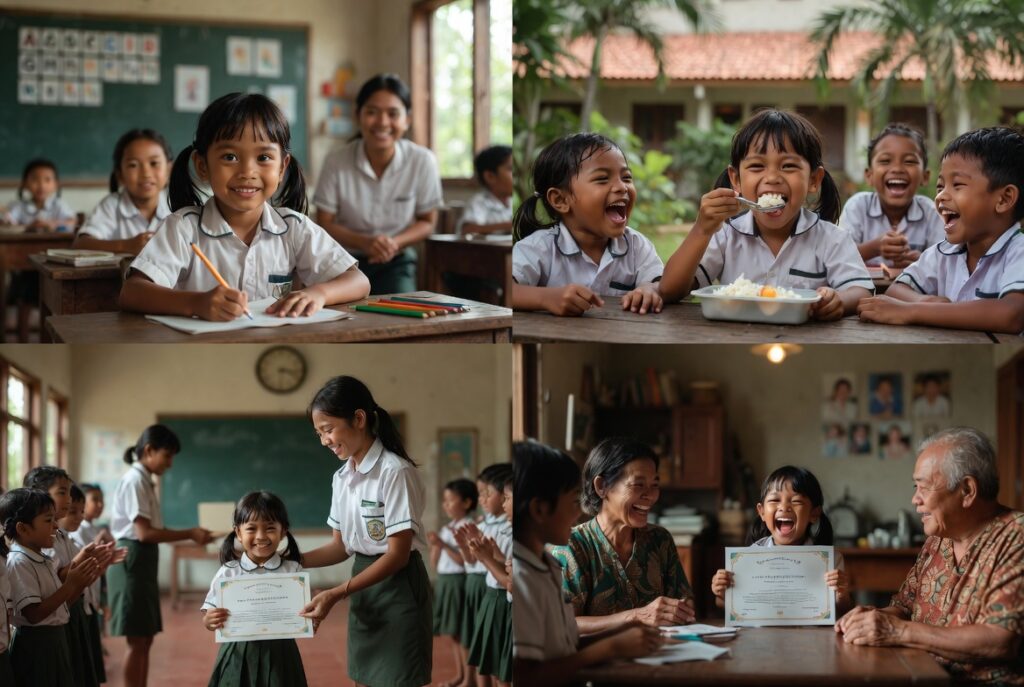
  • 🥳💋Helping young people shine in tourism💋🥳 (A2)


    A good foundation can help young people have a better life and good work in tourism. It gives education and training in important skills. Students can learn English, computer skills, and hotel work, like serving guests, cleaning rooms, or working in restaurants. They also learn life skills, such as teamwork, responsibility, and communication.

    A strong foundation also gives practical experience. Students can work in real hotels or tourist places to use what they learn in class. This experience helps them feel confident and ready for work. The foundation should support students with free classes, meals, uniforms, and sometimes a place to live. This is very important for students from poor families or far villages.

    A good foundation teaches young people to care for the environment and local culture. They learn to respect nature, protect animals, and understand traditions.

    The main goal of a good foundation is to help students find jobs and have a better future. With training, support, and experience, young people can grow and succeed. They can work in hotels or tourist places and help the community. Foundations like this make life better for young people and their families, and also improve tourism by having skilled and responsible workers.


    __________________________

    Vocabulary:

    1. To shine – To do very well or to be very good at something.
    2. A foundation – An organization that helps people.
    3. Education – Learning at school or in classes.
    4. Skills – Things you can do well.
    5. To serve guests – To give food, drinks, or help to visitors.
    6. To clean rooms – To make rooms tidy and clean.
    7. Responsibility – Doing what you should do and taking care of things.
    8. Communication – Talking or sharing ideas with other people.
    9. Practical experience – Doing real work to learn skills.
    10. To feel confident – To feel sure about yourself and your abilities.
    11. To support – To help someone.
    12. A village – A small town or group of houses in the countryside.
    13. To care for the environment – To keep nature clean and safe.
    14. To respect nature – To be careful and kind to animals, plants, and the earth.
    15. To protect animals – To keep animals safe from harm.
    16. To understand traditions – To know about old customs and ways of life.
    17. A goal – Something you want to do or achieve.
    18. Support – Help or assistance.
    19. To succeed – To do something well or reach your goal.
    20. A community – A group of people living or working together.
    21. To improve tourism – To make visiting a place better for tourists.
    22. A skilled worker – A person who can do a job well.
    23. To be responsible – To do what you must do and take care of your duties.

    #################

    Multiple-choice, one answer correct:


    1. What does “to shine” mean?
    A) To do very well or be very good
    B) To make something bright
    C) To look like a star

    2. What is a “foundation”?
    A) The bottom of a building
    B) A group that helps people in need
    C) A type of makeup

    3. What is “education”?
    A) Reading books at home
    B) Learning at school or in classes
    C) Watching TV for fun

    4. What are “skills”?
    A) Things you play with
    B) Things you wear
    C) Things you can do well

    5. What does “to serve guests” mean?
    A) To play games with visitors
    B) To give food or drinks to visitors
    C) To clean your own room

    6. What does “to clean rooms” mean?
    A) To make rooms tidy
    B) To paint rooms with colors
    C) To move furniture

    7. What is “responsibility”?
    A) Having fun every day
    B) Doing what you should and taking care of things
    C) Sleeping all the time

    8. What is “communication”?
    A) Reading silently at home
    B) Writing a long book
    C) Talking or sharing ideas with people

    9. What is “practical experience”?
    A) Doing real work to learn skills
    B) Watching videos at home
    C) Reading stories in class

    10. What does “to feel confident” mean?
    A) To feel very excited
    B) To feel nervous and shy
    C) To feel sure about yourself

    11. What does “to support” mean?
    A) To carry heavy things alone
    B) To help someone
    C) To run very fast

    12. What is a “village”?
    A) A small town in the countryside
    B) A big city with many buildings
    C) A house in the forest

    13. What does “to care for the environment” mean?
    A) To make your house beautiful
    B) To keep nature clean
    C) To plant flowers at home

    14. What does “to respect nature” mean?
    A) To visit mountains often
    B) To take pictures of forests
    C) To be careful and kind to plants and animals

    15. What does “to protect animals” mean?
    A) To feed animals at home
    B) To watch animals in a zoo
    C) To keep animals safe

    16. What does “to understand traditions” mean?
    A) To learn a new language
    B) To know old customs and ways of life
    C) To play new games

    —–end of audio———–

    17. What is a “goal”?
    A) A place to sleep
    B) Something you want to do
    C) A toy you like

    18. What is “support”?
    A) Help or assistance
    B) Food for children
    C) A place to stay

    19. What does “to succeed” mean?
    A) To try and fail
    B) To do something well or reach your goal
    C) To rest all day

    20. What is a “community”?
    A) A place with many trees
    B) A small house in the forest
    C) A group of people living or working together

    21. What does “to improve tourism” mean?
    A) To clean streets in a city
    B) To build new houses
    C) To make visiting a place better for tourists

    22. What is a “skilled worker”?
    A) A child in school
    B) A person who can do a job well
    C) A visitor in a hotel

    23. What does “to be responsible” mean?
    A) To have fun all the time
    B) To play games with friends
    C) To do what you must and take care of duties


    _______________________
    Answers:
    1A, 2B, 3B, 4C, 5B, 6A, 7B, 8C, 9A,
    10C, 11B, 12A, 13B, 14C, 15C, 16B,
    17B, 18A, 19B, 20C, 21C, 22B, 23C

    _______________________

    Correct version:


    1. What does “to shine” mean? – To do very well or be very good
    2. What is a “foundation”? – A group that helps people in need
    3. What is “education”? – Learning at school or in classes
    4. What are “skills”? – Things you can do well
    5. What does “to serve guests” mean? – To give food or drinks to visitors
    6. What does “to clean rooms” mean? – To make rooms tidy
    7. What is “responsibility”? – Doing what you should and taking care of things
    8. What is “communication”? – Talking or sharing ideas with people
    9. What is “practical experience”? – Doing real work to learn skills
    10. What does “to feel confident” mean? – To feel sure about yourself
    11. What does “to support” mean? – To help someone
    12. What is a “village”? – A small town in the countryside
    13. What does “to care for the environment” mean? – To keep nature clean
    14. What does “to respect nature” mean? – To be careful and kind to plants and animals
    15. What does “to protect animals” mean? – To keep animals safe
    16. What does “to understand traditions” mean? – To know old customs and ways of life
    17. What is a “goal”? – Something you want to do
    18. What is “support”? – Help or assistance
    19. What does “to succeed” mean? – To do something well or reach your goal
    20. What is a “community”? – A group of people living or working together
    21. What does “to improve tourism” mean? – To make visiting a place better for tourists
    22. What is a “skilled worker”? – A person who can do a job well
    23. What does “to be responsible” mean? – To do what you must and take care of duties

    #################


    Match the words with the correct definitions:

    Words:

    1. to shine
    2. a foundation
    3. education
    4. skills
    5. to serve guests
    6. to clean rooms
    7. responsibility
    8. communication
    9. practical experience
    10. to feel confident
    11. to support
    12. a village
    13. to care for the environment
    14. to respect nature
    15. to protect animals
    16. to understand traditions
    17. a goal
    18. support
    19. to succeed
    20. a community
    21. to improve tourism
    22. a skilled worker
    23. to be responsible


    Definitions:

    A. Doing what you should and taking care of things
    B. To know old customs and ways of life
    C. Things you can do well
    D. To feel sure about yourself
    E. A group that helps people
    F. Learning at school or in classes
    G. To give food or drinks to visitors
    H. To make visiting a place better for tourists
    I. A group of people living or working together
    J. To keep animals safe
    K. Help or assistance
    L. Talking or sharing ideas with people
    M. Doing real work to learn skills
    N. To do very well or be very good
    O. To carry out work or tasks in real life
    P. To make rooms tidy
    Q. A small town in the countryside
    R. To help someone
    S. A person who can do a job well
    T. To be careful and kind to plants and animals
    U. To keep nature clean
    V. Something you want to do or achieve
    W. To do something well or reach your goal


    ___________________
    Answers:
    1-N, 2-E, 3-F, 4-C, 5-G, 6-P, 7-A,
    8-L, 9-M, 10-D, 11-R, 12-Q, 13-U,
    14-T, 15-J, 16-B, 17-V, 18-K, 19-W,
    20-I, 21-H, 22-S, 23-A


    __________________

    Correct matches:


    1. to shine – To do very well or be very good
    2. a foundation – A group that helps people
    3. education – Learning at school or in classes
    4. skills – Things you can do well
    5. to serve guests – To give food or drinks to visitors
    6. to clean rooms – To make rooms tidy
    7. responsibility – Doing what you should and taking care of things
    8. communication – Talking or sharing ideas with people
    9. practical experience – Doing real work to learn skills
    10. to feel confident – To feel sure about yourself
    11. to support – To help someone
    12. a village – A small town in the countryside
    13. to care for the environment – To keep nature clean
    14. to respect nature – To be careful and kind to plants and animals
    15. to protect animals – To keep animals safe
    16. to understand traditions – To know old customs and ways of life
    17. a goal – Something you want to do or achieve
    18. support – Help or assistance
    19. to succeed – To do something well or reach your goal
    20. a community – A group of people living or working together
    21. to improve tourism – To make visiting a place better for tourists
    22. a skilled worker – A person who can do a job well
    23. to be responsible – Doing what you should and taking care of things

    #################

    Complete, word bank below:


    Sentences:

    1. A ________ is a small town in the countryside.
    2. To ________ means to do very well or be very good at something.
    3. A ________ helps people in need with education and support.
    4. Students go to school to get a good ________.
    5. To ________ means to give food or drinks to visitors.
    6. A ________ is someone who can do a job very well.
    7. It is important to have ________ and do your tasks carefully.
    8. To ________ means to talk or share ideas with others.
    9. We should ________ animals and keep them safe.
    10. A ________ is something you want to do or achieve in the future.

    ——————————-

    Word Bank:

    • responsibility
    • goal
    • skilled worker
    • village
    • education
    • shine
    • serve guests
    • communicate
    • foundation
    • protect animals

    ____________________

    Correct verson:

    1. A village is a small town in the countryside.
    2. To shine means to do very well or be very good at something.
    3. A foundation helps people in need with education and support.
    4. Students go to school to get a good education.
    5. To serve guests means to give food or drinks to visitors.
    6. A skilled worker is someone who can do a job very well.
    7. It is important to have responsibility and do your tasks carefully.
    8. To communicate means to talk or share ideas with others.
    9. We should protect animals and keep them safe.
    10. A goal is something you want to do or achieve in the future.

    ################

    Complete, word bank below:


    Sentences:

    1. You can learn new ________ by practicing every day.
    2. In a hotel, you need to ________ to make everything tidy.
    3. Students gain ________ when they work in real situations.
    4. After practicing a lot, she began ________ in herself.
    5. Volunteers often ________ people in need with their work.
    6. It is important to ________ and keep nature safe.
    7. We must ________ and be careful with plants and animals.
    8. If you work hard, you can ________ in your career.
    9. People living together and helping each other form a ________.
    10. Local projects try to ________ so tourists enjoy the place more.
    11. Everyone should try ________ and doing their tasks well.

    ——————————-

    Word bank:

    • to be responsible
    • respect nature
    • practical experience
    • support
    • community
    • improve tourism
    • clean rooms
    • skills
    • succeed
    • care for the environment
    • to feel confident

    ____________________

    Correct version:


    1. You can learn new skills by practicing every day.
    2. In a hotel, you need to clean rooms to make everything tidy.
    3. Students gain practical experience when they work in real situations.
    4. After practicing a lot, she began to feel confident in herself.
    5. Volunteers often support people in need with their work.
    6. It is important to care for the environment and keep nature safe.
    7. We must respect nature and be careful with plants and animals.
    8. If you work hard, you can succeed in your career.
    9. People living together and helping each other form a community.
    10. Local projects try to improve tourism so tourists enjoy the place more.
    11. Everyone should try to be responsible and do their tasks well.

    ################

    True or false:

    1. A skilled worker is someone who can do a job very well.
    2. To shine means to fail at your work.
    3. Students gain practical experience when they work in real situations.
    4. A village is a big city with many buildings.
    5. Volunteers often support people in need.
    6. Caring for the environment means keeping nature clean and safe.
    7. You can learn new skills by practicing every day.
    8. To improve tourism means to make visiting a place worse for tourists.
    9. People living together and helping each other form a community.
    10. After practicing a lot, a person can feel confident in themselves.
    11. To respect nature means to be careful and kind to plants and animals.
    12. Everyone should try to be responsible and ignore their tasks.
    13. To serve guests means to give food or drinks to visitors.
    14. A foundation is an organization that helps people in need.

    ____________________

    True:1,3,5,6,7,9,10,11,13,14


    ____________________

    Corrrect version:


    1. A skilled worker is someone who can do a job very well.
    2. To shine means to fail at your work. True is: To shine means to do very well or be very good at something.
    3. Students gain practical experience when they work in real situations.
    4. A village is a big city with many buildings. True is: A village is a small town in the countryside.
    5. Volunteers often support people in need.
    6. Caring for the environment means keeping nature clean and safe.
    7. You can learn new skills by practicing every day.
    8. To improve tourism means to make visiting a place worse for tourists. True is: To improve tourism means to make visiting a place better for tourists.
    9. People living together and helping each other form a community.
    10. After practicing a lot, a person can feel confident in themselves.
    11. To respect nature means to be careful and kind to plants and animals.
    12. Everyone should try to be responsible and ignore their tasks. True is: Everyone should try to be responsible and do their tasks well.
    13. To serve guests means to give food or drinks to visitors.
    14. A foundation is an organization that helps people in need.

    ################

    Intervciew, fill in, words below:

    education – rural – chance – young – hospitality –
    succeed – villages – learn – experience –
    skills – customs –
    environment

    ——————————————


    1. Q: What does your foundation do?
    A: Our foundation trains young people in tourism and __________. We help them learn skills, get education, and gain practical experience.

    2. Q: Who can join your programs?
    A: Only young people can join. We focus on those from rural areas or poor backgrounds who would not have any __________ for training.

    3. Q: Which skills do you teach?
    A: We teach practical __________ like cleaning rooms, serving guests, communication, teamwork, and responsibility.

    4. Q: Where do the activities take place?
    A: Activities happen in hotels, our training center, local __________, and sometimes in community projects.

    5. Q: When can young people get practical __________?
    A: They can join during workshops or training programs where they work in real hotels and tourist places.

    6. Q: Why do you focus on young people from rural or poor areas?
    A: These young people usually have no chance for __________ or training. Our foundation gives them opportunities to succeed in tourism and hospitality.

    7. Q: What traditions do you teach?
    A: We teach local __________, culture, and traditional ways of life, so young people understand and respect them.

    8. Q: How can volunteers help?
    A: Volunteers can teach, organize activities, help in hotels, and care for the __________ and animals.

    9. Q: Who benefits most from your foundation?
    A: Young people from _________ or poor backgrounds gain skills, confidence, and practical experience. Communities also benefit from tourism projects.

    10. Q: Which activities involve tourists?
    A: Tourists can visit programs, see local life, and __________ about culture, hotels, and hospitality work.

    11. Q: How long has your foundation been working?
    A: The foundation has been active for over ten years and has trained hundreds of _________ people.

    12. Q: What is the main goal of your foundation?
    A: The main goal is to help young people from poor backgrounds __________ in tourism and hospitality, support communities, and respect culture and nature.


    #################

    Correct version:


    . Q: What does your foundation do?
    A: Our foundation trains young people in tourism and hospitality. We help them learn skills, get education, and gain practical experience.

    2. Q: Who can join your programs?
    A: Only young people can join. We focus on those from rural areas or poor backgrounds who would not have any chance for training.

    3. Q: Which skills do you teach?
    A: We teach practical skills like cleaning rooms, serving guests, communication, teamwork, and responsibility.

    4. Q: Where do the activities take place?
    A: Activities happen in hotels, our training center, local villages, and sometimes in community projects.

    5. Q: When can young people get practical experience?
    A: They can join during workshops or training programs where they work in real hotels and tourist places.

    6. Q: Why do you focus on young people from rural or poor areas?
    A: These young people usually have no chance for education or training. Our foundation gives them opportunities to succeed in tourism and hospitality.

    7. Q: What traditions do you teach?
    A: We teach local customs, culture, and traditional ways of life, so young people understand and respect them.

    8. Q: How can volunteers help?
    A: Volunteers can teach, organize activities, help in hotels, and care for the environment and animals.

    9. Q: Who benefits most from your foundation?
    A: Young people from rural or poor backgrounds gain skills, confidence, and practical experience. Communities also benefit from tourism projects.

    10. Q: Which activities involve tourists?
    A: Tourists can visit programs, see local life, and learn about culture, hotels, and hospitality work.

    11. Q: How long has your foundation been working?
    A: The foundation has been active for over ten years and has trained hundreds of young people.

    12. Q: What is the main goal of your foundation?
    A: The main goal is to help young people from poor backgrounds succeed in tourism and hospitality, support communities, and respect culture and nature.


    ##################

  • 🏰🎡The hidden problems of eco-tourism, part 6/6, no rules, no standards🎡🏰(A2)

    5. No clear rules or standards

    There are very few official rules for eco-tourism. Some tours are really good for nature and local people, but others are bad. Tourists cannot always know if a hotel, guide, or tour is really eco-friendly. Without rules, some companies may cheat or lie about helping nature, and local people may not get fair benefits.


    ##################


    One big problem with eco-tourism is that there are very few clear rules or standards. Some eco-tourism tours are really good. They help nature, protect animals, and give money to local people. But other tours are not good. They may look like eco-tourism, but they can harm nature, animals, or local communities.

    Tourists often do not know if a hotel, guide, or tour is really eco-friendly. Sometimes companies say they care about the environment, but they do not. Without clear rules, it is easy for companies to cheat. For example, a hotel can say it is eco-friendly, but it may use a lot of water or energy. A tour company may say it helps local people, but local communities may not get any money.

    This problem is very serious. Tourists want to make good choices, but it is hard to know which tours are honest. Local people can also lose if companies do not follow fair rules. Good eco-tourism needs clear standards, inspections, and certificates. Without rules, eco-tourism can be more harmful than helpful.


    ————————-

    Vocabulary:

    1. a rule – something you must do or must not do
    2. a standard – a level of quality that is normal or correct
    3. an official rule – a rule made by the government or an authority
    4. eco-friendly – good for nature and the environment
    5. to cheat – to lie or do something wrong to get an advantage
    6. fair benefits – good things that are given to everyone in the right way
    7. to protect animals – to keep animals safe from danger or harm
    8. local people – people who live in the area
    9. to harm nature – to hurt plants, animals, or the environment
    10. a local community – a group of people living in the same area
    11. to care about the environment – to think it is important to keep nature safe and clean
    12. to make a good choice – to choose the best or right thing
    13. to be honest – to tell the truth and not lie
    14. to be a loser – to fail or not succeed
    15. fair rules – rules that are good and equal for everyone
    16. an inspection – a careful check to see if something is correct or safe
    17. a certificate – an official paper that shows something is true or correct
    18. to be harmful – to be bad or dangerous for people, animals, or nature

    ####################


    Multiple choice:

    1. A rule is…
    a) a paper you get at school
    b) a place where people live
    c) something you must do or not do

    2. A standard is…
    a) a type of thing that people use
    b) a level of quality that is normal
    c) a rule that everyone must follow

    3. An official rule is…
    a) a law made by the government
    b) a rule only for some people
    c) a rule that can change often

    4. Eco-friendly means…
    a) safe for people to use always
    b) good for nature and the environment
    c) useful for jobs or activities

    5. To cheat means…
    a) to do something others dislike
    b) to lie or do something wrong
    c) to try to win in the wrong way

    6. Fair benefits are…
    a) good things that everyone gets
    b) helpful things for each person
    c) things that give the same help

    7. To protect animals means…
    a) to keep animals safe
    b) to make animals work
    c) to watch animals

    8. Local people are…
    a) people who live in the area
    b) people who work close to home
    c) people who stay near the village

    9. To harm nature means…
    a) to make plants, rivers, or soil unsafe
    b) to hurt plants, animals, or land
    c) to damage trees, rivers, or soil

    10. A local community is…
    a) a set of people who live nearby
    b) a group of people in one place
    c) a group of people who live near

    11. To care about the environment means…
    a) to think it is important to keep nature safe
    b) to try to keep the world clean and safe
    c) to want to protect trees, water, and land

    12. To make a good choice means…
    a) to pick the correct thing to do
    b) to choose the right thing
    c) to select the thing that is the best

    13. To be honest means…
    a) to speak in a truthful and fair way
    b) to tell the truth and not lie
    c) to always say what is correct

    14. To be a loser means…
    a) to lose and not reach the goal
    b) to fail or not succeed
    c) to try but not win at something

    15. Fair rules are…
    a) rules that give the same chance to all
    b) rules that apply to everyone
    c) rules that are equal and fair

    ———–end of audio———

    16. An inspection is…
    a) a review to see if something is right
    b) a careful check to see if things are correct
    c) a close look to make sure things are okay

    17. A certificate is…
    a) a paper that proves something is correct
    b) an official paper that says it is correct
    c) a document that shows something is true

    18. To be harmful means…
    a) to make things unsafe for people or animals
    b) to cause harm to people, animals, or plants
    c) to be bad or dangerous for people, animals, or nature


    _____________________

    Answers:

    1-c, 2-b, 3-a, 4-b, 5-b, 6-a, 7-a,
    8-a, 9-b, 10-c, 11-a, 12-c, 13-b,
    14-a, 15-c, 16-b, 17-c, 18-a


    _____________________

    Correct version:


    1. A rule is –
      something you must do or not do
    2. A standard is –
      a level of quality that is normal
    3. An official rule is –
      a law made by the government
    4. Eco-friendly means –
      good for nature and the environment
    5. To cheat means –
      to lie or do something wrong
    6. Fair benefits are –
      good things that everyone gets
    7. To protect animals means –
      to keep animals safe
    8. Local people are –
      people who live in the area
    9. To harm nature means –
      to hurt plants, animals, or land
    10. A local community is –
      a group of people who live near
    11. To care about the environment means –
      to think it is important to keep nature safe
    12. To make a good choice means –
      to pick the correct thing to do
    13. To be honest means –
      to tell the truth and not lie
    14. To be a loser means –
      to fail or not succeed
    15. Fair rules are –
      rules that are equal and fair
    16. An inspection is –
      a careful check to see if things are correct
    17. A certificate is –
      an official paper that says it is correct
    18. To be harmful means –
      to be bad or dangerous for people, animals, or nature

    ##################


    Match the word with its definition

    Words:

    1. a rule
    2. a standard
    3. an official rule
    4. eco-friendly
    5. to cheat
    6. fair benefits
    7. to protect animals
    8. local people
    9. to harm nature
    10. a local community
    11. to care about the environment
    12. to make a good choice
    13. to be honest
    14. to be a loser
    15. fair rules
    16. an inspection
    17. a certificate
    18. to be harmful


    Definitions:

    A. to keep animals safe
    B. a careful check to see if things are correct
    C. to lie or do something wrong
    D. to think it is important to keep nature safe
    E. a level of quality that is normal
    F. rules that are equal and fair
    G. a group of people who live near
    H. something you must do or not do
    I. a paper that shows something is true or correct
    J. to be bad or dangerous for people, animals, or nature
    K. to fail or not succeed
    L. to hurt plants, animals, or land
    M. a law made by the government
    N. to pick the correct thing to do
    O. to tell the truth and not lie
    P. good things that everyone gets
    Q. people who live in the area
    R. good for nature and the environment


    Answers

    1-H, 2-E, 3-M, 4-R, 5-C, 6-P,
    7-A, 8-Q, 9-L, 10-G, 11-D, 12-N,
    13-O, 14-K, 15-F, 16-B, 17-I, 18-J


    ___________________________

    Correct version:


    1. a rule – something you must do or not do
    2. a standard – a level of quality that is normal
    3. an official rule – a law made by the government
    4. eco-friendly – good for nature and the environment
    5. to cheat – to lie or do something wrong
    6. fair benefits – good things that everyone gets
    7. to protect animals – to keep animals safe
    8. local people – people who live in the area
    9. to harm nature – to hurt plants, animals, or land
    10. a local community – a group of people who live near
    11. to care about the environment – to think it is important to keep nature safe
    12. to make a good choice – to pick the correct thing to do
    13. to be honest – to tell the truth and not lie
    14. to be a loser – to fail or not succeed
    15. fair rules – rules that are equal and fair
    16. an inspection – a careful check to see if things are correct
    17. a certificate – a paper that shows something is true or correct
    18. to be harmful – to be bad or dangerous for people, animals, or nature

    ##################

    Interview, fill in, words below:

    rubbish – rules – helpful – animals – eco-tourism –
    communities – clear – money – protect –
    honest – energy – certificates –
    truth – noise

    —————————————


    Interviewer: Hello! Today we talk about eco-tourism. Can you tell us what one big problem is?
    Expert: Yes. One big problem is that there are very few clear rules or standards for __________.

    Interviewer: What does that mean?
    Expert: It means there are no official __________ to show if a tour or hotel is really eco-friendly.

    Interviewer: Are all eco-tours bad?
    Expert: No, not at all. Some tours are really good. They help nature, __________ animals, and give money to local people.

    Interviewer: But some tours are not good, right?
    Expert: That’s right. Some only look like eco-tourism, but they can harm nature or __________.

    Interviewer: How can a tour harm nature?
    Expert: It can use too many cars, make a lot of __________, or throw rubbish in natural places.

    Interviewer: And what about local people?
    Expert: Sometimes local __________ do not get any money, even when the tour says it helps them.

    Interviewer: Why can this happen?
    Expert: Because there are no clear rules or inspections to check if companies tell the__________.

    Interviewer: Can some companies cheat?
    Expert: Yes, they can. A hotel can say it is eco-friendly, but maybe it uses a lot of water or __________.

    Interviewer: What can tourists do?
    Expert: Tourists can ask questions, read reviews, and try to choose __________ tours and hotels.

    Interviewer: Is it easy for tourists to make a good choice?
    Expert: No, it is not easy. Without __________ standards, it is hard to know which tours are really good.

    Interviewer: Who loses when companies are not honest?
    Expert: Both tourists and local people lose. Tourists lose trust, and local people lose _________ and jobs.

    Interviewer: What can help to solve this problem?
    Expert: We need fair rules, inspections, and __________ to show which tours are truly eco-friendly.

    Interviewer: Why are clear rules so important?
    Expert: Because without rules, eco-tourism can become more harmful than __________ for nature and people.


    ___________________________


    Interview: The Problem with Eco-tourism Rules

    Interviewer: Hello! Today we talk about eco-tourism. Can you tell us what one big problem is?
    Expert: Yes. One big problem is that there are very few clear rules or standards for eco-tourism.

    Interviewer: What does that mean?
    Expert: It means there are no official rules to show if a tour or hotel is really eco-friendly.

    Interviewer: Are all eco-tours bad?
    Expert: No, not at all. Some tours are really good. They help nature, protect animals, and give money to local people.

    Interviewer: But some tours are not good, right?
    Expert: That’s right. Some only look like eco-tourism, but they can harm nature or animals.

    Interviewer: How can a tour harm nature?
    Expert: It can use too many cars, make a lot of noise, or throw rubbish in natural places.

    Interviewer: And what about local people?
    Expert: Sometimes local communities do not get any money, even when the tour says it helps them.

    Interviewer: Why can this happen?
    Expert: Because there are no clear rules or inspections to check if companies tell the truth.

    Interviewer: Can some companies cheat?
    Expert: Yes, they can. A hotel can say it is eco-friendly, but maybe it uses a lot of water or energy.

    Interviewer: What can tourists do?
    Expert: Tourists can ask questions, read reviews, and try to choose honest tours and hotels.

    Interviewer: Is it easy for tourists to make a good choice?
    Expert: No, it is not easy. Without clear standards, it is hard to know which tours are really good.

    Interviewer: Who loses when companies are not honest?
    Expert: Both tourists and local people lose. Tourists lose trust, and local people lose money and jobs.

    Interviewer: What can help to solve this problem?
    Expert: We need fair rules, inspections, and certificates to show which tours are truly eco-friendly.

    Interviewer: Why are clear rules so important?
    Expert: Because without rules, eco-tourism can become more harmful than helpful for nature and people.


    ###################

    Cheat sheet:

  • 🏰🎡The hidden problems of eco-tourism, part 5/6, travel pollution🎡🏰(A2)

    • influence on climate?

    4. Travel pollution
    To visit eco-tourism places, tourists often use planes, cars, or motorboats. These vehicles create carbon dioxide (CO₂), which is bad for the climate and air. Even if the place is “eco,” the journey itself can make a big pollution problem. Sometimes, local buses or boats are not modern or clean, and this adds to air and water pollution.

    ###################

    Eco-tourism tries to protect nature and help local people, but traveling to eco-places can still cause pollution. Many eco-tourism spots are far away, so tourists often need planes, cars, or motorboats to get there. These vehicles use fuel and make carbon dioxide (CO₂), which warms the Earth and harms the air. Even when people travel to “eco” places, the trip itself can hurt the environment.

    Airplanes make a lot of CO₂, and cars and buses also create smoke when they burn petrol or diesel. In some places, local buses and boats are old and not clean, so they add to air and water pollution. Some motorboats even leak oil into rivers or the sea, which is bad for fish and other animals.

    However, this does not mean eco-tourism should stop. It can still be good if people travel carefully. Tourists can choose trains instead of planes, share cars, or take direct flights. They can stay longer in one place instead of moving often. Eco-tourism can also teach people to protect nature and respect local life. So, even if travel causes some pollution, eco-tourism can still help the planet when it is done responsibly.

    _______________________

    Vocabulary:

    • Pollution – when air, water, or land becomes dirty.
    • Climate – the usual weather in a place.
    • A journey – when you travel from one place to another.
    • To add to something – to make something bigger or worse.
    • To try – to make an effort to do something.
    • To protect nature – to keep animals, plants, and the environment safe.
    • To cause pollution – to make the air, water, or land dirty.
    • Fuel – something (like petrol or gas) that makes cars, planes, or boats work.
    • To harm the air – to make the air dirty or bad for breathing.
    • To hurt the environment – to damage nature, animals, or plants.
    • To burn petrol – to use petrol to make a car or machine work.
    • Water pollution – when water becomes dirty or unsafe.
    • To leak oil – when oil comes out of a machine or boat by accident.
    • However – a word to show a different or opposite idea.
    • To share a car – to travel in one car with other people.
    • Instead of – in place of something else.
    • To respect local life – to be kind and polite to people and their way of living.
    • To do something responsibly – to do something in a careful and good way.

    ##################

    Mulitple choice:

    1. Pollution is when …
      a) air or water becomes dirty
      b) people build new houses
      c) the sun is shining
    2. The climate in Thailand is …
      a) very noisy
      b) always hot and wet
      c) full of traffic
    3. A journey means …
      a) a trip from one place to another
      b) a kind of food
      c) a local dance
    4. Too many cars add to the city’s problems because …
      a) they make the city cleaner
      b) they make new parks
      c) they make more pollution
    5. People try to live green when they …
      a) sleep all day
      b) throw away plastic
      c) care about nature
    6. Eco-tourists want to protect nature by …
      a) keeping it clean
      b) cutting down trees
      c) feeding wild animals
    7. Factories cause pollution when they …
      a) make dirty smoke
      b) clean the river
      c) paint the walls
    8. Cars need fuel to …
      a) stop and rest
      b) move and work
      c) cool the air
    9. Smoke from cars harms the air because …
      a) it helps people breathe
      b) it makes the air dirty
      c) it smells like flowers
    10. Throwing trash in the forest hurts the environment because …
      a) it looks beautiful
      b) it helps the animals
      c) it damages nature
    11. Cars burn petrol when …
      a) they drive
      b) they stop
      c) they park
    12. Water pollution happens when …
      a) the river is clean
      b) it rains a lot
      c) the water becomes dirty
    13. A boat can leak oil when …
      a) oil comes out by mistake
      b) it goes very fast
      c) it stops at the port
    14. However, some tourists …
      a) like long flights
      b) do not think before they travel
      c) sleep in hotels
    15. You can share a car to …
      a) travel with friends
      b) buy a new car
      c) walk faster
    16. You can take the train instead of
      a) flying by plane
      b) going to school
      c) reading a book
    17. Tourists should respect local life by …
      a) talking very loudly
      b) taking photos of everything
      c) being kind to local people
    18. To do something responsibly means …
      a) to do it in a careful way
      b) to do it only once
      c) to do it very fast

    ___________________
    Answers:
    1a, 2b, 3a, 4c, 5c, 6a, 7a, 8b,
    9b, 10c, 11a, 12c, 13a, 14b,
    15a, 16a, 17c, 18a

    ___________________

    Correct version:

    1. Pollution – when air or water becomes dirty
    2. Climate – always hot and wet
    3. A journey – a trip from one place to another
    4. To add to something – they make more pollution
    5. To try – care about nature
    6. To protect nature – keeping it clean
    7. To cause pollution – make dirty smoke
    8. Fuel – move and work
    9. To harm the air – it makes the air dirty
    10. To hurt the environment – it damages nature
    11. To burn petrol – they drive
    12. Water pollution – the water becomes dirty
    13. To leak oil – oil comes out by mistake
    14. However – do not think before they travel
    15. To share a car – travel with friends
    16. Instead of – flying by plane
    17. To respect local life – being kind to local people
    18. To do something responsibly – to do it in a careful way

    ##################

    Word/s-definition match:

    Words:

    1. Pollution
    2. Climate
    3. A journey
    4. To add to something
    5. To try
    6. To protect nature
    7. To cause pollution
    8. Fuel
    9. To harm the air
    10. To hurt the environment
    11. To burn petrol
    12. Water pollution
    13. To leak oil
    14. However
    15. To share a car
    16. Instead of
    17. To respect local life
    18. To do something responsibly

    Definitions:


    A. To travel in one car with other people
    B. When water becomes dirty or unsafe
    C. To keep animals, plants, and the environment safe
    D. When you travel from one place to another
    E. To use petrol to make a car or machine work
    F. To make an effort to do something
    G. A word to show a different or opposite idea
    H. The usual weather in a place
    I. To make something bigger or worse
    J. Something that makes cars, planes, or boats work
    K. To do something in a careful and good way
    L. To make the air dirty or bad for breathing
    M. To damage nature, animals, or plants
    N. When air or water becomes dirty
    O. In place of something else
    P. To be kind and polite to people and their way of living
    Q. When oil comes out of a machine or boat by accident
    R. To make the air, water, or land dirty

    Answers:
    1–N, 2–H, 3–D, 4–I, 5–F, 6–C,
    7–R, 8–J, 9–L, 10–M, 11–E,
    12–B, 13–Q, 14–G, 15–A,
    16–O, 17–P, 18–K

    ###############

    True or False:

    1. To travel “instead of” flying means not flying but going another way.
    2. Eco-tourism always helps the planet and never causes pollution.
    3. “Fuel” means something that makes cars, planes, or boats work.
    4. To “add to” pollution means to make it smaller.
    5. Old boats can leak oil into rivers and seas.
    6. “Climate” means the usual weather in a place.
    7. Tourists should respect local life by being noisy and rude.
    8. Eco-tourism can still be good if tourists travel carefully.
    9. To “protect nature” means to keep animals and plants safe.
    10. Cars and planes create carbon dioxide, which is bad for the air.
    11. To “do something responsibly” means to do it in a careful and good way.
    12. Water pollution means the air becomes dirty.
    13. To “try” means to make an effort to do something.
    14. “However” shows a different or opposite idea.

    _____________________

    True: 1,3,5,6,8,9,10,11,13,14
    _____________________

    Correct version:

    1. To travel “instead of” flying means not flying but going another way.
    2. Eco-tourism always helps the planet and never causes pollution. True is: Eco-tourism can help the planet but traveling can still cause pollution.
    3. “Fuel” means something that makes cars, planes, or boats work.
    4. To “add to” pollution means to make it smaller. True is: To “add to” pollution means to make it bigger or worse.
    5. Old boats can leak oil into rivers and seas.
    6. “Climate” means the usual weather in a place.
    7. Tourists should respect local life by being noisy and rude. True is: Tourists should respect local life by being polite and careful.
    8. Eco-tourism can still be good if tourists travel carefully.
    9. To “protect nature” means to keep animals and plants safe.
    10. Cars and planes create carbon dioxide, which is bad for the air.
    11. To “do something responsibly” means to do it in a careful and good way.
    12. Water pollution means the air becomes dirty. True is: Water pollution means the water becomes dirty or unsafe.
    13. To “try” means to make an effort to do something.
    14. “However” shows a different or opposite idea.

    ####################


    Fill in the blanks, words given below:

    leak oil – share a car – add to – climate – fuel –
    respect local life – water pollution – journey –
    burn petrol – try – do something responsibly –
    protect nature – harm the air –
    instead of – however –
    pollution

    1. Tourists can ___________ by taking trains or buses instead of planes.
    2. Cars and planes use ___________ to move.
    3. A long ___________ to an eco-tourism place can make the environment dirty.
    4. Eco-tourists want to ___________ by keeping animals and plants safe.
    5. Old motorboats can ___________ into rivers and lakes.
    6. Smoke from cars can ___________ and make it dirty.
    7. Factories and cars create ___________ in the air and water.
    8. To be polite to local people means to ___________.
    9. People should ___________ to protect the planet when they travel.
    10. Tourists should not throw trash because it can ___________ the environment.
    11. Cars ___________ petrol to drive.
    12. Rivers and lakes can get ___________ if boats leak or people throw trash.
    13. Tourists can ___________ to reduce the number of cars on the road.
    14. ___________, travel can still cause pollution even if the place is “eco.”
    15. “Climate” means the usual weather in a place.
    16. To ___________ means to do something in a careful and good way.

    ——————————-

    Full version:

    1. Tourists can take trains or buses instead of planes.
    2. Cars and planes use fuel to move.
    3. A long journey to an eco-tourism place can make the environment dirty.
    4. Eco-tourists want to protect nature by keeping animals and plants safe.
    5. Old motorboats can leak oil into rivers and lakes.
    6. Smoke from cars can harm the air and make it dirty.
    7. Factories and cars create pollution in the air and water.
    8. To be polite to local people means to respect local life.
    9. People should try to protect the planet when they travel.
    10. Tourists should not throw trash because it can add to the environment problems.
    11. Cars burn petrol to drive.
    12. Rivers and lakes can get water pollution if boats leak or people throw trash.
    13. Tourists can share a car to reduce the number of cars on the road.
    14. However, travel can still cause pollution even if the place is “eco.”
    15. Climate means the usual weather in a place.
    16. To do something responsibly means to do it in a careful and good way.

    #####################

    Dialogue, fill in, words below:

    eco-tourism – sharing – planet – boats – protects –
    pollution – environment – choose –
    culture – responsibility –
    traveling – a lot –
    local – respect

    ———————————–


    J: Why does travel create pollution?
    E: Travel creates pollution because planes, cars, and __________ release carbon dioxide.

    J: When is travel most harmful to the __________?
    E: It is most harmful during long flights or when old vehicles are used.

    J: Who is responsible for travel pollution?
    E: Everyone—tourists, transport companies, and governments share __________ .

    J: Where is __________ the most useful?
    E: In places with fragile nature or small communities, where local people benefit.

    J: Which vehicles make the most carbon dioxide?
    E: Airplanes make the most CO₂, but old cars and boats also pollute __________.

    J: Why should tourists respect local life?
    E: Because it __________ the culture and helps communities live safely.

    J: How can travel still be eco-friendly?
    E: By using trains, __________ cars, staying longer, and avoiding too many trips.

    J: What is the main idea of eco-tourism?
    E: Visiting a place in a way that is good for nature and __________ people.

    J: When should tourists plan their trips?
    E: Before __________, to reduce journeys and avoid pollution.

    J: Who benefits from eco-tourism?
    E: Local people, nature, and also the tourists, because they learn __________.

    J: Which is better for short trips, planes or trains?
    E: Trains are better because they create less __________.

    J: Why is it important to avoid water pollution?
    E: Dirty rivers and seas harm fish, plants, and people living nearby.

    J: Where can tourists learn about local _________?
    E: In villages, markets, and through eco-tourism programs.

    J: Why should people __________ eco-friendly travel?
    E: Because it allows them to see the world without harming the __________.


    ——————————-

    Correct version:

    J: Why does travel create pollution?
    E: Travel creates pollution because planes, cars, and boats release carbon dioxide.

    J: When is travel most harmful to the environment?
    E: It is most harmful during long flights or when old vehicles are used.

    J: Who is responsible for travel pollution?
    E: Everyone—tourists, transport companies, and governments share responsibility.

    J: Where is eco-tourism the most useful?
    E: In places with fragile nature or small communities, where local people benefit.

    J: Which vehicles make the most carbon dioxide?
    E: Airplanes make the most CO₂, but old cars and boats also pollute a lot.

    J: Why should tourists respect local life?
    E: Because it protects the culture and helps communities live safely.

    J: How can travel still be eco-friendly?
    E: By using trains, sharing cars, staying longer, and avoiding too many trips.

    J: What is the main idea of eco-tourism?
    E: Visiting a place in a way that is good for nature and local people.

    J: When should tourists plan their trips?
    E: Before traveling, to reduce journeys and avoid pollution.

    J: Who benefits from eco-tourism?
    E: Local people, nature, and also the tourists, because they learn respect.

    J: Which is better for short trips, planes or trains?
    E: Trains are better because they create less pollution.

    J: Why is it important to avoid water pollution?
    E: Dirty rivers and seas harm fish, plants, and people living nearby.

    J: Where can tourists learn about local culture?
    E: In villages, markets, and through eco-tourism programs.

    J: Why should people choose eco-friendly travel?
    E: Because it allows them to see the world without harming the planet.


  • 🏰🎡The hidden problems of eco-tourism, part 4/6, and profits for…….. 🎡🏰(A2)

    • local people benefit?

    3. Local people do not get enough benefit

    Often, money from eco-tourism goes to big companies or people outside the village, not to local families. Sometimes, villagers lose their land or are forced to change their homes for tourists. Local culture, traditions, and festivals can become like a show for visitors instead of real life. People may get jobs with low pay or only work in restaurants or shops for tourists, not in their normal farming or craft work.

    #################


    Tourism can bring money to villages and towns. It can help people have jobs and make more money. But often, local people do not get enough benefit. Many times, most of the money goes to big companies or to people who live outside the village. Local families may get only small jobs with low pay. They may work in shops, restaurants, or as guides for tourists, but they cannot earn much from their normal work, like farming, fishing, or making crafts.

    Sometimes, tourism can harm local people. Villagers may lose their land or homes to make space for hotels, resorts, or tourist attractions. This is not fair because the local people cannot use their land anymore. Also, tourism can change local culture and traditions. Festivals, dances, and ceremonies that were once part of real life may become shows only for tourists. This is not real life and can make traditions lose their true meaning.

    Eco-tourism should help local people and the environment. Villagers should get fair jobs and fair money. They should keep their land and continue their normal life. Tourists should respect local life and traditions. If tourism only brings money to outsiders, local people can lose their home, work, and culture.


    ___________________

    Vocabulary:

    • to benefit – to get help, money, or something good from something.
    • a villager – a person who lives in a village.
    • to be forced – to have to do something even if you do not want to.
    • instead of – not this, but that; as a replacement.
    • low pay job – work where you get little money.
    • farming work – work on a farm, like growing plants or looking after animals.
    • craft work – making things by hand, like baskets, clothes, or art.
    • to earn money – to get money by working.
    • to make crafts – to make things by hand, like art or useful objects.
    • sometimes – not always; now and then.
    • to harm people – to hurt people or make life worse for them.
    • to make space for something – to clear an area so something else can be there.
    • to lose meaning – to stop being important or real.
    • environment – the world around us, like nature, rivers, and land.
    • a fair job – a job that is good and just, with fair rules.
    • fair money – money that is enough and right for the work.
    • to respect local life – to be polite and careful about the way people live.
    • an outsider – a person who is not from the village or local area.

    #################

    Multiple choice test:


    1. To benefit means…
      a) to get help
      b) to lose money
      c) to work hard
    2. A villager is…
      a) a person who travels
      b) a person who lives there
      c) a city worker
    3. To be forced means…
      a) to choose freely
      b) to have to do it
      c) to help someone
    4. Instead of means…
      a) not this, but that
      b) very fast
      c) at the same time
    5. Low pay job is…
      a) work with much money
      b) work with little money
      c) work for fun
    6. Farming work is…
      a) work in a shop
      b) work on a farm
      c) work at home
    7. Craft work is…
      a) running fast
      b) cleaning house
      c) making things
    8. To earn money means…
      a) to get money
      b) to give money
      c) to spend money
    9. To make crafts means…
      a) make things
      b) cook food
      c) read books
    10. Sometimes means…
      a) every day
      b) not always
      c) never
    11. To harm people means…
      a) speak softly
      b) help people
      c) hurt people
    12. To make space for something means…
      a) clear area
      b) hide things
      c) take away
    13. To lose meaning means…
      a) happen often
      b) stop being inportant
      c) be clear
    14. Environment is…
      a) type of building
      b) person outside
      c) world around
    15. A fair job is…
      a) very easy
      b) only for kids
      c) good rules
    16. Fair money is…
      a) enough money
      b) very small
      c) never given
    17. To respect local life means…
      a) be polite
      b) change life
      c) ignore rules
    18. An outsider is…
      a) farm worker
      b) not from village
      c) village person

    ____________________
    Answers:
    1-a, 2-b, 3-b, 4-a, 5-b, 6-b, 7-c,
    8-a, 9-a, 10-b, 11-c, 12-a, 13-b,
    14-c, 15-c, 16-a, 17-a, 18-b

    ##############

    Match word/s and definition:


    Words:

    1. to benefit
    2. a villager
    3. to be forced
    4. instead of
    5. low pay job
    6. farming work
    7. craft work
    8. to earn money
    9. to make crafts
    10. sometimes
    11. to harm people
    12. to make space for something
    13. to lose meaning
    14. environment
    15. a fair job
    16. fair money
    17. to respect local life
    18. an outsider


    Definitions:

    A. to hurt people or make life worse
    B. a person who lives in a village
    C. money that is enough and right for work
    D. to have to do something even if you do not want
    E. to get money by working
    F. making things by hand, like art or useful objects
    G. to stop being important or real
    H. not this, but that
    I. work on a farm, like growing plants or looking after animals
    J. to clear an area so something else can be there
    K. work where you get little money
    L. to be polite and careful about the way people live
    M. not always
    N. a person who is not from the village
    O. to get help, money, or something good from something
    P. work of making things by hand, like baskets, clothes, or art
    Q. a job that is good and just, with fair rules
    R. the world around us, like nature, rivers, and land

    ___________________

    Answers:
    1-O, 2-B, 3-D, 4-H, 5-K,
    6-I, 7-P, 8-E, 9-F, 10-M, 11-A,
    12-J, 13-G, 14-R, 15-Q,
    16-C, 17-L, 18-N

    ___________________

    Correct version:

    1. to benefit – to get help, money, or something good from something
    2. a villager – a person who lives in a village
    3. to be forced – to have to do something even if you do not want
    4. instead of – not this, but that
    5. low pay job – work where you get little money
    6. farming work – work on a farm, like growing plants or looking after animals
    7. craft work – work of making things by hand, like baskets, clothes, or art
    8. to earn money – to get money by working
    9. to make crafts – making things by hand, like art or useful objects
    10. sometimes – sometimes; not always
    11. to harm people – to hurt people or make life worse
    12. to make space for something – to clear an area so something else can be there
    13. to lose meaning – to stop being important or real
    14. environment – the world around us, like nature, rivers, and land
    15. a fair job – a job that is good and just, with fair rules
    16. fair money – money that is enough and right for work
    17. to respect local life – to be polite and careful about the way people live
    18. an outsider – a person who is not from the village

    ################

    True or false:


    1. Villagers often lose their land to make space for tourists.
    2. Local people always earn most of the money from tourism.
    3. Festivals and traditions can become shows for visitors.
    4. Big companies often take most of the money from eco-tourism.
    5. Villagers can always continue their normal farming work when tourists come.
    6. Tourism can bring jobs with low pay for local people.
    7. Local culture never changes because of tourism.
    8. Sometimes villagers are forced to change their homes.
    9. Tourism can make local traditions lose their real meaning.
    10. Villagers sometimes work in restaurants or shops for tourists.
    11. Tourism can bring some money and benefits to local people.
    12. Local culture and life always stay the same when tourism comes.
    13. Villagers always get high pay and full control over tourism projects.
    14. Eco-tourism can harm local people if it only benefits outsiders.

    _______________________

    True: 1,3,4,6,8,9,10,11,14

    _______________________

    Correct version:


    1. Villagers often lose their land to make space for tourists.
    2. Local people always earn most of the money from tourism. True is: Local people often do not earn most of the money from tourism.
    3. Festivals and traditions can become shows for visitors.
    4. Big companies often take most of the money from eco-tourism.
    5. Villagers can always continue their normal farming work when tourists come. True is: Villagers sometimes cannot continue their normal farming work when tourists come.
    6. Tourism can bring jobs with low pay for local people.
    7. Local culture never changes because of tourism. True is: Local culture can change because of tourism.
    8. Sometimes villagers are forced to change their homes.
    9. Tourism can make local traditions lose their real meaning.
    10. Villagers sometimes work in restaurants or shops for tourists.
    11. Tourism can bring some money and benefits to local people.
    12. Local culture and life always stay the same when tourism comes. True is: Local culture and life can change when tourism comes.
    13. Villagers always get high pay and full control over tourism projects. True is: Villagers often get low pay and have little control over tourism projects.
    14. Eco-tourism can harm local people if it only benefits outsiders.

    ###################

    Reorder the sentences:


    1.

    • Villagers
    • lose
    • their land
    • often
    • to build hotels or attractions

      YOU WRITE:
      Villagers often lose their land to build hotels or attractions.

    2.

    • for visitors
    • festivals and traditions
    • instead of real life
    • can become
    • shows

      ______________________________________

    3.

    • take
    • big companies
    • most of the money
    • from eco-tourism
    • and outsiders

      ______________________________________

    4.

    • in shops or restaurants
    • sometimes
    • villagers
    • work
    • for tourists

      ______________________________________

    5.

    • if
    • tourism
    • it only benefits outsiders
    • can
    • harm local people

      ______________________________________

    6.

    • Villagers
    • their normal work
    • cannot
    • continue
    • sometimes

      ______________________________________

    7.

    • Local culture
    • lose
    • its meaning
    • can
    • because of tourism

      ______________________________________


    ————————
    Correct order:

    1. Villagers often lose their land to build hotels or attractions.
    2. Festivals and traditions can become shows for visitors instead of real life.
    3. Big companies and outsiders take most of the money from eco-tourism.
    4. Villagers sometimes work in shops or restaurants for tourists.
    5. Tourism can harm local people if it only benefits outsiders.
    6. Sometimes villagers cannot continue their normal work.
    7. Local culture can lose its meaning because of tourism.

      #################

    Interview with a local on the influence of tourism on his village,
    complete, fill in, words below:

    villagers – outsiders – jobs – problems –
    traditions – watch – guides –
    perform – homes –
    here

    ———————————


    1. Q: What is your name?
    A: My name is Sita.

    2. Q: Where do you live?
    A: I live in Ban Phu Village.

    3. Q: Who lives in your village?
    A: Many families and __________ live here.

    4. Q: How long do you live here?
    A: I live ___________ all my life.

    5. Q: Why do tourists come to your village?
    A: Tourists come to see our farms, houses, and__________ .

    6. Q: How does tourism affect villagers?
    A: Tourism gives _________, but big companies take most money.

    7. Q: What jobs do villagers do for tourists?
    A: Villagers work in shops, restaurants, or as __________ .

    8. Q: Who earns most money from tourism?
    A: Big companies and __________ earn most money.

    9. Q: What do villagers lose because of tourism?
    A: Villagers lose land, space for farming, and sometimes __________.

    10. Q: When do festivals change?
    A: Festivals change when tourists visit and __________ them.

    11. Q: How do traditions feel now?
    A: Traditions feel different because we __________ mainly for tourists.

    12. Q: Does tourism bring only good things?
    A: No, tourism brings some money, but it also brings __________ for villagers.


    ______________________

    Full version:


    1. Q: What is your name?
    A: My name is Sita.

    2. Q: Where do you live?
    A: I live in Ban Phu Village.

    3. Q: Who lives in your village?
    A: Many families and villagers live here.

    4. Q: How long do you live here?
    A: I live here all my life.

    5. Q: Why do tourists come to your village?
    A: Tourists come to see our farms, houses, and traditions.

    6. Q: How does tourism affect villagers?
    A: Tourism gives jobs, but big companies take most money.

    7. Q: What jobs do villagers do for tourists?
    A: Villagers work in shops, restaurants, or as guides.

    8. Q: Who earns most money from tourism?
    A: Big companies and outsiders earn most money.

    9. Q: What do villagers lose because of tourism?
    A: Villagers lose land, space for farming, and sometimes homes.

    10. Q: When do festivals change?
    A: Festivals change when tourists visit and watch them.

    11. Q: How do traditions feel now?
    A: Traditions feel different because we perform mainly for tourists.

    12. Q: Does tourism bring only good things?
    A: No, tourism brings some money, but it also brings problems for villagers.


    ###################

    Unscramble words, find phrase we are looking for:

  • Overtourism, part 2/2, text, exercises (A2)

    • tourism’s biggest problem – be part of the solution?

    Overtourism – A Problem We All Create

    Today, many people travel to the same popular places. This is called overtourism, and it causes problems for nature, local people, and also for tourists themselves.

    In cities like Venice, Barcelona, and Kyoto, there are too many visitors. Streets and monuments are full, and local people cannot live normally. In Thailand, Maya Bay was closed because tourists damaged the beach and coral.

    Tourism also hurts nature. Planes, cars, and cruise ships make a lot of pollution. Many tourists leave trash on mountains and beaches, and hotels use too much water. This is bad for the environment.

    Local people suffer too. Prices go up, and apartments become too expensive because owners rent to tourists. Traditional shops close, and only souvenir stores stay. The real local life and culture start to disappear.

    The problem of seasonality makes it worse — in summer, some places are too full, and in winter, they are empty.

    Tourists are part of this problem, but they can also be part of the solution. We can travel in the off-season, visit less famous places, respect local people, and protect nature.

    If everyone travels responsibly, tourism can be good for locals, tourists, and the planet.

    ——————————
    Vocabulary:


    to create a problem / to cause a problem – to make something bad happen.

    a monument – a big and important building or statue.

    to damage – to break or hurt something.

    coral – small colorful animals that live in the sea and make coral reefs.

    to hurt nature – to make the planet dirty or weak.

    pollution – dirty air, water, or land.

    to leave trash – to throw away rubbish and not pick it up.

    a mountain – a very high hill.

    environment – the world around us: air, water, animals, and plants.

    to suffer – to feel pain or to have a bad time.

    prices go up – things become more expensive.

    an owner – a person who has something (a house, a shop, etc.).

    to rent – to pay money to use something for some time (a room, a car, etc.).

    souvenir stores – shops that sell small gifts from a place.

    to disappear – to go away or to stop existing.

    seasonality – when something happens only in one part of the year.

    to make something worse – to make a bad thing even more bad.

    to be empty – when there are no people or things.

    to be part of a problem – to also help make the problem happen.

    a solution – a way to fix a problem.

    off-season – the time of year when few tourists come.

    less famous – not very well known.

    to respect – to be kind and polite to people and places.

    to protect nature – to keep animals, plants, and the planet safe.

    to travel responsibly – to travel in a good way that does not hurt people or nature.

    ####################


    Multiple choice:

    1. When tourists do something bad, they ______.
      a) create a problem
      b) clean the streets
      c) open a restaurant
    2. A monument is ______.
      a) a city near water
      b) an important building
      c) a tall office block
    3. If tourists walk on old stones, they can ______ them.
      a) damage
      b) paint
      c) repair
    4. Coral lives ______.
      a) in the sea
      b) on a tree
      c) in the air
    5. When people throw rubbish in nature, they ______.
      a) watch birds
      b) hurt nature
      c) buy tickets
    6. Cars and planes make ______.
      a) pollution
      b) flowers
      c) music
    7. It is bad to ______ after a picnic.
      a) leave trash
      b) wash dishes
      c) close the bag
    8. A mountain is ______.
      a) a high hill
      b) a deep lake
      c) a long road
    9. The environment means ______.
      a) the people we meet
      b) the world around us
      c) the food we eat
    10. Local people ______ when life is too expensive.
      a) relax
      b) suffer
      c) travel
    11. When prices go up, it means ______.
      a) money is free
      b) people pay less
      c) things cost more
    12. An owner is ______.
      a) a person who has something
      b) a person who sells fruit
      c) a person who drives cars
    13. Tourists sometimes ______ an apartment for a week.
      a) paint
      b) rent
      c) sell
    14. Souvenir stores sell ______.
      a) local gifts
      b) school books
      c) fresh food
    15. Old traditions can ______ when too many tourists come.
      a) continue
      b) improve
      c) disappear
    16. Seasonality means tourism happens ______.
      a) in every month
      b) in one part of the year
      c) in every country
    17. Loud tourists can ______ the situation _______
      a) make____funny
      b) make____worse
      c) make____easy
    18. In winter, some hotels are ______.
      a) noisy with music
      b) full of guests
      c) empty of people
    19. When many tourists come, we are all ______.
      a) ready to help
      b) free to relax
      c) part of a problem
    20. A solution is ______.
      a) a place to buy food
      b) a way to fix a problem
      c) a new type of shop
    21. The off-season is when ______.
      a) buses are full
      b) fewer tourists visit
      c) hotels are cheapest
    22. A less famous place is ______.
      a) very well known
      b) not very well known
      c) new and modern
    23. To respect local people means ______.
      a) to walk very fast
      b) to be kind and polite
      c) to talk very loudly
    24. We should protect nature by ______.
      a) leaving trash behind
      b) driving less often
      c) keeping it clean
    25. To travel responsibly means ______.
      a) to travel in a good way
      b) to visit big cities
      c) to travel very fast

    —————————

    Answers:

    1a, 2b, 3a, 4a, 5b, 6a, 7a, 8a, 9b,
    10b, 11c, 12a, 13b, 14a, 15c, 16b, 17b,
    18c, 19c, 20b, 21c, 22b, 23b, 24c, 25a


    ___________________________

    Correct version:


    1. When tourists do something bad, they create a problem.
    2. A monument is an important building.
    3. If tourists walk on old stones, they can damage them.
    4. Coral lives in the sea.
    5. When people throw rubbish in nature, they hurt nature.
    6. Cars and planes make pollution.
    7. It is bad to leave trash after a picnic.
    8. A mountain is a high hill.
    9. The environment means the world around us.
    10. Local people travel when life is too expensive.
    11. When prices go up, it means people pay less.
    12. An owner is a person who has something.
    13. Tourists sometimes rent an apartment for a week.
    14. Souvenir stores sell local gifts.
    15. Old traditions can disappear when too many tourists come.
    16. Seasonality means tourism happens in one part of the year.
    17. Loud tourists can make it worse the situation.
    18. In winter, some hotels are empty of people.
    19. When many tourists come, we are all part of a problem.
    20. A solution is a way to fix a problem.
    21. The off-season is when hotels are cheapest.
    22. A less famous place is not very well known.
    23. To respect local people means to be kind and polite.
    24. We should protect nature by keeping it clean.
    25. To travel responsibly means to travel very fast.

    #################


    Match the Word to the Definition

    Words:

    1. monument
    2. pollution
    3. to rent
    4. coral
    5. souvenir stores
    6. seasonality
    7. to damage
    8. off-season
    9. to respect
    10. environment
    11. to hurt nature
    12. prices go up
    13. to disappear
    14. a solution

    Definitions:
    A. A way to fix a problem
    B. Small colorful animals that live in the sea
    C. When tourism happens only in part of the year
    D. Shops that sell small gifts from a place
    E. To pay money to use something for some time
    F. The world around us: air, water, animals, and plants
    G. To be kind and polite to people and places
    H. A big and important building or statue
    I. Dirty air, water, or land
    J. When things become more expensive
    K. To break or hurt something
    L. When something goes away or stops existing
    M. The time of year when few tourists come
    N. To make the planet or nature weak or damaged


    _____________________
    Answers:
    1H, 2I, 3E, 4B, 5D, 6C, 7K,
    8M, 9G, 10F, 11N, 12J, 13L, 14A


    _____________________

    Correct version:

    1. Too many tourists can make streets, beaches, and monuments very full.
    2. Overtourism does not make life more expensive for local people.
    3. Airplanes, cars, and cruise ships cause pollution.
    4. Maya Bay beach in Thailand was closed because tourists damaged nature.
    5. Local shops never change because of tourists.
    6. Long lines and crowded photos can make tourists’ experiences stressful.
    7. Using too much water in hotels is a problem in some places.
    8. Visiting less famous places can help reduce overtourism.
    9. Tourism can never hurt the environment.
    10. Seasonality means people travel at the same time every year.
    11. Tourists should always put their trash in bins.
    12. Learning a few words in the local language is a way to respect locals.
    13. Traveling only in the high season is better for local people.
    14. Historic sites can get damaged if too many people visit.

    ______________________
    True: 1,3,4,6,7,8,10,14


    ______________________

    Correct version:


    1. Too many tourists can make streets, beaches, and monuments very full.
    2. Overtourism does not make life more expensive for local people. True is: Overtourism makes life more expensive for local people.
    3. Airplanes, cars, and cruise ships cause pollution.
    4. Maya Bay beach in Thailand was closed because tourists damaged nature.
    5. Local shops never change because of tourists. True is: Local shops can change because of tourists.
    6. Long lines and crowded photos can make tourists’ experiences stressful.
    7. Using too much water in hotels is a problem in some places.
    8. Visiting less famous places can help reduce overtourism.
    9. Tourism can never hurt the environment. True is: Tourism can hurt the environment.
    10. Seasonality means people travel at the same time every year.
    11. Tourists should always put their trash in bins. True is: Tourists should always put their trash in bins to protect the environment.
    12. Learning a few words in the local language is a way to respect locals. True is: Learning a few words in the local language is a way to respect locals and local culture.
    13. Traveling only in the high season is better for local people. True is: Traveling in the off-season is better for local people and the environment.
    14. Historic sites can get damaged if too many people visit.

    ###################

    Complete, fill in, words below:

    hurt – environment – responsibly – expensive –
    popular – everyone – beaches –
    crowded – called –
    sites – respect

    ————————————–

    Today, many tourists go to the same __________ places.
    This is __________ overtourism.
    It causes problems for the __________, local people, and tourists.
    Famous cities and __________ are too full.
    Historic __________ can get damaged.
    Local life becomes __________ and shops change for tourists.
    Pollution, too much trash, and water use __________ nature.
    Seasonality is another problem: places are very __________ in some months and empty in others.
    The solution is to travel __________: visit less famous places, travel in the off-season, __________ local people, protect nature, and support the local economy.
    This helps __________.

    ________________________

    Full version:

    Today, many tourists go to the same popular places. This is called overtourism. It causes problems for the environment, local people, and tourists. Famous cities and beaches are too full. Historic sites can get damaged. Local life becomes expensive, and shops change for tourists. Pollution, too much trash, and water use hurt nature. Seasonality is another problem: places are very crowded in some months and empty in others. The solution is to travel responsibly: visit less famous places, travel in the off-season, respect local people, protect nature, and support the local economy. This helps everyone.

    ###################

    Unscramble words, all in text, find the phrase we are looking for:

  • Overtourism, part 1/2 (B1, A2)

    • tourism’s biggest problem – be part of the solution?

    B1

    Overtourism

    Overtourism is the phenomenon where a popular destination becomes so overcrowded with visitors that it negatively impacts the quality of life for residents, the experience for tourists, and the environment itself. It’s not just about large numbers; it’s about the concentration of those numbers in specific places at specific times.

    Here’s a breakdown of why overtourism is the central problem and how it connects to other critical issues:


    1. The Core Issue: Overtourism as a Symptom and a Cause

    Overtourism is both a symptom of tourism’s success and a cause of its most severe problems.

    • Geographical Concentration: Mass tourism isn’t spread evenly. It focuses on a small number of „honeypot“ locations like Venice, Barcelona, Kyoto, Amsterdam, and Machu Picchu.
    • Seasonality: The problem is exacerbated by everyone traveling at the same time (e.g., summer in Europe, holidays).

    2. The Cascading Effects of Overtourism

    This central problem creates a domino effect of other major issues:

    A. Environmental Degradation

    • Strain on Resources: Overwhelms local water and energy supplies.
    • Pollution: Increased air pollution from travel, noise pollution, and litter.
    • Ecosystem Damage: Erosion of natural trails, damage to coral reefs, and disruption of wildlife. A classic example is the temporary closure of Maya Bay in Thailand („The Beach“) to allow its ecosystem to recover.

    B. Socio-Cultural Resentment

    • Loss of Authenticity: Historic towns become crowded, commercialized theme parks, losing their original character.
    • Displacement of Residents: The rise of short-term rentals (like Airbnb) drives up housing costs, pushing locals out of city centers.
    • Resident Anger: This leads to protests and anti-tourism sentiment, as seen in graffiti and demonstrations in cities like Barcelona and Venice.

    C. Degradation of the Tourist Experience

    • Long Lines and Crowds: The very attractions people come to see are spoiled by the crowds.
    • Rising Prices: Locals and tourists alike face inflated prices for goods, services, and accommodation.
    • Homogenization: Unique local shops are replaced by international chains and souvenir shops, making every destination feel the same.

    D. Economic Vulnerability

    • Leakage: A significant portion of tourism revenue often leaks out to international corporations (airlines, hotel chains, tour operators) rather than benefiting the local economy.
    • Over-reliance: Destinations become dependent on tourism, making them extremely vulnerable to shocks like pandemics, natural disasters, or political instability.

    Other Major Contenders for „Biggest Problem“

    While overtourism is the central hub, these other issues are critically important and deeply interconnected:

    1. Sustainability and the Climate Crisis:
      • The Carbon Footprint: Aviation is a significant and growing contributor to greenhouse gas emissions. The core model of mass, long-haul travel is fundamentally at odds with global climate goals.
      • Resource Consumption: Tourism places a heavy burden on local water, food, and energy, especially in developing nations.
    2. The Post-Pandemic Labor Shortage:
      • The industry is facing a severe shortage of skilled and unskilled labor. Many who left the sector during COVID-19 did not return due to issues like low pay, precarious hours, and high stress, leading to service disruptions and operational challenges.
    3. Economic Inequality and Leakage:
      • Ensuring that the money tourists spend actually stays within and benefits the local community remains a huge challenge, particularly in developing countries.

    The Path Forward: Shifting the Paradigm

    The industry’s biggest challenge, therefore, is not just managing these problems individually but fundamentally shifting from a model of volume to a model of value. The solutions being explored include:

    • Dispersal: Promoting lesser-known destinations and encouraging travel during the off-season.
    • Management Tools: Implementing tourist taxes, timed entry tickets, and visitor caps.
    • Regulation: Limiting short-term rentals to protect housing stock.
    • Promoting Regenerative Tourism: Going beyond „do no harm“ to a model where tourism actively improves the destination—environmentally, socially, and economically.

    In conclusion, while climate change is the existential threat and labor shortages are an operational crisis, overtourism is the most visible and immediate „biggest problem.“ It is the point where environmental damage, resident anger, and a poor tourist experience collide, making it the most urgent issue for destinations worldwide to address.

    #####################

    A2

    Today, the biggest problem in tourism is that too many people travel to the same popular places. This is called overtourism. It causes many problems for the environment, for local people, and for tourists.

    Let’s look at the problems in more detail.


    1. Too Many People: Overtourism

    What it is: Famous cities and places have too many visitors. The streets, beaches, and monuments are too full.

    Examples around the world:

    • Europe: Cities like Venice, Barcelona, and Amsterdam are very crowded.
    • Asia: Famous places like Bali (Indonesia), Kyoto (Japan), and Thailand’s beaches have the same problem. In Thailand, the beautiful Maya Bay beach was closed for some time because too many tourists were damaging the nature.
    • Peru: Too many people want to see Machu Picchu, and the ancient stones are getting damaged.

    Why it is bad:

    • For locals: Life becomes difficult and expensive. Houses become too pricey for locals to rent.
    • For tourists: Long lines, crowded photos, and a stressful experience.
    • For the place: Historic sites can get damaged.

    2. Damage to Nature and the Environment

    Tourism can hurt our planet.

    • Pollution from Travel: Airplanes, cars, and cruise ships make a lot of pollution. This is bad for the air and for climate change.
    • Too Much Trash: In many popular places, there is a lot of litter. For example, on Mount Everest, there is trash from climbers. In the oceans, plastic from tourists can hurt fish and coral.
    • Using Too Much Water: Tourists often use a lot of water for hotels, pools, and showers. In places with little water, like some islands, this is a big problem.

    3. Problems for Local People

    When tourism grows very fast, it can cause problems for the people who live there.

    • Life Becomes Expensive: Shops and restaurants raise their prices. Apartments become very expensive because owners prefer to rent them to tourists on websites like Airbnb. Local people cannot afford to live in their own cities.
    • They Lose Their Culture: Sometimes, a city changes too much for tourists. Traditional shops close and only souvenir shops open. The city loses its real character and culture.
    • Anger and Protests: In some cities, local people protest against tourists. They write messages like „Tourist, go home!“ because they are unhappy.

    4. The Problem of Seasonality

    This means that everyone travels at the same time of the year.

    • What happens: In summer, Europe is very crowded. In winter, everyone goes to ski resorts. This means that for a few months, places have too many people, and for the rest of the year, they are empty and businesses have no money.

    What is the Solution?

    The solution is to be a smarter tourist.

    • Travel to less famous places. Visit a small town instead of a capital city.
    • Travel in the off-season. Go to Europe in spring or autumn, not summer.
    • Be respectful. Learn a few words in the local language, don’t make too much noise, and always put your trash in the bin.
    • Support the local economy. Eat in local restaurants and buy from local artists.

    In conclusion, the biggest problem is that tourism is not balanced. The goal for the future is to have tourism that is good for everyone: for the planet, for local people, and for tourists.

    #################

    A2

    Cheat Sheet: How to Be a Good Tourist

    The goal is to be a traveler, not just a tourist. Here are easy things you can do.


    1. For the Planet: Travel Lightly

    • 🚌 Use Local Transport: Take a bus or a train instead of a taxi. It is cheaper and better for the air.
    • ♻️ No Plastic: Carry your own water bottle and shopping bag. Say „no“ to plastic straws.
    • 💧 Save Water: Take short showers. Reuse your hotel towels.
    • 🗑️ Leave No Trace: Always put your trash in the bin. If you see trash, pick it up. Leave nature beautiful.

    2. For Local People: Be a Guest, Not a Invader

    • 🛍️ Buy Local: Eat in local restaurants, not international fast food. Buy souvenirs from local artists.
    • 🏠 Be Respectful: Remember, you are in someone’s home. Be quiet in the streets. Respect local customs and dress correctly (for example, cover your shoulders in a temple).
    • 👋 Learn a Little: Learn to say „Hello,“ „Thank you,“ and „Please“ in the local language. A small effort makes a big difference.

    3. For a Better Experience: Go Your Own Way

    • 📅 Go in the Off-Season: Travel in spring or autumn, not in summer. It is less crowded, cheaper, and more pleasant.
    • 🗺️ Visit Different Places: Instead of only the famous city, visit a smaller town or a village. You will see the real culture.
    • ⏳ Stay Longer: Stay in one place for a few days. Learn about it. This is better than visiting 10 cities in 7 days.

    Simple Plan for Your Next Trip

    Do This…Instead of This…Why It Helps
    Eat at a small family restaurantEating at McDonald’sYour money goes directly to a local family.
    Take a train between citiesTaking a short-flightYou see the countryside and reduce pollution.
    Visit a less-famous townOnly going to the capitalYou help spread the money and reduce crowds.
    Travel in SeptemberTraveling in AugustThe weather is still good, but it is less crowded.
    Learn „Thank you“Speaking only English loudlyYou show respect for the local culture.

    In short: Be curious, be kind, and think about the place you are visiting. You can be part of the solution

    ####################

  • 🏰🎡The hidden problems of eco-tourism, part 3/6, greenwashing 🎡🏰(A2)

    • greenwashing, fake ‚eco-tourism‘?

    2. Fake eco-tourism (greenwashing)

    Some companies say they are “eco-friendly,” but they do not help the environment or local communities. For example, a hotel may say it is eco, but it uses too much water or electricity. Or a tour may advertise nature experiences, but it damages the forest or wildlife. Tourists may think they are doing something good for nature, but the real impact can be negative.

    #######################

    Some companies say they offer eco-tourism, but in reality, they only pretend to care about nature. This is called greenwashing. It means they use words like “eco-friendly” or “sustainable” to attract tourists, but they do not really help the environment or local people.

    For example, a hotel might say it is an “eco-hotel,” but it still wastes a lot of water and electricity every day. It may also use plastic bottles and not recycle them. A tour company may promote “nature tours,” but the tours may hurt the forest, scare animals, or leave trash behind.

    Many tourists believe they are doing something good for the planet when they join these activities. They think their visit supports clean tourism and helps local communities. However, the truth is often different. Sometimes the money only goes to the company, not to the local people. The environment can also become worse because of careless actions.

    To avoid fake eco-tourism, travelers should check carefully before booking. They can look for real certificates, ask questions about how the company protects nature, and choose tours that respect people, animals, and the environment. True eco-tourism means helping both nature and local communities in a positive and honest way.

    ________________________

    Vocabulary:

    1. to offer eco-tourism – to give tourists trips that try to protect nature
    2. to pretend to care for nature – to say you love nature but not really mean it
    3. greenwashing – when a company says it helps nature but it doesn’t
    4. sustainable – something that can last a long time without hurting nature
    5. to attract tourists – to make people want to come and visit
    6. environment – the world around us, like air, water, plants, and animals
    7. to waste water – to use too much water or use it for no reason
    8. to recycle – to use things again instead of throwing them away
    9. to promote tours – to tell people about trips so they want to go
    10. to hurt nature – to damage plants, trees, or animals
    11. to scare animals – to make animals afraid
    12. trash – things we throw away, like bottles or paper
    13. to join an activity – to take part in something fun or interesting
    14. to support – to help someone or something
    15. a community – a group of people living in the same place
    16. a careless action – something done without thinking that causes problems
    17. to avoid – to stay away from something
    18. a certificate – an official paper that shows something is true
    19. to choose a tour – to pick which trip you want to go on
    20. to respect nature – to care for and protect the environment
    21. to be honest – to tell the truth and not lie

    ################


    Multiple Choice Test:

    1. To offer eco-tourism means …
      a) to give trips that help nature
      b) to talk about food tours
      c) to sell plane tickets
    2. To pretend to care for nature means …
      a) to really help the forest
      b) to say you care but not mean it
      c) to plant many trees
    3. Greenwashing means …
      a) painting a hotel green
      b) cleaning rivers and beaches
      c) saying you help nature but not really doing it
    4. Sustainable means …
      a) easy to plan and short
      b) good for nature for a long time
      c) cheap for tourists to buy
    5. To attract tourists means …
      a) to make people want to visit
      b) to tell people not to travel
      c) to make trips boring
    6. The environment is …
      a) a small park near a hotel
      b) the world around us like air and water
      c) the inside of a building
    7. To waste water means …
      a) to use too much for no reason
      b) to clean with rainwater
      c) to save every drop
    8. To recycle means …
      a) to throw away plastic
      b) to buy new bottles
      c) to use things again
    9. To promote tours means …
      a) to go alone in the forest
      b) to tell people about trips
      c) to stop people from traveling
    10. To hurt nature means …
      a) to water flowers every day
      b) to damage trees and animals
      c) to help plants grow
    11. To scare animals means …
      a) to watch animals quietly
      b) to give food to animals
      c) to make animals afraid
    12. Trash means …
      a) animals and trees
      b) food and drink
      c) things we throw away
    13. To join an activity means …
      a) to take part in something
      b) to stop others from doing it
      c) to watch from far away
    14. To support means …
      a) to sell things to tourists
      b) to help someone or something
      c) to ask many questions
    15. A community is …
      a) a big mountain or hill
      b) a group of people living together
      c) a type of building
    16. A careless action means …
      a) something done very slowly
      b) something done with care
      c) something done without thinking
    17. To avoid means …
      a) to wait for something
      b) to go closer to something
      c) to stay away from something
    18. A certificate is …
      a) a card for the hotel door
      b) a paper that shows something is true
      c) a photo of a tourist trip
    19. To choose a tour means …
      a) to buy souvenirs
      b) to ask about hotels
      c) to pick which trip you want
    20. To respect nature means …
      a) to care for and protect it
      b) to forget about it
      c) to cut down trees
    21. To be honest means …
      a) to make a joke
      b) to say nothing
      c) to tell the truth

    __________________
    Answers:
    1a, 2b, 3c, 4b, 5a, 6b, 7a,
    8c, 9b, 10b, 11c, 12c, 13a, 14b,
    15b, 16c, 17c, 18b, 19c, 20a, 21c

    _________________

    Correct version:

    To offer eco-tourism means to give trips that help nature

    To pretend to care for nature means to say you care but not mean it

    Greenwashing means saying you help nature but not really doing it

    Sustainable means good for nature for a long time

    To attract tourists means to make people want to visit

    The environment is the world around us like air and water

    To waste water means to use too much for no reason

    To recycle means to use things again

    To promote tours means to tell people about trips

    To hurt nature means to damage trees and animals

    To scare animals means to make animals afraid

    Trash means things we throw away

    To join an activity means to take part in something

    To support means to help someone or something

    A community is a group of people living together

    A careless action means something done without thinking

    To avoid means to stay away from something

    A certificate is a paper that shows something is true

    To choose a tour means to pick which trip you want

    To respect nature means to care for and protect it

    To be honest means to tell the truth

    ###############

    True or false:


    1. A certificate is a paper that shows something is true.
    2. To recycle means to throw everything away.
    3. To offer eco-tourism means to give trips that help nature.
    4. To scare animals means to feed them.
    5. To attract tourists means to make people want to visit.
    6. Trash means things we throw away.
    7. To join an activity means to take part in it.
    8. Greenwashing is when a company says it helps nature but does not.
    9. Sustainable means something that hurts nature quickly.
    10. To pretend to care for nature means to really help the forest.
    11. To respect nature means to care for and protect it.
    12. To be honest means to lie to someone.
    13. To waste water means to save every drop.
    14. A community is a group of people living together.

    _____________________
    True: 1,3,5,6,7,8,11,14
    _____________________

    Correct version:


    1. A certificate is a paper that shows something is true.
    2. To recycle means to throw everything away. True is: To recycle means to use things again.
    3. To offer eco-tourism means to give trips that help nature.
    4. To scare animals means to feed them. True is: To scare animals means to make animals afraid.
    5. To attract tourists means to make people want to visit.
    6. Trash means things we throw away.
    7. To join an activity means to take part in it.
    8. Greenwashing is when a company says it helps nature but does not.
    9. Sustainable means something that hurts nature quickly. True is: Sustainable means something that is good for nature for a long time.
    10. To pretend to care for nature means to really help the forest. True is: To pretend to care for nature means to say you care but not mean it.
    11. To respect nature means to care for and protect it.
    12. To be honest means to lie to someone. True is: To be honest means to tell the truth.
    13. To waste water means to save every drop. True is: To waste water means to use too much for no reason.
    14. A community is a group of people living together.

    ###############

    Word–definition match exercise:


    Words:

    1. Eco-tourism
    2. Pretend to care for nature
    3. Greenwashing
    4. Sustainable
    5. Attract tourists
    6. Environment
    7. Waste water
    8. Recycle
    9. Promote tours
    10. Hurt nature
    11. Scare animals
    12. Trash
    13. Join an activity
    14. Certificate


    Definitions:

    A. To make people want to visit
    B. To throw away things we do not need
    C. A paper that shows something is true
    D. To damage trees, animals, or plants
    E. To take part in something
    F. To use things again
    G. To care for nature in a way that lasts a long time
    H. To say you care about nature but do not mean it
    I. The world around us, like air, water, and land
    J. To make animals afraid
    K. Trips that help nature and local communities
    L. To tell people about trips or experiences
    M. To use too much water for no reason
    N. To say you help nature but do not really do it


    ____________________
    Answers:
    1K, 2H, 3N, 4G, 5A, 6I, 7M,
    8F, 9L, 10D, 11J, 12B, 13E, 14C
    ____________________
    Correct version:


    Eco-tourism – Trips that help nature and local communities
    Pretend to care for nature – To say you care about nature but do not mean it
    Greenwashing – To say you help nature but do not really do it
    Sustainable – To care for nature in a way that lasts a long time
    Attract tourists – To make people want to visit
    Environment – The world around us, like air, water, and land
    Waste water – To use too much water for no reason
    Recycle – To use things again
    Promote tours – To tell people about trips or experiences
    Hurt nature – To damage trees, animals, or plants
    Scare animals – To make animals afraid
    Trash – To throw away things we do not need
    Join an activity – To take part in something
    Certificate – A paper that shows something is true

    #################


    Categorization exercise:

    Instructions:

    Below are 14 words.
    Put each word into the correct column:

    Good for nature,
    – Bad for nature,
    – Neutral / Human-focused.

    Words:

    recycle, eco-tourism, pretend to care for nature,
    join an activity, scare animals, certificate,
    attract tourists, sustainable,
    greenwashing, trash, hurt nature, promote tours,
    environment, waste water

    ——————-

    Columns:

    >>>>Good for nature:


    _____________________

    >>>>Bad for nature:


    _____________________

    >>>>Neutral / Human-focused:


    _____________________

    ———————————


    Answer Key:

    Good for nature:
    Recycle, Eco-tourism, Sustainable

    Bad for nature:
    Pretend to care for nature, Scare animals, Greenwashing, Trash, Hurt nature, Waste water

    Neutral / Human-focused:
    Join an activity, Certificate, Attract tourists, Promote tours, Environment


    ###############

    Interview, fill in, words below:


    environment – throwing – communities – follow –
    places – tours – government – protects –
    care for nature – certificates –
    plastic – showers –
    helps

    ——————————–

    1. Q: Who can join eco-tourism activities?
    A: Anyone who likes nature and wants to help local __________.

    2. Q: What is eco-tourism?
    A: Eco-tourism is travel that __________nature and helps local people.

    3. Q: Where can we practice eco-tourism?
    A: In forests, mountains, villages, and other natural __________.

    4. Q: When should tourists recycle?
    A: Tourists should recycle every time they use __________or paper.

    5. Q: Why is sustainable tourism important?
    A: It keeps the __________ safe for the future.

    6. Q: How can tourists respect animals?
    A: They can avoid scaring animals and watch them quietly.

    7. Q: Which actions are bad for nature?
    A: Wasting water, __________ trash, and hurting plants or animals are bad.

    8. Q: Who can give a certificate for eco-friendly tours?
    A: A __________ or official organization can give a certificate.

    9. Q: What does greenwashing mean?
    A: Greenwashing means saying a tour __________ nature but it does not.

    10. Q: How do tourists attract positive attention to eco-tourism?
    A: They can share __________ and tell friends about good activities.

    11. Q: Why should people avoid pretending to __________?
    A: Because it does not help the environment or local communities.

    12. Q: What can tourists do to save water?
    A: They can take short __________ and turn off taps when not using water.

    13. Q: Where can we find information about eco-tourism?
    A: On websites, travel offices, or eco-tourism __________.

    14. Q: How can tourists join an activity safely?
    A: They can __________ the rules and help without hurting nature.

    _______________________

    Correct version:

    1. Q: Who can join eco-tourism activities?
    A: Anyone who likes nature and wants to help local communities.

    2. Q: What is eco-tourism?
    A: Eco-tourism is travel that protects nature and helps local people.

    3. Q: Where can we practice eco-tourism?
    A: In forests, mountains, villages, and other natural places.

    4. Q: When should tourists recycle?
    A: Tourists should recycle every time they use plastic or paper.

    5. Q: Why is sustainable tourism important?
    A: It keeps the environment safe for the future.

    6. Q: How can tourists respect animals?
    A: They can avoid scaring animals and watch them quietly.

    7. Q: Which actions are bad for nature?
    A: Wasting water, throwing trash, and hurting plants or animals are bad.

    8. Q: Who can give a certificate for eco-friendly tours?
    A: A government or official organization can give a certificate.

    9. Q: What does greenwashing mean?
    A: Greenwashing means saying a tour helps nature but it does not.

    10. Q: How do tourists attract positive attention to eco-tourism?
    A: They can share tours and tell friends about good activities.

    11. Q: Why should people avoid pretending to care for nature?
    A: Because it does not help the environment or local communities.

    12. Q: What can tourists do to save water?
    A: They can take short showers and turn off taps when not using water.

    13. Q: Where can we find information about eco-tourism?
    A: On websites, travel offices, or eco-tourism certificates.

    14. Q: How can tourists join an activity safely?
    A: They can follow the rules and help without hurting nature.


    ###############

    Unscramble words – which phrase are we looking for?