Kategorie: FKC

  • πŸ₯³πŸ‘„Oum, she wants to live her dreams (part 1/2, present simple, questions, short answers, A1, revised)πŸ₯³πŸ‘„


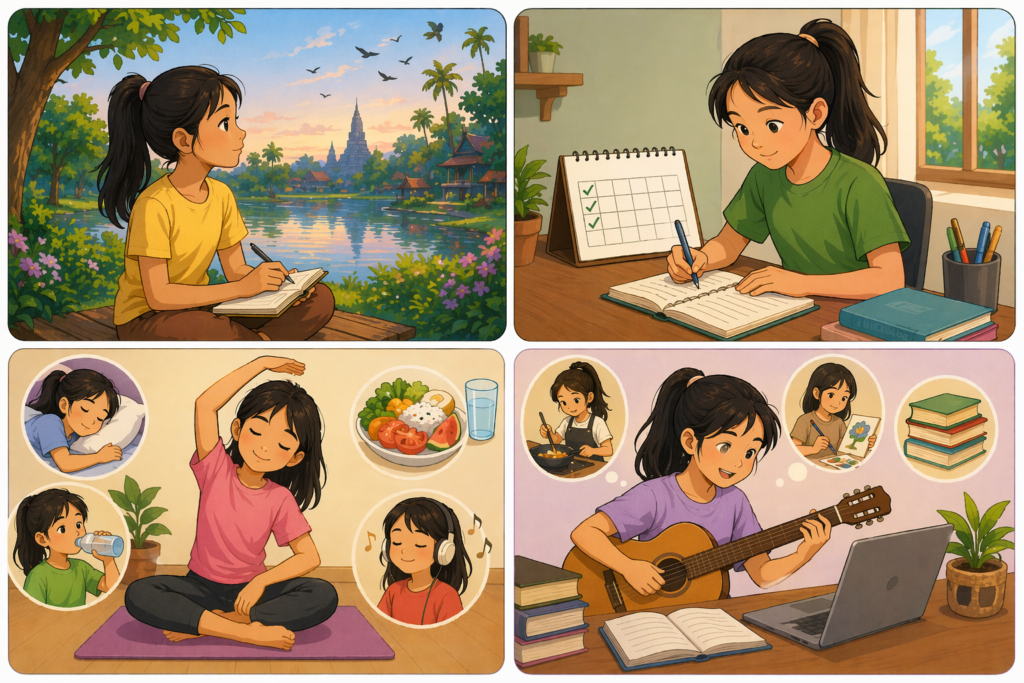
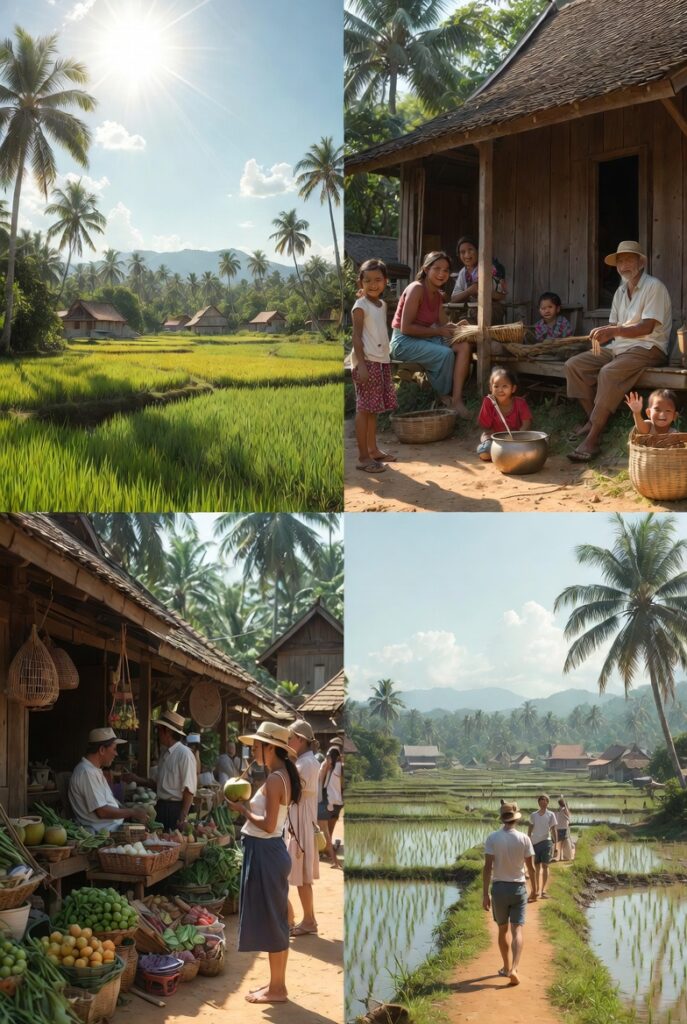
    Oum is a young girl. She goes to a school for tourism. She is a beginner in English. English lessons are not easy for her, but she knows what she must do to learn the language. She wants to be successful and improve her English step by step.

    Every day, Oum studies English at home and at school. She listens carefully in class and practices speaking with her classmates. She reads simple English books and listens to English songs. Sometimes, she watches videos in English to learn new words. She also writes small texts in English to practice. Oum knows that learning a new language takes time and patience, and she is ready to work hard.

    She tries her best every day. She believes that if she keeps practicing, she will improve her English. Oum is determined to become good at English because it will help her in her future career in tourism. She feels confident and motivated, and she never gives up.


    __________________

    Vocabulary:


    1. to be easy – simple; not difficult
      Example: English is not easy for Oum.
    2. a language – a system of words that people use to communicate
      Example: Oum wants to learn a new language.
    3. to be successful – to achieve your goals
      Example: She wants to be successful in learning English.
    4. to improve – to get better at something
      Example: Oum practices every day to improve her English.
    5. step by step – slowly, one step at a time
      Example: She learns English step by step.
    6. to listen carefully – to pay close attention when listening
      Example: Oum listens carefully in class.
    7. to practice speaking – to speak repeatedly to get better
      Example: She practices speaking with her classmates.
    8. a classmate – a student in the same class
      Example: Oum talks to her classmates in English.
    9. a simple English book – an easy book in English
      Example: She reads a simple English book every day.
    10. to watch a video – to look at a moving picture, often for learning
      Example: Oum watches a video in English to learn new words.
    11. to take time – to need a period to do something
      Example: Learning English takes time.
    12. patience – the ability to wait or continue without giving up
      Example: Oum has patience when she studies.
    13. to believe – to think something is true
      Example: She believes she will improve.
    14. to feel confident – to feel sure about yourself
      Example: Oum feels confident when she practices English.
    15. to be motivated – to want to do something and work hard
      Example: She is motivated to learn English.
    16. to give up – to stop trying
      Example: Oum never gives up.

    #############


    Match the word with its correct definition

    Words:

    1. to be easy
    2. a language
    3. to be successful
    4. to improve
    5. step by step
    6. to listen carefully
    7. to practice speaking
    8. a classmate
    9. a simple English book
    10. to watch a video
    11. to take time
    12. patience
    13. to believe
    14. to feel confident
    15. to be motivated
    16. to give up


    Definitions:

    A. A person in your class
    B. To stop trying
    C. To watch moving pictures, often for learning
    D. To slowly do something, one part at a time
    E. To feel sure about yourself
    F. Easy; not difficult
    G. To work hard to get better at speaking
    H. A system of words people use to communicate
    I. To think something is true
    J. To get better at something
    K. The ability to wait or continue without stopping
    L. To need a period to do something
    M. An easy book in English
    N. To pay close attention when listening
    O. To want to do something and work hard
    P. To achieve your goals


    __________________

    Answers:
    1β†’F, 2β†’H, 3β†’P, 4β†’J, 5β†’D,
    6β†’N, 7β†’G, 8β†’A, 9β†’M, 10β†’C,
    11β†’L, 12β†’K, 13β†’I, 14β†’E,
    15β†’O, 16β†’B
    __________________

    Correct version:


    1. to be easy – easy; not difficult
    2. a language – a system of words people use to communicate
    3. to be successful – to achieve your goals
    4. to improve – to get better at something
    5. step by step – to slowly do something, one part at a time
    6. to listen carefully – to pay close attention when listening
    7. to practice speaking – to work hard to get better at speaking
    8. a classmate – a person in your class
    9. a simple English book – an easy book in English
    10. to watch a video – to watch moving pictures, often for learning
    11. to take time – to need a period to do something
    12. patience – the ability to wait or continue without stopping
    13. to believe – to think something is true
    14. to feel confident – to feel sure about yourself
    15. to be motivated – to want to do something and work hard
    16. to give up – to stop trying

    ##############
    Basics:

    Personal Pronounam / is / are
    Iam8 years old
    Youare8 years old
    Heis8 years old
    Sheis8 years old
    Itis8 years old
    Weare8 years old
    You (plural)are8 years old
    Theyare8 years old
    Personal Pronounam not / is not / are not
    Iam not8 years old
    Youare not8 years old
    Heis not8 years old
    Sheis not8 years old
    Itis not8 years old
    Weare not8 years old
    You (plural)are not8 years old
    Theyare not8 years old

    Question:

    Question WordPersonal Pronoun
    AmI8 years old?
    Areyou8 years old?
    Ishe8 years old?
    Isshe8 years old?
    Isit8 years old?
    Arewe8 years old?
    Areyou (plural)8 years old?
    Arethey8 years old?

    Statement:

    Personal PronounVerb
    Ilikeice cream
    Youlikeice cream
    Helikesice cream
    Shelikesice cream
    Itlikesice cream
    Welikeice cream
    You (plural)likeice cream
    Theylikeice cream

    Negation:

    Personal PronounVerb (negative)
    Ido not likeice cream
    Youdo not likeice cream
    Hedoes not likeice cream
    Shedoes not likeice cream
    Itdoes not likeice cream
    Wedo not likeice cream
    You (plural)do not likeice cream
    Theydo not likeice cream

    Question:

    Do / DoesPersonal PronounVerbSugar?
    DoIlikesugar?
    Doyoulikesugar?
    Doeshelikesugar?
    Doesshelikesugar?
    Doesitlikesugar?
    Dowelikesugar?
    Doyou (plural)likesugar?
    Dotheylikesugar?

    #####################

    Rewrite the statements as questions:


    1. Oum goes to a school for music.

      YOU WRITE:
      Does Oum go to a school for music?
    2. She is an expert in English.
      ___________________________
    3. English lessons are very easy for her.
      ___________________________
    4. She studies English only once a week.
      ___________________________
    5. Oum sleeps in class.
      ___________________________
    6. She practices speaking alone every day.
      ___________________________
    7. She reads only French books.
      ___________________________
    8. Oum listens to Spanish songs.
      ___________________________
    9. Learning a new language is very fast.
      ___________________________
    10. She is impatient [not able to wait; wanting something to happen quickly] when she studies.
      ___________________________
    11. Oum stops studying English every day.
      ___________________________
    12. She thinks she learns English without effort.
      ___________________________
    13. Oum is interested in Spanish
      ___________________________.
    14. Learning English only helps her friends.
      ___________________________

    ———————————————

    Corrrect questions:


    Does Oum go to a school for music?

    Is she an expert in English?

    Are English lessons very easy for her?

    Does she study English only once a week?

    Does Oum sleep in class?

    Does she practice speaking alone every day?

    Does she read only French books?

    Does Oum listen to Spanish songs?

    Is learning a new language very fast?

    Is she impatient when she studies?

    Does Oum stop studying English every day?

    Does she think she learns English without effort?

    Is Oum interested in Spanish?

    Does learning English only help her friends?


    #####################

    Make the following statements negative:

    1. Oum goes to a school for music.

      YOU WRITE:
      Oum does not go to a school of music.
    2. She is an expert in English.
      ___________________________
    3. English lessons are very easy for her.
      ___________________________
    4. She studies English only once a week.
      ___________________________
    5. Oum sleeps in class.
      ___________________________
    6. She practices speaking alone every day.
      ___________________________
    7. She reads only French books.
      ___________________________
    8. Oum listens to Spanish songs.
      ___________________________
    9. Learning a new language is very fast.
      ___________________________
    10. She is impatient [not able to wait; wanting something to happen quickly] when she studies.
      ___________________________
    11. Oum stops studying English every day.
      ___________________________
    12. She thinks she learns English without effort.
      ___________________________
    13. Oum is interested in Spanish
      ___________________________.
    14. Learning English only helps her friends.
      ___________________________

    Corrrect version:


    Oum does not go to a school for music.

    She is not an expert in English.

    English lessons are not very easy for her.

    She does not study English only once a week.

    Oum does not sleep in class.

    She does not practice speaking alone every day.

    She does not read only French books.

    Oum does not listen to Spanish songs.

    She is not impatient when she studies.

    Oum does not stop studying English every day.

    She does not think she learns English without effort.

    Oum is not interested in Spanish.

    Learning English does not only help her friends.


    #####################
    What is correct?


    1. Is Oum a young girl or an old lady?
    2. Does Oum go to a school for tourism or a school for music?
    3. Is Oum a beginner in English or an expert?
    4. Are English lessons easy or not easy for Oum?
    5. Does Oum study English every day or once a week?
    6. Does she listen carefully in class or sleep in class?
    7. Does she practice speaking with classmates or alone every day?
    8. Does Oum read English books or French books?
    9. Does she listen to English songs or Spanish songs?
    10. Does learning a new language take time or happen very fast?
    11. Is Oum patient and works hard or impatient and stops easily?
    12. Does she believe she will improve or think she cannot improve?
    13. Is Oum determined to become good at English or give up?
    14. Does learning English help her in her future career or only help her friends?

    __________________________

    Correct answers:


    1. Oum is a young girl.
    2. Oum goes to a school for tourism.
    3. Oum is a beginner in English.
    4. English lessons are not easy for Oum.
    5. Oum studies English every day.
    6. She listens carefully in class.
    7. She practices speaking with classmates.
    8. Oum reads English books.
    9. She listens to English songs.
    10. Learning a new language takes time.
    11. Oum is patient and works hard.
    12. She believes she will improve.
    13. Oum is determined to become good at English.
    14. Learning English helps her in her future career.

    #####################

    Short answers, basics:

    Example SentenceYesNo
    I learn the alphabet.Yes, I do.No, I don’t.
    You read signs.Yes, you do.No, you don’t.
    He practices speaking.Yes, he does.No, he doesn’t.
    She watches cartoons.Yes, she does.No, she doesn’t.
    It helps us learn English.Yes, it does.No, it doesn’t.
    We use apps like Duolingo.Yes, we do.No, we don’t.
    You read labels.Yes, you do.No, you don’t.
    They make mistakes sometimes.Yes, they do.No, they don’t.
    QuestionYesNo
    Do I learn the alphabet?Yes, I do.No, I don’t.
    Do you read signs?Yes, you do.No, you don’t.
    Does he practice speaking?Yes, he does.No, he doesn’t.
    Does she watch cartoons?Yes, she does.No, she doesn’t.
    Does it help us learn English?Yes, it does.No, it doesn’t.
    Do we use apps like Duolingo?Yes, we do.No, we don’t.
    Do you read labels?Yes, you do.No, you don’t.
    Do they make mistakes sometimes?Yes, they do.No, they don’t.
    QuestionYesNo
    Am I big?Yes, I am.No, I am not.
    Are you big?Yes, you are.No, you aren’t.
    Is he big?Yes, he is.No, he isn’t.
    Is she big?Yes, she is.No, she isn’t.
    Is it big?Yes, it is.No, it isn’t.
    Are we big?Yes, we are.No, we aren’t.
    Are you big?Yes, you are.No, you aren’t.
    Are they big?Yes, they are.No, they aren’t.

    ################

    Provide short answers:


    1. She practices speaking with her classmates.
    2. Oum goes to a school for music.
    3. She is patient and works hard.
    4. She reads only French books.
    5. She listens carefully in class.
    6. English lessons are very easy for her.
    7. Oum is a young girl.
    8. She gives up when English is difficult.
    9. She goes to a school for tourism.
    10. She listens to Spanish songs.
    11. She studies English every day.
    12. Learning a new language is very fast.
    13. She is a beginner in English.
    14. She is an expert in English.

    _________________________


    1. She practices speaking with her classmates. – Yes, she does.
    2. Oum goes to a school for music. – No, she doesn’t.
    3. She is patient and works hard. – Yes, she does.
    4. She reads only French books. – No, she doesn’t.
    5. She listens carefully in class. – Yes, she does.
    6. English lessons are very easy for her. – No, they aren’t.
    7. Oum is a young girl. – Yes, she is.
    8. She gives up when English is difficult. – No, she doesn’t.
    9. She goes to a school for tourism. – Yes, she does.
    10. She listens to Spanish songs. – No, she doesn’t.
    11. She studies English every day. – Yes, she does.
    12. Learning a new language is very fast. – No, it isn’t.
    13. She is a beginner in English. – Yes, she is.
    14. She is an expert in English. – No, she isn’t.

    #################

    Give a short answer, then the corrected statement:


    1. Oum goes to a school for music.

      YOU WRITE:
      No, she doesn’t. She goes to a school for tourism.
    2. She is an expert in English.
      ______________________________
    3. English lessons are very easy for her.
      ______________________________
    4. She studies English only once a week.
      ______________________________
    5. Oum sleeps in class.
      ______________________________
    6. She practices speaking alone every day.
      ______________________________
    7. She reads only French books.
      ______________________________
    8. Oum listens to Spanish songs.
      ______________________________
    9. Learning a new language is very fast.
      ______________________________
    10. She stops studying English every day.
      ______________________________
    11. She thinks she learns English without effort.
      ______________________________
    12. Oum is interested in Spanish.
      ______________________________
    13. Learning English only helps her friends.
      ______________________________
    14. She plays games instead of studying English.
      ______________________________

    ———————————-
    Correct answers:


    1. No, she doesn’t. Oum goes to a school for tourism.
    2. No, she isn’t. She is a beginner in English.
    3. No, they aren’t. English lessons are not easy for her.
    4. No, she doesn’t. She studies English every day.
    5. No, she doesn’t. Oum listens carefully in class.
    6. No, she doesn’t. She practices speaking with her classmates.
    7. No, she doesn’t. She reads English books.
    8. No, she doesn’t. She listens to English songs.
    9. No, it isn’t. Learning a new language takes time.
    10. No, she doesn’t. She works hard every day.
    11. No, she doesn’t. She improves English step by step.
    12. No, she isn’t. Oum is determined to become good at English.
    13. No, it doesn’t. Learning English helps her in her future career.
    14. No, she doesn’t. She studies English hard.

    ################


    Interview with Oum

    1. What is your name?

    • My name is Oum.

    2. How old are you?

    • I am a young girl.

    3. Where do you go to school?

    • I go to a school for tourism.

    4. What language do you study?

    • I study English.

    5. Are English lessons easy for you?

    • No, they are not.

    6. When do you study English?

    • I study English every day.

    7. How do you study English in class?

    • I listen carefully in class.

    8. Who do you practice speaking with?

    • I practice speaking with my classmates.

    9. What do you read in English?

    • I read English books.

    10. What do you listen to in English?

    • I listen to English songs.

    11. Why do you study English every day?

    • I study English every day to improve.

    12. Do you believe you will improve?

    • Yes, I do.

    ################


    Match the questions with the correct answers

    Questions:

    1. What is your name?
    2. How old are you?
    3. Where do you go to school?
    4. What language do you study?
    5. Are English lessons easy for you?
    6. When do you study English?
    7. How do you study English?
    8. Who do you practice speaking with?
    9. Why do you study English every day?
    10. What do you read in English?
    11. How do you feel when you learn English?
    12. What do you believe happens if you keep studying English?


    Answers:

    A. I study English every day at home and at school.
    B. I feel confident and motivated when I learn English.
    C. I practice speaking with my classmates in class.
    D. I go to a school for tourism.
    E. I read simple English books to learn new words.
    F. I believe I improve and become good at English, and it helps me in my future career.
    G. No, English lessons are not easy for me.
    H. My name is Oum.
    I. I listen carefully in class, practice speaking with my classmates, read English books, and listen to English songs.
    J. I am a young girl.
    K. I study English at school.
    L. I study English every day because I want to improve and be successful.


    ___________________________

    Answers:
    1β†’H, 2β†’J, 3β†’D, 4β†’K, 5β†’G,
    6β†’A, 7β†’I, 8β†’C, 9β†’L, 10β†’E,
    11β†’B, 12β†’F
    ___________________________

    Complete dialogue:


    1. What is your name?

    • My name is Oum.

    2. How old are you?

    • I am a young girl.

    3. Where do you go to school?

    • I go to a school for tourism.

    4. What language do you study?

    • I study English at school.

    5. Are English lessons easy for you?

    • No, English lessons are not easy for me.

    6. When do you study English?

    • I study English every day at home and at school.

    7. How do you study English?

    • I listen carefully in class, practice speaking with my classmates, read English books, and listen to English songs.

    8. Who do you practice speaking with?

    • I practice speaking with my classmates in class.

    9. Why do you study English every day?

    • I study English every day because I want to improve and be successful.

    10. What do you read in English?

    • I read simple English books to learn new words.

    11. How do you feel when you learn English?

    • I feel confident and motivated when I learn English.

    12. What do you believe happens if you keep studying English?

    • I believe I improve and become good at English, and it helps me in my future career.

    ##################
    Read the following story:


    Oum is a young girl. She goes to a school for tourism. She is a beginner in English, and English lessons are not easy for her. Every day, she studies English at home and at school. She listens carefully in class, practices speaking with her classmates, reads English books, and listens to English songs. Oum is patient and works hard. She believes she will improve if she keeps trying. She is determined to become good at English because it will help her in her future career in tourism.


    ________________________

    You are Oum. Rewrite the story, make all changes necessary:

    YOU WRITE:
    I am Oum, a young girl. I go to a school for………..

    ________________________

    Correct version:


    I am Oum, a young girl. I go to a school for tourism. I am a beginner in English, and English lessons are not easy for me. Every day, I study English at home and at school. I listen carefully in class, practice speaking with my classmates, read English books, and listen to English songs. I am patient and work hard. I believe I will improve if I keep trying. I am determined to become good at English because it will help me in my future career in tourism.


  • 😍☺️ Interviewing Sochea (part 2/2, past simple, questions, negations, short answers, A1) 😍☺️

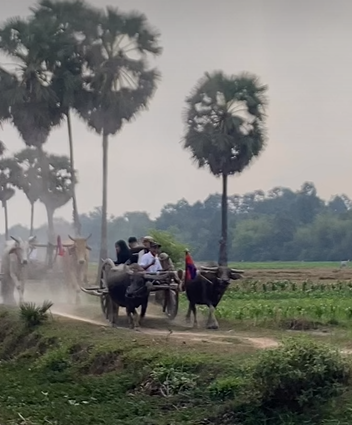
    My name is Sochea. When I was thirteen years old I lived in the countryside with my family on a small farm. I had a mother, a father, and a younger brother. My brother was four years old and went to kindergarten.

    Every morning I woke up early and ate breakfast with my family. After breakfast, I helped on the farm. I fed the chickens and gave food to the cows.

    Then I went to school by bus. English was my favorite subject because I enjoyed learning new words. In the evening, we ate dinner together and talked happily there.

    ___________________________

    Infinitive β†’ past tense

    to be β†’ was / were
    to live β†’ lived
    to have β†’ had
    to go β†’ went
    to wake up β†’ woke up
    to eat β†’ ate
    to help β†’ helped
    to feed β†’ fed
    to give β†’ gave
    to enjoy β†’ enjoyed
    to learn β†’ learned / learnt
    to talk β†’ talked

    #################

    Past Simple – Regular Verbs

    Rules:

    • Most verbs: add -ed
      play β†’ played
    • Verbs ending in -e: add -d
      live β†’ lived
    • Verbs ending in consonant + y: change y to i and add -ed
      study β†’ studied
    • Short verbs ending in vowel + consonant: double the final consonant and add -ed
      stop β†’ stopped

    Use:
    The past simple is used to talk about finished actions in the past.

    #################

    Irregular verbs:

    ##################

    Basics in past simple:

    Personal PronounVerb (Past)Object
    Iateapples
    Youateapples
    Heateapples
    Sheateapples
    Itateapples
    Weateapples
    You (plural)ateapples
    Theyateapples
    Iplayedfootball
    Youplayedfootball
    Heplayedfootball
    Sheplayedfootball
    Itplayedfootball
    Weplayedfootball
    You (plural)playedfootball
    Theyplayedfootball
    Personal PronounVerb (Past Negative)Object
    Idid not eatapples
    Youdid not eatapples
    Hedid not eatapples
    Shedid not eatapples
    Itdid not eatapples
    Wedid not eatapples
    You (plural)did not eatapples
    Theydid not eatapples
    Idid not playfootball
    Youdid not playfootball
    Hedid not playfootball
    Shedid not playfootball
    Itdid not playfootball
    Wedid not playfootball
    You (plural)did not playfootball
    Theydid not playfootball
    Did + PronounVerbObject
    Did Ieatapples?
    Did youeatapples?
    Did heeatapples?
    Did sheeatapples?
    Did iteatapples?
    Did weeatapples?
    Did youeatapples?
    Did theyeatapples?
    Did Iplayfootball?
    Did youplayfootball?
    Did heplayfootball?
    Did sheplayfootball?
    Did itplayfootball?
    Did weplayfootball?
    Did youplayfootball?
    Did theyplayfootball?
    Didn’t + PronounVerbObject
    Didn’t Ieatapples?
    Didn’t youeatapples?
    Didn’t heeatapples?
    Didn’t sheeatapples?
    Didn’t iteatapples?
    Didn’t weeatapples?
    Didn’t youeatapples?
    Didn’t theyeatapples?
    Didn’t Iplayfootball?
    Didn’t youplayfootball?
    Didn’t heplayfootball?
    Didn’t sheplayfootball?
    Didn’t itplayfootball?
    Didn’t weplayfootball?
    Didn’t youplayfootball?
    Didn’t theyplayfootball?

    Forms of β€što beβ€˜

    Personal PronounPositiveNegativeQuestion
    II was happy.I was not happy.Was I happy?
    You (singular)You were excited.You were not excited.Were you excited?
    HeHe was at home.He was not at home.Was he at home?
    SheShe was tired.She was not tired.Was she tired?
    ItIt was cold.It was not cold.Was it cold?
    WeWe were at the party.We were not at the party.Were we at the party?
    You (plural)You were friends.You were not friends.Were you friends?
    TheyThey were in the garden.They were not in the garden.Were they in the garden?

    ######################

    Rewrite the statements as questions:

    1. She had a younger brother.

      YOU WRITE:
      Did she have a younger brother?
    2. Her brother was four years old.
      ___________________________
    3. He went to kindergarten.
      ___________________________
    4. Sochea helped on the farm after breakfast.
      ___________________________
    5. She fed the cows and chickens.
      ___________________________
    6. She went to school by bus.
      ___________________________
    7. Her favorite subject was English.
      ___________________________
    8. She enjoyed learning new words in English.
      ___________________________
    9. She ate breakfast with her family.
      ___________________________
    10. She talked happily with her family in the evening.
      ___________________________
    11. She lived with her parents.
      ___________________________
    12. She woke up early every day.
      ___________________________
    13. She did her homework in the afternoon.
      ___________________________

    ————————————-

    Corrrect answers:

    She had a younger brother.
    Did Sochea have a younger brother?

    Her brother was four years old.
    Was her brother four years old?

    He went to kindergarten.
    Did he go to kindergarten?

    Sochea helped on the farm after breakfast.
    Did Sochea help on the farm after breakfast?

    She fed the cows and chickens.
    Did she feed the cows and chickens?

    She went to school by bus.
    Did she go to school by bus?

    Her favorite subject was English.
    Was her favorite subject English?

    She enjoyed learning new words in English.
    Did she enjoy learning new words in English?

    She ate breakfast with her family.
    Did she eat breakfast with her family?

    She talked happily with her family in the evening.
    Did she talk happily with her family in the evening?

    She lived with her parents.
    Did she live with her parents?

    She woke up early every day.
    Did she wake up early every day?

    She did her homework in the afternoon.
    Did she do her homework in the afternoon?

    ####################

    Rewrite the statements as negative statements:

    1. She had an older brother.

      YOU WRITE:
      She did not have an older brother.
    2. Her brother was two years old.
      ___________________________
    3. He went to school.
      ___________________________
    4. Sochea helped on the farm before breakfast.
      ___________________________
    5. She fed the horses.
      ___________________________
    6. She went to school by bike.
      ___________________________
    7. Her favorite subject was Math.
      ___________________________
    8. She hated [not like] learning new words in English.
      ___________________________
    9. She ate breakfast with her grandparents.
      ___________________________
    10. She talked happily with her family in the afternoon.
      ___________________________
    11. She lived with her grandparents.
      ___________________________
    12. She woke up late every day.
      ___________________________
    13. She did her homework before breakfast.
      ___________________________

    ——————————–

    Correct answers:

    She had an older brother.
    She did not have an older brother.

    Her brother was two years old.
    He was not two years old.

    He went to school.
    He did not go to school.

    Sochea helped on the farm before breakfast.
    She did not help on the farm before breakfast.

    She fed the horses.
    She did not feed the horses.

    She went to school by bike.
    She did not go to school by bike.

    Her favorite subject was Math.
    Her favorite subject was not Math.

    She hated learning new words in English.
    She did not hate learning new words in English.

    She ate breakfast with her grandparents.
    She did not eat breakfast with her grandparents.

    She talked happily with her family in the afternoon.
    She did not talk happily with her family in the afternoon.

    She lived with her grandparents.
    She did not live with her grandparents.

    She woke up late every day.
    She did not wake up late every day.

    She did her homework before breakfast.
    She did not do her homework before breakfast.


    ####################

    Write an interview with Sochea:

    1. Where/live/thirteen?
      _____________________________?
      YOU WRITE:
      Where did you live when you were thirteen?

      countryside.
      _____________________________?
      YOU WRITE:
      I lived in the countryside.
    2. live/in a house?
      _____________________________?
      on a small farm.
      _____________________________
    3. live/with grandparents?
      _____________________________?
      mother, father, younger brother
      _____________________________
    4. how old/brother?
      _____________________________?
      four years
      _____________________________
    5. brother/go to school?
      _____________________________?
      kindergarten
      _____________________________
    6. eat/breakfast with brother?
      _____________________________?
      with my family
      _____________________________
    7. go to school/after breakfast?
      _____________________________?
      help/farm
      _____________________________
    8. feed horses?
      _____________________________?
      chickens, food to cows
      _____________________________
    9. go to school/ bus/or bike?
      _____________________________?
      by bus
      _____________________________
    10. what/favorite subject?
      _____________________________?
      English
      _____________________________
    11. why/favorite subject?
      _____________________________?
      enjoy/new words
      _____________________________
    12. when/eat dinner?
      _____________________________?
      in evening
      _____________________________

      ———————————————

      Correct version:

    Interviewer: Where did you live when you were thirteen?
    Sochea: I lived in the countryside.

    Interviewer: Did you live in a house?
    Sochea: I lived on a small farm.

    Interviewer: Did you live with your grandparents?
    Sochea: No, I lived with my mother, father, and younger brother.

    Interviewer: How old was your brother?
    Sochea: He was four years old.

    Interviewer: Did your brother go to school?
    Sochea: No, he went to kindergarten.

    Interviewer: Did you eat breakfast with your brother?
    Sochea: I ate breakfast with my family.

    Interviewer: Did you go to school after breakfast?
    Sochea: No, I helped on the farm.

    Interviewer: Did you feed horses?
    Sochea: No, I fed the chickens and gave food to the cows.

    Interviewer: Did you go to school by bus or by bike?
    Sochea: I went to school by bus.

    Interviewer: What was your favorite subject?
    Sochea: English was my favorite subject.

    Interviewer: Why was it your favorite subject?
    Sochea: Because I enjoyed learning new words.

    Interviewer: When did you eat dinner?
    Sochea: I ate dinner in the evening.

    ##################

    Oum is Sochea’s best friend. Write an interview with Oum, asking her about Sochea, when she was thirteen years old.

    1. When first meet Sochea?
    _____________________________?

    YOU WRITE:
    When did you first meet Sochea?

    thirteen years

    YOU WRITE:
    I first met her when she was thirteen years old

    2. live/in city?
    ________________________________?
    countryside
    ________________________________

    3. live/with grandparents?
    ________________________________?
    with parents
    ________________________________

    4. in a small house?
    ________________________________?
    on a small farm
    ________________________________

    5. have/older brother?
    ________________________________?
    younger
    ________________________________

    6. brother/how old?
    ________________________________?
    four
    ________________________________

    7. brother/to school?
    ________________________________?
    to kindergarten
    ________________________________

    8. when/wake up?
    ________________________________?
    early
    ________________________________
    9. breakfast/with grandparents?
    ________________________________?
    with family
    ________________________________

    10. to school/after breakfast?
    ________________________________?
    feed chickens/give food to cows
    ________________________________

    11. to school by bike?
    ________________________________?
    by bus
    ________________________________

    12. Mathematics/favorite subject?
    ________________________________?
    English
    ________________________________

    13. Why/English/favorite subject?
    ________________________________?
    enjoy/new words
    ________________________________

    14. what/do/in evening?
    ________________________________?
    dinner/talk happily
    ________________________________


    ——————————-

    Correct version:

    Interview with Oum about Sochea

    Interviewer: When did you first meet Sochea?
    Oum: I first met her when she was thirteen years old.

    Interviewer: Did she live in the city?
    Oum: No, she lived in the countryside.

    Interviewer: Did she live with her grandparents?
    Oum: No, she lived with her parents.

    Interviewer: Did she live in a small house?
    Oum: No, she lived on a small farm.

    Interviewer: Did she have an older brother?
    Oum: No, she had a younger brother.

    Interviewer: How old was her brother?
    Oum: He was four years old.

    Interviewer: Did her brother go to school?
    Oum: No, he went to kindergarten.

    Interviewer: When did she wake up?
    Oum: She woke up early.

    Interviewer: Did she eat breakfast with her grandparents?
    Oum: No, she ate breakfast with her family.

    Interviewer: Did she go to school after breakfast?
    Oum: No, she fed the chickens and gave food to the cows.

    Interviewer: Did she go to school by bike?
    Oum: No, she went to school by bus.

    Interviewer: Was Mathematics her favorite subject?
    Oum: No, English was her favorite subject.

    Interviewer: Why was English her favorite subject?
    Oum: Because she enjoyed learning new words.

    Interviewer: What did she do in the evening?
    Oum: She ate dinner and talked happily.

    ####################

    Short answers in past simple:

    QuestionShort Answer (Yes/Positive)Short Answer (No/Negative)
    Did she check reservations?Yes, she did.No, she didn’t.
    Did she give keys to guests?Yes, she did.No, she didn’t.
    Did she talk to many guests?Yes, she did.No, she didn’t.
    Was she happy?Yes, she was.No, she wasn’t.
    Were the guests satisfied?Yes, they were.No, they weren’t.

    #################

    True or false – write question first, then short answer:

    1. Sochea helped on the farm after breakfast.

      YOU WRITE:
      Did Sochea help on the farm after breakfast?
      Yes, she did.
    2. She lived in the city.
      ____________________________
      ________________
    3. Her favorite subject was English.
      ____________________________
      ________________
    4. She talked happily with her family in the evening.
      ____________________________
      ________________
    5. Her brother was older than her.
      ____________________________
      ________________
    6. She fed the cows and chickens.
      ____________________________
      ________________
    7. She went to school by bus.
      ____________________________
      ________________
    8. She ate breakfast alone.
      ____________________________
      ________________
    9. She enjoyed learning new words in English.
      ____________________________
      ________________
    10. She lived with her parents.
      ____________________________
      ________________
    11. She went to school immediately after breakfast.
      ____________________________
      ________________
    12. Sochea was thirteen years old.
      ____________________________
      ________________
    13. Her brother went to primary school.
      ____________________________
      ________________
    14. She had a younger brother.
      ____________________________
      ________________

    ——————————–

    Correct version:

    1. Sochea helped on the farm after breakfast.
      Did Sochea help on the farm after breakfast?
      Yes, she did.
    2. She lived in the city.
      Did she live in the city?
      No, she didn’t.
    3. Her favorite subject was English.
      Was her favorite subject English?
      Yes, it was.
    4. She talked happily with her family in the evening.
      Did she talk happily with her family in the evening?
      Yes, she did.
    5. Her brother was older than her.
      Was her brother older than her?
      No, he wasn’t.
    6. She fed the cows and chickens.
      Did she feed the cows and chickens?
      Yes, she did.
    7. She went to school by bus.
      Did she go to school by bus?
      Yes, she did.
    8. She ate breakfast alone.
      Did she eat breakfast alone?
      No, she didn’t.
    9. She enjoyed learning new words in English.
      Did she enjoy learning new words in English?
      Yes, she did.
    10. She lived with her parents.
      Did she live with her parents?
      Yes, she did.
    11. She went to school immediately after breakfast.
      Did she go to school immediately after breakfast?
      No, she didn’t.
    12. Sochea was thirteen years old.
      Was Sochea thirteen years old?
      Yes, she was.
    13. Her brother went to primary school.
      Did her brother go to primary school?
      No, he didn’t.
    14. She had a younger brother.
      Did she have a younger brother?
      Yes, she did.

    ####################

    Correct, short answer first, then correct statement:

    She lived in the city.

    YOU WRITE:
    No, she didn’t.
    She lived in the countryside.

    She had a sister.
    _____________________________
    ___________________

    Her brother was older than her.
    _____________________________
    ___________________

    Her brother went to primary school.
    _____________________________
    ___________________

    Sochea went to school after breakfast.
    _____________________________
    ___________________

    She went to school by bike.
    _____________________________
    ___________________

    Her favorite subject was Math.
    _____________________________
    ___________________

    She fed only the cows, not the chickens.
    _____________________________
    ___________________

    She ate breakfast alone.
    _____________________________
    ___________________

    She watched TV in the evening.
    _____________________________
    ___________________

    She lived with her grandparents.
    _____________________________
    ___________________

    She hated [not like] learning new words in English.
    _____________________________
    ___________________

    She was fifteen years old.
    _____________________________
    ___________________

    She fed the horses.
    _____________________________
    ___________________

    —————————————

    Correct version:


    She had a sister.
    No, she didn’t.
    She had a younger brother.

    Her brother was older than her.
    No, he wasn’t.
    Her brother was younger than her.

    Her brother went to primary school.
    No, he didn’t.
    He went to kindergarten.

    Sochea went to school after breakfast.
    No, she didn’t.
    She helped on the farm after breakfast.

    She went to school by bike.
    No, she didn’t.
    She went to school by bus.

    Her favorite subject was Math.
    No, it wasn’t.
    Her favorite subject was English.

    She fed only the cows, not the chickens.
    No, she didn’t.
    She fed the cows and the chickens.

    She ate breakfast alone.
    No, she didn’t.
    She ate breakfast with her family.

    She watched TV in the evening.
    No, she didn’t.
    She talked happily with her family in the evening.

    She lived with her grandparents.
    No, she didn’t.
    She lived with her parents.

    She hated [not like] learning new words in English.
    No, she didn’t.
    She enjoyed learning new words in English.

    She was fifteen years old.
    No, she wasn’t.
    She was thirteen years old.

    She fed the horses.
    No, she didn’t.
    She fed the chickens.


    ####################

    What is correct?


    Did she live in a city or in the countryside?

    YOU WRITE:
    She lived in the countryside.

    Did she have a brother or a sister?
    ______________________________

    Was her brother older or younger than her?
    ______________________________

    Did her brother go to kindergarten or primary school?
    ______________________________

    Did she go to school after breakfast or help on the farm first?
    ______________________________

    Was her favorite subject English or Math?
    ______________________________

    Did she feed only the cows or both the cows and chickens?
    ______________________________


    Did she eat breakfast alone or with her family?
    ______________________________

    Did she watch TV or talk happily with her family in the evening?
    ______________________________

    Did she live with her grandparents or with her parents?
    ______________________________

    Did she enjoy learning new words in English or dislike it?
    ______________________________

    Was she fifteen years old or thirteen years old?
    ______________________________

    Did she help on the farm every day or not at all?
    ______________________________

    ———————————–
    Correct version:


    Did she live in a city or in the countryside?
    She lived in the countryside.

    Did she have a brother or a sister?
    She had a younger brother.

    Was her brother older or younger ?
    He was younger than her.

    Did her brother go to kindergarten or primary school?
    He went to kindergarten.

    Did she go to school after breakfast or help on the farm first?
    She helped on the farm first.

    Was her favorite subject English or Math?
    Her favorite subject was English.

    Did she feed only the cows or both the cows and chickens?
    She fed both the cows and chickens.

    Did she eat breakfast alone or with her family?
    She ate breakfast with her family.

    Did she watch TV or talk happily with her family in the evening?
    She talked happily with her family in the evening.

    Did she live with her grandparents or with her parents?
    She lived with her parents.

    Did she enjoy learning new words in English or did she not like it?
    She enjoyed learning new words in English.

    Was she fifteen years old or thirteen years old?
    She was thirteen years old.

    Did she help on the farm every day or not at all?
    She helped on the farm every day.


    ##################

    WRITE A STORY ABOUT YOURSELF,
    YOUR FAMILY,
    YOUR DAILY ROUTINE.
    WHEN YOU WERE TEN YEARS OLD


    If you want, send it to me,
    I’ll have a look at it.

    SMFrockZ@gmx.at

  • 😍☺️ Interviewing Sochea (part 1/2, present simple, questions, negations, short answers, A1) 😍☺️

    My name is Sochea, and I am thirteen years old. I live in the countryside with my family on a small farm. I have a mother, a father, and a younger brother. My brother is four years old and goes to kindergarten.

    Every morning I wake up early and eat breakfast with my family. After breakfast, I help on the farm. I feed the chickens and give food to the cows.

    Then I go to school by bus. English is my favorite subject because I enjoy learning new words. In the evening, we eat dinner together and talk happily there.

    ____________________

    ##############

    Basics:

    Personal Pronounam / is / are
    Iam8 years old
    Youare8 years old
    Heis8 years old
    Sheis8 years old
    Itis8 years old
    Weare8 years old
    You (plural)are8 years old
    Theyare8 years old
    Personal Pronounam not / is not / are not
    Iam not8 years old
    Youare not8 years old
    Heis not8 years old
    Sheis not8 years old
    Itis not8 years old
    Weare not8 years old
    You (plural)are not8 years old
    Theyare not8 years old

    Question:

    Question WordPersonal Pronoun
    AmI8 years old?
    Areyou8 years old?
    Ishe8 years old?
    Isshe8 years old?
    Isit8 years old?
    Arewe8 years old?
    Areyou (plural)8 years old?
    Arethey8 years old?

    Statement:

    Personal PronounVerb
    Ilikeice cream
    Youlikeice cream
    Helikesice cream
    Shelikesice cream
    Itlikesice cream
    Welikeice cream
    You (plural)likeice cream
    Theylikeice cream

    Negation:

    Personal PronounVerb (negative)
    Ido not likeice cream
    Youdo not likeice cream
    Hedoes not likeice cream
    Shedoes not likeice cream
    Itdoes not likeice cream
    Wedo not likeice cream
    You (plural)do not likeice cream
    Theydo not likeice cream

    Question:

    Do / DoesPersonal PronounVerbSugar?
    DoIlikesugar?
    Doyoulikesugar?
    Doeshelikesugar?
    Doesshelikesugar?
    Doesitlikesugar?
    Dowelikesugar?
    Doyou (plural)likesugar?
    Dotheylikesugar?

    #####################

    Write an interview with Sochea

    1. name?

      YOU WRITE:
      What is your name?

      Sochea

      YOU WRITE:
      My name is Sochea.

    2. old?
      ____________________
      thirteen
      ____________________
    3. Where/live?
      ____________________
      countryside
      ____________________
    4. live with grandparents?
      ____________________
      parents
      ____________________
    5. brother or sister?
      ____________________
      brother
      ____________________
    6. older, younger?
      ____________________
      younger
      ____________________
    7. old?
      ____________________
      four years
      ____________________
    8. he/go to school?
      ____________________
      kindergarten
      ____________________
    9. after breakfast/ go to school?
      ____________________
      help/farm
    10. What/do?
      ____________________
      feed chickens/food to cows
    11. to school/by bike?
      ___________________
      by bus
      ___________________
    12. what/favorite subject?
      ___________________
      English
      ___________________
    13. why/like English?
      ___________________
      new words
      ___________________
    14. eat/dinner?
      ___________________
      in evening
      ___________________
    15. watch TV?
      ___________________
      talk happily
      ___________________

    ————————————-

    Correct version:


    YOU WRITE:
    What is your name?
    My name is Sochea.

    How old are you?
    I am thirteen years old.

    Where do you live?
    I live in the countryside.

    Do you live with your grandparents?
    No, I live with my parents.

    Do you have a brother or sister?
    I have a brother.

    Is he older or younger?
    He is younger than me.

    How old is he?
    He is four years old.

    Does he go to school?
    No, he does not go to school. He goes to kindergarten.

    Do you go to school after breakfast?
    No, I do not go to school after breakfast. I help on the farm first.

    What do you do on the farm?
    I feed the chickens and give food to the cows.

    Do you go to school by bike?
    No, I do not go to school by bike. I go to school by bus.

    What is your favorite subject?
    My favorite subject is English.

    Why do you like English?
    I like English because I enjoy learning new words.

    When do you eat dinner?
    I eat dinner in the evening.

    Do you watch TV in the evening?
    No, I talk happily with my family in the evening.


    ##################

    Oum is Sochea’s best friend. Write an interview with Oum, asking her about Sochea.

    1. name?

      YOU WRITE:
      What is her name?

      Sochea

      YOU WRITE:
      Her name is Sochea.

    2. old?
      ____________________
      thirteen
      ____________________
    3. Where/live?
      ____________________
      countryside
      ____________________
    4. live with grandparents?
      ____________________
      parents
      ____________________
    5. brother or sister?
      ____________________
      brother
      ____________________
    6. older, younger?
      ____________________
      younger
      ____________________
    7. old?
      ____________________
      four years
      ____________________
    8. he/go to school?
      ____________________
      kindergarten
      ____________________
    9. after breakfast/ go to school?
      ____________________
      help/farm
    10. What/do?
      ____________________
      feed chickens/food to cows
    11. to school/by bike?
      ___________________
      by bus
      ___________________
    12. what/favorite subject?
      ___________________
      English
      ___________________
    13. why/like English?
      ___________________
      new words
      ___________________
    14. eat/dinner?
      ___________________
      in evening
      ___________________
    15. watch TV?
      ___________________
      talk happily
      ___________________

      ——————————
      Correct version:


    What is her name?
    Her name is Sochea.

    How old is she?
    She is thirteen years old.

    Where does she live?
    She lives in the countryside.

    Does she live with her grandparents?
    No, she lives with her parents.

    Does she have a brother or sister?
    She has a brother.

    Is he older or younger?
    He is younger than her.

    How old is he?
    He is four years old.

    Does he go to school?
    No, he does not go to school. He goes to kindergarten.

    Does she go to school after breakfast?
    No, she does not go to school after breakfast. She helps on the farm first.

    What does she do on the farm?
    She feeds the chickens and gives food to the cows.

    Does she go to school by bike?
    No, she does not go to school by bike. She goes to school by bus.

    What is her favorite subject?
    Her favorite subject is English.

    Why does she like English?
    She likes English because she enjoys learning new words.

    When does she eat dinner?
    She eats dinner in the evening.

    Does she watch TV in the evening?
    No, she talks happily with her family in the evening.


    ###################

    Short answers, basics:

    Example SentenceYesNo
    I learn the alphabet.Yes, I do.No, I don’t.
    You read signs.Yes, you do.No, you don’t.
    He practices speaking.Yes, he does.No, he doesn’t.
    She watches cartoons.Yes, she does.No, she doesn’t.
    It helps us learn English.Yes, it does.No, it doesn’t.
    We use apps like Duolingo.Yes, we do.No, we don’t.
    You read labels.Yes, you do.No, you don’t.
    They make mistakes sometimes.Yes, they do.No, they don’t.
    QuestionYesNo
    Do I learn the alphabet?Yes, I do.No, I don’t.
    Do you read signs?Yes, you do.No, you don’t.
    Does he practice speaking?Yes, he does.No, he doesn’t.
    Does she watch cartoons?Yes, she does.No, she doesn’t.
    Does it help us learn English?Yes, it does.No, it doesn’t.
    Do we use apps like Duolingo?Yes, we do.No, we don’t.
    Do you read labels?Yes, you do.No, you don’t.
    Do they make mistakes sometimes?Yes, they do.No, they don’t.
    QuestionYesNo
    Am I big?Yes, I am.No, I am not.
    Are you big?Yes, you are.No, you aren’t.
    Is he big?Yes, he is.No, he isn’t.
    Is she big?Yes, she is.No, she isn’t.
    Is it big?Yes, it is.No, it isn’t.
    Are we big?Yes, we are.No, we aren’t.
    Are you big?Yes, you are.No, you aren’t.
    Are they big?Yes, they are.No, they aren’t.

    ####################

    True or false – question first, then short answer:


    1. Sochea helps on the farm after breakfast.

      YOU WRITE:
      Does Sochea help on the farm after breakfast?
      Yes, she does.
    2. She lives in the city.
    3. Her favorite subject is English.
    4. She talks happily with her family in the evening.
    5. Her brother is older than her.
    6. She feeds the cows and chickens.
    7. She goes to school by bus.
    8. She eats breakfast alone.
    9. She enjoys learning new words in English.
    10. She lives with her parents.
    11. She goes to school immediately after breakfast.
    12. Sochea is thirteen years old.
    13. Her brother goes to primary school.
    14. She has a younger brother.

    __________________________
    Correct answers:


    1. Does Sochea help on the farm after breakfast?
      Yes, she does.
    2. Does she live in the city?
      No, she doesn’t.
    3. Is her favorite subject English?
      Yes, it is.
    4. Does she talk happily with her family in the evening?
      Yes, she does.
    5. Is her brother older than her?
      No, he isn’t.
    6. Does she feed the cows and chickens?
      Yes, she does.
    7. Does she go to school by bus?
      Yes, she does.
    8. Does she eat breakfast alone?
      No, she doesn’t.
    9. Does she enjoy learning new words in English?
      Yes, she does.
    10. Does she live with her parents?
      Yes, she does.
    11. Does she go to school immediately after breakfast?
      No, she doesn’t.
    12. Is Sochea thirteen years old?
      Yes, she is.
    13. Does her brother go to primary school?
      No, he doesn’t.
    14. Does she have a younger brother?
      Yes, she does.

    ##############

    Correct, short answer first, then correct statement:


    1. Sochea lives in the city.

      YOU WRITE:
      No, she doesn’t. She lives in the countryside.
    2. She has no siblings [brother/sister].
    3. Her brother is older than her.
    4. Her brother goes to primary school.
    5. Sochea goes to school immediately after breakfast.
    6. She goes to school by bike.
    7. Her favorite subject is Math.
    8. She feeds only the cows, not the chickens.
    9. She eats breakfast alone.
    10. She watches TV in the evening.
    11. She lives with her grandparents.
    12. She dislikes learning new words in English.
    13. She is fifteen years old.
    14. She does not help on the farm.

    __________________

    Correct answers:


    1. No, she doesn’t. She lives in the countryside.
    2. No, she doesn’t. She has a younger brother.
    3. No, he isn’t. He is younger than her.
    4. No, he doesn’t. He goes to kindergarten.
    5. No, she doesn’t. She helps on the farm after breakfast.
    6. No, she doesn’t. She goes to school by bus.
    7. No, it isn’t. Her favorite subject is English.
    8. No, she doesn’t. She feeds both the chickens and the cows.
    9. No, she doesn’t. She eats breakfast with her family.
    10. No, she doesn’t. She talks happily with her family in the evening.
    11. No, she doesn’t. She lives with her parents.
    12. No, she doesn’t. She enjoys learning new words in English.
    13. No, she isn’t. She is thirteen years old.
    14. No, she doesn’t. She helps on the farm every day.

    #################

    What is correct?


    1. Does she live in a city or in the countryside?
    2. Does she have a brother or a sister?
    3. Is her brother older or younger than her?
    4. Does her brother go to kindergarten or primary school?
    5. Does she go to school immediately after breakfast or help on the farm first?
    6. Does she go to school by bike or by bus?
    7. Is her favorite subject English or Math?
    8. Does she feed only the cows or both the cows and chickens?
    9. Does she eat breakfast alone or with her family?
    10. Does she watch TV or talk happily with her family in the evening?
    11. Does she live with her grandparents or with her parents?
    12. Does she enjoy learning new words in English or dislike it?
    13. Is she fifteen years old or thirteen years old?
    14. Does she help on the farm every day or not at all?

    __________________________

    Correct answers:


    1. She lives in the countryside.
    2. She has a younger brother.
    3. Her brother is younger than her.
    4. Her brother goes to kindergarten.
    5. She helps on the farm after breakfast.
    6. She goes to school by bus.
    7. Her favorite subject is English.
    8. She feeds both the cows and the chickens.
    9. She eats breakfast with her family.
    10. She talks happily with her family in the evening.
    11. She lives with her parents.
    12. She enjoys learning new words in English.
    13. She is thirteen years old.
    14. She helps on the farm every day.

    ####################

    Make questions from statements:


    1. Sochea lives in the countryside.

      YOU WRITE:
      Does Sochea live in the countryside?
    2. She has a younger brother.
      _______________________
    3. Her brother is four years old.
      _______________________
    4. He goes to kindergarten.
      _______________________
    5. Sochea helps on the farm after breakfast.
      _______________________
    6. She feeds the cows and chickens.
      _______________________
    7. She goes to school by bus.
      _______________________
    8. Her favorite subject is English.
      _______________________
    9. She enjoys learning new words in English.
      _______________________
    10. She eats breakfast with her family.
      _______________________
    11. She talks happily with her family in the evening.
      _______________________
    12. She lives with her parents.
      _______________________
    13. She wakes up early every day.
      _______________________
    14. She does her homework in the afternoon.
      _______________________

    Correct questions:

    1. Does Sochea live in the countryside?
    2. Does she have a younger brother?
    3. Is her brother four years old?
    4. Does he go to kindergarten?
    5. Does Sochea help on the farm after breakfast?
    6. Does she feed the cows and chickens?
    7. Does she go to school by bus?
    8. Is her favorite subject English?
    9. Does she enjoy learning new words in English?
    10. Does she eat breakfast with her family?
    11. Does she talk happily with her family in the evening?
    12. Does she live with her parents?
    13. Does she wake up early every day?
    14. Does she do her homework in the afternoon?

    #####################


    WRITE A STORY ABOUT YOURSELF,
    YOUR FAMILY,
    YOUR DAILY ROUTINE.

    If you want, send it to me, I’ll have a look at it.

    SMFrockZ@gmx.at


  • πŸŽ‡πŸ§¨πŸŽ†New Year’s Eve fireworks vs. noise, air pollution, injuries (part, 2/2, text only, A1, A2, B1)πŸŽ‡πŸ§¨πŸŽ†

    • air quality, noise, serious injuries

    A1:


    Fireworks are popular for parties and New Year. But fireworks are not safe. First, fireworks make the air dirty. Smoke and dust go in the air. People can have problems with their lungs. Second, fireworks are very loud. Loud noise can scare children, pets, and old people. Animals also get scared. Third, fireworks can hurt people. Every year, some people get burned or hurt.

    Drone shows can help. Drones are safe. They do not make smoke or dust. The air stays clean. Drones are quiet. People and animals do not get scared. Drones are controlled by people. This means no one gets hurt. Drone shows can make shapes and colors in the sky. People can enjoy them.

    In conclusion, drone shows are better than fireworks. They keep the air clean, reduce noise, and stop accidents. People can have fun and stay safe.

    ____________________

    Vocabulary:

    • to be safe – not dangerous. Example: The playground is safe for children.
    • dirty air – air that is not clean. Example: Smoke makes dirty air.
    • dust – tiny pieces of dirt in the air. Example: There is dust on the table.
    • a lung – part of the body we use to breathe. Example: We need clean air for our lungs.
    • to scare children – to make children feel afraid. Example: The loud noise can scare children.
    • a pet – an animal that lives with people. Example: I have a cat as a pet.
    • to hurt people – to make someone feel pain. Example: Fireworks can hurt people.
    • to get burned – when fire or heat hurts the skin. Example: He got burned on his hand.
    • to get hurt – to be injured. Example: She fell and got hurt.
    • a drone show – a show with flying machines that have lights. Example: We saw a drone show at night.
    • to stay clean – not dirty. Example: We stay clean after washing hands.
    • to be quiet – to make little or no noise. Example: The library is quiet.
    • to make shows – to put on a performance for people. Example: Drones can make shows in the sky.
    • to enjoy – to like something and feel happy. Example: We enjoy the party.
    • in conclusion – to say the final idea. Example: In conclusion, we like dogs.
    • to reduce noise – to make less loud sound. Example: Close the window to reduce noise.
    • to stop accidents – to make sure people are safe. Example: Wear a helmet to stop accidents.

    ######################

    A2:


    Fireworks are very popular for New Year and other celebrations. Many people enjoy the colors and lights in the sky. But fireworks have some problems. First, they make the air dirty. Smoke and chemicals from fireworks can make it difficult to breathe, especially for children and people with health problems. Second, fireworks are very noisy. Loud sounds can scare babies, pets, and older people. Animals in cities or forests can also get stressed. Third, fireworks can be dangerous. Every year, many people get burns or other injuries when they use fireworks.

    Drone shows are a better option. Drones are safe and do not make smoke or dangerous chemicals. They are quiet, so people and animals are not scared. Drones are controlled by experts, so accidents do not happen. Modern drone shows can make shapes, letters, or pictures in the sky, and they are very beautiful.

    In conclusion, drone shows are better than fireworks because they keep the air clean, reduce noise, and prevent injuries. People can still enjoy amazing celebrations, but in a safer and cleaner way.


    ___________________

    Vocabulary:

    • a celebration – a happy event with people, like a party
    • to enjoy – to feel happy about something
    • dirty air – air with dust, smoke, or other bad things
    • smoke – grey or white gas from fire
    • difficult – not easy
    • to breathe – to take air into your lungs
    • especially – more than usual; very much
    • health problems – sickness or something wrong with the body
    • to be noisy – to make a lot of loud sound
    • to scare – to make someone afraid
    • a pet – an animal you keep at home, like a dog or cat
    • a forest – a place with many trees
    • to get stressed – to feel worried or tense
    • dangerous – not safe
    • to get burns – to hurt the skin with fire or hot things
    • an injury – hurt to your body
    • a drone show – many flying machines with lights in the sky for fun
    • an option – a choice; something you can do
    • quiet – not loud; calm
    • an accident – something bad that happens by mistake
    • a shape – the form of something, like a circle or star
    • in conclusion – to finish and give the main idea
    • to prevent injuries – to stop people from getting hurt
    • to be amazing – to be very good or exciting

    #####################

    B1:


    Fireworks are a traditional part of celebrations, but they have several disadvantages. First, they create a lot of air pollution. Smoke and chemicals from fireworks make the air dirty and can cause breathing problems, especially for people with asthma. Second, fireworks are very noisy. Loud explosions can frighten children, pets, and elderly people. Noise can also disturb wildlife in cities and natural areas. Third, fireworks are dangerous. Every year, people suffer burns or other serious injuries while using them, even when they are careful.

    Drone shows are a modern and safer alternative. They do not produce smoke or harmful gases, so the air stays clean. Drones are quiet, which means they do not disturb people or animals. They are controlled remotely by trained operators, which reduces the risk of accidents. At the same time, drone shows can be very creative, forming shapes, words, and colorful patterns in the sky. People can enjoy these displays safely.

    In conclusion, replacing fireworks with drone shows can protect the environment, reduce noise, and prevent accidents. Drone shows allow people to celebrate in a safe and environmentally friendly way without losing the excitement of a beautiful display.

    _____________________

    Vocabulary:


    • a disadvantage – something bad about a thing.
      Example: A disadvantage of walking is it can be slow.
    • air pollution – dirty air.
      Example: Smoke from cars makes air pollution.
    • breathing problems – problems when you breathe.
      Example: Smoke can give you breathing problems.
    • especially – more than usual, very.
      Example: I like fruit, especially apples.
    • asthma – a sickness that makes it hard to breathe.
      Example: People with asthma cannot run too fast.
    • noisy – making a lot of sound.
      Example: The street is noisy.
    • to frighten – to make someone scared.
      Example: Loud noise can frighten children.
    • a pet – an animal that lives with people.
      Example: A dog is a pet.
    • elderly people – old people.
      Example: Elderly people need help sometimes.
    • dangerous – not safe, can hurt you.
      Example: Fire is dangerous.
    • to suffer burns – to get hurt on your skin from fire or heat.
      Example: He suffered burns on his hand.
    • an injury – when a part of your body is hurt.
      Example: She has an injury on her leg.
    • to be careful – to act safely.
      Example: Be careful with knives.
    • an alternative – another choice.
      Example: Walking is an alternative to driving.
    • a harmful gas – gas that is bad for people or animals.
      Example: Smoke has harmful gases.
    • to stay clean – to keep something not dirty.
      Example: Wash your hands to stay clean.
    • to be quiet – not to make noise.
      Example: Please be quiet in the library.
    • to disturb – to bother someone.
      Example: Loud music can disturb people.
    • remote control – a device to control something from far away.
      Example: I use a remote control for the TV.
    • to be creative – to make new and interesting ideas.
      Example: She is creative and draws nice pictures.
    • to form shapes – to make shapes.
      Example: The snow can form shapes.
    • a colorful pattern – a design with many colors.
      Example: The wall has a colorful pattern.
    • sky – the space above the earth.
      Example: The sky is blue.
    • to enjoy a display – to like watching a show.
      Example: We enjoy a fireworks display.
    • in conclusion – to finish or summarize.
      Example: In conclusion, we had a good day.
    • to replace fireworks – to use something instead of fireworks.
      Example: We can replace fireworks with drones.
    • to protect – to keep safe.
      Example: Wear a helmet to protect your head.
    • environment – the world around us.
      Example: Trees are good for the environment.
    • to reduce noise – to make less noise.
      Example: Close the door to reduce noise.
    • to prevent accidents – to stop bad things from happening.
      Example: Wear a seatbelt to prevent accidents.
    • environmentally friendly – good for nature.
      Example: Bikes are environmentally friendly.
    • excitement – feeling happy and full of energy.
      Example: Children have excitement on their birthday.


    ###################

    ##################

    BONUS VERSION
    C2:


    While fireworks have long been emblematic of celebration, their environmental, acoustic, and safety repercussions increasingly challenge their continued use. From an ecological perspective, fireworks release substantial quantities of particulate matter and toxic chemicals, contributing to air pollution and posing health risks to individuals with respiratory vulnerabilities. The auditory impact is equally concerning; the intense explosions associated with pyrotechnics can provoke significant distress in both humansβ€”particularly children, the elderly, and sensitive populationsβ€”and wildlife, disrupting natural behaviors and habitats. Furthermore, the risk of physical injury remains non-trivial, as even experienced individuals are susceptible to burns or more severe accidents during displays.

    Drone-based light shows present a compelling alternative that mitigates these concerns. By employing remotely operated aerial devices, organizers can achieve visually stunning spectacles without generating pollutants or excessive noise, while substantially reducing the likelihood of human injury. Modern drone performances allow for extraordinary creative expression, with the capacity to render intricate animations, text, and synchronized patterns in three-dimensional space, arguably surpassing the artistic flexibility of traditional fireworks.

    In sum, transitioning to drone shows not only preserves the celebratory grandeur associated with public displays but also aligns with contemporary imperatives for environmental stewardship, public health, and safety.


  • πŸŽ‡πŸ§¨πŸŽ† New Year’s Eve fireworks (part, 1/2, text only, A1, A2, B1) πŸŽ‡πŸ§¨πŸŽ†


    A1:

    On New Year’s Eve, many people watch fireworks. Fireworks are bright lights in the sky. They are very colorful. People see red, blue, and gold lights. At midnight, people count down from ten to one. Then the fireworks start. People cheer and feel happy. Families and friends watch together.

    Fireworks have a long history. They started in China a long time ago. People in China made fireworks with simple powder. At first, fireworks were small. People used them at festivals. They believed fireworks could stop bad spirits. The loud sound was important.

    Later, fireworks went to other countries. People used fireworks for big days. Kings and cities used fireworks to celebrate. Today, fireworks are bigger and safer. Many cities have big firework shows on New Year’s Eve.

    People use fireworks for the New Year because they are special. Fireworks help people say goodbye to the old year. They help people welcome the new year. The lights mean hope. The sound means new energy. Fireworks make people feel excited and together.


    _____________

    Vocabulary:

    Here are A1-level definitions, very simple and clear:

    • bright: with a lot of light
    • sky: the space above the Earth
    • colorful: with many colors
    • midnight: twelve o’clock at night (12:00 a.m.)
    • to count down to zero: to say numbers from ten to zero
    • to cheer: to shout to show happiness
    • powder (fireworks): a dry material used to make fireworks
    • a festival: a special day with food, music, or fun
    • to believe: to think something is true
    • a bad spirit: a bad or scary being
    • a loud sound: a very strong sound
    • to celebrate: to do something fun for a special day
    • to be safe: to not be in danger
    • to welcome: to say hello to someone or something new
    • to mean: to have an idea or message
    • hope: a good feeling about the future
    • to feel excited: to feel very happy and full of energy

    #################

    A2:

    On New Year’s Eve, many cities celebrate with fireworks. Large crowds gather in streets, parks, and near rivers. As the clock moves closer to midnight, people count down together. When the new year begins, fireworks light up the sky. The loud sounds and bright colors make the moment exciting. For many people, watching fireworks is an important New Year tradition.

    Fireworks have a long history. They were first made in China more than 1,000 years ago. People discovered that a mix of powder could create light and sound. Early fireworks were simple, but they were special. People used them during festivals and believed they could chase away bad spirits. Over time, fireworks spread to other parts of the world through travel and trade.

    In Europe, fireworks became popular at royal celebrations and public events. As science improved, fireworks became safer and more colorful. Today, trained professionals plan large firework shows for big celebrations.

    Fireworks are used on New Year’s Eve because they mark a new beginning. The bright lights stand for hope. The loud sounds help people forget the old year and welcome the new one. Fireworks bring people together and create a shared moment of joy as the year changes.

    ________________

    Vocabulary:

    • to celebrate: to do something fun for a special day
    • to gather: to come together in one place
    • a crowd: many people together
    • to count down: to say numbers backward (10, 9, 8…)
    • to light up the sky: to make the sky bright with light
    • a loud sound: a very strong sound
    • a bright color: a color that is easy to see
    • exciting: making you feel happy and full of energy
    • to discover: to find something new
    • powder (fireworks): dry material used to make fireworks
    • sound: what you hear with your ears
    • to believe: to think something is true
    • to chase away: to make something go away
    • a bad spirit: a bad or scary being
    • over time: slowly, after many years
    • to spread: to go to many places
    • trade: buying and selling things
    • a royal celebration: a party for a king or queen
    • a public event: an event for everyone
    • science: learning how things work
    • to improve: to make something better
    • to become safe: to not be dangerous
    • hope: a good feeling about the future
    • to forget: to not remember
    • to create: to make something new
    • a shared moment: a special time together
    • joy: a very happy feeling

    ##################

    B1:

    As the clock moves toward midnight on New Year’s Eve, cities across the world prepare for firework shows. Large crowds gather in public squares, near rivers, and on rooftops. When the final seconds are counted down, fireworks explode in the sky, marking the start of a new year. For many people, this moment brings joy, excitement, and a sense of togetherness.

    Fireworks have a long and interesting history. They were first invented in China more than 1,000 years ago. Early fireworks were made using gunpowder and were used during festivals. People believed the bright lights and loud noises could drive away bad spirits. Over time, fireworks spread to other parts of the world through trade and travel.

    In Europe, fireworks became popular at royal celebrations and important public events. As technology improved, fireworks became safer and more colorful. Today, professional teams design large shows that are carefully planned and controlled.

    Fireworks are popular on New Year’s Eve because they symbolize change and new beginnings. The bright colors represent hope for the future, while the loud sounds signal the end of the old year. Fireworks bring people together and help them celebrate the start of something new.

    ______________________
    Vocabulary:

    • to prepare: to get ready
    • a crowd: a large group of people
    • to gather: to come together in one place
    • a square: an open place in a city or town
    • a rooftop: the top of a building
    • to count down: to say numbers backward (10 to 0)
    • to mark the start: to show that something begins
    • joy: a feeling of great happiness
    • excitement: a strong feeling of happiness and energy
    • a sense of togetherness: feeling close to other people
    • to invent: to make something new for the first time
    • gunpowder: a powder that makes fire and noise
    • to believe: to think something is true
    • a bright light: a strong light
    • a loud noise: a very strong sound
    • to drive away: to make something go away
    • a bad spirit: a bad or scary being
    • over time: slowly, after many years
    • to spread: to go to many places
    • trade: buying and selling things
    • a royal celebration: a party for a king or queen
    • an event: something special that happens
    • technology: tools and machines people use
    • to improve: to make something better
    • to become safer: to have less danger
    • colorful: with many colors
    • to design: to plan how something looks
    • to symbolize change: to show that something is new or different
    • hope: a good feeling about the future
    • to signal: to give a sign that something is happening

  • πŸŽ‡πŸŽ†πŸ§¨The New Year – why celebrate – a story (part 2/2, past simple, short answers, exercises, A1+)πŸŽ‡πŸŽ†πŸ§¨

    Past Simple is used to talk about:


    1. Completed actions in the past
      • Something that happened and finished at a specific time.
      • Example: I watched a movie yesterday.
    2. Past habits
      • Something you did regularly in the past but don’t do now.
      • Example: When I was a child, I played outside every day.
    3. Past states
      • How things were in the past.
      • Example: She was happy last week.

    Signal words often used with past simple:

    • yesterday, last week, last year, in 2010, ago

    #######################

    To make the past tense of a verb in English:

    • For most verbs, add -ed at the end.
      • Example: play β†’ played, walk β†’ walked
    • Some verbs are irregular. They change in a different way.
      • Example: go β†’ went, see β†’ saw

    Basics in past simple:

    Personal PronounVerb (Past)Object
    Iateapples
    Youateapples
    Heateapples
    Sheateapples
    Itateapples
    Weateapples
    You (plural)ateapples
    Theyateapples
    Iplayedfootball
    Youplayedfootball
    Heplayedfootball
    Sheplayedfootball
    Itplayedfootball
    Weplayedfootball
    You (plural)playedfootball
    Theyplayedfootball
    Personal PronounVerb (Past Negative)Object
    Idid not eatapples
    Youdid not eatapples
    Hedid not eatapples
    Shedid not eatapples
    Itdid not eatapples
    Wedid not eatapples
    You (plural)did not eatapples
    Theydid not eatapples
    Idid not playfootball
    Youdid not playfootball
    Hedid not playfootball
    Shedid not playfootball
    Itdid not playfootball
    Wedid not playfootball
    You (plural)did not playfootball
    Theydid not playfootball
    Did + PronounVerbObject
    Did Ieatapples?
    Did youeatapples?
    Did heeatapples?
    Did sheeatapples?
    Did iteatapples?
    Did weeatapples?
    Did youeatapples?
    Did theyeatapples?
    Did Iplayfootball?
    Did youplayfootball?
    Did heplayfootball?
    Did sheplayfootball?
    Did itplayfootball?
    Did weplayfootball?
    Did youplayfootball?
    Did theyplayfootball?
    Didn’t + PronounVerbObject
    Didn’t Ieatapples?
    Didn’t youeatapples?
    Didn’t heeatapples?
    Didn’t sheeatapples?
    Didn’t iteatapples?
    Didn’t weeatapples?
    Didn’t youeatapples?
    Didn’t theyeatapples?
    Didn’t Iplayfootball?
    Didn’t youplayfootball?
    Didn’t heplayfootball?
    Didn’t sheplayfootball?
    Didn’t itplayfootball?
    Didn’t weplayfootball?
    Didn’t youplayfootball?
    Didn’t theyplayfootball?

    Forms of ‚to be‘

    Personal PronounPositiveNegativeQuestion
    II was happy.I was not happy.Was I happy?
    You (singular)You were excited.You were not excited.Were you excited?
    HeHe was at home.He was not at home.Was he at home?
    SheShe was tired.She was not tired.Was she tired?
    ItIt was cold.It was not cold.Was it cold?
    WeWe were at the party.We were not at the party.Were we at the party?
    You (plural)You were friends.You were not friends.Were you friends?
    TheyThey were in the garden.They were not in the garden.Were they in the garden?

    ######################

    Story

    Last New Year’s Eve, Anna was very happy. She had a small party at her house. Her friends, Tom and Lisa, came at seven o’clock. They brought food and drinks. The room had balloons and lights.

    They listened to music and played games. Everyone laughed and talked. Anna looked at the clock. She said, β€œOnly two hours left until the New Year!” Tom and Lisa smiled. They were excited.

    At midnight, they went outside. The sky had many fireworks. Anna made a wish. She wanted happiness, health, and fun with her friends.

    After the fireworks, they went inside. They drank hot chocolate and talked about the New Year. Anna felt happy. She knew this New Year would be very good.
    ____________________

    Vocabulary:

    to be excited – to feel very happy and full of energy about something

    midnight – 12 o’clock at night, the start of a new day

    fireworks – bright lights and colors in the sky, often used in celebrations

    to make a wish – to think about something you want to happen

    happiness – the feeling of being happy or joyful

    health – the state of being well and not sick

    hot chocolate – a warm drink made with milk and chocolate

    InfinitivePast TenseDefinition (A1)
    to bewas/wereto exist / to feel
    to havehadto own / to get / to hold
    to comecameto go to a place
    to bringbroughtto carry something with you
    to listenlistenedto hear music or sounds
    to playplayedto do a game or sport
    to laughlaughedto make a happy sound with your voice
    to talktalkedto say words to someone
    to looklookedto see or watch something
    to saysaidto speak words
    to smilesmiledto make a happy face
    to gowentto move from one place to another
    to makemadeto do or create something
    to wantwantedto wish or need something
    to feelfeltto have a feeling

    #################


    Make the following sentences negative:

    1. Tom and Lisa came at six o’clock.

      YOU WRITE:
      Tom and Lisa did not come at six o’clock.
    2. Anna was sad on New Year’s Eve.
      ______________________________
    3. They drank tea after the fireworks.
      ______________________________
    4. Anna was alone at the party.
      ______________________________
    5. Tom and Lisa were angry.
      ______________________________
    6. They went swimming after the fireworks.
      ______________________________
    7. Anna wanted to travel to the moon.
      ______________________________
    8. The room was dark with no decorations.
      ______________________________
    9. They watched TV all evening.
      ______________________________
    10. Anna forgot to make a wish.
      ______________________________
    11. There were balloons in the room.
      ______________________________
    12. They left the party before midnight.
      ______________________________
    13. Anna made a wish for money only.
      ______________________________
    14. The fireworks were small and not colorful.
      ______________________________

    ————————————-
    Correct answers:

    1. Tom and Lisa did not come at six o’clock.
    2. Anna was not sad on New Year’s Eve.
    3. They did not drink tea after the fireworks.
    4. Anna was not alone at the party.
    5. Tom and Lisa were not angry.
    6. They did not go swimming after the fireworks.
    7. Anna did not want to travel to the moon.
    8. The room was not dark and had decorations.
    9. They did not watch TV all evening.
    10. Anna did not forget to make a wish.
    11. There were no balloons in the room.
    12. They did not leave the party before midnight.
    13. Anna did not make a wish for money only.
    14. The fireworks were not small and were colorful.

    #######################

    Turn the the following sentences into questions:

    1. Tom and Lisa came at six o’clock.

      YOU WRITE:
      Did Tom and Lias come at sic o’clock?

    2. Anna was sad on New Year’s Eve.
    ______________________________

    3. They drank tea after the fireworks.
    ______________________________

    4. Anna was alone at the party.
    ______________________________

    5. Tom and Lisa were angry.
    ______________________________

    6.They went swimming after the fireworks.
    ______________________________

    7. Anna wanted to travel to the moon.
    ______________________________

    8. The room was dark with no decorations.
    ______________________________

    9. They watched TV all evening.
    ______________________________

    10. Anna forgot to make a wish.
    ______________________________

    11. There were no balloons in the room.
    ______________________________

    12. They left the party before midnight.
    ______________________________

    13, Anna made a wish for money only.
    ______________________________

    14. The fireworks were small and not colorful.
    ______________________________

    ——————————

    Correct answers:

    1. Did Tom and Lisa come at six o’clock?
    2. Was Anna sad on New Year’s Eve?
    3. Did they drink tea after the fireworks?
    4. Was Anna alone at the party?
    5. Were Tom and Lisa angry?
    6. Did they go swimming after the fireworks?
    7. Did Anna want to travel to the moon?
    8. Was the room dark with no decorations?
    9. Did they watch TV all evening?
    10. Did Anna forget to make a wish?
    11. Were there no balloons in the room?
    12. Did they leave the party before midnight?
    13. Did Anna make a wish for money only?
    14. Were the fireworks small and not colorful?

    ###################


    Short answers in past simple:

    QuestionShort Answer (Yes/Positive)Short Answer (No/Negative)
    Did she check reservations?Yes, she did.No, she didn’t.
    Did she give keys to guests?Yes, she did.No, she didn’t.
    Did she talk to many guests?Yes, she did.No, she didn’t.
    Was she happy?Yes, she was.No, she wasn’t.
    Were the guests satisfied?Yes, they were.No, they weren’t.

    Provide short answers:


    1. Anna made a wish for happiness and health.

      YOU WRITE:
      Yes, she did.
    2. Tom and Lisa came at six o’clock.

      YOU WRITE:
      No, they didn’t.
    3. The room had balloons and lights.
      _________________________
    4. Anna was sad on New Year’s Eve.
      _________________________
    5. They listened to music and played games.
      _________________________
    6. They went outside at midnight.
      _________________________
    7. Anna wanted to travel to the moon.
      _________________________
    8. Everyone laughed and talked.
      _________________________
    9. Anna was alone at the party.
      _________________________
    10. The sky had many fireworks.
      _________________________
    11. They drank hot chocolate after the fireworks.
      _________________________
    12. Anna looked at the clock.
      _________________________
    13. Tom and Lisa were angry.
      _________________________
    14. Anna knew this New Year would be very good.
      _________________________
    15. They left the party before midnight.
      _________________________
    16. The fireworks were small and not colorful.
      _________________________
    17. Anna forgot to make a wish.
      _________________________
    18. Tom and Lisa smiled.
      _________________________
    19. They watched TV all evening.
      _________________________
    20. They played games and listened to music.
      _________________________

    ————————————
    Correct answers:

    1. Anna made a wish for happiness and health. – Yes, she did.
    2. Tom and Lisa came at six o’clock. – No, they didn’t.
    3. The room had balloons and lights. – Yes, it did.
    4. Anna was sad on New Year’s Eve. – No, she wasn’t.
    5. They listened to music and played games. – Yes, they did.
    6. They went outside at midnight. – Yes, they did.
    7. Anna wanted to travel to the moon. – No, she didn’t.
    8. Everyone laughed and talked. – Yes, they did.
    9. Anna was alone at the party. – No, she wasn’t.
    10. The sky had many fireworks. – Yes, it did.
    11. They drank hot chocolate after the fireworks. – Yes, they did.
    12. Anna looked at the clock. – Yes, she did.
    13. Tom and Lisa were angry. – No, they weren’t.
    14. Anna knew this New Year would be very good. – Yes, she did.
    15. They left the party before midnight. – No, they didn’t.
    16. The fireworks were small and not colorful. – No, they weren’t.
    17. Anna forgot to make a wish. – No, she didn’t.
    18. Tom and Lisa smiled. – Yes, they did.
    19. They watched TV all evening. – No, they didn’t.
    20. They played games and listened to music. – Yes, they did.

    ######################

    Correct the statements as shown:

    1. Tom and Lisa came at six o’clock.

      YOU WRITE:
      No, they didn’t. They came at seven o’clock.

    2. Anna was sad on New Year’s Eve.
      _____________________________
    3. They drank tea after the fireworks.
      _____________________________
    4. Anna was alone at the party.
      _____________________________
    5. Tom and Lisa were angry.
      _____________________________
    6. They went swimming after the fireworks.
      _____________________________
    7. Anna wanted to travel to the moon.
      _____________________________
    8. The room was dark with no decorations.
      _____________________________
    9. They watched TV all evening.
      _____________________________
    10. Anna forgot to make a wish.
      _____________________________
    11. There were fireworks in the room.
      _____________________________
    12. They left the party before midnight.
      _____________________________
    13. Anna made a wish for money only.
      _____________________________
    14. The fireworks were small and not colorful.
      _____________________________
    15. The party was outside in the cold.
      _____________________________
    16. Tom and Lisa left before midnight.
      _____________________________
    17. Everyone was unhappy at the party.
      _____________________________

    —————————-

    Correct version:

    Tom and Lisa came at six o’clock.
    No, they didn’t. They came at seven o’clock.

    Anna was sad on New Year’s Eve.
    No, she wasn’t. She was happy.

    They drank tea after the fireworks.
    No, they didn’t. They drank hot chocolate.

    Anna was alone at the party.
    No, she wasn’t. Her friends were there.

    Tom and Lisa were angry.
    No, they weren’t. They were happy.

    They went swimming after the fireworks.
    No, they didn’t. They stayed at the party.

    Anna wanted to travel to the moon.
    No, she didn’t. She wanted happiness and fun.

    The room was dark with no decorations.
    No, it wasn’t. The room had balloons and lights.

    They watched TV all evening.
    No, they didn’t. They played games and listened to music.

    Anna forgot to make a wish.
    No, she didn’t. She made a wish.

    There were fireworks in the room.
    No, there weren’t. The fireworks were outside in the sky.

    They left the party before midnight.
    No, they didn’t. They stayed until midnight.

    Anna made a wish for money only.
    No, she didn’t. She wished for happiness, health, and fun.

    The fireworks were small and not colorful.
    No, they weren’t. The fireworks were big and colorful.

    The party was outside in the cold.
    No, it wasn’t. The party was inside the house.

    Tom and Lisa left before midnight.
    No, they didn’t. They stayed until midnight.

    Everyone was unhappy at the party.
    No, they weren’t. Everyone was happy.


    ######################

    Complete, with the verb in the correct past tense form:


    Interview with Anna

    1. Q: Who came to your New Year’s party?
    A: My best friends, Tom and Lisa, __________ (come).

    2. Q: What did you do at the party?
    A: We __________ (play) games, __________ (listen) to music, and __________ (talk) a lot.

    3. Q: Where was the party?
    A: It __________ (be) at my house.

    4. Q: When did the party start?
    A: My friends _________ (come) at seven o’clock.

    5. Q: Why were you happy at the party?
    A: I __________ (be) happy because my friends __________ (be) there and we __________ (have) fun.

    6. Q: How did you decorate the room?
    A: I __________ (put) balloons and lights in the room.

    7. Q: Who laughed at the party?
    A: Everyone __________ (laugh) and __________ (talk).

    8. Q: What did you drink after the fireworks?
    A: We __________ (drink) hot chocolate.

    9. Q: Where did you go at midnight?
    A: We __________ (go) outside to see the fireworks.

    10. Q: What did you wish for at midnight?
    A: I __________ (wish) for happiness, health, and fun.

    11. Q: How did Tom and Lisa feel?
    A: They __________ (be) happy and __________ (smile) a lot.

    12. Q: When did the fireworks start?
    A: They __________ (start) at midnight.

    13. Q: Who stayed until the fireworks?
    A: Everyone at the party __________ (stay) until the fireworks.

    14. Q: Why did you enjoy the party?
    A: I __________ (enjoy) the party because it __________ (be) fun and my friends __________ (be) there.

    15. Q: How did you feel after the New Year’s Eve?
    A: I __________ (feel) very happy.


    ———————————–
    Correct version:


    1. Q: Who came to your New Year’s party?
    A: My best friends, Tom and Lisa, came.

    2. Q: What did you do at the party?
    A: We played games, listened to music, and talked a lot.

    3. Q: Where was the party?
    A: It was at my house.

    4. Q: When did the party start?
    A: My friends came at seven o’clock.

    5. Q: Why were you happy at the party?
    A: I was happy because my friends were there and we had fun.

    6. Q: How did you decorate the room?
    A: I put balloons and lights in the room.

    7. Q: Who laughed at the party?
    A: Everyone laughed and talked.

    8. Q: What did you drink after the fireworks?
    A: We drank hot chocolate.

    9. Q: Where did you go at midnight?
    A: We went outside to see the fireworks.

    10. Q: What did you wish for at midnight?
    A: I wished for happiness, health, and fun.

    11. Q: How did Tom and Lisa feel?
    A: They were happy and smiled a lot.

    12. Q: When did the fireworks start?
    A: They started at midnight.

    13. Q: Who stayed until the fireworks?
    A: Everyone at the party stayed until the fireworks.

    14. Q: Why did you enjoy the party?
    A: I enjoyed the party because it was fun and my friends were there.

    15. Q: How did you feel after the New Year’s Eve?
    A: I felt very happy.


    #################

    Fill in, words below:


    fun – party – o’clock – decorate – everyone –
    laugh – outside – friends – happy –
    house – health – midnight –
    outside – listened


    Interviewer: Hi Anna! I want to ask you about your New Year’s Eve.

    1. Q: Who came to your party?
    A: My best ___________, Tom and Lisa.

    2. Q: What time did the party start?
    A: It started at seven __________.

    3. Q: Where did you have the party?
    A: At my __________.

    4. Q: When did you go __________ to see fireworks?
    A: At midnight.

    5. Q: Why were you happy at the party?
    A: Because my friends were there and we had __________ .

    6. Q: How did you __________your house?
    A: With balloons and colorful lights.

    7. Q: What games did you play at the party?
    A: We played simple games and __________ to music.

    8. Q: Who drank hot chocolate?
    A: Everyone at the __________ drank hot chocolate.

    9. Q: How did Tom and Lisa feel?
    A: They were happy and smiled a lot.

    10. Q: What did you wish for at midnight?
    A: I wished for happiness, __________, and fun.

    11. Q: Where were the fireworks?
    A: They were __________ in the sky.

    12. Q: When did you look at the clock?
    A: A few minutes before __________.

    13. Q: Why did everyone __________ at the party?
    A: Because we played games and talked together.

    14. Q: How did you feel after the party?
    A: I felt very __________.

    15. Q: Who stayed until the fireworks finished?
    A: __________ at the party stayed until the fireworks finished.


    —————————–
    Correct version:


    Interviewer: Hi Anna! I want to ask you about your New Year’s Eve.

    1. Q: Who came to your party?
    A: My best friends, Tom and Lisa.

    2. Q: What time did the party start?
    A: It started at seven o’clock.

    3. Q: Where did you have the party?
    A: At my house.

    4. Q: When did you go outside to see fireworks?
    A: At midnight.

    5. Q: Why were you happy at the party?
    A: Because my friends were there and we had fun.

    6. Q: How did you decorate your house?
    A: With balloons and colorful lights.

    7. Q: What games did you play at the party?
    A: We played simple games and listened to music.

    8. Q: Who drank hot chocolate?
    A: Everyone at the party drank hot chocolate.

    9. Q: How did Tom and Lisa feel?
    A: They were happy and smiled a lot.

    10. Q: What did you wish for at midnight?
    A: I wished for happiness, health, and fun.

    11. Q: Where were the fireworks?
    A: They were outside in the sky.

    12. Q: When did you look at the clock?
    A: A few minutes before midnight.

    13. Q: Why did everyone laugh at the party?
    A: Because we played games and talked together.

    14. Q: How did you feel after the party?
    A: I felt very happy.

    15. Q: Who stayed until the fireworks finished?
    A: Everyone at the party stayed until the fireworks finished.


    ################

  • πŸŽ‡πŸŽ†πŸ§¨The New Year – why celebrate? (part 1/2, past simple, text only, A2)πŸŽ‡πŸŽ†πŸ§¨

    • a brief history


    Many countries celebrate the New Year as a time for a new start. People think about the past year and make plans for the next one. They hope for good health, happiness, and success. Families and friends often celebrate together.

    The idea of celebrating the New Year is very old. About 4,000 years ago, the Babylonians in Mesopotamia had a festival called Akitu. It took place in March and lasted several days. This festival was connected to farming and the start of spring. People gave gifts to their gods and showed respect to their king.

    In ancient Egypt, the New Year was also linked to nature. It began when the Nile River flooded. The flood made the land good for farming. At the same time, a bright star called Sirius appeared in the sky. This was an important sign for the Egyptians.

    In ancient Rome, the New Year first began in March. Later, in 46 BCE, Julius Caesar changed the calendar. He made January 1 the start of the year. This day honored Janus, the god of beginnings and endings. Janus looked to the past and the future. [more details below (1)]

    During the Middle Ages, different countries in Europe celebrated the New Year on different dates. After the Gregorian calendar began in 1582, January 1 became the common New Year’s Day. [more details below (2)]

    Today, people around the world celebrate the New Year with parties, fireworks, food, and family time. It is a special moment full of hope and new plans.

    ____________________

    Vocabulary:

    • to celebrate: to do something special and be happy for a day or event
    • to make a plan: to decide what you will do in the future
    • health: how well your body feels and works
    • success: when you do something well or get what you want
    • a festival: a special day or time with celebrations
    • to take place: to happen
    • to last several days: to continue for many days
    • to connect to farming: to be about growing food from the land
    • spring (season): the season after winter and before summer
    • a gift: something you give to another person
    • to show respect to somebody: to be kind and polite to someone
    • ancient: very old, from a long time ago
    • to be linked to nature: to be connected to the natural world
    • to flood: when water covers the land
    • a bright star: a star that shines very strongly
    • to appear: to be seen
    • the sky: the space above the earth
    • BCE (before common era): a time before the year 1
    • to change: to make something different
    • to honor somebody: to show that someone is important
    • hope: a good feeling about the future

    ################

    Appendix:


    (1)Julius Caesar changed the New Year to January 1 because he wanted a better calendar.

    The old calendar was confusing [to be hard to understand]. The months did not match the seasons [to be right for the time of year]. This caused problems [to make things difficult or wrong]for farming and for the government.

    January was a good time to start new things. It was named after Janus, the Roman god of beginnings. Roman leaders also started their work in January.

    So Julius Caesar made January 1 the start of the year to make life easier and more clear.

    ################

    (2) During the Middle Ages [the time in Europe a long time ago, between the old Roman times and modern times, about 500–1500 AD], there was no one calendar in Europe.
    Each country used its own rules [things you must do or follow], so the New Year started on different days. This was confusing [to be difficult to understand or not clear]for people, travel, and work.

    In 1582, a new calendar began. It was called the Gregorian calendar.
    This calendar was clear and better. It helped people count [to say numbers one by one or know how many things there are]days and years in the same way.

    With this new calendar, January 1 became the start of the year.
    Slowly, many countries followed this rule.

    That is why January 1 became the common New Year’s Day in Europe.

    ################

  • πŸŽ„πŸ§‘πŸ»β€πŸŽ„πŸŽSong β€œSilent Night”, around the world – going viral (A2)πŸŽ„πŸ§‘πŸ»β€πŸŽ„πŸŽ

    • How a Christmas song became famous everywhere

    I was on vacation in Southeast Asia. There, at the beginning of December, I already heard Christmas songs all the time in pizzerias, restaurants, and hotels.
    The most famous one was β€œSilent Night, Holy Night.”
    Here is the background story of the song that went around the world.

    #################


    Long ago, in 1818, there was a small village in the countryside of Austria. The village was quiet and poor. People lived simple lives and worked hard.

    In this village lived a young priest named Joseph Mohr. He liked writing poems. One cold winter, he wrote a poem about peace, night, and the birth of Jesus. The poem was called β€œSilent Night.”

    Joseph Mohr had a friend, Franz Xaver Gruber. Franz was a teacher and a music maker. He played the organ and loved music.

    On Christmas Eve, there was a problem. The organ in the church was broken. The people were sad because there would be no music for the Christmas service.

    Joseph Mohr went to Franz Gruber and asked for help. He showed him the poem and said, β€œCan you write music for this? We need a song for tonight.”

    Franz Gruber wrote a simple melody. They played the song with a guitar, not an organ. That night, the song was sung for the first time in the small church.

    The song was calm and beautiful. People loved it. Later, travelers and singers took the song to other countries. Step by step, β€œSilent Night” went around the world.

    Today, people sing this song in many languages, even far away from its quiet countryside home.


    _________________________

    Vocabulary:

    vacation – time when you do not work or go to school

    background story – a story about how something begins

    countryside – land outside the city, with farms and villages

    a poem – short text with feelings and rhythm

    peace – no war, feeling calm and safe

    a music maker – a person who makes music

    to play an organ – to make music with a big church instrument

    to be broken – not working

    to be sad – not happy

    a Christmas service – a church meeting at Christmas

    a guitar – a music instrument with strings

    to be sung – people sing it

    to be calm – quiet and peaceful

    a traveler – a person who goes to other places

    step by step – little by little

    a language – words people use to speak

  • πŸŽ„πŸ§‘πŸ»β€πŸŽ„πŸŽChristmas Eve – a tale -Christmas in Austria(text, exercises, present simple, A2)πŸŽ„πŸ§‘πŸ»β€πŸŽ„πŸŽ


    It is Christmas Eve. Snow falls from the dark sky. The mountains are white and quiet. The forest is still. The air is cold and clean.

    In a small house on the mountain, a family is ready to go out. The lamp gives warm light. Mother puts bread in a cloth. Father takes the lantern. The children put on coats and hats. Everyone feels calm.

    They walk into the night. Snow is deep on the path. Their steps make a soft sound. The path goes down through the forest. Tall trees stand on both sides. Snow rests on the branches.

    No one speaks. The night feels peaceful. Far away, the church bell rings. The sound comes slowly through the cold air. It shows the way.

    Other people walk on the mountain too. Small lights move in the dark. All go to the same place.

    Soon the church appears. The windows shine with warm light. Inside, candles burn. People sit close together. They sing simple songs. The sound is gentle and warm.

    The story of the child is told. Everyone listens. Hearts feel quiet and full.

    After the service, they go outside. Snow still falls. The path home is white and clean. They walk back up the mountain. The night feels kind. The light stays with them.


    _________________________

    Vocabulary:


    an eve (Christmas Eve) – The day or evening before Christmas.
    a sky – The big space above us. It is blue in the day and dark with stars at night.
    a mountain – A very big and high hill.
    to be quiet – To not make noise. To be still and silent.
    a forest – A big place with many trees.
    bread – Food made from flour and water. We bake it.
    a cloth – A piece of fabric. We use it to clean or cover things.
    a lantern – A small light you can carry. It has glass around the light.
    a coat – A warm jacket for cold weather.
    to feel calm – To feel quiet and happy inside. No worry.
    a path – A small road for walking.
    a soft sound – A very quiet and nice sound.
    snow rests on branches – Snow sits quietly on tree branches.
    peaceful – Very calm and quiet. No problems.
    church bells ring – Big bells in a church make a loud „ding-dong“ sound.
    to appear – To come and be seen.
    to shine – To make light or be very bright.
    a candle – A stick of wax with a string inside. It makes light when it burns.
    to burn – To have fire and make light or heat.
    to be gently (gently) – In a soft and kind way.
    a service (church) – A meeting in church with prayers and songs.

    ################

    Answers:
    1m 2f 3h 4l 5j 6u 7b 8e 9g
    10n 11d 12k 13o 14p 15c 16r
    17a 18s 19i 20t 21q

    ______________________

    Correct answers:

    a sky – The big space above us. It is blue in the day and dark with stars at night.
    peaceful – Very calm and quiet. No problems.
    a candle – A stick of wax with a string inside. It makes light when it burns.
    a path – A small road for walking.
    bread – Food made from flour and water. We bake it.
    to appear – To come and be seen.
    a forest – A big place with many trees.
    to be quiet – To not make noise. To be still and silent.
    a coat – A warm jacket for cold weather.
    church bells ring – Big bells in a church make a loud „ding-dong“ sound.
    a lantern – A small light you can carry. It has glass around the light.
    snow rests on branches – Snow sits quietly on tree branches.
    to feel calm – To feel quiet and happy inside. No worry.
    a mountain – A very big and high hill.
    an eve (Christmas Eve) – The day or evening before Christmas.
    a cloth – A piece of fabric. We use it to clean or cover things.
    a soft sound – A very quiet and nice sound.
    to shine – To make light or be very bright.
    to burn – To have fire and make light or heat.
    a service (church) – A meeting in church with prayers and songs.
    to be gently (gently) – In a soft and kind way.

    ##################

    True or false:

    1. Snow continues to fall after the church service ends.
    2. The mother packs bread in a wooden basket.
    3. The father carries a lantern when they leave.
    4. The night is described as peaceful and kind.
    5. The children refuse to go outside because it is too cold.
    6. Other people on the mountain carry small lights.
    7. Inside the church, people sit close together and sing.
    8. The family walks through a forest covered in snow.
    9. The forest is loud and full of animals.
    10. Church bells ring far away in the night.
    11. The family stays inside the church until morning.
    12. The mother puts bread in a cloth.
    13. The children put on coats and hats.
    14. The story takes place on a warm summer evening.

    ______________

    True:
    1,3,4,6,7,8,1012,13
    ______________

    Correct version:

    Snow continues to fall after the church service ends.

    The mother packs bread in a wooden basket. True is: The mother puts bread in a cloth.

    The father carries a lantern when they leave.

    The night is described as peaceful and kind.

    The children refuse to go outside because it is too cold. True is: The children put on coats and hats and go outside calmly.

    Other people on the mountain carry small lights.

    Inside the church, people sit close together and sing.

    The family walks through a forest covered in snow.

    The forest is loud and full of animals. True is: The forest is still and quiet.

    Church bells ring far away in the night.

    The family stays inside the church until morning. True is: After the service, the family goes outside.

    The mother puts bread in a cloth.

    The children put on coats and hats.

    The story takes place on a warm summer evening. True is: The story takes place on a cold winter night with snow.

    ###########

    Mulitple choice, one answer correct:


    1. What does the father carry?
      a) Lantern
      b) Bread
      c) Hat
    2. How is the forest described?
      a) Still and quiet
      b) Loud and noisy
      c) Dark and scary
    3. What does the mother take with her?
      a) Candle
      b) Bread in a cloth
      c) Lantern
    4. How is the path to the church?
      a) Rocky
      b) Deep with snow
      c) Muddy
    5. What do other people carry on the mountain?
      a) Lanterns
      b) Small lights
      c) Bags
    6. What sound is heard far away in the night?
      a) Dog barking
      b) Wind
      c) Church bell
    7. How are the church windows?
      a) Shine with warm light
      b) Dark
      c) Broken
    8. What do people do inside the church?
      a) Sit alone
      b) Run around
      c) Sing and sit close together
    9. How does the family feel after the church?
      a) Hungry
      b) Excited
      c) Calm and peaceful
    10. What is the season in the story?
      a) Summer
      b) Winter
      c) Spring
    11. How do the children dress before going outside?
      a) Put on coats and hats
      b) Wear summer clothes
      c) Take no clothes
    12. What rests on the branches of the trees?
      a) Leaves
      b) Flowers
      c) Snow
    13. How is the night described as they walk?
      a) Dark and scary
      b) Peaceful and kind
      c) Noisy
    14. Who sits close together inside the church?
      a) The family only
      b) People
      c) Nobody
    15. How do the steps sound on the snowy path?
      a) Soft
      b) Loud
      c) Silent

    _______________

    Answers:

    1a, 2a, 3b, 4b, 5b, 6c,
    7a, 8c, 9c, 10b, 11a,
    12c, 13b, 14b, 15a

    ______________

    Correct version:

    1. What does the father carry? – a) Lantern
    2. How is the forest described? – a) Still and quiet
    3. What does the mother take with her? – b) Bread in a cloth
    4. How is the path to the church? – b) Deep with snow
    5. What do other people carry on the mountain? – b) Small lights
    6. What sound is heard far away in the night? – c) Church bell
    7. How are the church windows? – a) Shine with warm light
    8. What do people do inside the church? – c) Sing and sit close together
    9. How does the family feel after the church? – c) Calm and peaceful
    10. What is the season in the story? – b) Winter
    11. How do the children dress before going outside? – a) Put on coats and hats
    12. What rests on the branches of the trees? – c) Snow
    13. How is the night described as they walk? – b) Peaceful and kind
    14. Who sits close together inside the church? – b) People
    15. How do the steps sound on the snowy path? – a) Soft

    ###################

    Fill in, words below:

    still –
    path – lantern –
    sing – church – coats –
    shine – clean – snow – dark – mountains
    – bread – snowy –
    lights

    Snow falls from the __________ sky.

    The __________ are white and quiet.

    The forest is __________ .

    The air is cold and __________.

    The mother puts _________ in a cloth.

    The father takes the __________.

    The children put on __________ and hats.

    The family walks down the __________ path.

    Tall trees stand on both sides of the ________.

    __________ rests on the branches.

    Far away, the __________ bell rings.

    Other people carry small __________ on the mountain.

    The church windows __________with warm light.

    Inside, people ________ simple songs.

    ——————————

    Correct version:

    1. Snow falls from the dark sky.
    2. The mountains are white and quiet.
    3. The forest is still.
    4. The air is cold and clean.
    5. The mother puts bread in a cloth.
    6. The father takes the lantern.
    7. The children put on coats and hats.
    8. The family walks down the snowy path.
    9. Tall trees stand on both sides of the path.
    10. Snow rests on the branches.
    11. Far away, the church bell rings.
    12. Other people carry small lights on the mountain.
    13. The church windows shine with warm light.
    14. Inside, people sing simple songs.

    ################

    Appendix:

    The Christmas tree is a popular symbol of Christmas.
    Long ago, people in Europe used evergreen trees in winter to show life and hope.
    In the 16th century, German Christians started putting trees in their homes and decorating them with apples, candles, and small gifts.
    A famous story says that Martin Luther added candles to a tree to look like stars.
    In the 19th century, Queen Victoria and Prince Albert made Christmas trees popular in Britain.
    German immigrants brought the tradition to the United States, and it spread quickly.
    Today, Christmas trees are decorated with lights, ornaments, and stars. They are a symbol of joy, family, and celebration during the Christmas season.
    ______________________
    popular – liked by many people

    evergreen trees – trees that have green leaves all year

    hope – a feeling that good things will happen

    to decorate – to make something look nice

    a candle – a stick that gives light when it burns

    a gift – something you give to someone

    to add – to put something with something else

    a star – a bright thing in the sky at night

    an immigrant – a person who moves to another country

    to spread – to put something over a surface or share it with others

    an ornament – a small thing used to make something beautiful

    joy – a feeling of happiness

    a celebration – a special event for something happy

    a season – one part of the year (like winter, summer, spring, or autumn)

  • πŸŽπŸ§‘πŸ»β€πŸŽ„πŸŽ„Christmas – December 24, or December 25? (A1, present simple)πŸŽ„πŸ§‘πŸ»β€πŸŽ„πŸŽ


    Christmas in Europe and the USA

    Christmas is a popular holiday in many countries. In Europe, Christmas is often celebrated on December 24th, the evening before Christmas Day. People have a big family dinner. They give gifts and enjoy time together. In some countries, there are Christmas markets, lights, and decorations. Many people go to church. Children enjoy traditions like Saint Nicholas or nativity scenes.

    In the USA, Christmas is celebrated on December 25th. People wake up in the morning to open presents from Santa Claus. Families have special meals and spend time together. Houses and streets have many lights and decorations. People also have parties with friends and neighbors. Shopping and gifts are very important.

    Even if people are not Christian, they can celebrate Christmas for fun and family time. Christmas brings people together. In Europe, the evening of December 24th is special, while in the USA, December 25th is the main day. Both places celebrate with love, joy, and happiness.


    __________________

    Vocabulary:

    • A country – a place where people live with the same government [the group of people who make rules and take care of a country].
    • To celebrate – to do something special because of an event or holiday.
    • A gift – something you give to someone to show love or friendship.
    • To enjoy time together – to like being with friends or family.
    • A Christmas market – a place with shops, food, and lights at Christmas.
    • To go to church – to visit a building to pray or for religious events.
    • To enjoy traditions – to like doing the same activities every year.
    • Nativity scenes – models or pictures of the birth of Jesus.
    • To wake up – to stop sleeping and open your eyes in the morning.
    • To open presents – to take gifts out of wrapping paper.
    • A neighbor – a person who lives near you.
    • For fun – to do something to enjoy yourself.
    • Family time – time spent with your parents, children, or relatives.
    • Joy – a feeling of great happiness.
    • Happiness – a feeling of being happy or content.

    ###############


    Match the word/s with the correct definition:

    1. A country
    2. To celebrate
    3. A gift
    4. To enjoy time together
    5. A Christmas market
    6. To go to church
    7. To enjoy traditions
    8. Nativity scenes
    9. To wake up
    10. To open presents
    11. A neighbor
    12. For fun
    13. Family time
    14. Joy
    15. Happiness
    16. Government


    Definitions:

    a. Something you give to someone to show love or friendship
    b. A feeling of being happy or content
    c. To do something special because of an event or holiday
    d. People who live near you
    e. Time spent with your parents, children, or relatives
    f. To stop sleeping and open your eyes in the morning
    g. A place where people live with the same rules and leaders
    h. To like being with friends or family
    i. A feeling of great happiness
    j. To take gifts out of wrapping paper
    k. A place with shops, food, and lights at Christmas
    l. To visit a building to pray or for religious events
    m. To like doing the same activities every year
    n. Models or pictures of the birth of Jesus
    o. To do something to enjoy yourself
    p. The group of people who make rules and take care of a country


    ____________________
    Answers:
    1β†’g, 2β†’c, 3β†’a, 4β†’h, 5β†’k,
    6β†’l, 7β†’m, 8β†’n, 9β†’f, 10β†’j, 11β†’d,
    12β†’o, 13β†’e, 14β†’i, 15β†’b, 16β†’p

    ___________________
    Correct version:


    A country – a place where people live with the same government
    To celebrate – to do something special because of an event or holiday
    A gift – something you give to someone to show love or friendship
    To enjoy time together – to like being with friends or family
    A Christmas market – a place with shops, food, and lights at Christmas
    To go to church – to visit a building to pray or for religious events
    To enjoy traditions – to like doing the same activities every year
    Nativity scenes – models or pictures of the birth of Jesus
    To wake up – to stop sleeping and open your eyes in the morning
    To open presents – to take gifts out of wrapping paper
    A neighbor – a person who lives near you
    For fun – to do something to enjoy yourself
    Family time – time spent with your parents, children, or relatives
    Joy – a feeling of great happiness
    Happiness – a feeling of being happy or content
    Government – the group of people who make rules and take care of a country


    #################


    Multiple-choice, one answer correct:

    1. A country
    a. people who live near you
    b. to take gifts out of paper
    c. a place with rules

    2. To celebrate
    a. to like being with friends
    b. to do something special
    c. to feel happy

    3. A gift
    a. something you give
    b. a place with shops
    c. to stop sleeping

    4. To enjoy time together
    a. to like being with friends
    b. to do something fun
    c. to visit a building

    5. A Christmas market
    a. time with your family
    b. a place with shops
    c. models of Jesus’ birth

    6. To go to church
    a. to stop sleeping
    b. something you give
    c. to visit a building to pray

    7. To enjoy traditions
    a. to feel happy
    b. to do the same things every year
    c. to open presents

    8. Nativity scenes
    a. a place with leaders
    b. people who make rules
    c. models of Jesus’ birth

    9. To wake up
    a. to start the day
    b. to feel happy
    c. to open your eyes

    10. To open presents
    a. to enjoy your gifts
    b. to like being with friends
    c. to take gifts out of paper

    11. A neighbor
    a. a person who lives near you
    b. to feel happy
    c. to visit a building

    12. For fun
    a. to do something to enjoy yourself
    b. something you give
    c. to feel happy

    13. Family time
    a. a place with shops
    b. time with your parents or children
    c. to spend time together

    14. Joy
    a. to enjoy life
    b. to do something special
    c. a feeling of happiness

    15. Happiness
    a. to like doing the same things every year
    b. to feel good
    c. a feeling of content [feeling happy and satisfied]

    16. Government
    a. people who make rules
    b. a place with leaders
    c. to like being with friends

    ______________________

    Answers:

    1c 2b 3a 4a 5b 6c 7b 8c 9c
    10c 11a 12a 13b 14c 15c 16a
    ______________________

    Correct version:

    A country – a place with rules

    To celebrate – to do something special

    A gift – something you give

    To enjoy time together – to like being with friends

    A Christmas market – a place with shops

    To go to church – to visit a building to pray

    To enjoy traditions – to do the same things every year

    Nativity scenes – models of Jesus’ birth

    To wake up – to open your eyes

    To open presents – to enjoy your gifts

    A neighbor – a person who lives near you

    For fun – to do something to enjoy yourself

    Family time – time with your parents or children

    Joy – a feeling of happiness

    Happiness – a feeling of content

    Government – people who make rules

    ##############

    Fill in, words below:

    market – presents – country – joy –
    traditions – gift – nativity – visit –
    enjoy – celebrate –
    church -wake up


    1. I live in a __________ with many people.
    2. Every year we __________ Christmas with my family.
    3. I have a __________ for my best friend at school.
    4. I __________ time with my family in the evening.
    5. We go to the Christmas __________ to see lights and food.
    6. On Sunday, I go to __________ with my parents.
    7. I like Christmas __________ like singing and eating together.
    8. I see __________ scenes in my home and at the market.
    9. I __________ early on Christmas morning and feel happy.
    10. I open __________ with my family after breakfast.
    11. My neighbor comes to __________ us and we talk a lot.
    12. Family time brings __________ and makes me feel happiness.

    ____________________

    Correct version:


    1. I live in a country with many people.
    2. Every year we celebrate Christmas with my family.
    3. I have a gift for my best friend at school.
    4. I enjoy time with my family in the evening.
    5. We go to the Christmas market to see lights and food.
    6. On Sunday, I go to church with my parents.
    7. I like Christmas traditions like singing and eating together.
    8. I see nativity scenes in my home and at the market.
    9. I wake up early on Christmas morning and feel happy.
    10. I open presents with my family after breakfast.
    11. My neighbor comes to visit us and we talk a lot.
    12. Family time brings joy and makes me feel happiness.

    ################

    True or false:


    1. A neighbor is a person who lives far away.
    2. To open presents means to take gifts out of paper.
    3. To wake up means to open your eyes in the morning.
    4. A Christmas market is a place with shops and food.
    5. Family time gives joy and happiness.
    6. A gift is something you give to someone.
    7. We go to church to eat food.
    8. To enjoy traditions means to do the same things every year.
    9. A country is a place where people live.
    10. We celebrate Christmas by sleeping all day.
    11. To enjoy time together means to like being with friends or family.
    12. Nativity scenes are pictures of animals only.

    ________________________
    Answers:
    1F 2T 3T 4T 5T 6T 7F
    8T 9T 10F 11T 12F

    ________________________

    Correct version:


    1. A neighbor is a person who lives far away. True is: A neighbor is a person who lives near you.
    2. To open presents means to take gifts out of paper.
    3. To wake up means to open your eyes in the morning.
    4. A Christmas market is a place with shops and food.
    5. Family time gives joy and happiness.
    6. A gift is something you give to someone.
    7. We go to church to eat food. True is: We go to church to pray.
    8. To enjoy traditions means to do the same things every year.
    9. A country is a place where people live.
    10. We celebrate Christmas by sleeping all day. True is: We celebrate Christmas with family and fun.
    11. To enjoy time together means to like being with friends or family.
    12. Nativity scenes are pictures of animals only. True is: Nativity scenes are models of the birth of Jesus.

    #################

    Fill in:


    1. I like to _________ time with my family.
      a. enjoy
      b. wake up
      c. give
    2. Every year we _________ Christmas with friends and family.
      a. gift
      b. celebrate
      c. neighbor
    3. I have a _________ for my friend.
      a. country
      b. joy
      c. gift
    4. We go to the _________ to pray on Sunday.
      a. market
      b. neighbor
      c. church
    5. A _________ is a person who lives near you.
      a. neighbor
      b. government
      c. happiness
    6. I wake up early on Christmas morning to _________ my presents.
      a. enjoy
      b. open
      c. celebrate
    7. Nativity scenes are _________ of the birth of Jesus.
      a. neighbors
      b. gifts
      c. models
    8. We like to go to the Christmas _________ to see lights and food.
      a. family time
      b. happiness
      c. market
    9. _________ is a feeling of great happiness.
      a. gift
      b. joy
      c. country
    10. The _________ makes rules for the country.
      a. neighbor
      b. government
      c. Christmas

    ____________________

    Correct version:


    1. I like to enjoy time with my family.
    2. Every year we celebrate Christmas with friends and family.
    3. I have a gift for my friend.
    4. We go to the church to pray on Sunday.
    5. A neighbor is a person who lives near you.
    6. I wake up early on Christmas morning to open my presents.
    7. Nativity scenes are models of the birth of Jesus.
    8. We like to go to the Christmas market to see lights and food.
    9. Joy is a feeling of great happiness.
    10. The government makes rules for the country.

    ##############

    Unscramble the words – which phrase are we looking for?

    ###############

    Fill in, words below:

    feel – church – celebrate – family –
    presents – market –
    nativity – brothers

    I __________ Christmas with my family every year. I wake up early on Christmas morning and open my __________. I enjoy time together with my parents and _________. We eat a big meal and sometimes go to __________ to pray. I like Christmas traditions and look at __________ scenes. We sometimes go to the Christmas __________ and see lights and food. I give gifts to my friends and neighbors. Christmas makes me __________ joy and happiness. It is a very special day for my __________ and me.

    ——————————–

    Correct version:

    I celebrate Christmas with my family every year. I wake up early on Christmas morning and open my presents. I enjoy time together with my parents and brothers. We eat a big meal and sometimes go to church to pray. I like Christmas traditions and look at nativity scenes. We sometimes go to the Christmas market and see lights and food. I give gifts to my friends and neighbors. Christmas makes me feel joy and happiness. It is a very special day for my family and me.

    ###################

    Now tell about Akaiko, and how she celebrates Christmas.

    Start with

    >>>>>>>>
    Akaiko celebrates Christmas with her family………

    make all changes necessary!

    I celebrate Christmas with my family every year. I wake up early on Christmas morning and open my presents. I enjoy time together with my parents and brothers. We eat a big meal and sometimes go to church to pray. I like Christmas traditions and look at nativity scenes. We sometimes go to the Christmas market and see lights and food. I give gifts to my friends and neighbors. Christmas makes me feel joy and happiness. It is a very special day for my family and me.

    ________________

    Correct version:


    Akaiko celebrates Christmas with her family every year. She wakes up early on Christmas morning and opens her presents. She enjoys time together with her parents and brothers. They eat a big meal and sometimes go to church to pray. Akaiko likes Christmas traditions and looks at nativity scenes. They sometimes go to the Christmas market and see lights and food. She gives gifts to her friends and neighbors. Christmas makes her feel joy and happiness. It is a very special day for her family and Akaiko.


    Bonustext (A2)

    Christmas was not always celebrated with a tree and presents. These traditions started slowly over many years.

    The Christmas tree began in Germany in the late 1400s and 1500s. People used evergreen trees because they stayed green in winter. At first, trees were decorated with apples, nuts, and candles. In 1605, there is a written record of a Christmas tree in a home in Strasbourg. During the 1800s, the tradition spread to other countries in Europe. It became very popular in Britain after Queen Victoria and her husband Prince Albert showed a Christmas tree in the royal family. Later, the tradition spread to North America.

    The tradition of giving presents is older. It comes from the story of the Wise Men, who gave gifts to baby Jesus. In the Middle Ages, people often gave gifts on St. Nicholas’ Day in early December, not on Christmas Day. Over time, gift-giving moved to Christmas Eve or Christmas Day.

    By the 19th century, families began to celebrate Christmas with both a tree and presents together. This is when Christmas started to look like it does today.