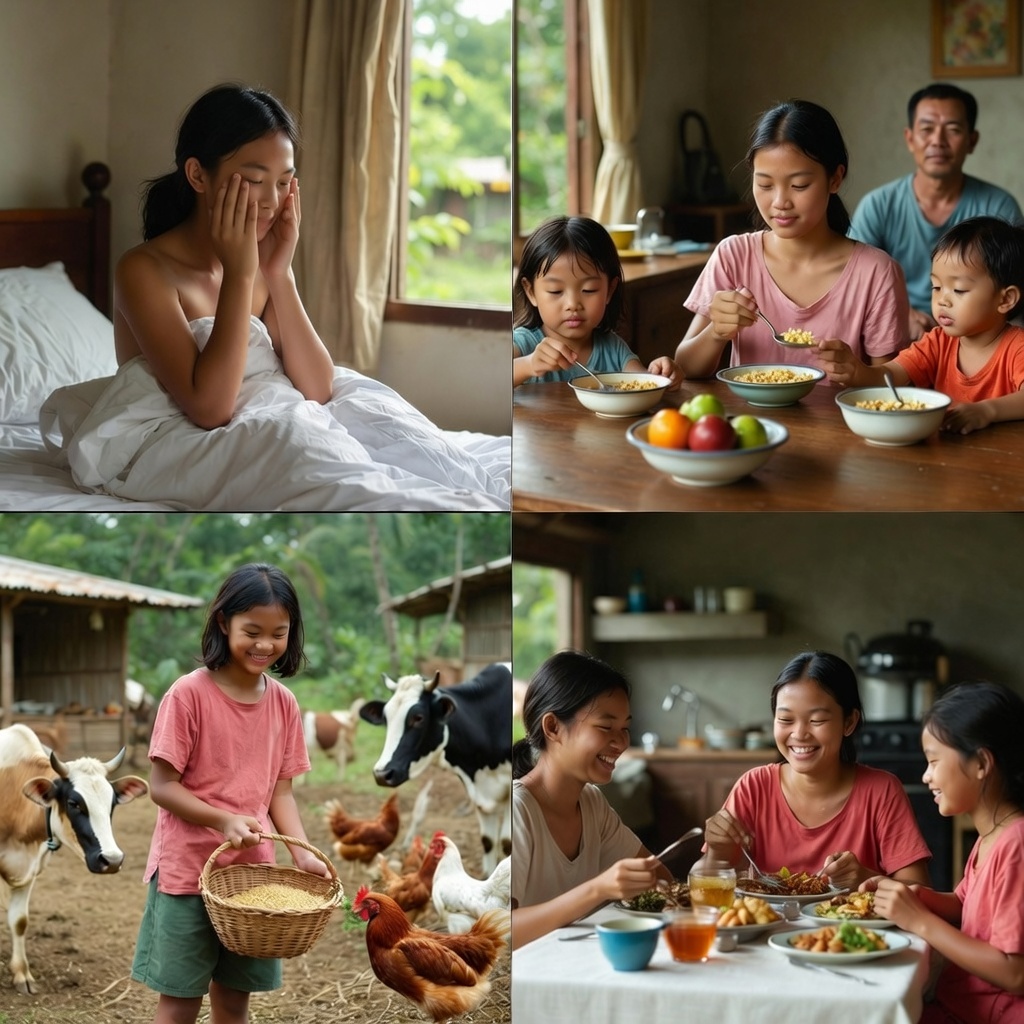
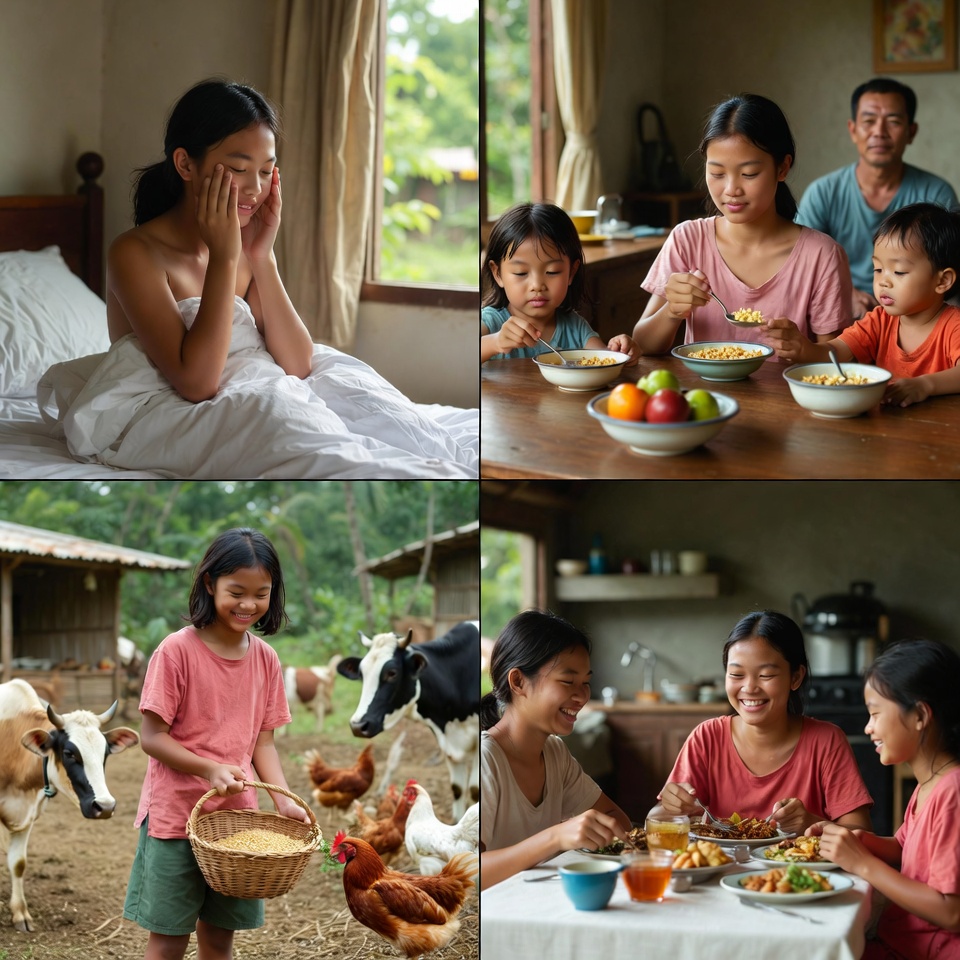
My name is Sochea. When I was thirteen years old I lived in the countryside with my family on a small farm. I had a mother, a father, and a younger brother. My brother was four years old and went to kindergarten.
Every morning I woke up early and ate breakfast with my family. After breakfast, I helped on the farm. I fed the chickens and gave food to the cows.
Then I went to school by bus. English was my favorite subject because I enjoyed learning new words. In the evening, we ate dinner together and talked happily there.
___________________________
Infinitive → past tense
to be → was / were
to live → lived
to have → had
to go → went
to wake up → woke up
to eat → ate
to help → helped
to feed → fed
to give → gave
to enjoy → enjoyed
to learn → learned / learnt
to talk → talked
#################
Past Simple – Regular Verbs
Rules:
- Most verbs: add -ed
play → played - Verbs ending in -e: add -d
live → lived - Verbs ending in consonant + y: change y to i and add -ed
study → studied - Short verbs ending in vowel + consonant: double the final consonant and add -ed
stop → stopped
Use:
The past simple is used to talk about finished actions in the past.
#################
Irregular verbs:
##################
Basics in past simple:
| Personal Pronoun | Verb (Past) | Object |
|---|---|---|
| I | ate | apples |
| You | ate | apples |
| He | ate | apples |
| She | ate | apples |
| It | ate | apples |
| We | ate | apples |
| You (plural) | ate | apples |
| They | ate | apples |
| I | played | football |
| You | played | football |
| He | played | football |
| She | played | football |
| It | played | football |
| We | played | football |
| You (plural) | played | football |
| They | played | football |
| Personal Pronoun | Verb (Past Negative) | Object |
|---|---|---|
| I | did not eat | apples |
| You | did not eat | apples |
| He | did not eat | apples |
| She | did not eat | apples |
| It | did not eat | apples |
| We | did not eat | apples |
| You (plural) | did not eat | apples |
| They | did not eat | apples |
| I | did not play | football |
| You | did not play | football |
| He | did not play | football |
| She | did not play | football |
| It | did not play | football |
| We | did not play | football |
| You (plural) | did not play | football |
| They | did not play | football |
| Did + Pronoun | Verb | Object |
|---|---|---|
| Did I | eat | apples? |
| Did you | eat | apples? |
| Did he | eat | apples? |
| Did she | eat | apples? |
| Did it | eat | apples? |
| Did we | eat | apples? |
| Did you | eat | apples? |
| Did they | eat | apples? |
| Did I | play | football? |
| Did you | play | football? |
| Did he | play | football? |
| Did she | play | football? |
| Did it | play | football? |
| Did we | play | football? |
| Did you | play | football? |
| Did they | play | football? |
| Didn’t + Pronoun | Verb | Object |
|---|---|---|
| Didn’t I | eat | apples? |
| Didn’t you | eat | apples? |
| Didn’t he | eat | apples? |
| Didn’t she | eat | apples? |
| Didn’t it | eat | apples? |
| Didn’t we | eat | apples? |
| Didn’t you | eat | apples? |
| Didn’t they | eat | apples? |
| Didn’t I | play | football? |
| Didn’t you | play | football? |
| Didn’t he | play | football? |
| Didn’t she | play | football? |
| Didn’t it | play | football? |
| Didn’t we | play | football? |
| Didn’t you | play | football? |
| Didn’t they | play | football? |
Forms of ‚to be‘
| Personal Pronoun | Positive | Negative | Question |
|---|---|---|---|
| I | I was happy. | I was not happy. | Was I happy? |
| You (singular) | You were excited. | You were not excited. | Were you excited? |
| He | He was at home. | He was not at home. | Was he at home? |
| She | She was tired. | She was not tired. | Was she tired? |
| It | It was cold. | It was not cold. | Was it cold? |
| We | We were at the party. | We were not at the party. | Were we at the party? |
| You (plural) | You were friends. | You were not friends. | Were you friends? |
| They | They were in the garden. | They were not in the garden. | Were they in the garden? |
######################
Rewrite the statements as questions:
- She had a younger brother.
YOU WRITE:
Did she have a younger brother? - Her brother was four years old.
___________________________ - He went to kindergarten.
___________________________ - Sochea helped on the farm after breakfast.
___________________________ - She fed the cows and chickens.
___________________________ - She went to school by bus.
___________________________ - Her favorite subject was English.
___________________________ - She enjoyed learning new words in English.
___________________________ - She ate breakfast with her family.
___________________________ - She talked happily with her family in the evening.
___________________________ - She lived with her parents.
___________________________ - She woke up early every day.
___________________________ - She did her homework in the afternoon.
___________________________
————————————-
Corrrect answers:
She had a younger brother.
Did Sochea have a younger brother?
Her brother was four years old.
Was her brother four years old?
He went to kindergarten.
Did he go to kindergarten?
Sochea helped on the farm after breakfast.
Did Sochea help on the farm after breakfast?
She fed the cows and chickens.
Did she feed the cows and chickens?
She went to school by bus.
Did she go to school by bus?
Her favorite subject was English.
Was her favorite subject English?
She enjoyed learning new words in English.
Did she enjoy learning new words in English?
She ate breakfast with her family.
Did she eat breakfast with her family?
She talked happily with her family in the evening.
Did she talk happily with her family in the evening?
She lived with her parents.
Did she live with her parents?
She woke up early every day.
Did she wake up early every day?
She did her homework in the afternoon.
Did she do her homework in the afternoon?
####################
Rewrite the statements as negative statements:
- She had an older brother.
YOU WRITE:
She did not have an older brother. - Her brother was two years old.
___________________________ - He went to school.
___________________________ - Sochea helped on the farm before breakfast.
___________________________ - She fed the horses.
___________________________ - She went to school by bike.
___________________________ - Her favorite subject was Math.
___________________________ - She hated [not like] learning new words in English.
___________________________ - She ate breakfast with her grandparents.
___________________________ - She talked happily with her family in the afternoon.
___________________________ - She lived with her grandparents.
___________________________ - She woke up late every day.
___________________________ - She did her homework before breakfast.
___________________________
——————————–
Correct answers:
She had an older brother.
She did not have an older brother.
Her brother was two years old.
He was not two years old.
He went to school.
He did not go to school.
Sochea helped on the farm before breakfast.
She did not help on the farm before breakfast.
She fed the horses.
She did not feed the horses.
She went to school by bike.
She did not go to school by bike.
Her favorite subject was Math.
Her favorite subject was not Math.
She hated learning new words in English.
She did not hate learning new words in English.
She ate breakfast with her grandparents.
She did not eat breakfast with her grandparents.
She talked happily with her family in the afternoon.
She did not talk happily with her family in the afternoon.
She lived with her grandparents.
She did not live with her grandparents.
She woke up late every day.
She did not wake up late every day.
She did her homework before breakfast.
She did not do her homework before breakfast.
####################
Write an interview with Sochea:
- Where/live/thirteen?
_____________________________?
YOU WRITE:
Where did you live when you were thirteen?
countryside.
_____________________________?
YOU WRITE:
I lived in the countryside. - live/in a house?
_____________________________?
on a small farm.
_____________________________ - live/with grandparents?
_____________________________?
mother, father, younger brother
_____________________________ - how old/brother?
_____________________________?
four years
_____________________________ - brother/go to school?
_____________________________?
kindergarten
_____________________________ - eat/breakfast with brother?
_____________________________?
with my family
_____________________________ - go to school/after breakfast?
_____________________________?
help/farm
_____________________________ - feed horses?
_____________________________?
chickens, food to cows
_____________________________ - go to school/ bus/or bike?
_____________________________?
by bus
_____________________________ - what/favorite subject?
_____________________________?
English
_____________________________ - why/favorite subject?
_____________________________?
enjoy/new words
_____________________________ - when/eat dinner?
_____________________________?
in evening
_____________________________
———————————————
Correct version:
Interviewer: Where did you live when you were thirteen?
Sochea: I lived in the countryside.
Interviewer: Did you live in a house?
Sochea: I lived on a small farm.
Interviewer: Did you live with your grandparents?
Sochea: No, I lived with my mother, father, and younger brother.
Interviewer: How old was your brother?
Sochea: He was four years old.
Interviewer: Did your brother go to school?
Sochea: No, he went to kindergarten.
Interviewer: Did you eat breakfast with your brother?
Sochea: I ate breakfast with my family.
Interviewer: Did you go to school after breakfast?
Sochea: No, I helped on the farm.
Interviewer: Did you feed horses?
Sochea: No, I fed the chickens and gave food to the cows.
Interviewer: Did you go to school by bus or by bike?
Sochea: I went to school by bus.
Interviewer: What was your favorite subject?
Sochea: English was my favorite subject.
Interviewer: Why was it your favorite subject?
Sochea: Because I enjoyed learning new words.
Interviewer: When did you eat dinner?
Sochea: I ate dinner in the evening.
##################
Oum is Sochea’s best friend. Write an interview with Oum, asking her about Sochea, when she was thirteen years old.
1. When first meet Sochea?
_____________________________?
YOU WRITE:
When did you first meet Sochea?
thirteen years
YOU WRITE:
I first met her when she was thirteen years old
2. live/in city?
________________________________?
countryside
________________________________
3. live/with grandparents?
________________________________?
with parents
________________________________
4. in a small house?
________________________________?
on a small farm
________________________________
5. have/older brother?
________________________________?
younger
________________________________
6. brother/how old?
________________________________?
four
________________________________
7. brother/to school?
________________________________?
to kindergarten
________________________________
8. when/wake up?
________________________________?
early
________________________________
9. breakfast/with grandparents?
________________________________?
with family
________________________________
10. to school/after breakfast?
________________________________?
feed chickens/give food to cows
________________________________
11. to school by bike?
________________________________?
by bus
________________________________
12. Mathematics/favorite subject?
________________________________?
English
________________________________
13. Why/English/favorite subject?
________________________________?
enjoy/new words
________________________________
14. what/do/in evening?
________________________________?
dinner/talk happily
________________________________
——————————-
Correct version:
Interview with Oum about Sochea
Interviewer: When did you first meet Sochea?
Oum: I first met her when she was thirteen years old.
Interviewer: Did she live in the city?
Oum: No, she lived in the countryside.
Interviewer: Did she live with her grandparents?
Oum: No, she lived with her parents.
Interviewer: Did she live in a small house?
Oum: No, she lived on a small farm.
Interviewer: Did she have an older brother?
Oum: No, she had a younger brother.
Interviewer: How old was her brother?
Oum: He was four years old.
Interviewer: Did her brother go to school?
Oum: No, he went to kindergarten.
Interviewer: When did she wake up?
Oum: She woke up early.
Interviewer: Did she eat breakfast with her grandparents?
Oum: No, she ate breakfast with her family.
Interviewer: Did she go to school after breakfast?
Oum: No, she fed the chickens and gave food to the cows.
Interviewer: Did she go to school by bike?
Oum: No, she went to school by bus.
Interviewer: Was Mathematics her favorite subject?
Oum: No, English was her favorite subject.
Interviewer: Why was English her favorite subject?
Oum: Because she enjoyed learning new words.
Interviewer: What did she do in the evening?
Oum: She ate dinner and talked happily.
####################
Short answers in past simple:
| Question | Short Answer (Yes/Positive) | Short Answer (No/Negative) |
|---|---|---|
| Did she check reservations? | Yes, she did. | No, she didn’t. |
| Did she give keys to guests? | Yes, she did. | No, she didn’t. |
| Did she talk to many guests? | Yes, she did. | No, she didn’t. |
| Was she happy? | Yes, she was. | No, she wasn’t. |
| Were the guests satisfied? | Yes, they were. | No, they weren’t. |
#################
True or false – write question first, then short answer:
- Sochea helped on the farm after breakfast.
YOU WRITE:
Did Sochea help on the farm after breakfast?
Yes, she did. - She lived in the city.
____________________________
________________ - Her favorite subject was English.
____________________________
________________ - She talked happily with her family in the evening.
____________________________
________________ - Her brother was older than her.
____________________________
________________ - She fed the cows and chickens.
____________________________
________________ - She went to school by bus.
____________________________
________________ - She ate breakfast alone.
____________________________
________________ - She enjoyed learning new words in English.
____________________________
________________ - She lived with her parents.
____________________________
________________ - She went to school immediately after breakfast.
____________________________
________________ - Sochea was thirteen years old.
____________________________
________________ - Her brother went to primary school.
____________________________
________________ - She had a younger brother.
____________________________
________________
——————————–
Correct version:
- Sochea helped on the farm after breakfast.
Did Sochea help on the farm after breakfast?
Yes, she did. - She lived in the city.
Did she live in the city?
No, she didn’t. - Her favorite subject was English.
Was her favorite subject English?
Yes, it was. - She talked happily with her family in the evening.
Did she talk happily with her family in the evening?
Yes, she did. - Her brother was older than her.
Was her brother older than her?
No, he wasn’t. - She fed the cows and chickens.
Did she feed the cows and chickens?
Yes, she did. - She went to school by bus.
Did she go to school by bus?
Yes, she did. - She ate breakfast alone.
Did she eat breakfast alone?
No, she didn’t. - She enjoyed learning new words in English.
Did she enjoy learning new words in English?
Yes, she did. - She lived with her parents.
Did she live with her parents?
Yes, she did. - She went to school immediately after breakfast.
Did she go to school immediately after breakfast?
No, she didn’t. - Sochea was thirteen years old.
Was Sochea thirteen years old?
Yes, she was. - Her brother went to primary school.
Did her brother go to primary school?
No, he didn’t. - She had a younger brother.
Did she have a younger brother?
Yes, she did.
####################
Correct, short answer first, then correct statement:
She lived in the city.
YOU WRITE:
No, she didn’t.
She lived in the countryside.
She had a sister.
_____________________________
___________________
Her brother was older than her.
_____________________________
___________________
Her brother went to primary school.
_____________________________
___________________
Sochea went to school after breakfast.
_____________________________
___________________
She went to school by bike.
_____________________________
___________________
Her favorite subject was Math.
_____________________________
___________________
She fed only the cows, not the chickens.
_____________________________
___________________
She ate breakfast alone.
_____________________________
___________________
She watched TV in the evening.
_____________________________
___________________
She lived with her grandparents.
_____________________________
___________________
She hated [not like] learning new words in English.
_____________________________
___________________
She was fifteen years old.
_____________________________
___________________
She fed the horses.
_____________________________
___________________
—————————————
Correct version:
She had a sister.
No, she didn’t.
She had a younger brother.
Her brother was older than her.
No, he wasn’t.
Her brother was younger than her.
Her brother went to primary school.
No, he didn’t.
He went to kindergarten.
Sochea went to school after breakfast.
No, she didn’t.
She helped on the farm after breakfast.
She went to school by bike.
No, she didn’t.
She went to school by bus.
Her favorite subject was Math.
No, it wasn’t.
Her favorite subject was English.
She fed only the cows, not the chickens.
No, she didn’t.
She fed the cows and the chickens.
She ate breakfast alone.
No, she didn’t.
She ate breakfast with her family.
She watched TV in the evening.
No, she didn’t.
She talked happily with her family in the evening.
She lived with her grandparents.
No, she didn’t.
She lived with her parents.
She hated [not like] learning new words in English.
No, she didn’t.
She enjoyed learning new words in English.
She was fifteen years old.
No, she wasn’t.
She was thirteen years old.
She fed the horses.
No, she didn’t.
She fed the chickens.
####################
What is correct?
Did she live in a city or in the countryside?
YOU WRITE:
She lived in the countryside.
Did she have a brother or a sister?
______________________________
Was her brother older or younger than her?
______________________________
Did her brother go to kindergarten or primary school?
______________________________
Did she go to school after breakfast or help on the farm first?
______________________________
Was her favorite subject English or Math?
______________________________
Did she feed only the cows or both the cows and chickens?
______________________________
Did she eat breakfast alone or with her family?
______________________________
Did she watch TV or talk happily with her family in the evening?
______________________________
Did she live with her grandparents or with her parents?
______________________________
Did she enjoy learning new words in English or dislike it?
______________________________
Was she fifteen years old or thirteen years old?
______________________________
Did she help on the farm every day or not at all?
______________________________
———————————–
Correct version:
Did she live in a city or in the countryside?
She lived in the countryside.
Did she have a brother or a sister?
She had a younger brother.
Was her brother older or younger ?
He was younger than her.
Did her brother go to kindergarten or primary school?
He went to kindergarten.
Did she go to school after breakfast or help on the farm first?
She helped on the farm first.
Was her favorite subject English or Math?
Her favorite subject was English.
Did she feed only the cows or both the cows and chickens?
She fed both the cows and chickens.
Did she eat breakfast alone or with her family?
She ate breakfast with her family.
Did she watch TV or talk happily with her family in the evening?
She talked happily with her family in the evening.
Did she live with her grandparents or with her parents?
She lived with her parents.
Did she enjoy learning new words in English or did she not like it?
She enjoyed learning new words in English.
Was she fifteen years old or thirteen years old?
She was thirteen years old.
Did she help on the farm every day or not at all?
She helped on the farm every day.
##################
WRITE A STORY ABOUT YOURSELF,
YOUR FAMILY,
YOUR DAILY ROUTINE.
WHEN YOU WERE TEN YEARS OLD
If you want, send it to me,
I’ll have a look at it.
SMFrockZ@gmx.at
Schreibe einen Kommentar