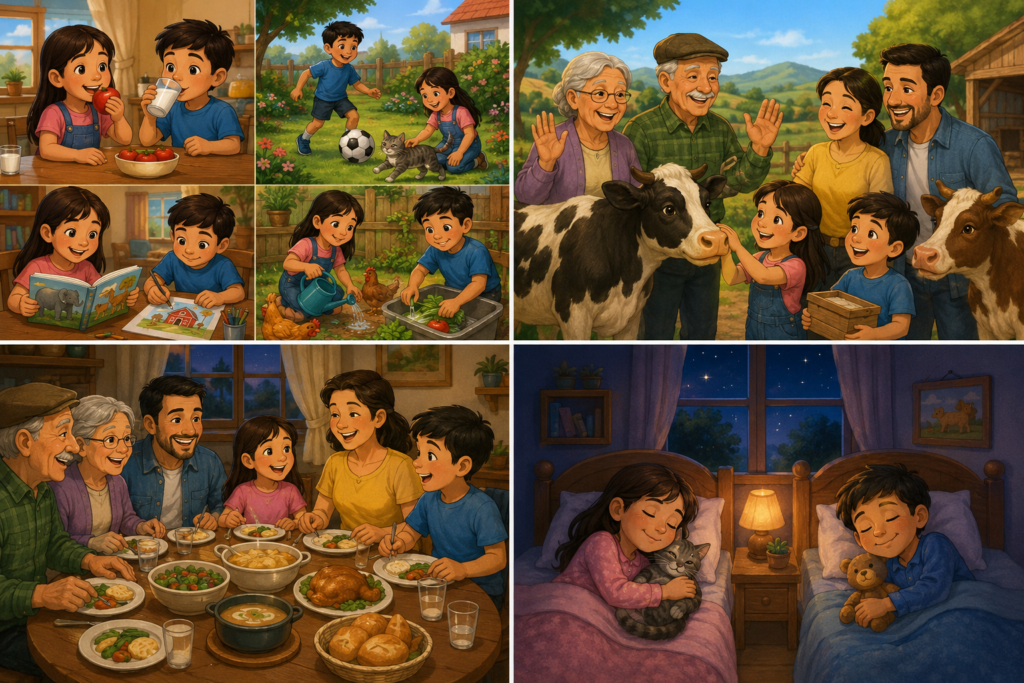
Autor: wolfgang kugler

  • 🍽️Chef Chanrith🍽️, the creator of culinary delights at the Kroya (A2, revised, audio files added)

    Having enjoyed culinary delights created by Chef Reza a couple of times, former chef at the Kroya, I’ve also had the pleasure of enjoying Chef Chanrith’s delicious creations.


    Chef Van Chanrith is the Executive Chef at Shinta Mani Angkor and Bensley Collection Pool Villas in Siem Reap, Cambodia. He is also the head chef at Kroya by Chef Chanrith, a restaurant that serves traditional Khmer (Cambodian) food with a modern style.

    Chef Chanrith began his cooking career in 1999. He worked in many kitchens and became an executive chef. He loves Cambodian food and wants to keep its true taste while making it look new and creative. He uses fresh, local ingredients and believes that real Cambodian flavors should be shared with the world.

    At Kroya, guests can enjoy special dishes such as beef lok lak made with soft, aged beef. There is also a traditional village soup that includes forest red ants. These dishes show the rich history and flavors of Cambodia.

    Chef Chanrith also teaches cooking classes. Guests visit local markets with him to buy fresh ingredients. Then they learn how to cook Cambodian dishes in the traditional way.

    Chef Chanrith cares about nature and people. His kitchen recycles food waste and supports local farmers and charities.

    Through his food and teaching, he hopes more people will discover and love the taste of Cambodia.

    _______________________________

    Vocabulary:

    to discover – to find or learn something new

    a creator – a person who makes something

    culinary delights – very good food

    a pleasure – something that makes you happy

    to enjoy – to feel happy when you do something

    a delicious creation – something tasty that someone made

    to serve food – to give food to someone

    an executive chef – the main chef in a kitchen

    a taste – the feeling in your mouth when you eat something

    an ingredient – food you use to make a dish (like rice, salt, or meat)

    to believe – to think something is true

    a flavor – the special taste of food

    to share with somebody – to let someone have part of what you have

    a dish – a type of food (like soup or rice with meat)

    aged beef – beef (cow meat) that has been kept for some time to make it softer and better

    red ants – small red insects, sometimes used in food

    to care about something – to think something is important

    to recycle waste – to use trash again in a different way

    to support charities – to help groups that help people

    though – but (used to show something different or surprising)

    ###################

    Multiple-choice questions, one answer is correct:


    1. What is a creator?
    a) A person who eats food
    b) A person who makes something
    c) A person who buys food


    2. What does „culinary delights“ mean?
    a) Very tasty food
    b) A cooking book
    c) A big kitchen


    3. What is a pleasure?
    a) A type of food
    b) Something that makes you happy
    c) A hard job


    4. What does it mean to enjoy something?
    a) To feel happy doing it
    b) To leave it behind
    c) To make it hot


    5. What is a delicious creation?
    a) A food that tastes very bad
    b) A food that is not cooked
    c) A food someone made that tastes very good


    6. What does it mean to serve food?
    a) To give food to people
    b) To throw food away
    c) To buy food at a store


    7. What is an executive chef?
    a) The boss of a kitchen
    b) A person who cleans dishes
    c) A waiter in a restaurant


    8. What is a taste?
    a) The way something smells
    b) The feeling in your mouth when you eat
    c) A sound in a restaurant


    9. What is an ingredient?
    a) A plate for food
    b) A type of drink
    c) A food used to make a meal


    10. What does it mean to believe something?
    a) To know it is wrong
    b) To think it is true
    c) To forget it


    11. What is a flavor?
    a) The special taste of food
    b) The color of food
    c) The size of food


    12. What does it mean to share something with somebody?
    a) To hide it from them
    b) To keep it all for yourself
    c) To give part of it to them


    13. What is a dish?
    a) A person who eats
    b) A kind of food
    c) A glass for water


    14. What is aged beef?
    a) Old meat that is better to eat
    b) Beef that is cooked in sugar
    c) Beef that is very new


    15. What are red ants in food?
    a) A kind of rice
    b) Small red insects sometimes used in cooking
    c) A fruit from Cambodia


    16. What does it mean to care about something?
    a) To not think about it
    b) To think it is important
    c) To break it


    17. What does it mean to recycle waste?
    a) To throw it in the street
    b) To burn it
    c) To use trash again in a new way


    18. What does it mean to support charities?
    a) To help people and good causes
    b) To open a restaurant
    c) To sell food for money
    ———————end of audio file——————


    19. What does „though“ mean?
    a) Before something happens
    b) But (to show a different idea)
    c) Because something is true


    20. What does it mean to discover something?
    a) To find or learn something new
    b) To lose something
    c) To cook something twice


    _________________

    Answers:

    1b 2a 3b 4a 5c 6a 7a 8b 9c 10b 11a 12c 13b 14a 15b 16b 17c 18a 19b 20a

    ###############

    Match the word (1–20) to the correct definition (A–T)


    Words:

    1. flavor
    2. to recycle waste
    3. red ants
    4. dish
    5. ingredient
    6. to care about something
    7. to enjoy
    8. executive chef
    9. culinary delights
    10. to believe
    11. aged beef
    12. to discover
    13. creator
    14. to support charities
    15. taste
    16. to serve food
    17. a pleasure
    18. though
    19. to share with somebody
    20. a delicious creation

    Definitions:

    A. Small red insects sometimes used in food
    B. To feel happy when doing something
    C. The main chef in a kitchen
    D. A food someone made that tastes very good
    E. A type of food or meal
    F. To use trash again in a new way
    G. Something that makes you happy
    H. The feeling in your mouth when you eat
    I. To think something is true
    J. Beef that has been kept to improve taste
    K. A food used to make a meal
    L. Very tasty food
    M. To give food to people
    N. To help people or good causes
    O. The special taste of food
    P. To think something is important
    Q. A person who makes something
    R. To give part of something to someone
    S. But (to show a different idea)
    T. To find or learn something new


    _____________________

    1O 2F 3A 4E 5K 6P 7B 8C 9L 10I 11J 12T 13Q 14N 15H 16M 17G 18S 19R 20D

    ##################

    Gap-fill test – which word is correct?


    1. Chef Chanrith is the __________ (waiter / driver / creator) of many special Cambodian dishes.
    2. At Kroya, guests can try __________ (hotel rooms / culinary delights / cooking pots) from Cambodia.
    3. It is always __________ (a problem / a pleasure / a danger) to eat his food.
    4. Many people (hide / enjoy / forget) __________ the cooking classes he offers.
    5. His beef lok lak is __________ (a sweet drink / a delicious creation / a broken plate).
    6. He loves to __________ (clean windows / serve food / play music) to guests from around the world.
    7. Chef Chanrith is the __________ (taxi driver / executive chef / hotel guard) at Shinta Mani Angkor.
    8. He always keeps the real __________ (price / taste / size) of Cambodian food.
    9. Every dish starts with a fresh __________ (menu / table / ingredient).
    10. He __________ (shouts / forgets / believes) that Cambodian food should be shared with the world.
    11. The __________ (color / flavor / name) of his soup is strong and special.
    12. He wants to __________ (cook without somebody / share with somebody / sell from somebody) the joy of Khmer food.
    13. A popular __________ (door / dish / desk) is village soup with red ants.
    14. His kitchen uses __________ (green bananas / aged beef / frozen apples) to make lok lak tender.
    15. He works to __________ (write novels / support charities / build temples) that help local people.

    ____________________
    1 creator 2 culinary delights 3 a pleasure 4 enjoy 5 a delicious creation 6 serve food 7 executive chef 8 taste 9 ingredient 10 believes 11 flavor 12 share with somebody 13 dish 14 aged beef 15 support charities

    ###############

    True or false?

    1. Chef Chanrith uses fresh, local ingredients in his cooking.
    2. He works as a waiter at Kroya restaurant.
    3. Beef lok lak is one of the dishes guests can try at Kroya.
    4. Chef Chanrith started his culinary career in 2010.
    5. He believes in keeping the authentic flavors of Cambodian food.
    6. Chef Chanrith does not offer any cooking classes.
    7. His kitchen supports local farmers and charities.
    8. He uses frozen ingredients in all his dishes.
    9. Chef Chanrith wants to share Cambodian food with the world.
    10. He recycles food waste in his kitchen.
    11. Kroya is known for Italian food.
    12. The village soup includes forest red ants as an ingredient.
    13. Chef Chanrith prefers to use imported ingredients.
    14. He works only as a head chef and not as an executive chef.
    15. Guests can visit local markets during cooking classes.

    ______________________
    True:

    1 3 5 7 9 10 12 15

    ##################

    Fill in:

    1. Chef Chanrith cooks delicious __________ every day.
    2. He is the __________ chef at the hotel.
    3. Guests enjoy traditional Cambodian dishes with fresh __________.
    4. The kitchen always __________ fresh local ingredients for cooking.
    5. Beef lok lak is a very popular __________here.
    6. The flavor of Chef Chanrith’s ___________ is excellent.
    7. Chef Chanrith loves to share recipes with __________.
    8. He started his __________ career back in 1999.
    9. The restaurant Kroya __________ traditional food with a twist.
    10. He uses __________ vegetables and meat in his dishes.
    11. Guests can __________ cooking classes to learn Cambodian food.
    12. His kitchen works hard to recycle all food __________.
    13. Chef Chanrith cares a lot about the __________.
    14. He wants to show Cambodian __________to the world.
    15. The village soup contains forest red __________ as ingredient.

    ____________________

    Correct version:

    1. Chef Chanrith cooks delicious food every day.
    2. He is the executive chef at the hotel.
    3. Guests enjoy traditional Cambodian dishes with fresh ingredients.
    4. The kitchen always uses fresh local ingredients for cooking.
    5. Beef lok lak is a very popular dish here.
    6. The flavor of Chef Chanrith’s food is excellent.
    7. Chef Chanrith loves to share recipes with guests.
    8. He started his cooking career back in 1999.
    9. The restaurant Kroya serves traditional food with a twist.
    10. He uses local vegetables and meat in his dishes.
    11. Guests can join cooking classes to learn Cambodian food.
    12. His kitchen works hard to recycle all food waste.
    13. Chef Chanrith cares a lot about the environment.
    14. He wants to show Cambodian food to the world.
    15. The village soup contains forest red ants as ingredient.

    ####################

    Fill in, words below:


    Interviewer: Where do you work?
    Chef Chanrith: I work at Shinta Mani Angkor hotel and Bensley Pool Villas.

    Interviewer: What food do you cook?
    Chef Chanrith: I cook __________ Cambodian food with a new style.

    Interviewer: What do you use for cooking?
    Chef Chanrith: I use fresh and local _________.

    Interviewer: Why do you __________ Cambodian food?
    Chef Chanrith: I want to keep the real taste of Cambodia.

    Interviewer: What is Kroya?
    Chef Chanrith: Kroya is my __________ where people eat Khmer food.

    Interviewer: What dishes do you have at Kroya?
    Chef Chanrith: We have __________ lok lak and village soup with red ants.

    Interviewer: Do you teach cooking?
    Chef Chanrith: Yes, I teach guests to cook and visit __________.

    Interviewer: How do you help nature?
    Chef Chanrith: We __________ food waste and help local farmers.

    Interviewer: What do you want to share?
    Chef Chanrith: I want to share the good ___________ of Cambodian food.

    Interviewer: When do you start work?
    Chef Chanrith: I start work __________ every day.

    Interviewer: What is your big goal?
    Chef Chanrith: I want to __________ Cambodian food to the world.


    ________________________
    ingredients – taste – traditional – markets – cook – recycle – restaurant – early – beef – show
    ________________________

    Interviewer: Where do you work?
    Chef Chanrith: I work at Shinta Mani Angkor hotel and Bensley Pool Villas.

    Interviewer: What food do you cook?
    Chef Chanrith: I cook traditional Cambodian food with a new style.

    Interviewer: What do you use for cooking?
    Chef Chanrith: I use fresh and local ingredients.

    Interviewer: Why do you cook Cambodian food?
    Chef Chanrith: I want to keep the real taste of Cambodia.

    Interviewer: What is Kroya?
    Chef Chanrith: Kroya is my restaurant where people eat Khmer food.

    Interviewer: What dishes do you have at Kroya?
    Chef Chanrith: We have beef lok lak and village soup with red ants.

    Interviewer: Do you teach cooking?
    Chef Chanrith: Yes, I teach guests to cook and visit markets.

    Interviewer: How do you help nature?
    Chef Chanrith: We recycle food waste and help local farmers.

    Interviewer: What do you want to share?
    Chef Chanrith: I want to share the good taste of Cambodian food.

    Interviewer: When do you start work?
    Chef Chanrith: I start work early every day.

    Interviewer: What is your big goal?
    Chef Chanrith: I want to show Cambodian food to the world.


    ##################


    I wake up early every day. I go to the market to buy fresh ingredients. Then, I go to the kitchen at the hotel. I prepare the food carefully. I cook traditional Cambodian dishes with fresh vegetables and meat. I check the flavors to make sure the food tastes good. I also talk with my team and help them. During the day, I serve food to guests at the restaurant. Sometimes, I teach cooking classes and show guests how to cook Khmer food. I always recycle food waste to help the environment. At the end of the day, I clean the kitchen and plan for tomorrow. I love my job because I share the taste of Cambodia with many people.


    _______________

    Rewrite the story above starting with:

    He wakes up early every day. He goes……….

    and make all changes necessary.

    ________________


    He wakes up early every day. He goes to the market to buy fresh ingredients. Then, he goes to the kitchen at the hotel. He prepares the food carefully. He cooks traditional Cambodian dishes with fresh vegetables and meat. He checks the flavors to make sure the food tastes good. He also talks with his team and helps them. During the day, he serves food to guests at the restaurant. Sometimes, he teaches cooking classes and shows guests how to cook Khmer food. He always recycles food waste to help the environment. At the end of the day, he cleans the kitchen and plans for tomorrow. He loves his job because he shares the taste of Cambodia with many people.


    ####################

  • 🀩Meet your first English sentences – Oum, a girl from Siem Reap (A1 beginners, part 7)

    • a day in her life.

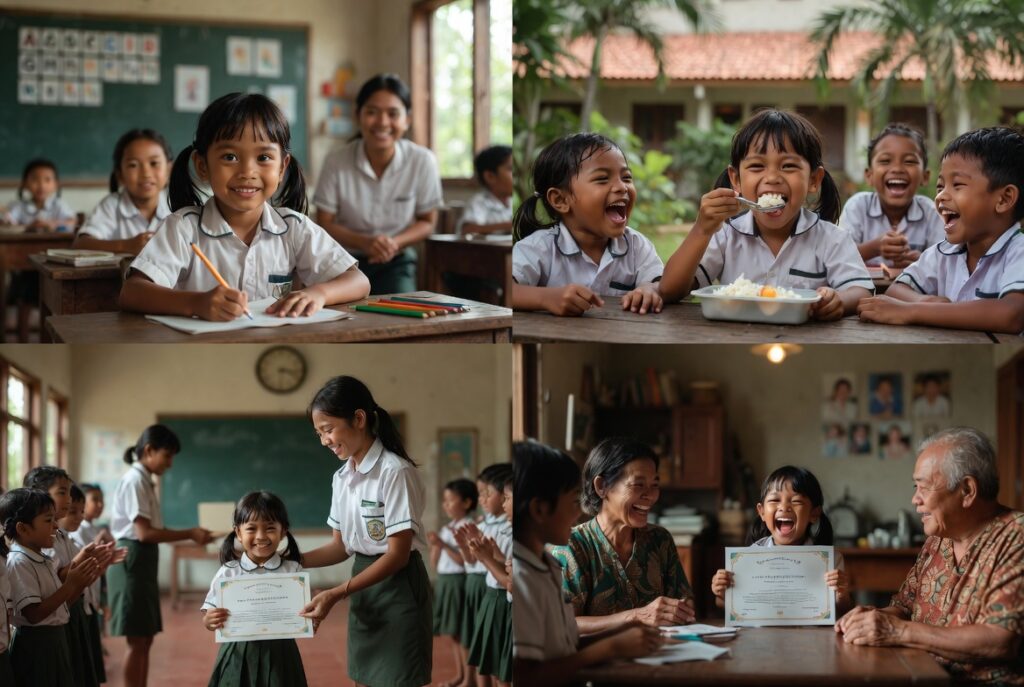
    Oum is a young girl.
    She wakes up early.
    She eats breakfast.
    She puts on her school uniform.
    She takes her bag.
    She walks to school.
    She sees her friends.
    She goes to class.
    She reads and writes.
    She counts numbers.
    She draws pictures.
    She plays at break time.
    She laughs with friends.
    She learns many things.
    The bell rings.
    School is finished.
    She walks home.
    She eats dinner.
    She does homework.
    She goes to sleep.
    ———————————-

    Vocabulary:

    • young – not old
    • to wake up – to open your eyes in the morning
    • to eat breakfast – to eat food in the morning
    • to put on a uniform – to wear school clothes
    • to take a bag – to pick up your school bag
    • to walk – to go with your feet
    • to see friends – to look at and meet friends
    • to go to class – to enter the classroom
    • to read – to look at words and understand
    • to write – to make words with a pen or pencil
    • to count numbers – to say 1, 2, 3, 4…
    • to draw pictures – to make a picture with a pencil or pen
    • to play – to have fun
    • break time – time to rest and play at school
    • to laugh – to make a happy sound β€œha ha”
    • the bell rings – the school bell makes a sound β€œding ding”
    • finished – done, no more
    • homework – school work at home
    • to sleep – to close your eyes and rest at night

    #################
    Basics:

    Personal Pronounam / is / are
    Iam8 years old
    Youare8 years old
    Heis8 years old
    Sheis8 years old
    Itis8 years old
    Weare8 years old
    You (plural)are8 years old
    Theyare8 years old

    Negation:

    Personal Pronounam not / is not / are not
    Iam not8 years old
    Youare not8 years old
    Heis not8 years old
    Sheis not8 years old
    Itis not8 years old
    Weare not8 years old
    You (plural)are not8 years old
    Theyare not8 years old

    Questions:

    Question WordPersonal Pronoun
    AmI8 years old?
    Areyou8 years old?
    Ishe8 years old?
    Isshe8 years old?
    Isit8 years old?
    Arewe8 years old?
    Areyou (plural)8 years old?
    Arethey8 years old?

    Statement:

    Personal PronounVerb
    Ilikeice cream
    Youlikeice cream
    Helikesice cream
    Shelikesice cream
    Itlikesice cream
    Welikeice cream
    You (plural)likeice cream
    Theylikeice cream

    Negation:

    Personal PronounVerb (negative)
    Ido not likeice cream
    Youdo not likeice cream
    Hedoes not likeice cream
    Shedoes not likeice cream
    Itdoes not likeice cream
    Wedo not likeice cream
    You (plural)do not likeice cream
    Theydo not likeice cream

    Questions:

    Do / DoesPersonal PronounVerbSugar?
    DoIlikesugar?
    Doyoulikesugar?
    Doeshelikesugar?
    Doesshelikesugar?
    Doesitlikesugar?
    Dowelikesugar?
    Doyou (plural)likesugar?
    Dotheylikesugar?

    ####################

    Negations, questions:

    1. Oum is a young girl.

      YOU WRITE:

    a) Oum is not a young girl.
    b) Is Oum a young girl?

    2. She wakes up early.

    YOU WRITE:

    a) She does not eat breakfast.
    b) Does she eat breakfast?

    ——————————

    3. Oum eats breakfast.
    a) ______________________
    b) ______________________

    4. Oum puts on her school uniform.
    a) ______________________
    b) ______________________

    5. Oum takes her bag.
    a) ______________________
    b) ______________________

    6. Oum walks to school.
    a) ______________________
    b) ______________________

    7. Oum sees her friends.
    a) ______________________
    b) ______________________

    8. Oum goes to class.
    a) ______________________
    b) ______________________

    9. Oum reads and writes.
    a) ______________________
    b) ______________________

    10. Oum counts numbers.
    a) ______________________
    b) ______________________

    11. Oum draws pictures.
    a) ______________________
    b) ______________________

    —————————

    Correct version:

    1. Oum is young.
    a) Oum is not young.
    b) Is Oum young?

    2. Oum wakes up early.
    a) Oum does not wake up early.
    b) Does Oum wake up early?

    3. Oum eats breakfast.
    a) Oum does not eat breakfast.
    b) Does Oum eat breakfast?

    4. Oum puts on her uniform.
    a) Oum does not put on her uniform.
    b) Does Oum put on her uniform?

    5. Oum takes her bag.
    a) Oum does not take her bag.
    b) Does Oum take her bag?

    6. Oum walks to school.
    a) Oum does not walk to school.
    b) Does Oum walk to school?

    7. Oum sees her friends.
    a) Oum does not see her friends.
    b) Does Oum see her friends?

    8. Oum goes to class.
    a) Oum does not go to class.
    b) Does Oum go to class?

    9. Oum reads and writes.
    a) Oum does not read and write
    b) Does Oum readand write?

    11. Oum counts numbers.
    a) Oum does not count numbers.
    b) Does Oum count numbers?

    12. Oum draws pictures.
    a) Oum does not draw pictures.
    b) Does Oum draw pictures?

    ##################

    Answer:

    1. Is Oum a young girl?

      YOU WRITE:

      Yes, she is a young girl.
    2. Does Oum wake up early?
      _______________________
    3. Does Oum eat breakfast?
      _______________________
    4. Does Oum put on her school uniform?
      _______________________
    5. Does Oum walk to school?
      _______________________
    6. Does Oum see her friends?
      _______________________
    7. Does Oum go to class?
      _______________________
    8. Does Oum read and write?
      _______________________
    9. Does Oum play at break time?
      _______________________
    10. Does Oum do homework?
      _______________________

      ——————————–

    Correct answers:

    Yes, Oum is a young girl.

    Yes, Oum wakes up early.

    Yes, Oum eats breakfast.

    Yes, Oum puts on her school uniform.

    Yes, Oum walks to school.

    Yes, Oum sees her friends.

    Yes, Oum goes to class.

    Yes, Oum reads and writes.

    Yes, Oum plays at break time.

    Yes, Oum does homework.
    ##################

    True?

    1. Oum is an old woman.

      YOU WRITE:

      No, she is not an old woman. She is a young girl.
    2. Oum sleeps all day.

      YOU WRITE:

      No, she does not sleep all day. She wakes up early.
    3. Oum eats lunch in the morning.
      ______________________________
    4. Oum wears a red dress to school.
      ______________________________
    5. Oum drives a car to school.
      ______________________________
    6. Oum sees a cat on the way to school.
      ______________________________
    7. Oum sleeps in class.
      ______________________________
    8. Oum sleeps at break time.
      ______________________________
    9. Oum goes to school at night.
      ______________________________

    ———————————-
    Correct version:

    1. No, she is not an old woman. She is a young girl.
    2. No, she does not sleep all day. She wakes up early.
    3. No, she does not eat lunch in the morning. She eats breakfast.
    4. No, she does not wear a red dress at school. She puts on her school uniform.
    5. No, she does not drive a car to school. She walks to school.
    6. No, she does not see a cat on the way to school. She sees her friends.
    7. No, she does not sleep at break time. She plays at break time.
    8. No, she does not go to school at night. She sleeps at night.

    #######################

    True or false?

    1. Is Oum a girl or a boy?

      YOU WRITE:

      Oum is not a boy. Oum is a girl
    2. Does she get up at 10 in the morning?
      ______________________________
    3. Does she eat breakfast at school?
      ______________________________
    4. Does she wear a red dress?
      ______________________________
    5. Does she walk or drive to school?
      ______________________________
    6. Does she see a cat on the way to school?
      ______________________________
    7. Does she sleep at break time?
      ______________________________
    8. Does she go to school at night?
      ______________________________
    9. Does she read and write in class?
      ______________________________
    10. Does she do homework at school?
      ______________________________

    ————————-

    Correct version:

    No, she is not a boy. She is a girl.

    No, she does not get up at 10 in the morning. She gets up early.

    No, she does not eat breakfast at school. She eats breakfast at home.

    No, she does not wear a red dress. She puts on her school uniform.

    No, she does not drive to school. She walks to school.

    No, she does not see a cat on the way to school. She sees her friends.

    No, she does not sleep at break time. She plays at break time.

    No, she does not go to school at night. She goes to school in the morning.

    No, she does not skip [to not do something you usually do.] reading and writing. She reads and writes in class.

    No, she does not do homework at school. She does homework at home.

    ################

    Interview:


    Interviewer: Is Oum an old woman?
    Person: No, she is not an old woman. She is a young girl.

    Interviewer: Does Oum wake up early?
    Person: Yes, she wakes up early.

    Interviewer: Does Oum eat breakfast?
    Person: Yes, she eats breakfast.

    Interviewer: Does Oum wear a red dress?
    Person: No, she does not wear a red dress. She wears her school uniform.

    Interviewer: Does Oum take her bag?
    Person: Yes, she takes her bag.

    Interviewer: Does Oum walk to school?
    Person: Yes, she walks to school.

    Interviewer: Does Oum see a cat on the way?
    Person: No, she does not see a cat. She sees her friends.

    Interviewer: Does Oum go to class?
    Person: Yes, she goes to class.

    Interviewer: Does Oum play at break time?
    Person: Yes, she plays at break time.

    Interviewer: Does Oum do homework at school?
    Person: No, she does not do homework at school. She does homework at home.


    ##################

    Complete, fill in, words below:

    bag – breakfast – at home – wakes up –
    walks – school uniform –
    goes – friends –
    break time

    ————————————–


    Interviewer: Who is Oum?
    Person: She is a young girl.

    Interviewer: What does Oum do in the morning?
    Person: She __________ early.

    Interviewer: What does Oum eat in the morning?
    Person: She eats __________.

    Interviewer: What does Oum wear to school?
    Person: She wears her __________.

    Interviewer: What does Oum take to school?
    Person: She takes her __________.

    Interviewer: How does Oum go to school?
    Person: She __________ to school.

    Interviewer: Who does Oum see on the way to school?
    Person: She sees her___________.

    Interviewer: Where does Oum go after she arrives at school?
    Person: She __________ to class.

    Interviewer: What does Oum do at __________?
    Person: She plays with her friends.

    Interviewer: Where does Oum do her homework?
    Person: No, she does not do homework at school. She does homework __________

    .
    ————————————–

    Correct version:


    Interviewer: Who is Oum?
    Person: She is a young girl.

    Interviewer: What does Oum do in the morning?
    Person: She wakes up early.

    Interviewer: What does Oum eat in the morning?
    Person: She eats breakfast.

    Interviewer: What does Oum wear to school?
    Person: She wears her school uniform.

    Interviewer: What does Oum take to school?
    Person: She takes her bag.

    Interviewer: How does Oum go to school?
    Person: She walks to school.

    Interviewer: Who does Oum see on the way to school?
    Person: She sees her friends.

    Interviewer: Where does Oum go after she arrives at school?
    Person: She goes to class.

    Interviewer: What does Oum do at break time?
    Person: She plays with her friends.

    Interviewer: Where does Oum do her homework?
    Person: No, she does not do homework at school. She does homework at home.


    #######################
    A story:

    I am a young girl. I wake up early and eat breakfast.
    I put on my school uniform and take my bag.
    I walk to school and see my friends on the way.
    I go to class, and I read and write.
    I count numbers and draw pictures.
    At break time, I play with my friends and laugh.
    The bell rings and school is finished.
    I walk home, do my homework, and go to sleep.
    ________________________

    Rewrite the story, start with

    Oum is a young girl. She wakes up……….

    and make all changes necessary.
    ________________________

    Correct version:


    Oum is a young girl. She wakes up early and eats breakfast. She puts on her school uniform and takes her bag. She walks to school and sees her friends on the way. She goes to class, and she reads and writes. She counts numbers and draws pictures. At break time, she plays with her friends and laughs. The bell rings and school is finished. She walks home, does her homework, and goes to sleep.
    ###################

  • 🏚️Shinta Mani Foundation (A2, present simple)

    • simple support for education, health, businesses, and nature

    A guest comes to the front desk and asks about the Shinta Mani Foundation. You give simple information about it.


    The Shinta Mani Foundation is a group in Cambodia that began in 2004. It helps poor people in Siem Reap and the Cardamom Mountains with education, health, small businesses, and nature protection.


    All money donated goes straight to these programs, not to office costs.
    In education, the foundation has a hospitality school. It teaches 30 students each year how to work in hotels. Every student gets a job after training.


    The foundation also gives 800+ school supplies and 641 bicycles so kids can go to school.
    In health, it provides 8,123+ check-ups and free dental care. It teaches people about clean water and healthy food to stop sickness.
    For small businesses, it gives loans and 900+ piglets to start shops or farms, mostly for women. This helps families earn money.
    For nature, it works with Wildlife Alliance to protect 865+ acres of forest. It stops illegal tree cutting and builds eco-tourism camps for jobs.
    The foundation also builds 1,400+ water wells and 99+ homes for poor families.Many Cambodians live in bad houses or lack food. The foundation helps them live better and support themselves.

    _____________________
    Vocabulary:

    • a foundation – a group that helps people.
    • to support – to help someone.
    • protection – keeping something or someone safe.
    • to donate money – to give money to help.
    • to go straight to a program – the money is used only for helping people.
    • office costs – money for things like paper, phones, or buildings.
    • education – learning in school.
    • a hospitality school – a school that teaches how to work in hotels.
    • school supplies – things for school, like books and pens.
    • health – how your body feels.
    • dental care – help for your teeth.
    • healthy food – food that is good for the body.
    • stop sickness – make people not sick.
    • a loan – money you can use and must pay back.
    • a piglet – a baby pig.
    • illegal tree cutting – cutting trees when it is not allowed.
    • eco-tourism – travel that helps people and nature.
    • a water well – a deep hole to get clean water.
    • a lack of food – not enough food.

    ##################

    Multiple choice, one answer:

    1. What is a foundation?
      a) A group that helps
      b) A type of food
      c) A big tall tree
    2. What does to support mean?
      a) To close a heavy door
      b) To help another person
      c) To take something home
    3. What is protection?
      a) Reading books at night
      b) Building a new house
      c) Keeping people safe now
    4. What does to donate money mean?
      a) To give money to
      b) To buy a new hat
      c) To count coins daily
    5. What does to go straight to a program mean?
      a) The money goes elsewhere
      b) The money goes to programs
      c) The money goes for food
    6. What are office costs?
      a) Money for farm tools
      b) Money for buying seeds
      c) Money for office things
    7. What is education?
      a) Learning at school daily
      b) Cleaning the house today
      c) Building a deep well
    8. What is a hospitality school?
      a) A place to cook
      b) A shop that sells fruit
      c) School teaching hotel work
    9. What are school supplies?
      a) Shoes bags and pencils
      b) Books pens and paper
      c) Food water and drinks
    10. What is health?
      a) A strong wooden house
      b) How your body feels
      c) A very tall tree
    11. What is dental care?
      a) A tool for farming
      b) A kind of kitchen
      c) Help for your teeth
    12. What is healthy food?
      a) Food that helps health
      b) Food that gives illness
      c) Food that is frozen
    13. What does stop sickness mean?
      a) Make people eat more
      b) Make people not sick
      c) Make people run fast
    14. What is a loan?
      a) A gift you keep
      b) A snack you buy
      c) Money you must repay
    15. What is a piglet?
      a) A baby pig animal
      b) A small wooden house
      c) A little red bicycle
    16. What is illegal tree cutting?
      a) Planting trees near roads
      b) Cutting trees not allowed
      c) Watering young tree saplings
    17. What is eco-tourism?
      a) Travel that helps nature
      b) Travel to buy new things
      c) Travel that costs much
    18. What is a water well?
      a) A small wooden bridge
      b) A short clean pathway
      c) Deep hole for water
    19. What is a lack of food?
      a) A place to cook meals
      b) A way to clean water
      c) Not enough food here

    ______________________-

    Answers:
    1a 2b 3c 4a 5b 6c 7a
    8c 9b 10b 11c 12a 13b
    14c 15a 16b 17a 18c 19c
    ____________________

    Correct answers:

    What is a foundation? That is: a group that helps.

    What does to support mean? That is: to help another person.

    What is protection? That is: keeping people safe now.

    What does to donate money mean? That is: to give money to.

    What does to go straight to a program mean? That is: the money goes to programs.

    What are office costs? That is: money for office things.

    What is education? That is: learning at school daily.

    What is a hospitality school? That is: school teaching hotel work.

    What are school supplies? That is: books pens and paper.

    What is health? That is: how your body feels.

    What is dental care? That is: help for your teeth.

    What is healthy food? That is: food that helps health.

    What does stop sickness mean? That is: make people not sick.

    What is a loan? That is: money you must repay.

    What is a piglet? That is: a baby pig animal.

    What is illegal tree cutting? That is: cutting trees not allowed.

    What is eco-tourism? That is: travel that helps nature.

    What is a water well? That is: deep hole for water.

    What is a lack of food? That is: not enough food here.

    ################


    Gap-fill exercise:

    1. A _______ is a group that helps poor people.
      a) foundation b) bicycle c) market
    2. The foundation works to _______ people in need.
      a) build b) support c) clean
    3. They give _______ to programs, not to offices.
      a) bicycles b) food c) donations
    4. _______ means keeping people safe.
      a) Protection b) School c) Travel
    5. The students get free _______ to study better.
      a) school supplies b) rice c) houses
    6. Health is about how your _______ feels.
      a) house b) head c) body
    7. The foundation gives free _______ for teeth.
      a) dental care b) travel c) tools
    8. _______ food helps people stay strong.
      a) Healthy b) Spicy c) Cold
    9. The group gives a _______ to start a business.
      a) chair b) loan c) house
    10. They also give a small _______ to families.
      a) piglet b) bicycle c) house
    11. Cutting trees when it’s not allowed is called _______.
      a) office costs b) eco-tourism c) illegal tree cutting
    12. _______ helps people and nature together.
      a) Eco-tourism b) Education c) Protection
    13. A deep hole for clean water is a _______.
      a) water well b) piglet c) bicycle
    14. If people don’t have enough to eat, they have a _______.
      a) market b) house c) lack of food
    15. _______ gives children a chance to learn.
      a) Education b) Donation c) Water well
    16. _______ are necessary for the program but not for people.
      a) Eco-tourism b) Foundation c) Office costs
    17. When people get sick less, it means we _______ sickness.
      a) stop b) build c) support
    18. The foundation teaches at a _______ school.
      a) healthy b) hospitality c) protection
    19. They use donations to build a better _______.
      a) bicycle b) piglet c) future
    20. Students can ride a _______ to get to school.
      a) bicycle b) piglet c) water well
    21. The foundation teaches people about _______ to stay healthy.
      a) donations b) clean water c) small business
    22. Giving support to start a _______ helps families earn money.
      a) small business b) piglet c) school

    ___________________
    Answers:
    1a 2b 3c 4a 5a 6c 7a 8a 9b
    10a 11c 12a 13a 14c 15a 16c
    17a 18b 19c 20a 21b 22a

    ___________________


    Correct answers:

    1. A foundation is a group that helps poor people.
    2. The foundation works to support people in need.
    3. They give donations to programs, not to offices.
    4. Protection means keeping people safe.
    5. The students get free school supplies to study better.
    6. Health is about how your body feels.
    7. The foundation gives free dental care for teeth.
    8. Healthy food helps people stay strong.
    9. The group gives a loan to start a business.
    10. They also give a small bicycle to families.
    11. Cutting trees when it’s not allowed is called illegal tree cutting.
    12. Eco-tourism helps people and nature together.
    13. A deep hole for clean water is a water well.
    14. If people don’t have enough to eat, they have a lack of food.
    15. Education gives children a chance to learn.
    16. Office costs are necessary for the program but not for people.
    17. When people get sick less, it means we stop sickness.
    18. The foundation teaches at a hospitality school.
    19. They use donations to build a better future.
    20. Students can ride a water well to get to school.
    21. The foundation teaches people about small business to stay healthy.
    22. Giving support to start a foundation helps families earn money.

    ################


    Matching exercise, word – definition:

    Words:

    1. Foundation
    2. Support
    3. Donations
    4. Protection
    5. School supplies
    6. Body
    7. Dental care
    8. Healthy
    9. Loan
    10. Bicycle
    11. Illegal tree cutting
    12. Eco-tourism
    13. Water well
    14. Lack of food
    15. Education
    16. Office costs
    17. Stop
    18. Hospitality school
    19. Future
    20. Small business
    21. Piglet
    22. Clean water


    Definitions:

    A. A hole dug to get clean water.
    B. Teaching children and adults knowledge and skills.
    C. Money or things given to help a program or people.
    D. A young pig.
    E. Money lent to start a business or project.
    F. Things students need for learning, like pens and books.
    G. The part of a person you eat and sleep in and feel pain.
    H. Rules or actions to keep people or nature safe.
    I. Food that makes you strong and stops sickness.
    J. Activities for tourists that help nature and local people.
    K. A vehicle with two wheels that people ride.
    L. The money used for running an office.
    M. When people do something that is not allowed, like cutting trees illegally.
    N. To make something not happen or end.
    O. A school where students learn to work in hotels.
    P. Money, things, or help given to people in need.
    Q. When there is not enough to eat.
    R. Help or care given to someone.
    S. A group or organization that helps poor people.
    T. The time that is coming; what will happen later.
    U. Care for your teeth.
    V. Water that is safe to drink.
    W. A small company run by a family to earn money.


    _____________________
    Answers:
    1S 2R 3C 4H 5F 6G 7U 8I
    9E 10K 11M 12J 13A 14Q 15B
    16L 17N 18O 19T 20W 21D 22V

    ____________________

    Correct answers:


    1. Foundation – A group or organization that helps poor people.
    2. Support – Help or care given to someone.
    3. Donations – Money or things given to help a program or people.
    4. Protection – Rules or actions to keep people or nature safe.
    5. School supplies – Things students need for learning, like pens and books.
    6. Body – The part of a person you eat and sleep in and feel pain.
    7. Dental care – Care for your teeth.
    8. Healthy – Food that makes you strong and stops sickness.
    9. Loan – Money lent to start a business or project.
    10. Bicycle – A vehicle with two wheels that people ride.
    11. Illegal tree cutting – When people do something that is not allowed, like cutting trees illegally.
    12. Eco-tourism – Activities for tourists that help nature and local people.
    13. Water well – A hole dug to get clean water.
    14. Lack of food – When there is not enough to eat.
    15. Education – Teaching children and adults knowledge and skills.
    16. Office costs – The money used for running an office.
    17. Stop – To make something not happen or end.
    18. Hospitality school – A school where students learn to work in hotels.
    19. Future – The time that is coming; what will happen later.
    20. Small business – A small company run by a family to earn money.
    21. Piglet – A young pig.
    22. Clean water – Water that is safe to drink.

    ################

    True or false:


    1. The foundation started in 2004 in Cambodia.
    2. All donated money goes to office costs first.
    3. The foundation provides bicycles to help children go to school.
    4. Every student at the hospitality school is guaranteed a job after training.
    5. The foundation teaches people only about dental care.
    6. It protects more than 800 acres of forest.
    7. The foundation gives piglets to help families start small businesses.
    8. It builds water wells and homes for poor families.
    9. The foundation focuses only on education, not on health or nature.
    10. It helps people in Siem Reap and the Cardamom Mountains.
    11. Eco-tourism projects provide jobs and protect forests.
    12. The foundation provides more than 8,000 health check-ups.
    13. Students at the hospitality school do not receive any training for jobs.
    14. The foundation stops illegal tree cutting to protect nature.

    ______________________
    True: 1.3.4.7.8.10,11,12,14
    ______________________
    Correct version:


    1. The foundation started in 2004 in Cambodia.
    2. All donated money goes to office costs first. True is: All donated money goes straight to programs, not office costs.
    3. The foundation provides bicycles to help children go to school.
    4. Every student at the hospitality school is guaranteed a job after training.
    5. The foundation teaches people only about dental care. True is: The foundation teaches about health, clean water, and healthy food, not only dental care.
    6. It protects more than 800 acres of forest. True is: It protects 865+ acres of forest.
    7. The foundation gives piglets to help families start small businesses.
    8. It builds water wells and homes for poor families.
    9. The foundation focuses only on education, not on health or nature. True is: It also helps health, small businesses, and nature protection.
    10. It helps people in Siem Reap and the Cardamom Mountains.
    11. Eco-tourism projects provide jobs and protect forests.
    12. The foundation provides more than 8,000 health check-ups.
    13. Students at the hospitality school do not receive any training for jobs. True is: Every student receives training and gets a job after completing it.
    14. The foundation stops illegal tree cutting to protect nature.

    ################

    Interview with a representative of the Foundation, fill in, words below:

    hospitality – illegal – poor – children – bicycles –
    eco-tourism – protection – women –
    dental care – job – office costs –
    healthy

    ———————————————-:


    Q1: When did the Shinta Mani Foundation start?
    A1: The foundation started in 2004.

    Q2: Where does the foundation work?
    A2: It works in Siem Reap and the Cardamom Mountains in Cambodia.

    Q3: Who does the foundation help?
    A3: It helps __________ people in Cambodia.

    Q4: What is the goal of the foundation?
    A4: It helps with education, health, small businesses, and nature __________.

    Q5: Which school does the foundation have?
    A5: It has a hospitality school.

    Q6: How many students study at the __________ school each year?
    A6: Thirty students study at the school each year.

    Q7: What do students get after training?
    A7: Every student gets a __________after training.

    Q8: What does the foundation give to children for school?
    A8: It gives school supplies and__________.

    Q9: How many school supplies does the foundation give?
    A9: More than 800 school supplies are given.

    Q10: How many bicycles are given to __________?
    A10: Six hundred forty-one bicycles are given.

    Q11: What does the foundation do for health?
    A11: It gives health check-ups, free __________, and teaches about clean water and __________food.

    Q12: How many health check-ups does the foundation provide?
    A12: More than 8,123 check-ups are provided.

    Q13: Who receives help for small businesses?
    A13: Mostly __________ receive help.

    Q14: How does the foundation protect nature?
    A14: It works with Wildlife Alliance, stops __________ tree cutting, and builds __________ camps.

    Q15: How many acres of forest are protected?
    A15: More than 865 acres of forest are protected.

    Q16: Why does all donated money go straight to programs?
    A16: To help poor people directly, not ___________


    ———————————–

    Full version:


    Q1: When did the Shinta Mani Foundation start?
    A1: The foundation started in 2004.

    Q2: Where does the foundation work?
    A2: It works in Siem Reap and the Cardamom Mountains in Cambodia.

    Q3: Who does the foundation help?
    A3: It helps poor people in Cambodia.

    Q4: What is the goal of the foundation?
    A4: It helps with education, health, small businesses, and nature protection.

    Q5: Which school does the foundation have?
    A5: It has a hospitality school.

    Q6: How many students study at the hospitality school each year?
    A6: Thirty students study at the school each year.

    Q7: What do students get after training?
    A7: Every student gets a job after training.

    Q8: What does the foundation give to children for school?
    A8: It gives school supplies and bicycles.

    Q9: How many school supplies does the foundation give?
    A9: More than 800 school supplies are given.

    Q10: How many bicycles are given to children?
    A10: Six hundred forty-one bicycles are given.

    Q11: What does the foundation do for health?
    A11: It gives health check-ups, free dental care, and teaches about clean water and healthy food.

    Q12: How many health check-ups does the foundation provide?
    A12: More than 8,123 check-ups are provided.

    Q13: Who receives help for small businesses?
    A13: Mostly women receive help.

    Q14: How does the foundation protect nature?
    A14: It works with Wildlife Alliance, stops illegal tree cutting, and builds eco-tourism camps.

    Q15: How many acres of forest are protected?
    A15: More than 865 acres of forest are protected.

    Q16: Why does all donated money go straight to programs?
    A16: To help poor people directly, not office costs.


    ################

    Cheat sheet ((c)grok)

    Program AreaDescriptionExamples of Impact
    EducationProvides free vocational training, school supplies, transportation, and scholarships to underprivileged youth, emphasizing hospitality and life skills to secure employment. Includes the Shinta Mani School of Hospitality in Siem Reap, offering room, board, stipends, and 100% job placement for graduates.– 229+ graduates employed in tourism.
    – 800+ school supplies donated.
    – 641 bicycles provided for school access.
    – 30 students trained annually at the hospitality school.
    HealthcareDelivers preventive and emergency medical/dental care, health education, and WaSH (Water, Sanitation, and Hygiene) programs in rural villages. Partners with local doctors and international volunteers for check-ups and disease prevention.– 8,123+ health check-ups conducted.
    – Free dental care for students via partnerships like Global Dental Relief.
    – Education on nutrition, hygiene, and exercise to reduce malnutrition (affecting ~30% of children).
    Small Business DevelopmentOffers micro-loans, training, and resources to entrepreneurs, especially women, to start or expand local businesses like shops or farms, breaking poverty cycles.– 59+ micro-business loans issued.
    – Over 900 piglets donated to support farming livelihoods.
    – Empowers individuals like Channary, who started a village shop.
    Environmental ConservationProtects biodiversity in the Cardamom Mountains through anti-poaching, anti-logging patrols, and community education. Partners with Wildlife Alliance to restore forests and promote eco-tourism over extraction.– Funding for rangers who have seized 2,700+ chainsaws and protected 865+ acres.
    – Community outreach teaching sustainable practices, benefiting 80% of Cambodians who live in rural villages.
    – Low-impact eco-camps like Shinta Mani Wild generate jobs while conserving habitats for 54 endangered species.
    Direct AssistanceBuilds infrastructure for basic needs in villages, focusing on housing and water access to improve living standards.– 1,400+ water wells constructed.
    – 99+ homes built for low-income families.

  • 🍽 A tribute to a great lady:meet Sarea, a role model (A1, present simple)

    • living her dream

    Meet CHHORB Sarea, a 19-year-old from Angkor Thom District, Siem Reap. Her family is very poor. Her father works as a farmer and a construction worker. He earns only 10 USD a day. Her mother makes baskets to help the family. They live in a small house made of leaves and zinc. It is not strong, and they often do not have enough food.

    Sarea has a hard life, but she does not give up. She studies every day and becomes the first person in her family to finish high school. She wants to go to university, but she has no money. She feels sad and thinks her dream is over. Then she learns about the Shinta Mani Foundation.

    She joins the Culinary Arts Program and finds her love for cooking. The Foundation gives her help and hope. Today, she works as a casual staff for three months at Shinta Mani Hotel. She is very happy and thankful to the Foundation and the kind donors who support her.

    ___________________________

    Vocabulary:

    • a role model – a person who is a good example for others.
    • to meet somebody – to see and talk to someone for the first time or again.
    • a construction worker – a person who builds houses, roads, or buildings.
    • to earn money – to get money by working.
    • 10 USD a day – ten US dollars for one day of work.
    • a basket – a container made of bamboo or plastic to carry things.
    • a house made of leaves – a house built using leaves for the roof or walls.
    • zinc – a metal used for the roof of a simple house.
    • food – things we eat to live.
    • a hard life – a life that is not easy.
    • to give up – to stop trying.
    • to study hard – to learn a lot and try your best in school.
    • to finish high school – to complete the last year of school.
    • to have no money – to not have any money.
    • to feel sad – to not feel happy.
    • a dream is over – the hope or wish is finished.
    • to learn about something – to get new information.
    • to join a program – to become part of a course or group.
    • culinary arts – learning how to cook.
    • to find one’s love for cooking – to see that you really like to cook.
    • a foundation – an organization that helps people.
    • hope – a good feeling about the future.
    • a casual staff – a person who works for a short time.
    • to be thankful – to feel happy and say thank you.
    • kind donors – good people who give money to help others.
    • to support somebody – to help a person.
    • to discover = to find out – to learn something new.

    ####################

    Multiple-choice, one answer correct


    1. A role model is …
      a) a good example for others b) a kind of food c) a type of house
    2. A construction worker …
      a) cooks food b) builds houses c) sells clothes
    3. To earn money means …
      a) to sleep at home b) to play a game c) to get money by working
    4. A basket is …
      a) a kind of roof b) a container to carry things c) a type of car
    5. Zinc is …
      a) a fruit from a tree b) a kind of animal c) a metal for roofs
    6. To give up means …
      a) to eat food b) to walk fast c) to stop trying
    7. To study hard means …
      a) to learn a lot b) to travel far c) to sleep late
    8. To finish high school means …
      a) to go on holiday b) to complete school c) to start a job
    9. To have no money means …
      a) to not have any money b) to work in a hotel c) to buy food
    10. To feel sad means …
      a) to draw a picture b) to not feel happy c) to run fast
    11. A dream is over means …
      a) the hope is finished b) the sun comes up c) the school starts
    12. To learn about something means …
      a) to eat with friends b) to get new information c) to go to sleep
    13. To join a program means …
      a) to become part of it b) to buy a house c) to leave a job
    14. Culinary arts is …
      a) learning to cook b) building a road c) making clothes
    15. A foundation is …
      a) an organization that helps b) a kind of animal c) a place to eat
    16. Hope is …
      a) a long road b) a kind of food c) a good feeling about the future
    17. A casual staff is …
      a) a rich person b) a big boss c) a short-time worker
    18. To be thankful means …
      a) to run fast b) to feel happy and say thank you c) to paint a wall
    19. Kind donors are …
      a) people who play football b) people who sell clothes c) people who give money to help
    20. To support somebody means …
      a) to cook rice b) to read a book c) to help a person

    ________________________
    Answers:
    1a, 2b, 3c, 4b, 5c, 6c, 7a, 8b,
    9a, 10b, 11a, 12b, 13a, 14a,
    15a, 16c, 17c, 18b, 19c, 20c

    ________________________

    Correct version:

    A role model is a good example for others.

    A construction worker builds houses.

    To earn money means to get money by working.

    A basket is a container to carry things.

    Zinc is a metal for roofs.

    To give up means to stop trying.

    To study hard means to learn a lot.

    To finish high school means to complete school.

    To have no money means to not have any money.

    To feel sad means to not feel happy.

    A dream is over means the hope is finished.

    To learn about something means to get new information.

    To join a program means to become part of it.

    Culinary arts is learning to cook.

    A foundation is an organization that helps.

    Hope is a good feeling about the future.

    A casual staff is a short-time worker.

    To be thankful means to feel happy and say thank you.

    Kind donors are people who give money to help.

    To support somebody means to help a person.

    #################


    Gap-Fill Exercise (A1)

    1. Sarea is a ________ for other children.
      a) role model b) basket c) zinc
    2. Her father works as a ________.
      a) construction worker b) casual staff c) foundation
    3. She wants to ________ money to help her family.
      a) cook b) earn c) join
    4. Her mother makes a ________ to sell.
      a) basket b) house c) hope
    5. Their roof is made of ________.
      a) food b) dream c) zinc
    6. Sarea never wants to ________ even if life is hard.
      a) give up b) study c) feel sad
    7. She likes to ________ hard every day.
      a) study b) support c) help
    8. She finishes ________ school first in her family.
      a) casual b) high c) culinary
    9. Sarea has no ________ for university.
      a) basket b) money c) donor
    10. Sometimes she feels ________ when she has no money.
      a) hope b) sad c) zinc
    11. Sarea keeps her ________ even when things are hard.
      a) role model b) dream c) hope
    12. She wants to ________ more about cooking.
      a) learn b) eat c) paint
    13. She decides to ________ a program at the foundation.
      a) build b) give up c) join
    14. Culinary arts is learning to ________.
      a) cook b) study c) build
    15. A ________ helps children like Sarea.
      a) food b) basket c) foundation
    16. She feels ________ for all the help she gets.
      a) casual b) thankful c) zinc
    17. Some kind ________ give money to help the foundation.
      a) donors b) food c) baskets
    18. The foundation helps Sarea to ________ her dream.
      a) eat b) support c) give up
    19. She works as a ________ staff at the hotel for three months.
      a) role model b) zinc c) casual
    20. She wants to ________ other children in her village.
      a) learn b) cook c) help

    —————————–
    Answers:

    1a, 2a, 3b, 4a, 5c, 6a, 7a,
    8b, 9b, 10b, 11c, 12a, 13c,
    14a, 15c, 16b, 17a, 18b, 19c, 20c
    —————————

    Correct answers:

    1. Sarea is a role model for other children.
    2. Her father works as a construction worker.
    3. She wants to earn money to help her family.
    4. Her mother makes a basket to sell.
    5. Their roof is made of zinc.
    6. Sarea never wants to give up even if life is hard.
    7. She likes to study hard every day.
    8. She finishes high school first in her family.
    9. Sarea has no money for university.
    10. Sometimes she feels sad when she has no money.
    11. Sarea keeps her hope even when things are hard.
    12. She wants to learn more about cooking.
    13. She decides to join a program at the foundation.
    14. Culinary arts is learning to cook.
    15. A foundation helps children like Sarea.
    16. She feels thankful for all the help she gets.
    17. Some kind donors give money to help the foundation.
    18. The foundation helps Sarea to support her dream.
    19. She works as a casual staff at the hotel for three months.
    20. She wants to help other children in her village.

    #####################


    Match the words with their correct definitions:

    Words:

    1. role model
    2. construction worker
    3. earn money
    4. basket
    5. zinc
    6. give up
    7. study hard
    8. finish high school
    9. money
    10. learn about something
    11. join a program
    12. culinary arts
    13. foundation
    14. help


    Definitions:

    A. to become part of a course or group
    B. a container to carry things
    C. a person who is a good example for others
    D. a metal used for the roof of a house
    E. to stop trying
    F. to get new information
    G. to work to get money
    H. to complete the last year of school
    I. a person who builds houses or roads
    J. a good organization that helps people
    K. to study a lot and try your best
    L. a unit used to buy things
    M. learning how to cook
    N. to help someone


    _________________________
    Answers:
    1C, 2I, 3G, 4B, 5D, 6E, 7K, 8H,
    9L, 10F, 11A, 12M, 13J, 14N

    _________________________

    Correct version:

    help – to help someone

    role model – a person who is a good example for others

    construction worker – a person who builds houses or roads

    earn money – to work to get money

    basket – a container to carry things

    zinc – a metal used for the roof of a house

    give up – to stop trying

    study hard – to study a lot and try your best

    finish high school – to complete the last year of school

    money – a unit used to buy things

    learn about something – to get new information

    join a program – to become part of a course or group

    culinary arts – learning how to cook

    foundation – a good organization that helps people

    ##################

    True or false:

    1. Sarea is 19 years old.
    2. Her father earns 50 USD a day.
    3. Her mother weaves baskets to help the family.
    4. Sarea was the first in her family to finish high school.
    5. She had enough money to go to university.
    6. She discovered the Shinta Mani Foundation.
    7. Sarea hates cooking.
    8. She joined the Culinary Arts program.
    9. She works as a casual staff at Shinta Mani Hotel for three months.
    10. Sarea lives in a big apartment in the city.
    11. Her family lives in a house made of leaves and zinc.
    12. The foundation does not help children.
    13. Sarea wants to give up her dreams.
    14. She is thankful to the foundation and donors.
    15. Her father works only as a teacher.


    ——————————-

    True: 1,3,4,6,8,9,11,14

    ——————————-

    Correct version:

    Sarea is 19 years old.

    Her father earns 50 USD a day. True is: He earns 10 USD a day.

    Her mother weaves baskets to help the family.

    Sarea was the first in her family to finish high school.

    She had enough money to go to university. True is: She had no money for university.

    She discovered the Shinta Mani Foundation.

    Sarea hates [does not like at all] cooking. True is: She loves cooking.

    She joined the Culinary Arts program.

    She works as a casual staff at Shinta Mani Hotel for three months.

    Sarea lives in a big apartment in the city. True is: She lives in a small house made of leaves and zinc.

    Her family lives in a house made of leaves and zinc.

    The foundation does not help children. True is: The foundation helps children.

    Sarea wants to give up her dreams. True is: She never gives up her dreams.

    She is thankful to the foundation and donors.

    Her father works only as a teacher. True is: He works as a farmer and construction worker.

    ##################

    Basics:

    Personal Pronounam / is / are
    Iam8 years old
    Youare8 years old
    Heis8 years old
    Sheis8 years old
    Itis8 years old
    Weare8 years old
    You (plural)are8 years old
    Theyare8 years old

    Negation:

    Personal Pronounam not / is not / are not
    Iam not8 years old
    Youare not8 years old
    Heis not8 years old
    Sheis not8 years old
    Itis not8 years old
    Weare not8 years old
    You (plural)are not8 years old
    Theyare not8 years old

    Questions:

    Question WordPersonal Pronoun
    AmI8 years old?
    Areyou8 years old?
    Ishe8 years old?
    Isshe8 years old?
    Isit8 years old?
    Arewe8 years old?
    Areyou (plural)8 years old?
    Arethey8 years old?

    Statement:

    Personal PronounVerb
    Ilikeice cream
    Youlikeice cream
    Helikesice cream
    Shelikesice cream
    Itlikesice cream
    Welikeice cream
    You (plural)likeice cream
    Theylikeice cream

    Negation:

    Personal PronounVerb (negative)
    Ido not likeice cream
    Youdo not likeice cream
    Hedoes not likeice cream
    Shedoes not likeice cream
    Itdoes not likeice cream
    Wedo not likeice cream
    You (plural)do not likeice cream
    Theydo not likeice cream

    Questions:

    Do / DoesPersonal PronounVerbSugar?
    DoIlikesugar?
    Doyoulikesugar?
    Doeshelikesugar?
    Doesshelikesugar?
    Doesitlikesugar?
    Dowelikesugar?
    Doyou (plural)likesugar?
    Dotheylikesugar?

    ##################

    Correct the staments:

    1. Sarea is 25 years old.

      EXAMPLE:

      Sarea is not 25 years old. She is 19 years old.

    2. Her father earns 50 USD a day.
      _____________________________
    3. Her mother works in a restaurant.
      _____________________________
    4. Sarea already went to university.
      _____________________________
    5. She hates cooking.
      _____________________________
    6. She never finished high school.
      _____________________________
    7. Her family lives in a large concrete house.
      _____________________________
    8. The foundation does not help children.
      _____________________________
    9. Sarea works as a full-time manager at the hotel.
      _____________________________
    10. Her father works only as a teacher.
      _____________________________


    —————————–
    Correct version:

    1. Sarea is 25 years old β†’ Sarea is not 25 years old β†’ Sarea is 19 years old
    2. Her father earns 50 USD a day β†’ Her father does not earn 50 USD a day β†’ Her father earns 10 USD a day
    3. Her mother works in a restaurant β†’ Her mother does not work in a restaurant β†’ Her mother weaves baskets to help the family
    4. Sarea already went to university β†’ Sarea has not gone to university β†’ She had no money for university
    5. She hates cooking β†’ She does not hate cooking β†’ She loves cooking
    6. She never finished high school β†’ She did finish high school β†’ She was the first in her family to finish high school
    7. Her family lives in a large concrete house β†’ Her family does not live in a large concrete house β†’ Her family lives in a house made of leaves and zinc
    8. The foundation does not help children β†’ The foundation helps children β†’ The foundation helps children like Sarea
    9. Sarea works as a full-time manager at the hotel β†’ Sarea does not work as a full-time manager at the hotel β†’ She works as a casual staff at Shinta Mani Hotel for three months
    10. Her father works only as a teacher β†’ Her father does not work only as a teacher β†’ He works as a farmer and construction worker

    #########################

    Correct the following statements:

    1. Does Sarea live in a big apartment in the city?

      YOU WRITE:

      No, Sarea does not live in a big apartment in the city. She lives in a small house in the countryside.

    2. Do her parents have a lot of money?
      __________________________
    3. Does her father earn 50 USD a day?
      __________________________
    4. Do her siblings [brothers or sisters] go to university?
      __________________________
    5. Does her mother work in a restaurant?
      __________________________
    6. Does Sarea hate cooking?
      __________________________
    7. Do her parents work in offices?
      __________________________
    8. Does she never finish high school?
      __________________________
    9. Does Sarea work as a full-time manager at the hotel?
      __________________________
    10. Do her grandparents live with them?
      __________________________
    11. Does she go to university every day?
      __________________________
    12. Do her friends work at the hotel?
      __________________________
    13. Does her family have a shop?
      __________________________
    14. Does her father only teach at school?
      __________________________

    ———————————–
    Correct answers:

    1. Does Sarea live in a big apartment in the city? β†’ No, she does not live in a big apartment in the city. She lives in a small house made of leaves and zinc.
    2. Do her parents have a lot of money? β†’ No, they do not have a lot of money. They have very little money; her father earns 10 USD a day.
    3. Does her father earn 50 USD a day? β†’ No, he does not earn 50 USD a day. He earns 10 USD a day.
    4. Do her siblings go to university? β†’ No, they do not go to university. Only Sarea finished high school.
    5. Does her mother work in a restaurant? β†’ No, she does not work in a restaurant. She works by weaving baskets to help the family.
    6. Does Sarea hate cooking? β†’ No, she does not hate cooking. She loves cooking.
    7. Do her parents work in offices? β†’ No, they do not work in offices. Her father works as a farmer and construction worker.
    8. Does she finish high school? β†’ No, she does not fail to finish high school. She finishes high school and is the first in her family to do so.
    9. Does Sarea work as a full-time manager at the hotel? β†’ No, she does not work as a full-time manager. She works as a casual staff for three months.
    10. Do her grandparents live with them? β†’ No, they do not live with them. She only lives with her parents.
    11. Does she go to university every day? β†’ No, she does not go to university every day. She cannot go because she has no money.
    12. Do her friends work at the hotel? β†’ No, they do not work at the hotel. Only Sarea works there.
    13. Does her family have a shop? β†’ No, they do not have a shop. They have a small farm.
    14. Does her father teach at school? β†’ No, he does not teach at school. He works as a farmer and construction worker.

    ####################

    Interview with Sarea:


    Interviewer: Hello! What is your name?
    Sarea: My name is Sarea.

    Interviewer: How old are you?
    Sarea: I am 19 years old.

    Interviewer: Where do you live?
    Sarea: I live in Angkor Thom, Siem Reap.

    Interviewer: Who do you live with?
    Sarea: I live with my parents.

    Interviewer: What does your father do?
    Sarea: My father works as a farmer and construction worker.

    Interviewer: What does your mother do?
    Sarea: My mother weaves baskets.

    Interviewer: Do you have brothers or sisters?
    Sarea: No, I do not have siblings.

    Interviewer: Do you go to school?
    Sarea: Yes, I finish high school.

    Interviewer: What do you like to do in your free time?
    Sarea: I like cooking.

    Interviewer: Do you have a job?
    Sarea: Yes, I work as a casual staff at Shinta Mani Hotel.

    Interviewer: How long do you work at the hotel?
    Sarea: I work there for three months.

    Interviewer: Do you like your job?
    Sarea: Yes, I like my job very much.

    Interviewer: Are you happy with your life?
    Sarea: Yes, I am happy and thankful.

    Interviewer: Who helps you in your life?
    Sarea: The foundation and kind donors help me.


    ################

    Rewrite the following story starting with…

    Her name is Sarea. She is 19 years old………………….

    and make all changes necessary:


    My name is Sarea. I am 19 years old. I live in Angkor Thom, Siem Reap with my parents. My father works as a farmer and construction worker. My mother weaves baskets to help our family. We have a small house made of leaves and zinc.

    I am the first in my family to finish high school. I have no money for university, but I never give up. I discover the Shinta Mani Foundation and join the Culinary Arts program. I love cooking and learn many new things.

    Now, I work as a casual staff at Shinta Mani Hotel for three months. I am happy and thankful to the foundation and kind donors for helping me and giving me hope for the future.


    _________________________

    Correct version:


    Her name is Sarea. She is 19 years old and lives in Angkor Thom, Siem Reap, with her parents. Her father works as a farmer and construction worker, earning only 10 USD a day. Her mother weaves baskets to help the family. They live in a small house made of leaves and zinc, and sometimes they do not have enough food.

    Sarea never gives up on school. She is the first in her family to finish high school. She has no money for university, but she discovers the Shinta Mani Foundation and joins the Culinary Arts program. She loves cooking and learns many new skills.

    Today, Sarea works as a casual staff at Shinta Mani Hotel for three months. She is happy and thankful to the foundation and kind donors for helping her and giving her hope for the future.


    #############

    Final vocabulary test, a challenge, yes, you can:

    1. a person who is a good example for others :______________
    2. to see and talk to someone for the first time or after a long time :______________
    3. a person who builds houses, roads, or buildings :______________
    4. to get money by working :______________
    5. the amount of money someone gets each day (10 dollars) :______________
    6. a container to carry or hold things :______________
    7. a house with walls or roof made from leaves :______________
    8. a metal used for roofs or other building parts :______________
    9. something that people eat :______________
    10. a life with many problems or difficulties :______________
    11. to stop trying :______________
    12. to try your best at learning :______________
    13. to complete all years of school before university :______________
    14. not to have money :______________
    15. to be unhappy :______________
    16. when a hope or plan cannot happen :______________
    17. to get information or knowledge about something :______________
    18. to become part of a course or group :______________
    19. learning to cook :______________
    20. to discover that you enjoy cooking :______________
    21. a group or organization that helps people :______________
    22. a feeling that good things can happen :______________
    23. a worker who works for a short time or part-time :______________
    24. to feel happy because someone helps you :______________
    25. people who give money or help to others :______________
    26. to help someone :______________
    27. to find out something new :______________

    —————————-
    Correct version:

    1. a person who is a good example for others : role model
    2. to see and talk to someone for the first time or after a long time : to meet somebody
    3. a person who builds houses, roads, or buildings : construction worker
    4. to get money by working : to earn money
    5. the amount of money someone gets each day (10 dollars) : 10 USD a day
    6. a container to carry or hold things : basket
    7. a house with walls or roof made from leaves : house made of leaves
    8. a metal used for roofs or other building parts : zinc
    9. something that people eat : food
    10. a life with many problems or difficulties : hard life
    11. to stop trying : to give up
    12. to try your best at learning : to study hard
    13. to complete all years of school before university : to finish high school
    14. not to have money : to have no money
    15. to be unhappy : to feel sad
    16. when a hope or plan cannot happen : a dream is over
    17. to get information or knowledge about something : to learn about something
    18. to become part of a course or group : to join a program
    19. learning to cook : culinary arts
    20. to discover that you enjoy cooking : to find one’s love for cooking
    21. a group or organization that helps people : foundation
    22. a feeling that good things can happen : hope
    23. a worker who works for a short time or part-time : casual staff
    24. to feel happy because someone helps you : to be thankful
    25. people who give money or help to others : kind donors
    26. to help someone : to support somebody
    27. to find out something new : to discover

    #######################

    APPENDIX – a mentor

    if she had a mentor, he/she would write:

    If she had a mentor, he/she probably would send her that message:

    Dear Sarea,

    You are an inspiration, blazing a trail as the first in your family to graduate high school and pursue your dreams through the Shinta Mani Foundation’s culinary arts program.
    Your hard work and determination shine brightly, and I want you to know how incredible you are for pushing forward despite the challenges.
    Stay focused on your goals, because every step you take is building a future filled with possibility.
    Your passion for culinary arts is your sparkβ€”let it guide you, even when the path feels tough.
    You have the strength to overcome anything, and the Shinta Mani Foundation believes in you, just as I do.
    Keep dreaming big, because your dreams are valid, and they’re worth every ounce of effort. You’re not just creating a career; you’re creating a legacy for yourself and those who will follow in your footsteps.
    Believe in yourself, stay true to your heart, and know that you’re capable of achieving greatness.
    You’ve already come so farβ€”keep going, and let your dreams carry you to places you never imagined.With admiration and encouragement,

    you mentor

  • πŸ₯°Anika, a little girl (A1, beginners, present tense, to be, statements, questions, negations, how to…………)

    • a day in her life

    Basics:

    Personal Pronounam / is / are
    Iam8 years old
    Youare8 years old
    Heis8 years old
    Sheis8 years old
    Itis8 years old
    Weare8 years old
    You (plural)are8 years old
    Theyare8 years old

    Negation:

    Personal Pronounam not / is not / are not
    Iam not8 years old
    Youare not8 years old
    Heis not8 years old
    Sheis not8 years old
    Itis not8 years old
    Weare not8 years old
    You (plural)are not8 years old
    Theyare not8 years old

    Questions:

    Question WordPersonal Pronoun
    AmI8 years old?
    Areyou8 years old?
    Ishe8 years old?
    Isshe8 years old?
    Isit8 years old?
    Arewe8 years old?
    Areyou (plural)8 years old?
    Arethey8 years old?

    Statement:

    Personal PronounVerb
    Ilikeice cream
    Youlikeice cream
    Helikesice cream
    Shelikesice cream
    Itlikesice cream
    Welikeice cream
    You (plural)likeice cream
    Theylikeice cream

    Negation:

    Personal PronounVerb (negative)
    Ido not likeice cream
    Youdo not likeice cream
    Hedoes not likeice cream
    Shedoes not likeice cream
    Itdoes not likeice cream
    Wedo not likeice cream
    You (plural)do not likeice cream
    Theydo not likeice cream

    Questions:

    Do / DoesPersonal PronounVerbSugar?
    DoIlikesugar?
    Doyoulikesugar?
    Doeshelikesugar?
    Doesshelikesugar?
    Doesitlikesugar?
    Dowelikesugar?
    Doyou (plural)likesugar?
    Dotheylikesugar?


    Anika is eight.
    She lives in a village with her mother and father.
    Every morning, she eats breakfast and goes to school.
    She likes to read and draw.
    After school, she helps her mother.
    She feeds the chickens and waters the flowers.
    In the evening, she plays with her friends.
    Anika is happy and loves her home.

    ______________________

    Vocabulary:

    a village – a small place where people live, not a city

    mother – a woman who has children

    father – a man who has children

    morning – the time after night, before afternoon

    to eat – to put food in your mouth

    breakfast – the first meal in the morning

    to like to read – to enjoy looking at books or stories

    to draw – to make a picture with a pencil or pen

    after school – the time when school is finished

    to help – to do something for another person

    to feed the chickens – to give food to the chickens

    to water the flowers – to give water to the flowers

    the evening – the time after afternoon, before night

    to play with friends – to have fun with friends

    to be happy – to feel good and smile

    to love home – to feel good and safe at home

    ################


    Answer:


    EXAMPLE:

    Is Anika eight or ten years old?

    YOU WRITE:

    She is eight years old.

    1. Does she live in a village or in a city?
    2. Does she live with her grandmother or with he mother and father?
    3. Does she have breakfast in the morning or does she not have breakfast in the morning?
    4. Does she go to school or to the park after breakfast?
    5. does she like to reand and draw or to play in the park?
    6. Doe she play with freinds after school or help her mother?
    7. Does she feed the birds or the chickens?
    8. Does she water she flowers or the trees in the garden?
    9. Does she watch TV in the evening or play with her friends?

    ——————————-

    Answers:

    1. She lives in a village.
    2. She lives with her mother and father.
    3. She has breakfast in the morning.
    4. She goes to school after breakfast.
    5. She likes to read and draw.
    6. She helps her mother after school.
    7. She feeds the chickens.
    8. She waters the flowers in the garden.
    9. She plays with her friends in the evening.

    #################

    Correct the statements (see grammar above):

    1. Anika is ten years old.

      YOU WRITE:

      Anika is not ten years old. She is eight years old.
    2. Anika lives in a big city.
      __________________
    3. She lives with her grandmother.
      __________________
    4. She does not go to school.
      __________________
    5. She does not like to read.
      __________________
    6. She plays in the park after school.
      __________________
    7. She feeds the dogs.
      __________________
    8. She waters the trees.
      __________________
    9. She watches TV in the evening.
      __________________
    10. Anika is sad.
      __________________

      —————————–

      ################

    Correct answers:

    1. Anika is not ten years old. She is eight years old.

    2. Anika does not live in a big city. She lives in a village.

    3. She does not live with her grandmother. She lives with her mother and father.

    4. She does not skip school. She goes to school.

    5. She does not dislike reading. She likes to read.

    6. She does not play in the park after school. She helps her mother.

    7. She does not feed the dogs. She feeds the chickens.

    8. She does not water the trees. She waters the flowers.

    9. She does not watch TV in the evening. She plays with her friends.

    10. Anika is not sad. She is happy.

    ##################

    Correct the follwoing questions:

    1. Is Anika ten years old?

      YOU WRITE:

      No, she is not ten years old. She is eight years old.
    2. Does Anika live in a big city?
      ________________________
    3. Does she live with her grandmother?
      ________________________
    4. Does she skip school?
      ________________________
    5. Does she dislike reading?
      ________________________
    6. Does she play in the park after school?
      ________________________
    7. Does she feed the dogs?
      ________________________
    8. Does she water the trees?
      ________________________
    9. Does she watch TV in the evening?
      ________________________
    10. Is Anika sad?
      ________________________

    ——————————–
    Correct answers:

    1. No, Anika is not ten years old. She is eight years old.
    2. No, Anika does not live in a big city. She lives in a village.
    3. No, she does not live with her grandmother. She lives with her mother and father.
    4. No, she does not skip school. She goes to school.
    5. No, she does not dislike reading. She likes to read.
    6. No, she does not play in the park after school. She helps her mother.
    7. No, she does not feed the dogs. She feeds the chickens.
    8. No, she does not water the trees. She waters the flowers.
    9. No, she does not watch TV in the evening. She plays with her friends.
    10. No, Anika is not sad. She is happy.

    ####################

    Fill in, words below:

    home – waters – father – morning – garden –
    eight – chickens – happy – read –
    school – after school –
    city – village –
    flowers

    1. Anika is ______ years old.
    2. She lives in a ______.
    3. She lives with her mother and ______.
    4. Every ______ she eats breakfast.
    5. She goes to ______ after breakfast.
    6. She likes to ______ and draw.
    7. After ______, she helps her mother.
    8. She gives food to the ______.
    9. She ______ the flowers in the garden.
    10. In the ______, she plays with her friends.
    11. Anika is ______ and smiles a lot.
    12. She loves her ______.
    13. She does not live in a ______.
    14. She helps her family in the ______.

    Correct answers:

    Anika is eight years old.

    She lives in a village.

    She lives with her mother and father.

    Every morning she eats breakfast.

    She goes to school after breakfast.

    She likes to read and draw.

    After school, she helps her mother.

    She gives food to the chickens.

    She waters the flowers in the garden.

    In the evening, she plays with her friends.

    Anika is happy and smiles a lot.

    She loves her home.

    She does not live in a city.

    She helps her family in the garden.

    ###############

    Fill in, words below:

    mother – breakfast – flowers – chickens –
    eight – morning – village –

    draw -love –
    play


    Interviewer: Hello, Anika! How old are you?
    Anika: I am __________ years old.

    Interviewer: Where do you live?
    Anika: I live in a __________.

    Interviewer: Who do you live with?
    Anika: I live with my __________ and father.

    Interviewer: Do you go to school?
    Anika: Yes, I go to school.

    Interviewer: What time do you wake up?
    Anika: I wake up in the __________.

    Interviewer: What do you eat in the morning?
    Anika: I eat __________.

    Interviewer: What do you like to do?
    Anika: I like to read and __________.

    Interviewer: Do you help your brother?
    Anika: No, I help my mother.

    Interviewer: What do you feed?
    Anika: I feed the __________.

    Interviewer: Do you water the trees?
    Anika: No, I water the __________.

    Interviewer: What do you do in the evening?
    Anika: I __________with my friends.

    Interviewer: Are you happy?
    Anika: Yes, I am happy.

    Interviewer: Do you like your home?
    Anika: Yes, I __________ my home.

    Interviewer: Do you live in a city?
    Anika: No, I do not live in a city.


    —————————–
    Correct version:


    Interviewer: Hello, Anika! How old are you?
    Anika: I am eight years old.

    Interviewer: Where do you live?
    Anika: I live in a village.

    Interviewer: Who do you live with?
    Anika: I live with my mother and father.

    Interviewer: Do you go to school?
    Anika: Yes, I go to school.

    Interviewer: What time do you wake up?
    Anika: I wake up in the morning.

    Interviewer: What do you eat in the morning?
    Anika: I eat breakfast.

    Interviewer: What do you like to do?
    Anika: I like to read and draw.

    Interviewer: Do you help your brother?
    Anika: No, I help my mother.

    Interviewer: What do you feed?
    Anika: I feed the chickens.

    Interviewer: Do you water the trees?
    Anika: No, I water the flowers.

    Interviewer: What do you do in the evening?
    Anika: I play with my friends.

    Interviewer: Are you happy?
    Anika: Yes, I am happy.

    Interviewer: Do you like your home?
    Anika: Yes, I love my home.

    Interviewer: Do you live in a city?
    Anika: No, I do not live in a city.


  • πŸ€—Anika, I love my job, part 1 (A1, present simple)

    • why i love my job

    My name is Anika. I work at the front desk of a hotel. I like my job very much. I meet many people from different countries. Every day is new and interesting.

    In the morning, I check the reservations. I prepare the front desk. When guests arrive, I welcome them with a smile. I help them check in and give them keys to their rooms. I tell them about the hotel and the city. I answer questions and give advice for sightseeing.

    During the day, I talk to many guests. Some guests need help with rooms or taxis. Some guests ask about tickets. I like to help them fast. I also solve problems when something is wrong.

    I like my job because I can make people happy. I try to remember their names. Sometimes I write a welcome note or give a small gift. Guests feel happy when I help them.

    In the evening, I check reservations for the next day. I prepare the front desk again. I feel good when guests smile and say thank you. My job is not easy, but it is very nice. I like to meet people, help them, and make their stay special.
    _____________________

    Vocabulary:

    • to meet people – to see and talk to new people
    • different countries – places that are not the same country
    • to be interesting – to make someone want to know more
    • to check reservations (hotel) – to look if a hotel room is booked
    • to prepare – to get ready for something
    • to arrive – to get to a place
    • a smile – when you show happiness with your mouth
    • to give advice – to tell someone what they should do
    • sightseeing – visiting places to see them
    • to need help – to want someone to help you
    • a ticket (museum) – a paper or card to go into a museum
    • to solve a problem – to find an answer to a problem
    • to make people happy – to do something that makes others feel good
    • to remember names – to not forget someone’s name
    • a welcome note – a short friendly message when someone arrives
    • a small gift – a little present
    • to make a stay in a hotel special – to do things that make someone enjoy their time in a hotel

    ################

    Multiple-choice, one answer correct:


    1. What does β€œto arrive” mean?
    a) to get to a place
    b) to show happiness
    c) to tell someone what to do

    2. What is β€œa smile”?
    a) a little gift
    b) a happy face
    c) a paper to enter

    3. What does β€œto meet people” mean?
    a) to see and talk
    b) to check a room
    c) to visit others

    4. What is β€œa welcome note”?
    a) a short friendly message
    b) a note to start
    c) a kind small message

    5. What does β€œto check reservations (hotel)” mean?
    a) to check a booking
    b) to see if booked
    c) to look a list

    6. What is β€œa small gift”?
    a) a little present
    b) a tiny object
    c) a small token

    7. What does β€œto give advice” mean?
    a) to tell someone
    b) to share a tip
    c) to offer help

    8. What does β€œto prepare” mean?
    a) to get ready
    b) to plan ahead
    c) to make ready

    9. What is β€œsightseeing”?
    a) to visit places
    b) to see famous buildings
    c) to look around

    10. What does β€œto need help” mean?
    a) to want support
    b) to ask for aid
    c) to need someone

    11. What is β€œa ticket (museum)”?
    a) an entry card
    b) a small ticket
    c) a pass for entry

    12. What does β€œto solve a problem” mean?
    a) to find a way
    b) to fix an issue
    c) to answer a task

    13. What does β€œto make people happy” mean?
    a) to cheer others
    b) to help someone
    c) to bring joy

    14. What does β€œto remember names” mean?
    a) to recall names
    b) to keep names
    c) to memorize

    15. What does β€œdifferent countries” mean?
    a) many nations
    b) other states
    c) various lands

    16. What does β€œto make a stay in a hotel special” mean?
    a) to make it nice
    b) to give a touch
    c) to make it fun


    Answers:
    1-a, 2-b, 3-c, 4-a, 5-b,
    6-a, 7-b, 8-c, 9-a, 10-b,
    11-c, 12-b, 13-c, 14-a, 15-b, 16-a
    ##################


    Gap-Fill Exercise, use words below:

    city, give, reservations, prepare, happy,
    countries, arrive, answer, remember,
    interesting, advice,
    need, work, nice

    —————————

    1. My name is Anika. I ____ at the front desk of a hotel.
    2. I like my job very ____.
    3. I meet many people from different ____.
    4. Every day is new and ____.
    5. In the morning, I check the ____.
    6. I ____ the front desk.
    7. When guests ____, I welcome them with a smile.
    8. I help them check in and ____ them keys to their rooms.
    9. I tell them about the hotel and the ____.
    10. I answer questions and give ____ for sightseeing.
    11. Some guests ____ help with rooms or taxis.
    12. I also ____ problems when something is wrong.
    13. I try to ____ their names.
    14. Guests feel ____ when I help them.

    ——————————-
    Correct version:


    1. My name is Anika. I work at the front desk of a hotel.
    2. I like my job very nice.
    3. I meet many people from different countries.
    4. Every day is new and interesting.
    5. In the morning, I check the reservations.
    6. I prepare the front desk.
    7. When guests arrive, I welcome them with a smile.
    8. I help them check in and give them keys to their rooms.
    9. I tell them about the hotel and the city.
    10. I answer questions and give advice for sightseeing.
    11. Some guests need help with rooms or taxis.
    12. I also solve problems when something is wrong.
    13. I try to remember their names.
    14. Guests feel happy when I help them.

    ####################

    True or false


    1. Anika works at the front desk of a hotel.
    2. Some guests need help with taxis.
    3. Guests always feel unhappy when she helps them.
    4. Anika tries to remember the names of guests.
    5. She only meets people from her own country.
    6. She tells guests about the hotel and the city.
    7. Anika never writes welcome notes.
    8. Every day is new and interesting for her.
    9. She helps guests check in and gives them keys.
    10. Anika cooks breakfast for the hotel guests.
    11. Guests do not smile at her work.
    12. She solves problems when something is wrong.
    13. Anika likes to make their stay special.
    14. She never welcomes guests with a smile.

    ——————————
    True: 1,2,4,6,8,9,12,13

    ——————————

    Correct version:

    1. Anika works at the front desk of a hotel.
    2. Some guests need help with taxis.
    3. Guests always feel unhappy when she helps them. True is: Guests feel happy when she helps them.
    4. Anika tries to remember the names of guests.
    5. She only meets people from her own country. True is: She meets people from different countries.
    6. She tells guests about the hotel and the city.
    7. Anika never writes welcome notes. True is: She sometimes writes welcome notes.
    8. Every day is new and interesting for her.
    9. She helps guests check in and gives them keys.
    10. Anika cooks breakfast for the hotel guests. True is: She does not cook breakfast for guests.
    11. Guests do not smile at her work. True is: Guests smile and say thank you.
    12. She solves problems when something is wrong.
    13. Anika likes to make their stay special.
    14. She never welcomes guests with a smile. True is: She always welcomes guests with a smile.

    ####################


    Multiple choice, one answer correct::

    1. Where does Anika work?
      a) At a hotel desk
      b) In a school room
      c) In a big shop
    2. What does she do when guests arrive?
      a) Welcome them kindly
      b) Check their emails
      c) Clean the rooms
    3. Why does she like her job?
      a) She meets many people
      b) She stays at home
      c) She never talks
    4. What does Anika check in the morning?
      a) Emails from friends
      b) Hotel reservations
      c) The weather report
    5. What does she give guests for their rooms?
      a) A small ticket
      b) Room keys
      c) Some money
    6. What does she write sometimes for guests?
      a) A welcome note
      b) A shopping list
      c) A daily report
    7. How does she help guests?
      a) Cooks their meals
      b) Gives advice and keys
      c) Makes them clean
    8. What do guests feel when she helps them?
      a) Tired
      b) Happy
      c) Angry
    9. What does she tell guests about?
      a) Only food
      b) Her own life
      c) The hotel and city
    10. What does Anika try to remember every day?
      a) Their house address
      b) Their names
      c) Their favorite food
    11. When does she prepare the front desk?
      a) In the morning
      b) In the evening
      c) At night
    12. What does she do when something is wrong?
      a) Solve problems
      b) Ignore guests
      c) Ask others

    _______________________
    Answers:
    1-a, 2-a, 3-a, 4-b, 5-b,
    6-a, 7-b, 8-b, 9-c,
    10-b, 11-a, 12-c
    _______________________

    Correct version:

    Where does Anika work? – Anika works at a hotel desk.

    What does she do when guests arrive? – She welcomes guests kindly when they arrive.

    Why does she like her job? – She likes her job because she meets many people.

    What does Anika check in the morning? – In the morning, Anika checks the hotel reservations.

    What does she give guests for their rooms? – She gives guests room keys for their rooms.

    What does she write sometimes for guests? – She sometimes writes a welcome note for guests.

    How does she help guests? – She helps guests by giving advice and keys.

    What do guests feel when she helps them? – Guests feel happy when she helps them.

    What does she tell guests about? – She tells guests about the hotel and the city.

    What does Anika try to remember every day? – Anika tries to remember the names of the guests every day.

    When does she prepare the front desk? – She prepares the front desk in the morning.

    What does she do when something is wrong? – When something is wrong, she solves the problems.

    ###################

    Does she…………..? Answer in complete sentences:

    Example:

    1. Does Anika work at a hotel or at a school?

      YOU WRITE:

      She works at a hotel.

    2. Does she welcome guests with a smile or ignore them?
    3. Does she check reservations or the weather in the morning?
    4. Does she give keys or money to the guests?
    5. Does she write welcome notes or shopping lists sometimes?
    6. Does she give advice or cook meals for the guests?
    7. Do guests feel happy or tired when she helps them?
    8. Does she tell guests about the hotel or only about food?
    9. Does she try to remember names or addresses?
    10. Does she prepare the front desk in the morning or at night?
    11. Does she solve problems or ignore problems when something is wrong?
    12. Does she like her job because she meets many people or because she gets much money?
    13. Does she help guests check in or clean their rooms?
    14. Does she try to make the stay special or make the guests leave quickly?

    —————————–
    Correct answers:

    1. Anika works at a hotel.
    2. She welcomes guests with a smile.
    3. She checks reservations in the morning.
    4. She gives keys to the guests.
    5. She sometimes writes welcome notes.
    6. She gives advice to the guests.
    7. Guests feel happy when she helps them.
    8. She tells guests about the hotel.
    9. She tries to remember the guests’ names.
    10. She prepares the front desk in the morning.
    11. She solves problems when something is wrong.
    12. She likes her job because she meets many people.
    13. She helps guests check in.
    14. She tries to make the stay special.
  • πŸ‘ Green stays, brighter future, part 3, water conservation (A2)

    • enjoy the world, save the world


    2. Water Conservation (Saves water for the planet)

    • Hotels use low-flow faucets and showers to reduce water use.
    • Guests can reuse towels and sheets to avoid unnecessary washing.
    • Rainwater harvesting collects rain for gardens, cleaning, or flushing toilets.

    Examples:

    • A hotel in Bali asks guests to leave towels on racks if they want to use them again.
    • Some hotels in Europe have rainwater tanks to water gardens instead of using fresh water.

    _______________________
    Vocabulary:

    • a bright future – a good life in the future
    • water conservation – saving water and using less water
    • to save water – to use less water1 see one c answer, remember, 6-5-
    • a low-flow faucet – a tap that uses little water
    • to reduce water use – to use less water
    • to reuse towels – to use towels again
    • sheets (bed) – cloth on a bed
    • to avoid – not do something
    • unnecessary washing – washing when it is not needed
    • to harvest rainwater – to collect rainwater for use
    • to collect rain – to take rain and keep it
    • to flush toilets – to clean a toilet with water
    • towels on a rack – towels on a bar to dry or use again
    • a rainwater tank – a container to keep rainwater

    ######################

    Water Conservation in Hotels

    Water conservation helps save water for the planet. Hotels can use many ways to save water. One way is to have low-flow faucets and showers. These faucets and showers use less water than normal ones.

    Guests can also help save water. They can reuse towels and sheets. If a guest wants to use a towel again, they can leave it on the rack. This way, the hotel does not wash it every day. Washing towels and sheets many times uses a lot of water.

    Hotels can also collect rainwater. This is called rainwater harvesting. Rainwater can be used for gardens, cleaning, or flushing toilets. It is better than using fresh water for these purposes.

    There are examples from different countries. A hotel in Bali asks guests to leave towels on the rack if they want to use them again. Some hotels in Europe have rainwater tanks. They use this water to water their gardens.

    By using these methods, hotels save water and help the environment. Guests can also take part by reusing towels and sheets. Together, hotels and guests can reduce water use and protect the planet for the future.


    ________________________

    Vocabulary:

    • to collect rainwater – to get rain and keep it for use
    • a purpose – a reason for doing something
    • the environment – the world around us, like nature, air, water, and land
    • to take part – to join in or do an activity
    • to protect the planet – to keep the Earth safe and clean

    #################

    Multiple choice, one answer correct:


    1. What does water conservation mean?
      a) Using less water to save it
      b) Cleaning water carefully
      c) Throwing away water
    2. What is a low-flow faucet?
      a) A tap that uses little water
      b) A tap that uses more water
      c) A very large water tank
    3. What does to save water mean?
      a) Washing everything often
      b) Throwing water outside
      c) Using water carefully
    4. What does to reuse towels mean?
      a) Using towels again
      b) Washing towels many times
      c) Leaving towels for others
    5. What are sheets (bed)?
      a) Cloth that covers a bed
      b) A thin blanket
      c) Large towels for drying
    6. What does unnecessary washing mean?
      a) Washing only when needed
      b) Washing clothes daily
      c) Cleaning things not needed
    7. What does to harvest rainwater mean?
      a) Collecting rain for use
      b) Using rain for cooking
      c) Letting rain go to drains
    8. What does to flush toilets mean?
      a) Using water to clean toilet
      b) Cleaning toilets with water
      c) Watering plants with flush
    9. What are towels on a rack?
      a) Placing towels to reuse
      b) Towels in the washing machine
      c) Hanging towels to dry
    10. What is a rainwater tank?
      a) A container for rain
      b) A tank to store water
      c) A small faucet for garden
    11. What is a bright future?
      a) A good life later
      b) Many sunny days ahead
      c) A happy life ahead
    12. What is the environment?
      a) Plants, air, and water
      b) Nature and surrounding world
      c) Buildings and roads
    13. What is a purpose?
      a) A reason to do something
      b) Something to build with
      c) A goal for an action
    14. What does to take part mean?
      a) Leaving an event
      b) Observing quietly only
      c) Joining an activity
    15. What does to protect the planet mean?
      a) Keeping Earth safe and clean
      b) Cleaning your own room
      c) Reducing waste and pollution
    16. What does to collect rain mean?
      a) Saving rain for later
      b) Drinking rain directly
      c) Gathering rainwater
    17. What does to reduce water use mean?
      a) Controlling water usage
      b) Using less water
      c) Flushing less often

    _________________
    Answers:
    1-a, 2-a, 3-c, 4-a, 5-b, 6-c,
    7-a, 8-b, 9-c, 10-a, 11-c, 12-b,
    13-a, 14-c, 15-a, 16-c, 17-b

    ________________
    Full version:

    1. What does water conservation mean? – Using less water to save it
    2. What is a low-flow faucet? – A tap that uses little water
    3. What does to save water mean? – Using water carefully
    4. What does to reuse towels mean? – Using towels again
    5. What are sheets (bed)? – Cloth that covers a bed
    6. What does unnecessary washing mean? – Washing only when needed
    7. What does to harvest rainwater mean? – Collecting rain for use
    8. What does to flush toilets mean? – Using water to clean toilet
    9. What are towels on a rack? – Placing towels to reuse
    10. What is a rainwater tank? – A container for rain
    11. What is a bright future? – A good life later
    12. What is the environment? – Plants, air, and water
    13. What is a purpose? – A reason to do something
    14. What does to take part mean? – Joining an activity
    15. What does to protect the planet mean? – Keeping Earth safe and clean
    16. What does to collect rain mean? – Gathering rainwater
    17. What does to reduce water use mean? – Controlling water usage

    ##################

    Gap-fill exercise:


    1. Hotels can save water by using a _______ in the bathroom.
      a) low-flow faucet
      b) towel rack
      c) rainwater tank
    2. We should always try _______ to protect nature.
      a) to take part
      b) to reuse towels
      c) to protect the planet
    3. Guests can help the hotel by _______ their towels.
      a) reusing
      b) washing
      c) collecting
    4. Farmers often _______ to water their fields.
      a) flush toilets
      b) collect rainwater
      c) harvest rainwater
    5. Using fewer resources is part of _______.
      a) taking part
      b) water conservation
      c) unnecessary washing
    6. It is smart to _______ washing sheets too often.
      a) avoid
      b) reduce
      c) collect
    7. Every student should learn _______ in school projects.
      a) to take part
      b) to save water
      c) a bright future
    8. A hotel can store rain in a _______ to water the garden.
      a) rainwater tank
      b) low-flow faucet
      c) towel rack
    9. People should always try _______ to keep the planet safe.
      a) to flush toilets
      b) water conservation
      c) to protect the planet
    10. Guests are encouraged to hang their towels on a _______ if they want to reuse them.
      a) towel rack
      b) low-flow faucet
      c) washing machine
    11. The main _______ of this workshop is to teach children about nature.
      a) purpose
      b) rainwater tank
      c) low-flow faucet
    12. Turning off taps is an easy way _______ at home.
      a) to take part
      b) to reduce water use
      c) a bright future
    13. Collecting rain in tanks is called _______.
      a) avoiding
      b) washing
      c) harvesting rainwater
    14. We should always _______ wasting water during washing.
      a) avoid
      b) reduce
      c) flush
    15. After using sheets in a hotel, staff can carefully handle the _______.
      a) low-flow faucet
      b) towel rack
      c) sheets
    16. It is important to turn on the tap only when needed _______.
      a) to save water
      b) to take part
      c) a bright future
    17. Everyone should care about _______ for future generations.
      a) to collect rain
      b) water conservation
      c) the environment

    Answers:
    1-a, 2-c, 3-a, 4-c, 5-b, 6-a,
    7-a, 8-a, 9-c, 10-a, 11-a, 12-b,
    13-c, 14-a, 15-c, 16-a, 17-c
    ____________________

    Full version:


    1. Hotels can save water by using a low-flow faucet in the bathroom.
    2. We should always try to protect the planet to protect nature.
    3. Guests can help the hotel by reusing their towels.
    4. Farmers often harvest rainwater to water their fields.
    5. Using fewer resources is part of water conservation.
    6. It is smart to avoid washing sheets too often.
    7. Every student should learn to take part in school projects.
    8. A hotel can store rain in a rainwater tank to water the garden.
    9. People should always try to protect the planet to keep the planet safe.
    10. Guests are encouraged to hang their towels on a towel rack if they want to reuse them.
    11. The main purpose of this workshop is to teach children about nature.
    12. Turning off taps is an easy way to reduce water use at home.
    13. Collecting rain in tanks is called harvesting rainwater.
    14. We should always avoid wasting water during washing.
    15. After using sheets in a hotel, staff can carefully handle the sheets.
    16. It is important to turn on the tap only when needed to save water.
    17. Everyone should care about the environment for future generations.

    #################


    Match the word to its correct definition:

    Words:

    1. to collect rainwater
    2. a purpose
    3. the environment
    4. to take part
    5. to protect the planet
    6. a bright future
    7. water conservation
    8. to save water
    9. a low-flow faucet
    10. to reduce water use
    11. to reuse towels
    12. sheets (bed)
    13. to avoid
    14. unnecessary washing
    15. to harvest rainwater
    16. to collect rain
    17. to flush toilets
    18. towels on a rack
    19. a rainwater tank


    Definitions:

    A. A container for storing rain
    B. Using less water to save it
    C. A reason for doing something
    D. Cloth that covers a bed
    E. Using towels again
    F. Collecting rain to use it later
    G. Keeping the Earth safe and clean
    H. Turning on the tap only when needed
    I. Washing only when necessary
    J. Joining an activity or event
    K. A good life later
    L. A tap that uses little water
    M. Plants, air, and water around us
    N. Collecting rain
    O. Hanging towels to reuse
    P. Using water carefully
    Q. Avoiding unnecessary actions
    R. Cleaning a toilet with water
    S. Reducing water usage


    _____________________
    Answers:
    1-F, 2-C, 3-M, 4-J, 5-G, 6-K,
    7-B, 8-P, 9-L, 10-S, 11-E, 12-D,
    13-Q, 14-I, 15-F, 16-N,
    17-R, 18-O, 19-A


    _____________________

    Full answers:


    1. to collect rainwater – collecting rain to use it later
    2. a purpose – a reason for doing something
    3. the environment – plants, air, and water around us
    4. to take part – joining an activity or event
    5. to protect the planet – keeping the Earth safe and clean
    6. a bright future – a good life later
    7. water conservation – using less water to save it
    8. to save water – using water carefully
    9. a low-flow faucet – a tap that uses little water
    10. to reduce water use – reducing water usage
    11. to reuse towels – using towels again
    12. sheets (bed) – cloth that covers a bed
    13. to avoid – avoiding unnecessary actions
    14. unnecessary washing – washing only when necessary
    15. to harvest rainwater – collecting rain to use it later
    16. to collect rain – collecting rain
    17. to flush toilets – cleaning a toilet with water
    18. towels on a rack – hanging towels to reuse
    19. a rainwater tank – a container for storing rain

    ################

    Fill in, words below:

    faucet – harvest – flush – protect –
    rack – washed – conservation –
    environment –
    bright

    ————————————


    Ahou Daryaei wanted a __________ future.
    She joined a project to __________ the planet.
    Her purpose was to show people water -_________ and how to save water.
    At the small hotel, she explained a low-flow __________ and taught guests to reuse towels.
    They hung towels on a__________and learned that sheets (bed) should not be __________ unnecessarily.
    Everyone learned to collect rain, to _________ rainwater, and to use a rainwater tank.
    They also learned to __________ toilets carefully and to reduce water use.
    This helped the __________.


    —————————————-
    Correct version:

    Ahou Daryaei wanted a bright future. She joined a project to protect the planet. Her purpose was to show people water conservation and how to save water. At the small hotel, she explained a low-flow faucet and taught guests to reuse towels. They hung towels on a rack and learned that sheets (bed) should not have unnecessary washing. Everyone learned to collect rain, to harvest rainwater, and use a rainwater tank. They also learned to flush toilets carefully and to reduce water use. This helped the environment.
    ###################

    Which phrase are we looking for – unscramble the words?


  • πŸ‘ Green stays, brighter future, part 2, energy efficiency (A2)


    1. Energy Efficiency (Saves electricity and helps the environment)

    Hotels use many ways to save electricity and help the environment.

    • LED and Energy-Saving Lights
      Hotels use LED lights or energy-saving bulbs instead of normal lights. LED lights use less electricity and last a long time.
      Examples:
      • A hotel in Singapore uses LED lights in all rooms and halls. It saves a lot of electricity.
      • In a hotel in Germany, corridor lights are very dim in the daytime to save energy.
      • A hotel in Japan uses LED lights in the garden and parking area. It saves money and energy.
      • Some hotels in France use small LED lamps in bathrooms to save electricity.
    • Solar Panels and Renewable Energy
      Solar panels give electricity from the sun. Hotels can use this electricity for lights, heating, or hot water.
      Examples:
      • A hotel in Bali uses solar panels to make electricity for the swimming pool and spa.
      • A hotel in California uses solar panels for hot water in all rooms.
      • A resort in Spain has solar panels for the kitchen and restaurant lights.
      • A hotel in Thailand heats water with solar panels for all rooms.
    • Smart Energy Systems
      Hotels use smart systems to save electricity. These systems turn off lights, air conditioning, or heating when nobody is in the room.
      Examples:
      • Motion sensors in hotel hallways turn off lights when no one is there.
      • Smart thermostats in rooms make the air conditioning turn off when guests leave.
      • A hotel in Dubai uses a smart system to control all lights and air conditioning from one computer.
      • Some hotels in Italy turn off lights automatically in empty meeting rooms.
    • Other Energy-Saving Ideas
      Hotels do more to save energy in small ways.
      Examples:
      • A hotel in Australia uses energy-saving elevators that stop when nobody is on the floor.
      • Some hotels use special windows to keep rooms cool in summer and warm in winter.
      • Hotels in Canada use timers for swimming pool lights to save electricity.
      • A hotel in India encourages guests to reuse towels and sheets, so washing machines use less electricity.

        _______________________
        Vocabulary:
      • a bright future – a good and happy time that is coming.
      • energy efficiency – using little energy to do something.
      • to save energy – to use less electricity, gas, or water.
      • the environment – the world around us: air, water, trees, animals, and people.
      • energy-saving lights – lamps that use less electricity.
      • to last a long time – to stay good for many years.
      • a corridor (hotel) – a long passage in a building or hotel.
      • dim lights – lights that are not very bright.
      • a solar panel – a flat device that takes energy from the sun.
      • renewable energy – energy that comes from nature, like the sun or wind.
      • a resort – a hotel where people go for holidays.
      • smart systems – machines or programs that work automatically.
      • to turn off lights – to make lights stop shining.
      • a motion sensor – a small machine that feels when someone moves.
      • a hallway – a long space inside a building.
      • a thermostat – a small device that controls temperature.
      • an elevator – a machine that takes people up or down in a building.
      • a timer – a small machine that turns something on or off at a set time.
      • to encourage guests – to make guests want to do something.
      • to reuse towels and sheets – to use towels and sheets again.

    ##################

    Hotels use many ways to save electricity and help the environment. Energy efficiency is very important because it saves money and protects nature.

    First, hotels use LED lights or energy-saving bulbs. These lights use less electricity and last a long time. For example, a hotel in Singapore uses LED lights in all rooms and hallways. In Germany, corridor lights are very dim in the daytime. A hotel in Japan uses LED lights in the garden and parking area. Some hotels in France use small LED lamps in bathrooms. All these ways save energy and money.

    Second, hotels use solar panels. Solar panels give electricity from the sun. Hotels can use this electricity for lights, heating, or hot water. A hotel in Bali uses solar panels for the swimming pool and spa. A hotel in California uses solar panels for hot water in all rooms. A resort in Spain uses solar panels for the kitchen and restaurant lights. A hotel in Thailand heats water with solar panels for all rooms. Solar panels are good because they use clean energy.

    Third, hotels use smart energy systems. Motion sensors turn off lights in hallways when nobody is there. Smart thermostats turn off air conditioning when guests leave. Some hotels in Dubai and Italy control lights and air conditioning from a computer.

    Finally, hotels save energy in small ways. A hotel in Australia uses elevators that stop when nobody is on the floor. Special windows keep rooms cool in summer and warm in winter. Hotels in India ask guests to reuse towels and sheets.

    In conclusion, hotels can save electricity in many ways. They help the environment, save money, and become more modern.

    ________________________

    Some more vocabulary:

    in conclusion – a phrase we say at the end to give the final idea.

    to protect nature – to keep the world clean and safe for animals, plants, and people.

    an LED light – a small light that uses little electricity.

    an energy-saving bulb – a lamp that uses less electricity.

    to last a long time – to stay good and work for many years.

    clean energy – energy that does not make the air or water dirty.

    smart energy systems – machines that help save energy automatically.

    ##################

    Multiple-choice test, one answer correct:


    1. a bright future
      a) a good time that will come
      b) a big light in the room
      c) a clean place outside
    2. energy-saving lights
      a) lights that work with batteries
      b) lights that use less power
      c) lights that change color
    3. a corridor
      a) a place to keep towels
      b) a long passage in a building
      c) a big hotel room
    4. a solar panel
      a) a device that gets energy from the sun
      b) a machine that gives light
      c) a strong window
    5. renewable energy
      a) energy that is cheap
      b) energy that comes from nature
      c) energy that is only for hotels
    6. smart systems
      a) people who know a lot
      b) machines that work by themselves
      c) machines that are very fast
    7. a motion sensor
      a) a light for dark rooms
      b) a machine that feels movement
      c) a camera for hotels
    8. a hallway
      a) a door between two rooms
      b) a place to eat in a hotel
      c) a long space inside a building
    9. an elevator
      a) a machine that moves people up and down
      b) a kind of chair
      c) a machine that cleans the floor
    10. a timer
      a) a device that shows the time
      b) a clock in the hallway
      c) a device that turns things on or off at a set time
    11. to encourage guests
      a) to make guests want to do something
      b) to give guests food
      c) to welcome guests at the door
    12. to reuse towels and sheets
      a) to make new towels and sheets
      b) to use towels and sheets again
      c) to wash towels and sheets every day
    13. to protect nature
      a) to keep animals at home
      b) to make a park bigger
      c) to keep the world clean and safe
    14. an LED light
      a) a big hotel light
      b) a small light that uses little energy
      c) a light with many colors
    15. an energy-saving bulb
      a) a lamp that uses gas
      b) a lamp that works with water
      c) a lamp that uses less electricity
    16. to turn off lights
      a) to make the lights stop shining
      b) to change the color of lights
      c) to make the lights brighter
    17. a thermostat
      a) a machine that controls the temperature
      b) a machine that gives hot water
      c) a device that shows the weather
    18. dim lights
      a) lights that are green
      b) lights that are broken
      c) lights that are not very bright
      ——–end of audio——–
    19. to save energy
      a) to use less power
      b) to make power at home
      c) to keep the lights on
    20. clean energy
      a) energy that is very cheap
      b) energy that doesn’t make the air dirty
      c) energy that works at night only
    21. in conclusion
      a) at the beginning of something
      b) in the middle of a talk
      c) at the end of a text or speech

    _________________

    Answers:
    1a 2b 3b 4a 5b 6b 7b 8c
    9a 10c 11a 12b 13c 14b
    15c 16a 17a 18c 19a 20b 21c
    __________________________

    1. a bright future – that means: a good time that will come
    2. energy-saving lights – that means: lights that use less power
    3. a corridor – that means: a long passage in a building
    4. a solar panel – that means: a device that gets energy from the sun
    5. renewable energy – that means: energy that comes from nature
    6. smart systems – that means: machines that work by themselves
    7. a motion sensor – that means: a machine that feels movement
    8. a hallway – that means: a long space inside a building
    9. an elevator – that means: a machine that moves people up and down
    10. a timer – that means: a device that turns things on or off at a set time
    11. to encourage guests – that means: to make guests want to do something
    12. to reuse towels and sheets – that means: to use towels and sheets again
    13. to protect nature – that means: to keep the world clean and safe
    14. an LED light – that means: a small light that uses little energy
    15. an energy-saving bulb – that means: a lamp that uses less electricity
    16. to turn off lights – that means: to make the lights stop shining
    17. a thermostat – that means: a machine that controls the temperature
    18. dim lights – that means: lights that are not very bright
    19. to save energy – that means: to use less power
    20. clean energy – that means: energy that doesn’t make the air dirty
    21. in conclusion – that means: at the end of a text or speech

    ###########################


    Match the word with its correct definition:

    Words:

    1. energy efficiency
    2. to last a long time
    3. the environment
    4. a resort
    5. smart energy systems
    6. energy-saving lights
    7. an energy-saving bulb
    8. to protect nature
    9. clean energy
    10. to save energy
    11. to turn off lights
    12. to encourage guests
    13. to reuse towels and sheets
    14. in conclusion
    15. a motion sensor

    Definitions:

    A. ___ machines that help save energy automatically.
    B. ___ energy that does not make the air or water dirty.
    C. ___ to keep the world clean and safe for animals, plants, and people.
    D. ___ a hotel where people go for holidays.
    E. ___ to use less electricity, gas, or water.
    F. ___ to use towels and sheets again.
    G. ___ lamps that use less electricity.
    H. ___ to make the lights stop shining.
    I. ___ at the end of a text or speech.
    J. ___ a lamp that uses less electricity.
    K. ___ to make guests want to do something.
    L. ___ the world around us: air, water, plants, animals, and people.
    M. ___ to stay good and work well for many years.
    N. ___ a small machine that feels when someone moves.
    O. ___ using little energy to do something.


    _________________________
    Answers:

    1–O 2–M 3–L 4–D 5–A 
    6–G 7–J 8–C 9–B 10–E 
    11–H 12–K 13–F 14–I 15–N


    _________________________

    Full version:

    energy efficiency – using little energy to do something

    to last a long time – to stay good and work well for many years

    the environment – the world around us: air, water, plants, animals, and people

    a resort – a hotel where people go for holidays

    smart systems – machines that help save energy automatically

    energy-saving lights – lamps that use less electricity

    an energy-saving bulb – a lamp that uses less electricity

    to protect nature – to keep the world clean and safe for animals, plants, and people

    clean energy – energy that does not make the air or water dirty

    to save energy – to use less electricity, gas, or water

    to turn off lights – to make the lights stop shining

    to encourage guests – to make guests want to do something

    to reuse towels and sheets – to use towels and sheets again

    in conclusion – at the end of a text or speech

    a motion sensor – a small machine that feels when someone moves

    ####################

    True or false:

    1. Energy-saving lights use a lot of electricity.
    2. A resort is a place where people go for holidays.
    3. A motion sensor detects movement.
    4. Renewable energy comes from fossil fuels.
    5. Smart systems can work automatically to save energy.
    6. To protect nature means to make the world dirty.
    7. A thermostat controls the temperature.
    8. Dim lights are very bright.
    9. Clean energy does not make the air or water dirty.
    10. To reuse towels and sheets means to throw them away after one use.
    11. A solar panel gets energy from the sun.
    12. To save energy means to use more electricity.
    13. In conclusion is said at the start of a text.
    14. Energy efficiency means using little energy to do something.
    15. A corridor and a hallway are the same in a hotel.

    _______________________

    True: 2,3,5,7,9,11,14
    _______________________

    Correct version:

    1. Energy-saving lights use a lot of electricity. – True is: Energy-saving lights use little electricity.
    2. A resort is a place where people go for holidays.
    3. A motion sensor detects movement.
    4. Renewable energy comes from fossil fuels. – True is: Renewable energy comes from nature, like the sun or wind.
    5. Smart systems can work automatically to save energy.
    6. To protect nature means to make the world dirty. – True is: To protect nature means to keep the world clean and safe.
    7. A thermostat controls the temperature.
    8. Dim lights are very bright. – True is: Dim lights are not very bright.
    9. Clean energy does not make the air or water dirty.
    10. To reuse towels and sheets means to throw them away after one use. – True is: To reuse towels and sheets means to use them again.
    11. A solar panel gets energy from the sun.
    12. To save energy means to use more electricity. – True is: To save energy means to use less electricity, gas, or water.
    13. In conclusion is said at the start of a text. – True is: In conclusion is said at the end of a text or speech.
    14. Energy efficiency means using little energy to do something.
    15. A corridor and a hallway are the same in a hotel. – True is: A corridor is a long passage in a building; a hallway is a long space inside a building.

    ##################

    Fill in, words below:

    smart, resort, energy-saving, dim, protect,
    solar, motion sensor, in conclusion,
    turn off, thermostat, renewable,
    corridor, save, reuse, energy

    1. A __________ detects when someone moves in a room.
    2. To __________ towels and sheets helps save water and energy.
    3. __________ energy comes from the sun, wind, or water.
    4. A __________ is a hotel where people go for holidays.
    5. __________ lights use less electricity than regular lights.
    6. To __________ energy means to use less electricity, gas, or water.
    7. A __________ is a small device that controls temperature.
    8. __________ efficiency means using little energy to do something.
    9. A __________ panel takes energy from the sun.
    10. __________ systems can work automatically to save energy.
    11. __________ lights are not very bright.
    12. To __________ nature means to keep the world clean and safe.
    13. To __________ lights helps save energy in a hotel.
    14. __________ is said at the end of a text or speech.
    15. A __________ is a long passage inside a building or hotel.

    ————————–

    Correct version:


    1. A motion sensor detects when someone moves in a room.
    2. To reuse towels and sheets helps save water and energy.
    3. Renewable energy comes from the sun, wind, or water.
    4. A resort is a hotel where people go for holidays.
    5. Energy-saving lights use less electricity than regular lights.
    6. To save energy means to use less electricity, gas, or water.
    7. A thermostat is a small device that controls temperature.
    8. Energy efficiency means using little energy to do something.
    9. A solar panel takes energy from the sun.
    10. Smart systems can work automatically to save energy.
    11. Dim lights are not very bright.
    12. To protect nature means to keep the world clean and safe.
    13. To turn off lights helps save energy in a hotel.
    14. In conclusion is said at the end of a text or speech.
    15. A corridor is a long passage inside a building or hotel.

    ################

    Scrambled words from text, which phrase are we looking for?

    ####################

  • πŸ‘ Green stays, brighter future, part 1, summary (A2)

    • enjoy the world, save the world


    1. Energy Efficiency (Saves electricity and helps the environment)

    • Hotels use LED lights and energy-saving bulbs instead of normal lights.
    • Solar panels provide electricity from the sun for lights, heating, or hot water.
    • Smart systems turn off lights, air conditioning, or heating automatically when guests leave the room.

    Examples:

    • A hotel in Thailand uses solar panels to heat water for all rooms.
    • Motion sensors in hotel hallways turn off lights when nobody is there, saving electricity.

    2. Water Conservation (Saves water for the planet)

    • Hotels use low-flow faucets and showers to reduce water use.
    • Guests can reuse towels and sheets to avoid unnecessary washing.
    • Rainwater harvesting collects rain for gardens, cleaning, or flushing toilets.

    Examples:

    • A hotel in Bali asks guests to leave towels on racks if they want to use them again.
    • Some hotels in Europe have rainwater tanks to water gardens instead of using fresh water.

    3. Waste Reduction (Less garbage, cleaner environment)

    • Hotels reduce plastic use, like bottles, straws, and bags.
    • They provide recycling bins for paper, plastic, glass, and metals.
    • Food waste can be composted or used to feed animals.

    Examples:

    • Guests in a hotel in Spain use refillable shampoo and soap bottles instead of small plastic ones.
    • Hotels in Japan separate waste carefully for recycling.

    4. Sustainable Sourcing (Helps local people and nature)

    • Hotels buy food, furniture, and products locally to reduce transportation and support the local economy.
    • They choose eco-friendly materials like bamboo or recycled wood.
    • Tourists can buy local crafts to support small businesses.

    Examples:

    • A hotel in Cambodia buys vegetables from nearby farmers instead of importing from another country.
    • Hand-made souvenirs in a hotel shop help villagers earn money.

    5. Eco-Tourism Experiences (Learn about nature and culture)

    • Tours teach about nature, wildlife, and local culture.
    • Activities help protect the environment or support the local community.
    • Guests can plant trees, feed animals, or learn traditional crafts.

    Examples:

    • Tourists in Costa Rica plant trees in a rainforest conservation project.
    • Visitors in a Cambodian village learn how to make traditional baskets or pottery.

    6. Green Certifications (Show the hotel is eco-friendly)

    • Hotels get certificates like Green Key, EarthCheck, or LEED to show they are environmentally responsible.
    • Certifications increase trust for tourists and encourage sustainable travel.

    Examples:

    • A hotel with the Green Key certificate in Europe shows that it saves water, electricity, and reduces waste.
    • Certified hotels promote their eco-friendly programs to attract guests who care about the environment.

    7. Guest Engagement (Tourists help protect the planet)

    • Hotels educate guests about eco-friendly practices.
    • Guests can join programs, like planting a tree for each booking or cleaning beaches.
    • Small actions by guests help hotels save energy, water, and reduce waste.

    Examples:

    • Guests in Thailand are asked to turn off lights and air conditioning when leaving the room.
    • A hotel in Kenya offers tourists the chance to help plant trees in a local community.

    #####################


    Cheat sheet:


    TopicWhat it MeansExamples / Actions
    1. Energy EfficiencyHotels save electricity and reduce pollution.– Use LED lights instead of regular bulbs.
    – Install solar panels to get power from the sun.
    Smart room systems: lights and AC turn off when guests leave.
    Energy-saving appliances in kitchens and laundry.
    2. Water ConservationHotels use water carefully and avoid waste.– Install low-flow taps, showers, and toilets.
    – Encourage guests to reuse towels and bed sheets.
    – Collect rainwater for gardens or cleaning.
    – Fix leaks quickly to save water.
    3. Waste ReductionHotels produce less garbage and recycle.– Remove single-use plastics like straws, bottles, and bags.
    – Place recycling bins in rooms and public areas.
    Compost food waste to feed plants.
    – Use reusable containers for toiletries.
    4. Sustainable SourcingHotels buy local products and help the community.– Buy food from nearby farms instead of far-away suppliers.
    – Use eco-friendly furniture or materials.
    – Sell local crafts and souvenirs to guests.
    – Hire local staff to support the community.
    5. Eco-Tourism ExperiencesGuests enjoy nature and culture responsibly.– Offer tours to villages, farms, and natural parks.
    – Include activities like tree planting or wildlife watching.
    – Teach guests local customs, crafts, or traditions.
    – Avoid tours that harm animals or the environment.
    6. Green CertificationsShows the hotel is eco-friendly and trustworthy.– Hotels can get Green Key, EarthCheck, or LEED certifications.
    – Promote eco-friendly practices to attract guests.
    – Use certificates in marketing and websites.
    7. Guest EngagementGuests help hotels protect the environment.– Inform guests about recycling and energy-saving tips.
    – Offer programs like β€œplant a tree for each booking.”
    – Ask guests to turn off lights, AC, and water when leaving rooms.
    – Provide eco-friendly amenities like refillable bottles.

    πŸ’‘ Extra notes and examples:

    • A hotel could save thousands of liters of water per year if guests reuse towels.
    • Some hotels give discounts to guests who join eco-programs.
    • Eco-tourism experiences can include fishing with local fishermen, cooking local meals, or learning traditional craftsβ€”without harming nature.
    • Green certifications are often displayed as stickers, signs, or online badges, making tourists trust the business more.

    #################

  • 😭Oh my god – what a holiday😭 (A2, past simple)

    • a vacation full of surprises

    Last year, a man stayed in a small hotel. He wanted a quiet and comfortable vacation, but everything went wrong. The hotel looked nice outside, but the room was very different. The first problem was the fridge. It was very dirty and full of old food. The man tried to clean it, but it was difficult.

    Next, he tried to take a shower. The water was very cold. He waited a long time, but it never became warm. He tried to wash quickly, but he felt very cold. The towel was also very small and old.

    The bed was not comfortable. The mattress was very soft in some places and hard in other places. The pillow was flat and thin. He could not sleep well at night. There was also a loud noise in the hotel. The neighbors were very noisy, and the walls were very thin.

    In the morning, he went to eat breakfast. The coffee was cold, and the bread was hard. He tried to eat slowly, but it was difficult.

    Even with all these problems, he tried to enjoy the hotel. He walked outside and saw a nice garden. He took photos and smiled. At the end of his stay, he was tired but happy because he could laugh 17172

    at all the problems.

    __________________________

    Vocabulary:

    • to stay in a hotel – to live in a hotel for a short time
    • a fridge – a box to keep food and drinks cold
    • dirty – not clean
    • to clean – to make something not dirty
    • to take a shower – to wash your body under water
    • to wash – to make clean
    • to feel cold – when your body is very cold
    • a towel – a piece of cloth to dry your body
    • to be comfortable – to feel relaxed and happy
    • a mattress – the soft part of a bed to sleep on
    • a pillow – a soft thing for your head on the bed
    • flat – not soft or thick
    • a neighbor – a person who lives near you
    • to be noisy – to make a lot of loud sounds
    • even – also, or in addition
    • to enjoy – to feel happy doing something
    • to be tired – to feel you need rest or sleep
    • to laugh at problems – to find problems funny and not sad

    ##################


    Vocabulary test:

    1. To stay in a hotel means:
    a) to live in a hotel for a short time
    b) to sleep in a bed every night
    c) to visit the hotel every morning

    2. A fridge is:
    a) a small table to put your food on
    b) a box to keep food and drinks cold
    c) a place to store clothes and shoes

    3. Dirty means:
    a) very soft and easy to sleep on
    b) not clean or very messy inside
    c) very cold and hard to touch

    4. To clean means:
    a) to make something not dirty again
    b) to move furniture around the room
    c) to put objects into different boxes

    5. To take a shower means:
    a) to sit and rest for a few minutes
    b) to wash your body with warm water
    c) to drink water from a glass or bottle

    6. To wash means:
    a) to sleep for a long time at night
    b) to open doors and windows carefully
    c) to make something clean or tidy now

    7. To feel cold means:
    a) your bed and pillow are very comfortable
    b) your body is very cold and unhappy
    c) your hands and feet are very soft

    8. A towel is:
    a) a soft object to lie on when sleeping
    b) a piece of paper to clean small objects
    c) a cloth to dry your body after shower

    9. To be comfortable means:
    a) to feel very hungry or thirsty today
    b) to feel relaxed and happy in a place
    c) to feel sleepy and lie down at night

    10. A mattress is:
    a) the soft part of a bed to sleep on
    b) a flat surface to place books or bags
    c) a small cloth used to dry your hands

    11. A pillow is:
    a) a flat object to cover your body
    b) a soft thing to put your head on
    c) a piece of cloth to clean the table

    12. Flat means:
    a) very warm or very cold at the same time
    b) not soft, not thick, and very thin
    c) very large or very long in one part

    13. A neighbor is:
    a) a person who lives near your house
    b) a person who travels to another city
    c) a person who works far from your street

    14. To be noisy means:
    a) to close the doors very carefully slowly
    b) to make many loud sounds near you
    c) to speak quietly to a friend nearby
    ———end of audio———

    15. Even means:
    a) very quickly, faster than everyone else
    b) also, in addition to other things
    c) sometimes, but not very often at all

    16. To enjoy means:
    a) to feel sad when things are not good
    b) to feel very tired after hard work
    c) to feel happy when doing something

    17. To be tired means:
    a) to feel you need rest or sleep now
    b) to feel cold and want a warm blanket
    c) to feel very happy about everything

    18. To laugh at problems means:
    a) to cry when small mistakes happen often
    b) to worry about every small problem now
    c) to find problems funny, not serious


    _________________________

    Answers:

    1.a, 2. b, 3. b, 4. a, 5. b, 6. c,
    7. b, 8. c, 9. b, 10. a, 11. b, 12. b,
    13. a, 14. b, 15. b, 16. c, 17. a, 18. c
    ________________________


    1. To stay in a hotel means – to live in a hotel for a short time
    2. A fridge is – a box to keep food and drinks cold
    3. Dirty means – not clean or very messy inside
    4. To clean means – to make something not dirty again
    5. To take a shower means – to wash your body with warm water
    6. To wash means – to make something clean or tidy now
    7. To feel cold means – your body is very cold and unhappy
    8. A towel is – a cloth to dry your body after shower
    9. To be comfortable means – to feel relaxed and happy in a place
    10. A mattress is – the soft part of a bed to sleep on
    11. A pillow is – a soft thing to put your head on
    12. Flat means – not soft, not thick, and very thin
    13. A neighbor is – a person who lives near your house
    14. To be noisy means – to make many loud sounds near you
    15. Even means – also, in addition to other things
    16. To enjoy means – to feel happy when doing something
    17. To be tired means – to feel you need rest or sleep now
    18. To laugh at problems means – to find problems funny, not serious

    ####################


    Gap-Fill Exercise:

    1. I like to ______ in a nice hotel when I travel.
      a) stay
      b) cook
      c) write
    2. The food is warm because the ______ is not working.
      a) bed
      b) fridge
      c) pillow
    3. The room was very ______, so I had to clean it.
      a) dirty
      b) noisy
      c) flat
    4. I need to ______ my hands before I eat.
      a) clean
      b) take a shower
      c) enjoy
    5. Every morning I ______ to feel fresh.
      a) sleep
      b) laugh
      c) wash
    6. It is very cold today. I ______ cold.
      a) feel
      b) enjoy
      c) take
    7. After the shower, I dry myself with a ______.
      a) mattress
      b) pillow
      c) towel
    8. I want to sit on a soft chair and be ______.
      a) comfortable
      b) dirty
      c) flat
    9. The bed has a soft ______ to sleep on.
      a) ridge
      b) mattressf
      c) towel
    10. I put my head on a soft ______ to sleep.
      a) pillow
      b) neighbor
      c) towel
    11. The floor is very ______. You can walk on it easily..
      a) flat
      b) comfortable
      c) dirty
    12. My ______ is very loud. He always plays music.
      a) mattress
      b) neighbor
      c) towel
    13. The children are very loud. They are ______.
      a) comfortable
      b) clean
      c) noisy
    14. I like to ______ my holiday in the mountains. It is amazing!
      a) enjoy
      b) clean
      c) laugh
    15. I am very tired. I need to ______.
      a) enjoy
      b) sleep
      c) clean
    16. I always take a ______ in the morning.
      a) pillow
      b) shower
      c) mattress
    17. I always help to ______ the room before guests arrive.
      a) laugh
      b) enjoy
      c) clean
    18. I feel happy because I can ______ my problems and smile.
      a) wash
      b) laugh at
      c) sleep

    ——————————

    Answers:

    1.a, 2. b, 3. a, 4. a, 5. c, 6. a,
    7. c, 8. a, 9. b, 10. a, 11. a, 12. b,
    13. c, 14. a, 15. b, 16. b, 17. c, 18. b
    —————————–

    Correct answers:


    1. I like to stay in a nice hotel when I travel.
    2. The food is warm because the fridge is not working.
    3. The room was very dirty, so I had to clean it.
    4. I need to clean my hands before I eat.
    5. Every morning I sleep to feel fresh.
    6. It is very cold today. I feel cold.
    7. After the shower, I dry myself with a towel.
    8. I want to sit on a soft chair and be comfortable.
    9. The bed has a soft mattress to sleep on.
    10. I put my head on a soft pillow to sleep.
    11. The street is very flat. It is easy to walk on.
    12. My neighbor is very loud. He always plays music.
    13. The children are very noisy.
    14. I like to enjoy my holiday in the mountains. It is amazing!
    15. I am very tired. I need to sleep.
    16. I always take a shower in the morning.
    17. I always help to clean the room before guests arrive.
    18. I feel happy because I can laugh at my problems and smile.

    ####################

    Make the following sentences into
    a) negative statement
    b) a question
    c) a negative question


    Statements – some grammer exercise, follow instructions below:

    1. I stayed in a hotel last week.
    2. I cleaned the room after arrival.
    3. I used a towel after the shower.
    4. I washed my hands before eating.
    5. I put my head on a soft pillow.
    6. I slept on a hard mattress.
    7. I opened the broken fridge carefully.
    8. I laughed at my small problems.
    9. I enjoyed my short holiday.
    10. I listened to my noisy neighbor.

    _____________________


    1. I stayed in a hotel last week.

    YOU WRITE:

    a) I did not stay in a hotel last week.
    b) Did I stay in a hotel last week?
    c) Didn’t i stay in a hotel last week?

    1. I stayed in a hotel last week.
    2. I cleaned the room after arrival.

      a) __________________
      b) __________________
      c) __________________
    3. I used a towel after the shower.

      a) __________________
      b) __________________
      c) __________________

    4. I washed my hands before eating.

      a) __________________
      b) __________________
      c) __________________
    5. I put my head on a soft pillow.

      a) __________________
      b) __________________
      c) __________________
    6. I slept on a hard mattress.

      a) __________________
      b) __________________
      c) __________________
    7. I opened the broken fridge carefully.

      a) __________________
      b) __________________
      c) __________________
    8. I laughed at my small problems.

      a) __________________
      b) __________________
      c) __________________
    9. I enjoyed my short holiday.

      a) __________________
      b) __________________
      c) __________________
    10. I listened to my noisy neighbor.

      a) __________________
      b) __________________
      c) __________________

    ——————————
    Correct answers:


    2. I cleaned the room after arrival.

    a) I did not clean the room after arrival.
    b) Did I clean the room after arrival?
    c) Didn’t I clean the room after arrival?

    3. I used a towel after the shower.

    a) I did not use a towel after the shower.
    b) Did I use a towel after the shower?
    c) Didn’t I use a towel after the shower?

    4. I washed my hands before eating.

    a) I did not wash my hands before eating.
    b) Did I wash my hands before eating?
    c) Didn’t I wash my hands before eating?

    5. I put my head on a soft pillow.

    a) I did not put my head on a soft pillow.
    b) Did I put my head on a soft pillow?
    c) Didn’t I put my head on a soft pillow?

    6. I slept on a hard mattress.

    a) I did not sleep on a hard mattress.
    b) Did I sleep on a hard mattress?
    c) Didn’t I sleep on a hard mattress?

    7. I opened the broken fridge carefully.

    a) I did not open the broken fridge carefully.
    b) Did I open the broken fridge carefully?
    c) Didn’t I open the broken fridge carefully?

    8. I laughed at my small problems.

    a) I did not laugh at my small problems.
    b) Did I laugh at my small problems?
    c) Didn’t I laugh at my small problems?

    9. I enjoyed my short holiday.

    a) I did not enjoy my short holiday.
    b) Did I enjoy my short holiday?
    c) Didn’t I enjoy my short holiday?

    10. I listened to my noisy neighbor.

    a) I did not listen to my noisy neighbor.
    b) Did I listen to my noisy neighbor?
    c) Didn’t I listen to my noisy neighbor?


    ###############

    Form questions to which the word/s given is/are the answer:

    1. I stayed in a small hotel last week.

      YOU WRITE:

      a) I:
      Who stayed in a small hotel last week?
      b) stayed in a hotel:
      What did I do last week?
      c) in a small hotel:
      Where did I stay last week?
      d) last week;
      When did I stay in a small hotel?
      d) small:
      In which hotel did I stay last week?
    2. I cleaned the messy room yesterday.
      a) I:
      b) cleaned the messy room:
      c) the messy room:
      d) messy:
      e) yesterday:
    3. I used a soft towel after the shower.
      a) I:
      b) used a towel:
      c) a soft towel:
      d) soft:
      e) after the shower:
    4. I washed my dirty hands before lunch.
      a) I:
      b) washed my dirty hands:
      c) my dirty hands:
      d) before kunch:
    5. I listened to my noisy neighbor last night.
      a) I:
      b) listened to my noisy neighbor:
      c) my noisy neighbor
      d) last night:
      e) last:

    ———————————–

    Correct answers:


    1. I stayed in a small hotel last week.

    1. Who stayed in a small hotel last week?
    2. What did I do last week?
    3. Where did I stay last week?
    4. When did I stay in a small hotel?
    5. What kind of hotel did I stay in?

    2. I cleaned the messy room yesterday.

    1. Who cleaned the messy room yesterday?
    2. What did I do yesterday?
    3. What did I clean?
    4. What kind of/Which room did I clean?
    5. When did I clean the messy room?

    3. I used a soft towel after the shower.

    1. Who used a soft towel after the shower?
    2. What did I do after the shower?
    3. What did I use after the shower?
    4. What kind of/Which towel did I use?
    5. When did I use the towel?

    4. I washed my dirty hands before lunch.

    1. Who washed their dirty hands before lunch?
    2. What did I do before lunch?
    3. What did I wash before lunch?
    4. What kind of/ Which hands did I wash?
    5. When did I wash my hands?

    5. I listened to my noisy neighbor last night.

    1. Who listened to the noisy neighbor last night?
    2. What did I do last night?
    3. Who did I listen to last night?
    4. What kind of/Which neighbor did I listen to?
    5. When did I listen to my neighbor?

    ###############

    Statements, correct them:


    1. I stayed in a large hotel last week.
    2. I cleaned the garden after arrival.
    3. I used a hard towel after the shower.
    4. I washed my clean hands before lunch.
    5. I put my head on a hard mattress.
    6. I slept on a soft pillow.
    7. I opened the fridge carefully without problems.
    8. I laughed at my big problems.
    9. I enjoyed my very long holiday.
    10. I listened to a quiet neighbor last night.

    _______________________

    1. I stayed in a large hotel last week.

      YOU WRITE:
      I did not stay in a large hotel last week. I stayed in a small hotel last week.
    2. I used a hard towel after the shower.
      ____________________________
    3. I washed my clean hands before lunch.
      ____________________________
    4. I put my head on a hard mattress.
      ____________________________
    5. I slept on a soft pillow.
      ____________________________
    6. I opened the fridge carefully without problems.
    7. I laughed at my big problems.
      ____________________________
    8. I enjoyed my very long holiday.
      ____________________________
    9. I listened to a quiet neighbor last night.
      ____________________________

      —————————

      Correct answers (audio file below)


      I did not use a hard towel after the shower. I used a soft towel after the shower.

      I did not wash my clean hands before lunch. I washed my dirty hands before lunch.

      I did not put my head on a hard mattress. I put my head on a soft pillow.

      I did not sleep on a soft pillow. I slept on a hard mattress.

      I did not open the fridge carefully without problems. I opened the broken fridge carefully.

      I did not laugh at my big problems. I laughed at my small problems.

      I did not enjoy my very long holiday. I enjoyed my short holiday.

      I did not listen to a quiet neighbor last night. I listened to my noisy neighbor last night.

    ##########################

    What can go wrong?