Autor: wolfgang kugler

  • 🥹🥹Mass tourism killing nature?(A2, present simple, text, exercises, sound files))🥹🥹

    • before and after

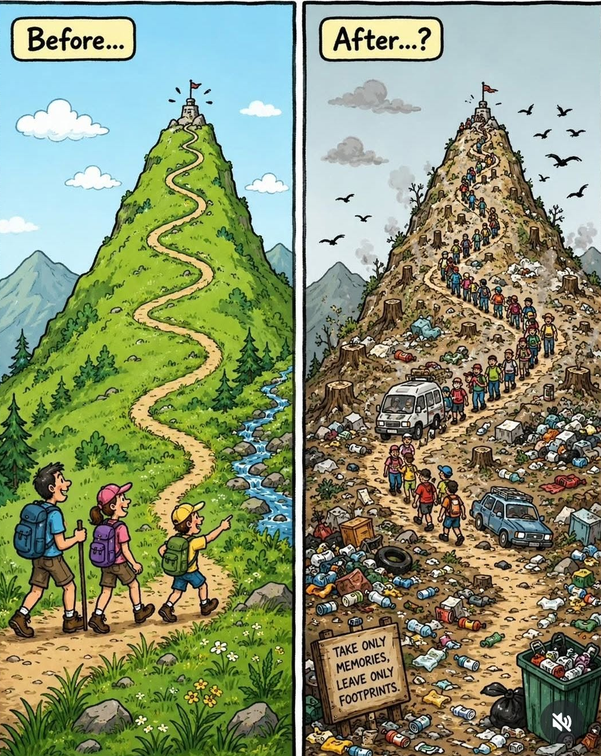
    The pictures show a big change in a natural place because of mass tourism. In the first picture, the mountain is green and clean. There are many trees, flowers, and a small river. A few people walk on the path and enjoy nature. The place looks peaceful and beautiful. Tourists respect the environment and leave the area clean.

    In the second picture, the same place looks very different. Many tourists visit the mountain, and they leave rubbish everywhere. There are many people, cars, and buildings. Trees are cut down, and nature is damaged. The air is dirty, and animals lose their homes. Mass tourism creates many problems because too many people come to the same place.

    Tourism is good because it helps local people and brings money. However, too many tourists can destroy nature. People sometimes throw rubbish, damage plants, and do not respect the environment. A beautiful place can become dirty and unsafe.

    We can avoid these problems in many ways. Tourists should take their rubbish with them and follow the rules. They should walk more and use fewer cars. Governments should limit the number of visitors and protect natural areas. People should remember: “Take only memories, leave only footprints.”

    In conclusion, mass tourism changes places in a bad way when people do not care. We need responsible tourism to keep nature clean and beautiful for the future.

    ____________________________
    Vocabulary:

    to kill – to make a person, animal, or plant die.

    a change – something that becomes different.

    a mountain – very high land.

    a path – a small road for walking.

    to enjoy – to like something and feel happy.

    to be peaceful – to be quiet and calm.

    to respect – to be kind and careful with people or things.

    environment – the natural world around us (air, water, plants, animals).

    to leave an area clean – to make sure a place is clean when you go.

    to leave rubbish – to put trash on the ground and not take it away.

    to cut down trees – to make trees fall with a saw or machine.

    to damage nature – to hurt forests, rivers, animals, or plants.

    to be dirty – to not be clean.

    to create a problem – to make a problem happen.

    to destroy nature – to badly damage forests, rivers, animals, or plants.

    to avoid problems – to stop problems from happening.

    to follow rules – to do what the rules say.

    fewer cars – a smaller number of cars.

    a government – the people who make the rules for a country.

    to limit the number of visitors – to allow only a certain number of people to visit.

    to protect an area – to keep a place safe from damage.

    to remember – to keep something in your mind.

    a memory – something you remember from the past.

    in conclusion – at the end; to finish what you are saying.

    to not care – to not think something is important.

    ##################

    Match the words with the definitions

    Words

    1. to kill
    2. a change
    3. a mountain
    4. a path
    5. to enjoy
    6. to be peaceful
    7. to respect
    8. environment
    9. to leave an area clean
    10. to leave rubbish
    11. to cut down trees
    12. to damage nature
    13. to be dirty
    14. to create a problem
    15. to destroy nature
    16. to avoid problems
    17. to follow rules
    18. fewer cars
    19. a government
    20. to limit the number of visitors
    21. to protect an area
    22. to remember
    23. a memory
    24. in conclusion
    25. to not care

    Definitions

    a. to stop problems from happening
    b. something you remember from the past
    c. to make sure a place is clean when you go
    d. to keep something in your mind
    e. to be kind and careful with people or things
    f. the natural world around us
    g. a small road for walking
    h. to make trees fall with a saw or machine
    i. very high land
    j. the people who make the rules for a country
    k. to make a person, animal, or plant die
    l. at the end; to finish what you are saying
    m. to make a problem happen
    n. to keep a place safe from damage
    o. to badly damage forests, rivers, animals, or plants
    p. to not think something is important
    q. to allow only a certain number of people to visit
    r. to be quiet and calm
    s. a smaller number of cars
    t. to hurt forests, rivers, animals, or plants
    u. to put trash on the ground and not take it away
    v. to like something and feel happy
    w. to do what the rules say
    x. something that becomes different
    y. to not be clean

    ________________________

    Answers:
    1-k, 2-x, 3-i, 4-g, 5-v, 6-r, 7-e,
    8-f, 9-c, 10-u, 11-h, 12-t, 13-y,
    14-m, 15-o, 16-a, 17-w, 18-s, 19-j,
    20-q, 21-n, 22-d, 23-b, 24-l, 25-p

    #################

    Match the definitions with the words

    Definitions

    1. to make a person, animal, or plant die
    2. to badly damage forests, rivers, animals, or plants
    3. to stop problems from happening
    4. the natural world around us
    5. to be kind and careful with people or things
    6. to put trash on the ground and not take it away
    7. to make sure a place is clean when you go
    8. to make trees fall with a saw or machine
    9. to make a problem happen
    10. to not be clean
    11. to keep a place safe from damage
    12. to allow only a certain number of people to visit
    13. to do what the rules say
    14. a smaller number of cars
    15. the people who make the rules for a country
    16. something that becomes different
    17. very high land
    18. a small road for walking
    19. to like something and feel happy
    20. to be quiet and calm
    21. to keep something in your mind
    22. something you remember from the past
    23. at the end; to finish what you are saying
    24. to not think something is important
    25. to hurt forests, rivers, animals, or plants

    Words

    a. to follow rules
    b. to be peaceful
    c. to remember
    d. a government
    e. a memory
    f. to enjoy
    g. to create a problem
    h. to leave an area clean
    i. a mountain
    j. to avoid problems
    k. to respect
    l. to damage nature
    m. a path
    n. to protect an area
    o. environment
    p. fewer cars
    q. to cut down trees
    r. to not care
    s. a change
    t. to kill
    u. in conclusion
    v. to destroy nature
    w. to leave rubbish
    x. to be dirty
    y. to limit the number of visitors

    ______________________

    Answers:

    1-t, 2-v, 3-j, 4-o, 5-k, 6-w, 7-h, 8-q,
    9-g, 10-x, 11-n, 12-y, 13-a, 14-p,
    15-d, 16-s, 17-i, 18-m, 19-f, 20-b,
    21-c, 22-e, 23-u, 24-r, 25-l

    ################

    Fill in, words below:

    memory • follow rules • mountain • damage nature • fewer cars • enjoy • leave rubbish • government • peaceful • kill • avoid problems • path • protect an area • change • respect • leave an area clean • environment • destroy nature • cut down trees • create a problem

    1. People should not __________ animals because all living things are important.
    2. Climate __________ is affecting our planet.
    3. Mount Everest is the highest __________ in the world.
    4. We walked along a small __________ in the forest.
    5. Many people __________ spending time in nature.
    6. The forest is quiet and __________ in the morning.
    7. We should always __________ nature and animals.
    8. The __________ is important for people, animals, and plants.
    9. Visitors should __________ after having a picnic.
    10. People should not __________ in forests because it makes places dirty.
    11. People should not __________ because trees are important for nature.
    12. Plastic waste can __________ and hurt animals and plants.
    13. Pollution can __________ if people do not care about the environment.
    14. We should recycle to __________ in the future.
    15. National parks __________ and keep plants and animals safe.
    16. Visitors must __________ when they visit protected places.
    17. Cities with __________ often have cleaner air.
    18. The __________ makes laws for the country.
    19. People should not __________ because nature is important.
    20. I have a happy __________ of my visit to the mountains.

    ————————————-

    Correct version:

    1. People should not kill animals because all living things are important.
    2. Climate change is affecting our planet.
    3. Mount Everest is the highest mountain in the world.
    4. We walked along a small path in the forest.
    5. Many people enjoy spending time in nature.
    6. The forest is quiet and peaceful in the morning.
    7. We should always respect nature and animals.
    8. The environment is important for people, animals, and plants.
    9. Visitors should leave an area clean after having a picnic.
    10. People should not leave rubbish in forests because it makes places dirty.
    11. People should not cut down trees because trees are important for nature.
    12. Plastic waste can damage nature and hurt animals and plants.
    13. Pollution can create a problem if people do not care about the environment.
    14. We should recycle to avoid problems in the future.
    15. National parks protect an area and keep plants and animals safe.
    16. Visitors must follow rules when they visit protected places.
    17. Cities with fewer cars often have cleaner air.
    18. The government makes laws for the country.
    19. People should not destroy nature because nature is important.
    20. I have a happy memory of my visit to the mountains.

    ####################

    Which answer is correct?

    1. People should not ______ animals because every living thing is important.
      a) kill
      b) respect
      c) enjoy
    2. Climate ______ is affecting our planet.
      a) memory
      b) change
      c) environment
    3. Mount Everest is the highest ______ in the world.
      a) path
      b) memory
      c) mountain
    4. We walked along a small ______ in the forest.
      a) path
      b) environment
      c) mountain
    5. Many people ______ spending time in nature.
      a) respect
      b) enjoy
      c) follow rules
    6. The forest is quiet and ______ in the morning.
      a) environment
      b) memory
      c) peaceful
    7. We should always ______ nature and animals.
      a) damage nature
      b) enjoy
      c) respect
    8. The ______ is important for people, animals, and plants.
      a) environment
      b) government
      c) mountain
    9. People should not ______ in forests because it makes places dirty.
      a) cut down trees
      b) leave rubbish
      c) destroy nature
    10. People should not ______ because forests are important.
      a) protect an area
      b) leave an area clean
      c) cut down trees
    11. Plastic waste can ______ and hurt animals and plants.
      a) avoid problems
      b) follow rules
      c) damage nature
    12. Pollution can ______ if people do not care about nature.
      a) create a problem
      b) protect an area
      c) respect
    13. People should not ______ because nature is important.
      a) leave rubbish
      b) destroy nature
      c) enjoy
    14. We should recycle to ______ in the future.
      a) damage nature
      b) create a problem
      c) avoid problems
    15. Visitors must ______ when they visit protected places.
      a) leave rubbish
      b) follow rules
      c) kill
    16. Cities with ______ often have cleaner air.
      a) more rubbish
      b) more problems
      c) fewer cars
    17. The ______ makes laws for the country.
      a) government
      b) memory
      c) path
    18. National parks ______ and keep plants and animals safe.
      a) destroy nature
      b) protect an area
      c) cut down trees
    19. I have a happy ______ of my visit to the mountains.
      a) change
      b) memory
      c) mountain
    20. Visitors should ______ after having a picnic.
      a) leave an area clean
      b) leave rubbish
      c) damage nature

    ————————————-

    Answers:

    1-a, 2-b, 3-c, 4-a, 5-b, 6-c, 7-c,
    8-a, 9-b, 10-c, 11-c, 12-a, 13-b, 14-c,
    15-b, 16-c, 17-a, 18-b, 19-b, 20-a

    ________________________

    Full version:

    1. People should not kill animals because every living thing is important.
    2. Climate change is affecting [to change or influence someone or something] our planet.
    3. Mount Everest is the highest mountain in the world.
    4. We walked along a small path in the forest.
    5. Many people enjoy spending time in nature.
    6. The forest is quiet and peaceful in the morning.
    7. We should always respect nature and animals.
    8. The environment is important for people, animals, and plants.
    9. People should not leave rubbish in forests because it makes places dirty.
    10. People should not cut down trees because forests are important.
    11. Plastic waste can damage nature and hurt animals and plants.
    12. Pollution can create a problem if people do not care about nature.
    13. People should not destroy nature because nature is important.
    14. We should recycle to avoid problems in the future.
    15. Visitors must follow rules when they visit protected places.
    16. Cities with fewer cars often have cleaner air.
    17. The government makes laws for the country.
    18. National parks protect an area and keep plants and animals safe.
    19. I have a happy memory of my visit to the mountains.
    20. Visitors should leave an area clean after having a picnic.

    ####################

    True or false:

    1. People should respect nature and animals.
    2. Leaving rubbish in forests helps the environment.
    3. A mountain is a very high place on Earth.
    4. The government makes laws for a country.
    5. Destroying nature helps plants and animals.
    6. A path is a small road for walking.
    7. Fewer cars can help make the air cleaner.
    8. To kill means to help something live.
    9. A peaceful place is usually noisy and full of problems.
    10. A memory is something that will happen in the future.
    11. Visitors should leave an area clean after a picnic.
    12. To damage nature means to hurt plants, animals, or the environment.
    13. Following rules creates more problems.
    14. To enjoy something means to dislike it.

    _______________________

    True: 1,3,4,6,7,11,12

    ________________________

    Full version:

    1. People should respect nature and animals.
    2. Leaving rubbish in forests helps the environment.
      False – True is: Leaving rubbish in forests damages the environment.
    3. A mountain is a very high place on Earth.
    4. The government makes laws for a country.
    5. Destroying nature helps plants and animals.
      False – True is: Destroying nature hurts plants and animals.
    6. A path is a small road for walking.
    7. Fewer cars can help make the air cleaner.
    8. To kill means to help something live.
      False – True is: To kill means to make something die.
    9. A peaceful place is usually noisy and full of problems.
      False – True is: A peaceful place is usually quiet and calm.
    10. A memory is something that will happen in the future.
      False – True is: A memory is something you remember from the past.
    11. Visitors should leave an area clean after a picnic.
    12. To damage nature means to hurt plants, animals, or the environment.
    13. Following rules creates more problems.
      False – True is: Following rules helps avoid problems.
    14. To enjoy something means to dislike it.
      False – True is: To enjoy something means to like it and feel happy.

    #################

    Match the questions with the answers.

    Questions

    1. What does it mean to kill?
    2. What is a path?
    3. What is the environment?
    4. Why should people leave an area clean?
    5. What does it mean to damage nature?
    6. What does a government do?
    7. Why should people follow rules?
    8. What is a memory?
    9. What does it mean to protect an area?
    10. Why should people avoid problems?
    11. What does it mean to destroy nature?
    12. Why are fewer cars good for the environment?

    Answers

    a) It means to keep a place safe from damage.

    b) It is something you remember from the past.

    c) Because they help make the air cleaner.

    d) It means to make something die.

    e) It means to hurt forests, animals, plants, or the environment.

    f) It means to badly damage nature.

    g) It makes laws and rules for a country.

    h) It is a small road for walking.

    i) Because it helps keep places clean.

    j) It means to stop problems from happening.

    k) Because rules help protect places and people.

    l) It is the natural world around us.

    _________________________

    Answers:

    1-d, 2-h, 3-l, 4-i, 5-e, 6-g,
    7-k, 8-b, 9-a, 10-j, 11-f, 12-c

    ________________________

    Full version:

    1. Why should we respect nature? — Because nature, animals, and plants are important.
    2. What is the environment? — It is the natural world around us.
    3. What is a path? — It is a small road for walking.
    4. Why should people leave an area clean? — Because we should not leave rubbish in nature.
    5. What does it mean to damage nature? — It means to hurt plants, animals, and the environment.
    6. What does the government do? — It makes laws and rules for a country.
    7. Why should people follow rules? — Because rules help protect places and people.
    8. What is a memory? — It is something you remember from the past.
    9. What does it mean to protect an area? — It means to keep a place safe from damage.
    10. Why should people avoid problems? — It means to stop problems from happening.
    11. What does it mean to destroy nature? — It means to badly damage nature.
    12. Why are fewer cars good for the environment? — Because fewer cars can help make the air cleaner.

    #################

    Find the word that does not belong

    1. mountain • path • government • memory
    2. respect • enjoy • change • kill
    3. environment • fewer cars • peaceful • mountain
    4. leave rubbish • mountain • leave an area clean • follow rules
    5. damage nature • protect an area • enjoy • destroy nature
    6. government • cut down trees • damage nature • kill
    7. avoid problems • memory • follow rules • create a problem
    8. change • respect • protect an area • enjoy
    9. fewer cars • path • environment • mountain
    10. peaceful • government • memory • change

    _________________________

    Answers:

    1. government – it is not connected to nature or places.
    2. change – it is not an action related to people or nature.
    3. mountain – it is a place, while the others describe nature conditions or ideas.
    4. mountain – it is a place, while the others are actions/rules for protecting nature.
    5. enjoy – it is positive, while the others are connected to protecting or harming nature.
    6. government – it is not an action connected to nature.
    7. memory – it is something from the past, while the others are actions.
    8. change – it is not an action connected to nature or behaviour.
    9. fewer cars – it is about transport, while the others are places in nature.
    10. peaceful – it describes a feeling/place, while the others are things or ideas.

    #################

    Match the beginning and ending

    Beginnings

    1. People should respect…
    2. We should not cut down…
    3. Visitors should leave…
    4. Fewer cars can help…
    5. Following rules helps…
    6. A memory is something…
    7. We should protect…
    8. People should avoid…
    9. We should not leave…
    10. The government makes…

    Endings

    a) laws and rules for a country.

    b) problems in nature.

    c) rubbish in forests.

    d) trees because forests are important.

    e) nature and animals.

    f) the air become cleaner.

    g) an area to keep it safe.

    h) you remember from the past.

    i) an area clean after a picnic.

    j) problems by following rules.

    _________________________

    Answers:

    1-e, 2-d, 3-i, 4-f, 5-j, 6-h,
    7-g, 8-b, 9-c, 10-a

    ##################

    CHALLENGE – no words given

    1. People should not __________ animals because all living things are important.
    2. Climate __________ is affecting the environment.
    3. Mount Everest is the highest __________ in the world.
    4. We walked along a small __________ in the forest.
    5. Many people __________ visiting beautiful places in nature.
    6. The forest is quiet and __________ in the morning.
    7. We should always __________ nature and animals.
    8. The __________ is important for people, animals, and plants.
    9. Visitors should __________ after having a picnic.
    10. People should not __________ in forests because it makes places dirty.
    11. People should not __________ because trees are important for nature.
    12. Pollution can __________ and hurt plants and animals.
    13. We should recycle to __________ in the future.
    14. National parks __________ and keep animals and plants safe.
    15. I have a happy __________ of my visit to the mountains.

    ——————————-
    Full version:

    1. People should not kill animals because all living things are important.
    2. Climate change is affecting the environment.
    3. Mount Everest is the highest mountain in the world.
    4. We walked along a small path in the forest.
    5. Many people enjoy visiting beautiful places in nature.
    6. The forest is quiet and peaceful in the morning.
    7. We should always respect nature and animals.
    8. The environment is important for people, animals, and plants.
    9. Visitors should leave an area clean after having a picnic.
    10. People should not leave rubbish in forests because it makes places dirty.
    11. People should not cut down trees because trees are important for nature.
    12. Pollution can damage nature and hurt plants and animals.
    13. We should recycle to avoid problems in the future.
    14. National parks protect an area and keep animals and plants safe.
    15. I have a happy memory of my visit to the mountains.

    #################

    Please use the box below
    to write your feedback.
    Only I can read it.
    It is not public.

    Please tell me:

    • Are the texts and exercises OK?
    • Are the topics OK?
    • Is the level OK?
    • Is it too easy or too difficult?
    • Do you want texts about other topics?

    Thank you! I appreciate your feedback.
  • 💁‍♀️🐶😍Your twelfth English text for beginners – Lina’s dream, manager in a ***** hotel (A1 beginners, part 12/13,💁‍♀️🐶😍)

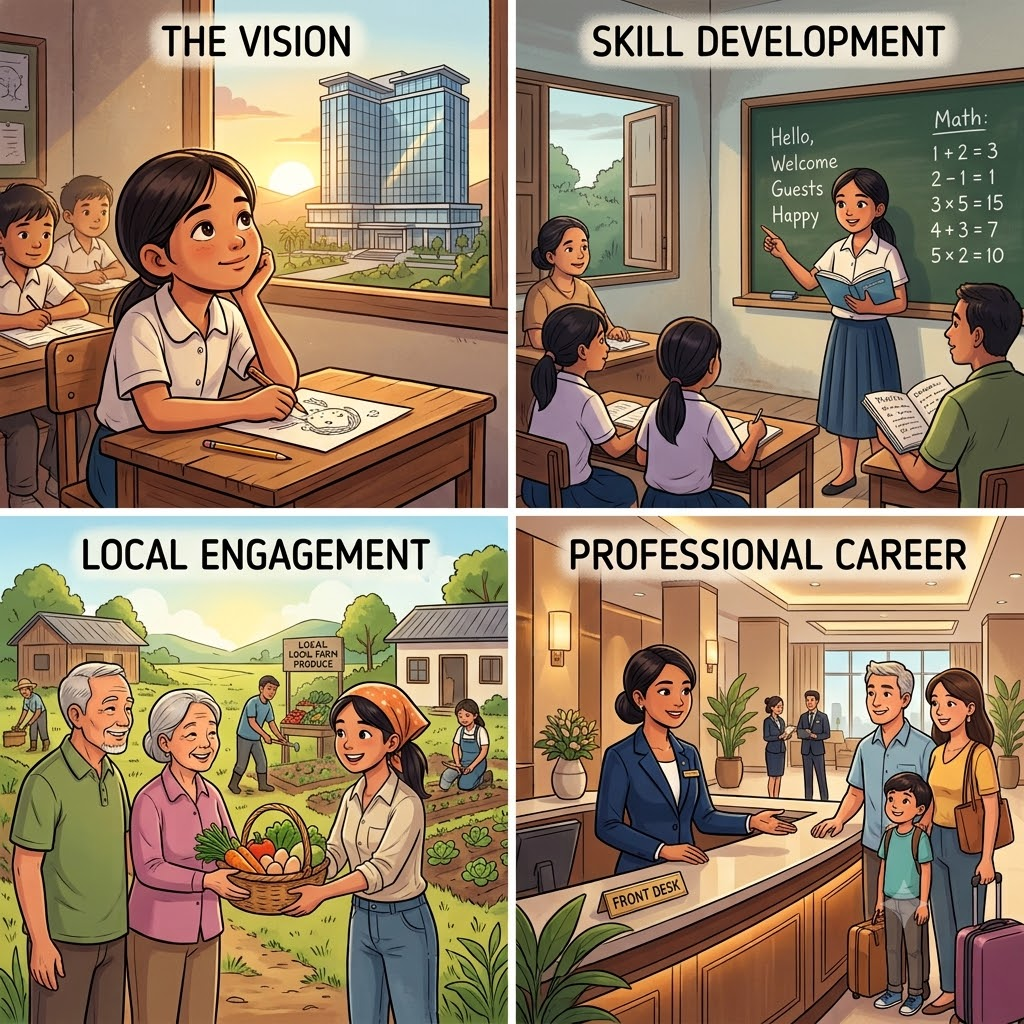
    Lina has a big dream. She wants to work in a big five star hotel one day. She likes hotels because they are clean, nice, and beautiful. She wants to help people and make guests happy. She knows a good hotel worker must be kind, friendly, and helpful.

    Lina works hard for her dream. She learns English at school because she wants to speak with hotel guests. She learns new words and speaks English every day. She also learns maths because she needs to use numbers and money at work.

    At home, Lina learns things for her future job. She helps her family on the farm and does her work every day. She makes small plans and finishes her jobs on time. She is nice to visitors and listens to other people.

    Lina knows a good manager must be calm and ready to help. She learns something new every day. She works hard because she wants to be a hotel manager in the future.

    _________________________

    Vocabulary:

    Word / PhraseA1 English definition
    a dreamsomething you want to do in the future
    to be kindto be nice to people
    to be helpfulto help people
    to work hardto try a lot and do your best
    to use numbersto work with numbers
    moneythings you use to buy things
    at homein your house
    a future joba job you want to have later
    to make a planto decide what to do
    to finish on timeto finish before the time ends
    a visitora person who comes to a place
    to be calmto be quiet and relaxed

    #######################

    Match the word with the definition

    Words

    1. a dream
    2. to be kind
    3. to be helpful
    4. to work hard
    5. to use numbers
    6. money
    7. at home
    8. a future job
    9. to make a plan
    10. to finish on time
    11. a visitor
    12. to be calm

    Definitions

    A. to complete something before the time ends
    B. things you use to buy things
    C. to help people
    D. something you want to do in the future
    E. a person who comes to a place
    F. to decide what to do
    G. in your house
    H. to be nice to people
    I. a job you want to have later
    J. to try a lot and do your best
    K. to work with numbers
    L. to be quiet and relaxed

    _________________________

    Answers:
    1-D, 2-H, 3-C, 4-J, 5-K, 6-B,
    7-G, 8-I, 9-F, 10-A, 11-E, 12-L

    #################

    Match the definition with the word

    Definitions

    1. to be quiet and relaxed
    2. a job you want to have later
    3. to help people
    4. things you use to buy things
    5. to decide what to do
    6. to be nice to people
    7. to work with numbers
    8. something you want to do in the future
    9. to finish before the time ends
    10. to try a lot and do your best
    11. a person who comes to a place
    12. in your house

    Words

    A. money
    B. to make a plan
    C. a visitor
    D. to be helpful
    E. a future job
    F. at home
    G. to work hard
    H. to be calm
    I. a dream
    J. to use numbers
    K. to be kind
    L. to finish on time

    __________________________

    Answers:
    1-H, 2-E, 3-D, 4-A, 5-B, 6-K,
    7-J, 8-I, 9-L, 10-G, 11-C, 12-F

    ##################

    Fill in, words below:

    farm, beautiful, guests, plans, calm, happy,
    dream, people, home, kind, manager,
    numbers, hard, new,
    visitors

    1. Lina has a big ______ to work in a big hotel one day.
    2. Lina wants to be a hotel ______ in the future.
    3. Lina is ______ and helpful to people.
    4. Lina works ______ for her dream.
    5. Lina learns English because she wants to speak with hotel ______.
    6. Lina learns maths because she needs to use ______ and money at work.
    7. Lina learns things for her future job at ______.
    8. Lina makes small ______ and finishes her jobs on time.
    9. Lina is nice to ______.
    10. Lina listens to other ______.
    11. A good manager must be ______ and ready to help.
    12. Lina learns something ______ every day.
    13. Lina helps her family on the ______.
    14. Lina wants to make guests ______.
    15. Lina likes hotels because they are clean, nice, and ______.

    ——————————————

    Full version:

    1. Lina has a big dream to work in a big hotel one day.
    2. Lina wants to be a hotel manager in the future.
    3. Lina is kind and helpful to people.
    4. Lina works hard for her dream.
    5. Lina learns English because she wants to speak with hotel guests.
    6. Lina learns maths because she needs to use numbers and money at work.
    7. Lina learns things for her future job at home.
    8. Lina makes small plans and finishes her jobs on time.
    9. Lina is nice to visitors.
    10. Lina listens to other people.
    11. A good manager must be calm and ready to help.
    12. Lina learns something new every day.
    13. Lina helps her family on the farm.
    14. Lina wants to make guests happy.
    15. Lina likes hotels because they are clean, nice, and beautiful.

    ###################

    Choose the correct answer

    1. Lina has a big ______.
      a) dream
      b) money
      c) visitor
    2. Lina wants to work in a big ______ one day.
      a) farm
      b) hotel
      c) school
    3. Lina learns ______ because she wants to speak with hotel guests.
      a) maths
      b) money
      c) English
    4. A good hotel worker must be ______.
      a) kind
      b) numbers
      c) plans
    5. Lina helps her family on the ______.
      a) hotel
      b) farm
      c) school
    6. Lina needs to use numbers and ______ at work.
      a) visitors
      b) guests
      c) money
    7. Lina makes small ______.
      a) plans
      b) numbers
      c) hotels
    8. Lina is nice to ______.
      a) managers
      b) visitors
      c) money
    9. Lina listens to other ______.
      a) hotels
      b) jobs
      c) people
    10. Lina wants to be a hotel ______ in the future.
      a) guest
      b) visitor
      c) manager
    11. Lina works ______ for her dream.
      a) hard
      b) calm
      c) beautiful
    12. Lina learns something ______ every day.
      a) happy
      b) new
      c) big
    13. Lina wants to make guests ______.
      a) calm
      b) helpful
      c) happy
    14. Hotels are clean, nice, and ______.
      a) beautiful
      b) friendly
      c) new
    15. A good manager must be ______ and ready to help.
      a) hard
      b) calm
      c) beautiful
    16. Lina learns maths because she uses ______ at work.
      a) numbers
      b) visitors
      c) guests
    17. Lina finishes her jobs ______.
      a) at home
      b) every day
      c) on time
    18. Lina learns things for her future ______.
      a) money
      b) job
      c) visitor
    19. Lina wants to help ______.
      a) people
      b) hotels
      c) numbers
    20. A good hotel worker must be kind, friendly, and ______.
      a) beautiful
      b) calm
      c) helpful

    ———————————————

    Answers:
    1-a, 2-b, 3-c, 4-a, 5-b, 6-c, 7-a, 8-b,
    9-c, 10-c, 11-a, 12-b, 13-c, 14-a,
    15-b, 16-a, 17-c, 18-b, 19-a, 20-c
    ___________________________

    Full version:

    Lina has a big dream.

    Lina wants to work in a big hotel one day.

    Lina learns English because she wants to speak with hotel guests.

    A good hotel worker must be kind.

    Lina helps her family on the farm.

    Lina needs to use numbers and money at work.

    Lina makes small plans.

    Lina is nice to visitors.

    Lina listens to other people.

    Lina wants to be a hotel manager in the future.

    Lina works hard for her dream.

    Lina learns something new every day.

    Lina wants to make guests happy.

    Hotels are clean, nice, and beautiful.

    A good manager must be calm and ready to help.

    Lina learns maths because she uses numbers at work.

    Lina finishes her jobs on time.

    Lina learns things for her future job.

    Lina wants to help people.

    A good hotel worker must be kind, friendly, and helpful.

    ######################
    True or False:

    1. Lina has a big dream to work in a big hotel one day.
    2. Lina learns English because she wants to speak with hotel guests.
    3. Lina wants to work on the farm as a hotel manager.
    4. Lina works hard for her dream.
    5. Lina learns maths because she wants to speak with hotel guests.
    6. Lina needs to use numbers and money at work.
    7. Lina learns English because she wants to use numbers.
    8. Lina learns things for her future job at home.
    9. Lina helps her family at the hotel.
    10. Lina is nice to visitors.
    11. Lina is a hotel manager now.
    12. A good manager must be beautiful and ready to help.
    13. A good manager must be calm and ready to help.
    14. Lina makes small visitors and finishes her jobs on time.
    15. Lina wants to make guests happy.
    16. Lina wants to be a hotel visitor in the future.

    ____________________________

    Answers:
    1-T, 2-T, 3-F, 4-T, 5-F, 6-T, 7-F,
    8-T, 9-F, 10-T, 11-F, 12-F, 13-T,
    14-F, 15-T, 16-F

    ___________________________

    Correct version:

    1. Lina has a big dream to work in a big hotel one day.
    2. Lina learns English because she wants to speak with hotel guests.
    3. Lina wants to work on the farm as a hotel manager. True is: Lina helps her family on the farm.
    4. Lina works hard for her dream.
    5. Lina learns maths because she wants to speak with hotel guests. True is: Lina learns English because she wants to speak with hotel guests.
    6. Lina needs to use numbers and money at work.
    7. Lina learns English because she wants to use numbers. True is: Lina learns maths because she needs to use numbers and money at work.
    8. Lina learns things for her future job at home.
    9. Lina helps her family at the hotel. True is: Lina helps her family on the farm.
    10. Lina is nice to visitors.
    11. Lina is a hotel manager now. True is: Lina wants to be a hotel manager in the future.
    12. A good manager must be beautiful and ready to help. True is: A good manager must be calm and ready to help.
    13. A good manager must be calm and ready to help.
    14. Lina makes small visitors and finishes her jobs on time. True is: Lina makes small plans and finishes her jobs on time.
    15. Lina wants to make guests happy.
    16. Lina wants to be a hotel visitor in the future. True is: Lina wants to be a hotel manager in the future.

    #########################

    Put the sentences into the correct order, as shown in text:

    A. Lina works hard for her dream.
    B. Lina has a big dream to work in a big hotel one day.
    C. Lina makes small plans and finishes her jobs on time.
    D. Lina learns English at school because she wants to speak with hotel guests.
    E. Lina wants to be a hotel manager in the future.

    _________________________________

    Answers: 1-B, 2-A, 3-D, 4-C, 5-E

    _________________________________
    Correct order:

    A. Lina works hard for her dream.
    B. Lina has a big dream to work in a big hotel one day.
    C. Lina makes small plans and finishes her jobs on time.
    D. Lina learns English at school because she wants to speak with hotel guests.
    E. Lina wants to be a hotel manager in the future.

    ######################

    Match the questions with the answers

    Questions

    1. What is Lina’s big dream?
    2. Why does Lina like hotels?
    3. What must a good hotel worker be?
    4. Why does Lina learn English?
    5. What does Lina learn in maths?
    6. Where does Lina learn things for her future job?
    7. What does Lina do for her family on the farm?
    8. What does Lina make and finish on time?
    9. What must a good manager be?
    10. What does Lina want to be in the future?

    Answers

    A. She makes small plans and finishes her jobs on time.
    B. She wants to be a hotel manager.
    C. She learns numbers and money.
    D. She wants to work in a big hotel one day.
    E. She learns things at home.
    F. A good manager must be calm and ready to help.
    G. She helps her family on the farm.
    H. Hotels are clean, nice, and beautiful.
    I. A good hotel worker must be kind, friendly, and helpful.
    J. She learns English because she wants to speak with hotel guests.

    ________________________________

    Answers:
    1-D, 2-H, 3-I, 4-J, 5-C,
    6-E, 7-G, 8-A, 9-F, 10-B

    #######################

    Match the questions with the answers

    1. What is Lina’s big dream?
      D. She wants to work in a big hotel one day.
    2. Why does Lina like hotels?
      H. Hotels are clean, nice, and beautiful.
    3. What must a good hotel worker be?
      I. A good hotel worker must be kind, friendly, and helpful.
    4. Why does Lina learn English?
      J. She learns English because she wants to speak with hotel guests.
    5. What does Lina learn in maths?
      C. She learns numbers and money.
    6. Where does Lina learn things for her future job?
      E. She learns things at home.
    7. What does Lina do for her family on the farm?
      G. She helps her family on the farm.
    8. What does Lina make and finish on time?
      A. She makes small plans and finishes her jobs on time.
    9. What must a good manager be?
      F. A good manager must be calm and ready to help.
    10. What does Lina want to be in the future?
      B. She wants to be a hotel manager.

    #####################

    Answer the questions with: Yes, she does. / No, she doesn’t.

    1. Does Lina want to work in a big hotel one day?
    2. Does Lina work in a school?
    3. Does Lina learn English at school?
    4. Does Lina like hotels that are dirty?
    5. Does Lina learn maths?
    6. Does Lina help her family on the farm?
    7. Does Lina want to be a teacher?
    8. Does Lina make small plans?
    9. Does Lina work in a hotel now?
    10. Does Lina learn English because she wants to use money?
    11. Does Lina want to make guests happy?
    12. Does Lina live on a farm?
    13. Does Lina want to be a hotel visitor in the future?
    14. Does Lina learn something new every day?

    ____________________________

    Correct answers:

    1. Does Lina want to work in a big hotel one day? — Yes, she does.
    2. Does Lina work in a school? — No, she doesn’t.
    3. Does Lina learn English at school? — Yes, she does.
    4. Does Lina like hotels that are dirty? — No, she doesn’t.
    5. Does Lina learn maths? — Yes, she does.
    6. Does Lina help her family on the farm? — Yes, she does.
    7. Does Lina want to be a teacher? — No, she doesn’t.
    8. Does Lina make small plans? — Yes, she does.
    9. Does Lina work in a hotel now? — No, she doesn’t.
    10. Does Lina learn English because she wants to use money? — No, she doesn’t.
    11. Does Lina want to make guests happy? — Yes, she does.
    12. Does Lina live on a farm? — No, she doesn’t.
    13. Does Lina want to be a hotel visitor in the future? — No, she doesn’t.
    14. Does Lina learn something new every day? — Yes, she does.

    #######################

    Fill in, no words given 😉

    Interview with Lina

    Interviewer: What is your _______, Lina?
    Lina: I want to work in a big hotel one day.

    Interviewer: Why do you like hotels?
    Lina: I like hotels because they are clean, nice, and _______

    Interviewer: What do you want to do at a hotel?
    Lina: I want to help people and make guests _______.

    Interviewer: What must a hotel worker be?
    Lina: A hotel worker must be______, friendly, and helpful.

    Interviewer: Where do you learn English?
    Lina: I learn English _______.

    Interviewer: Why do you learn English?
    Lina: I learn English because I want to _______with hotel guests.

    Interviewer: What do you learn in maths?
    Lina: I learn _______and money.

    Interviewer: Where do you learn things for your _______?
    Lina: I learn things at home.

    Interviewer: What do you do on the farm?
    Lina: I ________ my family on the farm.

    Interviewer: What do you make?
    Lina: I make small _______

    Interviewer: Who do you listen to?
    Lina: I listen to other _______.

    Interviewer: What must a good manager be?
    Lina: A good manager must be calm and _______.

    Interviewer: When do you learn new things?
    Lina: I learn something _______ every day.

    Interviewer: What do you want to be?
    Lina: I want to be a _______ in the future.

    ________________________________

    Full version:

    Interview with Lina

    Interviewer: What is your dream, Lina?
    Lina: I want to work in a big hotel one day.

    Interviewer: Why do you like hotels?
    Lina: I like hotels because they are clean, nice, and beautiful.

    Interviewer: What do you want to do at a hotel?
    Lina: I want to help people and make guests happy.

    Interviewer: What must a hotel worker be?
    Lina: A hotel worker must be kind, friendly, and helpful.

    Interviewer: Where do you learn English?
    Lina: I learn English at school.

    Interviewer: Why do you learn English?
    Lina: I learn English because I want to speak with hotel guests.

    Interviewer: What do you learn in maths?
    Lina: I learn numbers and money.

    Interviewer: Where do you learn things for your job?
    Lina: I learn things at home.

    Interviewer: What do you do on the farm?
    Lina: I help my family on the farm.

    Interviewer: What do you make?
    Lina: I make small plans.

    Interviewer: Who do you listen to?
    Lina: I listen to other people.

    Interviewer: What must a good manager be?
    Lina: A good manager must be calm and helpful.

    Interviewer: When do you learn new things?
    Lina: I learn something new every day.

    Interviewer: What do you want to be?
    Lina: I want to be a hotel manager in the future.

    #######################

    Please use the box below
    to write your feedback.
    Only I can read it.
    It is not public.

    Please tell me:

    • Are the texts and exercises OK?
    • Are the topics OK?
    • Is the level OK?
    • Is it too easy or too difficult?
    • Do you want texts about other topics?

    Thank you! I appreciate your feedback.
    ##################

    ##################

    ##################

    Remember how babies learn a language:

    Babies learn a language by listening.
    They use their ears to hear sounds.
    Their brain remembers these sounds.
    Babies connect sounds with people and things.
    They listen to their parents.
    Then they copy the sounds they hear. They imitate words.
    Slowly, babies learn to speak.


    So,
    LISTEN, LISTEN, LISTEN, LISTEN………………

  • 💁‍♀️🐶😍Your eleventh English text for ‚very‘ beginners – Lina and Salas, visiting relatives (A1 beginners, part 11/13)💁‍♀️🐶😍1)

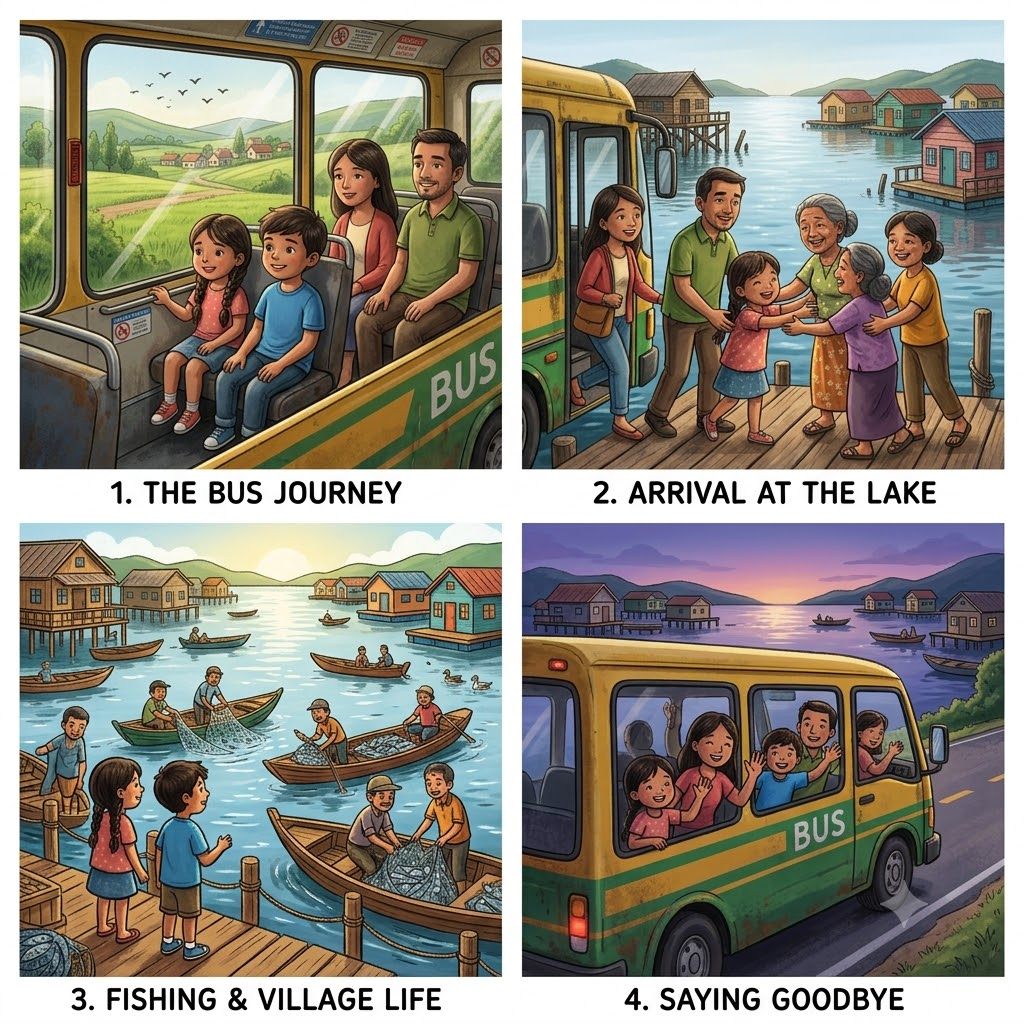
    Lina and Salas are siblings. Every year, they visit their relatives. Their relatives live on a big lake. Some live in stilted houses. The houses are on long wooden poles over the water. Other relatives live in floating houses. These houses stay on the water and move a little with the wind.

    First, Lina, Salas, their mother, and their father go by bus. The bus ride is long, but it is nice. They look out of the window. They see green fields, trees, small villages, and many birds. At last, they arrive at the lake. Their relatives are happy to see them.

    The relatives live by fishing. Every morning, they go out in small boats. They catch fish in the lake. Lina and Salas watch them. Sometimes they help to carry the fish. Their mother cooks fresh fish for lunch. Their father talks and laughs with the family. In the afternoon, Lina and Salas play near the water. They watch the boats and feed the ducks.

    They stay for three days. Then they say goodbye and go home by bus. They are tired but happy. Every year, they make the same trip because they love their family and the beautiful lake.

    ___________________________

    Vocabulary:

    Word / PhraseDefinition
    relativespeople in your family, like your grandparents, aunts, uncles, or cousins
    siblingsyour brothers and sisters
    to visitto go and see a person or a place
    a stilted housea house that stands on tall poles above the ground or water
    a polea long, thin piece of wood, metal, or other material
    a floating housea house that stays on water and moves a little
    to ride a busto travel by bus
    at lastfinally; after a long time
    a lakea large area of water with land around it
    to live by fishingto get food or money by catching fish
    to catch fishto take fish out of water, usually with a net or a fishing rod
    to carry somethingto hold and move something from one place to another
    to feed the ducksto give food to ducks
    to stay for three daysto remain in a place for three days
    to be tiredto need rest because you have used a lot of energy

    ##################

    Match the words with the definitions

    1. relatives
    2. siblings
    3. to visit
    4. a stilted house
    5. a pole
    6. a floating house
    7. to ride a bus
    8. at last
    9. a lake
    10. to live by fishing
    11. to catch fish
    12. to carry something
    13. to feed the ducks
    14. to stay for three days
    15. to be tired

    A. to give food to ducks
    B. a large area of water with land around it
    C. to travel by bus
    D. to hold and move something from one place to another
    E. people in your family, like grandparents, aunts, uncles, or cousins
    F. a house that stays on water
    G. to get food or money by catching fish
    H. to need rest because you have used a lot of energy
    I. your brothers and sisters
    J. a long, thin piece of wood, metal, or other material
    K. to remain in a place for three days
    L. finally, after a long time
    M. to go and see a person or place
    N. to take fish out of water
    O. a house that stands on tall poles above the ground or water

    __________________________

    Answers:
    1-E, 2-I, 3-M, 4-O, 5-J, 6-F,
    7-C, 8-L, 9-B, 10-G, 11-N,
    12-D, 13-A, 14-K, 15-H

    ##################

    Match the words with the definitions :

    1. relatives
    2. siblings
    3. to visit
    4. a stilted house
    5. a pole
    6. a floating house
    7. to ride a bus
    8. at last
    9. a lake
    10. to live by fishing
    11. to catch fish
    12. to carry something
    13. to feed the ducks
    14. to stay for three days
    15. to be tired

    A. to give food to ducks
    B. a large area of water with land around it
    C. to travel by bus
    D. to hold and move something from one place to another
    E. people in your family, like grandparents, aunts, uncles, or cousins
    F. a house that stays on water
    G. to get food or money by catching fish
    H. to need rest because you have used a lot of energy
    I. your brothers and sisters
    J. a long, thin piece of wood, metal, or other material
    K. to remain in a place for three days
    L. finally, after a long time
    M. to go and see a person or place
    N. to take fish out of water
    O. a house that stands on tall poles above the ground or water

    ________________________

    Answers:
    1-E, 2-I, 3-M, 4-O, 5-J, 6-F,
    7-C, 8-L, 9-B, 10-G, 11-N,
    12-D, 13-A, 14-K, 15-H

    #################

    Fill in, words below:

    travel – siblings – family – relatives – poles – lake – by – bus –
    floating – catch – feed – wind – mother – window –
    boats – stilted – children –
    long – birds –
    fishing

    1. Lina and Salas are _______ who visit their relatives every year.
    2. Their relatives live on a big _______
    3. Some of their relatives live in _______ houses.
    4. The houses are built on long wooden _______ over the water.
    5. Other relatives live in _______ houses.
    6. Floating houses stay on the water and move with the _______.
    7. Lina and Salas _______ to the lake by bus with their parents.
    8. The bus ride is_______ but nice.
    9. They look out of the _______ during the journey.
    10. They see green fields, trees, small villages, and many _______.
    11. The _______ are happy to see Lina and Salas.
    12. The family lives _______ fishing in the lake.
    13. Every morning, the relatives go out in small _______.
    14. They _______ fish and bring them home.
    15. Lina and Salas watch the relatives_______.
    16. Sometimes the _______ help to carry the fish.
    17. Their _______ cooks fresh fish for lunch.
    18. In the afternoon, they play near the water and _______ the ducks.
    19. After three days, they say goodbye and return home by _______.
    20. Lina and Salas love their _______ and the beautiful lake.

    ——————————–

    Correct version:

    Lina and Salas are siblings who visit their relatives every year.

    Their relatives live on a big lake.

    Some of their relatives live in stilted houses.

    The houses are built on long wooden poles over the water.

    Other relatives live in floating houses.

    Floating houses stay on the water and move with the wind.

    Lina and Salas travel to the lake by bus with their parents.

    The bus ride is long but nice.

    They look out of the window during the journey.

    They see green fields, trees, small villages, and many birds.

    The family are happy to see Lina and Salas.

    The family lives by fishing in the lake.

    Every morning, the relatives go out in small boats.

    They catch fish and bring them home.

    Lina and Salas watch the relatives fishing.

    Sometimes the children help to carry the fish.

    Their mother cooks fresh fish for lunch.

    In the afternoon, they play near the water and feed the ducks.

    After three days, they say goodbye and return home by bus.

    Lina and Salas love their relatives and the beautiful lake.

    ##################

    Which is correct?

    1. Lina and Salas are ______.
      a) siblings
      b) farmers
      c) teachers
    2. Their relatives live on a big ______.
      a) village
      b) lake
      c) field
    3. Some relatives live in ______ houses.
      a) green
      b) small
      c) stilted
    4. The stilted houses are on long wooden ______.
      a) poles
      b) boats
      c) trees
    5. Floating houses move a little with the ______.
      a) water
      b) wind
      c) fish
    6. Lina and Salas go to the lake by ______.
      a) bus
      b) boat
      c) train
    7. The bus ride is ______.
      a) short
      b) long
      c) fast
    8. They look out of the ______ during the trip.
      a) window
      b) house
      c) lake
    9. They see many ______ on the way.
      a) ducks
      b) fish
      c) birds
    10. The relatives are happy to ______ Lina and Salas.
      a) carry
      b) see
      c) feed
    11. The relatives live by ______.
      a) cooking
      b) travelling
      c) fishing
    12. Every morning, they go out in small ______.
      a) boats
      b) houses
      c) villages
    13. They ______ fish in the lake.
      a) feed
      b) watch
      c) catch
    14. Lina and Salas sometimes help to carry the ______.
      a) ducks
      b) fish
      c) birds
    15. Their ______ cooks fresh fish for lunch.
      a) father
      b) family
      c) mother
    16. In the afternoon, they play near the water and ______ the ducks.
      a) feed
      b) catch
      c) carry
    17. They stay for ______ days.
      a) two
      b) three
      c) four
    18. They return home by ______.
      a) boat
      b) train
      c) bus
    19. Lina and Salas love their ______.
      a) lake
      b) family
      c) houses
    20. The relatives live in stilted houses and ______ houses.
      a) wooden
      b) small
      c) floating

    ———————————————

    Answer Key:
    1A, 2B, 3C, 4A, 5B, 6A, 7B, 8A,
    9C, 10B, 11C, 12A, 13C, 14B,
    15C, 16A, 17B, 18C, 19B, 20C

    ___________________________

    Correct version:

    Lina and Salas are siblings who visit their relatives every year.

    Their relatives live on a big lake.

    Some relatives live in stilted houses.

    The houses are built on long wooden poles over the water.

    Other relatives live in floating houses.

    Floating houses move a little with the wind.

    Lina and Salas go to the lake by bus.

    The bus ride is long but nice.

    They look out of the window during the journey.

    They see green fields, trees, small villages, and many birds.

    The family are happy to see Lina and Salas.

    The relatives live by fishing.

    Every morning, they go out in small boats.

    They catch fish in the lake.

    Their mother cooks fresh fish for lunch.

    Lina and Salas help to carry the fish.

    In the afternoon, they feed the ducks.

    They stay for three days.

    They return home by bus after the trip.

    Lina and Salas love their family and the beautiful lake.
    ####################

    True or false:

    1. Lina and Salas visit their relatives every year.
    2. The relatives live in a small village near the mountains.
    3. Some relatives live in stilted houses over the water.
    4. Lina and Salas travel to the lake by train.
    5. Floating houses move a little with the wind.
    6. The relatives work by growing trees and plants.
    7. The bus ride to the lake is long but nice.
    8. Lina and Salas see many birds during the journey.
    9. The relatives catch fish in the lake every morning.
    10. Lina and Salas stay at the lake for one week.
    11. Their mother cooks fresh fish for lunch.
    12. The family lives in a big city.
    13. Lina and Salas play near the water in the afternoon.
    14. The relatives go out in large ships to catch fish.
    15. Their father talks and laughs with the family.
    16. Lina and Salas feed the ducks near the water.

    _____________________

    False: 2,4,6,10,12,14,

    _____________________

    Correct version:

    1. Lina and Salas visit their relatives every year.
    2. The relatives live in a small village near the mountains. True is: The relatives live on a big lake.
    3. Some relatives live in stilted houses over the water.
    4. Lina and Salas travel to the lake by train. True is: Lina and Salas travel to the lake by bus.
    5. Floating houses move a little with the wind.
    6. The relatives work by growing trees and plants. True is: The relatives live by fishing.
    7. The bus ride to the lake is long but nice.
    8. Lina and Salas see many birds during the journey.
    9. The relatives catch fish in the lake every morning.
    10. Lina and Salas stay at the lake for one week. True is: Lina and Salas stay at the lake for three days.
    11. Their mother cooks fresh fish for lunch.
    12. The family lives in a big city. True is: The family lives near a big lake.
    13. Lina and Salas play near the water in the afternoon.
    14. The relatives go out in large ships to catch fish. True is: The relatives go out in small boats to catch fish.
    15. Their father talks and laughs with the family.
    16. Lina and Salas feed the ducks near the water.

    #####################

    Put the sentences into the correct order:

    A. Lina and Salas play near the water and feed the ducks in the afternoon.

    B. Lina, Salas, their mother, and their father travel to the lake by bus.

    C. The relatives are happy to see Lina and Salas when they arrive.

    D. The family goes home by bus after three days at the lake.

    E. Every morning, the relatives go out in small boats and catch fish.

    F. Lina and Salas see green fields, trees, small villages, and many birds during the trip.

    G. Their mother cooks fresh fish for lunch, and their father talks with the family.

    H. Lina and Salas visit their relatives who live on a big lake every year.

    ___________________________

    Answer Key: 1-H, 2-B, 3-F, 4-C, 5-E, 6-G, 7-A, 8-D

    __________________________

    Correct version:

    H. Lina and Salas visit their relatives who live on a big lake every year.

    B. Lina, Salas, their mother, and their father travel to the lake by bus.

    F. Lina and Salas see green fields, trees, small villages, and many birds during the trip.

    C. The relatives are happy to see Lina and Salas when they arrive.

    E. Every morning, the relatives go out in small boats and catch fish.

    G. Their mother cooks fresh fish for lunch, and their father talks with the family.

    A. Lina and Salas play near the water and feed the ducks in the afternoon.

    D. The family goes home by bus after three days at the lake.

    ##################

    Match the questions with the answers:

    Questions

    1. Who are Lina and Salas?
    2. Where do their relatives live?
    3. How do Lina and Salas travel to the lake?
    4. What do the relatives live by?
    5. What do the relatives catch in the lake?
    6. Where are the stilted houses built?
    7. How long do Lina and Salas stay at the lake?
    8. What do Lina and Salas do in the afternoon?
    9. Who cooks fresh fish for lunch?
    10. Why do Lina and Salas make the same trip every year?

    Answers

    A. They stay for three days.
    B. They love their family and the beautiful lake.
    C. They are siblings.
    D. They catch fish.
    E. Their mother cooks fresh fish.
    F. They play near the water and feed the ducks.
    G. Their relatives live on a big lake.
    H. The houses are built on long wooden poles over the water.
    I. They travel by bus.
    J. They live by fishing.

    ___________________

    Answer Key:
    1-C, 2-G, 3-I, 4-J, 5-D, 6-H, 7-A, 8-F, 9-E, 10-B

    __________________

    1. Who are Lina and Salas?
      C. They are siblings.
    2. Where do their relatives live?
      G. Their relatives live on a big lake.
    3. How do Lina and Salas travel to the lake?
      I. They travel by bus.
    4. What do the relatives live by?
      J. They live by fishing.
    5. What do the relatives catch in the lake?
      D. They catch fish.
    6. Where are the stilted houses built?
      H. The houses are built on long wooden poles over the water.
    7. How long do Lina and Salas stay at the lake?
      A. They stay for three days.
    8. What do Lina and Salas do in the afternoon?
      F. They play near the water and feed the ducks.
    9. Who cooks fresh fish for lunch?
      E. Their mother cooks fresh fish.
    10. Why do Lina and Salas make the same trip every year?
      B. They love their family and the beautiful lake.

    #################

    Answer the questions with: Yes, they do. / No, they don’t.

    1. Do Lina and Salas see snow during the bus ride?
    2. Do the relatives catch fish every morning?
    3. Do their relatives live in houses on the mountains?
    4. Do Lina and Salas visit their relatives every year?
    5. Do Lina and Salas travel to the lake by boat?
    6. Do some relatives live in stilted houses?
    7. Do the relatives live by farming?
    8. Do floating houses move a little with the wind?
    9. Do Lina and Salas stay at the lake for three days?
    10. Do the relatives catch birds in the lake?
    11. Do Lina and Salas play near the water in the afternoon?
    12. Do their relatives live in a big city?
    13. Do Lina and Salas travel to the lake by bus?
    14. Do the children help to carry the fish?

    ___________________________

    Full version:

    1. Do Lina and Salas see snow [Snow is white ice that falls from the sky when it is cold, in winter] during the bus ride? — No, they don’t.
    2. Do the relatives catch fish every morning? — Yes, they do.
    3. Do their relatives live in houses on the mountains? — No, they don’t.
    4. Do Lina and Salas visit their relatives every year? — Yes, they do.
    5. Do Lina and Salas travel to the lake by boat? — No, they don’t.
    6. Do some relatives live in stilted houses? — Yes, they do.
    7. Do the relatives live by farming? — No, they don’t.
    8. Do floating houses move a little with the wind? — Yes, they do.
    9. Do Lina and Salas stay at the lake for three days? — Yes, they do.
    10. Do the relatives catch birds in the lake? — No, they don’t.
    11. Do Lina and Salas play near the water in the afternoon? — Yes, they do.
    12. Do their relatives live in a big city? — No, they don’t.
    13. Do Lina and Salas travel to the lake by bus? — Yes, they do.
    14. Do the children help to carry the fish? — Yes, they do.

    ###################

    Personal pronounVerbObject
    Ilikechocolate
    Youlikechocolate
    Hel i k e schocolate
    Shel i k e schocolate
    Itl i k e schocolate
    Welikechocolate
    Youlikechocolate
    Theylikechocolate

    __________________________

    How to……………

    1. With I / You / We / They

    Use the verb as it is:

    Examples:

    • I live near the lake.
    • You visit your relatives.
    • We travel by bus.
    • They catch fish.

    Rule:
    I / You / We / They + verb


    2. With He / She / It

    Add -s to the verb:

    Examples:

    • He talks with his family.
    • She cooks fresh fish.
    • It moves with the wind.

    Rule:
    He / She / It + verb + s


    3. Add -es after some verbs

    Add -es when a verb ends in:

    -s, -sh, -ch, -x, -o

    Examples:

    • go → He goes
    • catch → She catches
    • wash → He washes
    • fix → It fixes

    4. Change y → ies

    If a verb ends in consonant + y:

    Examples:

    • carry → He carries
    • study → She studies

    But:

    • play → He plays

    5. Remember: have is special

    • I / You / We / They have
    • He / She / It has

    Examples:

    • They have a boat.
    • She has a house.

    ######################

    Fill in:

    1. They _____ (live) by fishing on the big lake.
    2. She _____ (cook) fresh fish for lunch.
    3. We _____ (visit) our relatives every year.
    4. It _____ (move) a little with the wind.
    5. You _____ (see) green fields and trees from the bus.
    6. He _____ (talk) and laughs with the family.
    7. They _____ (go) out in small boats every morning.
    8. I _____ (watch) the boats near the water.
    9. She _____ (live) in a stilted house.
    10. We _____ (travel) to the lake by bus.
    11. It _____ (stay) on the water.
    12. They _____ (catch) fish in the lake.
    13. You _____ (feed) the ducks in the afternoon.
    14. He _____ (carry) the fish.
    15. I _____ (love) the beautiful lake.
    16. They _____ (live) in floating houses.
    17. She _____ (visit) her relatives every year.
    18. We _____ (see) many birds during the trip.
    19. It _____ (be) on long wooden poles over the water.
    20. You _____ (play) near the water.
    21. He _____ (go) fishing in the morning.
    22. I _____ (look) out of the window.
    23. They _____ (stay) for three days.
    24. We _____ (say) goodbye and go home by bus.

    ————————————

    Full version:

    1. They live by fishing on the big lake.
    2. She cooks fresh fish for lunch.
    3. We visit our relatives every year.
    4. It moves a little with the wind.
    5. You see green fields and trees from the bus.
    6. He talks and laughs with the family.
    7. They go out in small boats every morning.
    8. I watch the boats near the water.
    9. She lives in a stilted house.
    10. We travel to the lake by bus.
    11. It stays on the water.
    12. They catch fish in the lake.
    13. You feed the ducks in the afternoon.
    14. He carries the fish.
    15. I love the beautiful lake.
    16. They live in floating houses.
    17. She visits her relatives every year.
    18. We see many birds during the trip.
    19. It is on long wooden poles over the water.
    20. You play near the water.
    21. He goes fishing in the morning.
    22. I look out of the window.
    23. They stay for three days.
    24. We say goodbye and go home by bus.

    ##################

    Please use the box below
    to write your feedback.
    Only I can read it.
    It is not public.

    Please tell me:

    • Are the texts and exercises OK?
    • Are the topics OK?
    • Is the level OK?
    • Is it too easy or too difficult?
    • Do you want texts about other topics?

    Thank you! I appreciate your feedback.
    ##################

    ##################

    ##################

    Remember how babies learn a language:

    Babies learn a language by listening.
    They use their ears to hear sounds.
    Their brain remembers these sounds.
    Babies connect sounds with people and things.
    They listen to their parents.
    Then they copy the sounds they hear. They imitate words.
    Slowly, babies learn to speak.


    So,
    LISTEN, LISTEN, LISTEN, LISTEN………………

  • 💁‍♀️🐶😍Your tenth English text for ‚very‘ beginners – Lina and Salas, a typical weekend (A1 beginners, part 10/13)💁‍♀️🐶😍

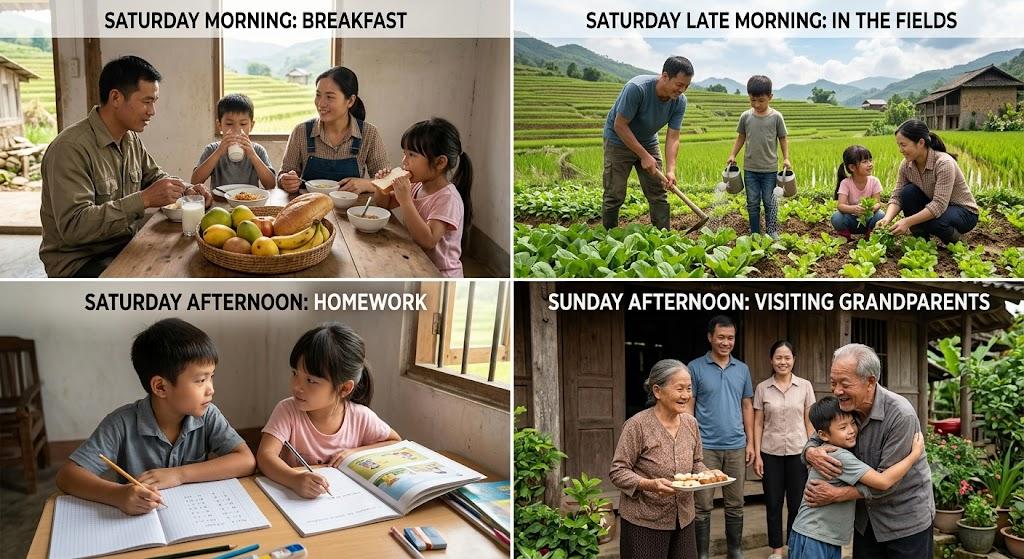
    On Saturday, Salas and Lina get up early. They eat breakfast with their parents. They drink milk and eat bread and fruit. Their parents are farmers. They work in the fields every day.

    After breakfast, Salas and Lina help their parents. They go to the fields with them. Salas carries water for the plants. Lina helps her mother and father with the vegetables. They work together and have fun.

    In the afternoon, Salas and Lina do their homework. Salas does his math homework. He writes his answers in his notebook. Lina reads a short book. She writes some sentences too. They help each other when they have difficult questions.

    After homework, they play outside. They meet their friends near their house. Salas and Lina love playing football. They play football with their friends. They run, jump, and laugh together. They have a great time.

    On Sunday, they visit their grandparents. Their grandparents live nearby. They love Salas and Lina very much. They give them hugs and make nice food. They talk and smile together.

    In the evening, Salas and Lina go home. They are tired but happy. They have a wonderful weekend.

    _________________________

    Vocabulary:

    Word / PhraseMeaning
    a weekendSaturday and Sunday
    to carry somethingto take something with your hands
    vegetablesplants that we eat, like carrots, potatoes, and tomatoes
    to have funto enjoy yourself and be happy
    afternoonthe time after lunch and before evening
    a notebooka book for writing
    a short booka small book with few pages
    a sentencewords that make a complete idea
    a difficult questiona question that is not easy
    to runto move fast with your legs
    to jumpto move up into the air
    to laughto make a happy sound
    a great timea very good and happy time
    nearbyclose; not far away
    to give somebody a hugto put your arms around someone you love
    to make foodto cook food
    to smileto show happiness with your face
    to be tiredto need rest because you worked or played
    to be wonderfulvery good; excellent

    ################

    Match the words with the definitions.

    Words

    1. a weekend
    2. to carry something
    3. vegetables
    4. to have fun
    5. afternoon
    6. a notebook
    7. a short book
    8. a sentence
    9. a difficult question
    10. to run
    11. to jump
    12. to laugh
    13. a great time
    14. nearby
    15. to give somebody a hug
    16. to make food
    17. to smile
    18. to be tired
    19. to be wonderful

    Definitions

    A. to show happiness with your face
    B. Saturday and Sunday
    C. to cook food
    D. to move fast with your legs
    E. a book for writing
    F. to put your arms around someone you love
    G. a very good and happy time
    H. close; not far away
    I. to enjoy yourself and be happy
    J. the time after lunch and before evening
    K. to move up into the air
    L. words that make a complete idea
    M. to make a happy sound
    N. a small book with few pages
    O. to need rest because you worked or played
    P. plants that we eat, like carrots and potatoes
    Q. very good; excellent
    R. a question that is not easy
    S. to take something with your hands

    ________________________

    Answers:
    1-B, 2-S, 3-P, 4-I, 5-J, 6-E, 7-N,
    8-L, 9-R, 10-D, 11-K, 12-M, 13-G,
    14-H, 15-F, 16-C, 17-A, 18-O, 19-Q

    #################

    Match the definitions with the words.

    Definitions

    1. Saturday and Sunday
    2. to take something with your hands
    3. plants that we eat, like carrots and potatoes
    4. to enjoy yourself and be happy
    5. the time after lunch and before evening
    6. a book for writing
    7. a small book with few pages
    8. words that make a complete idea
    9. a question that is not easy
    10. to move fast with your legs
    11. to move up into the air
    12. to make a happy sound
    13. a very good and happy time
    14. close; not far away
    15. to put your arms around someone you love
    16. to cook food
    17. to show happiness with your face
    18. to need rest because you worked or played
    19. very good; excellent

    Words

    A. to smile
    B. a difficult question
    C. to make food
    D. a weekend
    E. to jump
    F. nearby
    G. a sentence
    H. to laugh
    I. vegetables
    J. to be tired
    K. a notebook
    L. to have fun
    M. to run
    N. a great time
    O. to give somebody a hug
    P. a short book
    Q. afternoon
    R. to carry something
    S. to be wonderful

    _____________________

    Answers:
    1-D, 2-R, 3-I, 4-L, 5-Q, 6-K, 7-P,
    8-G, 9-B, 10-M, 11-E, 12-H, 13-N,
    14-F, 15-O, 16-C, 17-A, 18-J, 19-S

    ###############

    Fill in, words below


    weekend • breakfast • farmers • fields • water • plants • homework • math • book • help • friends •
    football • grandparents • nearby •
    hugs • food • smile •
    tired • happy

    1. Salas and Lina have a nice __________ with their family.
    2. They eat __________ with their parents in the morning.
    3. Their parents are __________.
    4. Salas and Lina help their parents in the __________.
    5. Salas carries __________ for the plants.
    6. Lina helps with the __________.
    7. In the afternoon, they do their __________.
    8. Salas does __________ homework.
    9. Lina reads a short __________.
    10. They __________ each other with their work.
    11. After homework, they meet their __________.
    12. They play __________ together.
    13. On Sunday, they visit their __________.
    14. Their grandparents live __________.
    15. Their grandparents give them __________.
    16. They make nice __________ together.
    17. The grandparents __________ when they see the children.
    18. Salas and Lina are __________ after the weekend.
    19. They are tired but __________.

    ———————————-

    Correct version:

    1. Salas and Lina have a nice weekend with their family.
    2. They eat breakfast with their parents in the morning.
    3. Their parents are farmers.
    4. Salas and Lina help their parents in the fields.
    5. Salas carries water for the plants.
    6. Lina helps with the plants.
    7. In the afternoon, they do their homework.
    8. Salas does math homework.
    9. Lina reads a short book.
    10. They help each other with their work.
    11. After homework, they meet their friends.
    12. They play football together.
    13. On Sunday, they visit their grandparents.
    14. Their grandparents live nearby.
    15. Their grandparents give them hugs.
    16. They make nice food together.
    17. The grandparents smile when they see the children.
    18. Salas and Lina are tired after the weekend.
    19. They are tired but happy.

    ##################

    Which answer is correct?

    1. Salas and Lina are ______.
      a) farmers
      b) siblings
      c) teachers
    2. Where do Salas and Lina live?
      a) In the countryside
      b) Near a school
      c) In a city
    3. What are their parents?
      a) Teachers
      b) Farmers
      c) Doctors
    4. Where do Salas and Lina help their parents?
      a) In a shop
      b) At school
      c) In the fields
    5. What does Salas carry?
      a) Water
      b) Food
      c) Books
    6. What does Lina help with?
      a) Homework
      b) Plants
      c) Football
    7. When do they do their homework?
      a) In the evening
      b) In the morning
      c) In the afternoon
    8. What homework does Salas do?
      a) Reading
      b) Math
      c) Writing
    9. What does Lina read?
      a) A short book
      b) A letter
      c) A newspaper
    10. Who helps each other?
      a) Their parents
      b) Their grandparents
      c) Salas and Lina
    11. Who do they meet after homework?
      a) Their friends
      b) Their teachers
      c) Their neighbours
    12. What sport do they play?
      a) Basketball
      b) Football
      c) Tennis
    13. When do they visit their grandparents?
      a) On Friday
      b) On Sunday
      c) On Monday
    14. Where do their grandparents live?
      a) In another country
      b) Nearby
      c) Far away
    15. How do the grandparents feel about Salas and Lina?
      a) They love them very much
      b) They are angry
      c) They do not know them
    16. What do the grandparents give the children?
      a) Toys
      b) Hugs
      c) Books
    17. What do they do with their grandparents?
      a) Play football
      b) Eat food and talk
      c) Go to school
    18. How do Salas and Lina feel at the end?
      a) Happy
      b) Angry
      c) Sad
    19. What do Salas and Lina do in the evening?
      a) Go to school
      b) Go home
      c) Go shopping
    20. What kind of weekend do they have?
      a) A boring weekend
      b) A difficult weekend
      c) A wonderful weekend

    _________________________

    Answers:
    1-b, 2-a, 3-b, 4-c, 5-a, 6-b, 7-c, 8-b,
    9-a, 10-c, 11-a, 12-b, 13-b, 14-b, 15-a,
    16-b, 17-b, 18-a, 19-b, 20-c.

    ##################

    True or False

    1. Salas and Lina get up early on Saturday.
    2. They eat breakfast with their friends.
    3. They drink milk and eat bread and fruit.
    4. Their parents are teachers.
    5. Salas and Lina help their parents after breakfast.
    6. Salas carries water for the plants.
    7. Lina helps with the vegetables.
    8. Salas and Lina do their homework in the morning.
    9. Salas writes his answers in his notebook.
    10. Lina reads a short book.
    11. They help each other when they have difficult questions.
    12. They play football with their parents.
    13. They run, jump, and laugh together.
    14. Their grandparents live far away.
    15. Their grandparents give them hugs.
    16. Salas and Lina are tired but happy.

    _______________________

    Correct version:

    1. Salas and Lina get up early on Saturday.
    2. They eat breakfast with their friends.
      False. True is: They eat breakfast with their parents.
    3. They drink milk and eat bread and fruit.
    4. Their parents are teachers.
      False. True is: Their parents are farmers.
    5. Salas and Lina help their parents after breakfast.
    6. Salas carries water for the plants.
    7. Lina helps with the vegetables.
    8. Salas and Lina do their homework in the morning.
      False. True is: Salas and Lina do their homework in the afternoon.
    9. Salas writes his answers in his notebook.
    10. Lina reads a short book.
    11. They help each other when they have difficult questions.
    12. They play football with their parents.
      False. True is: They play football with their friends.
    13. They run, jump, and laugh together.
    14. Their grandparents live far away.
      False. True is: Their grandparents live nearby.
    15. Their grandparents give them hugs.
    16. Salas and Lina are tired but happy.

    ##################

    Put the sentences into the correct order:

    A. Salas and Lina play football with their friends.
    B. Their grandparents give them hugs and make nice food.
    C. Salas writes his answers in his notebook.
    D. Salas and Lina help their parents in the fields.
    E. They drink milk and eat bread and fruit.
    F. They visit their grandparents on Sunday.
    G. Lina reads a short book and writes some sentences.
    H. Salas and Lina get up early on Saturday.
    I. They run, jump, and laugh together.
    J. Salas carries water for the plants.

    ________________________

    Correct version:

    H: Salas and Lina get up early on Saturday.
    E: They drink milk and eat bread and fruit.
    D: Salas and Lina help their parents in the fields.
    J: Salas carries water for the plants.
    C: Salas writes his answers in his notebook.
    G: Lina reads a short book and writes some sentences.
    A: Salas and Lina play football with their friends.
    I: They run, jump, and laugh together.
    F: They visit their grandparents on Sunday.
    B: Their grandparents give them hugs and make nice food.

    #################

    Match the questions with the answers.

    Questions

    1. Where do Salas and Lina live?
    2. What do their parents do?
    3. When do they help their parents?
    4. What does Salas take to the plants?
    5. What does Lina help with?
    6. What does Salas write in his notebook?
    7. What does Lina read?
    8. Who do they meet after homework?
    9. What sport do they love?
    10. Where do they go on Sunday?

    Answers

    A. They go to see their grandparents.
    B. She reads a short book.
    C. They live in the countryside.
    D. He writes his answers.
    E. They meet their friends near their house.
    F. They work as farmers.
    G. They play football.
    H. She helps with the vegetables.
    I. He takes water for the plants.
    J. They help their parents after breakfast.

    _____________________

    Answers:
    1-C, 2-F, 3-J, 4-I, 5-H, 6-D,
    7-B, 8-E, 9-G, 10-A.

    _____________________

    Correct version:

    1. Where do Salas and Lina live?
      They live in the countryside.
    2. What do their parents do?
      They work as farmers.
    3. When do they help their parents?
      They help their parents after breakfast.
    4. What does Salas take to the plants?
      He takes water for the plants.
    5. What does Lina help with?
      She helps with the vegetables.
    6. What does Salas write in his notebook?
      He writes his answers.
    7. What does Lina read?
      She reads a short book.
    8. Who do they meet after homework?
      They meet their friends near their house.
    9. What sport do they love?
      They play football.
    10. Where do they go on Sunday?
      They go to see their grandparents.

    ##################

    Answer the questions with: Yes, they do. / No, they don’t.

    1. Do Salas and Lina help their parents in the fields?
    2. Do Salas and Lina play football with their grandparents?
    3. Do Salas and Lina drink milk at breakfast?
    4. Do Salas and Lina live in a city?
    5. Do Salas and Lina visit their grandparents on Sunday?
    6. Do Salas and Lina do their homework in the evening?
    7. Do Salas and Lina meet their friends after homework?
    8. Do Salas and Lina eat breakfast with their parents?
    9. Do Salas and Lina carry books for the plants?
    10. Do Salas and Lina have a wonderful weekend?
    11. Do Salas and Lina help each other with difficult questions?
    12. Do Salas and Lina live far from their grandparents?
    13. Do Salas and Lina play football with their friends?
    14. Do Salas and Lina make food with their grandparents?

    _______________________

    Correct version:

    1. Do Salas and Lina help their parents in the fields? Yes, they do.
    2. Do Salas and Lina play football with their grandparents? No, they don’t.
    3. Do Salas and Lina drink milk at breakfast? Yes, they do.
    4. Do Salas and Lina live in a city? No, they don’t.
    5. Do Salas and Lina visit their grandparents on Sunday? Yes, they do.
    6. Do Salas and Lina do their homework in the evening? No, they don’t.
    7. Do Salas and Lina meet their friends after homework? Yes, they do.
    8. Do Salas and Lina eat breakfast with their parents? Yes, they do.
    9. Do Salas and Lina carry books for the plants? No, they don’t.
    10. Do Salas and Lina have a wonderful weekend? Yes, they do.
    11. Do Salas and Lina help each other with difficult questions? Yes, they do.
    12. Do Salas and Lina live far from their grandparents? No, they don’t.
    13. Do Salas and Lina play football with their friends? Yes, they do.
    14. Do Salas and Lina make food with their grandparents? No, they don’t.

    ##################

    Fill in, words below:

    sentence – food – wonderful – tired – carries –
    short book – parents – play –
    afternoon – laugh –
    vegetables – hug

    Salas and Lina have a _______ weekend in the countryside with their family. On Saturday, they help their farmer _______ in the fields. Salas _______ water and Lina helps with _______. They have fun together. In the _______, they do homework. Salas writes in his notebook and Lina reads a _______. She writes a ________ and they answer a difficult question. After homework, they meet friends and _______ football. They run, jump, and ________. They have a great time. On Sunday, they visit grandparents nearby. Grandparents give them a _______ and make ________. Everyone smiles together. They are ________ but happy.

    ————————-

    Correct version:

    Salas and Lina have a wonderful weekend in the countryside with their family. On Saturday, they help their farmer parents in the fields. Salas carries water and Lina helps with vegetables. They have fun together. In the afternoon, they do homework. Salas writes in his notebook and Lina reads a short book. She writes a sentence and they answer a difficult question. After homework, they meet friends and play football. They run, jump, and laugh. They have a great time. On Sunday, they visit grandparents nearby. Grandparents give them a hug and make food. Everyone smiles together. They are tired but happy.

    ############

    Personal pronounVerbObject
    Ilikechocolate
    Youlikechocolate
    Hel i k e schocolate
    Shel i k e schocolate
    Itl i k e schocolate
    Welikechocolate
    Youlikechocolate
    Theylikechocolate

    Fill in:

    He _____ (help) his parents in the fields.

    They _____ (visit) their grandparents on Sunday.

    I _____ (read) a short book.

    She _____ (write) sentences in her notebook.

    We _____ (play) football with our friends.

    You _____ (help) your family at home.

    It _____ (grow) in the fields.

    They _____ (have) fun together.

    She _____ (carry) water for the plants.

    He _____ (do) his math homework.

    You _____ (visit) your grandparents nearby.

    I _____ (eat) breakfast with my family.

    We _____ (help) each other with homework.

    It _____ (need) water to grow.

    They _____ (run) and laugh outside.

    He _____ (play) football after homework.

    She _____ (help) with the vegetables.

    I _____ (write) answers in my notebook.

    You _____ (play) with your friends.

    We _____ (have) a great time together.

    It _____ (be) in the field.

    They _____ (make) food with their grandparents.

    He _____ (read) a book at home.

    She _____ (smile) with her family.

    ———————————

    Correct version:

    1. He helps his parents in the fields.
    2. They visit their grandparents on Sunday.
    3. I read a short book.
    4. She writes sentences in her notebook.
    5. We play football with our friends.
    6. You help your family at home.
    7. It grows in the fields.
    8. They have fun together.
    9. She carries water for the plants.
    10. He does his math homework.
    11. You visit your grandparents nearby.
    12. I eat breakfast with my family.
    13. We help each other with homework.
    14. It needs water to grow.
    15. They run and laugh outside.
    16. He plays football after homework.
    17. She helps with the vegetables.
    18. I write answers in my notebook.
    19. You play with your friends.
    20. We have a great time together.
    21. It is in the field.
    22. They make food with their grandparents.
    23. He reads a book at home.
    24. She smiles with her family.

    ######################

    ######################

    Please use the box below to write your feedback.
    Only I can read it.
    It is not public.

    Please tell me:

    • Are the texts and exercises OK?
    • Are the topics OK?
    • Is the level OK?
    • Is it too easy or too difficult?
    • Do you want texts about other topics?

    Thank you! I appreciate your feedback.

  • 💁‍♀️🐶😍Your nineth English text for ‚very‘ beginners – Lina and Salas, a typical afternoon (A1 beginners, part 9/13)💁‍♀️🐶😍

    School finishes in the afternoon.

    Salas walks home from school.

    Lina rides her bike home.

    Their parents are at home.

    The family lives in the countryside.

    Their parents are farmers.

    Their grandparents live nearby.

    Salas and Lina wash their hands.

    Then they eat a small snack.

    They drink water and sit down.

    After that, it is homework time.

    Salas opens his school bag.

    He takes out his books.

    He takes out his notebook too.

    Lina opens her school bag.

    She takes out her books and pencils.

    Salas does his math homework.

    He writes the answers carefully.

    Lina does her reading homework.

    She reads a short story.

    Then she answers some questions.

    Sometimes they help each other.

    Their mother checks their work.

    Their father looks at their homework too.

    They finish their homework before dinner.

    Everyone is happy.

    Then they eat dinner together.

    After dinner, they talk with their grandparents.

    Later, they brush their teeth.

    They put on their pajamas.

    Father and mother say, “Good night.”

    Salas and Lina go to bed.

    Soon they are asleep.

    _______________________

    Vocabulary:

    • afternoon – the time after lunch and before evening.
    • to finish – to end; to be done.
    • to ride a bike – to go on a bike.
    • countryside – land with farms, fields, and small villages.
    • to wash your hands – to clean your hands with water and soap.
    • a snack – a little food between meals.
    • homework – school work you do at home.
    • a notebook – a book with empty pages for writing.
    • a school bag – a bag for books and school things.
    • a pencil – something you use to write or draw.
    • to write carefully – to write slowly and make it easy to read.
    • to answer a question – to say or write the answer.
    • to check homework – to look at homework and see if it is right.
    • to brush your teeth – to clean your teeth with a toothbrush.
    • to put on your pyjamas – to dress in your clothes for sleeping.
    • to be asleep – to be sleeping.

    ##############

    Match word and defintion:

    Words

    1. afternoon
    2. to finish
    3. to ride a bike
    4. countryside
    5. to wash your hands
    6. a snack
    7. homework
    8. a notebook
    9. a school bag
    10. a pencil
    11. to write carefully
    12. to answer a question
    13. to check homework
    14. to brush your teeth
    15. to put on your pyjamas
    16. to be asleep

    Definitions

    a. to clean your teeth with a toothbrush
    b. a little food between meals
    c. to dress in your clothes for sleeping
    d. school work you do at home
    e. a bag for books and school things
    f. to end; to be done
    g. to say or write the answer
    h. to go on a bike
    i. a book with empty pages for writing
    j. the time after lunch and before evening
    k. to look at homework and see if it is right
    l. to clean your hands with water and soap
    m. something you use to write or draw
    n. to write slowly and make it easy to read
    o. land with farms, fields, and small villages
    p. to be sleeping

    ___________________________

    Answers:
    1-j, 2-f, 3-h, 4-o, 5-l, 6-b, 7-d,
    8-i, 9-e, 10-m, 11-n, 12-g, 13-k,
    14-a, 15-c, 16-p

    ###################

    Match the definitions with the words:

    Definitions

    1. the time after lunch and before evening
    2. to clean your teeth with a toothbrush
    3. a bag for books and school things
    4. to say or write the answer
    5. to be sleeping
    6. to clean your hands with water and soap
    7. school work you do at home
    8. to write slowly and make it easy to read
    9. to go on a bike
    10. a little food between meals
    11. to end; to be done
    12. a book with empty pages for writing
    13. land with farms, fields, and small villages
    14. to dress in your clothes for sleeping
    15. something you use to write or draw
    16. to look at homework and see if it is right

    Words

    a. to answer a question
    b. to put on your pyjamas
    c. countryside
    d. to write carefully
    e. homework
    f. afternoon
    g. a pencil
    h. to wash your hands
    i. to ride a bike
    j. to check homework
    k. a notebook
    l. to brush your teeth
    m. to be asleep
    n. a school bag
    o. to finish
    p. a snack

    ________________________

    Answers:
    1-f, 2-l, 3-n, 4-a, 5-m, 6-h, 7-e, 8-d,
    9-i, 10-p, 11-o, 12-k, 13-c, 14-b, 15-g, 16-j

    #################

    Fill in, use words below:


    homework – countryside – snack – notebook – pencil –
    afternoon – ride a bike – check homework –
    wash hands – finish – school bag –
    brush teeth – pyjamas –
    asleep

    1. School ends in the __________.
    2. Salas and Lina live in the __________.
    3. Lina can __________ to school.
    4. After school, they open their __________.
    5. They do their __________ before dinner.
    6. Salas writes with a __________.
    7. Lina writes in her __________.
    8. They eat a small __________ after school.
    9. Their mother __________ their homework.
    10. They __________ before they eat.
    11. They __________ their homework before dinner.
    12. They __________ before going to bed.
    13. They put on their __________ at night.
    14. Soon Salas and Lina are __________.

    ——————————————–

    Answers:
    1-afternoon, 2-countryside, 3-ride a bike, 4-school bag, 5-homework, 6-pencil, 7-notebook, 8-snack, 9-checks, 10-wash their hands, 11-finish, 12-brush their teeth, 13-pyjamas, 14-asleep

    ____________________________

    Correct version:

    1. School ends in the afternoon.
    2. Salas and Lina live in the countryside.
    3. Lina can ride a bike to school.
    4. After school, they open their school bag.
    5. They do their homework before dinner.
    6. Salas writes with a pencil.
    7. Lina writes in her notebook.
    8. They eat a small snack after school.
    9. Their mother checks their homework.
    10. They wash their hands before they eat.
    11. They finish their homework before dinner.
    12. They brush their teeth before going to bed.
    13. They put on their pyjamas at night.
    14. Soon Salas and Lina are asleep.

    ##################

    Which answer is correct?

    1. School finishes in the ______.
      a) morning
      b) afternoon
      c) evening
    2. Salas walks home from ______.
      a) the farm
      b) the shop
      c) school
    3. Lina rides her ______ home.
      a) bike
      b) bus
      c) car
    4. The family lives in the ______.
      a) city
      b) countryside
      c) town
    5. Their parents are ______.
      a) teachers
      b) doctors
      c) farmers
    6. Their grandparents live ______.
      a) nearby
      b) at school
      c) far away
    7. Salas and Lina wash their ______.
      a) faces
      b) clothes
      c) hands
    8. After washing their hands, they eat a small ______.
      a) breakfast
      b) snack
      c) dinner
    9. They drink ______ and sit down.
      a) water
      b) tea
      c) milk
    10. After the snack, it is time for ______.
      a) sleep
      b) games
      c) homework
    11. Salas opens his ______.
      a) school bag
      b) lunch box
      c) bedroom door
    12. Salas takes out his ______.
      a) pencils
      b) books
      c) clothes
    13. Lina takes out her books and ______.
      a) pencils
      b) toys
      c) food
    14. Salas does his ______ homework.
      a) reading
      b) music
      c) math
    15. Lina does her ______ homework.
      a) reading
      b) science
      c) art
    16. Their mother checks their ______.
      a) bikes
      b) work
      c) bags
    17. They finish their homework before ______.
      a) school
      b) breakfast
      c) dinner
    18. After dinner, they talk with their ______.
      a) grandparents
      b) teachers
      c) friends
    19. Before bed, they brush their ______.
      a) teeth
      b) hands
      c) hair
    20. Soon Salas and Lina are ______.
      a) awake
      b) outside
      c) asleep

    ——————————————

    Answers:
    1-b, 2-c, 3-a, 4-b, 5-c, 6-a, 7-c, 8-b,
    9-a, 10-c, 11-a, 12-b, 13-a, 14-c, 15-a,
    16-b, 17-c, 18-a, 19-a, 20-c
    __________________________

    Full version:

    1. School finishes in the afternoon.
    2. Salas walks home from school.
    3. Lina rides her bike home.
    4. The family lives in the countryside.
    5. Their parents are farmers.
    6. Their grandparents live nearby.
    7. Salas and Lina wash their hands.
    8. After washing their hands, they eat a small snack.
    9. They drink water and sit down.
    10. After the snack, it is time for homework.
    11. Salas opens his school bag.
    12. Salas takes out his books.
    13. Lina takes out her books and pencils.
    14. Salas does his math homework.
    15. Lina does her reading homework.
    16. Their mother checks their work.
    17. They finish their homework before dinner.
    18. After dinner, they talk with their grandparents.
    19. Before bed, they brush their teeth.
    20. Soon Salas and Lina are asleep.

    ####################
    True or False?

    1. School finishes in the afternoon. ______
    2. Salas rides his bike home from school. ______
    3. Lina walks home from school. ______
    4. The family lives in the countryside. ______
    5. Their parents are farmers. ______
    6. Their grandparents live far away. ______
    7. Salas and Lina wash their hands before eating. ______
    8. They eat a big dinner after school. ______
    9. Salas does his math homework. ______
    10. Lina does her science homework. ______
    11. Their mother checks their work. ______
    12. Salas and Lina go to bed after brushing their teeth. ______

    —————————————

    Answers:
    1-T, 2-F, 3-F, 4-T, 5-T, 6-F,
    7-T, 8-F, 9-T, 10-F, 11-T, 12-F
    ________________________

    Correct version:

    1. School finishes in the afternoon.
    2. Salas rides his bike home from school.
      False. True is: Salas walks home from school.
    3. Lina walks home from school.
      False. True is: Lina rides her bike home.
    4. The family lives in the countryside.
    5. Their parents are farmers.
    6. Their grandparents live far away.
      False. True is: Their grandparents live nearby.
    7. Salas and Lina wash their hands before eating.
    8. They eat a big snack after school.
      False. True is: They eat a small snack after school.
    9. Salas does his math homework.
    10. Lina does her science homework.
      False. True is: Lina does her reading homework.
    11. Their mother checks their work.
    12. They brush their teeth before dinner.
      False. True is: They brush their teeth after dinner.

    #####################

    Put the sentences into the correct order according to the text.

    a) Salas does his math homework.

    b) They brush their teeth and put on their pyjamas.

    c) Salas and Lina wash their hands.

    d) Their mother checks their work.

    e) School finishes in the afternoon.

    f) They eat dinner together.

    g) Salas opens his school bag.

    h) Soon they are asleep.

    ______________________

    Answers: e, c, g, a, d, f, b, h

    ______________________

    Correct version:

    e) School finishes in the afternoon.
    c) Salas and Lina wash their hands.
    g) Salas opens his school bag.
    a) Salas does his math homework.
    d) Their mother checks their work.
    f) They eat dinner together.
    b) They brush their teeth and put on their pyjamas.
    h) Soon they are asleep.

    ################

    Match the questions with the answers:

    Questions

    1. When does school finish?
    2. Who walks home from school?
    3. Who rides a bike home?
    4. Where does the family live?
    5. What are their parents?
    6. Where do their grandparents live?
    7. What do Salas and Lina do before eating?
    8. What do they eat after washing their hands?
    9. What does Salas do with his school bag?
    10. What homework does Salas do?
    11. Who checks their work?
    12. When do Salas and Lina brush their teeth?

    Answers

    a) Their grandparents live nearby.

    b) Salas does his math homework.

    c) They brush their teeth after dinner.

    d) The family lives in the countryside.

    e) Their parents are farmers.

    f) School finishes in the afternoon.

    g) Their mother checks their work.

    h) They wash their hands.

    i) Salas opens his school bag.

    j) Lina rides her bike home.

    k) They eat a small snack.

    l) Salas walks home from school.

    ______________________

    Answers:

    1-f, 2-l, 3-j, 4-d, 5-e, 6-a, 7-h,
    8-k, 9-i, 10-b, 11-g, 12-c

    _____________________

    Correct version:

    What time does school finish?
    School finishes in the afternoon.

    Who walks home from school?
    Salas walks home from school.

    Who rides a bike home?
    Lina rides her bike home.

    Where does the family live?
    The family lives in the countryside.

    What are their parents?
    Their parents are farmers.

    Where do their grandparents live?
    Their grandparents live nearby.

    What do Salas and Lina do when they come home?
    They wash their hands.

    What do they eat after washing their hands?
    They eat a small snack.

    What does Salas take out of his school bag?
    Salas takes out his books and notebook.

    What homework does Salas do?
    Salas does math homework.

    What homework does Lina do?
    Lina does reading homework.

    Who checks their work?
    Their mother checks their work.

    ##################

    Answer the questions with: Yes, they do. / No, they don’t.

    1. Do Salas and Lina live in the countryside?
    2. Do they ride a bus home from school?
    3. Do they play computer games after school?
    4. Do they wash their hands after school?
    5. Do they sleep at school?
    6. Do they do their homework before dinner?
    7. Do they take out their books and notebooks?
    8. Do they eat a big snack after school?
    9. Do they talk with their grandparents after dinner?
    10. Do they go to bed before dinner?
    11. Do they brush their teeth before sleeping?
    12. Do they live in the city?

    _________________________

    Correct answers:

    1. Do Salas and Lina live in the countryside? — Yes, they do.
    2. Do they ride a bus home from school? — No, they don’t.
    3. Do they play computer games after school? — No, they don’t.
    4. Do they wash their hands after school? — Yes, they do.
    5. Do they sleep at school? — No, they don’t.
    6. Do they do their homework before dinner? — Yes, they do.
    7. Do they take out their books and notebooks? — Yes, they do.
    8. Do they eat a big snack after school? — No, they don’t.
    9. Do they talk with their grandparents after dinner? — Yes, they do.
    10. Do they go to bed before dinner? — No, they don’t.
    11. Do they brush their teeth before sleeping? — Yes, they do.
    12. Do they live in the city? — No, they don’t.

    ##################

    Fill in, words below:

    questions. – finishes – pencils – asleep – school bags –
    grandparents – carefully – wash – teeth –
    notebook – countryside –
    snack – checks

    School _______ in the afternoon, and Salas walks home from school.
    Lina rides her bike home in the _______.
    Their parents are farmers, and their ________live nearby.
    Salas and Lina ________ their hands after school.
    They eat a small ________ and drink water.
    Then they open their _______for homework.
    Salas takes out his _______, books, and pencil.
    Lina takes out her books and _______ too.
    Salas writes his answers ________ in his notebook.
    Lina reads a short story and answers _______
    Their mother _______ their homework after they finish.
    After dinner, they brush their _______ and put on their pyjamas.
    Soon [after a short time] Salas and Lina are _________.

    ————————————-

    Correct version:

    School finishes in the afternoon, and Salas walks home from school.
    Lina rides her bike home in the countryside.
    Their parents are farmers, and their grandparents live nearby.
    Salas and Lina wash their hands after school.
    They eat a small snack and drink water.
    Then they open their school bags for homework.
    Salas takes out his notebook, books, and pencil.
    Lina takes out her books and pencils too.
    Salas writes his answers carefully in his notebook.
    Lina reads a short story and answers questions.
    Their mother checks their homework after they finish.
    After dinner, they brush their teeth and put on their pyjamas.
    Soon [after a short time] Salas and Lina are asleep.

    #################

    Personal pronounVerbObject
    Ilikechocolate
    Youlikechocolate
    He😊 likes 😊chocolate
    She😊 likes 😊chocolate
    It😊 likes 😊chocolate
    Welikechocolate
    Youlikechocolate
    Theylikechocolate

    ####################

    Fill in the correct form of the verb:

    1. I _____ (like) chocolate.
    2. She _____ (check) homework after school.
    3. They _____ (live) in the countryside.
    4. We _____ (wash) our hands before a snack.
    5. He _____ (ride) a bike home.
    6. You _____ (open) the school bag.
    7. It _____ (like) fresh water.
    8. They _____ (write) questions in a notebook.
    9. I _____ (brush) my teeth before bed.
    10. He _____ (take) out his pencils.
    11. We _____ (eat) a small snack.
    12. She _____ (read) a short story.
    13. You _____ (finish) homework in the afternoon.
    14. It _____ (be) asleep soon.
    15. They _____ (answer) questions carefully.
    16. I _____ (put on) my pyjamas.
    17. She _____ (live) near her grandparents.
    18. He _____ (check) his notebook.
    19. We _____ (drink) water after school.
    20. You _____ (wash) your hands carefully.
    21. They _____ (take) their school bags home.
    22. It _____ (like) the countryside.
    23. I _____ (write) with a pencil.
    24. We _____ (go) to bed after dinner.

    ——————————————

    Correct version:

    1. I like chocolate.
    2. She checks homework after school.
    3. They live in the countryside.
    4. We wash our hands before a snack.
    5. He rides a bike home.
    6. You open the school bag.
    7. It likes fresh water.
    8. They write questions in a notebook.
    9. I brush my teeth before bed.
    10. He takes out his pencils.
    11. We eat a small snack.
    12. She reads a short story.
    13. You finish homework in the afternoon.
    14. It is asleep soon.
    15. They answer questions carefully.
    16. I put on my pyjamas.
    17. She lives near her grandparents.
    18. He checks his notebook.
    19. We drink water after school.
    20. You wash your hands carefully.
    21. They take their school bags home.
    22. It likes the countryside.
    23. I write with a pencil.
    24. We go to bed after dinner.

    ####################

    Please use the box below to write your feedback.
    Only I can read it.
    It is not public.

    Please tell me:

    • Are the texts and exercises OK?
    • Are the topics OK?
    • Is the level OK?
    • Is it too easy or too difficult?
    • Do you want texts about other topics?

    Thank you! I appreciate your feedback.

  • 💁‍♀️🐶😍Your eighth English text for ‚very‘ beginners – Lina and Salas, a typical morning (A1 beginners, part 8/13)💁‍♀️🐶😍

    Every morning, Salas and Lina wake up early.

    They hear the birds and the chickens outside.

    Salas says, „Good morning!“ to his yellow bird.

    The bird is loud and happy.

    Lina smiles at her white cat.

    She gives the cat food and fresh water.

    The cat is cute and friendly.

    Then they wash their faces and brush their teeth.

    Salas eats cereal for breakfast.

    Lina eats toast and drinks milk.

    They sit with their parents and talk together.

    Everyone is happy.

    After breakfast, Salas puts on his school clothes.

    Lina gets dressed and puts on her shoes.

    They pack their school bags with books, notebooks, and pencils.

    Salas checks his homework.

    Lina checks her homework too.

    They are ready to leave.

    Salas says goodbye to his bird.

    Lina says goodbye to her cat.

    Their parents smile and wave.

    Salas walks to school.

    Lina rides her bike to school.

    They are excited to learn new things.

    _________________________

    Vocabulary:

    • to wake up – to stop sleeping and open your eyes in the morning.
    • outside – not inside a house or building; in the open air.
    • to be loud – to make a lot of noise.
    • to smile at somebody – to show happiness with your face when you look at someone.
    • to be cute – to be nice and sweet; easy to like.
    • to brush one’s teeth – to clean your teeth with a toothbrush.
    • cereal – a food made from grains that people often eat with milk for breakfast.
    • to put on clothes – to put clothes on your body.
    • to get dressed – to put on your clothes.
    • to pack one’s school bag – to put books and school things into a school bag.
    • a notebook – a small book with pages for writing.
    • a pencil – a tool for writing or drawing.
    • to check one’s homework – to look at homework to make sure it is finished or correct.
    • to leave – to go away from a place.
    • to say goodbye – to say something when you go away from someone.
    • to wave – to move your hand to say hello or goodbye.
    • to ride a bike – to move using a bicycle.
    • to be excited – to feel very happy because something good is going to happen.

    ##############

    Match the words with the definitions:

    Words

    1. to wake up
    2. outside
    3. to be loud
    4. to smile at somebody
    5. to be cute
    6. to brush one’s teeth
    7. cereal
    8. to put on clothes
    9. to get dressed
    10. to pack one’s school bag
    11. a notebook
    12. a pencil
    13. to check one’s homework
    14. to leave
    15. to say goodbye
    16. to wave
    17. to ride a bike
    18. to be excited

    Definitions

    A. to move your hand to say hello or goodbye.
    B. a small book with pages for writing.
    C. to go away from a place.
    D. to clean your teeth with a toothbrush.
    E. to feel very happy because something good is going to happen.
    F. not inside a house or building; in the open air.
    G. a food made from grains that people often eat with milk for breakfast.
    H. to put books and school things into a school bag.
    I. to stop sleeping and open your eyes in the morning.
    J. to show happiness with your face when you look at someone.
    K. to put clothes on your body.
    L. to move using a bicycle.
    M. to look at homework to make sure it is finished or correct.
    N. to make a lot of noise.
    O. to be nice and sweet; easy to like.
    P. a tool for writing or drawing.
    Q. to put on your clothes.
    R. to say something when you go away from someone.

    _____________________

    Answer:
    1-I, 2-F, 3-N, 4-J, 5-O, 6-D, 7-G,
    8-K, 9-Q, 10-H, 11-B, 12-P, 13-M,
    14-C, 15-R, 16-A, 17-L, 18-E

    ###############

    Match the definitions with the words:

    Definitions

    1. to stop sleeping and open your eyes in the morning.
    2. not inside a house or building; in the open air.
    3. to make a lot of noise.
    4. to show happiness with your face when you look at someone.
    5. to be nice and sweet; easy to like.
    6. to clean your teeth with a toothbrush.
    7. a food made from grains that people often eat with milk for breakfast.
    8. to put clothes on your body.
    9. to put on your clothes.
    10. to put books and school things into a school bag.
    11. a small book with pages for writing.
    12. a tool for writing or drawing.
    13. to look at homework to make sure it is finished or correct.
    14. to go away from a place.
    15. to say something when you go away from someone.
    16. to move your hand to say hello or goodbye.
    17. to move using a bicycle.
    18. to feel very happy because something good is going to happen.

    Words

    A. to wave
    B. cereal
    C. to get dressed
    D. a pencil
    E. to be excited
    F. to leave
    G. to brush one’s teeth
    H. outside
    I. to pack one’s school bag
    J. to be cute
    K. to ride a bike
    L. a notebook
    M. to say goodbye
    N. to put on clothes
    O. to wake up
    P. to check one’s homework
    Q. to smile at somebody
    R. to be loud

    ____________________

    Answer:
    1-O, 2-H, 3-R, 4-Q, 5-J, 6-G, 7-B,
    8-N, 9-C, 10-I, 11-L, 12-D, 13-P,
    14-F, 15-M, 16-A, 17-K, 18-E
    ##############

    Fill in, words below:

    homework • cat • bike • bird • water •
    school • pencils • morning •
    loud • milk • friendly •
    cereal

    Sentences

    1. Salas and Lina wake up early every __________.
    2. Salas says good morning to his yellow __________.
    3. The bird is very __________.
    4. Lina gives her white cat food and __________.
    5. The cat is cute and __________.
    6. Salas eats __________ for breakfast.
    7. Lina drinks __________ in the morning.
    8. They pack their school bags with books, notebooks, and __________.
    9. Salas checks his __________ before school.
    10. Lina says goodbye to her __________.
    11. Salas walks to __________.
    12. Lina rides her __________ to school.

    —————————–

    Answers:
    1-morning, 2-bird, 3-loud, 4-water, 5-friendly, 6-cereal, 7-milk, 8-pencils, 9-homework, 10-cat, 11-school, 12-bike

    #############

    Which answer is correct?

    1. Salas says good morning to his yellow ______.
      a) bird
      b) cat
      c) dog
    2. The bird is very ______.
      a) quiet
      b) sleepy
      c) loud
    3. Lina gives her cat food and ______.
      a) cereal
      b) water
      c) pencils
    4. The cat is cute and ______.
      a) noisy
      b) friendly
      c) yellow
    5. Salas eats ______ for breakfast.
      a) cereal
      b) toast
      c) milk
    6. Lina drinks ______ in the morning.
      a) juice
      b) bread
      c) milk
    7. They put books, notebooks, and pencils in their school ______.
      a) room
      b) bag
      c) garden
    8. Salas checks his ______ before school.
      a) homework
      b) cat
      c) breakfast
    9. Salas ______ to school.
      a) rides
      b) flies
      c) walks
    10. Lina ______ her bike to school.
      a) eats
      b) rides
      c) opens

    ————————————-

    Answers:
    1-a, 2-c, 3-b, 4-b, 5-a,
    6-c, 7-b, 8-a, 9-c, 10-b
    _______________________

    Correct version:

    1. Salas says good morning to his yellow bird.
    2. The bird is very loud.
    3. Lina gives her cat food and water.
    4. The cat is cute and friendly.
    5. Salas eats cereal for breakfast.
    6. Lina drinks milk in the morning.
    7. They put books, notebooks, and pencils in their school bag.
    8. Salas checks his homework before school.
    9. Salas walks to school.
    10. Lina rides her bike to school.

    #################

    True or False.

    1. Salas has a yellow bird. ______
    2. The bird is quiet. ______
    3. Lina has a white cat. ______
    4. Lina gives her cat food and water. ______
    5. Salas eats toast for breakfast. ______
    6. Lina drinks milk in the morning. ______
    7. Salas checks his homework before school. ______
    8. Lina says goodbye to her bird. ______
    9. Salas rides his bike to school. ______
    10. Lina walks to school. ______

    ———————————–

    Answers:
    1-T, 2-F, 3-T, 4-T, 5-F, 6-T, 7-T, 8-F, 9-F, 10-F

    ______________________

    Correct version:

    1. Salas has a yellow bird. ______
    2. The bird is quiet. ______
      True is: The bird is loud.
    3. Lina has a white cat. ______
    4. Lina gives her cat food and water. ______
    5. Salas eats toast for breakfast. ______
      True is: Salas eats cereal for breakfast.
    6. Lina drinks milk in the morning. ______
    7. Salas checks his homework before school. ______
    8. Lina says goodbye to her bird. ______
      True is: Lina says goodbye to her cat.
    9. Salas rides his bike to school. ______
      True is: Salas walks to school.
    10. Lina walks to school. ______
      True is: Lina rides her bike to school.

    ################

    Put the sentences in the correct order.

    A. Salas eats cereal for breakfast. ______

    B. They pack their school bags with books and pencils. ______

    C. Salas and Lina wake up early in the morning. ______

    D. Lina rides her bike to school. ______

    E. They brush their teeth and get dressed. ______

    F. Salas says goodbye to his yellow bird. ______

    G. Lina eats toast and drinks milk. ______

    H. They leave home and go to school. ______

    —————————————

    Answers: C, E, A, G, B, F, H, D

    ________________________

    Correct order:

    A. Salas and Lina wake up early in the morning.

    B. They brush their teeth and get dressed.

    C. Salas eats cereal for breakfast.

    D. Lina eats toast and drinks milk.

    E. They pack their school bags with books and pencils.

    F. Salas says goodbye to his yellow bird.

    G. They leave home and go to school.

    H. Lina rides her bike to school.

    #################

    Match the questions with the answers:

    Questions

    1. What pet does Salas have?
    2. What color is Salas’s bird?
    3. What does Salas eat for breakfast?
    4. What pet does Lina have?
    5. What color is Lina’s cat?
    6. What does Lina drink in the morning?
    7. What does Salas do before school?
    8. How does Lina go to school?
    9. Where do Salas and Lina live?
    10. What does Salas say goodbye to before school?

    Answers

    A. She rides her bike to school.
    B. He says goodbye to his yellow bird.
    C. She has a white cat.
    D. They live on a farm.
    E. He eats cereal for breakfast.
    F. He has a bird.
    G. She drinks milk.
    H. The bird is yellow.
    I. He brushes his teeth and gets dressed.
    J. The cat is white.

    ______________________

    Answers:
    1-F, 2-H, 3-E, 4-C, 5-J,
    6-G, 7-I, 8-A, 9-D, 10-B

    ______________________

    Correct Dialogue

    1. What pet does Salas have?
      He has a bird.
    2. What color is Salas’s bird?
      The bird is yellow.
    3. What does Salas eat for breakfast?
      He eats cereal for breakfast.
    4. What pet does Lina have?
      She has a cat.
    5. What color is Lina’s cat?
      The cat is white.
    6. What does Lina drink in the morning?
      She drinks milk.
    7. What does Salas do before school?
      He brushes his teeth and gets dressed.
    8. How does Lina go to school?
      She rides her bike to school.
    9. Where do Salas and Lina live?
      They live on a farm.
    10. What does Salas say goodbye to before school?
      He says goodbye to his yellow bird.

    ###############

    Yes/No Questions.

    Answer: Yes, they do. / No, they don’t.

    1. Do Salas and Lina wake up early every morning?
    2. Do Salas and Lina live in a city?
    3. Do Salas and Lina have a yellow bird?
    4. Do Salas and Lina have a black cat?
    5. Do Salas and Lina pack their school bags before school?
    6. Do Salas and Lina eat cereal for breakfast?
    7. Do Salas and Lina drink juice in the morning?
    8. Do Salas and Lina have a loud bird?
    9. Do Salas and Lina ride a bike to school?
    10. Do Salas and Lina walk to school?
    11. Do Salas and Lina brush their teeth before school?
    12. Do Salas and Lina say goodbye to their pets?
    13. Do Salas and Lina go to school in the evening?
    14. Do Salas and Lina have a dog?

    _________________________

    Answers:

    1. Do Salas and Lina wake up early every morning? – Yes, they do.
    2. Do Salas and Lina live in a city? – No, they don’t.
    3. Do Salas and Lina have a yellow bird? – No, they don’t.
    4. Do Salas and Lina have a black cat? – No, they don’t.
    5. Do Salas and Lina pack their school bags before school? – Yes, they do.
    6. Do Salas and Lina eat cereal for breakfast? – No, they don’t.
    7. Do Salas and Lina drink juice in the morning? – No, they don’t.
    8. Do Salas and Lina have a loud bird? – Yes, they do.
    9. Do Salas and Lina ride a bike to school? – No, they don’t.
    10. Do Salas and Lina walk to school? – No, they don’t.
    11. Do Salas and Lina brush their teeth before school? – Yes, they do.
    12. Do Salas and Lina say goodbye to their pets? – Yes, they do.
    13. Do Salas and Lina go to school in the evening? – No, they don’t.
    14. Do Salas and Lina have a dog? – No, they don’t.

    ###################

    Fill in, word, below:

    excited – white – parents – yellow – pencils –
    outside – rides – cereal – talk –
    teeth – pets – feeds –
    cute

    Salas and Lina live on a farm with their _______.

    Every morning, they wake up early and hear the birds _______.

    Salas has a _______ bird.

    The bird is loud, and Salas likes to _______ to it.

    Lina has a _______ cat.

    The cat is _______, and Lina smiles at it.

    She _______ her cat every day.

    Before school, they brush their _______, get dressed, and pack their school bags with books, notebooks, and _______

    Salas eats _______, and Lina eats toast and drinks milk.

    They check their homework, say goodbye to their _______, and leave home.

    Salas walks to school, and Lina _______ a bike.

    They are _______ to learn.

    _____________________

    Correct version:

    Salas and Lina live on a farm with their parents.

    Every morning, they wake up early and hear the birds outside.

    Salas has a yellow bird.

    The bird is loud, and Salas likes to talk to it.

    Lina has a white cat.

    The cat is cute, and Lina smiles at it.

    She feeds her cat every day.

    Before school, they brush their teeth, get dressed, and pack their school bags with books, notebooks, and pencils.

    Salas eats cereal, and Lina eats toast and drinks milk.

    They check their homework, say goodbye to their pets, and leave home.

    Salas walks to school, and Lina rides a bike.

    They are excited to learn.

    ###############

    Please use the box below to write your feedback.
    Only I can read it.
    It is not public.

    Please tell me:

    • Are the texts and exercises OK?
    • Are the topics OK?
    • Is the level OK?
    • Is it too easy or too difficult?
    • Do you want texts about other topics?

    Thank you! I appreciate your feedback.
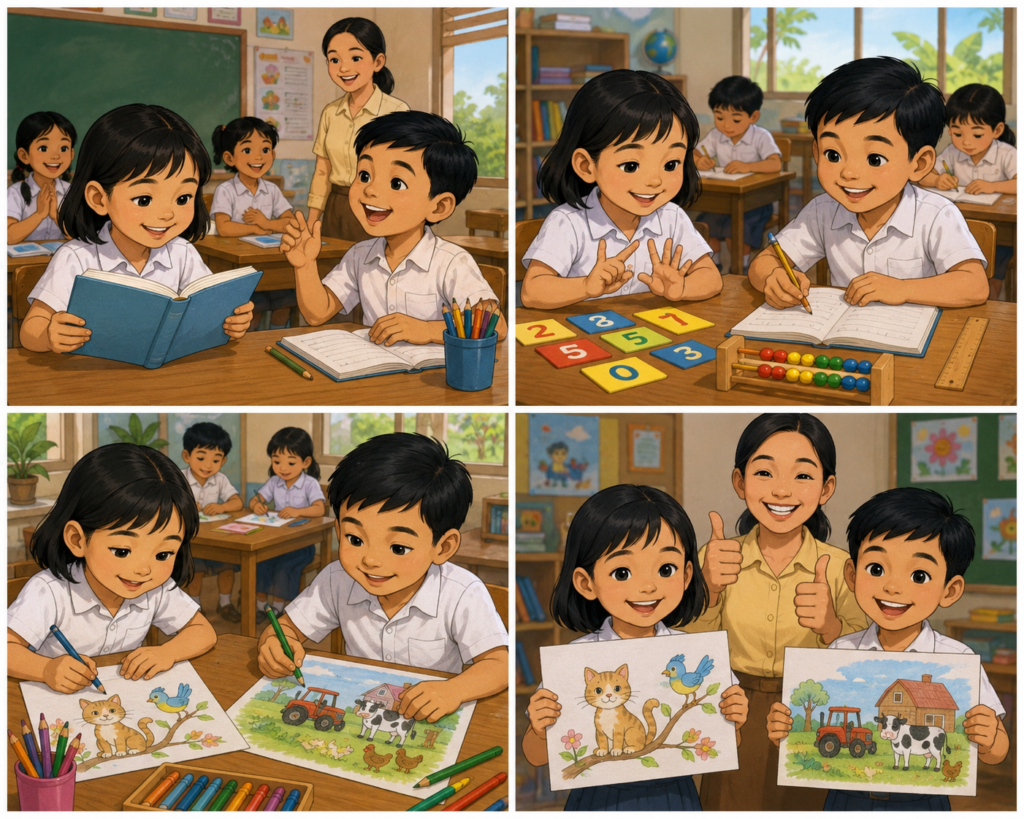
  • 💁‍♀️🐶😍Your seventh English text for ‚very‘ beginners – meet Lina and Salas at school (A1 beginners, part 7/13)💁‍♀️🐶😍

    Lina and Salas love school. They are happy every morning. Their favorite subjects are English, Maths, and Drawing. They like learning new things with their teacher and friends.

    In English class, they learn new words every day. They read easy stories and write simple sentences. They spell words and practice the alphabet. They sing songs and play word games. Lina likes reading. Salas likes speaking English with his classmates.

    In Maths class, they count from 1 to 100. They add and subtract numbers. They write the answers in their notebooks. They use pencils, rulers, and number cards. Lina likes counting. Salas likes solving easy maths problems.

    In Drawing class, they use paper, pencils, crayons, and colored pencils. They draw animals, flowers, trees, houses, and their families. Lina draws a cat and a bird. Salas draws a farm with cows, chickens, and a tractor. The teacher says, „Very good!“ Lina and Salas smile. They love learning every day and always do their best at school.


    ________________________

    Vocabulary:

    Word / PhraseMeaning
    a favorite subjecta school subject you like the most
    a simple sentencea group of easy words with a meaning
    to spell a wordto say or write the letters in a word
    to practice the alphabetto learn and use letters again and again
    a word gamea fun game with words
    a classmatea student in your class
    to countto say numbers in order
    to addto put numbers together
    to subtractto take a number away
    a numbera symbol for counting, like 1, 2, or 3
    a notebooka book for writing
    a pencila tool for writing
    a rulera tool for measuring and drawing straight lines
    countingsaying numbers in order
    to solve a problemto find an answer
    a crayona colored stick for drawing
    a colored pencila pencil with color for drawing
    a chickena farm bird
    a tractora farm vehicle
    to smileto show you are happy

    #############

    WordPicture
    school🏫
    teacher👩‍🏫
    children🧒
    friends🧑‍🤝‍🧑
    English🔤
    words💬
    alphabet🔤
    letters🅰️🅱️🅲️
    book📖
    story📖
    song🎵
    Maths🔢
    numbers🔢
    add➕
    subtract➖
    question❓
    answer✅
    pencil✏️
    ruler📏
    cards🃏
    Drawing🎨
    crayon🖍️
    paper📄
    picture🖼️
    animal🐾
    cat🐱
    bird🐦
    flower🌸
    house🏠
    tree🌳
    farm🌾
    cow🐄
    tractor🚜
    wall🧱
    classroom🏫

    ##################

    🏫 :__________________

    👩‍🏫 :__________________

    🧒 :__________________

    🧑‍🤝‍🧑 :__________________

    🔤 :__________________

    💬 :__________________

    🅰️🅱️🅲️ :__________________

    📖 :__________________

    📚 :__________________

    🎵 :__________________

    🔢 :__________________

    ➕ :__________________

    ➖ :__________________

    ❓ :__________________

    ✅ :__________________

    ✏️ :__________________

    📏 :__________________

    🃏 :__________________

    🎨 :__________________

    🖍️ :__________________

    📄 :__________________

    🖼️ :__________________

    🐾 :__________________

    🐱 :__________________

    🐦 :__________________

    🌸 :__________________

    🏠 :__________________

    🌳 :__________________

    🌾 :__________________

    🐄 :__________________

    🚜 :__________________

    🧱 :__________________

    🏫 :__________________

    ———————————

    Answers:

    🏫 : school

    👩‍🏫 : teacher

    🧒 : child

    🧑‍🤝‍🧑 : friends

    🔤 : alphabet

    💬 : words

    🅰️🅱️🅲️ : letters

    📖 : book

    📚 : story

    🎵 : song

    🔢 : numbers

    ➕ : add

    ➖ : subtract

    ❓ : question

    ✅ : answer

    ✏️ : pencil

    📏 : ruler

    🃏 : cards

    🎨 : Drawing

    🖍️ : crayon

    📄 : paper

    🖼️ : picture

    🐾 : animal

    🐱 : cat

    🐦 : bird

    🌸 : flower

    🏠 : house

    🌳 : tree

    🌾 : farm

    🐄 : cow

    🚜 : tractor

    🧱 : wall

    🏫 : classroom
    #################

    Match the words with the correct definitions:

    Words

    1. a notebook
    2. to subtract
    3. a classmate
    4. a favorite subject
    5. a tractor
    6. to smile
    7. a pencil
    8. to spell a word
    9. a word game
    10. to add
    11. a chicken
    12. counting
    13. a simple sentence
    14. a ruler
    15. to practice the alphabet
    16. a crayon
    17. to solve a problem
    18. a number
    19. a colored pencil
    20. to count

    Definitions

    A. a student in your class
    B. a tool for writing
    C. a fun game with words
    D. to find an answer
    E. a book for writing
    F. to show you are happy
    G. a farm bird
    H. a colored stick for drawing
    I. to say numbers in order
    J. a group of easy words with a meaning
    K. to put numbers together
    L. a symbol for counting, like 1, 2, or 3
    M. to say or write the letters in a word
    N. a tool for measuring and drawing straight lines
    O. a school subject you like the most
    P. to take a number away
    Q. to learn and use letters again and again
    R. a pencil with color for drawing
    S. a farm vehicle
    T. saying numbers in order

    ___________________________

    Corrrect answers:

    1-E, 2-P, 3-A, 4-O, 5-S, 6-F, 7-B, 8-M,
    9-C, 10-K, 11-G, 12-T, 13-J, 14-N, 15-Q,
    16-H, 17-D, 18-L, 19-R, 20-I

    ###################

    Match the definitions with the correct words:

    Definitions

    1. a book for writing
    2. to take a number away
    3. a student in your class
    4. a tool for measuring and drawing straight lines
    5. a fun game with words
    6. a colored stick for drawing
    7. to say numbers in order
    8. a school subject you like the most
    9. a farm vehicle
    10. to show you are happy
    11. a symbol for counting, like 1, 2, or 3
    12. a tool for writing
    13. to put numbers together
    14. a group of easy words with a meaning
    15. a pencil with color for drawing
    16. to say or write the letters in a word
    17. a farm bird
    18. to find an answer
    19. saying numbers in order
    20. to learn and use letters again and again

    Words

    A. a crayon
    B. to spell a word
    C. a tractor
    D. counting
    E. a pencil
    F. to subtract
    G. a favorite subject
    H. a chicken
    I. a notebook
    J. a number
    K. to solve a problem
    L. a ruler
    M. a colored pencil
    N. a simple sentence
    O. to add
    P. a classmate
    Q. a word game
    R. to count
    S. to practice the alphabet
    T. to smile


    _______________________

    Answers:

    1-I, 2-F, 3-P, 4-L, 5-Q, 6-A, 7-R,
    8-G, 9-C, 10-T, 11-J, 12-E, 13-O,
    14-N, 15-M, 16-B, 17-H, 18-K, 19-D, 20-S

    ################

    Fill in, words below:

    smile – classmates – ruler – subtract – crayon –
    love – practice – sentence –
    tractor – counting –
    favorite

    Lina and Salas _______ school.
    Their_______ subject is English.
    They _______ the alphabet and spell a word.
    They read a simple _______ and play a word game.
    They learn with _______ in class.
    In Maths, they count and do _______ with numbers.
    They add and _______ numbers to solve a problem.
    They use a notebook, a pencil, and a_______.
    In Drawing, they use a _______ and a colored pencil.
    They draw a chicken and a_______.
    They _______ because they like school.

    ————————————-

    Correct version:

    Lina and Salas love school.
    Their favorite subject is English.
    They practice the alphabet and spell a word.
    They read a simple sentence and play a word game.
    They learn with a classmate in class.
    In Maths, they count and do counting with numbers.
    They add and subtract numbers to solve a problem.
    They use a notebook, a pencil, and a ruler.
    In Drawing, they use a crayon and a colored pencil.
    They draw a chicken and a tractor.
    They smile because they like school.

    ################

    Choose the Right Word

    Circle the correct answer.

    1. Lina and Salas ______ school.
      a) love
      b) leave
      c) visit
    2. Their favorite subjects are English, Maths, and ______.
      a) Science
      b) Music
      c) Drawing
    3. In English class, they say the ______.
      a) ruler
      b) alphabet
      c) tractor
    4. They read short ______ in English class.
      a) numbers
      b) stories
      c) pictures
    5. They sing easy ______.
      a) songs
      b) cards
      c) problems
    6. In Maths class, they ______ numbers.
      a) draw
      b) sing
      c) count
    7. They use a ______ to write.
      a) crayon
      b) pencil
      c) ruler
    8. They use a ruler to draw ______ lines.
      a) straight
      b) colorful
      c) easy
    9. Lina likes drawing ______ and birds.
      a) cows
      b) tractors
      c) cats
    10. Salas likes drawing farms, cows, and ______.
      a) flowers
      b) tractors
      c) houses

    —————————–

    Answer:
    1-a, 2-c, 3-b, 4-b, 5-a, 6-c,
    7-b, 8-a, 9-c, 10-b

    __________________

    Correct version:

    Lina and Salas love school.

    Their favorite subjects are English, Maths, and Drawing.

    In English class, they say the alphabet.

    They read short stories in English class.

    They sing easy songs.

    In Maths class, they count numbers.

    They use a pencil to write.

    They use a ruler to draw straight lines.

    Lina likes drawing cats and birds.

    Salas likes drawing farms, cows, and tractors.

    ##############

    True or False

    1. Lina likes drawing cats and birds.
    2. They use crayons, pencils, and number cards in Drawing class.
    3. Lina and Salas love school.
    4. Salas likes drawing cats and birds.
    5. They sing easy songs in English class.
    6. Their favorite subjects are English, Maths, and stories.
    7. They use crayons, pencils, and paper in Drawing class.
    8. They draw flowers and houses in English class.
    9. Salas likes drawing farms, cows, and tractors.
    10. Their teacher puts the pictures on the classroom wall.

    _____________________

    Answer Key:
    1-T, 2-F, 3-T, 4-F, 5-T, 6-F, 7-T, 8-F, 9-T, 10-T
    _____________________

    Correct version:

    1. Lina likes drawing cats and birds.
    2. They use crayons, pencils, and number cards in Drawing class.
      True is: They use crayons, pencils, and paper in Drawing class.
    3. Lina and Salas love school.
    4. Salas likes drawing cats and birds.
      True is: Salas likes drawing farms, cows, and tractors.
    5. They sing easy songs in English class.
    6. Their favorite subjects are English, Maths, and stories.
      True is: Their favorite subjects are English, Maths, and Drawing.
    7. They use crayons, pencils, and paper in Drawing class.
    8. They draw flowers and houses in English class.
      True is: They draw flowers and houses in Drawing class.
    9. Salas likes drawing farms, cows, and tractors.
    10. Their teacher puts the pictures on the classroom wall.

    ###############

    Put the sentences in the correct order – as shown in text:

    A. Lina likes drawing cats and birds.

    B. Lina and Salas love school.

    C. In Maths class, they count numbers, add and subtract.

    D. Their teacher puts the pictures on the classroom wall.

    E. In English class, they say the alphabet and read [ri:d] short stories.

    F. In Drawing class, they use crayons, pencils, and paper.

    G. Salas likes drawing farms, cows, and tractors.

    H. They use pencils, rulers, and number cards in Maths class.

    ______________________

    Correct order:

    B, E, C, H, F, A, G, D

    ################

    Match the questions with the correct answers:

    Questions

    1. What are Lina and Salas?
    2. What are their favorite subjects?
    3. What do they do in English class?
    4. What do they use in Maths class?
    5. Who is good at counting?
    6. What does Salas like finding?
    7. What do they use in Drawing class?
    8. What does Lina like drawing?
    9. What does Salas like drawing?
    10. Where does the teacher put the pictures?

    Answers

    A. He likes finding the answers.

    B. The teacher puts them on the classroom wall.

    C. They are brother and sister.

    D. She likes drawing cats and birds.

    E. They use crayons, pencils, and paper.

    F. They use pencils, rulers, and number cards.

    G. They are English, Maths, and Drawing.

    H. He likes drawing farms, cows, and tractors.

    I. They say the alphabet, read short stories, and sing easy songs.

    J. Lina is good at counting.


    _______________________

    Answers:

    1-C, 2-G, 3-I, 4-F, 5-J, 6-A,
    7-E, 8-D, 9-H, 10-B

    _______________________

    Correct version:

    1. What are Lina and Salas?
      C. They are brother and sister.
    2. What are their favorite subjects?
      G. They are English, Maths, and Drawing.
    3. What do they do in English class?
      I. They say the alphabet, read short stories, and sing easy songs.
    4. What do they use in Maths class?
      F. They use pencils, rulers, and number cards.
    5. Who is good at counting?
      J. Lina is good at counting.
    6. What does Salas like finding?
      A. He likes finding the answers.
    7. What do they use in Drawing class?
      E. They use crayons, pencils, and paper.
    8. What does Lina like drawing?
      D. She likes drawing cats and birds.
    9. What does Salas like drawing?
      H. He likes drawing farms, cows, and tractors.
    10. Where does the teacher put the pictures?
      B. The teacher puts them on the classroom wall.

    #################

    Yes/No Questions
    Answer: Yes, they do. / No, they don’t.

    1. Do Lina and Salas love school?

      YOU WRITE:
      Yes, they do.

    2. Do they say the alphabet in English class?
    3. Do they use crayons in Maths class?
    4. Do they count numbers in Maths class?
    5. Do they use pencils, rulers, and number cards in Drawing class?
    6. Do they draw cats and birds?
    7. Do they sing easy songs in Maths class?
    8. Do they use crayons, pencils, and paper in Drawing class?
    9. Do they draw cars and buses?
    10. Do they use rulers in English class?

    _____________________

    Corrrect version:

    1. Do Lina and Salas love school?
      Yes, they do.
    2. Do they say the alphabet in English class?
      Yes, they do.
    3. Do they use crayons in Maths class?
      No, they don’t.
    4. Do they count numbers in Maths class?
      Yes, they do.
    5. Do they use pencils, rulers, and number cards in Drawing class?
      No, they don’t.
    6. Do they draw cats and birds?
      Yes, they do.
    7. Do they sing easy songs in Maths class?
      No, they don’t.
    8. Do they use crayons, pencils, and paper in Drawing class?
      Yes, they do.
    9. Do they draw cars and buses?
      No, they don’t.
    10. Do they use rulers in English class?
      No, they don’t.

    #################

    Please use the box below to write your feedback.
    Only I can read it.
    It is not public.

    Please tell me:

    • Are the texts and exercises OK?
    • Are the topics OK?
    • Is the level OK?
    • Is it too easy or too difficult?
    • Do you want texts about other topics?

    Thank you! I appreciate your feedback.
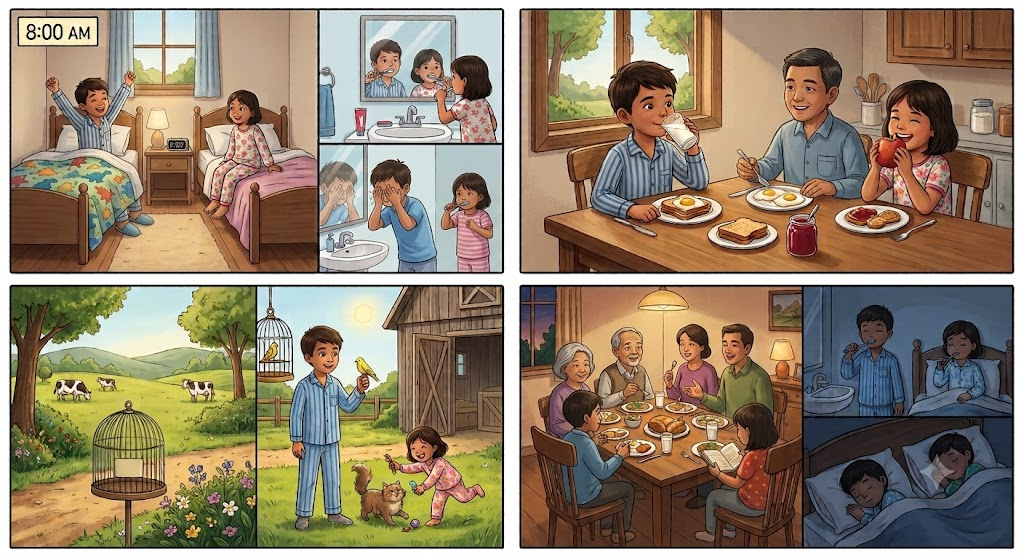
  • 💁‍♀️🐶😍Your sixth English text for ‚very‘ beginners – meet Lina and Salas on a Sunday (A1 beginners, part 6/13)💁‍♀️🐶😍

    On Sunday, Lina and Salas wake up at eight o’clock.

    They get up and brush their teeth. They wash their faces and get dressed.

    For breakfast, they eat bread and eggs. Salas drinks milk. Lina eats an apple.

    After breakfast, they go outside. They play with their animals. Salas talks to his yellow bird. Lina plays with her cat.

    Then they go for a walk near the farm. They see flowers, trees, and cows. They visit their grandparents and say hello.

    At noon, the family eats lunch together. They talk and laugh.

    In the afternoon, Lina reads a book. Salas draws a picture of the farm.

    In the evening, they eat dinner. Before bed, they brush their teeth again. They go to bed and sleep.

    They have a happy Sunday.

    _________________________

    Vocabs:

    • to wake up – to stop sleeping
    • to get up – to leave your bed
    • to brush teeth – to clean your teeth with a toothbrush
    • a vase – a container for flowers
    • to get dressed – to put on your clothes
    • an egg – a food from a chicken
    • to talk to somebody – to speak with a person
    • a tree – a big plant with a trunk and leaves
    • to visit – to go and see a person or a place
    • at noon – at 12 o’clock in the middle of the day
    • to eat lunch – to have the meal in the middle of the day
    • to talk – to speak
    • to laugh – to make a happy sound
    • to draw a picture – to make a picture with a pencil or pen
    • to sleep – to rest with your eyes closed

    ###################

    Match the words with the definitions

    Words

    1. to wake up
    2. to get up
    3. to brush teeth
    4. a vase
    5. to get dressed
    6. an egg
    7. to talk to somebody
    8. a tree
    9. to visit
    10. at noon
    11. to eat lunch
    12. to talk
    13. to laugh
    14. to draw a picture
    15. to sleep


    Definitions

    a. to make a picture with a pencil or pen
    b. to leave your bed
    c. a food from a chicken
    d. to speak with a person
    e. to rest with your eyes closed
    f. to clean your teeth with a toothbrush
    g. to go and see a person or a place
    h. a big plant with a trunk and leaves
    i. to stop sleeping
    j. to have the meal in the middle of the day
    k. a container for flowers
    l. to speak
    m. at 12 o’clock in the middle of the day
    n. to put on your clothes
    o. to make a happy sound

    ______________________

    Answers:
    1-i, 2-b, 3-f, 4-k, 5-n, 6-c, 7-d,
    8-h, 9-g, 10-m, 11-j, 12-l,
    13-o, 14-a, 15-e
    ################

    Match the definitions with the words

    Definitions

    1. to stop sleeping
    2. to leave your bed
    3. to clean your teeth with a toothbrush
    4. a container for flowers
    5. to put on your clothes
    6. a food from a chicken
    7. to speak with a person
    8. a big plant with a trunk and leaves
    9. to go and see a person or a place
    10. at 12 o’clock in the middle of the day
    11. to have the meal in the middle of the day
    12. to speak
    13. to make a happy sound
    14. to make a picture with a pencil or pen
    15. to rest with your eyes closed


    Words

    a. to draw a picture
    b. to visit
    c. to sleep
    d. a tree
    e. to talk
    f. to wake up
    g. an egg
    h. to brush teeth
    i. to laugh
    j. to get dressed
    k. at noon
    l. to talk to somebody
    m. to eat lunch
    n. a vase
    o. to get up

    _________________________

    Answers:
    1-f, 2-o, 3-h, 4-n, 5-j, 6-g,
    7-l, 8-d, 9-b, 10-k, 11-m,
    12-e, 13-i, 14-a, 15-c
    ##################

    Fill in, words below :

    eggs, sleep, tree, get dressed, visit,
    breakfast, laugh, brush,
    wake up, lunch

    1. Lina and Salas ______ at eight o’clock on Sunday.
    2. They ______ their teeth in the morning.
    3. They eat ______ with their parents.
    4. Lina and Salas ______ their grandparents in the afternoon.
    5. They go to bed and ______ at night.
    6. They eat ______ at noon with their family.
    7. They see a big ______ near the farm.
    8. They ______ after a funny story from their grandparents.
    9. After breakfast, they ______ and put on their clothes.
    10. They eat ______ from the chickens on the farm.

    —————————————-
    Correct version:

    1. Lina and Salas wake up at eight o’clock on Sunday.
    2. They brush their teeth in the morning.
    3. They eat breakfast with their parents.
    4. Lina and Salas visit their grandparents in the afternoon.
    5. They go to bed and sleep at night.
    6. They eat lunch at noon with their family.
    7. They see a big tree near the farm.
    8. They laugh after a funny story from their grandparents.
    9. After breakfast, they get dressed and put on their clothes.
    10. They eat eggs from the chickens on the farm.

    ##################

    Choose the correct word

    1. I ______ my teeth every morning.
      a) brush
      b) eat
      c) sleep
    2. A chicken gives us ______.
      a) milk
      b) eggs
      c) water
    3. A big plant with leaves is a ______.
      a) book
      b) flower
      c) tree
    4. Salas has a yellow ______.
      a) cow
      b) cat
      c) bird
    5. Lina plays with her ______ in the garden.
      a) cat
      b) bird
      c) cow
    6. Salas plays ______ after school.
      a) dinner
      b) soccer
      c) school
    7. The family eats ______ together in the evening.
      a) lunch
      b) breakfast
      c) dinner
    8. Lina and Salas go to ______ from Monday to Friday.
      a) school
      b) farm
      c) bed
    9. Salas writes in his ______ at school.
      a) garden
      b) notebook
      c) box
    10. The grandparents have four friendly ______.
      a) eggs
      b) cows
      c) trees

    —————————————

    Answers:
    1-a, 2-b, 3-c, 4-c, 5-a,
    6-b, 7-c, 8-a, 9-b, 10-b

    ________________________
    Correct answers:

    1. I brush my teeth every morning.
    2. A chicken gives us eggs.
    3. A big plant with leaves is a tree.
    4. Salas has a yellow bird.
    5. Lina plays with her cat in the garden.
    6. Salas plays soccer after school.
    7. The family eats dinner together in the evening.
    8. Lina and Salas go to school from Monday to Friday.
    9. Salas writes in his notebook at school.
    10. The grandparents have four friendly cows.

    ################

    True or False

    1. Lina and Salas wake up on Sunday.
    2. Salas plays with a cat in the garden.
    3. Lina plays with her cat in the garden.
    4. They go to school on Sunday.
    5. The grandparents have four friendly cows.
    6. Lina gives food to the birds.
    7. They visit their grandparents in the afternoon.
    8. Salas reads a book about animals.
    9. Salas plays soccer with a ball.
    10. They sleep in the garden at night.

    _________________________

    Answers:
    1. True, 2. False, 3. True, 4. False, 5. True,
    6. False, 7. True, 8. False, 9. True, 10. False

    ##################

    Put the sentences in order:

    1. They brush their teeth before bed.
    2. They visit their grandparents.
    3. They eat breakfast with their parents.
    4. They go to bed at night.
    5. They play outside in the garden.
    6. They wake up in the morning.
    7. They eat dinner together.
    8. They brush their teeth in the morning.

    ________________________

    Correct order:

    They wake up in the morning.

    They brush their teeth in the morning.

    They eat breakfast with their parents.

    They play outside in the garden.

    They visit their grandparents.

    They eat dinner together.

    They brush their teeth before bed.

    They go to bed at night.

    #################

    Match the questions with the answers:

    Questions

    1. What time do Lina and Salas wake up?
    2. What does Salas drink for breakfast?
    3. Who do Lina and Salas visit?
    4. What does Lina read?
    5. What does Salas draw?
    6. Where do Lina and Salas play?
    7. What animal does Lina play with?
    8. What does Salas play?
    9. What do they eat in the evening?
    10. How do they feel at night?

    Answers

    a. They are tired but happy.
    b. A picture of a farm.
    c. Their grandparents.
    d. In the garden.
    e. Dinner with their family.
    f. Soccer.
    g. Milk.
    h. A book about animals.
    i. A cat.
    j. At eight o’clock.

    _________________________

    Answers:
    1-j, 2-g, 3-c, 4-h, 5-b, 6-d, 7-i, 8-f, 9-e, 10-a.

    ##################

    Yes/No Questions

    Answer: Yes, they do. / No, they don’t.

    1. Do Lina and Salas eat breakfast?
    2. Do they sleep in the afternoon?
    3. Do they visit their grandparents?
    4. Do they brush their teeth in the morning?
    5. Do they play soccer in the garden?
    6. Do they go to school on Sunday?
    7. Do they help their parents on the farm?
    8. Do they eat dinner together?
    9. Do they read a book about cars?
    10. Do they drink water with breakfast?
    11. Do they visit their grandparents’ cows?
    12. Do they sleep in the garden at night?

    _______________________

    Answers:

    1. Do Lina and Salas eat breakfast? Yes, they do.
    2. Do they sleep in the afternoon? No, they don’t.
    3. Do they visit their grandparents? Yes, they do.
    4. Do they brush their teeth in the morning? Yes, they do.
    5. Do they play soccer in the garden? Yes, they do.
    6. Do they go to school on Sunday? No, they don’t.
    7. Do they help their parents on the farm? Yes, they do.
    8. Do they eat dinner together? Yes, they do.
    9. Do they read a book about cars? No, they don’t.
    10. Do they drink water with breakfast? No, they don’t.
    11. Do they visit their grandparents’ cows? Yes, they do.
    12. Do they sleep in the garden at night? No, they don’t.

    #################

    Picture vocabulary – write the word:

    1. 🐦 ______
    2. 🐄 ______
    3. 🐱 ______
    4. 🥚 ______
    5. 🌳 ______
    6. 🌸 ______
    7. ⚽ ______
    8. 📖 ______
    9. 🍎 ______
    10. 🥛 ______
    11. 🐔 ______
    12. 🥕 ______
    13. 🥦 ______
    14. 🚍 ______
    15. 🏫 ______
    16. 🏠 ______
    17. 🛏️ ______
    18. 🦷 ______
    19. ✏️ ______
    20. 📓 ______
    21. 🌱 ______
    22. 💧 ______
    23. 🍽️ ______
    24. 👨‍👩‍👧‍👦 ______
    25. 👵👴 ______

    —————————————-

    Correct answers:

    🐦 bird🐄 cow
    🐱 cat🥚 egg
    🌳 tree🌸 flower
    ⚽ ball📖 book
    🍎 apple🥛 milk
    🐔 chicken🥕 carrot
    🥦 vegetable🚍 bus
    🏫 school🏠 home
    🛏️ bed🦷 teeth
    ✏️ pencil📓 notebook
    🌱 garden💧 water
    🍽️ dinner👨‍👩‍👧‍👦 family
    👵👴 grandparents

    ##################

    Fill in, words below:

    reads – lunch – breakfast – sleep – walk – teeth –
    dinner – grandparents – eggs – milk –
    wake up – yellow –
    plays – draws –
    dressed

    On Sunday, Lina and Salas _______ at eight o’clock.

    They get up and brush their _______. They wash their faces and get _______.

    For breakfast, they eat bread and_______.
    Salas drinks _______. Lina eats an apple.

    After _______, they go outside. They play with their animals. Salas talks to his_______ bird.
    Lina _______ with her cat.

    Then they go for a _______ near the farm. They see flowers, trees, and cows. They visit their _______ and say hello.

    At noon, the family eats _______ together. They talk and laugh.

    In the afternoon, Lina _______ a book. Salas ________ a picture of the farm.

    In the evening, they eat _______. Before bed, they brush their teeth again. They go to bed and _______.

    They have a happy Sunday.

    _________________________

    Correct version:

    On Sunday, Lina and Salas wake up at eight o’clock.

    They get up and brush their teeth. They wash their faces and get dressed.

    For breakfast, they eat bread and eggs. Salas drinks milk. Lina eats an apple.

    After breakfast, they go outside. They play with their animals. Salas talks to his yellow bird. Lina plays with her cat.

    Then they go for a walk near the farm. They see flowers, trees, and cows. They visit their grandparents and say hello.

    At noon, the family eats lunch together. They talk and laugh.

    In the afternoon, Lina reads a book. Salas draws a picture of the farm.

    In the evening, they eat dinner. Before bed, they brush their teeth again. They go to bed and sleep.

    They have a happy Sunday.

    ##################

    Please use the box below to write your feedback. Only I can read it. It is not public.

    Please tell me:

    • Are the texts and exercises OK?
    • Are the topics OK?
    • Is the level OK?
    • Is it too easy or too difficult?
    • Do you want texts about other topics?

    Thank you! I appreciate your feedback.
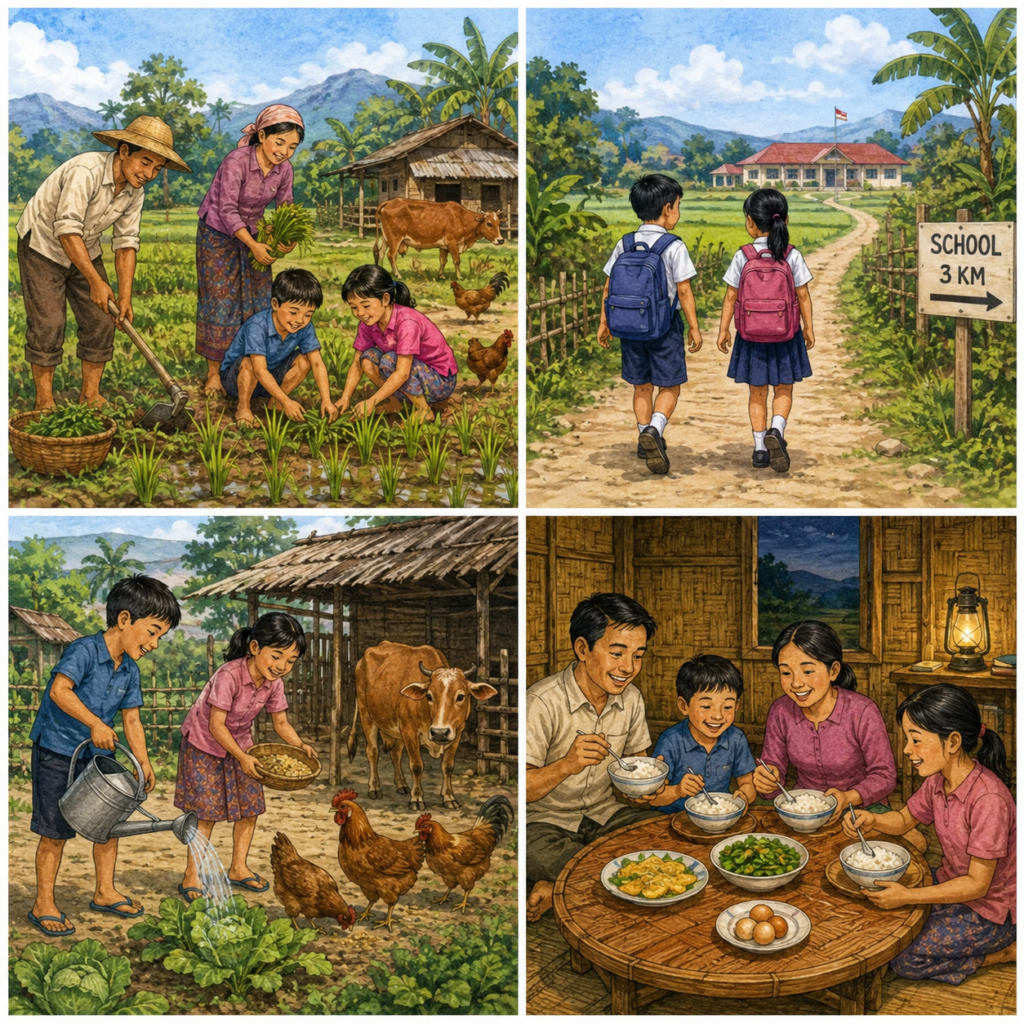
  • 🐣🐄🪷A farming family in the countryside (A1, beginners, present simple, text, exercises, short answers, questions, negations, and more)🪷🐄🐣

    The Lee family lives in a small village in the Asian countryside. They are farmers. The father and mother work on the farm every day. They grow rice and vegetables. They also have two chickens and one cow.

    The family has two children. Their names are Min and Lila. They are eight and ten years old. They go to the village school. The school is three kilometers from their home. Every morning, they walk three kilometers to school. After school, they walk three kilometers home again. They walk six kilometers every day.

    The children like school. They learn to read, write, count, and draw. They like their teacher and their friends. Sometimes it is hot. Sometimes it rains. They still walk to school with happy smiles.

    After they get home, Min and Lila help their parents. They give water to the vegetables. They feed the chickens and the cow. Then they do their homework together.

    In the evening, the family eats rice, vegetables, and eggs. They talk about their day. They laugh and tell stories. After dinner, the children read a book for a short time. Then everyone goes to bed early. They are happy because they work hard, learn new things, and help each other every day.

    ______________________

    Vocabulary:

    • countryside – an area outside a city with farms, fields, trees, and nature.
    • a village – a small place where people live, smaller than a town.
    • to grow vegetables – to plant and take care of vegetables so they become bigger.
    • a chicken – a small farm bird that gives eggs.
    • a cow – a large farm animal that gives milk.
    • to count – to say numbers to know how many things there are.
    • to draw – to make a picture with a pencil, pen, or other tool.
    • a smile – a happy expression on your face.
    • to give water to plants – to put water on plants so they can grow.
    • to feed the chicken – to give food to a chicken.
    • to laugh – to make a happy sound when something is funny or you feel happy.

    ################

    Match the words with the correct definitions

    Words

    1. countryside
    2. a village
    3. to grow vegetables
    4. a chicken
    5. a cow
    6. to count
    7. to draw
    8. a smile
    9. to give water to plants
    10. to feed the chicken
    11. to laugh

    Definitions

    A. To make a happy sound when something is funny or you feel happy.
    B. A large farm animal that gives milk.
    C. To put water on plants so they can grow.
    D. A small place where people live, smaller than a town.
    E. To give food to a chicken.
    F. To say numbers to know how many things there are.
    G. An area outside a city with farms, fields, trees, and nature.
    H. To make a picture with a pencil, pen, or other tool.
    I. A small farm bird that gives eggs.
    J. A happy expression on your face.
    K. To plant and take care of vegetables so they become bigger.

    __________________

    Answer:
    1-G, 2-D, 3-K, 4-I, 5-B, 6-F,
    7-H, 8-J, 9-C, 10-E, 11-A

    #############

    Which word/s are we looking for?

    Definitions

    1. To make a happy sound when something is funny or you feel happy: ___________
    2. A large farm animal that gives milk: ___________
    3. To put water on plants so they can grow: ___________
    4. A small place where people live, smaller than a town: ___________
    5. To give food to a chicken: ___________
    6. To say numbers to know how many things there are: ___________
    7. An area outside a city with farms, fields, trees, and nature: ___________
    8. To make a picture with a pencil, pen, or other tool: ___________
    9. A small farm bird that gives eggs: ___________
    10. A happy expression on your face: ___________
    11. To plant and take care of vegetables so they become bigger: ___________

    ————————–

    Answers:

    1. To make a happy sound when something is funny or you feel happy: to laugh
    2. A large farm animal that gives milk: a cow
    3. To put water on plants so they can grow: to give water to plants
    4. A small place where people live, smaller than a town: a village
    5. To give food to a chicken: to feed the chicken
    6. To say numbers to know how many things there are: to count
    7. An area outside a city with farms, fields, trees, and nature: countryside
    8. To make a picture with a pencil, pen, or other tool: to draw
    9. A small farm bird that gives eggs: a chicken
    10. A happy expression on your face: a smile
    11. To plant and take care of vegetables so they become bigger: to grow vegetables

    ##################

    True or false:

    1. The family lives in the countryside.
    2. The family has three chickens and two cows.
    3. Min and Lila walk three kilometers to school every morning.
    4. The children learn to read, write, count, and draw at school.
    5. Sometimes the children do not go to school when it rains.
    6. After school, Min and Lila help their parents at home.
    7. The children feed the vegetables and water the chickens.
    8. The family eats rice, vegetables, and eggs in the evening.
    9. The children watch TV after dinner before going to bed.
    10. The family is happy because they help each other every day.

    ______________________

    True: 1,3,4,6,8,10

    ______________________

    Correct version:

    1. The family lives in the countryside.
    2. The family has three chickens and two cows.
      True is: The family has two chickens and one cow.
    3. Min and Lila walk three kilometers to school every morning.
    4. The children learn to read, write, count, and draw at school.
    5. Sometimes the children do not go to school when it rains.
      True is: Sometimes it rains, but they still walk to school with happy smiles.
    6. After school, Min and Lila help their parents at home.
    7. The children feed the vegetables and water the chickens.
      True is: They give water to the vegetables and feed the chickens and the cow.
    8. The family eats rice, vegetables, and eggs in the evening.
    9. The children watch TV after dinner before going to bed.
      True is: After dinner, the children read a book for a short time.
    10. The family is happy because they help each other every day.

    ##############

    Scrambled Sentences (Put the words in the correct order)

    1. countryside / the / lives / family / in / the
    2. two / family / has / children / the
    3. school / walk / every / they / morning / to
    4. kilometers / home / their / is / three / from / school
    5. learn / children / the / write / and / read / to
    6. after / help / parents / their / Min / and / Lila / school
    7. water / vegetables / give / they / the / to
    8. chickens / feed / they / the / and / cow / the
    9. and / eats / family / the / vegetables / rice / eggs
    10. each / help / they / other / every / day

    ____________________

    Answers:

    1. The family lives in the countryside.
    2. The family has two children.
    3. They walk to school every morning.
    4. Their school is three kilometers from home.
    5. The children learn to read and write.
    6. After school, Min and Lila help their parents.
    7. They give water to the vegetables.
    8. They feed the chickens and the cow.
    9. The family eats rice, vegetables, and eggs.
    10. They help each other every day.

    ##############

    Short answers, basics:

    Example SentenceYesNo
    I learn the alphabet.Yes, I do.No, I don’t.
    You read signs.Yes, you do.No, you don’t.
    He practices speaking.Yes, he does.No, he doesn’t.
    She watches cartoons.Yes, she does.No, she doesn’t.
    It helps us learn English.Yes, it does.No, it doesn’t.
    We use apps like Duolingo.Yes, we do.No, we don’t.
    You read labels.Yes, you do.No, you don’t.
    They make mistakes sometimes.Yes, they do.No, they don’t.
    QuestionYesNo
    Do I learn the alphabet?Yes, I do.No, I don’t.
    Do you read signs?Yes, you do.No, you don’t.
    Does he practice speaking?Yes, he does.No, he doesn’t.
    Does she watch cartoons?Yes, she does.No, she doesn’t.
    Does it help us learn English?Yes, it does.No, it doesn’t.
    Do we use apps like Duolingo?Yes, we do.No, we don’t.
    Do you read labels?Yes, you do.No, you don’t.
    Do they make mistakes sometimes?Yes, they do.No, they don’t.
    QuestionYesNo
    Am I big?Yes, I am.No, I am not.
    Are you big?Yes, you are.No, you aren’t.
    Is he big?Yes, he is.No, he isn’t.
    Is she big?Yes, she is.No, she isn’t.
    Is it big?Yes, it is.No, it isn’t.
    Are we big?Yes, we are.No, we aren’t.
    Are you big?Yes, you are.No, you aren’t.
    Are they big?Yes, they are.No, they aren’t.

    Gie a short answer, as shown:

    1. He grows rice and vegetables.

      YOU WRITE:
      Yes, he does.

    2. She has two chickens and one cow.
    3. They are eight and ten years old.
    4. She walks three kilometers to school every morning.
    5. He learns to read, write, count, and draw at school.
    6. They like their teacher and their friends.
    7. He helps his parents after school.
    8. She gives water to the chickens after school.
    9. They walk ten kilometers every day.
    10. He feeds only the cow after school.
    11. She eats rice, vegetables, and eggs in the evening.
    12. They play games after dinner.
    13. He reads a book after dinner.
    14. She goes to bed early every evening.

    ____________________

    Correct answers ( you can also write ‚doesn’t‘, ‚don’t)

    1. He grows rice and vegetables. Yes, he does.
    2. She has two chickens and one cow. Yes, she does.
    3. They are eight and ten years old. Yes, they are.
    4. She walks three kilometers to school every morning. Yes, she does.
    5. He learns to read, write, count, and draw at school. Yes, he does.
    6. They like their teacher and their friends. Yes, they do.
    7. He helps his parents after school. Yes, he does.
    8. She gives water to the chickens after school. No, she does not.
    9. They walk ten kilometers every day. No, they do not.
    10. He feeds only the cow after school. No, he does not.
    11. She eats rice, vegetables, and eggs in the evening. Yes, she does.
    12. They play games after dinner. No, they do not.
    13. He reads a book after dinner. Yes, he does.
    14. She goes to bed early every evening. Yes, she does.

    ################

    Answer as shown:

    1. He grows rice and fruit in the countryside.

      YOU WRITE:
      No, he doesn’t. He grows rice and vegetables in the countryside.

    2. She has three chickens and two cows.
    3. They are twelve and fourteen years old.
    4. Her father is a teacher at the village school.
    5. She walks five kilometers to school every morning.
    6. They learn only to sing and dance at school.
    7. He feeds the vegetables and waters the chickens after school.
    8. She reads a newspaper after dinner.

    _____________________

    Correct answer:

    1. He grows rice and fruit in the countryside. No, he doesn’t. He grows rice and vegetables in the countryside.
    2. She has three chickens and two cows. No, she doesn’t. She has two chickens and one cow.
    3. They are twelve and fourteen years old. No, they aren’t. They are eight and ten years old.
    4. Her father is a teacher at the village school. No, he isn’t. Her father grows rice and vegetables.
    5. She walks five kilometers to school every morning. No, she doesn’t. She walks three kilometers to school every morning.
    6. They learn only to sing and dance at school. No, they don’t. They learn to read, write, count, and draw at school.
    7. He feeds the vegetables and waters the chickens after school. No, he doesn’t. He gives water to the vegetables and feeds the chickens and the cow.
    8. She reads a newspaper after dinner. No, she doesn’t. She reads a book after dinner.

    ##################

    Odd one out, choose the word that does not belong

    1. school – home – village – book
    2. water – feed – draw – help
    3. chicken – cow – teacher – farm animal
    4. countryside – village – city – chicken
    5. morning – evening – dinner – kilometer
    6. rice – vegetables – eggs – milk
    7. Min – Lila – teacher – cow
    8. read – write – count – walk

    ________________________

    Correct answers:

    1. school – home – village – book
      Answer: book – A book is something you read. The others are places.
    2. water – feed – draw – help
      Answer: draw – Draw is a school activity. The others are things you do to help or care for something.
    3. chicken – cow – teacher – farm animal
      Answer: teacher – A teacher is a person. The others are animals or describe farm animals.
    4. countryside – village – city – chicken
      Answer: chicken – A chicken is an animal. The others are places.
    5. morning – evening – dinner – kilometer
      Answer: kilometer – A kilometer is a unit of distance. The others relate to time or a meal time.
    6. rice – vegetables – eggs – milk
      Answer: milk – Milk is a drink. The others are foods mentioned in the text.
    7. Min – Lila – teacher – cow
      Answer: cow – A cow is an animal. The others are people.
    8. read – write – count – walk
      Answer: walk – Walking is a movement activity. The others are things learned at school.

    ################

    Fill in, words below:

    rains – teacher – chickens – walk – vegetables –
    feed – watch – village – count –
    eggs – every day – old –
    everyone – parents –
    family

    1. The ________ grows rice and vegetables.
    2. The family has two ________ and one cow.
    3. Min and Lila are eight and ten years ________.
    4. The ________ school is three kilometers from their home.
    5. The children ________ to school every morning.
    6. They walk six kilometers ________.
    7. The children learn to read, write, ________, and draw.
    8. They like their ________ and their friends.
    9. Sometimes it ________, but they still walk to school.
    10. After school, Min and Lila help their ________.
    11. They give water to the ________ and ________ the chickens and the cow.
    12. The family eats rice, vegetables, and __________ in the evening.
    13. After dinner, the children do not ________ television.
    14. ________ goes to bed early.

    ————————–

    Correct version:


    The family grows rice and vegetables.

    The family has two chickens and one cow.

    Min and Lila are eight and ten years old.

    The village school is three kilometers from their home.

    The children walk to school every morning.

    They walk six kilometers every day.

    The children learn to read, write, count, and draw.

    They like their teacher and their friends.

    Sometimes it rains, but they still walk to school.

    After school, Min and Lila help their parents.

    They give water to the vegetables and feed the chickens and the cow.

    The family eats rice, vegetables, and eggs in the evening.

    After dinner, the children do not watch television.

    Everyone goes to bed early.

    ###############

    Basics of present simple:

    Personal Pronounam / is / are
    Iam8 years old
    Youare8 years old
    Heis8 years old
    Sheis8 years old
    Itis8 years old
    Weare8 years old
    You (plural)are8 years old
    Theyare8 years old
    Personal Pronounam not / is not / are not
    Iam not8 years old
    Youare not8 years old
    Heis not8 years old
    Sheis not8 years old
    Itis not8 years old
    Weare not8 years old
    You (plural)are not8 years old
    Theyare not8 years old

    Question:

    Question WordPersonal Pronoun
    AmI8 years old?
    Areyou8 years old?
    Ishe8 years old?
    Isshe8 years old?
    Isit8 years old?
    Arewe8 years old?
    Areyou (plural)8 years old?
    Arethey8 years old?

    Statement:

    Personal PronounVerb
    Ilikeice cream
    Youlikeice cream
    Helikesice cream
    Shelikesice cream
    Itlikesice cream
    Welikeice cream
    You (plural)likeice cream
    Theylikeice cream

    Negation:

    Personal PronounVerb (negative)
    Ido not likeice cream
    Youdo not likeice cream
    Hedoes not likeice cream
    Shedoes not likeice cream
    Itdoes not likeice cream
    Wedo not likeice cream
    You (plural)do not likeice cream
    Theydo not likeice cream

    Question:

    Do / DoesPersonal PronounVerbSugar?
    DoIlikesugar?
    Doyoulikesugar?
    Doeshelikesugar?
    Doesshelikesugar?
    Doesitlikesugar?
    Dowelikesugar?
    Doyou (plural)likesugar?
    Dotheylikesugar?

    ################

    Rewrite as shown in 1:

    1. Her father grows rice and vegetables.

      YOU WRITE:
      negation: Her father does not grow rice and vegetable.
      question: Does her father grow rice and vegatables?
      negative questions: Doesn’t her father grow rice and vegetables?

    2. Min and Lila are eight and ten years old.
    3. They learn to read, write, count, and draw at school.
    4. The school is three kilometers from their home.
    5. After school, Min and Lila help their parents.
    6. They have two chickens and one cow.
    7. The family eats rice, vegetables, and eggs in the evening.
    8. The children walk to school every morning.
    9. When it rains, they still walk to school.
    10. Everyone goes to bed early.

    _______________________

    Correct version:

    1-8

    1. Her father grows rice and vegetables.
      Negation: Her father does not grow rice and vegetables.
      Question: Does her father grow rice and vegetables?
      Negative question: Doesn’t her father grow rice and vegetables?
    2. Min and Lila are eight and ten years old.
      Negation: Min and Lila are not eight and ten years old.
      Question: Are Min and Lila eight and ten years old?
      Negative question: Aren’t Min and Lila eight and ten years old?
    3. They learn to read, write, count, and draw at school.
      Negation: They do not learn to read, write, count, and draw at school.
      Question: Do they learn to read, write, count, and draw at school?
      Negative question: Don’t they learn to read, write, count, and draw at school?
    4. The school is three kilometers from their home.
      Negation: The school is not three kilometers from their home.
      Question: Is the school three kilometers from their home?
      Negative question: Isn’t the school three kilometers from their home?
    5. After school, Min and Lila help their parents.
      Negation: After school, Min and Lila do not help their parents.
      Question: Do Min and Lila help their parents after school?
      Negative question: Don’t Min and Lila help their parents after school?
    6. They have two chickens and one cow.
      Negation: They do not have two chickens and one cow.
      Question: Do they have two chickens and one cow?
      Negative question: Don’t they have two chickens and one cow?
    7. The family eats rice, vegetables, and eggs in the evening.
      Negation: The family does not eat rice, vegetables, and eggs in the evening.
      Question: Does the family eat rice, vegetables, and eggs in the evening?
      Negative question: Doesn’t the family eat rice, vegetables, and eggs in the evening?
    8. The children walk to school every morning.
      Negation: The children do not walk to school every morning.
      Question: Do the children walk to school every morning?
      Negative question: Don’t the children walk to school every morning.
      ###################
    9. When it rains, they still walk to school.
      Negation: When it rains, they do not walk to school.
      Question: Do they still walk to school when it rains, ?
      Negative question: Don’t they still walk to school when it rains?
    10. Everyone goes to bed early.
      Negation: Everyone does not go to bed early.
      Question: Does everyone go to bed early?
      Negative question: Doesn’t everyone go to bed early?

    9-10

    ################

    Form questions with the question words given:

    1. The family grows rice and vegetables. (What)
    2. Min and Lila are eight and ten years old. (Who)
    3. They learn to read, write, count, and draw at school. (Where)
    4. The school is three kilometers from their home. (How far away)
    5. After school, Min and Lila help their parents. (When)
    6. They have two chickens and one cow. (How many chickens)
    7. The family eats rice, vegetables, and eggs in the evening. (What)
    8. The children walk to school every morning. (Who)
    9. When it rains, they still walk to school. (When)
    10. Everyone goes to bed early. (When)

    ______________________

    Correct version:

    1. The family grows rice and vegetables. (What)
      Question: What does the family grow?
    2. Min and Lila are eight and ten years old. (Who)
      Question: Who are eight and ten years old?
    3. They learn to read, write, count, and draw at school. (Where)
      Question: Where do they learn to read, write, count, and draw?
    4. The school is three kilometers from their home. (How far away)
      Question: How far away is the school from their home?
    5. After school, Min and Lila help their parents. (When)
      Question: When do Min and Lila help their parents?
    6. They have two chickens and one cow. (How many chickens)
      Question: How many chickens do they have?
    7. The family eats rice, vegetables, and eggs in the evening. (What)
      Question: What does the family eat in the evening?
    8. The children walk to school every morning. (Who)
      Question: Who walks to school every morning?
    9. When it rains, they still walk to school. (When)
      Question: When do they still walk to school?
    10. Everyone goes to bed early. (When)
      Question: When does everyone go to bed?

    ################

    Form questions:

    1. Min’s family lives in the countryside.

      YOU WRITE:
      a) Min’s family: Who lives in the countryside?
      b) in the countryside: Where does Min’s family live?
      c) Min’s: Whose family lives in the countryside?

    2. The village school is three kilometers from their home.

    a) The village school:
    b) village:
    c) three:
    d) three kilometers:

    3. Min and his sister live in the countryside.

    a) Min and his sister:
    b) in the countryside:

    4. They walk to school every morning.

    a) They:
    b) walk to school every morning:
    c) school
    d) every morning

    5. The children like their teacher and their friends.

    a) The children:
    b) like their teacher and their friends:
    c) their teacher and their friends:
    d) their:

    6. Their father grows rice and vegetables.

    a) Their father:
    b) Their:
    c) grows rice and vegetables
    d) rice and vegetables

    7. They feed the chickens and the cow after school.

    a) They:
    b) feed the chickens and the cow :
    c) the chickens and the cow:
    d) after school:

    8. The family talks and laughs together in the evening.

    a) The family:
    b) talks and laughs together in the evening:
    c) in the evening:

    _________________________

    Correct questions:

    1. Min’s family lives in the countryside.

    a) Min’s family: Who lives in the countryside?
    b) in the countryside: Where does Min’s family live?
    c) Min’s: Whose family lives in the countryside?

    1. The village school is three kilometers from their home.

    a) The village school: What is three kilometers from their home?
    b) village: What kind of/ Which school is three kilometers from their home?
    c) three: How many kilometers is the village school from their home?
    d) three kilometers: How far is the village school from their home?

    1. Min and his sister live in the countryside.

    a) Min and his sister: Who lives in the countryside?
    b) in the countryside: Where do Min and his sister live?

    1. They walk to school every morning.

    a) They: Who walks to school every morning?
    b) walk to school every morning: What do they do every morning?
    c) school: Where do they walk to every morning?
    d) every morning: When do they walk to school?

    1. The children like their teacher and their friends.

    a) The children: Who likes their teacher and their friends?
    b) like their teacher and their friends: What do the children do?
    c) their teacher and their friends: Who do the children like?
    d) their: Whose teacher and friends do the children like?

    1. Their father grows rice and vegetables.

    a) Their father: Who grows rice and vegetables?
    b) Their: Whose father grows rice and vegetables?
    c) grows rice and vegetables: What does their father do?
    d) rice and vegetables: What does their father grow?

    1. They feed the chickens and the cow after school.

    a) They: Who feeds the chickens and the cow after school?
    b) feed the chickens and the cow: What do they do after school?
    c) the chickens and the cow: What do they feed?
    d) after school: When do they feed the chickens and the cow?

    1. The family talks and laughs together in the evening.

    a) The family: Who talks and laughs together in the evening?
    b) talks and laughs together in the evening: What does the family do?
    c) in the evening: When does the family talk and laugh together?

    ##################

    Rewrite the following story as instructed below:

    I live in the countryside with my family. My father grows rice and vegetables. We have two chickens and one cow. My sister Lila and I go to the village school every day. We walk three kilometers to school. We learn to read, write, count, and draw. After school, we help our parents, feed the animals, and water the vegetables. In the evening, we eat together, talk, laugh, read a book, and go to bed early.

    = > Continue, complete, make all changes necessary:

    She lives in the countryside with her family…………..

    _______________________

    Correct version:

    She lives in the countryside with her family. Her father grows rice and vegetables. They have two chickens and one cow. She and her sister Lila go to the village school every day. They walk three kilometers to school. They learn to read, write, count, and draw. After school, they help their parents, feed the animals, and water the vegetables. In the evening, they eat together, talk, laugh, read a book, and go to bed early.

    #################

    Interview with Min – complete:

    Interviewer: Hello, Min. Can you tell me about your family?
    Min: I live in the ________with my family. My father ________ rice and vegetables.

    Interviewer: Do you ________any animals?
    Min: Yes, we have two ________and one ________.

    Interviewer: ________old are you?
    Min: I am eight years old. My ________ Lila is ten years old.

    Interviewer: ________do you go to school?
    Min: I go to the ________ school.

    Interviewer: How do you get to ________?
    Min: I ________ three kilometers to school every ________.

    Interviewer: ________ do you learn at school?
    Min: I learn to ________ write, ________, and draw.

    Interviewer: What do you do after ________?
    Min: I help my ________. I give________to the vegetables and ________ the chickens and the cow.

    Interviewer: What do you do in the ________?
    Min: I eat ________ with my family, read a ________, and go to ________ early.

    _______________________

    Correct dialogue:

    Interview with Mr. Min

    Interviewer: Hello, Min. Can you tell me about your family?
    Min: I live in the countryside with my family. My father grows rice and vegetables.

    Interviewer: Do you have any animals?
    Min: Yes, we have two chickens and one cow.

    Interviewer: How old are you?
    Min: I am eight years old. My sister Lila is ten years old.

    Interviewer: Where do you go to school?
    Min: I go to the village school.

    Interviewer: How do you get to school?
    Min: I walk three kilometers to school every morning.

    Interviewer: What do you learn at school?
    Min: I learn to read, write, count, and draw.

    Interviewer: What do you do after school?
    Min: I help my parents. I give water to the vegetables and feed the chickens and the cow.

    Interviewer: What do you do in the evening?
    Min: I eat dinner with my family, read a book, and go to bed early.

    ##################

    Complete – interview with Min about his sister:

    Interview with Min About His Sister

    Interviewer: Hello, Min. Can you ________ me about your sister?

    Min: Yes. My sister’s ________ is Lila.

    Interviewer: How ________ is Lila?

    Min: She is ten ________ old.

    Interviewer: Does ________ go to school?

    Min: Yes, she goes to the ________ with me.

    Interviewer: How does she ________to school?

    Min: She ________ three kilometers to ________ every morning.

    Interviewer: What does Lila ________ at school?

    Min: She ________ to read, ________, count, and draw.

    Interviewer: Does Lila ________ school?

    Min: Yes, she ________ school, her teacher, and her ________.

    Interviewer: What does Lila ________ after school?

    Min: She ________ our parents. She gives water to the ________ and feeds the ________ and the cow.

    Interviewer: What does Lila do in the ________?

    Min: She ________ dinner with our family, ________ a book, and ________ to bed early.


    —————————————-

    Complete dialogue:

    Interviewer: Hello, Min . Can you tell me about your sister?

    Min : Yes. My sister’s name is Lila.

    Interviewer: How old is Lila?

    Min : She is ten years old.

    Interviewer: Does Lila go to school?

    Min : Yes, she goes to the village school with me.

    Interviewer: How does she get to school?

    Min : She walks three kilometers to school every morning.

    Interviewer: What does Lila learn at school?

    Min : She learns to read, write, count, and draw.

    Interviewer: Does Lila like school?

    Min : Yes, she likes school, her teacher, and her friends.

    Interviewer: What does Lila do after school?

    Min : She helps our parents. She gives water to the vegetables and feeds the chickens and the cow.

    Interviewer: What does Lila do in the evening?

    Min : She eats dinner with our family, reads a book, and goes to bed early.

    ##################

    ##################

    Please use the box below to write your feedback.
    Only I can read it.
    It is not public.

    Please tell me:

    • Are the texts and exercises OK?
    • Are the topics OK?
    • Is the level OK?
    • Is it too easy or too difficult?
    • Do you want texts about other topics?

    Thank you! I appreciate your feedback.

  • 🥳🪷🥰From front desk worker to hotel boss (A2+, text, exercises, soundfiles, past simple)🥰🪷🥳

    • How Nara worked hard, made guests happy, and became a great role model

    Nara is a General Manager in a luxury hotel in Cambodia today. She is the leader of a big team, but she often thinks about her past. Many years ago, she started her career at the front desk of a hotel. She was an excellent worker, and everyone thought she was the perfect front desk agent.

    Nara had many great qualities for her job. She was always polite, patient, and kind to everyone. Every morning, she came to work with a big, warm smile. She also spoke English well and listened carefully to the guests.

    She did many things to make the hotel guests happy. When tired travelers arrived after long flights, Nara welcomed them quickly. She offered them cold water and fresh towels to make them comfortable. She finished the check-in process fast so the guests could rest in their rooms. Nara always tried to help people. She gave guests excellent recommendations for local restaurants and markets in Cambodia. If a guest had a problem with their room, Nara fixed it immediately.

    Today, Nara is a great role model for her team and for young people in Cambodia. She shows everyone that hard work can change your life. She started at the bottom, but now she is the boss. She is a role model because she still works hard, respects her team, and teaches them with patience. She shows her staff how to care for guests with love, just like she did on her very first day.

    ____________________________

    Vocabulary:

    • a role model: a good person you look at because you want to be like them.
    • the past: the time before now (for example, yesterday or five years ago).
    • to be excellent: to be very, very good at something.
    • a front desk agent: a hotel worker who welcomes you and gives you your room key.
    • to be polite: to have good manners, say „please“ and „thank you,“ and be nice to people.
    • to be patient: to be calm and wait nicely without getting angry.
    • to be kind: to be nice, friendly, and help other people.
    • a warm smile: a very happy and friendly look on your face.
    • to listen carefully: to hear someone with a lot of attention so you understand them well.
    • to be tired: to want to sleep because you worked hard or walked a lot.
    • a towel: a piece of cloth you use to dry your hands, face, or body.
    • to be comfortable: to feel good, relaxed, and happy in a place or a chair.
    • a check-in process: the short time when you give your name and get your key at a hotel.
    • to rest in a room: to sit or lie down in a room to get your energy back.
    • a recommendation: when you tell someone about a good place, like a great restaurant.
    • to fix a problem: to make a bad thing good again or make it work correctly.
    • immediately: right now, with no waiting.
    • to change a life: to make someone’s life very different and much better.
    • to start at the bottom: to begin a job at the lowest and simplest level.
    • to respect somebody: to think someone is important and treat them very well.
    • to teach somebody patience: to help a person learn how to wait calmly.
    • to care for somebody: to look after someone and do good things for them.

    ################

    Verbs in text:

    InfinitivePast SimpleDefinition
    to bewas / wereto exist or show a quality (like old, happy, or good).
    to thinkthoughtto use your brain to have ideas or memories.
    to startstartedto begin doing something.
    to havehadto own something or hold a quality.
    to comecameto move from another place to here.
    to speakspoketo talk or say words with your mouth.
    listenlistenedto hear someone or something carefully.
    to dodidto perform an action or work.
    to makemadeto create something or cause a feeling.
    to arrivearrivedto get to a new place at the end of a trip.
    to welcomewelcomedto greet someone nicely when they arrive.
    to offerofferedto ask if someone wants something (like water).
    to finishfinishedto stop doing something because it is done.
    to cancouldto have the ability or power to do something.
    to restrestedto stop working and relax so you get your energy back.
    to trytriedto work hard to do something.
    to helphelpedto do something good for someone to make things easier.
    to givegaveto pass something to another person.
    to fixfixedto make a broken or bad thing good again.
    to showshowedto let someone see something.
    to respectrespectedto treat someone well because they are important.
    to teachtaughtto help someone learn a new thing.
    to carecaredto look after someone and want them to be safe and happy.

    #################

    Match word and defintion:

    Words

    1. a role model
    2. the past
    3. to be excellent
    4. a front desk agent
    5. to be polite
    6. to be patient
    7. to be kind
    8. a warm smile
    9. to listen carefully
    10. to be tired
    11. a towel
    12. to be comfortable
    13. a check-in process
    14. to rest in a room
    15. a recommendation
    16. to fix a problem
    17. immediately
    18. to change a life
    19. to start at the bottom
    20. to respect somebody
    21. to teach somebody patience
    22. to care for somebody


    Definitions

    a. a hotel worker who welcomes you and gives you your room key.

    b. to be nice, friendly, and help other people.

    c. to sit or lie down in a room to get your energy back.

    d. to begin a job at the lowest and simplest level.

    e. to make someone’s life very different and much better.

    f. a piece of cloth you use to dry your hands, face, or body.

    g. right now, with no waiting.

    h. to hear someone with a lot of attention so you understand them well.

    i. when you tell someone about a good place, like a great restaurant.

    j. a good person you look at because you want to be like them.

    k. to want to sleep because you worked hard or walked a lot.

    l. to think someone is important and treat them very well.

    m. the time before now (for example, yesterday or five years ago).

    n. to make a bad thing good again or make it work correctly.

    o. to have good manners, say „please“ and „thank you,“ and be nice to people.

    p. to be very, very good at something.

    q. a very happy and friendly look on your face.

    r. to look after someone and do good things for them.

    s. to be calm and wait nicely without getting angry.

    t. to feel good, relaxed, and happy in a place or a chair.

    u. the short time when you give your name and get your key at a hotel.

    v. to help a person learn how to wait calmly.

    ______________________

    Answers:

    1-j, 2-m, 3-p, 4-a, 5-o, 6-s, 7-b, 8-q,
    9-h, 10-k, 11-f, 12-t, 13-u, 14-c, 15-i, 16-n,
    17-g, 18-e, 19-d, 20-l, 21-v, 22-r

    ################

    Match definition and word/phrase:

    Definitions

    1. a good person you look at because you want to be like them.
    2. the time before now (for example, yesterday or five years ago).
    3. to be very, very good at something.
    4. a hotel worker who welcomes you and gives you your room key.
    5. to have good manners, say „please“ and „thank you,“ and be nice to people.
    6. to be calm and wait nicely without getting angry.
    7. to be nice, friendly, and help other people.
    8. a very happy and friendly look on your face.
    9. to hear someone with a lot of attention so you understand them well.
    10. to want to sleep because you worked hard or walked a lot.
    11. a piece of cloth you use to dry your hands, face, or body.
    12. to feel good, relaxed, and happy in a place or a chair.
    13. the short time when you give your name and get your key at a hotel.
    14. to sit or lie down in a room to get your energy back.
    15. when you tell someone about a good place, like a great restaurant.
    16. to make a bad thing good again or make it work correctly.
    17. right now, with no waiting.
    18. to make someone’s life very different and much better.
    19. to begin a job at the lowest and simplest level.
    20. to think someone is important and treat them very well.
    21. to help a person learn how to wait calmly.
    22. to look after someone and do good things for them.


    Words and phrases

    a) to care for somebody

    b) to be polite

    c) a check-in process

    d) a recommendation

    e) to listen carefully

    f) to be excellent

    g) immediately

    h) a front desk agent

    i) to start at the bottom

    j) a role model

    k) to respect somebody

    l) to be patient

    m) a warm smile

    n) to be tired

    o) to teach somebody patience

    p) the past

    q) to rest in a room

    r) a towel

    s) to fix a problem

    t) to be comfortable

    u) to change a life

    v) to be kind

    _______________________

    Answers:

    1-j, 2-p, 3-f, 4-h, 5-b, 6-l, 7-v, 8-m,
    9-e, 10-n, 11-r, 12-t, 13-c, 14-q, 15-d,
    16-s, 17-g, 18-u, 19-i, 20-k, 21-o, 22-a
    ################

    The manager __________ (be) a great role model for the new hotel staff.

    Nara __________ (think) about her difficult jobs in the past.

    The owner __________ (start) at the bottom as a kitchen helper twenty years ago.

    The front desk agent __________ (have) a warm smile for every traveler.

    A technician __________ (come) immediately to look at the broken television.

    She __________ (speak) softly and __________ (be) polite to the angry guest.

    The receptionist __________ (listen) carefully to the family’s questions.

    The team __________ (do) a fast check-in process for the large tour group.

    The soft pillows __________ (make) the hotel room very comfortable.

    The tourists __________ (arrive) at midnight and __________ (be) very tired.

    A friendly front desk agent __________ (welcome) the guests to the resort.

    The pool attendant __________ (offer) a clean towel to the swimmer.

    They __________ (finish) their dinner and went to rest in a room upstairs.

    The clever worker __________ (can) fix a problem with the computer system quickly.

    The travelers __________ (rest) in the lobby and __________ (try) to be patient.

    Nara __________ (try) her best every day because she wanted to be excellent.

    The bellboy __________ (help) the old lady because he wanted to be kind.

    The concierge __________ (give) us a wonderful recommendation for a local cafe.

    The busy weekend __________ (show) the staff that difficult days teach somebody patience.

    He __________ (respect) the teacher who changed a life with her kind words.

    The parents __________ (teach) their children to respect somebody who helps them.

    The hotel doctors __________ (care) for somebody who fell down the stairs.

    ————————————

    Answers:

    The manager was a great role model for the new hotel staff.

    Nara thought about her difficult jobs in the past.

    The owner started at the bottom as a kitchen helper twenty years ago.

    The front desk agent had a warm smile for every traveler.

    A technician came immediately to look at the broken television.

    She spoke softly and was polite to the angry guest.

    The receptionist listened carefully to the family’s questions.

    The team did a fast check-in process for the large tour group.

    The soft pillows made the hotel room very comfortable.

    The tourists arrived at midnight and were very tired.

    A friendly front desk agent welcomed the guests to the resort.

    The pool attendant offered a clean towel to the swimmer.

    They finished their dinner and went to rest in a room upstairs.

    The clever worker could fix a problem with the computer system quickly.

    The travelers rested in the lobby and tried to be patient.

    Nara tried her best every day because she wanted to be excellent.

    The bellboy helped the old lady because he wanted to be kind.

    The concierge gave us a wonderful recommendation for a local cafe.

    The busy weekend showed the staff that difficult days teach somebody patience.

    He respected the teacher who changed a life with her kind words.

    The parents taught their children to respect somebody who helps them.

    The hotel doctors cared for somebody who fell down the stairs.

    ##################

    Short answers:

    Example SentenceYesNo
    I learned letters.Yes, I did.No, I didn’t.
    You read signs.Yes, you did.No, you didn’t.
    He spoke English.Yes, he did.No, he didn’t.
    She watched TV.Yes, she did.No, she didn’t.
    It helped me.Yes, it did.No, it didn’t.
    We used an app.Yes, we did.No, we didn’t.
    You read words.Yes, you did.No, you didn’t.
    They made mistakes.Yes, they did.No, they didn’t.

    Questions (Past Simple)

    QuestionYesNo
    Did I learn letters?Yes, I did.No, I didn’t.
    Did you read signs?Yes, you did.No, you didn’t.
    Did he speak English?Yes, he did.No, he didn’t.
    Did she watch TV?Yes, she did.No, she didn’t.
    Did it help me?Yes, it did.No, it didn’t.
    Did we use an app?Yes, we did.No, we didn’t.
    Did you read words?Yes, you did.No, you didn’t.
    Did they make mistakes?Yes, they did.No, they didn’t.

    Was / Were

    QuestionYesNo
    Was I happy?Yes, I was.No, I wasn’t.
    Were you happy?Yes, you were.No, you weren’t.
    Was he happy?Yes, he was.No, he wasn’t.
    Was she happy?Yes, she was.No, she wasn’t.
    Was it good?Yes, it was.No, it wasn’t.
    Were we happy?Yes, we were.No, we weren’t.
    Were you happy?Yes, you were.No, you weren’t.
    Were they happy?Yes, they were.No, they weren’t.

    #################

    Give short answers:

    Statements

    1. The experienced manager was a great role model for the new workers.

      YOU WRITE:
      Yes,_______________________
    2. The young hotel owner started her career at the highest level.
      No, _______________________
    3. The busy weekend taught the staff to get angry quickly.
      No, _______________________
    4. The travelers were tired after their long ten-hour flight.
      Yes, _______________________
    5. The check-in process took many hours to finish.
      No, _______________________
    6. Nara had a warm smile on her face when she greeted the family.
      Yes, _______________________
    7. The experienced manager was a bad role model for the new workers.
      No, _______________________
    8. Nara listened carefully to the guest because the lobby was noisy.
      Yes, _______________________
    9. The family rested in a room for an hour before dinner.
      Yes, _______________________
    10. Nara worked as a hotel doctor in the past.
      No, _______________________
    11. The concierge gave a wonderful recommendation for a seafood restaurant.
      Yes, _______________________
    12. The travelers were energetic and full of life after their long flight.
      No, _______________________
    13. The check-in process took only two minutes.
      Yes, _______________________
    14. The pool attendant offered dirty clothes to the swimmers.
      No, _______________________
    15. The hotel owner started at the bottom as a young bellboy.
      Yes, _______________________
    16. Nara wanted to be excellent at her job every day.
      Yes, _______________________

    ————————————-

    Answers:

    1. The experienced manager was a great role model for the new workers. Yes, she was.
    2. The young hotel owner started her career at the highest level. No, she didn’t.
    3. The busy weekend taught the staff to get angry quickly. No, it didn’t.
    4. The travelers were tired after their long ten-hour flight. Yes, they were.
    5. The check-in process took many hours to finish. No, it didn’t.
    6. Nara had a warm smile on her face when she greeted the family. Yes, she did.
    7. The experienced manager was a bad role model for the new workers. No, she wasn’t.
    8. Nara listened carefully to the guest because the lobby was noisy. Yes, she did.
    9. The family rested in a room for an hour before dinner. Yes, they did.
    10. Nara worked as a hotel doctor in the past. No, she didn’t.
    11. The concierge gave a wonderful recommendation for a seafood restaurant. Yes, she did.
    12. The travelers were energetic and full of life after their long flight. No, they weren’t.
    13. The check-in process took only two minutes. Yes, it did.
    14. The pool attendant offered dirty clothes to the swimmers. No, he didn’t.
    15. The hotel owner started at the bottom as a young bellboy. Yes, he did.
    16. Nara wanted to be excellent at her job every day. Yes, she did.

    ##################

    Past simple – basics

    Personal PronounVerb (Past)Object
    Iateapples
    Youateapples
    Heateapples
    Sheateapples
    Itateapples
    Weateapples
    You (plural)ateapples
    Theyateapples
    Iplayedfootball
    Youplayedfootball
    Heplayedfootball
    Sheplayedfootball
    Itplayedfootball
    Weplayedfootball
    You (plural)playedfootball
    Theyplayedfootball
    Personal PronounVerb (Past Negative)Object
    Idid not eatapples
    Youdid not eatapples
    Hedid not eatapples
    Shedid not eatapples
    Itdid not eatapples
    Wedid not eatapples
    You (plural)did not eatapples
    Theydid not eatapples
    Idid not playfootball
    Youdid not playfootball
    Hedid not playfootball
    Shedid not playfootball
    Itdid not playfootball
    Wedid not playfootball
    You (plural)did not playfootball
    Theydid not playfootball
    Did + PronounVerbObject
    Did Ieatapples?
    Did youeatapples?
    Did heeatapples?
    Did sheeatapples?
    Did iteatapples?
    Did weeatapples?
    Did youeatapples?
    Did theyeatapples?
    Did Iplayfootball?
    Did youplayfootball?
    Did heplayfootball?
    Did sheplayfootball?
    Did itplayfootball?
    Did weplayfootball?
    Did youplayfootball?
    Did theyplayfootball?
    Didn’t + PronounVerbObject
    Didn’t Ieatapples?
    Didn’t youeatapples?
    Didn’t heeatapples?
    Didn’t sheeatapples?
    Didn’t iteatapples?
    Didn’t weeatapples?
    Didn’t youeatapples?
    Didn’t theyeatapples?
    Didn’t Iplayfootball?
    Didn’t youplayfootball?
    Didn’t heplayfootball?
    Didn’t sheplayfootball?
    Didn’t itplayfootball?
    Didn’t weplayfootball?
    Didn’t youplayfootball?
    Didn’t theyplayfootball?

    Forms of ‚to be‘

    Personal PronounPositiveNegativeQuestion
    II was happy.I was not happy.Was I happy?
    You (singular)You were excited.You were not excited.Were you excited?
    HeHe was at home.He was not at home.Was he at home?
    SheShe was tired.She was not tired.Was she tired?
    ItIt was cold.It was not cold.Was it cold?
    WeWe were at the party.We were not at the party.Were we at the party?
    You (plural)You were friends.You were not friends.Were you friends?
    TheyThey were in the garden.They were not in the garden.Were they in the garden?

    ##############

    Answer as shown in sentence 1:

    1. The manager was a great role model.

      negation: The manager was not a great role model?
      question: Was the manager a great role model.?
      negative question: Wasn’t the manager a great role model?
    2. The travelers were very tired.
    3. The owner started at the bottom.
    4. The check-in process took two minutes.
    5. Nara had a warm smile.
    6. The concierge gave a recommendation.
    7. The group went to rest upstairs.
    8. The weekend taught the staff patience.
    9. The attendant offered a clean towel.
    10. The tourists finished their dinner.

    ____________________

    Correct answers:

    1. The travelers were very tired.
    • Negation: The travelers were not very tired.
    • Question: Were the travelers very tired?
    • Negative question: Weren’t the travelers very tired?
    1. The owner started at the bottom.
    • Negation: The owner did not start at the bottom.
    • Question: Did the owner start at the bottom?
    • Negative question: Didn’t the owner start at the bottom?
    1. The check-in process took two minutes.
    • Negation: The check-in process did not take two minutes.
    • Question: Did the check-in process take two minutes?
    • Negative question: Didn’t the check-in process take two minutes?
    1. Nara had a warm smile.
    • Negation: Nara did not have a warm smile.
    • Question: Did Nara have a warm smile?
    • Negative question: Didn’t Nara have a warm smile?
    1. The concierge gave a recommendation.
    • Negation: The concierge did not give a recommendation.
    • Question: Did the concierge give a recommendation?
    • Negative question: Didn’t the concierge give a recommendation?
    1. The group went to rest upstairs.
    • Negation: The group did not go to rest upstairs.
    • Question: Did the group go to rest upstairs?
    • Negative question: Didn’t the group go to rest upstairs?
    1. The weekend taught the staff patience.
    • Negation: The weekend did not teach the staff patience.
    • Question: Did the weekend teach the staff patience?
    • Negative question: Didn’t the weekend teach the staff patience?
    1. The attendant offered a clean towel.
    • Negation: The attendant did not offer a clean towel.
    • Question: Did the attendant offer a clean towel?
    • Negative question: Didn’t the attendant offer a clean towel?
    1. The tourists finished their dinner.
    • Negation: The tourists did not finish their dinner.
    • Question: Did the tourists finish their dinner?
    • Negative question: Didn’t the tourists finish their dinner?

    ##################

    Form questions, answer as shown:

    1. The GM started at the bottom.

      a) The GM: __________
      b) started at the bottom: __________
      c) at the bottom: __________

      YOU WRITE:
      a) Who started at the bottom?
      b) What did the GM do?
      c) Where did the GM start?

    2. The travelers were very tired.

      a) The travelers: __________
      b) very: __________
    3. The manager was a great role model.

      a) The manager: __________
      b) great : __________
    4. The check-in process took two minutes.

      a) The check-in process:
      b) two minutes: __________
      c)two: __________
    5. Nara had a warm smile.

      a) Nara:
      b) a warm smile:
    6. Staff gave a recommendation.

      a) Staff : __________
      b) gave a recommendation: __________
      c) a recommendation: __________
    7. The group went to rest upstairs.

      a) The group: __________
      b) went to rest upstairs: __________
      c) upstairs: __________
      d) to rest : __________
    8. The weekend taught the staff patience.

      a) The weekend: __________
      b) taught the staff patience : __________
      c) the staff : __________
      d) patience: __________
    9. The attendant offered a clean towel.

      a) The attendant: __________
      b) offered a clean towel: __________
      c) a clean towel
    10. The tourists finished their dinner at 8pm.

      a) The tourists: __________
      b) finished their dinner at 8pm: __________
      c) their dinner: __________
      d) at 8pm: __________

    ———————————————-

    Correct version:

    1. The GM started at the bottom.

    a) The GM: Who started at the bottom?

    b) started at the bottom: What did the GM do?

    c) at the bottom: Where did the GM start?

    2. The travelers were very tired.

    a) The travelers: Who was tired?

    b) very: How tired were the travelers?

    3. The manager was a great role model.

    a) The manager: Who was a great role model?

    b) great : What kind of role model was the manager?

    4. The check-in process took two minutes.

    a) The check-in process: What took two minutes?

    b) two minutes: How long did the check-in process take?

    c) two: How many minutes did the check-in process take?

    5. Nara had a warm smile.

    a) Nara: Who had a warm smile?

    b) a warm smile: What did Nara have?

    6. Staff gave a recommendation.

    a) Staff : Who gave a recommendation?

    b) gave a recommendation: What did the staff do?

    c) a recommendation: What did the staff give?

    7. The group went to rest upstairs.

    a) The group: Who went to rest upstairs?

    b) went to rest upstairs: What did the group do?

    c) upstairs: Where did the group go to rest?

    d) to rest : Why did the group go upstairs?

    8. The weekend taught the staff patience.

    a) The weekend: What taught the staff patience?

    b) taught the staff patience : What did the weekend do?

    c) the staff : Whom did the weekend teach patience?

    d) patience: What did the weekend teach the staff?

    9. The attendant offered a clean towel.

    a) The attendant: Who offered a clean towel?

    b) offered a clean towel: What did the attendant do?

    c) a clean towel: What did the attendant offer?

    10. The tourists finished their dinner at 8pm.

    a) The tourists: Who finished their dinner at 8pm?

    b) finished their dinner at 8pm: What did the tourists do?

    c) their dinner: What did the tourists finish at 8pm?

    d) at 8pm: When did the tourists finish their dinner?

    ##################

    Match question and answer

    Questions

    1. Who was the big group upstairs?
    2. Did the weekend teach you anything?
    3. How long did the check-in process take?
    4. When did the tourists finish their dinner?
    5. Where did the young hotel owner start her career?
    6. Why went the tour group to the second floor?
    7. What did the concierge give to the guests?
    8. Who offered a clean towel to the swimmer?
    9. Why had you a warm smile on your face?
    10. Who were very tired after the long flight?
    11. Was the manager a good role model for the staff?
    12. What did the attendant do near the pool area?

    Answers (Randomized)

    • A) The guests needed only two minutes at the front desk.
    • B) The visitors ate the meal before eight o’clock in the evening.
    • C) The girl worked hard to serve the guests in the afternoon.
    • D) The busy days gave the hotel workers a lot of patience.
    • E) She provided a helpful recommendation for a nice restaurant.
    • F) A large team of travelers stayed in those rooms.
    • G) I felt very happy to welcome the new travelers.
    • H) The tired people wanted some quiet sleep after a long flight.
    • I) The international guests felt exhausted from the trip.
    • J) She began working at the lowest position years ago.
    • K) The pool attendant brought a fresh cloth to the person.
    • L) Yes, she showed excellent behavior to all the young workers.

    ________________________

    Answers:
    1-F, 2-D, 3-A, 4-B, 5-J, 6-H,
    7-E, 8-K, 9-G, 10-I, 11-L, 12-C

    ________________________

    Correct version:

    1. Q: Who was the big group upstairs?

    A: A large team of travelers stayed in those rooms.

    2. Q: Did the weekend teach you anything?

    A: The busy days gave the hotel workers a lot of patience.

    3. Q: How long did the check-in process take?

    A: The guests needed only two minutes at the front desk.

    4. Q: When did the tourists finish their dinner?

    A: The visitors ate the meal before eight o’clock in the evening.

    5. Q: Where did the young hotel owner start her career?

    A: She began working at the lowest position years ago.

    6. Q: Why went the tour group to the second floor?

    A: The tired people wanted some quiet sleep after a long flight.

    7. Q: What did the concierge give to the guests?

    A: She provided a helpful recommendation for a nice restaurant.

    8. Q: Who offered a clean towel to the swimmer?

    A: The pool attendant brought a fresh cloth to the person.

    9. Q: Why had you a warm smile on your face?

    A: I felt very happy to welcome the new travelers.

    10. Q: Who were very tired after the long flight?

    A: The international guests felt exhausted from the trip.

    11. Q: Was the manager a good role model for the staff?

    A: Yes, she showed excellent behavior to all the young workers.

    12. Q: What did the attendant do near the pool area?

    A: The girl worked hard to serve the guests in the afternoon.

    ##################

    Fill in, words below:

    tired- polite – change – bottom – finished –
    smile – role model – luxury –
    towels – recommendations –
    remembers

    Nara is now a General Manager in a_______ hotel in Cambodia. Today, she leads a big team, but she always_______ her past. Many years ago, she started at the _______ as a front desk worker.

    Nara was perfect for this job. She was always _______, patient, and came to work with a warm _______. She spoke English well and listened to guests carefully.

    When _______ travelers arrived after long flights, Nara welcomed them quickly. She gave them cold water and fresh _______. She _______ the check-in fast so they could rest. She also gave excellent ______ for local restaurants.

    Today, Nara is a wonderful _______. She teaches her young staff with patience and shows everyone that hard work can_______ your life.


    ————————————-

    Correct version:

    Nara is now a General Manager in a luxury hotel in Cambodia. Today, she leads a big team, but she always remembers her past. Many years ago, she started at the bottom as a front desk worker

    Nara was perfect for this job. She was always polite, patient, and came to work with a warm smile. She spoke English well and listened to guests carefully.

    When tired travelers arrived after long flights, Nara welcomed them quickly. She gave them cold water and fresh towels. She finished the check-in fast so they could rest. She also gave excellent recommendations for local restaurants.

    Today, Nara is a wonderful role model. She teaches her young staff with patience and shows everyone that hard work can change your life.

    ##################

    ##################

    Please use the box below to write your feedback. Only I can read it. It is not public.

    Please tell me:

    • Are the texts and exercises OK?
    • Are the topics OK?
    • Is the level OK?
    • Is it too easy or too difficult?
    • Do you want texts about other topics?

    Thank you! I appreciate your feedback.