– the young person who changed his village
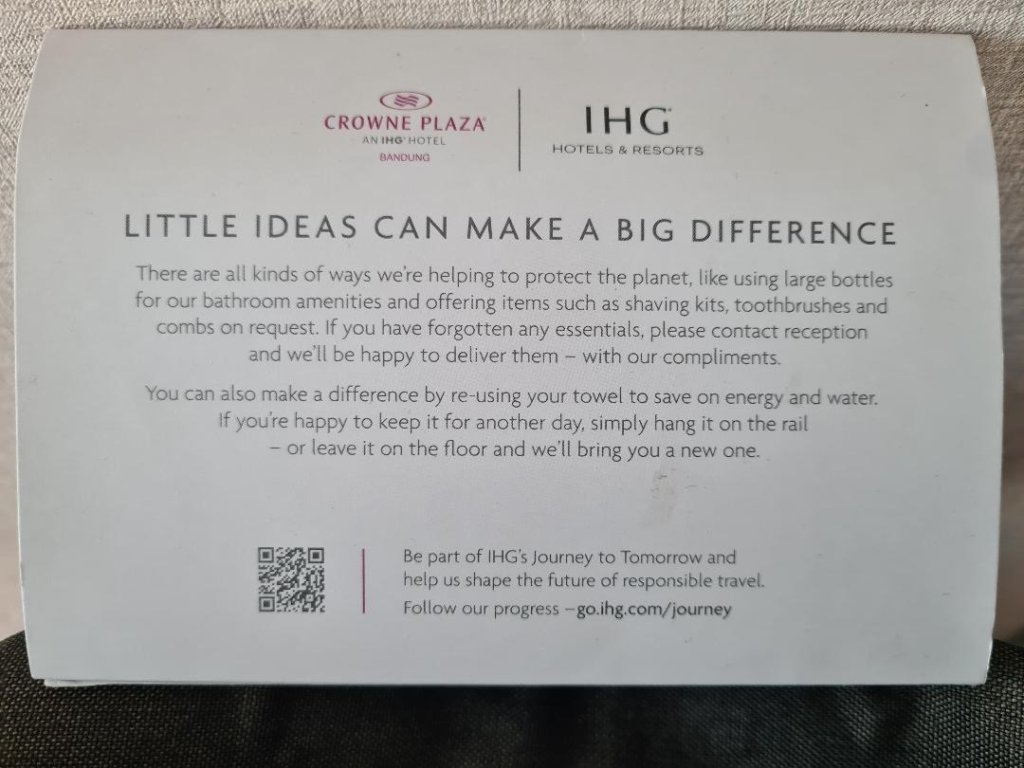
(Crowne PLaza, Bandung – and they are right)
Rafi was seventeen years old and lived with his parents in a village near Solok, West Sumatra. He was a student at the local high school. He liked living in the village because people knew each other and often helped their neighbours.
There was one problem that worried him. A small river ran through the village, but the area around it was becoming dirty. People sometimes left plastic bags, bottles and food packages near the river. Some rubbish also went into the water, especially after heavy rain.
One afternoon, Rafi was sitting near the river with his friend Fikri. They talked about the problem and decided to do something. They called their project Sahabat Sungai, which means “Friends of the River”.
At first, the project was very small. On Saturday morning, Rafi, Fikri and two other students cleaned part of the riverbank. They collected fifteen large bags of rubbish in two hours.
The next week, they told their classmates about the project. Eight more students joined them. The students decided to clean a different part of the river every Saturday. They also talked to people in the village and asked them not to throw rubbish near the river.
But the students soon saw that cleaning was not enough. One week later, there was new rubbish in the same places. Rafi understood that they needed another idea.
He talked to his teacher about the problem. His teacher helped him speak to the village head. The village head liked the idea and helped the students put rubbish bins near the river. Some local shop owners also agreed to put bins outside their shops.
The project was not always easy. Some people continued to throw rubbish on the ground. Sometimes the students were tired and did not want to work on Saturday morning. But they continued because they could see that the river was becoming cleaner.
After six months, the area around the river looked much better. More people were careful about their rubbish, and some families joined the Saturday clean-up.
Rafi was happy with the result. He knew that he had not changed the village alone. Many people had helped.
He learned an important lesson: young people can make a difference when they see a problem, start with a small idea, and work together with others.
_____________________________
Vocabulary:
| Word | A1 definition |
|---|---|
| a neighbor | a person who lives near you |
| to worry somebody | to make somebody feel afraid or unhappy about a problem |
| dirty | not clean |
| a food package | something that food comes in |
| rubbish | things that people do not want and throw away |
| especially | more than other people or things |
| to decide | to choose what you will do |
| a riverbank | the land next to a river |
| to collect | to get things together |
| a bag | something you use to carry things |
| a classmate | a student who is in the same class as you |
| to join | to become part of a group or activity |
| a village head | the person who leads a village |
| a rubbish bin | a container for rubbish |
| a shop owner | a person who owns a shop |
| to agree | to say yes to an idea or plan |
| to continue | to keep doing something |
| to be careful | to think about danger and try not to have a problem |
| a clean-up | an activity to make a place clean |
#################
Match the words with the definitions
- a neighbor
- to worry somebody
- dirty
- a food packagenow the same but match defs with words
- rubbish
- especially
- to decide
- a riverbank
- to collect
- a bag
- a classmate
- to join
- a village head
- a rubbish bin
- a shop owner
- to agree
- to continue
- to be careful
- a clean-up
A. to keep doing something
B. a person who lives near you
C. to get things together
D. a container for rubbish
E. not clean
F. to say yes to an idea or plan
G. an activity to make a place clean
H. the person who leads a village
I. to choose what you will do
J. a person who owns a shop
K. something you use to carry things
L. a person who is in the same class as you
M. things that people do not want and throw away
N. to make somebody feel afraid or unhappy about a problem
O. the land next to a river
P. to become part of a group or activity
Q. something that food comes in
R. more than other people or things
S. to think about danger and try not to have a problem
_________________________
Answers:
1-B, 2-N, 3-E, 4-Q, 5-M, 6-R, 7-I,
8-O, 9-C, 10-K, 11-L, 12-P, 13-H,
14-D, 15-J, 16-F, 17-A, 18-S, 19-G
##################
Match the definitions with the words
- to keep doing something
- a person who lives near you
- to get things together
- a container for rubbish
- not clean
- to say yes to an idea or plan
- an activity to make a place clean
- the person who leads a village
- to choose what you will do
- a person who owns a shop
- something you use to carry things
- a person who is in the same class as you
- things that people do not want and throw away
- to make somebody feel afraid or unhappy about a problem
- the land next to a river
- to become part of a group or activity
- something that food comes in
- more than other people or things
- to think about danger and try not to have a problem
Words:
A. a bag
B. to agree
C. a classmate
D. to collect
E. a clean-up
F. to continue
G. a food package
H. a neighbor
I. a riverbank
J. a rubbish bin
K. a shop owner
L. to be careful
M. to decide
N. dirty
O. especially
P. to join
Q. a village head
R. rubbish
S. to worry somebody
_____________________________
Answers:
1-F, 2-H, 3-D, 4-J, 5-N, 6-B, 7-E,
8-Q, 9-M, 10-K, 11-A, 12-C, 13-R,
14-S, 15-I, 16-P, 17-G, 18-O, 19-L
#####################
True or false
- Rafi was seventeen years old.
- The river was far away from the village.
- Rafi and Fikri decided to start a project.
- Their project was called Sahabat Sungai.
- They collected ten bags of rubbish during their first clean-up.
- Eight more students joined the project the next week.
- The students cleaned the same part of the river every Saturday.
- The students never spoke to people in the village.
- Rafi talked to his teacher about the problem.
- The village head did not want to help the students.
- Some shop owners put rubbish bins outside their shops.
- The project was always easy for the students.
- Some people continued to throw rubbish on the ground.
- After six months, the river area looked much better.
- The students stopped their project after three months.
- Some families joined the Saturday clean-up.
- Rafi believed that he had changed the village completely by himself.
- The students collected rubbish only after heavy rain.
- More people became careful about their rubbish.
- Rafi learned that young people can make a difference by working together.
______________________________
False: 2,4,5,7,8,10,12,15,17,18
_____________________________
Corrected false statements
- Rafi was seventeen years old.
- The river was far away from the village. True is: The river ran through the village.
- Rafi and Fikri decided to start a project.
- Their project was called Sahabat Sungai.
- They collected ten bags of rubbish during their first clean-up. True is: They collected fifteen large bags of rubbish during their first clean-up.
- Eight more students joined the project the next week.
- The students cleaned the same part of the river every Saturday. True is: The students cleaned a different part of the river every Saturday.
- The students never spoke to people in the village. True is: The students spoke to people in the village and asked them not to throw rubbish near the river.
- Rafi talked to his teacher about the problem.
- The village head did not want to help the students. True is: The village head liked the idea and helped the students.
- Some shop owners put rubbish bins outside their shops.
- The project was always easy for the students. True is: The project was not always easy for the students.
- Some people continued to throw rubbish on the ground.
- After six months, the river area looked much better.
- The students stopped their project after three months. True is: The students continued their project for at least six months.
- Some families joined the Saturday clean-up.
- Rafi believed that he had changed the village completely by himself. True is: Rafi knew that many people had helped change the village.
- The students collected rubbish only after heavy rain. True is: The students cleaned the river every Saturday.
- More people became careful about their rubbish.
- Rafi learned that young people can make a difference by working together.
########################
Match the sentence halves
Beginnings
- Rafi lived with his parents
- A small river ran
- People sometimes left plastic bags
- Rafi and Fikri decided
- They called their project
- The four students collected
- Eight more students joined
- The students decided to clean
- Rafi realised that cleaning
- His teacher helped him speak
- The village head helped the students
- Some shop owners agreed
- After six months, the river area
- Rafi learned that young people can make a difference
Endings
A. when they see a problem and work together.
B. near Solok, West Sumatra.
C. different parts of the river every Saturday.
D. looked much better.
E. to do something about the problem.
F. and food packages near the river.
G. fifteen large bags of rubbish.
H. the project the following week.
I. to put rubbish bins outside their shops.
J. through the village.
K. was not enough.
L. Sahabat Sungai.
M. to put rubbish bins near the river.
N. to the village head.
________________________
Answer key:
1 B, 2 J, 3 F, 4 E, 5 L, 6 G, 7 H, 8 C,
9 K, 10 N, 11 M, 12 I, 13 D, 14 A
#################
Put the events in the correct order
A. Eight more students joined the project.
B. The village head helped the students put rubbish bins near the river.
C. Rafi and Fikri decided to do something about the dirty river.
D. The students collected fifteen large bags of rubbish.
E. Rafi spoke to his teacher about the problem.
F. The students began talking to people in the village.
G. Some families joined the Saturday clean-up.
H. Rafi and the other students cleaned part of the riverbank for the first time.
______________________
Answer key:
1 C, 2 H, 3 D, 4 A, 5 F, 6 E, 7 B, 8 G
################
Wh-Questions – answer the following questions according to the text
- How old was Rafi?
- Where did Rafi live?
- What did Rafi like about living in the village?
- What problem did Rafi notice near the river?
- What sometimes happened to the rubbish after heavy rain?
- Who talked with Rafi about the problem?
- What was the students’ project called?
- When did the students first clean the riverbank?
- How many bags of rubbish did they collect during their first clean-up?
- How many students joined the project the following week?
- What did the students ask people in the village not to do?
- Why did Rafi realise that cleaning alone was not enough?
- Who did Rafi talk to about the problem?
- Who helped the students put rubbish bins near the river?
- What did some local shop owners agree to do?
- Why was the project sometimes difficult for the students?
- How long did the students continue the project before the area looked much better?
- Who joined the Saturday clean-up later?
- What happened to people’s attitude towards rubbish?
- What important lesson did Rafi learn from the project?
____________________________
Possible answers:
How old was Rafi? He was seventeen years old.
Where did Rafi live? He lived in a village near Solok, West Sumatra.
What did Rafi like about living in the village? He liked that people knew each other and often helped their neighbours.
What problem did Rafi notice near the river? The area around the river was becoming dirty.
What sometimes happened to the rubbish after heavy rain? Some rubbish went into the water.
Who talked with Rafi about the problem? His friend Fikri talked with him about it.
What was the students’ project called? It was called Sahabat Sungai.
When did the students first clean the riverbank? They cleaned it on a Saturday morning.
How many bags of rubbish did they collect during their first clean-up? They collected fifteen large bags of rubbish.
How many students joined the project the following week? Eight more students joined the project.
What did the students ask people in the village not to do? They asked them not to throw rubbish near the river.
Why did Rafi realise that cleaning alone was not enough? Because new rubbish appeared in the same places.
Who did Rafi talk to about the problem? He talked to his teacher.
Who helped the students put rubbish bins near the river? The village head helped them.
What did some local shop owners agree to do? They agreed to put bins outside their shops.
Why was the project sometimes difficult for the students? Some people continued to throw rubbish on the ground, and the students sometimes felt tired.
How long did the students continue the project before the area looked much better? They continued it for six months.
Who joined the Saturday clean-up later? Some families joined the Saturday clean-up.
What happened to people’s attitude towards rubbish? More people became careful about their rubbish.
What important lesson did Rafi learn from the project? He learned that young people can make a difference when they see a problem, start with a small idea, and work together with others.
######################
Complete the sentences
- Rafi lived with his __________.
- Rafi was __________ years old.
- Rafi lived in a village near __________.
- A small __________ ran through the village.
- The area around the river was becoming __________.
- People sometimes left plastic bags, bottles and __________ near the river.
- Rafi talked about the problem with his friend __________.
- Their project was called __________.
- The students first cleaned part of the __________.
- They collected __________ large bags of rubbish in two hours.
- Eight more students joined the project the following __________.
- The students decided to clean a different part of the river every __________.
- They asked people not to throw rubbish near the __________.
- Rafi talked to his __________ about the problem.
- His teacher helped him speak to the village __________.
- The village head helped the students put rubbish __________ near the river.
- Some local shop owners also agreed to put bins outside their __________.
- After six months, the area around the river looked much __________.
- Some __________ joined the Saturday clean-up.
- Rafi learned that young people can make a __________ when they work together.
—————————————-
Correct version:
Rafi lived with his parents.
Rafi was seventeen years old.
Rafi lived in a village near Solok.
A small river ran through the village.
The area around the river was becoming dirty.
People sometimes left plastic bags, bottles and food packages near the river.
Rafi talked about the problem with his friend Fikri.
Their project was called Sahabat Sungai.
The students first cleaned part of the riverbank.
They collected fifteen large bags of rubbish in two hours.
Eight more students joined the project the following week.
The students decided to clean a different part of the river every Saturday.
They asked people not to throw rubbish near the river.
Rafi talked to his teacher about the problem.
His teacher helped him speak to the village head.
The village head helped the students put rubbish bins near the river.
Some local shop owners also agreed to put bins outside their shops.
After six months, the area around the river looked much better.
Some families joined the Saturday clean-up.
Rafi learned that young people can make a difference when they work together.
####################
Match questions and answers:
Questions
- How old are you?
- Where do you live?
- What problem did you notice near the river?
- Who helped you start the project?
- What is the name of your project?
- When did you first clean the riverbank?
- How much rubbish did you collect that day?
- Who joined the project the following week?
- Why did you decide to talk to people in the village?
- What did your teacher do?
- How did the village head support your project?
- What did some shop owners do?
- How did the river area change after six months?
- What lesson did you learn from the project?
Answers
A. Fifteen large bags of rubbish went into our collection in two hours.
B. The area looked much better after six months.
C. Fikri was the person who helped me start it.
D. I was seventeen years old.
E. The village head provided rubbish bins near the river.
F. My teacher helped me speak to the village head.
G. It is called Sahabat Sungai.
H. Eight more students became part of the project.
I. I live in a village near Solok, West Sumatra.
J. The river area was becoming dirty.
K. A Saturday morning was our first clean-up time.
L. We wanted villagers to stop throwing rubbish near the river.
M. Some shop owners placed bins outside their shops.
N. Young people can make a difference when they work together.
____________________________
Correct version:
Keyla Interviews Rafi
Keyla: How old are you?
Rafi: I am seventeen years old.
Keyla: Where do you live?
Rafi: I live in a village near Solok, West Sumatra.
Keyla: What problem did you notice near the river?
Rafi: The area around the river was becoming dirty.
Keyla: Who helped you start the project?
Rafi: Fikri was the person who helped me start it.
Keyla: What is the name of your project?
Rafi: It is called Sahabat Sungai.
Keyla: When did you first clean the riverbank?
Rafi: A Saturday morning was our first clean-up.
Keyla: How much rubbish did you collect that day?
Rafi: Fifteen large bags of rubbish went into our collection in two hours.
Keyla: Who joined the project the following week?
Rafi: Eight more students became part of the project.
Keyla: Why did you decide to talk to people in the village?
Rafi: We wanted villagers to stop throwing rubbish near the river.
Keyla: What did your teacher do?
Rafi: My teacher helped me speak to the village head.
Keyla: How did the village head support your project?
Rafi: The village head provided rubbish bins near the river.
Keyla: What did some shop owners do?
Rafi: Some shop owners placed bins outside their shops.
Keyla: How did the river area change after six months?
Rafi: The area looked much better after six months.
Keyla: What lesson did you learn from the project?
Rafi: Young people can make a difference when they work together.
#################
###################
####################
Please use the box below
to write your feedback.
Only I can read it.
It is not public.
Please tell me:
- Are the texts and exercises OK?
- Are the topics OK?
- Is the level OK?
- Is it too easy or too difficult?
- Do you want texts about other topics?
Thank you! I appreciate your feedback.
##################
##################
##################
Remember how babies
learn a language:
Babies learn a language by listening.
They use their ears to hear sounds.
Their brain remembers these sounds.
Babies connect sounds with people and things.
They listen to their parents.
Then they copy the sounds they hear. They imitate words.
Slowly, babies learn to speak.
So,
LISTEN, LISTEN, LISTEN, LISTEN………………
smfrockz@gmx.at
www.fluglehrer.at

Schreibe einen Kommentar