- how a young chef changed his hotel kitchen with local food, less meat, and care for nature
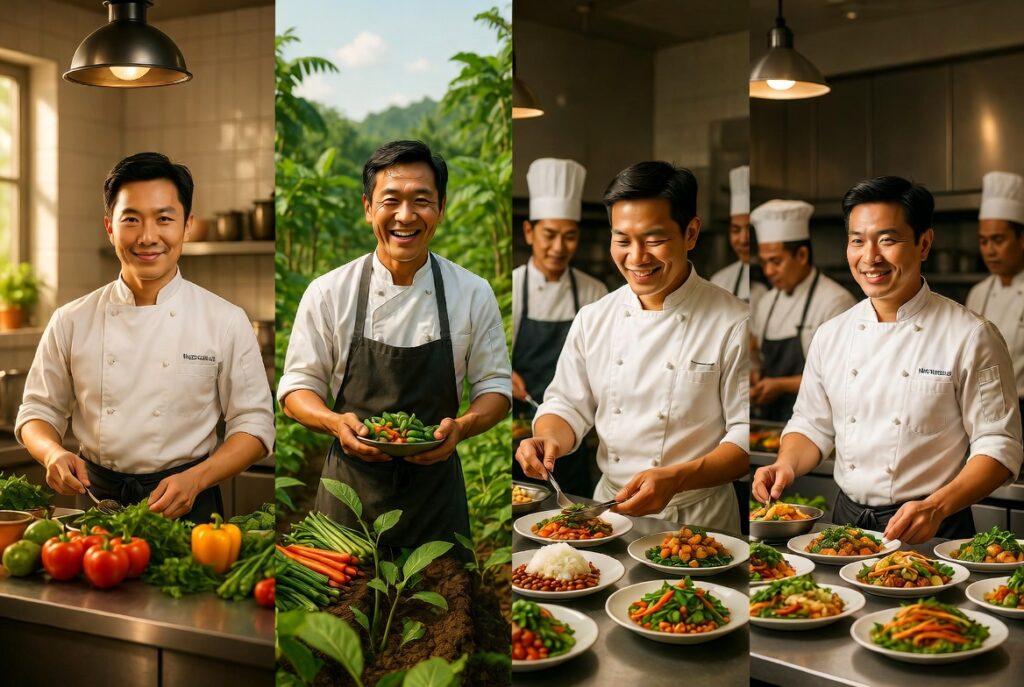
My name is Reza, and I still remember my first days as a chef in a five-star hotel. At that time, I wanted to change the way we cooked in our kitchen. I wanted to make better choices for our guests, our farmers, and nature.
My first idea was to learn more about our food. I visited local farms and small producers. I met the farmers and looked at their products. I wanted to know where our vegetables, fruit, rice, herbs, meat, and fish came from. I wanted to buy fresh and good-quality food.
I also started to buy more food from organic farms. The farmers showed me how they grew their vegetables. They used natural ways to take care of the soil and plants. I liked their work and decided to use more of their products in our kitchen.
Another change was that I started to use less meat. I created new dishes with vegetables, beans, rice, and local herbs. At first, some guests wanted more meat, but many guests enjoyed the new meals. They liked trying healthy and traditional food.
In the beginning, it was not always easy. Some people in the kitchen were used to the old way of cooking. But I explained my ideas and showed them why these changes were important. Slowly, the whole team started to help.
We also began to throw away less food. We used more parts of the vegetables and saved water and electricity. These small steps became a normal part of our daily work.
Today, when I look back, I feel proud. My first steps towards a sustainable kitchen were not big, but they made a difference. I learned that a chef can do more than cook good food. A chef can help farmers, protect nature, and share local traditions with guests.
#################
| Infinitive | Past Simple | Past Participle | Definition |
|---|---|---|---|
| be | was/were | been | to exist or to be something |
| remember | remembered | remembered | to think about something from the past |
| want | wanted | wanted | to like something or wish for something |
| change | changed | changed | to make something different |
| cook | cooked | cooked | to make food with heat |
| make | made | made | to create or do something |
| visit | visited | visited | to go to a place and see it |
| meet | met | met | to see and talk to someone |
| look | looked | looked | to use your eyes to see |
| know | knew | known | to understand or have information |
| come | came | come | to go to a place |
| buy | bought | bought | to get something by paying money |
| start | started | started | to begin something |
| show | showed | shown | to let someone see something |
| grow | grew | grown | to make plants bigger |
| use | used | used | to do something with something |
| take | took | taken | to get or carry something |
| like | liked | liked | to enjoy something |
| decide | decided | decided | to choose what to do |
| create | created | created | to make something new |
| enjoy | enjoyed | enjoyed | to like something |
| explain | explained | explained | to make something clear |
| help | helped | helped | to give support to someone |
| throw | threw | thrown | to put something away by moving it |
| save | saved | saved | to keep something and not waste it |
| look back | looked back | looked back | to think about the past |
| feel | felt | felt | to have an emotion |
| learn | learned | learned | to get knowledge or skills |
| do | did | done | to perform an action |
| protect | protected | protected | to keep something safe |
| share | shared | shared | to give or show something to others |
| Word / Phrase | Definition |
|---|---|
| a journey | a time when you travel from one place to another |
| a choice | something you decide to do or have |
| a producer | a person or company that makes food or products |
| vegetables | plants that people eat, like carrots or potatoes |
| herbs | plants that give food more taste, like basil or mint |
| meat | food from animals, like beef or chicken |
| good-quality | very good and well-made |
| an organic farm | a farm that grows food in a natural way |
| to grow plants | to help plants become bigger |
| soil | the earth where plants grow |
| a change | something that becomes different |
| less meat | a smaller amount of meat |
| new dishes | new types of prepared food |
| beans | small seeds that people eat as food |
| healthy food | food that is good for your body |
| slowly | not fast; taking a long time |
| to be proud | to feel happy because you did something good |
| a first step | the first action to do something |
| a sustainable kitchen | a kitchen that wastes less and helps nature |
| to make a difference | to change something in a good way |
| to share traditions | to show and give traditions to other people |
###################
True or false:
- Reza worked as a chef in a five-star hotel.
- Reza wanted to continue cooking in the old way.
- He visited local farms and small producers.
- Reza wanted to know where his food came from.
- Reza created new dishes with more meat.
- The farmers used natural ways to care for the soil and plants.
- Everyone in the kitchen accepted the changes immediately.
- Reza used vegetables, beans, rice, and local herbs in new dishes.
- The guests all refused to try the new meals.
- Reza did not explain his ideas to the kitchen team.
- The kitchen started to throw away more food.
- The team saved water and electricity.
- Reza believes a chef can only cook good food.
- Many guests enjoyed the healthy and traditional meals.
- The changes became a normal part of the daily work.
- Reza feels proud when he looks back at his journey.
- Reza thinks small steps cannot make a difference.
- A chef cannot help farmers or protect nature.
___________________
True: 1, 3, 4, 6, 8, 12, 14, 15, 16
___________________
Correct version:
- Reza worked as a chef in a five-star hotel.
- Reza wanted to continue cooking in the old way.
True is: Reza wanted to change the way his kitchen cooked food. - Reza visited local farms and small producers.
- Reza wanted to know where his vegetables, fruit, rice, herbs, meat, and fish came from.
- Reza created new dishes with more meat.
True is: Reza used less meat and created new dishes with vegetables, beans, rice, and local herbs. - The farmers used natural ways to take care of the soil and plants.
- Everyone in the kitchen accepted the changes immediately.
True is: Some people in the kitchen were used to the old way of cooking. - Reza created new dishes with vegetables, beans, rice, and local herbs.
- All guests disliked the new meals.
True is: Many guests enjoyed the new meals. - Reza did not explain his ideas to the kitchen team.
True is: Reza explained his ideas and showed the team why the changes were important. - The kitchen started to throw away more food.
True is: The kitchen began to throw away less food. - The team saved water and electricity.
- Reza believes a chef can only cook good food.
True is: Reza believes a chef can help farmers, protect nature, and share local traditions. - Many guests enjoyed the healthy and traditional meals.
- The changes became a normal part of the daily work.
- Reza feels proud when he looks back at his journey.
- Reza thinks small steps cannot make a difference.
True is: Reza believes small steps can make a difference. - A chef cannot help farmers or protect nature.
True is: A chef can help farmers and protect nature.
################
Reading comprehension:
1. Why did Reza want to change his kitchen?
a) He wanted better choices for people and nature.
b) He wanted a larger kitchen.
c) He wanted fewer workers.
2. Why did Reza visit local farms?
a) To meet hotel guests.
b) To learn about his food.
c) To buy kitchen tools.
3. What food did Reza want to buy?
a) Fresh and good-quality food.
b) Cheap imported food.
c) Frozen food only.
4. What did organic farmers do?
a) They sold hotel rooms.
b) They cooked new meals.
c) They cared for soil naturally.
5. What change did Reza make with meat?
a) He stopped cooking food.
b) He used less meat.
c) He bought more meat.
6. Why was change difficult for some workers?
a) They knew the old system.
b) They disliked all food.
c) They wanted new jobs.
7. How did Reza help his team?
a) He gave them holidays.
b) He changed the workers.
c) He explained his ideas.
8. How did the kitchen reduce waste?
a) They used more vegetables.
b) They used more food parts.
c) They bought more products.
9. How did many guests react to the meals?
a) They enjoyed the new dishes.
b) They asked for more meat.
c) They refused the food.
10. What did the kitchen save?
a) Water and electricity.
b) Time and money.
c) Food and space.
11. What kind of kitchen did Reza want?
a) A modern kitchen.
b) A sustainable kitchen.
c) A large kitchen.
12. How did Reza feel when he looked back?
a) He felt proud.
b) He felt worried.
c) He felt angry.
13. What did Reza learn from his journey?
a) Farmers need hotels.
b) Guests like changes.
c) Chefs can help nature.
14. Why were the small steps important?
a) They changed daily work.
b) They saved many hours.
c) They made cooking easy.
15. What did Reza want to share with guests?
a) Local traditions.
b) New equipment.
c) Foreign recipes.
16. What is the main idea of the story?
a) Hotels need more chefs.
b) Small changes can help.
c) Cooking needs more time.
_________________________
Answers:
1 A | 2 B | 3 A | 4 C | 5 B | 6 A |
7 C | 8 B | 9 A | 10 C | 11 B |
12 A | 13 C | 14 C | 15 A | 16 B
_________________________
Correct version:
- Why did Reza want to change his kitchen? Reza wanted to change his kitchen because he wanted better choices for people and nature.
- Why did Reza visit local farms? Reza visited local farms because he wanted to learn about his food.
- What kind of food did Reza want to buy? Reza wanted to buy fresh and good-quality food.
- What did organic farmers do differently? Organic farmers cared for the soil and plants in natural ways.
- What change did Reza make with meat? Reza used less meat and created new dishes with vegetables, beans, rice, and herbs.
- Why was change difficult for some workers? Change was difficult for some workers because they were used to the old way of cooking.
- How did Reza help his team? Reza helped his team by explaining his ideas and showing why the changes were important.
- How did the kitchen reduce waste? The kitchen reduced waste by using more parts of vegetables and throwing away less food.
- How did many guests react to the new meals? Many guests enjoyed trying the healthy and traditional meals.
- What did the kitchen save? The kitchen saved water and electricity.
- What kind of kitchen did Reza want to create? Reza wanted to create a sustainable kitchen.
- How did Reza feel when he looked back at his journey? Reza felt proud when he looked back at his journey.
- What did Reza learn from his journey? Reza learned that a chef can do more than cook good food.
- Why were the small steps important? The small steps were important because they made a difference.
- What did Reza want to share with guests? Reza wanted to share local traditions with guests.
- What is the main idea of the story? The main idea is that small changes can create positive results.
####################
Find one sentence from the text that answers each question.
- How do we know Reza wanted better food?
Answer: ________________ - How do we know Reza wanted to help guests, farmers, and nature?
Answer: ________________ - How do we know Reza wanted to learn more about food?
Answer: ________________ - How do we know Reza visited local farms?
Answer: ________________ - How do we know Reza wanted to know where the ingredients came from?
Answer: ________________ - How do we know Reza wanted fresh and good-quality food?
Answer: ________________ - How do we know the organic farmers cared for the environment?
Answer: ________________ - How do we know Reza used more products from organic farms?
Answer: ________________ - How do we know Reza changed his cooking style?
Answer: ________________ - How do we know Reza started to use less meat?
Answer: ________________ - How do we know some guests enjoyed the new meals?
Answer: ________________ - How do we know the changes were difficult at the beginning?
Answer: ________________ - How do we know Reza worked with his team?
Answer: ________________ - How do we know the kitchen reduced food waste?
Answer: ________________ - How do we know Reza feels proud today?
Answer: ________________ - How do we know Reza believes chefs can make a difference?
Answer: ________________
—————————————-
Correct answers:
How do we know Reza wanted better food? – “I wanted to buy fresh and good-quality food.”
How do we know Reza wanted to help guests, farmers, and nature? – “I wanted to make better choices for our guests, our farmers, and nature.”
How do we know Reza wanted to learn more about food? – “My first idea was to learn more about our food.”
How do we know Reza visited local farms? – “I visited local farms and small producers.”
How do we know Reza wanted to know where the ingredients came from? – “I wanted to know where our vegetables, fruit, rice, herbs, meat, and fish came from.”
How do we know Reza wanted good-quality products? – “I wanted to buy fresh and good-quality food.”
How do we know the farmers cared for nature? – “They used natural ways to take care of the soil and plants.”
How do we know Reza liked the organic farmers’ work? – “I liked their work and decided to use more of their products in our kitchen.”
How do we know Reza changed his cooking style? – “Another change was that I started to use less meat.”
How do we know Reza created new dishes? – “I created new dishes with vegetables, beans, rice, and local herbs.”
How do we know guests enjoyed the new meals? – “Many guests enjoyed the new meals.”
How do we know the changes were difficult at first? – “In the beginning, it was not always easy.”
How do we know Reza worked with his team? – “Slowly, the whole team started to help.”
How do we know the kitchen reduced waste? – “We used more parts of the vegetables and saved water and electricity.”
How do we know Reza feels proud today? – “Today, when I look back, I feel proud.”
How do we know Reza believes chefs can make a difference? – “A chef can help farmers, protect nature, and share local traditions with guests.”
#####################
Match each statement with the correct evidence from the text:
Statements
- Reza wanted to improve the way the kitchen worked.
- Reza wanted to understand his food better.
- Reza wanted to buy high-quality ingredients.
- Reza visited farms and met producers.
- Reza changed his menu by using less meat.
- Reza created meals with more plant-based ingredients.
- The organic farmers used natural methods.
- Reza decided to use more products from organic farms.
- Some guests accepted the new style of food.
- The kitchen team needed time to accept the changes.
- Reza explained his ideas to the workers.
- The kitchen tried to reduce waste.
- The kitchen saved important resources.
- Reza feels happy about his work today.
- Reza believes chefs can support people and nature.
- Reza believes small actions can create change.
Evidence from the text
A. “Many guests enjoyed the new meals. They liked trying healthy and traditional food.”
B. “We used more parts of the vegetables and saved water and electricity.”
C. “Today, when I look back, I feel proud.”
D. “I visited local farms and small producers.”
E. “A chef can help farmers, protect nature, and share local traditions with guests.”
F. “My first idea was to learn more about our food.”
G. “I created new dishes with vegetables, beans, rice, and local herbs.”
H. “These small steps became a normal part of our daily work.”
I. “I wanted to buy fresh and good-quality food.”
J. “Some people in the kitchen were used to the old way of cooking.”
K. “I explained my ideas and showed them why these changes were important.”
L. “They used natural ways to take care of the soil and plants.”
M. “I decided to use more of their products in our kitchen.”
N. “Another change was that I started to use less meat.”
O. “I wanted to make better choices for our guests, our farmers, and nature.”
P. “These small steps became a normal part of our daily work.”
______________________
Correct matches:
1–O | 2–F | 3–I | 4–D | 5–N | 6–G |
7–L | 8–M | 9–A | 10–J | 11–K | 12–B |
13–B | 14–C | 15–E | 16–H
_____________________
Correct matches:
- Reza wanted to improve the way the kitchen worked. – “I wanted to change the way we cooked in our kitchen.”
- Reza wanted to understand his food better. – “My first idea was to learn more about our food.”
- Reza wanted to buy high-quality ingredients. – “I wanted to buy fresh and good-quality food.”
- Reza visited farms and met producers. – “I visited local farms and small producers.”
- Reza changed his menu by using less meat. – “Another change was that I started to use less meat.”
- Reza created meals with more plant-based ingredients. – “I created new dishes with vegetables, beans, rice, and local herbs.”
- The organic farmers used natural methods. – “They used natural ways to take care of the soil and plants.”
- Reza decided to use more products from organic farms. – “I decided to use more of their products in our kitchen.”
- Some guests accepted the new style of food. – “Many guests enjoyed the new meals.”
- The kitchen team needed time to accept the changes. – “Some people in the kitchen were used to the old way of cooking.”
- Reza explained his ideas to the workers. – “I explained my ideas and showed them why these changes were important.”
- The kitchen tried to reduce waste. – “We used more parts of the vegetables and saved water and electricity.”
- The kitchen saved important resources. – “We used more parts of the vegetables and saved water and electricity.”
- Reza feels happy about his work today. – “Today, when I look back, I feel proud.”
- Reza believes chefs can support people and nature. – “A chef can help farmers, protect nature, and share local traditions with guests.”
- Reza believes small actions can create change. – “These small steps became a normal part of our daily work.”
###################
Match the beginning of each sentence with the correct ending:
Sentence beginnings
- Reza wanted to change
- He visited local farms
- Reza wanted to know
- He wanted to buy
- The organic farmers used
- Reza decided to use more
- He started to use
- He created new dishes with
- Many guests enjoyed
- Some people in the kitchen were used to
- Reza explained his ideas
- The whole team slowly started to help
- The kitchen reduced waste by
- The team saved water
- Reza feels proud
- A chef can help farmers, protect nature, and
Sentence endings
A. the old way of cooking.
B. and small producers to learn about his food.
C. fresh and good-quality ingredients.
D. share local traditions with guests.
E. the healthy and traditional meals.
F. the way they cooked in the kitchen.
G. products from organic farms.
H. vegetables, beans, rice, and local herbs.
I. less meat in his cooking.
J. where his ingredients came from.
K. his ideas and showed why they were important.
L. after they understood the reasons for change.
M. using more parts of the vegetables.
N. natural ways to care for the soil and plants.
O. when he looks back at his journey.
P. make a difference through small steps.
Q. and electricity to use fewer resources.
___________________________
Answers:
1–F | 2–B | 3–J | 4–C | 5–N | 6–G | 7–I
| 8–H | 9–E | 10–A | 11–K | 12–L
| 13–M | 14–Q | 15–O | 16–D
___________________________
Correct sentences:
- Reza wanted to change the way they cooked in the kitchen.
- He visited local farms and small producers to learn about his food.
- Reza wanted to know where his ingredients came from.
- He wanted to buy fresh and good-quality ingredients.
- The organic farmers used natural ways to care for the soil and plants.
- Reza decided to use more products from organic farms.
- He started to use less meat in his cooking.
- He created new dishes with vegetables, beans, rice, and local herbs.
- Many guests enjoyed the healthy and traditional meals.
- Some people in the kitchen were used to the old way of cooking.
- Reza explained his ideas and showed why they were important.
- The whole team slowly started to help after they understood the reasons for change.
- The kitchen reduced waste by using more parts of the vegetables.
- The team saved water and electricity to use fewer resources.
- Reza feels proud when he looks back at his journey.
- A chef can help farmers, protect nature, and make a difference through small steps.
######################
Which sentence best describes the text?
a) A chef explains how to cook expensive meals in a luxury hotel.
b) A chef changes his kitchen by making better choices for food, people, and nature.
c) A chef leaves his hotel job to work on a farm.
_____________________________
Why is b correct?
Reza changes the way he cooks. He buys food from local and organic farms, uses less meat, creates new dishes, reduces waste, and saves resources. His goal is to help people, farmers, and nature.
Why is a wrong?
a) A chef explains how to cook expensive meals in a luxury hotel.
This is wrong because the text is not about expensive meals. It is about better food choices and a sustainable kitchen.
Why is c wrong?
c) A chef leaves his hotel job to work on a farm.
This is wrong because Reza does not leave the hotel. He continues working as a chef and works with farmers to improve his kitchen.
Correct answer: b
###################
Fill in, words below:
came – found – feels – change – learned –
visited – created – explained –
make – reduced –
share
Reza is a chef who wanted to _______ the way his hotel kitchen worked.
He wanted to _______ better choices for guests, farmers, and nature.
He _______ local farms and producers to learn more about his ingredients.
He wanted to know where his food _________ from and buy fresh, good-quality products.
Reza started using more food from organic farms and _______ about natural farming methods.
He also used less meat and _________ new dishes with vegetables, beans, rice, and herbs.
At first, some kitchen workers________ the changes difficult because they knew the old way of cooking.
However, Reza _______ his ideas, and the team slowly started to help.
The kitchen also _______ food waste and saved water and electricity.
Today, Reza _______ proud because he learned that chefs can help farmers, protect nature, and _______ local traditions with guests.
————————————–
Full sentences:
Reza is a chef who wanted to change the way his hotel kitchen worked.
He wanted to make better choices for guests, farmers, and nature.
He visited local farms and producers to learn more about his ingredients.
He wanted to know where his food came from and buy fresh, good-quality products.
Reza started using more food from organic farms and learned about natural farming methods.
He also used less meat and created new dishes with vegetables, beans, rice, and herbs.
At first, some kitchen workers found the changes difficult because they knew the old way of cooking.
However, Reza explained his ideas, and the team slowly started to help.
The kitchen also reduced food waste and saved water and electricity.
Today, Reza feels proud because he learned that chefs can help farmers, protect nature, and share local traditions with guests.
#####################
Match questions and answers:
Questions
- Why did you decide to change your hotel kitchen?
- Where did you travel to learn more about your food?
- What information did you want about your ingredients?
- What products did you choose from local farms?
- How did the organic farmers protect their plants?
- What steps did you take for healthier meals?
- What was the reaction of guests to the new meals?
- Why were some workers unsure about the changes at first?
- How did you support your kitchen team?
- What actions helped the kitchen become more sustainable?
- What is your feeling when you look back today?
- What role can chefs have in the future?
Answers
a) I feel proud because my small steps made a difference.
b) They used natural ways to take care of the soil and plants.
c) I visited local farms and small producers to understand my ingredients better.
d) I bought fresh and good-quality food from farmers.
e) They can help farmers, protect nature, and share local traditions with guests.
f) I explained my ideas and showed why the changes were important.
g) Many people enjoyed them and liked trying healthy and traditional food.
h) I wanted to know where our vegetables, fruit, rice, herbs, meat, and fish came from.
i) I reduced meat and created new dishes with vegetables, beans, rice, and herbs.
j) They were used to the old way of cooking in the kitchen.
k) We threw away less food and saved water and electricity.
l) I wanted to make better choices for our guests, farmers, and nature.
_____________________________
Answers:
1–l | 2–c | 3–h | 4–d | 5–b | 6–i |
7–g | 8–j | 9–f | 10–k | 11–a | 12–e
____________________________
Correct version:
- Why did you decide to change your hotel kitchen?
I wanted to make better choices for our guests, farmers, and nature. - Where did you travel to learn more about your food?
I visited local farms and small producers to understand my ingredients better. - What information did you want about your ingredients?
I wanted to know where our vegetables, fruit, rice, herbs, meat, and fish came from. - What products did you choose from local farms?
I bought fresh and good-quality food from farmers. - How did the organic farmers protect their plants?
They used natural ways to take care of the soil and vegetables. - What steps did you take for healthier meals?
I reduced meat and created new dishes with vegetables, beans, rice, and herbs. - What was the reaction of guests to the new meals?
Many people enjoyed them and liked trying healthy and traditional food. - Why were some workers unsure about the changes at first?
They were used to the old way of cooking in the kitchen. - How did you support your kitchen team?
I explained my ideas and showed why the changes were important. - What actions helped the kitchen become more sustainable?
We threw away less food and saved water and electricity. - What is your feeling when you look back today?
I feel proud because my small steps made a difference. - What role can chefs have in the future?
They can help farmers, protect nature, and share local traditions with guests.
##################
##################
##################
##################
Please use the box below
to write your feedback.
Only I can read it.
It is not public.
Please tell me:
- Are the texts and exercises OK?
- Are the topics OK?
- Is the level OK?
- Is it too easy or too difficult?
- Do you want texts about other topics?
Thank you! I appreciate your feedback.
##################
##################
##################
Remember how babies
learn a language:
Babies learn a language by listening.
They use their ears to hear sounds.
Their brain remembers these sounds.
Babies connect sounds with people and things.
They listen to their parents.
Then they copy the sounds they hear. They imitate words.
Slowly, babies learn to speak.
So,
LISTEN, LISTEN, LISTEN, LISTEN………………
Schreibe einen Kommentar