DO THAT STORY FIRST =>
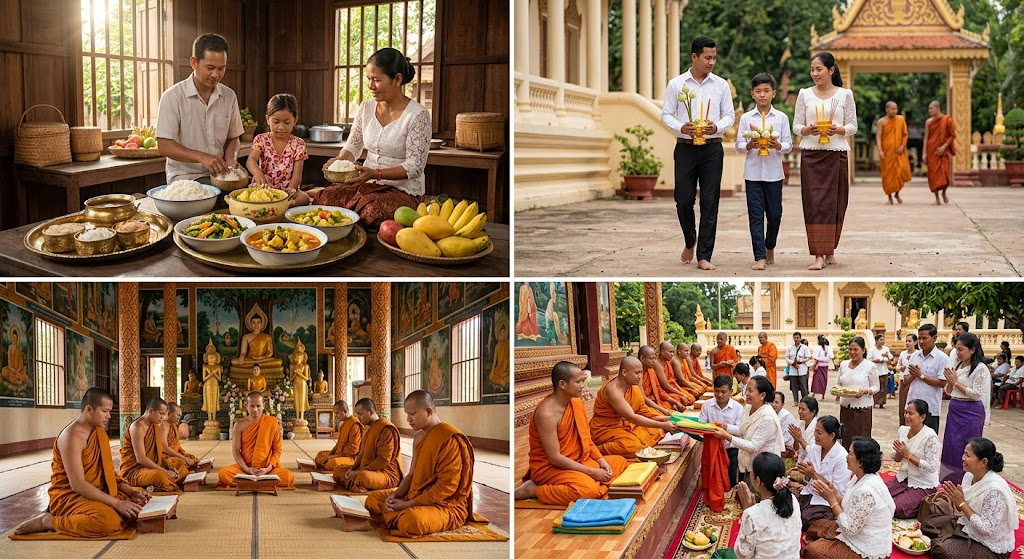
Last year, I joined the Vassa festival in Cambodia. I stayed in Siem Reap with my family, and we visited a local temple during this special time. Vassa started in July and lasted for about three months. I learned many things about Cambodian culture from my family and the people in my village.
During Vassa, Buddhist monks stayed in their temples, called wats. They spent more time inside the temple. They prayed, studied Buddhist teachings, and meditated every day. I visited the temple many times, and I saw the peaceful life of the monks.
Every morning, my family prepared food for the monks. We cooked rice, vegetables, and other dishes. I carried fruit, flowers, and candles with my parents. We walked to the temple and gave the gifts to the monks. The monks thanked us and shared kind words with us.
I also helped my mother clean the house before temple visits. I wore polite clothes and covered my shoulders and knees when I entered the temple. I spoke quietly and followed the temple rules. I listened to the monks and learned about respect, kindness, and peace.
During the festival, I met many people from my community. Families and friends visited the temple together. They prayed, talked, and shared food after the ceremonies. I enjoyed the happy and friendly atmosphere.
At the end of Vassa, I joined a special ceremony. People offered new robes to the monks. Many families came together, and the temple became a busy and beautiful place.
I remembered my Vassa experience because it showed me the importance of kindness and respect. I felt happy because I shared this meaningful time with my family and my community in Cambodia.
___________________________
| Infinitive | Past simple | A1 definition |
|---|---|---|
| join | joined | to take part in something |
| stay | stayed | to be in a place for some time |
| visit | visited | to go to a place to see someone or something |
| start | started | to begin something |
| last | lasted | to continue for some time |
| learn | learned | to get new information |
| be | was / were | to exist or be in a place |
| spend | spent | to use time doing something |
| pray | prayed | to talk to God or ask for help |
| study | studied | to learn about something |
| meditate | meditated | to sit quietly and think deeply |
| see | saw | to look with your eyes |
| prepare | prepared | to make something ready |
| cook | cooked | to make food |
| carry | carried | to take something with you |
| walk | walked | to move on your feet |
| give | gave | to let someone have something |
| thank | thanked | to say you are happy for something |
| share | shared | to give part of something to others |
| help | helped | to do something for someone |
| clean | cleaned | to make something not dirty |
| wear | wore | to have clothes on your body |
| cover | covered | to put something over something |
| enter | entered | to go inside a place |
| speak | spoke | to talk |
| follow | followed | to do what someone says |
| listen | listened | to hear carefully |
| meet | met | to see and talk to someone |
| enjoy | enjoyed | to like something |
| offer | offered | to give something to someone |
| come | came | to move to a place |
| become | became | to start to be something |
| remember | remembered | to keep something in your mind |
| show | showed | to let someone see something |
| feel | felt | to have a feeling |
Irregular verbs from the story:
be → was/were
spend → spent
see → saw
give → gave
wear → wore
speak → spoke
meet → met
come → came
become → became
feel → felt
##################
Fill in, past simple:
Last year I ____ (be) in Siem Reap for the Vassa festival in Cambodia.
I ____ (stay) with my family, and we ____ (come) to a local temple during this special time.
I ____ (see) Buddhist monks in orange robes and ____ (learn) about their peaceful life.
The monks ____ (spend) more time inside the temple.
They ____ (pray), ____ (study) Buddhist teachings, and ____ (meditate) every day.
I ____ (give) food, fruit, flowers, and candles to the monks.
I ____ (wear) polite clothes and ____ (speak) quietly when I ____ (enter) the temple.
I ____ (meet) many people from my community and ____ (feel) happy during the ceremonies.
My family ____ (help) prepare gifts, and we ____ (enjoy) the peaceful atmosphere together.
At the end of Vassa, people ____ (offer) new robes to monks.
The festival ____ (become) a special memory for me because I ____ (learn) about kindness, respect, and Cambodian culture.
I ____ (remember) this experience for a long time.
————————————–
Full version:
Last year I was in Siem Reap for the Vassa festival in Cambodia.
I stayed with my family, and we came to a local temple during this special time.
I saw Buddhist monks in orange robes and learned about their peaceful life.
The monks spent more time inside the temple.
They prayed, studied Buddhist teachings, and meditated every day.
I gave food, fruit, flowers, and candles to the monks.
I wore polite clothes and spoke quietly when I entered the temple.
I met many people from my community and felt happy during the ceremonies.
My family helped prepare gifts, and we enjoyed the peaceful atmosphere together.
At the end of Vassa, people offered new robes to monks.
The festival became a special memory for me because I learned about kindness, respect, and Cambodian culture.
I remembered this experience for a long time.
##################
True or false, give short answers – Yes, she did. No, she didn’t. Yes, they did. No, they didn’t:
- Selina stayed in Siem Reap during the Vassa festival.
- The monks travelled to many cities during Vassa.
- Selina gave food, fruit, flowers, and candles to the monks.
- They offered new robes to monks at the end of Vassa.
- Selina spoke loudly inside the temple.
- The monks spent more time inside their temples during Vassa.
- Selina visited a temple with her family.
- They learned about kindness and respect during the festival.
- Selina wore beach clothes when she entered the temple.
- The families in the community came together during the ceremonies.
- Selina stayed in Cambodia for a sports event.
- The monks stopped praying and studying during Vassa.
- Selina met people from her community during the festival.
- Selina visited a temple in Thailand during Vassa.
__________________________
True: 1, 3, 4, 6, 7, 8, 10, 13
_________________________
Full version:
- Selina stayed in Siem Reap during the Vassa festival. — Yes, she did.
- The monks travelled to many cities during Vassa. — No, they didn’t.
- Selina gave food, fruit, flowers, and candles to the monks. — Yes, she did.
- They offered new robes to monks at the end of Vassa. — Yes, they did.
- Selina spoke loudly inside the temple. — No, she didn’t.
- The monks spent more time inside their temples during Vassa. — Yes, they did.
- Selina visited a temple with her family. — Yes, she did.
- They learned about kindness and respect during the festival. — Yes, they did.
- Selina wore beach clothes when she entered the temple. — No, she didn’t.
- The families in the community came together during the ceremonies. — Yes, they did.
- Selina stayed in Cambodia for a sports event. — No, she didn’t.
- The monks stopped praying and studying during Vassa. — No, they didn’t.
- Selina met people from her community during the festival. — Yes, she did.
- Selina visited a temple in Thailand during Vassa. — No, she didn’t.
####################
| Infinitive | Past simple | A1 definition |
|---|---|---|
| stay | stayed | to be in a place for some time |
| visit | visited | to go to a place to see it |
| be | was / were | to exist or be in a place |
| give | gave | to let someone have something |
| pray | prayed | to talk to God |
| study | studied | to learn about something |
| play | played | to do a game or sport |
| wear | wore | to have clothes on your body |
| speak | spoke | to talk |
| come | came | to move to a place |
| offer | offered | to give something to someone |
| meet | met | to see someone for the first time |
| learn | learned | to get new information |
| spend | spent | to use time doing something |
| remember | remembered | to keep something in your mind |
Irregular verbs:
be → was / were
give → gave
wear → wore
speak → spoke
come → came
meet → met
spend → spent
____________________________
Choose the correct answer, answer in a full sentence:
- Did Selina stay in Siem Reap or in Phnom Penh during Vassa?
YOU WRITE:
Selina stayed in Siem Reap. - Did Selina visit a temple or a market with her family?
- Were the monks in the temple most of the time or in parks?
- Did Selina give food, fruit, flowers, and candles or toys and books to the monks?
- Did the monks pray and study or play games during Vassa?
- Did Selina wear polite clothes or beach clothes in the temple?
- Did Selina speak quietly or loudly inside the temple?
- Did the families come together for ceremonies or for sports events?
- Did people offer new robes or new shoes to the monks at the end of Vassa?
- Did Selina meet people from her community or people from another country during the festival?
- Did Selina learn about kindness and respect or about football and games?
- Did the monks spend more time inside the temple or outside in the streets?
- Did Selina remember the festival as a special experience or a boring day?
- Did Selina visit a temple in Cambodia or in Thailand during Vassa?
__________________________________
Full version:
- Did Selina stay in Siem Reap or in Phnom Penh during Vassa? — Selina stayed in Siem Reap.
- Did Selina visit a temple or a market with her family? — Selina visited a temple with her family.
- Were the monks in the temple most of the time or in parks? — The monks were in the temple most of the time.
- Did Selina give food, fruit, flowers, and candles or toys and books to the monks? — Selina gave food, fruit, flowers, and candles to the monks.
- Did the monks pray and study or play games during Vassa? — The monks prayed and studied during Vassa.
- Did Selina wear polite clothes or beach clothes in the temple? — Selina wore polite clothes in the temple.
- Did Selina speak quietly or loudly inside the temple? — Selina spoke quietly inside the temple.
- Did the families come together for ceremonies or for sports events? — The families came together for ceremonies.
- Did people offer new robes or new shoes to the monks at the end of Vassa? — People offered new robes to the monks at the end of Vassa.
- Did Selina meet people from her community or people from another country during the festival? — Selina met people from her community during the festival.
- Did Selina learn about kindness and respect or about football and games? — Selina learned about kindness and respect.
- Did the monks spend more time inside the temple or outside in the streets? — The monks spent more time inside the temple.
- Did Selina remember the festival as a special experience or a boring day? — Selina remembered the festival as a special experience.
- Did Selina visit a temple in Cambodia or in Thailand during Vassa? — Selina visited a temple in Cambodia during Vassa.
######################
Match the first half with the correct second half:
First halves
- Selina stayed in Siem Reap
- The monks stayed
- Selina gave
- Her family visited
- People offered
- Selina wore polite clothes
- The monks prayed and studied
- Selina met people
- Families came together
- Selina remembered Vassa
Second halves
a. during the ceremonies.
b. from her community during the festival.
c. new robes to monks.
d. as a special experience.
e. inside their temples.
f. when she entered the temple.
g. food, fruit, flowers, and candles to the monks.
h. every day during Vassa.
i. a local temple during the festival.
j. during the Vassa festival in Cambodia.
______________________________
Answers:
1-j, 2-e, 3-g, 4-i, 5-c, 6-f, 7-h, 8-b, 9-a, 10-d
______________________________
Complete sentences:
- Selina stayed in Siem Reap during the Vassa festival in Cambodia.
- The monks stayed inside their temples.
- Selina gave food, fruit, flowers, and candles to the monks.
- Her family visited a local temple during the festival.
- People offered new robes to monks.
- Selina wore polite clothes when she entered the temple.
- The monks prayed and studied every day during Vassa.
- Selina met people from her community during the festival.
- Families came together during the ceremonies.
- Selina remembered Vassa as a special experience.
#####################
Number the sentences from 1–8, put events in the correct order:
___ Selina joined a special ceremony at the end of Vassa.
___ Selina visited a local temple with her family.
___ Selina learned about Cambodian culture.
___ Selina gave food, fruit, flowers, and candles to the monks.
___ Selina wore polite clothes before entering the temple.
___ Selina met people from her community during the festival.
___ Selina saw Buddhist monks in their temples.
___ Selina remembered Vassa as a special experience.
___________________________
Answer:
- Selina learned about Cambodian culture.
- Selina visited a local temple with her family.
- Selina saw Buddhist monks in their temples.
- Selina wore polite clothes before entering the temple.
- Selina gave food, fruit, flowers, and candles to the monks.
- Selina met people from her community during the festival.
- Selina joined a special ceremony at the end of Vassa.
- Selina remembered Vassa as a special experience.
###################
Match the person/group with the action.
People / Groups
- Selina
- The monks
- Families
- People
- Selina’s parents
- The community
- Buddhist monks
- Visitors
Actions
a. visited the temple together.
b. prayed and studied every day.
c. gave food, fruit, flowers, and candles.
d. offered new robes at the end of Vassa.
e. prepared gifts for the monks.
f. came together during ceremonies.
g. stayed inside the temples during Vassa.
h. learned about Cambodian culture.
________________________
Answers:
1-c, 2-b, 3-a, 4-d, 5-e, 6-f, 7-g, 8-h
________________________
Full version:
- Selina (c) gave food, fruit, flowers, and candles.
- The monks (b) prayed and studied every day.
- Families (a) visited the temple together.
- People (d) offered new robes at the end of Vassa.
- Selina’s parents (e) prepared gifts for the monks.
- The community (f) came together during ceremonies.
- Buddhist monks (g) stayed inside the temples during Vassa.
- Visitors (h) learned about Cambodian culture.
#################
Find answer to the question:
Questions
- Where did you stay last year during Vassa?
- When did you visit the temple?
- Who did you meet during the festival?
- What did you give to the monks?
- Why did you wear polite clothes?
- How did you feel about the Vassa festival?
- Which place did you visit during Vassa?
- How long did Vassa continue?
- What activities did you see at the temple?
- Who did you go to the temple with?
- What did the monks do during Vassa?
- Where did the monks spend most of their time?
- When did people offer new robes?
- Why did many people visit temples?
- How did people show respect to the monks?
- What did you learn from the festival?
Answers
a. They prayed, studied Buddhist teachings, and meditated.
b. I was in Siem Reap during the Vassa period.
c. I learned about kindness and respect.
d. At the end of the Vassa period.
e. I saw people from my community.
f. They gave gifts and followed temple rules.
g. The festival lasted for about three months.
h. They wanted to pray and join special activities.
i. A local temple near my hotel was my destination.
j. My family came with me.
k. I watched prayers, ceremonies, and gift giving.
l. Inside their temples was their main place.
m. They showed respect inside the temple.
n. I brought food, fruit, flowers, and candles for them.
o. I went there during the Vassa festival.
p. I was happy and interested in Cambodian culture.
______________________
Answers:
1-b, 2-o, 3-e, 4-n, 5-m, 6-p, 7-i,
8-g, 9-k, 10-j, 11-a, 12-l, 13-d,
14-h, 15-f, 16-c
______________________
Full version:
Interviewer: Where did you stay last year during Vassa?
Selina: I was in Siem Reap during the Vassa period.
Interviewer: When did you visit the temple?
Selina: I went there during the Vassa festival.
Interviewer: Who did you meet during the festival?
Selina: I saw people from my community.
Interviewer: What did you give to the monks?
Selina: I brought food, fruit, flowers, and candles for them.
Interviewer: Why did you wear polite clothes?
Selina: They showed respect inside the temple.
Interviewer: How did you feel about the Vassa festival?
Selina: I was happy and interested in Cambodian culture.
Interviewer: Which place did you visit during Vassa?
Selina: A local temple near my hotel was my destination.
Interviewer: How long did Vassa continue?
Selina: The festival lasted for about three months.
Interviewer: What activities did you see at the temple?
Selina: I watched prayers, ceremonies, and gift giving.
Interviewer: Who did you go to the temple with?
Selina: My family came with me.
Interviewer: What did the monks do during Vassa?
Selina: They prayed, studied Buddhist teachings, and meditated.
Interviewer: Where did the monks spend most of their time?
Selina: Inside their temples was their main place.
Interviewer: When did people offer new robes?
Selina: At the end of the Vassa period.
Interviewer: Why did many people visit temples?
Selina: They wanted to pray and join special activities.
Interviewer: How did people show respect to the monks?
Selina: They gave gifts and followed temple rules.
Interviewer: What did you learn from the festival?
Selina: I learned about kindness and respect.
####################
##################
##################
##################
Please use the box below
to write your feedback.
Only I can read it.
It is not public.
Please tell me:
- Are the texts and exercises OK?
- Are the topics OK?
- Is the level OK?
- Is it too easy or too difficult?
- Do you want texts about other topics?
Thank you! I appreciate your feedback.
##################
##################
##################
Remember how babies learn a language:
Babies learn a language by listening.
They use their ears to hear sounds.
Their brain remembers these sounds.
Babies connect sounds with people and things.
They listen to their parents.
Then they copy the sounds they hear. They imitate words.
Slowly, babies learn to speak.
So,
LISTEN, LISTEN, LISTEN, LISTEN………………
Schreibe einen Kommentar