Transporting food from far away creates pollution.
What businesses can do:
- Buy food from local farms
- Use seasonal fruits and vegetables
- Offer more plant-based meals
- Reduce food waste in kitchens
Example:
Many hotels working with Marriott International try to buy more local food. This helps farmers nearby and reduces transport pollution.
###################
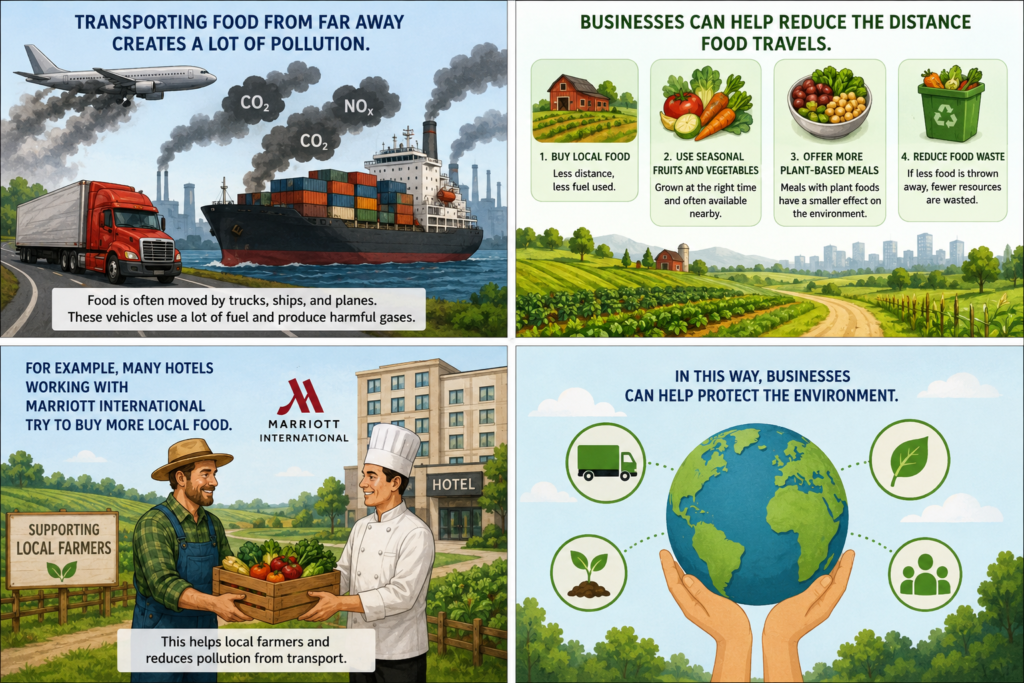
Transporting food from far away creates a lot of pollution. Today, many kinds of food travel very long distances before they arrive at hotels, restaurants, and shops. Food is often moved by trucks, ships, and planes. These vehicles use a lot of fuel and produce harmful gases. This causes pollution and is bad for the environment. For this reason, businesses should try to reduce the distance that food travels.
There are several ways businesses can help. First, they can buy food from local farms. Local food does not need to travel far, so less fuel is used. Second, businesses can use seasonal fruits and vegetables. These foods are grown at the right time of the year and are often available nearby. Businesses can also offer more plant-based meals. Meals made with vegetables, beans, and other plant foods often have a smaller effect on the environment. Another important step is reducing food waste in kitchens. If less food is thrown away, fewer resources are wasted.
For example, many hotels working with Marriott International try to buy more local food. This helps local farmers and reduces pollution from transport. In this way, businesses can help protect the environment.
################
True or false:
- Transporting food from far away creates pollution.
- Food is often moved by trucks, ships, and planes.
- Trucks, ships, and planes do not use fuel.
- Buying local food can reduce fuel use.
- Seasonal fruits are always imported from other countries.
- Seasonal fruits and vegetables are often available nearby.
- Plant-based meals usually have a higher environmental impact than meat meals.
- Plant-based meals can be better for the environment.
- Food is only transported by bicycles.
- Transporting food over long distances uses a lot of fuel.
- Reducing food waste helps save resources.
- Reducing food waste has no effect on the environment.
- Buying local food increases pollution.
- Many hotels working with Marriott International try to buy local food.
- Food transport does not affect climate change.
_______________________
Answers:
1T 2T 3F 4T 5F 6T 7F 8T
9F 10T 11T 12F 13F 14T 15F
_______________________
Correct version:
- Transporting food from far away creates pollution.
- Food is often moved by trucks, ships, and planes.
- Trucks, ships, and planes do not use fuel. True is: Trucks, ships, and planes use a lot of fuel.
- Buying local food can reduce fuel use.
- Seasonal fruits and vegetables are always imported from other countries. True is: Seasonal fruits and vegetables are often grown or available locally or in nearby regions.
- Seasonal fruits and vegetables are often available nearby.
- Plant-based meals usually have a higher environmental impact than meat meals. True is: Plant-based meals usually have a smaller environmental impact than meat meals.
- Plant-based meals can be better for the environment.
- Food is only transported by bicycles. True is: Food is transported by many means, such as trucks, ships, and planes.
- Transporting food over long distances uses a lot of fuel.
- Reducing food waste helps save resources.
- Reducing food waste has no effect on the environment. True is: Reducing food waste helps the environment and saves resources.
- Buying local food increases pollution. True is: Buying local food reduces pollution.
- Many hotels working with Marriott International try to buy local food.
- Transporting food over long distances does not affect climate change. True is: Transporting food over long distances contributes to climate change.
##################
Match the word with the correct definition exercise:
Words
- pollution
- transport
- fuel
- farm
- local
- seasonal
- vegetables
- fruits
- climate
- waste
- environment
- resources
- meals
- trucks
- ships
Definitions
A. Things like food, water, or energy that people use
B. Cars or large vehicles used to move goods on land
C. The natural world around us
D. Gas or liquid used to power vehicles
E. Food that is eaten, like breakfast, lunch, or dinner
F. Harmful substances in air, water, or land
G. Moving goods or people from one place to another
H. Boats used to carry goods across water
I. Food that is thrown away and not used
J. Food that grows in gardens or fields, such as carrots or potatoes
K. A place where crops or animals are grown
L. Weather conditions over a long time in an area
M. Food grown and sold in the same area
N. Fruits like apples, bananas, or oranges
O. Time of year when something is available or grown
_____________________
Answers:
1-F, 2-G, 3-D, 4-K, 5-M, 6-O, 7-J, 8-N,
9-L, 10-I, 11-C, 12-A, 13-E, 14-B, 15-H
###############
Find evidence in the text:
A. Statements (What is said)
- Transporting food causes pollution.
- Food often travels long distances before it is eaten.
- Food is moved using different transport methods.
- Fuel is used during food transport.
- Local food travels a shorter distance.
- Buying local food helps farmers nearby.
- Seasonal food is not always available.
- Plant-based meals can be better for the environment.
- Meat production often has a higher impact on the environment.
- Food waste is a problem in kitchens.
- Reducing food waste helps save resources.
- Businesses can help the environment.
- Hotels try to buy local food.
- Marriott-related hotels support local farmers.
- Transport pollution is linked to climate change.
B. Evidence from the text
A. “Plant-based meals… often have a smaller effect on the environment.”
B. “These vehicles use a lot of fuel.”
C. “Food is often moved by trucks, ships, and planes.”
D. “Many kinds of food travel very long distances before they arrive at hotels, restaurants, and shops.”
E. “This supports local farmers.”
F. “Businesses can take steps to reduce transport.”
G. “These gases contribute to climate change.”
H. “Local food does not need to travel far.”
I. “Producing meat often has a higher environmental impact.”
J. “Transporting food from far away creates pollution.”
K. “These foods are grown at the right time of the year.”
L. “Many hotels working with Marriott International try to buy more local food.”
M. “Fewer resources are wasted.”
N. “Businesses should… reduce food waste in their kitchens.”
O. “This helps local farmers.”
_____________________
Answer Key
1-J, 2-D, 3-C, 4-B, 5-H, 6-O, 7-K, 8-A,
9-I, 10-N, 11-M, 12-F, 13-L, 14-E, 15-G
###############
Multiple Choice :
- What does transporting food from far away cause?
A. Pollution
B. Free food
C. More farms - Food is often moved by:
A. Bikes only
B. Trucks, ships, and planes
C. Trains only in cities - Why do trucks and ships create pollution?
A. They use fuel
B. They are slow
C. They carry fruit - Buying local food mainly helps to reduce:
A. Cooking time
B. Fuel use
C. Shop size - Seasonal food means food that is:
A. Always frozen
B. Grown in one country only
C. Available at a certain time of year - Local food usually travels:
A. A short distance
B. Across oceans
C. By air only - Plant-based meals often have:
A. No vegetables
B. Lower environmental impact
C. More meat - Meat production often has:
A. Higher environmental impact
B. No water use
C. No farms - Food waste means food that is:
A. Sold quickly
B. Not cooked
C. Thrown away - Reducing food waste helps:
A. Save resources
B. Increase prices
C. Add transport - Businesses can help the environment by:
A. Buying local food
B. Using more packaging
C. Importing more food - Many hotels try to buy:
A. Imported food only
B. Frozen food only
C. Local food - Transporting food over long distances uses:
A. No energy
B. Less fuel
C. A lot of fuel - Climate change is affected by:
A. Food transport emissions
B. Only rain
C. Cooking methods only - Local food helps:
A. Nearby farmers
B. Air travel companies
C. Plastic production
________________
Answers:
1-A, 2-B, 3-A, 4-B, 5-C, 6-A, 7-B, 8-A,
9-C, 10-A, 11-A, 12-C, 13-C, 14-A, 15-A
############
Answer in brief, complete sentences.
- What happens when food is transported from far away?
- Name three ways food is moved.
- Explain why food transport creates pollution.
- Which type of food helps reduce fuel use?
- Describe seasonal food.
- How does local food travel compared to imported food?
- Give one reason plant-based meals are suggested.
- In what way can plant-based meals help the environment?
- Define food waste in your own words.
- What is one benefit of reducing food waste?
- What should businesses buy from local farms?
- How do local food choices support farmers?
- What do many hotels try to do with their food supply?
- What environmental problem is linked to food transport?
- Suggest one way businesses can reduce pollution from food.
_______________________
Possible answers:
Transporting food from far away creates pollution.
Food is moved by trucks, ships, and planes.
It creates pollution because these transport methods use a lot of fuel.
Local food helps reduce fuel use.
Seasonal food is food that is available at a certain time of the year.
Local food travels a shorter distance than imported food.
Plant-based meals are suggested because they are better for the environment.
They help reduce environmental impact and pollution.
Food waste is food that is thrown away and not used.
It helps save resources.
Businesses should buy food from local farms.
Local food supports nearby farmers and their income.
Many hotels try to buy more local food.
Climate change is linked to food transport pollution.
Businesses can reduce pollution by buying local and seasonal food and reducing food waste.
###############
Schreibe einen Kommentar