- some thoughts
Mobile phones are very common today. Many people have a mobile phone. Children, students, workers, and old people use them every day. Mobile phones help people in many ways, but they also bring some problems.
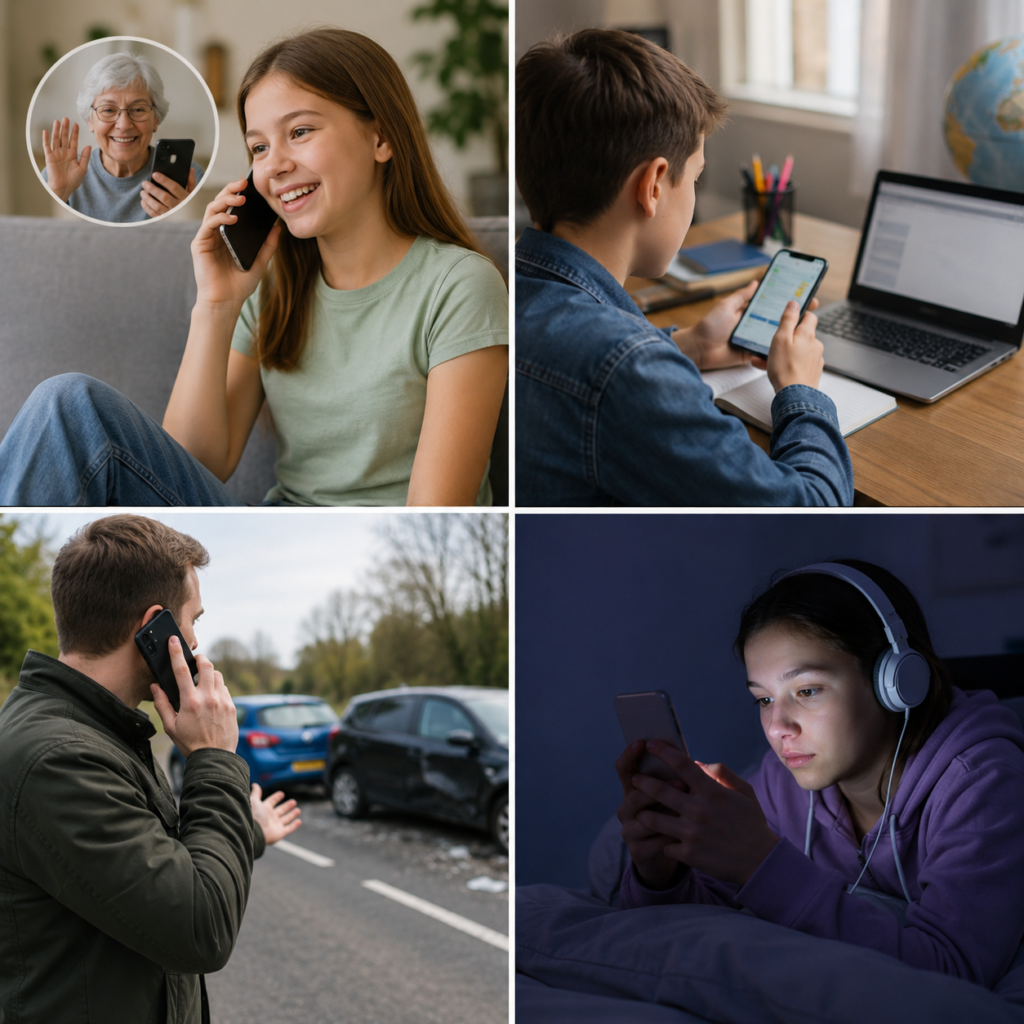
One good thing about mobile phones is talking to people. People can call family and friends very fast. They can also send text messages. A person can talk to someone in another city or another country. This helps people stay close to family and friends.
Mobile phones also help people at school and work. Students can look for information on the internet. They can read and learn new things. Workers can read emails and talk to people from work. Many people use phones to check the time, write notes, or use a map.
Another good thing is help in danger. If a person has a problem, they can call for help quickly. For example, after a car accident, a person can call the police or a doctor. This can save time and help people stay safe.
People also use mobile phones for fun. They can listen to music, watch videos, play games, and take photos. Many people enjoy sharing photos with family and friends. Phones can make free time more fun.
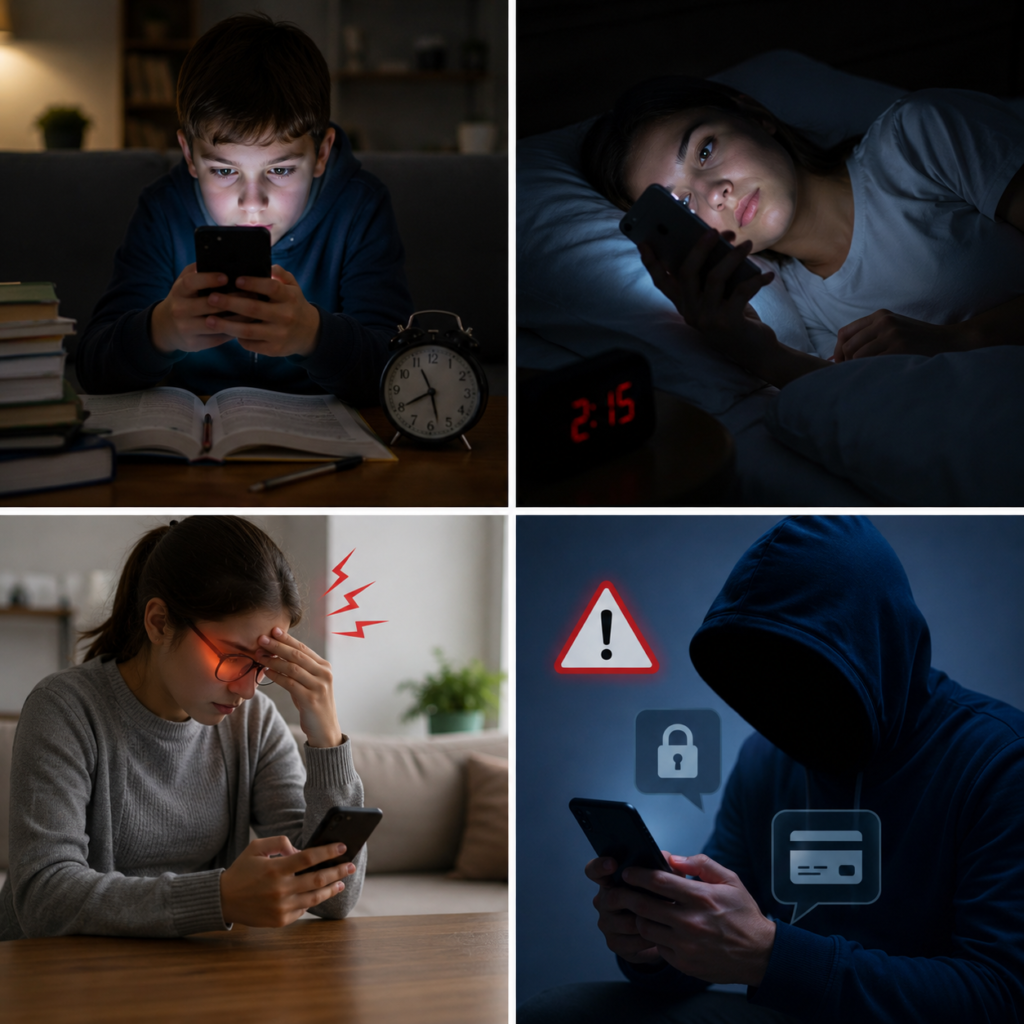
However, mobile phones also have bad sides. One problem is that some people use them too much. They look at the phone all day and do not talk much to people near them. Some children play games for many hours and do not study enough.
Another problem is health. Looking at a phone for a long time can hurt the eyes. Some people sleep late because they use the phone at night. This can make them tired in the morning.
Mobile phones can also cost a lot of money. New phones are often very expensive. People also pay money every month for internet and calls. Some families do not have enough money for this.
There is also danger on the internet. Some people send bad messages or try to take money from others online. Because of this, people must be careful when they use mobile phones and the internet.
In conclusion, mobile phones are useful in many ways. They help people talk, learn, work, and have fun. At the same time, they can bring problems with health, money, and too much use. People should use mobile phones in a smart and careful way.
__________________
Vocabulary:
- to be common — to happen often or exist in many places
- in many ways — in different manners or forms
- to bring problems — to cause difficulties
- to stay close to somebody — to remain near a person
- to check the time — to look at a clock or phone to know the hour
- to write a note — to write a short message or reminder
- to use a map — to look at a map [picture or drawing that shows places, roads, or directions]for directions
- help in danger — assistance when someone is in a risky situation
- an accident — an unexpected bad event, often causing damage or injury
- to save time — to make something quicker or use less time
- to stay safe — to avoid danger or harm
- to enjoy sharing photos — to like posting or showing pictures to others
- free time — time when you are not working or studying
- however — but; used to show contrast
- enough — as much as needed
- health — the condition of your body and mind
- to hurt the eyes — to cause pain or discomfort in the eyes
- to be tired — to feel that you need rest or sleep
- to be expensive — to cost a lot of money
- in conclusion — finally; to finish an opinion [what a person thinks or believes about something] or text
- to use in a smart way — to use carefully and effectively
- in a careful way — with attention and caution
#############
Match the words with the definitions:
Words
- to be common
- in many ways
- to bring problems
- to stay close to somebody
- to check the time
- to write a note
- to use a map
- help in danger
- an accident
- to save time
- to stay safe
- to enjoy sharing photos
- free time
- however
- enough
- health
- to hurt the eyes
- to be tired
- to be expensive
- in conclusion
- to use in a smart way
- in a careful way
Definitions
A. to cause difficulties
B. to remain near a person
C. to look at a clock or phone to know the hour
D. to write a short message or reminder
E. assistance when someone is in a risky situation
F. to make something quicker or use less time
G. to avoid danger or harm
H. an unexpected bad event, often causing damage or injury
I. to like posting or showing pictures to others
J. but; used to show contrast
K. as much as needed
L. the condition of your body and mind
M. to cause pain or discomfort in the eyes
N. to feel that you need rest or sleep
O. to cost a lot of money
P. finally; to finish an opinion or text
Q. to use carefully and effectively
R. in different manners or forms
S. to happen often or exist in many places
T. time when you are not working or studying
U. doing something slowly and safely so you do not make mistakes or get hurt
__________________
Answer Key
1-S, 2-R, 3-A, 4-B, 5-C, 6-D, 7-W,
8-E, 9-H, 10-F, 11-G, 12-I, 13-T, 14-J,
15-K, 16-L, 17-M, 18-N, 19-O, 20-P, 21-Q, 22-U
#############
True or false:
- To write a note means writing a short message.
- Health means the number of books you read.
- A map helps you find roads and places.
- However is used to agree with everything someone says.
- To be common means something happens often.
- In conclusion is used at the beginning of a story.
- Free time is the time you spend sleeping at work.
- To save time means doing something faster.
- An accident can happen suddenly and cause damage.
- To check the time means to measure temperature.
- To stay safe means avoiding danger.
- A map is used to cook food in a kitchen.
- To use a map means to look for directions.
- To write a note means to delete all your messages.
- Enough means something is extremely dangerous.
- Free time is time when you are not working or studying.
- However is used to show contrast in ideas.
- To stay safe means to look for information in a book.
- Health is important for a good life.
- An accident always happens on purpose.
- In conclusion is used to finish speaking or writing.
- To check the time means looking at a clock or phone.
- To save time means to make something slower.
- Enough means you do not need more.
__________________
True: 1,3,5,8,9,11,13,16,17,19,21,22,24
__________________
Correct answers:
- To write a note means writing a short message.
- Health means the number of books you read. True is: the condition of your body and mind.
- A map helps you find roads and places.
- However is used to agree with everything someone says. True is: but; used to show contrast.
- To be common means something happens often.
- In conclusion is used at the beginning of a story. True is: used to finish speaking or writing.
- Free time is the time you spend sleeping at work. True is: time when you are not working or studying.
- To save time means doing something faster.
- An accident can happen suddenly and cause damage.
- To check the time means to measure temperature. True is: to look at a clock or phone to know the hour.
- To stay safe means avoiding danger.
- A map is used to cook food in a kitchen. True is: a picture or drawing that shows places, roads, or directions.
- To use a map means to look for directions.
- To write a note means to delete all your messages. True is: to write a short message or reminder.
- Enough means something is extremely dangerous. True is: as much as needed.
- Free time is time when you are not working or studying.
- However is used to show contrast in ideas.
- To stay safe means to look for information in a book. True is: to avoid danger or harm.
- Health is important for a good life.
- An accident always happens on purpose. True is: an unexpected bad event, often causing damage or injury.
- In conclusion is used to finish speaking or writing.
- To check the time means looking at a clock or phone.
- To save time means to make something slower. True is: to make something quicker or use less time.
- Enough means you do not need more.
#############
True or false:
- Mobile phones are cheap for every family.
- After an accident, people can call for help.
- Mobile phones never help in dangerous situations.
- Mobile phones can be used to check the time.
- Internet and calls on phones do not cost money.
- Mobile phones help people stay close to others.
- Mobile phones cannot be used for calling people in other countries.
- Students can use phones to look for information on the internet.
- Mobile phones are very common today.
- Using phones for a long time can help the eyes become stronger.
- People never use phones for watching videos or playing games.
- Mobile phones help people talk to family and friends quickly.
- Mobile phones have no problems at all for people.
- Workers can read emails on mobile phones.
- Mobile phones are used for fun activities like music and games.
- Mobile phones never help in school or work.
- Mobile phones should be used in a smart and careful way.
- Students cannot learn anything from mobile phones.
- People can send text messages with mobile phones.
- Only children use mobile phones every day.
- Mobile phones cannot be used to write notes.
- Many people use mobile phones every day.
- Mobile phones always make free time boring.
- Mobile phones can help in danger situations.
__________________
True: 1, 2,4,6,8,9,12,14,15,17,19,22,24
__________________
Correct version:
- Mobile phones are cheap for every family.
- After an accident, people can call for help.
- Mobile phones never help in dangerous situations. True is: Mobile phones can help in dangerous situations.
- Mobile phones can be used to check the time.
- Internet and calls on phones do not cost money. True is: Internet and calls on phones cost money.
- Mobile phones help people stay close to others.
- Mobile phones cannot be used for calling people in other countries. True is: Mobile phones can be used for calling people in other countries.
- Students can use phones to look for information on the internet.
- Mobile phones are very common today.
- Using phones for a long time can help the eyes become stronger. True is: Using phones for a long time can hurt the eyes.
- People never use phones for watching videos or playing games. True is: People use phones for watching videos or playing games.
- Mobile phones help people talk to family and friends quickly.
- Mobile phones have no problems at all for people. True is: Mobile phones can bring some problems for people.
- Workers can read emails on mobile phones.
- Mobile phones are used for fun activities like music and games.
- Mobile phones never help in school or work. True is: Mobile phones help in school and work.
- Mobile phones should be used in a smart and careful way.
- Students cannot learn anything from mobile phones. True is: Students can learn from mobile phones.
- People can send text messages with mobile phones.
- Only children use mobile phones every day. True is: Many people use mobile phones every day.
- Mobile phones cannot be used to write notes. True is: Mobile phones can be used to write notes.
- Many people use mobile phones every day.
- Mobile phones always make free time boring. True is: Mobile phones can make free time more fun.
- Mobile phones can help in danger situations.
#############
Odd one out:
- Mobile phones, internet, kitchen, texting
Odd one: kitchen (others are related to communication/technology) - School, banana, students, teachers
- Cooking, accident, danger, help
- Free time, hospital, music, games
- Map, bus, directions, apple
- Eyes, running, health, tired
- Email, sandwich, work, office
- Family, chatting, television, friends
- Save time, fast, chair, quick
- Safe, danger, book, careful
__________________
Correct answers:
Mobile phones, internet, kitchen, texting — Odd one: kitchen (others are related to communication/technology)
School, banana, students, teachers — Odd one: banana (others are related to education)
Cooking, accident, danger, help — Odd one: cooking (others are about dangerous situations or help)
Free time, hospital, music, games — Odd one: hospital (others are about leisure activities)
Map, bus, directions, apple — Odd one: apple (others are related to transport or navigation)
Eyes, running, health, tired — Odd one: running (others describe body/health conditions)
Email, sandwich, work, office — Odd one: sandwich (others are related to work or communication)
Family, chatting, television, friends — Odd one: television (others involve people or communication)
Save time, fast, chair, quick — Odd one: chair (others describe speed or efficiency)
Safe, danger, book, careful — Odd one: book (others relate to safety or risk)
#############
Match the halves (based on the text)
A
- Mobile phones are very common today because…
- People can stay close to family and friends by…
- Students use mobile phones to…
- Mobile phones can help in danger because…
- People use mobile phones in free time to…
- One problem of mobile phones is that…
- Mobile phones should be used in a smart way because…
B
A. they are useful in modern life.
B. calling and sending messages.
C. learn and find information.
D. enjoy music, videos, and games.
E. they can call for help after an accident.
F. they can hurt the eyes if used too much.
G. they help people in many ways.
Answer Key
1-G, 2-B, 3-C, 4-E, 5-D, 6-F, 7-A
#############
- Mobile phones are very
a) common
b) broken
c) rare - People use phones to stay
a) far
b) close
c) asleep - Students use mobile phones to
a) sleep
b) cook
c) learn - Mobile phones can help in
a) danger
b) weather
c) lunch - Free time is when people are
a) working
b) relaxing
c) driving - A map is used to find
a) food
b) music
c) places - Mobile phones can help to
a) lose
b) save
c) waste - Too much phone use can hurt the
a) books
b) shoes
c) eyes - Workers use phones to read
a) chairs
b) emails
c) sandwiches - Mobile phones help people stay
a) heavy
b) slow
c) safe - People can use phones to
a) eat
b) send
c) build messages - In danger, people can
a) call
b) sing
c) draw - Phones are useful in
a) no
b) many
c) few ways - In conclusion, mobile phones are very
a) useful
b) broken
c) useless - Mobile phones help people
a) stay
b) forget
c) leave close to others - Students can
a) learn
b) sleep
c) cook from mobile phones - A phone can be used to
a) check
b) break
c) hide the time - Mobile phones are used for
a) games
b) stones
c) water and music - People use phones to send
a) tables
b) messages
c) chairs - Mobile phones can be
a) natural
b) dangerous
c) useless if used too much
__________________
1-a, 2-b, 3-c, 4-a, 5-b, 6-c, 7-b, 8-c, 9-b, 10-c, 11-b, 12-a, 13-b, 14-a, 15-a, 16-a, 17-a, 18-a, 19-b, 20-b
#############
Today, many people use mobile phones every day. Mobile phones help people talk to family and friends, learn new things, and have fun. They are very important for school, work, and free time. However, some people think mobile phones can also bring problems. In this dialogue, Anna and Mark talk about the good and bad sides of mobile phones. Mark likes mobile phones very much, but Anna is more careful and does not like some things about them.
Anna: Hi Mark! What are you doing on your phone?
Mark: Hi Anna! I am watching a video. I love my mobile phone. I use it every day.
Anna: Really? I do not like mobile phones very much.
Mark: Why not? Mobile phones are very useful.
Anna: Sometimes yes, but sometimes they are bad too.
Mark: I think they are great. I can call my family and friends very fast. Yesterday I called my cousin in Spain.
Anna: Yes, that is good. I also call my grandmother every week. But many people use phones too much.
Mark: Maybe, but phones help people stay close. I talk to my friends every day.
Anna: But do you talk face to face?
Mark: Yes, of course! I talk face to face and on the phone too.
Anna: Some people only look at their phones. At lunch they do not talk. They only look at the screen.
Mark: That is true for some people, but not for everyone.
Anna: My little brother plays games on his phone for many hours. He does not do his homework first.
Mark: I understand. Too many games are not good. But games can also be fun after school.
Anna: Yes, maybe for a short time.
Mark: Phones also help at school. I use my phone to read and learn English words.
Anna: I sometimes use my phone for school too. I look for information on the internet.
Mark: You see? Phones are helpful!
Anna: Yes, but there are also dangers on the internet.
Mark: What kind of dangers?
Anna: Bad people can send bad messages. Some people want money from others online.
Mark: That is true. People must be careful.
Anna: Also, phones are very expensive now. New phones cost a lot of money.
Mark: Yes, some phones are very expensive. But people do not always need a new phone.
Anna: My friend buys a new phone every year.
Mark: That is too much. I use my phone for many years.
Anna: Another problem is sleep. Many people use phones late at night.
Mark: I sometimes do that too. Then I feel tired in the morning.
Anna: You see! Phones can cause problems.
Mark: Yes, but many things can cause problems if people use them too much.
Anna: Maybe you are right.
Mark: Phones can also help in danger. One time my father had a car problem, and he called for help with his phone.
Anna: That is very useful. In an emergency, phones are very important.
Mark: Phones also have maps. When I visit a new place, I use my phone to find streets and shops.
Anna: I use maps too. They help me a lot in big cities.
Mark: And I love taking photos with my phone.
Anna: Me too! I take photos of my dog every day.
Mark: So maybe you like mobile phones a little.
Anna: Maybe a little! I think phones are good when people use them in a smart way.
Mark: I agree. Phones are very useful, but people must not use them all day.
Anna: Yes. People need time for family, friends, sports, and school too.
Mark: That is true. A mobile phone is good, but life without the phone is important too.
Anna: I like that idea.
Mark: Me too!
#############
BONUS DIALOGUE in B2
Today, mobile phones play a significant role in modern society. People rely on them for communication, education, entertainment, and work-related tasks. They make it possible to stay in contact with others instantly, access information online, and complete many daily activities more efficiently. Nevertheless, despite their numerous advantages, mobile phones also have certain disadvantages that concern many people. In this conversation, Anna and Mark exchange their opinions about the positive and negative effects of mobile phones. Mark strongly appreciates the benefits they provide, whereas Anna is more critical and believes that excessive phone usage can create serious problems.
Anna: Hi Mark! What are you doing on your phone?
Mark: Hi Anna! I’m watching a video online. I absolutely love my mobile phone and use it constantly throughout the day.
Anna: Really? To be honest, I’m not particularly fond of mobile phones.
Mark: Why do you feel that way? In my opinion, mobile phones are incredibly practical and convenient.
Anna: They certainly have advantages, but they can also cause a variety of problems.
Mark: Personally, I think they are excellent devices. For example, I can communicate with my family and friends immediately whenever I want. Yesterday, I even called my cousin who lives in Spain.
Anna: I agree that this is very beneficial. I also call my grandmother regularly every week. However, many individuals spend an unreasonable amount of time using their phones.
Mark: That might be true in some cases, but mobile phones allow people to maintain close relationships even when they live far away. I communicate with my friends daily because of my phone.
Anna: But do you still interact with people in person and have real face-to-face conversations?
Mark: Of course I do! I enjoy speaking to people directly as well as communicating digitally.
Anna: Unfortunately, some people become completely absorbed in their phones. For instance, during meals they ignore everyone around them and focus entirely on their screens instead of having conversations.
Mark: I admit that this happens quite often, but it certainly does not apply to everybody.
Anna: My younger brother spends several hours playing games on his phone every day. Instead of concentrating on his homework, he wastes time online.
Mark: I understand your concern. Excessive gaming can definitely become unhealthy. Nevertheless, playing games occasionally after school can still be entertaining and relaxing.
Anna: Perhaps, but only in moderation.
Mark: Mobile phones can also be extremely useful in education. I frequently use mine to read articles and improve my English vocabulary.
Anna: I sometimes use my phone for academic purposes as well. I often search the internet for information when I need to complete school assignments.
Mark: Exactly! That clearly demonstrates how helpful mobile phones can be.
Anna: That may be true, but the internet also contains many dangers and risks.
Mark: What kind of dangers are you referring to?
Anna: Some dishonest individuals send harmful or threatening messages online, while others attempt to deceive people in order to steal money from them.
Mark: You’re absolutely right. People need to behave carefully and responsibly when they use the internet.
Anna: Another issue is the price of modern smartphones. Many new models are extremely expensive nowadays.
Mark: I completely agree. Some phones cost far too much money, although I don’t think people need to replace their phones so frequently.
Anna: One of my friends buys a brand-new phone every single year.
Mark: In my opinion, that’s completely unnecessary. I usually keep the same phone for many years before replacing it.
Anna: Lack of sleep is another serious problem connected to mobile phones. Many people spend hours using them late at night.
Mark: I sometimes make the same mistake myself, and then I feel exhausted and unable to concentrate the following morning.
Anna: Exactly! That proves mobile phones can negatively affect people’s daily lives.
Mark: That’s true, but almost anything can become harmful if people use it excessively and without self-control.
Anna: Perhaps you have a point.
Mark: Mobile phones can also be extremely valuable in emergency situations. Once, my father experienced car trouble and immediately used his phone to call for assistance.
Anna: That’s definitely very useful. In emergencies, mobile phones can be absolutely essential.
Mark: They also provide navigation and maps. Whenever I travel to an unfamiliar place, I use my phone to locate streets, shops, and restaurants.
Anna: I use map applications as well, especially when I visit large cities. They make travelling much easier.
Mark: Another thing I enjoy is taking photographs with my phone.
Anna: Me too! I take pictures of my dog almost every day because he always does something funny.
Mark: So perhaps you actually like mobile phones more than you admit.
Anna: Maybe just a little! I believe phones are beneficial as long as people use them wisely and responsibly.
Mark: I completely agree with you. Mobile phones are extremely useful tools, but people should not spend their entire lives staring at screens.
Anna: Exactly. People also need to dedicate time to their families, friends, education, hobbies, and physical activities.
Mark: That’s absolutely true. Although mobile phones are important and practical, life beyond technology is equally important.
Anna: I really like that perspective.
Mark: So do I!
#############
Some more thoughts…..
Pros of Mobile Phones
| Keyword | Advantage | Short Explanation |
|---|---|---|
| Communication | Instant connectivity | Calls, texts, video chats anytime |
| Internet Access | Information availability | Quick access to websites and online services |
| Productivity | Work efficiency | Emails, calendars, notes, remote work |
| Education | Learning support | Online courses, research, educational apps |
| Navigation | GPS & maps | Real-time directions and traffic updates |
| Entertainment | Media access | Music, games, videos, streaming |
| Social Media | Social connection | Stay connected with friends and communities |
| Emergency Use | Safety support | Quick emergency calls and alerts |
| Mobile Banking | Financial convenience | Online payments and banking apps |
| Photography | Easy content creation | High-quality cameras for photos/videos |
| E-commerce | Online shopping | Buy products anytime |
| Health Apps | Fitness tracking | Step counters, heart-rate monitoring |
| Smart Devices | Device integration | Control smart homes and wearables |
| Cloud Storage | Data accessibility | Access files from anywhere |
| Flexibility | Portable technology | Small, lightweight, always available |
Cons of Mobile Phones
| Keyword | Disadvantage | Short Explanation |
|---|---|---|
| Addiction | Excessive usage | Overdependence on screen time |
| Distraction | Reduced focus | Interruptions during study/work |
| Health Issues | Physical strain | Eye strain, poor posture, sleep problems |
| Privacy Risks | Data exposure | Tracking, hacking, data leaks |
| Cyberbullying | Online harassment | Social media abuse and threats |
| Reduced Social Interaction | Less face-to-face communication | Weakens real-world interaction |
| Mental Health | Anxiety & stress | Social pressure and comparison |
| Cost | Expensive devices/services | High purchase and maintenance costs |
| Battery Dependence | Charging issues | Frequent charging needed |
| Security Threats | Malware & scams | Risk of fraud and cyberattacks |
| Misinformation | Fake news spread | Fast circulation of unreliable content |
| Environmental Impact | Electronic waste | Pollution from discarded devices |
| Accidents | Unsafe usage | Phone use while driving/walking |
| Reduced Attention Span | Short focus duration | Constant notifications affect concentration |
| Noise Pollution | Disturbance | Loud ringtones and public phone use |
Summary Keywords
Pros Keywords:
Communication, Productivity, Internet, GPS, Entertainment, Education, Banking, Photography, Connectivity, Convenience
Cons Keywords:
Addiction, Distraction, Privacy, Cyberbullying, Health Issues, Cost, Security Risks, E-waste, Stress, Dependency
Schreibe einen Kommentar