Kategorie: WCJ
-
🇰🇭Cambodia and Indonesia🇮🇩 strengthen tourism ties: new initiatives and direct flight plans (A2,B1-)
- strengthening cultural and tourism ties

You work in a five-star hotel.
The manager has asked you to tell the staff in a meeting about the new
Cambodia-Indonesia
tourism plan.
######################
✈️ Cambodia & Indonesia – tourism cooperation cheat sheet
🧭 Main Goal
- Make it easier and faster for people to travel between Cambodia and Indonesia.
- Attract more tourists to both countries.
🪄 Key Plans
Area What They Will Do ✈️ Flights Start direct flights between Bali and Siem Reap. 🕌 Muslim tourism Offer more Muslim-friendly services (Halal food, prayer spaces). 📢 Promotion Work together to promote tourism in both countries. 🤝 Exchange Organize cultural visits and tours for travel professionals (FAM trips).
🎯 Why This Is Important
- Bring more visitors from each country.
- Make travel easier, cheaper, faster.
- Show their culture, history, and nature to the world.
- Compete better with other countries in Southeast Asia.
📆 Next Steps
- Governments and tourism groups will plan flight routes.
- Tourism teams will work together on marketing.
- First direct flights and projects are expected soon.
✅ Summary:
Cambodia and Indonesia will work closely to grow tourism by starting direct flights, promoting cultural tourism, supporting Muslim travellers, and doing joint marketing.
###################
Summary:Cambodia and Indonesia want to work more closely together in tourism. They plan new actions to help more people travel between the two countries easily and quickly.
One big plan is to start direct flights between important tourist places like Bali in Indonesia and Siem Reap in Cambodia. This will save time and make travel cheaper and more comfortable for visitors. Both countries believe this will bring more tourists.
Another focus is Muslim-friendly tourism. They want to offer more services for Muslim travellers, such as halal food and places to pray. This will make both countries more attractive for visitors from Muslim communities.
They will also work together on promotion and marketing. This means they will show more information about each country in travel fairs, online campaigns, and events. Tourism experts will join FAM trips (special learning trips for travel agents and media) to understand both destinations better.
There will be cultural exchanges between tourism groups. These activities will help the countries learn from each other and create better travel packages for visitors.
The goal is to increase tourist numbers, build stronger tourism industries, and compete better with other countries in Southeast Asia. These actions will make travel between Cambodia and Indonesia easier, faster, and more enjoyable for everyone.
_______________________________
Vocabulary:
to save time – to do something faster and not lose time
to make travel cheaper – to help people spend less money when they travel
to be comfortable – to feel good and relaxed
to believe – to think something is true
a focus – the main thing to look at or work on
Muslim-friendly tourism – travel that gives services good for Muslim people
to offer – to give something to someone
halal food – food that Muslim people can eat
to pray – to talk to God
to make attractive – to make something nice so people like it
a Muslim community – a group of Muslim people living together
to promote – to talk about something so more people know it
to market – to sell or show something to people
a travel fair – a big place or event where people learn about travel
an online campaign – information shared on the internet to tell people something
an event – something that happens, like a show or meeting
a travel agent – a person who helps people plan trips
a destination – a place where people go
a cultural exchange – people from different countries share ideas and traditions
a travel package – a trip with hotel, transport, and tours together
a goal – something you want to do or get
to increase – to make something bigger or more
to compete with somebody – to try to be better than another person or group
to be enjoyable – to be fun and nice for people##################
Multiple-choice test, one answer only:
- “I take the bus to work to ___.”
a) save time
b) buy food
c) watch TV - “A new airline wants to ___ so more people can travel.”
a) make travel slower
b) make travel cheaper
c) close the airport - “This seat is soft and warm. It is very ___.”
a) busy
b) dangerous
c) comfortable - “I ___ this plan will work well.”
a) sleep
b) believe
c) drive - “The ___ of the meeting is to plan the trip.”
a) park
b) focus
c) food - “The hotel gives halal food and prayer rooms. It has ___.”
a) mountain tourism
b) Muslim-friendly tourism
c) beach tourism - “The guide wants to ___ free maps to tourists.”
a) offer
b) take
c) buy - “Many Muslim people eat only ___.”
a) junk food
b) halal food
c) fast food - “Every day, many people go to the mosque to ___.”
a) work
b) pray
c) play - “The city wants to ___ the park with flowers and lights.”
a) make attractive
b) make bigger
c) make slow - “A ___ lives and prays together in the same place.”
a) library
b) Muslim community
c) police station - “The company wants to ___ its new tour.”
a) hide
b) forget
c) promote - “They want to ___ the new trip on social media.”
a) close
b) sleep
c) market - “We can visit a ___ to learn about trips and tours.”
a) travel fair
b) school
c) hospital - “The company started an ___ to tell people about the trip.”
a) online campaign
b) wedding
c) football match - “The concert is a big ___ in the park.”
a) train
b) event
c) job - “A ___ helps you book flights and hotels.”
a) teacher
b) travel agent
c) police officer - “Paris is a famous tourist ___.”
a) game
b) food
c) destination - “A ___ helps people share their culture.”
a) cultural exchange
b) bank
c) cinema - “A ___ includes hotel, transport, and tours.”
a) travel package
b) toy
c) notebook - “My ___ is to learn English well.”
a) house
b) goal
c) pencil - “The number of tourists will ___ this year.”
a) sleep
b) increase
c) close - “Two teams will ___ in the game.”
a) sing
b) compete with somebody
c) play music - “This nice trip is very ___ for families.”
a) bad
b) dangerous
c) enjoyable
————————————–
Answers:
1.a 2.b 3.c 4.b 5.b 6.b 7.a 8b 9.b
10.a 11.b 12.c 13.c 14.a 15.a 16.b 17.b
18.c 19.a 20.a 21.b 22.b 23.b 24.c
————————————-
Full version:- I take the bus to work to save time.
- A new airline wants to make travel cheaper so more people can travel.
- This seat is soft and warm. It is very comfortable.
- I believe this plan will work well.
- The focus of the meeting is to plan the trip.
- The hotel gives halal food and prayer rooms. It has Muslim-friendly tourism.
- The guide wants to offer free maps to tourists.
- Many Muslim people eat only halal food.
- Every day, many people go to the mosque to pray.
- The city wants to make attractive the park with flowers and lights.
- A Muslim community lives and prays together in the same place.
- The company wants to promote its new tour.
- They want to market the new trip on social media.
- We can visit a travel fair to learn about trips and tours.
- The company started an online campaign to tell people about the trip.
- The concert is a big event in the park.
- A travel agent helps you book flights and hotels.
- Paris is a famous tourist destination.
- A cultural exchange helps people share their culture.
- A travel package includes hotel, transport, and tours together.
- My goal is to learn English well.
- The number of tourists will increase this year.
- Two teams will compete with somebody in the game.
- This nice trip is very enjoyable for families.
#####################
Fill in:
- I want to ___ time by taking the fast train.
a) save
b) spend
c) lose - This hotel is very ___ and has soft beds.
a) dangerous
b) comfortable
c) boring - Many people go to the mosque to ___ every day.
a) pray
b) eat
c) sleep - The travel agency wants to ___ the new tour on social media.
a) market
b) hide
c) forget - The city planted flowers to ___ the park.
a) make attractive
b) destroy
c) clean - We plan to ___ the number of tourists this year.
a) remove
b) decrease
c) increase - The tour includes hotel, transport, and guides. This is a ___ package.
a) travel
b) food
c) toy - Bali is a popular tourist ___ in Indonesia.
a) game
b) teacher
c) destination - The company started an ___ campaign to tell people about the trip.
a) online
b) offline
c) paper - The company wants to ___ the trip to more people.
a) hide
b) promote
c) close - Many Muslim travellers like ___ food and prayer facilities.
a) halal
b) fast
c) junk - A ___ helps people plan and book trips.
a) doctor
b) travel agent
c) teacher - Two countries can learn from each other with a ___ exchange.
a) sports
b) cultural
c) music - My personal ___ is to speak English well.
a) park
b) goal
c) house - Teams try to ___ with somebody in competitions.
a) play music
b) sing
c) compete - This nice trip is very ___ for children and adults.
a) enjoyable
b) boring
c) dangerous - The main ___ of the meeting is to plan the tour.
a) car
b) focus
c) food - The hotel wants to ___ free maps and guides to tourists.
a) take
b) buy
c) offer
————————————-
Answers:
1a 2b 3a 4a 5a 6c 7a
8c 9a 10b 11a 12b 13b
14b 15c 16a 17b 18c
______________________
Correct version:I want to save time by taking the fast train.
This hotel is very comfortable and has soft beds.
Many people go to the mosque to pray every day.
The travel agency wants to market the new tour on social media.
The city planted flowers to make the park attractive .
We plan to increase the number of tourists this year.
The tour includes hotel, transport, and guides. This is a travel package.
Bali is a popular tourist destination in Indonesia.
The company started an online campaign to tell people about the trip.
The company wants to promote the trip to more people.
Many Muslim travellers like halal food and prayer facilities.
A travel agent helps people plan and book trips.
Two countries can learn from each other with a sports exchange.
My personal goal is to speak English well.
Teams try to compete with somebody in competitions.
This nice trip is very enjoyable for children and adults.
The main focus of the meeting is to plan the tour.
The hotel wants to offer free maps and guides to tourists.#################
True or false:
- Cambodia and Indonesia plan to improve tourism cooperation.
- Direct flights between Bali and Siem Reap are not planned.
- The cooperation will make travel more expensive.
- Muslim-friendly services will be offered to attract visitors.
- FAM trips will be organized for travel agents.
- Cultural exchanges between tourism teams are not part of the plan.
- The goal is to reduce the number of tourists visiting both countries.
- Tourism marketing will include online campaigns and events.
- Halal food and prayer facilities are included for Muslim travelers.
- The partnership only focuses on Bali and ignores other destinations.
- Increasing tourist numbers is one of the main objectives.
- The cooperation aims to improve travel convenience and speed.
- The two countries will not promote tourism together.
- The partnership will help Cambodia and Indonesia compete with other Southeast Asian countries.
_________________
True: 1,4,5,8,9,11,12,14
_________________
Correct version:- Cambodia and Indonesia plan to improve tourism cooperation. True
- Direct flights between Bali and Siem Reap are not planned. False – True is: Direct flights between Bali and Siem Reap are planned.
- The cooperation will make travel more expensive. False – True is: The cooperation will make travel cheaper and easier.
- Muslim-friendly services will be offered to attract visitors. True
- FAM trips will be organized for travel agents. True
- Cultural exchanges between tourism teams are not part of the plan. False – True is: Cultural exchanges between tourism teams are part of the plan.
- The goal is to reduce the number of tourists visiting both countries. False – True is: The goal is to increase the number of tourists visiting both countries.
- Tourism marketing will include online campaigns and events. True
- Halal food and prayer facilities are included for Muslim travelers. True
- The partnership only focuses on Bali and ignores other destinations. False – True is: The partnership includes multiple destinations, not only Bali.
- Increasing tourist numbers is one of the main objectives. True
- The cooperation aims to improve travel convenience and speed. True
- The two countries will not promote tourism together. False – True is: The two countries will promote tourism together.
- The partnership will help Cambodia and Indonesia compete with other Southeast Asian countries. True
#####################
Complete, fill in, words below:
exchanges – compete – flights – make –
increase – Muslim-friendly –
promote – grow –
travel agents—————————
Cambodia and Indonesia want to work together to __________ tourism better.
They plan direct __________ between Bali and Siem Reap to make travel faster and easier.
They also want to offer __________ services, like halal food and prayer places.
Both countries will __________ tourism together with online campaigns, events, and visits for __________.
They will have cultural _________ to learn from each other and make new travel packages.
The goal is to __________ the number of tourists, make travel comfortable, and __________ with other countries in Southeast Asia.
This plan helps both countries __________ tourism.———————————-
Correct version:
Cambodia and Indonesia want to work together to make tourism better. They plan direct flights between Bali and Siem Reap to make travel faster and easier. They also want to offer Muslim-friendly services, like halal food and prayer places. Both countries will promote tourism together with online campaigns, events, and visits for travel agents. They will have cultural exchanges to learn from each other and make new travel packages. The goal is to increase the number of tourists, make travel comfortable, and compete with other countries in Southeast Asia. This plan helps both countries grow tourism.#################
✈️ Cambodia & Indonesia – tourism cooperation cheat sheet
🧭 Topic 📌 Key Information Main Goal – Make travel between Cambodia and Indonesia easier, faster, and cheaper.
– Increase number of tourists in both countries.Direct Flights – Plan to start flights between Bali and Siem Reap.
– This will save travel time and reduce costs.Muslim-Friendly Tourism – Offer more Halal food, prayer spaces, and services for Muslim travellers.
– Attract visitors from Muslim communities.Promotion – Launch joint marketing campaigns, online ads, and tourism events to promote both destinations. FAM Trips – Organize familiarization trips for travel agents and media to learn more about both countries. Cultural Exchange – Tourism teams will visit each other, share experiences, and build new travel packages together. Tourism Development – Work together to improve travel experiences, infrastructure, and tourist services. Regional Goals – Compete better with other Southeast Asian destinations and grow the tourism industry. Expected Results – More tourists, easier travel, stronger cooperation between Cambodia and Indonesia.
✅ Quick Reminder:
- Direct flights make travel easier.
- Muslim-friendly tourism attracts new visitors.
- Joint promotion helps both countries grow.
- Cultural exchange builds strong tourism ties.
##################
-
🤩Meet your first English sentences – Maya, a little girl (A1 beginners, part 8)
-a typical morning, going to school
Basics:Personal Pronoun am / is / are I am 8 years old You are 8 years old He is 8 years old She is 8 years old It is 8 years old We are 8 years old You (plural) are 8 years old They are 8 years old Negation:
Personal Pronoun am not / is not / are not I am not 8 years old You are not 8 years old He is not 8 years old She is not 8 years old It is not 8 years old We are not 8 years old You (plural) are not 8 years old They are not 8 years old Questions:
Question Word Personal Pronoun Am I 8 years old? Are you 8 years old? Is he 8 years old? Is she 8 years old? Is it 8 years old? Are we 8 years old? Are you (plural) 8 years old? Are they 8 years old? Statement:
Personal Pronoun Verb I like ice cream You like ice cream He likes ice cream She likes ice cream It likes ice cream We like ice cream You (plural) like ice cream They like ice cream Negation:
Personal Pronoun Verb (negative) I do not like ice cream You do not like ice cream He does not like ice cream She does not like ice cream It does not like ice cream We do not like ice cream You (plural) do not like ice cream They do not like ice cream Questions:
Do / Does Personal Pronoun Verb Sugar? Do I like sugar? Do you like sugar? Does he like sugar? Does she like sugar? Does it like sugar? Do we like sugar? Do you (plural) like sugar? Do they like sugar?
Maya and a typical morning
Maya wakes up at 6 o’clock.
She gets out of bed and goes to the bathroom.
She washes her face and brushes her teeth.
Then she puts on her clothes.At 6:30, Maya goes to the kitchen.
She eats breakfast. She eats bread and drinks water.
Her mother drinks coffee.At 7 o’clock, Maya goes to school.
She walks to school.
She sees many children on the way.At 7:30, school starts.
Maya goes to her class and sits down.
The teacher says, “Good morning.”
They learn English and math.The morning is quiet and nice.
___________________________
Vocabulary:
- to wake up – to stop sleeping
- to get out of bed – to leave your bed
- a bathroom – a room for washing and using the toilet
- to wash one’s face – to clean your face with water
- to brush one’s teeth – to clean your teeth with a toothbrush
- to put on clothes – to wear clothes
- breakfast – the first meal of the day
- on the way to school – when you go to school
- a class (school) – a room or group where students learn
- to sit down – to go from standing to sitting
- math (school) – the subject about numbers
- quiet – no or little noise
- nice – good or pleasant
##############
Match the word with the definition:
Words:
- to wake up
- to get out of bed
- a bathroom
- to wash one’s face
- to brush one’s teeth
- to put on clothes
- breakfast
- on the way to school
- a class (school)
- to sit down
- math (school)
- quiet
- nice
Definitions:
a. the first meal of the day
b. a room for washing and using the toilet
c. good or pleasant
d. to clean your teeth with a toothbrush
e. to leave your bed
f. when you go to school
g. no or little noise
h. a room or group where students learn
i. to stop sleeping
j. to clean your face with water
k. the subject about numbers
l. to go from standing to sitting
m. to wear clothes
__________________
Answers:
1-i, 2-e, 3-b, 4-j, 5-d, 6-m,
7-a, 8-f, 9-h, 10-l, 11-k, 12-g, 13-c__________________
Correct answers:
- to wake up – to stop sleeping
- to get out of bed – to leave your bed
- a bathroom – a room for washing and using the toilet
- to wash one’s face – to clean your face with water
- to brush one’s teeth – to clean your teeth with a toothbrush
- to put on clothes – to wear clothes
- breakfast – the first meal of the day
- on the way to school – when you go to school
- a class (school) – a room or group where students learn
- to sit down – to go from standing to sitting
- math (school) – the subject about numbers
- quiet – no or little noise
- nice – good or pleasant
###################
Correct the statements:
- Maya wakes up at 7 o’clock.
YOU WRITE:
No, she does not wake up at 7 o’clock. She wakes up at 6 o’clock. - She goes to the kitchen before she gets out of bed.
__________________________________ - Maya drinks coffee for breakfast.
__________________________________ - She walks to school at 6 o’clock.
__________________________________ - Maya sees many animals on the way to school.
__________________________________ - School starts at 8 o’clock.
__________________________________ - Maya sits down in the bathroom.
__________________________________ - They learn history and music in class.
__________________________________ - The morning is loud and noisy.
__________________________________ - Maya puts on a T-shirt in the morning.
__________________________________
——————————-
Correct answers:
Maya wakes up at 7 o’clock.
No, she does not wake up at 7 o’clock. She wakes up at 6 o’clock.She goes to the kitchen before she gets out of bed.
No, she does not go to the kitchen before she gets out of bed. She gets out of bed first.Maya drinks coffee for breakfast.
No, she does not drink coffee for breakfast. She drinks water.She walks to school at 6 o’clock.
No, she does not walk to school at 6 o’clock. She walks to school at 7 o’clock.Maya sees many animals on the way to school.
No, she does not see animals on the way to school. She sees many children.School starts at 8 o’clock.
No, school does not start at 8 o’clock. It starts at 7:30.Maya sits down in the bathroom.
No, she does not sit down in the bathroom. She sits down in the class.They learn history and music in class.
No, they do not learn history and music. They learn English and math.The morning is loud and noisy.
No, the morning is not loud and noisy. The morning is quiet and nice.Maya puts on a T-shirt in the morning.
No, she does not put on a T-shirt. She puts on her school clothes.
################Answer as follows:
- Does Maya wake up at 6 or 7 o’clock?
YOU WRITE:
Maya does not get up at 7 o’clock. She gets up at 6 o’clock. - Does she get out of bed before or after going to the bathroom?
____________________________________ - Does Maya wash her face with water or with juice?
____________________________________ - Does she brush her teeth in the morning or at night?
____________________________________ - Does Maya put on her school clothes or pajamas?
____________________________________ - Does she eat breakfast in the kitchen or in the bathroom?
____________________________________ - Does Maya drink water or coffee for breakfast?
____________________________________ - Does she walk to school or take a car?
____________________________________ - Does Maya sit down in the class or in the bathroom?
____________________________________ - Is the morning quiet and nice or loud and noisy?
____________________________________
——————————
Correct answers:Maya does not wake up at 7 o’clock. She wakes up at 6 o’clock.
She does not go to the bathroom before getting out of bed. She gets out of bed first.
Maya does not wash her face with juice. She washes her face with water.
She does not brush her teeth at night. She brushes her teeth in the morning.
Maya does not put on pajamas. She puts on her school clothes.
She does not eat breakfast in the bathroom. She eats breakfast in the kitchen.
Maya does not drink coffee for breakfast. She drinks water.
She does not take a car to school. She walks to school.
Maya does not sit down in the bathroom. She sits down in her class.
The morning is not loud and noisy. It is quiet and nice.
#################
Fill in the blanks with the correct verb in its correct form, words (infinitives (!) below):
to walk, to brush, to eat, to get out,
to put on, to sit, to wash,
to wake up, to go,
to drink- Maya ______ up at 6 o’clock.
- She ______ out of bed and goes to the bathroom.
- She ______ to the kitchen at 6:30.
- She ______ her face in the bathroom.
- She ______ her teeth every morning.
- She ______ on her school clothes.
- She ______ breakfast in the kitchen.
- She ______ water for breakfast.
- She ______ to school.
- She ______ down in her class.
——————————-
Correct answers:
- Maya likes to wake up at 6 o’clock.
- She wants to get out of bed and go to the bathroom.
- She needs to go to the kitchen at 6:30.
- She likes to wash her face in the bathroom.
- She needs to brush her teeth every morning.
- She wants to put on her school clothes.
- She likes to eat breakfast in the kitchen.
- She wants to drink water for breakfast.
- She needs to walk to school.
- She likes to sit down in her class.
#########################
Answer the question:
- Does Maya not wake up at 7 o’clock?
YOU WRITE:
No, she does not wake up at 7 o’clock. She wakes up at 6 o’clock. - Does she not go to the kitchen before she gets out of bed?
___________________________ - Does Maya not drink coffee for breakfast?
___________________________ - Does she not eat breakfast in the bathroom?
___________________________ - Does Maya not walk to school at 6 o’clock?
___________________________ - Does she not see children on the way to school?
___________________________ - Does school not start at 8 o’clock?
___________________________ - Does Maya not sit down in the bathroom?
___________________________ - Do they not learn history and music in class?
___________________________ - Is the morning not loud and noisy?
___________________________
——————————-
Answers:
- Does Maya not wake up at 7 o’clock?
No, she does not wake up at 7 o’clock. She wakes up at 6 o’clock. - Does she not go to the kitchen before she gets out of bed?
No, she does not go to the kitchen before she gets out of bed. She gets out of bed first. - Does Maya not drink coffee for breakfast?
No, she does not drink coffee for breakfast. She drinks water. - Does she not eat breakfast in the bathroom?
No, she does not eat breakfast in the bathroom. She eats breakfast in the kitchen. - Does Maya not walk to school at 6 o’clock?
No, she does not walk to school at 6 o’clock. She walks to school at 7 o’clock. - Does she not see children on the way to school?
No, she does not see no children. She sees many children on the way to school. - Does school not start at 8 o’clock?
No, school does not start at 8 o’clock. It starts at 7:30. - Does Maya not sit down in the bathroom?
No, she does not sit down in the bathroom. She sits down in her class. - Do they not learn history and music in class?
No, they do not learn history and music. They learn English and math. - Is the morning not loud and noisy?
No, the morning is not loud and noisy. It is quiet and nice.
#####################
Multiple choice, one answer correct:
1. What does Maya drink for breakfast?
a) Water
b) Juice
c) Coffee2. Where does Maya eat breakfast?
a) In the classroom
b) In the kitchen
c) In the bathroom3. What does Maya wash in the morning?
a) Hair
b) Hands
c) Face4. What does Maya brush in the morning?
a) Teeth
b) Hair
c) Shoes5. Where does Maya go after getting out of bed?
a) Kitchen
b) Classroom
c) Bathroom6. How does Maya go to school?
a) Car
b) Walk
c) Bicycle7. What time does Maya wake up?
a) 6 o’clock
b) 5 o’clock
c) 7 o’clock8. Where does Maya sit at school?
a) Bathroom
b) Kitchen
c) Classroom9. What does Maya put on after washing?
a) Pajamas
b) Coat
c) School clothes10. How is the morning?
a) Loud and noisy
b) Quiet and nice
c) Dark and cold
____________________
Answers:
1-a, 2-b, 3-c, 4-a, 5-c, 6-b, 7-a, 8-c, 9-c, 10-b###############u
Interviw with Maya:
1. What time do you wake up?
Maya: I wake up at 6 o’clock.2. What do you do after waking up?
Maya: I wash my face and brush my teeth.3. Where do you go after you get out of bed?
Maya: I go to the bathroom.4. When do you eat breakfast?
Maya: I eat breakfast at 6:30.5. Why do you brush your teeth?
Maya: I brush my teeth to be clean.6. How do you go to school?
Maya: I walk to school.7. Which clothes do you put on in the morning?
Maya: I put on my school clothes.8. How many children do you see on the way to school?
Maya: I see many children.9. What do you eat for breakfast?
Maya: I eat bread.10. What do you drink for breakfast?
Maya: I drink water.11. Who do you sit with in class?
Maya: I sit with my classmates.12. How is the morning?
Maya: The morning is quiet and nice.
###################
Fill in, words below:
bathroom – drinks – quiet – kitchen –
brush -sit down – breakfast –
on the way – learn –
put on – wake upI ________ at 6 o’clock.
I get out of bed and go to the __________.
I wash my face and __________ my teeth.
Then I __________ my school clothes.
At 6:30, I go to the __________.
I eat __________.
I eat bread and drink water.
My mother __________ coffee.
At 7 o’clock, I walk to school.
I see many children __________.
At 7:30, school starts.
I go to my class and _________.
We __________ English and math.
The morning is __________ and nice.
——————————–Correct version:
I wake up at 6 o’clock.
I get out of bed and go to the bathroom.
I wash my face and brush my teeth.
Then I put on my school clothes.
At 6:30, I go to the kitchen.
I eat breakfast.
I eat bread and drink water.
My mother drinks coffee.
At 7 o’clock, I walk to school.
I see many children on the way.
At 7:30, school starts.
I go to my class and sit down.
We learn English and math.
The morning is quiet and nice.
_____________________
Use the ‚Correct version‘ and rewrite it in the 3rd person singular.
YOU WRITE:
>>>>>>>>>>>>>Maya wakes up at 6 o’clock. She gets out……………
make all changes necessary._____________________
Correct version:
Maya wakes up at 6 o’clock.
She gets out of bed and goes to the bathroom.
She washes her face and brushes her teeth.
Then she puts on her school clothes.At 6:30, Maya goes to the kitchen.
She eats breakfast. She eats bread and drinks water.
Her mother drinks coffee.At 7 o’clock, Maya walks to school.
She sees many children on the way.At 7:30, school starts.
Maya goes to her class and sits down.
The teacher says, “Good morning.”
They learn English and math.The morning is quiet and nice.
################
-
🙌How to find your strengths and weaknesses at work🙌, part 2 (A2)
- analyze yourself

Working in hospitality and tourism is a job where people need many different skills. To grow in this field, it is important to know your strengths and weaknesses.
One big strength in hospitality is good communication. A good worker can speak clearly, smile, and talk in a friendly way. They also listen carefully to guests. Another important strength is service. Good workers help guests quickly, understand their needs, and stay calm when guests are angry. Many people in this field speak more than one language and respect different cultures. Teamwork and responsibility are also very important. Good workers come to work on time, work well with others, and follow company rules. They can solve problems and stay calm during busy times.
Weaknesses are also normal. Some people feel shy when they talk to guests. Others do not understand some accents or forget details. Some feel stressed when the hotel is busy. Weakness is not something bad. It shows where we can learn and grow.
To improve, we can take small steps. We can smile and say hello to one guest every day, learn new English words, and practice speaking. We can also breathe deeply when stressed and practice work steps with friends. Strengths make us proud, and weaknesses help us grow. With small steps, we can become better every day.
___________________________
Vocabulary:
- different skills – things you can do well
- to grow in a field – to get better in a job
- strengths – things you are good at
- weaknesses – things you find difficult
- communication – talking and listening to people
- to speak clearly – to say words so people can understand
- to listen carefully – to hear and pay attention
- to understand a person’s needs – to know what a person wants
- to stay calm – to not feel nervous or worried
- to be angry – to feel upset or mad
- to respect cultures – to be polite to people from different countries
- responsibility – doing your work and duties
- to be on time – to not be late
- to follow rules – to do what is allowed or expected
- to solve problems – to find a solution when there is a problem
- an accent – the way someone’s voice sounds when they speak a language
- to forget details – to not remember small things
- to feel stressed – to feel worried or tense
- to learn to grow – to get better by learning new things
- to improve – to become better at something
- to take small steps – to do little things every day to get better
- to practice speaking – to speak again and again to get better
- to breathe deeply – to take big, slow breaths
- to practice work steps – to do your work in order to get better
- to be proud – to feel happy about what you do
#################
Multiple choice, one answer correct:
part 1:
part 2:
1. What are different skills?
A) Things you can do well in work or life
B) Things you cannot see or notice in your life
C) Things you eat or drink every day2. What does “to grow in a field” mean?
A) To get better in a job over time
B) To play in a garden with plants
C) To improve skills or knowledge in work3. What are strengths?
A) Things you are good at in work or life
B) Things you do not like or avoid doing
C) Things you forget or cannot remember4. What are weaknesses?
A) Things you do slowly or carefully
B) Things you enjoy doing every day
C) Things you find difficult or hard5. What is communication?
A) Reading books quietly or writing letters
B) Talking and listening to share ideas
C) Eating meals together with people6. What does “to speak clearly” mean?
A) To say words so others understand
B) To speak quietly to yourself
C) To read or write words slowly7. What does “to listen carefully” mean?
A) To speak loudly or shout
B) To ignore people and do something else
C) To hear and pay attention carefully8. What does “to understand a person’s needs” mean?
A) To write notes or draw pictures
B) To know what a person wants
C) To help someone with what they need9. What does “to stay calm” mean?
A) To not feel nervous, angry, or worried
B) To run quickly or move very fast
C) To keep relaxed when busy10. What does “to be angry” mean?
A) To feel upset or mad
B) To feel very happy or excited
C) To feel annoyed because of something11. What does “to respect cultures” mean?
A) To be polite to people from different countries
B) To travel or visit other countries
C) To accept people’s traditions and ways12. What is responsibility?
A) Doing your work and duties carefully
B) Playing games or relaxing at home
C) Taking care of work only sometimes13. What does “to be on time” mean?
A) To wake up late and run quickly
B) To arrive when expected
C) To come at the correct time
——-end of audio file———14. What does “to follow rules” mean?
A) To obey instructions and complete work
B) To sing songs or do hobbies
C) To do what is allowed or expected15. What does “to solve problems” mean?
A) To eat or rest when tired
B) To find a solution when there is a problem
C) To fix problems calmly and quickly16. What is an accent?
A) The way someone’s voice sounds
B) The music someone listens to
C) The way a person pronounces words17. What does “to forget details” mean?
A) To not remember small things
B) To lose your things or misplace objects
C) To forget little information just learned18. What does “to feel stressed” mean?
A) To feel worried, nervous or tense
B) To feel relaxed or calm
C) To feel nervous or pressured19. What does “to learn to grow” mean?
A) To get a bit better by learning new things
B) To run or move fast
C) To improve skills by practicing regularly20. What does “to improve” mean?
A) To get a new job
B) To play games or have fun
C) To get better at work or learning21. What does “to take small steps” mean?
A) To do little things every day to get better
B) To run fast all the time
C) To practice big actions quickly22. What does “to practice speaking” mean?
A) To speak again and again to improve
B) To listen to music or watch TV
C) To not talk often and practice with others23. What does “to breathe deeply” mean?
A) To take big, quick breaths to feel calm
B) To run fast or move quickly
C) To breathe slowly and deeply to relax24. What does “to practice work steps” mean?
A) To do your work steps again and again
B) To sleep or rest after work
C) To not repeat work tasks to get better25. What does “to be proud” mean?
A) To feel good
B) To feel tired or sleepy
C) To feel happy about what you do
_______________________
Answers:1A, 2C, 3A, 4C, 5B, 6A, 7C, 8B, 9A, 10C,
11A, 12A, 13B,,14C, 15B, 16C, 17A, 18A,
19C, 20C, 21A, 22A, 23C, 24A, 25C
______________________
Correct version:
- What are different skills?
That means: Things you can do well in work or life - What does “to grow in a field” mean?
That means: To improve skills or knowledge in work - What are strengths?
That means: Things you are good at in work or life - What are weaknesses?
That means: Things you find difficult or hard - What is communication?
That means: Talking and listening to share ideas - What does “to speak clearly” mean?
That means: To say words so others understand - What does “to listen carefully” mean?
That means: To hear and pay attention carefully - What does “to understand a person’s needs” mean?
That means: To know what a person wants - What does “to stay calm” mean?
That means: To not feel nervous, angry, or worried - What does “to be angry” mean?
That means: To feel annoyed because of something - What does “to respect cultures” mean?
That means: To be polite to people from different countries - What is responsibility?
That means: Doing your work and duties carefully - What does “to be on time” mean?
That means: To arrive when expected - What does “to follow rules” mean?
That means: To do what is allowed or expected - What does “to solve problems” mean?
That means: To find a solution when there is a problem - What is an accent?
That means: The way a person pronounces words - What does “to forget details” mean?
That means: To not remember small things - What does “to feel stressed” mean?
That means: To feel worried, nervous or tense - What does “to learn to grow” mean?
That means: To improve skills by practicing regularly - What does “to improve” mean?
That means: To get better at work or learning - What does “to take small steps” mean?
That means: To do little things every day to get better - What does “to practice speaking” mean?
That means: To speak again and again to improve - What does “to breathe deeply” mean?
That means: To breathe slowly and deeply to relax - What does “to practice work steps” mean?
That means: To do your work steps again and again
———–end of audio file———- - What does “to be proud” mean?
That means: To feel happy about what you do
####################
Fill in:
- Working in hospitality and tourism ______ many different skills.
A) needs B) eats C) sleeps - To grow in this field, it is important to ______ your strengths and weaknesses.
A) know B) ignore C) forget - A good worker can ______ clearly, smile, and talk in a friendly way.
A) write B) sing C) speak - They also ______ carefully to guests.
A) watch B) listen C) read - Good workers help guests quickly, ______ their needs, and stay calm when guests are angry.
A) understand B) ignore C) forget - Many people in this field ______ more than one language and respect different cultures.
A) listen B) jump C) speak - Good workers come to work on time, ______ well with others, and follow company rules.
A) speak B) work C) run - They can ______ problems and stay calm during busy times.
A) solve B) eat C) ignore - Some people feel shy when they ______ to guests.
A) write B) listen C) talk - Others do not ______ some accents or forget details.
A) understand B) run C) jump - Some feel stressed when the hotel is busy, but weakness shows where we can ______ and grow.
A) eat B) learn C) sleep - We can take small steps to ______, like smiling and saying hello to one guest every day.
A) forget B) jump C) improve - We can also ______ deeply when stressed.
A) breathe B) eat C) sleep - We can ______ work steps with friends to get better.
A) jump B) ignore C) practice - Strengths make us proud, and weaknesses help us ______.
A) sleep B) grow C) eat
————————————–
Answers:
1A, 2A, 3C, 4B, 5A, 6C, 7B, 8A,
9C, 10A, 11B, 12C, 13A, 14C, 15B
________________________
Correct version:
- Working in hospitality and tourism requires many different skills.
- To grow in this field, it is important to know your strengths and weaknesses.
- A good worker can speak clearly, smile, and talk in a friendly way.
- They also listen carefully to guests.
- Good workers help guests quickly, understand their needs, and stay calm when guests are angry.
- Many people in this field speak more than one language and respect different cultures.
- Good workers come to work on time, work well with others, and follow company rules.
- They can solve problems and stay calm during busy times.
- Some people feel shy when they talk to guests.
- Others do not understand some accents or forget details.
- Some feel stressed when the hotel is busy, but weakness shows where we can learn and grow.
- We can take small steps to improve, like smiling and saying hello to one guest every day.
- We can also breathe deeply when stressed.
- We can practice work steps with friends to get better.
- Strengths make us proud, and weaknesses help us grow.
########################
Match the vocabulary word to the correct definition:
Word:
- different skills
- strengths
- weaknesses
- communication
- to speak clearly
- to listen carefully
- to understand a person’s needs
- to stay calm
- responsibility
- to be on time
- to follow rules
- to solve problems
- to improve
- to take small steps
Definitions:
A) Talking and listening to people
B) Doing little things every day to get better
C) To not be late
D) Things you are good at
E) Doing your work and duties
F) To say words so people can understand
G) To get better by learning new things
H) Things you find difficult
I) To hear and pay attention
J) To find a solution when there is a problem
K) To do what is allowed or expected
L) To not feel nervous or worried
M) Things you can do well
N) To know what a person wants
__________________________
Answers:1M, 2D, 3H, 4A, 5F, 6I, 7N,
8L, 9E, 10C, 11K, 12J, 13G, 14B
_________________________
Correct answers:
- different skills – things you can do well
- strengths – things you are good at
- weaknesses – things you find difficult
- communication – talking and listening to people
- to speak clearly – to say words so people can understand
- to listen carefully – to hear and pay attention
- to understand a person’s needs – to know what a person wants
- to stay calm – to not feel nervous or worried
- responsibility – doing your work and duties
- to be on time – to not be late
- to follow rules – to do what is allowed or expected
- to solve problems – to find a solution when there is a problem
- to improve – to get better by learning new things
- to take small steps – to do little things every day to get better
####################
A dialogue, complete, fill in, words below:expert – advice – easy – learning – difficult –
school – mistakes – better – skills –
step by step – speak –
follow – breathe————————————-
1. Interviewer: Hello! Can you tell us your name?
Expert: Hello! My name is Maria.2. Interviewer: What is your job?
Expert: I am an __________ in personal skills.3. Interviewer: Why do people need to know their skills?
Expert: It helps them do __________ in work, school, and life.4. Interviewer: How can someone find their strengths?
Expert: They can try new things and see what is __________ for them.5. Interviewer: And how can someone see their weaknesses?
Expert: They can notice what is __________ or ask friends for help.6. Interviewer: Can teachers help with this?
Expert: Yes, teachers can give __________ and tell you what you do well.7. Interviewer: What about friends? Can they help too?
Expert: Yes, friends can see your __________ and give helpful feedback.8. Interviewer: What should someone do after they know their strengths?
Expert: They should use their strengths in work or __________9. Interviewer: And after they know their weaknesses?
Expert: They can try to improve them __________.10. Interviewer: How can people improve their skills?
Expert: By practicing every day and __________ new things.11. Interviewer: How can someone communicate better with others?
Expert: They should __________ clearly and listen carefully.12. Interviewer: What can people do if they feel nervous or stressed?
Expert: They can stay calm and __________ deeply.13. Interviewer: Why is it important to _________ rules?
Expert: Rules help everyone work together safely and fairly.14. Interviewer: What is your main advice for young people?
Expert: Use your strengths, learn from __________, and always try to improve.
——————————-
Correct version:
1. Interviewer: Hello! Can you tell us your name?
Expert: Hello! My name is Maria.2. Interviewer: What is your job?
Expert: I am an expert in personal skills.3. Interviewer: Why do people need to know their skills?
Expert: It helps them do better in work, school, and life.4. Interviewer: How can someone find their strengths?
Expert: They can try new things and see what is easy for them.5. Interviewer: And how can someone see their weaknesses?
Expert: They can notice what is difficult or ask friends for help.6. Interviewer: Can teachers help with this?
Expert: Yes, teachers can give advice and tell you what you do well.7. Interviewer: What about friends? Can they help too?
Expert: Yes, friends can see your skills and give helpful feedback.8. Interviewer: What should someone do after they know their strengths?
Expert: They should use their strengths in work or school.9. Interviewer: And after they know their weaknesses?
Expert: They can try to improve them step by step.10. Interviewer: How can people improve their skills?
Expert: By practicing every day and learning new things.11. Interviewer: How can someone communicate better with others?
Expert: They should speak clearly and listen carefully.12. Interviewer: What can people do if they feel nervous or stressed?
Expert: They can stay calm and breathe deeply.13. Interviewer: Why is it important to follow rules?
Expert: Rules help everyone work together safely and fairly.14. Interviewer: What is your main advice for young people?
Expert: Use your strengths, learn from mistakes, and always try to improve.##########################
True or false:
- Maria is an expert in personal skills.
- People do not need to know their skills.
- Strengths are things that are easy and good for a person.
- Weaknesses are always bad and cannot be improved.
- Teachers can give advice about your skills.
- Friends cannot help you notice your strengths or weaknesses.
- After knowing your strengths, you should use them in work or school.
- You should ignore your weaknesses and not try to improve them.
- Practicing every day helps you improve skills.
- Speaking clearly and listening carefully helps communication.
- Feeling nervous or stressed is good and should not be managed.
- Following rules is not important in work or school.
________________________
True: 1,3,5,7,8,9,10
________________________
Full version:
- Maria is an expert in personal skills.
- People do not need to know their skills. True is: People need to know their skills.
- Strengths are things that are easy and good for a person.
- Weaknesses are always bad and cannot be improved. True is: Weaknesses can be improved with practice.
- Teachers can give advice about your skills.
- Friends cannot help you notice your strengths or weaknesses. True is: Friends can help you notice your strengths and weaknesses.
- After knowing your strengths, you should use them in work or school.
- You should ignore your weaknesses and not try to improve them. True is: You should try to improve your weaknesses.
- Practicing every day helps you improve skills.
- Speaking clearly and listening carefully helps communication.
- Feeling nervous or stressed is good and should not be managed. True is: Feeling nervous or stressed should be managed.
- Following rules is not important in work or school. True is: Following rules is important in work or school.
###################

-
🙌How to find your strengths and weaknesses at work🙌, part 1 (A2)

- analyze yourself
🏨 1. Common Strengths in Hospitality & Tourism ✅
Ask yourself: “What am I good at?”
🗣 Speaking & communication
- “I speak clearly.”
- “I smile and talk in a friendly way.”
- “I listen to guests.”
🙌 Service & helping people
- “I help guests fast.”
- “I understand what guests need.”
- “I stay calm when guests are angry.”
🌍 Languages & culture
- “I speak more than one language.”
- “I respect different cultures.”
🕒 Teamwork & responsibility
- “I am always on time.”
- “I work well in a team.”
- “I follow rules and company standards.”
🧭 Problem solving
- “I can find solutions when there is a problem.”
- “I can stay calm in busy times.”
⚠️ 2. Common Weaknesses in Hospitality & Tourism ❌
Ask yourself: “What is difficult for me?”
- “I feel shy when I talk to guests.”
- “I don’t understand some accents.”
- “I forget details sometimes.”
- “I get stressed when it’s busy.”
- “I need to improve my English.”
- “I have problems with time management.”
👉 Weakness is not bad. It shows where you can learn more. 🌱
🧪 3. Real Work Situations to Check Yourself
Situation Ask yourself Strength example Weakness example Welcoming guests Can I smile and speak clearly? “I make guests feel welcome.” “I speak too quiet.” Giving information Can I explain clearly in English? “I can give good directions.” “I forget words.” Solving problems What do I do when a guest is angry? “I stay calm.” “I panic.” Working in a team Do I support my co-workers? “I help my team.” “I don’t talk much.” Busy times (check-in, tour start, rush) How do I feel when it’s very busy? “I work fast and calm.” “I feel stressed.”
🪞 4. Ask Others
Ask your manager, co-worker, or friend:
- “What am I good at in my job?”
- “What can I do better?”
- “How do I help the team?”
- “How do I talk to guests?”
📝 Write down what they say. Sometimes other people see our strengths better than we do.
✍️ 5. My Personal List
✅ My Strengths:
❌ My Weaknesses:
🌱 6. How to Improve Weaknesses
Weakness Small step to improve I feel shy Smile and say “Hello” to 1 new guest each day. I forget words Learn 3 new English words per day. I get stressed Take a deep breath, focus on one task at a time. I don’t understand accents Watch short English videos with subtitles. I’m slow at check-in Practice the steps every day with a friend.
✅ Tip:
- Strengths make you proud.
- Weaknesses help you grow.
- Small steps every day make a big change.
##################
-
✨How to live your dream – a young girl has a dream, part 2✨ (A2)
- some ideas
My name is Maya. I have a big dream. I want to live my dream and I know what to do. First, I think clearly about my dream. I ask myself: What exactly do I want? Why is it important? What skills do I need? I write my dream down. Writing makes my dream real and helps me plan for the future.
Next, I want to learn new skills. Education is very important. If school is not possible, I can learn skills from local programs, NGOs, or online for free. I can learn tailoring, farming, language, or computer skills. I practice English because one day I want to work or travel abroad. Even small skills can help me in the future.
Then, I take the first small step. If I want a business, I can start selling small things in the local market. If I want to teach, I can help younger children. I know that every big dream starts with one small step.
I also build a support network. I talk to teachers, neighbors, or local groups. Mentors can help me and give advice. I also learn to manage money. I save a little money and avoid loans.
I am open to opportunities. I can join training, scholarships, or work in the city. Life can be hard, but I stay strong and never give up. When I succeed, I want to help others too. My dream can inspire my village.
_____________
Vocabulary:- to live one’s dream – to do what you really want in life
- a skill – something you can do well
- education – learning at school or from teachers
- NGO – a group that helps people, not part of the government
- online – on the internet
- for free – without paying money
- to learn tailoring – to learn how to make or fix clothes
- to travel abroad – to go to another country
- to take a small step – to start doing something little to reach a big goal
- to sell – to give something to someone and get money
- to teach – to help someone learn
- to support somebody – to help someone
- a network – a group of people you know who can help you
- a neighbor – a person who lives near you
- a mentor – a person who gives advice and helps you learn
- to give advice – to tell someone what they should do
- to avoid loans – to not borrow money from others
- to be open to opportunities – to say yes to new chances
- to join training – to learn new skills in a class or program
- a scholarship – money that helps you study
- to stay strong – to keep trying even if it is hard
- to never give up – to keep trying, even if it is difficult
- to succeed – to reach your goal [something you want to do in the future]
- to inspire somebody – to make someone want to do something good
##########
Multiple choice, one answer correct:
audio file 1:
audio file 2
- To live one’s dream means…
a) to sleep during each day
b) to watch TV every day
c) to do what you really want - A skill is…
a) a place to sleep at home
b) something you can do very well
c) a type of tasty food - Education is…
a) learning in a small school
b) playing games with friends
c) learning at school from teachers - An NGO is…
a) a type of money to use
b) a type of school building
c) a group that helps people - Online means…
a) on a bus or on a train
b) in a shop or at the market
c) on the internet at home - For free means…
a) without paying any money
b) in a park with some friends
c) with many people around you - To learn tailoring is…
a) to cook food for other people
b) to learn how to make clothes
c) to learn a new language now - To travel abroad means…
a) to go to another country
b) to go to another village
c) to go to another city - To take a small step is…
a) to sleep for a long time now
b) to run very fast outside today
c) to start doing a small thing - To sell means…
a) to give something and get money
b) to eat food quickly right now
c) to watch TV at home today - To teach means…
a) to help someone to learn
b) to dance in a group today
c) to paint the wall at home - To support somebody means…
a) to help a person in need
b) to run very fast outside now
c) to make a lot of noise today - A network is…
a) a small type of house today
b) a group of people who help
c) a kind of food or drink - A neighbor is…
a) a person living far away
b) a kind of small pet dog
c) a person living near you - A mentor is…
a) a person who helps you learn
b) a type of healthy food today
c) a type of tree or plant - To give advice is…
a) to clean the house every day
b) to tell someone what to do
c) to play a game with friends now - To avoid loans is…
a) to sleep late at night now
b) to buy many things quickly
c) to not borrow money from others - To be open to opportunities is…
a) to play football today
b) to close the door very fast
c) to say yes to new chances
———end of audio file 1——— - To join training is…
a) to watch TV at home alone
b) to learn new skills in class
c) to eat in a restaurant now - A scholarship is…
a) a new type of phone device
b) money that helps you study
c) a kind of new shoe style - To stay strong is…
a) to run very fast outside
b) to keep trying when it is hard
c) to sleep all day long now - To never give up is…
a) to keep trying even if hard
b) to hide at home all day
c) to stop everything immediately - To succeed is…
a) to forget all things quickly
b) to reach your main goal
c) to go shopping in the city - To inspire somebody is…
a) to sing a long song today
b) to clean a big room now
c) to make someone want to do good - Goal is…
a) a kind of small animal
b) a type of small toy for kids
c) something you want to achieve [reach a goal]
__________________
Answers:
1c, 2b, 3c, 4c, 5c, 6a, 7b, 8a,
9c, 10a, 11a, 12a, 13b, 14c, 15a, 16b,
17c, 18c, 19b, 20b, 21b, 22a, 23b, 24c, 25c
—————————–Correct answers:
To live one’s dream means to do what you really want.
A skill is something you can do very well.
Education is learning at school from teachers.
An NGO is a group that helps people.
Online means on the internet at home.
For free means without paying any money.
To learn tailoring is to learn how to make clothes.
To travel abroad means to go to another country.
To take a small step is to start doing a small thing.
To sell means to give something and get money.
To teach means to help someone to learn.
To support somebody means to help a person in need.
A network is a group of people who help.
A neighbor is a person living near you.
A mentor is a person who helps you learn.
To give advice is to tell someone what to do.
To avoid loans is to not borrow money from others.
To be open to opportunities is to say yes to new chances.
To join training is to learn new skills in class.
A scholarship is money that helps you study.
To stay strong is to keep trying when it is hard.
To never give up is to keep trying even if hard.
To succeed is to reach your main goal.
To inspire somebody is to make someone want to do good.
Goal is something you want to achieve.
############
Gap-fill exercise:
- My name is Maya. I want to ______ my dream.
a) live
b) avoid
c) teach - I want to learn new ______ to help me in the future.
a) network
b) skills
c) goal - If I need help, I can talk to a ______.
a) scholarship
b) neighbor
c) mentor - I can ______ younger children if I want to teach.
a) sell
b) inspire
c) help - I want to work or travel ______ one day.
a) abroad
b) online
c) free - I try to save money and ______ loans.
a) take
b) avoid
c) achieve - I write my dream down to make it ______.
a) real
b) open
c) teach - I can join ______ to learn new skills.
a) advice
b) training
c) skill - My friends and teachers are part of my ______.
a) network
b) mentor
c) goal - A ______ can give me guidance and advice.
a) neighbor
b) mentor
c) skill - Every big dream starts with a small ______.
a) chance
b) scholarship
c) step - I want to ______ others with my success.
a) inspire
b) avoid
c) sell - I practice English because I want to work ______.
a) free
b) abroad
c) online - I try to stay strong and never ______.
a) sell
b) give up
c) join - Writing down goals helps me ______ them.
a) achieve
b) support
c) learn
—————————–
Answers:
1a, 2b, 3c, 4c, 5a, 6b, 7a, 8b,
9a, 10b, 11c, 12a, 13b, 14b, 15a
—————————-Correct version:
- My name is Maya. I want to live my dream.
- I want to learn new skills to help me in the future.
- If I need help, I can talk to a scholarship.
- I can help younger children if I want to teach.
- I want to work or travel abroad one day.
- I try to save money and join loans.
- I write my dream down to make it real.
- I can join training to learn new skills.
- My friends and teachers are part of my network.
- A mentor can give me guidance and advice.
- Every big dream starts with a small chance.
- I want to sell others with my success.
- I practice English because I want to work abroad.
- I try to stay strong and never give up.
- Writing down goals helps me achieve them.
############
True or false:
- Maya wants to inspire her village with her success.
- Maya thinks planning for her dream is not important.
- Every big dream starts with many big steps.
- Maya writes her dream down to make it real.
- Maya can join training programs to learn skills.
- Maya does not save any money because loans are easy.
- Practicing English can help Maya work or travel abroad.
- Maya should avoid talking to teachers and neighbors.
- Mentors can give advice and support Maya.
- Maya believes that small skills are useless for the future.
- Maya can help younger children if she wants to teach.
- Education can help Maya learn new skills.
- Maya cannot learn skills online.
- Writing a dream down does not help Maya plan for the future.
________________
True: 1,4,5,7,9,11,12
________________
Correct answers:
Maya wants to inspire her village with her success.
Maya thinks planning for her dream is not important. True is: Maya thinks planning for her dream is important.
Every big dream starts with many big steps. True is: Every big dream starts with one small step.
Maya writes her dream down to make it real.
Maya can join training programs to learn skills.
Maya does not save any money because loans are easy. True is: Maya saves money and avoids loans.
Practicing English can help Maya work or travel abroad.
Maya should avoid talking to teachers and neighbors. True is: Maya talks to teachers and neighbors for support.
Mentors can give advice and support Maya.
Maya believes that small skills are useless for the future. True is: Even small skills can help in the future.
Maya can help younger children if she wants to teach.
Education can help Maya learn new skills.
Maya cannot learn skills online. True is: Maya can learn skills online.
Writing a dream down does not help Maya plan for the future. True is: Writing a dream down helps Maya plan for the future.
############
Match-the-word-to-definition exercise:
Words:
- Dream
- Skill
- Education
- NGO
- Online
- For free
- Tailoring
- Abroad
- Step
- Sell
- Teach
- Mentor
- Network
- Goal
Definitions:
a) A group of people who help others in need
b) To give knowledge or help someone learn
c) Something you want to achieve
d) On the internet
e) To make or repair clothes
f) A small action toward achieving something bigger
g) Something you can do very well
h) A person who gives advice and guidance
i) To give something and get money for it
j) Without paying any money
k) Learning at school or from teachers
l) To live or travel in another country
m) A connected group of people who help each other
n) Something you hope to do or become
___________________
Answers:
1n, 2g, 3k, 4a, 5d, 6j, 7e,
8l, 9f, 10i, 11b, 12h, 13m, 14c___________________
Correct answers:
Dream – Something you hope to do or become
Skill – Something you can do very well
Education – Learning at school or from teachers
NGO – A group of people who help others in need
Online – On the internet
For free – Without paying any money
Tailoring – To make or repair clothes
Abroad – To live or travel in another country
Step – A small action toward achieving something bigger
Sell – To give something and get money for it
Teach – To give knowledge or help someone learn
Mentor – A person who gives advice and guidance
Network – A connected group of people who help each other
Goal – Something you want to achieve############
Dialogue, fill in, words below:
for free – real – community – helps –
children – village – learning – skills –
mentors – avoid –
inspire – scholarships—————————-
Interview with Maya
Interviewer: Hello Maya! Can you tell me what your dream is?
Maya: Hello! My dream is to live my dream and help my __________.Interviewer: Why is your dream important for you?
Maya: It is important because it helps me grow and also __________ other people.Interviewer: How do you plan for your dream?
Maya: I think clearly about it and write it down. Writing makes my dream___________.Interviewer: What skills do you want to learn?
Maya: I learn English, tailoring, and other __________ from school or online.Interviewer: Do you start with small steps for your dream?
Maya: Yes, I start small. I help _________ and sell small things in the market.Interviewer: Who helps you to reach your dream?
Maya: Teachers, neighbors, and -_________ help me and give advice.Interviewer: Do you save money?
Maya: Yes, I save money and __________ loans to reach my goal.Interviewer: Can you learn online or in other places?
Maya: Yes, I can learn online or in local programs __________.Interviewer: Are opportunities important for you?
Maya: Yes, I am open to opportunities like training or __________.Interviewer: How do you stay strong when life is hard?
Maya: I never give up and always try to keep __________ and improving.Interviewer: Do you want to inspire other people?
Maya: Yes, I want my success to__________ my village and others.Interviewer: What is your goal in the future?
Maya: My goal is to achieve my dream and help my __________.
————————–
Correct version:
Interview with Maya
Interviewer: Hello Maya! Can you tell me what your dream is?
Maya: Hello! My dream is to live my dream and help my village.Interviewer: Why is your dream important for you?
Maya: It is important because it helps me grow and also helps other people.Interviewer: How do you plan for your dream?
Maya: I think clearly about it and write it down. Writing makes my dream real.Interviewer: What skills do you want to learn?
Maya: I learn English, tailoring, and other skills from school or online.Interviewer: Do you start with small steps for your dream?
Maya: Yes, I start small. I help children and sell small things in the market.Interviewer: Who helps you to reach your dream?
Maya: Teachers, neighbors, and mentors help me and give advice.Interviewer: Do you save money?
Maya: Yes, I save money and avoid loans to reach my goal.Interviewer: Can you learn online or in other places?
Maya: Yes, I can learn online or in local programs for free.Interviewer: Are opportunities important for you?
Maya: Yes, I am open to opportunities like training or scholarships.Interviewer: How do you stay strong when life is hard?
Maya: I never give up and always try to keep learning and improving.Interviewer: Do you want to inspire other people?
Maya: Yes, I want my success to inspire my village and others.Interviewer: What is your goal in the future?
Maya: My goal is to achieve my dream and help my community.#############
Cheat sheet:
Step What to Do How to Do It Tip 🌱 1. Know Your Dream Think about your dream Ask:
What do I want?
Why is it important?
What skills do I need?📝 Write your dream in a notebook 📚 2. Learn Skills Learn new skills Go to school, training, or online.
Learn sewing, farming, computers, or English🎓 Small skills help a lot 🛠 3. Start Small Begin with small steps Sell small things, help children, work in a town 🚶 Every big dream starts small 🤝 4. Find Support Get help from others Talk to teachers, friends, neighbors, or groups 🫂 Good people help you succeed 💰 5. Save Money Save a little money Keep some money each month.
Avoid bad loans💵 Little money can grow 🌍 6. Take Chances Try new opportunities Apply for programs, work in a town, join volunteering ✨ Be ready when a chance comes 💪 7. Be Strong Do not give up Believe in yourself.
Keep going after problems🔥 Strength and hope are important 🌸 8. Help Others Give back to your village Help family and village when you can 🌟 This inspires others too
################
My name is Maya. I have a big dream. I want to live my dream and help my village. I think clearly about my dream and write it down. Writing makes my dream real. I learn new skills like English and tailoring at school, online, or in local programs. I start with small steps, like helping children or selling small things. Teachers, neighbors, and mentors give me advice and support. I save money and avoid loans. I join training and am open to opportunities. I stay strong, never give up, and want to inspire others.
——————————
REWRITE THE STORY STARTING WITH>>>>>>>>>>>>Her name is Maya. She has…………….
and make all changes necessary.
——————————Correct story:
Her name is Maya. She has a big dream. She wants to live her dream and help her village. She thinks clearly about her dream and writes it down. Writing makes her dream real. She learns new skills like English and tailoring at school, online, or in local programs. She starts with small steps, like helping children or selling small things. Teachers, neighbors, and mentors give her advice and support. She saves money and avoids loans. She joins training and is open to opportunities. She stays strong, never gives up, and wants to inspire others.
- some ideas
-
✨How to live your dream – a young girl has a dream, part 1✨ (B2, B1, A2, A1)
- some ideas
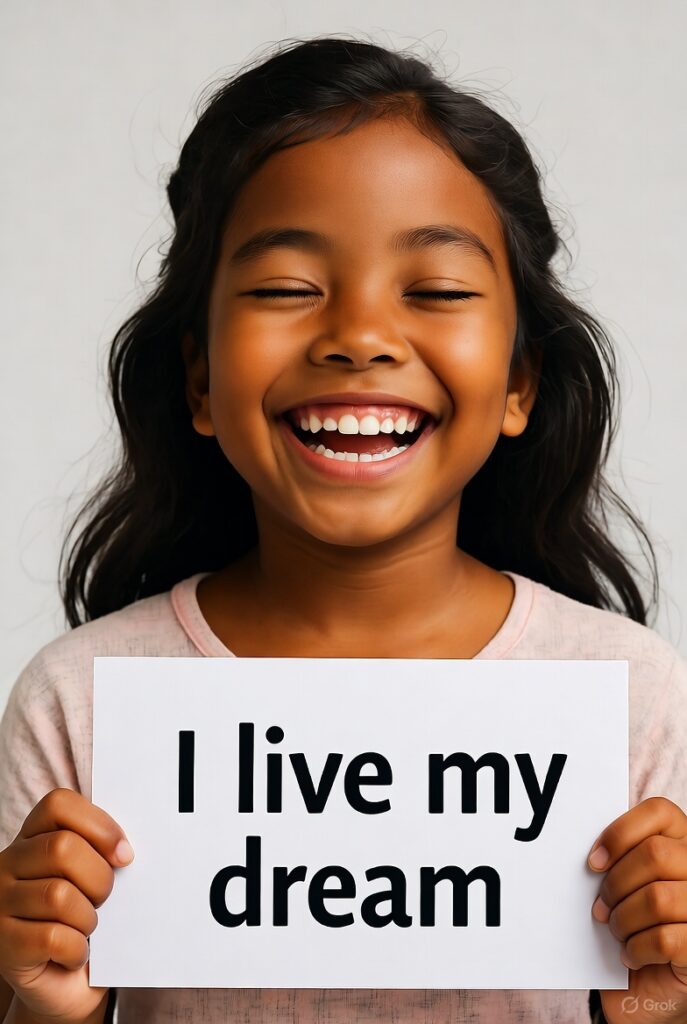
Level B2
🌱 1. Start by Defining the Dream Clearly
Even the biggest dreams need a clear shape.
Ask:- What exactly do I want to do? (e.g., become a nurse, open a small business, travel, support my family)
- Why is it important to me?
- What skills or resources do I need to get there?
📝 Tip: Writing down a dream makes it more real and easier to plan for.
📚 2. Get Education or Practical Skills
Education is one of the most powerful tools for breaking the poverty cycle.
If formal education isn’t easily available:- Look for local NGOs or government programs that offer free skills training (tailoring, agriculture, hospitality, language, computer skills).
- Learn online for free through YouTube, Coursera, or local learning centers.
- Practice English or another language if the dream involves travel or working abroad.
🎓 Even small skills can become the foundation for a bigger future.
🧭 3. Start Small — Take the First Step
Big dreams don’t need big money at the start.
Examples:- If she wants to run a business → sell small things first in the local market.
- If she wants to be a teacher → tutor younger kids in the village.
- If she wants to travel → work or volunteer in nearby towns to earn and save slowly.
🚶 Every successful person starts with one small step.
🤝 4. Build a Support Network
- Connect with local women’s groups, community leaders, or church/temple/mosque groups that support young people.
- Look for mentors — a teacher, a neighbor, a social worker.
- Use social media wisely to learn, not just scroll.
🫂 The right people can open doors you didn’t know existed.
💰 5. Learn to Manage Money
Even with little income, learning to save and plan is powerful:
- Save a small amount regularly.
- Avoid high-interest loans.
- If possible, join microfinance or community savings groups.
💵 Money is a tool — even a little can grow with planning.
🌍 6. Be Open to Opportunities
Many successful people from humble backgrounds succeeded because they:
- Applied for scholarships or training abroad
- Joined volunteer or exchange programs
- Worked in a city for a while to support their dream
✨ When a door opens, be ready to walk through it.
💪 7. Stay Strong When Life Is Hard
- There will be moments of doubt or failure.
- Some people will not believe in her dream — but she must believe in herself.
- Many women from rural Southeast Asia have built inspiring lives through strength, faith, and persistence.
🔥 Dreamers don’t need to be rich — they need to be determined.
🌸 8. Give Back
When she achieves her dream — even a small part of it — she can inspire and help others from her village, too. This creates a cycle of empowerment.
#########################
Level B1
🌱 1. Know Your Dream
Every big dream needs a clear idea.
She can ask herself:- What do I really want to do? (for example: become a nurse, open a shop, travel, help my family)
- Why is it important to me?
- What do I need to learn to reach this dream?
📝 Writing down the dream makes it easier to follow.
📚 2. Learn New Skills
Education is very important to change a life.
If school is not easy to reach, she can:- Look for free training from NGOs or government programs.
- Learn sewing, farming, hospitality, computers, or languages.
- Use free online learning tools, like YouTube.
- Learn English or another language if she wants to work abroad.
🎓 Even a small skill can be the first step to success.
🧭 3. Start Small
Big dreams can begin with small actions.
For example:- If she wants to run a business → she can start to sell a few products in the local market.
- If she wants to teach → she can help children in her village.
- If she wants to travel → she can work or volunteer in a nearby town to save money.
🚶 Every dream begins with a small step.
🤝 4. Find People Who Support You
It is easier to grow with help.
She can:- Talk to teachers, kind neighbors, or community leaders.
- Join groups for women or young people.
- Use social media to learn useful things and meet good people.
🫂 The right people can help her find new chances.
💰 5. Learn to Save Money
Money is important to build a future.
She can:- Save a small amount each month.
- Avoid bad or expensive loans.
- Join a small savings group in her community.
💵 Even little money can grow when you plan well.
🌍 6. Look for Opportunities
Many people from poor families changed their lives because they:
- Applied for scholarships or training programs.
- Joined volunteer or exchange programs.
- Worked in a city to earn money and learn new skills.
✨ When a chance comes, she should be ready to take it.
💪 7. Be Strong
There will be hard times.
Some people may not believe in her dream.
She must keep believing in herself and continue moving forward.
Many women from the countryside have succeeded with strength and hope.🔥 You don’t need to be rich to follow a dream — you need to be strong.
🌸 8. Help Others
When she reaches her dream, even just part of it, she can help her family and her village.
This gives hope to other young women and creates a better future for everyone.
###############
Level A2:
🌱 1. Know the Dream
She should ask:
- What do I want to do? (for example: be a nurse, open a shop, help my family)
- Why is this important to me?
- What do I need to learn?
📝 Writing the dream in a book can help.
📚 2. Learn New Skills
Education is important.
If school is not possible, she can:- Join free training from a group or the government.
- Learn sewing, farming, cooking, or English.
- Use the internet or YouTube to learn.
🎓 Small skills can help her future.
🧭 3. Start Small
Big dreams can start small.
- If she wants a shop → sell small things in the market.
- If she wants to teach → help children in the village.
- If she wants to travel → work and save some money.
🚶 A dream starts with one step.
🤝 4. Find Good People
She can talk to:
- Teachers or neighbors
- Women’s groups or village groups
- People who can help her
🫂 Good people can open new doors.
💰 5. Save Money
Money is important.
She can:- Save a little each month.
- Not take bad loans.
- Join a small savings group.
💵 A little money can grow.
🌍 6. Look for Chances
She can:
- Apply for a program or training.
- Work in a city.
- Learn new things.
✨ When a chance comes, she should try.
💪 7. Be Strong
Sometimes life is hard.
Some people may say “no.”
She must believe in herself.
Many women from poor families found a better life.🔥 She doesn’t need to be rich. She needs to be strong.
🌸 8. Help Others
When she reaches her dream, she can help her family and her village.
She can give hope to other young women too.
###################
Level A1
🌱 1. Know Your Dream
She asks:
- What do I want to do? (be a nurse, open a shop, help my family)
- Why is it important?
- What do I need to learn?
📝 Writing her dream in a book helps.
📚 2. Learn Skills
Learning is good.
If school is hard, she can:- Join free training.
- Learn sewing, farming, or English.
- Watch videos on the internet.
🎓 Small skills help her future.
🧭 3. Start Small
Big dreams can start small.
- Want a shop? → Sell small things.
- Want to teach? → Help children.
- Want to travel? → Work and save money.
🚶 Start with one step.
🤝 4. Find Good People
She can ask for help:
- Teachers or neighbors
- Women’s groups
- People who can help
🫂 Good people can help her.
💰 5. Save Money
Money is important.
She can:- Save a little every month.
- Avoid bad loans.
- Join a small saving group.
💵 Little money grows.
🌍 6. Look for Chances
She can:
- Join a program or training
- Work in a city
- Learn new things
✨ When a chance comes, she should try.
💪 7. Be Strong
Life is sometimes hard.
Some people may say “no.”
She must believe in herself.
Many poor women find a better life.🔥 She needs strength, not money.
🌸 8. Help Others
When she reaches her dream, she can help her family.
She can help her village.
She can give hope to other young women.
-
🤩Meet your first English sentences – Oum, a girl from Siem Reap (A1 beginners, part 7)
- a day in her life.

Oum is a young girl.
She wakes up early.
She eats breakfast.
She puts on her school uniform.
She takes her bag.
She walks to school.
She sees her friends.
She goes to class.
She reads and writes.
She counts numbers.
She draws pictures.
She plays at break time.
She laughs with friends.
She learns many things.
The bell rings.
School is finished.
She walks home.
She eats dinner.
She does homework.
She goes to sleep.
———————————-Vocabulary:
- young – not old
- to wake up – to open your eyes in the morning
- to eat breakfast – to eat food in the morning
- to put on a uniform – to wear school clothes
- to take a bag – to pick up your school bag
- to walk – to go with your feet
- to see friends – to look at and meet friends
- to go to class – to enter the classroom
- to read – to look at words and understand
- to write – to make words with a pen or pencil
- to count numbers – to say 1, 2, 3, 4…
- to draw pictures – to make a picture with a pencil or pen
- to play – to have fun
- break time – time to rest and play at school
- to laugh – to make a happy sound “ha ha”
- the bell rings – the school bell makes a sound “ding ding”
- finished – done, no more
- homework – school work at home
- to sleep – to close your eyes and rest at night
#################
Basics:Personal Pronoun am / is / are I am 8 years old You are 8 years old He is 8 years old She is 8 years old It is 8 years old We are 8 years old You (plural) are 8 years old They are 8 years old Negation:
Personal Pronoun am not / is not / are not I am not 8 years old You are not 8 years old He is not 8 years old She is not 8 years old It is not 8 years old We are not 8 years old You (plural) are not 8 years old They are not 8 years old Questions:
Question Word Personal Pronoun Am I 8 years old? Are you 8 years old? Is he 8 years old? Is she 8 years old? Is it 8 years old? Are we 8 years old? Are you (plural) 8 years old? Are they 8 years old? Statement:
Personal Pronoun Verb I like ice cream You like ice cream He likes ice cream She likes ice cream It likes ice cream We like ice cream You (plural) like ice cream They like ice cream Negation:
Personal Pronoun Verb (negative) I do not like ice cream You do not like ice cream He does not like ice cream She does not like ice cream It does not like ice cream We do not like ice cream You (plural) do not like ice cream They do not like ice cream Questions:
Do / Does Personal Pronoun Verb Sugar? Do I like sugar? Do you like sugar? Does he like sugar? Does she like sugar? Does it like sugar? Do we like sugar? Do you (plural) like sugar? Do they like sugar? ####################
Negations, questions:
- Oum is a young girl.
YOU WRITE:
a) Oum is not a young girl.
b) Is Oum a young girl?
2. She wakes up early.
YOU WRITE:
a) She does not eat breakfast.
b) Does she eat breakfast?
——————————
3. Oum eats breakfast.
a) ______________________
b) ______________________
4. Oum puts on her school uniform.
a) ______________________
b) ______________________
5. Oum takes her bag.
a) ______________________
b) ______________________
6. Oum walks to school.
a) ______________________
b) ______________________
7. Oum sees her friends.
a) ______________________
b) ______________________
8. Oum goes to class.
a) ______________________
b) ______________________
9. Oum reads and writes.
a) ______________________
b) ______________________
10. Oum counts numbers.
a) ______________________
b) ______________________
11. Oum draws pictures.
a) ______________________
b) ______________________
—————————Correct version:
1. Oum is young.
a) Oum is not young.
b) Is Oum young?2. Oum wakes up early.
a) Oum does not wake up early.
b) Does Oum wake up early?3. Oum eats breakfast.
a) Oum does not eat breakfast.
b) Does Oum eat breakfast?4. Oum puts on her uniform.
a) Oum does not put on her uniform.
b) Does Oum put on her uniform?5. Oum takes her bag.
a) Oum does not take her bag.
b) Does Oum take her bag?6. Oum walks to school.
a) Oum does not walk to school.
b) Does Oum walk to school?7. Oum sees her friends.
a) Oum does not see her friends.
b) Does Oum see her friends?8. Oum goes to class.
a) Oum does not go to class.
b) Does Oum go to class?9. Oum reads and writes.
a) Oum does not read and write
b) Does Oum readand write?11. Oum counts numbers.
a) Oum does not count numbers.
b) Does Oum count numbers?12. Oum draws pictures.
a) Oum does not draw pictures.
b) Does Oum draw pictures?##################
Answer:
- Is Oum a young girl?
YOU WRITE:
Yes, she is a young girl. - Does Oum wake up early?
_______________________ - Does Oum eat breakfast?
_______________________ - Does Oum put on her school uniform?
_______________________ - Does Oum walk to school?
_______________________ - Does Oum see her friends?
_______________________ - Does Oum go to class?
_______________________ - Does Oum read and write?
_______________________ - Does Oum play at break time?
_______________________ - Does Oum do homework?
_______________________
——————————–
Correct answers:
Yes, Oum is a young girl.
Yes, Oum wakes up early.
Yes, Oum eats breakfast.
Yes, Oum puts on her school uniform.
Yes, Oum walks to school.
Yes, Oum sees her friends.
Yes, Oum goes to class.
Yes, Oum reads and writes.
Yes, Oum plays at break time.
Yes, Oum does homework.
##################True?
- Oum is an old woman.
YOU WRITE:
No, she is not an old woman. She is a young girl. - Oum sleeps all day.
YOU WRITE:
No, she does not sleep all day. She wakes up early. - Oum eats lunch in the morning.
______________________________ - Oum wears a red dress to school.
______________________________ - Oum drives a car to school.
______________________________ - Oum sees a cat on the way to school.
______________________________ - Oum sleeps in class.
______________________________ - Oum sleeps at break time.
______________________________ - Oum goes to school at night.
______________________________
———————————-
Correct version:- No, she is not an old woman. She is a young girl.
- No, she does not sleep all day. She wakes up early.
- No, she does not eat lunch in the morning. She eats breakfast.
- No, she does not wear a red dress at school. She puts on her school uniform.
- No, she does not drive a car to school. She walks to school.
- No, she does not see a cat on the way to school. She sees her friends.
- No, she does not sleep at break time. She plays at break time.
- No, she does not go to school at night. She sleeps at night.
#######################
True or false?
- Is Oum a girl or a boy?
YOU WRITE:
Oum is not a boy. Oum is a girl - Does she get up at 10 in the morning?
______________________________ - Does she eat breakfast at school?
______________________________ - Does she wear a red dress?
______________________________ - Does she walk or drive to school?
______________________________ - Does she see a cat on the way to school?
______________________________ - Does she sleep at break time?
______________________________ - Does she go to school at night?
______________________________ - Does she read and write in class?
______________________________ - Does she do homework at school?
______________________________
————————-
Correct version:
No, she is not a boy. She is a girl.
No, she does not get up at 10 in the morning. She gets up early.
No, she does not eat breakfast at school. She eats breakfast at home.
No, she does not wear a red dress. She puts on her school uniform.
No, she does not drive to school. She walks to school.
No, she does not see a cat on the way to school. She sees her friends.
No, she does not sleep at break time. She plays at break time.
No, she does not go to school at night. She goes to school in the morning.
No, she does not skip [to not do something you usually do.] reading and writing. She reads and writes in class.
No, she does not do homework at school. She does homework at home.
################
Interview:
Interviewer: Is Oum an old woman?
Person: No, she is not an old woman. She is a young girl.Interviewer: Does Oum wake up early?
Person: Yes, she wakes up early.Interviewer: Does Oum eat breakfast?
Person: Yes, she eats breakfast.Interviewer: Does Oum wear a red dress?
Person: No, she does not wear a red dress. She wears her school uniform.Interviewer: Does Oum take her bag?
Person: Yes, she takes her bag.Interviewer: Does Oum walk to school?
Person: Yes, she walks to school.Interviewer: Does Oum see a cat on the way?
Person: No, she does not see a cat. She sees her friends.Interviewer: Does Oum go to class?
Person: Yes, she goes to class.Interviewer: Does Oum play at break time?
Person: Yes, she plays at break time.Interviewer: Does Oum do homework at school?
Person: No, she does not do homework at school. She does homework at home.
##################
Complete, fill in, words below:
bag – breakfast – at home – wakes up –
walks – school uniform –
goes – friends –
break time————————————–
Interviewer: Who is Oum?
Person: She is a young girl.Interviewer: What does Oum do in the morning?
Person: She __________ early.Interviewer: What does Oum eat in the morning?
Person: She eats __________.Interviewer: What does Oum wear to school?
Person: She wears her __________.Interviewer: What does Oum take to school?
Person: She takes her __________.Interviewer: How does Oum go to school?
Person: She __________ to school.Interviewer: Who does Oum see on the way to school?
Person: She sees her___________.Interviewer: Where does Oum go after she arrives at school?
Person: She __________ to class.Interviewer: What does Oum do at __________?
Person: She plays with her friends.Interviewer: Where does Oum do her homework?
Person: No, she does not do homework at school. She does homework __________.
————————————–Correct version:
Interviewer: Who is Oum?
Person: She is a young girl.Interviewer: What does Oum do in the morning?
Person: She wakes up early.Interviewer: What does Oum eat in the morning?
Person: She eats breakfast.Interviewer: What does Oum wear to school?
Person: She wears her school uniform.Interviewer: What does Oum take to school?
Person: She takes her bag.Interviewer: How does Oum go to school?
Person: She walks to school.Interviewer: Who does Oum see on the way to school?
Person: She sees her friends.Interviewer: Where does Oum go after she arrives at school?
Person: She goes to class.Interviewer: What does Oum do at break time?
Person: She plays with her friends.Interviewer: Where does Oum do her homework?
Person: No, she does not do homework at school. She does homework at home.
#######################
A story:I am a young girl. I wake up early and eat breakfast.
I put on my school uniform and take my bag.
I walk to school and see my friends on the way.
I go to class, and I read and write.
I count numbers and draw pictures.
At break time, I play with my friends and laugh.
The bell rings and school is finished.
I walk home, do my homework, and go to sleep.
________________________Rewrite the story, start with
Oum is a young girl. She wakes up……….
and make all changes necessary.
________________________
Correct version:
Oum is a young girl. She wakes up early and eats breakfast. She puts on her school uniform and takes her bag. She walks to school and sees her friends on the way. She goes to class, and she reads and writes. She counts numbers and draws pictures. At break time, she plays with her friends and laughs. The bell rings and school is finished. She walks home, does her homework, and goes to sleep.
################### - a day in her life.
-
🥰Anika, a little girl (A1, beginners, present tense, to be, statements, questions, negations, how to…………)
- a day in her life
Basics:
Personal Pronoun am / is / are I am 8 years old You are 8 years old He is 8 years old She is 8 years old It is 8 years old We are 8 years old You (plural) are 8 years old They are 8 years old Negation:
Personal Pronoun am not / is not / are not I am not 8 years old You are not 8 years old He is not 8 years old She is not 8 years old It is not 8 years old We are not 8 years old You (plural) are not 8 years old They are not 8 years old Questions:
Question Word Personal Pronoun Am I 8 years old? Are you 8 years old? Is he 8 years old? Is she 8 years old? Is it 8 years old? Are we 8 years old? Are you (plural) 8 years old? Are they 8 years old? Statement:
Personal Pronoun Verb I like ice cream You like ice cream He likes ice cream She likes ice cream It likes ice cream We like ice cream You (plural) like ice cream They like ice cream Negation:
Personal Pronoun Verb (negative) I do not like ice cream You do not like ice cream He does not like ice cream She does not like ice cream It does not like ice cream We do not like ice cream You (plural) do not like ice cream They do not like ice cream Questions:
Do / Does Personal Pronoun Verb Sugar? Do I like sugar? Do you like sugar? Does he like sugar? Does she like sugar? Does it like sugar? Do we like sugar? Do you (plural) like sugar? Do they like sugar?
Anika is eight.
She lives in a village with her mother and father.
Every morning, she eats breakfast and goes to school.
She likes to read and draw.
After school, she helps her mother.
She feeds the chickens and waters the flowers.
In the evening, she plays with her friends.
Anika is happy and loves her home.______________________
Vocabulary:
a village – a small place where people live, not a city
mother – a woman who has children
father – a man who has children
morning – the time after night, before afternoon
to eat – to put food in your mouth
breakfast – the first meal in the morning
to like to read – to enjoy looking at books or stories
to draw – to make a picture with a pencil or pen
after school – the time when school is finished
to help – to do something for another person
to feed the chickens – to give food to the chickens
to water the flowers – to give water to the flowers
the evening – the time after afternoon, before night
to play with friends – to have fun with friends
to be happy – to feel good and smile
to love home – to feel good and safe at home
################
Answer:
EXAMPLE:Is Anika eight or ten years old?
YOU WRITE:
She is eight years old.
- Does she live in a village or in a city?
- Does she live with her grandmother or with he mother and father?
- Does she have breakfast in the morning or does she not have breakfast in the morning?
- Does she go to school or to the park after breakfast?
- does she like to reand and draw or to play in the park?
- Doe she play with freinds after school or help her mother?
- Does she feed the birds or the chickens?
- Does she water she flowers or the trees in the garden?
- Does she watch TV in the evening or play with her friends?
——————————-
Answers:
- She lives in a village.
- She lives with her mother and father.
- She has breakfast in the morning.
- She goes to school after breakfast.
- She likes to read and draw.
- She helps her mother after school.
- She feeds the chickens.
- She waters the flowers in the garden.
- She plays with her friends in the evening.
#################
Correct the statements (see grammar above):
- Anika is ten years old.
YOU WRITE:
Anika is not ten years old. She is eight years old. - Anika lives in a big city.
__________________ - She lives with her grandmother.
__________________ - She does not go to school.
__________________ - She does not like to read.
__________________ - She plays in the park after school.
__________________ - She feeds the dogs.
__________________ - She waters the trees.
__________________ - She watches TV in the evening.
__________________ - Anika is sad.
__________________
—————————–
################
Correct answers:
1. Anika is not ten years old. She is eight years old.2. Anika does not live in a big city. She lives in a village.
3. She does not live with her grandmother. She lives with her mother and father.
4. She does not skip school. She goes to school.
5. She does not dislike reading. She likes to read.
6. She does not play in the park after school. She helps her mother.
7. She does not feed the dogs. She feeds the chickens.
8. She does not water the trees. She waters the flowers.
9. She does not watch TV in the evening. She plays with her friends.
10. Anika is not sad. She is happy.
##################
Correct the follwoing questions:
- Is Anika ten years old?
YOU WRITE:
No, she is not ten years old. She is eight years old. - Does Anika live in a big city?
________________________ - Does she live with her grandmother?
________________________ - Does she skip school?
________________________ - Does she dislike reading?
________________________ - Does she play in the park after school?
________________________ - Does she feed the dogs?
________________________ - Does she water the trees?
________________________ - Does she watch TV in the evening?
________________________ - Is Anika sad?
________________________
——————————–
Correct answers:- No, Anika is not ten years old. She is eight years old.
- No, Anika does not live in a big city. She lives in a village.
- No, she does not live with her grandmother. She lives with her mother and father.
- No, she does not skip school. She goes to school.
- No, she does not dislike reading. She likes to read.
- No, she does not play in the park after school. She helps her mother.
- No, she does not feed the dogs. She feeds the chickens.
- No, she does not water the trees. She waters the flowers.
- No, she does not watch TV in the evening. She plays with her friends.
- No, Anika is not sad. She is happy.
####################
Fill in, words below:
home – waters – father – morning – garden –
eight – chickens – happy – read –
school – after school –
city – village –
flowers- Anika is ______ years old.
- She lives in a ______.
- She lives with her mother and ______.
- Every ______ she eats breakfast.
- She goes to ______ after breakfast.
- She likes to ______ and draw.
- After ______, she helps her mother.
- She gives food to the ______.
- She ______ the flowers in the garden.
- In the ______, she plays with her friends.
- Anika is ______ and smiles a lot.
- She loves her ______.
- She does not live in a ______.
- She helps her family in the ______.
Correct answers:
Anika is eight years old.She lives in a village.
She lives with her mother and father.
Every morning she eats breakfast.
She goes to school after breakfast.
She likes to read and draw.
After school, she helps her mother.
She gives food to the chickens.
She waters the flowers in the garden.
In the evening, she plays with her friends.
Anika is happy and smiles a lot.
She loves her home.
She does not live in a city.
She helps her family in the garden.
###############
Fill in, words below:
mother – breakfast – flowers – chickens –
eight – morning – village –
draw -love –
play
Interviewer: Hello, Anika! How old are you?
Anika: I am __________ years old.Interviewer: Where do you live?
Anika: I live in a __________.Interviewer: Who do you live with?
Anika: I live with my __________ and father.Interviewer: Do you go to school?
Anika: Yes, I go to school.Interviewer: What time do you wake up?
Anika: I wake up in the __________.Interviewer: What do you eat in the morning?
Anika: I eat __________.Interviewer: What do you like to do?
Anika: I like to read and __________.Interviewer: Do you help your brother?
Anika: No, I help my mother.Interviewer: What do you feed?
Anika: I feed the __________.Interviewer: Do you water the trees?
Anika: No, I water the __________.Interviewer: What do you do in the evening?
Anika: I __________with my friends.Interviewer: Are you happy?
Anika: Yes, I am happy.Interviewer: Do you like your home?
Anika: Yes, I __________ my home.Interviewer: Do you live in a city?
Anika: No, I do not live in a city.
—————————–
Correct version:
Interviewer: Hello, Anika! How old are you?
Anika: I am eight years old.Interviewer: Where do you live?
Anika: I live in a village.Interviewer: Who do you live with?
Anika: I live with my mother and father.Interviewer: Do you go to school?
Anika: Yes, I go to school.Interviewer: What time do you wake up?
Anika: I wake up in the morning.Interviewer: What do you eat in the morning?
Anika: I eat breakfast.Interviewer: What do you like to do?
Anika: I like to read and draw.Interviewer: Do you help your brother?
Anika: No, I help my mother.Interviewer: What do you feed?
Anika: I feed the chickens.Interviewer: Do you water the trees?
Anika: No, I water the flowers.Interviewer: What do you do in the evening?
Anika: I play with my friends.Interviewer: Are you happy?
Anika: Yes, I am happy.Interviewer: Do you like your home?
Anika: Yes, I love my home.Interviewer: Do you live in a city?
Anika: No, I do not live in a city.
-
🤗Anika, I love my job, part 1 (A1, present simple)
- why i love my job

My name is Anika. I work at the front desk of a hotel. I like my job very much. I meet many people from different countries. Every day is new and interesting.
In the morning, I check the reservations. I prepare the front desk. When guests arrive, I welcome them with a smile. I help them check in and give them keys to their rooms. I tell them about the hotel and the city. I answer questions and give advice for sightseeing.
During the day, I talk to many guests. Some guests need help with rooms or taxis. Some guests ask about tickets. I like to help them fast. I also solve problems when something is wrong.
I like my job because I can make people happy. I try to remember their names. Sometimes I write a welcome note or give a small gift. Guests feel happy when I help them.
In the evening, I check reservations for the next day. I prepare the front desk again. I feel good when guests smile and say thank you. My job is not easy, but it is very nice. I like to meet people, help them, and make their stay special.
_____________________Vocabulary:
- to meet people – to see and talk to new people
- different countries – places that are not the same country
- to be interesting – to make someone want to know more
- to check reservations (hotel) – to look if a hotel room is booked
- to prepare – to get ready for something
- to arrive – to get to a place
- a smile – when you show happiness with your mouth
- to give advice – to tell someone what they should do
- sightseeing – visiting places to see them
- to need help – to want someone to help you
- a ticket (museum) – a paper or card to go into a museum
- to solve a problem – to find an answer to a problem
- to make people happy – to do something that makes others feel good
- to remember names – to not forget someone’s name
- a welcome note – a short friendly message when someone arrives
- a small gift – a little present
- to make a stay in a hotel special – to do things that make someone enjoy their time in a hotel
################
Multiple-choice, one answer correct:
1. What does “to arrive” mean?
a) to get to a place
b) to show happiness
c) to tell someone what to do2. What is “a smile”?
a) a little gift
b) a happy face
c) a paper to enter3. What does “to meet people” mean?
a) to see and talk
b) to check a room
c) to visit others4. What is “a welcome note”?
a) a short friendly message
b) a note to start
c) a kind small message5. What does “to check reservations (hotel)” mean?
a) to check a booking
b) to see if booked
c) to look a list6. What is “a small gift”?
a) a little present
b) a tiny object
c) a small token7. What does “to give advice” mean?
a) to tell someone
b) to share a tip
c) to offer help8. What does “to prepare” mean?
a) to get ready
b) to plan ahead
c) to make ready9. What is “sightseeing”?
a) to visit places
b) to see famous buildings
c) to look around10. What does “to need help” mean?
a) to want support
b) to ask for aid
c) to need someone11. What is “a ticket (museum)”?
a) an entry card
b) a small ticket
c) a pass for entry12. What does “to solve a problem” mean?
a) to find a way
b) to fix an issue
c) to answer a task13. What does “to make people happy” mean?
a) to cheer others
b) to help someone
c) to bring joy14. What does “to remember names” mean?
a) to recall names
b) to keep names
c) to memorize15. What does “different countries” mean?
a) many nations
b) other states
c) various lands16. What does “to make a stay in a hotel special” mean?
a) to make it nice
b) to give a touch
c) to make it fun
Answers:
1-a, 2-b, 3-c, 4-a, 5-b,
6-a, 7-b, 8-c, 9-a, 10-b,
11-c, 12-b, 13-c, 14-a, 15-b, 16-a
##################
Gap-Fill Exercise, use words below:
city, give, reservations, prepare, happy,
countries, arrive, answer, remember,
interesting, advice,
need, work, nice—————————
- My name is Anika. I ____ at the front desk of a hotel.
- I like my job very ____.
- I meet many people from different ____.
- Every day is new and ____.
- In the morning, I check the ____.
- I ____ the front desk.
- When guests ____, I welcome them with a smile.
- I help them check in and ____ them keys to their rooms.
- I tell them about the hotel and the ____.
- I answer questions and give ____ for sightseeing.
- Some guests ____ help with rooms or taxis.
- I also ____ problems when something is wrong.
- I try to ____ their names.
- Guests feel ____ when I help them.
——————————-
Correct version:
- My name is Anika. I work at the front desk of a hotel.
- I like my job very nice.
- I meet many people from different countries.
- Every day is new and interesting.
- In the morning, I check the reservations.
- I prepare the front desk.
- When guests arrive, I welcome them with a smile.
- I help them check in and give them keys to their rooms.
- I tell them about the hotel and the city.
- I answer questions and give advice for sightseeing.
- Some guests need help with rooms or taxis.
- I also solve problems when something is wrong.
- I try to remember their names.
- Guests feel happy when I help them.
####################
True or false
- Anika works at the front desk of a hotel.
- Some guests need help with taxis.
- Guests always feel unhappy when she helps them.
- Anika tries to remember the names of guests.
- She only meets people from her own country.
- She tells guests about the hotel and the city.
- Anika never writes welcome notes.
- Every day is new and interesting for her.
- She helps guests check in and gives them keys.
- Anika cooks breakfast for the hotel guests.
- Guests do not smile at her work.
- She solves problems when something is wrong.
- Anika likes to make their stay special.
- She never welcomes guests with a smile.
——————————
True: 1,2,4,6,8,9,12,13——————————
Correct version:
- Anika works at the front desk of a hotel.
- Some guests need help with taxis.
- Guests always feel unhappy when she helps them. True is: Guests feel happy when she helps them.
- Anika tries to remember the names of guests.
- She only meets people from her own country. True is: She meets people from different countries.
- She tells guests about the hotel and the city.
- Anika never writes welcome notes. True is: She sometimes writes welcome notes.
- Every day is new and interesting for her.
- She helps guests check in and gives them keys.
- Anika cooks breakfast for the hotel guests. True is: She does not cook breakfast for guests.
- Guests do not smile at her work. True is: Guests smile and say thank you.
- She solves problems when something is wrong.
- Anika likes to make their stay special.
- She never welcomes guests with a smile. True is: She always welcomes guests with a smile.
####################
Multiple choice, one answer correct::
- Where does Anika work?
a) At a hotel desk
b) In a school room
c) In a big shop - What does she do when guests arrive?
a) Welcome them kindly
b) Check their emails
c) Clean the rooms - Why does she like her job?
a) She meets many people
b) She stays at home
c) She never talks - What does Anika check in the morning?
a) Emails from friends
b) Hotel reservations
c) The weather report - What does she give guests for their rooms?
a) A small ticket
b) Room keys
c) Some money - What does she write sometimes for guests?
a) A welcome note
b) A shopping list
c) A daily report - How does she help guests?
a) Cooks their meals
b) Gives advice and keys
c) Makes them clean - What do guests feel when she helps them?
a) Tired
b) Happy
c) Angry - What does she tell guests about?
a) Only food
b) Her own life
c) The hotel and city - What does Anika try to remember every day?
a) Their house address
b) Their names
c) Their favorite food - When does she prepare the front desk?
a) In the morning
b) In the evening
c) At night - What does she do when something is wrong?
a) Solve problems
b) Ignore guests
c) Ask others
_______________________
Answers:
1-a, 2-a, 3-a, 4-b, 5-b,
6-a, 7-b, 8-b, 9-c,
10-b, 11-a, 12-c
_______________________Correct version:
Where does Anika work? – Anika works at a hotel desk.
What does she do when guests arrive? – She welcomes guests kindly when they arrive.
Why does she like her job? – She likes her job because she meets many people.
What does Anika check in the morning? – In the morning, Anika checks the hotel reservations.
What does she give guests for their rooms? – She gives guests room keys for their rooms.
What does she write sometimes for guests? – She sometimes writes a welcome note for guests.
How does she help guests? – She helps guests by giving advice and keys.
What do guests feel when she helps them? – Guests feel happy when she helps them.
What does she tell guests about? – She tells guests about the hotel and the city.
What does Anika try to remember every day? – Anika tries to remember the names of the guests every day.
When does she prepare the front desk? – She prepares the front desk in the morning.
What does she do when something is wrong? – When something is wrong, she solves the problems.
###################Does she…………..? Answer in complete sentences:
Example:
- Does Anika work at a hotel or at a school?
YOU WRITE:
She works at a hotel. - Does she welcome guests with a smile or ignore them?
- Does she check reservations or the weather in the morning?
- Does she give keys or money to the guests?
- Does she write welcome notes or shopping lists sometimes?
- Does she give advice or cook meals for the guests?
- Do guests feel happy or tired when she helps them?
- Does she tell guests about the hotel or only about food?
- Does she try to remember names or addresses?
- Does she prepare the front desk in the morning or at night?
- Does she solve problems or ignore problems when something is wrong?
- Does she like her job because she meets many people or because she gets much money?
- Does she help guests check in or clean their rooms?
- Does she try to make the stay special or make the guests leave quickly?
—————————–
Correct answers:- Anika works at a hotel.
- She welcomes guests with a smile.
- She checks reservations in the morning.
- She gives keys to the guests.
- She sometimes writes welcome notes.
- She gives advice to the guests.
- Guests feel happy when she helps them.
- She tells guests about the hotel.
- She tries to remember the guests’ names.
- She prepares the front desk in the morning.
- She solves problems when something is wrong.
- She likes her job because she meets many people.
- She helps guests check in.
- She tries to make the stay special.