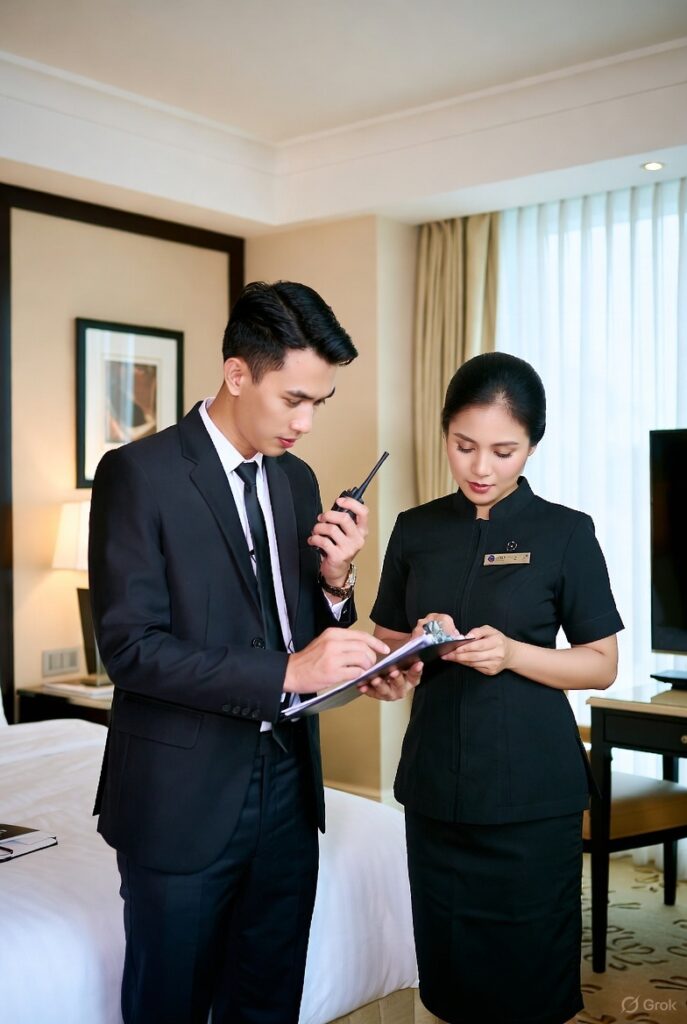
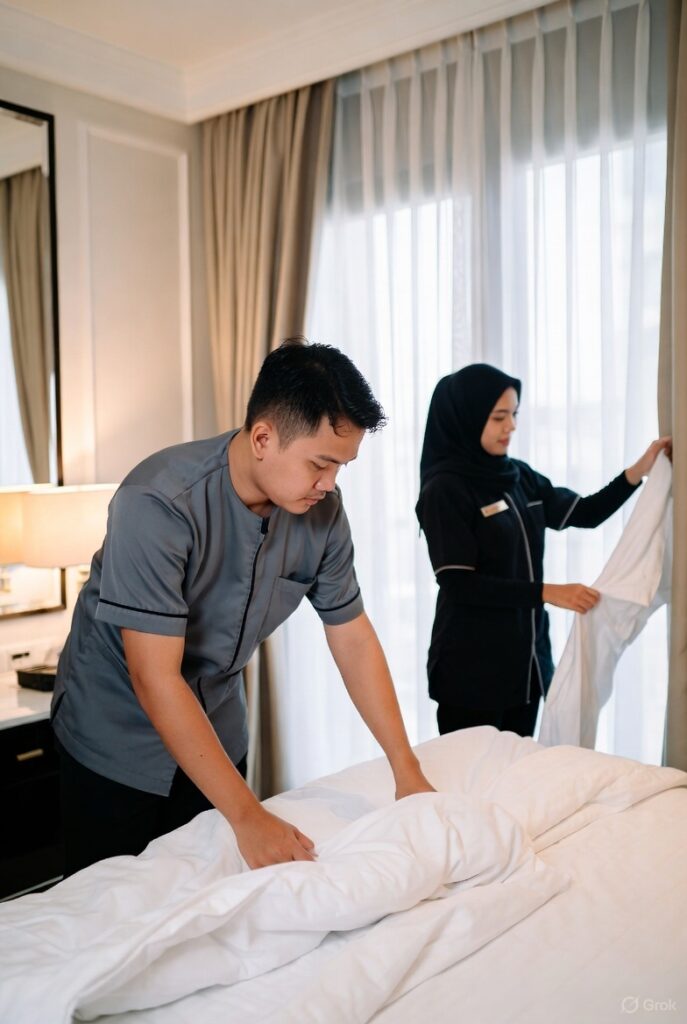
When you start a new job in hospitality, it is important to work hard every day. Try to do your best, even in small tasks. Listen carefully when your supervisor gives instructions. Do not rush; take time to learn each job step by step. If you make a mistake, don’t worry — learn from it. Try to improve each day. When you clean a room, serve food, or talk to guests, do it with care and attention. Working hard helps people trust you. It also shows that you are serious about your job. The more effort you give, the faster you learn and the better your results will be. Hard work is the key to success.
——————————- to gain experience – to learn new things from doing something
to work hard – to put a lot of effort into your work
to do one’s best – to try as much as you can
a small task – a little job you need to do
a supervisor – a person who watches and helps you at work
to give instructions – to tell someone what to do
to rush – to do something quickly
step by step – doing things slowly, one after another
to make a mistake – to do something wrong
to worry – to feel afraid or nervous about something
to improve – to get better at something
to serve food – to give food to people
to do with care – to do something carefully
to do with attention – to pay attention when doing something
to trust somebody – to believe someone will help or not lie to you
to be serious about a job – to work with focus and responsibility
to give an effort – to try hard to do something
a key to success – something very important to do well
Observe senior staff and ask questions.
Watching experienced staff is one of the best ways to learn. Look carefully at how they speak to guests and how they solve small problems. See how they move, how they smile, and how they stay calm. You can learn good habits from them. If you do not understand something, ask a simple question. Most senior staff are happy to help you. Asking questions shows that you are interested in learning. You can say, “Can you show me, please?” or “How do you do this?” This is polite and helps you learn faster. Always listen to their advice. By observing and asking, you will soon know how to work well and become more confident in your job. —————————–
to observe – to look at something carefully
experienced – having done something many times before
to stay calm – to be quiet and not angry or nervous
a good habit – something good you do regularly
to listen to advice – to hear and follow someone’s suggestion
to become confident in a job – to feel sure and comfortable doing your work
Learn the company systems and operations.
Every hotel or restaurant has its own way of working. There are systems for cleaning, serving, checking guests in, or taking orders. Learn how these systems work step by step. Read instructions or watch how other workers do it. Follow the rules and do things in the right order. For example, in a hotel, you may need to follow a checklist to clean a room or use a computer to register guests. Knowing these systems makes your work easier and faster. It also helps you avoid mistakes. When you understand how your company works, you can help new staff too. Good knowledge of systems and operations helps you grow in your job and move to better positions.
——————————- the company operations – the work and activities of a company
to take an order – to write or accept what a customer wants
to follow rules – to do what the rules say
in the right order – in the correct way or sequence
to register a guest – to write down a guest’s information at a hotel or event
to avoid mistakes – to try not to do something wrong
a good knowledge – knowing a lot about something
to grow in a job – to get better and stronger in your work
to move to a better position – to get a higher or better job
Practice professional behavior: polite language, dressing well, punctuality.
Being professional is very important in hospitality. Always use polite language. Say “Good morning,” “Please,” and “Thank you.” Be friendly, but also respectful. Dress cleanly and wear the correct uniform every day. Your clothes should be neat, your shoes clan, and your hair tidy. Guests often judge the service by how staff look. Also, come to work on time — being punctual shows responsibility. Never arrive late or leave early without permission. When you speak, keep your voice calm and positive. Smile often and make guests feel welcome. Acting professionally makes people trust you and enjoy your service. It also shows your managers that you are ready for more responsibility and future promotion.
——————– to practice professional behavior – to act well and correctly at work
to dress well – to wear nice and clean clothes
punctuality – the habit of being on time
to be respectful – to be polite to other people
to wear a uniform – to wear the special clothes of a job or school
neat clothes – clean and tidy clothes
tidy hair – hair that looks clean and nice
to judge by the look – to decide about someone only by how they look
to be punctual – to arrive or do something on time
to show responsibility – to do your duties well
without permission – without asking to do it
a calm voice – a quiet and soft voice
to act professionally – to behave correctly at work
to trust a person – to believe someone will help or not lie to you
to enjoy a service – to like or be happy with a service
Communication means talking and listening in a good way. In hospitality, you speak with guests, your team, and your manager every day. Use polite words like “please,” “thank you,” and “sorry.” Always smile and look friendly. Listen carefully when people speak to you. If you do not understand, ask again kindly. Speak slowly and clearly, especially with guests from other countries. Use simple words and a warm tone. Good communication helps people feel welcome and happy. It also helps you do your job better and avoid mistakes. When you speak well and listen well, guests will trust you and enjoy their stay. ———————————-
Communication – Talking or writing to share ideas or information.
In a good way – Doing something nicely or correctly.
Polite words – Kind and respectful words like “please” and “thank you.”
Kindly – In a friendly and caring way.
Especially – More than others; in a special way.
A warm tone (speaking) – Speaking with a friendly and nice voice.
To feel welcome – To feel happy and comfortable when you arrive somewhere.
To avoid mistakes – To try not to do something wrong.
To trust somebody – To believe someone is honest and good.
To enjoy a stay – To have a good time while you are visiting a place.
2. Customer Service
Customer service means taking good care of guests. In hospitality, guests must always feel happy and comfortable. Smile and say hello when they arrive. Be friendly and helpful all the time. Listen to what guests need and try to help quickly. If there is a problem, stay calm and be polite. Say “sorry” and find a way to fix it. Never argue with guests. Even small acts of kindness, like opening a door or giving directions, can make guests feel special. Good customer service means patience, kindness, and respect. When guests are happy, they will come back and tell others about your hotel or restaurant. —————————–
Customer service – Helping guests or customers in a friendly way.
To take care of guests – To help guests and make sure they are happy.
To feel comfortable – To feel relaxed and good.
To be helpful – To do things that make it easier for others.
To try to help quickly – To help fast when someone needs something.
To stay calm – To not get angry or worried.
To be polite – To use kind words and good manners.
To fix a problem – To make something work again or make it right.
To argue with a guest – To speak in an angry way with a guest.
An act of kindness – Doing something nice for someone.
To give directions – To tell someone how to go to a place.
To make a guest feel special – To do something kind so a guest feels happy and important.
3. Teamwork
Teamwork means working together with other people. In hotels and restaurants, many people work as a team — in the kitchen, at the front desk, or cleaning rooms. Everyone has a job, but all help each other. Good teamwork means talking nicely, listening, and being kind. If someone needs help, offer to help them. When there is a problem, try to fix it together. Do not blame others. Working as a team makes the job easier and faster. It also makes the place feel friendly and happy. Guests can see when staff work well together. Good teamwork helps everyone do a better job and gives guests a great experience.
————————— A cleaning room (hotel) – A room where staff clean and make the hotel ready for guests.
To talk nicely – To speak in a friendly and kind way.
To be kind – To do nice things for others.
To offer help – To say you want to help someone.
To fix a problem – To make something right or work again.
To blame others – To say someone else did something wrong.
To give guests a great experience – To make guests happy and enjoy their stay.
4. Punctuality & Reliability
Punctuality means coming to work on time. Reliability means people can trust you to do your job. In hospitality, these skills are very important. When you are late, other workers must wait for you or work harder. Always plan to arrive a few minutes early. Being reliable means doing your tasks well every day and following instructions. If you cannot come to work, tell your manager as soon as possible. When you are on time and do your job well, people respect you. It shows that you care about your work and your team. Punctual and reliable workers make guests happy and help the hotel or restaurant run smoothly.
——————————
Punctuality – Being on time.
Reliability – Being someone people can trust to do things well.
To trust somebody – To believe that someone is honest and good.
A skill – Something you can do well.
To be late – To arrive after the correct time.
To be reliable – To do what you say and do it well.
To do a task well – To finish work in a good way.
To follow instructions – To do what someone tells you step by step.
As soon as possible (ASAP) – To do something quickly, without waiting.
To be on time – To arrive at the right time.
To respect somebody – To be kind and polite to someone.
To run smoothly – To work without problems.
5. Problem-Solving
Problem-solving means finding answers when something goes wrong. In hospitality, small problems can happen every day. Maybe a guest gets the wrong room, or the food is late. When this happens, stay calm and polite. Listen carefully to what the guest says. Say “sorry” and try to fix the problem quickly. If you cannot fix it alone, ask your manager for help. Always smile and speak kindly. When you help guests in a good way, they will feel happy and safe. Good problem-solving also means thinking clearly and staying positive. It helps you learn, grow, and do better in your job every day.
———————————
Maybe – It is possible, but not sure.
The food is late – The food comes later than expected.
To stay calm – To not get angry or worried.
To be polite – To use kind words and good manners.
To fix a problem – To make something right or work again.
To speak kindly – To talk in a friendly and nice way.
In a good way – Doing something nicely or correctly.
To feel safe – To not feel danger or worry.
To think clearly – To understand and decide easily.
To stay positive – To think in a happy and good way.
To grow (as a person) – To learn and become a better person.
Advance to supervisor → manager → director → top positions.
Keep learning, build soft skills, and show dedication.
Hospitality is about passion, professionalism, and people skills.
################
🏨 Hospitality Career Ladder
        🌟 HOTEL OWNER / DIRECTOR
        | Runs many hotels or owns a hotel
        | Makes big decisions and plans the future
        |
        👔 GENERAL MANAGER
        | Manages the whole hotel
        | Leads all departments and staff
        |
        🧾 MANAGER
        | Runs one department (restaurant, front desk, etc.)
        | Solves problems and trains workers
        |
        👥 SUPERVISOR
        | Helps manage a small team
        | Checks if work is done well
        |
        💼 FRONT DESK / WAITER / HOUSEKEEPING / KITCHEN HELPER
        | First job in hospitality
        | Learns how to help guests and work in a team
        |
        👣 BEGIN YOUR JOURNEY!
        | Be polite, on time, and ready to learn
A great housekeeper has good personal qualities. First, they are honest. They do their work carefully and never take anything that is not theirs. They are also friendly. They smile and speak politely to everyone. A housekeeper is responsible. They finish all their tasks on time and do not make mistakes. They are hardworking. They do not get tired and always try their best. A housekeeper is also calm and patient. They do not get angry if something is difficult. They listen carefully to instructions and follow them. These qualities make a housekeeper reliable and trusted in the home.
2. Skills
Clean rooms 🧹
Wash clothes 🧺
Cook simple meals 🍳
Organize things 🗂️
Use cleaning tools 🧽
——————————–
A great housekeeper has many important skills. First, they can clean rooms well. They make the bed, dust the furniture, sweep or vacuum the floor, and throw away trash. Second, they can wash clothes. They sort clothes by color, use the washing machine or wash by hand, dry clothes, and iron them to make them neat. Third, they can cook simple meals. They prepare breakfast, lunch, and dinner, follow easy recipes, and keep the kitchen clean. Fourth, they can organize things. They fold clothes, put items in the right place, and make sure everything is easy to find. Finally, they use cleaning tools like brooms, mops, and cloths carefully and safely.
3. Work Habits
Arrive on time ⏰
Follow instructions 📋
Plan your work 🗓️
Pay attention to details 🔍
Finish tasks carefully ✔️
Use cleaning tools 🧽
—————————
A great housekeeper has good work habits. First, they arrive on time every day. Being on time shows they are responsible. Second, they follow instructions from the employer carefully. This helps them do the work correctly. Third, a good housekeeper plans their work. They know what to do first and what to do next. Fourth, they pay attention to details. Small things, like dust or trash, are important. Fifth, they finish tasks carefully. The work should be neat and complete. Finally, a housekeeper knows how to use cleaning tools well. They use a broom, mop, and cloth correctly. Good habits make their work fast, safe, and perfect.
4. Attitude
Positive and polite 😊
Respect people and their home 🏠
Helpful to everyone 🤝
Willing to learn new things 📖
————————
A great housekeeper has a good attitude. They are always positive and polite. They speak kindly to everyone and smile a lot. They respect people and their home. They never touch things without permission. They keep the house safe and clean. A housekeeper is helpful to everyone. They help the family, guests, and other workers. They do small jobs without complaining. They are friendly and support people when they need help. A great housekeeper is also willing to learn new things. They listen to instructions carefully. They try new ways to work better. They always want to improve. A good attitude makes the housekeeper happy and the family happy too.
5. Extra Tips
Keep the home tidy every day 🧹
Always check your work ✅
Learn small tricks to clean faster ⚡
Smile! Makes people happy 🙂
—————————
A great housekeeper has some extra tips to work better. First, it is important to keep the home tidy every day. Clean rooms, wash dishes, and put things in the right place. Second, always check your work. Look around after cleaning to see if everything is nice and clean. Third, learn small tricks to clean faster. For example, use a good brush or cloth, or do small jobs every day. This saves time and makes cleaning easier. Last, smile! A housekeeper who smiles makes people happy. Being friendly and positive is very important. These small tips help a housekeeper do a great job and make the home nice for everyone.
Friendly and Approachable: A great bartender is nice and makes customers feel welcome. They say hello with a smile and make people feel comfortable.
__________
Situation: A customer enters a bar.
Bartender: Hello! Welcome! How are you today? Customer: Hello! I am fine, thank you. Bartender: Great! Please, have a seat. Can I get you a drink? Customer: Yes, please. I would like a lemonade. Bartender: Of course! One lemonade coming right up.
Comments:
The bartender is friendly because they say hello with a smile and make the customer feel comfortable.
They are welcoming and polite.
##################
Knowledgeable about Drinks: They know about drinks like cocktails, beer, and wine. They can suggest drinks that customers might like.
__________ Situation: A customer comes to the bar and asks for a drink.
Customer: Hello! I want a drink. What do you suggest? Bartender: Hello! Do you like sweet or strong drinks? (The bartender asks to know customer’s taste. Customer: I like sweet drinks. Bartender: OK. I suggest a strawberry cocktail. It is sweet and very good. (The bartender uses knowledge to recommend a drink.) Customer: Sounds good. I will try that. Bartender: Great! I will make it for you.
Comments:
The bartender listens to the customer’s preference.
The bartender knows drinks and can give a good suggestion.
The bartender helps the customer choose a drink they will like.
##################
Good Listener: They listen carefully to customers’ orders and wishes, making sure they get the drink they want.
__________ Situation: A customer is at the bar and orders a drink.
Customer: Hello! I want a drink, but I like it not too sweet. Bartender: Okay! You like a drink that is not very sweet. Do you like something fruity or strong? Customer: Fruity, please. Maybe with orange or lemon. Bartender: Great! I make you a fruity cocktail with orange and a little lemon.
Comments:
The bartender listens carefully to the customer’s order.
He repeats what the customer said to make sure he understands.
He asks a question to know exactly what the customer wants.
Finally, he promises to make the right drink.
##################
Efficient and Organized: A great bartender works fast and can serve many drinks at the same time. They keep the bar clean and tidy.
__________ Scene: Busy bar, many customers.
Customer 1: Excuse me, can I have a beer, please? Bartender: Sure! One beer coming. (pours beer quickly)
Customer 2: I want a cocktail. Bartender: No problem! (prepares cocktail while giving beer to Customer 1)
Customer 3: Can I have a glass of wine? Bartender: Of course! (puts cocktail on the counter, pours wine)
Customer 1: Thank you! Bartender: You’re welcome! Here is your beer. (smiles)
Comment 1: The bartender serves many drinks at the same time. Comment 2: The bartender works fast to help everyone quickly. Comment 3: The bar stays clean and organized even with many orders.
#################
Personable and Engaging: They talk to customers and make them feel happy. They create a fun atmosphere.
__________ Situation: A bartender at a bar talks to a customer to make them feel happy.
Bartender: Hello! How are you today? Customer: I am okay, thank you. Bartender: That’s good! Did you have a long day? Customer: Yes, very long and tiring. Bartender: Oh, I understand. Maybe a nice drink will help you relax. What do you like? Customer: I like a cold beer. Bartender: Great! I will get it for you. By the way, do you like football? Customer: Yes, I love football! Bartender: Me too! Who is your favorite team? Customer: I like Manchester United. Bartender: Ah, very good! They have a strong team this season.
(Customer smiles and feels happy talking to the bartender.)
Comments:
The bartender talks to the customer and asks questions.
They make the customer feel happy by listening and talking about fun topics.
They create a fun atmosphere by being friendly and interested in the customer’s likes.
This shows the bartender is personable and engaging.
#################
Responsible Serving: They know when a customer has had too much to drink. They make sure people drink safely.
__________ Situation: A bartender notices a customer drinking too much.
Bartender: Hello! Can I get you another drink? Customer: Yes, one more beer, please. Bartender: I’m sorry, but I think you had enough. How about some water instead? Customer: Oh… okay. Thank you. Bartender: No problem. It’s for your safety.
Comments :
The bartender sees that the customer drank too much.
The bartender politely says no to another drink.
The bartender offers water to keep the customer safe.
The customer understands and is happy.
#################
Adaptability: They can work well when the bar is busy or if there are problems. They change what they do if needed.
__________ Situation: The bar suddenly becomes very busy.
Customer 1: Excuse me! Can I have a beer, please? Bartender: Of course! One beer coming.
Customer 2: Can I have a cocktail? Bartender: Yes! I will make it after this beer.
Customer 3: Excuse me, I need water. Bartender: Sure! I can get it for you now.
Comments:
The bartender is adaptable because many customers ask for drinks at the same time.
He changes the order of work to help everyone quickly. He stays calm and works well even when it is busy.
#################
Attention to Detail: They look after small things like decoration on drinks. This makes the drink look nice.
__________ Scene: A customer is at the bar, and the bartender is making a cocktail.
Customer: Excuse me, this drink looks very nice!
Bartender: Thank you! I put a little lemon on the glass. It makes the drink look good.
Customer: Wow! It smells fresh too.
Bartender: Yes. I also put a small leaf on top. Little things can make a big difference.
Customer: I like that. You pay attention to small details.
Bartender: Yes, every drink must look nice for customers.
Comments:
“I put a little lemon on the glass” → This shows the bartender cares about small details.
“I also put a small leaf on top” → Adds more decoration to make the drink nice.
“Little things can make a big difference” → Explains why attention to detail is important.
################
Problem-Solving Skills: They can help quickly if a customer has a problem. They stay calm and polite.
__________ Situation: A customer got the wrong drink.
Customer: Excuse me, I ordered a cola, but this is orange juice. Bartender: Oh, I am sorry! Thank you for telling me. I will get your cola now. Customer: Thank you. Bartender: Here is your cola. I hope you enjoy it.
Comments:
The bartender stays calm and polite.
The bartender listens carefully to the customer’s problem.
The bartender solves the problem quickly by giving the correct drink.
The customer feels happy because the problem is solved nicely.
################
Team Player: They work well with other staff. They help each other to give the best service to guests.
__________ Situation: Two bartenders, Anna and Tom, are working during a busy evening.
Anna: Tom, can you help me? I have too many orders. Tom: Yes, I can. I will pour some drinks. Anna: Thank you! You are very helpful. Tom: No problem. We work together to make the guests happy. Anna: Now the bar is clean, and all drinks are ready. Tom: Good job! Teamwork makes our work easy.
Comments:
Anna asks for help → Shows she trusts her teammate.
Tom agrees to help → Shows he is a team player.
They cooperate → They share work to serve guests faster.
Positive comments → They encourage each other, which is important in teamwork.
[PS: I don’t know if the Chinese quotes are correct!]
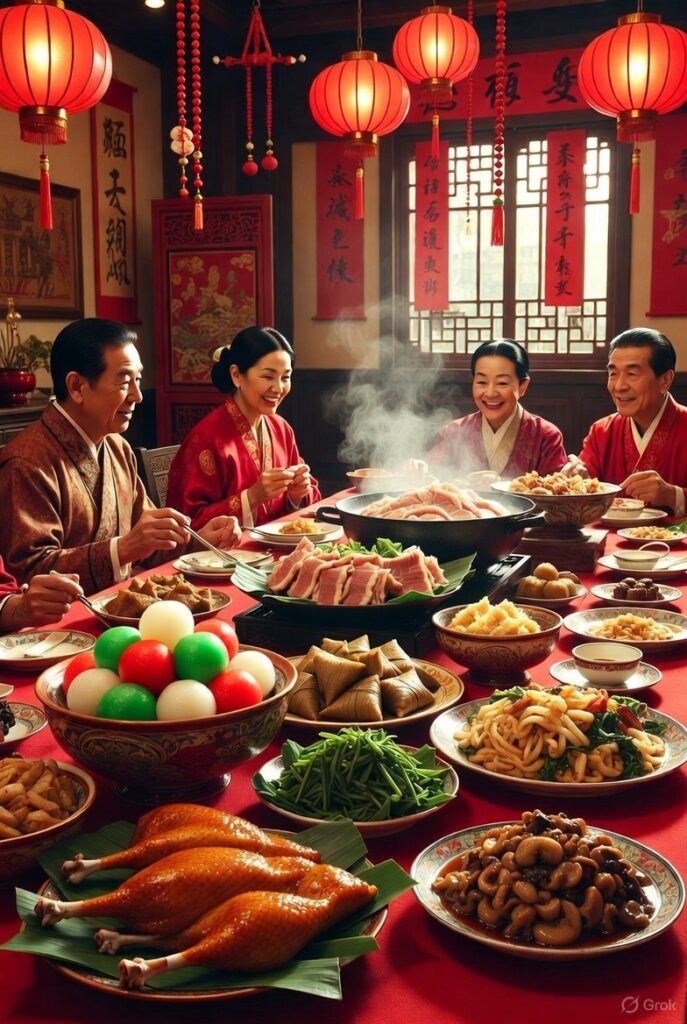
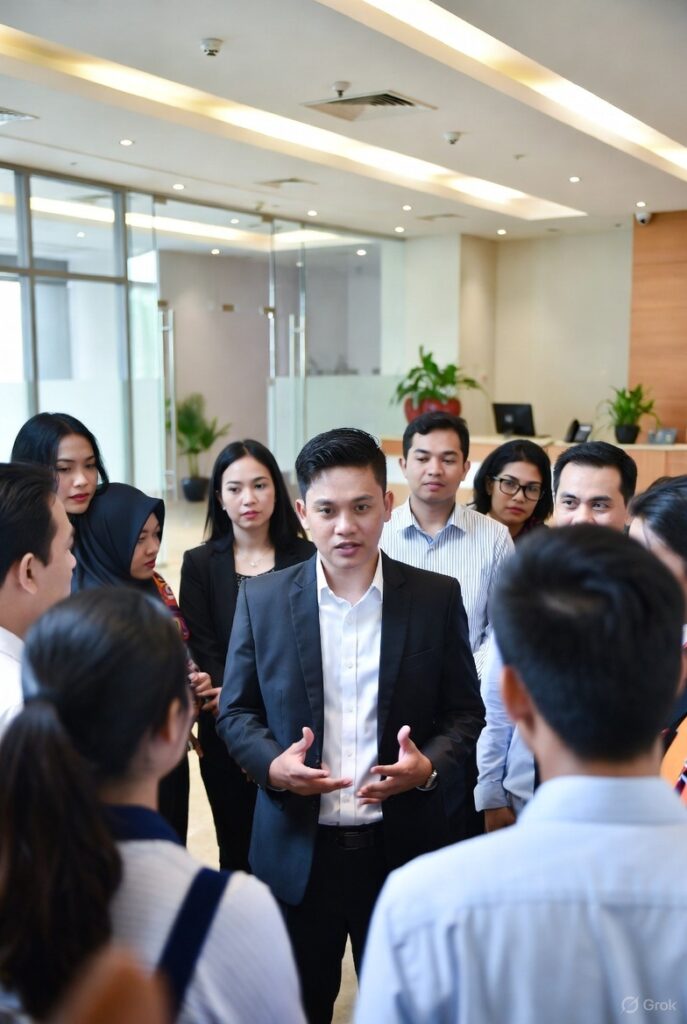
The GM of a five-star hotel informs his staff about the Dongzhi Festival. As the hotel is expecting a group of Chinese guests he asks various departments what they can do to make the stay a memorable one.
[Tangyuan]
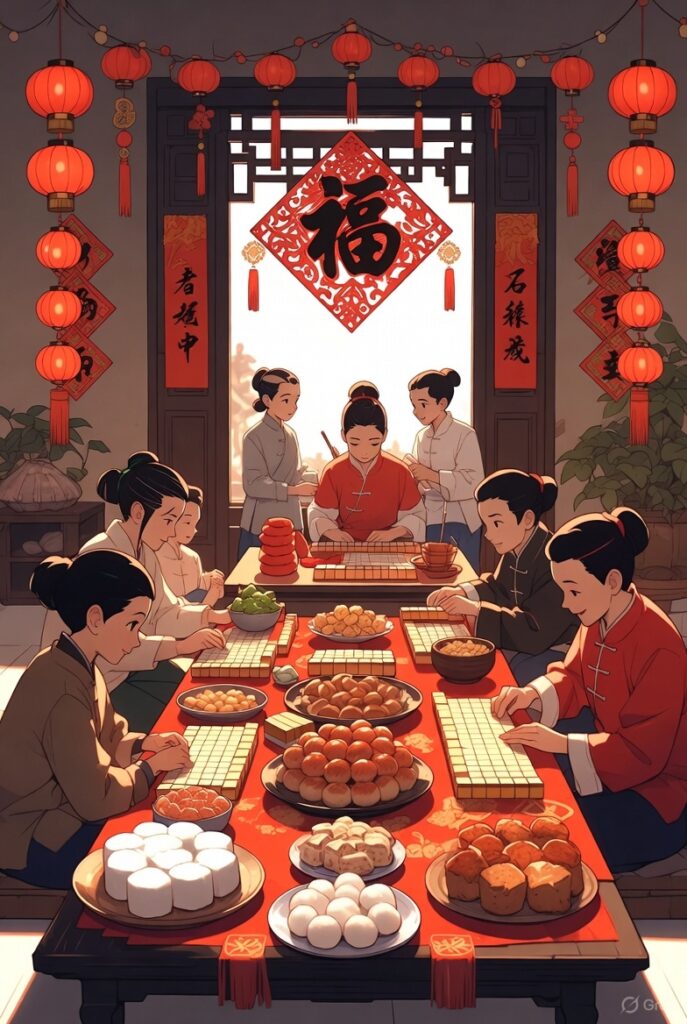
The Dongzhi Festival, or Winter Solstice Festival, is a very special day for Chinese people. It is on December 21, 2025. On this day, families in China come together to eat warm food and spend time with each other. It is a festival about family, warmth, and good wishes for the new season.
Chinese guests usually expect a friendly greeting and a small sign that the hotel knows this special day. They may like to see red and gold decorations, because these colors mean luck and happiness. A small message in the lobby or on the TV saying “Happy Dongzhi Festival – 冬至快乐!” makes them feel welcome.
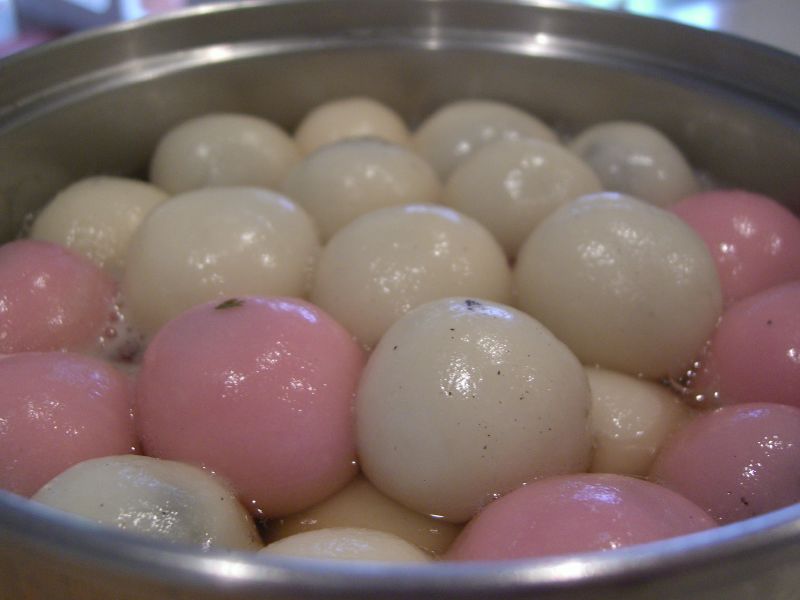
At breakfast, lunch, or dinner, they may look for warm dishes or something sweet. The most traditional food is tangyuan, sweet rice balls in ginger syrup. This food means family reunion and togetherness. Some guests may also enjoy hot tea with ginger or red dates.
Soft Chinese music in the background can make the atmosphere warm and calm.
When staff say “冬至快乐 (Dōngzhì kuàilè)”, it shows care and respect. Chinese guests feel happy when the hotel understands their culture and traditions. They feel more at home and remember this small but kind celebration.
____________________________
Vocabulary:
a solstice – the day when the sun is farthest north or south; it is the shortest or longest day of the year.
to spend time – to be with someone or do something for some hours.
warmth – a nice hot or friendly feeling.
the 4 seasons – the parts of the year: spring, summer, autumn, and winter.
to expect – to think that something will happen.
a greeting – a word or gesture you say when you meet someone, like “Hello!”.
a sign – something that shows or tells a message.
(decoration) – something you put up to make a place look nice.
to feel welcome – to feel happy and comfortable in a place.
a dish (restaurant) – a type of food that is cooked and served.
tangyuan – sweet round rice balls Chinese people eat for special festivals.
a rice ball – rice made into a small round shape.
ginger syrup – sweet liquid made with ginger and sugar.
family reunion – when family members meet again after some time apart.
togetherness – being close and friendly with other people.
to enjoy – to like something very much.
red dates – a sweet red fruit often used in Chinese tea or desserts.
soft music – quiet and gentle music.
to show care – to do something kind for others.
to show respect – to be polite and value someone’s culture or feelings.
to remember – to keep something in your mind.
####################
Multiple choice, one answer correct:
1. A solstice is… A) a short or long day B) a round rice ball made carefully C) a warm drink served to guests
2. To spend time means… A) to prepare decorations for a festival B) to do many tasks in a hurry C) to enjoy moments with someone
3. Warmth is… A) a kind hot feeling B) a soft blanket placed on chairs C) a large set of warm lights
4. The 4 seasons are… A) periods when the weather changes each year B) spring, summer, autumn, winter C) soft music, tea, lights, and dessert
5. To expect means… A) to wait for something B) to plan many things carefully C) to show care in many ways
6. A greeting is… A) a word used when meeting someone B) a note with several welcome sentences C) a big poster showing information
7. A sign is… A) a display made from shapes and lights B) a long, decorated poster C) something that shows a message
8. A decoration is… A) something that makes a place nice B) a long arrangement with colors and lights C) a combination of items in a room
9. To feel welcome means… A) to feel happy being here B) to be greeted C) to receive many explanations of rules
10. A dish is… A) a full table of food and drinks B) a plate with ingredients arranged carefully C) a type of food served
11. Tangyuan is… A) sweet rice balls for the festival B) rice with syrup C) rice with extras
12. A rice ball is… A) rice made in a round shape B) rice shaped and sometimes filled with sour things C) a large serving of rice in different shapes
13. Ginger syrup is… A) a liquid made with ingredients B) a mixture boiled with sugar and spices C) sweet liquid with ginger
14. Family reunion is… A) family meets together B) family eats and talks with others C) family goes to many events together
15. Togetherness is… A) being close with other people B) spending time happily with family C) a feeling shown with meals and events
————end of audiofile____________
16. To enjoy means… A) to spend not much time appreciating [To like and be happy about something]moments B) to like something C) to participate in many organized events
17. Red dates are… A) a sweet red fruit B) fruits prepared with sugar in dishes C) items added with other ingredients
18. Soft music is… A) quiet gentle music B) music played with many instruments C) songs with complex arrangements for events
19. To show care means… A) to spend a long time arranging events B) to organize items C) to do something kind for someone
20. To show respect means… A) to be polite to others B) to show gestures C) to organize formal events with ceremonies
21. To remember means… A) to think carefully and take notes B) to keep something in mind C) to collect objects and stories as memories
A solstice – the day when the sun is farthest north or south; it is the shortest or longest day of the year. – a short or long day
To spend time means… – to enjoy moments with someone
Warmth is… – a kind hot feeling
The 4 seasons are… – spring, summer, autumn, winter
To expect means… – to wait for something
A greeting is… – a word used when meeting someone
A sign is… – something that shows a message
A decoration is… – something that makes a place nice
To feel welcome means… – to feel happy being here
A dish (restaurant) is… – a type of food served
Tangyuan is… – sweet rice balls for the festival
A rice ball is… – rice made in a round shape
Ginger syrup is… – sweet liquid with ginger
Family reunion is… – family meets together
Togetherness is… – being close with other people
To enjoy means… – to like something
Red dates are… – a sweet red fruit
Soft music is… – quiet gentle music
To show care means… – to do something kind for someone
To show respect means… – to be polite to others
To remember means… – to keep something in mind
##############
Match the vocabulary with the correct definition:
Words:
a solstice
to spend time
warmth
the 4 seasons
to expect
a greeting
a sign
decoration
to feel welcome
a dish (restaurant)
tangyuan
a rice ball
ginger syrup
family reunion
togetherness
to enjoy
red dates
soft music
to show care
to show respect
to remember
Definitions:
A. Being close and friendly with other people B. Sweet round rice balls Chinese people eat for special festivals C. A word or gesture you say when you meet someone, like “Hello!” D. Sweet liquid made with ginger and sugar E. To like something very much F. To keep something in your mind G. Rice made into a small round shape H. Quiet and gentle music I. Something you put up to make a place look nice J. When family members meet again after some time apart K. To do something kind for others L. To be polite and value someone’s culture or feelings M. A type of food that is cooked and served N. To feel happy and comfortable in a place O. To be with someone or do something for some hours P. A nice hot or friendly feeling Q. Something that shows or tells a message R. The parts of the year: spring, summer, autumn, and winter S. The day when the sun is farthest north or south; it is the shortest or longest day of the year T. To think that something will happen U. A sweet red fruit often used in Chinese tea or desserts
Tangyuan are sweet rice balls traditionally eaten during Dongzhi Festival.
The Dongzhi Festival is celebrated on December 25 every year. – Correct statement: The Dongzhi Festival is celebrated around December 21–22 every year.
Red and gold decorations symbolize luck and happiness in Chinese culture.
Chinese guests usually expect a greeting and acknowledgment of the festival.
Guests feel more comfortable if the hotel ignores cultural traditions. – Correct statement: Guests feel more comfortable if the hotel acknowledges cultural traditions.
Soft Chinese music can make the hotel atmosphere calm and warm.
Family reunion has nothing to do with Dongzhi Festival. – Correct statement: Family reunion is an important part of the Dongzhi Festival.
Tangyuan symbolizes family togetherness.
Ginger syrup is a traditional decoration used during the festival. – Correct statement: Ginger syrup is a traditional ingredient used to make sweet dishes like tangyuan.
“冬至快乐 (Dōngzhì kuàilè)” is a greeting meaning Happy Dongzhi Festival.
Chinese people eat tangyuan to celebrate the start of spring. – Correct statement: Chinese people eat tangyuan to celebrate the Dongzhi Festival.
Guests may enjoy warm tea with ginger or red dates during the festival.
Dongzhi Festival is about family, warmth, and good wishes.
Guests prefer cold and sour dishes during Dongzhi Festival. – Correct statement: Guests prefer warm and sweet dishes during Dongzhi Festival.
########################
Interview with a Chinese citizen about the Dongzhi Festival at home, complete, words below:
ginger – at home – family -together – reunion – comfortable – during – special – wishes – atmosphere – syrup – luck
————————————–
1. Q: What is the Dongzhi Festival? A: It is the Winter Solstice Festival, a __________ day for families.
2. Q: When is the Dongzhi Festival in 2025? A: It is on December 21.
3. Q: Who celebrates the Dongzhi Festival? A: Chinese families celebrate it ___________.
4. Q: Where do families spend the festival? A: They spend it ___________ with family.
5. Q: Why is the Dongzhi Festival important? A: It is about family, warmth, and good __________.
6. Q: What kind of food do families eat? A: They eat tangyuan, sweet rice balls in ginger __________.
7. Q: What does tangyuan mean? A: It means family __________ and togetherness.
8. Q: How do people drink tea during the festival? A: They may drink warm tea with __________ or red dates.
9. Q: What colors are used for decorations? A: Red and gold, because they mean __________ and happiness.
10. Q: How do people feel when they celebrate? A: They feel happy and __________.
11. Q: What greeting do people say? A: They say “冬至快乐 (Dōngzhì kuàilè)”.
12. Q: How does soft Chinese music help during the festival? A: It makes the __________ warm and calm.
13. Q: Who do people spend time with __________ the festival? A: They spend time with their family.
14. Q: Why do people celebrate the Dongzhi Festival? A: To show care, respect, and enjoy being with _________.
——————————– Correct version:
1. Q: What is the Dongzhi Festival? A: It is the Winter Solstice Festival, a special day for families.
2. Q: When is the Dongzhi Festival in 2025? A: It is on December 21.
3. Q: Who celebrates the Dongzhi Festival? A: Chinese families celebrate it together.
4. Q: Where do families spend the festival? A: They spend it at home with family.
5. Q: Why is the Dongzhi Festival important? A: It is about family, warmth, and good wishes.
6. Q: What kind of food do families eat? A: They eat tangyuan, sweet rice balls in ginger syrup.
7. Q: What does tangyuan mean? A: It means family reunion and togetherness.
8. Q: How do people drink tea during the festival? A: They may drink warm tea with ginger or red dates.
9. Q: What colors are used for decorations? A: Red and gold, because they mean luck and happiness.
10. Q: How do people feel when they celebrate? A: They feel happy and comfortable.
11. Q: What greeting do people say? A: They say “冬至快乐 (Dōngzhì kuàilè)”.
12. Q: How does soft Chinese music help during the festival? A: It makes the atmosphere warm and calm.
13. Q: Who do people spend time with during the festival? A: They spend time with their family.
14. Q: Why do people celebrate the Dongzhi Festival? A: To show care, respect, and enjoy being with family.
########################
Read:
My name is Li Wei. I celebrate the Dongzhi Festival with my family at home. On this day, we spend time together and eat warm food. The most important food is tangyuan, sweet rice balls in ginger syrup, because they show family togetherness. At home, we put up red and gold decorations for luck and happiness. We also drink warm tea with ginger or red dates. I like to listen to soft Chinese music, which makes the house calm and warm. We greet each other by saying “冬至快乐 (Dōngzhì kuàilè)”. The festival is about family, warmth, and good wishes.
Rewrite the story, start with_
>>>>> His name is Li Wei. He celebrates………..
and make all changes necessary.
______________________________ Correct version:
His name is Li Wei. He celebrates the Dongzhi Festival with his family at home. On this day, they spend time together and eat warm food. The most important food is tangyuan, sweet rice balls in ginger syrup, because they show family togetherness. At home, they put up red and gold decorations for luck and happiness. They also drink warm tea with ginger or red dates. He likes to listen to soft Chinese music, which makes the house calm and warm. They greet each other by saying “冬至快乐 (Dōngzhì kuàilè)”. The festival is about family, warmth, and good wishes.
Anan is assistant general manager in a hotel. He remembers his time at the foundation, supporting him to live his dream.
When Anan studied at the foundation he woke up early every morning, then breakfast with his friends. At 8 o’clock he went to class. The teacher taught him English words for hotel work, like “guest,” “room,” and “clean.” He learned to say hello and welcome to visitors.
After that, Anan studied how to work in a hotel. Some days he learned about the front desk. He learned to smile, speak politely, and help guests. Other days he learned about cleaning rooms. He practiced making beds, washing towels, and keeping everything clean and nice.
At lunchtime, Anan ate with the other students. In the afternoon, he had practice time. Sometimes he worked in a small training hotel. He served drinks, carried bags, or helped in the restaurant. The teachers watched him and helped him do better.
Later, he had lessons about life and good manners. He learned how to work in a team and be kind to others.
In the evening, he studied English again or played football with his friends. After dinner, he went back to his room, read a little, and then slept. He felt happy because every day he learned something new for his future.
##################
Verbs in text, infinitive and past simple forms:
live – lived study – studied wake up – woke up eat – ate go – went teach – taught learn – learned say – said study – studied work – worked smile – smiled speak – spoke help – helped practice – practiced make – made wash – washed keep – kept have – had serve – served carry – carried watch – watched play – played read – read [ri:d – red] sleep – slept feel – felt be – was/were come – came
##################
Multiple choice, one answer correct:
Where did Anan live and study? a) At the hotel b) At the school c) At the foundation
What did Anan do every morning? a) Slept very late b) Woke up early c) Played some games
Who did Anan eat breakfast with? a) His friends b) His teacher c) His family
What time did Anan go to class? a) At nine o’clock b) At seven o’clock c) At eight o’clock
What did the teacher teach Anan? a) Drawing art b) English words c) Cooking food
What did Anan learn to say? a) Hello and welcome b) Sorry please now c) Goodbye thanks now
What did Anan study after class? a) Drive a car b) Work in a hotel c) Play some football
What did he learn at the front desk? a) Smile and help b) Clean the room c) Write a list
What did he practice in the rooms? a) Making beds b) Read some books c) Write some notes
Who did Anan eat lunch with? a) The teachers b) His friends c) His parents
Where did Anan work sometimes? a) A big school b) Small training hotel c) At a market
What did he do in the restaurant? a) Read some books b) Cook some food c) Help the guests
What did the teachers do? a) Watched him b) Went home c) Played games
What lessons did Anan have later? a) Sports and games b) Life and manners c) Art and music
What did Anan do in the evening? a) Went shopping b) Slept early c) Played football then
What did he do after dinner? a) Read a book b) Watched some TV c) Went out late
How did Anan feel at the end of the day? a) Felt tired now b) Felt happy now c) Felt bored now
Why was he happy? a) He learned things b) He went home c) He watched TV
Where did Anan live and study? – At the foundation
What did Anan do every morning? – Woke up early
Who did Anan eat breakfast with? – His friends
What time did Anan go to class? – At eight o’clock
What did the teacher teach Anan? – English words
What did Anan learn to say? – Hello and welcome
What did Anan study after class? – Work in a hotel
What did he learn at the front desk? – Smile and help
What did he practice in the rooms? – Write some notes
Who did Anan eat lunch with? – His friends
Where did Anan work sometimes? – At a market
What did he do in the restaurant? – Read some books
What did the teachers do? – Played games
What lessons did Anan have later? – Life and manners
What did Anan do in the evening? – Played football then
What did he do after dinner? – Read a book
How did Anan feel at the end of the day? – Felt happy now
Why was he happy? – He learned things
###################
Match the word or phrase to Its definition
Words/Phrases:
a foundation
to wake up
breakfast
to teach somebody English
to welcome a visitor
to study
to smile
to speak politely
to clean rooms
to practice making beds
a towel
tidy
lunchtime
practice time
to serve a drink
to carry bags
good manners
to be kind
future
Definitions:
a. a piece of cloth to dry your body or hands b. to behave nicely and be polite c. clean and in good order d. to open your eyes in the morning e. the time in the middle of the day to eat f. to give a drink to someone g. a place that helps people learn or get support h. to learn and read about something i. to help a person learn English words and speaking j. to show happiness on your face k. the time that comes after today l. to say hello and make a guest feel happy to come m. to be nice and helpful to people n. time to do something again to get better o. to talk in a kind and nice way p. to take bags in your hands and move them q. to learn how to make a bed again and again r. to make rooms neat and not dirty s. the first meal in the morning
a foundation – a place that helps people learn or get support to wake up – to open your eyes in the morning breakfast – the first meal in the morning to teach somebody English – to help a person learn English words and speaking to welcome a visitor – to say hello and make a guest feel happy to come to study – to learn and read about something to smile – to show happiness on your face to speak politely – to talk in a kind and nice way to clean rooms – to make rooms neat and not dirty to practice making beds – to learn how to make a bed again and again a towel – a piece of cloth to dry your body or hands tidy – clean and in good order lunchtime – the time in the middle of the day to eat practice time – time to do something again to get better to serve a drink – to give a drink to someone to carry bags – to take bags in your hands and move them good manners – to behave nicely and be polite to be kind – to be nice and helpful to people future – the time that comes after today
####################
Multiple choice, one answer correct, provide answer in a full sentence::
Where did Anan study? – a) At a hotel b) At a foundation c) At school
YOU WRITE: Anan studied at a foundation.
What time did Anan wake up? – a) Late b) Early c) Noon _________________________________
Who did Anan eat breakfast with? – a) Friends b) Teacher c) Parents _________________________________
When did he go to class? – a) 8 o’clock b) 10 o’clock c) 7 o’clock _________________________________
What did the teacher teach? – a) Math b) English c) Art _________________________________
What did Anan learn to say? – a) Hello b) Goodbye c) Thanks _________________________________
What did Anan practice in rooms? – a) Shoes b) Meals c) Beds _________________________________
Who watched him at practice? – a) Teachers b) Friends c) Parents _________________________________
What did he do in the restaurant? – a) Serve b) Read c) Cook _________________________________
What did Anan learn about manners? – a) Be loud b) Be kind c) Be fast _________________________________
When did he play football? – a) Lunch b) Morning c) Evening _________________________________
What did he do after dinner? – a) Read b) Sleep c) Walk _________________________________
How did he feel at night? – a) Happy b) Sad c) Tired _________________________________
Why was he happy? – a) Played b) Watched c) Learned _________________________________
Where did Anan study? – Anan studied at a foundation. What time did Anan wake up? – He woke up early. Who did Anan eat breakfast with? – He ate breakfast with his friends. When did he go to class? – He went to class at 8 o’clock. What did the teacher teach? – The teacher taught him English. What did Anan learn to say? – He learned to say hello. What did Anan practice in rooms? – He practiced making beds. Who watched him at practice? – The teachers watched him at practice. What did he do in the restaurant? – He served in the restaurant. What did Anan learn about manners? – He learned to be kind. When did he play football? – He played football in the evening. What did he do after dinner? – He read after dinner. How did he feel at night? – He felt happy at night. Why was he happy? – He was happy because he learned new things.
##################
Short answers in past simple:
Question
Short Answer (Yes/Positive)
Short Answer (No/Negative)
Did she check reservations?
Yes, she did.
No, she didn’t.
Did she give keys to guests?
Yes, she did.
No, she didn’t.
Did she talk to many guests?
Yes, she did.
No, she didn’t.
Was she happy?
Yes, she was.
No, she wasn’t.
Were the guests satisfied?
Yes, they were.
No, they weren’t.
###################
Give short answers, as shown:
Anan was a student at a university.
YOU WRITE: No, he wasn’t.
Anan got up early every day.
YOU WRITE: Yes, he did.
__________________________________
Anan studied at a foundation. __________________________________
He woke up very late every morning. __________________________________
Anan ate breakfast with his friends. __________________________________
He went to class at 10 o’clock. __________________________________
The teacher taught him English words for hotel work. __________________________________
He learned to say goodbye and leave visitors. __________________________________
Anan practiced making beds and washing towels. __________________________________
He worked in a large city hotel every day. __________________________________
The teachers watched and helped him during practice. __________________________________
Anan learned to be kind and have good manners. __________________________________
In the evening, he only slept and did nothing else. __________________________________
He sometimes served drinks and carried bags. __________________________________
Anan studied cooking and painting every day. __________________________________
He felt happy because he learned new things for his future. __________________________________
Anan was a teacher at the foundation. __________________________________
The students were in the city hotel every day. __________________________________
——————————————-
Correct answers:
Anan studied at a foundation. – Yes, he did.
He woke up very late every morning. – No, he didn’t.
Anan ate breakfast with his friends. – Yes, he did.
He went to class at 10 o’clock. – No, he didn’t.
The teacher taught him English words for hotel work. – Yes, he did.
He learned to say goodbye and leave visitors. – No, he didn’t.
Anan practiced making beds and washing towels. – Yes, he did.
He worked in a large city hotel every day. – No, he didn’t.
The teachers watched and helped him during practice. – Yes, they did.
Anan learned to be kind and have good manners. – Yes, he did.
In the evening, he only slept and did nothing else. – No, he didn’t.
He sometimes served drinks and carried bags. – Yes, he did.
Anan studied cooking and painting every day. – No, he didn’t.
He felt happy because he learned new things for his future. – Yes, he did.
Anan was a teacher at the foundation. – No, he wasn’t.
The students were in the city hotel every day. – No, they weren’t.
##################
Basics in past simple:
Personal Pronoun
Verb (Past)
Object
I
ate
apples
You
ate
apples
He
ate
apples
She
ate
apples
It
ate
apples
We
ate
apples
You (plural)
ate
apples
They
ate
apples
I
played
football
You
played
football
He
played
football
She
played
football
It
played
football
We
played
football
You (plural)
played
football
They
played
football
Personal Pronoun
Verb (Past Negative)
Object
I
did not eat
apples
You
did not eat
apples
He
did not eat
apples
She
did not eat
apples
It
did not eat
apples
We
did not eat
apples
You (plural)
did not eat
apples
They
did not eat
apples
I
did not play
football
You
did not play
football
He
did not play
football
She
did not play
football
It
did not play
football
We
did not play
football
You (plural)
did not play
football
They
did not play
football
Did + Pronoun
Verb
Object
Did I
eat
apples?
Did you
eat
apples?
Did he
eat
apples?
Did she
eat
apples?
Did it
eat
apples?
Did we
eat
apples?
Did you
eat
apples?
Did they
eat
apples?
Did I
play
football?
Did you
play
football?
Did he
play
football?
Did she
play
football?
Did it
play
football?
Did we
play
football?
Did you
play
football?
Did they
play
football?
Didn’t + Pronoun
Verb
Object
Didn’t I
eat
apples?
Didn’t you
eat
apples?
Didn’t he
eat
apples?
Didn’t she
eat
apples?
Didn’t it
eat
apples?
Didn’t we
eat
apples?
Didn’t you
eat
apples?
Didn’t they
eat
apples?
Didn’t I
play
football?
Didn’t you
play
football?
Didn’t he
play
football?
Didn’t she
play
football?
Didn’t it
play
football?
Didn’t we
play
football?
Didn’t you
play
football?
Didn’t they
play
football?
######################
Correct as shown:
Anan studied at a university.
YOU WRITE: No, he didn’t. He studied at a foundation.
He woke up very late every morning. _____________________________
Anan ate breakfast alone. _____________________________
He went to class at 10 o’clock. _____________________________
The teacher taught him math. _____________________________
He learned to say goodbye to visitors. _____________________________
Anan practiced cooking every day. _____________________________
He worked in a large city hotel every day. _____________________________
The teachers ignored him during practice. _____________________________
Anan learned to be rude. _____________________________
In the evening, he only slept and did nothing else. _____________________________
He never served drinks or carried bags. _____________________________
Anan studied painting and music every day. _____________________________
He felt sad because he didn’t learn anything. _____________________________
Aan was sad in the evening. _____________________________
—————————– Correct answers:
He woke up very late every morning. – No, he didn’t. He woke up early.
Anan ate breakfast alone. – No, he didn’t. He ate breakfast with his friends.
He went to class at 10 o’clock. – No, he didn’t. He went to class at 8 o’clock.
The teacher taught him math. – No, he didn’t. The teacher taught him English.
He learned to say goodbye to visitors. – No, he didn’t. He learned to say hello and welcome visitors.
Anan practiced cooking every day. – No, he didn’t. He practiced making beds and cleaning rooms.
He worked in a large city hotel every day. – No, he didn’t. He sometimes worked in a small training hotel.
The teachers ignored him during practice. – No, they didn’t. The teachers watched and helped him.
Anan learned to be rude. – No, he didn’t. He learned to be kind.
In the evening, he only slept and did nothing else. – No, he didn’t. He studied English or played football with friends.
He never served drinks or carried bags. – No, he didn’t. He sometimes served drinks and carried bags.
Anan studied painting and music every day. – No, he didn’t. He studied hotel work and English.
He felt sad because he didn’t learn anything. – No, he didn’t. He felt happy because he learned new things.
Anan was sad in the evening. – No, he wasn’t. He felt happy in the evening.
#####################
Answer as shown:
Did he start as a manager or as a student?
YOU WRITE: He started as a student.
Did he wake up early or late every morning?
Did he eat breakfast alone or with friends?
Did he go to class at 8 o’clock or 10 o’clock?
Did the teacher teach him English or math?
Did he learn to say hello or goodbye to visitors?
Did he practice making beds or cooking every day?
Did he work in a large hotel or a small training hotel?
Did the teachers help him or ignore him?
Did he play football in the evening or morning?
Did he read after dinner or go straight to sleep?
Was Anan happy or sad at night?
Was the teacher strict or kind?
Were the students in a large hotel or a small training hotel?
_____________________ Correct answers:
Did he start as a manager or as a student? – He started as a student.
Did he wake up early or late every morning? – He woke up early every morning.
Did he eat breakfast alone or with friends? – He ate breakfast with his friends.
Did he go to class at 8 o’clock or 10 o’clock? – He went to class at 8 o’clock.
Did the teacher teach him English or math? – The teacher taught him English.
Did he learn to say hello or goodbye to visitors? – He learned to say hello and welcome visitors.
Did he practice making beds or cooking every day? – He practiced making beds and cleaning rooms.
Did he work in a large hotel or a small training hotel? – He worked in a small training hotel.
Did the teachers help him or ignore him? – The teachers helped him.
Did he play football in the evening or morning? – He played football in the evening.
Did he read after dinner or go straight to sleep? – He read after dinner.
Was Anan happy or sad at night? – Anan was happy at night.
Was the teacher strict or kind? – The teacher was kind.
Were the students in a large hotel or a small training hotel? – The students were in a small training hotel. ##################
Answer in complete sentences:
Where did Anan study?
What did Anan eat in the morning?
When did Anan wake up?
Who did he eat breakfast with?
What time did he go to class?
What did the teacher teach him?
What did Anan learn to say?
What did he practice in the rooms?
Who helped him at practice?
What did he do in the restaurant?
How did Anan feel at night?
Why was he happy?
When did he play football?
Where did he sometimes work?
______________________
Correct answers:
Where did Anan study? – Anan studied at a foundation. What did Anan eat in the morning? – He ate breakfast. When did Anan wake up? – He woke up early. Who did he eat breakfast with? – He ate breakfast with his friends. What time did he go to class? – He went to class at 8 o’clock. What did the teacher teach him? – The teacher taught him English. What did Anan learn to say? – He learned to say hello and welcome visitors. What did he practice in the rooms? – He practiced making beds and cleaning rooms. Who helped him at practice? – The teachers helped him. What did he do in the restaurant? – He served drinks and carried bags. How did Anan feel at night? – He felt happy. Why was he happy? – He was happy because he learned new things. When did he play football? – He played football in the evening. Where did he sometimes work? – He sometimes worked in a small training hotel.
##################
Correct as shown:
Anan got up late every day.
YOU WRITE: No, he didn’t get up early every day. Aran got up early every day.
He ate breakfast alone. ______________________________
He went to class at 10 o’clock. ______________________________
The teacher taught him math. ______________________________
He learned to say goodbye to visitors. ______________________________
He practiced cooking every day. ______________________________
He worked in a large city hotel every day. ______________________________
The teachers ignored [to not pay attention to someone or something] him during practice. ______________________________
He learned to be rude [very unfriendly]. ______________________________
In the evening, he only slept and did nothing else. ______________________________
He never served drinks or carried bags. ______________________________
Anan studied painting and music every day. ______________________________
He felt sad because he didn’t learn anything. ______________________________
He was sad in the evening. ______________________________
—————————- Correct answers:
Anan got up late every day. – No, he didn’t get up late every day. He got up early.
He ate breakfast alone. – No, he didn’t eat breakfast alone. He ate breakfast with his friends.
He went to class at 10 o’clock. – No, he didn’t go to class at 10 o’clock. He went to class at 8 o’clock.
The teacher taught him math. – No, the teacher didn’t teach him math. The teacher taught him English.
He learned to say goodbye to visitors. – No, he didn’t learn to say goodbye to visitors. He learned to say hello and welcome visitors.
He practiced cooking every day. – No, he didn’t practice cooking every day. He practiced making beds and cleaning rooms.
He worked in a large city hotel every day. – No, he didn’t work in a large city hotel every day. He sometimes worked in a small training hotel.
The teachers ignored him during practice. – No, the teachers didn’t ignore him during practice. They watched and helped him.
He learned to be rude. – No, he didn’t learn to be rude. He learned to be kind.
In the evening, he only slept and did nothing else. – No, he didn’t only sleep in the evening. He studied English or played football.
He never served drinks or carried bags. – No, he didn’t never serve drinks or carry bags. He sometimes served drinks and carried bags.
Anan studied painting and music every day. – No, he didn’t study painting and music every day. He studied hotel work and English.
He felt sad because he didn’t learn anything. – No, he didn’t feel sad because he didn’t learn anything. He felt happy because he learned new things.
He was sad in the evening. – No, he wasn’t sad in the evening. He felt happy in the evening.
########################
Fill in, words below:
ate – practice – foundation – learned – taught – read – carried -morning – happy – early – welcome – evening – time – cleaning
——————————–
Interviewer: Hi Anan! Can I ask you some questions about your day?
Anan: Yes, of course!
Interviewer: Where did you study? Anan: I studied at a __________.
Interviewer: What time did you wake up? Anan: I woke up __________ every morning.
Interviewer: What did you eat in the __________? Anan: I ate breakfast.
Interviewer: Who did you eat breakfast with? Anan: I _________ breakfast with my friends.
Interviewer: What __________ did you go to class? Anan: I went to class at 8 o’clock.
Interviewer: What did the teacher teach you? Anan: The teacher __________ me English.
Interviewer: What did you learn to say? Anan: I learned to say hello and _________ visitors.
Interviewer: What did you practice in the rooms? Anan: I practiced making beds and __________ rooms.
Interviewer: Who helped you during __________? Anan: The teachers helped me.
Interviewer: What did you do in the restaurant? Anan: I served drinks and __________ bags.
Interviewer: Did you play football? Anan: Yes, I played football in the _________.
Interviewer: What did you do after dinner? Anan: I __________ after dinner.
Interviewer: How did you feel at night? Anan: I felt __________ at night.
Interviewer: Why were you happy? Anan: I was happy because I __________ new things.
—————————– Correct version:
Interviewer: Hi Anan! Can I ask you some questions about your day?
Anan: Yes, of course!
Interviewer: Where did you study? Anan: I studied at a foundation.
Interviewer: What time did you wake up? Anan: I woke up early every morning.
Interviewer: What did you eat in the morning? Anan: I ate breakfast.
Interviewer: Who did you eat breakfast with? Anan: I ate breakfast with my friends.
Interviewer: What time did you go to class? Anan: I went to class at 8 o’clock.
Interviewer: What did the teacher teach you? Anan: The teacher taught me English.
Interviewer: What did you learn to say? Anan: I learned to say hello and welcome visitors.
Interviewer: What did you practice in the rooms? Anan: I practiced making beds and cleaning rooms.
Interviewer: Who helped you during practice? Anan: The teachers helped me.
Interviewer: What did you do in the restaurant? Anan: I served drinks and carried bags.
Interviewer: Did you play football? Anan: Yes, I played football in the evening.
Interviewer: What did you do after dinner? Anan: I read after dinner.
Interviewer: How did you feel at night? Anan: I felt happy at night.
Interviewer: Why were you happy? Anan: I was happy because I learned new things.
#####################
Read:
Anan wakes up early every morning and eats breakfast with his friends. At 8 o’clock, he goes to class. The teacher teaches him English for hotel work. He learns to greet and welcome visitors. He studies front desk work, cleaning rooms, and practicing making beds. In the afternoon, he practices in a small training hotel. He learns good manners, teamwork, and kindness. In the evening, he studies English or plays football. He goes to bed happy.
Rewrite the story in past simple, start with
>>>>>>>>>>>Anan woke up early in the…….
and make all changes necessary.
—————————————
Correct version:
Anan woke up early every morning and ate breakfast with his friends. At 8 o’clock, he went to class. The teacher taught him English for hotel work. He learned to greet and welcome visitors. He studied front desk work, cleaning rooms, and practicing making beds. In the afternoon, he practiced in a small training hotel. He learned good manners, teamwork, and kindness. In the evening, he studied English or played football. He went to bed happy.
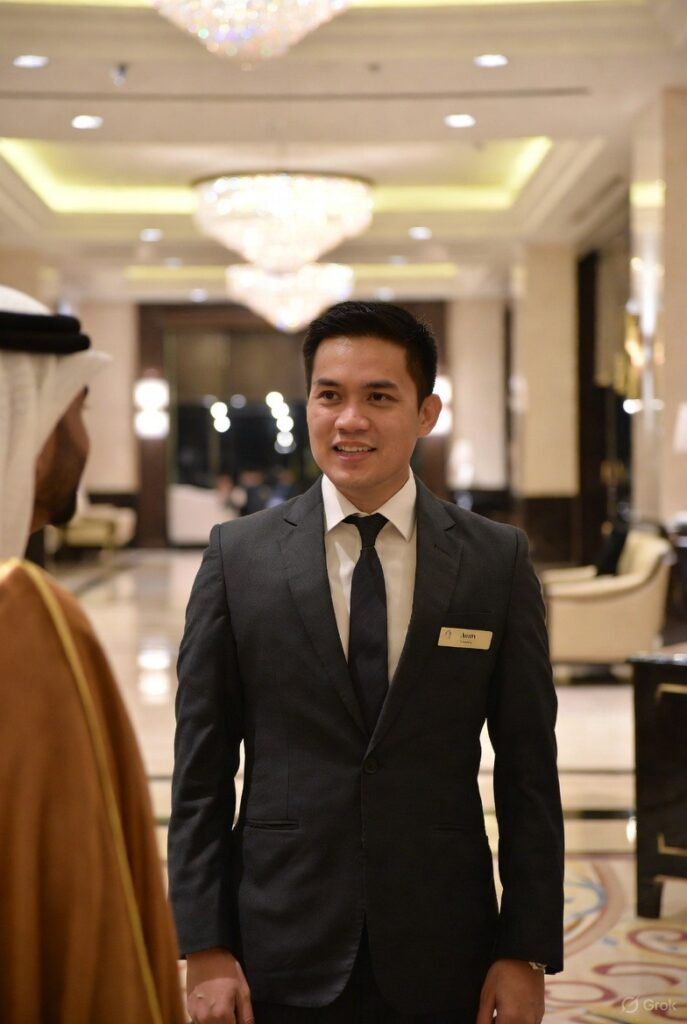
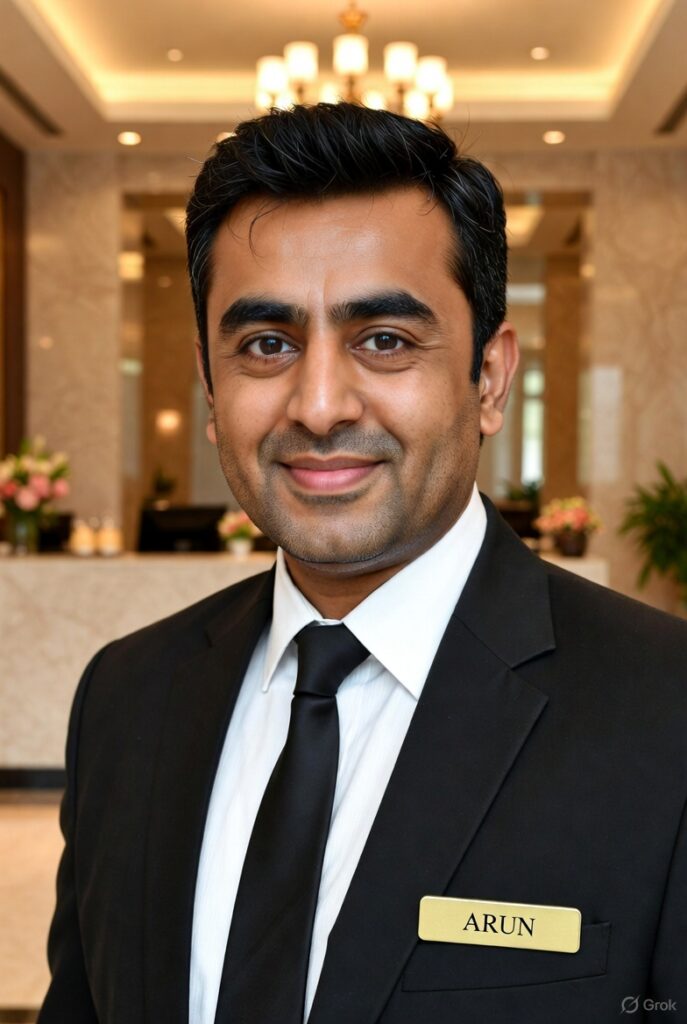
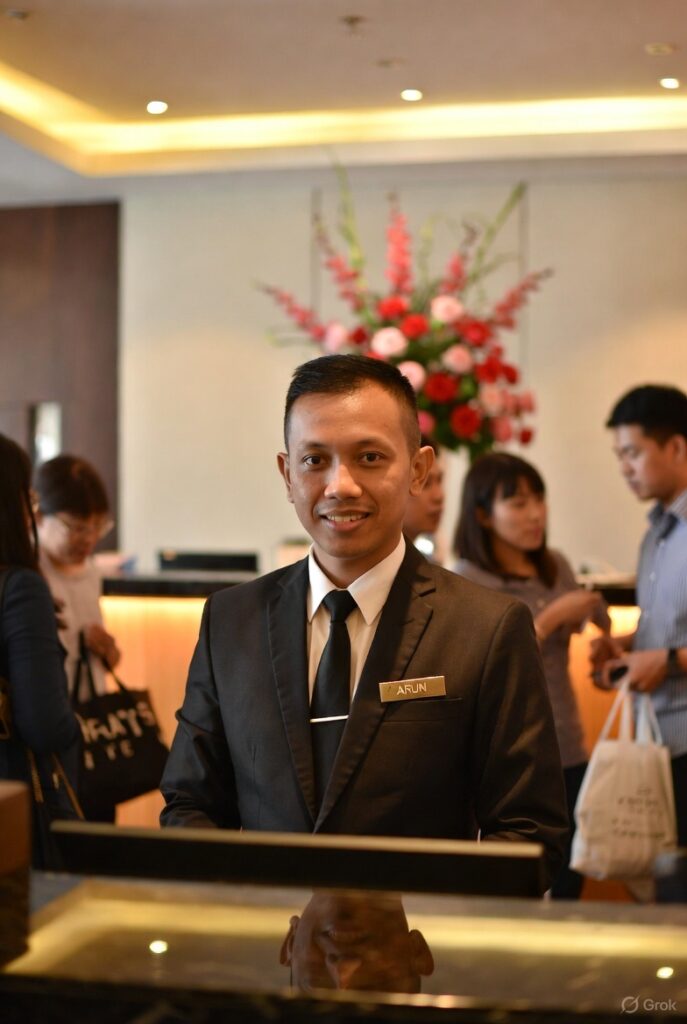
Arun, now a manager of a great hotel at the beach, remembers how his first day in the hospitality business started a long time ago.
He woke up early in the morning. He felt a little nervous because it was his first day at work. He started a new job as a concierge at a big five-star hotel. He took a shower, brushed his teeth, and put on his clean uniform. Then he looked in the mirror and smiled. He wanted to do his best.
At 7:30, Arun left his house and took the bus to the hotel. The building looked large and beautiful. The manager welcomed him and showed him where he would sit. Arun met the other workers at the front desk. They were kind and friendly.
The manager explained his job. Arun helped hotel guests, answered questions, and made them happy. He helped a family find a good restaurant and called a taxi for them. Later, he gave a map to two tourists and told them about a temple to visit. They thanked him and smiled. Arun felt proud.
In the afternoon, the lobby was busy. Arun stayed calm and polite. He listened carefully and learned many new things.
At 5:00, his work finished. He said goodbye to his new friends and went home. He ate dinner, took a shower, and went to bed happy and tired.
________________________ Verbs in text, infinitive and past simple forms:
A. To feel you need rest or sleep. B. To be quiet and not worried. C. To travel by bus. D. The big room at the entrance of a hotel. E. To stop working. F. To give information when someone asks. G. To clean your body with water. H. To be friendly and respectful to others. I. To tell someone what work they must do. J. To clean your teeth with a toothbrush. K. To be friendly and helpful. L. To be happy because of your work or success. M. Something you look at to see your face. N. To wear special clothes for work or school. O. A picture of a place to help you find the way. P. To stop sleeping. Q. To go out from your home. R. A person who helps guests at a hotel. S. To be friendly and respectful to others. T. To have many things to do. U. To feel worried or afraid about something. V. At the beginning of the day, before usual time. W. To show happiness with your mouth. X. To hear and understand what someone says. Y. The place in a hotel where workers help guests.
Early – at the beginning of the day, before usual time.
To feel nervous – to feel worried or afraid about something.
To take a shower – to clean your body with water.
To brush teeth – to clean your teeth with a toothbrush.
To put on a uniform – to wear special clothes for work or school.
A mirror – something you look at to see your face.
To smile – to show happiness with your mouth.
To leave the house – to go out from your home.
To take the bus – to travel by bus.
Front desk – the place in a hotel where workers help guests.
To be kind – to be friendly and helpful.
To explain a job – to tell someone what work they must do.
To answer questions – to give information when someone asks.
A map – a picture of a place to help you find the way.
To feel proud – to feel happy because of your work or success.
A lobby – the big room at the entrance of a hotel.
To be busy – to have many things to do.
To stay calm – to be quiet and not worried.
To be polite – to be friendly and respectful to others.
To listen carefully – to hear and understand what someone says.
To finish work – to stop working.
To be tired – to feel you need rest or sleep.
########################
Short answers in past simple:
Question
Short Answer (Yes/Positive)
Short Answer (No/Negative)
Did she check reservations?
Yes, she did.
No, she didn’t.
Did she give keys to guests?
Yes, she did.
No, she didn’t.
Did she talk to many guests?
Yes, she did.
No, she didn’t.
Was she happy?
Yes, she was.
No, she wasn’t.
Were the guests satisfied?
Yes, they were.
No, they weren’t.
———————————————
Give short answers, as shown:
Arun’s first day at work was at a five-star hotel.
YOU WRITE: Yes, it was.
Arun started his job as a manager.
YOU WRITE: No, he didn’t.
He felt excited but not nervous on his first day. ______________________________
Arun took a shower and brushed his teeth before leaving home. ______________________________
The hotel building looked small and old. ______________________________
Arun helped guests by giving them maps and calling taxis. ______________________________
Arun met unfriendly workers at the front desk. ______________________________
He smiled while looking at himself in the mirror. ______________________________
The lobby was empty all afternoon. ______________________________
Arun stayed calm and polite even when it was busy. ______________________________
He finished work at 5:00 PM and went home. ______________________________
Arun gave cooking lessons to hotel guests. ______________________________
He felt proud after helping tourists and guests. ______________________________
Arun went to bed angry and frustrated after his first day. ______________________________
————————————– Correct version:
Arun’s first day at work was at a five-star hotel. – Yes, it was.
Arun started his job as a manager. – No, he didn’t.
He felt excited but not nervous on his first day. – No, he didn’t.
Arun took a shower and brushed his teeth before leaving home. – Yes, he did.
The hotel building looked small and old. – No, it didn’t.
Arun helped guests by giving them maps and calling taxis. – Yes, he did.
Arun met unfriendly workers at the front desk. – No, he didn’t.
He smiled while looking at himself in the mirror. – Yes, he did.
The lobby was empty all afternoon. – No, it wasn’t.
Arun stayed calm and polite even when it was busy. – Yes, he did.
He finished work at 5:00 PM and went home. – Yes, he did.
Arun gave cooking lessons to hotel guests. – No, he didn’t.
He felt proud after helping tourists and guests. – Yes, he did.
Arun went to bed angry and frustrated after his first day. – No, he didn’t.
#####################
Basics in past simple:
Personal Pronoun
Verb (Past)
Object
I
ate
apples
You
ate
apples
He
ate
apples
She
ate
apples
It
ate
apples
We
ate
apples
You (plural)
ate
apples
They
ate
apples
I
played
football
You
played
football
He
played
football
She
played
football
It
played
football
We
played
football
You (plural)
played
football
They
played
football
Personal Pronoun
Verb (Past Negative)
Object
I
did not eat
apples
You
did not eat
apples
He
did not eat
apples
She
did not eat
apples
It
did not eat
apples
We
did not eat
apples
You (plural)
did not eat
apples
They
did not eat
apples
I
did not play
football
You
did not play
football
He
did not play
football
She
did not play
football
It
did not play
football
We
did not play
football
You (plural)
did not play
football
They
did not play
football
Did + Pronoun
Verb
Object
Did I
eat
apples?
Did you
eat
apples?
Did he
eat
apples?
Did she
eat
apples?
Did it
eat
apples?
Did we
eat
apples?
Did you
eat
apples?
Did they
eat
apples?
Did I
play
football?
Did you
play
football?
Did he
play
football?
Did she
play
football?
Did it
play
football?
Did we
play
football?
Did you
play
football?
Did they
play
football?
Didn’t + Pronoun
Verb
Object
Didn’t I
eat
apples?
Didn’t you
eat
apples?
Didn’t he
eat
apples?
Didn’t she
eat
apples?
Didn’t it
eat
apples?
Didn’t we
eat
apples?
Didn’t you
eat
apples?
Didn’t they
eat
apples?
Didn’t I
play
football?
Didn’t you
play
football?
Didn’t he
play
football?
Didn’t she
play
football?
Didn’t it
play
football?
Didn’t we
play
football?
Didn’t you
play
football?
Didn’t they
play
football?
######################
Correct as shown:
Arun started his first day as a hotel manager.
YOU WRITE: No, he didn’t. He started his first day as a concierge.
He felt completely relaxed and not nervous at all.
YOU WRITE: No, he didn’t. He was nervous.
He forgot to brush his teeth before leaving. _______________________________
The hotel building looked small and old. _______________________________
The manager ignored him when he arrived. _______________________________
Arun met rude and unfriendly workers at the front desk. _______________________________
He gave cooking lessons to hotel guests. _______________________________
Arun didn’t help any guests during the day. _______________________________
The lobby was empty and quiet all afternoon. _______________________________
He got angry when guests asked questions. _______________________________
Arun left work early before 5:00 PM. _______________________________
He went home without eating dinner. _______________________________
Arun felt disappointed after helping tourists. _______________________________
He went to bed angry and frustrated after his first day. _______________________________
————————————–
Correct version:
Arun started his first day as a hotel manager. – No, he didn’t. He started his first day as a concierge.
He felt completely relaxed and not nervous at all. – No, he didn’t. He was nervous.
He forgot to brush his teeth before leaving. – No, he didn’t. He brushed his teeth.
The hotel building looked small and old. – No, it didn’t. It looked large and beautiful.
The manager ignored him when he arrived. – No, he didn’t. The manager welcomed him.
Arun met rude and unfriendly workers at the front desk. – No, he didn’t. The workers were kind and friendly.
He gave cooking lessons to hotel guests. – No, he didn’t. He helped guests with maps and taxis.
Arun didn’t help any guests during the day. – No, he didn’t. He helped many guests.
The lobby was empty and quiet all afternoon. – No, it wasn’t. The lobby was busy.
He got angry when guests asked questions. – No, he didn’t. He stayed calm and polite.
Arun left work early before 5:00 PM. – No, he didn’t. He finished work at 5:00 PM.
He went home without eating dinner. – No, he didn’t. He ate dinner.
Arun felt disappointed after helping tourists. – No, he didn’t. He felt proud.
He went to bed angry and frustrated after his first day. – No, he didn’t. He went to bed happy and tired.
####################
Answer as shown:
Did he start as a manager or as a concierge?
YOU WRITE: He started as a concierge.
Did he feel nervous or relaxed on his first day? __________________________________
Did he wake up early or late? __________________________________
Did he take a shower or skip [not do something] it? __________________________________
Did he brush his teeth or forget to brush them? __________________________________
Did he put on a uniform or wear casual clothes [clothes you wear every day, not for work or school]? __________________________________
Did he smile at the mirror or frown [to look unhappy or angry by moving your eyebrows together]? __________________________________
Did he leave home at 7:30 or at 9:00? __________________________________
Did he take the bus or walk to the hotel? __________________________________
Were the front desk workers friendly or unfriendly? __________________________________
Did he help guests or ignore them? __________________________________
Was the lobby busy or empty in the afternoon? __________________________________
Did he stay calm and polite or get upset? __________________________________
Did he go to bed happy and tired or angry and frustrated? __________________________________
————————————— Correct answers:
Did he go to bed happy and tired or angry and frustrated? – He went to bed happy and tired.
Did he start as a manager or as a concierge? – He started as a concierge.
Did he feel nervous or relaxed on his first day? – He felt nervous.
Did he wake up early or late? – He woke up early.
Did he take a shower or skip it? – He took a shower.
Did he brush his teeth or forget to brush them? – He brushed his teeth.
Did he put on a uniform or wear casual clothes? – He put on a uniform.
Did he smile at the mirror or frown? – He smiled at the mirror.
Did he leave home at 7:30 or at 9:00? – He left home at 7:30.
Did he take the bus or walk to the hotel? – He took the bus.
Were the front desk workers friendly or unfriendly? – They were friendly.
Did he help guests or ignore them? – He helped guests.
Was the lobby busy or empty in the afternoon? – The lobby was busy.
Did he stay calm and polite or get upset? – He stayed calm and polite.
####################
Answer:
What job did Arun start?
What time did he wake up?
How did he feel on his first day?
Where did he go after leaving home?
Which hotel did he work at?
When did he leave the house?
Why was he nervous?
How did he go to the hotel?
Who welcomed him at the hotel?
What did he do at the front desk?
Which guests did he help first?
How did he feel after helping tourists?
What was the lobby like in the afternoon?
When did he go to bed?
__________________________ Correct answers:
What job did Arun start? – He started as a concierge.
What time did he wake up? – He woke up early.
How did he feel on his first day? – He felt nervous.
Where did he go after leaving home? – He went to the hotel.
Which hotel did he work at? – He worked at a big hotel.
When did he leave the house? – He left at 7:30.
Why was he nervous? – He was nervous because it was his first day.
How did he go to the hotel? – He took the bus.
Who welcomed him at the hotel? – The manager welcomed him.
What did he do at the front desk? – He helped guests.
Which guests did he help first? – He helped a family.
How did he feel after helping tourists? – He felt proud.
What was the lobby like in the afternoon? – It was busy.
When did he go to bed? – He went to bed happy and tired.
####################
Answer as shown:
Arun started his first day as a hotel manager.
YOU WRITE: No, he didn’t start his first day as a manager. He started as a concierge.
He felt completely relaxed and not nervous on his first day. _________________________________
He woke up late in the morning. _________________________________
He skipped taking a shower. _________________________________
He forgot to brush his teeth. _________________________________
He wore casual clothes instead of a uniform. _________________________________
He frowned at the mirror instead of smiling. _________________________________
He left home at 9:00 instead of 7:30. _________________________________
He walked to the hotel instead of taking the bus. _________________________________
The front desk workers were rude and unfriendly. _________________________________
He ignored all the guests at the hotel. _________________________________
The lobby was empty and quiet in the afternoon. _________________________________
He got upset and angry while helping guests. _________________________________
He went to bed angry and frustrated after his first day. _________________________________
_____________________ Correct answers:
He went to bed angry and frustrated after his first day. – No, he didn’t go to bed angry and frustrated. He went to bed happy and tired.
Arun started his first day as a hotel manager. – No, he didn’t start his first day as a manager. He started as a concierge.
He felt completely relaxed and not nervous on his first day. – No, he didn’t feel relaxed and not nervous. He felt nervous.
He woke up late in the morning. – No, he didn’t wake up late. He woke up early in the morning.
He skipped taking a shower. – No, he didn’t skip taking a shower. He took a shower.
He forgot to brush his teeth. – No, he didn’t forget to brush his teeth. He brushed his teeth.
He wore casual clothes instead of a uniform. – No, he didn’t wear casual clothes. He wore a uniform.
He frowned at the mirror instead of smiling. – No, he didn’t frown at the mirror. He smiled at the mirror.
He left home at 9:00 instead of 7:30. – No, he didn’t leave home at 9:00. He left home at 7:30.
He walked to the hotel instead of taking the bus. – No, he didn’t walk to the hotel. He took the bus.
The front desk workers were rude and unfriendly. – No, the front desk workers weren’t rude and unfriendly. They were kind and friendly.
He ignored all the guests at the hotel. – No, he didn’t ignore all the guests. He helped the guests.
The lobby was empty and quiet in the afternoon. – No, the lobby wasn’t empty and quiet. It was busy.
He got upset and angry while helping guests. – No, he didn’t get upset and angry. He stayed calm and polite.
####################
Fill in, words below:
big – gave – took – brushed – called – early – shower – concierge – answered – nervous – tired – smiled – kind – left – sit – proud
1. Interviewer: What job did you start? Arun: I started as a __________.
2. Interviewer: What time did you wake up? Arun: I woke up __________ in the morning.
3. Interviewer: How did you feel on your first day? Arun: I felt a little__________.
4. Interviewer: What did you do first in the morning? Arun: I took a shower, __________ my teeth, and put on my uniform.
5. Interviewer: Did you look at yourself in the mirror? Arun: Yes, I looked in the mirror and __________.
6. Interviewer: What time did you leave home? Arun: I __________ home at 7:30.
7. Interviewer: How did you go to the hotel? Arun: I __________ the bus to the hotel.
8. Interviewer: What did the hotel look like? Arun: The hotel was __________and beautiful.
9. Interviewer: Who welcomed you at the hotel? Arun: The manager welcomed me and showed me where to __________.
10. Interviewer: Did you meet other workers? Arun: Yes, I met the workers at the front desk. They were __________ and friendly.
11. Interviewer: What was your job? Arun: I helped guests, __________ questions, and made them happy.
12. Interviewer: Can you give an example of helping guests? Arun: I helped a family find a restaurant and _________a taxi for them. I also __________ a map to two tourists and told them about a temple.
13. Interviewer: How did you feel after helping guests? Arun: I felt __________.
14. Interviewer: When did you finish work and go to bed? Arun: I finished work at 5:00, went home, ate dinner, took a __________, and went to bed happy and __________.
——————————-
Correct version:
1. Interviewer: What job did you start? Arun: I started as a concierge.
2. Interviewer: What time did you wake up? Arun: I woke up early in the morning.
3. Interviewer: How did you feel on your first day? Arun: I felt a little nervous.
4. Interviewer: What did you do first in the morning? Arun: I took a shower, brushed my teeth, and put on my uniform.
5. Interviewer: Did you look at yourself in the mirror? Arun: Yes, I looked in the mirror and smiled.
6. Interviewer: What time did you leave home? Arun: I left home at 7:30.
7. Interviewer: How did you go to the hotel? Arun: I took the bus to the hotel.
8. Interviewer: What did the hotel look like? Arun: The hotel was big and beautiful.
9. Interviewer: Who welcomed you at the hotel? Arun: The manager welcomed me and showed me where to sit.
10. Interviewer: Did you meet other workers? Arun: Yes, I met the workers at the front desk. They were kind and friendly.
11. Interviewer: What was your job? Arun: I helped guests, answered questions, and made them happy.
12. Interviewer: Can you give an example of helping guests? Arun: I helped a family find a restaurant and called a taxi for them. I also gave a map to two tourists and told them about a temple.
13. Interviewer: How did you feel after helping guests? Arun: I felt proud.
14. Interviewer: When did you finish work and go to bed? Arun: I finished work at 5:00, went home, ate dinner, took a shower, and went to bed happy and tired.
####################
Read:
Arun starts his first day as a concierge at a big five-star hotel. He wakes up early and feels nervous. He takes a shower, brushes his teeth, and puts on his uniform. He looks in the mirror and smiles. At 7:30, he leaves home and takes the bus to the hotel. The building looks big and beautiful. The manager welcomes him and shows him where to sit. Arun meets the front desk workers. They are kind and friendly. He helps guests, answers questions, gives maps, and calls taxis. The lobby is busy, but he stays calm. At 5:00, he finishes work, goes home, and goes to bed happy and tired.
Rewrite the story in past simple, start with
>>>>>>>>>>>Arun started his first day…….
and make all changes necessary. ———————————
Correct version:
Arun started his first day as a concierge at a big five-star hotel. He woke up early and felt nervous. He took a shower, brushed his teeth, and put on his uniform. He looked in the mirror and smiled. At 7:30, he left home and took the bus to the hotel. The building looked big and beautiful. The manager welcomed him and showed him where to sit. Arun met the front desk workers. They were kind and friendly. He helped guests, answered questions, gave maps, and called taxis. The lobby was busy, but he stayed calm. At 5:00, he finished work, went home, and went to bed happy and tired.
Arun wakes up early in the morning. He feels a little nervous because today is his first day at work. He starts a new job as a concierge at a big five-star hotel. He takes a shower, brushes his teeth, and puts on his clean uniform. He looks in the mirror and smiles. He wants to do his best.
At 7:30, Arun leaves his house. He takes the bus to the hotel. The building looks large and beautiful. The manager welcomes him and shows him where he sits. Arun meets other workers at the front desk. They are kind and friendly.
The manager explains his job. Arun helps hotel guests, answers questions, and makes them happy. He helps a family find a good restaurant and calls a taxi for them. Later, he gives a map to two tourists and tells them about a temple to visit. They thank him and smile. Arun feels proud.
In the afternoon, the lobby is busy. Arun stays calm and polite. He listens carefully and learns many new things.
At 5:00, his work finishes. He says goodbye to his new friends and goes home. He eats dinner, takes a shower, and goes to bed happy and tired.
______________________ Verbs in text, infinitive and past tense forms
to wake up – woke up // to stop sleeping
to feel – felt // to have a feeling
to be – was // to exist; to be somewhere
to start – started // to begin something
to take – took // to get something
to brush – brushed // to clean with a brush
to put on – put on // to wear clothes
to look – looked // to use your eyes to see
to smile – smiled // to make your mouth happy
to want – wanted // to wish for something
to do – did // to make or act
to leave – left // to go away
to take – took // to get something
to look – looked // to use your eyes to see
to welcome – welcomed // to greet someone nicely
to show – showed // to make someone see something
to meet – met // to see someone for the first time or intentionally
to be – were // to exist; to be somewhere
to explain – explained // to tell someone clearly
to help – helped // to do something for someone
to answer – answered // to reply to a question
to make – made // to create something
to help – helped // to do something for someone
to find – found // to discover or see something
to call – called // to phone someone
to give – gave // to give something to someone
to tell – told // to say something to someone
to thank – thanked // to say “thanks”
to smile – smiled // to make your mouth happy
to feel – felt // to have a feeling
to be – was // to exist; to be somewhere
to stay – stayed // to remain in one place
to listen – listened // to use your ears to hear
to learn – learned // to get knowledge
to finish – finished // to complete something
to say – said // to speak words
to go – went // to move somewhere
to eat – ate // to put food in your mouth
to take – took // to get something
to go – went // to move somewhere
_____________________
Vocabulary:
Concierge – a person who helps guests at a hotel.
To wake up – to stop sleeping.
Early – at the beginning of the day, before usual time.
To feel nervous – to feel worried or afraid about something.
To take a shower – to clean your body with water.
To brush teeth – to clean your teeth with a toothbrush.
To put on a uniform – to wear special clothes for work or school.
A mirror – something you look at to see your face.
To smile – to show happiness with your mouth.
To leave the house – to go out from your home.
To take the bus – to travel by bus.
Front desk – the place in a hotel where workers help guests.
To be kind – to be friendly and helpful.
To explain a job – to tell someone what work they must do.
To answer questions – to give information when someone asks.
A map – a picture of a place to help you find the way.
To feel proud – to feel happy because of your work or success.
A lobby – the big room at the entrance of a hotel.
To be busy – to have many things to do.
To stay calm – to be quiet and not worried.
To be polite – to be friendly and respectful to others.
To listen carefully – to hear and understand what someone says.
To finish work – to stop working.
To be tired – to feel you need rest or sleep.
#################
1. What is a concierge? a) A person who helps guests b) A person who cooks food c) A person who drives cars
2. What does it mean to wake up? a) To eat breakfast now b) To stop sleeping now c) To go to school now
3. What does early mean? a) Very late at night b) In the middle of day c) At the start of day
4. What does it mean to feel nervous? a) To feel happy now b) To feel worried now c) To feel very tired
5. What does it mean to take a shower? a) To brush your hair now b) To wash your clothes c) To clean your body
6. What does it mean to brush teeth? a) To clean your teeth b) To wash your face now c) To comb your hair now
7. What does it mean to put on a uniform? a) To take off your shoes b) To wear special clothes c) To put on a hat now
8. What is a mirror? a) Something you write on b) Something to sit on c) Something to see face
9. What does it mean to smile? a) To show your mouth happy b) To look very sad now c) To open your eyes wide
10. What does it mean to leave the house? a) To go out from home b) To stay inside home c) To clean your house
11. What does it mean to take the bus? a) To drive a bus now b) To walk to a bus c) To travel by bus
12. What is the front desk? a) Place workers help guests b) Place where people sleep c) Place where people cook
13. What does it mean to be kind? a) To be angry now b) To be friendly now c) To be tired now
14. What does it mean to explain a job? a) To eat food now b) To tell someone their work c) To go to sleep now
15. What does it mean to answer questions? a) To take a shower b) To give information c) To run very fast
16. What is a map? a) Something to sit on b) Something to read c) Picture of a place
17. What does it mean to feel proud? a) To feel happy about work b) To feel hungry now c) To feel very tired
18. What is a lobby? a) Place where people cook b) Big room at entrance c) Place to sleep now
19. What does it mean to be busy? a) To have many things b) To eat food now c) To sleep all day
————end of audio————
20. What does it mean to stay calm? a) To shout very loud b) To run very fast c) To be quiet now
21. What does it mean to be polite? a) To be friendly now b) To be tired now c) To be sad and quiet
22. What does it mean to listen carefully? a) To run very fast b) To hear well now c) To sleep all day
23. What does it mean to finish work? a) To eat food now b) To stop working now c) To start job now
24. What does it mean to be tired? a) To feel very happy b) To feel you need rest c) To feel hungry now
What does it mean to wake up? – To stop sleeping now
What does early mean? – At the start of day
What does it mean to feel nervous? – To feel worried now
What does it mean to take a shower? – To clean your body
What does it mean to brush teeth? – To clean your teeth
What does it mean to put on a uniform? – To wear special clothes
What is a mirror? – Something to see face
What does it mean to smile? – To show your mouth happy
What does it mean to leave the house? – To go out from home
What does it mean to take the bus? – To travel by bus
What is the front desk? – Place workers help guests
What does it mean to be kind? – To be friendly now
What does it mean to explain a job? – To tell someone their work
What does it mean to answer questions? – To give information
What is a map? – Picture of a place
What does it mean to feel proud? – To feel happy about work
What is a lobby? – Big room at entrance
What does it mean to be busy? – To have many things
What does it mean to stay calm? – To be quiet now
What does it mean to be polite? – To be friendly now
What does it mean to listen carefully? – To hear well now
What does it mean to finish work? – To stop working now
What does it mean to be tired? – To feel you need rest
###################
Match the word with the correct definition:
Words:
Concierge
Wake up
Early
Feel nervous
Take a shower
Brush teeth
Put on a uniform
Mirror
Smile
Leave the house
Take the bus
Front desk
Be kind
Explain a job
Answer questions
Map
Feel proud
Lobby
Be busy
Stay calm
Be polite
Listen carefully
Finish work
Be tired
Definitions:
a) To feel you need rest or sleep b) A person who helps guests at a hotel c) To stop sleeping d) To show happiness with your mouth e) The big room at the entrance of a hotel f) To clean your body with water g) To give information when someone asks h) To tell someone what work they must do i) To go out from your home j) To hear and understand what someone says k) To clean your teeth with a toothbrush l) To be quiet and not worried m) Something you look at to see your face n) To wear special clothes for work or school o) At the beginning of the day p) To be friendly and respectful to others q) To be friendly and helpful r) To travel by bus s) To have many things to do t) Place in a hotel where workers help guests u) To feel happy because of your work or success v) To take off work, to stop working w) To feel worried or afraid x) To leave a happy expression on your face
Arun ignores his colleagues. ___________________________
Arun sits all day in the lobby. ___________________________
————————— Correct version:
Arun wakes up very late. True is: Arun wakes up early.
He sleeps in the hotel lobby in the afternoon. True is: He goes home after work.
Arun works as a chef. True is: Arun works as a hotel concierge.
Arun cleans the hotel rooms on his first day. True is: Arun helps guests at the front desk.
He skips dinner at home. True is: He eats dinner at home.
Arun takes a taxi to the hotel. True is: Arun takes the bus to the hotel.
The manager is angry with Arun. True is: The manager welcomes Arun.
Arun wears casual clothes. True is: Arun wears a clean uniform.
Arun ignores his colleagues. True is: Arun listens carefully to his colleagues.
Arun sits all day in the lobby. True is: Arun works at the front desk and helps guests.
#####################
Basics:
Personal Pronoun
am / is / are
I
am
8 years old
You
are
8 years old
He
is
8 years old
She
is
8 years old
It
is
8 years old
We
are
8 years old
You (plural)
are
8 years old
They
are
8 years old
Personal Pronoun
am not / is not / are not
I
am not
8 years old
You
are not
8 years old
He
is not
8 years old
She
is not
8 years old
It
is not
8 years old
We
are not
8 years old
You (plural)
are not
8 years old
They
are not
8 years old
Question:
Question Word
Personal Pronoun
Am
I
8 years old?
Are
you
8 years old?
Is
he
8 years old?
Is
she
8 years old?
Is
it
8 years old?
Are
we
8 years old?
Are
you (plural)
8 years old?
Are
they
8 years old?
Statement:
Personal Pronoun
Verb
I
like
ice cream
You
like
ice cream
He
likes
ice cream
She
likes
ice cream
It
likes
ice cream
We
like
ice cream
You (plural)
like
ice cream
They
like
ice cream
Negation:
Personal Pronoun
Verb (negative)
I
do not like
ice cream
You
do not like
ice cream
He
does not like
ice cream
She
does not like
ice cream
It
does not like
ice cream
We
do not like
ice cream
You (plural)
do not like
ice cream
They
do not like
ice cream
Question:
Do / Does
Personal Pronoun
Verb
Sugar?
Do
I
like
sugar?
Do
you
like
sugar?
Does
he
like
sugar?
Does
she
like
sugar?
Does
it
like
sugar?
Do
we
like
sugar?
Do
you (plural)
like
sugar?
Do
they
like
sugar?
#####################
Answer, short answer first, if a negaitve answer give the correct answer:
Does Arun take the bus to the hotel?
YOU WRITE: Yes, he does. He takes the bus to the hotel.
Is the manager angry with Arun?
YOU WRITE: No, he isn’t. The manager welcomes Arun.
Does Arun put on a clean uniform? ______________________________
Does he sleep in the hotel lobby in the afternoon? ______________________________
Does Arun listen carefully to his colleagues? ______________________________
Does he go home and skip dinner? ______________________________
Does Arun wake up early in the morning? ______________________________
Does Arun clean the hotel rooms on his first day? ______________________________
Is Arun nervous on his first day? ______________________________
Does Arun help a family find a restaurant? ______________________________
Does Arun work as a chef at the hotel? ______________________________
Before sleeping, does Arun think about doing better tomorrow? ______________________________
Does he take notes during his shift? ______________________________
Does the manager welcome Arun at the hotel? ______________________________
Is Arun tired after his first shift? ______________________________
Does Arun take a taxi to the hotel? ______________________________
____________________ Correct answers:
Does Arun take the bus to the hotel? Yes, he does. Arun takes the bus to the hotel.
Is the manager angry with Arun? No, he isn’t. The manager welcomes Arun.
Does Arun put on a clean uniform? Yes, he does. He puts on a clean uniform.
Does he sleep in the hotel lobby in the afternoon? No, he doesn’t. He goes home after work.
Does Arun listen carefully to his colleagues? Yes, he does. Arun listens carefully to his colleagues.
Does he go home and skip dinner? No, he doesn’t. He eats dinner at home.
Does Arun wake up early in the morning? Yes, he does. Arun wakes up early in the morning.
Does Arun clean the hotel rooms on his first day? No, he doesn’t. He works at the front desk and helps guests.
Is Arun nervous on his first day? Yes, he is. Arun feels nervous on his first day.
Does Arun help a family find a restaurant? Yes, he does. Arun helps a family find a restaurant.
Does Arun work as a chef at the hotel? No, he doesn’t. Arun works as a hotel concierge.
Before sleeping, does Arun think about doing better tomorrow? No, he doesn’t. Before sleeping, Arun plans to do better tomorrow.
Does he take notes during his shift? Yes, he does. Arun takes notes during his shift.
Does the manager welcome Arun at the hotel? Yes, he does. The manager welcomes Arun at the hotel.
Is Arun tired after his first shift? Yes, he is. Arun is tired after his first shift.
Does Arun take a taxi to the hotel? No, he doesn’t. Arun takes the bus to the hotel.
#################
Answer in complete sentences:
When does Arun wake up in the morning?
How does Arun feel on his first day?
What does Arun put on in the morning?
How does Arun go to the hotel?
Who welcomes Arun at the hotel?
Where does Arun work in the hotel?
Why does Arun feel nervous?
Who helps Arun during his first day?
What does Arun do at the front desk?
How does Arun listen to his colleagues?
When does Arun finish his shift?
What does Arun think about before sleeping?
Who talks to Arun at the hotel?
How does Arun get ready in the morning?
__________________________
Full version:
When does Arun wake up in the morning? He wakes up early.
How does Arun feel on his first day? He feels nervous.
What does Arun put on in the morning? He puts on a clean uniform.
How does Arun go to the hotel? He takes the bus.
Who welcomes Arun at the hotel? The manager welcomes him.
Where does Arun work in the hotel? He works at the front desk.
Why does Arun feel nervous? Because it is his first day.
Who helps Arun during his first day? His colleagues help him.
What does Arun do at the front desk? He helps the guests.
How does Arun listen to his colleagues? He listens carefully.
When does Arun finish his shift? He finishes at five o’clock.
What does Arun think about before sleeping? He thinks about doing better tomorrow.
Who talks to Arun at the hotel? The manager and colleagues talk to him.
How does Arun get ready in the morning? He takes a shower and brushes his teeth.
####################
Dialogue, complete, fill in, words below:
manager – carefully – early – colleagues – take – first day – clean – tomorrow – nervous – teeth – front desk – help – feel – shift
———————————————-
Interviewer: When do you wake up in the morning? Arun: I wake up __________.
Interviewer: How do you feel on your first day? Arun: I feel ___________.
Interviewer: What do you put on in the morning? Arun: I put on a __________ uniform.
Interviewer: How do you go to the hotel? Arun: I __________ the bus.
Interviewer: Who welcomes you at the hotel? Arun: The __________ welcomes me.
Interviewer: Where do you work in the hotel? Arun: I work at the __________.
Interviewer: Why do you __________nervous? Arun: Because it is my first day.
Interviewer: Who helps you during your __________? Arun: My colleagues help me.
Interviewer: What do you do at the front desk? Arun: I __________ the guests.
Interviewer: How do you listen to your colleagues? Arun: I listen __________.
Interviewer: When do you finish your __________? Arun: I finish at five o’clock.
Interviewer: What do you think about before sleeping? Arun: I think about doing better __________.
Interviewer: Who talks to you at the hotel? Arun: The manager and __________ talk to me.
Interviewer: How do you get ready in the morning? Arun: I take a shower and brush my __________.
————————————- Correct answers:
Interviewer: When do you wake up in the morning? Arun: I wake up early.
Interviewer: How do you feel on your first day? Arun: I feel nervous.
Interviewer: What do you put on in the morning? Arun: I put on a clean uniform.
Interviewer: How do you go to the hotel? Arun: I take the bus.
Interviewer: Who welcomes you at the hotel? Arun: The manager welcomes me.
Interviewer: Where do you work in the hotel? Arun: I work at the front desk.
Interviewer: Why do you feel nervous? Arun: Because it is my first day.
Interviewer: Who helps you during your first day? Arun: My colleagues help me.
Interviewer: What do you do at the front desk? Arun: I help the guests.
Interviewer: How do you listen to your colleagues? Arun: I listen carefully.
Interviewer: When do you finish your shift? Arun: I finish at five o’clock.
Interviewer: What do you think about before sleeping? Arun: I think about doing better tomorrow.
Interviewer: Who talks to you at the hotel? Arun: The manager and colleagues talk to me.
Interviewer: How do you get ready in the morning? Arun: I take a shower and brush my teeth.
################
Read:
My name is Arun. I am a young man. Today is my first day at a five-star hotel. I wake up early and feel very nervous. I take a shower, brush my teeth, and put on a clean uniform. I take the bus to the hotel. The manager welcomes me and shows me my place at the front desk. I help the guests and listen carefully to my colleagues. I feel proud when I do my job well. After my shift, I go home. I think about doing better tomorrow. I am tired but happy.
rewrite the story starting with
>>>>>>>>His name is Arun. He is……….
and make all changes necessary.
__________________________
Correct version:
His name is Arun. He is a young man. Today is his first day at a five-star hotel. He wakes up early and feels very nervous. He takes a shower, brushes his teeth, and puts on a clean uniform. He takes the bus to the hotel. The manager welcomes him and shows him his place at the front desk. He helps the guests and listens carefully to his colleagues. He feels proud when he does his job well. After his shift, he goes home. He thinks about doing better tomorrow. He is tired but happy.
Bun, nowadays a successful owner of a restaurant, remembers his first day in hospitality business, being concierge in a luxury resort.
That day was my first day at a 5-star hotel. I woke up very early. I took a shower and put on my uniform. I ate a small breakfast. Then I took the bus to the hotel. I felt a little nervous and happy.
When I arrived, my manager showed me the lobby. He taught me how to greet guests. I said, “Good morning, welcome to our hotel!” many times. I helped guests with check-in. I gave them their room keys. Some guests asked questions about the hotel. I tried to answer politely. I smiled and spoke slowly.
At lunchtime, I sat with my new coworkers. They talked to me. They were very kind and friendly. In the afternoon, I answered phone calls. I wrote messages and helped guests with small problems. I learned a lot that day.
When my shift ended, I felt tired but happy. I took the bus home. I thought about my first day. It was a good day. I was excited for tomorrow. ###################
a) to talk not fast b) very often now c) to clean your body d) the day after lunch e) to speak nicely f) to feel very afraid g) to get to a place h) to stop sleeping i) to eat first meal j) to say hello now k) before the usual l) a small metal tool m) a person you work with n) to show how to do o) to feel very happy p) to wear work clothes q) the time to eat r) to travel by bus s) to talk with friends t) the morning time
The manager taught Bun how to greet guests. ______________________________
Bun helped guests with check-in and gave them room keys. ______________________________
Bun went home by taxi after the shift. ______________________________
Bun sat with new coworkers at lunchtime. ______________________________
Bun answered phone calls in the afternoon. ______________________________
Bun wrote messages and helped guests with problems. ______________________________
Bun learned very little on the first day. ______________________________
Bun spoke slowly and smiled when talking to guests. ______________________________
Bun said “Good night, welcome to our hotel!” many times. ______________________________
Bun felt tired but happy at the end of the shift. ______________________________
Some guests asked questions about the hotel. ______________________________
Bun woke up very late on the first day. ______________________________ provide
——————————–
Correct version:
Bun woke up very late on the first day. – No, he didn’t
Bun took a shower before putting on the uniform. – Yes, he did
Bun felt nervous and unhappy on the first day. – No, he didn’t
The manager taught Bun how to greet guests. – Yes, he did
Bun helped guests with check-in and gave them room keys. – Yes, he did
Bun went home by taxi after the shift. – No, he didn’t
Bun sat with new coworkers at lunchtime. – Yes, he did
Bun answered phone calls in the afternoon. – Yes, he did
Bun wrote messages and helped guests with problems. – Yes, he did
Bun learned very little on the first day. – No, he didn’t
Bun spoke slowly and smiled when talking to guests. – Yes, he did
Bun said “Good night, welcome to our hotel!” many times. – No, he didn’t
Bun felt tired but happy at the end of the shift. – Yes, he did
Some guests asked questions about the hotel. – Yes, they did
###################
Basics in past simple:
Personal Pronoun
Verb (Past)
Object
I
ate
apples
You
ate
apples
He
ate
apples
She
ate
apples
It
ate
apples
We
ate
apples
You (plural)
ate
apples
They
ate
apples
I
played
football
You
played
football
He
played
football
She
played
football
It
played
football
We
played
football
You (plural)
played
football
They
played
football
Personal Pronoun
Verb (Past Negative)
Object
I
did not eat
apples
You
did not eat
apples
He
did not eat
apples
She
did not eat
apples
It
did not eat
apples
We
did not eat
apples
You (plural)
did not eat
apples
They
did not eat
apples
I
did not play
football
You
did not play
football
He
did not play
football
She
did not play
football
It
did not play
football
We
did not play
football
You (plural)
did not play
football
They
did not play
football
Did + Pronoun
Verb
Object
Did I
eat
apples?
Did you
eat
apples?
Did he
eat
apples?
Did she
eat
apples?
Did it
eat
apples?
Did we
eat
apples?
Did you
eat
apples?
Did they
eat
apples?
Did I
play
football?
Did you
play
football?
Did he
play
football?
Did she
play
football?
Did it
play
football?
Did we
play
football?
Did you
play
football?
Did they
play
football?
Didn’t + Pronoun
Verb
Object
Didn’t I
eat
apples?
Didn’t you
eat
apples?
Didn’t he
eat
apples?
Didn’t she
eat
apples?
Didn’t it
eat
apples?
Didn’t we
eat
apples?
Didn’t you
eat
apples?
Didn’t they
eat
apples?
Didn’t I
play
football?
Didn’t you
play
football?
Didn’t he
play
football?
Didn’t she
play
football?
Didn’t it
play
football?
Didn’t we
play
football?
Didn’t you
play
football?
Didn’t they
play
football?
######################
Correct as shown:
Bun slept until noon.
YOU WRITE: No, he didn’t. He woke up early.
Bun ate a big breakfast.
YOU WRITE: No, he didn’t. He ate a small breakfast.
Bun drove a car to the hotel. ________________________________
Bun ignored guests. ________________________________
The manager skipped [to not do something]showing the lobby. ________________________________
Bun shouted at guests. ________________________________
Bun gave wrong room keys. ________________________________
Bun sat alone at lunchtime. ________________________________
Bun refused phone calls. ________________________________
Bun broke [not folllow] hotel rules. ________________________________
Guests were angry with Bun. ________________________________
Bun left the hotel early. ________________________________
Bun forgot his uniform. ________________________________
Bun slept during work. ________________________________
——————————- Correct version:
Bun slept until noon. No, he didn’t. He woke up very early.
Bun ate a big breakfast. No, he didn’t. He ate a small breakfast.
Bun drove a car to the hotel. No, he didn’t. He took the bus to the hotel.
Bun ignored guests. No, he didn’t. He helped guests with check-in.
The manager skipped showing the lobby. No, he didn’t. He showed Bun the lobby.
Bun shouted at guests. No, he didn’t. He greeted guests politely.
Bun gave wrong room keys. No, he didn’t. He gave the correct room keys.
Bun sat alone at lunchtime. No, he didn’t. He sat with his new coworkers.
Bun refused phone calls. No, he didn’t. He answered phone calls.
Bun broke hotel rules. No, he didn’t. He followed the hotel rules.
Guests were angry with Bun. No, they weren’t. They were happy with his help.
Bun left the hotel early. No, he didn’t. He worked until the end of his shift.
Bun forgot his uniform. No, he didn’t. He wore his uniform.
Bun slept during work. No, he didn’t. He worked and helped guests all day.
#################
Answer as shown:
Did Bun get up late or early?
YOU WRITE: He got up early.
Did Bun take a shower or skip it? ________________________________
Did Bun eat a big breakfast or a small breakfast? ________________________________
Did Bun go to the hotel by bus or by car? ________________________________
Did Bun feel nervous or relaxed? ________________________________
Did the manager show Bun the lobby or ignore [to not look at or listen to something or someone]him? ________________________________
Did Bun greet the guests politely or shout at them? ________________________________
Did Bun help with check-in or ignore the guests? ________________________________
Did Bun give the correct room keys or wrong keys? ________________________________
Did Bun sit with his coworkers [colleaugues] or sit alone at lunchtime? ________________________________
Did Bun answer the phone calls or refuse them? ________________________________
Did Bun learn a lot or very little that day? ________________________________
Did Bun feel tired but happy or angry at the end of his shift? ________________________________
Did Bun take the bus home or leave early? ________________________________
————————————————
Correct answers:
Did Bun get up late or early? He got up early.
Did Bun take a shower or skip it? He took a shower.
Did Bun eat a big breakfast or a small breakfast? He ate a small breakfast.
Did Bun go to the hotel by bus or by car? He took the bus.
Did Bun feel nervous or relaxed? He felt a little nervous.
Did the manager show Bun the lobby or ignore him? He showed Bun the lobby.
Did Bun greet the guests politely or shout at them? He greeted the guests politely.
Did Bun help with check-in or ignore the guests? He helped with check-in.
Did Bun give the correct room keys or wrong keys? He gave the correct room keys.
Did Bun sit with his coworkers or sit alone at lunchtime? He sat with his coworkers.
Did Bun answer the phone calls or refuse them? He answered the phone calls.
Did Bun learn a lot or very little that day? He learned a lot.
Did Bun feel tired but happy or angry at the end of his shift? He felt tired but happy.
Did Bun take the bus home or leave early? He took the bus home.
######################
Answer:
When did Bun wake up?
YOU WRITE: He woke up eary.
Bun took a shower or skipped it?
YOU WRITE: He took a shower.
What did Bun eat for breakfast? _________________________________
How did Bun go to the hotel? _________________________________
How did Bun feel in the morning? _________________________________
Who showed Bun the lobby? _________________________________
What did the manager teach Bun? _________________________________
What did Bun say to the guests? _________________________________
Bun helped guests with check-in or ignored them? _________________________________
What did Bun give to the guests? _________________________________
Who did Bun sit with at lunchtime? _________________________________
Bun answered phone calls or refused them? _________________________________
Did Bun learn a lot? _________________________________
How did Bun feel at the end of the day? _________________________________
——————————– Correct version:
1. When did Bun wake up? He woke up early.
2. Bun took a shower or skipped it? He took a shower.
3. What did Bun eat for breakfast? He ate a small breakfast.
4. How did Bun go to the hotel? He took the bus.
5. How did Bun feel in the morning? He felt a little nervous and happy.
6. Who showed Bun the lobby? The manager showed him the lobby.
7. What did the manager teach Bun? He taught him how to greet guests.
8. What did Bun say to the guests? He said, “Good morning, welcome to our hotel!”
9. Bun helped guests with check-in or ignored them? He helped guests with check-in.
10. What did Bun give to the guests? He gave them their room keys.
11. Who did Bun sit with at lunchtime? He sat with his new coworkers.
12. Bun answered phone calls or refused them? He answered phone calls.
13. Did Bun learn a lot? Yes, he learned a lot.
14. How did Bun feel at the end of the day? He felt tired but happy.
################### Answer as shown:
Bun got up late that day.
YOU WRITE: No, he did not get up late, he got up early.
Bun skipped the shower. ________________________________
Bun ate a big breakfast. ________________________________
Bun wentto the hotel by car. ________________________________
Bun felt tired in the morning. ________________________________
The manager ignored [to not look at or listen to something or someone] Bun in the lobby. ________________________________
Bun shouted [to say something very loudly] at the guests. ________________________________
Bun ignored the guests. ________________________________
Did Bun give the wrong keys. ________________________________
Bun sat alone at lunchtime. ________________________________
Bun refused the phone calls. ________________________________
Bun learned very little that day. ________________________________
Bun felt tired but angry at the end of his shift. ________________________________
Bun left work early. ________________________________
——————————– Correct version:
Bun skipped the shower. No, he did not skip the shower, he took a shower.
Bun ate a big breakfast. No, he did not eat a big breakfast, he ate a small breakfast.
Bun went to the hotel by car. No, he did not go by car, he took the bus.
Bun felt tired in the morning. No, he did not feel tired, he felt a little nervous and happy.
The manager ignored Bun in the lobby. No, he did not ignore Bun, he showed him the lobby.
Bun shouted at the guests. No, he did not shout at the guests, he greeted them politely.
Bun ignored the guests. No, he did not ignore the guests, he helped them with check-in.
Did Bun give the wrong keys. No, he did not give the wrong keys, he gave the right room keys.
Bun sat alone at lunchtime. No, he did not sit alone, he sat with his new coworkers.
Bun refused the phone calls. No, he did not refuse the phone calls, he answered them.
Bun learned very little that day. No, he did not learn very little, he learned a lot that day.
Bun felt tired but angry at the end of his shift. No, he did not feel angry, he felt tired but happy.
Bun left work early. No, he did not leave work early, he finished his shift and then went home.
###################
Interview, fill in, words below:
ate – gave – felt – shift – woke – friendly – phone calls – uniform – problems – happy – many times – taught – took – coworkers – more
Interviewer: Hello, Bun! How was your first day at the hotel? Bun: Hello! My first day was very good. I __________ a little nervous, but I was __________too.
Interviewer: When did you wake up this morning? Bun: I __________ up very early.
Interviewer: Did you take a shower before going to work? Bun: Yes, I took a shower and put on my __________.
Interviewer: What did you eat for breakfast? Bun: I __________ a small breakfast.
Interviewer: How did you go to the hotel? Bun: I __________ the bus to the hotel.
Interviewer: What did your manager do when you arrived? Bun: He showed me the lobby and __________ me how to greet guests.
Interviewer: What did you say to the guests? Bun: I said, “Good morning, welcome to our hotel!” __________.
Interviewer: Did you help the guests? Bun: Yes, I helped guests with check-in and __________ them their room keys.
Interviewer: Who did you sit with at lunchtime? Bun: I sat with my new __________. They were very kind and __________.
Interviewer: What did you do in the afternoon? Bun: I answered __________, wrote messages, and helped guests with small __________.
Interviewer: Did you learn a lot then? Bun: Yes, I learned a lot..
Interviewer: How did you feel when your __________ ended? Bun: I felt tired but happy. I took the bus home and thought about my first day.
Interviewer: Were you excited for the next day? Bun: Yes! I was excited to work again and learn__________.
____________________________
Correct version:
Interviewer: Hello, Bun! How was your first day at the hotel? Bun: Hello! My first day was very good. I felt a little nervous, but I was happy too.
Interviewer: When did you wake up this morning? Bun: I woke up very early.
Interviewer: Did you take a shower before going to work? Bun: Yes, I took a shower and put on my uniform.
Interviewer: What did you eat for breakfast? Bun: I ate a small breakfast.
Interviewer: How did you go to the hotel? Bun: I took the bus to the hotel.
Interviewer: What did your manager do when you arrived? Bun: He showed me the lobby and taught me how to greet guests.
Interviewer: What did you say to the guests? Bun: I said, “Good morning, welcome to our hotel!” many times.
Interviewer: Did you help the guests? Bun: Yes, I helped guests with check-in and gave them their room keys.
Interviewer: Who did you sit with at lunchtime? Bun: I sat with my new coworkers. They were very kind and friendly.
Interviewer: What did you do in the afternoon? Bun: I answered phone calls, wrote messages, and helped guests with small problems.
Interviewer: Did you learn a lot today? Bun: Yes, I learned a lot today.
Interviewer: How did you feel when your shift ended? Bun: I felt tired but happy. I took the bus home and thought about my first day.
Interviewer: Are you excited for tomorrow? Bun: Yes! I am excited to work again and learn more.