- good service needs cultural knowledge
Tailored services:
1. Food Preferences
Guests from abroad often eat different food. Hotels should give choices.
Examples:
- A vegetarian guest wants meals without meat or fish.
- A Muslim guest asks for halal food.
- A Jewish guest needs kosher food.
- An Indian guest prefers meals without beef.
- A Buddhist guest may ask for no onion and no garlic.
- A Western guest likes international food such as pasta or pizza.
2. Room Setup
Rooms can be arranged in many ways to make guests happy.
Examples:
- A guest asks for a double bed instead of two single beds.
- A family with children wants an extra bed or baby cot.
- A guest asks for a quiet room far from the elevator.
- An older guest wants a ground floor room with no stairs.
- A business guest prefers a room with a work desk.
- A guest asks for a room with a view of the garden or pool.
3. Special Needs
Guests with special needs need extra care and service.
Examples:
- A guest with peanut allergy needs food without nuts.
- A guest in a wheelchair needs a bathroom without steps.
- A guest with asthma wants a room without carpets.
- A guest with hearing problems needs a flashing alarm.
- A guest with gluten allergy asks for gluten-free bread.
- A guest with diabetes may ask for sugar-free food.
4. Timing of Services
Different cultures have different times for eating, sleeping, or activities.
Examples:
- Spanish guests eat dinner late, around 9–10 p.m.
- German guests want early breakfast, around 7 a.m.
- Middle Eastern guests may prefer late check-out in the afternoon.
- Asian guests often like early check-in after morning flights.
- Business travelers want fast breakfast service before meetings.
- Tourists may ask for breakfast boxes if leaving early for a trip.
###############
Tailored services for guests from abroad
Hotels welcome guests from many countries. Every guest has different needs, so staff must give tailored services. This makes the guest feel comfortable, respected, and happy during the stay.
One important point is food preferences. Some guests do not eat meat or fish because they are vegetarian. Muslim guests ask for halal food, and Jewish guests ask for kosher food. Other guests may not eat beef or garlic and onion. Some Western guests enjoy pasta or pizza. It is important to ask and serve the right food.
Another point is the room setup. Guests like their rooms in different ways. Some prefer a double bed, while families may need an extra bed or baby cot. Some want a quiet room far from the elevator. Older guests may need a ground floor room. Business guests prefer a work desk, and others like a nice view of the garden.
Special needs must also be respected. Guests with peanut or gluten allergy need special food. Wheelchair users need a bathroom without steps. Guests with asthma may ask for rooms without carpets. Some people need sugar-free food or an alarm with light signals.
Finally, timing of services is important. Spanish guests eat dinner late, but German guests want early breakfast. Some guests want early check-in or late check-out. Tourists may need breakfast boxes for early trips.
Understanding these needs helps hotels give better service and make every guest feel welcome.
________________________-
Vocabulary – definition:
- a tailored service – a service made special for one person
- from abroad – from another country
- different needs – not the same wishes or things people want
- to feel respected – to feel people listen and care about you
- food preferences – the food someone likes or wants to eat
- a vegetarian – a person who does not eat meat or fish
- halal food – food that Muslim people can eat
- kosher food – food that Jewish people can eat
- beef – meat from a cow
- garlic – a small white vegetable used in cooking, with a strong taste
- onion – a round vegetable, often white, yellow, or red, with a strong smell
- to enjoy – to like something very much
- room setup – the way the room is arranged
- to prefer – to like one thing more than another
- a baby cot – a small bed for a baby
- an elevator – a small moving room that goes up and down in a building
- a work desk – a table to sit and work at
- special needs – extra help that some people need
- a peanuts allergy – when peanuts make a person sick
- a gluten allergy – when bread or pasta makes a person sick
- a wheelchair – a chair with wheels, used when a person cannot walk well
- a carpet – a soft cover on the floor
- finally – at the end
- timing of services – the time when guests get food, cleaning, or other help
_______________________
Vocabulary – examples:
- a tailored service – The hotel gives a tailored service for each guest.
- from abroad – My friend is from abroad. He comes from France.
- different needs – Guests have different needs. Some want a big bed, some a small bed.
- to feel respected – Guests want to feel respected. Staff listen to them.
- food preferences – We ask the guests about their food preferences.
- a vegetarian – Anna is a vegetarian. She does not eat meat.
- halal food – The hotel serves halal food for Muslim guests.
- kosher food – We can order kosher food for Jewish guests.
- beef – I do not eat beef. I only eat chicken and fish.
- garlic – The soup has garlic. Some people like it, some do not.
- onion – He does not like onion in his salad.
- to enjoy – Guests enjoy their holiday in the hotel.
- room setup – The room setup is nice. There is a big bed and a desk.
- to prefer – I prefer a quiet room on the top floor.
- a baby cot – The family needs a baby cot for their baby.
- an elevator – We take an elevator to the fifth floor.
- a work desk – The guest writes emails at a work desk.
- special needs – Some guests have special needs. Staff help them.
- a peanuts allergy – She has a peanuts allergy, so no peanuts in her food.
- a gluten allergy – He has a gluten allergy, so no bread or pasta.
- a wheelchair – The old man uses a wheelchair in the hotel.
- a carpet – The room has a carpet on the floor.
- finally – Finally, the guest gets the room key.
- timing of services – The hotel changes the timing of services for guests from abroad.
####################
Cheat sheet:
| Category | Key Points | Examples / Notes |
|---|---|---|
| Food Preferences | – Different food needs – Give choices | – Vegetarian → no meat/fish – Muslim → halal -Jewish → kosher – Indian → no beef – Buddhist → no onion/garlic – Western → pasta/pizza |
| Room Setup | – Arrange room for comfort – Ask guest wishes | – Double bed / 2 singles – Extra bed / baby cot – Quiet room / far from elevator – Ground floor / no stairs – Work desk for business – View → garden/pool |
| Special Needs | – Extra care for safety & comfort | – Peanut allergy → no nuts – Wheelchair → no steps – Asthma → no carpet – Hearing → flashing alarm – Gluten allergy → gluten-free bread – Diabetes → sugar-free food |
| Timing of Services | – Respect cultural habits – Adjust service times | – Spanish → late dinner 9–10 p.m. – German → early breakfast 7 a.m. – Middle East → late check-out – Asian → early check-in – Business → fast breakfast – Tourists → breakfast boxes |
#################
Dialogues
1. Food Preferences
Dialogue 1 – Vegetarian Guest
Receptionist: Good morning, Mrs. Lee. I see you requested vegetarian meals during your stay. Can you tell me more about what you like?
Guest: Yes, I do not eat meat, chicken, or fish. I like vegetables, rice, pasta, and fruit.
Receptionist: Thank you. We can prepare breakfast with eggs, bread, fruit, and vegetables. For lunch and dinner, we have vegetable pasta, salads, and vegetable curry.
Guest: That sounds perfect. Thank you for asking.
Receptionist: You are welcome. We want to make sure you enjoy all your meals here.
Dialogue 2 – Halal Guest
Receptionist: Hello, Mr. Ahmed. I see you asked for halal food. Can you tell me what you like to eat?
Guest: I only eat meat prepared in the halal way. I also like rice, vegetables, and fish.
Receptionist: Thank you. Our kitchen will prepare halal chicken, beef, and fish, and we will avoid any non-halal ingredients.
Guest: That is very kind. I feel safe eating here.
Receptionist: We are happy to help. Your comfort and safety are very important to us.
2. Room Setup
Dialogue 1 – Double Bed Request
Receptionist: Good afternoon, Ms. Brown. I see you want a double bed in your room.
Guest: Yes, I prefer one big bed. Two single beds are not comfortable for me.
Receptionist: No problem. We have a quiet room with a double bed and a nice view of the garden.
Guest: That is wonderful. I like quiet rooms, and the garden view is very nice.
Receptionist: We will prepare your room exactly as you like.
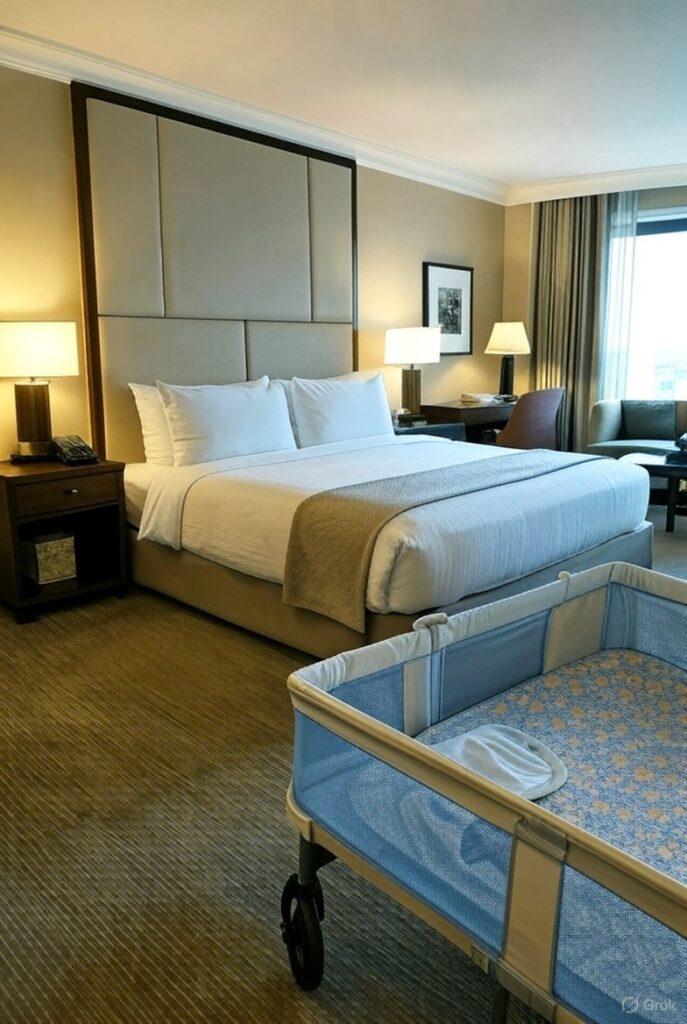
Dialogue 2 – Family with Baby Cot
Receptionist: Hello, Mr. and Mrs. Singh. I see you are staying with your baby.
Guest: Yes, we need a baby cot in the room for our little child.
Receptionist: Of course. We will put a small bed for your baby and extra blankets if you need them.
Guest: Thank you. We also want a room on the ground floor. It is easier for us.
Receptionist: Absolutely. This room is on the ground floor, quiet, and safe for your family.
———–end of audio————
3. Special Needs
Dialogue 1 – Peanut Allergy
Receptionist: Good morning, Ms. Green. I see you have a peanut allergy. Can you tell me more?
Guest: Yes, I cannot eat anything with peanuts. Even a little bit makes me sick.
Receptionist: Thank you. We will mark your meals in the kitchen and make sure no peanuts are used.
Guest: That is very good. I feel safe here.
Receptionist: We want all our guests to be safe and comfortable during their stay.
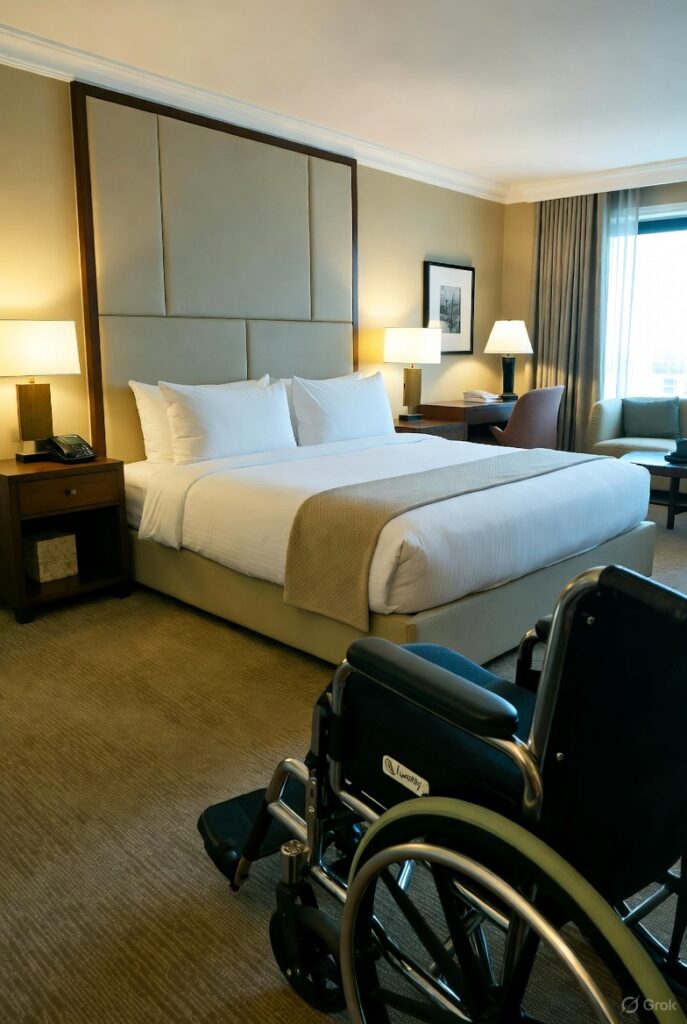
Dialogue 2 – Wheelchair Guest
Receptionist: Hello, Mr. Kim. I see you need a wheelchair-accessible room.
Guest: Yes, I use a wheelchair. I need a bathroom without steps.
Receptionist: We have a room on the ground floor with a wide bathroom and no steps. There is also space to move your wheelchair easily.
Guest: Thank you very much. That is perfect for me.
Receptionist: You are welcome. We want your stay to be as comfortable as possible.
4. Timing of Services
Dialogue 1 – Late Dinner
Receptionist: Good evening, Mr. Garcia. I see you prefer late dinner during your stay.
Guest: Yes, in my country we usually eat dinner around 10 p.m.
Receptionist: That is fine. We can prepare your dinner at 9:30 p.m. or 10 p.m. every evening.
Guest: That is very kind. I feel at home here.
Receptionist: We want you to feel comfortable and enjoy your meals.
Dialogue 2 – Early Breakfast for Business
Receptionist: Good morning, Ms. Müller. I see you have an early meeting today.
Guest: Yes, I need breakfast at 6:30 a.m., before my meeting.
Receptionist: No problem. We can prepare breakfast for you at 6:30 a.m. in your room or in the restaurant.
Guest: Thank you. That is very helpful.
Receptionist: You are welcome. We know timing is very important for business guests.