- good service needs cultural knowledge
Respect and etiquette
1. Greetings and Handshakes
- People greet in different ways in different countries.
- Some people shake hands, others bow.
- In some countries, people kiss on the cheek to say hello.
- Some people only say hello with words.
- Eye contact can be polite or rude depending on the country.
- Using titles like Mr., Mrs., or Sir can show respect.
2. Personal Space and Privacy
- People need different amounts of space around them.
- Touching during conversation can be okay or not.
- Some people like privacy for personal information.
- It is important to respect homes and families.
- Some cultures like group activity more than private time.
- Public affection, like holding hands, can be okay or rude.
3. Eating and Table Manners
- People eat with hands, forks, knives, or chopsticks.
- The order of meals and where you sit can be important.
- Some people share food, others have their own plate.
- Talking and eating at the same time can be polite or rude.
- Tipping rules are different in each country.
- Some people cannot eat certain foods for religious reasons.
4. Dress and Religion
- Clothes can be different for men and women.
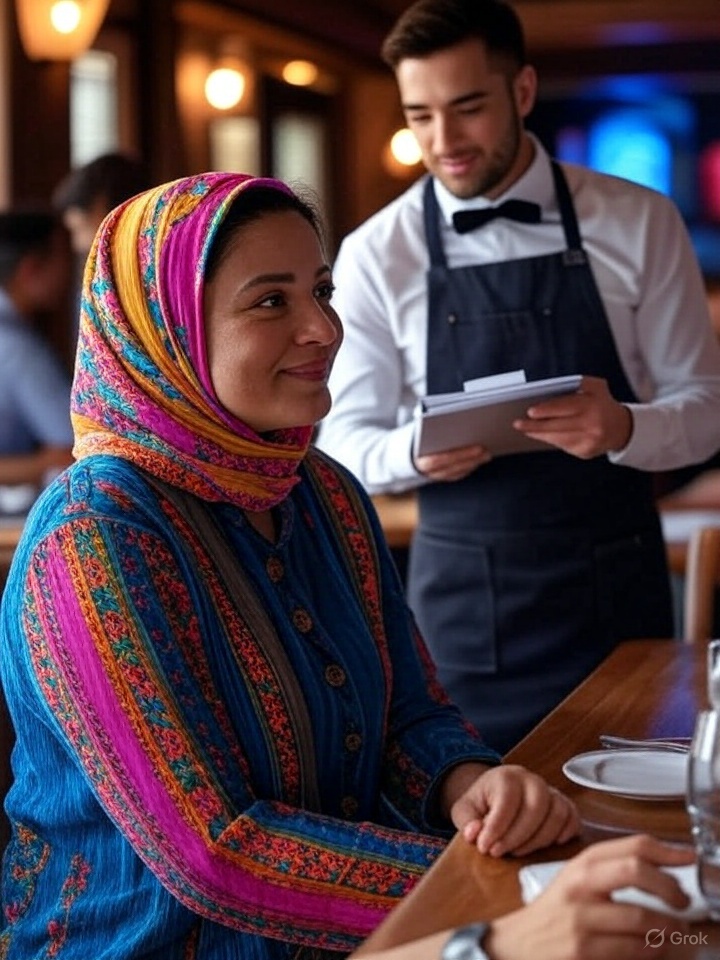
- Some places need head coverings or special clothes.
- Colors or patterns can have special meaning.
- Some countries have formal or casual dress rules.
- In some places, you must take off your shoes inside.
- Special clothes are needed for weddings, holidays, or ceremonies.
5. Politeness and Behavior
- Gestures can mean different things in different countries.
- Talking loudly or quietly can be polite or rude.
- Waiting your turn is important in some cultures.
- Saying thank you is done in many ways.
- Respect for older people or bosses is important.
- Public behavior, like standing in line, can have rules.
################
Respect and etiquette
People live in many different countries, and every country has its own rules for respect and behavior. It is important to know these rules to be polite and friendly.
First, people around the world have different ways to greet each other. In some countries, people shake hands. In others, they bow or kiss on the cheek. Some only say hello with words. Eye contact can be polite or rude. Using titles like Mr., Mrs., or Sir can show respect.
Second, people need different amounts of personal space. Touching can be okay in some cultures but not in others. Privacy is important for personal information and homes. Some cultures like group activities more than private time. Public affection, like holding hands, may be okay or rude depending on the country.
Third, people eat in different ways. Some use hands, forks, knives, or chopsticks. Some share food, others use their own plate. Talking while eating can be polite or rude. Meal order and seating can be important. Tipping and food rules can be different.
Fourth, clothes and religion can affect behavior. Clothes can be different for men and women. Some places need special clothes or head coverings. Colors and patterns can have meaning. Shoes may need to be removed inside. Special clothes are for holidays or ceremonies.
Fifth, politeness and behavior are different everywhere. Gestures can mean different things. Speaking loudly or quietly can be polite or rude. Waiting your turn and saying thank you is important. Respect for older people and following rules in public is needed.
___________________
Vocabulary:
- Respect – to treat someone kindly and carefully
- Etiquette – the rules for being polite
- A rule – something you must do or not do
- Behavior – the way a person acts
- To be polite – to use kind words and good manners
- To greet – to say hello to someone
- To shake hands – to hold someone’s hand and move it up and down to say hello
- To bow – to bend your body forward to show respect
- To kiss on the cheek – to touch someone’s cheek with your lips to say hello
- Eye contact – looking at someone’s eyes when you talk
- Rude – not polite
- To show respect – to act in a kind and careful way to someone
- An amount of personal space – the space around someone’s body that they want to keep free
- To touch – to put your hand on someone or something
- Privacy – time or space alone or not shared with others
- Public affection – showing love or care in front of other people
- To depend on a country – to be different in different countries
- A chopstick – a thin stick used to eat food, usually in Asia
- To share food – to give part of your food to someone else
- A plate (restaurant) – a flat dish for food
- Seating – the place where someone sits
- To tip – to give extra money to someone for good service
- Food rules – rules about what or how to eat
- To affect behavior – to change the way someone acts
- A head covering – something worn on the head, like a hat or scarf
- A meaning – what something stands for or shows
- To remove shoes – to take off your shoes
- A ceremony (plural: ceremonies) – an event with special rules, like a wedding or holiday
- Politeness – using good manners
- A gesture – a movement of the hand, head, or body to show meaning
- To wait one’s turn – to wait until it is your time
- In public – in a place where other people can see
#################
Cheat sheets – summary:
| Section / Topic | Simple Explanation | Example |
|---|---|---|
| 1. Greetings and Handshakes | People say hello in many ways | Shake hands, bow, kiss, or say hello |
| Eye Contact | Looking at someone’s eyes | Good eye contact shows respect |
| Titles | Use Mr., Mrs., or Sir | Call your teacher “Mr. Smith” |
| Section / Topic | Simple Explanation | Example |
|---|---|---|
| 2. Personal Space and Privacy | People need space and privacy | Stand back; don’t read messages |
| Personal Space | Space around a person | Keep distance from strangers |
| Touching | Putting your hand on someone | Some cultures touch, others do not |
| Privacy | Private time or information | Don’t share messages without asking |
| Public Affection | Showing love in public | Holding hands or hugging |
| Topic | Simple Explanation | Example |
|---|---|---|
| 3. Eating and Table Manners | People eat in different ways and follow rules at the table | Hands, forks, knives, or chopsticks |
| Eating | How people eat | Use chopsticks for noodles |
| Sharing Food | Give part of your food | Share snacks with friends |
| Table Manners | Rules at the table | Don’t talk with mouth full |
| Meal Order & Seating | Where and when to sit | Sit in your place |
| Tipping | Give extra money for service | Tip the waiter if service is good |
| Food Rules | Some foods are not allowed | Some religions do not eat meat |
| Topic | Simple Explanation | Example |
|---|---|---|
| 4. Dress and Religion | Clothes and religion can affect behavior | Wear modest clothes, head coverings, or special clothes for events |
| Dress | Clothes for men and women | Wear modest clothes in temples |
| Head Coverings | Clothes for the head | Women wear scarves |
| Colors & Patterns | Colors or patterns can have meaning | White clothes for weddings |
| Removing Shoes | Take off shoes inside | Remove shoes before entering a house |
| Special Clothes | Clothes for ceremonies or events | Weddings, holidays, religious events |
Here’s Section 5: Politeness and Behavior in a 3-column cheat sheet, A2-friendly:
| Topic | Simple Explanation | Example |
|---|---|---|
| 5. Politeness and Behavior | People act differently in public and private | Gestures, speaking, waiting, respect, following rules |
| Gestures | Body movements that show meaning | Waving, nodding, shaking head |
| Speaking Volume | Talking loudly or quietly can be polite or rude | Speak softly in libraries |
| Waiting One’s Turn | Wait for your chance | Stand in line |
| Public Behavior | How to act in public | Follow rules and be polite |
##################
Some dialogues on respect and etiquette
1. Greetings and Handshakes
Tom: Hello, Maria! How do you usually greet people in Spain?
Maria: Hi, Tom! In Spain, we often kiss on the cheek to say hello.
Tom: Really? That’s different. In my country, we usually shake hands.
Maria: Yes, and sometimes we just say “hello” with words. It depends on the person.
Tom: Should I look in your eyes when I greet you?
Maria: Yes, good eye contact is polite, but too much can feel strange.
Tom: And using titles, like Mr. or Mrs., is it important?
Maria: Yes, it shows respect, especially for older people or teachers.
2. Personal Space and Privacy
Anna: Hi, John. Can I sit here next to you?
John: Sure, but I like a little space around me.
Anna: Oh, I’m sorry! I’ll move a little.
John: Thanks. Some people also like privacy for their personal information.
Anna: I understand. I won’t look at your phone or messages.
John: That’s polite. And in some countries, public affection, like holding hands, is okay.
Anna: Really? I didn’t know that! In my country, people don’t do that in public.
3. Eating and Table Manners
Sara: Lee, how do people eat in Thailand?
Lee: We usually use a fork and spoon. Some people use chopsticks for noodles.
Sara: Can I share food with you?
Lee: Yes, sharing is common. But remember, don’t talk with your mouth full.
Sara: Oh, I see. And where should I sit?
Lee: The seat and order of eating can be important, especially at big meals.
Sara: What about tipping?
Lee: It’s okay, but not always required. And some people cannot eat meat for religious reasons.
4. Dress and Religion
Emma: Fatima, why do you wear a scarf on your head?
Fatima: In my religion, women wear a head covering in public.
Emma: And your clothes are different from mine.
Fatima: Yes, some clothes are for men and women. Colors and patterns can have special meaning.
Emma: Should I remove my shoes if I visit your house?
Fatima: Yes, it is polite. And special clothes are needed for weddings or religious ceremonies.
———————end of audio—————-
5. Politeness and Behavior
Liam: Noah, why is everyone speaking quietly here?
Noah: Speaking loudly can be rude in some countries.
Liam: And gestures?
Noah: Some gestures are polite, like nodding, and some are rude.
Liam: Should I wait my turn in line?
Noah: Yes, waiting is important. Saying “thank you” is done in many ways too.
Liam: And respect for older people?
Noah: Very important. Public behavior, like standing in line or walking politely, matters a lot.
###########