Kategorie: WCJ

  • 🧹A day in the life of a housekeeper at a luxury hotel (introductory text A2+/B1; following text, exercises A1, revised version)

    B1:

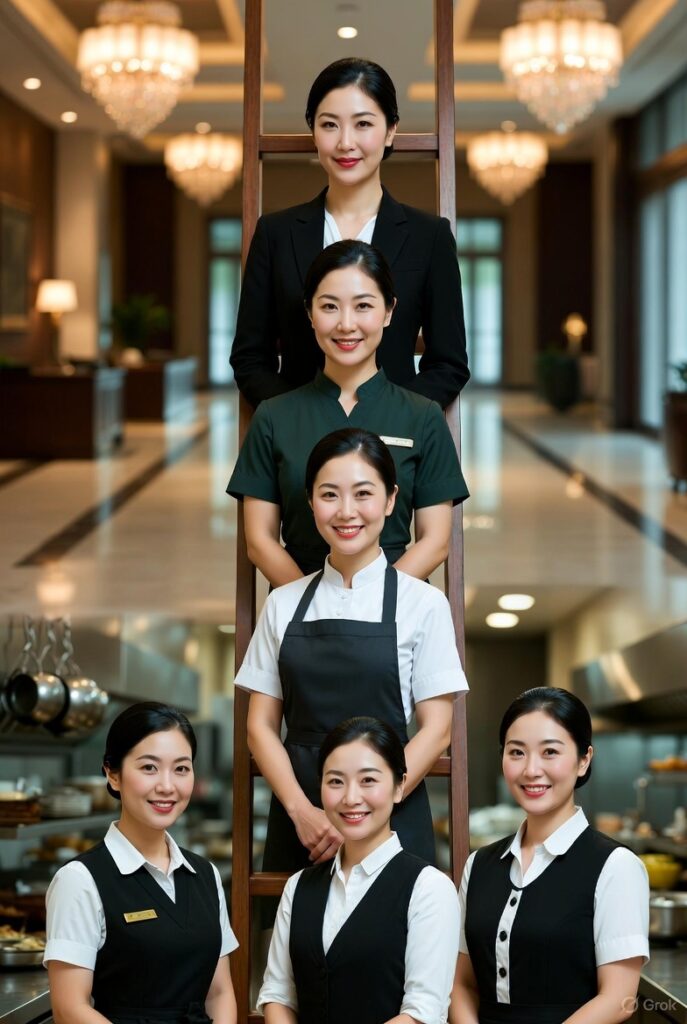
    Being a housekeeper at a fancy hotel is about more than just cleaning rooms. It’s about making sure guests feel happy and comfortable during their stay. Let me tell you about a typical day in my job.

    First thing in the morning, we have a meeting with the rest of the cleaning team. We talk about what rooms need cleaning and if there are any special things guests want. Then, I start by checking and getting guest rooms ready for new people.

    Checking the rooms means I need to make sure everything is super clean and nice. I make the beds, vacuum or mop the floors, dust all the surfaces, and make sure there are enough towels and soaps. I really pay attention to detail to make the rooms look perfect.

    During the day, I do lots of different tasks. Sometimes guests ask for extra towels or for someone to take away their breakfast trays. I also help out with cleaning other parts of the hotel like the lobby and hallways. It’s important to work together with my team to get everything done.

    Making sure everything is clean and looks nice is a big part of my job. I try to do my best to make sure everything is perfect, like arranging the towels neatly in the bathroom and keeping the lobby shiny.

    I also have to keep track of the cleaning supplies we use. I make sure we have enough soap and towels for the day and let my boss know if we need more.

    At the end of the day, I check one last time to make sure everything is okay. If there are any problems, I tell my boss before I go home. Then, I clean up my stuff and put everything away.

    Being a housekeeper is a good job. I like making the hotel nice for guests and helping them have a good time during their stay. It’s a busy job, but it feels good to know I’m making a difference.

    ######################

    The exercises are about the A1 text below.
    ⬇️⬇️⬇️⬇️⬇️⬇️⬇️⬇️⬇️

    ######################

    I work as a housekeeper in a hotel. My job is to clean rooms and make guests happy. I like my job because I help people have a nice stay.

    In the morning, I have a meeting with my team. We talk about which rooms we clean today. After that, I take my cleaning cart and start work.

    I clean the beds and change the sheets. I sweep and mop the floor. I dust the tables and clean the bathroom. I check that there are enough towels, soap, and toilet paper. I want every room to look clean and beautiful.

    Sometimes guests ask for more towels or water. Sometimes they want me to take their dishes away. I am always happy to help them.

    I also clean other places in the hotel, like the lobby and the hallways. I work with my friends in the team, and we help each other.

    Before I go home, I look at my cleaning things. If something is missing, I tell my boss.

    My job is not easy, but I like it. I feel good when the rooms are clean and the guests are smiling
    ———————————–

    Vocabulary:


    housekeeper – a person who cleans rooms in a hotel or house.

    to clean rooms – to make rooms nice by washing, dusting, or sweeping.

    a nice stay (hotel) – a good time when a person sleeps and relaxes in a hotel.

    a meeting – when people come together to talk about work.

    a cleaning cart – a small trolley with cleaning things like soap, towels, and water.

    to start work – to begin your job.

    to clean beds – to make beds neat and nice.

    to change sheets – to take off dirty bed sheets and put on clean ones.

    to sweep the floor – to clean the floor with a broom.

    to mop – to wash the floor with water and a mop stick.

    to dust tables – to clean small dirt from tables with a cloth.

    a bathroom – a room with a toilet, a sink, and often a shower.

    a towel – a piece of cloth used to dry your body or hands.

    soap – something you use with water to wash your hands or body.

    toilet paper – soft paper you use in the toilet.

    to look clean – to appear tidy and without dirt.

    to take away dishes – to remove dirty plates and cups after people eat.

    a lobby – the front part of a hotel where guests enter and check in.

    a hallway – a long space inside a building that connects rooms.

    something is missing – something is not there but should be.

    to smile – to move your mouth up when you are happy.


    ####################


    🧹 A1 Vocabulary Test

    audio 1-18:


    audio 19-21:

    1. A housekeeper is a person who
      a) cleans rooms in a hotel
      b) cooks food in a restaurant
      c) sells things in a shop
    2. To clean rooms means
      a) to sit and rest in a room
      b) to make rooms nice and tidy
      c) to open windows for air
    3. A nice stay in a hotel means
      a) a bad time in the hotel
      b) a short visit to friends
      c) a good time at the hotel
    4. A meeting is
      a) a place to eat food now
      b) a time to talk with people
      c) a walk in the park area
    5. A cleaning cart is
      a) a box for dirty clothes now
      b) a small trolley with cleaning things
      c) a car for hotel guests today
    6. To start work means
      a) to finish your day at work
      b) to go home from work now
      c) to begin your job at work
    7. To clean beds means
      a) to make beds nice and neat
      b) to sell new beds at store
      c) to sleep in the bed now
    8. To change sheets means
      a) to put on clean bed covers
      b) to wash the floor with mop
      c) to move the bed in room
    9. To sweep the floor means
      a) to wash with water
      b) to clean with a broom
      c) to sit on the floor
    10. To mop means
      a) to close the door at once
      b) to dry the floor with cloth
      c) to wash the floor with water
    11. To dust tables means
      a) to move the table in room
      b) to put things on the table
      c) to clean dirt with a cloth
    12. A bathroom is
      a) a place to eat some food
      b) a big bedroom in the hotel
      c) a room with a toilet and sink
    13. A towel is
      a) cloth to dry your body now
      b) blanket for sleeping on bed
      c) paper for writing or notes
    14. Soap is
      a) something for washing your hands
      b) something for cooking in kitchen
      c) something for reading a book
    15. Toilet paper is
      a) paper for the toilet use
      b) paper for the kitchen
      c) paper for school writing
    16. To look clean means
      a) to be dirty and wet
      b) to be old and dark
      c) to be tidy and nice
    17. To take away dishes means
      a) to give food to hotel guests
      b) to remove dirty plates from table
      c) to wash the table with cloth
    18. A lobby is
      a) the kitchen in a house now
      b) the front part of a hotel
      c) a room for sleeping at night
      ——————-end of audio————-
    19. A hallway is
      a) a big hotel room with beds
      b) a long space that joins rooms
      c) a small garden outside the house
    20. Something is missing means
      a) something is not there
      b) something is broken in the room
      c) something is clean and ready
    21. To smile means
      a) to close your eyes at night
      b) to talk very loud to friends
      c) to move your mouth when happy

    __________________
    Answers:

    1a 2b 3c 4b 5b 6c 7a 8a
    9b 10c 11c 12c 13a 14a
    15a 16c 17b 18b 19b 20a 21c

    ————————–

    Correct answers:


    1. A housekeeper is a person who cleans rooms in a hotel
    2. To clean rooms means to make rooms nice and tidy
    3. A nice stay in a hotel means a good time at the hotel
    4. A meeting is a time to talk with people
    5. A cleaning cart is a small trolley with cleaning things
    6. To start work means to begin your job at work
    7. To clean beds means to make beds nice and neat
    8. To change sheets means to put on clean bed covers
    9. To sweep the floor means to clean with a broom
    10. To mop means to wash the floor with water
    11. To dust tables means to clean dirt with a cloth
    12. A bathroom is a room with a toilet and sink
    13. A towel is cloth to dry your body
    14. Soap is something for washing your hands
    15. Toilet paper is paper for the toilet
    16. To look clean means to be tidy and nice
    17. To take away dishes means to remove dirty plates from the table
    18. A lobby is the front part of a hotel
    19. A hallway is a long space that joins rooms
    20. Something is missing means something is not there
    21. To smile means to move your mouth when happy

    #################


    📝 Gap-Fill Exercise – A1 Vocabulary

    Fill in the blanks with the correct word:

    1. Every morning, the ______ makes the rooms ready for guests.
      a) housekeeper
      b) towel
      c) soap
    2. I use a ______ to dry my hands after washing.
      a) soap
      b) towel
      c) lobby
    3. The maid uses a cloth to ______ the tables.
      a) dust
      b) mop
      c) paint
    4. The corridor that joins the rooms is called a ______.
      a) hallway
      b) lobby
      c) bathroom
    5. After breakfast, someone must ______ the dishes.
      a) take away
      b) clean
      c) sweep
    6. To make the beds, first you must ______ the sheets.
      a) clean
      b) mop
      c) change
    7. A ______ is a small room with a toilet and sink.
      a) hallway
      b) bathroom
      c) lobby
    8. To look nice, the room must be tidy and ______.
      a) clean
      b) towel
      c) soap
    9. When I am happy, I like to ______.
      a) dust tables
      b) smile
      c) mop
    10. I need to ______ the floor before the guests arrive.
      a) mop
      b) take away
      c) sweep
    11. A ______ is the front part of a hotel where guests wait.
      a) bathroom
      b) lobby
      c) hallway
    12. To begin your shift, you have to ______.
      a) clean beds
      b) start work
      c) dust tables
    13. If something is gone, we say that ______ is missing.
      a) something
      b) towel
      c) soap
    14. The maid always makes the beds nice and ______.
      a) clean
      b) hallway
      c) towel

    ——————————-
    Answers:

    1a 2b 3a 4a 5a 6c 7b
    8a 9b 10c 11b 12b 13a 14a
    ——————————

    Correct answers:

    1. Every morning, the housekeeper makes the rooms ready for guests
    2. I use a towel to dry my hands after washing
    3. The maid uses a cloth to dust the tables
    4. The corridor that joins the rooms is called a hallway
    5. After breakfast, someone must take away dishes
    6. To make the beds, first you must change sheets
    7. A bathroom is a small room with a toilet and sink
    8. To look nice, the room must be tidy and clean
    9. When I am happy, I like to smile
    10. I need to sweep the floor before the guests arrive
    11. A lobby is the front part of a hotel
    12. To begin your shift, you have to start work
    13. If something is gone, we say that something is missing
    14. The maid always makes the beds nice and clean

    ####################


    Match the word to Its definition

    Words:

    1. housekeeper
    2. to clean rooms
    3. nice stay
    4. meeting
    5. cleaning cart
    6. to start work
    7. to clean beds
    8. to change sheets
    9. to sweep the floor
    10. to mop
    11. to dust tables
    12. bathroom
    13. towel
    14. soap


    Definitions:

    A. a small room with a toilet and sink
    B. to remove dirt from tables
    C. cloth to dry your body
    D. a time to talk with people
    E. a good time at the hotel
    F. to begin your job
    G. a person who cleans hotel rooms
    H. to make beds neat and tidy
    I. to cover beds with clean sheets
    J. a trolley with cleaning things
    K. to clean the floor with a broom
    L. to clean the floor with water
    M. something for washing your hands
    N. to make rooms clean and tidy


    ________________________
    Answers:

    1G 2N 3E 4D 5J 6F 7H 8I
    9K 10L 11B 12A 13C 14M

    ________________________

    Correct version:


    housekeeper – a person who cleans hotel rooms

    to clean rooms – to make rooms clean and tidy

    nice stay – a good time at the hotel

    meeting – a time to talk with people

    cleaning cart – a trolley with cleaning things

    to start work – to begin your job

    to clean beds – to make beds neat and tidy

    to change sheets – to cover beds with clean sheets

    to sweep the floor – to clean the floor with a broom

    to mop – to clean the floor with water

    to dust tables – to remove dirt from tables

    bathroom – a small room with a toilet and sink

    towel – cloth to dry your body

    soap – something for washing your hands

    #####################

    Rewrite the following story starting with

    >>>>>>>>>>>>>Lindsey is a housekeeper…………….

    and make all changes necessary:


    I am a housekeeper.
    I work in a hotel to help guests feel happy and comfortable.
    Every morning, we have a meeting to plan our work.
    I clean rooms by making beds, changing sheets, sweeping and mopping the floor, and dusting tables.
    I put towels, soap, and toilet paper in the bathroom.
    I also clean the lobby and hallways.
    During the day, I help guests by taking away dishes or giving extra towels.
    At the end of the day, I check that everything is clean and tidy.
    Teamwork and careful work are very important.


    ———————————

    Correct version:

    Lindsey is a housekeeper. She works in a hotel to help guests feel happy and comfortable. Every morning, she has a meeting with her team to plan the day. Lindsey cleans rooms by making beds, changing sheets, sweeping and mopping the floor, and dusting tables. She puts towels, soap, and toilet paper in the bathroom. She also cleans the lobby and hallways. During the day, Lindsey helps guests by taking away dishes or giving extra towels. At the end of the day, she checks that everything is clean and tidy. Teamwork and careful work are very important.

    ###############

    Complete, words below:

    city – clean – guests – ready – make – together – find – housekeeper – about – morning – mop – evening – towels


    _____________________

    Interview with Lindsey the Housekeeper

    1. Who are you?
    I am Lindsey. I am a __________ in a hotel.

    2. What do you do?
    I clean rooms and help __________.

    3. Where do you work?
    I work in a big hotel in the __________

    4. When do you start work?
    I start work at 8 in the __________.

    5. When do you finish work?
    I finish work at 5 in the __________.

    6. Why do you like your job?
    I like my job because I __________ guests happy.

    7. How do you clean rooms?
    I make beds, sweep and __________ the floor, dust tables, and put __________ and soap in the bathroom.

    8. How many rooms do you clean each day?
    I clean _________ ten rooms every day.

    9. What do you do in the lobby?
    I __________ the lobby and help guests if they need something.

    10. Who helps you during the day?
    My team helps me. We work __________.

    11. What do you do if something is missing?
    I tell my boss and __________ it if I can.

    12. How do you feel at the end of the day?
    I feel happy because everything is clean and __________ for guests.


    ———————————

    Correct version:


    1. Who are you?
    I am Lindsey. I am a housekeeper in a hotel.

    2. What do you do?
    I clean rooms and help guests.

    3. Where do you work?
    I work in a big hotel in the city.

    4. When do you start work?
    I start work at 8 in the morning.

    5. When do you finish work?
    I finish work at 5 in the evening.

    6. Why do you like your job?
    I like my job because I make guests happy.

    7. How do you clean rooms?
    I make beds, sweep and mop the floor, dust tables, and put towels and soap in the bathroom

    8. How many rooms do you clean each day?
    I clean about ten rooms every day.

    9. What do you do in the lobby?
    I clean the lobby and help guests if they need something.

    10. Who helps you during the day?
    My team helps me. We work together.

    11. What do you do if something is missing?
    I tell my boss and find it if I can.

    12. How do you feel at the end of the day?
    I feel happy because everything is clean and ready for guests.


    #################

    Fill in, words below – no words given:


    Lindsey is a housekeeper.
    She __________ in a hotel to make guests happy and comfortable.
    Every morning, she has a __________ with her team.
    She starts work by cleaning rooms, making beds, and changing __________.
    Lindsey sweeps the floor, mops, and __________ tables.
    She puts towels, __________, and toilet paper in the bathroom.
    She also cleans the lobby and the __________.
    During the day, she takes away __________and helps guests.
    At the end of the day, she checks that everything is ___________
    Lindsey likes her job and smiles when the __________ looks nice.

    —————————–

    Full version:

    Lindsey is a housekeeper. She works in a hotel to make guests happy and comfortable. Every morning, she has a meeting with her team. She starts work by cleaning rooms, making beds, and changing sheets. Lindsey sweeps the floor, mops, and dusts tables. She puts towels, soap, and toilet paper in the bathroom. She also cleans the lobby and the hallway. During the day, she takes away dishes and helps guests. At the end of the day, she checks that everything is clean. Lindsey likes her job and smiles when the hotel looks nice.


  • 👍 How to be a great team manager in hospitality business and tourism, part 2, how to react when a staff member feels unappreciated (A2)

    • get involved, show understanding

    Before continuing do part 1 first.

    ———————————–

    Key Words:

    >listen,
    >>care,
    >>>praise,
    >>>>apologize,
    >>>>>plan,
    >>>>>>follow up

    ————————

    Situation:
    A staff member says they feel their hard work is not appreciated and gives examples, e.g., “I stayed late to help guests, but no one said thank you,” or “I cleaned extra rooms, but no one noticed.”

    • Listen Carefully
      • What to do:
        Let them talk.
        Don’t interrupt.
        Show you’re listening.
      • Examples:
        • “I hear you, Tom. Can you tell me more about what happened?”
        • “I’m listening, Lisa. What made you feel this way?”
      • Hints:
        • Look at them and nod.
        • Don’t use your phone or look away.
        • Say, “I understand,” to show you care.
    • Show You Care
      • What to do:
        Thank them for sharing.
        Say their work matters.
      • Examples:
        • “Thank you for telling me, Anna. Your work is important.”
        • “I’m glad you spoke up, Mark. We value you.”
      • Hints:
        • Use their name to make it personal.
        • Be sincere; don’t fake it.
        • Keep your voice calm and kind.
    • Ask for Details
      • What to do:
        Ask about their examples to understand better.
      • Examples:
        • “You said you stayed late. Can you explain more?”
        • “What happened when you cleaned extra rooms?”
      • Hints:
        • Ask simple, open questions, e.g., “What else happened?”
        • Take notes if needed to show it’s serious.
        • Don’t argue or say they’re wrong.
    • Say Sorry if Needed
      • What to do:
        Apologize for how they feel, even if you didn’t cause it.
      • Examples:
        • “I’m sorry you feel unappreciated, Sarah.”
        • “I’m sorry if we didn’t notice your hard work, Ali.”
      • Hints:
        • Don’t blame them, e.g., don’t say, “You should have told me sooner.”
        • Keep it short and honest.
        • Say “we” to show it’s a team effort, e.g., “We’ll do better.”
    • Give Specific Praise
      • What to do:
        Mention something they did well to show you notice.
      • Examples:
        • “I saw you stayed late to help that guest. That was great!”
        • “You cleaned extra rooms, and they looked perfect. Thank you!”
      • Hints:
        • Be specific about their work, not general.
        • Connect it to their example, if possible.
        • Smile to show you mean it.
    • Make a Plan
      • What to do:
        Suggest ways to make them feel valued. Ask for their ideas.
      • Examples:
        • “Let’s have a team meeting to thank everyone’s hard work.”
        • “What can I do to make you feel appreciated?”
      • Hints:
        • Offer solutions, e.g., more praise, better schedules, or rewards.
        • Include them in the plan, e.g., “What do you think would help?”
        • Be realistic about what you can do.
    • Follow Up
      • What to do:
        Check in later to see if they feel better.
      • Examples:
        • “Let’s talk next week to see how you’re feeling, okay?”
        • “I’ll check in after the weekend to make sure things are better.”
      • Hints:
        • Set a specific time, e.g., “Next Monday at 10 AM.”
        • Keep your promise to follow up.
        • Ask, “Do you feel better now?” to show you care.

    ———————-
    Example response to a staff member situation:

    John says,
    “I stayed late to help guests, but no one said thank you. I feel like my work doesn’t matter.”

    Response:
    “Thank you for telling me, John. I’m sorry you feel unappreciated. I noticed you stayed late to help those guests, and that was great work! Can you tell me more about what happened? Let’s find a way to make sure you feel valued, like saying thank you more often. What do you think would help? I’ll check in with you next week to see how things are going.”


    ##############

    Dialogue: Team Manager and Front Desk Staff

    Setting: The team manager, Emma, is at the front desk after a busy day. A staff member, Sam, approaches her to share his feelings.


    Sam: Emma, can I talk to you? I work so hard, but I feel no one sees it. I give my best, but I don’t feel appreciated.

    Emma: [Nods, makes eye contact] Oh, Sam, thank you for telling me. [Smiles softly] I’m listening. Can you tell me more? I want to understand how you feel.(Action: Listen carefully; Non-verbal: Nodding, eye contact, soft smile)

    Sam: I stayed late yesterday to help a guest with a lost bag. I checked all the rooms and found it, but no one said thank you. And last week, I fixed a booking mistake, but no one noticed.

    Emma: [Leans forward, nods] I hear you, Sam. That sounds really hard. [Gentle tone, concerned look] I’m so sorry you feel unappreciated. Your work is very important to us, and I want to make this better.(Action: Show you care, say sorry; Non-verbal: Leaning forward, nodding, concerned look)

    Sam: It’s just… I try to be fast and kind to guests, but I feel like it doesn’t matter.

    Emma: [Maintains eye contact, nods slowly] I understand. Can you tell me more about what happened yesterday with the guest? I want to know the details.(Action: Ask for details; Non-verbal: Eye contact, slow nodding)

    Sam: The guest was upset because their bag was missing. I checked every room and called the cleaning team. It took an hour, but I found it. The guest was happy, but no one said anything to me.

    Emma: [Smiles warmly, nods] Wow, Sam, that’s amazing! You did a great job finding that bag and making the guest happy. [Puts hand on heart briefly] I’m so proud of you for staying late to help. Thank you for doing that!(Action: Give specific praise; Non-verbal: Warm smile, nodding, hand on heart)

    Sam: Thanks, Emma. But I still feel like my work is not seen most days.

    Emma: [Softens expression, nods] I’m really sorry you feel that way, Sam. [Gentle pat on shoulder] Let’s make things better. What can I do to make you feel more valued? Maybe we can say thank you more often or share your good work in our team meetings?(Action: Make a plan; Non-verbal: Soft expression, nodding, gentle pat on shoulder)

    Sam: That sounds nice. Maybe if someone says when I do something good, it would help. Like, I also helped a family with a late check-in last week, and it was hard, but no one knew.

    Emma: [Smiles, leans in slightly] You’re right, Sam. You did a great job with that late check-in! [Nods enthusiastically] I saw how you stayed calm and made the family happy. Let’s try this: I’ll make sure we notice your hard work more. For example, I can tell the team about your help with the bag and the check-in at our next meeting. [Points to a notebook, smiles] Is that okay?(Action: Give specific praise, make a plan; Non-verbal: Smiling, leaning in, nodding, pointing to notebook)

    Sam: Yes, that would be good. I just want to know my work matters.

    Emma: [Eye contact, warm smile] It does matter, Sam. You’re a big part of our team. [Nods firmly] To make sure everyone feels valued, I’ll check that we’re fair and thank everyone for their work. I’ll also help you with any hard tasks, like the booking system. [Open hand gesture] Do you need help with anything now?(Action: Be fair, help your team; Non-verbal: Eye contact, warm smile, nodding, open hand gesture)

    Sam: Sometimes the booking system is slow, and I get nervous when guests wait.

    Emma: [Nods, writes in notebook] Okay, thank you for telling me. Let’s practice using the booking system together tomorrow for 10 minutes before your shift. [Points to schedule, smiles] I’ll show you some tricks to make it faster. Does that sound good?(Action: Help your team, communicate clearly; Non-verbal: Nodding, writing in notebook, pointing to schedule, smiling)

    Sam: Yes, that would help a lot. Thank you, Emma.

    Emma: [Big smile, eye contact] You’re welcome, Sam! I want our front desk to be a happy place. [Claps hands lightly] Let’s keep work fun and positive. Maybe we can try a new idea, like a “best guest story” at our team meeting to share your great work. [Tilts head, smiles] What do you think?(Action: Create a positive workplace; Non-verbal: Big smile, eye contact, light clap, head tilt)

    Sam: I like that idea. It sounds fun.

    Emma: [Nods, thumbs up] Great! I’ll check in with you next week to see how you’re feeling. [Points to calendar] Let’s talk on Monday at 10 AM. [Warm smile] If you have more ideas or problems, tell me anytime. You’re doing a fantastic job, Sam!(Action: Follow up, give feedback; Non-verbal: Nodding, thumbs up, pointing to calendar, warm smile)

    Sam: Okay, thank you, Emma. I feel better now.Emma: [Smiles, gentle nod] I’m so glad, Sam. Keep up your great work, and let’s make the front desk the best!


    #################

    Analyzing the dialogue:


    Action/Response StepHow It’s Used in the DialogueEffectiveness & Non-Verbal Communication
    Listen CarefullyEmma listens when Sam says he feels unappreciated.
    She says, “I’m listening. Can you tell me more?” and lets him explain without interrupting.
    Effective:
    Sam feels heard because Emma listens fully.

    Non-Verbal:
    Nodding, eye contact, and leaning forward show she cares and pays attention. This makes Sam comfortable to share more.
    Show You CareEmma says, “Your work is very important to us,” and “I want to make this better,”
    showing she values Sam’s feelings.
    Effective:
    Sam feels valued because Emma shows care.

    Non-Verbal:
    A gentle tone, concerned look, and a pat on the shoulder make her words sincere, helping Sam trust her.
    Ask for DetailsEmma asks, “Can you tell me more about what happened yesterday with the guest?” to understand Sam’s examples, like helping with a lost bag.Effective:
    Asking for details shows Emma takes Sam seriously, encouraging him to explain.

    Non-Verbal:
    Eye contact and slow nodding make Sam feel safe to share specific examples.
    Say SorryEmma says, “I’m so sorry you feel unappreciated,” and “I’m really sorry you feel that way,” to show she regrets Sam’s feelings.Effective:
    The apology makes Sam feel understood, not blamed.

    Non-Verbal:
    A softened expression and nodding reinforce her sincerity, calming Sam’s frustration.
    Give Specific PraiseEmma praises Sam’s work, saying, “You did a great job finding that bag,” and “I saw how you stayed calm and made the family happy,” about the lost bag and late check-in.Effective:
    Specific praise shows Emma notices Sam’s efforts, boosting his confidence.

    Non-Verbal:
    Warm smiles, nodding, and a hand-on-heart gesture make the praise feel genuine and personal.
    Make a PlanEmma suggests, “I’ll tell the team about your help… at our next meeting,” and asks, “What can I do to make you feel more valued?” to plan solutions.Effective:
    The plan gives Sam hope that things will improve. Asking for his ideas makes him feel included.

    Non-Verbal:
    Pointing to a notebook and smiling show Emma is serious about the plan.
    Follow UpEmma says, “I’ll check in with you next week… Let’s talk on Monday at 10 AM,” to ensure Sam feels better later.Effective:
    Planning a follow-up shows Emma cares about Sam’s feelings over time.

    Non-Verbal:
    Pointing to a calendar and a thumbs-up gesture make the promise clear and positive.
    Say Thank YouEmma says, “Thank you for doing that!” about Sam’s help with the guest’s bag, showing appreciation for his effort.Effective:
    Saying thank you makes Sam feel noticed, addressing his main concern.

    Non-Verbal:
    A warm smile and nodding make the thanks feel heartfelt, lifting Sam’s mood.
    Be FairEmma says, “I’ll check that we’re fair and thank everyone for their work,” to ensure all staff are valued equally.Effective:
    Promising fairness builds trust and shows Sam he’s not ignored.

    Non-Verbal:
    Eye contact and a firm nod show Emma is committed to fairness, reassuring Sam.
    Help Your TeamEmma offers, “Let’s practice using the booking system together tomorrow for 10 minutes,” to help Sam with the slow system.Effective:
    Offering help shows Emma supports Sam’s growth, reducing his stress.

    Non-Verbal:
    Writing in a notebook and pointing to a schedule make the offer clear and practical.
    Communicate ClearlyEmma says, “Let’s practice… tomorrow for 10 minutes before your shift,” and checks, “Does that sound good?” to ensure Sam understands.Effective:
    Clear instructions and checking understanding prevent confusion.

    Non-Verbal:
    Pointing to a schedule and smiling make the plan easy to follow and friendly.
    Solve Problems FastEmma addresses Sam’s feeling of being unappreciated by planning to share his work in meetings and offering training, solving the issue quickly.Effective:
    Quick solutions show Sam his concerns matter, improving his mood.

    Non-Verbal:
    Leaning in and nodding show Emma is focused on fixing the problem fast.
    Create a Positive WorkplaceEmma says, “Let’s keep work fun and positive,” and suggests a “best guest story” idea to make work enjoyable.Effective:
    The positive tone and fun idea motivate Sam.

    Non-Verbal:
    A big smile, light clap, and head tilt create a happy, encouraging vibe, making Sam smile.
    Give FeedbackEmma says, “You’re doing so well with guests… try to answer phone calls a bit quicker,” giving praise and an improvement tip.Effective:
    Balanced feedback helps Sam grow and feel noticed.

    Non-Verbal:
    A warm smile and open hand gesture make the feedback kind and supportive, not critical.

    ##################

    Dialogue: Team manager and restaurant staff

    Setting: The team manager, Emma, is in the restaurant after a busy day. A staff member, Sam, approaches him to share his feelings.


    Listen carefully, show you care, ask for details, say sorry if needed, give specific praise, make a plan, and follow up


    Dialogue: Team Manager and Staff Member

    Setting: The restaurant is quiet after the lunch rush.
    The team manager, Emma, notices that Sam, a waiter, looks upset and asks to talk in the office.


    Emma (Manager): (Smiles warmly, leans forward, and makes eye contact) Sam, you look sad. Can we talk? I want to listen to you.

    Sam (Waiter): (Looks down, shrugs) Okay, Emma. I feel bad. I work so hard, but nobody sees it. I give my best, but I feel not appreciated.

    Emma (Listen carefully): (Nods, keeps eye contact, sits closer) I hear you, Sam. Soft voice Thank you for telling me. Can you tell me more? What makes you feel this way?

    Sam: (Sighs) Last week, I stayed late to clean tables and help guests. I served extra tables when we were busy, but nobody said thank you. I feel like my work doesn’t matter.

    Emma (Show you care): (Puts hand on heart, looks concerned) Sam, I’m so glad you told me. (Smiles gently) Your work is very important to us. You help our restaurant so much, and I don’t want you to feel bad. (Nods to encourage him)

    Sam: (Frowns) But nobody notices when I do extra. I try to make guests happy, like when I fixed a wrong order for table 3. I feel ignored.

    Emma (Ask for Details): (Tilts head, keeps eye contact) I understand, Sam. Can you tell me about the wrong order? (Leans forward) I want to know what happened.

    Sam: (Gestures with hands) A guest got the wrong food, so I ran to the kitchen, got the right dish fast, and apologized. The guest was happy, but nobody said anything to me. It’s always like this.

    Emma (Say sorry if needed): (Looks serious, softens voice) I’m really sorry you feel ignored, Sam. (Places hand on table, open posture) We should notice your hard work more. I didn’t know about the order, but that was great work fixing it fast. (Nods slowly)

    Sam: (Shrugs) Thanks, but it happens a lot. I work hard, but I don’t feel valued.

    Emma (Give specific praise): (Smiles big, points to Sam Sam), you do so much for us! (Excited tone, claps hands lightly) I saw you last week helping a family with a baby. You brought a high chair and made them smile. That was amazing! And fixing that order for table 3? Thumbs up That was perfect. You make guests happy, and I see it.

    Sam: (Smiles a little) Really? You noticed that? It feels good to hear, but I want to feel it more.

    Emma (Make a plan): (Leans forward, enthusiastic nod) Let’s make things better, Sam. (Gestures to include him) I’ll say thank you more, like in team meetings. We can have a “Star of the Week” to celebrate great work like yours. (Points to wall) Maybe a thank-you board for everyone’s efforts. What do you think would help you feel valued? (Raises eyebrows, inviting response)

    Sam: (Nods, looks thoughtful) That sounds nice. Maybe just say thank you more? Or if I stay late, someone notices?

    Emma: (Claps hands, smiles) Great idea! (Points to Sam) I’ll make sure we thank you for extra work, like staying late. I’ll tell the team to notice everyone’s efforts. (Gestures to board) We’ll put up a thank-you board for great work like yours. Does that sound okay?

    Sam: (Smiles more) Yes, that would help. I just want to know my work matters.

    Emma (Follow Up): (Nods firmly, makes eye contact) I promise to do better, Sam. (Points to calendar) Let’s talk again next Monday after your shift. (Soft smile) I’ll check if you feel better. If you have more ideas, tell me anytime, okay? (Open hand gesture)

    Sam: (Nods, looks relieved) Okay, Emma. Thank you for listening. I feel better now.

    Emma: (Big smile, leans forward) You’re welcome, Sam. (Thumbs up) You’re a great part of our team. Keep up your amazing work, and I’ll make sure we show you how much we value you. (Nods encouragingly)
    ___________________________


    Explanation of Structure and Non-Verbal Communication

    • Listen Carefully:
      Emma nods, maintains eye contact, and sits closer to show she’s fully focused. She uses a soft voice to encourage Sam to share more.
    • Show You Care:
      Emma puts her hand on her heart, looks concerned, and smiles gently to show empathy. Nodding encourages Sam to keep talking.
    • Ask for Details:
      Emma tilts her head and leans forward to show interest in Sam’s specific example, keeping her body language open.
    • Say Sorry if Needed:
      Emma uses a serious expression and open posture (hand on table) to show sincerity when apologizing, reinforcing her care.
    • Give Specific Praise:
      Emma smiles big, claps lightly, and gives a thumbs-up to show enthusiasm for Sam’s efforts, making her praise feel genuine.
    • Make a Plan:
      Emma gestures to include Sam, points to the wall for the thank-you board, and raises her eyebrows to invite his input, showing collaboration.
    • Follow Up:
      Emma points to a calendar and uses a firm nod to show commitment, with a soft smile to keep the tone warm and supportive.
    • Non-Verbal Emphasis:
      Throughout, Emma uses eye contact, smiles, nods, open gestures, and an enthusiastic tone to show she values Sam. These non-verbal cues make her words feel sincere and help Sam feel heard.

    ################

    Analysis of the dialogue:

    ActionDescription & PurposeNon-Verbal Communication & Examples
    Listen Carefully– Emma listens without interrupting.
    – Asks Sam to share more to understand his feelings.
    – Purpose: Shows Sam his concerns matter, builds trust.
    – Nods to show attention.
    – Maintains eye contact to focus on Sam.
    – Sits closer to seem approachable.
    – Example: Nods, keeps eye contact, sits closer “I hear you, Sam. Can you tell me more?”
    Show You Care– Thanks Sam for sharing, says his work is important.
    – Purpose: Makes Sam feel valued, shows empathy.
    – Puts hand on heart to show sincerity.
    – Looks concerned to show she cares.
    – Smiles gently to comfort Sam.
    – Example: Puts hand on heart, looks concerned “I’m so glad you told me. Your work is very important.”
    Ask for Details– Asks about the wrong order example to understand.
    – Purpose: Shows interest in Sam’s specific issues, clarifies situation.
    – Tilts head to show curiosity.
    – Leans forward to seem engaged.
    – Keeps eye contact to encourage sharing.
    – Example: Tilts head, leans forward “Can you tell me about the wrong order?”
    Say Sorry if Needed– Apologizes for Sam feeling ignored.
    – Takes responsibility for oversight.
    – Purpose: Shows accountability, makes Sam feel heard.
    – Uses serious expression to show sincerity.
    – Places hand on table for open posture.
    – Nods slowly to emphasize apology.
    – Example: Looks serious, places hand on table “I’m really sorry you feel ignored, Sam.”
    Give Specific Praise– Praises Sam for helping a family and fixing an order.
    – Mentions specific actions to show she notices.
    – Purpose: Boosts Sam’s confidence, shows his work is seen.
    – Smiles big to show enthusiasm.
    – Claps hands lightly for excitement.
    – Gives thumbs-up to reinforce praise.
    – Example: Smiles big, claps hands lightly “I saw you helping a family with a baby. That was amazing!”
    Make a Plan– Suggests more thanks, a “Star of the Week,” and a thank-you board.
    – Asks Sam for ideas to include him.
    – Purpose: Creates solutions to make Sam feel valued, encourages teamwork.
    – Gestures to include Sam in planning.
    – Points to wall for thank-you board idea.
    – Raises eyebrows to invite Sam’s input.
    – Example: Points to wall, raises eyebrows “We can have a thank-you board. What do you think?”
    Follow Up– Sets a specific time (next Monday) to check in.
    – Invites ongoing feedback.
    – Purpose: Shows long-term care, ensures Sam feels supported.
    – Points to calendar for clear commitment.
    – Nods firmly to show promise.
    – Soft smile to keep tone warm.
    – Example: Points to calendar, nods firmly “Let’s talk again next Monday after your shift.”

    ___________________________

    Final thoughts, a happy memeber of the staff:

    I feel so much better after talking to Emma. Before, I was sad and tired.
    I work really hard at the restaurant—staying late, helping guests, fixing wrong orders—but nobody noticed.
    I thought, “My work doesn’t matter. I’m invisible here.”
    Emma’s talk changes that.
    She listens with kind eyes, nods, and sits close, so I feel heard.
    Her sorry shows she cares, and that makes me happy.
    When she praises me for helping the family with the baby, I smile big. I think, “She saw me! I’m not invisible!”
    Her plan for more thanks, like a “Star of the Week” and a board, sounds great.
    I hope she checks in next Monday like she said.
    If she does, I’ll feel valued and want to work even harder for the team.
    I’m starting to feel important again.

  • 👍 How to be a great team manager in hospitality business and tourism, part 1, general thoughts (A2)

    • >listen,
      >>appreciate,
      >>>fair,
      >>>>help,
      >>>>>communicate,
      >>>>>> solve,
      >>>>>>>positive,
      >>>>>>>> feedback

    ####################

    A great team manager in the hospitality and tourism business knows how to work well with people. The manager listens, appreciates, is fair, helps, communicates clearly, solves problems, stays positive, and gives feedback. These simple actions build a strong and happy team.

    First, a good manager listens carefully to the team. When staff talk about their problems or ideas, the manager pays attention and shows interest. Listening makes people feel respected and builds trust.

    Second, a manager must appreciate the team’s work. Saying “thank you” and giving praise motivates staff to do their best. Everyone likes to know that their hard work is noticed.

    Being fair is also very important. A manager should treat everyone the same and not have favorites. Fairness helps the team work together peacefully.

    A great manager also helps the team. When someone struggles, the manager offers support, training, or advice. Helping others builds confidence and skills.

    Good managers communicate clearly. They give simple, clear instructions so that everyone understands what to do. This avoids mistakes and stress.

    They also solve problems fast. When conflicts or issues happen, the manager stays calm and finds a fair solution. Quick action keeps the team and guests happy.

    A manager should create a positive workplace. Smiling, greeting people, and encouraging them make the job more enjoyable. A happy team works better together.

    Finally, great managers give feedback. They tell staff what they do well and how to improve. Feedback helps people grow and feel valued.

    In short, a great manager listens, supports, and inspires their team. In hospitality and tourism, where teamwork is essential, these qualities make all the difference.

    __________________________

    Vocabulary:

    • hospitality business – hotels, restaurants, and places that take care of guests.
    • to work well – to do your job in a good way.
    • to appreciate – to say thank you and be happy about what someone does.
    • to be fair – to treat everyone the same way.
    • to communicate – to talk or write to someone to share ideas.
    • to solve problems – to find answers when something is wrong.
    • to stay positive – to be happy and think in a good way.
    • to give feedback – to tell someone what they do well and what they can do better.
    • to pay attention – to listen carefully.
    • to show interest – to look and act like you care about something.
    • to feel respected – to feel that people are kind and listen to you.
    • to build trust – to make people believe in you.
    • to give praise – to say good things about someone’s work.
    • to motivate – to make someone want to do something.
    • to be noticed – when someone sees and knows what you do.
    • to treat the same – to act the same way with everyone.
    • to struggle – to have a hard time doing something.
    • to offer support – to help someone.
    • to offer advice – to tell someone what they can do.
    • to build confidence – to help someone believe in themselves.
    • skills – things you can do well.
    • to avoid mistakes – to stop errors before they happen.
    • a conflict – when two people do not agree.
    • an issue – a problem or something that needs to be fixed.
    • to stay calm – to be quiet and not angry.
    • a fair solution – an answer that is good for everyone.
    • a positive workplace – a happy place to work.
    • to encourage staff – to make workers feel strong and ready to do their job.
    • an enjoyable job – work that is fun and nice to do.
    • feedback – words that tell you how you are doing your work.
    • to improve – to make something better.
    • to feel valued – to feel that people think you are important.
    • to support – to help someone.
    • to inspire somebody – to make someone want to do something good.
    • to be essential – to be very important.
    • to make a difference – to do something that helps or changes things in a good way.

    Before you continue, make sure you understand the text and the vocabulary that is given above.

    ###################

    Key Words:

    listen,
    appreciate,

    fair,
    help,

    communicate,
    solve,

    positive,
    feedback

    • Listen to Your Team
      • What it means: Pay attention when staff talk. Show you care about their ideas or problems.
      • Why it’s important: Staff feel valued when you listen. It builds trust.
      • Examples:
        • A waiter says guests are rude. Listen and ask, “Can you tell me what happened?”
        • A cleaner says they need more time for rooms. Nod and say, “I hear you. Let’s talk about it.”
      • Hints:
        • Look at them when they speak.
        • Don’t interrupt.
        • Repeat what they say to show you understand, e.g., “So, you feel stressed because of…?”
    • Say Thank You
      • What it means: Tell staff they do a good job. Praise their work often.
      • Why it’s important: It makes staff feel appreciated and motivated.
      • Examples:
        • “Great job helping that guest, Maria!”
        • “Thank you, Ahmed, for cleaning the lobby so well.”
      • Hints:
        • Be specific: Say what they did well.
        • Praise in front of others sometimes, e.g., during a team meeting.
        • Write a thank-you note or give a small reward like a coffee voucher.
    • Be Fair
      • What it means: Treat everyone the same. Don’t favor some staff over others.
      • Why it’s important: Fairness makes staff trust you and work as a team.
      • Examples:
        • Give shifts equally, e.g., don’t always give weekends to one person.
        • If a rule is “no phones,” apply it to everyone, not just some.
      • Hints:
        • Make clear rules and share them with everyone.
        • Explain why decisions are made, e.g., “I gave Anna the shift because she asked first.”
        • Check if staff feel rules are fair by asking, “Is this okay for everyone?”
    • Help Your Team
      • What it means: Support staff when they struggle. Teach or train them.
      • Why it’s important: Helping staff improves their skills and confidence.
      • Examples:
        • A new receptionist is slow. Show them how to use the booking system.
        • A cleaner struggles with stains. Give them a new cleaning tool and show how to use it.
      • Hints:
        • Ask, “Do you need help with this task?”
        • Offer short training sessions, e.g., 10 minutes before a shift.
        • Pair new staff with experienced ones for support.
    • Communicate Clearly
      • What it means: Give simple instructions. Check if staff understand.
      • Why it’s important: Clear communication prevents mistakes and confusion.
      • Examples:
        • Say, “Please clean 5 rooms by 2 PM,” not “Clean some rooms.”
        • Ask, “Is this clear?” after explaining a task.
      • Hints:
        • Use short sentences.
        • Write important tasks on a board or paper.
        • Repeat or rephrase if someone looks confused.
    • Solve Problems Fast
      • What it means: Fix conflicts or issues quickly and calmly.
      • Why it’s important: Fast solutions keep the team happy and work smooth.
      • Examples:
        • Two waiters argue about tips. Talk to them separately and agree on a fair way to share.
        • A guest complains about a dirty room. Apologize and fix it immediately.
      • Hints:
        • Stay calm, even if staff are upset.
        • Listen to both sides in a conflict.
        • Make a clear plan to avoid the problem again, e.g., “Let’s check rooms twice.”
    • Create a Positive Workplace
      • What it means: Make work fun and friendly. Smile and encourage staff.
      • Why it’s important: A happy team works better and stays longer.
      • Examples:
        • Say, “Let’s make today a great day!” at the start of a shift.
        • Plan a small team party after a busy week.
      • Hints:
        • Smile and greet staff by name.
        • Celebrate small wins, e.g., “We got great guest reviews this week!”
        • Ask staff for fun ideas, like a team game or theme day.
    • Give Feedback
      • What it means: Tell staff what they do well and what to improve.
      • Why it’s important: Feedback helps staff grow and feel noticed.
      • Examples:
        • “Sara, you’re great with guests, but please be faster with orders.”
        • “John, your cleaning is excellent! Try to finish 5 minutes earlier.”
      • Hints:
        • Start with something positive, then suggest improvement.
        • Be kind and specific, e.g., don’t say, “You’re slow,” but “Let’s work on speed.”
        • Ask, “How can I help you improve?”

    ##################

    Cheat sheet:

    ActionKey Words & Why It’s ImportantExamples & Hints
    Listen to Your TeamKey Words:
    Listen, care

    Why: Staff feel valued when you listen. It builds trust.
    Examples:
    – A waiter says guests are rude.
    Ask, “Can you tell me what happened?”
    – A cleaner needs more time for rooms.
    Nod and say, “I hear you. Let’s talk about it.”

    Hints:
    – Look at them when they speak.
    – Don’t interrupt.
    – Repeat what they say, e.g., “So, you feel stressed because…?”
    Say Thank YouKey Words: Appreciate, praise

    Why: Makes staff feel motivated and valued.
    Examples:
    – “Great job helping that guest, Maria!”
    – “Thank you, Ahmed, for cleaning the lobby so well.”

    Hints:
    – Say what they did well.
    – Praise in team meetings sometimes.
    – Write a thank-you note or give a small reward, like a coffee voucher.
    Be FairKey Words:
    Fair, trust

    Why: Fairness helps staff trust you and work as a team.
    Examples:
    – Give shifts equally, don’t always give weekends to one person.
    – If the rule is “no phones,” apply it to everyone.

    Hints:
    – Share clear rules with all.
    – Explain decisions, e.g., “Anna got the shift because she asked first.”
    – Ask, “Is this okay for everyone?”
    Help Your TeamKey Words:
    Help, train

    Why: Helping improves staff skills and confidence.
    Examples:
    – A new receptionist is slow. Show them the booking system.
    – A cleaner struggles with stains. Give a new tool and show how to use it.

    Hints:
    – Ask, “Do you need help with this task?”
    – Offer short training, e.g., 10 minutes before a shift.
    – Pair new staff with experienced ones.
    Communicate ClearlyKey Words:
    Clear, understand

    Why: Prevents mistakes and confusion.
    Examples:
    – Say, “Clean 5 rooms by 2 PM,” not “Clean some rooms.”
    – Ask, “Is this clear?” after explaining.

    Hints:
    – Use short sentences.
    – Write tasks on a board.
    – Repeat if someone looks confused.
    Solve Problems FastKey Words:
    Solve, calm

    Why: Keeps the team happy and work smooth.
    Examples:
    – Two waiters argue about tips. Talk separately and agree on a fair way.
    – A guest complains about a dirty room. Apologize and fix it fast.

    Hints:
    – Stay calm, even if staff are upset.
    – Listen to both sides in a conflict.
    – Plan to avoid the problem, e.g., “Let’s check rooms twice.”
    Create a Positive WorkplaceKey Words:
    Positive, fun

    Why: A happy team works better and stays longer.
    Examples:
    – Say, “Let’s make today a great day!” at shift start.
    – Plan a small team party after a busy week.

    Hints:
    – Smile and greet staff by name.
    – Celebrate small wins, e.g., “Great guest reviews this week!”
    – Ask staff for fun ideas, like a team game.
    Give FeedbackKey Words:
    Feedback, improve

    Why: Helps staff grow and feel noticed.
    Examples:
    – “Sara, you’re great with guests, but be faster with orders.”
    – “John, your cleaning is excellent! Try to finish 5 minutes earlier.”

    Hints: – Start with something positive.
    – Be kind and specific, e.g., don’t say, “You’re slow.”
    – Ask, “How can I help you improve?”

    ##################

    Another cheat sheet on ‚Actions‘

    ActionKey Words & Why It’s ImportantDialogue (with Examples & Hints)
    Listen to Your TeamKey Words:
    Listen, care

    Why: Staff feel valued when you listen. It builds trust.
    Dialogue:
    Waiter (Ali): “The guests at table 5 were rude to me today.” Manager: “I’m sorry to hear that, Ali. Can you tell me what happened?” Ali: “They shouted because their food was late.” Manager: “I understand. That sounds hard. Let’s talk about how to handle this.”

    Examples:
    – A cleaner says they need more time for rooms. Nod and say, “I hear you. Let’s talk about it.”

    Hints:
    – Look at them when they speak.
    – Don’t interrupt. – Repeat what they say, e.g., “So, you feel stressed because…?”
    Say Thank YouKey Words: Appreciate, praise

    Why: Makes staff feel motivated and valued.
    Dialogue:
    Manager (to receptionist, Sara): “Sara, great job helping that guest with their bags!”
    Sara: “Oh, thank you! I just wanted to make them happy.”
    Manager: “You did! Keep it up, and thank you again.”

    Examples:
    – “Thank you, Ahmed, for cleaning the lobby so well.”

    Hints:
    – Say what they did well.
    – Praise in team meetings sometimes.
    – Write a thank-you note or give a small reward, like a coffee voucher.
    Be FairKey Words:
    Fair, trust

    Why: Fairness helps staff trust you and work as a team.
    Dialogue:
    Waitress (Lina): “Why does Tom always get weekend shifts?”
    Manager: “I’m sorry you feel it’s unfair, Lina. I gave Tom weekends because he asked first. Let’s make a fair schedule together. Is that okay?”
    Lina: “Yes, that sounds good.”

    Examples:
    – If the rule is “no phones,” apply it to everyone.

    Hints:
    – Share clear rules with all.
    – Explain decisions, e.g., “Anna got the shift because she asked first.”
    – Ask, “Is this okay for everyone?”
    Help Your TeamKey Words:
    Help, train

    Why: Helping improves staff skills and confidence.
    Dialogue:
    Receptionist (John): “I’m slow with the booking system. It’s hard.”
    Manager: “That’s okay, John. Let me show you how to use it. Can we practice for 10 minutes now?”
    John: “Yes, please!” Manager: “Great! You’ll get faster soon.”

    Examples:
    – A cleaner struggles with stains. Give a new tool and show how to use it.

    Hints:
    – Ask, “Do you need help with this task?”
    – Offer short training, e.g., 10 minutes before a shift.
    – Pair new staff with experienced ones.
    Communicate ClearlyKey Words:
    Clear, understand

    Why: Prevents mistakes and confusion.
    Dialogue:
    Manager (to cleaner, Maria): “Maria, please clean 5 rooms by 2 PM today.”
    Maria: “Okay, but which rooms?”
    Manager: “Rooms 101 to 105. Is that clear?”
    Maria: “Yes, I understand.”

    Examples:
    – Ask, “Is this clear?” after explaining a task.

    Hints:
    – Use short sentences.
    – Write tasks on a board.
    – Repeat if someone looks confused.
    Solve Problems FastKey Words:
    Solve, calm

    Why: Keeps the team happy and work smooth.
    Dialogue:
    Waiter (Sam): “Anna took my tips yesterday!”
    Manager: “Okay, Sam, let’s stay calm. I’ll talk to
    Anna. Can you tell me what happened?”
    Sam: “She took the tips from table 3.”
    Manager: “I’ll check with her and fix this. Let’s share tips fairly from now on.”

    Examples:
    – A guest complains about a dirty room. Apologize and fix it fast.

    Hints:
    – Stay calm, even if staff are upset.
    – Listen to both sides in a conflict.
    – Plan to avoid the problem, e.g., “Let’s check rooms twice.”
    Create a Positive WorkplaceKey Words: Positive, fun

    Why: A happy team works better and stays longer.
    Dialogue:
    Manager (at shift start): “Good morning, team! Let’s make today a great day for our guests!”
    Waiter (Tom): “I’m tired today.”
    Manager: “I know it’s busy, Tom, but you’re doing great. Let’s smile and have fun!”
    Tom: “Okay, I’ll try!”

    Examples:
    – Plan a small team party after a busy week.

    Hints:
    – Smile and greet staff by name.
    – Celebrate small wins, e.g., “Great guest reviews this week!”
    – Ask staff for fun ideas, like a team game.
    Give FeedbackKey Words:
    Feedback, improve

    Why: Helps staff grow and feel noticed.
    Dialogue: Manager (to waitress, Lisa): “Lisa, you’re great with guests! They love your smile.”
    Lisa: “Thank you!”
    Manager: “Can you try to be faster with orders? I’ll help you if you need it.”
    Lisa: “Okay, I’ll work on that.”

    Examples:
    – “John, your cleaning is excellent! Try to finish 5 minutes earlier.”

    Hints:
    – Start with something positive.
    – Be kind and specific, e.g., don’t say, “You’re slow.”
    – Ask, “How can I help you improve?”

    ####################

    Speech to the housekeeping team

    Dear team,

    I want to start by saying a big thank you for your wonderful work! You make our hotel shine, and I’m so proud of you.
    Guests always tell me how clean the rooms are, how neat the beds look, and how spotless the bathrooms are.
    Your hard work makes their stay special, and I see the effort you put in every day.
    You truly make our hotel a warm and welcoming place.

    To keep doing our best, let’s focus on a few things that help us succeed.
    Please keep smiling and greeting guests kindly—it makes them feel at home.
    Take care when cleaning, checking corners for dust and making beds perfectly.
    Try to finish tasks on time, like cleaning five rooms by 2 PM.
    If you need help or more time, please tell me—I’m here to support you.
    Also, feel free to share fun ideas, like a team game or a special theme day, to make work enjoyable.

    There are a couple of areas where we can improve. Instead of rushing, take a moment to check under beds and tables for any dirt.
    Try to avoid using phones during work, as it can slow us down.
    Let’s also aim to finish rooms a little faster, maybe five minutes earlier, and double-check bathrooms for spots on mirrors or sinks.

    If you have any feedback or ideas, please share them with me now or after your shift.
    I’m always listening, and your thoughts matter.
    You’re an amazing team!
    Let’s keep working together, stay positive, and make our hotel the best.
    Thank you for everything you do!

    #################

    Speech to the restaurant team

    Thank you for your wonderful work!
    You make our restaurant a friendly and happy place. Your big smiles, fast service, and yummy food make guests smile. I’m so proud of how hard you work every day. You help guests want to come back, and I see the care you put in every job.To keep our restaurant great, here are things to keep doing:

    • Say hello to guests with a smile. It makes them feel good.
    • Serve food with care. Check orders are right and plates look nice.
    • Finish jobs on time, like preparing tables before lunch at noon.
    • Ask me for help if something is hard, like using the new coffee machine. I’m here to help.
    • Share fun ideas, like a new dessert or a team game, to make work better.

    Here are things we can do better:

    • Don’t rush when serving. Check orders twice to avoid mistakes.
    • Try not to use phones at work. It takes attention from guests.
    • Be a bit faster when clearing tables after guests leave.
    • Check drink stations two times to make sure they’re clean and full.

    If you have ideas or want to talk, tell me now or after your shift. I listen, and your ideas are important. You’re a great team! Let’s stay happy, work together, and make our restaurant the best. Thank you for your hard work!

    #################

    Speech to the Front Desk Team

    Hello, Front Desk Team!
    Thank you for your amazing work! You make our hotel welcoming and special. Your friendly smiles, quick help, and kind words make guests happy. I’m so proud of how hard you work every day.
    You help guests feel at home, and I see the care you put into every task.
    To keep our front desk great, here are things to keep doing:

    • Greet guests with a big smile and say hello. It makes them feel good.
    • Check guest details carefully, like names and room numbers, to avoid mistakes.
    • Finish tasks on time, like checking in guests before the evening rush.
    • Ask me for help if something is hard, like using the booking system. I’m here for you.
    • Share ideas to make work fun, like a new welcome sign or a team activity.

    Here are things we can do better:

    • Don’t rush check-ins. Take time to check details twice.
    • Try not to use phones during shifts. It takes focus from guests.
    • Be a bit faster when answering phone calls or emails.
    • Check the lobby twice to keep it clean and tidy.

    If you have ideas or want to talk, tell me now or after your shift. I’m listening, and your thoughts matter. You’re a fantastic team! Let’s stay happy, work together, and make our hotel the best.
    Thank you!

    ##################

  • ✈️Tourism English conversations – basics (A2)


    for exceptional guest service


    1. Greetings & Introductions

    Key Phrases:

    • Good morning/afternoon/evening.
    • Welcome to [Hotel/City Name].
    • How can I help you today?
    • May I have your name, please?
    • It’s a pleasure to meet you.

    Dialogue Examples:

    Example 1:
    Staff: Good morning! Welcome to Sunshine Hotel. How can I help you?
    Guest: Hello! I have a reservation under the name Garcia.
    Staff: Thank you, Mr. Garcia. May I see your passport, please?

    Example 2:
    Staff: Good evening! Are you checking in today?
    Guest: Yes, I am.
    Staff: Perfect! Welcome to our hotel. My name is Anna.

    Practice Exercises:

    1. Role-play meeting a guest for the first time. Switch roles.
    2. Write three alternative ways to welcome a guest politely.

    2. Checking In & Out

    Key Phrases:

    • Do you have a reservation?
    • Can I see your ID/passport?
    • Your room number is…
    • Here is your key card.
    • Check-out time is at [time].
    • Would you like help with your luggage?

    Dialogue Examples:

    Example 1:
    Staff: Good afternoon, Mr. Lee. Do you have a reservation?
    Guest: Yes, under Lee.
    Staff: Perfect. Your room is 305. Here is your key card.
    Guest: Thank you.

    Example 2 (Problem):
    Guest: I think my reservation is missing.
    Staff: I’m sorry for the inconvenience. Let me check again. Yes, we have it. You are in room 210.

    Example 3 (Checking Out):
    Staff: Good morning, Ms. Brown. Are you checking out today?
    Guest: Yes, I am.
    Staff: Great. Did you enjoy your stay?
    Guest: Yes, very much! Thank you.

    Practice Exercises:

    1. Role-play a guest arriving without a reservation.
    2. Role-play checking out and asking about taxi services.

    3. Room Service & Facilities

    Key Phrases:

    • Would you like extra towels/pillows?
    • The Wi-Fi password is…
    • The pool/gym is open from [time] to [time].
    • Can I help you with anything else?
    • Your room has [amenity].

    Dialogue Examples:

    Example 1:
    Staff: Good afternoon, Ms. Brown. Would you like extra towels?
    Guest: Yes, please.
    Staff: Here you are. Can I help you with anything else?

    Example 2:
    Guest: Excuse me, I cannot connect to the Wi-Fi.
    Staff: I’m sorry for the inconvenience. The password is ‘Sunny123’.

    Example 3:
    Guest: Is the gym open now?
    Staff: Yes, it is open from 6 AM to 10 PM.

    Practice Exercises:

    1. Role-play a guest asking about different facilities: pool, gym, spa, laundry.
    2. Make a list of 5 items guests often request and practice dialogues.

    4. Providing Directions

    Key Phrases:

    • The [place] is straight ahead.
    • Turn left/right at the traffic lights.
    • It is about 10–15 minutes by taxi.
    • Do you want a map?
    • The nearest [bank/store/restaurant] is…

    Dialogue Examples:

    Example 1:
    Guest: Excuse me, how can I get to the museum?
    Staff: Go straight for two blocks, then turn left. It is about 10 minutes from here.

    Example 2:
    Guest: Where is the nearest pharmacy?
    Staff: Turn right at the traffic lights. It’s next to the bank.

    Example 3:
    Guest: Is it far to the train station?
    Staff: No, it’s about 15 minutes by taxi.

    Practice Exercises:

    1. Draw a small map and practice giving directions.
    2. Role-play a guest asking directions to 3 different places.

    5. Handling Complaints

    Key Phrases:

    • I’m sorry for the inconvenience.
    • We will fix this immediately.
    • Thank you for your patience.
    • Can I offer you a solution?
    • Let me check that for you.

    Dialogue Examples:

    Example 1:
    Guest: My air conditioner is not working.
    Staff: I’m sorry for the inconvenience. We will send maintenance immediately.
    Guest: Thank you.

    Example 2:
    Guest: The room is too noisy.
    Staff: I’m very sorry. We can move you to another room if you like.

    Example 3:
    Guest: My breakfast was cold.
    Staff: I’m sorry about that. Can I offer you another breakfast free of charge?

    Practice Exercises:

    1. Role-play a guest complaint about a dirty room.
    2. Practice polite apologies and offering solutions.

    6. Booking Tours & Activities

    Key Phrases:

    • Do you want to join the city tour?
    • The tour starts at [time] and lasts [duration].
    • Tickets cost [amount] per person.
    • You need to bring your ID.
    • Can I reserve a ticket for you?

    Dialogue Examples:

    Example 1:
    Staff: Good morning, would you like to join our city tour today?
    Guest: Yes, please. What time does it start?
    Staff: It starts at 9 AM. Tickets are $10 per person.

    Example 2:
    Guest: Can I book a boat trip for tomorrow?
    Staff: Of course! It starts at 8 AM and lasts 3 hours.

    Example 3:
    Guest: How much is the temple visit tour?
    Staff: It costs $15 per person. Would you like me to reserve tickets for you?

    Practice Exercises:

    1. Role-play a guest asking about tours, including prices and times.
    2. Make a list of 5 common questions guests ask about tours.

    7. Useful Polite Expressions

    Polite PhraseUse
    Excuse meTo get attention
    Could you please…?Polite request
    I’m sorryTo apologize
    Thank you for your patienceHandling a problem
    Is there anything else I can help you with?Ending a conversation politely
    Enjoy your staySaying goodbye politely

    Practice Exercises:

    1. Write a dialogue using at least 5 polite expressions.
    2. Practice greeting guests with “Good morning” + “Welcome to [Hotel]”.

    Tips for Exceptional Guest Service

    1. Smile and maintain eye contact.
    2. Speak slowly and clearly.
    3. Listen carefully to the guest’s needs.
    4. Use polite expressions and repeat important information.
    5. Always offer solutions, not just apologies.
    6. Learn 10–20 common English phrases for your hotel daily.

    I#################

  • 🥰Booking a tour in Jakarta (A2/B1)

    • enjoy a private tour

    A guest approaches the front desk of a 5 star hotel in Jakarta.
    He wants to have info on a half-day city tour.


    Guest: (enters, looks around) Good morning… I would like to know about a city tour in Jakarta.

    Staff: Good morning, sir! (smiles and gestures to a brochure) Of course. We have a half-day city tour. It includes Kota Tua, the National Monument, and Istiqlal Mosque.

    Guest: (frowns slightly, looks uncertain) Oh… Kota Tua, yes. But I am not sure if it is good for me.

    Staff: (nods reassuringly) I understand, sir. Kota Tua is very easy to walk. You can see old Dutch buildings, cobblestone streets, and Fatahillah Square.

    Guest: (curious) Fatahillah Square? What is that?

    Staff: (smiles and gestures with hands) Fatahillah Square is a big square in the center of Kota Tua. Many people walk, take photos, and watch street performers. You can see old statues and fountains, and there are small shops and cafés where local people sell snacks. It is a very nice place to experience real life in Jakarta.

    Guest: (leans forward, interested) Oh… can I try some local food there?

    Staff: (nods, smiling) Yes, sir! You can try some very popular Indonesian foods. For example, there is bakso. It is a meatball soup. It is warm and tasty. You can also try martabak. It is a pancake. Some are sweet and some are salty. Very delicious! Another favorite is nasi goreng. It is fried rice and very famous in Indonesia. You will see many small local foodstands in Fatahillah Square. They are safe, and the food is very tasty.

    Guest: (eyes widen, nods slowly) Hmm… that sounds interesting. But… will it be very hot?

    Staff: (smiles and gestures) Yes, sir. Jakarta is usually sunny and warm. We recommend you bring sunglasses, a hat, and sunscreen. And please drink water during the tour.

    Guest: (relieved) Ah, okay… but do I need to bring a lot of water?

    Staff: No, sir. Don’t worry. The driver provides free bottled water in the car. You can drink anytime.
    ———-end of audio————

    Guest: (smiles, more relaxed) Oh, that is very good. And what else do we see on the tour?

    Staff: After Fatahillah Square, we go to the Jakarta History Museum. You can learn about the old city and Indonesia’s history. Then we visit the National Monument, where you can see Jakarta from above. Finally, we visit Istiqlal Mosque, which is very big and beautiful.

    Guest: (shrugs, still hesitant) I am not sure… maybe the traffic will be bad?

    Staff: (leans slightly forward, friendly tone) Don’t worry, sir. We will pick you up at the hotel in a private car. You do not need to worry about anything. You just enjoy the tour, the local life, and the food.

    Guest: (nods slowly, still thinking) Hmmm… and how long is the tour?

    Staff: The tour is about four hours. We will bring you back to your hotel at the end. It is very easy and comfortable.

    Guest: (smiles a little, seems convinced) Okay… and how much does it cost?

    Staff: The price is IDR 500,000 per person. It includes the car, driver, entrance to the museum, and local food tasting.

    Guest: (takes a deep breath, nods, smiling) Yes… I would like to book the tour.

    Staff: (smiles, writes in the booking book) Perfect! Can I have your name and room number, please?

    Guest: My name is Mr. Smith, room 502.

    Staff: Thank you, Mr. Smith. And how will you pay? Cash or credit card?

    Guest: I will pay with a credit card, please. (hands over the card)

    Staff: (types and smiles) Done! Your tour is booked for tomorrow at 8:30 AM. The driver will come to your hotel lobby to pick you up. There will be free water in the car, so you can stay comfortable.

    Guest: (smiles, relieved) Thank you very much. I feel better now.

    Staff: You are very welcome, sir. (gives a small bow and gestures “enjoy”) Enjoy your tour, the local food, the sun, and the real Jakarta experience!


    ###################

    The dialogue in detail:


    1. What happens in the dialogue

    The guest comes to the hotel desk and asks about a city tour in Jakarta.
    The staff explains the tour and answers the guest’s questions.
    At first, the guest is not sure and a little worried.
    The staff gives clear, friendly information, and finally the guest decides to book the tour.


    2. Main parts of the dialogue

    a. Beginning

    • Guest says hello and asks about a city tour.
    • Staff welcomes him and gives a short explanation.

    👉 Purpose: To start the conversation politely.


    b. Information

    • Staff explains the tour: places like Kota Tua, the National Monument, and Istiqlal Mosque.
    • Guest is not sure if he will like it.

    👉 The staff helps by giving more details.


    c. Explaining and helping

    • Guest asks many questions:
      • What is Fatahillah Square?
      • Can I try food?
      • Will it be hot?
      • How long is the tour?
      • Is there traffic?
      • How much does it cost?
    • Staff answers every question politely, smiles, and gives short, simple information.
    • Staff uses positive words like “very nice place,” “safe,” “comfortable.”

    👉 The staff helps the guest feel safe and happy.


    d. Decision

    • After hearing all the information, the guest feels better and says:
      “Yes… I would like to book the tour.”

    👉 The guest is now confident.


    e. Ending

    • Staff takes the booking and payment.
    • Gives details about time, water, and pickup.
    • Guest thanks the staff and feels relaxed.
    • Staff finishes politely and wishes him to enjoy the tour.

    3. Feelings and communication

    PersonFeelingLanguage Used
    GuestUnsure →
    Curious →
    Confident
    Questions,
    short answers
    StaffFriendly,
    helpful,
    patient
    Smiles,
    explains,
    reassures

    4. Purpose of the dialogue

    The main goal is to help the guest book a tour and to make him feel comfortable and happy.
    The staff uses good customer service skills: politeness, clear information, and kindness.


    ##################

    Anything that can be improved?


    🟢 What is already good

    ✅ Friendly and polite tone throughout.
    ✅ The staff gives clear information and explains words the guest may not know.
    ✅ Natural flow — the guest starts unsure, becomes interested, and books the tour.
    ✅ The staff answers all concerns (food, weather, traffic, water, price).


    🟡 Small improvements

    1. Too much talking at once

    Some staff answers are very long — for example, when describing Fatahillah Square or food.
    In real hotel talk, shorter sentences are easier to follow.

    Example (original):

    “Fatahillah Square is a big square in the center of Kota Tua. Many people walk, take photos, and watch street performers. You can see old statues and fountains, and there are small shops and cafés where local people sell snacks. It is a very nice place to experience real life in Jakarta.”

    Better (shorter and more natural):

    “Fatahillah Square is in the center of Kota Tua. Many people walk there and take photos. You can see street shows, old statues, and small cafés. It’s a nice place to see real local life.”

    ✅ Easier to listen to
    ✅ Keeps guest attention
    ✅ Sounds more natural in spoken English


    2. Use of “sir” too many times

    It’s polite, but repeating “sir” in every sentence sounds a little unnatural in English.
    You can use it only at the start or end of a reply.

    Example:

    “Yes, sir! You can try some very popular Indonesian foods.”
    “You will see many small food stands, sir.”

    Better:

    “Yes, you can try some popular Indonesian foods.”
    “You’ll see many small food stands.”
    (Use “sir” only once or twice during the talk.)

    ✅ Still polite, but smoother and more natural.


    3. Make the weather advice friendlier

    Original:

    “We recommend you bring sunglasses, a hat, and sunscreen.”
    Better:
    “It’s good to bring sunglasses, a hat, and sunscreen.”

    ✅ Sounds less formal and more caring.


    4. Traffic concern — make it more positive

    Original:

    “Don’t worry, sir. We will pick you up at the hotel in a private car.”
    Better:
    “No problem! The driver will pick you up at your hotel, so you can relax and enjoy the tour.”

    ✅ Reassuring + friendly.


    5. Ending — add one final polite check

    After booking, the staff could politely confirm everything once more:

    Add:

    “So tomorrow at 8:30 AM, the driver will meet you in the lobby. Is that okay for you?”

    ✅ Shows care and double-checks details.


    🔵 Summary:

    AreaImprovementWhy
    Long answersShortenEasier to understand
    Too many “sir”Use fewerSounds more natural
    AdviceUse friendlier wordsSofter tone
    Traffic answerMore positiveBuilds trust
    EndingConfirm bookingShows professionalism

    ##############


    🌆 Improved Dialogue: City Tour in Jakarta

    Guest: (enters, looks around) Good morning. I would like to know about a city tour in Jakarta.

    Staff: Good morning, sir! (smiles and points to a brochure) Of course. We have a half-day city tour. It includes Kota Tua, the National Monument, and Istiqlal Mosque.

    Guest: (frowns slightly) Oh… Kota Tua, yes. But I’m not sure if it’s good for me.

    Staff: (smiles kindly) I understand. Kota Tua is easy to walk around. You can see old Dutch buildings and Fatahillah Square — it’s very nice.

    Guest: Fatahillah Square? What is that?

    Staff: It’s in the center of Kota Tua. Many people walk there and take photos. You can see old statues, small cafés, and local shops. It’s a great place to see real life in Jakarta.

    Guest: Oh… can I try local food there?

    Staff: Yes! You can try popular Indonesian food, like bakso — a tasty meatball soup, martabak — a sweet or salty pancake, and nasi goreng — fried rice. There are many small food stands, and they are clean and safe.

    Guest: (smiles) That sounds good. But will it be very hot?

    Staff: (nods) Yes, Jakarta is usually sunny and warm. It’s good to bring sunglasses, a hat, and sunscreen. And please drink water during the tour.

    Guest: Should I bring a lot of water?

    Staff: No need. The driver will give you free bottled water in the car.

    Guest: Oh, very nice. What else do we see on the tour?

    Staff: After Fatahillah Square, we visit the Jakarta History Museum. Then we go to the National Monument — you can see the city from the top. Last, we visit Istiqlal Mosque, one of the biggest mosques in Southeast Asia.

    Guest: Hmm… maybe the traffic will be bad?

    Staff: (smiles) No problem! The driver will pick you up at your hotel, so you can relax and enjoy the tour.

    Guest: And how long is the tour?

    Staff: It’s about four hours. We bring you back to your hotel after the tour.

    Guest: Okay… and how much is it?

    ———–end of audio—————

    Staff: It’s IDR 500,000 per person. The price includes the car, driver, entrance fees, and a local food tasting.

    Guest: (smiles) Yes, I’d like to book the tour.

    Staff: Great! May I have your name and room number, please?

    Guest: My name is Mr. Smith, room 502.

    Staff: Thank you, Mr. Smith. How would you like to pay — cash or credit card?

    Guest: Credit card, please.

    Staff: (types and smiles) Done! Your tour is booked for tomorrow at 8:30 AM. The driver will meet you in the lobby. Is that okay for you?

    Guest: Yes, perfect. Thank you very much.

    Staff: You’re very welcome, sir. Enjoy your tour, the local food, and the real Jakarta experience!


    Why this version is better

    • Sentences are shorter and easier to understand.
    • “Sir” is used only a few times — polite but natural.
    • Information is the same, but spoken more smoothly.
    • Ending includes a polite confirmation (“Is that okay for you?”).
    • Feels like a real conversation between hotel staff and a guest.

    ####################


    🌟 STAFF TRAINING VERSION:
    CITY TOUR ENQUIRY (Jakarta)


    🟢 1. Greeting and First Impression

    Guest: Good morning. I would like to know about a city tour in Jakarta.
    Staff: Good morning, sir! (smiles) Of course. We have a half-day city tour.

    Good practice:

    • Warm greeting + smile
    • Positive attitude (“Of course”)
    • Clear, short information

    🗣️ Practice phrases:

    • “Good morning! How can I help you today?”
    • “Of course, let me tell you about our tours.”

    🟢 2. Giving Information

    Staff: It includes Kota Tua, the National Monument, and Istiqlal Mosque.
    Guest: Hmm… I’m not sure if it’s good for me.
    Staff: I understand. Kota Tua is easy to walk around. You can see old Dutch buildings and Fatahillah Square.

    Good practice:

    • Use simple descriptions (no long sentences)
    • Show empathy (“I understand.”)
    • Highlight positive points

    🗣️ Practice phrases:

    • “It’s easy and comfortable.”
    • “You can see many interesting places.”
    • “It’s a nice way to enjoy the city.”

    🟢 3. Explaining Details and Creating Interest

    Guest: What is Fatahillah Square?
    Staff: It’s in the center of Kota Tua. Many people walk there, take photos, and visit small cafés. It’s a great place to see real local life.

    Good practice:

    • Describe with simple, visual language.
    • Use short, clear sentences.
    • End with a positive phrase (“great place to see real local life”).

    🗣️ Practice phrases:

    • “You can see local people and street life.”
    • “It’s a nice area for photos and culture.”

    🟢 4. Answering Questions and Reassuring

    Guest: Will it be hot?
    Staff: Yes, Jakarta is usually sunny. It’s good to bring sunglasses, a hat, and sunscreen.

    Guest: Do I need to bring water?
    Staff: No need. The driver gives free bottled water in the car.

    Good practice:

    • Always answer questions clearly.
    • Give practical advice (weather, comfort).
    • Reassure the guest — don’t say “I don’t know.”

    🗣️ Practice phrases:

    • “No problem, we provide water.”
    • “It’s usually warm, so please bring a hat.”
    • “Don’t worry, everything is arranged.”

    🟢 5. Handling Concerns

    Guest: Maybe the traffic will be bad?
    Staff: No problem! The driver will pick you up at your hotel, so you can relax and enjoy the tour.

    Good practice:

    • Always turn a negative comment into a positive answer.
    • Keep the tone calm and friendly.

    🗣️ Practice phrases:

    • “Our driver knows the best way.”
    • “You don’t need to worry about traffic.”

    🟢 6. Giving Tour Details

    Staff: The tour is about four hours. We bring you back to your hotel after the tour. The price is IDR 500,000 per person. It includes the car, driver, entrance fees, and a local food tasting.

    Good practice:

    • Give complete information: duration, price, what’s included.
    • Use short, separate sentences.
    • Be clear about what is included to avoid confusion.

    🗣️ Practice phrases:

    • “The price includes everything.”
    • “We will bring you back to your hotel.”

    🟢 7. Booking and Confirmation

    Guest: Yes, I’d like to book the tour.
    Staff: Great! May I have your name and room number, please?
    Guest: Mr. Smith, room 502.
    Staff: Thank you, Mr. Smith. The driver will meet you in the lobby at 8:30 AM. Is that okay for you?

    Good practice:

    • Always confirm the booking time and place.
    • Check that the time is fine for the guest.
    • Thank the guest for booking.

    🗣️ Practice phrases:

    • “May I have your name and room number, please?”
    • “Your driver will meet you in the lobby.”
    • “Is this time convenient for you?”

    🟢 8. Closing and Polite Goodbye

    Staff: You’re very welcome, sir. Enjoy your tour, the local food, and the real Jakarta experience!

    Good practice:

    • End with a friendly goodbye.
    • Leave the guest feeling happy and confident.

    🗣️ Practice phrases:

    • “Enjoy your day in Jakarta!”
    • “Thank you for booking with us.”
    • “Have a wonderful tour!”

    🧭 Summary for Staff Training

    SkillWhat to Remember
    Smile & greetStart every talk with a smile and eye contact
    Give short answersUse simple sentences, one idea per line
    Stay positiveAlways say what can be done, not what can’t
    Reassure“Don’t worry,” “No problem,” “It’s easy”
    Confirm detailsRepeat time, place, and price before ending
    End warmly“Enjoy your tour!” or “Have a great day!”

    ##################

    Summary


    💬 DO THIS⚠️ DON’T DO THIS
    Smile and say hello to every guestStay silent or look busy
    Speak slowly and clearlySpeak too fast or too quietly
    Use short, simple sentencesUse long or difficult words
    Listen carefullyInterrupt the guest
    Be polite: please, thank you, you’re welcomeForget to say polite words
    Be positive: Of course!, No problem!Say I don’t know or can’t
    Give full information: time, price, placeForget to explain details
    Check understanding: Is that okay for you?Finish without checking
    Use friendly body languageLook bored or serious
    Repeat the guest’s name if you canUse sir or madam too many times
    Smile at the end and say goodbyeEnd the talk too fast
    Stay calm and friendly alwaysShow stress or hurry

  • 🙈 A perfect waiter, a nagging guest, a dialogue (A2)

    • a difficult dinner: the guest who never stops complaining

    Characters:

    • Waiter – friendly, calm, always polite
    • Mr. Brown (Guest) – complains often, wants everything perfect
    • Mrs. Brown, Anna, and Tom – his friends, mostly quiet, polite

      —————————————————

    [Scene: Entrance of River View Restaurant. The waiter stands straight, smiling warmly.]

    Waiter (with a friendly voice, small bow):
    Good evening, sir! Welcome to River View Restaurant. Do you have a reservation?

    Mr. Brown (looking around):
    Yes, I do. A table for two, please.

    Waiter (checking tablet, nodding):
    Yes, Mr. Brown. Table for two inside.

    Mr. Brown (frowning):
    No, no. We are four now. We want to sit outside, by the river.

    Waiter (still smiling, with open hands):
    Of course, sir. Let me check if we have a table for four on the terrace. One moment, please.

    [He walks quickly to the hostess stand, checks the list, talks softly to a colleague, then comes back smiling.]

    Waiter:
    Yes, sir. We have one table for four near the river. Please follow me.

    [They walk to the terrace. The guests sit. Mr. Brown waves his hand near his face, looking annoyed.]

    Mr. Brown:
    Oh no, there are many mosquitoes here!

    Waiter (sympathetic smile):
    I’m sorry, sir. I will bring some mosquito repellent.

    [He leaves quickly, returns with a small spray, hands it over with both hands.]

    Waiter:
    Here you are, sir. This will help.

    Mr. Brown (spraying):
    Thank you, but I don’t like this.

    Waiter (still smiling politely):
    Would you like to see the menu?

    Mr. Brown:
    Yes, please.

    [Waiter gives each guest a menu carefully.]

    Waiter:
    Can I bring you something to drink while you choose?

    Mr. Brown:
    Yes. Two lemon juices, one sparkling water, one still water.

    Waiter:
    Very good, sir. I will bring them now.

    [He leaves, comes back with a tray, serves each drink with a small nod.]

    Waiter (smiling):
    Here are your drinks. Please take your time. I’ll come back soon for your order.

    [Waiter walks a few steps back and observes politely from a distance. The group looks at the menu. After a few minutes, he returns, holding his order pad.]

    Waiter (pleasant tone):
    Are you ready to order, sir?

    Mr. Brown (still frowning):
    Actually… no. Too many mosquitoes! We want to move inside.

    Waiter (nodding slowly):
    Of course, sir. I understand. I’ll check if there is a free table inside.

    [He walks away, checks the list, and comes back.]

    Waiter:
    We have a table for four in the middle of the restaurant.

    Mr. Brown (crossing arms):
    Not in the corner? I prefer a corner table.

    Waiter (soft tone, apologetic smile):
    I’m sorry, sir. All the corner tables are reserved tonight.

    Mr. Brown (sighing):
    All right. We’ll take the one in the middle.

    [They move inside. Waiter opens the door, leads them to the table, pulls out the chairs. Everyone sits.]

    Waiter (smiling):
    Here we are, sir. Please take a seat. Are you ready to order now?

    Mr. Brown (looking at the menu again):
    Yes. We’re ready.

    Waiter (pen ready):
    Wonderful. What would you like to have?

    Mr. Brown (deciding):
    I’ll take the grilled beef steak with mashed potatoes.

    Waiter (nodding):
    Excellent choice, sir. Our beef steak is cooked fresh, and the mashed potatoes are made with butter and herbs. Would you like your steak medium or well done?

    Mr. Brown:
    Medium, please.

    Waiter (writing carefully):
    Medium. Very good, sir.

    Mrs. Brown:
    I would like the fried fish with vegetables.

    Waiter (smiling):
    That’s one of our most popular dishes, madam. The fish is very fresh from the market today.

    Anna:
    I’m vegan. Do you have something for me?

    Waiter (smiling warmly):
    Of course! I recommend our vegan curry with tofu and coconut milk. It’s not spicy, just full of vegetables and flavor.

    Anna (smiling):
    That sounds perfect. I’ll take that.

    Tom:
    And I need something gluten-free.

    Waiter:
    Yes, sir. We have a chicken with rice and vegetables, completely gluten-free. Would you like that?

    Tom:
    Yes, that’s good.

    Waiter (checking the order):
    So, one beef steak, one fried fish, one vegan curry, and one gluten-free chicken with rice. Is that correct?

    Mr. Brown:
    Yes, that’s right.

    Waiter (smiling):
    Thank you very much. I’ll bring your meals soon.

    [He leaves. After a short time, he returns with the food on a tray, carefully serving each dish.]

    Waiter:
    Here are your main dishes. Please enjoy your meal.

    [After a few minutes, waiter returns, smiling politely, hands behind his back.]

    Waiter:
    Is everything all right with your meal?

    Mr. Brown (nodding):
    Yes, it’s good.

    Anna:
    The curry is delicious, thank you.

    Waiter (smiling):
    I’m very happy to hear that.

    [He bows slightly and leaves. Later, he returns to the table when they have finished eating.]

    Waiter (pleasant tone):
    Would you like to have dessert?

    Mr. Brown:
    Yes, we want four different desserts.

    Waiter (smiling):
    Of course, sir. May I recommend something?

    Mr. Brown (a bit surprised):
    Yes, go ahead.

    Waiter (enthusiastic but polite):
    We have a chocolate cake with warm sauce — very rich and soft.
    We also have a fruit salad — fresh and light.
    Our mango pudding is very popular, and the ice cream with coconut is perfect after a warm day.

    Mrs. Brown:
    Okay, we’ll take those four.

    Waiter (writing):
    Wonderful. Would you like some coffee with dessert?

    Mr. Brown:
    Yes, two coffees — one normal, one decaffeinated.

    Waiter:
    Of course, sir.

    [He brings desserts and coffee. Guests enjoy. After finishing, Mr. Brown raises his hand slightly.]

    Mr. Brown:
    Can we have the bill, please?

    Waiter (coming quickly, polite smile):
    Of course, sir. Will you pay by cash or card?

    Mr. Brown:
    By card.

    [Waiter brings the bill and card machine, waits patiently. Mr. Brown pays. Waiter smiles politely.]

    Waiter:
    Thank you very much, sir. We hope to see you again.

    [Guests stand, leave without tipping. Waiter keeps smiling, standing straight.]

    Waiter (quietly, with a calm smile):
    Always friendly. Always professional.


    __________________________

    Vocabulary:


    to nag – to talk again and again about something in an annoying way.
    to complain – to say that you are not happy about something.
    an entrance – the place where you go in.
    to stand straight – to stand with your back tall and not bend.
    to bow – to bend your head or body to show respect.
    a terrace – a place outside a building where people can sit and eat.
    a hostess stand – the small desk near the entrance where staff welcome guests.
    to wave one’s hand near one’s face – to move your hand near your face to stop flies or mosquitoes.
    to look annoyed – to have an unhappy or angry face.
    to choose a drink – to decide which drink you want.
    a tray – a flat thing used to carry food or drinks.
    to nod – to move your head up and down to say “yes.”
    to observe – to watch something carefully.
    an order pad – a small notebook for writing what people order.
    to frown – to make a face that shows you are not happy.
    mashed potatoes – soft potatoes that are cooked and pressed smooth.
    herbs – small green plants used to make food taste good.
    vegetables – food like carrots, beans, and cabbage.
    to recommend – to say something is good or to suggest something.
    spicy – with a hot taste from spices.
    flavor – how something tastes.
    delicious – very good to eat.
    a pleasant tone – a nice and friendly way of speaking.
    decaffeinated – without caffeine (for example, coffee with no caffeine).
    to raise one’s hand – to lift your hand up.
    to wait patiently – to wait calmly and politely.
    to tip (in a restaurant) – to give extra money to the waiter for good service.

    ########################

    Complete, words below:

    vegetables – polite – tipping – changes –
    insects – terrace – recommends –
    complains – pleasant –
    stays – table

    —————————-

    Mr. Brown comes to a restaurant with three friends.
    At first, he says he has a __________ for two, but then he _________ his mind and wants a table for four outside on the __________ by the river.
    There are many mosquitoes, and he __________ a lot, waving his hand near his face.
    The waiter stays very friendly and __________, brings mosquito repellent, and speaks in a__________ tone.
    Later, the guests move inside because the __________ are too many.
    They order different meals: grilled beef steak with mashed potatoes, fried fish with __________, vegan curry with tofu, and gluten-free chicken with rice.
    The waiter __________ the food and serves everything carefully.
    After dessert and coffee, the guests pay and leave without __________, but the waiter still smiles and __________ professional.

    ———————————
    Full version:

    Mr. Brown comes to a restaurant with three friends. At first, he says he has a table for two, but then he changes his mind and wants a table for four outside on the terrace by the river. There are many mosquitoes, and he complains a lot, waving his hand near his face. The waiter stays very friendly and polite, brings mosquito repellent, and speaks in a pleasant tone. Later, the guests move inside because the insects are too many. They order different meals: grilled beef steak with mashed potatoes, fried fish with vegetables, vegan curry with tofu, and gluten-free chicken with rice. The waiter recommends the food and serves everything carefully. After dessert and coffee, the guests pay and leave without tipping, but the waiter still smiles and stays professional.
    ################


    Match the definition with the word – not easy:


    Exercise 1

    Definitions:

    1. To say that you are not happy about something.
    2. Soft potatoes that are cooked and pressed smooth.
    3. A flat thing used to carry food or drinks.
    4. To move your head up and down to say “yes.”
    5. Very good to eat.
    6. To lift your hand up.
    7. A small notebook for writing what people order.
    8. A place outside a building where people can sit and eat.
    9. To bend your head or body to show respect.
    10. Food like carrots, beans, and cabbage.
    11. To watch something carefully.
    12. Without caffeine (for example, coffee).

    Words (random order, A–L):
    A. to raise one’s hand
    B. tray
    C. mashed potatoes
    D. decaffeinated
    E. a terrace
    F. to nod
    G. an order pad
    H. to complain
    I. delicious
    J. to observe
    K. vegetables
    L. to bow


    Answers:
    1 – H, 2 – C, 3 – B, 4 – F, 5 – I, 6 – A,
    7 – G, 8 – E, 9 – L, 10 – K, 11 – J, 12 – D


    ######################

    Exercise 2

    Definitions:

    1. To talk again and again about something in an annoying way.
    2. The place where you go in.
    3. To stand with your back tall and not bend.
    4. A nice and friendly way of speaking.
    5. To bend your head slightly to show respect.
    6. To decide which drink you want.
    7. The small desk near the entrance where staff welcome guests.
    8. A nice way to speak to make someone happy.
    9. To move your hand near your face to stop insects.
    10. To wait calmly and politely.
    11. To give extra money to a waiter for good service.
    12. The place where people go in and out of a building.


    Words:

    A. to tip
    B. to wave one’s hand near one’s face
    C. a pleasant tone
    D. to raise one’s hand
    E. an entrance
    F. to bow
    G. a hostess stand
    H. to choose a drink
    I. to nag
    J. to stand straight
    K. to wait patiently
    L. an entrance


    _____________________
    Answers:
    1 – I, 2 – E, 3 – J, 4 – C, 5 – F, 6 – H,
    7 – G, 8 – C, 9 – B, 10 – K, 11 – A, 12 – L
    ###############


    True or false?

    1. Mr. Brown first says he has a table for four.
    2. The guests sit on a terrace by the river.
    3. The waiter brings mosquito repellent.
    4. Mr. Brown is happy with the corner table inside.
    5. The waiter recommends dishes to the guests.
    6. One guest orders a vegan meal.
    7. The guests tip the waiter generously.
    8. Mr. Brown complains about mosquitoes.
    9. The waiter becomes angry at the guests.
    10. The waiter always stays polite and friendly.
    11. The guests order three different meals only.
    12. The waiter asks how the guests want to pay.
    13. The guests drink water and lemon juice.
    14. The waiter ignores the complaints about insects.

    ______________________
    True: 2,3,5,6,8,10,12,13

    ______________________
    Correct version:

    1. Mr. Brown first says he has a table for four. True is: Mr. Brown first says he has a table for two.
    2. The guests sit on a terrace by the river.
    3. The waiter brings mosquito repellent.
    4. Mr. Brown is happy with the corner table inside. True is: Mr. Brown cannot get a corner table; all are reserved.
    5. The waiter recommends dishes to the guests.
    6. One guest orders a vegan meal.
    7. The guests tip the waiter generously. True is: The guests leave without tipping.
    8. Mr. Brown complains about mosquitoes.
    9. The waiter becomes angry at the guests. True is: The waiter stays polite and friendly.
    10. The waiter always stays polite and friendly.
    11. The guests order three different meals only. True is: The guests order four different meals.
    12. The waiter asks how the guests want to pay.
    13. The guests drink water and lemon juice.
    14. The waiter ignores the complaints about insects. True is: The waiter brings mosquito repellent and stays polite.

    ################

    Scene-by-scene analysis

    Scene 1 – Entrance

    Keywords: entrance, reservation, waiter, polite, smile

    • The waiter stands straight at the entrance.
    • He bows and says “Good evening.”
    • The guest (Mr. Brown) says he has a reservation for two.
    • The waiter checks his list and smiles.
    • The guest changes his mind: now they are four and want to sit outside on the terrace.
    • The waiter stays friendly and says he will check availability.

    Scene 2 – Moving to the Terrace

    Keywords: terrace, insects, mosquito repellent, polite waiter

    • The waiter finds a table for four outside.
    • He leads the guests to the terrace by the river.
    • The guest waves his hand near his face, looks annoyed, and complains about mosquitoes.
    • The waiter says sorry and brings mosquito repellent.
    • The waiter gives the menus and asks about drinks.
    • They choose drinks: two lemon juices, one sparkling water, one still water.
    • The waiter brings the drinks on a tray, nods, and leaves them time to choose food.

    Scene 3 – Too Many Mosquitoes

    Keywords: change table, inside, polite, understanding

    • When the waiter comes back to take the order, the guest complains again.
    • He says they want to move inside because there are too many mosquitoes.
    • The waiter stays calm and checks for a free table inside.
    • Only a table in the middle is free.
    • The guest wants a corner table, but all are reserved.
    • The guest frowns, then agrees to move inside.
    • The waiter stays pleasant and helps them move.

    Scene 4 – Ordering the Meals

    Keywords: menu, recommendation, different diets, friendly service

    • The waiter gives the menus again.
    • He asks if they are ready to order.
    • They order:
      • Mr. Brown: grilled beef steak with mashed potatoes
      • Mrs. Brown: fried fish with vegetables
      • Anna: vegan curry with tofu and coconut milk
      • Tom: chicken with rice (gluten-free)
    • The waiter makes recommendations for each dish.
    • He uses a pleasant tone and smiles.
    • The guests agree and the waiter goes to the kitchen.

    Scene 5 – During the Meal

    Keywords: serving, checking, polite waiter

    • The waiter brings the meals on a tray.
    • He says “Enjoy your meal.”
    • The guests start to eat.
    • The waiter observes quietly from a distance.
    • Later he comes and asks, “Is everything all right?”
    • The guests say, “Yes, it’s good,” and the waiter smiles and nods.

    Scene 6 – Desserts and Coffee

    Keywords: dessert, coffee, recommendation, friendly service

    • The waiter returns and offers dessert.
    • The guest says they want four different desserts.
    • The waiter recommends: chocolate cake, fruit salad, mango pudding, and coconut ice cream.
    • The guests agree.
    • They also order two coffees – one normal, one decaffeinated.
    • The waiter brings everything politely and in a pleasant tone.

    Scene 7 – Paying and Leaving

    Keywords: bill, payment, polite waiter, no tip

    • After dessert, the guest raises his hand and asks for the bill.
    • The waiter comes quickly and asks if they want to pay by cash or card.
    • The guest pays by card.
    • The waiter waits patiently, thanks them, and wishes them a good evening.
    • The guests leave without tipping.
    • The waiter stays calm, polite, and smiling.
    • He says softly, “Always friendly. Always professional.”

    Summary – Main Ideas

    Keywords: polite waiter, complaining guest, good service

    • The guest complains many times.
    • The waiter never gets angry.
    • He stays friendly, patient, and professional.
    • The story shows good service and positive attitude in a difficult situation.

  • 🥳At the restaurant — with a happy guest at the end(A2)

    • bad start, happy finish

    Scene:
    A small restaurant in the evening. Soft music plays. A guest sits alone at a table near the window. The waiter comes with a menu.


    Waiter: (smiling politely, standing straight, hands folded) Good evening, madam. Here is the menu.

    Guest: (smiles back, takes the menu with both hands) Thank you.

    (The guest opens the menu slowly, looks carefully at the dishes, moves her finger along the list. Then she looks up.)

    Guest: (calm voice) Excuse me, I have special needs with food. I can’t eat gluten.

    Waiter: (looks around the restaurant, distracted, only nods but doesn’t answer)

    (A short silence. The guest looks surprised, then annoyed.)

    Guest: (frowns, leans forward, louder voice) Hello? Did you hear me? I said I can’t eat gluten!

    Waiter: (turns quickly, eyes wide, looks nervous) Oh! I’m very sorry, madam. (puts a hand on his chest) I didn’t hear you. You can’t eat gluten, yes?

    Guest: (crosses arms, leans back in her chair) Yes, exactly.

    Waiter: (takes a small step back, calm tone) I understand. Please don’t worry. We have gluten-free dishes. (points at the menu) This pasta and the grilled chicken are both gluten-free.

    Guest: (sighs, face relaxes a little) Okay. Then I’ll take the vegetable pasta, please.

    Waiter: (writes in a small notebook) Of course, madam. Would you like something to drink?

    Guest: Just water, please.

    Waiter: (smiles politely) Very good. I’ll bring it right away.

    (He walks quickly to the kitchen. The guest watches him, still not smiling, then looks out of the window. A few minutes later, the waiter returns with her meal.)

    Waiter: (holding the plate with both hands, careful voice) Here is your gluten-free pasta. I hope you enjoy it. (places it gently on the table)

    Guest: (looks at the plate, smells the food, nods slowly) Thank you.

    (She starts eating quietly. Her face softens; she looks more relaxed. The waiter watches her from a distance and smiles slightly.)

    ———————end of audio—————–

    (After some time, the guest finishes. She puts her fork down, wipes her mouth with a napkin, and leans back, looking satisfied.)

    Waiter: (approaches with a gentle smile, hands behind his back) Was everything all right, madam?

    Guest: (looks up, smiles a little) Yes, it was very good. Thank you.

    Waiter: (smiles, nods) I’m happy to hear that. Would you like some dessert or maybe coffee? We have fruit salad, chocolate mousse, and ice cream.

    Guest: (thinks for a moment, tapping her finger on the table) Hmm… fruit salad, please.

    Waiter: (writes it down) Excellent choice, madam.

    (He walks away, then returns with the dessert.)

    Waiter: (sets it carefully on the table) Here you are. I hope you like it.

    Guest: (smiling) That looks delicious. Thank you.

    (She eats slowly, relaxed now. After she finishes, she places her spoon on the plate. The waiter returns with the bill on a small tray.)

    Waiter: (smiling warmly) Madam, here is your bill. The dessert is free — from the restaurant. For the first bad impression before.

    Guest: (eyes widen, smiles kindly) Oh, that’s very nice of you. Thank you very much.

    Waiter: (bows slightly) You are most welcome. Would you like to pay by cash or card?

    Guest: (takes out her purse) By card, please.

    Waiter: (nods) Of course. Which card do you have — Visa or MasterCard?

    Guest: Visa.

    Waiter: (takes the card machine, smiling) Perfect. (holds it out) Please insert your card here.

    (The guest pays. The waiter checks the machine and nods.)

    Waiter: Thank you very much, madam. Everything is fine.

    Guest: (puts her card away, stands up, smiling) Thank you. The service was very nice in the end.

    Waiter: (bows a little, hands in front, honest voice) Madam, I’m truly sorry again for the misunderstanding at the beginning. I should have listened better.

    Guest: (smiles kindly) It’s all right. You were very kind after that.

    Waiter: (hand on his heart) Thank you. I hope to see you again.

    Guest: (waves as she walks toward the door) Maybe you will.
    ——————end of audio—————
    Have a nice evening.

    Waiter: (waves back, smiling warmly) You too, madam. Goodbye.

    (The guest leaves. The waiter stands for a moment, then smiles quietly to himself. The restaurant feels calm again.)


    #################

    An analysis of dialogue, with comments


    Step 1: The Waiter Greets the GuestDialogue:

    Waiter: (smiling politely, standing straight, hands folded) Good evening, madam. Here is the menu.
    Guest: (smiles back, takes the menu with both hands) Thank you.

    Analysis:

    • The waiter starts politely. He smiles and stands straight. This shows respect.
    • His hands are folded, which looks professional.
    • The guest is friendly. She smiles and takes the menu carefully.
    • Both are calm and polite at the start.

    Step 2: The Guest Shares Her NeedsDialogue:

    Guest: (calm voice) Excuse me, I have special needs with food. I can’t eat gluten.
    Waiter: (looks around the restaurant, distracted, only nods but doesn’t answer)

    Analysis:

    • The guest speaks calmly. She explains her food needs clearly.
    • The waiter makes a mistake. He looks away and seems distracted.
    • He nods but doesn’t speak. This shows he’s not listening well.
    • His body language (looking around) makes him seem uninterested.

    Step 3: The Guest Gets AnnoyedDialogue:

    Guest: (frowns, leans forward, louder voice) Hello? Did you hear me? I said I can’t eat gluten!
    Waiter: (turns quickly, eyes wide, looks nervous) Oh! I’m very sorry, madam. (puts a hand on his chest) I didn’t hear you. You can’t eat gluten, yes?

    Analysis:

    • The guest is frustrated. She frowns and leans forward. Her voice gets louder.
    • This shows she feels ignored.
    • The waiter realizes his mistake. His wide eyes and nervous look show he’s surprised.
    • He apologizes quickly. His hand on his chest shows he’s sincere.
    • He repeats her request to confirm he understands now.

    Step 4: The Waiter Fixes the ProblemDialogue:

    Guest: (crosses arms, leans back in her chair) Yes, exactly.
    Waiter: (takes a small step back, calm tone) I understand. Please don’t worry. We have gluten-free dishes. (points at the menu) This pasta and the grilled chicken are both gluten-free.

    Analysis:

    • The guest is still annoyed. Her crossed arms and leaning back show she’s not happy yet.
    • The waiter stays calm. He steps back to give her space.
    • He offers solutions (gluten-free dishes). This shows he wants to help.
    • Pointing at the menu makes his answer clear and helpful.

    Step 5: The Guest OrdersDialogue:

    Guest: (sighs, face relaxes a little) Okay. Then I’ll take the vegetable pasta, please.
    Waiter: (writes in a small notebook) Of course, madam. Would you like something to drink?
    Guest: Just water, please.
    Waiter: (smiles politely) Very good. I’ll bring it right away.

    Analysis:

    • The guest sighs. Her face relaxes, so she’s less annoyed now.
    • She orders the pasta. This shows she trusts the waiter’s suggestion.
    • The waiter writes the order and smiles. He’s polite again.
    • Asking about a drink is normal waiter behavior.
    • The guest’s simple order (water) keeps things easy.

    Step 6: The Waiter Serves the FoodDialogue:

    Waiter: (holding the plate with both hands, careful voice) Here is your gluten-free pasta. I hope you enjoy it. (places it gently on the table)
    Guest: (looks at the plate, smells the food, nods slowly) Thank you.

    Analysis:

    • The waiter is careful. He holds the plate with both hands and speaks gently.
    • This shows he cares about her meal.
    • The guest checks the food (looks and smells). Her slow nod shows she’s okay with it.
    • She says “thank you” but isn’t very warm yet.

    Step 7: The Guest Eats and RelaxesDialogue:

    (She starts eating quietly. Her face softens; she looks more relaxed. The waiter watches her from a distance and smiles slightly.)

    Analysis:

    • The guest eats quietly. Her face softens, so she’s happy with the food.
    • She looks relaxed now. This means the meal is good.
    • The waiter watches from far. His slight smile shows he’s pleased she’s okay.
    • No words are said, but body language shows improvement.

    Step 8: The Waiter Checks on the GuestDialogue:

    Waiter: (approaches with a gentle smile, hands behind his back) Was everything all right, madam?
    Guest: (looks up, smiles a little) Yes, it was very good. Thank you.

    Analysis:

    • The waiter checks politely. His hands behind his back and gentle smile are respectful.
    • The guest smiles a little. This shows she’s happier now.
    • She says the food was good. This is positive feedback.
    • The mood is better between them.

    Step 9: The Guest Orders DessertDialogue:

    Waiter: (smiles, nods) I’m happy to hear that. Would you like some dessert or maybe coffee? We have fruit salad, chocolate mousse, and ice cream.
    Guest: (thinks for a moment, tapping her finger on the table) Hmm… fruit salad, please.
    Waiter: (writes it down) Excellent choice, madam.

    Analysis:

    • The waiter offers dessert kindly. He lists options clearly.
    • The guest thinks and taps her finger. This shows she’s considering her choice.
    • She picks fruit salad. Her choice is simple and healthy.
    • The waiter writes it down and compliments her choice. This keeps the mood friendly.

    Step 10: The Waiter Serves DessertDialogue:

    Waiter: (sets it carefully on the table) Here you are. I hope you like it.
    Guest: (smiling) That looks delicious. Thank you.

    Analysis:

    • The waiter is careful again. He sets the dessert gently.
    • He hopes she likes it, showing he cares.
    • The guest smiles and says it looks delicious. She’s fully relaxed now.
    • The interaction is warm and positive.

    Step 11: The Waiter Apologizes AgainDialogue:

    Waiter: (smiling warmly) Madam, here is your bill. The dessert is free — from the restaurant. For the first bad impression before.
    Guest: (eyes widen, smiles kindly) Oh, that’s very nice of you. Thank you very much.

    Analysis:

    • The waiter gives the bill and offers free dessert. This is a big apology for his earlier mistake.
    • His warm smile shows he’s sincere.
    • The guest’s wide eyes show she’s surprised and pleased.
    • Her kind smile and thanks show she accepts the apology.
    • The situation is now very positive.

    Step 12: PaymentDialogue:

    Waiter: (bows slightly) You are most welcome. Would you like to pay by cash or card?
    Guest: (takes out her purse) By card, please.
    Waiter: (nods) Of course. Which card do you have — Visa or MasterCard?
    Guest: Visa.
    Waiter: (takes the card machine, smiling) Perfect. (holds it out) Please insert your card here.
    (The guest pays. The waiter checks the machine and nods.)
    Waiter: Thank you very much, madam. Everything is fine.

    Analysis:

    • The waiter is polite about payment. His slight bow shows respect.
    • The guest chooses to pay by card. She’s calm and ready to finish.
    • The waiter asks about the card type clearly.
    • The payment process is smooth. Both are polite.
    • The waiter confirms everything is okay, keeping things professional.

    Step 13: Final Apology and GoodbyeDialogue:

    Guest: (puts her card away, stands up, smiling) Thank you. The service was very nice in the end.
    Waiter: (bows a little, hands in front, honest voice) Madam, I’m truly sorry again for the misunderstanding at the beginning. I should have listened better.
    Guest: (smiles kindly) It’s all right. You were very kind after that.
    Waiter: (hand on his heart) Thank you. I hope to see you again.
    Guest: (waves as she walks toward the door) Maybe you will. Have a nice evening.
    Waiter: (waves back, smiling warmly) You too, madam. Goodbye.

    Analysis:

    • The guest is happy now. She smiles and compliments the service.
    • The waiter apologizes again. His hand on his heart and honest voice show he means it.
    • The guest accepts the apology kindly. She says he was nice later.
    • Both hope to meet again. They wave and smile, showing a friendly goodbye.
    • The scene ends calmly. The waiter’s smile shows he’s relieved.

    Summary

    • Start: The waiter and guest are polite, but the waiter makes a mistake by not listening.
    • Conflict: The guest gets annoyed because she feels ignored about her gluten-free needs.
    • Resolution: The waiter apologizes, offers gluten-free options, and serves carefully.
    • Ending: The waiter gives free dessert as an apology. The guest is happy and leaves kindly.
    • Body Language: The waiter’s smiles, bows, and hand on his heart show respect and sincerity. The guest’s frowns, crossed arms, and later smiles show her changing emotions.
    • Apology: The waiter apologizes twice (once during the conflict, once at the end). The free dessert is a big gesture to fix his mistake.

    This dialogue shows how a mistake can be fixed with good communication, apologies, and kind actions.

  • 🏨 Non-verbal communication in hospitality, part 2 – a dialogue (A2+/B1)

    Before engaging in that text do part 1 => link


    _______________________________

    Setting:

    A busy hotel lobby at the front desk. Mr. Thompson, the guest, storms up to the counter, his face red, movements sharp, and voice loud.

    Sarah, the staff member, stands calmly behind the desk, alert and professional, ready to assist.

    Mr. Thompson: (Loud voice, arms crossed tightly, leaning forward) This is awful! The air conditioner in my room is broken! It’s so hot! I can’t sleep or stay in there! This hotel is terrible!

    Sarah: (Standing straight, gentle smile, hands clasped) I’m very sorry, Mr. Thompson. That sounds really bad. I will check the air conditioner now. Do you want a new room with a good air conditioner? Our bellboy can move your bags for you.Mr.

    Thompson: (Shaking head fast, pointing at Sarah) No way! I don’t want to move! It’s too much work! I pay a lot for this hotel, and I want my room fixed now!

    Sarah: (Nodding slowly, calm voice, maintaining eye contact) I understand, sir. I’m very sorry for the problem. I will call a technician to fix it right away. While you wait, can I give you a cold drink? We have water, juice, or soda in our café, all free.

    Mr. Thompson: (Hands on hips, loud voice, pacing a little) A drink? That doesn’t help! My room is too hot! I’m very angry! Fix it now, or I’ll leave this hotel!

    Sarah: (Leaning slightly forward, open hands, soft tone) I’m so sorry, Mr. Thompson. I know this is frustrating. The technician is coming soon. I can send a fan to your room to make it cooler. Or you can sit in our lounge—it has strong air conditioning. Do you want to try that?

    Mr. Thompson: (Stops pacing, voice still loud, one hand waving) A fan? A lounge? No! I don’t want to sit somewhere else! This is a bad hotel! I want to talk to the manager now!
    ———————–end of audio—————


    Sarah: (Nods again, calm and clear voice, hands open) I understand, sir. I can call the manager if you want. But I want to help you now. The technician is on the way to your room. I can give you a free meal voucher for our restaurant tonight. Or, if you change your mind, we have a bigger room with a nice view, and our bellboy will move your bags for you, no work for you. Or maybe a free spa visit tomorrow? I will call you after to check if everything is okay. Which do you like?

    Mr. Thompson: (Sighs loudly, shoulders drop, voice softer but grumpy) A meal doesn’t fix my room! A spa is useless! I don’t want to move, even with a bellboy! Just send the technician fast. I’m not happy at all.

    Sarah: (Smiling gently, hands open, looking at Mr. Thompson) Thank you for telling me, sir. I called the technician, and they will be in your room in ten minutes. I will call you after to check if the air conditioner is okay. Do you want a cold water bottle or juice to take with you while you wait? Or I can give you a free coffee later.

    Mr. Thompson: (Nods slowly, arms relaxed, voice quieter) Okay, water is fine. But make sure the technician comes fast. I don’t want to wait long.

    Sarah: (Nods back, warm smile, hands out) Yes, sir. Here is a cold water bottle for you. I’ll call you in ten minutes to check everything is okay. If you change your mind about the new room, the bellboy is ready to help you move. Or I can give you a free coffee later. Thank you, Mr. Thompson.

    Mr. Thompson: (Turns to walk away, less tense, small nod) Fine. Fix it quickly. I’ll take the water.

    Sarah: (Waves slightly, calm voice) I will, sir. I’ll call you soon to check everything is okay. Have a good day.

    ————————-end of audio—————-


    (Later, after ten minutes, Sarah calls Mr. Thompson’s room.)

    Sarah: (On the phone, calm and polite) Hello, Mr. Thompson. This is Sarah from the front desk. Is the air conditioner workingnow? Is everything okay?

    Mr. Thompson: (Voice calmer) Yes, it’s working now. It’s better. Thank you.

    Sarah: (Warm tone) I’m happy to hear that, sir. If you need anything else, please tell me. Enjoy your stay.

    Mr. Thompson: (Briefly) Okay, thanks.


    #####################

    Detailed and Elaborate Analysis of Body Language and Text


    Mr. Thompson (Guest) Body Language:


    • Arms crossed tightly, leaning forward: Mr. Thompson starts with his arms crossed tightly and his body leaning forward, showing strong anger and a closed-off attitude. His crossed arms are like a wall, meaning he does not want to hear suggestions and is focused only on his frustration. Leaning toward Sarah feels aggressive, like he is pushing her to fix the problem immediately. This makes the conversation feel heavy and shows he thinks the hotel has let him down. He is not ready to agree to anything at first.
    • Shaking head fast: When Sarah offers a new room with bellboy help, he shakes his head quickly. This is a clear sign he says “no” without words. It shows he is stubborn and only wants his current room fixed. He does not care about other options, even if moving is made easy. The fast shake shows he is impatient and upset, feeling the hotel has done something wrong.
    • Pointing at Sarah: Pointing at Sarah is a strong, angry gesture. It feels like he is blaming her for the broken air conditioner, even though she is not at fault. This makes the conversation tense and puts pressure on Sarah to stay calm and in control.
    • Hands on hips, pacing a little: When he puts his hands on his hips, he looks defiant, like he is challenging Sarah to solve the problem right away. It is a powerful stance, as if he is saying, “Do something now!” His small pacing shows he is too upset to stand still. This movement shows his restlessness and need for a quick fix. It is a way to show his frustration with his body.
    • Waving one hand: When he waves his hand to dismiss the fan, lounge, and other offers, it shows he does not want these solutions. The wave is like saying, “That’s not good enough!” It adds to his loud voice and shows he is impatient and focused only on fixing the air conditioner.
      ——————–end of audio—————-
    • Sighing loudly, shoulders dropping: Near the end of the face-to-face talk, his loud sigh and dropping shoulders show a change. The sigh lets out some of his anger, meaning he is starting to calm down, even if he does not want to. His shoulders dropping show he is beginning to accept Sarah’s help, but he is still not happy. This small change shows Sarah’s calm way is working.
    • Nodding slowly, arms relaxed: When he accepts the water bottle, he nods slowly and his arms relax. This shows he is less angry and more open to Sarah’s help, even just a little. His relaxed body is different from his earlier tense posture, showing he is moving toward calm, but he is still grumpy.
    • Turning to walk away, less tense: As he leaves, his body is less tense, and he gives a small nod. This nod shows he sees Sarah’s efforts, and he is not as aggressive. His calmer walk away shows her professional way has helped. In the phone call later, his body language is not seen, but his calmer voice shows the problem is fixed.

    —————————-end of audio—————-

    Text Analysis:

    • Loud voice and strong words: Mr. Thompson’s loud voice and words like “awful,” “terrible,” “so hot,” and “bad” show his anger and discomfort clearly. These words are simple but strong, making his complaint feel important and urgent. Phrases like “No way!” and “Fix it now!” are short and push for quick action, showing his frustration.
    • Repeating ideas: He says things like “I pay a lot,” “I want my room fixed,” and “I don’t want to move” many times. This repeating shows he is upset and thinks he deserves better because he paid a lot. It makes his point clear and strong, using simple words that are easy to understand.
    • Saying no to offers: His answers like “A drink? That doesn’t help!” and “A spa is useless!” are short and show he is annoyed with solutions that do not fix the air conditioner. He even says no to the new room with bellboy help, saying, “I don’t want to move, even with a bellboy!” This shows he only cares about his current room. His short sentences are clear and show his focus.
    • Calmer voice at the end: His last face-to-face words, “Okay, water is fine” and “Fix it quickly,” are quieter and less angry. Words like “okay” and “fine” show he is starting to accept Sarah’s help, even if he is not happy. In the phone call, he says, “Yes, it’s working now. It’s better. Thank you.” This is calm and short, showing the problem is fixed and he is no longer angry. Saying “thank you” shows he is now polite.


    Sarah (Staff) Body Language:

    • Standing straight, gentle smile: Sarah stands straight, showing she is confident and professional, even when Mr. Thompson is loud. Her gentle smile is a choice to stay friendly and kind, helping to calm his anger. This makes him feel she is listening and cares about his problem without making things worse.
    • Hands clasped, open hands: At first, her hands are clasped, a calm and professional sign that she is ready to help. Later, she opens her hands when offering solutions like bellboy help, a fan, or the lounge. This shows she is honest and wants Mr. Thompson to trust her. Her open hands are different from his closed-off arms, helping to make the conversation calmer.
    • Nodding slowly: Her slow nods show she is listening carefully and understands Mr. Thompson’s anger. This small move is strong, helping him feel heard and building trust, especially when he is very upset.
    • Leaning slightly forward: Her small lean forward shows she is focused and cares about helping him. It is not aggressive like his lean, but gentle and professional, keeping a good distance while showing she is paying attention.
    • Looking at him: Sarah keeps looking at Mr. Thompson’s eyes, showing she is confident and respects him, even when he points or shouts. This helps her stay in control and shows she is not scared, focusing on fixing his problem.
    • Waving slightly at the end: Her small wave when he leaves is a friendly sign that keeps her positive attitude. It ends the talk nicely, showing she is still kind and professional after his anger. In the phone call, her body language is not seen, but her kind voice keeps the same professional feeling.

    Text Analysis:

    • Calm and polite voice: Sarah uses phrases like “I’m very sorry,” “I understand, sir,” and “Thank you for telling me.” These are simple, polite, and show she cares and is professional. Her calm voice is different from Mr. Thompson’s loud one, helping to keep the talk peaceful and reduce his anger.
    • Many offers and solutions: Sarah gives many options: a new room with bellboy help to move bags, a cold drink (water, juice, soda), a fan, the lounge, a free meal voucher, a bigger room with a view, a spa visit, a discount, and a free coffee. These use simple words like “free,” “cool,” “bigger,” and “help,” making them easy to understand and nice. The bellboy help answers his worry about moving being “too much work,” showing she listens to him.
    • Action words: She says things like “I will call a technician,” “I will check in ten minutes,” and “The bellboy will move your bags.” These are clear and show she is doing something right away. Saying “I will call you after to check if everything is okay” and the phone call itself, “Is the air conditioner working now?” show she cares about making sure the problem is fixed, using simple words.
    • Polite and thankful: Using “sir” and “Thank you, Mr. Thompson” keeps the talk polite, even when he is upset. In the phone call, “I’m happy to hear that, sir” shows she cares about his happiness, keeping a kind tone.
    • Helping and active: Sarah’s promises, like “The technician is coming soon,” “I’ll call you in ten minutes,” and the phone call, show she is active and focused on fixing the problem. Offering a water bottle, juice, or coffee adds small, kind actions that make Mr. Thompson feel important.


    Overall Interaction Dynamics

    • Different voice and body language: Mr. Thompson’s loud voice, crossed arms, pointing, and pacing make a tense, angry feeling, showing his frustration and impatience. Sarah’s calm voice, open hands, nods, and gentle smile fight this with kindness and professionalism, slowly calming him down. This difference shows her skill in handling a hard situation.
    • Easy language: The dialogue uses simple words like “awful,” “fix,” “sorry,” “help,” and “free” with short sentences. This makes it easy to understand. The strong feelings are shown through voice and body language, not hard words, keeping it clear.
    • Calming with offers and phone call: Sarah’s many offers, like bellboy help and the phone call, show she listens and tries many ways to help. Even though Mr. Thompson says no to most offers, his calmer voice, relaxed arms, and polite “thank you” in the phone call show her way works.
    • Feeling changes: Mr. Thompson starts very angry with a loud voice and strong gestures but ends calmer with a quieter voice, relaxed body, and a polite “thank you” in the call. This shows Sarah’s kind and active solutions, including the phone call, fix his problem. Sarah stays calm and focused on helping, keeping control and leading to a good ending.
    • Phone call effect: The phone call shows Sarah’s care for Mr. Thompson’s happiness. Her question, “Is the air conditioner working now?” and his answer, “Yes, it’s working now,” end the talk well, showing the problem is fixed and he is happy.

    ###############

  • 🏨 Non-verbal communication in hospitality, part 1 (A2)

    – how to speak without talking


    🗣️ What it means

    • Non-verbal communication = using face, hands, and body, not only words.
    • It shows kindness, respect, and care for guests.

    😊 1. Smile

    • Shows: Welcome, friendliness, calm
    • Helps guests relax, even when there is a problem.

    Key words: smile, friendly, calm, welcome, relax


    👀 2. Eye Contact

    • Look at the guest to show you listen and care.
    • Don’t stare — look kindly and shortly.

    Key words: eye contact, listen, care, polite


    💪 3. Body Language

    • Stand straight → ready to help
    • Lean forward a little → interested
    • Don’t cross arms → looks unfriendly

    Key words: body, posture, stand, open, friendly


    🤲 4. Gestures & Voice

    • Nod → you understand
    • Soft voice → respect, calm tone

    Key words: nod, soft voice, calm, polite


    💡 Remember

    Your smile, eyes, and body speak too —
    Use them to make every guest feel welcome and safe.


    ################


    A smile can say more than words

    In hospitality, good service is not only about what we say, but also about how we act. Guests watch our faces, hands, and body. This is called non-verbal communication. It helps guests feel welcome, safe, and respected.

    A smile is very important. When we smile, the guest feels that we are friendly and happy to help. Even if the guest has a problem, a calm smile can make the situation easier.

    Eye contact also shows care. When we look at the guest while listening, they know we are paying attention. But we should not stare too long, because that can feel uncomfortable.

    Our body language sends strong messages. When we stand straight, we look professional. Leaning a little forward shows that we are interested. If we cross our arms or look away, we can seem unfriendly.

    Gestures and voice are part of communication too. Nodding shows that we understand. Speaking with a soft and calm voice shows respect and kindness.

    All these small actions together create a big effect. When guests feel welcome and understood, they remember the service and want to come back.

    Good hospitality always begins with a smile — and ends with a happy guest.

    __________________________

    Vocabulary:

    hospitality business – hotels, restaurants, or places that help guests feel welcome
    to act – to do something
    non-verbal communication – talking with face, hands, or body, not words
    to feel safe – to feel no danger
    to feel respected – to feel others are kind and polite to you
    to make a situation easier – to help and solve a problem
    eye contact – looking at someone’s eyes when talking
    to show care – to show that you are kind and want to help
    to pay attention – to listen and watch carefully
    to stare – to look for a long time
    to feel uncomfortable – to feel bad, nervous, or not relaxed
    to send a message (body language) – to show something with your body
    to stand straight – to stand with a straight back
    to lean forward – to move your body a little toward someone
    to cross arms – to put your arms over your chest
    to seem unfriendly – to look not kind or not happy
    a gesture – a movement of hands or body to show something
    to nod – to move your head up and down to say yes
    a soft, calm voice – a quiet and nice voice
    to create an effect – to make something happen or give a feeling


    #################


    Vocabulary test:

    1. What is “hospitality business”?
    a) Hotels, restaurants, and places where guests feel welcome
    b) Schools where people go to study English language
    c) Factories where workers make clothes every day

    2. What does “to act” mean?
    a) To read a book carefully in class
    b) To do something to solve a problem or help
    c) To sleep during free time quietly

    3. What is “non-verbal communication”?
    a) Talking only by using spoken words aloud
    b) Writing letters to other people in work or school
    c) Talking by using face, hands, and body gestures

    4. What does “to feel safe” mean?
    a) To feel no danger and be calm in the place
    b) To feel hungry and want to eat some food
    c) To feel tired after a long day of work

    5. What does “to feel respected” mean?
    a) To feel happy and enjoy something nice
    b) To feel others are kind and polite to you
    c) To feel sleepy and ready to go to bed

    6. What does “to make a situation easier” mean?
    a) To eat food or drink water quickly
    b) To help someone and solve the problem
    c) To read a book carefully and write notes

    7. What is “eye contact”?
    a) Looking directly at someone’s eyes while talking
    b) Closing your eyes for a short moment silently
    c) Covering your eyes with your hands carefully

    8. What does “to show care” mean?
    a) To write a note for someone or send a letter
    b) To show you are kind and want to help someone
    c) To listen to music quietly in a room

    9. What does “to pay attention” mean?
    a) To dance or move your body with music
    b) To sleep or rest when there is free time
    c) To listen carefully and watch what someone does

    10. What does “to stare” mean?
    a) To look at someone for a long time without moving
    b) To close your eyes for a long moment silently
    c) To move hands or body without any meaning

    11. What does “to feel uncomfortable” mean?
    a) To feel nervous or not relaxed in a situation
    b) To feel happy and calm with everything around
    c) To feel very relaxed and ready to sleep

    —————end of audio—————

    12. What does “to send a message (body language)” mean?
    a) To write a note and give it to someone quickly
    b) To talk only using written words on paper
    c) To show something using your body and gestures

    13. What does “to stand straight” mean?
    a) To walk fast from one place to another quickly
    b) To stand with a straight back and look confident
    c) To sit down carefully on a chair or bench

    14. What does “to lean forward” mean?
    a) To move hands or arms while speaking or listening
    b) To move your body a little toward another person
    c) To sit down slowly on a chair or bench

    15. What does “to cross arms” mean?
    a) To lift legs and stretch them in front of you
    b) To wave hands to say hello or goodbye
    c) To put arms over your chest in a fixed position

    16. What does “to seem unfriendly” mean?
    a) To look very happy and friendly to everyone
    b) To look not kind or not happy to other people
    c) To look very tall and bigger than other people

    17. What is “a gesture”?
    a) A loud noise made by someone or something
    b) A type of food served in hotels or restaurants
    c) A movement of hands or body to show meaning

    18. What does “to nod” mean?
    a) To shake hands with someone formally
    b) To move your head up and down to say yes
    c) To wave your hand to greet another person

    19. What is “a soft, calm voice”?
    a) A very loud voice that can be heard from far
    b) A high singing voice used for singing songs
    c) A quiet and nice voice that is calm and gentle

    20. What does “to create an effect” mean?
    a) To jump or move your body in the air quickly
    b) To make something happen or give a feeling
    c) To eat something or drink quickly during break


    ____________________

    Answers: 1a, 2b, 3c, 4a, 5b, 6b,
    7a, 8b, 9c, 10a, 11a, 12c, 13b, 14b,
    15c, 16b, 17c, 18b, 19c, 20a
    ___________________

    Correct version:

    1. What is “hospitality business”? That means:
    Hotels, restaurants, and places where guests feel welcome

    2. What does “to act” mean? That means:
    To do something to solve a problem or help

    3. What is “non-verbal communication”? That means:
    Talking by using face, hands, and body gestures

    4. What does “to feel safe” mean? That means:
    To feel no danger and be calm in the place

    5. What does “to feel respected” mean? That means:
    To feel others are kind and polite to you

    6. What does “to make a situation easier” mean? That means:
    To help someone and solve the problem

    7. What is “eye contact”? That means:
    Looking directly at someone’s eyes while talking

    8. What does “to show care” mean? That means:
    To show you are kind and want to help someone

    9. What does “to pay attention” mean? That means:
    To listen carefully and watch what someone does

    10. What does “to stare” mean? That means:
    To look at someone for a long time without moving

    11. What does “to feel uncomfortable” mean? That means:
    To feel nervous or not relaxed in a situation

    12. What does “to send a message (body language)” mean? That means:
    To show something using your body and gestures

    13. What does “to stand straight” mean? That means:
    To stand with a straight back and look confident

    14. What does “to lean forward” mean? That means:
    To move your body a little toward another person

    15. What does “to cross arms” mean? That means:
    To put arms over your chest in a fixed position

    16. What does “to seem unfriendly” mean? That means:
    To look not kind or not happy to other people

    17. What is “a gesture”? That means:
    A movement of hands or body to show meaning

    18. What does “to nod” mean? That means:
    To move your head up and down to say yes

    19. What is “a soft, calm voice”? That means:
    A quiet and nice voice that is calm and gentle

    20. What does “to create an effect” mean? That means:
    To make something happen or give a feeling


    ###################


    Gap-fill exercise:

    1. When a guest asks for help, staff should always ______ politely.
    a) act
    b) stare
    c) lean

    2. Good receptionists always ______ attention to their guests.
    a) lean
    b) pay
    c) nod

    3. Sometimes you need to ______ forward to hear the guest better.
    a) act
    b) stare
    c) lean

    4. If someone is unhappy, you should ______ care.
    a) show
    b) stand
    c) nod

    5. During a meeting, it is polite to ______ your head to agree.
    a) lean
    b) nod
    c) stare

    6. Guests feel secure when staff quickly ______ in emergencies.
    a) act
    b) stare
    c) show

    7. Sometimes people ______ at others to see what they are doing.
    a) nod
    b) act
    c) stare

    8. Good staff always ______ straight to look confident.
    a) stand
    b) lean
    c) nod

    9. You can ______ a message with your body without words.
    a) act
    b) stare
    c) send

    10. When you meet someone, you often ______ to greet politely.
    a) show
    b) nod
    c) lean

    11. Staff can ______ a situation easier by helping immediately.
    a) make
    b) pay
    c) nod

    12. If you are nervous, you might ______ your arms over your chest.
    a) cross
    b) stand
    c) show

    13. Guests appreciate when staff ______ care for their needs.
    a) lean
    b) pay
    c) show

    14. In training, you must always ______ attention to instructions.
    a) stare
    b) pay
    c) nod

    15. Sometimes you need to ______ forward slightly to speak clearly.
    a) lean
    b) act
    c) nod


    ——————————
    Answers:
    1a, 2b, 3c, 4a, 5b, 6a,
    7c, 8a, 9c, 10b, 11a,
    12a, 13c, 14b, 15a
    —————————–

    Full version:

    1. When a guest asks for help, staff should always act politely.

    2. Good receptionists always pay attention to their guests.

    3. Sometimes you need to lean forward to hear the guest better.

    4. If someone is unhappy, you should show care.

    5. During a meeting, it is polite to nod your head to agree.

    6. Guests feel secure when staff act quickly in emergencies.

    7. Sometimes people stare at others to see what they are doing.

    8. Good staff always stand straight to look confident.

    9. You can send a message with your body without words.

    10. When you meet someone, you often nod to greet politely.

    11. Staff can make a situation easier by helping immediately.

    12. If you are nervous, you might cross your arms over your chest.

    13. Guests appreciate when staff show care for their needs.

    14. In training, you must always pay attention to instructions.

    15. Sometimes you need to lean forward slightly to speak clearly.


    ################

    True, false:

    1. Staff should always act politely when a guest asks for help.

    2. Paying attention to guests is not important for good receptionists.

    3. Leaning forward can help you hear a guest better.

    4. Showing care is only necessary if a guest complains loudly.

    5. Nodding your head during a meeting is a polite gesture.

    6. Guests feel secure when staff act quickly in emergencies.

    7. Staring at people helps them feel comfortable.

    8. Standing straight helps staff look confident.

    9. You can send a message with your body without words.

    10. Crossing your arms over your chest can show nervousness.

    11. Staff should ignore instructions in training if they are busy.

    12. Leaning forward slightly can help you speak clearly.

    13. Guests appreciate when staff show care for their needs.

    14. Staff should act slowly and hesitate in emergencies.


    ________________________
    Answer Key:

    • True: 1,3,5,6,8,9,12,13

    ________________________

    Full answers:

    1. Staff should always act politely when a guest asks for help.

    2. Paying attention to guests is not important for good receptionists.
    True is: Paying attention to guests is very important for good receptionists.

    3. Leaning forward can help you hear a guest better.

    4. Showing care is only necessary if a guest complains loudly.
    True is: Showing care is important even if the guest is quiet.

    5. Nodding your head during a meeting is a polite gesture.

    6. Guests feel secure when staff act quickly in emergencies.

    7. Staring at people helps them feel comfortable.
    True is: Staring at people usually makes them feel uncomfortable.

    8. Standing straight helps staff look confident.

    9. You can send a message with your body without words.

    10. Crossing your arms over your chest can show nervousness.
    True is: Crossing your arms over your chest can show nervousness or discomfort.

    11. Staff should ignore instructions in training if they are busy.
    True is: Staff should always pay attention to instructions in training.

    12. Leaning forward slightly can help you speak clearly.

    13. Guests appreciate when staff show care for their needs.

    14. Staff should act slowly and hesitate in emergencies.
    True is: Staff should act quickly and confidently in emergencies.


    ################


    Match the word to its definition:

    Words:

    1. hospitality business
    2. to act
    3. non-verbal communication
    4. to feel safe
    5. to feel respected
    6. to make a situation easier
    7. eye contact
    8. to show care
    9. to pay attention
    10. to stare
    11. to feel uncomfortable
    12. to send a message (body language)
    13. to stand straight
    14. to lean forward


    Definitions:

    a) To do something to solve a problem or help
    b) A movement of hands or body to give meaning
    c) Looking directly at someone’s eyes while talking
    d) Hotels, restaurants, and places where guests feel welcome
    e) To feel calm and protected from danger
    f) To feel nervous or not relaxed in a situation
    g) To move your body slightly toward another person
    h) To pay careful attention to someone or something
    i) To make a situation easier or help someone
    j) To show you are kind and want to help someone
    k) To look at someone for a long time without moving
    l) To feel others are kind and polite to you
    m) To stand with a straight back and look confident
    n) Talking by using face, hands, and body gestures


    _____________________
    Answers:

    1d, 2a, 3n, 4e, 5l, 6i, 7c, 8j, 9h, 10k, 11f, 12b, 13m, 14g


    _____________________

    Full version:


    1. hospitality business – that means: Hotels, restaurants, and places where guests feel welcome
    2. to act – that means: To do something to solve a problem or help
    3. non-verbal communication – that means: Talking by using face, hands, and body gestures
    4. to feel safe – that means: To feel calm and protected from danger
    5. to feel respected – that means: To feel others are kind and polite to you
    6. to make a situation easier – that means: To make a situation easier or help someone
    7. eye contact – that means: Looking directly at someone’s eyes while talking
    8. to show care – that means: To show you are kind and want to help someone
    9. to pay attention – that means: To pay careful attention to someone or something
    10. to stare – that means: To look at someone for a long time without moving
    11. to feel uncomfortable – that means: To feel nervous or not relaxed in a situation
    12. to send a message (body language) – that means: A movement of hands or body to give meaning
    13. to stand straight – that means: To stand with a straight back and look confident
    14. to lean forward – that means: To move your body slightly toward another person

    ##############

    Fill in, words below:

    respected – professional – act – respect –
    unfriendly – communication –
    smile – shows – face –
    stare – nodding

    ————————————–


    In hospitality, good service is not only about what we say, but also about how we __________.
    Guests watch our__________, hands, and body.
    This is called non-verbal __________.
    It helps guests feel welcome, safe, and __________.
    A smile is very important. It __________ we are friendly and happy to help.
    Eye contact also shows care, but we should not __________ too long because it can feel uncomfortable.
    Standing straight looks __________, and leaning slightly forward shows interest.
    Crossing arms or looking away can seem __________
    __________shows understanding.
    Speaking with a soft and calm voice shows __________.

    All these small actions together make a big effect.
    Good service begins with a __________ and ends with a happy guest.
    ——————————-

    Full version:


    In hospitality, good service is not only about what we say, but also about how we act. Guests watch our face, hands, and body. This is called non-verbal communication. It helps guests feel welcome, safe, and respected.

    A smile is very important. It shows we are friendly and happy to help. Eye contact also shows care, but we should not stare too long because it can feel uncomfortable. Standing straight looks professional, and leaning slightly forward shows interest. Crossing arms or looking away can seem unfriendly. Nodding shows understanding. Speaking with a soft and calm voice shows respect.

    All these small actions together make a big effect. Good service begins with a smile and ends with a happy guest.

    ##############


    Multiple-choice situations:


    1. A guest seems nervous when checking in. What should you do?
    a) Ignore them
    b) Show care and pay attention
    c) Stare at them

    2. A guest asks for help with their luggage. What is the best reaction?
    a) Act quickly to help them
    b) Wait and see if they manage alone
    c) Cross your arms and nod

    3. A guest is explaining a problem with the room. What should you do?
    a) Stare at them without speaking
    b) Turn away and write notes silently
    c) Lean forward and listen carefully

    4. During a meeting, a colleague is explaining new rules. How should you respond?
    a) Nod to show you are listening
    b) Cross your arms and look away
    c) Speak loudly over them

    5. A guest looks upset at the front desk. What is the best way to act?
    a) Show care and use a calm voice
    b) Ignore the guest
    c) Stare until they calm down

    6. A guest is asking directions in the lobby. What should you do?
    a) Point vaguely and walk away
    b) Lean forward slightly and explain clearly
    c) Turn your back and continue working

    7. You notice a guest is uncomfortable while waiting. How should you react?
    a) Pay attention and offer assistance
    b) Keep working and ignore them
    c) Stare and nod slowly

    8. A colleague asks you a question about procedures. What is the best response?
    a) Lean back and ignore the question
    b) Cross your arms and shake your head
    c) Stand straight, listen, and act politely

    9. A guest thanks you for help. How should you respond?
    a) Stare at them
    b) Nod politely and smile
    c) Act quickly and walk away

    10. A guest cannot find their key card. What should you do?
    a) Act immediately to solve the problem
    b) Tell them it is their fault
    c) Stare at them silently


    __________________________
    Answer:

    1b, 2a, 3c, 4a, 5a, 6b, 7a, 8c, 9b, 10a

    ###################


    Dialogue 1 – guest, complaint, staff, bell boy, problem solved – and body language……


    Guest: (frowning [to move your eyebrows together because you are unhappy, angry, or worried], arms crossed, voice loud) “The air condition in my room does not work! It is very hot!”

    Staff: (standing straight, calm voice, leaning slightly forward) “I am very sorry. I understand your problem. Let me help you.”

    Guest: (pacing[walking back and forth because you are nervous,], tapping fingers) “I cannot stay in this room like this!”

    Staff: (nodding, eye contact, hands open) “I can offer you a drink at the bar while maintenance fixes the air condition. Or, if you want, I can prepare another room immediately.”

    Guest: (sighs, shoulders relaxing a bit) “I think I want a new room. I cannot wait.”

    Staff: (soft, calm voice, gestures politely toward elevator) “Of course. The bellboy will help you move your luggage. Please follow me.”

    Bellboy: (standing straight, smiling, hands ready) “Hello, I will carry your bags to the new room. Please follow me.”

    Guest: (nods, hands uncrossed) “Thank you. I appreciate your help.”

    Staff: (smiling, eye contact) “You are welcome. I hope you enjoy your stay in the new room.”

    (Later, staff calls the guest’s room)

    Staff: (soft voice) “Good afternoon, sir. The air condition in your first room is now fixed. I wanted to check if everything is okay.”

    Guest: (smiling, relaxed posture) “Yes, thank you. Everything works perfectly now. I am very happy with your help.”

    Staff: (smiles, standing straight) “I am glad to hear that. Please enjoy your stay. We are always here to help.”


    _______________________

    Body Language Commentary

    Guest:

    • Initially: crossed arms, frowning, pacing = frustration.
    • During solution: shoulders relax, hands uncross = calm and trust.
    • After AC is fixed: smiling, relaxed posture = satisfaction.

    Staff:

    • Standing straight, leaning forward, nodding, soft voice = attentiveness and care.
    • Eye contact, open hands, smiles = reassurance and professionalism.
    • Follow-up call shows continuing care.

    Bellboy:

    • Straight posture, smile, ready hands = helpfulness and friendliness.

    ###################


    Dialogue 2 – guest complaint about toilet (second time):

    Guest: (frowning, arms crossed, voice loud) “The toilet does not flush again! This is the second time!”

    Staff: (standing straight, calm voice, leaning slightly forward) “I am very sorry for this problem. I understand your frustration. Let me help you immediately.”

    Guest: (pacing, tapping fingers on the counter, sighing) “I cannot stay in a room with this problem! It is not acceptable!”

    Staff: (nodding, eye contact, hands open) “I understand. I can offer you a drink at the bar while maintenance fixes the toilet. Or, if you prefer, I can prepare another room for you. Additionally, we would like to offer you a free dinner tonight for the inconvenience.”

    Guest: (frowning, shoulders tense, lips pressed together) “I want another room. I cannot wait again.”

    Staff: (soft, calm voice, gestures toward elevator, smiling slightly) “Of course. The bellboy will help you with your luggage. Please follow me, and I will make sure the new room is ready. Your dinner is arranged for this evening, and the bar is available if you wish a drink.”

    Bellboy: (standing straight, friendly smile, hands ready) “Hello, I will carry your bags to the new room. Please follow me.”

    Guest: (arms uncrossed, nodding slowly, shoulders relaxing) “Thank you. I appreciate your help and the dinner offer.”

    (Later, staff calls the guest to confirm)

    Staff: (soft voice) “Good afternoon, sir. Your new room is ready, and the toilet has been checked. Is everything working well?”

    Guest: (smiling, relaxed posture) “Yes, everything works perfectly now. Thank you very much for your help. I am happy with your service.”

    Staff: (smiling, standing straight, eye contact) “I am glad to hear that. We are always here to help.”


    ____________________
    Body Language Commentary

    Guest:

    • Crossed arms, frown, pacing, tapping fingers, sighing = anger, frustration, impatience.
    • Tense shoulders, lips pressed together = stress and dissatisfaction.
    • Uncrossed arms, slow nod, relaxed shoulders, smile = calm, satisfaction, gratitude after staff attention and offers.

    Staff:

    • Standing straight, leaning forward, calm voice, smiling = confidence, attentiveness, reassurance.
    • Nodding, open hands, gestures toward elevator = empathy and professional guidance.
    • Follow-up call and offers (drink, room, dinner) = continued care, problem-solving, and guest satisfaction.

    Bellboy:

    • Straight posture, ready hands, friendly smile = helpfulness and smooth transition to new room.


    This dialogue now demonstrates excellent hospitality, with non-verbal cues, team cooperation, and multiple guest-focused solutions.


    ————————————

  • 🌳Understanding the cultural background of guests from abroad, part 6, problem-solving (A2)

    • good service needs cultural knowledge

    Problem-solving


    1. Handle complaints politely and respectfully

    • Listen carefully to the guest.
    • Say you understand their problem.
    • Speak calmly and kindly.
    • Don’t blame anyone.
    • Use friendly words.
    • Check if the guest is happy after.

    2. Use culturally appropriate solutions

    • Know what is normal for the guest’s culture.
    • Offer help that fits their customs.
    • Don’t force your way.
    • Speak in a way the guest understands.
    • Use polite gestures.
    • Learn about other cultures.

    3. Avoid actions that may offend

    • Don’t use rude words or jokes.
    • Respect personal space.
    • Follow their religion or food rules.
    • Don’t talk about sensitive topics.
    • Make signs and decoration polite.
    • Watch guest reactions.

    4. Quick and understanding response

    • Answer complaints fast.
    • Repeat the problem to show you understand.
    • Solve urgent problems first.
    • Explain clearly what you will do.
    • Keep the guest updated.
    • Be fast but careful.

    5. Build trust with guests

    • Be honest about what you can do.
    • Keep your promises.
    • Show you care about the guest.
    • Always give good service.
    • Say sorry if you make mistakes.
    • Ask for feedback and use it.

    ################

    Problem-solving

    Problem-solving is very important in customer service.
    First, we must handle complaints politely and respectfully. We should listen to the guest and say we understand their problem. We must speak calmly and kindly. We must not blame anyone. Using friendly words is very important. After solving the problem, we should check if the guest is happy.

    Second, we must use correct solutions for the guest’s culture. We should know the guest’s culture. We should give help that fits their customs. We must not force our way. Speaking clearly and using polite gestures is good. Learning about other cultures helps staff give better service.

    Third, we must not do things that can offend the guest. We should not use rude words or jokes. We must respect personal space. We must follow religious or food rules. We should not talk about sensitive topics. Signs and decorations should be polite. Watching the guest helps prevent problems.

    Fourth, we must answer complaints quickly and with understanding. We should solve urgent problems first. We should repeat the problem to show we understand. We must explain clearly what we will do. Being fast but careful is important.

    Finally, we must build trust with guests. We should be honest, keep promises, show care, and give good service. Saying sorry and asking for feedback makes guests happy and trust the service.


    ________________________

    Vocabulary:

    • to solve a problem – to make a problem better or fix it
    • customer service – helping guests or customers in a hotel or shop
    • to handle complaints – to help guests when they are not happy
    • respectful – being nice and showing respect to others
    • to speak calmly – to talk slowly and without anger
    • to blame others – to say someone else made the problem
    • to fit a guest’s culture – to do things in a way the guest likes and understands
    • to fit a guest’s customs – to follow the guest’s habits or rules
    • polite gesture – a nice action, like a smile or a bow
    • to offend somebody – to make someone feel upset or angry
    • a rude word – a bad or impolite word
    • personal space – the area around a person that is private
    • food rules – rules about what someone can or cannot eat
    • a sensitive topic – a subject that can make people feel upset
    • to prevent problems – to stop problems before they happen
    • an urgent problem – a problem that needs help quickly
    • to repeat – to say something again
    • finally – at the end, last
    • to build trust – to make someone believe in you and feel safe
    • to be honest – to tell the truth
    • to keep a promise – to do what you said you will do
    • to show care – to show that you are kind and help someone
    • to trust the service – to believe the hotel or staff will help you well

    ###############

    Cheat sheet:

    CategoryKey PointsExamples / Notes
    Polite HandlingHandle complaints politely and respectfully.
    Listen to the guest.
    Speak calmly.
    Do not blame anyone.
    “I understand your problem. I am sorry. Let’s fix it.”
    Use friendly words.
    Check if the guest is happy after solving the problem.
    Culture AwarenessUse solutions that fit the guest’s culture.
    Know their customs.
    Do not force your way.
    Speak clearly and use polite gestures.
    For example, bow slightly to Asian guests.
    Avoid using hands to point in some cultures.
    Learning about culture helps give better service.
    Avoid OffenseDo not offend the guest.
    Avoid rude words or jokes.
    Respect personal space.
    Follow food or religious rules.
    Avoid sensitive topics.
    Example: Do not joke about religion.
    Give space when the guest sits.
    Use polite signs and decorations.
    Watch the guest to prevent problems.
    Quick ActionAnswer complaints quickly.
    Solve urgent problems first.
    Repeat the problem to show understanding.
    Explain clearly what you will do.
    Example: “I understand your TV does not work. We will fix it in 10 minutes.”
    Fast but careful is important.
    Build TrustBe honest.
    Keep promises.
    Show care.
    Say sorry when needed.
    Ask for feedback.
    Example: “I am sorry for the mistake. I will fix it. Did you feel happy with the solution?”
    Trust makes guests return.

    ###############

    Dialogues – realistic?


    1. Polite Handling

    Dialogue 1
    Guest: Excuse me, my room is very cold and I cannot sleep.
    Staff: I am very sorry. I understand. I will check the heater in your room now.
    Guest: Thank you. I feel uncomfortable and a little sick.
    Staff: I will also bring you an extra blanket and a warm drink. Is that okay?
    Guest: Yes, thank you. That is very kind.
    Staff: You are welcome. Please tell me after a few minutes if it is better. I want you to feel comfortable.

    Dialogue 2
    Guest: The TV in my room does not work. I wanted to watch the news.
    Staff: I am very sorry. I understand your problem. I will call maintenance immediately.
    Guest: How long will it take?
    Staff: About ten minutes. I will check carefully and make sure everything works after.
    Guest: Okay, thank you.
    Staff: You are welcome. After we fix the TV, I will also check your lights and heater to make sure everything is okay.


    2. Culture Awareness

    Dialogue 1
    Guest: I do not eat meat because of my religion.
    Staff: Thank you for telling me. We will prepare only vegetarian food for you.
    Guest: That is very kind.
    Staff: We want to respect your customs. If you need special drinks or snacks, we can also provide them.
    Guest: Thank you. That makes me feel comfortable and safe.
    Staff: You are welcome. Learning about your culture helps us give better service to all guests.

    Dialogue 2
    Guest: In my country, we do not use the left hand for eating or giving things.
    Staff: I understand. We will make sure your meals and drinks are served to you using the right hand only.
    Guest: Thank you. That is very polite.
    Staff: You are welcome. We want you to feel at home and respected. If you need anything else, please tell me.

    ——————end of audio—————-


    3. Avoid Offense

    Dialogue 1
    Guest: Can you help me carry my luggage?
    Staff: Yes, of course. I will ask before touching anything in your bag.
    Guest: Thank you. I feel safe and comfortable.
    Staff: You are welcome. We always respect personal space and privacy.

    Dialogue 2
    Guest: I cannot eat this food because it is not allowed in my religion.
    Staff: I understand. We will prepare something else for you.
    Guest: Thank you very much.
    Staff: You are welcome. We avoid sensitive topics, rude words, and jokes so you feel safe and happy.
    Guest: That is very good. I feel respected.
    Staff: I am glad. Respecting guests is very important for us.


    4. Quick Action

    Dialogue 1
    Guest: My water does not work in the bathroom.
    Staff: I understand. I will call maintenance now.
    Guest: How long will it take?
    Staff: About ten minutes. I repeat: the water problem will be fixed soon.
    Guest: Okay, thank you.
    Staff: You are welcome. We solve urgent problems first. After the water, I will check the heater and TV to make sure everything is good.

    Dialogue 2
    Guest: The Wi-Fi is not working in my room. I need it for work.
    Staff: I am very sorry. I understand your problem. I will check it immediately.
    Guest: Thank you. I have an important meeting.
    Staff: I know. We will fix it quickly but carefully. I will also check your TV and heater to make sure everything works.
    Guest: That is very helpful. Thank you.
    Staff: You are welcome. Please tell me if everything is working after we finish.

    ——————end of audio——————–


    5. Build Trust

    Dialogue 1
    Guest: Yesterday, my room was very noisy. I could not sleep at all.
    Staff: I am very sorry. We will make sure it is quiet tonight. You can trust our service.
    Guest: Thank you. I hope it will be better.
    Staff: I keep my promise. We care about your stay. Did you feel better today?
    Guest: Yes, much better. Thank you.
    Staff: I am happy. Your trust is very important. Please tell me if anything else bothers you.

    Dialogue 2
    Guest: My key card does not work.
    Staff: I am very sorry. I will fix it now. You can trust me to solve the problem.
    Guest: Okay. Thank you.
    Staff: I am honest and I keep my promises. I also want to show care. After you enter the room, please tell me if everything is okay.
    Guest: Thank you. I feel safe and happy in your hotel.
    Staff: I am glad. Your trust is very important for us, and we always try to give the best service.


    ##################

    Bonus dialogue 😉


    Guest: Excuse me, I have some problems with my room.

    Staff: I am very sorry. I want to help. Can you tell me all the problems?

    Guest: First, my room is very cold. Second, the TV does not work. Third, I cannot eat the food because I do not eat meat. Also, yesterday the room was very noisy.

    Staff: I understand. Thank you for telling me. I will help with everything.

    Guest: Thank you. I feel uncomfortable and a little stressed.

    Staff: I am very sorry. We want you to feel comfortable and happy. I will check the heater first. Then I will call maintenance for the TV. We will also prepare vegetarian food for you.

    Guest: That is very kind. Thank you.

    Staff: You are welcome. I want to make sure nothing offends you. We respect your culture, your customs, and your personal space. I will not touch your things without asking. We also avoid rude words and sensitive topics.

    Guest: That is good. I feel safe.

    Staff: I will solve the urgent problems first. The heater and TV will be fixed in ten minutes. I repeat: heater and TV problems will be fixed soon.

    Guest: Okay, thank you. I also need Wi-Fi for work.

    Staff: I understand. I will check the Wi-Fi too. We act quickly but carefully. After fixing everything, I will check the room again to be sure it is quiet tonight.

    Guest: That is very good. Yesterday, the noise made me very tired.

    Staff: I am very sorry. You can trust our service. We keep our promises. We care about your stay. Please tell me if you are happy with the solution.

    Guest: Thank you. I feel much better now. I trust your hotel.

    Staff: I am glad. Your trust is very important. We want you to feel safe, comfortable, and happy. Please tell me immediately if anything else bothers you.

    Guest: I will. Thank you for helping me with all the problems.

    Staff: You are welcome. We are always here to help. Enjoy your stay.


    This dialogue covers all 5 key points:

    1. Polite handling – listening carefully, speaking calmly, being friendly.
    2. Culture awareness – respecting customs and food rules.
    3. Avoid offense – polite gestures, no rude words, respecting personal space.
    4. Quick action – solving urgent problems fast and repeating the plan.
    5. Build trust – keeping promises, showing care, making the guest feel important.

    ################

    Another bonus dialogue:

    Characters:

    • Guest – a hotel guest with multiple complaints
    • Staff – hotel front desk or concierge staff

    Scenario: Guest reports multiple problems in the room. Staff must solve them politely, quickly, and respectfully.


    Scene 1: Guest Approaches the Desk

    Guest: (speaking politely but worried) Excuse me, I have some problems with my room.

    Staff: (smile, maintain eye contact) I am very sorry. I want to help. Can you tell me all the problems?

    Guest: First, my room is very cold. Second, the TV does not work. Third, I cannot eat the food because I do not eat meat. Also, yesterday the room was very noisy.

    Staff: (nod, listen carefully) I understand. Thank you for telling me. I will help with everything.

    Guest: Thank you. I feel uncomfortable and a little stressed.

    Staff: I am very sorry. We want you to feel comfortable and happy. I will check the heater first. Then I will call maintenance for the TV. We will also prepare vegetarian food for you.

    Guest: That is very kind. Thank you.


    Scene 2: Culture Awareness & Avoiding Offense

    Staff: (smile, hands open in polite gesture) You are welcome. I want to make sure nothing offends you. We respect your culture, your customs, and your personal space. I will not touch your things without asking. We also avoid rude words and sensitive topics.

    Guest: That is good. I feel safe.

    Staff: (nod) Excellent. If you need anything else, please tell me.


    Scene 3: Quick Action

    Staff: I will solve the urgent problems first. The heater and TV will be fixed in ten minutes. I repeat: heater and TV problems will be fixed soon.

    Guest: Okay, thank you. I also need Wi-Fi for work.

    Staff: I understand. I will check the Wi-Fi too. We act quickly but carefully. After fixing everything, I will check the room again to be sure it is quiet tonight.

    Guest: That is very good. Yesterday, the noise made me very tired.


    Scene 4: Build Trust

    Staff: I am very sorry. You can trust our service. We keep our promises. We care about your stay. Please tell me if you are happy with the solution.

    Guest: Thank you. I feel much better now. I trust your hotel.

    Staff: (smile) I am glad. Your trust is very important. We want you to feel safe, comfortable, and happy. Please tell me immediately if anything else bothers you.

    Guest: I will. Thank you for helping me with all the problems.

    Staff: You are welcome. We are always here to help. Enjoy your stay.


    _______________________

    Staff Notes / Actions for Training

    1. Smile and eye contact – always polite, friendly.
    2. Listen carefully – do not interrupt. Nod to show understanding.
    3. Repeat the problem – show understanding and confirm facts.
    4. Polite gestures – open hands, slight bow (if culturally appropriate).
    5. Quick action – address urgent issues first. Explain clearly what will happen.
    6. Respect culture – check for food, religious rules, personal space.
    7. Avoid offense – no jokes, rude words, or sensitive topics.
    8. Build trust – keep promises, show care, ask for feedback.