Autor: wolfgang kugler
-
🍰🍵☕Ms. Putry: coffee as a work of art, barista style (text, reading comprehension, past simple, A2+)☕🍵🍰
- from washing cups to creating coffee art
Ms. Putri was 18 when she got her first job in a small café. She cleaned tables, washed cups, and served drinks. She liked coffee, but she did not know how much skill it took to make a really good cup.
One day, she watched a barista make a cappuccino. The barista poured milk into the coffee and made a beautiful white heart on top. Ms. Putri was amazed. The coffee looked like a small work of art!
A barista is a person who makes and serves coffee. Baristas prepare drinks such as espresso, cappuccino, and latte. They use a special machine to make coffee and learn how to heat milk to the right temperature.
Ms. Putri wanted to learn this art. Her manager showed her how to use the coffee machine. At first, she made many mistakes. Her coffee was sometimes too weak, and her milk foam was not good enough. When she tried to make a heart in the milk, it often looked like a white spot.
But Ms. Putri did not give up. She practised every day. She learned how to pour milk slowly and carefully. Soon, she could make hearts, flowers, and even small animals on top of the coffee. This kind of art is called latte art.
Ms. Putri also learned that beautiful coffee must taste good. She studied different coffee beans and learned how to make the perfect espresso. She understood that every small step was important.
After two years, Ms. Putri entered a barista competition. She prepared a perfect cappuccino and made a beautiful flower in the milk foam. The judges loved her work, and Ms. Putri won first prize.
Today, Ms. Putri is a top barista. Customers come to her café not only for the taste of her coffee but also for its beauty.
Ms. Putri believes that a cup of coffee can be more than a drink. It can be a small piece of art, made with skill, care, and love.
___________________________
Vocabulary:
Word / Phrase Definition skill Something you can do well because you practise it. a barista A person who makes and sells coffee in a café. a cappuccino A warm coffee drink with espresso, hot milk, and milk foam on top. to pour milk To move milk from a bottle or jug into a cup. to be amazed To be very surprised and excited because something is wonderful. a work of art Something beautiful made by an artist or a skilled person. latte A coffee drink made with espresso and a lot of warm milk. a mistake Something you do wrong. a weak coffee Coffee that does not have a strong taste or much caffeine. milk foam Light, soft bubbles made from warm milk. a spot A small round mark or shape. latte art Pictures or patterns made with milk foam on top of coffee. to taste good To be delicious or nice to eat or drink. coffee beans Small seeds from a coffee plant used to make coffee. a small step One small action in a process or plan. to enter a competition To join a game or contest to try to win. a judge (competition) A person who watches a contest and decides who wins. a prize Something you win in a game or contest (like money or a trophy). a customer A person who buys things at a shop or café. to believe To think that something is true or real. to make with care To do something slowly and pay attention so it turns out well. ####################
Match word and definition
- skill
- a barista
- a cappuccino
- to pour milk
- to be amazed
- a work of art
- latte
- a mistake
- a weak coffee
- milk foam
- a spot
- latte art
- to taste good
- coffee beans
- a small step
- to enter a competition
- a judge (competition)
- a prize
- a customer
- to believe
- to make with care
Definition
- A. A warm coffee drink with espresso, hot milk, and milk foam on top.
- B. Small seeds from a coffee plant used to make coffee.
- C. A small round mark or shape.
- D. Something you can do well because you practise it.
- E. A person who buys things at a shop or café.
- F. Something you do wrong.
- G. Light, soft bubbles made from warm milk.
- H. To be very surprised and excited because something is wonderful.
- I. A coffee drink made with espresso and a lot of warm milk.
- J. To move milk from a bottle or jug into a cup.
- K. To join a game or contest to try to win.
- L. To think that something is true or real.
- M. A person who makes and sells coffee in a café.
- N. To be delicious or nice to eat or drink.
- O. Something beautiful made by an artist or a skilled person.
- P. A person who watches a contest and decides who wins.
- Q. Pictures or patterns made with milk foam on top of coffee.
- R. Coffee that does not have a strong taste or much caffeine.
- S. To do something slowly and pay attention so it turns out well.
- T. Something you win in a game or contest (like money or a trophy).
- U. One small action in a process or plan.
______________________________
Answer key
1-D, 2-M, 3-A, 4-J, 5-H, 6-O, 7-I, 8-F,
9-R, 10-G, 11-C, 12-Q, 13-N, 14-B, 15-U,
16-K, 17-P, 18-T, 19-E, 20-L, 21-S#####################
Match definiton and word
Definition- Something you can do well because you practise it.
- A person who makes and sells coffee in a café.
- A warm coffee drink with espresso, hot milk, and milk foam on top.
- To move milk from a bottle or jug into a cup.
- To be very surprised and excited because something is wonderful.
- Something beautiful made by an artist or a skilled person.
- A coffee drink made with espresso and a lot of warm milk.
- Something you do wrong.
- Coffee that does not have a strong taste or much caffeine.
- Light, soft bubbles made from warm milk.
- A small round mark or shape.
- Pictures or patterns made with milk foam on top of coffee.
- To be delicious or nice to eat or drink.
- Small seeds from a coffee plant used to make coffee.
- One small action in a process or plan.
- To join a game or contest to try to win.
- A person who watches a contest and decides who wins.
- Something you win in a game or contest (like money or a trophy).
- A person who buys things at a shop or café.
- To think that something is true or real.
- To do something slowly and pay attention so it turns out well.
Word
- A. a spot
- B. to be amazed
- C. a cappuccino
- D. a prize
- E. a barista
- F. to pour milk
- G. to enter a competition
- H. coffee beans
- I. a customer
- J. a mistake
- K. skill
- L. a weak coffee
- M. a small step
- N. a work of art
- O. milk foam
- P. latte
- Q. to believe
- R. to make with care
- S. a judge (competition)
- T. to taste good
- U. latte art
_____________________________
Answer key
1-K, 2-E, 3-C, 4-F, 5-B, 6-N, 7-P, 8-J,
9-L, 10-O, 11-A, 12-U, 13-T, 14-H, 15-M,
16-G, 17-S, 18-D, 19-I, 20-Q, 21-R
#####################True or false
- Ms. Putri got her first job in a big coffee factory when she was 18.
- At first, Ms. Putri made mistakes, like making coffee that was too weak.
- Latte art means making pictures or patterns on top of coffee using milk foam.
- Ms. Putri won first prize in the barista competition after two years of practice.
- The barista made a blue star in the milk foam on top of the cappuccino.
- A barista is a person who makes and serves coffee in a café.
- Ms. Putri never studied coffee beans because she only cared about how the drink looked.
- Ms. Putri learned how to pour milk slowly and carefully to make pictures.
- Today, customers come to Ms. Putri’s café only for the taste, not for the beauty of her coffee.
- The manager showed Ms. Putri how to use the coffee machine.
- When Ms. Putri first tried to make a heart, it often looked like a white spot.
- A cappuccino is made with cold milk and tea.
- Ms. Putri gave up learning how to make coffee because it was too difficult.
- In the competition, Ms. Putri prepared a cappuccino and made a flower in the milk foam.
- The judges in the competition disliked Ms. Putri’s cappuccino.
- Ms. Putri believes a cup of coffee can be a small piece of art made with care and love.
__________________________
Answer Key
1-False, 2-True, 3-True, 4-True, 5-False, 6-True, 7-False, 8-True, 9-False, 10-True, 11-True, 12-False, 13-False, 14-True, 15-False, 16-True
###################
Multiple Choice Exercise
1. What was Ms. Putri’s first job in the small café?
- 1a) Managing the whole café and hiring the staff
- 1b) Brewing espresso and roasting coffee beans
- 1c) Cleaning tables, washing cups, and serving drinks
2. How old was Ms. Putri when she started working at the café?
- 2a) 18 years old
- 2b) 20 years old
- 2c) 22 years old
3. What made Ms. Putri amazed when watching the barista?
- 3a) A green leaf pattern
- 3b) A white heart on top
- 3c) A bright yellow star
4. What is a barista?
- 4a) A person who owns a small coffee farm
- 4b) A person who makes and serves coffee
- 4c) A person who cleans tables in a café
5. What happened when Ms. Putri first tried to make coffee?
- 5a) She made many mistakes
- 5b) She made no mistakes
- 5c) She broke the machine
6. What did her first attempt at a milk heart look like?
- 6a) A white spot
- 6b) A yellow star
- 6c) A dark square
7. What kind of art is making patterns on top of coffee called?
- 7a) Milk painting
- 7b) Cup decoration
- 7c) Latte art
8. What else did Ms. Putri learn besides making beautiful designs?
- 8a) How to bake cakes
- 8b) Coffee must taste good
- 8c) How to roast beans
9. How long did Ms. Putri practise before entering a barista competition?
- 9a) Two years
- 9b) Six months
- 9c) Five years
10. What pattern did Ms. Putri make on her cappuccino during the competition?
- 10a) A small animal
- 10b) A flower pattern
- 10c) A giant tree
11. How did the judges react to Ms. Putri’s cappuccino?
- 11a) They ignored her work
- 11b) They disliked her work
- 11c) They loved her work
12. What prize did Ms. Putri win in the competition?
- 12a) First prize
- 12b) Second prize
- 12c) Third prize
13. Why do customers come to Ms. Putri’s café today?
- 13a) Only for cheap pastry
- 13b) For taste and beauty
- 13c) Only for fast service
14. What machine did Ms. Putri learn to use at the café?
- 14a) An ice maker
- 14b) A coffee machine
- 14c) A fruit blender
15. What does Ms. Putri believe a cup of coffee can be?
- 15a) Just a quick drink
- 15b) A waste of time
- 15c) A small piece of art
16. Who showed Ms. Putri how to use the coffee machine?
- 16a) Her manager
- 16b) Her coworker
- 16c) Her customer
_____________________________
Answer key
1c, 2a, 3b, 4b, 5a, 6a, 7c, 8b, 9a,
10b, 11c, 12a, 13b, 14b, 15c, 16a#####################
Match sentence halves:
First halves
- Ms. Putri was 18 when she got her first job
- One day, she watched a barista
- Baristas use a special machine to make coffee
- When Ms. Putri tried to make a heart in the milk,
- Ms. Putri did not give up and
- Soon, she could make hearts, flowers,
- Besides making latte art, Ms. Putri also
- She studied different coffee beans
- After two years of daily practice,
- In the competition, Ms. Putri prepared a cappuccino
- Customers come to Ms. Putri’s café
- Ms. Putri believes that a cup of coffee
Second halves
- A. and made a beautiful flower in the milk foam.
- B. in a small local café.
- C. and learned how to make the perfect espresso.
- D. not only for the taste but also for its beauty.
- E. and learn how to heat milk to the right temperature.
- F. make a cappuccino with a white heart on top.
- G. can be a small piece of art made with care.
- H. and even small animals on top of the coffee.
- I. it often looked like a simple white spot.
- J. practised every single day.
- K. learned that beautiful coffee must taste good.
- L. Ms. Putri entered a barista competition.
___________________________
Answer Key
1-B, 2-F, 3-E, 4-I, 5-J, 6-H, 7-K,
8-C, 9-L, 10-A, 11-D, 12-G
###################Cause and effect
Causes (1–8)
- Cause: Ms. Putri saw a barista make a cappuccino with a white heart on top.
- Cause: Ms. Putri was just starting to learn how to use the coffee machine.
- Cause: Ms. Putri practiced pouring milk slowly and carefully every single day.
- Cause: Ms. Putri realized that coffee needs to taste good as well as look pretty.
- Cause: Ms. Putri made a perfect cappuccino with a beautiful flower design.
- Cause: Ms. Putri won first prize in the barista competition.
- Cause: Ms. Putri makes coffee with great skill, beauty, and care.
- Cause: Baristas heat milk to the right temperature and use a special coffee machine.
Effects (A–H)
- A. She entered a competition and impressed the judges.
- B. They are able to prepare drinks like espresso, cappuccino, and latte.
- C. She was amazed and wanted to learn the art of making coffee.
- D. She became a top barista and attracted many customers to her café.
- E. She made many mistakes and her milk foam was not good enough at first.
- F. She learned to make hearts, flowers, and small animals in the milk foam.
- G. She studied different coffee beans to make the perfect espresso.
- H. Customers visit her café for both the taste and the beauty of her drinks.
_______________________________
Answer Key
1-C, 2-E, 3-F, 4-G, 5-A, 6-D, 7-H, 8-B
######################
Sentence ordering (chronological order) – put the events from Ms. Putri’s life in the correct order
- [ ] A. Her manager showed her how to use the coffee machine.
- [ ] B. She practiced every day and learned to make hearts, flowers, and animals.
- [ ] C. Today, customers visit her café for both the taste and beauty of her coffee.
- [ ] D. Ms. Putri started working at a small café cleaning tables and washing cups.
- [ ] E. Ms. Putri entered a barista competition and won first prize.
- [ ] F. At first, she made many mistakes and her milk foam was not good enough.
- [ ] G. She watched a barista make a cappuccino with a white heart on top.
- [ ] H. She studied different coffee beans to learn how to make the perfect espresso.
_____________________________
Answer Key
1-D, 2-G, 3-A, 4-F, 5-B, 6-H, 7-E, 8-C
#####################
Wh- questions exercise – short answers
- How old was Ms. Putri when she got her first job?
- Where did Ms. Putri get her first job?
- What did Ms. Putri watch a barista make one day?
- Who showed Ms. Putri how to use the coffee machine?
- What did her first attempt at a milk heart look like?
- How often did Ms. Putri practice making latte art?
- What is the picture art on top of coffee called?
- What did Ms. Putri study to make sure her coffee tasted good?
- When did Ms. Putri enter a barista competition?
- What pattern did she make in the milk foam during the competition?
- Which prize did Ms. Putri win in the competition?
- Why do customers visit Ms. Putri’s café today?
____________________________
Answer key
1-18 years old, 2-In a small café, 3-A cappuccino with a white heart, 4-Her manager, 5-A white spot, 6-Every day, 7-Latte art, 8-Different coffee beans, 9-After two years, 10-A flower, 11-First prize, 12-For the taste and beauty of her coffee
####################
Match question and answer
Questions
- Where did you start your job in the coffee shop?
- What were your first jobs as a teenager?
- What did you see on your first day of inspiration?
- Who showed you how to use the coffee machine?
- What bad things happened during your early training?
- How did you make your daily skills better?
- What pictures can you make on top of the drink now?
- What is the name for this pretty coffee decoration?
- What did you learn to make the coffee taste good?
- When did you go to a big coffee contest?
- What did the judges think about your flower coffee?
- Why do people come to your coffee shop today?
Answers
- A. Two years of daily practice took me to the contest.
- B. I cleaned tables, washed cups, and served drinks.
- C. People call this special milk art.
- D. A barista made a hot coffee with a pretty white heart on top.
- E. Guests like the good taste and nice look of every cup.
- F. My first work was in a small local café at age 18.
- G. They loved my work and gave me first prize!
- H. My boss taught me everything.
- I. Different coffee beans helped me make the best coffee base.
- J. Everyday practice helped me pour milk slowly and carefully.
- K. I made weak coffee and simple white spots instead of hearts.
- L. My designs show hearts, flowers, and small animals.
______________________________
Answer key:
1-F, 2-B, 3-D, 4-H, 5-K, 6-J, 7-L,
8-C, 9-I, 10-A, 11-G, 12-E_____________________________
Full version:
1. Q: Where did you start your job in the coffee shop?
F:My first work was in a small local café at age 18.
2. Q: What were your first jobs as a teenager?
B:I cleaned tables, washed cups, and served drinks.
3. Q: What did you see on your first day of inspiration?
D:A barista made a hot coffee with a pretty white heart on top.
4. Q: Who showed you how to use the coffee machine?
H:My boss taught me everything.
5. Q: What bad things happened during your early training?
K:I made weak coffee and simple white spots instead of hearts.
6. Q: How did you make your daily skills better?
J:Everyday practice helped me pour milk slowly and carefully.
7. Q: What pictures can you make on top of the drink now?
L:My designs show hearts, flowers, and small animals.
8. Q: What is the name for this pretty coffee decoration?
C:People call this special milk art.
9. Q: What did you learn to make the coffee taste good?
I:Different coffee beans helped me make the best coffee base.
10. Q: When did you go to a big coffee contest?
A:Two years of daily practice took me to the contest.
11. Q: What did the judges think about your flower coffee?
G:They loved my work and gave me first prize!
12. Q: Why do people come to your coffee shop today?
E:Guests like the good taste and nice look of every cup.
##################
BONUS VOCABULARY:
Vocabulary word Definition barista a person who makes coffee in a café. espresso strong, dark coffee in a small cup. cappuccino hot coffee with milk and white milk foam. latte a hot drink with coffee and lots of milk. decaf coffee that does not keep you awake. black coffee hot coffee with water only, no milk. cold brew cold coffee made with cold water over many hours. coffee beans small brown seeds we use to make coffee. milk foam soft white bubbles made from hot milk. whole milk normal milk from a cow with all the fat. plant milk milk made from oats, soy, or nuts. sugar white sweet food you put in drinks. syrup sweet liquid with flavor like vanilla or caramel. ice very cold frozen water. coffee machine a big tool that uses power to make coffee. grinder a machine that cuts coffee beans into powder. mug a large cup for hot drinks. paper cup a cup you can take outside and throw away. steam wand a small pipe that makes milk hot and bubbly. tray a flat board used to carry cups and food. counter the long table where workers sell drinks. trash can a box where you throw old garbage. brew to make hot coffee with water. pour to put liquid from one cup into another. wipe to clean a table or counter with a cloth. serve to give food or drinks to people. order to ask for the drink or food you want. blend to mix coffee beans or ice together quickly. customer a person who buys things in a store. cashier a worker who takes your money. receipt paper that shows how much money you paid. change the money a cashier gives back to you. tip small extra money you give for good work. menu a list that shows all drinks and prices. busy having many people and a lot of work to do. ###################
##################
################
Please use the box below
to write your feedback.
Only I can read it.
It is not public.Please tell me:
- Are the texts and exercises OK?
- Are the topics OK?
- Is the level OK?
- Is it too easy or too difficult?
- tIs it oo short, too long?
- Do you want texts about other topics?
Thank you! I appreciate your feedback.
##################
##################
##################
Remember how babies
learn a language:Babies learn a language by listening.
They use their ears to hear sounds.
Their brain remembers these sounds.
Babies connect sounds with people and things.
They listen to their parents.
Then they copy the sounds they hear. They imitate words.
Slowly, babies learn to speak.
So,
LISTEN, LISTEN, LISTEN, LISTEN………………
SMFrockZ@gmx.at
-
🐍🐒🐳What an animal! (text, exercises, sound files>>>U4, A2, 2/2)🐳🐒🐍
How a ranger saved a deer from dying
The incredible story of a friendship between a man and a deer.
Many years ago, a park ranger named Jack was walking in the snowy woods of Alaska. He found a young deer lying on the ground near a tree. The poor animal was hurt in its leg and could not stand up.
Jack saw that the deer was bigger than all the other deer in that area, but it was almost dead.
“When I first saw the deer, I wanted to show the animal that not all humans are bad,” Jack told us. “So I gave it food and I stayed with it and spoke to it. I was happy to see that the next day the animal was already a little stronger than it was the day before. I gave it a name too, Swift.”
A few weeks later, the deer was much healthier. It went into the deep woods and started to walk away. It went into a part of the forest where the snow was deeper.
“I was a little sad when it was gone. But the next day, the deer was back. It was near my porch when I opened the door in the morning!”
The ranger and the wild animal became friends forever, and soon they started walking in the woods together.
“When I went into the woods, the deer came close to me,” Jack said. “I was a little scared first, but I felt better when I saw that. I knew it liked me. And I never felt scared again when the animal was near me.”
_________________________
Vocabulary:
Word/phrase Definition in A1 a ranger A person who works in a park or forest to protect nature. to save something To stop something from dying or getting hurt. a deer A wild animal with long legs that lives in the forest. to be hurt To feel pain or have a problem with your body. to stay with somebody To remain near a person or animal and not go away. to be healthy To be well, strong, and not sick or hurt. deep woods A big forest with a lot of trees together. deep snow A thick layer of snow on the ground. a porch A covered area outside the door of a house. forever For all time; without ending. to be scared To feel afraid or frightened. ######################
Troe or false:
- The deer left and never came back again.
- The animal found in the woods is a deer.
- Jack gave the deer food and spoke to it.
- The deer was smaller than all the other deer in the area.
- The main character in the story is a fisherman.
- A few weeks later, the deer was much healthier.
- Jack and the deer started walking in the woods together.
- Jack shot the deer with a gun.
- The deer was back near Jack’s porch in the morning.
- The man and the animal became enemies.
- Jack named the deer Pocho.
- The deer could not stand up because it was completely healthy.
- Jack was a park ranger.
- The story takes place in the country of Costa Rica.
- The deer got a little stronger the next day.
- The story takes place in a warm tropical jungle.
- Jack felt better when he saw that the deer liked him.
- Jack was never scared at any point in the story.
- The deer’s leg was hurt.
- Jack never felt scared again when the animal was near him.
_____________________________
Answers:
1-F, 2-T, 3-T, 4-F, 5-F, 6-T, 7-T, 8-F, 9-T,
10-F, 11-F, 12-F, 13-T, 14-F, 15-T,
16-F, 17-T, 18-F, 19-T, 20-T#####################
Fill in:
Adjective Comparative Superlative bad big deep happy healthy hurt poor sad scared snowy strong wild young _____________________________
Correct answers:
Adjective Comparative Superlative bad worse (the) worst big bigger (the) biggest deep deeper (the) deepest happy happier (the) happiest healthy healthier (the) healthiest hurt more hurt (the) most hurt poor poorer (the) poorest sad sadder (the) saddest scared more scared (the) most scared snowy snowier (the) snowiest strong stronger (the) strongest wild wilder (the) wildest young younger (the) youngest #######################
Read, then answer questions:
- a pouch: a small, soft pocket on an animal’s body to carry its baby.
- a habitat: the natural home where an animal or plant lives.
- a toad: a small, frog-like animal that lives on land and hops.
- a goat: a farm or mountain animal with horns that gives milk.
- a tortoise: a slow animal with a hard shell on its back that lives on land.
– Tasmanian Tiger (Thylacine)
The Tasmanian tiger was a wild animal with dark stripes on its back.It looked like a dog, but it carried its babies in a pouch.It lived in Australia and Tasmania.People hunted this animal, and it lost its habitat.The last Tasmanian tiger died in a zoo in 1936.
– Golden Toad
The golden toad was a small, bright orange toad. It lived in the high, wet forests of Costa Rica. Visitors loved its beautiful color. However, the weather changed, and the forest became too dry. The last golden toad was seen in 1989.
– Pyrenean Ibex (Bucardo)
The Pyrenean ibex was a wild mountain goat with long, curved horns. It lived in the cold Pyrenees mountains in Spain. People hunted the ibex for many years, and its numbers became very small. The very last Pyrenean ibex died in the year 2000.
– Pinta Island Tortoise
The Pinta Island tortoise was a very large, slow tortoise from the Galápagos Islands. People brought goats to the island, and the goats ate all the food. The last tortoise of this kind was named Lonesome George. He lived for over 100 years and died in 2012.
____________________________
True or false
- The Tasmanian tiger looked like a dog and had dark stripes on its back.
- The golden toad was a very large, slow reptile from the Galápagos Islands.
- The Pinta Island tortoise lived in the cold Pyrenees mountains in Spain.
- The Pyrenean ibex was a wild mountain goat with long, curved horns.
- The last Tasmanian tiger died in a zoo in the year 1936.
- The golden toad lived in the high, wet forests of Costa Rica.
- People brought goats to Pinta Island, and the goats ate all the food.
- The Pyrenean ibex died out because the climate became too dry for it.
- The Tasmanian tiger carried its babies in a pouch.
- The last golden toad was seen in the year 2000.
- The last Pinta Island tortoise was named Lonesome George.
- People hunted the Pyrenean ibex for many years, making its numbers very small.
- The golden toad was famous for its bright orange color.
- The last Tasmanian tiger died in the wild in the year 2012.
- The Pyrenean ibex was a type of wild cat.
- The Pinta Island tortoise lived for over 100 years.
___________________________
Answers:
1-T, 2-F, 3-F, 4-T, 5-T, 6-T, 7-T, 8-F, 9-T,
10-F, 11-T, 12-T, 13-T, 14-F, 15-F, 16-T###################
A mascot for our football team
Our school football team needs a new mascot to bring us good luck in our matches. Students are talking about two different animals to see which one is best.
First, some students want to choose a cheetah.
- Good sides: Cheetahs are the fastest land animals in the world. Speed is great for a football team because players need to run fast and score goals.
- Bad sides: Cheetahs are not very big or strong, and they get tired very quickly after running fast.
Second, other students suggest choosing a bear.
- Good sides: Bears are huge, strong, and brave. A bear mascot shows power and can make the other team feel scared.
- Bad sides: Bears can be slow and lazy, and they like to sleep for a long time during the winter.
Both animals have good and bad sides. In the end, the team must decide if speed or strength is more important for winning games.
___________________________
Multiple choice:
- What kind of team needs a new mascot?
- A) A professional football team
- B) A football team
- C) A school basketball team
- What is the main good side of a cheetah?
- A) It is very strong
- B) It is the fastest land animal in the whole world
- C) It is big
- Why might a cheetah be a bad mascot choice?
- A) It gets tired
- B) It cannot run fast at all
- C) It sleeps all day in the winter
- What is one good side of a bear?
- A) It can run very fast
- B) It is small
- C) It is huge, strong, and brave
- What can a bear make the other team feel?
- A) Scared
- B) Extremely happy and relaxed
- C) Very sleepy and tired
- Why might a bear be a bad mascot choice?
- A) It is very fast
- B) It can be slow and lazy
- C) It is tiny and weak
- What do bears like to do for a long time during winter?
- A) Play games
- B) Sleep
- C) Run outside
- What is speed great for in a football game?
- A) Sleeping
- B) Scoring goals
- C) Feeling tired
- What must the team decide in the end?
- A) If speed or strength is more important
- B) Which animal is the tallest in the entire forest
- C) Who will coach the players for the big championship
- What do mascots bring to matches?
- A) Bad luck
- B) Food
- C) Good luck
____________________________
Answers:
1-B, 2-A, 3-A, 4-C, 5-A, 6-B, 7-B, 8-B, 9-A, 10-C####################
-
🐍🐒🐳What an animal! (grammar, adjectives, comparatives and superlatives,>>>U4, A2, 1/2)🐳🐒🐍
More on adjectives => link
Vocabulary test =>
Match the animals with their definitions
MATCH ANIMALS AND DEFINITIONS
Animals- Pig
- Dolphin
- Antelope
- Mosquito
- Anaconda
- Chimpanzee
- Giraffe
- Cheetah
- Whale
- Rhino
- Ostrich
- Crocodile
Definitions
A. A very large bird with long legs and a long neck. It cannot fly, but it can run fast.
B. A very large sea animal that must come to the surface to breathe air.
C. A wild cat with black spots that can run very fast.
D. A large reptile with sharp teeth and a long tail. It lives in or near water.
E. A very small flying insect that bites people and drinks their blood.
F. A farm animal with a big body, short legs, and a short nose.
G. A very tall animal with a long neck. It eats leaves from trees.
H. A clever sea animal that breathes air and often jumps out of the water.
I. A large, heavy animal with thick skin and one or two horns on its nose.
J. A very large snake that kills animals by wrapping its body around them.
K. A wild animal with long legs that can run fast. It looks a little like a deer.
L. An animal that looks like a monkey. It lives in trees and uses its hands to pick things up.
__________________________
Answer key:
1–F, 2–H, 3–K, 4–E, 5–J, 6–L, 7–G, 8–C, 9–B, 10–I, 11–A, 12–D###################
Adjectives, comparatives and superlatives – A1
1. What is an adjective?
An adjective describes a person, animal, place or thing. It tells us what something is like.
Examples:
- The pig is fat.
- The giraffe is tall.
- The cheetah is fast.
- The mosquito is small.
2. What is a comparative?
We use a comparative to compare two people, animals, places or things.
We often add -er to the adjective. We use than to compare two things.
- The giraffe is taller than the pig.
- The cheetah is faster than the ostrich.
- The mosquito is smaller than the antelope.
3. What is a superlative?
We use a superlative to say that someone or something has the highest or lowest quality in a group.
We often add the and -est to the adjective.
- The giraffe is the tallest animal here.
- The cheetah is the fastest animal on land.
- The mosquito is the smallest animal in this group.
How do we make comparatives and superlatives?
Adjective Comparative Superlative tall taller the tallest fast faster the fastest small smaller the smallest long longer the longest big bigger the biggest fat fatter the fattest funny funnier the funniest good better the best Remember!
- Adjective: The pig is fat.
- Comparative: The pig is fatter than the chimpanzee.
- Superlative: The pig is the fattest animal in the group.
For long adjectives, we often use more and the most:
- beautiful → more beautiful → the most beautiful
####################
Complete the sentences with the correct form of the adjective in brackets.
1. A dolphin is __________ than a crocodile. (friendly)
2. A mosquito is __________ than a pig. (small)
3. A cheetah is __________ than an antelope. (fast)
4. A whale is __________ than a rhino. (big)
5. A rhino is __________ than a chimpanzee. (heavy)
6. An anaconda is __________ than a mosquito. (dangerous)
7. A chimpanzee is __________ than a pig. (clever)
8. A giraffe is __________ than an ostrich. (tall)
9. A crocodile is __________ than a mosquito. (strong)
10. An ostrich is __________ than a chimpanzee. (heavy)
11. A pig is __________ than a mosquito. (hairy)
12. A cheetah is __________ than a whale. (small)
13. A rhino is __________ than an ostrich. (strong)
14. A dolphin is __________ than a pig. (clever)
15. A crocodile is __________ than an antelope. (dangerous)
16. A giraffe is __________ than a chimpanzee. (big)
————————————-
Answer key
- friendlier
- smaller
- faster
- bigger
- heavier
- more dangerous
- cleverer
- taller
- stronger
- heavier
- hairier
- smaller
- stronger
- cleverer
- more dangerous
- bigger
#########################
Complete the sentences: comparatives and superlatives
1. A pig is big, a rhino is ……………….., but a whale is the ………………..
2. An ostrich is small, a chimpanzee is ……………….., but a mosquito is the ………………..
3. An ostrich is heavy, a rhino is ……………….., but a whale is the ………………..
4. A mosquito is strong, a chimpanzee is ……………….., but a rhino is the ………………..
5. A pig is clever, a dolphin is ……………….., but a chimpanzee is the ………………..
6. An antelope is dangerous, a crocodile is ……………….., but an anaconda is the ………………..
7. A crocodile is friendly, a pig is ……………….., but a dolphin is the ………………..
8. A pig is hairy, an ostrich is ……………….., but a chimpanzee is the ………………..
9. An antelope is fast, an ostrich is ……………….., but a cheetah is the ………………..
10. An ostrich is tall, a rhino is ……………….., but a giraffe is the ………………..
__________________________________
Correct version:
1. Big – bigger – the biggest: A pig is big, a rhino is bigger, but a whale is the biggest.
2. Small – smaller – the smallest: An ostrich is small, a chimpanzee is smaller, but a mosquito is the smallest.
3. Heavy – heavier – the heaviest: An ostrich is heavy, a rhino is heavier, but a whale is the heaviest.
4. Strong – stronger – the strongest: A mosquito is strong, a chimpanzee is stronger, but a rhino is the strongest.
5. Clever – cleverer – the cleverest: A pig is clever, a dolphin is cleverer, but a chimpanzee is the cleverest.
6. Dangerous – more dangerous – the most dangerous: An antelope is dangerous, a crocodile is more dangerous, but an anaconda is the most dangerous.
7. Friendly – friendlier – the friendliest: A crocodile can be friendly, a pig can be friendlier, but a dolphin is the friendliest.
8. Hairy – hairier – the hairiest: A pig is hairy, an ostrich is hairier, but a chimpanzee is the hairiest.
9. Fast – faster – the fastest: An antelope is fast, an ostrich is faster, but a cheetah is the fastest.
10. Tall – taller – the tallest: An ostrich is tall, a rhino is taller, but a giraffe is the tallest.
###################
###################
Exercise 1: adjectives and comparisons – animals, complete with as … as
Example: A pig is as fat as a small rhino. (fat)
- A dolphin is __________________ a chimpanzee. (clever)
- A mosquito is __________________ a small fly. (small)
- An ostrich is __________________ a giraffe. (fast)
- A rhino is __________________ a large pig. (heavy)
- A cheetah is __________________ an antelope. (fast)
- A whale is __________________ a very large rhino. (big)
- A chimpanzee is __________________ a monkey. (clever)
- An anaconda is __________________ a large snake. (long)
- A crocodile is __________________ a rhino. (dangerous)
- A giraffe is __________________ another giraffe. (tall)
- A pig is __________________ a chimpanzee. (hairy)
- A dolphin is __________________ a friendly dog. (friendly)
#########
Exercise 2: complete with the comparativeExample: A rhino is greater than a pig. (great)
- A whale is __________________ than a rhino. (big)
- A mosquito is __________________ than an ostrich. (small)
- A cheetah is __________________ than an antelope. (fast)
- A giraffe is __________________ than a chimpanzee. (tall)
- A rhino is __________________ than a pig. (heavy)
- A dolphin is __________________ than a pig. (clever)
- An anaconda is __________________ than a mosquito. (dangerous)
- A chimpanzee is __________________ than a pig. (hairy)
- A crocodile is __________________ than a mosquito. (strong)
- A whale is __________________ than an ostrich. (great)
- A cheetah is __________________ than a rhino. (fast)
- A giraffe is __________________ than an antelope. (big)
#########
Exercise 3: complete with the … -est or the most …- The mosquito is __________________ animal in this group. (small)
- The giraffe is __________________ animal here. (tall)
- The whale is __________________ animal in this group. (big)
- The cheetah is __________________ land animal here. (fast)
- The rhino is __________________ animal here. (heavy)
- The chimpanzee is __________________ animal in this group. (clever)
- The anaconda is __________________ snake here. (long)
- The crocodile is __________________ animal for a mosquito. (dangerous)
- The ostrich is __________________ bird in this group. (great)
- The dolphin is __________________ sea animal here. (friendly)
#########
Exercise 4: complete with as … as, a comparative or a superlativeExample: A pig is big, but a rhino is bigger. (big)
- A mosquito is not __________________ a pig. (big)
- A cheetah is __________________ than an ostrich. (fast)
- The giraffe is __________________ animal in this group. (tall)
- A dolphin is __________________ a chimpanzee. (clever)
- A whale is __________________ than a rhino. (big)
- An ostrich is not __________________ a giraffe. (tall)
- A rhino is __________________ than a pig. (heavy)
- The mosquito is __________________ animal in this group. (small)
- An anaconda is __________________ than a mosquito. (dangerous)
- A cheetah is __________________ land animal here. (fast)
- A pig is not __________________ a rhino. (strong)
- A dolphin is __________________ than a crocodile. (friendly)
- The chimpanzee is __________________ animal in this group. (clever)
- An ostrich is __________________ a cheetah. (fast)
- A whale is __________________ animal in this group. (great)
############
Exercise 5: Complete the adjective tableAdjective Comparative Superlative great __________ the greatest small smaller __________ tall __________ the tallest big bigger __________ fast __________ the fastest heavy heavier __________ clever __________ the cleverest friendly friendlier __________ dangerous more dangerous __________ good better __________ strong __________ the strongest hairy hairier __________ ################
Answer keyExercise 1:
- as clever as
- as small as
- as fast as
- as heavy as
- as fast as
- as big as
- as clever as
- as long as
- as dangerous as
- as tall as
- as hairy as
- as friendly as
Exercise 2:
- bigger
- smaller
- faster
- taller
- heavier
- cleverer
- more dangerous
- hairier
- stronger
- greater
- faster
- bigger
Exercise 3:
- the smallest
- the tallest
- the biggest
- the fastest
- the heaviest
- the cleverest
- the longest
- the most dangerous
- the greatest
- the friendliest
Exercise 4:
- as big as
- faster
- the tallest
- as clever as
- bigger
- as tall as
- heavier
- the smallest
- more dangerous
- the fastest
- as strong as
- friendlier
- the cleverest
- as fast as
- the greatest
Exercise 5:
great – greater – the greatest
small – smaller – the smallest
tall – taller – the tallest
big – bigger – the biggest
fast – faster – the fastest
heavy – heavier – the heaviest
clever – cleverer – the cleverest
friendly – friendlier – the friendliest
dangerous – more dangerous – the most dangerous
good – better – the best
strong – stronger – the strongest
hairy – hairier – the hairiest#######################
#######################
My Trip to Tanzania
Last year, my family and I went to Tanzania for a safari. I loved taking pictures of all the bright birds we saw—it was a wonderful holiday!
On our first morning, we saw a very big elephant. It was around three metres tall, and I am sure it was heavy. Our guide told us that big elephants can weigh up to 6,000 kilograms! However, I was not scared at all. My dad said that elephants are usually friendly and calm. They have big ears and a long trunk to drink water and find food. I even saw one elephant using its trunk to throw dirt on its body to cool down.
Later in the afternoon, we saw a group of chimpanzees sitting in the trees. They looked very funny and cute, but we stayed far away. You must be careful because wild chimps can be very loud and strong. Many people think chimpanzees are really smart. I think they are smarter than elephants because they can use small sticks to pick up food!
When we returned to our tent in the evening, we had a big surprise. There was a fat green frog sitting on my bed! My dad was afraid of it, but my mum picked it up with her hands and put it in the grass outside. She is really brave!
_______________________
Vocabulary:- to be scared: When you are afraid because something is dangerous or scary.
- to be calm: When you are quiet, relaxed, and not afraid or angry.
- a trunk: The long nose of an elephant.
- dirt: Brown earth or dust on the ground.
- to be cute: When an animal or baby is small, sweet, and nice to look at.
- to be smart: When a person or animal learns fast and thinks very well.
- a stick: A small, thin piece of wood from a tree.
- a tent: A simple house made of cloth that you use for sleeping outside.
- a surprise: Something exciting that happens when you do not expect it.
- to be brave: When you do something scary without being afraid.
#################
True or false:
- The family went on safari to Kenya last year.
- The speaker liked taking pictures of bright birds.
- They saw an elephant on their first morning.
- The elephant was about five metres tall.
- Big elephants can weigh up to 6,000 kilograms.
- The speaker was very scared when they saw the elephant.
- Elephants use their long trunks to drink water and find food.
- The elephant threw water on its back to cool down.
- The family saw a group of chimpanzees in the afternoon.
- The family went very close to the chimpanzees.
- Wild chimpanzees can be loud and strong.
- The speaker thinks elephants are smarter than chimpanzees.
- Chimpanzees can use small sticks to pick up food.
- There was a spider on the bed at the end of the day.
- The dad picked up the frog and put it outside.
- The speaker thinks their mum is very brave.
_____________________________
False: 1,4,6,8,10,1214,15
_____________________________Answers:
- The family went on safari to Kenya last year.
- The speaker liked taking pictures of bright birds.
- They saw an elephant on their first morning.
- The elephant was about five metres tall.
- Big elephants can weigh up to 6,000 kilograms.
- The speaker was very scared when they saw the elephant.
- Elephants use their long trunks to drink water and find food.
- The elephant threw water on its back to cool down.
- The family saw a group of chimpanzees in the afternoon.
- The family went very close to the chimpanzees.
- Wild chimpanzees can be loud and strong.
- The speaker thinks elephants are smarter than chimpanzees.
- Chimpanzees can use small sticks to pick up food.
- There was a spider on the bed at the end of the day.
- The dad picked up the frog and put it outside.
- The speaker thinks their mum is very brave.
####################
Multiple choice:- Where did the family go on safari?
a) Kenyab) Tanzaniac) South Africa - What did the speaker like taking pictures of?
a) Bright birdsb) Big elephantsc) Small insects on the trees - When did they see the elephant?
a) On their first morningb) At night before going to sleepc) During a walk in the afternoon - How tall was the elephant?
a) Five metres tallb) Six metres tallc) Around three metres tall - How much can big elephants weigh?
a) 500 kilogramsb) About 2,000 kilogramsc) Up to 6,000 kilograms - How did the speaker feel when they saw the elephant?
a) Very scared because it was hugeb) Not scared at allc) Angry because it was noisy - What do elephants use their long trunks for?
a) To drink water and find foodb) To catch small insects in the airc) To climb trees and sleep on branches - What did the elephant throw on its body to cool down?
a) Cold waterb) Wet leavesc) Dirt - When did they see the chimpanzees?
a) Early in the morningb) In the afternoonc) Late at night - How did the family react when they saw the chimpanzees?
a) They went very close to take photosb) They stayed far awayc) They ran away screaming - What can wild chimpanzees be like?a) Quiet and slowb) Loud and strongc) Small and weak
- Why does the speaker think chimpanzees are smart?a) Because they talk to humansb) Because they build large wooden housesc) Because they can use small sticks to pick up food
- What was on the speaker’s bed in the tent?a) A spiderb) A snakec) A green frog
- Who reacted to the animal on the bed?a) The mum picked it up and put it outsideb) The dad caught it with a big netc) The guide came inside to remove it
- What does the speaker think of their mum?a) Very funnyb) A bit scaredc) Really brave
__________________________
Answer Key:
1-b, 2-a, 3-a, 4-c, 5-c, 6-b,
7-a, 8-c, 9-b, 10-b, 11-b,
12-c, 13-c, 14-a, 15-c###################
-
🐭🐀Interview with a rat trainer at APOPO (reading comprehension, A2)🐀🐭
- APOPO – rats rock
Not easy,
believe me,
a challenge
Interviewer: Good morning! Thank you for talking to us. Can you tell us about yourself and your work?
Trainer: Good morning! My name is David, and I work for APOPO in Siem Reap, Cambodia. I train rats to find landmines. I also help to care for them. My work is important because landmines are dangerous for people.
Interviewer: What is APOPO?
Trainer: APOPO is an organisation that trains rats to help people. The rats can find landmines. They can also help to find diseases, such as tuberculosis. We train the rats and teach them to do these jobs.
Interviewer: Why do you use rats to find landmines?
Trainer: Rats have a very good sense of smell. They can smell things that people cannot smell easily. They are also small and light. They do not set off landmines when they walk over the ground. They can also search large areas quite quickly.
Interviewer: How do you choose the rats for training?
Trainer: We choose young rats that are healthy and active. We look at how they move and how they react to new things. We want rats that are interested in their surroundings and like to learn. We start training when they are young.
Interviewer: What do you teach them first?
Trainer: First, we teach them to know the smell of TNT. TNT is an explosive that can be inside a landmine. We let the rats smell it in a safe place. When a rat finds the right smell, we give it a small piece of food. The rat learns that this smell means a reward.
Interviewer: How do the rats learn what you want them to do?
Trainer: We repeat the same exercise many times. The rat smells a sample, and then it gets food when it finds the right smell. If it does not find the smell, it does not get the reward. We are patient because learning takes time. We never hurt the rats. We use food and praise to help them learn.
Interviewer: Do the rats enjoy their training?
Trainer: Yes, many rats enjoy it because they get food and have something to do. They learn that finding the right smell brings a reward. For them, training can be like a game. We also give them time to rest and play.
Interviewer: How long does the training take?
Trainer: It takes many months. We train the rats step by step. First, they learn to find the smell in simple exercises. Later, they practise in larger areas. Before they start working in the field, they must show that they can find the right smell again and again.
Interviewer: What happens when the rats are ready for field training?
Trainer: We take them to safe training areas. We teach them to search the ground and look for the smell of TNT. A trainer walks with the rat and watches it carefully. The rat wears a special harness and works on a leash. We always follow safety rules.
Interviewer: How does a rat show that it has found a landmine?
Trainer: When the rat smells TNT, it stops at that place and scratches the ground. This is its signal. The trainer sees the signal and marks the place. The rat does not touch or move the landmine.
Interviewer: How do you know that the rat has found the right place?
Trainer: We watch the rat very carefully. We also train it to give the correct signal when it smells TNT. We check its work during training. The rats must learn to find the smell correctly and give a clear signal. This is very important because people depend on our work.
Interviewer: Are the rats safe when they search for landmines?
Trainer: Yes, the rats are very light, so they cannot set off most landmines. They also work with trained people who follow safety rules. However, the whole team must be careful. We never allow visitors to walk into an area that has not been made safe.
Interviewer: What happens after a rat finds a landmine?
Trainer: First, the trainer marks the place. Then the rat continues its work with the team. Later, trained mine-clearance workers check the marked area. They remove or destroy the landmine safely. The rat never has to do this dangerous work.
Interviewer: Can the rats find every landmine?
Trainer: No, we cannot say that a rat will find every landmine. Rats are very good at finding the smell of explosives, but we must always check their work. We use trained people and special methods to make sure that we find as many landmines as possible.
Interviewer: How do you know if a rat is good at its job?
Trainer: We check how well it finds the right smell. We also watch how it works and how it behaves. A good working rat follows the training and gives the correct signal. If a rat has problems, we practise with it again.
Interviewer: How do you care for the rats every day?
Trainer: We give them good food and clean water. They live in clean cages with places to rest. We check their health and take them to a vet when they need help. We also give them time to sleep, play and spend time with other rats. Healthy rats can learn and work better.
Interviewer: What happens when a rat gets old?
Trainer: Rats cannot work forever. When a rat is too old to work, it can stop working and enjoy its life. We continue to care for it. These rats help people for many years, so they deserve good care.
Interviewer: Can these rats help people in other ways?
Trainer: Yes. Some rats learn to find signs of diseases, such as tuberculosis. They smell samples from people and help us find samples that may contain the disease. Doctors can then check the results and help patients get treatment. The rats can help us find some cases more quickly.
Interviewer: What makes you proud of your work?
Trainer: I am proud when our rats help make an area safer. Landmines can hurt or kill people many years after a war ends. When we find them, people can use their land more safely. Children can play, and farmers can work in their fields with less danger.
Interviewer: Can visitors in Siem Reap learn about the rats?
Trainer: Yes. Visitors can learn about our work and see how the rats train. They can learn why we use rats and how we teach them to find landmines. It is a special experience because the rats are small, but their work can make a big difference.
Interviewer: What would you like visitors to remember after their visit?
Trainer: I would like them to remember that rats can help people in surprising ways. Our rats need good training, patience and care. They cannot do everything alone. Trainers, mine-clearance workers and other experts work together with them. Together, we can help make communities safer.
Interviewer: Thank you very much for telling us about your work.
Trainer: You are welcome! Thank you for your interest in our rats and their important work.
##################
True or false
- The rats wear a special harness and work on a leash.
- APOPO trains rats only to find landmines, not diseases.
- The trainers choose young rats that are healthy and active.
- When a rat finds a landmine, it removes it from the ground.
- The rats learn to find the smell of TNT by getting food as a reward.
- Visitors can watch the rats train in Siem Reap.
- The rats work without people watching them.
- When rats get too old to work, APOPO continues to care for them.
- The rats can find every landmine without any further checks.
- Trainers use food and praise to help the rats learn.
- Rats are small and light, so they do not set off most landmines.
- The rats learn to find TNT in just a few days.
- Mine-clearance workers check the places marked by the rats.
- The rats never need time to rest or play.
- Some rats help find samples that may contain tuberculosis.
- The trainer marks the place when a rat gives the correct signal.
- The rats learn to find landmines by watching other rats work.
- Finding landmines can help farmers use their fields more safely.
- The rats live in dirty cages and do not see a vet.
- The trainers repeat exercises many times to help the rats learn.
___________________________
Answer key
1 T, 2 F, 3 T, 4 F, 5 T, 6 T, 7 F, 8 T, 9 F, 10 T, 11 T,
12 F, 13 T, 14 F, 15 T, 16 T, 17 F, 18 T, 19 F, 20 T
####################Multiple-choice questions
1. What is David’s job?
- A. He trains dogs.
- B. He works in a hospital.
- C. He trains rats.
2. What is TNT?
- A. Rat food
- B. An explosive
- C. A training game
3. What reward does a rat get for finding the right smell?
- A. Food
- B. A new cage
- C. More time to sleep
4. Which rats do trainers choose?
- A. The biggest rats
- B. Rats with dark fur
- C. Healthy, active rats
5. How do rats learn to find TNT?
- A. By watching films
- B. By repeating exercises
- C. By following visitors
6. What does a rat wear in the field?
- A. A harness
- B. A helmet
- C. A backpack
7. What does a rat do when it finds TNT?
- A. It barks.
- B. It carries the landmine away.
- C. It scratches the ground.
8. Why are rats useful for finding landmines?
- A. They can fly.
- B. They smell very well.
- C. They see underground.
9. What happens if a rat does not find the right smell?
- A. It gets no reward.
- B. It goes home.
- C. It gets extra food.
10. Who removes landmines?
- A. Visitors
- B. The rats
- C. Trained workers
11. How long does training take?
- A. One week
- B. Many months
- C. Two days
12. What happens if a rat has problems during training?
- A. It gets a new job.
- B. It stops eating.
- C. The trainer practises with it again.
13. What do rats need every day?
- A. Clean water
- B. A large field
- C. New toys
14. What happens when a rat gets too old to work?
- A. It leaves APOPO forever.
- B. It receives care.
- C. It must find another job.
15. What else can some APOPO rats help to find?
- A. Lost animals
- B. Underground water
- C. Tuberculosis
16. Why do rats need time to rest and play?
- A. To stay healthy
- B. To avoid all training
- C. To remove landmines
17. What happens after a trainer marks a place?
- A. The rat removes the landmine.
- B. Workers check the place.
- C. Visitors enter the area.
18. Why must trainers check the rats‘ work?
- A. Rats need more food.
- B. Rats cannot smell TNT.
- C. Rats may miss some landmines.
19. How can removing landmines help farmers?
- A. It makes their land safer.
- B. It gives them new animals.
- C. It makes their fields larger.
20. What is an important message from David?
- A. Rats can do every job alone.
- B. Rats can help people.
- C. Only large animals can help people.
_____________________________
Answer key
1 C, 2 B, 3 A, 4 C, 5 B, 6 A, 7 C, 8 B, 9 A, 10 C, 11 B,
12 C, 13 A, 14 B, 15 C, 16 A, 17 B, 18 C, 19 A, 20 B
#####################Find the reason – complete each sentence with a reason from the interview. Use your own words
1. Rats are useful for finding landmines because …….
YOU ADD:
……..they have a very good sense of smell and are small and light.2. Trainers give rats food when they find the right smell because …
3. Trainers must watch the rats carefully because …
4. Rats need time to rest and play because …
5. People must not enter an unsafe area because …
6. Mine-clearance workers check the marked places because …
7. Trainers choose young, healthy rats because …
8. Trainers repeat the same exercises many times because …
9. Rats do not touch or move landmines because …
10. The trainers must follow safety rules because …
11. Rats need clean water and good food because …
12. Trainers take old rats out of work because …
13. Some rats help find signs of tuberculosis because …
14. Finding landmines makes life safer for farmers because …
15. APOPO uses trained people as well as rats because …
____________________________
Correct version:
1. Rats are useful for finding landmines because they have a very good sense of smell and are small and light.
2. Trainers give rats food when they find the right smell because the rats learn that the right smell brings a reward.
3. Trainers must watch the rats carefully because they need to see when a rat finds the right smell and gives a signal.
4. Rats need time to rest and play because they need time to relax and stay healthy.
5. People must not enter an unsafe area because landmines can hurt or kill them.
6. Mine-clearance workers check the marked places because they must find and safely remove or destroy the landmines.
7. Trainers choose young, healthy rats because they want rats that are active and like to learn.
8. Trainers repeat the same exercises many times because the rats need practice to learn the right smell.
9. Rats do not touch or move landmines because this dangerous work is done by trained mine-clearance workers.
10. The trainers must follow safety rules because landmines are dangerous and the whole team must be careful.
11. Rats need clean water and good food because healthy rats can learn and work better.
12. Trainers take old rats out of work because rats cannot work forever and need to enjoy their lives when they get old.
13. Some rats help find signs of tuberculosis because they can smell samples that may contain the disease.
14. Finding landmines makes life safer for farmers because they can work in their fields with less danger.
15. APOPO uses trained people as well as rats because the rats cannot do everything alone and people must check their work.
###################
Match the sentence halves
Sentence beginnings
- Rats have a very good sense of smell, so …
- When a rat finds the right smell, …
- Trainers choose young rats because …
- Rats are very light, so …
- During training, the rats get food when …
- When a rat finds a landmine, …
- After the trainer marks a place, …
- Old rats can stop working, but …
- Some rats can help doctors because …
- Farmers can work more safely when …
Sentence endings
A. … trained workers check the marked area.
B. … they smell samples that may contain tuberculosis.
C. … they can learn new things.
D. … they do not set off most landmines.
E. … landmines have been found and removed.
F. … it receives a small piece of food.
G. … they can find smells that people may not notice easily.
H. … they can still receive good care.
I. … the rat stops and scratches the ground.
J. … they find the smell of TNT.
________________________
Answer key:
1–G, 2–F, 3–C, 4–D, 5–J, 6–I, 7–A, 8–H, 9–B, 10–E
##################
###################
##################
################
Please use the box below
to write your feedback.
Only I can read it.
It is not public.Please tell me:
- Are the texts and exercises OK?
- Are the topics OK?
- Is the level OK?
- Is it too easy or too difficult?
- tIs it oo short, too long?
- Do you want texts about other topics?
Thank you! I appreciate your feedback.
##################
##################
##################
Remember how babies
learn a language:Babies learn a language by listening.
They use their ears to hear sounds.
Their brain remembers these sounds.
Babies connect sounds with people and things.
They listen to their parents.
Then they copy the sounds they hear. They imitate words.
Slowly, babies learn to speak.
So,
LISTEN, LISTEN, LISTEN, LISTEN………………SMFrockZ@gmx.at
-
🧕🏻🥳🥰My Rang Solok adventure (text, exercises, sound files, past simple, A2)🥰🥳🧕🏻
- rice fields, music, food, and Minangkabau culture
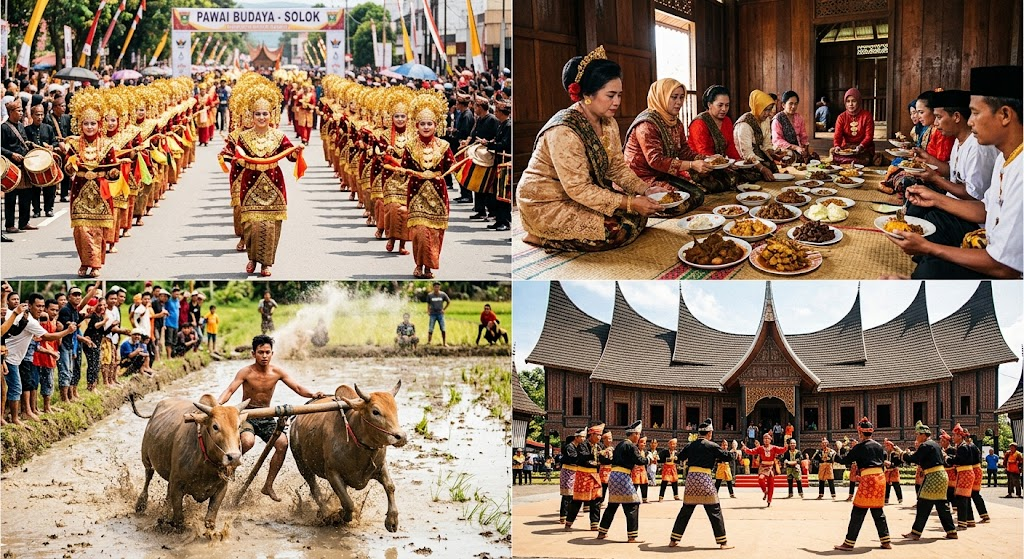
I visited Solok City in West Sumatra during the Rang Solok Baralek Gadang festival from September 11 to September 13, 2025.
I walked through the large green rice fields of Hamparan Sawah Solok. Many Minangkabau people wore colorful traditional clothes. The women wore suntiang. These were large gold headpieces that looked like tall crowns. The men wore black taluk belanga shirts and special cloth around their waists.
I watched an important farming event called Bakawu. Local older people prayed together and shared food on banana leaves in the rice field. They thanked God for a good rice crop. People also made very large art figures from dry straw. The straw came from the rice fields after people picked the rice. I saw the figures in the fields, and they looked very interesting.
In the afternoon, I watched Silek Tuo, an old Minangkabau fighting art. Two fighters moved slowly before they fought. Their movements looked like a dance. Later, I sat with many local families and watched a Randai show. The actors stood in a large circle. They clapped their hands and hit their wide pants to make sounds. They also sang old local stories.
I tried some local Minangkabau food at the market. I ate spicy Rendang beef and hot Sate Padang with soft rice cakes. I also drank Teh Talua. It was sweet tea with egg yolk and fresh lime juice. The food was very tasty, and I enjoyed trying new local dishes.
I was very happy to see this local culture. More than ninety thousand local people and tourists came to the festival. People smiled and played traditional games together. They enjoyed the festival and their local culture. The festival was full of color. It was a great trip for me. I learned many new things about Indonesian culture and met new friends in Solok City. I wanted to stay longer because the people were very kind and friendly to visitors.
________________________
How to form the past simple
We use the Past Simple for something that happened before now.
1. Regular verbs
For most verbs, add -ed.
- visit → visited
- walk → walked
- watch → watched
- play → played
Example:
I visited Solok.
I watched a Randai show.2. Verbs ending in -e
Add -d.
- live → lived
- like → liked
- enjoy → enjoyed
3. Verbs ending in -y
If a verb ends in a consonant + y, change y to i and add -ed.
- try → tried
- study → studied
4. Irregular verbs – link
Some verbs do not use -ed. They have a different past form.
- see → saw
- eat → ate
- drink → drank
- wear → wore
- make → made
- meet → met
You need to learn these forms.
5. The verb be
be → was / were
- I/he/she/it → was
- you/we/they → were
Example:
I was happy.
They were friendly.Important
The past form is the same for all people with most verbs:
- I visited
- you visited
- he visited
- we visited
- they visited
Only be changes: was / were.
##################
Verbs:
Infinitive Past A1 definition visit visited to go to a place be was / were to exist or to be in a place walk walked to move on your feet wear wore to have clothes on your body look looked to use your eyes to see something call called to give a name to something pray prayed to speak to God share shared to give some of something to other people thank thanked to say that you are grateful make made to create something come came to move to a place pick picked to take something from a plant see saw to notice something with your eyes watch watched to look at something for some time move moved to change position fight fought to use your body against another person sit sat to be on a chair or the ground stand stood to be on your feet clap clapped to hit your hands together hit hit to touch something hard with your hand sing sang to make music with your voice try tried to do or taste something for the first time eat ate to put food in your mouth and swallow it drink drank to take liquid into your mouth and swallow it enjoy enjoyed to like something learn learned to get new knowledge meet met to see and talk to someone for the first time want wanted to wish to have or do something stay stayed to remain in a place smile smiled to show happiness with your face play played to do something for fun ________________________
Vocabulary:
Word / phrase A1 definition an adventure an exciting experience in a new place traditional clothes clothes that people wear as part of their culture a headpiece something that you wear on your head a crown a special hat worn by a king or queen a waist the middle part of your body, above your legs an event something special that happens at a particular time a rice crop rice that farmers grow in a field an art figure a large shape made as art straw dry plants left after farmers cut rice or other plants fighting art a traditional way of fighting using the body a movement a way of moving your body an actor a person who acts in a show or film spicy having a hot taste egg yolk the yellow part inside an egg lime juice liquid from a lime to be tasty to have a good taste ##################
Match the words with the definitions
Words
- straw
- visit
- spicy
- meet
- a crown
- watch
- an event
- eat
- a waist
- sing
- a headpiece
- enjoy
- egg yolk
- fight
- traditional clothes
- drink
- a movement
- make
- tasty
- an adventure
Definitions
A. to look at something for some time
B. the yellow part inside an egg
C. clothes that people wear as part of their culture
D. to go to a place
E. having a hot taste
F. to have a good taste
G. something special that happens at a particular time
H. to put food in your mouth and swallow it
I. to have fun doing something or to like something
J. a special hat worn by a king or queen
K. dry plants left after farmers cut rice or other plants
L. to see and talk to someone for the first time
M. a way of moving your body
N. to make something
O. an exciting experience in a new place
P. to make music with your voice
Q. to use your body against another person
R. to take liquid into your mouth and swallow it
S. something that you wear on your head
T. the middle part of your body, above your legs____________________________
Answer key:
1-K, 2-D, 3-E, 4-L, 5-J, 6-A, 7-G,
8-H, 9-T, 10-P, 11-S, 12-I, 13-B, 14-Q, 15-C,
16-R, 17-M, 18-N, 19-F, 20-O
####################Match the definitions with the words
Definitions
- to exist or to be in a place
- to give a name to something
- to give some of something to other people
- to create something
- to move to a place
- to notice something with your eyes
- to change position
- to be on a chair or the ground
- to be on your feet
- to hit your hands together
- to touch something hard with your hand
- to get new knowledge
- to wish to have or do something
- to remain in a place
- to show happiness with your face
- to do something for fun
- rice that farmers grow in a field
- a person who acts in a show or film
- a traditional way of fighting using the body
- liquid from a lime
Words
A. lime juice
B. smile
C. make
D. stand
E. rice crop
F. share
G. a fighting art
H. want
I. learn
J. call
K. hit
L. play
M. be
N. an actor
O. sit
P. stay
Q. move
R. clap
S. see
T. come__________________________
Answer key:
1-M, 2-J, 3-F, 4-C, 5-T, 6-S, 7-Q, 8-O,
9-D, 10-R, 11-K, 12-I, 13-H, 14-P, 15-B,
16-L, 17-E, 18-N, 19-G, 20-A###################
True or false
- The festival took place in Solok City, West Sumatra.
- The women wore small silver headpieces.
- The festival took place from September 11 to September 13, 2025.
- Bakawu is a modern music event.
- People shared food on banana leaves in the rice field.
- The straw figures were made from fresh rice.
- Silek Tuo was an old Minangkabau fighting art.
- The fighters moved very quickly before they fought.
- The Randai actors stood in a large circle.
- The actors did not sing any stories.
- The writer ate spicy Rendang beef.
- Teh Talua was sweet tea with egg yolk and fresh lime juice.
- The writer did not enjoy trying local food.
- More than ninety thousand people came to the festival.
- The writer visited Solok City in East Java.
- People played traditional games together.
- The festival was without color.
- The writer wanted to stay longer.
- The local people were unfriendly to visitors.
- The writer met new friends in Solok City.
___________________________
False: 2,4,6,8,10,13,15,17,19
___________________________
Correct version:
- The festival took place in Solok City, West Sumatra.
- The women wore small silver headpieces. True is: The women wore large gold headpieces.
- The festival took place from September 11 to September 13, 2025.
- Bakawu is a modern music event. True is: Bakawu is an important farming event.
- People shared food on banana leaves in the rice field.
- The straw figures were made from fresh rice. True is: The straw figures were made from dry straw.
- Silek Tuo was an old Minangkabau fighting art.
- The fighters moved very quickly before they fought. True is: The fighters moved slowly before they fought.
- The Randai actors stood in a large circle.
- The actors did not sing any stories. True is: The actors sang old local stories.
- The writer ate spicy Rendang beef.
- Teh Talua was sweet tea with egg yolk and fresh lime juice.
- The writer did not enjoy trying local food. True is: The writer enjoyed trying new local dishes.
- More than ninety thousand people came to the festival.
- The writer visited Solok City in East Java. True is: The writer visited Solok City in West Sumatra.
- People played traditional games together.
- The festival was without color. True is: The festival was full of color.
- The writer wanted to stay longer.
- The local people were unfriendly to visitors. True is: The local people were very kind and friendly to visitors.
- The writer met new friends in Solok City.
####################
Match the sentence halves
1. The writer visited Solok City
2. The women wore
3. People shared food
4. The straw figures came from
5. Silek Tuo was
6. The Randai actors stood
7. The writer ate
8. Teh Talua was
9. More than ninety thousand people
10. The writer wanted to stay
A. in a large circle.
B. longer because the people were kind.
C. spicy Rendang beef and Sate Padang.
D. large gold headpieces.
E. on banana leaves in the rice field.
F. came to the festival.
G. dry straw from the rice fields.
H. an old Minangkabau fighting art.
I. in West Sumatra.
J. sweet tea with egg yolk and lime juice.__________________________
Answer key:
1-I, 2-D, 3-E, 4-G, 5-H, 6-A,
7-C, 8-J, 9-F, 10-B###################
Choose the true statement
1.
A. The festival took place in Solok City, West Sumatra.
B. The festival took place in Bandung, West Java.2.
A. The festival took place from September 15 to September 17, 2025.
B. The festival took place from September 11 to September 13, 2025.3.
A. The women wore small silver hats.
B. The women wore large gold headpieces.4.
A. The men wore black taluk belanga shirts.
B. The men wore white shirts and blue trousers.5.
A. People shared food on large plates in a restaurant.
B. People shared food on banana leaves in the rice field.6.
A. Bakawu was an important farming event.
B. Bakawu was a traditional dance show.7.
A. The straw figures were made from dry straw.
B. The straw figures were made from fresh green grass.8.
A. Silek Tuo was a new Indonesian sport.
B. Silek Tuo was an old Minangkabau fighting art.9.
A. The Randai actors stood in a large circle.
B. The Randai actors sat in a small room.10.
A. The writer ate spicy Rendang beef.
B. The writer ate sweet Rendang chicken.11.
A. Teh Talua was hot coffee with milk.
B. Teh Talua was sweet tea with egg yolk and fresh lime juice.12.
A. More than nine thousand people came to the festival.
B. More than ninety thousand people came to the festival.13.
A. People played traditional games together.
B. People watched modern computer games together.14.
A. The writer wanted to leave early because the people were unfriendly.
B. The writer wanted to stay longer because the people were very kind and friendly._____________________________
Answer key:
1-A, 2-B, 3-B, 4-A, 5-B, 6-A,
7-A, 8-B, 9-A, 10-A, 11-B,
12-B, 13-A, 14-B#####################
WH questions – answer in full sentences
- Where did the writer visit?
- When did the festival take place?
- What did the women wear?
- What did the men wear around their waists?
- What did people do during Bakawu?
- What were the large art figures made from?
- What is Silek Tuo?
- Where did the Randai actors stand?
- What did the writer eat at the market?
- What is Teh Talua?
- How many people came to the festival?
- Why did the writer want to stay longer?
___________________________
Correct answers:
- Where did the writer visit? – The writer visited Solok City.
- When did the festival take place? – The festival took place from September 11 to September 13, 2025.
- What did the women wear? – The women wore large gold headpieces.
- What did the men wear around their waists? – The men wore special cloth around their waists.
- What did people do during Bakawu? – People prayed together and shared food on banana leaves.
- What were the large art figures made from? – The large art figures were made from dry straw.
- What is Silek Tuo? – Silek Tuo is an old Minangkabau fighting art.
- Where did the Randai actors stand? – The Randai actors stood in a large circle.
- What did the writer eat at the market? – The writer ate spicy Rendang beef and hot Sate Padang with soft rice cakes.
- What is Teh Talua? – Teh Talua is sweet tea with egg yolk and fresh lime juice.
- How many people came to the festival? – More than ninety thousand people came to the festival.
- Why did the writer want to stay longer? – The writer wanted to stay longer because the people were very kind and friendly to visitors.
##################
Put the events in order
A. The writer watched a Randai show.
B. The writer tried local Minangkabau food at the market.
C. The writer visited Solok City during the festival.
D. The writer watched Silek Tuo.
E. The writer walked through the rice fields.
F. The writer saw large straw figures in the fields.
G. The writer drank Teh Talua.
H. The writer met new friends in Solok City.________________________
Answer key: C, E, F, D, A, B, G, H
#################
Cause and result – match cause and result
- People picked the rice. → ______
- People wanted to thank God. → ______
- The writer watched Silek Tuo. → ______
- The Randai actors stood in a circle. → ______
- The writer tried local food. → ______
- The writer drank Teh Talua. → ______
- More than 90,000 people came. → ______
- The writer met local people. → ______
A. He learned about local culture.
B. They made large art figures from dry straw.
C. They came to enjoy the festival and local culture.
D. He tried a new local drink.
E. They prayed together and shared food.
F. He saw an old Minangkabau fighting art.
G. He enjoyed trying new local dishes.
H. They made a large circle for their show.—————————————–
Answer key:
1-B, 2-E, 3-F, 4-H, 5-G, 6-D, 7-C, 8-A###################
Read each statement. Find a sentence or part of a sentence in the text that supports it.
- The festival attracted a very large number of visitors.
→ ______ - The women had unusual decorations on their heads.
→ ______ - The farming ceremony included a religious activity.
→ ______ - The artists used material from the rice harvest.
→ ______ - The fighters used slow movements before the fight.
→ ______ - The writer tasted more than one local dish.
→ ______ - The traditional show included both movement and music.
→ ______ - The writer felt positive about the people he met.
→ ______
——————————————
Answer key:
- More than ninety thousand local people and tourists came to the festival.
- These were large gold headpieces that looked like tall crowns.
- Local older people prayed together and shared food on banana leaves in the rice field.
- The straw came from the rice fields after people picked the rice.
- Two fighters moved slowly before they fought.
- I ate spicy Rendang beef and hot Sate Padang with soft rice cakes.
- The actors clapped their hands and hit their wide pants to make sounds. They also sang old local stories.
- The people were very kind and friendly to visitors.
####################
Match the questions and answers
Questions
- Where did you visit during the festival?
- When did the festival take place?
- What did you see in the rice fields?
- What did the women wear on their heads?
- What happened during Bakawu?
- What did the people thank God for?
- How did the Silek Tuo fighters move?
- What happened during the Randai show?
- Which local dishes did you taste?
- What ingredients were in Teh Talua?
- How many people came to the festival?
- Why did you want to stay longer?
Answers
A. The actors stood in a large circle, made sounds, and sang old local stories.
B. They were grateful to God for a good rice crop.
C. More than ninety thousand local people and tourists were there.
D. There were colorful traditional clothes and large straw figures in the rice fields.
E. Rendang beef and Sate Padang with soft rice cakes were my choices.
F. Their movements were slow before the fight.
G. It happened from September 11 to September 13, 2025.
H. The people were very kind and friendly to visitors.
I. They had large gold headpieces on their heads.
J. Solok City in West Sumatra was my destination.
K. Sweet tea, egg yolk, and fresh lime juice were its ingredients.
L. Older local people prayed together and shared food on banana leaves.
___________________________
Answer key:
1-J, 2-G, 3-D, 4-I, 5-L, 6-B, 7-F,
8-A, 9-E, 10-K, 11-C, 12-H
___________________________Correct dialogue:
- Where did you visit during the festival? – Solok City in West Sumatra was my destination.
- When did the festival take place? – It happened from September 11 to September 13, 2025.
- What did you see in the rice fields? – There were colorful traditional clothes and large straw figures in the rice fields.
- What did the women wear on their heads? – They had large gold headpieces on their heads.
- What happened during Bakawu? – Older local people prayed together and shared food on banana leaves.
- What did the people thank God for? – They were grateful to God for a good rice crop.
- How did the Silek Tuo fighters move? – Their movements were slow before the fight.
- What happened during the Randai show? – The actors stood in a large circle, made sounds, and sang old local stories.
- Which local dishes did you taste? – Rendang beef and Sate Padang with soft rice cakes were my choices.
- What ingredients were in Teh Talua? – Sweet tea, egg yolk, and fresh lime juice were its ingredients.
- How many people came to the festival? – More than ninety thousand local people and tourists were there.
- Why did you want to stay longer? – The people were very kind and friendly to visitors.
#####################
I _____ (visit) Solok City in West Sumatra during the Rang Solok Baralek Gadang festival from September 11 to September 13, 2025. I _____ (see) many Minangkabau people wearing colorful traditional clothes. The women _____ (wear) large gold suntiang headpieces, and the men _____ (wear) black traditional shirts.
I _____ (watch) Bakawu, an important farming event. Older local people _____ (pray) together and _____ (share) food in the rice fields. I also _____ (see) large art figures made from dry rice straw.
In the afternoon, I _____ (watch) Silek Tuo, an old Minangkabau fighting art. Later, I _____ (watch) a Randai show with local families. The actors _____ (sing) old stories, _____ (clap) their hands, and _____ (move) in a large circle.
At the market, I _____ (try) Rendang beef, Sate Padang, and Teh Talua. I _____ (enjoy) the local food and the friendly people. More than ninety thousand people _____ (visit) the festival. It _____ (be) a colorful experience, and I _____ (learn) much about Minangkabau culture.
————————————
Correct version:
I visited Solok City in West Sumatra during the Rang Solok Baralek Gadang festival from September 11 to September 13, 2025. I saw many Minangkabau people wearing colorful traditional clothes. The women wore large gold suntiang headpieces, and the men wore black traditional shirts.
I watched Bakawu, an important farming event. Older local people prayed together and shared food in the rice fields. I also saw large art figures made from dry rice straw.
In the afternoon, I watched Silek Tuo, an old Minangkabau fighting art. Later, I watched a Randai show with local families. The actors sang old stories, clapped their hands, and moved in a large circle.
At the market, I tried Rendang beef, Sate Padang, and Teh Talua. I enjoyed the local food and the friendly people. More than ninety thousand people visited the festival. It was a colorful experience, and I learned much about Minangkabau culture.
#####################
##################
################
Please use the box below
to write your feedback.
Only I can read it.
It is not public.Please tell me:
- Are the texts and exercises OK?
- Are the topics OK?
- Is the level OK?
- Is it too easy or too difficult?
- tIs it oo short, too long?
- Do you want texts about other topics?
Thank you! I appreciate your feedback.
##################
##################
##################
Remember how babies
learn a language:Babies learn a language by listening.
They use their ears to hear sounds.
Their brain remembers these sounds.
Babies connect sounds with people and things.
They listen to their parents.
Then they copy the sounds they hear. They imitate words.
Slowly, babies learn to speak.
So,
LISTEN, LISTEN, LISTEN, LISTEN………………SMFrockZ@gmx.at
-
🥳👍🏠14 families get safe new homes (text, exercises, sound files, present/past simple, A2)🏠👍🥳
- A new beginning: 14 families receive safe homes
A safe home is very important for every family. It is a place where people can sleep, eat, rest, and spend time together. A safe home can also make people feel happy and calm. For 14 families, a new home has now made their lives better.
The Shinta Mani Foundation helped 14 families get safe and secure homes. Before this, life was difficult for these families. They did not have a safe place to live. Now they have a home where they can live with their families and feel safe.
A new home can change many things. Parents do not have to worry so much about where their family will sleep. Children have a safe place to play and study. Families can cook their food, keep their things, and spend time together. They can also think about their future.
The new homes were possible because people supported Bill Bensley’s artwork. Their support helped the Shinta Mani Foundation give these families a safe place to live. This is a good example of how people can help other people. When many people give a little help, they can do something very good together.
For these families, the new homes are much more than four walls. They are places where parents and children can live together. They can sleep safely at night and wake up in the morning without the same worries as before. They now have a good place to live and care for their families.
The Shinta Mani Foundation works to help people and local communities. Helping families get safe homes is an important part of this work. A safe home can help families have a better daily life.
The story of these 14 families shows that help from other people can change lives. Thanks to the Shinta Mani Foundation, Bill Bensley, and the people who supported his artwork, these families now have safe homes and a new start in life.
_________________________
Vocabulary:
Word / phrase A1 definition to be safe to have no danger to be calm to feel quiet and relaxed to make a life better to make life easier or happier a secure home a home where people are safe to worry to feel afraid or not calm about something to support to help someone or something artwork a picture or other work made by an artist worries things that make you feel afraid or unhappy to care for one’s family to look after and help your family a community a group of people who live in the same place #####################
Match the words with the definitions
- to be safe
- to be calm
- to make a life better
- a secure home
- to worry
- to support
- artwork
- worries
- to care for one’s family
- a community
A. to help someone or something
B. a group of people who live in the same place
C. to feel quiet and relaxed
D. things that make you feel afraid or unhappy
E. a picture or other work made by an artist
F. to look after and help your family
G. to have no danger
H. to feel afraid or not calm about something
I. a home where people are safe
J. to make life easier or happier_________________________
Answer key:
1–G, 2–C, 3–J, 4–I, 5–H,
6–A, 7–E, 8–D, 9–F, 10–B
##################Match the definitions with the words
- to help someone or something
- a home where people are safe
- to feel quiet and relaxed
- a picture or other work made by an artist
- to have no danger
- things that make you feel afraid or unhappy
- to look after and help your family
- to make life easier or happier
- a group of people who live in the same place
- to feel afraid or not calm about something
A. to worry
B. artwork
C. a community
D. to be safe
E. to support
F. to care for one’s family
G. to make a life better
H. worries
I. a secure home
J. to be calm___________________________
Answer key:
1–E, 2–I, 3–J, 4–B, 5–D, 6–H,
7–F, 8–G, 9–C, 10–A
####################True or false
- A safe home is important for every family.
- The 14 families already had safe homes before receiving help.
- A home is a place where people can sleep, eat, and rest.
- The Shinta Mani Foundation helped 14 families get safe homes.
- The children now have a safe place to play and study.
- The families moved to new homes because they wanted to live alone.
- Parents can worry less about where their family will sleep.
- The new homes are only places with four walls.
- Families can cook their food and keep their things in their new homes.
- Bill Bensley built all 14 homes himself.
- The support for Bill Bensley’s artwork helped make the new homes possible.
- The families now have to live separately from their children.
- The new homes can help families think about their future.
- The Shinta Mani Foundation only works to help artists.
- The families can sleep safely at night in their new homes.
- The story says that helping other people cannot change lives.
- The new homes give the families a new start in life.
- Forty families received new homes.
- Bill Bensley’s artwork had nothing to do with the new homes.
- The new homes are mainly places for families to store their things.
____________________________
False: 2,6,8,10,12,14,16,18,19,20
____________________________Correct version:
- A safe home is important for every family.
- The 14 families already had safe homes before receiving help. True is: The 14 families did not have safe homes before receiving help.
- A home is a place where people can sleep, eat, and rest.
- The Shinta Mani Foundation helped 14 families get safe homes.
- The children now have a safe place to play and study.
- The families moved to new homes because they wanted to live alone. True is: The families can live together in their new homes.
- Parents can worry less about where their family will sleep.
- The new homes are only places with four walls. True is: The new homes are much more than four walls.
- Families can cook their food and keep their things in their new homes.
- Bill Bensley built all 14 homes himself. True is: People who supported Bill Bensley’s artwork helped make the new homes possible.
- The support for Bill Bensley’s artwork helped make the new homes possible.
- The families now have to live separately from their children. True is: Parents and children can live together in their new homes.
- The new homes can help families think about their future.
- The Shinta Mani Foundation only works to help artists. True is: The Shinta Mani Foundation works to help people and local communities.
- The families can sleep safely at night in their new homes.
- The story says that helping other people cannot change lives. True is: Helping other people can change lives.
- The new homes give the families a new start in life.
- Forty families received new homes. True is: Fourteen families received new homes.
- Bill Bensley’s artwork had nothing to do with the new homes. True is: Support for Bill Bensley’s artwork helped make the new homes possible.
- The new homes are mainly places for families to store their things. True is: The new homes are places where families can live together, sleep safely, cook, keep their things, and spend time together.
#####################
Multiple Choice
- Why is a safe home important?
A. It gives people a safe place to live.
B. It gives people a place to travel.
C. It gives people a place to work. - How many families received safe homes?
A. 40 families
B. 14 families
C. 4 families - Who helped the 14 families?
A. The local school
B. Bill Bensley’s family
C. The Shinta Mani Foundation - What can children do in their new homes?
A. Travel and swim
B. Work and shop
C. Play and study - What did the families not have before?
A. Food to cook
B. A safe place to live
C. Things to keep - What can parents worry less about now?
A. Where their family will sleep
B. Where their children will study
C. Where their family will travel - What can families do in their new homes?
A. Build schools
B. Cook their food
C. Sell artwork - What helped make the new homes possible?
A. Support for Bill Bensley’s artwork
B. A new school
C. A government program - What can families now think about?
A. Their next holiday
B. A new business
C. Their future - What can people do when they give a little help together?
A. Travel to new places
B. Do something very good together
C. Build a large hotel - What are the new homes more than?
A. Four walls
B. Places for tourists
C. Places to work - What can families do safely at night?
A. Cook for visitors
B. Travel
C. Sleep - What does the Shinta Mani Foundation work to help?
A. Tourists and hotels
B. Artists and teachers
C. People and local communities - What can a safe home give a family?
A. A new job
B. A better daily life
C. A long holiday - What do the 14 families now have?
A. A new business
B. A new school
C. Safe homes and a new start in life
_____________________________
Answer key:
1 A, 2 B, 3 C, 4 C, 5 B, 6 A, 7 B, 8 A,
9 C, 10 B, 11 A, 12 C, 13 C, 14 B, 15 C#####################
Match the sentence halves
- A safe home is important
- The Shinta Mani Foundation helped
- Before this, life was difficult
- Children now have a safe place
- Families can cook their food
- The support for Bill Bensley’s artwork
- Parents do not have to worry so much
- The new homes are more than
- The Shinta Mani Foundation works
- These families now have safe homes
A. to help people and local communities.
B. and a new start in life.
C. for every family.
D. about where their family will sleep.
E. and keep their things.
F. 14 families get safe and secure homes.
G. to play and study.
H. four walls.
I. made the new homes possible.
J. for these families.____________________________
Answer key:
1 C, 2 F, 3 J, 4 G, 5 E, 6 I, 7 D, 8 H, 9 A, 10 B
____________________________Correct version:
A safe home is important for every family.The Shinta Mani Foundation helped 14 families get safe and secure homes.
Before this, life was difficult for these families.
Children now have a safe place to play and study.
Families can cook their food and keep their things.
The support for Bill Bensley’s artwork made the new homes possible.
Parents do not have to worry so much about where their family will sleep.
The new homes are more than four walls.
The Shinta Mani Foundation works to help people and local communities.
These families now have safe homes and a new start in life.
#######################Match each cause (1–8) with the correct effect (A–H).
- The Shinta Mani Foundation helped 14 families.
- The families now have safe homes.
- Children have a safe place to live.
- Parents have a safe home for their families.
- People supported Bill Bensley’s artwork.
- Families have homes where they can cook and keep their things.
- People give a little help together.
- The families have a safe place to live.
A. They can sleep safely at night.
B. The families can think more about their future.
C. The new homes became possible.
D. Children can play and study safely.
E. They can spend time together.
F. The families received safe and secure homes.
G. They can worry less about where their family will sleep.
H. They can have a better daily life.________________________________
Answer key: 1 F, 2 H, 3 D, 4 G, 5 C, 6 E, 7 B, 8 A
#######################Problem and solution – match each problem (1–5) with the correct solution (A–E).
- The families did not have a safe place to live.
- Parents worried about where their families would sleep.
- Children did not have a safe place to play and study.
- Families needed a place to cook and keep their things.
- The families had many worries about their daily lives.
A. They received safe and secure homes.
B. They can now cook their food and keep their things at home.
C. They can now have a better daily life.
D. Children now have a safe place to play and study.
E. Parents can now worry less about where their families will sleep.Answer key: 1 A, 2 E, 3 D, 4 B, 5 C
######################
Choose the Correct Statement
A. The Shinta Mani Foundation helped 14 families get safe homes.
B. The Shinta Mani Foundation helped 40 families get safe homes.A. The families already had safe homes before they received help.
B. The families did not have a safe place to live before they received help.A. Children can now play and study in a safe place.
B. Children now have to study outside their homes.A. The new homes are only places to store things.
B. The new homes are places where families can live and spend time together.A. Support for Bill Bensley’s artwork helped make the new homes possible.
B. Bill Bensley’s artwork had nothing to do with the new homes.A. Families can now cook their food and keep their things in their homes.
B. Families cannot cook or keep their things in their new homes.A. The new homes give the families a new start in life.
B. The new homes give the families more problems._________________________________
Answer key: 1 A, 2 B, 3 A, 4 B, 5 A, 6 A, 7 A
########################Match the questions and answers
Questions
- How many families received new homes?
- Why are safe homes important for families?
- Who helped the families get safe homes?
- What was life like for these families before?
- Where is a safe place for children to play and study now?
- Where do families sleep safely now?
- How did people help make the new homes possible?
- Whose artwork helped make the new homes possible?
- What activities are possible for families in their new homes?
- Why are the new homes more than four walls?
- How do the new homes change daily life?
- Where does the Shinta Mani Foundation direct its work?
Answers
A. Their new homes provide a safe place for them at night.
B. They give families a better daily life and fewer worries.
C. Life was difficult because they had no safe place to live.
D. People’s support for Bill Bensley’s artwork made the new homes possible.
E. Fourteen families got new homes.
F. They gave support for Bill Bensley’s artwork.
G. Their new homes provide a safe place for play and study.
H. They give families a safe place for living, sleeping, and family time.
I. Its work goes to people and local communities.
J. The Shinta Mani Foundation gave them support.
K. They are places for families to live together and feel safe.
L. Cooking, keeping their things, and family time are possible there._________________________________
Answer key:
1 E, 2 H, 3 J, 4 C, 5 G, 6 A, 7 F, 8 D, 9 L, 10 K, 11 B, 12 I_________________________________
Correct dialogue:
1. How many families received new homes?
Fourteen families got new homes.2. Why are safe homes important for families?
They give families a safe place for living, sleeping, and family time.3. Who helped the families get safe homes?
The Shinta Mani Foundation gave them support.4. What was life like for these families before?
Life was difficult because they had no safe place to live.5. Where is a safe place for children to play and study now?
Their new homes provide a safe place for play and study.6. Where do families sleep safely now?
Their new homes provide a safe place for them at night.7. How did people help make the new homes possible?
They gave support for Bill Bensley’s artwork.8. Whose artwork helped make the new homes possible?
People’s support for Bill Bensley’s artwork made the new homes possible.9. What activities are possible for families in their new homes?
Cooking, keeping their things, and family time are possible there.10. Why are the new homes more than four walls?
They are places for families to live together and feel safe.11. How do the new homes change daily life?
They give families a better daily life and fewer worries.12. Where does the Shinta Mani Foundation direct its work?
Its work goes to people and local communities.###################
##################
################
Please use the box below
to write your feedback.
Only I can read it.
It is not public.Please tell me:
- Are the texts and exercises OK?
- Are the topics OK?
- Is the level OK?
- Is it too easy or too difficult?
- tIs it oo short, too long?
- Do you want texts about other topics?
Thank you! I appreciate your feedback.
##################
##################
##################
Remember how babies
learn a language:Babies learn a language by listening.
They use their ears to hear sounds.
Their brain remembers these sounds.
Babies connect sounds with people and things.
They listen to their parents.
Then they copy the sounds they hear. They imitate words.
Slowly, babies learn to speak.
So,
LISTEN, LISTEN, LISTEN, LISTEN………………SMFrockZ@gmx.at
- A new beginning: 14 families receive safe homes
-
🙈🥸🧐Adjective or adverb? (A2)🧐🥸🙈
1. Adjectives
An adjective tells us what a person or thing is like.
The waiter is polite.
The restaurant is quiet.
The food is good.
The driver is careful.
2. AdverbsAn adverb often tells us how someone does something.
The waiter speaks politely.
The guests speak quietly.
The cook works carefully.
The driver drives carefully.
3. Look at the differenceHe is slow.
He walks slowly.She is careful.
She works carefully.He is polite.
He speaks politely.slow → slowly
careful → carefully
polite → politely
4. The easy ruleMany words change like this:
adjective → adverb
slow → slowly
quick → quickly
quiet → quietly
careful → carefully
polite → politely
clear → clearlyWe often add -ly.
5. More examplesThe waiter is quiet.
He walks quietly.The girl is quick.
She runs quickly.The man is careful.
He drives carefully.The teacher is clear.
She speaks clearly.
6. Some words are differentSome words do not change.
fast → fast
hard → hard
early → early
late → lateExamples:
He is a fast runner.
He runs fast.She is a hard worker.
She works hard.He is early.
He arrives early.
7. Good → wellThis is important:
He is a good cook.
He cooks well.She is a good singer.
She sings well.
8. FriendlyFriendly is an adjective.
The waiter is friendly. ✅
For an action, say:
The waiter speaks in a friendly way. ✅
Do not teach:
He speaks friendly. ❌
9. RememberAdjective:
She is quiet.
Adverb:
She speaks quietly.
Adjective = what someone or something is like.
Adverb = how someone does something.
##########################
Adjective or adverb – complete each sentence with the correct form of the word in brackets.
- The waiter speaks __________ to the guests. (polite)
- The hotel has a very __________ restaurant. (beautiful)
- The driver drives __________. (careful)
- The children are very __________ today. (quiet)
- The chef works __________ in the kitchen. (quick)
- The food smells __________. (good)
- The manager gave a __________ answer. (clear)
- The guests waited __________ for their food. (patient)
- She is a very __________ person. (friendly)
- He walked __________ to the door. (slow)
- The waiter looks __________ today. (happy)
- The staff work very __________. (hard)
- She speaks English __________. (clear)
- The restaurant is very __________. (quiet)
- He is a __________ driver. (careful)
- The children answered __________. (quick)
- The chef is a __________ cook. (good)
- The guests were very __________. (patient)
- She smiled __________ at the child. (happy)
- The hotel is __________ decorated. (beautiful)
- He is a very __________ waiter. (polite)
- The man is a __________ worker. (hard)
- The guests walked __________ through the hotel. (quiet)
- She is a __________ speaker. (clear)
- The driver is very __________. (slow)
- The waiter served the food __________. (professional)
- The manager spoke __________ to the guests. (friendly)
- She works very __________. (professional)
- He cooks very __________. (good)
- The chef prepared the meal __________. (careful)
——————————————–
Correct answers:
- The waiter speaks politely to the guests.
- The hotel has a very beautiful restaurant.
- The driver drives carefully.
- The children are very quiet today.
- The chef works quickly in the kitchen.
- The food smells good.
- The manager gave a clear answer.
- The guests waited patiently for their food.
- She is a very friendly person.
- He walked slowly to the door.
- The waiter looks happy today.
- The staff work very hard.
- She speaks English clearly.
- The restaurant is very quiet.
- He is a careful driver.
- The children answered quickly.
- The chef is a good cook.
- The guests were very patient.
- She smiled happily at the child.
- The hotel is beautifully decorated.
- He is a very polite waiter.
- The man is a hard worker.
- The guests walked quietly through the hotel.
- She is a clear speaker.
- The driver is very slow.
- The waiter served the food professionally.
- The manager spoke in a friendly way to the guests.
- She works very professionally.
- He cooks very well.
- The chef prepared the meal carefully.
#####################
Adjective or adverb? Choose the correct word.
- He always works ______. (careful / carefully)
- The restaurant is very ______. (quiet / quietly)
- She answered the question ______. (correct / correctly)
- The waiter is very ______. (polite / politely)
- The children played ______ in the garden. (happy / happily)
- He is a ______ driver. (careful / carefully)
- The chef works very ______. (quick / quickly)
- The hotel looks ______. (beautiful / beautifully)
- They waited ______ for their food. (patient / patiently)
- He is a very ______ worker. (hard / hardly)
- She speaks English ______. (clear / clearly)
- The guests walked ______ through the hotel. (quiet / quietly)
- The manager gave a ______ answer. (clear / clearly)
- He drives very ______. (slow / slowly)
- She is a very ______ person. (friendly / friendlily)
- The food tastes ______. (good / well)
- The waiter smiled ______. (happy / happily)
- It was a ______ answer. (correct / correctly)
- She works very ______. (professional / professionally)
- The manager is very ______. (professional / professionally)
- The bus arrived ______. (late / lately)
- He is always ______ for work. (early / early)
- The driver drives ______. (safe / safely)
- It is a very ______ hotel. (safe / safely)
- The waiter speaks ______ to the guests. (polite / politely)
- She is a ______ cook. (good / well)
- He cooks very ______. (good / well)
- The hotel is ______ decorated. (beautiful / beautifully)
- The guests were very ______. (patient / patiently)
- The child walked ______ to the door. (slow / slowly)
———————————————–
Correct version:
- He always works carefully.
- The restaurant is very quiet.
- She answered the question correctly.
- The waiter is very polite.
- The children played happily in the garden.
- He is a careful driver.
- The chef works very quickly.
- The hotel looks beautiful.
- They waited patiently for their food.
- He is a very hard worker.
- She speaks English clearly.
- The guests walked quietly through the hotel.
- The manager gave a clear answer.
- He drives very slowly.
- She is a very friendly person.
- The food tastes good.
- The waiter smiled happily.
- It was a correct answer.
- She works very professionally.
- The manager is very professional.
- The bus arrived late.
- He is always early for work.
- The driver drives safely.
- It is a very safe hotel.
- The waiter speaks politely to the guests.
- She is a good cook.
- He cooks very well.
- The hotel is beautifully decorated.
- The guests were very patient.
- The child walked slowly to the door.
########################
#####################
##################
################
Please use the box below
to write your feedback.
Only I can read it.
It is not public.Please tell me:
- Are the texts and exercises OK?
- Are the topics OK?
- Is the level OK?
- Is it too easy or too difficult?
- tIs it oo short, too long?
- Do you want texts about other topics?
Thank you! I appreciate your feedback.
##################
##################
##################
Remember how babies
learn a language:Babies learn a language by listening.
They use their ears to hear sounds.
Their brain remembers these sounds.
Babies connect sounds with people and things.
They listen to their parents.
Then they copy the sounds they hear. They imitate words.
Slowly, babies learn to speak.
So,
LISTEN, LISTEN, LISTEN, LISTEN………………SMFrockZ@gmx.at
-
🌞👍➡️What is important when learning English? (text only, A1)
- some facts
What is the most important thing when you learn English?
Is it reading? Is it listening? Or is it speaking?
There is no single answer.
All three are important.
But they do different things.Listening
Listening is very important. You need to hear English many times. You listen to people at school, at work, in shops, in hotels, and on the phone.
At first, you may not understand every word. That is normal. Do not worry. Listen to short and easy English. Listen to the same text many times. After some time, you can understand more.
Listening also helps you learn how English sounds. You hear words, questions, and answers. You hear how people speak. This can help you speak English too.
Speaking
Speaking is also very important. If you want to use English with other people, you must speak English.
You do not need perfect English. You can start with very short sentences.
For example:
“Hello.”
“My name is Anna.”
“I am from Austria.”
“I work in a hotel.”
“Can I help you?”
“What would you like?”
These sentences are simple, but they are useful. You can use them in real life.
Do not be afraid of mistakes. Mistakes are part of learning. Try to speak every day. Speak with your teacher, a friend, a colleague, or another learner.
Reading
Reading is another important part of learning English. Reading helps you learn new words. It also helps you see how English sentences work.
Read short and easy texts. Read about people, places, work, school, food, travel, or everyday life.
When you see a new word many times, it becomes easier to remember.
You can also read a text and then listen to the same text. This is a very good way to learn.
Reading, listening and speaking together
These three things can work together.
First, listen to a short text. Then read the text. Listen again. Next, say some sentences from the text. Finally, talk to another person about the same subject.
For example, you can listen to a conversation in a restaurant. Then you can read it. After that, you can practise the conversation with another learner.
This is better than only learning words from a list.
So, what should you do?
Listen to English every day. Read short texts. Speak English as often as you can. You do not need to wait until your English is perfect.
The most important thing is to use English.
Listen. Read. Speak. Learn new words. Make mistakes. Try again.
Little by little, your English will become better.
################################
Why you cannot learn English
from a book only- The Latin word lingua is the key starting point.
It meant both the physical tongue and, by extension, speech or language.
A book is very useful for learning English. You can learn new words from a book. You can learn simple grammar. You can read short texts. You can do exercises. A book can help you learn many things.
But a book is not enough.
English is a language. You need to use the language. You need to hear English. You need to speak English. You also need to listen to other people.
When you read only, you learn to understand words on a page. But real people do not speak like a book. They speak fast. They use short forms. They use different words. You need to hear real English.
You also need to speak. At first, you may make many mistakes. That is normal. You need to speak again and again. You learn from your mistakes.
Listening is also important. You can listen to teachers, friends, videos, or simple English stories.
So, a book is a good tool. But it is only one tool. To learn English, you need to read, listen, speak, and practise.
A book can teach you English. But you must use English to really learn it.
#####################
#####################
##################
################
Please use the box below
to write your feedback.
Only I can read it.
It is not public.Please tell me:
- Are the texts and exercises OK?
- Are the topics OK?
- Is the level OK?
- Is it too easy or too difficult?
- tIs it oo short, too long?
- Do you want texts about other topics?
Thank you! I appreciate your feedback.
##################
##################
##################
Remember how babies
learn a language:Babies learn a language by listening.
They use their ears to hear sounds.
Their brain remembers these sounds.
Babies connect sounds with people and things.
They listen to their parents.
Then they copy the sounds they hear. They imitate words.
Slowly, babies learn to speak.
So,
LISTEN, LISTEN, LISTEN, LISTEN………………SMFrockZ@gmx.at