a statue → a big figure of a person or animal (stone or metal)
a guard → a person who watches a place and keeps it safe
something strange → something not normal, a little different
to check paintings → to look at paintings to see if they are okay
to be quiet → to make no noise
to hear a noise → to hear a sound
to move one’s head → to turn or change the position of your head
to be surprised → to feel something new or unexpected
to smile → to show you are happy with your face
to close one’s eyes → to shut your eyes
to laugh → to make a happy sound (ha ha)
to be sure → to know something is true
LISTEN ONLY, DO NOT LOOK AT TEXTS
Listen to the story, then do the following exercises below (full text at the end of the exercise):
##############
LISTEN ONLY
True or false:
Anna hears a noise.
Anna works in a school.
The statue smiles at Anna.
The boss believes Anna.
The museum is quiet at night.
Anna runs through the museum.
She checks the paintings and statues.
The statue moves its head.
Anna works in a museum.
The noise comes from a door.
Anna tells her boss in the morning.
Anna laughs when she sees the statue.
She is a night guard.
The museum is very loud at night.
The statue talks to Anna.
Anna walks through the rooms.
The statue runs fast.
Anna is sure the statue is normal.
The noise comes from a statue.
She works in the morning.
____________________________
True: 1,3,5,7,8,9,11,13,16,19
####################
LISTEN ONLY
Which one is correct?
Does Anna work in a school or in a museum?
Is she a manager or a night guard?
Is the museum noisy or quiet at night?
Does Anna check paintings and statues or books and computers?
Does she run through the rooms or walk through the rooms?
Does Anna see a light or hear a noise?
Does the noise come from a statue or a door?
Does the statue move its head or its arms?
Does the statue frown or smile at Anna?
Does Anna tell her boss in the morning or in the evening?
Is Anna bored or surprised when the statue moves?
Does Anna close her eyes or laugh when she sees the statue?
Does the boss laugh at her or believe Anna?
Does the statue talk to Anna or stay silent?
Does the statue walk slowly or run fast?
Is Anna not sure or sure about the statue?
Does Anna work at night or in the morning?
Does she feel happy or surprised in the museum?
Does the museum have paintings or computers?
Does Anna like her job or dislike her job?
__________________ Correct answers:
Does Anna work in a school or in a museum? – museum
Is she a manager or a night guard? – night guard
Is the museum noisy or quiet at night? – quiet
Does Anna check paintings and statues or books and computers? – paintings and statues
Does she run through the rooms or walk through the rooms? – walk
Does Anna see a light or hear a noise? – hear a noise
Does the noise come from a statue or a door? – statue
Does the statue move its head or its arms? – head
Does the statue frown or smile at Anna? – smile
Does Anna tell her boss in the morning or in the evening? – morning
Is Anna bored or surprised when the statue moves? – surprised
Does Anna close her eyes or laugh when she sees the statue? – close her eyes
Does the boss laugh at her or believe Anna? – laugh
Does the statue talk to Anna or stay silent? – stay silent
Does the statue walk slowly or run fast? – slowly
Is Anna not sure or sure about the statue? – not sure
Does Anna work at night or in the morning? – at night
Does she feel happy or surprised in the museum? – surprised
Does the museum have paintings or computers? – paintings
Does Anna like her job or dislike her job? – like
###################
LISTEN ONLY
What is Anna’s job?
a) Night guard
b) Teacher
Where does Anna work?
a) School
b) Museum
When does Anna walk through the rooms?
a) At night
b) During the day
What does Anna hear one night?
a) Music
b) A noise
Where does the noise come from?
a) A statue
b) A door
What does the statue do?
a) Runs fast
b) Moves its head
How does Anna feel when she sees the statue move?
a) Surprised
b) Bored
What does Anna do after she sees the statue move?
a) Shouts
b) Closes her eyes
When does Anna tell her boss about the statue?
a) In the evening
b) In the morning
What does the boss say?
a) It is only a statue
b) He believes her
Does Anna check paintings and statues or books?
a) Paintings and statues
b) Books
Is the museum quiet or noisy at night?
a) Noisy
b) Quiet
Does the statue smile or frown at Anna?
a) Smile
b) Frown
Does Anna walk or run through the museum?
a) Run
b) Walk
Is Anna sure or not sure about the statue?
a) Not sure
b) Sure
Does Anna work during the day or at night?
a) During the day
b) At night
Does the statue stay silent or talk to Anna?
a) Talk
b) Stay silent
Does the statue move slowly or fast?
a) Fast
b) Slowly
Does Anna feel happy or surprised in the museum?
a) Happy
b) Surprised
Does the boss laugh or believe Anna?
a) Believe
b) Laugh
_________________________
Correct answers:
a, 2. b, 3. a, 4. b, 5. a, 6. b, 7. a, 8. b, 9. b, 10. a, 11. a, 12. b, 13. a, 14. b, 15. a, 16. b, 17. b, 18. b, 19. b, 20. b
#############
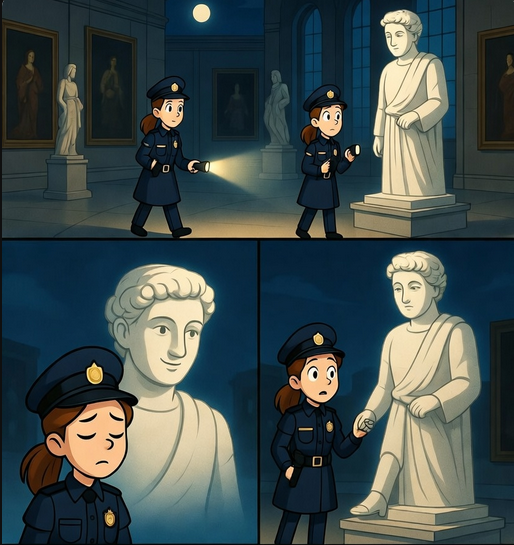
Anna works in a museum. She is a night guard. Every evening, she walks through the rooms and checks the paintings and statues. The museum is very quiet at night.
One night, Anna hears a noise. She stops and listens. The noise comes from a big statue. It is a statue of a man.
Anna looks at the statue. At first, nothing happens. Then, the statue moves its head. Anna is very surprised. She cannot speak.
The statue looks at Anna and smiles. Then it walks slowly across the room.
Anna closes her eyes. When she opens them again, the statue is still. It does not move.
In the morning, Anna tells her boss. He laughs and says, “It is only a statue.”
Lina is a teacher now, remembering her time when she was 10
There is a present simple A1 version, Lina as a child => link
###############
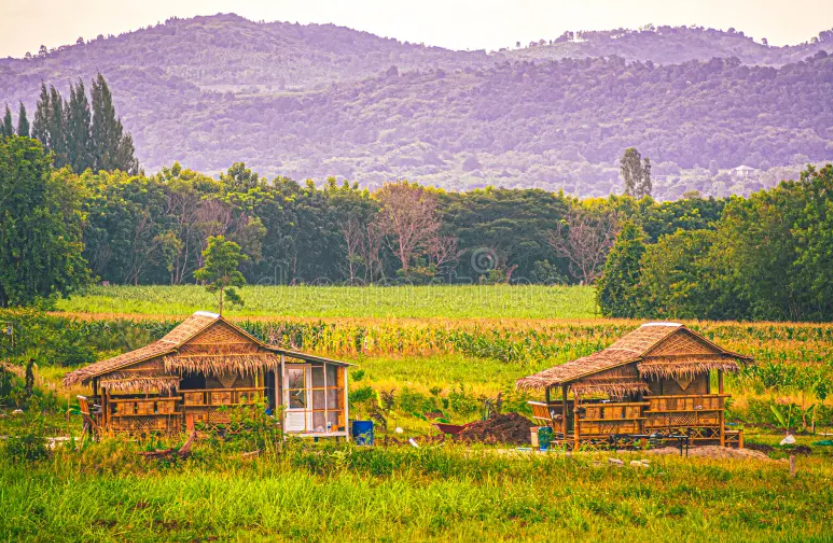
Lina was a 10-year-old girl. She lived in a small village in Southeast Asia. She lived with her parents and grandparents. Her father was a farmer. Her mother sold vegetables and fruits at the morning market.
Lina woke up early every day. She helped her mother prepare food and carry things. Then she walked to school. The walk was long, but she liked it. She saw trees, animals, and her friends.
At school, Lina was happy. She loved learning. Her favorite subjects were Maths and English. She listened to her teacher and worked hard. She also played with her friends during breaks.
After school, Lina walked home. She helped her family again. In the evening, she did her homework and studied.
Lina wanted to be a teacher one day. She wanted to help young children in her village learn and have a better life.
And she has lived her dream – SHE IS A TEACHER NOW.
________________________
Vocabulary:
to remember: to keep something in your mind and not forget it
to dream of something: to want something very much in the future
a village: a small place where people live, smaller than a town
grandparents: the parents of your mother or father
to sell vegetables: to give vegetables to people for money
morning market: a place where people buy and sell things in the morning
to wake up: to stop sleeping
to prepare food: to make food ready to eat
to carry things: to hold and take things from one place to another
a favorite subject: the school subject you like best
to listen to somebody: to hear and pay attention to someone
to work hard: to do a lot of work with effort
a break (school): a short time to rest at school
to study: to learn and read for school
to have a better life: to live in a happier and easier way
###################
Verbs in text, regular and irregular:
Infinitive
Past
A1 Definition
be
was / were
to exist; to be something
live
lived
to have a home in a place
sell
sold
to give something for money
wake up
woke up
to stop sleeping
help
helped
to do something for someone
prepare
prepared
to get something ready
carry
carried
to hold and take something
walk
walked
to move on your feet
like
liked
to think something is good
see
saw
to use your eyes
love
loved
to like something very much
listen
listened
to hear and pay attention
work
worked
to do a job or task
play
played
to have fun or do a game
do
did
to make or finish something
study
studied
to learn about something
want
wanted
to wish for something
learn
learned
to get knowledge or skill
have
had
to own or get something
###############
Basics in past simple:
Past Simple – Regular Verbs
Rules:
Most verbs: add -ed play → played
Verbs ending in -e: add -d live → lived
Verbs ending in consonant + y: change y to i and add -ed study → studied
Short verbs ending in vowel + consonant: double the final consonant and add -ed stop → stopped
Use: The past simple is used to talk about finished actions in the past.
################
Match the words with the definitions:
to dream of something
a village
grandparents
to sell vegetables
morning market
to wake up
to prepare food
to carry things
a favorite subject
to listen to somebody
to work hard
a break (school)
to study
to have a better life
Definitions:
A. to stop sleeping B. to give vegetables to people for money C. to hear and pay attention to someone D. the parents of your mother or father E. to want something very much in the future F. to make food ready to eat G. a small place where people live, smaller than a town H. a short time to rest at school I. to hold and take things from one place to another J. a place where people buy and sell things in the morning K. to do a lot of work with effort L. the school subject you like best M. to learn and read for school N. to live in a happier and easier way
a place where people buy and sell things in the morning
to do a lot of work with effort
to want something very much in the future
to hear and pay attention to someone
a small place where people live, smaller than a town
to learn and read for school
the school subject you like best
to give vegetables to people for money
Words:
a. to study b. to wake up c. to carry things d. grandparents e. to work hard f. a village g. to prepare food h. to sell vegetables i. to listen to somebody j. a break (school) k. to dream of something l. a favorite subject m. morning market n. to have a better life
To carry things means to take things from one place to another.
To work hard means to do very little work.
A favorite subject is the subject you like best.
To dream of something means to not want anything.
A morning market happens at night.
Grandparents are your mother’s or father’s parents.
To prepare food means to make food ready to eat.
To wake up means to start sleeping.
To study means to learn for school.
To sell vegetables means to buy vegetables.
To listen to somebody means to ignore them.
A break at school is time to rest.
A village is a small place where people live.
To have a better life means to live in a worse way.
_____________________
True: 1,3,6,7,9,12,13
#################
True or false:
Lina went to school by bus.
Her favorite subjects were Maths and English.
She lived in a small village in Southeast Asia.
Lina wanted to be a doctor.
Lina walked to school every day.
She never helped her family.
Lina became a teacher in the end.
Her mother worked in a school.
Lina was a 10-year-old girl.
She lived only with her parents.
She did not like learning.
Her father was a farmer.
Lina lived in a big city.
She liked the walk to school.
_______________________
True: 2,3,5,7,9,12,14
#################
Short answers, past simple, basics:
Example Sentence
Yes
No
I learned letters.
Yes, I did.
No, I didn’t.
You read signs.
Yes, you did.
No, you didn’t.
He spoke English.
Yes, he did.
No, he didn’t.
She watched TV.
Yes, she did.
No, she didn’t.
It helped me.
Yes, it did.
No, it didn’t.
We used an app.
Yes, we did.
No, we didn’t.
You read words.
Yes, you did.
No, you didn’t.
They made mistakes.
Yes, they did.
No, they didn’t.
Questions (Past Simple)
Question
Yes
No
Did I learn letters?
Yes, I did.
No, I didn’t.
Did you read signs?
Yes, you did.
No, you didn’t.
Did he speak English?
Yes, he did.
No, he didn’t.
Did she watch TV?
Yes, she did.
No, she didn’t.
Did it help me?
Yes, it did.
No, it didn’t.
Did we use an app?
Yes, we did.
No, we didn’t.
Did you read words?
Yes, you did.
No, you didn’t.
Did they make mistakes?
Yes, they did.
No, they didn’t.
Was / Were
Question
Yes
No
Was I happy?
Yes, I was.
No, I wasn’t.
Were you happy?
Yes, you were.
No, you weren’t.
Was he happy?
Yes, he was.
No, he wasn’t.
Was she happy?
Yes, she was.
No, she wasn’t.
Was it good?
Yes, it was.
No, it wasn’t.
Were we happy?
Yes, we were.
No, we weren’t.
Were you happy?
Yes, you were.
No, you weren’t.
Were they happy?
Yes, they were.
No, they weren’t.
#################
Give short answers:
Lina became a doctor.
YOU WRITE: Yes, she did.
Lina was a 10-year-old girl.
She played with her friends during breaks.
Lina did not go to school.
Her favorite subjects Maths and English were.
She woke up late every day.
Lina lived with her parents and grandparents.
Lina was unhappy at school.
She helped her mother in the morning.
The walk to school was long.
Her favorite subjects History and Art were.
Her father was a teacher.
In the evening, she did her homework.
Lina lived alone.
She was happy at school.
The school was very close to her house.
She hated Maths and English.
Her mother sold vegetables and fruits.
Lina woke up early every day.
Lina was 15 years old.
_______________________
Correct version:
Lina became a doctor. – No, she didn’t.
Lina was a 10-year-old girl. – Yes, she was.
She played with her friends during breaks. – Yes, she did.
Lina did not go to school. – No, she didn’t.
Her favorite subjects Maths and English were. – Yes, they were.
She woke up late every day. – No, she didn’t.
Lina lived with her parents and grandparents. – Yes, she did.
Lina was unhappy at school. – No, she wasn’t.
She helped her mother in the morning. – Yes, she did.
The walk to school was long. – Yes, it was.
Her favorite subjects History and Art were. – No, they weren’t.
Her father was a teacher. – No, he wasn’t.
In the evening, she did her homework. – Yes, she did.
Lina lived alone. – No, she didn’t.
She was happy at school. – Yes, she was.
The school was very close to her house. – No, it wasn’t.
She hated Maths and English. – No, she didn’t.
Her mother sold vegetables and fruits. – Yes, she did.
Lina woke up early every day. – Yes, she did.
Lina was 15 years old. – No, she wasn’t.
#################
Short answers, if false, provide short answer and then the corrected version:
Did Lina play with her teachers during breaks?
YOU WRITE: No, she didn’t. She played with her friends during breaks.
Did she help carry things for her mother?
Did Lina ride a car to school?
Did she help her father sell fruits at the market?
Were two of Lina’s favorite subjects Maths and English?
Did Lina love learning at school?
Did she spend all her time away from her family?
Did Lina see animals and friends on her way to school?
Was Lina 10 years old?
Did Lina walk to school every day?
Was Lina’s father a teacher?
Did Lina dislike learning at school?
Did her mother sell vegetables and fruits at the morning market?
Was her favorite subject Science only?
Did she help her mother prepare food?
Did Lina live in a big city?
Were her favorite subjects Science and History?
Did she want to be a teacher in the future?
Did she sleep all morning?
Did Lina become a teacher in the end?
_______________________
Correct version:
Did Lina play with her teachers during breaks? – No, she didn’t.
Did she help carry things for her mother? – Yes, she did.
Did Lina ride a car to school? – No, she didn’t. She walked to school every day.
Did she help her father sell fruits at the market? – No, she didn’t. Her mother sold fruits and vegetables at the market.
Were two of Lina’s favorite subjects Maths and English? – Yes, they were.
Did Lina love learning at school? – Yes, she did.
Did she spend all her time away from her family? – No, she didn’t. She helped her family at home every day.
Did Lina see animals and friends on her way to school? – Yes, she did.
Was Lina 10 years old? – Yes, she was.
Did Lina walk to school every day? – Yes, she did.
Was Lina’s father a teacher? – No, he wasn’t. He was a farmer.
Did Lina dislike learning at school? – No, she didn’t. She loved learning at school.
Did her mother sell vegetables and fruits at the morning market? – Yes, she did.
Was her favorite subject Science only? – No, it wasn’t. Her favorite subjects were Maths and English.
Did she help her mother prepare food? – Yes, she did.
Did Lina live in a big city? – No, she didn’t. She lived in a small village.
Were her favorite subjects Science and History? – No, they weren’t. Her favorite subjects were Maths and English.
Did she want to be a teacher in the future? – Yes, she did.
Did she sleep all morning? – No, she didn’t. She woke up early every day.
Did Lina become a teacher in the end? – Yes, she did.
#################
Fill in:
Lina was ______ years old.
She lived in a small ______ in Southeast Asia.
Her father worked as a ______.
Her mother sold ______ and ______ at the morning market.
Lina walked to ______ every day.
She helped her mother prepare ______ and carry ______.
Lina’s favorite subjects were ______ and ______.
In the evening, Lina did her ______ and studied.
She wanted to be a ______ in the future.
She wanted to help ______ in her village.
Lina woke up ______ every day.
On her way to school, she saw ______ and ______.
She played with her ______ during school breaks.
Her father worked hard as a ______.
————————————- Correct version:
Lina was 10 years old.
She lived in a small village in Southeast Asia.
Her father worked as a farmer.
Her mother soldvegetables and fruits at the morning market.
Lina walked to school every day.
She helped her mother prepare food and carry things.
Lina’s favorite subjects wereMaths and English.
In the evening, Lina did her homework and studied.
She wanted to be a teacher in the future.
She wanted to help young children in her village.
Lina woke upearly every day.
On her way to school, she sawtrees and animals.
She played with her friends during school breaks.
Her father worked hard as a farmer.
#################
#################
Past simple – basics
Personal Pronoun
Verb (Past)
Object
I
ate
apples
You
ate
apples
He
ate
apples
She
ate
apples
It
ate
apples
We
ate
apples
You (plural)
ate
apples
They
ate
apples
I
played
football
You
played
football
He
played
football
She
played
football
It
played
football
We
played
football
You (plural)
played
football
They
played
football
Personal Pronoun
Verb (Past Negative)
Object
I
did not eat
apples
You
did not eat
apples
He
did not eat
apples
She
did not eat
apples
It
did not eat
apples
We
did not eat
apples
You (plural)
did not eat
apples
They
did not eat
apples
I
did not play
football
You
did not play
football
He
did not play
football
She
did not play
football
It
did not play
football
We
did not play
football
You (plural)
did not play
football
They
did not play
football
Did + Pronoun
Verb
Object
Did I
eat
apples?
Did you
eat
apples?
Did he
eat
apples?
Did she
eat
apples?
Did it
eat
apples?
Did we
eat
apples?
Did you
eat
apples?
Did they
eat
apples?
Did I
play
football?
Did you
play
football?
Did he
play
football?
Did she
play
football?
Did it
play
football?
Did we
play
football?
Did you
play
football?
Did they
play
football?
Didn’t + Pronoun
Verb
Object
Didn’t I
eat
apples?
Didn’t you
eat
apples?
Didn’t he
eat
apples?
Didn’t she
eat
apples?
Didn’t it
eat
apples?
Didn’t we
eat
apples?
Didn’t you
eat
apples?
Didn’t they
eat
apples?
Didn’t I
play
football?
Didn’t you
play
football?
Didn’t he
play
football?
Didn’t she
play
football?
Didn’t it
play
football?
Didn’t we
play
football?
Didn’t you
play
football?
Didn’t they
play
football?
Forms of ‚to be‘
Personal Pronoun
Positive
Negative
Question
I
I was happy.
I was not happy.
Was I happy?
You (singular)
You were excited.
You were not excited.
Were you excited?
He
He was at home.
He was not at home.
Was he at home?
She
She was tired.
She was not tired.
Was she tired?
It
It was cold.
It was not cold.
Was it cold?
We
We were at the party.
We were not at the party.
Were we at the party?
You (plural)
You were friends.
You were not friends.
Were you friends?
They
They were in the garden.
They were not in the garden.
Were they in the garden?
##############
Rewrite as shown below:
Lina was 10 years old.
YOU WRITE: a) Lina was not 10 years old. b) Was Lina 10 years old? c) Wasn’t Lina 10 years old?
She lived in a small village in Southeast Asia.
Her father worked as a farmer.
Her mother sold vegetables and fruits at the morning market.
Lina woke up early every day.
She helped her mother prepare food and carry things.
Lina walked to school and saw trees, animals, and friends.
Her favorite subjects were Maths and English.
Lina wanted to be a teacher in the future.
She played with her friends during school breaks.
______________________
Correct version:
Lina was 10 years old. a) Lina was not 10 years old. b) Was Lina 10 years old? c) Wasn’t Lina 10 years old?
She lived in a small village in Southeast Asia. a) She did not live in a small village in Southeast Asia. b) Did she live in a small village in Southeast Asia? c) Didn’t she live in a small village in Southeast Asia?
Her father worked as a farmer. a) Her father did not work as a farmer. b) Did her father work as a farmer? c) Didn’t her father work as a farmer?
Her mother sold vegetables and fruits at the morning market. a) Her mother did not sell vegetables and fruits at the morning market. b) Did her mother sell vegetables and fruits at the morning market? c) Didn’t her mother sell vegetables and fruits at the morning market?
Lina woke up early every day. a) Lina did not wake up early every day. b) Did Lina wake up early every day? c) Didn’t Lina wake up early every day?
She helped her mother prepare food and carry things. a) She did not help her mother prepare food and carry things. b) Did she help her mother prepare food and carry things? c) Didn’t she help her mother prepare food and carry things?
Lina walked to school and saw trees, animals, and friends. a) Lina did not walk to school and see trees, animals, and friends. b) Did Lina walk to school and see trees, animals, and friends? c) Didn’t Lina walk to school and see trees, animals, and friends?
Her favorite subjects were Maths and English. a) Her favorite subjects were not Maths and English. b) Were her favorite subjects Maths and English? c) Weren’t her favorite subjects Maths and English?
Lina wanted to be a teacher in the future. a) Lina did not want to be a teacher in the future. b) Did Lina want to be a teacher in the future? c) Didn’t Lina want to be a teacher in the future? ___end of audio___
She played with her friends during school breaks. a) She did not play with her friends during school breaks. b) Did she play with her friends during school breaks? c) Didn’t she play with her friends during school breaks?
################
Form questions to which the word/s given is/are the correct answer:
Her mother sold vegetables and fruits at the morning market. a) Her mother: b) Her: c) sold vegetables and fruits at the morning market: d) vegetables and fruits: e) at the morning market:
Lina woke up early every day. a) Lina: b) woke up early every day: c) early: d) every day:
She helped her mother. a) She: b) helped her mother prepare food : c) her mother: d) her:
Lina walke to school with her friends. a) Lina: b) walked to school with her friends: c) to school: d) with her friends: e) her:
Lina wanted to be a teacher in the future. a) Lina: b) wanted to be a teacher in the future: c) a teacher: d) in the future:
____________________
Correct version:
Her mother sold vegetables and fruits at the morning market. a) Her mother: Who sold vegetables and fruits at the morning market? b) Her: Whose mother sold vegetables and fruits at the morning market? c) sold vegetables and fruits at the morning market: What did her mother do at the morning market? d) vegetables and fruits: What did her mother sell? e) at the morning market: Where did her mother sell vegetables and fruits?
Lina woke up early every day. a) Lina: Who woke up early every day? b) woke up early every day: What did Lina do every day? c) early: When did Lina wake up every day? d) every day: How often did Lina wake up early?
She helped her mother. a) She: Who helped her mother? b) helped her mother prepare food: What did she do? c) her mother: Who did she help? d) her: Whose mother did she help?
Lina walked to school with her friends. a) Lina: Who walked to school with friends? b) walked to school with her friends: What did Lina do? c) to school: Where did Lina walk to? d) with her friends: Who did Lina walk with? e) her: With whose friends did she walk to school?
Lina wanted to be a teacher in the future. a) Lina: Who wanted to be a teacher? b) wanted to be a teacher in the future: What did Lina want to do? c) a teacher: What did Lina want to be? d) in the future: When did Lina want to be a teacher?
##############
Complete:
Interviewer: Hello, Lina! Can you tell us about your childhood?
Lina: Hello! Yes, I can.
Interviewer: How old were you when you were a ____________? Lina: I was 10 years old.
Interviewer: Where did you live? Lina: I lived in a small _____________ in Southeast Asia.
Interviewer: Who did you live with? Lina: I lived with my parents and ______________.
Interviewer: What did your father do? Lina: My father worked as a ___________.
Interviewer: What did your mother do? Lina: My mother ______________vegetables and fruits at the morning market.
Interviewer: How did you help your mother? Lina: I helped her prepare food and ____________ things.
Interviewer: How did you go to school? Lina: I _______________ to school every day.
Interviewer: What did you see on your way to school? Lina: I saw trees, animals, and my ______________.
Interviewer: When did you wake up? Lina: I woke up ___________ every day.
Interviewer: Which subjects did you like best? Lina: My ___________ subjects were Maths and English.
Interviewer: Why did you like learning? Lina: I loved learning because it was________________.
Interviewer: Who did you play with at school? Lina: I played with my friends during school ______________.
Interviewer: What did you want to be when you were a child? Lina: I wanted to be a ______________ in the future.
Interviewer: Why did you want to be a teacher? Lina: I wanted to help children in my _____________ learn.
Interviewer: How did you spend your evenings? Lina: I did my _____________ and studied in the evening.
a young girl learns, helps her family, and dreams of becoming a teacher
There is a past simple A1 version, Lina as a teacher, and her memories => link
##############
Lina is a 10-year-old girl. She lives in a small village in Southeast Asia. She lives with her parents and grandparents. Her father is a farmer. Her mother sells vegetables and fruits at the morning market.
Lina wakes up early every day. She helps her mother prepare food and carry things. Then she walks to school. The walk is long, but she likes it. She sees trees, animals, and her friends.
At school, Lina is happy. She loves learning. Her favorite subjects are Maths and English. She listens to her teacher and works hard. She also plays with her friends during breaks.
After school, Lina walks home. She helps her family again. In the evening, she does her homework and studies.
Lina wants to be a teacher one day. She wants to help young children in her village learn and have a better life.
_____________________
Vocabulary:
to dream of something: to want something very much in the future
a village: a small place where people live, smaller than a town
grandparents: the parents of your mother or father
to sell vegetables: to give vegetables to people for money
morning market: a place where people buy and sell things in the morning
to wake up: to stop sleeping
to prepare food: to make food ready to eat
to carry things: to hold and take things from one place to another
a favorite subject: the school subject you like best
to listen to somebody: to hear and pay attention to someone
to work hard: to do a lot of work with effort
a break (school): a short time to rest at school
to study: to learn and read for school
to have a better life: to live in a happier and easier way
###############
Match the words with the definitions:
to dream of something
a village
grandparents
to sell vegetables
morning market
to wake up
to prepare food
to carry things
a favorite subject
to listen to somebody
to work hard
a break (school)
to study
to have a better life
Definitions:
A. to stop sleeping B. to give vegetables to people for money C. to hear and pay attention to someone D. the parents of your mother or father E. to want something very much in the future F. to make food ready to eat G. a small place where people live, smaller than a town H. a short time to rest at school I. to hold and take things from one place to another J. a place where people buy and sell things in the morning K. to do a lot of work with effort L. the school subject you like best M. to learn and read for school N. to live in a happier and easier way
############### Find words that match the definitions below:
Definitions:
to hold and take things from one place to another
to live in a happier and easier way
to stop sleeping
a short time to rest at school
to make food ready to eat
the parents of your mother or father
a place where people buy and sell things in the morning
to do a lot of work with effort
to want something very much in the future
to hear and pay attention to someone
a small place where people live, smaller than a town
to learn and read for school
the school subject you like best
to give vegetables to people for money
Words:
a. to study b. to wake up c. to carry things d. grandparents e. to work hard f. a village g. to prepare food h. to sell vegetables i. to listen to somebody j. a break (school) k. to dream of something l. a favorite subject m. morning market n. to have a better life
To carry things means to take things from one place to another.
To work hard means to do very little work.
A favorite subject is the subject you like best.
To dream of something means to not want anything.
A morning market happens at night.
Grandparents are your mother’s or father’s parents.
To prepare food means to make food ready to eat.
To wake up means to start sleeping.
To study means to learn for school.
To sell vegetables means to buy vegetables.
To listen to somebody means to ignore them.
A break at school is time to rest.
A village is a small place where people live.
To have a better life means to live in a worse way.
_____________________
True: 1,3,6,7,9,12,13
###############
True or false:
Lina is 10 years old.
She lives in a big city.
Her father is a farmer.
Her mother sells vegetables at the night market.
Lina helps her mother prepare food and carry things.
Lina walks a short distance to school.
She likes seeing trees and animals on her way to school.
Lina does not like learning at school.
Her favorite subjects are Maths and English.
She ignores her teacher in class.
Lina wants to be a doctor one day.
She wants to help children in her village.
Lina plays with her friends during school breaks.
In the evening, Lina does her homework and studies.
______________________
True: 1,3,5,7,9,12,13,14
###############
Short answers, basics:
Example Sentence
Yes
No
I learn the alphabet.
Yes, I do.
No, I don’t.
You read signs.
Yes, you do.
No, you don’t.
He practices speaking.
Yes, he does.
No, he doesn’t.
She watches cartoons.
Yes, she does.
No, she doesn’t.
It helps us learn English.
Yes, it does.
No, it doesn’t.
We use apps like Duolingo.
Yes, we do.
No, we don’t.
You read labels.
Yes, you do.
No, you don’t.
They make mistakes sometimes.
Yes, they do.
No, they don’t.
Question
Yes
No
Do I learn the alphabet?
Yes, I do.
No, I don’t.
Do you read signs?
Yes, you do.
No, you don’t.
Does he practice speaking?
Yes, he does.
No, he doesn’t.
Does she watch cartoons?
Yes, she does.
No, she doesn’t.
Does it help us learn English?
Yes, it does.
No, it doesn’t.
Do we use apps like Duolingo?
Yes, we do.
No, we don’t.
Do you read labels?
Yes, you do.
No, you don’t.
Do they make mistakes sometimes?
Yes, they do.
No, they don’t.
Question
Yes
No
Am I big?
Yes, I am.
No, I am not.
Are you big?
Yes, you are.
No, you aren’t.
Is he big?
Yes, he is.
No, he isn’t.
Is she big?
Yes, she is.
No, she isn’t.
Is it big?
Yes, it is.
No, it isn’t.
Are we big?
Yes, we are.
No, we aren’t.
Are you big?
Yes, you are.
No, you aren’t.
Are they big?
Yes, they are.
No, they aren’t.
###############
Give short answers:
Lina walks to school and sees trees, animals, and friends.
YOU WRITE: Yes, she does.
Lina rides a car to school.
Lina wakes up early every day.
Her favorite subject is Science only.
She helps her mother prepare food and carry things.
Lina plays only and does not study in the evening.
Lina loves learning at school.
Lina lives in a big city.
Her father works as a farmer.
One of Lina’s favorite subjects is Maths.
She spends all her time away from her family.
Lina is 10 years old.
Two of Lina’s favorite subjects are Maths and English.
She wants to be a teacher and help children in her village.
Her mother sells vegetables and fruits at the morning market.
Lina sees buildings and traffic on her way to school.
She wants to be a doctor.
Lina sleeps all morning.
Lina lives in a small village in Southeast Asia.
She helps her father sell fruits at the market.
Lina dislikes learning at school.
__________________
Correct version:
Lina walks to school and sees trees, animals, and friends. Yes, she does.
Lina rides a car to school. No, she doesn’t.
Lina wakes up early every day. Yes, she does.
Her favorite subject is Science only. No, it isn’t.
She helps her mother prepare food and carry things. Yes, she does.
Lina plays only and does not study in the evening. No, she doesn’t.
Lina loves learning at school. Yes, she does.
Lina lives in a big city. No, she doesn’t.
Her father works as a farmer. Yes, he does.
One of Lina’s favorite subjects is Maths. Yes, it is.
She spends all her time away from her family. No, she doesn’t.
Lina is 10 years old. Yes, she is.
Two of Lina’s favorite subjects are Maths and English. Yes, they are.
She wants to be a teacher and help children in her village. Yes, she does.
Her mother sells vegetables and fruits at the morning market. Yes, she does.
Lina sees buildings and traffic on her way to school. No, she doesn’t.
She wants to be a doctor. No, she doesn’t.
Lina sleeps all morning. No, she doesn’t.
Lina lives in a small village in Southeast Asia. Yes, she does.
She helps her father sell fruits at the market. No, she doesn’t.
Lina dislikes learning at school. No, she doesn’t.
###############
Short answers, if false, provide short answer and then the corrected version:
Does Lina wake up late every day?
YOU WRITE: No, she doesn’t. She wakes up early every day.
Does Lina play with her friends during breaks?
Does she help carry things for her mother?
Does Lina ride a car to school?
Does she help her father sell fruits at the market?
Are two of Lina’s favorite subjects Maths and English?
Does Lina love learning at school?
Does she spend all her time away from her family?
Does Lina see animals and friends on her way to school?
Is Lina 10 years old?
Does Lina walk to school every day?
Is Lina’s father a teacher?
Does Lina dislike learning at school?
Does her mother sell vegetables and fruits at the morning market?
Is her favorite subject Science only?
Does she help her mother prepare food?
Does Lina live in a big city?
Are her favorite subjects Science and History?
Does she want to be a teacher in the future?
Does she sleep all morning?
_______________________
Correct answers:
Does Lina wake up late every day? No, she doesn’t. She wakes up early every day.
Does Lina play with her friends during breaks? Yes, she does.
Does she help carry things for her mother? Yes, she does.
Does Lina ride a car to school? No, she doesn’t. She walks to school every day.
Does she help her father sell fruits at the market? No, she doesn’t. She helps her mother sell vegetables and fruits.
Are two of Lina’s favorite subjects Maths and English? Yes, they are.
Does Lina love learning at school? Yes, she does.
Does she spend all her time away from her family? No, she doesn’t. She helps her family at home.
Does Lina see animals and friends on her way to school? Yes, she does.
Is Lina 10 years old? Yes, she is.
Does Lina walk to school every day? Yes, she does.
Is Lina’s father a teacher? No, he isn’t. He is a farmer.
Does Lina dislike learning at school? No, she doesn’t. She loves learning at school.
Does her mother sell vegetables and fruits at the morning market? Yes, she does.
Is her favorite subject Science only? No, it isn’t. Her favorite subjects are Maths and English.
Does she help her mother prepare food? Yes, she does.
Does Lina live in a big city? No, she doesn’t. She lives in a small village in Southeast Asia.
Are her favorite subjects Science and History? No, they aren’t. Her favorite subjects are Maths and English.
Does she want to be a teacher in the future? Yes, she does.
Does she sleep all morning? No, she doesn’t. She wakes up early every day.
###############
Fill in:
Lina is ______ years old.
She lives in a small ______ in Southeast Asia.
Her father works as a ______.
Her mother sells ______ and ______ at the morning market.
Lina walks to ______ every day.
She helps her mother prepare ______ and carry ______.
Lina’s favorite subjects are ______ and ______.
In the evening, Lina does her ______ and studies.
She wants to be a ______ in the future.
She wants to help ______ in her village.
Lina wakes up ______ every day.
On her way to school, she sees ______ and ______.
She plays with her ______ during school breaks.
Her father works hard as a ______.
——————————— Correct answers:
Lina is 10 years old.
She lives in a small village in Southeast Asia.
Her father works as a farmer.
Her mother sells vegetables and fruits at the morning market.
Lina walks to school every day.
She helps her mother prepare food and carry things.
Lina’s favorite subjects are Maths and English.
In the evening, Lina does her homework and studies.
She wants to be a teacher in the future.
She wants to help children in her village.
Lina wakes up early every day.
On her way to school, she sees trees and animals.
She plays with her friends during school breaks.
Her father works hard as a farmer.
###############
Basics of present simple:
Personal Pronoun
am / is / are
I
am
8 years old
You
are
8 years old
He
is
8 years old
She
is
8 years old
It
is
8 years old
We
are
8 years old
You (plural)
are
8 years old
They
are
8 years old
Personal Pronoun
am not / is not / are not
I
am not
8 years old
You
are not
8 years old
He
is not
8 years old
She
is not
8 years old
It
is not
8 years old
We
are not
8 years old
You (plural)
are not
8 years old
They
are not
8 years old
Question:
Question Word
Personal Pronoun
Am
I
8 years old?
Are
you
8 years old?
Is
he
8 years old?
Is
she
8 years old?
Is
it
8 years old?
Are
we
8 years old?
Are
you (plural)
8 years old?
Are
they
8 years old?
Statement:
Personal Pronoun
Verb
I
like
ice cream
You
like
ice cream
He
likes
ice cream
She
likes
ice cream
It
likes
ice cream
We
like
ice cream
You (plural)
like
ice cream
They
like
ice cream
Negation:
Personal Pronoun
Verb (negative)
I
do not like
ice cream
You
do not like
ice cream
He
does not like
ice cream
She
does not like
ice cream
It
does not like
ice cream
We
do not like
ice cream
You (plural)
do not like
ice cream
They
do not like
ice cream
Question:
Do / Does
Personal Pronoun
Verb
Sugar?
Do
I
like
sugar?
Do
you
like
sugar?
Does
he
like
sugar?
Does
she
like
sugar?
Does
it
like
sugar?
Do
we
like
sugar?
Do
you (plural)
like
sugar?
Do
they
like
sugar?
###############
Rewrite as shown below:
Lina is 10 years old.
YOU WRITE: a) Lina is not 10 years old. b) Is Lina 10 years old? c) Isn’t Lina 10 years old?
She lives in a small village in Southeast Asia.
Her father works as a farmer.
Her mother sells vegetables and fruits at the morning market.
Lina wakes up early every day.
She helps her mother prepare food and carry things.
Lina walks to school and sees trees, animals, and friends.
Her favorite subjects are Maths and English.
Lina wants to be a teacher in the future.
She plays with her friends during school breaks.
_____________________ Correct answers:
Lina is 10 years old. a) Lina is not 10 years old. b) Is Lina 10 years old? c) Isn’t Lina 10 years old?
She lives in a small village in Southeast Asia. a) She does not live in a small village in Southeast Asia. b) Does she live in a small village in Southeast Asia? c) Doesn’t she live in a small village in Southeast Asia?
Her father works as a farmer. a) Her father does not work as a farmer. b) Does her father work as a farmer? c) Doesn’t her father work as a farmer?
Her mother sells vegetables and fruits at the morning market. a) Her mother does not sell vegetables and fruits at the morning market. b) Does her mother sell vegetables and fruits at the morning market? c) Doesn’t her mother sell vegetables and fruits at the morning market?
Lina wakes up early every day. a) Lina does not wake up early every day. b) Does Lina wake up early every day? c) Doesn’t Lina wake up early every day?
She helps her mother prepare food and carry things. a) She does not help her mother prepare food and carry things. b) Does she help her mother prepare food and carry things? c) Doesn’t she help her mother prepare food and carry things?
Lina walks to school and sees trees, animals, and friends. a) Lina does not walk to school and see trees, animals, and friends. b) Does Lina walk to school and see trees, animals, and friends? c) Doesn’t Lina walk to school and see trees, animals, and friends?
Her favorite subjects are Maths and English. a) Her favorite subjects are not Maths and English. b) Are her favorite subjects Maths and English? c) Aren’t her favorite subjects Maths and English?
Lina wants to be a teacher in the future. a) Lina does not want to be a teacher in the future. b) Does Lina want to be a teacher in the future? c) Doesn’t Lina want to be a teacher in the future? __end of audio__
She plays with her friends during school breaks. a) She does not play with her friends during school breaks. b) Does she play with her friends during school breaks? c) Doesn’t she play with her friends during school breaks?
###############
Form questions to which the word/s given is/are the correct answer:
Her mother sells vegetables and fruits at the morning market. a) Her mother: b) Her: c) sells vegetables and fruits at the morning market: d) vegetables and fruits: e) at the morning market:
Lina wakes up early every day. a) Lina: b) wakes up early every day: c) early: d) every day:
She helps her mother. a) She: b) helps her mother prepare food : c) her mother: d) her:
Lina walks to school with her friends. a) Lina: b) walks to school with her friends: c) to school: d) with her friends: e) her:
Lina wants to be a teacher in the future. a) Lina: b) wants to be a teacher in the future: c) a teacher: d) in the future:
_____________________________
Answers:
1. Her mother sells vegetables and fruits at the morning market.
a) Her mother: Who sells vegetables and fruits at the morning market?
b) Her: Whose mother sells vegetables and fruits at the morning market?
c) sells vegetables and fruits at the morning market: What does her mother do at the morning market?
d) vegetables and fruits: What does her mother sell at the morning market?
e) at the morning market: Where does her mother sell vegetables and fruits?
2. Lina wakes up early every day.
a) Lina: Who wakes up early every day?
b) wakes up early every day: What does Lina do every day?
c) early: When does Lina wake up every day?
d) every day: When does Lina wake up early?
3. She helps her mother.
a) She: Who helps her mother prepare food?
b) helps her mother prepare food: What does she do ?
c) her mother: Who does she help prepare food?
d) her: Whose mother does she help prepare food?
4. Lina walks to school with her friends.
a) Lina: Who walks to school with her friends?
b) walks to school with her friends: What does Lina do?
c) to school: Where does Lina walk with her friends to?
d) with her friends: Who does Lina walk to school with?
e) her: Whose friends does Lina walk with to school?
5. Lina wants to be a teacher in the future.
a) Lina: Who wants to be a teacher in the future?
b) wants to be a teacher in the future: What does Lina want to do in the future?
c) a teacher: What does Lina want to be in the future?
d) in the future: When does Lina want to be a teacher?
################
Rewrite story as shown below:
I am Lina. I am 10 years old. I live in a small village in Southeast Asia with my parents and grandparents. My father is a farmer. My mother sells vegetables and fruits at the morning market. I wake up early every day. I help my mother prepare food and carry things. I walk to school. I like the walk. I see trees, animals, and my friends. I love learning. My favorite subjects are Maths and English. After school, I help my family. I do my homework and study. I want to be a teacher one day.
Rewrite, make all changes necessary:
She is Lina. She is 10 years old. She lives in a small village in Southeast Asia with her ……………………
__________________
Correct version:
She is Lina. She is 10 years old. She lives in a small village in Southeast Asia with her parents and grandparents. Her father is a farmer. Her mother sells vegetables and fruits at the morning market. She wakes up early every day. She helps her mother prepare food and carry things. She walks to school. She likes the walk. She sees trees, animals, and her friends. She loves learning. Her favorite subjects are Maths and English. After school, she helps her family. She does her homework and studies. She wants to be a teacher one day.
##############
Interview with Lina:
Interviewer: Hello! What is your name? Lina: My name is Lina.
Interviewer: How old are you? Lina: I am 10 years old.
Interviewer: Where do you live? Lina: I live in a small village in Southeast Asia.
Interviewer: Who do you live with? Lina: I live with my parents and grandparents.
Interviewer: What does your father do? Lina: My father is a farmer.
Interviewer: Does your mother work at home or in a market? Lina: She works at the morning market.
Interviewer: What does your mother sell? Lina: She sells vegetables and fruits.
Interviewer: When do you wake up every day? Lina: I wake up early every day.
Interviewer: How do you go to school? Lina: I walk to school.
Interviewer: Which subjects do you like the most, Maths or English? Lina: I like both Maths and English.
Interviewer: What do you do after school? Lina: I help my family and do my homework.
Interviewer: Why do you want to be a teacher? Lina: I want to help children in my village learn.
===================
Rewrite the exact interview with Lina’s friend as shown below, make all changes necessary:
Interviewer: Hello, Salas. What is your friend’s name Salas: Her name is Lina.
Interviewer: How old is she? Salas: She is 10 years old.
Interviewer:……………………..
===================
Full version:
Interviewer: Hello, Salas. What is your friend’s name? Salas: Her name is Lina.
Interviewer: How old is she? Salas: She is 10 years old.
Interviewer: Where does she live? Salas: She lives in a small village in Southeast Asia.
Interviewer: Who does she live with? Salas: She lives with her parents and grandparents.
Interviewer: What does her father do? Salas: Her father is a farmer.
Interviewer: What does her mother do? Salas: Her mother sells vegetables and fruits at the morning market.
Interviewer: What time does she wake up every day? Salas: She wakes up early every day.
Interviewer: How does she go to school? Salas: She walks to school.
Interviewer: What are her favorite subjects? Salas: Her favorite subjects are Maths and English.
Interviewer: What does she do after school? Salas: She helps her family and does her homework.
Interviewer: Does she like learning? Salas: Yes, she loves learning.
Interviewer: What does she want to be in the future? Salas: She wants to be a teacher.
from bell boy to hotel manager – what a role model
Sam, looking back at a great career, is telling us about his life in tourism and hospitality business.
I started my career as a bell boy. I learned hotel work, helped guests, and worked in a team. I worked hard and was responsible.
Then I worked at the front desk. I was a receptionist and concierge. I spoke with guests every day. I helped them with questions and problems. I used English to talk with international guests. I gave clear information and was polite.
Later, I became a hotel manager. I managed two hotels in Southeast Asia. I ran daily work, led teams, and made sure service was good.
I stayed calm, listened carefully, made good decisions, and focused on guest satisfaction.
______________________-
Vocabulary:
a bell boy – a hotel worker who carries guests’ bags.
a role model – a person you want to be like.
to look back at a career – to think about your work in the past.
hospitality business – jobs with hotels, restaurants, or helping guests.
to be responsible – to do your work carefully and correctly.
front desk – the place in a hotel where guests check in.
a receptionist – a worker who greets guests and helps them at the front desk.
a concierge – a hotel worker who helps guests with questions and plans.
to give information – to tell people facts or answers.
to be polite – to use kind and good manners.
to run daily work – to manage the work every day.
to make sure – to check and be certain something is right.
to stay calm – to not get angry or nervous.
to listen carefully – to pay attention when someone talks.
to make good decisions – to choose the right actions.
to focus on something – to pay attention to one thing.
guest satisfaction – when guests are happy with the service.
################
Verbs in text, regular and irregular verbs:
Infinitive (to…)
Past
Definition
to start
started
to begin something
to learn
learned
to get knowledge or skills
to help
helped
to do something for someone
to work
worked
to do a job or activity
to be
was / were
to exist; to have a state or quality
to speak
spoke
to talk
to use
used
to do something with a tool or skill
to give
gave
to give something to someone
to become
became
to start being something
to manage
managed
to organize or control something
to run
ran
to manage or lead something
to lead
led
to guide a group of people
to make
made
to do or create something
to stay
stayed
to remain in a place or state
to listen
listened
to pay attention to sounds or someone speaking
to focus
focused
to pay attention to one thing
################
Match the words with the correct definition:
Words:
a bell boy
a role model
to look back at a career
hospitality business
to be responsible
front desk
a receptionist
a concierge
to give information
to be polite
to run daily work
to make sure
to stay calm
to listen carefully
to make good decisions
to focus on something
guest satisfaction
Definitions
A. to check and be certain something is right B. a hotel worker who carries guests’ bags C. a worker who greets guests and helps them at the front desk D. to think about your work in the past E. a hotel worker who helps guests with questions and plans F. jobs with hotels, restaurants, or helping guests G. to pay attention to one thing H. when guests are happy with the service I. to choose the right actions J. a person you want to be like K. to manage the work every day L. to pay attention when someone talks M. to use kind and good manners N. the place in a hotel where guests check in O. to do your work carefully and correctly P. to tell people facts or answers Q. to not get angry or nervous
a worker who greets guests and helps them at the front desk
a hotel worker who helps guests with questions and plans
to tell people facts or answers
to use kind and good manners
to manage the work every day
to check and be certain something is right
to not get angry or nervous
to pay attention when someone talks
to choose the right actions
to pay attention to one thing
when guests are happy with the service
Words:
A. to focus on something B. a receptionist C. to be responsible D. guest satisfaction E. a bell boy F. to stay calm G. to make good decisions H. a concierge I. front desk J. to listen carefully K. a role model L. to give information M. to run daily work N. hospitality business O. to be polite P. to look back at a career Q. to make sure
To give information means to hide facts or answers.
A bell boy carries guests’ bags in a hotel.
To make good decisions means to ignore [to not pay attention to something] problems.
Front desk is the place where guests check in.
To focus on something means to pay attention to many things at once.
To stay calm means to not get angry or nervous.
To be responsible means to do your work carefully.
A role model is someone you want to be like.
Guest satisfaction means guests are unhappy with the service.
A concierge only cleans hotel rooms.
To look back at a career means to think about your work in the past.
To run daily work means to skip [to not do something you usually do] work every day.
To be polite means to use bad manners.
A receptionist greets guests and helps them at the front desk.
____________________ True: 2,4,6,7,8,11,14
##############
True or false:
Sam led teams as a hotel manager.
He never helped guests with problems.
Sam focused on guest satisfaction every day.
Sam learned hotel work while he was a bell boy.
He was often rude [saying or doing things in a bad or unkind way] and did not give clear information.
At the front desk, Sam answered questions from guests.
Sam worked alone and never with a team.
He gave clear information and was polite to guests.
Sam worked only in restaurants, not hotels.
He made good decisions during his work.
Sam did not listen carefully to guests.
He helped guests and worked in a team.
Sam ignored guest satisfaction during his work.
He managed hotels in Europe, not Southeast Asia.
_______________________ True: 1,3,4,6,8,10,12
#################
Basics in past simple:
Personal Pronoun
Verb (Past)
Object
I
ate
apples
You
ate
apples
He
ate
apples
She
ate
apples
It
ate
apples
We
ate
apples
You (plural)
ate
apples
They
ate
apples
I
played
football
You
played
football
He
played
football
She
played
football
It
played
football
We
played
football
You (plural)
played
football
They
played
football
Personal Pronoun
Verb (Past Negative)
Object
I
did not eat
apples
You
did not eat
apples
He
did not eat
apples
She
did not eat
apples
It
did not eat
apples
We
did not eat
apples
You (plural)
did not eat
apples
They
did not eat
apples
I
did not play
football
You
did not play
football
He
did not play
football
She
did not play
football
It
did not play
football
We
did not play
football
You (plural)
did not play
football
They
did not play
football
Did + Pronoun
Verb
Object
Did I
eat
apples?
Did you
eat
apples?
Did he
eat
apples?
Did she
eat
apples?
Did it
eat
apples?
Did we
eat
apples?
Did you
eat
apples?
Did they
eat
apples?
Did I
play
football?
Did you
play
football?
Did he
play
football?
Did she
play
football?
Did it
play
football?
Did we
play
football?
Did you
play
football?
Did they
play
football?
Didn’t + Pronoun
Verb
Object
Didn’t I
eat
apples?
Didn’t you
eat
apples?
Didn’t he
eat
apples?
Didn’t she
eat
apples?
Didn’t it
eat
apples?
Didn’t we
eat
apples?
Didn’t you
eat
apples?
Didn’t they
eat
apples?
Didn’t I
play
football?
Didn’t you
play
football?
Didn’t he
play
football?
Didn’t she
play
football?
Didn’t it
play
football?
Didn’t we
play
football?
Didn’t you
play
football?
Didn’t they
play
football?
Forms of ‚to be‘
Personal Pronoun
Positive
Negative
Question
I
I was happy.
I was not happy.
Was I happy?
You (singular)
You were excited.
You were not excited.
Were you excited?
He
He was at home.
He was not at home.
Was he at home?
She
She was tired.
She was not tired.
Was she tired?
It
It was cold.
It was not cold.
Was it cold?
We
We were at the party.
We were not at the party.
Were we at the party?
You (plural)
You were friends.
You were not friends.
Were you friends?
They
They were in the garden.
They were not in the garden.
Were they in the garden?
################
Rewrite as (a) questions, and (b) negations:
He learned hotel work.
YOU WRITE: a) Did he learn hotel work? b) He didn’t learn hotel work.
Sam was a bell boy.
Sam helped guests.
He worked in a team.
Sam was a receptionist.
He spoke with guests.
Sam helped with problems.
He used English.
Sam gave information.
He was polite.
Sam became a hotel manager.
He managed two hotels.
Sam ran daily work.
He focused on guest satisfaction.
___________________
Correct answers:
He learned hotel work. a) Did he learn hotel work? b) He didn’t learn hotel work.
Sam was a bell boy. a) Was Sam a bell boy? b) Sam wasn’t a bell boy.
Sam helped guests. a) Did Sam help guests? b) Sam didn’t help guests.
He worked in a team. a) Did he work in a team? b) He didn’t work in a team.
Sam was a receptionist. a) Was Sam a receptionist? b) Sam wasn’t a receptionist.
He spoke with guests. a) Did he speak with guests? b) He didn’t speak with guests.
Sam helped with problems. a) Did Sam help with problems? b) Sam didn’t help with problems.
He used English. a) Did he use English? b) He didn’t use English.
Sam gave information. a) Did Sam give information? b) Sam didn’t give information.
He was polite. a) Was he polite? b) He wasn’t polite.
Sam became a hotel manager. a) Did Sam become a hotel manager? b) Sam didn’t become a hotel manager.
He managed two hotels. a) Did he manage two hotels? b) He didn’t manage two hotels.
Sam ran daily work. a) Did Sam run daily work? b) Sam didn’t run daily work.
He focused on guest satisfaction. a) Did he focus on guest satisfaction? b) He didn’t focus on guest satisfaction.
##############
Form questions to which the word/s given is/are the answer:
He helped guests every day. a) He: b) helped guests every day: c) guests d) every day
Sam worked hard yesterday. a) Sam: b) worked hard yesterday: c) hard: d) yesterday:
He spoke English every day. a) He: b) spoke English every day: c) English: d) every day:
Sam learned hotel work last year. a) Sam: b) learned hotel work last years: c) hotel work: d) hotel: e) last year: f) last:
He used English in class. a) He: b) used English in class: c) English: d) in class:
He was a manager in a big city. a) He: b) was a manager in a city: c) a manager: d) in a big city: e) big: _____________________
Correct questions:
1. He helped guests every day. a) Who helped guests every day? b) What did he do every day? c) Who did he help? d) When did he help guests?
2. Sam worked hard yesterday. a) Who worked hard yesterday? b) What did Sam do yesterday? c) How did Sam work? d) When did Sam work hard?
3. He spoke English every day. a) Who spoke English every day? b) What did he do every day? c) What (language) did he speak every day? d) When did he speak English?
4. Sam learned hotel work last year. a) Who learned hotel work last year? b) What did Sam do last year? c) What did Sam learn? d) Which work did Sam learn? e) When did Sam learn hotel work? f) Which year did Sam learn hotel work?
5. He used English in class. a) Who used English in class? b) What did he do in class? c) What language did he use? d) Where did he use English?
6. He was a manager in a big city. a) Who was a manager in a big city? b) What did he do in a big city? c) What was he? d) Where was he a manager? e) What kind of city was it?
################
Short answers in past simple:
Question
Short Answer (Yes/Positive)
Short Answer (No/Negative)
Did she check reservations?
Yes, she did.
No, she didn’t.
Did she give keys to guests?
Yes, she did.
No, she didn’t.
Did she talk to many guests?
Yes, she did.
No, she didn’t.
Was she happy?
Yes, she was.
No, she wasn’t.
Were the guests satisfied?
Yes, they were.
No, they weren’t.
################
Sam ran a restaurant, not a hotel.
YOU WRITE: No, he din’t.
He used English to talk with international guests.
Sam helped guests.
Sam started his career as a bell boy.
He worked in a team.
Sam used Spanish at work.
Sam became a hotel manager.
Sam started his career as a chef.
Sam gave clear information to guests.
He spoke Frnech with guests.
He learned hotel work.
Sam ignored guest satisfaction.
Sam spoke with guests every day.
Sam worked alone.
He managed only one hotel.
He helped guests.
________________________ Answers:
Sam ran a restaurant, not a hotel. No, he didn’t.
He used English to talk with international guests. Yes, he did.
Sam helped guests. Yes, he did.
Sam started his career as a bell boy. Yes, he did.
He worked in a team. Yes, he did.
Sam used Spanish at work. No, he didn’t.
Sam became a hotel manager. Yes, he did.
Sam started his career as a chef. No, he didn’t.
Sam gave clear information to guests. Yes, he did.
He spoke French with guests. No, he didn’t.
He learned hotel work. Yes, he did.
Sam ignored guest satisfaction. No, he didn’t.
Sam spoke with guests every day. Yes, he did.
Sam worked alone. No, he didn’t.
He managed only one hotel. No, he didn’t.
He helped guests. Yes, he did.
################### Give questions, then short answer, followed by correct answer:
Sam started his career as a chef.
YOU WRITE: Did he start his career as a chef? No, he din’t. He started his career as a bellboy.
He helped only friends.
Sam was rude to guests.
He spoke only with managers.
Sam used French at work.
He managed only one hotel.
Sam ran a restaurant, not a hotel.
He ignored guest satisfaction.
Sam gave wrong information to guests.
He focused on cleaning rooms all day.
Sam left hotel work after one year.
Sam was late for every meeting.
______________________
Correct answers:
1. Sam started his career as a chef. Did he start his career as a chef? No, he didn’t. He started his career as a bell boy.
2. He helped only friends. Did he help only friends? No, he didn’t. He helped guests.
3. Sam was rude to guests. Was Sam rude to guests? No, he wasn’t. He was polite to guests.
4. He spoke only with managers. Did he speak only with managers? No, he didn’t. He spoke with guests every day.
5. Sam used French at work. Did Sam use French at work? No, he didn’t. He used English at work.
6. He managed only one hotel. Did he manage only one hotel? No, he didn’t. He managed two hotels.
7. Sam ran a restaurant, not a hotel. Did Sam run a restaurant, not a hotel? No, he didn’t. He ran hotels.
8. He ignored guest satisfaction. Did he ignore guest satisfaction? No, he didn’t. He focused on guest satisfaction.
9. Sam gave wrong information to guests. Did Sam give wrong information to guests? No, he didn’t. He gave clear information to guests.
10. He focused on cleaning rooms all day. Did he focus on cleaning rooms all day? No, he didn’t. He focused on guest satisfaction.
11. Sam left hotel work after one year. Did Sam leave hotel work after one year? No, he didn’t. He stayed in the hotel business for many years.
12. Sam was late for every meeting. Was Sam late for every meeting? No, he wasn’t. He always was on time.
###############
Interview, complete, words below:
guests – hotel work – focused – front desk – later – two – career – concierge – team – clear – language – was
1. Q: Who did you start your __________ as? A: I started as a bell boy.
2. Q: What did you do as a bell boy? A: I learned __________ and helped guests.
3. Q: Who did you work with? A: I worked in a__________.
4. Q: Where did you work after being a bell boy? A: I worked at the__________.
5. Q: What jobs did you do at the front desk? A: I was a receptionist and a __________.
6. Q: Who did you speak with every day? A: I spoke with __________ every day.
7. Q: What __________did you use with guests? A: I used English.
8. Q: How did you give information to guests? A: I gave ___________ information.
9. Q: Were you polite to guests? A: Yes, I __________ polite.
10. Q: What job did you do __________ in your career? A: I became a hotel manager.
11. Q: How many hotels did you manage? A: I managed __________ hotels.
12. Q: Why was your work important? A: I __________ on guest satisfaction.
——————— Correct version:
1. Q: Who did you start your career as? A: I started as a bell boy.
2. Q: What did you do as a bell boy? A: I learned hotel work and helped guests.
3. Q: Who did you work with? A: I worked in a team.
4. Q: Where did you work after being a bell boy? A: I worked at the front desk.
5. Q: What jobs did you do at the front desk? A: I was a receptionist and a concierge.
6. Q: Who did you speak with every day? A: I spoke with guests every day.
7. Q: What language did you use with guests? A: I used English.
8. Q: How did you give information to guests? A: I gave clear information.
9. Q: Were you polite to guests? A: Yes, I was polite.
10. Q: What job did you do later in your career? A: I became a hotel manager.
11. Q: How many hotels did you manage? A: I managed two hotels.
12. Q: Why was your work important? A: I focused on guest satisfaction.
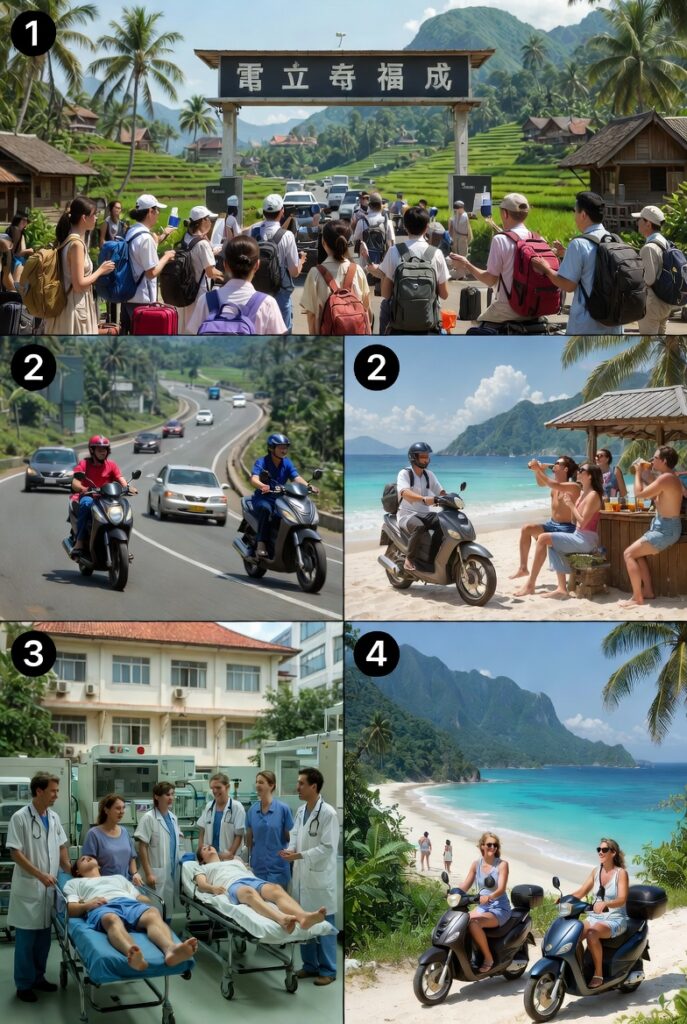
A government in South-East Asia wants all visitors to have accident insurance before they enter the country. The main reason is that hospitals spend a lot of money when visitors have accidents but do not have insurance. This costs the hospitals and the government a lot of money.
Many visitors have accidents because they do not know local rules. Some ride motorcycles or drive in ways that are unsafe. Others have accidents because they drink alcohol. When visitors are hurt, hospitals must give them medical care. Without insurance, the hospital pays all the cost. Insurance helps hospitals get money to pay for treatment.
The plan says that visitors must show proof of insurance at the border. The insurance must pay for accidents. The government may check insurance papers before visitors can enter. This will help hospitals and visitors.
This rule can help in different ways. First, hospitals will not lose money. Second, visitors are safer because they can get treatment without paying a lot of money. Third, visitors will think about safety before their trip. Some countries already have rules like this, and it works well. Visitors may need to buy insurance before traveling. This is a small cost for safety.
In conclusion, accident insurance for visitors is a good idea. It helps hospitals, protects visitors, and makes travel safer. Visitors will know they have help if they are hurt. Hospitals will not lose money. Everyone will be safer with this rule.
___________________________
Pros ✅
Cons ❌
Hospitals get money for visitor accidents
Visitors must buy insurance before travel
Visitors are safer and get medical help
Some visitors may pay more money
Less financial pressure on government and hospitals
Some travelers may not want to travel because of the rule
Visitors think more about safety
Extra paperwork at the border
Similar rules exist in other countries
Small risk of confusion or mistakes with insurance
Helps hospitals care for local people too
Travelers may not know which insurance to buy
###################
Word/Phrase
Definition
to be insured
To have insurance [a plan that pays money] that can pay if something bad happens.
an accident insurance
A paper or plan that pays money if you get hurt in an accident.
healthcare system
Hospitals, doctors, and nurses that help sick or hurt people.
to protect
To keep someone or something safe.
amid
In the middle of something or during something.
to enter a country
To go into a country.
an insurance
A plan that pays money if something bad happens.
local rules
Laws or rules in one place.
to be unsafe
Not safe; can cause danger or harm.
to be hurt
To have pain or an injury.
medical care
Help from doctors or nurses when you are sick or hurt.
to pay for treatment
To give money for help from doctors or hospitals.
to show proof
To give something that shows it is true.
the border
The line between two countries.
to lose money
To not have money you had before.
safety
The state of being safe and not in danger.
in conclusion
A phrase used to show the final idea or summary.
financial pressure
Stress or problems with money.
to exist
To be; to live or be real.
a risk of confusion
A chance that people may not understand or may make mistakes.
to care for people
To help people and make sure they are safe and healthy.
##################
Match the word to the definition:
Words:
to be insured
an accident insurance
healthcare system
to protect
amid
to enter a country
an insurance
local rules
to be unsafe
to be hurt
medical care
to pay for treatment
to show proof
the border
to lose money
safety
in conclusion
financial pressure
to exist
a risk of confusion
to care for people
Definitions:
A. Not safe; can cause danger or harm B. Stress or problems with money C. To give money for help from doctors or hospitals D. Hospitals, doctors, and nurses that help sick or hurt people E. A chance that people may not understand or may make mistakes F. In the middle of something or during something G. To keep someone or something safe H. To go into a country I. Help from doctors or nurses when you are sick or hurt J. To have pain or an injury K. To have insurance that can pay if something bad happens L. A plan that pays money if something bad happens M. To give something that shows it is true N. The line between two countries O. A phrase used to show the final idea or summary P. To help people and make sure they are safe and healthy Q. The state of being safe and not in danger R. To not have money you had before S. To be; to live or be real T. Laws or rules in one place U. A paper or plan that pays money if you get hurt in an accident
Hospitals, doctors, and nurses that help sick or hurt people
Not safe; can cause danger or harm
A phrase used to show the final idea or summary
To have pain or an injury
Stress or problems with money
The line between two countries
To help people and make sure they are safe and healthy
A plan that pays money if something bad happens
To give something that shows it is true
To go into a country
The state of being safe and not in danger
A chance that people may not understand or may make mistakes
Words:
A. the border B. safety C. to pay for treatment D. financial pressure E. in conclusion F. to be hurt G. to protect H. to care for people I. healthcare system J. an insurance K. a risk of confusion L. to enter a country M. to show proof N. to be unsafe
The government plans to make accident insurance __________ for visitors.
Visitors sometimes have _________ while traveling.
Hospitals care for visitors when they are __________.
Visitors who do not know local __________ are more likely to have accidents.
__________ accidents are common among visitors.
Insurance helps pay for visitors’ _________.
Visitors must show proof of insurance before _________ the country.
Mandatory __________ protects both visitors and hospitals.
Hospitals face financial __________ if visitors are uninsured.
Accident insurance reduces financial pressure on __________.
Visitors are __________ when they have insurance.
The rule ensures that hospitals get _________ for treatment.
Insurance helps visitors get __________ without paying too much money.
Mandatory insurance encourages visitors to follow safety __________.
———————————- Correct version:
The government plans to make accident insurance mandatory for visitors.
Visitors sometimes have accidents while traveling.
Hospitals care for visitors when they are hurt.
Visitors who do not know local rules are more likely to have accidents.
Motorcycle accidents are common among visitors.
Insurance helps pay for visitors’ medical care.
Visitors must show proof of insurance before entering the country.
Mandatory insurance protects both visitors and hospitals.
Hospitals face financial problems if visitors are uninsured.
Accident insurance reduces financial pressure on hospitals.
Visitors are safer when they have insurance.
The rule ensures that hospitals get money for treatment.
Insurance helps visitors get treatment without paying too much money.
Mandatory insurance encourages visitors to follow safety rules.
##################
Match question and answer – rewrite the interview:
Questions:
Who requires visitors to have accident insurance?
What does the government introduce for visitors?
Why do many visitors need insurance?
Who pays for treatment if visitors have no insurance?
How does insurance support hospitals?
How does insurance help visitors?
When must visitors have valid insurance?
What does the insurance include?
How do visitors confirm they have insurance?
What do visitors receive if they are hurt?
How does the rule support hospitals financially?
How do hospitals get payment for treatment?
Is this rule new in the country?
Do similar rules exist in other countries?
Answers:
A. Insurance gives visitors safety and medical help if they are hurt. B. The government enforces that all visitors carry insurance. C. Hospitals cover the treatment costs when visitors do not have insurance. D. The insurance covers hospital treatment and doctors’ fees. E. Yes, other countries require visitors to have accident insurance. F. Visitors present proof to show they are insured. G. Hospitals collect money from the visitor’s insurance plan. H. Yes, the government introduces it this year. I. Visitors need insurance to get medical care if they are hurt. J. The government creates a rule about mandatory insurance. K. Visitors show proof of insurance at the border before entry. L. Hospitals avoid financial pressure because insurance pays for treatment. M. Visitors obtain medical care from hospitals and doctors. N. Insurance provides payment so hospitals do not lose money.
(loud voice, leans forward, points finger, tense face → very upset)
Receptionist: I understand. I will help you.
(calm voice, open body, eye contact → shows control)
Guest: I just checked in. This is very bad!
(speaks fast, tight jaw → angry)
Receptionist: I’m very sorry. This is not good.
(nods, calm → shows understanding)
Guest: The bathroom is dirty, and the bed is not nice!
(hand movement, shakes head → frustration)
Receptionist: Thank you for telling me. I will fix this now.
(clear, calm → solution starts)
Guest: I wait long time before! Now this problem!
(sighs, looks at phone → tired, in a hurry)
Receptionist: I see. You waited long. I understand.
(nods → shows listening)
Receptionist: I will do this quickly for you.
(focused → shows urgency)
Guest: It’s okay…
(no eye contact, tight lips → not really okay)
Receptionist: I’m sorry. I will change your room.
(friendly, eye contact → builds trust)
Guest: Hmm… okay. How long?
(raises eyebrows → unsure)
Receptionist: One moment, please. I check now. I take care of this.
(calm, confident → gives security)
Receptionist: I have a new room for you. It is clean and ready.
(small smile, open posture → positive)
Guest: Is it quiet?
(head tilted → testing)
Receptionist: Yes, it is quiet. I choose a good room for you.
(clear, confident → builds trust)
Guest: Okay…
(body relaxes → calmer)
Receptionist: Here is your new key. I can show you the room.
(friendly, helpful → good service)
Guest: No, it’s okay. Thank you.
(normal voice, relaxed shoulders → calm)
Receptionist: You’re welcome. If you need help, please come back.
(eye contact, polite → professional)
Guest: Thank you.
(nods → satisfied)
#################### Vocabulary:
to respond → to answer or say something back
to lean forward → to move your body a little forward
to point finger → to show something with your finger
a tense face → a face that shows worry or anger
to be upset → to feel unhappy or angry
a calm voice → a quiet and soft voice
an open body → arms and hands not crossed, friendly position
eye contact → looking at someone’s eyes
a tight jaw → mouth closed and muscles hard, shows anger or stress
to be angry → to feel very mad
to nod → to move your head up and down to say yes
to show understanding → to show you know how someone feels
to shake head → to move your head left and right to say no
frustration → feeling annoyed or unhappy because of problems
a solution → a way to fix a problem
to sigh → to breathe out slowly when tired or unhappy
to show listening → to show you are paying attention
to be focused → to pay full attention to something
to show urgency → to show something must be done fast
tight lips → lips pressed together, show stress or anger
to build trust → to make someone feel they can believe you
to raise the eyebrows → to move eyebrows up, shows surprise or question
to be confident → to feel sure and strong about yourself
to give security → to make someone feel safe
an open posture → standing or sitting in a friendly way
to tilt one’s head → to move the head a little to one side
to relax → to be calm and not tense
relaxed shoulders → shoulders not tense, body feels calm
to be satisfied → to feel happy with the result
####################
1. Start with the baseline
Before focusing on gestures, notice the overall vibe of the guest. This is your foundation.
Things to observe:
Tone of voice: Is it calm, sharp, raised, trembling, or flat? Hint: A calm but firm tone often masks frustration, while a raised tone signals urgency.
Speed of speech: Fast speech = anxious or irritated. Slow speech = controlled but possibly frustrated.
General posture: Open posture (relaxed shoulders, arms uncrossed) vs. tense posture (rigid, leaning away, hands tight).
Why it matters: A guest who’s frustrated but reasonable looks different from someone who feels ignored or disrespected. Baseline observation helps you tailor your response.
2. Key body language signals (and what they often mean)
Reading body language at the front desk is important, especially when a guest is complaining. It is not about finding secrets. It is about seeing the guest’s feelings so you can respond in the right way.
You are not trying to see if the guest is lying. You want to understand how upset the guest is and what the guest needs.
Here is a simple way to understand it 👇
1. Start with the baseline
Before focusing on specific gestures, look at the overall picture:
Tone of voice (calm, sharp, raised)
Speed of speech (slow vs. rushed)
General posture (open vs. tense)
A guest who’s frustrated but reasonable looks very different from someone who feels ignored or disrespected.
2. Key body language signals (and what they often mean)
🔴 Signs of high frustration / anger
Tight jaw, clenched teeth
Leaning forward aggressively
Pointing fingers or sharp hand movements
Invading your personal space
👉 Interpretation: They want to be heard immediately and taken seriously.
How to respond:
Lower your voice (this naturally de-escalates)
Acknowledge quickly: “I understand this is frustrating, let me fix this for you.”
🟠 Signs of controlled frustration
Arms crossed tightly
Minimal eye contact or looking away
Short, clipped responses
Sighing or subtle head shaking
👉 Interpretation: They’re annoyed but still cooperative.
How to respond:
Show structure and competence: “Let me check what happened and give you a solution right away.”
🟡 Signs of uncertainty / testing you
Raised eyebrows
Head tilted slightly
Pauses before answering
Looking around (not fully engaged yet)
👉 Interpretation: They’re unsure if you’ll help or not.
How to respond:
Build trust quickly: “I’ll personally take care of this for you.”
🟢 Signs of calming down
Shoulders relax
Arms uncross
Eye contact improves
Nods while you speak
👉 Interpretation: You’re handling it well.
How to respond:
Keep going—don’t over-explain, just resolve efficiently.
3. Watch for inconsistencies
If body language and words don’t match, emotions are usually closer to the truth.
Example:
Saying “It’s fine” but:
tight lips
no eye contact
stiff posture
👉 They’re not fine. Offer a bit more reassurance or solution.
4. Micro-signals that matter at the desk
These are small but powerful in hospitality:
Eye contact avoidance → discomfort or feeling dismissed
Leaning on the desk heavily → impatience or fatigue
Looking at phone repeatedly → urgency / time pressure
Deep exhale before speaking → trying to stay calm
5. Your body language matters just as much
Guests read you instantly. Aim for:
Open posture (no crossed arms)
Slight forward lean (shows attention)
Calm facial expression
Nods while listening
Avoid:
Looking at the computer too long while they talk
Interrupting
Forced smiling when they’re upset (can feel dismissive)
6. A simple mental framework
When a guest complains, quickly ask yourself:
How intense is their emotion? (low / medium / high)
Do they want empathy or speed? (often both, but one dominates)
Are they escalating or calming?
Then match your response:
High emotion → empathy first
Lower emotion → solution first
7. One pro tip from hospitality psychology
People calm down faster when they feel:
Seen (eye contact, nodding)
Heard (repeat their issue briefly)
Taken seriously (clear action)
A simple line that works almost everywhere:
“I see what the issue is, and I’m going to fix this for you right now.”
Ayu, a young girl, tells us about a very special festival on Bali in April.
Gianyar is a city in Bali, Indonesia. Every year, people celebrate the anniversary of Gianyar. In 2026, the anniversary is on 19 April. This day is very important. Gianyar started on 19 April 1771. A long time ago, Gianyar was a palace and a small town. Today, the city remembers its history with many events.
Before the anniversary, people have many activities. One special event is the Parade Bapang Barong. The parade is on 7 April 2026. All seven parts of the city take part. People wear traditional clothes. They dance and play music. The parade is fun for children and adults. It shows the culture and old ways of Gianyar.
On 19 April, the main celebration is here. People do ceremonies. They raise the flag. People sing songs. There are dances and music. Families and friends come together. The city shows its art. People enjoy the shows. They feel proud of Gianyar and its history.
The celebration is not only fun. It is also for learning. People teach children old songs and dances. They tell stories about the city. The anniversary helps people remember the past.
Many visitors come to see the events. They watch the dances and music. They take photos. The city is full of colors and happiness. Everyone can enjoy the parade and the shows.
Gianyar’s anniversary is a special time. It is about history, fun, and old ways. People celebrate together. Young and old feel happy and proud. Every year, the city celebrates with joy.
_____________________
Vocabulary:
to celebrate – to do something special because something good happens
an anniversary – a day when people remember an important event from the past
to remember – to think about something from the past
an event – something that happens, like a party, show, or meeting
to take part in something – to join an activity or do it with other people
traditional clothes – clothes from a country or culture, often old-style or special
an adult – a person who is not a child; a grown-up
a ceremony – a special event with rules, like raising a flag or giving awards
to raise a flag – to put a flag up on a pole
to enjoy a show – to feel happy while watching a performance, like music, dance, or theater
to feel proud – to feel happy about something you or your group does
to watch something – to look at something carefully, like a show or a game
to take photos – to make pictures with a camera or phone
to celebrate with joy – to be very happy while celebrating
###################
Match the word to the correct definition:
Words:
to celebrate
an anniversary
to remember
an event
to take part in something
traditional clothes
an adult
a ceremony
to raise a flag
to enjoy a show
to feel proud
to watch something
to take photos
to celebrate with joy
Definitions:
A. to think about something from the past B. a person who is not a child C. to do something special because something good happens D. to make pictures with a camera or phone E. to join an activity or do it with other people F. a special event with rules, like raising a flag or giving awards G. to be very happy while celebrating H. to put a flag up on a pole I. clothes from a country or culture, often old-style or special J. to feel happy about something you or your group does K. a day when people remember an important event from the past L. something that happens, like a party, show, or meeting M. to look at something carefully, like a show or a game N. to feel happy while watching a performance, like music, dance, or theater
Is the official anniversary on 19 April or 7 April?
Does the Parade Bapang Barong happen before 19 April or after 19 April?
Do all seven sub-districts join the parade or only three?
Do people wear traditional clothes or modern clothes for the parade?
Does the main celebration include flag ceremonies or no ceremonies?
Do families and children come to the events or only adults?
Does the celebration include music and dance or only music?
Is the parade only for adults or for everyone?
Does the anniversary help people remember history or forget history?
Is Gianyar a city in Bali or in Jakarta?
Does the parade happen on 7 April or on 20 April?
Is the anniversary only for tourists or for local people too?
_____________________
Correct answers:
Is the festival 255 or 226 years old? → 226
Does the anniversary happen in April or in June? → April
Is the official anniversary on 19 April or 7 April? → 19 April
Does the Parade Bapang Barong happen before 19 April or after 19 April? → before
Do all seven sub-districts join the parade or only three? → seven
Do people wear traditional clothes or modern clothes for the parade? → traditional
Does the main celebration include flag ceremonies or no ceremonies? → flag
Do families and children come to the events or only adults? → families
Does the celebration include music and dance or only music? → music and dance
Is the parade only for adults or for everyone? → everyone
Does the anniversary help people remember history or forget history? → remember
Is Gianyar a city in Bali or in Jakarta? → Bali
Does the parade happen on 7 April or on 20 April? → 7 April
Is the anniversary only for tourists or for local people too? → local people
################
Basics of present simple:
Personal Pronoun
am / is / are
I
am
8 years old
You
are
8 years old
He
is
8 years old
She
is
8 years old
It
is
8 years old
We
are
8 years old
You (plural)
are
8 years old
They
are
8 years old
Personal Pronoun
am not / is not / are not
I
am not
8 years old
You
are not
8 years old
He
is not
8 years old
She
is not
8 years old
It
is not
8 years old
We
are not
8 years old
You (plural)
are not
8 years old
They
are not
8 years old
Question:
Question Word
Personal Pronoun
Am
I
8 years old?
Are
you
8 years old?
Is
he
8 years old?
Is
she
8 years old?
Is
it
8 years old?
Are
we
8 years old?
Are
you (plural)
8 years old?
Are
they
8 years old?
Statement:
Personal Pronoun
Verb
I
like
ice cream
You
like
ice cream
He
likes
ice cream
She
likes
ice cream
It
likes
ice cream
We
like
ice cream
You (plural)
like
ice cream
They
like
ice cream
Negation:
Personal Pronoun
Verb (negative)
I
do not like
ice cream
You
do not like
ice cream
He
does not like
ice cream
She
does not like
ice cream
It
does not like
ice cream
We
do not like
ice cream
You (plural)
do not like
ice cream
They
do not like
ice cream
Question:
Do / Does
Personal Pronoun
Verb
Sugar?
Do
I
like
sugar?
Do
you
like
sugar?
Does
he
like
sugar?
Does
she
like
sugar?
Does
it
like
sugar?
Do
we
like
sugar?
Do
you (plural)
like
sugar?
Do
they
like
sugar?
################
Question formation exercise:
anniversary / happen / when => __________ ?
parade / join / who => __________ ?
people / wear / what => __________ ?
parade / happen / where => __________ ?
celebration / include / what => __________ ?
children / enjoy / what => __________ ?
main / celebration / start / when => __________ ?
people / do / during / parade => __________ ?
city / celebrate / how => __________ ?
families / come / to / events / do => __________ ?
parade / colorful / is / how => __________ ?
music / include / does / celebration => __________ ?
visitors / come / to / see / what => __________ ?
people / feel / proud / why => __________ ?
———————————–
Correct questions:
When does the anniversary happen?
Who joins the parade?
What do people wear?
Where does the parade happen?
What does the celebration include?
What do children enjoy?
When does the main celebration start?
What do people do during the parade?
How does the city celebrate?
Do families come to the events?
How colorful is the parade?
Does the celebration include music?
What do visitors come to see?
Why do people feel proud?
################
Form questions to which the word/s given is/are the answer:
Teachers give students homework every Monday. a) Teachers: b) give students homework every Monday: c) students: d) every Monday:
Children bring friends gifts for the festival. a) Children: b) bring friends gifts for the festival: c) friends: d) gifts:
Parents show children photos during the celebration. a) Parents: b) show children photos during the celebration: c) children: d) photos: e) during the celebration:
Musicians play instruments for the audience at the parade. a) Musicians: b) play instruments for the audience at the parade: c) instruments: d) for the audience: at the parade:
Guides show tourists maps during the tour. a) Tourists: b) take guides questions on the streets: c) tourists: d) maps: e) during the tour:
_________________________
Correct questions:
1. Teachers give students homework every Monday.
Who gives homework?
What do teachers do every Monday?
Who do teachers give homework to?
When do teachers give homework to students?
2. Children bring friends gifts for the festival.
Who brings gifts?
What do children do for the festival?
Who do children bring gifts to?
What do children bring?
3. Parents show children photos during the celebration.
Who shows the photos?
What do parents do during the celebration?
Who do parents show the photos to?
What do parents show to the children?
When do parents show the photos?
4. Musicians play instruments for the audience at the parade.
Who plays instruments?
What do musicians do at the parade?
What do musicians play?
Who do musicians play for at the parade?
Where do musicians play?
5. Guides show tourists maps during the tour.
Who shows the maps?
What do guides do during the tour?
Who do guides show the maps to during the tour?
What do guides show?
When do guides show the maps?
###############
Complete the sentences:
Children bring __________ to their friends. (shoes / gifts / chairs)
Visitors take __________ of the parade. (books / photos / notes)
The festival shows __________ of Gianyar. (animals / history / mountains)
The Parade Bapang Barong is held __________ the anniversary. (during / after / before)
People wear __________ during the celebration. (modern clothes / traditional clothes)
Children watch __________. (shows / dances / music)
Families enjoy __________ at the festival. (games / food / music)
People feel __________ about the anniversary. (hungry / proud / tired)
Musicians play __________ during the parade. (books / instruments / games)
The main celebration includes __________. (sports / flag ceremonies / school)
People celebrate the anniversary every __________. (week / day / year)
The parade is __________. (long / fun / colorful)
——————————- Correct version:
Children bring gifts to their friends.
Visitors take photos of the parade.
The festival shows history of Gianyar.
The Parade Bapang Barong is held before the anniversary.
People wear traditional clothes during the celebration.
Children watch music.
Families enjoy music at the festival.
People feel proud about the anniversary.
Musicians play instruments during the parade.
The main celebration includes flag ceremonies.
People celebrate the anniversary every year.
The parade is colorful.
###############
Match questions and answers, rewrite the interview:
Questions:
When is the Gianyar anniversary?
Who joins the Parade Bapang Barong?
What do people wear during the celebration?
Where does the parade happen?
Who watches the parade?
What do musicians play?
Why do people celebrate the anniversary?
How do children enjoy the festival?
When does the main celebration start?
Who shows the photos during the celebration?
What do visitors take at the festival?
How do people feel about the anniversary?
Answers:
a. Families, children, and visitors enjoy the event. b. People remember the history and the founding of Gianyar. c. They put on traditional clothes for the festival. d. The parade goes through the streets of Gianyar. e. The main event happens on the anniversary day, 19 April. f. Visitors make photos of the parades and performances. g. Parents share them with their children. h. They like the music, dances, and the colorful parade. i. All seven sub-districts take part in the parade. j. People feel proud of their culture and their city. k. The anniversary is on 19 April, and people celebrate it every year. l. They perform with different instruments.
Gianyar celebrates its __________ on 19 April every year. People __________ the history of the city and take part in many __________. The Parade Bapang Barong __________ before the main day, and everyone can __________ the parade. Children and __________ wear traditional clothes. During the ceremony, people __________ a flag and enjoy shows with music and __________. Families take photos and __________ with joy. The celebration makes everyone feel __________ of their city and culture. The events are __________, fun, and full of local traditions.
———————————–
Correct version:
Gianyar celebrates its anniversary on 19 April every year. People remember the history of the city and take part in many events. The Parade Bapang Barong happens before the main day, and everyone can watch the parade. Children and adults wear traditional clothes. During the ceremony, people raise a flag and enjoy shows with music and dance. Families take photos and celebrate with joy. The celebration makes everyone feel proud of their city and culture. The events are colorful, fun, and full of local traditions.
If you think about visiting Battambang, I recommend staying one night instead of going only for one day. Battambang is a very nice and peaceful place, but it is quite far from here. The journey takes about three hours each way, so a one-day trip means you spend a lot of time in the car. This feels tiring and rushed.
If you stay one night, you enjoy the trip in a more relaxed way. Battambang is known for its beautiful countryside, small villages, and local life. You take your time to see the rice fields, meet local people, and try traditional food.
One of the most popular activities is the bamboo train, also called the railroad trip. It is not a normal train, but a small bamboo platform on wheels. A motor pushes it along old railway tracks. You sit on top and travel through the countryside. It is simple, but very fun and different. Many guests enjoy this experience.
In the evening, you visit the nearby hills and watch thousands of bats fly out of the caves at sunset. This is a very special and memorable sight.
You can also take a trip to Tonle Sap Lake. It is the largest lake in Cambodia and it has floating villages. You take a boat and see how people live on the water, with floating houses, schools, and shops. It is a very interesting cultural experience.
Battambang also has a calm atmosphere and quiet streets. For these reasons, one night is much better than a quick day trip.
__________________________
Vocabulary:
to be hidden – not easy to see or find
a gem – something very good or special
to recommend – to say something is good to do or try
instead of – rather than, not doing something else
to be peaceful – quiet and calm, not noisy
quite far – a long distance away
to be tiring – making you feel very tired
to be rushed – done too quickly, not enough time
to enjoy – to like something and feel happy doing it
to be relaxed – feeling calm and not worried
a railway – a place where trains run
wheels – round parts of a vehicle that turn and move it
a railway track – the rails where trains travel
an experience – something you do and learn from or remember
a bat – a small animal that can fly at night
a cave – a large hole in a rock or mountain
a memorable sight – something you see that you will always remember
a floating village – a village where the houses are on water
a calm atmosphere – a quiet and peaceful feeling in a place
for this reason – because of this
#################
Match the Word to the Definition
Words:
to be hidden
a gem
to recommend
instead of
to be peaceful
quite far
to be tiring
to be rushed
to enjoy
to be relaxed
a railway
wheels
a railway track
an experience
a bat
a cave
a memorable sight
a floating village
a calm atmosphere
for this reason
Definitions:
a) something you see that you will always remember b) not easy to see or find c) a quiet and peaceful feeling in a place d) round parts of a vehicle that turn and move it e) feeling calm and not worried f) rather than, not doing something else g) because of this h) something very good or special i) a small animal that can fly at night j) to say something is good to do or try k) a village where the houses are on water l) a large hole in a rock or mountain m) quiet and calm, not noisy n) a place where trains run o) the rails where trains travel p) a long distance away q) making you feel very tired r) done too quickly, not enough time s) something you do and learn from or remember t) to like something and feel happy doing it
a) a bat b) wheels c) a memorable sight d) to be relaxed e) instead of f) a floating village g) a cave h) a gem i) to be rushed j) quiet / peaceful k) for this reason l) to enjoy m) a railway track n) to be hidden
Does the journey to Battambang from here take one hour or three hours?
Should you visit Battambang for just one day or stay one night?
Can you see rice fields or mountains in Battambang?
Are there small villages or big cities in Battambang?
Is the bamboo train a normal train or a small platform on wheels?
Does the bamboo train travel on railway tracks or on the road?
Do you sit on top of the bamboo train or inside it?
Do visitors watch bats or birds in the evening near the hills?
Do the bats fly from caves or from trees at sunset?
Is Tonle Sap Lake the largest lake in Cambodia or a small pond?
Are the villages on Tonle Sap Lake floating villages or mountain villages?
Can you see houses, schools, and shops on the floating villages or only on land?
Is staying one night in Battambang better than a quick day trip or the same as a day trip?
_________________________
Answers:
Is Battambang quiet or noisy? quiet
Journey time to Battambang: 1 hour or 3 hours? 3 hours
Visit Battambang: one day or one night? one night
See in Battambang: rice fields or mountains? rice fields
Villages in Battambang: small or big? small
Bamboo train: normal train or platform on wheels? platform on wheels
Bamboo train travels on: railway tracks or road? railway tracks
Seat on bamboo train: on top or inside? on top
Evening near hills: bats or birds? bats
Bats fly from: caves or trees? caves
Tonle Sap Lake: largest lake or small pond? largest lake
Villages on Tonle Sap: floating or mountain? floating
See on floating villages: houses/schools/shops or only land? houses/schools/shops
Staying in Battambang: one night better or same as day trip? one night better
################
Match the first part of the sentence with the correct second part:
1. The journey to Battambang takes about three hours… 2. Staying one night allows… 3. The bamboo train is… 4. In the evening, visitors can… 5. Tonle Sap Lake is… 6. Visitors can see rice fields and small villages… 7. Battambang has quiet streets… 8. Many guests enjoy riding the bamboo train… 9. On Tonle Sap Lake, people live in… 10. One-day trips are often…
A. …because it is simple but fun. B. …and a calm atmosphere. C. …the largest lake in Cambodia with floating villages. D. …each way from here. E. …floating villages on the water. F. …watch thousands of bats flying from caves. G. …a small bamboo platform on wheels. H. …tiring and rushed. I. …throughout the countryside. J. …to enjoy the trip in a relaxed way.
____________________________
Answers:
1-D, 2-J, 3-G, 4-F, 5-C, 6-I, 7-B, 8-A, 9-E, 10-H
####################
Fill-in-the-blank, words below :
Battambang is a very ________ and peaceful city.
The journey takes about ________ hours each way.
One popular activity is the bamboo ________.
Visitors watch thousands of ________ fly from caves at sunset.
Tonle Sap Lake has floating ________.
Staying one night is more ________ than a one-day trip.
Battambang has a calm ________ and quiet streets.
The bamboo train travels on old ________ tracks.
You sit on top of the bamboo train, not ________.
Many visitors enjoy the bamboo train because it is ________ and fun.
In the evening, visitors can watch bats flying from ________.
Tonle Sap Lake is the largest ________ in Cambodia.
The floating villages have houses, schools, and ________ on water.
A one-day trip to Battambang can feel ________ and rushed.
Word Bank:
A. rice fields B. caves C. houses D. bamboo train E. 3 F. motor G. tracks H. city I. tiring J. relaxed K. largest lake L. bats M. calm N. memorable
______________________
Correct version:
Battambang is a very quiet and peaceful city.
The journey to Battambang takes about three hours each way.
One popular activity in Battambang is the bamboo train.
Visitors watch thousands of bats flying from caves at sunset.
Tonle Sap Lake has floating villages.
Staying one night in Battambang is more relaxed than a one-day trip.
Battambang has a calm atmosphere and quiet streets.
The bamboo train travels on old railway tracks.
You sit on top of the bamboo train, not inside.
Many visitors enjoy the bamboo train because it is fun and memorable.
In the evening, visitors can watch bats flying from the caves.
Tonle Sap Lake is the largest lake in Cambodia.
The floating villages have houses, schools, and shops on the water.
A one-day trip to Battambang can feel tiring and rushed.
###############
Find answer to question, rewrite interview:
Questions:
What kind of place is Battambang?
How long do you travel to reach Battambang?
Why is it better to stay one night?
What can visitors look at in the countryside?
How would you describe the bamboo train?
Where does the bamboo train move?
Where do people sit on the bamboo train?
What happens near the hills in the evening?
What is special about Tonle Sap Lake?
Where do people live on Tonle Sap Lake?
How do one-day visitors feel?
How would you describe the streets in Battambang?
What can guests taste in Battambang?
Which activity is exciting for many visitors?
Answers:
A. Thousands of bats fly out of the caves B. Calm and quiet C. In houses, schools, and shops D. Rice fields and small villages E. About three hours each way F. Riding the bamboo train G. Quiet and peaceful H. Floating villages are on the water I. The trip feels more relaxed J. A small bamboo platform on wheels K. On top of the platform L. Along old railway tracks M. Traditional food N. Tired and rushed
A one-day trip in Jakarta is a good way to see culture and meet local people. Jakarta is a big city and it is very busy, but it has many interesting places. You can see history, buildings, food, and markets in one day.
In the morning, you visit the National Monument, also called Monas. It is very tall and stands in the center of the city. You go to the top and see Jakarta from above. Around the monument, many local people walk, relax, and take photos. Some people play sports or ride bicycles. You watch daily life and take photos. It is a very good start for the day.
After that, you go to Kota Tua, the old town of Jakarta. The buildings are old and show Dutch history. You walk in the square and visit small museums. Many people rent bicycles or watch street performers. You talk to local people and see their life. The streets are beautiful and the atmosphere is nice. You can also buy small souvenirs in the area.
At lunchtime, you eat Indonesian food in a local restaurant. You try nasi goreng, satay, or mie goreng. The food is very tasty and cheap. Eating local food helps you understand culture. People in Jakarta are friendly and happy to talk to tourists.
In the afternoon, you visit Chinatown, also called Glodok. This area is busy and colorful. You see Chinese temples, small shops, and markets. People sell food, tea, and medicine. You try street food and meet local people. The market is full of colors and smells.
After that, you visit Istiqlal Mosque. It is very large and beautiful. Near the mosque, you see Jakarta Cathedral. The buildings show that different religions live together in peace.
This one-day trip shows history, culture, and friendly people in Jakarta. You learn about local life and enjoy the city. It is a good day for tourists who want to know Jakarta.
__________________________
Vocabulary:
to meet people – to see and talk to new people
to be busy – to have a lot of things to do or many people around
to be called – to have a name
to relax – to rest and feel calm
to ride a bicycle – to move on a bike using your feet on the pedals
to watch daily life – to look at what people do every day
Dutch history – the story of the Netherlands and its people in the past
a square – an open place in a town or city with streets around it
to rent a bike – to pay money to use a bicycle for a short time
to watch street performers – to look at people who show music, dance, or acting on the street
an area – a part of a city or place
lunchtime – the time when people eat lunch, usually in the middle of the day
to be tasty – to taste good
to be full of smells – to have many smells that you can notice
peace – a time or place with no fighting or problems
to enjoy – to feel happy or have fun doing something
#############
Match the word to the definition
Words:
to meet people
to be busy
to be called
to relax
to ride a bicycle
to watch daily life
Dutch history
a square
to rent a bike
to watch street performers
an area
lunchtime
to be tasty
to be full of smells
peace
to enjoy
Definitions:
A. a part of a city or place B. to feel happy or have fun doing something C. to pay money to use a bicycle for a short time D. a time when people eat lunch, usually in the middle of the day E. to have many smells that you can notice F. the story of the Netherlands and its people in the past G. to see and talk to new people H. to look at people who show music, dance, or acting on the street I. a time or place with no fighting or problems J. an open place in a town or city with streets around it K. to move on a bike using your feet on the pedals L. to rest and feel calm M. to have a lot of things to do or many people around N. to taste good O. to have a name P. to look at what people do every day
1. Where is the National Monument (Monas) located? a) In Chinatown b) In Kota Tua c) In the center of Jakarta
2. What can visitors do at the top of Monas? a) Eat Indonesian food b) Buy souvenirs c) Watch Jakarta from above
3. What do people do around the National Monument? a) Only take photos b) Walk, relax, play sports, ride bicycles c) Swim and ride boats
4. What is special about Kota Tua? a) Modern shopping centers b) Beaches and parks c) Old buildings and small museums
5. What can tourists do in Kota Tua? a) Visit a zoo b) Go to the aquarium c) Rent bicycles and watch street performers
6. What food can visitors try at lunchtime? a) Pizza and pasta b) Nasi goreng, satay, mie goreng c) Burgers and fries
7. What is Chinatown also called? a) Glodok b) Kota Tua c) Monas
8. What can you see in Chinatown? a) Chinese temples, and more b) Only restaurants c) Beaches
9. What can visitors try in Chinatown? a) Street food b) Nasi goreng only c) Pizza
10. What does a one-day trip in Jakarta show? a) Only food b) Only buildings c) History, culture, and local life
______________________ Answers:
1-c, 2-c, 3-b, 4-c, 5-c, 6-b, 7-a, 8-a, 9-a, 10-c
################
Fill in, words below:
ride – enjoy – interesting – square – performers – meet – markets – daily life – called – history – relax – bike
You can __________ people around the National Monument.
Jakarta is a busy city with many __________ places.
The National Monument is __________ Monas.
People __________ and walk around the monument.
Some people __________ a bicycle near Monas.
You can watch __________ of local people at the monument.
Kota Tua has old buildings that show Dutch _________.
There is a big __________ in Kota Tua.
Tourists can rent a __________ in Kota Tua.
People watch street __________ in Kota Tua.
Chinatown is a colorful area with __________ and temples.
The one-day trip helps you __________ the city and learn about local life.
——————————- Full version:
You can meet people around the National Monument.
Jakarta is a busy city with many interesting places.
The National Monument is called Monas.
People relax and walk around the monument.
Some people ride a bicycle near Monas.
You can watch daily life of local people at the monument.
Kota Tua has old buildings that show Dutch history.
There is a big square in Kota Tua.
Tourists can rent a bike in Kota Tua.
People watch street performers in Kota Tua.
Chinatown is a colorful area with markets and temples.
The one-day trip helps you enjoy the city and learn about local life.
#################
Match question and answer:
Questions
What can tourists see in Jakarta?
Where do people go first in the morning?
Who is around the National Monument?
How is the National Monument special?
What can visitors find in Kota Tua?
Which activities can tourists try in Kota Tua?
Where do people eat lunch?
What dishes are popular for lunch?
What is interesting in Chinatown?
Who works in Chinatown markets?
What can tourists notice near Istiqlal Mosque?
Why do tourists like this one-day trip?
Answers
a. They learn about local life and enjoy the culture and city. b. Visitors see Chinese temples, shops, and colorful markets. c. Nasi goreng, satay, and mie goreng are very common. d. At local restaurants serving Indonesian dishes. e. Many local people walk, take photos, and do sports. f. There are old buildings, small museums, and a large square. g. It is very tall and you can see the city from above. h. Local people sell food, tea, and other goods. i. Most visitors start at the National Monument. j. They can rent bicycles and watch street performers. k. They can explore history, buildings, food, and markets. l. They see Jakarta Cathedral close by, showing different religions live together.