Kategorie: MAN Solok City

  • 🤓🥳🖥️Sokha’s School Day at an NGO (A1 beginners, present simple, questions, negations)🖥️🥳🤓


    Sokha’s Day

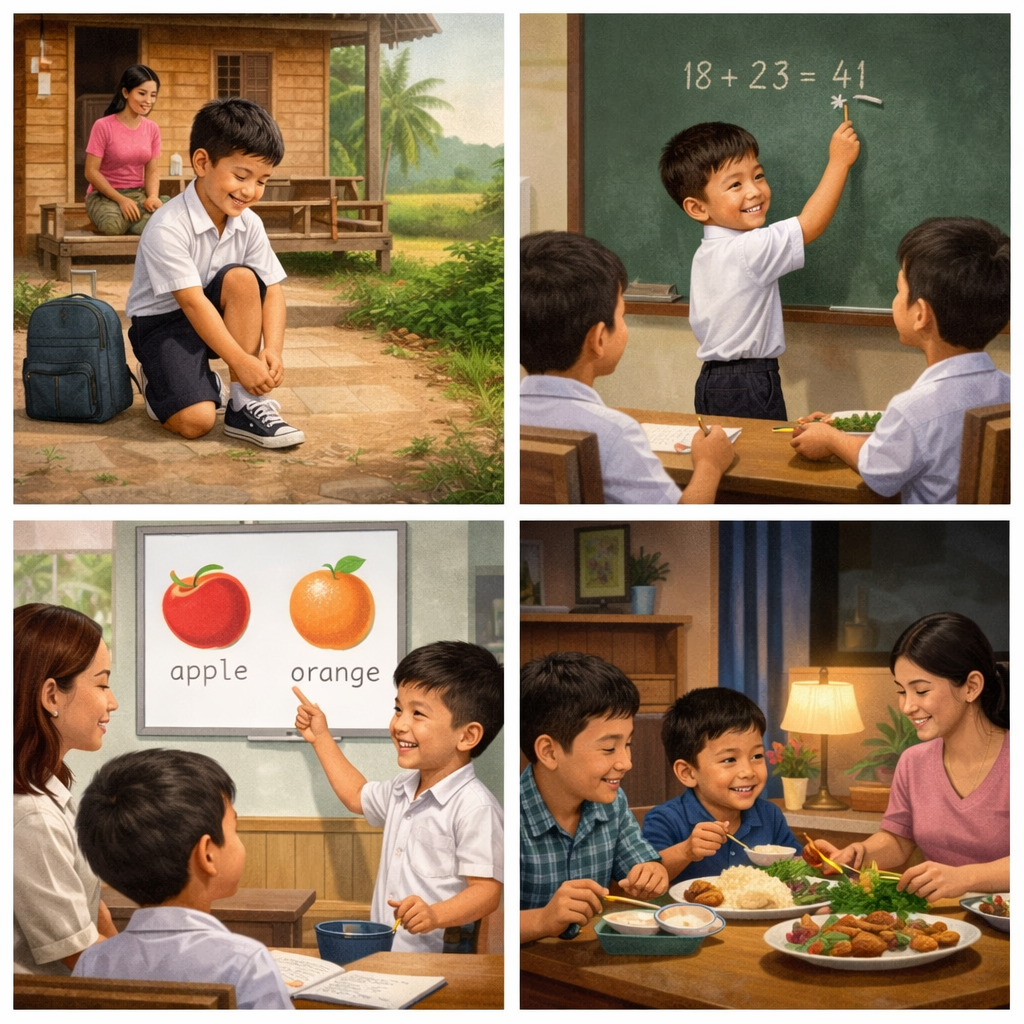
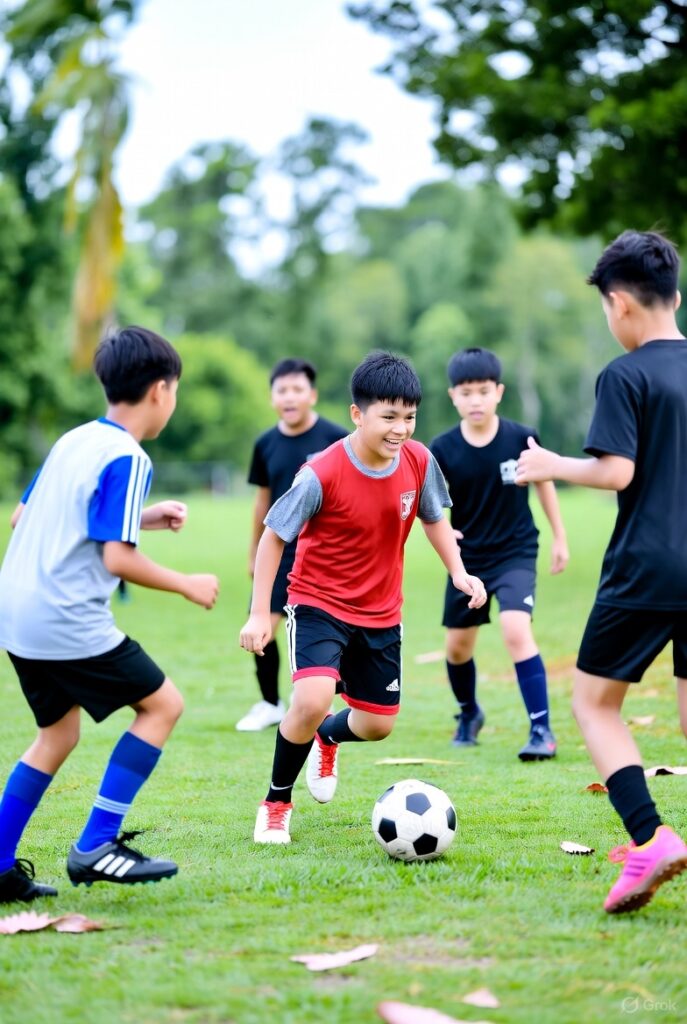
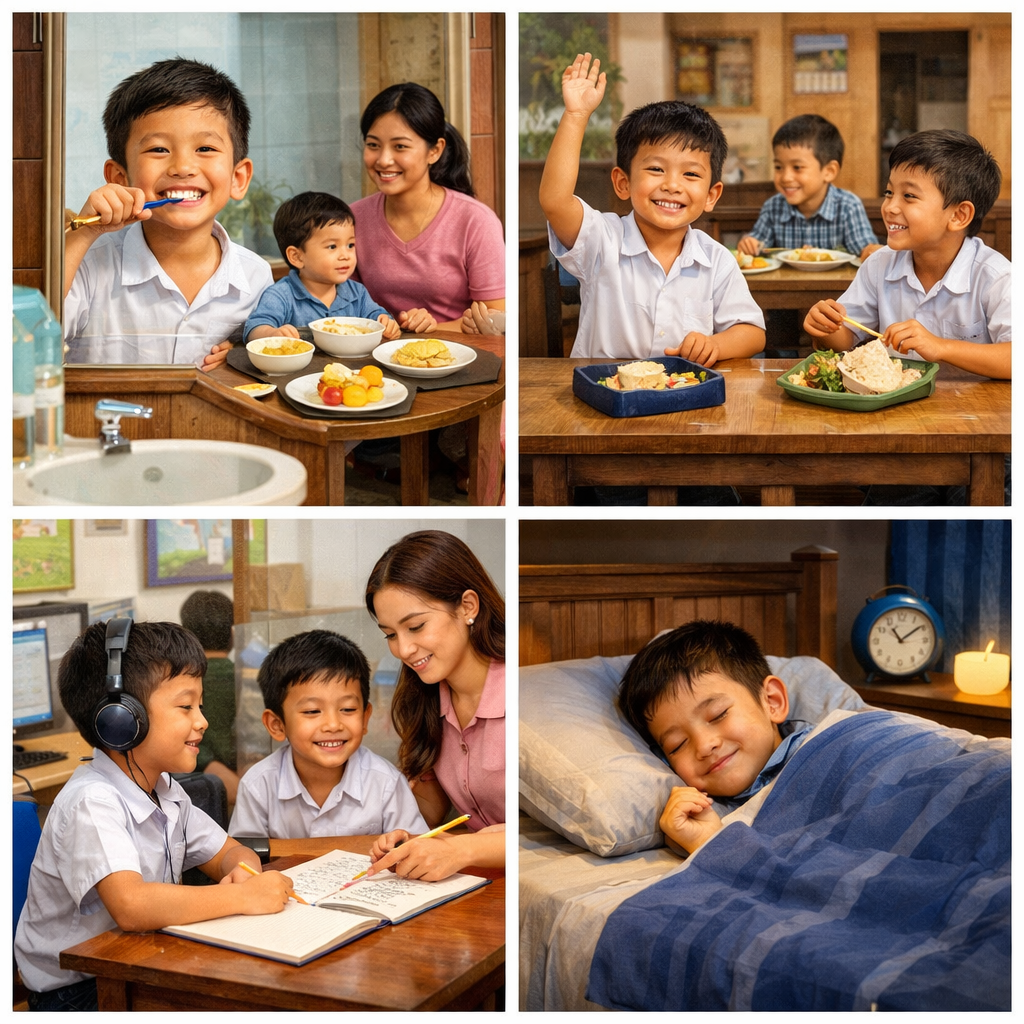
    Sokha is nine years old. He lives in Siem Reap with his mother, father, and little brother. He is a happy boy and likes school very much.

    Every day, he wakes up at six o’clock. He washes his face and brushes his teeth. He eats breakfast with his family. He eats rice, eggs, or fruit. Then he puts on his school uniform and goes to school.

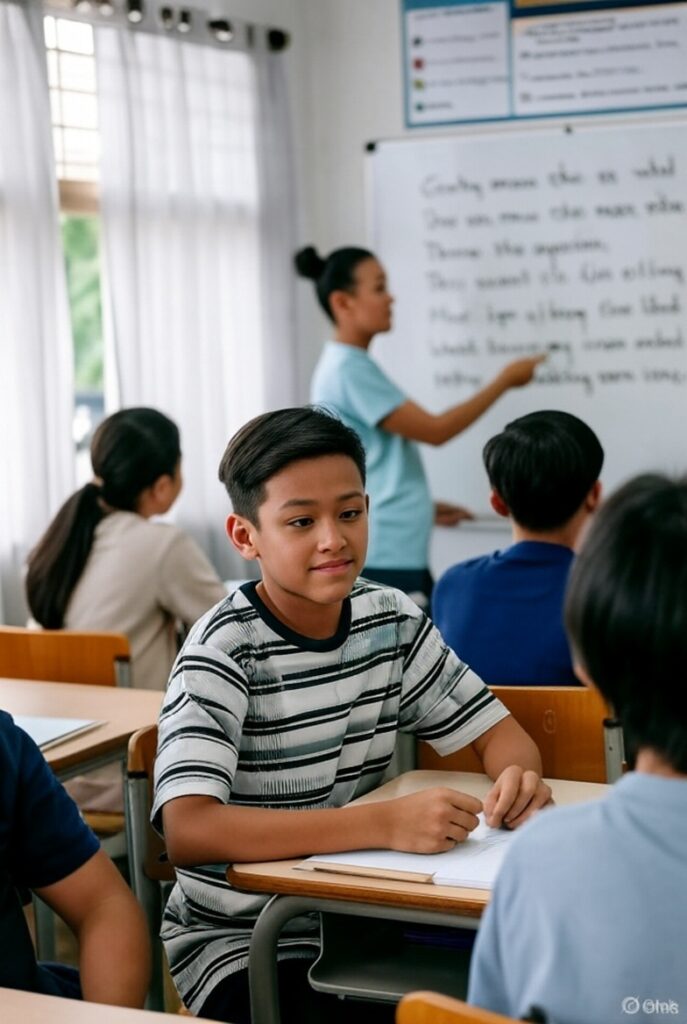
    School starts at seven o’clock. He studies math, Khmer, and science. He likes math best. At twelve o’clock, he eats lunch with his friends.

    After school, he learns English and computers. In the evening, he does homework and eats dinner. He goes to bed at eight thirty.


    _____________________

    Vocabulary:

    • NGO (Non-Governmental Organization) – an organization that is not part of the government [ a group of people who run a country. They make rules and laws ]
    • to wake up – to stop sleeping
    • to wash – to clean with water
    • a face – the front part of your head (eyes, nose, mouth)
    • to brush teeth – to clean your teeth with a toothbrush
    • a tooth – one white thing in your mouth
    • to eat breakfast – to eat food in the morning
    • an egg – food from a chicken
    • to put on a uniform – to wear school or work clothes
    • to study math – to learn about numbers
    • science – learning about the world and nature
    • to eat lunch – to eat food in the middle of the day
    • to learn computers – to learn how to use a computer

    #################

    Match the words with the correct definitions.

    Words

    1. to wake up
    2. a tooth
    3. to eat lunch
    4. to wash
    5. science
    6. to put on a uniform
    7. an egg
    8. to brush teeth
    9. to study math
    10. to learn computers
    11. to eat breakfast
    12. a face

    Definitions (Random Order)

    A. to learn about numbers
    B. to stop sleeping
    C. to clean your teeth with a toothbrush
    D. food from a chicken
    E. to eat food in the morning
    F. to clean with water
    G. learning about the world and nature
    H. the front part of your head
    I. one white thing in your mouth
    J. to learn how to use a computer
    K. to eat food in the middle of the day
    L. to wear school or work clothes

    ________________________

    Answers:
    1-B, 2-I, 3-K, 4-F, 5-G, 6-L,
    7-D, 8-C, 9-A, 10-J, 11-E, 12-H
    ________________________

    Correct answers:

    to wake up – to stop sleeping
    a tooth – one white thing in your mouth
    to eat lunch – to eat food in the middle of the day
    to wash – to clean with water
    science – learning about the world and nature
    to put on a uniform – to wear school or work clothes
    an egg – food from a chicken
    to brush teeth – to clean your teeth with a toothbrush
    to study math – to learn about numbers
    to learn computers – to learn how to use a computer
    to eat breakfast – to eat food in the morning
    a face – the front part of your head

    ##################

    True or false:

    1. Sokha reads a little in the evening.
    2. He eats lunch at home with his family.
    3. School starts at seven o’clock.
    4. He has a little sister.
    5. Sometimes he eats fish or chicken for lunch.
    6. Sokha likes math very much.
    7. He goes to bed at ten o’clock.
    8. Sokha wakes up at six o’clock every morning.
    9. He never helps his mother at home.
    10. After school, Sokha learns English and computers.
    11. He eats breakfast with his family.
    12. Sokha does not like learning new things.
    13. He studies music at school every day.
    14. He lives in Phnom Penh.

    ____________________________

    True: 1,3,5,6,8,10,11,

    ____________________________

    Correct version:

    1. Sokha reads a little in the evening.
    2. He eats lunch at home with his family. True is: He eats lunch at school.
    3. School starts at seven o’clock.
    4. He has a little sister. True is: He has a little brother.
    5. Sometimes he eats fish or chicken for lunch.
    6. Sokha likes math very much.
    7. He goes to bed at ten o’clock. True is: He goes to bed at eight thirty.
    8. Sokha wakes up at six o’clock every morning.
    9. He never helps his mother at home. True is: He helps his mother at home.
    10. After school, Sokha learns English and computers.
    11. He eats breakfast with his family.
    12. Sokha does not like learning new things. True is: He likes learning new things.
    13. He studies music at school every day. True is: Sometimes he learns music and dance.
    14. He lives in Phnom Penh. True is: He lives in Siem Reap.

    ################

    Fill in, words below:

    science – learns – mother – dinner –
    likes – friends – wakes up –
    does – puts on –
    brushes

    Sokha is nine years old.
    He lives in Siem Reap with his __________, father, and little brother.
    He is a happy boy and __________ school.
    Every morning, he __________ at six o’clock.
    He washes his face, __________ his teeth, and eats breakfast with his family.
    He __________ his school uniform and goes to school.
    He studies math, Khmer, and __________.
    At twelve o’clock, he eats lunch with his __________.
    After school, he __________ English and computers.
    In the evening, he __________ his homework, helps his mother, eats __________, reads a little, and goes to bed.

    —————————————–

    Correct version:

    Sokha is nine years old.
    He lives in Siem Reap with his mother, father, and little brother.
    He is a happy boy and likes school.
    Every morning, he wakes up at six o’clock.
    He washes his face, brushes his teeth, and eats breakfast with his family.
    He puts on his school uniform and goes to school.
    He studies math, Khmer, and science.
    At twelve o’clock, he eats lunch with his friends.
    After school, he learns English and computers.
    In the evening, he does his homework, helps his mother, eats dinner, reads a little, and goes to bed.

    ###################

    Negation:

    Personal PronounVerb (negative)
    Ido not likeice cream
    Youdo not likeice cream
    Hedoes not likeice cream
    Shedoes not likeice cream
    Itdoes not likeice cream
    Wedo not likeice cream
    You (plural)do not likeice cream
    Theydo not likeice cream

    Questions:

    Do / DoesPersonal PronounVerbSugar?
    DoIlikesugar?
    Doyoulikesugar?
    Doeshelikesugar?
    Doesshelikesugar?
    Doesitlikesugar?
    Dowelikesugar?
    Doyou (plural)likesugar?
    Dotheylikesugar?

    ‚to be‘ – basics:

    Personal Pronounam / is / are
    Iam8 years old
    Youare8 years old
    Heis8 years old
    Sheis8 years old
    Itis8 years old
    Weare8 years old
    You (plural)are8 years old
    Theyare8 years old

    Negation:

    Personal Pronounam not / is not / are not
    Iam not8 years old
    Youare not8 years old
    Heis not8 years old
    Sheis not8 years old
    Itis not8 years old
    Weare not8 years old
    You (plural)are not8 years old
    Theyare not8 years old

    Questions:

    Question WordPersonal Pronoun
    AmI8 years old?
    Areyou8 years old?
    Ishe8 years old?
    Isshe8 years old?
    Isit8 years old?
    Arewe8 years old?
    Areyou (plural)8 years old?
    Arethey8 years old?

    ###################

    Rewrite as shown in statement 1:

    1. Sokha is nine years old.

      YOU WRITE:
      Negation: Sokha is not nine years old.
      Question: Is Sokha nin years old?
    2. He lives in Siem Reap with his mother, father, and little brother.
    3. He wakes up at six o’clock,
    4. He eats breakfast.
    5. He studies math, Khmer, and science.
    6. After school, he learns English and computers.
    7. In the evening, he does his homework.
    8. He helps his mother.
    9. They eat dinner,
    10. Sokha and her brother read a little.
    11. She goes to bed at 9pm.

    _________________________

    Correct answers:


    1. Sokha is nine years old.
      Negation: Sokha is not nine years old.
      Question: Is Sokha nine years old?
    2. He lives in Siem Reap with his mother, father, and little brother.
      Negation: He does not live in Siem Reap with his mother, father, and little brother.
      Question: Does he live in Siem Reap with his mother, father, and little brother?
    3. He wakes up at six o’clock.
      Negation: He does not wake up at six o’clock.
      Question: Does he wake up at six o’clock?
    4. He eats breakfast.
      Negation: He does not eat breakfast.
      Question: Does he eat breakfast?
    5. He studies math, Khmer, and science.
      Negation: He does not study math, Khmer, and science.
      Question: Does he study math, Khmer, and science?
    6. After school, he learns English and computers.
      Negation: After school, he does not learn English and computers.
      Question: After school, does he learn English and computers?
    7. In the evening, he does his homework.
      Negation: In the evening, he does not do his homework.
      Question: In the evening, does he do his homework?
    8. He helps his mother.
      Negation: He does not help his mother.
      Question: Does he help his mother?
    9. They eat dinner.
      Negation: They do not eat dinner.
      Question: Do they eat dinner?
    10. Sokha and his brother read a little.
      Negation: Sokha and his brother do not read a little.
      Question: Do Sokha and his brother read a little?
    11. He goes to bed at nine o’clock.
      Negation: He does not go to bed at nine o’clock.
      Question: Does he go to bed at nine o’clock?

    ##################

    Unscramble the sentences:

    1. his / brushes / face / and / his / he / teeth / washes →
    2. school / he / English / after / learns →
    3. breakfast / morning / eats / he / the / in →
    4. school / science / at / he / math / and / studies →
    5. little / his / and / read / Sokha / brother →
    6. nine / goes / at / he / bed / to / o’clock →

    Answers

    1. He washes his face and brushes his teeth.
    2. After school, he learns English.
    3. He eats breakfast in the morning.
    4. He studies math and science at school.
    5. Sokha and his little brother read.
    6. He goes to bed at nine o’clock.

    ################

    Match question to answer


    Questions

    1. What is your name?
    2. How old are you?
    3. Where do you live?
    4. Who do you live with?
    5. What time do you wake up?
    6. What do you eat for breakfast?
    7. What subjects do you study at school?
    8. What do you do after school?
    9. Who do you sit with at lunch?
    10. What do you do before you go to bed?

    Answers

    A. I eat rice, eggs, or fruit for breakfast.
    B. I do my homework, help my mother, eat dinner, and read a little before I go to bed.
    C. I am nine years old.
    D. I live in Siem Reap.
    E. I study math, Khmer, and science.
    F. I sit with my friends at lunch.
    G. I learn English and computers after school.
    H. My name is Sokha.
    I. I live with my mother, father, and little brother.
    J. I wake up at six o’clock.


    _____________________________

    Correct answers:
    1-H, 2-C, 3-D, 4-I, 5-J,
    6-A, 7-E, 8-G, 9-F, 10-B
    _____________________________

    Correct version:


    1. What is your name?
    My name is Sokha.

    2. How old are you?
    I am nine years old.

    3. Where do you live?
    I live in Siem Reap.

    4. Who do you live with?
    I live with my mother, father, and little brother.

    5. What time do you wake up?
    I wake up at six o’clock.

    6. What do you eat for breakfast?
    I eat rice, eggs, or fruit for breakfast.

    7. What subjects do you study at school?
    I study math, Khmer, and science.

    8. What do you do after school?
    I learn English and computers after school.

    9. Who do you sit with at lunch?
    I sit with my friends at lunch.

    10. What do you do before you go to bed?
    I do my homework, help my mother, eat dinner, and read a little before I go to bed.


    ###################


    Complete, interview with Somalena about Sokha:

    1. What is __________ name?
    His name is Sokha.

    2. How old is he?
    He is __________years old.

    3. Where does he live?
    He __________ in Siem Reap.

    4. Who does he live with?
    He lives with his mother, __________, and little brother.

    5. What time does he wake up?
    He __________ up at six o’clock.

    6. What does he eat for breakfast?
    He eats rice, eggs, or __________ for breakfast.

    7. What subjects does he study at school?
    He studies math, __________, and science.

    8. What does he do after school?
    He __________ English and computers after school.

    9. Who does he sit with at lunch?
    He sits with his __________ at lunch.

    10. What does he do before he goes to bed?
    He does his homework, helps his mother, eats __________, and __________ a little before he goes to bed.


    ________________________

    Correct version:


    1. What is his name?
    His name is Sokha.

    2. How old is he?
    He is nine years old.

    3. Where does he live?
    He lives in Siem Reap.

    4. Who does he live with?
    He lives with his mother, father, and little brother.

    5. What time does he wake up?
    He wakes up at six o’clock.

    6. What does he eat for breakfast?
    He eats rice, eggs, or fruit for breakfast.

    7. What subjects does he study at school?
    He studies math, Khmer, and science.

    8. What does he do after school?
    He learns English and computers after school.

    9. Who does he sit with at lunch?
    He sits with his friends at lunch.

    10. What does he do before he goes to bed?
    He does his homework, helps his mother, eats dinner, and reads a little before he goes to bed.


    ####################

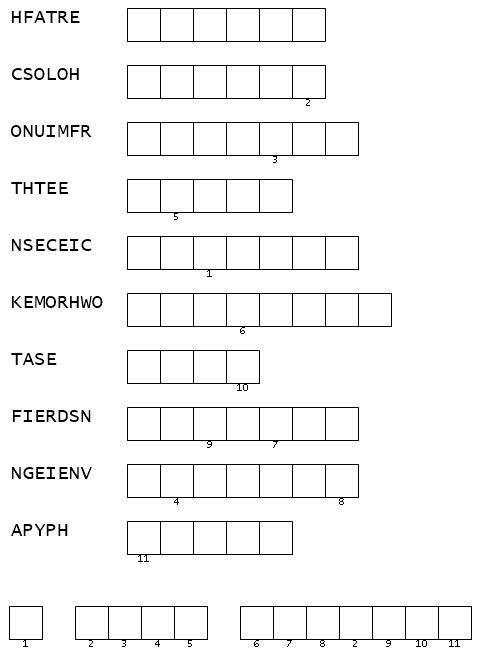
    Unscramble, which phrase are we looking for?
  • 🌉🐏Two proud goats – getting wet (A1, beginners, present simple)🐏🌉


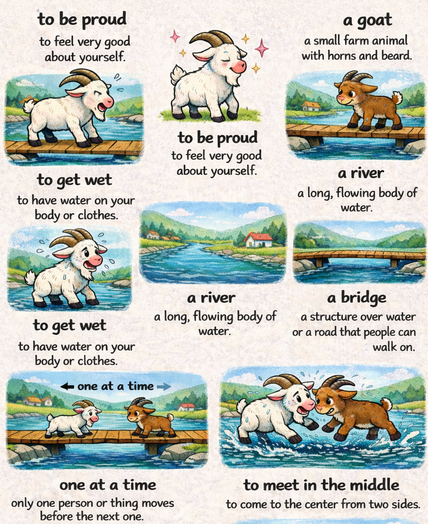
    Two goats live near a river.
    One goat is big. One goat is small.

    There is a small bridge over the river. Only one goat can walk on it at a time.

    One day, the big goat walks on the bridge. At the same time, the small goat walks from the other side. They meet in the middle.

    The big goat says, “Move! I am big and strong.”
    The small goat says, “Please do not be proud. We can both cross.”

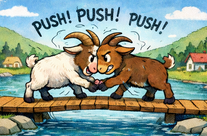
    Both goats are proud. They push each other.

    They lose balance and fall into the cold river. Splash!

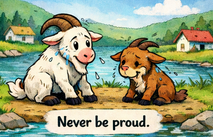
    They swim to the shore. They are wet and cold.

    The lesson: Never be proud.

    ____________________________

    Vocabulary:


    to be proud – to feel very good about yourself, sometimes too much.

    a goat – a small farm animal with horns and a beard.

    to get wet – to have water on your body or clothes.

    a river – a long, flowing body of water.

    a bridge – a structure over water or a road that people can walk on.

    one at a time – only one person or thing moves before the next one.

    to meet in the middle – to come to the center from two sides.

    to be strong – to have a lot of power or muscles.

    both – the two people or things together.

    to lose balance – to fall or almost fall because you are not stable.

    to fall into the river – to drop into the river by accident.

    to swim to the shore – to move in the water with your arms and legs until you reach land.


    #############


    Word match to definition

    Words:

    1. to be proud
    2. a goat
    3. to get wet
    4. a river
    5. a bridge
    6. one at a time
    7. to meet in the middle
    8. to be strong
    9. both
    10. to lose balance
    11. to fall into the river
    12. to swim to the shore

    Definitions (random order):
    A. To move in the water with your arms and legs until you reach land.
    B. Only one person or thing moves before the next one.
    C. To feel very good about yourself.
    D. Two people or things together.
    E. A long, flowing body of water.
    F. A small farm animal with horns and a beard.
    G. To drop into the river by accident.
    H. A structure over water or a road that people can walk on.
    I. To have water on your body or clothes.
    J. To come to the center from two sides.
    K. To fall or almost fall because you are not stable.
    L. To have a lot of power or muscles.


    ______________________

    Answers:

    1=C, 2=F, 3=I, 4=E, 5=H, 6=B,
    7=J, 8=L, 9=D, 10=K, 11=G, 12=A

    ______________________


    Correct version:


    to be proud – to feel very good about yourself
    a goat – a small farm animal with horns and a beard
    to get wet – to have water on your body or clothes
    a river – a long, flowing body of water
    a bridge – a structure over water or a road that people can walk on
    one at a time – only one person or thing moves before the next one
    to meet in the middle – to come to the center from two sides
    to be strong – to have a lot of power or muscles
    both – two people or things together
    to lose balance – to fall or almost fall because you are not stable
    to fall into the river – to drop into the river by accident
    to swim to the shore – to move in the water with your arms and legs until you reach land

    ################

    True or false?


    1. A goat is a small farm animal with horns.
    2. To be proud means to feel sad about yourself.
    3. One at a time means only one person moves before the next.
    4. A river is dry land.
    5. To get wet means to stay dry.
    6. Both means only one person or thing.
    7. To meet in the middle means to come to the center from two sides.
    8. To be strong means to have a lot of power or muscles.
    9. To lose balance means to stay very still.
    10. To swim to the shore means to move in the water to reach land.
    11. A bridge is a structure you can walk on over water or a road.
    12. To fall into the river means to jump safely into the river.
    13. To get wet means to feel dry.
    14. Both means two people or things together.

    ___________________________

    True: 1,3,7,8,10,11,14
    ______________________

    Correct version:


    1. A goat is a small farm animal with horns. – T
    2. To be proud means to feel sad about yourself. – F – True is: To be proud means to feel very good about yourself.
    3. One at a time means only one person moves before the next. – T
    4. A river is dry land. – F – True is: A river is a long, flowing body of water.
    5. To get wet means to stay dry. – F – True is: To get wet means to have water on your body or clothes.
    6. Both means only one person or thing. – F – True is: Both means two people or things together.
    7. To meet in the middle means to come to the center from two sides. – T
    8. To be strong means to have a lot of power or muscles. – T
    9. To lose balance means to stay very still. – F – True is: To lose balance means to fall or almost fall because you are not stable.
    10. To swim to the shore means to move in the water to reach land. – T
    11. A bridge is a structure you can walk on over water or a road. – T
    12. To fall into the river means to jump safely into the river. – F – True is: To fall into the river means to drop into the river by accident.
    13. To get wet means to feel dry. – F – True is: To get wet means to have water on your body or clothes.
    14. Both means two people or things together. – T

    ##############

    Fill in, words below:

    goat – middle – Another – shore – river –
    push – big – bridge –
    walks – on

    1. Two goats live near a __________.
    2. One goat is __________.
    3. __________ goat is small.
    4. A small __________ goes over the river.
    5. Only one __________ can walk on the bridge at a time.
    6. The big goat walks __________ the bridge.
    7. The small goat __________ from the other side.
    8. In the __________, they meet.
    9. Both __________ each other.
    10. They fall into the cold river and swim to the __________.

    ___________________

    Correct version:

    1. Two goats live near a river.
    2. One goat is big.
    3. Another goat is small.
    4. A small bridge goes over the river.
    5. Only one goat can walk on the bridge at a time.
    6. The big goat walks on the bridge.
    7. The small goat walks from the other side.
    8. In the middle, they meet.
    9. Both push each other.
    10. They fall into the cold river and swim to the shore.

    ###############

    Put the words in order:

    1. two / the/ goats / near / river / the / live
    2. one / on/ goat / big / left / side / is /the
    3. small / the/ goat / right / side / walks / the / on
    4. the / a / small / goes / over / river / bridge
    5. the / big / goat / walks / on / bridge
    6. of / bridge / in / the / they / meet / middle / the
    7. river / both / the / goats / push / each / other / into

    ______________________

    Correct answers:

    1. The two goats live near the river.
    2. One big goat is on the left side.
    3. The small goat walks on the right side.
    4. A small bridge goes over the river.
    5. The big goat walks on the bridge.
    6. They meet in the middle of the bridge.
    7. Both goats push each other into river.

    ##############


    Rewrite the dialogue, match question and answer:


    Questions:

    1. Where do the goats live?
    2. How many goats are there?
    3. Is one goat big or small?
    4. Is the other goat big or small?
    5. What do the goats do on the bridge?
    6. Do the goats meet in the middle?
    7. Are the goats proud?
    8. What happens when they push each other?
    9. Do they get wet?
    10. What do the goats do after they fall?

    Randomized Answers:

    A. One goat is big.
    B. Yes, they get wet.
    C. They walk on the bridge.
    D. Yes, both goats are proud.
    E. The goats live near the river.
    F. Two goats.
    G. They swim to the shore.
    H. The other goat is small.
    I. Yes, they meet in the middle.
    J. They fall into the cold river.


    _____________________

    Answers: 1=E, 2=F, 3=A, 4=H, 5=C,
    6=I, 7=D, 8=J, 9=B, 10=G
    _____________________

    Correct version:


    1. Where do the goats live? – The goats live near the river.
    2. How many goats are there? – Two goats.
    3. Is one goat big or small? – One goat is big.
    4. Is the other goat big or small? – The other goat is small.
    5. What do the goats do on the bridge? – They walk on the bridge.
    6. Do the goats meet in the middle? – Yes, they meet in the middle.
    7. Are the goats proud? – Yes, both goats are proud.
    8. What happens when they push each other? – They fall into the cold river.
    9. Do they get wet? – Yes, they get wet.
    10. What do the goats do after they fall? – They swim to the shore.

    ##################

  • 🤩😂🥸Young Samney’s day (A1, beginners, present simple, questions/answers, short answers, C2 bonus text)🥸😂🤩


    Samney is a young boy. He lives in a small, nice house with his family. Every morning, he wakes up early. He goes to the kitchen and eats breakfast. His breakfast is bread and milk. Then, he brushes his teeth and puts on his clothes for school.

    Samney walks to school with his friends. They are happy. At school, he listens to the teacher. He learns new things every day. At lunchtime, he eats his favorite sandwich.

    After school, Samney goes to the park. He plays games with his friends. He likes to run and jump. In the evening, he goes home. He helps his mother set the table. They eat dinner together.

    Before bed, Samney takes a warm bath. He puts on his pajamas. His parents read a story to him. Then he sleeps. He is happy and ready for tomorrow.


    _______________________

    Vocabulary:

    • to be nice – to be kind and friendly
    • to wake up – to stop sleeping
    • a kitchen – the room where you cook food
    • breakfast – the first meal in the morning
    • to brush one’s teeth – to clean your teeth with a toothbrush
    • to put on clothes – to wear clothes
    • to listen to somebody – to hear what someone says carefully
    • lunchtime – the time when you eat lunch
    • favorite – the thing you like the most
    • to play games – to do fun activities or sports
    • to jump – to go up in the air with your legs
    • to set the table – to put plates, forks, and cups on the table for a meal
    • to take a bath – to wash your body in water
    • pajamas – clothes you wear to sleep
    • to read a story to somebody – to tell a story by reading it to another person
    • to sleep – to rest with your eyes closed
    • to be ready – to be prepared
    • tomorrow – the day after today

    #################


    Match the words with the correct definition:

    Words:

    1. to be nice
    2. to wake up
    3. kitchen
    4. breakfast
    5. to brush one’s teeth
    6. to put on clothes
    7. to listen to somebody
    8. lunchtime
    9. favorite
    10. to play games
    11. to jump
    12. to set the table
    13. to take a bath
    14. pajamas
    15. to read a story to somebody
    16. to sleep
    17. to be ready
    18. tomorrow


    Definitions:

    A. to clean your teeth with a toothbrush
    B. the first meal in the morning
    C. to wear clothes
    D. to rest with your eyes closed
    E. the room where you cook food
    F. the day after today
    G. to tell a story by reading it to someone
    H. to go up in the air with your legs
    I. to hear what someone says carefully
    J. to be kind and friendly
    K. to wash your body in water
    L. clothes you wear to sleep
    M. the time when you eat lunch
    N. to put plates, forks, and cups on the table
    O. the thing you like the most
    P. to do fun activities or sports
    Q. to stop sleeping
    R. to be prepared


    ________________________

    Answer:
    1-J, 2-Q, 3-E, 4-B, 5-A, 6-C,
    7-I, 8-M, 9-O, 10-P, 11-H, 12-N,
    13-K, 14-L, 15-G, 16-D, 17-R, 18-F

    ________________________

    Correct answers:

    1. to be nice – to be kind and friendly
    2. to wake up – to stop sleeping
    3. kitchen – the room where you cook food
    4. breakfast – the first meal in the morning
    5. to brush one’s teeth – to clean your teeth with a toothbrush
    6. to put on clothes – to wear clothes
    7. to listen to somebody – to hear what someone says carefully
    8. lunchtime – the time when you eat lunch
    9. favorite – the thing you like the most
    10. to play games – to do fun activities or sports
    11. to jump – to go up in the air with your legs
    12. to set the table – to put plates, forks, and cups on the table
    13. to take a bath – to wash your body in water
    14. pajamas – clothes you wear to sleep
    15. to read a story to somebody – to tell a story by reading it to someone
    16. to sleep – to rest with your eyes closed
    17. to be ready – to be prepared
    18. tomorrow – the day after today

    ################

    Match the definition with the correct word:


    Definitions:

    A. the first meal in the morning
    B. a place to learn and study
    C. people you like and play with
    D. a place to play and run outside
    E. the meal in the evening
    F. to wash your body in water
    G. clothes you wear to sleep
    H. a book or tale that someone reads
    I. feeling good and smiling
    J. the day after today

    Words:

    1. pajamas
    2. friends
    3. breakfast
    4. story
    5. bath
    6. tomorrow
    7. park
    8. school
    9. dinner
    10. happy

    ____________________

    Answer:
    A-3, B-8, C-2, D-7, E-9,
    F-5, G-1, H-4, I-10, J-6
    ____________________

    Correct version:


    the first meal in the morning – breakfast
    a place to learn and study – school
    people you like and play with – friends
    a place to play and run outside – park
    the meal in the evening – dinner
    to wash your body in water – bath
    clothes you wear to sleep – pajamas
    a book or tale that someone reads – story
    feeling good and smiling – happy
    the day after today – tomorrow

    ###############

    Fill in, words below:


    breakfast, family, teeth, clothes,
    school, friends, lunch, park,
    dinner, bath,
    pajamas,
    story


    Fill in the correct word:

    1. Every morning, Samney eats _______.
    2. He brushes his _______ after breakfast.
    3. Then he puts on his _______ for school.
    4. Samney walks to school with his _______.
    5. At _______ time, he eats his favorite sandwich.
    6. After school, Samney plays games in the _______.
    7. In the evening, he helps his mom with _______.
    8. Before bed, Samney takes a warm _______.
    9. He puts on his _______ before sleeping.
    10. His parents read a _______ to him.
    11. Samney lives with his _______ in a nice house.
    12. At school, he listens carefully to his _______.

    ——————————

    Correct version:

    1. Every morning, Samney eats breakfast.
    2. He brushes his teeth after breakfast.
    3. Then he puts on his clothes for school.
    4. Samney walks to school with his friends.
    5. At lunch time, he eats his favorite sandwich.
    6. After school, Samney plays games in the park.
    7. In the evening, he helps his mom with dinner.
    8. Before bed, Samney takes a warm bath.
    9. He puts on his pajamas before sleeping.
    10. His parents read a story to him.
    11. Samney lives with his family in a nice house.
    12. At school, he listens carefully to his teacher.

    ##################

    True or false:


    1. Samney eats breakfast with his family every morning.
    2. He brushes his teeth after dinner.
    3. Samney walks to school with his friends.
    4. At lunchtime, he eats his favorite sandwich.
    5. He plays games in the kitchen after school.
    6. Samney helps his mom with breakfast.
    7. Before bed, Samney takes a warm bath.
    8. He wears his pajamas to school.
    9. His parents read him a story before he sleeps.
    10. Samney sleeps with a smile on his face.
    11. Samney brushes his teeth before breakfast.
    12. He runs to the park before school.

    ________________________
    Answers:
    1-T, 2-F, 3-T, 4-T, 5-F, 6-F,
    7-T, 8-F, 9-T, 10-T, 11-F, 12-F
    ________________________

    Correct version:


    1. Samney eats breakfast with his family every morning.
    2. He brushes his teeth after dinner. True is: He brushes his teeth after breakfast.
    3. Samney walks to school with his friends.
    4. At lunchtime, he eats his favorite sandwich.
    5. He plays games in the kitchen after school. True is: He plays games in the park after school.
    6. Samney helps his mom with breakfast. True is: He helps his mom set the table for dinner.
    7. Before bed, Samney takes a warm bath.
    8. He wears his pajamas to school. True is: He wears his pajamas before bed.
    9. His parents read him a story before he sleeps.
    10. Samney sleeps with a smile on his face.
    11. Samney brushes his teeth before breakfast. True is: He brushes his teeth after breakfast.
    12. He runs to the park before school. True is: He goes to the park after school.

    #################

    Short answers, basics:

    Example SentenceYesNo
    I learn the alphabet.Yes, I do.No, I don’t.
    You read signs.Yes, you do.No, you don’t.
    He practices speaking.Yes, he does.No, he doesn’t.
    She watches cartoons.Yes, she does.No, she doesn’t.
    It helps us learn English.Yes, it does.No, it doesn’t.
    We use apps like Duolingo.Yes, we do.No, we don’t.
    You read labels.Yes, you do.No, you don’t.
    They make mistakes sometimes.Yes, they do.No, they don’t.
    QuestionYesNo
    Do I learn the alphabet?Yes, I do.No, I don’t.
    Do you read signs?Yes, you do.No, you don’t.
    Does he practice speaking?Yes, he does.No, he doesn’t.
    Does she watch cartoons?Yes, she does.No, she doesn’t.
    Does it help us learn English?Yes, it does.No, it doesn’t.
    Do we use apps like Duolingo?Yes, we do.No, we don’t.
    Do you read labels?Yes, you do.No, you don’t.
    Do they make mistakes sometimes?Yes, they do.No, they don’t.
    QuestionYesNo
    Am I big?Yes, I am.No, I am not.
    Are you big?Yes, you are.No, you aren’t.
    Is he big?Yes, he is.No, he isn’t.
    Is she big?Yes, she is.No, she isn’t.
    Is it big?Yes, it is.No, it isn’t.
    Are we big?Yes, we are.No, we aren’t.
    Are you big?Yes, you are.No, you aren’t.
    Are they big?Yes, they are.No, they aren’t.

    ______________________________

    Short answers:


    1. Samney wakes up early every morning.

      YOU WRITE:
      Yes, he does.
    2. Samney eats dinner in the morning.
      __________________________
    3. Samney walks to school with his friends.
      __________________________
    4. He plays games in the park before school.
      __________________________
    5. At lunchtime, he eats his favorite sandwich.
      __________________________
    6. Samney helps his mom set the table for breakfast.
      __________________________
    7. He takes a warm bath before bed.
      __________________________
    8. Samney wears pajamas to school.
      __________________________
    9. His parents read him a story in the morning.
      __________________________
    10. Samney plays games in the kitchen after school.
      __________________________
    11. Samney eats breakfast at school.
      __________________________
    12. Samney helps his teacher set the table.
      __________________________

    ———————————
    Correct version:


    Samney wakes up early every morning.
    Yes, he does.

    Samney eats dinner in the morning.
    No, he doesn’t.

    Samney walks to school with his friends.
    Yes, he does.

    He plays games in the park before school.
    No, he doesn’t.

    At lunchtime, he eats his favorite sandwich.
    Yes, he does.

    Samney helps his mom set the table for breakfast.
    No, he doesn’t.

    He takes a warm bath before bed.
    Yes, he does.

    Samney wears pajamas to school.
    No, he doesn’t.

    His parents read him a story in the morning.
    No, they don’t.

    Samney plays games in the kitchen after school.
    No, he doesn’t.

    Samney eats breakfast at school.
    No, he doesn’t.

    Samney helps his teacher set the table.
    No, he doesn’t.

    #################

    Short answers:


    1. Samney is a young boy.

      YOU WRITE:
      Yes, he is.

    2. Samney walks to school with his friends.
      _______________________
    3. His pajamas are for sleeping.
      _______________________
    4. At lunchtime, he eats his favorite sandwich.
      _______________________
    5. Samney plays games in the garden after school.
      _______________________
    6. His parents are at the table during dinner.
      _______________________
    7. He eats breakfast with his family.
      _______________________
    8. Before bed, Samney takes a warm bath.
      _______________________
    9. He helps his grandmother set the table for dinner.
      _______________________
    10. The park is his classroom.
      _______________________
    11. He wakes up early every morning.
      _______________________
    12. Samney is unhappy when he walks to school.
      _______________________

    ———————————–
    Correct answers:

    Samney is a young boy.
    Yes, he is.

    Samney walks to school with his friends.
    Yes, he does.

    His pajamas are for sleeping.
    Yes, they are.

    At lunchtime, he eats his favorite sandwich.
    Yes, he does.

    Samney plays games in the garden after school.
    No, he doesn’t.

    His friend is at the table during dinner.
    No, he isn’t.

    He eats breakfast with his family.
    Yes, he does.

    Before bed, Samney takes a warm bath.
    Yes, he does.

    He helps his grandmother set the table for dinner.
    No, he doesn’t.

    The park is his classroom.
    No, it isn’t.

    He wakes up early every morning.
    Yes, he does.

    Samney is unhappy when he walks to school.
    No, he isn’t.

    #######################

    Short answer, followed by correct statement:

    1. Samney eats lunch before breakfast.

      YOU WRITE:
      No, he doesn’t. He eats lunch at lunchtime.

    2. He walks to school alone.
      ________________________
    3. Samney plays games in the kitchen after school.
      ________________________
    4. He wears pajamas to school.
      ________________________
    5. Samney sleeps during the day.
      ________________________
    6. His parents read him a story before breakfast.
      ________________________
    7. He eats dinner in the morning.
      ________________________
    8. Samney runs to the park before school.
      ________________________
    9. His breakfast is pizza.
      ________________________
    10. He brushes his teeth at night only.
      ________________________
    11. Samney helps his teacher set the table.
      ________________________
    12. The park is Samney’s classroom.
      ________________________

    ———————————-
    Correct version:


    Samney eats lunch before breakfast.
    No, he doesn’t. He eats lunch at lunchtime.

    He walks to school alone.
    No, he doesn’t. He walks with his friends.

    Samney plays games in the kitchen after school.
    No, he doesn’t. He plays games in the park.

    He wears pajamas to school.
    No, he doesn’t. He wears pajamas before bed.

    Samney sleeps during the day.
    No, he doesn’t. He sleeps at night.

    His parents read him a story before breakfast.
    No, they don’t. They read him a story before bed.

    He eats dinner in the morning.
    No, he doesn’t. He eats dinner in the evening.

    Samney runs to the park before school.
    No, he doesn’t. He goes to the park after school.

    His breakfast is pizza.
    No, it isn’t. He eats breakfast with his family.

    He brushes his teeth at night only.
    No, he doesn’t. He brushes his teeth in the morning.

    Samney helps his teacher set the table.
    No, he doesn’t. He helps his mom set the table.

    The park is Samney’s classroom.
    No, it isn’t. He plays in the park, school is separate.

    ##################

    Basics:

    Personal Pronounam / is / are
    Iam8 years old
    Youare8 years old
    Heis8 years old
    Sheis8 years old
    Itis8 years old
    Weare8 years old
    You (plural)are8 years old
    Theyare8 years old
    Personal Pronounam not / is not / are not
    Iam not8 years old
    Youare not8 years old
    Heis not8 years old
    Sheis not8 years old
    Itis not8 years old
    Weare not8 years old
    You (plural)are not8 years old
    Theyare not8 years old

    Question:

    Question WordPersonal Pronoun
    AmI8 years old?
    Areyou8 years old?
    Ishe8 years old?
    Isshe8 years old?
    Isit8 years old?
    Arewe8 years old?
    Areyou (plural)8 years old?
    Arethey8 years old?

    Statement:

    Personal PronounVerb
    Ilikeice cream
    Youlikeice cream
    Helikesice cream
    Shelikesice cream
    Itlikesice cream
    Welikeice cream
    You (plural)likeice cream
    Theylikeice cream

    Negation:

    Personal PronounVerb (negative)
    Ido not likeice cream
    Youdo not likeice cream
    Hedoes not likeice cream
    Shedoes not likeice cream
    Itdoes not likeice cream
    Wedo not likeice cream
    You (plural)do not likeice cream
    Theydo not likeice cream

    Question:

    Do / DoesPersonal PronounVerbSugar?
    DoIlikesugar?
    Doyoulikesugar?
    Doeshelikesugar?
    Doesshelikesugar?
    Doesitlikesugar?
    Dowelikesugar?
    Doyou (plural)likesugar?
    Dotheylikesugar?

    ##################

    Correct is:

    1. Does Samney wake up early or late?

      YOU WRITE:
      Samney wakes up early.

    2. Is Samney happy or sad in the morning?
    3. Does he eat breakfast with his family or alone?
    4. Do Samney’s friends walk to school with him or go alone?
    5. Does he brush his teeth before or after breakfast?
    6. Are Samney’s friends happy or tired on the way to school?
    7. Does he play in the park after school or at home?
    8. Is the park big or small?
    9. Does Samney help his mom set the table for dinner or play games?
    10. Do his parents read a story or watch TV?
    11. Does Samney take a warm bath or a cold shower before bed?
    12. Are Samney and his family ready or not ready for tomorrow?

    _________________________

    Correct version:

    1. Does Samney wake up early or late?
      Samney wakes up early.
    2. Is Samney happy or sad in the morning?
      Samney is happy in the morning.
    3. Does he eat breakfast with his family or alone?
      He eats breakfast with his family.
    4. Do Samney’s friends walk to school with him or go alone?
      Samney’s friends walk to school with him.
    5. Does he brush his teeth before or after breakfast?
      He brushes his teeth after breakfast.
    6. Are Samney’s friends happy or tired on the way to school?
      Samney’s friends are happy on the way to school.
    7. Does he play in the park after school or at home?
      He plays in the park after school.
    8. Is the park big or small?
      The park is nice.
    9. Does Samney help his mom set the table for dinner or play games?
      He helps his mom set the table for dinner.
    10. Do his parents read a story or watch TV?
      His parents read a story to him.
    11. Does Samney take a warm bath or a cold shower before bed?
      He takes a warm bath before bed.
    12. Are Samney and his family ready or not ready for tomorrow?
      Samney and his family are ready for tomorrow.

    ##################

    Form questions to which the word/s given is/are the answer:

    1. Samney wakes up early in the morning.
      a) Samney: _____________________?
      b) wakes up early: _____________________?
      c) in the morning: _____________________?
    2. He eats breakfast with his family in the morning.
      a) He: _____________________?
      b) eats breakfast: _____________________?
      c) in the morning: _____________________?
      d) his family: _____________________?
    3. Samney goes to school with his friends after breakfast.
      a) Samney: _____________________?
      b) goes to school: _____________________?
      c) after breakfast: _____________________?
    4. He plays in the park after school in the afternoon.
      a) He: _____________________?
      b) play in the park: _____________________?
      c) in the park: _____________________?
      d) after school: _____________________?
      e) in the afternoon: _____________________?
    5. Samney takes a bath before bed in the evening.
      a) Samney: _____________________?
      b) takes a bath: _____________________?
      c) a bath: _____________________?
      d) before bed in the evening: _____________________?

    ————————————-

    Correct questions:


    1. Samney wakes up early in the morning.
    a) Who wakes up early?
    Answer: Samney wakes up early.

    b) What does Samney do?
    Answer: Samney wakes up early.

    c) When does Samney wake up?
    Answer: Samney wakes up in the morning.


    2. He eats breakfast with his family in the morning.
    a) Who eats breakfast?
    Answer: He eats breakfast.

    b) What does he do?
    Answer: He eats breakfast.

    c) When does he eat breakfast?
    Answer: He eats breakfast in the morning.

    d) With whom does he eat breakfast?
    Answer: He eats breakfast with his family.


    3. Samney goes to school with his friends after breakfast.
    a) Who goes to school?
    Answer: Samney goes to school.

    b) What does Samney do?
    Answer: Samney goes to school.

    c) When does he go to school?
    Answer: Samney goes to school after breakfast.


    4. He plays in the park after school in the afternoon.
    a) Who plays in the park?
    Answer: He plays in the park.

    b) What does he do?
    Answer: He plays in the park.

    c) Where does he play?
    Answer: He plays in the park.

    d) When does he play?
    Answer: He plays after school in the afternoon.

    e) When does he play in the park?
    Answer: He plays in the afternoon.


    5. Samney takes a bath before bed in the evening.
    a) Who takes a bath?
    Answer: Samney takes a bath.

    b) What does Samney do?
    Answer: Samney takes a bath.

    c) What does he take?
    Answer: He takes a bath.

    d) When does he take a bath?
    Answer: He takes a bath before bed in the evening.


    ###################

    Complete, words below:

    evening – drink – set the table – morning –
    am – friends – jump –
    park – sleep –
    family


    1. What time do you wake up, Samney?
    I wake up at 6 o’clock in the __________.

    2. How do you go to school?
    I walk to school with my __________.

    3. Who do you eat breakfast with?
    I eat breakfast with my __________.

    4. What do you eat for breakfast?
    I eat bread and __________ milk for breakfast.

    5. Where do you play after school?
    I play in the __________ with my friends.

    6. When do you take a bath?
    I take a bath before bed in the __________.

    7. Why do you like the park?
    I like the park because I can run and __________.

    8. How do you help your mom at home?
    I help my mom __________ for dinner.

    9. Who reads you a story at night?
    My parents read me a story before I __________.

    10. Are you happy every day, Samney?
    Yes, I ___________ happy every day.


    ______________________

    Correct version:


    1. What time do you wake up, Samney?
    I wake up at 6 o’clock in the morning.

    2. How do you go to school?
    I walk to school with my friends.

    3. Who do you eat breakfast with?
    I eat breakfast with my family.

    4. What do you eat for breakfast?
    I eat bread and drink milk for breakfast.

    5. Where do you play after school?
    I play in the park with my friends.

    6. When do you take a bath?
    I take a bath before bed in the evening.

    7. Why do you like the park?
    I like the park because I can run and jump.

    8. How do you help your mom at home?
    I help my mom set the table for dinner.

    9. Who reads you a story at night?
    My parents read me a story before I sleep.

    10. Are you happy every day, Samney?
    Yes, I am happy every day.


    ##################

    Rewrite the interview ABOUT SAMNEY:

    1. What time does Samney wake up?
      He wakes up at 6 o’clock in the morning.
    2. How does Samney go to school?
      He walks to school with his friends.

    continue

    3. Who…………………….?

    _________________________

    Correct version:

    1. What time does Samney wake up?
      He wakes up at 6 o’clock in the morning.
    2. How does Samney go to school?
      He walks to school with his friends.
    3. Who does Samney eat breakfast with?
      He eats breakfast with his family.
    4. What does Samney eat for breakfast?
      He eats bread and drinks milk for breakfast.
    5. Where does Samney play after school?
      He plays in the park with his friends.
    6. When does Samney take a bath?
      He takes a bath before bed in the evening.
    7. Why does Samney like the park?
      He likes the park because he can run and jump.
    8. How does Samney help his mom at home?
      He helps his mom set the table for dinner.
    9. Who reads Samney a story at night?
      His parents read him a story before he sleeps.
    10. Is Samney happy every day?
      Yes, he is happy every day.

    ##################

    BONUS VERSION (C2)


    Samney is a young boy who resides with his family in a quaint, well-kept house. Each morning, he rises promptly at dawn and makes his way to the kitchen, where he consumes a simple breakfast of bread and milk. Once he finishes, he meticulously brushes his teeth and dresses for school, preparing himself for the day ahead.

    He walks to school in the company of his friends, their spirits buoyed by the morning air and the prospect of learning. In class, Samney listens attentively to his teacher, absorbing new concepts with curiosity and diligence. During lunchtime, he savors his preferred sandwich, relishing the brief respite from his academic activities.

    After school, he spends his afternoons in the park, immersed in play with his friends. He delights in running, jumping, and engaging in various games, embracing the vitality and freedom of outdoor recreation. As evening approaches, he returns home and helps his mother arrange the table, after which the family enjoys dinner together, sharing conversation and laughter.

    Before retiring for the night, Samney takes a warm, soothing bath and slips into his pajamas. His parents read him a story, fostering a sense of calm and security, and he drifts into sleep, content and fully prepared to embrace the challenges and joys of the following day.


  • 😊😊Introducing yourself, how to……….. (beginners, dialogues, A1)😊😊


    Dialogue 1: Basic introduction

    A: Hello.
    B: Hi.
    A: My name is Anna. What is your name?
    B: My name is Tom.
    A: Nice to meet you.
    B: Nice to meet you too.

    ______________________


    A: Hello.
    B: Hi.
    A: My name is Anna. What is your name?
    B: My name is Tom.
    A: Nice to meet you, Tom.
    B: Nice to meet you too, Anna.
    A: Where are you from?
    B: I am from Canada.
    A: And you?
    B: I am from Spain.


    ################


    Dialogue 2: Name and country

    A: Hello! What is your name?
    B: My name is Sara.
    A: Where are you from?
    B: I am from Brazil.
    A: Oh, nice!

    _____________________

    A: Hello! What is your name?
    B: My name is Sara.
    A: Nice to meet you, Sara.
    B: Nice to meet you too.
    A: Where are you from?
    B: I am from Brazil.
    A: Do you live here?
    B: Yes, I live here now.
    A: Welcome!
    B: Thank you!


    ################


    Dialogue 3: Name and age

    A: Hi.
    B: Hello.
    A: How old are you?
    B: I am 18 years old.
    A: And you?
    B: I am 20.

    _____________________

    A: Hi.
    B: Hello.
    A: How old are you?
    B: I am 18 years old.
    A: And you?
    B: I am 20 years old.
    A: Are you a student?
    B: Yes, I am a student.
    A: Nice to meet you.
    B: Nice to meet you too.

    ______________________

    More on numbers and the alphabet


    ################


    Dialogue 4: Job or study

    A: Hello. What do you do?
    B: I am a student.
    A: What do you study?
    B: I study English.

    __________________

    A: Hello. What do you do?
    B: I am a student.
    A: What do you study?
    B: I study English.
    A: Where do you study?
    B: I study at a school.
    A: Do you like English?
    B: Yes, I like it.


    #############


    Dialogue 5: Work

    A: Hi!
    B: Hi!
    A: What is your job?
    B: I am a nurse.
    A: Where do you work?
    B: I work in a hospital.

    __________________

    A: Hi!
    B: Hi!
    A: What is your job?
    B: I am a nurse.
    A: Where do you work?
    B: I work in a hospital.
    A: Is the hospital near?
    B: Yes, it is near.
    A: Nice!
    B: Thank you.

    __________________

    a nurse – a person who helps sick [not healthy; feeling ill]people.
    a hospital – a place where sick people go to get help.
    near – close in distance [how far one place is from another].

    #############


    Dialogue 6: Likes

    A: Hello.
    B: Hi.
    A: What do you like?
    B: I like music and coffee.
    A: Me too!

    _____________________

    A: Hello.
    B: Hi.
    A: What do you like?
    B: I like music and coffee.
    A: Do you like tea?
    B: No, I don’t like tea.
    A: Oh, okay.
    B: And you?
    A: I like coffee too.
    B: Me too!

    ###############


    Dialogue 7: First day in class

    A: Hello. Are you new here?
    B: Yes, I am.
    A: What is your name?
    B: My name is Alex.
    A: Welcome, Alex!
    B: Thank you.

    ____________________

    A: Hello. Are you new here?
    B: Yes, I am.
    A: What is your name?
    B: My name is Alex.
    A: Nice to meet you, Alex.
    B: Nice to meet you too.
    A: Where are you from?
    B: I am from Australia.
    A: Welcome to the class!
    B: Thank you very much.

    ##############


    Match the questions with the correct answers.

    Questions:

    1. Hello!
    2. What is your name?
    3. Nice to meet you.
    4. Where are you from?
    5. How old are you?
    6. What do you do?
    7. What do you study?
    8. Do you like English?
    9. Do you like music?
    10. Where do you live?

    Answers:
    A. I am 19 years old.
    B. I study English.
    C. Hi!
    D. I live in Madrid.
    E. I am from Spain.
    F. Yes, I like music too.
    G. I am a student.
    H. My name is Sara.
    I. Nice to meet you too.
    J. Yes, I like it.


    ___________________________
    Correct answers:
    1→C, 2→H, 3→I, 4→E, 5→A,
    6→G, 7→B, 8→J, 9→F, 10→D
    ___________________________

    Correct dialogue:


    A: Hello!
    B: Hi!

    A: What is your name?
    B: My name is Sara.

    A: Nice to meet you.
    B: Nice to meet you too.

    A: Where are you from?
    B: I am from Spain.

    A: How old are you?
    B: I am 19 years old.

    A: What do you do?
    B: I am a student.

    A: What do you study?
    B: I study English.

    A: Do you like English?
    B: Yes, I like it.

    A: Do you like music?
    B: Yes, I like music too.

    A: Where do you live?
    B: I live in Madrid.


    ####################

    Another dialogue, a bit more elaborate [very detailed, with many parts, not simple]:

    A: Hello!
    B: Hi! How are you?

    A: I’m fine, thank you. What is your name?
    B: My name is Sara. And you?

    A: My name is Tom. Nice to meet you.
    B: Nice to meet you too, Tom.

    A: Where are you from?
    B: I am from Spain. And you?

    A: I am from Canada. How old are you?
    B: I am 19 years old.

    A: What do you do?
    B: I am a student. I study English.

    A: That’s great! Do you like English?
    B: Yes, I like it very much.

    A: Do you like music?
    B: Yes, I like music too. I also like dancing.

    A: Where do you live?
    B: I live in Madrid. It’s a nice city.

    A: Oh, I’ve heard Madrid is very beautiful!


    ___________________________


    elaborate – with many details.
    nice – pleasant or good.
    city – a large town with many people and buildings.
    beautiful – very nice to see.

    ####################

    Another dialogue, even more elaborate, but still A1


    A: Hello!
    B: Hi! How are you today?

    A: I’m fine, thank you. And you?
    B: I’m good, thank you.

    A: What is your name?
    B: My name is Sara. And your name?

    A: My name is Tom. Nice to meet you, Sara.
    B: Nice to meet you too, Tom.

    A: Where are you from?
    B: I am from Spain. I live in Madrid. And you?

    A: I am from Canada. I live in Toronto. How old are you?
    B: I am 19 years old. And you?

    A: I am 20 years old. What do you do?
    B: I am a student. I study English at a language school.

    A: That’s great! Do you like English?
    B: Yes, I like it very much. I want to speak English well.

    A: Do you like music?
    B: Yes, I like music a lot. I also like dancing and singing.

    A: That sounds fun! Where do you usually listen to music?
    B: I usually listen to music at home or on the bus.

    A: Oh, I see. Madrid is a very beautiful city, isn’t it?
    B: Yes, it’s very nice. There are many parks and cafés.

    A: Wow! I hope I can visit it one day.

    _______________________


    to study – to learn something.

    a language – the words people use to talk (like English, Spanish).

    to speak English well – to talk in English correctly.

    That sounds fun! – It seems very nice or enjoyable [something that is fun or makes you happy.].

    usually – most of the time.

    to listen to music – to hear songs.

    at home – in your house.

    to hope – to want something to happen.

    to visit – to go to a place for a short time.

    ################

  • 🐅🐆🦌The black panther (A1, beginners)🐅🐆🦌

    DeutschEnglishDefinition
    eine Tierarta kind of animala type of animal, like a dog, cat, or panther
    Hautskinthe outside part of an animal’s body
    Fellfurthe soft hair on an animal’s body
    Flecka spota small round mark on an animal’s skin or fur
    Dschungela junglea very big forest with many trees and animals
    einen Baum kletternto climb a treeto go up a tree using hands and feet
    sich vor Gefahr versteckento hide from dangerto stay safe so no one or no animal can hurt you
    sich in einem Baum ausruhento rest in a treeto stop and sleep or relax in a tree
    Fleischfressera carnivorean animal that eats meat
    Hirscha deera wild animal with four legs and antlers
    Jägera huntera person or animal that looks for animals to catch or eat
    jagento huntto look for and catch animals to eat
    meistensmostlyusually or most of the time
    sich im Dunkeln versteckento hide in the darkto stay where it is very dark so no one can see you
    sich leise bewegento move quietlyto walk or go without making noise
    weit springento jump farto move from one place to another in the air a long distance
    Lärm machento make noiseto make a sound
    brüllento roara very loud sound that an animal makes
    beschützento protectto keep someone or something safe
    Tiere erschreckento scare animalsto make animals afraid
    Jungesa cuba baby animal, like a baby panther or bear
    sich um etwas kümmernto take care of somethingto help and watch something so it is safe and healthy
    am Leben erhaltento keep aliveto help something stay alive
    zerstörento destroyto break something or make it stop existing
    in Gefahr seinto be in dangerto be in a situation where you can be hurt or die
    Abholzungdeforestationcutting down many trees in a forest
    illegal seinto be illegalsomething that is against the law
    zusammenfassendin conclusionat the end, when you say the final idea
    stark seinto be powerfulto have a lot of strength or ability
    respektierento respectto be kind and careful with someone or something
    schützento protectto keep safe from danger or harm

    #################

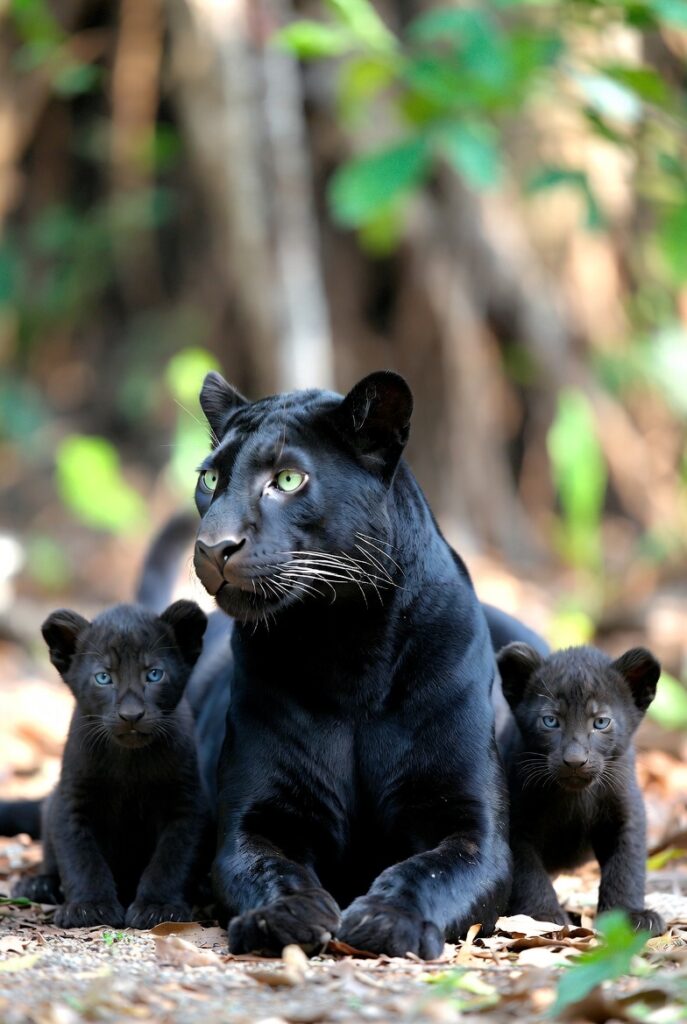
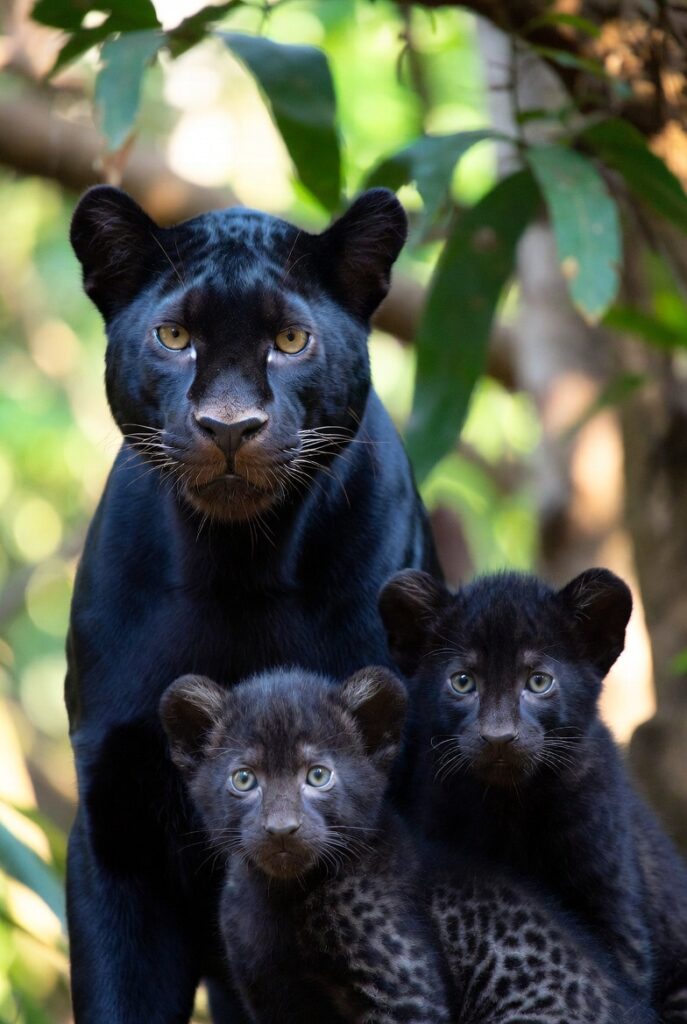
    The black panther is a big and strong wild animal. It is very beautiful and very fast. The black panther is not a different kind of animal. It is a leopard or a jaguar with black color. The black color comes from the skin and the fur. Sometimes, if the sun is bright, you can see spots on its body. These spots are like the normal leopard or jaguar.

    Black panthers live in warm places. They live in forests and jungles. Some live in Africa, some in Asia, and some in South America. They like places with many trees. Trees are important for them. Panthers can climb trees and hide from danger. They also rest in trees during the day.

    The black panther is a

    carnivore.
    This means it eats meat. It eats animals like deer, birds, and small animals. The black panther is a very good hunter. It hunts mostly at night. At night, it can see very well. Its black color helps it hide in the dark. When it moves quietly, other animals do not see it.

    The black panther is very fast and strong. It can run quickly and jump far. It can also climb very high. Sometimes, it jumps from tree to tree. It is very quiet. It does not make much noise. But when it wants, it can roar. Its roar is very loud. It uses the roar to protect its home or to scare other animals.

    Black panthers usually live alone. They do not live in groups like lions. They meet other panthers only to have babies. A baby panther is called a cub. The mother panther takes care of her cubs. She teaches them how to hunt and how to live in the forest. Cubs stay with their mother for a long time. Then, they go to live alone.


    The black panther is important for nature. It helps keep the forest alive. It controls the number of other animals. Without black panthers, some animals can eat too much food and destroy the forest.

    Today, black panthers are in danger. People cut the forests to build houses and roads. This is called deforestation. It is very bad for panthers. Some people also hunt black panthers for their fur. This is illegal in many countries, but it still happens. We must protect the black panther and its home.

    In conclusion, the black panther is a beautiful, strong, and smart animal. It is quiet, fast, and powerful. It lives in forests and jungles, hunts at night, and climbs trees very well. We should respect black panthers and protect the forests where they live.

    ###############


    Match word and definition, part 1:

    Words:

    1. a kind of animal
    2. skin
    3. fur
    4. a spot
    5. a jungle
    6. to climb a tree
    7. to hide from danger
    8. to rest in a tree
    9. a carnivore
    10. a deer
    11. a hunter
    12. to hunt
    13. mostly
    14. to hide in the dark
    15. to move quietly
    16. to jump far
    17. to make noise


    Definitions
    A. to go up a tree using hands and feet
    B. usually or most of the time
    C. a very big forest with many trees and animals
    D. an animal that eats meat
    E. to stay where it is very dark so no one can see you
    F. to walk or go without making noise
    G. a type of animal, like a dog, cat, or panther
    H. to look for and catch animals to eat
    I. a wild animal with four legs and antlers [horns]
    J. a person or animal that looks for animals to catch or eat
    K. the outside part of an animal’s body
    L. to make a sound
    M. a baby animal, like a baby panther or bear
    N. the soft hair on an animal’s body
    O. to stay safe so no one or no animal can hurt you
    P. to stop and sleep or relax in a tree
    Q. a small round mark on an animal’s skin or fur
    R. to move from one place to another in the air a long distance


    ________________

    Answers
    1-G, 2-K, 3-N, 4-Q, 5-C, 6-A,
    7-O, 8-P, 9-D, 10-I, 11-J, 12-H,
    13-B, 14-E, 15-F, 16-R, 17-L

    ###########

    Match word and definition, part 2:


    Words (18–32):
    18. to roar
    19. to protect
    20. to scare animals
    21. a cub
    22. to take care of something
    23. to keep alive
    24. to destroy
    25. to be in danger
    26. deforestation
    27. to be illegal
    28. in conclusion
    29. to be powerful
    30. to respect
    31. antlers

    Definitions:
    A. a baby animal, like a baby panther or bear
    B. to keep safe from danger or harm
    C. at the end, when you say the final idea
    D. to break something or make it stop existing
    E. to be in a situation where you can be hurt or die
    F. cutting down many trees in a forest
    G. something that is against the law
    H. a very loud sound that an animal makes
    I. to have a lot of strength or ability
    J. to be kind and careful with someone or something
    K. to help and watch something so it is safe and healthy
    L. to make animals afraid
    M. to help something stay alive
    N. the big, hard branches on the head of some animals, like a deer


    ___________________

    Answers:

    18-H, 19-B, 20-L, 21-A, 22-K,
    23-M, 24-D, 25-E, 26-F, 27-G,
    28-C, 29-I, 30-J, 31-N


    ##############


    True or False:

    1. Panthers eat deer and birds.
    2. Panthers move quietly when they hunt.
    3. Panthers cannot jump far.
    4. Panthers climb trees to hide from danger.
    5. Antlers [horns] are on black panthers.
    6. Panthers mostly hunt during the day.
    7. Panthers rest in trees during the day.
    8. Panthers usually live in groups.
    9. A cub is a baby panther.
    10. Panthers are always safe in the forest.
    11. Black panthers are powerful animals.
    12. It is legal to hunt black panthers.
    13. Panthers have spots that are sometimes visible [can be seen] in sunlight.
    14. Panthers have no fur.
    15. To protect the panther means to keep it safe from danger.
    16. Deforestation makes it easier for panthers to live.
    17. Panthers usually live alone.
    18. Panthers are carnivores.
    19. Panthers have black fur.

    ____________________

    Answers:

    1-T, 2-T, 3-F, 4-T, 5-F, 6-F, 7-T,
    8-F, 9-T, 10-F, 11-T, 12-F, 13-T,
    14-F, 15-T, 16-F, 17-T, 18-T, 19-T


    ___________________

    Correct version:


    1. Panthers eat deer and birds.
    2. Panthers move quietly when they hunt.
    3. Panthers cannot jump far. True is: Panthers can jump far.
    4. Panthers climb trees to hide from danger.
    5. Antlers are on black panthers. True is: Antlers are on deer, not panthers.
    6. Panthers mostly hunt during the day. True is: Panthers mostly hunt at night.
    7. Panthers rest in trees during the day.
    8. Panthers usually live in groups. True is: Panthers usually live alone.
    9. A cub is a baby panther.
    10. Panthers are always safe in the forest. True is: Panthers are often in danger because of humans.
    11. Black panthers are powerful animals.
    12. It is legal to hunt black panthers. True is: Hunting black panthers is illegal.
    13. Panthers have spots that are sometimes visible in sunlight.
    14. Panthers have no fur. True is: Panthers have black fur.
    15. To protect the panther means to keep it safe from danger.
    16. Deforestation makes it easier for panthers to live. True is: Deforestation destroys panther homes.
    17. Panthers usually live alone.
    18. Panthers are carnivores.
    19. Panthers have black fur.

    ##################

    Fill in, words below:

    at night – keep it safe – fur – animals –
    deer – trees – forest – rest – alone –
    spots – hunt – meat-
    black – food –
    cub


    1. The black panther is a strong carnivore that eats __________.
    2. Black panthers have black __________ that sometimes has small spots.
    3. A __________ is a baby panther that stays near its mother.
    4. Panthers climb __________ to hide from danger and to rest safely.
    5. Panthers __________ in trees during the day and wait quietly.
    6. Panthers move quietly when they __________ other animals.
    7. Panthers mostly hunt __________ when it is dark.
    8. Panthers usually live __________ and do not stay in groups.
    9. Panthers can jump far to catch their __________.
    10. Panthers eat animals like __________ in the forest or jungle.
    11. Panthers have ___________ on their fur that can sometimes be seen in the sunlight.
    12. To protect the panther means to __________ from danger and hunters.
    13. Deforestation destroys the __________ and makes it hard for panthers.
    14. Hunting __________ panthers is illegal [not allowed]
    15. Black panthers are very powerful __________ and people must respect them.

    _______________________

    Correct version:


    1. The black panther is a strong carnivore that eats meat.
    2. Black panthers have black fur that sometimes has small spots.
    3. A cub is a baby panther that stays near its mother.
    4. Panthers climb trees to hide from danger and to rest safely.
    5. Panthers rest in trees during the day and wait quietly.
    6. Panthers move quietly when they hunt other animals.
    7. Panthers mostly hunt at night when it is dark.
    8. Panthers usually live alone and do not stay in groups.
    9. Panthers can jump far to catch their food.
    10. Panthers eat animals like deer in the forest or jungle.
    11. Panthers have spots on their fur that can sometimes be seen in the sunlight.
    12. To protect the panther means to keep it safe from danger and hunters.
    13. Deforestation destroys the forest and makes it hard for panthers.
    14. Hunting black panthers is illegal.
    15. Black panthers are very powerful animals and people must respect them.

    #################


    Connect the sentences:

    1. The black panther is a carnivore
    2. A cub is a baby panther
    3. Panthers climb trees
    4. Panthers rest in trees
    5. Panthers move quietly
    6. Panthers mostly hunt at night
    7. Panthers usually live alone
    8. Panthers can jump far
    9. To protect the panther
    10. Hunting black panthers

    Second Part:

    A. to keep it safe from danger.
    B. that sometimes has spots on its fur.
    C. when it is dark.
    D. to hide from danger and rest safely.
    E. and wait quietly during the day.
    F. to catch their food.
    G. and do not stay in groups.
    H. is illegal and against the law.
    I. that stays near its mother.
    J. when they hunt other animals.


    ____________________
    Answers:

    1-B, 2-I, 3-D, 4-E, 5-J, 6-C,
    7-G, 8-F, 9-A, 10-H

    ____________________

    Corrrect sentences:


    1. The black panther is a carnivore that sometimes has spots on its fur.
    2. A cub is a baby panther that stays near its mother.
    3. Panthers climb trees to hide from danger and rest safely.
    4. Panthers rest in trees and wait quietly during the day.
    5. Panthers move quietly when they hunt other animals.
    6. Panthers mostly hunt at night when it is dark.
    7. Panthers usually live alone and do not stay in groups.
    8. Panthers can jump far to catch their food.
    9. To protect the panther is to keep it safe from danger.
    10. Hunting black panthers is illegal and against the law.


    ################

    Answer:

    1. Does a black panther eat plants or meat?

      YOU WRITE:
      A black panther eats meat.

    2. Is a baby panther called a cub or a deer?
      _______________________________
    3. Does a panther rest in a tree or on the ground?
      _______________________________
    4. Can a panther climb a tree or a mountain?
      _______________________________
    5. Does a panther hunt at night or during the day?
      _______________________________
    6. Does a panther move quietly or loudly when it hunts?
      _______________________________
    7. Does a panther usually live alone or in groups?
      _______________________________
    8. Does a panther eat a deer or grass?
      _______________________________
    9. Is it legal or illegal to hunt black panthers?
      _______________________________
    10. Does a panther have fur or antlers [horns]?
      _______________________________

    ——————————–
    Correct answers:


    1. A black panther eats meat.
    2. A baby panther is called a cub.
    3. A panther rests in a tree.
    4. A panther can climb a tree.
    5. A panther hunts at night.
    6. A panther moves quietly when it hunts.
    7. A panther usually lives alone.
    8. A panther eats a deer.
    9. It is illegal to hunt black panthers.
    10. A panther has fur.

    ###############

    BONUS DIALOGUE

    Interview with an expert on the black panther

    Q: What is a black panther?
    A: The black panther is a big and strong wild animal. It is very beautiful and very fast.

    Q: Is the black panther a different kind of animal?
    A: No, the black panther is not a different kind of animal. It is a leopard or a jaguar with black color.

    Q: Where does the black color come from?
    A: The black color comes from the skin and the fur.

    Q: When can we see spots on its body?
    A: Sometimes, if the sun is bright, you can see spots on its body.

    Q: What are these spots like?
    A: These spots are like the normal leopard or jaguar.

    Q: Where do black panthers live?
    A: Black panthers live in warm places.

    Q: Do they live in forests and jungles?
    A: Yes, they live in forests and jungles.

    Q: Which places do they live in?
    A: Some live in Africa, some in Asia, and some in South America.

    Q: Why are trees important for them?
    A: They like places with many trees. Trees are important for them.

    Q: What can panthers do with trees?
    A: Panthers can climb trees and hide from danger.

    Q: Where do they rest during the day?
    A: They rest in trees during the day.

    Q: What does the black panther eat?
    A: The black panther is a carnivore. This means it eats meat.

    Q: What animals does it eat?
    A: It eats animals like deer, birds, and small animals.

    Q: Is the black panther a good hunter?
    A: Yes, the black panther is a very good hunter.

    Q: When does it hunt?
    A: It hunts mostly at night.

    Q: How does it see at night?
    A: At night, it can see very well.

    Q: How does its black color help it?
    A: Its black color helps it hide in the dark.

    Q: How is the black panther’s body?
    A: The black panther is very fast and strong.

    Q: What can it do when it moves?
    A: It can run quickly and jump far.

    Q: Can it climb and jump in trees?
    A: It can climb very high. Sometimes, it jumps from tree to tree.

    Q: Is it noisy?
    A: It is very quiet. It does not make much noise.

    Q: When does it roar?
    A: When it wants, it can roar. Its roar is very loud.

    Q: Why does it use the roar?
    A: It uses the roar to protect its home or to scare other animals.

    Q: Do black panthers live in groups?
    A: No, black panthers usually live alone.

    Q: When do they meet other panthers?
    A: They meet other panthers only to have babies.

    Q: What is a baby panther called?
    A: A baby panther is called a cub.

    Q: Who takes care of the cubs?
    A: The mother panther takes care of her cubs.

    Q: What does the mother teach the cubs?
    A: She teaches them how to hunt and how to live in the forest.

    Q: How long do cubs stay with the mother?
    A: Cubs stay with their mother for a long time.

    Q: Why is the black panther important for nature?
    A: The black panther is important for nature. It helps keep the forest alive.

    Q: What happens without black panthers?
    A: Without black panthers, some animals can eat too much food and destroy the forest.

    Q: Are black panthers in danger today?
    A: Yes, today, black panthers are in danger.

    Q: Why is deforestation bad for panthers?
    A: People cut the forests to build houses and roads. This is called deforestation. It is very bad for panthers.

    Q: Do people hunt black panthers?
    A: Some people hunt black panthers for their fur.

    Q: Is this legal?
    A: This is illegal in many countries, but it still happens.

    Q: What should we do?
    A: We must protect the black panther and its home.

    #########################

    #########################

    Interview with a black panther


    Q: Hello, black panther. Can you tell me about yourself?
    A: Hello. I am a black panther. I am big and strong. I am very fast and very quiet. I am also very beautiful.

    Q: Are you a different kind of animal?
    A: No. I am not a different kind of animal. I am a leopard or a jaguar with black color.

    Q: Why is your color black?
    A: My black color comes from my skin and my fur. When the sun is bright, you can see spots on my body.

    Q: Where do you live?
    A: I live in warm places. I live in forests and jungles. Some of us live in Africa, some in Asia, and some in South America.

    Q: Why are trees important for you?
    A: Trees are very important. I can climb trees and hide from danger. I also rest in trees during the day.

    Q: What do you do at night?
    A: At night, I hunt. I can see very well at night. My black color helps me hide in the dark.

    Q: What animals do you eat?
    A: I eat meat. I eat deer, birds, and small animals. I am a very good hunter.

    Q: Are you loud or quiet?
    A: I am very quiet. I do not make much noise. But sometimes I roar. My roar is very loud.

    Q: Why do you roar?
    A: I roar to protect my home or to scare other animals.

    Q: Do you live with other black panthers?
    A: No. I usually live alone. I do not live in groups like lions.

    Q: What about baby panthers?
    A: A baby panther is called a cub. The mother panther takes care of her cubs. Cubs stay with their mother for a long time.

    Q: What problems do you have today?
    A: Today, we are in danger. People cut the forests. This is called deforestation. It is very bad for us.

    Q: Is hunting a problem?
    A: Yes. Some people hunt us for our fur. This is illegal in many countries, but it still happens.

    Q: What do you want people to know?
    A: We are important for nature. We help keep the forest alive. People must protect us and our home.


  • 🐅🐆🦌The cheetah (A1, beginners)🐅🐆🦌

    Vocabulary:

    Deutsch EnglishDefinition
    ein Landtiera land animalAn animal that lives on land, not in water.
    hauptsächlichmainlyMost of the time / in the biggest part.
    selten seinto be rareNot many exist / very few.
    ein offener Platzan open placeA place with no trees or buildings, empty and big.
    ein Graslanda grasslandBig area with a lot of grass, no trees.
    eine Savannea savannaBig open area with grass and some trees (like in Africa).
    jagento huntTo run after animals and catch them for food.
    viel Platza lot of spaceVery big area to move.
    frei bewegento move freelyTo go where you want, no walls or problems.
    ein schlanker Körpera slim bodyA long and thin body (not fat).
    das Gleichgewicht haltento keep balanceTo not fall when you run fast.
    ein Fella furThe hair on an animal’s body.
    ein Fleck / ein Punkta spotA small round mark (black on yellow, for example).
    sich versteckento hideTo go where others cannot see you.
    vor der Sonne schützento protect from the sunTo keep safe from hot sun.
    ein Fleischfressera carnivoreAn animal that eats meat.
    ein Hirscha deerAn animal with horns that eats grass.
    ein Hasea rabbitA small animal with long ears that jumps.
    eine Antilopean antelopeA fast animal with horns that lives in Africa.
    eine Beute fangento catch a preyTo run and take an animal to eat.
    für kurze Zeitfor a short timeOnly a little time, not long.
    sich ausruhento restTo stop moving and sleep or relax.
    müde werdento get tiredTo feel no energy after running.
    jagen beibringento teach how to huntTo show young animals how to catch food.
    ein Jungesa cubA baby cheetah or big cat.
    süß seinto be cuteTo look very nice and lovely.
    verspielt seinto be playfulTo like playing and running for fun.
    vor Gefahr schützento protect from dangerTo keep safe from bad things or enemies.
    in Gefahr seinto be in dangerTo have big problems, maybe die.
    zerstörento destroyTo break or make something bad.
    ein sicherer Orta safe placeA good place with no danger.
    ein Lebensraum / Habitata habitatThe home where an animal lives (with food, water…).
    zum Schlussin conclusionAt the end / to finish.
    die Natur rettento save natureTo help animals, plants and the world stay alive.

    The cheetah is a beautiful and interesting animal. It is a wild animal and it lives in nature. The cheetah is famous because it is the fastest land animal in the world. Many people like the cheetah because it is strong, fast, and elegant.

    The cheetah lives mainly in Africa. Some cheetahs also live in parts of Asia, but they are very rare there. Cheetahs like open places such as grasslands and savannas. These places are good for running and hunting. The cheetah needs a lot of space to live and move freely.

    The cheetah has a slim body and long legs. Its body is made for speed. It has a small head and a long tail. The tail helps the cheetah keep balance when it runs. The cheetah has yellow fur with black spots all over its body. These spots help the cheetah hide in the grass. The cheetah also has black lines on its face. These lines go from the eyes to the mouth and help protect its eyes from the sun.

    The cheetah eats meat. It is a

    carnivore.

    It hunts animals like deer, rabbits, and small antelopes. The cheetah hunts during the day. It uses its strong legs and fast speed to catch its prey. The cheetah can run very fast, up to 100 kilometers per hour, but only for a short time. After running, the cheetah needs to rest because it gets tired quickly.

    _______________

    Cheetahs usually live alone, but sometimes they live in small groups. A mother cheetah lives with her babies. She takes care of them and teaches them how to hunt. Baby cheetahs are called cubs. They are very cute and playful. The mother protects them from danger.

    Today, cheetahs are in danger. There are not many cheetahs left in the world. People destroy their homes and hunt animals that cheetahs eat. Because of this, cheetahs cannot find enough food or safe places to live. Many organizations work to protect cheetahs and their habitats.

    In conclusion, the cheetah is an amazing animal. It is fast, beautiful, and important for nature. We should learn about cheetahs and help protect them. Saving cheetahs means saving nature and the future of our planet.

    🐆 Good luck!🐆

    Match word and definition, part 1:

    1. a land animal
    2. mainly
    3. to be rare
    4. an open place
    5. a grassland
    6. a savanna
    7. to hunt
    8. a lot of space
    9. to move freely
    10. a slim body
    11. to keep balance
    12. a fur
    13. a spot
    14. to hide
    15. to protect from the sun
    16. a carnivore
    17. a deer


    Definitions:

    A. An animal that eats meat.
    B. Big area with a lot of grass, no trees.
    C. To run after animals and catch them for food.
    D. Very big area to move.
    E. To not fall when you run fast.
    F. A long and thin body (not fat).
    G. To go where you want, no walls or problems.
    H. To go where others cannot see you.
    I. An animal with horns that eats grass.
    J. An animal that lives on land, not in water.
    K. The hair on an animal’s body.
    L. Big open area with grass and some trees (like in Africa).
    M. A small round mark (black on yellow, for example).
    N. To keep safe from hot sun.
    O. Not many exist / very few.
    P. A place with no trees or buildings, empty and big.
    Q. Most of the time / in the biggest part.
    _____________________
    Answers:
    1-J, 2-Q, 3-O, 4-P, 5-B, 6-L,
    7-C, 8-D, 9-G, 10-F, 11-E, 12-K,
    13-M, 14-H, 15-N, 16-A, 17-I

    ###############

    Match word and definition, part 2:


    18. an antelope
    19. to catch a prey
    20. for a short time
    21. to rest
    22. to get tired
    23. to teach how to hunt
    24. a cub
    25. to be cute
    26. to be playful
    27. to protect from danger
    28. to be in danger
    29. to destroy
    30. a safe place
    31. a habitat
    32. in conclusion
    33. to save nature
    34. a rabbit


    Definitions:

    A. To break or make something bad.
    B. To help animals, plants and the world stay alive.
    C. The home where an animal lives (with food, water…).
    D. A baby cheetah or big cat.
    E. To have big problems, maybe die.
    F. To show young animals how to catch food.
    G. A fast animal with horns that lives in Africa.
    H. A good place with no danger.
    I. Only a little time, not long.
    J. At the end / to finish.
    K. To feel no energy after running.
    L. To stop moving and sleep or relax.
    M. An animal with long ears that jumps.
    N. To like playing and running for fun.
    O. To run and take an animal to eat.
    P. To look very nice and lovely.
    Q. To keep safe from bad things or enemies.

    _________________

    Answers:
    18-G, 19-O, 20-I, 21-L, 22-K, 23-F,
    24-D, 25-P, 26-N, 27-Q, 28-E, 29-A,
    30-H, 31-C, 32-J, 33-B, 34-M

    #############


    True or false:

    1. A cheetah is a land animal.
    2. Cheetahs mainly live in the sea.
    3. Cheetahs are very common animals.
    4. A savanna is an open place with a lot of trees.
    5. A grassland has a lot of grass.
    6. Cheetahs hunt rabbits and deer.
    7. Cheetahs like small places with no space.
    8. A cheetah has a fat body.
    9. Spots on fur help a cheetah to hide.
    10. A carnivore eats only grass.
    11. An antelope is faster than a cheetah for a long time.
    12. Cheetahs run for a short time and then get tired.
    13. A cub is an old cheetah.
    14. Cubs are cute and playful.
    15. Mothers teach cubs how to hunt.
    16. Cheetahs rest a lot after they hunt.
    17. Cheetahs are in danger because people destroy their habitat.
    18. A safe place is bad for animals.
    19. In conclusion, we must save nature.
    20. A rabbit is a carnivore.

    ______________________

    True: 1,5,6,9,12,14,15,16,17,19

    ################

    Correct answers:

    1. A cheetah is a land animal.
    2. Cheetahs mainly live in the sea.
      → False
      True is: Cheetahs mainly live on land / in a savanna.
    3. Cheetahs are very common animals.
      → False
      True is: Cheetahs are rare animals. / Cheetahs to be rare.
    4. A savanna is an open place with a lot of trees.
      → False
      True is: A savanna is an open place with a lot of grass and some trees.
    5. A grassland has a lot of grass.
    6. Cheetahs hunt rabbits and deer.
    7. Cheetahs like small places with no space.
      → False
      True is: Cheetahs like a lot of space to move freely.
    8. A cheetah has a fat body.
      → False
      True is: A cheetah has a slim body.
    9. Spots on fur help a cheetah to hide.
    10. A carnivore eats only grass.
      → False
      True is: A carnivore eats meat.
    11. An antelope is faster than a cheetah for a short time.
      → False
      True is: A cheetah is faster than an antelope for a short time.
    12. Cheetahs run for a short time and then get tired.
    13. A cub is an old cheetah.
      → False
      True is: A cub is a baby cheetah.
    14. Cubs are cute and playful.
    15. Mothers teach cubs how to hunt.
    16. Cheetahs rest a lot after they hunt.
    17. Cheetahs are in danger because people destroy their habitat.
    18. A safe place is bad for animals.
      → False
      True is: A safe place is good for animals.
    19. In conclusion, we must save nature.
    20. A rabbit is a carnivore.
      → False
      True is: A rabbit is not a carnivore. / A rabbit eats grass (not meat).

    ################

    Fill in, words below:

    prey – cubs – protect – grassland – savanna –
    carnivore – destroy – hunt – playful –
    fur – danger – trees –
    mother – cheetahs –
    slim

    1. A cheetah is a fast land animal that lives mainly in a __________.
    2. Cheetahs need a lot of space to move freely and to __________.
    3. A savanna is an open place with a lot of grass and some __________.
    4. A __________ is a big open place where cheetahs can run fast.
    5. Cheetahs have a __________ body and spots on their fur.
    6. The spots on the __________ help the cheetah to hide very well.
    7. A cheetah is a __________ and it hunts an antelope or a deer.
    8. Cheetahs catch __________ very fast but only for a short time.
    9. After they hunt, __________ get tired and they need to rest.
    10. A cub is a baby cheetah and it is very cute and __________.
    11. The cubs like to be playful and they move freely with their __________.
    12. Mothers teach their __________ how to hunt in the savanna.
    13. Cheetahs are rare [not many]and they are in ___________ in many places.
    14. People __________ the habitat and this makes cheetahs in danger.
    15. In conclusion, we must save nature to __________ the cheetahs and their safe place.

    ———————————

    Correct version:

    1. A cheetah is a fast land animal that lives mainly in a savanna.
    2. Cheetahs need a lot of space to move freely and to hunt.
    3. A savanna is an open place with a lot of grass and some trees.
    4. A grassland is a big open place where cheetahs can run fast.
    5. Cheetahs have a slim body and spots on their fur.
    6. The spots on the fur help the cheetah to hide very well.
    7. A cheetah is a carnivore and it hunts an antelope or a deer.
    8. Cheetahs catch prey very fast but only for a short time.
    9. After they hunt, cheetahs get tired and they need to rest.
    10. A cub is a baby cheetah and it is very cute and playful.
    11. The cubs like to be playful and they move freely with their mother.
    12. Mothers teach their cubs how to hunt in the savanna.
    13. Cheetahs are rare and they are in danger in many places.
    14. People destroy the habitat and this makes cheetahs in danger.
    15. In conclusion, we must save nature to protect the cheetahs and their safe place.

    ##################

    Connect:

    1. Cheetahs mainly live | a. how to hunt
    2. A cheetah has spots on its fur | b. because they are rare
    3. Cheetahs need a lot of space | c. in a savanna
    4. A cub is very cute | d. to hide
    5. Mothers teach their cubs | e. to move freely
    6. Cheetahs get tired | f. after a short time
    7. Cheetahs are in danger | g. and playful
    8. A grassland and a savanna | h. to catch prey
    9. Cheetahs run very fast | i. are good habitats
    10. In conclusion, we must | j. save nature

    _____________________

    Answers:
    1-c, 2-d, 3-e, 4-g, 5-a,
    6-f, 7-b, 8-i, 9-h, 10-j

    _____________________

    Correct version:

    1. Cheetahs mainly live in a savanna.
    2. A cheetah has spots on its fur to hide.
    3. Cheetahs need a lot of space to move freely.
    4. A cub is very cute and playful.
    5. Mothers teach their cubs how to hunt.
    6. Cheetahs get tired after a short time.
    7. Cheetahs are in danger because they are rare.
    8. A grassland and a savanna are good habitats.
    9. Cheetahs run very fast to catch prey.
    10. In conclusion, we must save nature.


    ################

    Answer:

    1. Is a cheetah the slowest or fastest land animal?

      YOU WRITE:
      A cheetah is the fastetst land animal.
    2. Does the cheetah live in Africa or South America?
      ______________________________
    3. Does the cheetah like open grasslands or dense forests?
      ______________________________
    4. Does a cheetah have a slim body or a heavy body?
      ______________________________
    5. Is the cheetah’s tail used for balance or sleeping?
      ______________________________
    6. Does the cheetah eat meat or plants?
      ______________________________
    7. Does the cheetah hunt during the day or at night?
      ______________________________
    8. Can a cheetah run fast for a long time or a short time?
      ______________________________
    9. Are baby cheetahs called cubs or calves?
      ______________________________
    10. Are cheetahs safe today or in danger?
      ______________________________

    —————————-
    Correct answers:

    1. A cheetah is the fastest land animal in the world.
    2. The cheetah lives mainly in Africa.
    3. The cheetah likes open grasslands and savannas.
    4. The cheetah has a slim body.
    5. The cheetah’s tail is used for balance.
    6. The cheetah eats meat.
    7. The cheetah hunts during the day.
    8. A cheetah can run fast for a short time.
    9. Baby cheetahs are called cubs.
    10. Cheetahs are in danger today.

    ###################

    BONUS DIALOGUE


    Interview with an expert on the cheetah


    Interviewer: What does the cheetah eat?
    Expert: The cheetah eats meat. It is a carnivore.

    Interviewer: Where do we find cheetahs?
    Expert: The cheetahs live mainly in Africa.

    Interviewer: How fast can the cheetah run?
    Expert: It can run up to 100 kilometers per hour.

    Interviewer: Who teaches the cubs to hunt?
    Expert: The mother teaches them how to hunt.

    Interviewer: Why are cheetahs in danger today?
    Expert: People destroy their homes and hunt the animals that cheetahs eat.

    Interviewer: Which places does the cheetah like?
    Expert: Cheetahs like open places such as grasslands and savannas.

    Interviewer: When does the cheetah hunt?
    Expert: The cheetah hunts during the day.

    Interviewer: What is special about the cheetah?
    Expert: The cheetah is the fastest land animal in the world.

    Interviewer: How long can it run at this speed?
    Expert: Only for a short time. After running, it needs to rest.

    Interviewer: Who lives with the cheetah cubs?
    Expert: The mother cheetah lives with her babies and protects them.

    Interviewer: Why does the cheetah need a lot of space?
    Expert: The cheetah needs space to live and move freely.

    Interviewer: Which animals does the cheetah hunt?
    Expert: It hunts deer, rabbits, and small antelopes.

    Interviewer: What does the cheetah look like?
    Expert: The cheetah has a slim body, long legs, a small head, and a long tail.

    Interviewer: Where can you find cheetahs in Asia?
    Expert: Some cheetahs live in parts of Asia, but they are very rare there.

    Interviewer: Why are grasslands good for cheetahs?
    Expert: Grasslands and savannas are good for running and hunting.

    Interviewer: What is a cheetah?
    Expert: The cheetah is a beautiful and interesting wild animal.

    Interviewer: What do the black spots do?
    Expert: The spots help the cheetah hide in the grass.

    Interviewer: What are the black lines on the cheetah’s face for?
    Expert: They protect the eyes from the sun.

    Interviewer: How does the tail help the cheetah?
    Expert: The tail helps the cheetah keep balance when it runs.

    Interviewer: How does the cheetah hunt?
    Expert: It uses strong legs and very fast speed to catch animals.

    Interviewer: Why is it important to save cheetahs?
    Expert: Saving cheetahs means saving nature and the future.

    Interviewer: How many cheetahs are left in the world?
    Expert: There are not many cheetahs left.

    Interviewer: Which color is the cheetah?
    Expert: The cheetah has yellow fur with black spots.


    ####################

    ####################

    Interview with a cheetah


    Interviewer: Who are you?
    Cheetah: I am a cheetah. I am a wild animal. I live in nature.

    Interviewer: What kind of animal are you?
    Cheetah: I am strong, fast, and elegant. I am famous because I am the fastest land animal in the world.

    Interviewer: Where do you live?
    Cheetah: I live mainly in Africa. Some cheetahs live in Asia, but they are very rare.

    Interviewer: Which places do you like?
    Cheetah: I like grasslands and savannas. These open places are good for running.

    Interviewer: Why are open places important for you?
    Cheetah: I need a lot of space to move freely and hunt.

    Interviewer: How does your body help you run?
    Cheetah: I have long legs and a slim body. My body is made for speed.

    Interviewer: What helps you keep balance?
    Cheetah: My long tail helps me when I run fast.

    Interviewer: What color is your fur?
    Cheetah: My fur is yellow with black spots. The spots help me hide in the grass.

    Interviewer: What are the black lines on your face for?
    Cheetah: They protect my eyes from the sun.

    Interviewer: What do you eat?
    Cheetah: I eat meat. I hunt deer, rabbits, and small antelopes.

    Interviewer: When do you hunt?
    Cheetah: I hunt during the day.

    Interviewer: How fast can you run?
    Cheetah: I can run up to 100 kilometers per hour, but only for a short time.

    Interviewer: What do you do after running?
    Cheetah: I need to rest because I get tired quickly.

    Interviewer: How do cheetahs live?
    Cheetah: We usually live alone. Sometimes we live in small groups.

    Interviewer: Who takes care of the babies?
    Cheetah: The mother takes care of the cubs and teaches them how to hunt.

    Interviewer: Why are cheetahs in danger today?
    Cheetah: People destroy our homes and hunt animals that we eat.

    Interviewer: What should people do now?
    Cheetah: People should protect cheetahs and habitats. Saving cheetahs means saving nature and the future of our planet.


  • 🥰Dara, a littler girl and a school day, revised version (A1, beginners, present tense, to be, statements, questions, negations, how to…………)

    Before doing that text and the exercises,
    try that story first!


    Basics:

    Personal Pronounam / is / are
    Iam8 years old
    Youare8 years old
    Heis8 years old
    Sheis8 years old
    Itis8 years old
    Weare8 years old
    You (plural)are8 years old
    Theyare8 years old

    Negation:

    Personal Pronounam not / is not / are not
    Iam not8 years old
    Youare not8 years old
    Heis not8 years old
    Sheis not8 years old
    Itis not8 years old
    Weare not8 years old
    You (plural)are not8 years old
    Theyare not8 years old

    Questions:

    Question WordPersonal Pronoun
    AmI8 years old?
    Areyou8 years old?
    Ishe8 years old?
    Isshe8 years old?
    Isit8 years old?
    Arewe8 years old?
    Areyou (plural)8 years old?
    Arethey8 years old?

    Statement:

    Personal PronounVerb
    Ilikeice cream
    Youlikeice cream
    Helikesice cream
    Shelikesice cream
    Itlikesice cream
    Welikeice cream
    You (plural)likeice cream
    Theylikeice cream

    Negation:

    Personal PronounVerb (negative)
    Ido not likeice cream
    Youdo not likeice cream
    Hedoes not likeice cream
    Shedoes not likeice cream
    Itdoes not likeice cream
    Wedo not likeice cream
    You (plural)do not likeice cream
    Theydo not likeice cream

    Questions:

    Do / DoesPersonal PronounVerbSugar?
    DoIlikesugar?
    Doyoulikesugar?
    Doeshelikesugar?
    Doesshelikesugar?
    Doesitlikesugar?
    Dowelikesugar?
    Doyou (plural)likesugar?
    Dotheylikesugar?

    Dara’s School Day


    Dara is ten years old. She lives in a small house. Every morning she gets up at 6:30. She washes her face. Then she eats breakfast with her family. After breakfast, she brushes her teeth. Then she puts on her school uniform and gets ready for school.

    At 7:15 Dara walks to school with her friends. The school is one kilometer from her home. She likes walking with her friends. They talk and laugh on the way.

    School starts at 8:00. Dara likes her school. Her favorite subjects are math and science. She likes math because she likes numbers. She likes science because she likes to learn new things.

    At 12:00 she goes home. She eats a light lunch with her family. After lunch, she does her homework. Then she plays with her friends outside.

    In the evening Dara eats a light dinner. Then she reads a book. She goes to bed early. Dara is happy and ready for the next day.

    ______________________

    Vocabulary:

    • to get up – to leave the bed.
    • to wash one’s face – to clean the face with water.
    • to eat breakfast – to have food in the morning.
    • to brush one’s teeth – to clean the teeth with a toothbrush.
    • to put on a uniform – to wear school clothes.
    • to get ready – to prepare to go out.
    • to like walking – to enjoy going on foot.
    • to laugh – to make a happy sound when something is funny.
    • a favorite subject – the school subject you like best.
    • science (subject) – to learn about nature and the world.
    • numbers (math) – to learn counting and sums.
    • light lunch – a small meal at midday.
    • to do one’s homework – to work on school tasks at home.
    • outside – not inside; in the open air.
    • dinner – the evening meal.
    • early – before the usual time.
    • to be ready – to be prepared to go or start.

    ################

    Answer:

    EXAMPLE:

    Is Dara a boy or a girl?

    YOU WRITE:

    She is a girl.

    ______________________

    Correct version:

    1. Is Dara ten or eleven years old?
      • ___________________________
    2. Does she live in a small house or a big house?
      • ___________________________
    3. Does she get up at 6:30 or 7:30?
      • ___________________________
    4. Does she eat breakfast with her family or alone?
      • ___________________________
    5. Does she walk to school or go by bus?
      • ___________________________
    6. Does she like walking alone or with her friends?
      • ___________________________
    7. Are her favorite subjects math and science or art and music?
      • ___________________________
    8. Does she eat a light lunch or a big lunch?
      • ___________________________
    9. Does she do her homework in the morning or after lunch?
      • ___________________________
    10. Does she go to bed early or late?
    • ___________________________

    ——————————————

    Correct answers:

    1. Is Dara ten or eleven years old?
      • She is ten years old.
    2. Does she live in a small house or a big house?
      • She lives in a small house.
    3. Does she get up at 6:30 or 7:30?
      • She gets up at 6:30.
    4. Does she eat breakfast with her family or alone?
      • She eats breakfast with her family.
    5. Does she walk to school or go by bus?
      • She walks to school.
    6. Does she like walking alone or with her friends?
      • She likes walking with her friends.
    7. Are her favorite subjects math and science or art and music?
      • Her favorite subjects are math and science.
    8. Does she eat a light lunch or a big lunch?
      • She eats a light lunch.
    9. Does she do her homework in the morning or after lunch?
      • She does her homework after lunch.
    10. Does she go to bed early or late?
    • She goes to bed early.


    ###################

    Correct the statements (see grammar above):

    Dara is eight years old.

    YOU WRITE:

    Dara is not eight years old. She is ten years old.

    _________________

    Dara is eight years old.
    _________________________

    She lives in a big house.
    _________________________

    She gets up at 7:30 in the morning.
    _________________________

    She eats breakfast alone.
    _________________________

    She brushes her hair after breakfast.
    _________________________

    She goes to school by bus.
    _________________________

    She does not like walking with her friends.
    _________________________

    Her favorite subject is art.
    _________________________

    She eats a big lunch at 12:00.
    _________________________

    She goes to bed late.
    _________________________

    ————————–
    Correct version:

    1. Dara is eight years old.
      • Dara is not eight years old. She is ten years old.
    2. She lives in a big house.
      • She does not live in a big house. She lives in a small house.
    3. She gets up at 7:30 in the morning.
      • She does not get up at 7:30. She gets up at 6:30.
    4. She eats breakfast alone.
      • She does not eat breakfast alone. She eats breakfast with her family.
    5. She brushes her hair after breakfast.
      • She does not brush her hair after breakfast. She brushes her teeth.
    6. She goes to school by bus.
      • She does not go to school by bus. She walks to school.
    7. She does not like walking with her friends.
      • She does like walking with her friends.
    8. Her favorite subject is art.
      • Her favorite subject is not art. Her favorite subjects are math and science.
    9. She eats a big lunch at 12:00.
      • She does not eat a big lunch. She eats a light lunch.
    10. She goes to bed late.
    • She does not go to bed late. She goes to bed early.

    #######################

    Correct the following questions:

    1. Is Dara eight years old?

      YOU WRITE:

      No, she is not eight years old. She is ten years old.

    1. Is Dara eight years old?
      __________________________
    2. Does she live in a big house?
      __________________________
    3. Does she get up at 7:30 in the morning?
      __________________________
    4. Does she eat breakfast alone?
      __________________________
    5. Does she brush her hair after breakfast?
      __________________________
    6. Does she go to school by bus?
      __________________________
    7. Does she not like walking with her friends?
      __________________________
    8. Is her favorite subject art?
      __________________________
    9. Does she eat a big lunch at 12:00?
      __________________________
    10. Does she go to bed late?
      __________________________

    ————————————-
    Correct answers:

    1. Is Dara eight years old?
      • No, she is not eight years old. She is ten years old.
    2. Does she live in a big house?
      • No, she does not live in a big house. She lives in a small house.
    3. Does she get up at 7:30 in the morning?
      • No, she does not get up at 7:30. She gets up at 6:30.
    4. Does she eat breakfast alone?
      • No, she does not eat breakfast alone. She eats breakfast with her family.
    5. Does she brush her hair after breakfast?
      • No, she does not brush her hair after breakfast. She brushes her teeth.
    6. Does she go to school by bus?
      • No, she does not go to school by bus. She walks to school.
    7. Does she not like walking with her friends?
      • No, she does like walking with her friends.
    8. Is her favorite subject art?
      • No, her favorite subject is not art. Her favorite subjects are math and science.
    9. Does she eat a big lunch at 12:00?
      • No, she does not eat a big lunch. She eats a light lunch.
    10. Does she go to bed late?
    • No, she does not go to bed late. She goes to bed early.

    ###################

    Fill in the words below:

    science – friends – breakfast –
    early – small – ten – light – brushes –
    walks – math – 6:30 –
    homework – uniform –
    washes

    Sentences:

    1. Dara is ___ years old.
    2. She lives in a ___ house.
    3. Every morning she gets up at ___ .
    4. She ___ her face.
    5. Then she eats ___ with her family.
    6. After breakfast, she ___ her teeth.
    7. She puts on her ___ and gets ready for school.
    8. At 7:15 Dara ___ to school.
    9. She likes walking with her ___.
    10. Her favorite subjects are ___ and ___.
    11. At 12:00 she eats a ___ lunch.
    12. After lunch, she does her ___.
    13. In the evening Dara eats a ___ dinner.
    14. She goes to bed ___.

    ——————————
    Correct version:

    1. Dara is ten years old.
    2. She lives in a small house.
    3. Every morning she gets up at 6:30.
    4. She washes her face.
    5. Then she eats breakfast with her family.
    6. After breakfast, she brushes her teeth.
    7. She puts on her uniform and gets ready for school.
    8. At 7:15 Dara walks to school.
    9. She likes walking with her friends.
    10. Her favorite subjects are math and science.
    11. At 12:00 she eats a light lunch.
    12. After lunch, she does her homework.
    13. In the evening Dara eats a light dinner.
    14. She goes to bed early.

    #####################

    Fill in, words below:

    family – science – old – eat – small –
    friends – uniform – at –
    early – morning –
    breakfast –
    outside

    ——————————-


    1. What is your name?

    • My name is Dara.

    2. How old are you?

    • I am ten years __________.

    3. Where do you live?

    • I live in a __________ house.

    4. What time do you get up?

    • I get up __________ 6:30.

    5. Do you wash your face in the __________?

    • Yes, I wash my face.

    6. Do you eat breakfast?

    • Yes, I eat breakfast with my __________.

    7. Do you brush your teeth after __________?

    • Yes, I brush my teeth.

    8. What do you wear to school?

    • I wear my school __________.

    9. How do you go to school?

    • I walk to school with my __________.

    10. What are your favorite subjects?

    • My favorite subjects are math and __________.

    11. What do you do after lunch?

    • I do my homework and play __________.

    12. What do you do in the evening?

    • I __________ a light dinner, read a book, and go to bed __________.

    ————————-
    Correct version:


    1. What is your name?

    • My name is Dara.

    2. How old are you?

    • I am ten years old.

    3. Where do you live?

    • I live in a small house.

    4. What time do you get up?

    • I get up at 6:30.

    5. Do you wash your face in the morning?

    • Yes, I wash my face.

    6. Do you eat breakfast?

    • Yes, I eat breakfast with my family.

    7. Do you brush your teeth after breakfast?

    • Yes, I brush my teeth.

    8. What do you wear to school?

    • I wear my school uniform.

    9. How do you go to school?

    • I walk to school with my friends.

    10. What are your favorite subjects?

    • My favorite subjects are math and science.

    11. What do you do after lunch?

    • I do my homework and play outside.

    12. What do you do in the evening?

    • I eat a light dinner, read a book, and go to bed early.

    ######################

    Interview with her brother:


    1. What is her name?
      Her name is Dara.
    2. How old is she?
      She is ten years old.
    3. Where does she live?
      She lives in a small house.
    4. What time does she get up?
      She gets up at 6:30.
    5. Does she wash her face in the morning?
      Yes, she washes her face.
    6. Does she eat breakfast?
      Yes, she eats breakfast with her family.
    7. Does she brush her teeth after breakfast?
      Yes, she brushes her teeth.
    8. What does she wear to school?
      She wears her school uniform.
    9. How does she go to school?
      She walks to school with her friends.
    10. What are her favorite subjects?
      Her favorite subjects are math and science.
    11. What does she do after lunch?
      She does her homework and plays outside.
    12. What does she do in the evening?
      She eats a light dinner, reads a book, and goes to bed early.

  • 🤩😎🥳Meet your first English sentences – Anan, a day at the foundation, part 2/2🥳😎🤩(A1 beginners, past simple, short answers, questions, negations, part 13)

    Before doing that exercise do

    1. https://www.fluglehrer.at/?p=1800
    2. https://www.fluglehrer.at/?p=7808

    first !!!!!!!!!!

    Anan is assistant general manager in a hotel. He remembers his time at the foundation, supporting him to live his dream.

    When Anan studied at the foundation he woke up early every morning, then breakfast with his friends. At 8 o’clock he went to class. The teacher taught him English words for hotel work, like “guest,” “room,” and “clean.” He learned to say hello and welcome to visitors.

    After that, Anan studied how to work in a hotel. Some days he learned about the front desk. He learned to smile, speak politely, and help guests. Other days he learned about cleaning rooms. He practiced making beds, washing towels, and keeping everything clean and nice.

    At lunchtime, Anan ate with the other students. In the afternoon, he had practice time. Sometimes he worked in a small training hotel. He served drinks, carried bags, or helped in the restaurant. The teachers watched him and helped him do better.

    Later, he had lessons about life and good manners. He learned how to work in a team and be kind to others.

    In the evening, he studied English again or played football with his friends. After dinner, he went back to his room, read a little, and then slept. He felt happy because every day he learned something new for his future.

    ##################

    Verbs in text, infinitive and past simple forms:


    live – lived
    study – studied
    wake up – woke up
    eat – ate
    go – went
    teach – taught
    learn – learned
    say – said
    study – studied
    work – worked
    smile – smiled
    speak – spoke
    help – helped
    practice – practiced
    make – made
    wash – washed
    keep – kept
    have – had
    serve – served
    carry – carried
    watch – watched
    play – played
    read – read [ri:d – red]
    sleep – slept
    feel – felt
    be – was/were
    come – came


    ##################


    Multiple choice, one answer correct:

    1. Where did Anan live and study?
      a) At the hotel
      b) At the school
      c) At the foundation
    2. What did Anan do every morning?
      a) Slept very late
      b) Woke up early
      c) Played some games
    3. Who did Anan eat breakfast with?
      a) His friends
      b) His teacher
      c) His family
    4. What time did Anan go to class?
      a) At nine o’clock
      b) At seven o’clock
      c) At eight o’clock
    5. What did the teacher teach Anan?
      a) Drawing art
      b) English words
      c) Cooking food
    6. What did Anan learn to say?
      a) Hello and welcome
      b) Sorry please now
      c) Goodbye thanks now
    7. What did Anan study after class?
      a) Drive a car
      b) Work in a hotel
      c) Play some football
    8. What did he learn at the front desk?
      a) Smile and help
      b) Clean the room
      c) Write a list
    9. What did he practice in the rooms?
      a) Making beds
      b) Read some books
      c) Write some notes
    10. Who did Anan eat lunch with?
      a) The teachers
      b) His friends
      c) His parents
    11. Where did Anan work sometimes?
      a) A big school
      b) Small training hotel
      c) At a market
    12. What did he do in the restaurant?
      a) Read some books
      b) Cook some food
      c) Help the guests
    13. What did the teachers do?
      a) Watched him
      b) Went home
      c) Played games
    14. What lessons did Anan have later?
      a) Sports and games
      b) Life and manners
      c) Art and music
    15. What did Anan do in the evening?
      a) Went shopping
      b) Slept early
      c) Played football then
    16. What did he do after dinner?
      a) Read a book
      b) Watched some TV
      c) Went out late
    17. How did Anan feel at the end of the day?
      a) Felt tired now
      b) Felt happy now
      c) Felt bored now
    18. Why was he happy?
      a) He learned things
      b) He went home
      c) He watched TV

    ______________________
    Answers:

    1c, 2b, 3a, 4c, 5b, 6a, 7b, 8a,
    9a, 10b, 11b, 12c, 13a, 14b,
    15c, 16a, 17b, 18a
    ______________________
    Correct version:


    Where did Anan live and study? – At the foundation

    What did Anan do every morning? – Woke up early

    Who did Anan eat breakfast with? – His friends

    What time did Anan go to class? – At eight o’clock

    What did the teacher teach Anan? – English words

    What did Anan learn to say? – Hello and welcome

    What did Anan study after class? – Work in a hotel

    What did he learn at the front desk? – Smile and help

    What did he practice in the rooms? – Write some notes

    Who did Anan eat lunch with? – His friends

    Where did Anan work sometimes? – At a market

    What did he do in the restaurant? – Read some books

    What did the teachers do? – Played games

    What lessons did Anan have later? – Life and manners

    What did Anan do in the evening? – Played football then

    What did he do after dinner? – Read a book

    How did Anan feel at the end of the day? – Felt happy now

    Why was he happy? – He learned things


    ###################


    Match the word or phrase to Its definition

    Words/Phrases:

    1. a foundation
    2. to wake up
    3. breakfast
    4. to teach somebody English
    5. to welcome a visitor
    6. to study
    7. to smile
    8. to speak politely
    9. to clean rooms
    10. to practice making beds
    11. a towel
    12. tidy
    13. lunchtime
    14. practice time
    15. to serve a drink
    16. to carry bags
    17. good manners
    18. to be kind
    19. future


    Definitions:

    a. a piece of cloth to dry your body or hands
    b. to behave nicely and be polite
    c. clean and in good order
    d. to open your eyes in the morning
    e. the time in the middle of the day to eat
    f. to give a drink to someone
    g. a place that helps people learn or get support
    h. to learn and read about something
    i. to help a person learn English words and speaking
    j. to show happiness on your face
    k. the time that comes after today
    l. to say hello and make a guest feel happy to come
    m. to be nice and helpful to people
    n. time to do something again to get better
    o. to talk in a kind and nice way
    p. to take bags in your hands and move them
    q. to learn how to make a bed again and again
    r. to make rooms neat and not dirty
    s. the first meal in the morning


    ________________________
    Answers:

    1g, 2d, 3s, 4i, 5l, 6h, 7j, 8o,
    9r, 10q, 11a, 12c, 13e, 14n,
    15f, 16p, 17b, 18m, 19k
    ________________________

    Correct answers:


    a foundation – a place that helps people learn or get support
    to wake up – to open your eyes in the morning
    breakfast – the first meal in the morning
    to teach somebody English – to help a person learn English words and speaking
    to welcome a visitor – to say hello and make a guest feel happy to come
    to study – to learn and read about something
    to smile – to show happiness on your face
    to speak politely – to talk in a kind and nice way
    to clean rooms – to make rooms neat and not dirty
    to practice making beds – to learn how to make a bed again and again
    a towel – a piece of cloth to dry your body or hands
    tidy – clean and in good order
    lunchtime – the time in the middle of the day to eat
    practice time – time to do something again to get better
    to serve a drink – to give a drink to someone
    to carry bags – to take bags in your hands and move them
    good manners – to behave nicely and be polite
    to be kind – to be nice and helpful to people
    future – the time that comes after today

    ####################

    Multiple choice, one answer correct, provide answer in a full sentence::


    1. Where did Anan study? – a) At a hotel b) At a foundation c) At school

      YOU WRITE:
      Anan studied at a foundation.
    2. What time did Anan wake up? – a) Late b) Early c) Noon
      _________________________________
    3. Who did Anan eat breakfast with? – a) Friends b) Teacher c) Parents
      _________________________________
    4. When did he go to class? – a) 8 o’clock b) 10 o’clock c) 7 o’clock
      _________________________________
    5. What did the teacher teach? – a) Math b) English c) Art
      _________________________________
    6. What did Anan learn to say? – a) Hello b) Goodbye c) Thanks
      _________________________________
    7. What did Anan practice in rooms? – a) Shoes b) Meals c) Beds
      _________________________________
    8. Who watched him at practice? – a) Teachers b) Friends c) Parents
      _________________________________
    9. What did he do in the restaurant? – a) Serve b) Read c) Cook
      _________________________________
    10. What did Anan learn about manners? – a) Be loud b) Be kind c) Be fast
      _________________________________
    11. When did he play football? – a) Lunch b) Morning c) Evening
      _________________________________
    12. What did he do after dinner? – a) Read b) Sleep c) Walk
      _________________________________
    13. How did he feel at night? – a) Happy b) Sad c) Tired
      _________________________________
    14. Why was he happy? – a) Played b) Watched c) Learned
      _________________________________

    —————————————

    Answers:
    1b, 2b, 3a, 4a, 5b, 6a, 7c,
    8a, 9a, 10b, 11c, 12a, 13a, 14c
    _________________________

    Correct answers:


    Where did Anan study? – Anan studied at a foundation.
    What time did Anan wake up? – He woke up early.
    Who did Anan eat breakfast with? – He ate breakfast with his friends.
    When did he go to class? – He went to class at 8 o’clock.
    What did the teacher teach? – The teacher taught him English.
    What did Anan learn to say? – He learned to say hello.
    What did Anan practice in rooms? – He practiced making beds.
    Who watched him at practice? – The teachers watched him at practice.
    What did he do in the restaurant? – He served in the restaurant.
    What did Anan learn about manners? – He learned to be kind.
    When did he play football? – He played football in the evening.
    What did he do after dinner? – He read after dinner.
    How did he feel at night? – He felt happy at night.
    Why was he happy? – He was happy because he learned new things.


    ##################


    Short answers in past simple:

    QuestionShort Answer (Yes/Positive)Short Answer (No/Negative)
    Did she check reservations?Yes, she did.No, she didn’t.
    Did she give keys to guests?Yes, she did.No, she didn’t.
    Did she talk to many guests?Yes, she did.No, she didn’t.
    Was she happy?Yes, she was.No, she wasn’t.
    Were the guests satisfied?Yes, they were.No, they weren’t.

    ###################

    Give short answers, as shown:

    1. Anan was a student at a university.

      YOU WRITE:
      No, he wasn’t.
    2. Anan got up early every day.

      YOU WRITE:
      Yes, he did.

      __________________________________
    1. Anan studied at a foundation.
      __________________________________
    2. He woke up very late every morning.
      __________________________________
    3. Anan ate breakfast with his friends.
      __________________________________
    4. He went to class at 10 o’clock.
      __________________________________
    5. The teacher taught him English words for hotel work.
      __________________________________
    6. He learned to say goodbye and leave visitors.
      __________________________________
    7. Anan practiced making beds and washing towels.
      __________________________________
    8. He worked in a large city hotel every day.
      __________________________________
    9. The teachers watched and helped him during practice.
      __________________________________
    10. Anan learned to be kind and have good manners.
      __________________________________
    11. In the evening, he only slept and did nothing else.
      __________________________________
    12. He sometimes served drinks and carried bags.
      __________________________________
    13. Anan studied cooking and painting every day.
      __________________________________
    14. He felt happy because he learned new things for his future.
      __________________________________
    15. Anan was a teacher at the foundation.
      __________________________________
    16. The students were in the city hotel every day.
      __________________________________

      ——————————————-

    Correct answers:

    1. Anan studied at a foundation. – Yes, he did.
    2. He woke up very late every morning. – No, he didn’t.
    3. Anan ate breakfast with his friends. – Yes, he did.
    4. He went to class at 10 o’clock. – No, he didn’t.
    5. The teacher taught him English words for hotel work. – Yes, he did.
    6. He learned to say goodbye and leave visitors. – No, he didn’t.
    7. Anan practiced making beds and washing towels. – Yes, he did.
    8. He worked in a large city hotel every day. – No, he didn’t.
    9. The teachers watched and helped him during practice. – Yes, they did.
    10. Anan learned to be kind and have good manners. – Yes, he did.
    11. In the evening, he only slept and did nothing else. – No, he didn’t.
    12. He sometimes served drinks and carried bags. – Yes, he did.
    13. Anan studied cooking and painting every day. – No, he didn’t.
    14. He felt happy because he learned new things for his future. – Yes, he did.
    15. Anan was a teacher at the foundation. – No, he wasn’t.
    16. The students were in the city hotel every day. – No, they weren’t.

    ##################

    Basics in past simple:

    Personal PronounVerb (Past)Object
    Iateapples
    Youateapples
    Heateapples
    Sheateapples
    Itateapples
    Weateapples
    You (plural)ateapples
    Theyateapples
    Iplayedfootball
    Youplayedfootball
    Heplayedfootball
    Sheplayedfootball
    Itplayedfootball
    Weplayedfootball
    You (plural)playedfootball
    Theyplayedfootball
    Personal PronounVerb (Past Negative)Object
    Idid not eatapples
    Youdid not eatapples
    Hedid not eatapples
    Shedid not eatapples
    Itdid not eatapples
    Wedid not eatapples
    You (plural)did not eatapples
    Theydid not eatapples
    Idid not playfootball
    Youdid not playfootball
    Hedid not playfootball
    Shedid not playfootball
    Itdid not playfootball
    Wedid not playfootball
    You (plural)did not playfootball
    Theydid not playfootball
    Did + PronounVerbObject
    Did Ieatapples?
    Did youeatapples?
    Did heeatapples?
    Did sheeatapples?
    Did iteatapples?
    Did weeatapples?
    Did youeatapples?
    Did theyeatapples?
    Did Iplayfootball?
    Did youplayfootball?
    Did heplayfootball?
    Did sheplayfootball?
    Did itplayfootball?
    Did weplayfootball?
    Did youplayfootball?
    Did theyplayfootball?
    Didn’t + PronounVerbObject
    Didn’t Ieatapples?
    Didn’t youeatapples?
    Didn’t heeatapples?
    Didn’t sheeatapples?
    Didn’t iteatapples?
    Didn’t weeatapples?
    Didn’t youeatapples?
    Didn’t theyeatapples?
    Didn’t Iplayfootball?
    Didn’t youplayfootball?
    Didn’t heplayfootball?
    Didn’t sheplayfootball?
    Didn’t itplayfootball?
    Didn’t weplayfootball?
    Didn’t youplayfootball?
    Didn’t theyplayfootball?

    ######################

    Correct as shown:

    1. Anan studied at a university.

      YOU WRITE:
      No, he didn’t. He studied at a foundation.

    2. He woke up very late every morning.
      _____________________________
    3. Anan ate breakfast alone.
      _____________________________
    4. He went to class at 10 o’clock.
      _____________________________
    5. The teacher taught him math.
      _____________________________
    6. He learned to say goodbye to visitors.
      _____________________________
    7. Anan practiced cooking every day.
      _____________________________
    8. He worked in a large city hotel every day.
      _____________________________
    9. The teachers ignored him during practice.
      _____________________________
    10. Anan learned to be rude.
      _____________________________
    11. In the evening, he only slept and did nothing else.
      _____________________________
    12. He never served drinks or carried bags.
      _____________________________
    13. Anan studied painting and music every day.
      _____________________________
    14. He felt sad because he didn’t learn anything.
      _____________________________
    15. Aan was sad in the evening.
      _____________________________

    —————————–
    Correct answers:


    He woke up very late every morning. – No, he didn’t. He woke up early.

    Anan ate breakfast alone. – No, he didn’t. He ate breakfast with his friends.

    He went to class at 10 o’clock. – No, he didn’t. He went to class at 8 o’clock.

    The teacher taught him math. – No, he didn’t. The teacher taught him English.

    He learned to say goodbye to visitors. – No, he didn’t. He learned to say hello and welcome visitors.

    Anan practiced cooking every day. – No, he didn’t. He practiced making beds and cleaning rooms.

    He worked in a large city hotel every day. – No, he didn’t. He sometimes worked in a small training hotel.

    The teachers ignored him during practice. – No, they didn’t. The teachers watched and helped him.

    Anan learned to be rude. – No, he didn’t. He learned to be kind.

    In the evening, he only slept and did nothing else. – No, he didn’t. He studied English or played football with friends.

    He never served drinks or carried bags. – No, he didn’t. He sometimes served drinks and carried bags.

    Anan studied painting and music every day. – No, he didn’t. He studied hotel work and English.

    He felt sad because he didn’t learn anything. – No, he didn’t. He felt happy because he learned new things.

    Anan was sad in the evening. – No, he wasn’t. He felt happy in the evening.


    #####################

    Answer as shown:


    1. Did he start as a manager or as a student?

      YOU WRITE:
      He started as a student.
    2. Did he wake up early or late every morning?
    3. Did he eat breakfast alone or with friends?
    4. Did he go to class at 8 o’clock or 10 o’clock?
    5. Did the teacher teach him English or math?
    6. Did he learn to say hello or goodbye to visitors?
    7. Did he practice making beds or cooking every day?
    8. Did he work in a large hotel or a small training hotel?
    9. Did the teachers help him or ignore him?
    10. Did he play football in the evening or morning?
    11. Did he read after dinner or go straight to sleep?
    12. Was Anan happy or sad at night?
    13. Was the teacher strict or kind?
    14. Were the students in a large hotel or a small training hotel?

    _____________________
    Correct answers:


    Did he start as a manager or as a student? – He started as a student.

    Did he wake up early or late every morning? – He woke up early every morning.

    Did he eat breakfast alone or with friends? – He ate breakfast with his friends.

    Did he go to class at 8 o’clock or 10 o’clock? – He went to class at 8 o’clock.

    Did the teacher teach him English or math? – The teacher taught him English.

    Did he learn to say hello or goodbye to visitors? – He learned to say hello and welcome visitors.

    Did he practice making beds or cooking every day? – He practiced making beds and cleaning rooms.

    Did he work in a large hotel or a small training hotel? – He worked in a small training hotel.

    Did the teachers help him or ignore him? – The teachers helped him.

    Did he play football in the evening or morning? – He played football in the evening.

    Did he read after dinner or go straight to sleep? – He read after dinner.

    Was Anan happy or sad at night? – Anan was happy at night.

    Was the teacher strict or kind? – The teacher was kind.

    Were the students in a large hotel or a small training hotel? – The students were in a small training hotel.
    ##################

    Answer in complete sentences:


    1. Where did Anan study?
    2. What did Anan eat in the morning?
    3. When did Anan wake up?
    4. Who did he eat breakfast with?
    5. What time did he go to class?
    6. What did the teacher teach him?
    7. What did Anan learn to say?
    8. What did he practice in the rooms?
    9. Who helped him at practice?
    10. What did he do in the restaurant?
    11. How did Anan feel at night?
    12. Why was he happy?
    13. When did he play football?
    14. Where did he sometimes work?

    ______________________

    Correct answers:

    Where did Anan study? – Anan studied at a foundation.
    What did Anan eat in the morning? – He ate breakfast.
    When did Anan wake up? – He woke up early.
    Who did he eat breakfast with? – He ate breakfast with his friends.
    What time did he go to class? – He went to class at 8 o’clock.
    What did the teacher teach him? – The teacher taught him English.
    What did Anan learn to say? – He learned to say hello and welcome visitors.
    What did he practice in the rooms? – He practiced making beds and cleaning rooms.
    Who helped him at practice? – The teachers helped him.
    What did he do in the restaurant? – He served drinks and carried bags.
    How did Anan feel at night? – He felt happy.
    Why was he happy? – He was happy because he learned new things.
    When did he play football? – He played football in the evening.
    Where did he sometimes work? – He sometimes worked in a small training hotel.


    ##################

    Correct as shown:

    1. Anan got up late every day.

      YOU WRITE:
      No, he didn’t get up early every day. Aran got up early every day.

    2. He ate breakfast alone.
      ______________________________
    3. He went to class at 10 o’clock.
      ______________________________
    4. The teacher taught him math.
      ______________________________
    5. He learned to say goodbye to visitors.
      ______________________________
    6. He practiced cooking every day.
      ______________________________
    7. He worked in a large city hotel every day.
      ______________________________
    8. The teachers ignored [to not pay attention to someone or something] him during practice.
      ______________________________
    9. He learned to be rude [very unfriendly].
      ______________________________
    10. In the evening, he only slept and did nothing else.
      ______________________________
    11. He never served drinks or carried bags.
      ______________________________
    12. Anan studied painting and music every day.
      ______________________________
    13. He felt sad because he didn’t learn anything.
      ______________________________
    14. He was sad in the evening.
      ______________________________

    —————————-
    Correct answers:


    1. Anan got up late every day. – No, he didn’t get up late every day. He got up early.
    2. He ate breakfast alone. – No, he didn’t eat breakfast alone. He ate breakfast with his friends.
    3. He went to class at 10 o’clock. – No, he didn’t go to class at 10 o’clock. He went to class at 8 o’clock.
    4. The teacher taught him math. – No, the teacher didn’t teach him math. The teacher taught him English.
    5. He learned to say goodbye to visitors. – No, he didn’t learn to say goodbye to visitors. He learned to say hello and welcome visitors.
    6. He practiced cooking every day. – No, he didn’t practice cooking every day. He practiced making beds and cleaning rooms.
    7. He worked in a large city hotel every day. – No, he didn’t work in a large city hotel every day. He sometimes worked in a small training hotel.
    8. The teachers ignored him during practice. – No, the teachers didn’t ignore him during practice. They watched and helped him.
    9. He learned to be rude. – No, he didn’t learn to be rude. He learned to be kind.
    10. In the evening, he only slept and did nothing else. – No, he didn’t only sleep in the evening. He studied English or played football.
    11. He never served drinks or carried bags. – No, he didn’t never serve drinks or carry bags. He sometimes served drinks and carried bags.
    12. Anan studied painting and music every day. – No, he didn’t study painting and music every day. He studied hotel work and English.
    13. He felt sad because he didn’t learn anything. – No, he didn’t feel sad because he didn’t learn anything. He felt happy because he learned new things.
    14. He was sad in the evening. – No, he wasn’t sad in the evening. He felt happy in the evening.

    ########################

    Fill in, words below:

    ate – practice – foundation – learned – taught –
    read – carried -morning – happy – early –
    welcome – evening –
    time – cleaning

    ——————————–


    Interviewer: Hi Anan! Can I ask you some questions about your day?

    Anan: Yes, of course!

    1. Interviewer: Where did you study?
      Anan: I studied at a __________.
    2. Interviewer: What time did you wake up?
      Anan: I woke up __________ every morning.
    3. Interviewer: What did you eat in the __________?
      Anan: I ate breakfast.
    4. Interviewer: Who did you eat breakfast with?
      Anan: I _________ breakfast with my friends.
    5. Interviewer: What __________ did you go to class?
      Anan: I went to class at 8 o’clock.
    6. Interviewer: What did the teacher teach you?
      Anan: The teacher __________ me English.
    7. Interviewer: What did you learn to say?
      Anan: I learned to say hello and _________ visitors.
    8. Interviewer: What did you practice in the rooms?
      Anan: I practiced making beds and __________ rooms.
    9. Interviewer: Who helped you during __________?
      Anan: The teachers helped me.
    10. Interviewer: What did you do in the restaurant?
      Anan: I served drinks and __________ bags.
    11. Interviewer: Did you play football?
      Anan: Yes, I played football in the _________.
    12. Interviewer: What did you do after dinner?
      Anan: I __________ after dinner.
    13. Interviewer: How did you feel at night?
      Anan: I felt __________ at night.
    14. Interviewer: Why were you happy?
      Anan: I was happy because I __________ new things.

    —————————–
    Correct version:


    Interviewer: Hi Anan! Can I ask you some questions about your day?

    Anan: Yes, of course!

    1. Interviewer: Where did you study?
      Anan: I studied at a foundation.
    2. Interviewer: What time did you wake up?
      Anan: I woke up early every morning.
    3. Interviewer: What did you eat in the morning?
      Anan: I ate breakfast.
    4. Interviewer: Who did you eat breakfast with?
      Anan: I ate breakfast with my friends.
    5. Interviewer: What time did you go to class?
      Anan: I went to class at 8 o’clock.
    6. Interviewer: What did the teacher teach you?
      Anan: The teacher taught me English.
    7. Interviewer: What did you learn to say?
      Anan: I learned to say hello and welcome visitors.
    8. Interviewer: What did you practice in the rooms?
      Anan: I practiced making beds and cleaning rooms.
    9. Interviewer: Who helped you during practice?
      Anan: The teachers helped me.
    10. Interviewer: What did you do in the restaurant?
      Anan: I served drinks and carried bags.
    11. Interviewer: Did you play football?
      Anan: Yes, I played football in the evening.
    12. Interviewer: What did you do after dinner?
      Anan: I read after dinner.
    13. Interviewer: How did you feel at night?
      Anan: I felt happy at night.
    14. Interviewer: Why were you happy?
      Anan: I was happy because I learned new things.

    #####################

    Read:

    Anan wakes up early every morning and eats breakfast with his friends. At 8 o’clock, he goes to class. The teacher teaches him English for hotel work. He learns to greet and welcome visitors. He studies front desk work, cleaning rooms, and practicing making beds. In the afternoon, he practices in a small training hotel. He learns good manners, teamwork, and kindness. In the evening, he studies English or plays football. He goes to bed happy.

    Rewrite the story in past simple, start with

    >>>>>>>>>>>Anan woke up early in the…….

    and make all changes necessary.

    —————————————

    Correct version:

    Anan woke up early every morning and ate breakfast with his friends. At 8 o’clock, he went to class. The teacher taught him English for hotel work. He learned to greet and welcome visitors. He studied front desk work, cleaning rooms, and practicing making beds. In the afternoon, he practiced in a small training hotel. He learned good manners, teamwork, and kindness. In the evening, he studied English or played football. He went to bed happy.

  • 🖥🥳Meet Bun, his first day at the front desk, part 1/2🥳🖥 (A1 beginners to intermediate, present simple, questions, negations, short answers)

    • a new career has started


    My name is Bun. Today is my first day at a 5-star hotel. I wake up very early. I take a shower and put on my uniform. I eat a small breakfast. Then I take the bus to the hotel. I feel a little nervous and happy.

    When I arrive, my manager shows me the lobby. He teaches me how to greet guests. I say, “Good morning, welcome to our hotel!” many times. I help guests with check-in. I give them their room keys. Some guests ask questions about the hotel. I try to answer politely. I smile and speak slowly.

    At lunchtime, I sit with my new coworkers. They talk to me. They are very kind and friendly. In the afternoon, I answer phone calls. I write messages and help guests with small problems. I learn a lot today.

    When my shift ends, I feel tired but happy. I take the bus home. I think about my first day. It is a good day. I am excited for tomorrow.

    ________________________

    Vocabulary:

    • to wake up – to stop sleeping
    • early – before the usual time
    • to take a shower – to clean your body with water
    • to put on a uniform – to wear special clothes for work or school
    • to eat breakfast – to eat the first meal of the day
    • to take the bus – to travel on a bus
    • to feel nervous – to feel worried or afraid
    • to arrive – to get to a place
    • to teach somebody – to show or explain how to do something
    • to greet – to say hello to someone
    • many times – more than once
    • a key – a small metal thing to open a door
    • to ask a question – to say something to get information
    • to answer politely – to give information in a nice way
    • to speak slowly – to talk not fast
    • lunchtime – the time to eat lunch
    • a coworker – a person who works with you
    • to be kind – to be nice to someone
    • afternoon – the part of the day after lunch
    • to answer a call – to speak to someone on the phone
    • to write a message – to put words on paper or phone to tell someone something
    • a small problem – a little difficulty or trouble
    • a shift (hotel) – the time when you work at the hotel
    • to be excited – to feel very happy and eager
    • tomorrow – the day after today

    ##################
    Multiple choice, one answer:


    1. What does “to wake up” mean?
    a) to stop sleeping
    b) to eat some food
    c) to go to scho

    2. What does “early” mean?
    a) before the usual
    b) after lunch time
    c) very slowly now

    3. What does “to take a shower” mean?
    a) to sleep at night
    b) to clean your body
    c) to put on clothes

    4. What does “to put on a uniform” mean?
    a) to wear work clothes
    b) to eat some food
    c) to go back home

    5. What does “to eat breakfast” mean?
    a) to drink some water
    b) to start school now
    c) to eat first meal

    6. What does “to take the bus” mean?
    a) to walk very slow
    b) to travel by bus
    c) to ride a small bike

    7. What does “to feel nervous” mean?
    a) to feel very afraid
    b) to feel happy now
    c) to feel very hungry

    8. What does “to arrive” mean?
    a) to leave your home
    b) to start your sleep
    c) to get to a place

    9. What does “to teach somebody” mean?
    a) to watch some TV
    b) to show how to do
    c) to ask a question

    10. What does “to greet” mean?
    a) to say hello now
    b) to sleep all night
    c) to eat some food

    11. What does “many times” mean?
    a) only once now
    b) very often now
    c) not at all now

    12. What is “a key”?
    a) a box for money
    b) a tool to open
    c) a small metal tool

    13. What does “to ask a question” mean?
    a) to give nice answer
    b) to talk with friends
    c) to say some words

    14. What does “to answer politely” mean?
    a) to speak nicely
    b) to speak very bad
    c) to ignore someone

    15. What does “to speak slowly” mean?
    a) to talk very fast
    b) to talk not fast
    c) to be very quiet

    16. What is “lunchtime”?
    a) the time for break
    b) the time for dinner
    c) the time to eat

    17. What is a “coworker”?
    a) a person you work with
    b) a teacher at school
    c) a friend at home

    18. What does “to be kind” mean?
    a) to be very lazy
    b) to be very nice
    c) to feel very bad

    19. What is “afternoon”?
    a) the morning time
    b) the night at home
    c) the day after lunch

    20. What does “to be excited” mean?
    a) to feel very tired
    b) to feel very sleepy
    c) to feel very happy


    _____________________

    Answers:

    1a 2a 3b 4a 5c 6b 7a 8c
    9b 10a 11b 12b 13b 14a
    15b 16c 17a 18b 19c 20c
    _____________________

    Correct answers:


    1. What does “to wake up” mean? – to stop sleeping
    2. What does “early” mean? – before the usual
    3. What does “to take a shower” mean? – to clean your body
    4. What does “to put on a uniform” mean? – to wear work clothes
    5. What does “to eat breakfast” mean? – to eat first meal
    6. What does “to take the bus” mean? – to travel by bus
    7. What does “to feel nervous” mean? – to feel very afraid
    8. What does “to arrive” mean? – to get to a place
    9. What does “to teach somebody” mean? – to show how to do
    10. What does “to greet” mean? – to say hello now
    11. What does “many times” mean? – very often now
    12. What is “a key”? – a small metal tool
    13. What does “to ask a question” mean? – to talk with friends
    14. What does “to answer politely” mean? – to speak nicely
    15. What does “to speak slowly” mean? – to talk not fast
    16. What is “lunchtime”? – the time to eat
    17. What is a “coworker”? – a person you work with
    18. What does “to be kind” mean? – to be very nice
    19. What is “afternoon”? – the day after lunch
    20. What does “to be excited” mean? – to feel very happy

    #############

    Match word – defintion:


    Words:

    1. to wake up
    2. early
    3. to take a shower
    4. to put on a uniform
    5. to eat breakfast
    6. to take the bus
    7. to feel nervous
    8. to arrive
    9. to teach somebody
    10. to greet
    11. many times
    12. a key
    13. to ask a question
    14. to answer politely
    15. to speak slowly
    16. lunchtime
    17. a coworker
    18. to be kind
    19. afternoon
    20. to be excited

    Definitions:


    a) to talk not fast
    b) very often now
    c) to clean your body
    d) the day after lunch
    e) to speak nicely
    f) to feel very afraid
    g) to get to a place
    h) to stop sleeping
    i) to eat first meal
    j) to say hello now
    k) before the usual
    l) a small metal tool
    m) a person you work with
    n) to show how to do
    o) to feel very happy
    p) to wear work clothes
    q) the time to eat
    r) to travel by bus
    s) to talk with friends
    t) the morning time

    ______________________

    Answers:
    1-h 2-k 3-c 4-p 5-i 6-r 7-f 8-g
    9-n 10-j 11-b 12-l 13-s 14-e 15-a
    16-q 17-m 18-e 19-d 20-o

    _____________________


    Correct version:


    1. to wake up – to stop sleeping
    2. early – before the usual
    3. to take a shower – to clean your body
    4. to put on a uniform – to wear work clothes
    5. to eat breakfast – to eat first meal
    6. to take the bus – to travel by bus
    7. to feel nervous – to feel very afraid
    8. to arrive – to get to a place
    9. to teach somebody – to show how to do
    10. to greet – to say hello now
    11. many times – very often now
    12. a key – a small metal tool
    13. to ask a question – to talk with friends
    14. to answer politely – to speak nicely
    15. to speak slowly – to talk not fast
    16. lunchtime – the time to eat
    17. a coworker – a person you work with
    18. to be kind – to be very nice
    19. afternoon – the day after lunch
    20. to be excited – to feel very happy

    ######################


    Short answers, basics:

    Example SentenceYesNo
    I learn the alphabet.Yes, I do.No, I don’t.
    You read signs.Yes, you do.No, you don’t.
    He practices speaking.Yes, he does.No, he doesn’t.
    She watches cartoons.Yes, she does.No, she doesn’t.
    It helps us learn English.Yes, it does.No, it doesn’t.
    We use apps like Duolingo.Yes, we do.No, we don’t.
    You read labels.Yes, you do.No, you don’t.
    They make mistakes sometimes.Yes, they do.No, they don’t.
    QuestionYesNo
    Do I learn the alphabet?Yes, I do.No, I don’t.
    Do you read signs?Yes, you do.No, you don’t.
    Does he practice speaking?Yes, he does.No, he doesn’t.
    Does she watch cartoons?Yes, she does.No, she doesn’t.
    Does it help us learn English?Yes, it does.No, it doesn’t.
    Do we use apps like Duolingo?Yes, we do.No, we don’t.
    Do you read labels?Yes, you do.No, you don’t.
    Do they make mistakes sometimes?Yes, they do.No, they don’t.
    QuestionYesNo
    Am I big?Yes, I am.No, I am not.
    Are you big?Yes, you are.No, you aren’t.
    Is he big?Yes, he is.No, he isn’t.
    Is she big?Yes, she is.No, she isn’t.
    Is it big?Yes, it is.No, it isn’t.
    Are we big?Yes, we are.No, we aren’t.
    Are you big?Yes, you are.No, you aren’t.
    Are they big?Yes, they are.No, they aren’t.

    ####################

    Provide short answers:


    1. He wakes up late every day.

      YOU WRITE:
      No, he doesn’t.
    2. He is very excited to start his new job.

      YOU WRITE:
      Yes, he is.
    3. His coworker works with him in the hotel.
      ____________________________
    4. He takes the bus to school every night.
      ____________________________
    5. He feels nervous on his first day at work.
      ___________________________
    6. He puts on his uniform after breakfast.
      ____________________________
    7. He greets his teacher when he arrives at school.
      ____________________________
    8. Lunchtime is at 10 o’clock in the morning.
      ____________________________
    9. He takes a shower before he goes to bed.
      ____________________________
    10. He speaks very fast with his customers.
      ____________________________
    11. He asks questions many times every day.
      ____________________________
    12. Afternoon is the first part of the day.
      ____________________________
    13. He eats breakfast after he goes to school.
      ____________________________
    14. He sleeps in the hotel during the day.
      ____________________________

    ———————————-

    Correct version:


    He wakes up late every day.
    No, he doesn’t.

    He is very excited to start his new job.
    Yes, he is.

    His coworker works with him in the hotel.
    Yes, he does.

    He takes the bus to school every night.
    No, he doesn’t.

    He feels nervous on his first day at work.
    Yes, he does.

    He puts on his uniform after breakfast.
    Yes, he does.

    He greets his teacher when he arrives at school.
    Yes, he does.

    Lunchtime is at 10 o’clock in the morning.
    No, it isn’t.

    He takes a shower before he goes to bed.
    Yes, he does.

    He speaks very fast with his customers.
    No, he doesn’t.

    He asks questions many times every day.
    Yes, he does.

    Afternoon is the first part of the day.
    No, it isn’t.

    He eats breakfast after he goes to school.
    No, he doesn’t.

    He sleeps in the hotel during the day.
    No, he doesn’t.


    ################

    Short answer again, and if statement is false, give correct statement.


    1. He wakes up at 6 o’clock every day.

      YOU WRITE:
      Yes, he does.
    2. He eats lunch before he goes to the hotel.

      YOU WRITE:
      No, he doesn’t. He eats breakfast before he goes to school.
    3. He feels happy on his first day at work.
    4. He takes the bus to the hotel every morning.
    5. He greets guests many times.
    6. He puts on his uniform after he wakes up.
    7. He sleeps in the hotel at night.
    8. He takes a shower before he goes to school.
    9. He asks questions every day.
    10. Afternoon is the first part of the day.
    11. He speaks slowly with guests.
    12. He eats lunch in the morning.
    13. He is very excited for tomorrow.
    14. His coworkers sleep during the day.

    ______________________

    Correct answers:


    He wakes up at 6 o’clock every day.
    No, he doesn’t. He wakes up very early.

    He eats lunch before he goes to the hotel.
    No, he doesn’t. He eats a small breakfast before he goes to the hotel.

    He feels happy on his first day at work.
    Yes, he does.

    He takes the bus to the hotel every morning.
    Yes, he does.

    He greets guests many times.
    Yes, he does.

    He puts on his uniform after he wakes up.
    Yes, he does.

    He sleeps in the hotel at night.
    No, he doesn’t. He takes the bus home after his shift.

    He takes a shower before he goes to school.
    No, he doesn’t. He takes a shower before his shift at the hotel.

    He asks questions every day.
    No, he doesn’t. Some guests ask him questions about the hotel.

    Afternoon is the first part of the day.
    No, it isn’t. Afternoon is the part after lunchtime.

    He speaks slowly with guests.
    Yes, he does.

    He eats lunch in the morning.
    No, he doesn’t. He eats lunch at lunchtime.

    He is very excited for tomorrow.
    Yes, he is.

    His coworkers sleep during the day.
    No, they don’t. They are very kind and friendly and talk to him.


    ####################

    Basics:

    Personal Pronounam / is / are
    Iam8 years old
    Youare8 years old
    Heis8 years old
    Sheis8 years old
    Itis8 years old
    Weare8 years old
    You (plural)are8 years old
    Theyare8 years old
    Personal Pronounam not / is not / are not
    Iam not8 years old
    Youare not8 years old
    Heis not8 years old
    Sheis not8 years old
    Itis not8 years old
    Weare not8 years old
    You (plural)are not8 years old
    Theyare not8 years old

    Question:

    Question WordPersonal Pronoun
    AmI8 years old?
    Areyou8 years old?
    Ishe8 years old?
    Isshe8 years old?
    Isit8 years old?
    Arewe8 years old?
    Areyou (plural)8 years old?
    Arethey8 years old?

    Statement:

    Personal PronounVerb
    Ilikeice cream
    Youlikeice cream
    Helikesice cream
    Shelikesice cream
    Itlikesice cream
    Welikeice cream
    You (plural)likeice cream
    Theylikeice cream

    Negation:

    Personal PronounVerb (negative)
    Ido not likeice cream
    Youdo not likeice cream
    Hedoes not likeice cream
    Shedoes not likeice cream
    Itdoes not likeice cream
    Wedo not likeice cream
    You (plural)do not likeice cream
    Theydo not likeice cream

    Question:

    Do / DoesPersonal PronounVerbSugar?
    DoIlikesugar?
    Doyoulikesugar?
    Doeshelikesugar?
    Doesshelikesugar?
    Doesitlikesugar?
    Dowelikesugar?
    Doyou (plural)likesugar?
    Dotheylikesugar?

    #####################

    Answer in complete sentences:


    1. Does he have breakfast or lunch in the morning?
    2. Is he happy in the morning or nervous?
    3. Does he take a shower or go to bed first?
    4. Does he put on his uniform or go home first?
    5. Does he take the bus to school or to the hotel?
    6. Does he greet guests many times or only once?
    7. Does he help guests with check-in or sleep in the lobby?
    8. Does he give guests their keys or take their keys?
    9. Do guests ask him questions or does he ask questions?
    10. Does he answer politely or loudly?
    11. Does he sit with his coworkers at lunchtime or eat alone?
    12. Is he excited for tomorrow or tired and sad?
    13. Does he write messages or play games in the afternoon?
    14. Does he take the bus home or sleep in the hotel?

    ________________________-

    Correct version:


    1. Does he have breakfast or lunch in the morning?
      He has breakfast in the morning.
    2. Is he happy in the morning or nervous?
      He is a little nervous and happy in the morning.
    3. Does he take a shower or go to bed first?
      He takes a shower first.
    4. Does he put on his uniform or go home first?
      He puts on his uniform first.
    5. Does he take the bus to school or to the hotel?
      He takes the bus to the hotel.
    6. Does he greet guests many times or only once?
      He greets guests many times.
    7. Does he help guests with check-in or sleep in the lobby?
      He helps guests with check-in.
    8. Does he give guests their keys or take their keys?
      He gives guests their keys.
    9. Do guests ask him questions or does he ask questions?
      Guests ask him questions.
    10. Does he answer politely or loudly?
      He answers politely.
    11. Does he sit with his coworkers at lunchtime or eat alone?
      He sits with his coworkers at lunchtime.
    12. Is he excited for tomorrow or tired and sad?
      He is excited for tomorrow.
    13. Does he write messages or play games in the afternoon?
      He writes messages in the afternoon.
    14. Does he take the bus home or sleep in the hotel?
      He takes the bus home.

    ##################

    Answer in complete sentences:


    1. What is his name?
    2. Where does he work?
    3. When does he wake up?
    4. What does he do after he wakes up?
    5. What does he put on in the morning?
    6. What does he eat in the morning?
    7. How does he go to the hotel?
    8. How does he feel on his first day?
    9. Who shows him the lobby?
    10. What does he say many times to the guests?
    11. What does he give to the guests?
    12. Who does he sit with at lunchtime?
    13. What does he do in the afternoon?
    14. How does he feel at the end of the day?

    ______________________
    Correct answers:


    1. His name is Bun.
    2. He works at a 5-star hotel.
    3. He wakes up very early.
    4. He takes a shower after he wakes up.
    5. He puts on his uniform in the morning.
    6. He eats a small breakfast in the morning.
    7. He goes to the hotel by bus.
    8. He is a little nervous and happy on his first day.
    9. His manager shows him the lobby.
    10. He says “Good morning, welcome to our hotel!” many times to the guests.
    11. He gives the guests their room keys.
    12. He sits with his coworkers at lunchtime.
    13. In the afternoon, he answers phone calls, writes messages, and helps guests with small problems.
    14. He feels tired but happy at the end of the day.

    ###############

    Fill in, words below:

    coworkers – bus – questions – shower – nervous –
    early – tired – breakfast – manager –
    tomorrow – many times –
    messages


    Interviewer: Hello Bun! Can I ask you some __________ about your first day at work?

    Bun: Yes, of course!

    1. What is your name?
      My name is Bun.
    2. Where do you work?
      I work at a 5-star hotel.
    3. When do you wake up?
      I wake up very __________.
    4. What do you do after you wake up?
      I take a __________ and put on my uniform.
    5. What do you eat in the morning?
      I eat a small __________.
    6. How do you go to the hotel?
      I take the __________ to the hotel.
    7. How do you feel on your first day?
      I am a little __________ and happy.
    8. Who shows you the hotel lobby?
      My __________ shows me the lobby.
    9. What do you say to the guests?
      I say, “Good morning, welcome to our hotel!” __________.
    10. Who do you sit with at lunchtime?
      I sit with my __________.
    11. What do you do in the afternoon?
      I answer phone calls, write __________, and help guests with small problems.
    12. How do you feel at the end of the day?
      I am __________ but happy, and I am excited for __________

    ————————–
    Full version:


    Interviewer: Hello Bun! Can I ask you some questions about your first day at work?

    Bun: Yes, of course!

    1. What is your name?
      My name is Bun.
    2. Where do you work?
      I work at a 5-star hotel.
    3. When do you wake up?
      I wake up very early.
    4. What do you do after you wake up?
      I take a shower and put on my uniform.
    5. What do you eat in the morning?
      I eat a small breakfast.
    6. How do you go to the hotel?
      I take the bus to the hotel.
    7. How do you feel on your first day?
      I am a little nervous and happy.
    8. Who shows you the hotel lobby?
      My manager shows me the lobby.
    9. What do you say to the guests?
      I say, “Good morning, welcome to our hotel!” many times.
    10. Who do you sit with at lunchtime?
      I sit with my coworkers.
    11. What do you do in the afternoon?
      I answer phone calls, write messages, and help guests with small problems.
    12. How do you feel at the end of the day?
      I am tired but happy, and I am excited for tomorrow.

    #################

    Read………..

    My name is Bun. Today is my first day at a 5-star hotel. I wake up very early, take a shower, and put on my uniform. I eat a small breakfast and take the bus to the hotel. I feel a little nervous and happy. My manager shows me the lobby and teaches me how to greet guests. I help guests with check-in, give them their keys, and answer questions politely. At lunchtime, I sit with my coworkers. In the afternoon, I answer calls and write messages. I feel tired but happy and excited for tomorrow.

    and rewrite the story starting with:

    >>>>>>>>>>>>>>His name is Bun. Today is his………………

    and make all changes necessary.
    _________________________

    Correct version:


    His name is Bun. Today is his first day at a 5-star hotel. He wakes up very early, takes a shower, and puts on his uniform. He eats a small breakfast and takes the bus to the hotel. He is a little nervous and happy. His manager shows him the lobby and teaches him how to greet guests. He helps guests with check-in, gives them their keys, and answers questions politely. At lunchtime, he sits with his coworkers. In the afternoon, he answers calls and writes messages. He feels tired but happy and excited for tomorrow.


  • 🤩😎🥳Meet your first English sentences – Anan, a day at the foundation, part 1/2🥳😎🤩(A1 beginners, present simple, short answers, questions, negations, part 13)

    Anan lives and studies at the foundation. Every morning he wakes up early and eats breakfast with his friends. At 8 o’clock he goes to class. The teacher teaches him English words for hotel work, like “guest,” “room,” and “clean.” He learns to say hello and welcome to visitors.

    After that, Anan studies how to work in a hotel. Some days he learns about the front desk. He learns to smile, speak politely, and help guests. Other days he learns about cleaning rooms. He practices making beds, washing towels, and keeping everything nice and tidy.

    At lunchtime, Anan eats with the other students. In the afternoon, he has practice time. Sometimes he works in a small training hotel. He serves drinks, carries bags, or helps in the restaurant. The teachers watch and help him do it better.

    Later in the day, he has lessons about life and good manners. He learns how to work in a team and how to be kind to others.

    In the evening, he studies English again or plays football with friends. After dinner, he goes back to his room, reads a little, and then sleeps. He feels happy because every day he learns something new for his future.

    _____________________

    Vocabulary:

    • a foundation – a place that helps people learn or get support
    • to wake up – to open your eyes in the morning
    • breakfast – the first meal in the morning
    • to teach somebody English – to help a person learn English words and speaking
    • to welcome a visitor – to say hello and make a guest feel happy to come
    • to study – to learn and read about something
    • to smile – to show happiness on your face
    • to speak politely – to talk in a kind and nice way
    • to clean rooms – to make rooms neat and not dirty
    • to practice making beds – to learn how to make a bed again and again
    • a towel – a piece of cloth to dry your body or hands
    • tidy – clean and in good order
    • lunchtime – the time in the middle of the day to eat
    • practice time – time to do something again to get better
    • to serve a drink – to give a drink to someone
    • to carry bags – to take bags in your hands and move them
    • good manners – to behave nicely and be polite
    • to be kind – to be nice and helpful to people
    • future – the time that comes after today

    ########################

    Multiple choice, one answer correct:


    1. A foundation is a place that…
    a) helps people b) sells food c) makes cars

    2. To wake up means…
    a) open your eyes b) go to bed c) eat breakfast

    3. Breakfast is…
    a) morning food b) night food c) evening food

    4. To teach somebody English means…
    a) play games b) help learn c) sleep

    5. To welcome a visitor means…
    a) close the door b) say hello c) go away

    6. To study means…
    a) sing songs b) learn more c) run

    7. To smile means…
    a) show happy face b) cry c) shout

    8. To speak politely means…
    a) talk loudly b) talk nicely c) talk fast

    9. To clean rooms means…
    a) make tidy b) move furniture c) paint walls

    10. To practice making beds means…
    a) jump on bed b) sleep in bed c) make bed correctly

    11. A towel is…
    a) for eating b) for walking c) for drying

    12. Tidy means…
    a) very dark b) old c) clean and neat

    13. Lunchtime is…
    a) play time b) time to eat c) sleep time

    14. Practice time is…
    a) watch TV b) go home c) time to practice

    15. To serve a drink means…
    a) cook rice b) rest c) give a drink

    16. To carry bags means…
    a) sit down b) hold bags c) draw pictures

    17. Good manners means…
    a) shout b) eat fast c) be polite

    18. To be kind means…
    a) be angry b) sleep late c) help people

    19. Future means…
    a) before now b) today c) after now


    _______________________

    Answers :

    1a, 2a, 3a, 4b, 5b, 6b, 7a, 8b,
    9a, 10c, 11c, 12c, 13b, 14c,
    15c, 16b, 17c, 18c, 19c
    _______________________

    Correct answers:

    1. A foundation helps people.
    2. To wake up means to open your eyes.
    3. Breakfast is morning food.
    4. To teach somebody English means to help learn.
    5. To welcome a visitor means to say hello.
    6. To study means to learn more.
    7. To smile means to show a happy face.
    8. To speak politely means to talk nicely.
    9. To clean rooms means to make tidy.
    10. To practice making beds means to make the bed correctly.
    11. A towel is for drying.
    12. Tidy means clean.
    13. Lunchtime means time to eat.
    14. Practice time means time to practice.
    15. To serve a drink means to give a drink.
    16. To carry bags means to hold bags.
    17. Good manners means to be polite.
    18. To be kind means to help people.
    19. Future means after now.

    ###################

    Match word with definiton:


    Vocabulary

    1. Foundation
    2. Wake up
    3. Breakfast
    4. Teach somebody English
    5. Welcome a visitor
    6. Study
    7. Smile
    8. Speak politely
    9. Clean rooms
    10. Practice making beds
    11. Towel
    12. Tidy
    13. Lunchtime
    14. Practice time
    15. Serve a drink
    16. Carry bags
    17. Good manners
    18. Be kind
    19. Future


    Definitions:

    A. Time to eat
    B. To hold bags
    C. To make a bed correctly
    D. To open your eyes
    E. To give a drink
    F. To talk nicely
    G. A place that helps people
    H. To help learn English
    I. To say hello to someone
    J. To clean and make tidy
    K. A piece of cloth for drying
    L. To smile or show a happy face
    M. To learn more
    N. To be polite
    O. To show kindness
    P. Morning food
    Q. Time to practice
    R. After now
    S. To clean rooms


    _____________________

    Answers:

    1G, 2D, 3P, 4H, 5I, 6M, 7L, 8F,
    9S, 10C, 11K, 12J, 13A, 14Q,
    15E, 16B, 17N, 18O, 19R

    _____________________

    Correct answers:


    Future – after now

    Foundation – helps people

    Wake up – to open your eyes

    Breakfast – morning food

    Teach somebody English – to help learn English

    Welcome a visitor – to say hello to someone

    Study – to learn more

    Smile – to smile or show a happy face

    Speak politely – to talk nicely

    Clean rooms – to clean rooms

    Practice making beds – to make a bed correctly

    Towel – a piece of cloth for drying

    Tidy – to clean and make tidy

    Lunchtime – time to eat

    Practice time – time to practice

    Serve a drink – to give a drink

    Carry bags – to hold bags

    Good manners – to be polite

    Be kind – to show kindness


    #################

    True or false:


    1. Breakfast is eaten in the morning.
    2. To wake up means to go to sleep.
    3. A towel is for drying.
    4. To clean rooms means to make the room not tidy.
    5. Smile means to show a happy face.
    6. To speak politely means to talk nicely.
    7. Lunchtime means time to eat.
    8. Practice making beds means to sleep in the bed.
    9. Be kind means to help people.
    10. Carry bags means not hold bags.
    11. Serve a drink means to give a drink.
    12. Tidy means very dark.
    13. Study means to learn more.
    14. Welcome a visitor means to close the door.

    ________________________

    True: 1,3,5,6,7,9,11,13
    ________________________
    Correct answers:


    1. Breakfast is eaten in the morning.
    2. To wake up means to go to sleep. True is: To wake up means to open your eyes.
    3. A towel is for drying.
    4. To clean rooms means to make the room not tidy. True is: To clean rooms means to make the room tidy.
    5. Smile means to show a happy face.
    6. To speak politely means to talk nicely.
    7. Lunchtime means time to eat.
    8. Practice making beds means to sleep in the bed. True is: Practice making beds means to make the bed correctly.
    9. Be kind means to help people.
    10. Carry bags means not hold bags. True is: Carry bags means to hold bags.
    11. Serve a drink means to give a drink.
    12. Tidy means very dark. True is: Tidy means clean.
    13. Study means to learn more.
    14. Welcome a visitor means to close the door. True is: Welcome a visitor means to say hello.

    ####################


    Short answers

    basics:

    Example SentenceYesNo
    I learn the alphabet.Yes, I do.No, I don’t.
    You read signs.Yes, you do.No, you don’t.
    He practices speaking.Yes, he does.No, he doesn’t.
    She watches cartoons.Yes, she does.No, she doesn’t.
    It helps us learn English.Yes, it does.No, it doesn’t.
    We use apps like Duolingo.Yes, we do.No, we don’t.
    You read labels.Yes, you do.No, you don’t.
    They make mistakes sometimes.Yes, they do.No, they don’t.
    QuestionYesNo
    Do I learn the alphabet?Yes, I do.No, I don’t.
    Do you read signs?Yes, you do.No, you don’t.
    Does he practice speaking?Yes, he does.No, he doesn’t.
    Does she watch cartoons?Yes, she does.No, she doesn’t.
    Does it help us learn English?Yes, it does.No, it doesn’t.
    Do we use apps like Duolingo?Yes, we do.No, we don’t.
    Do you read labels?Yes, you do.No, you don’t.
    Do they make mistakes sometimes?Yes, they do.No, they don’t.
    QuestionYesNo
    Am I big?Yes, I am.No, I am not.
    Are you big?Yes, you are.No, you aren’t.
    Is he big?Yes, he is.No, he isn’t.
    Is she big?Yes, she is.No, she isn’t.
    Is it big?Yes, it is.No, it isn’t.
    Are we big?Yes, we are.No, we aren’t.
    Are you big?Yes, you are.No, you aren’t.
    Are they big?Yes, they are.No, they aren’t.

    ###################

    Give short answers:


    1. Breakfast is eaten in the morning.

      YOU WRITE:
      Yes, it is.

    2. People wake up in the night.

      YOU WRITE:
      No, they don’t.

    3. A towel is used for drying your body.
      ____________________________
    4. Rooms are cleaned to make them tidy.
      ____________________________
    5. A smile shows a happy face.
      ____________________________
    6. Polite people talk loudly.
      ____________________________
    7. Lunchtime is the time to eat food.
      ____________________________
    8. Beds are practiced to be made correctly.
      ____________________________
    9. Kind people help other people.
      ____________________________
    10. Bags are carried to hold them.
      ____________________________
    11. Drinks are served to give them to someone.
      ____________________________
    12. Tidy means very dark.
      ____________________________
    13. Students study to learn more.
      ____________________________
    14. Visitors are welcomed by saying hello.
      ____________________________
    15. Breakfast is eaten at night.
      ____________________________
    16. People wake up and go back to sleep.
      ____________________________
    17. Rooms are cleaned to make them not tidy.
      ____________________________
    18. A smile means a person cries.
      ____________________________
    19. Polite people talk nicely.
      ____________________________
    20. Practice time is the time to practice.
      ____________________________

    ————————————–

    Correct version:


    1. Breakfast is eaten in the morning.
      Yes, it is.
    2. People wake up in the night.
      No, they don’t.
    3. A towel is used for drying your body.
      Yes, it is.
    4. Rooms are cleaned to make them tidy.
      Yes, they are.
    5. A smile shows a happy face.
      Yes, it does.
    6. Polite people talk loudly.
      No, they don’t.
    7. Lunchtime is the time to eat food.
      Yes, it is.
    8. Beds are practiced to be made correctly.
      Yes, they are.
    9. Kind people help other people.
      Yes, they do.
    10. Bags are carried to hold them.
      Yes, they are.
    11. Drinks are served to give them to someone.
      Yes, they are.
    12. Tidy means very dark.
      No, it doesn’t.
    13. Students study to learn more.
      Yes, they do.
    14. Visitors are welcomed by saying hello.
      Yes, they are.
    15. Breakfast is eaten at night.
      No, it isn’t.
    16. People wake up and go back to sleep.
      No, they don’t.
    17. Rooms are cleaned to make them not tidy.
      No, they aren’t.
    18. A smile means a person cries.
      No, it doesn’t.
    19. Polite people talk nicely.
      Yes, they do.
    20. Practice time is the time to practice.
      Yes, it is.

    ##################

    Correct the statements as shown:


    1. Breakfast is eaten at night.

      YOU WRITE:
      No, it isn’t. It is eaten in the morning.
    2. People wake up and go back to sleep.

      YOU WRITE:
      No, they don’t. They wake up and eat breakfast.
    3. A towel is used for cooking.
      ____________________________
    4. Rooms are cleaned to make them dirty.
      ____________________________
    5. Smile means a person cries.
      ____________________________
    6. Polite people talk loudly.
      ____________________________
    7. Lunchtime is a time to sleep.
      ____________________________
    8. Beds are practiced to sleep in them.
      ____________________________
    9. Be kind means to be angry.
      ____________________________
    10. Carry bags means to throw them away.
      ____________________________
    11. Drinks are served to cook food.
      ____________________________
    12. Study means to play games.
      ____________________________
    13. Visitors are welcomed by closing the door.
      ____________________________
    14. Tidy means very dark.
      ____________________________
    15. Practice time means time to watch TV.
      ____________________________
    16. Students study to sleep.
      ____________________________

    ———————————

    Correct answers:


    1. Breakfast is eaten at night.
      No, it isn’t. It is eaten in the morning.
    2. People wake up and go back to sleep.
      No, they don’t. They wake up and eat breakfast.
    3. A towel is used for cooking.
      No, it isn’t. It is used for drying.
    4. Rooms are cleaned to make them dirty.
      No, they aren’t. They are cleaned to make them tidy.
    5. Smile means a person cries.
      No, it doesn’t. It means to show a happy face.
    6. Polite people talk loudly.
      No, they don’t. They talk nicely.
    7. Lunchtime is a time to sleep.
      No, it isn’t. It is time to eat.
    8. Beds are practiced to sleep in them.
      No, they aren’t. They are practiced to be made correctly.
    9. Be kind means to be angry.
      No, it doesn’t. It means to help people.
    10. Carry bags means to throw them away.
      No, it doesn’t. It means to hold bags.
    11. Drinks are served to cook food.
      No, they aren’t. They are served to give drinks.
    12. Study means to play games.
      No, it doesn’t. It means to learn more.
    13. Visitors are welcomed by closing the door.
      No, they aren’t. They are welcomed by saying hello.
    14. Tidy means very dark.
      No, it doesn’t. It means clean.
    15. Practice time means time to watch TV.
      No, it isn’t. It is time to practice.
    16. Students study to sleep.
      No, they don’t. They study to learn more.

    ###################
    Basics:

    Personal Pronounam / is / are
    Iam8 years old
    Youare8 years old
    Heis8 years old
    Sheis8 years old
    Itis8 years old
    Weare8 years old
    You (plural)are8 years old
    Theyare8 years old
    Personal Pronounam not / is not / are not
    Iam not8 years old
    Youare not8 years old
    Heis not8 years old
    Sheis not8 years old
    Itis not8 years old
    Weare not8 years old
    You (plural)are not8 years old
    Theyare not8 years old

    Question:

    Question WordPersonal Pronoun
    AmI8 years old?
    Areyou8 years old?
    Ishe8 years old?
    Isshe8 years old?
    Isit8 years old?
    Arewe8 years old?
    Areyou (plural)8 years old?
    Arethey8 years old?

    Statement:

    Personal PronounVerb
    Ilikeice cream
    Youlikeice cream
    Helikesice cream
    Shelikesice cream
    Itlikesice cream
    Welikeice cream
    You (plural)likeice cream
    Theylikeice cream

    Negation:

    Personal PronounVerb (negative)
    Ido not likeice cream
    Youdo not likeice cream
    Hedoes not likeice cream
    Shedoes not likeice cream
    Itdoes not likeice cream
    Wedo not likeice cream
    You (plural)do not likeice cream
    Theydo not likeice cream

    Question:

    Do / DoesPersonal PronounVerbSugar?
    DoIlikesugar?
    Doyoulikesugar?
    Doeshelikesugar?
    Doesshelikesugar?
    Doesitlikesugar?
    Dowelikesugar?
    Doyou (plural)likesugar?
    Dotheylikesugar?

    #####################

    Answer as shown:


    1. Breakfast is eaten at night or in the morning?

      YOU WRITE:
      Breakfast is eaten in the morning.
    2. Do people wake up and go back to sleep or have breakfast?

      YOU WRITE:
      People wake up and have breakfast.
    3. Is a towel used for cooking or for drying?
      ___________________________________
    4. Are rooms cleaned to make them dirty or tidy?
      ___________________________________
    5. Does a smile mean a person cries or shows a happy face?
      ___________________________________
    6. Do polite people talk loudly or talk nicely?
      ___________________________________
    7. Is lunchtime a time to sleep or to eat?
      ___________________________________
    8. Are beds practiced to sleep in them or to be made correctly?
      ___________________________________
    9. Does being kind mean to be angry or to help people?
      ___________________________________
    10. Does carry bags mean to throw them away or to hold them?
      ___________________________________
    11. Are drinks served to cook food or to give drinks?
      ___________________________________
    12. Does study mean to play games or to learn more?
      ___________________________________
    13. Are visitors welcomed by closing the door or by saying hello?
      ___________________________________
    14. Does tidy mean very dark or clean?
      ___________________________________
    15. Is practice time the time to watch TV or the time to practice?
      ___________________________________
    16. Do students study to sleep or to learn more?
      ___________________________________

    ———————————–

    Correct answers:


    1. Breakfast is eaten at night or in the morning?
      Breakfast is eaten in the morning.
    2. Do people wake up and go back to sleep or have breakfast?
      People wake up and have breakfast.
    3. Is a towel used for cooking or for drying?
      A towel is used for drying.
    4. Are rooms cleaned to make them dirty or tidy?
      Rooms are cleaned to make them tidy.
    5. Does a smile mean a person cries or shows a happy face?
      A smile shows a happy face.
    6. Do polite people talk loudly or talk nicely?
      Polite people talk nicely.
    7. Is lunchtime a time to sleep or to eat?
      Lunchtime is the time to eat.
    8. Are beds practiced to sleep in them or to be made correctly?
      Beds are practiced to be made correctly.
    9. Does being kind mean to be angry or to help people?
      Being kind means to help people.
    10. Does carry bags mean to throw them away or to hold them?
      Carry bags means to hold them.
    11. Are drinks served to cook food or to give drinks?
      Drinks are served to give drinks.
    12. Does study mean to play games or to learn more?
      Study means to learn more.
    13. Are visitors welcomed by closing the door or by saying hello?
      Visitors are welcomed by saying hello.
    14. Does tidy mean very dark or clean?
      Tidy means clean.
    15. Is practice time the time to watch TV or the time to practice?
      Practice time is the time to practice.
    16. Do students study to sleep or to learn more?
      Students study to learn more.

    ##############

    ———————————–

    Form questions to which the word/s given is/are the answer:

    My brother wakes up at night.
    a) My brother:_______________________
    b) My: ______________________
    c) wakes up at night: ______________________
    d) at night: ______________________


    YOU WRITE:
    a) Who wakes up at night?
    b) Whose borther wakes up at night?
    c) What does he do?
    d) When does he wake up?


    1. My brother sleeps at night.
    a) My brother: ______________________
    b) My: ______________________
    c) sleeps at night: ______________________
    d) at night: ______________________

    2. I eat breakfast in the morning.
    a) I: ______________________
    b) eat breakfast in the morning: ______________________
    c) in the morning: ______________________

    3. She smiles at her friend.
    a) She: ______________________
    b) smiles at her friend: ______________________
    c) at her friend: ______________________
    d) her:___________________

    4. They carry bags to school.
    a) They: ______________________
    b) carry bags to school: ______________________
    c) to school: ______________________

    5. He speaks politely to the teacher.
    a) He: ______________________
    b) politely: ______________________
    c) speaks politely to the teacher: ______________________
    d) to the teacher: ______________________


    —————————————–
    Correct answers:

    1. My brother sleeps at night.
    a) My brother: Who sleeps at night?
    b) My: Whose brother sleeps at night?
    c) sleeps at night: What does my brother do at night?
    d) at night: When does my brother sleep?

    2. I eat breakfast in the morning.
    a) I: Who eats breakfast in the morning?
    b) eat breakfast in the morning: What do I do in the morning?
    c) in the morning: When do I eat breakfast?

    3. She smiles at her friend.
    a) She: Who smiles at her friend?
    b) smiles at her friend: What does she do?
    c) at her friend: Who does she smile at?
    d) her: Whose friend does she smile at?

    4. They carry bags to school.
    a) They: Who carries bags to school?
    b) carry bags to school: What do they do?
    c) to school: Where do they carry the bags?

    5. He speaks politely to the teacher.
    a) He: Who speaks politely to the teacher?
    b) politely: How does he speak to the teacher?
    c) speaks politely to the teacher: What does he do?
    d) to the teacher: Who does he speak politely to?


    ####################


    Interview with Anan – Beginner A1

    1. Q: What time do you wake up?
    A: I wake up at 6 o’clock.

    2. Q: What do you eat for breakfast?
    A: I eat bread and fruit.

    3. Q: Who do you see at the foundation?
    A: I see my teachers and friends.

    4. Q: Where do you study?
    A: I study in the classroom.

    5. Q: How do you go to class?
    A: I walk to class.

    6. Q: When do you practice making beds?
    A: I practice in the morning.

    7. Q: Why do you clean rooms?
    A: I clean rooms to keep them tidy.

    8. Q: Do you carry bags for visitors?
    A: Yes, I do.

    9. Q: Do you serve drinks?
    A: Yes, I do.

    10. Q: How do you speak to teachers?
    A: I speak politely.

    11. Q: What do you do at lunchtime?
    A: I eat my lunch.

    12. Q: Who do you smile at?
    A: I smile at visitors.

    13. Q: How often do you practice English?
    A: I practice every day.

    14. Q: Are you happy at the foundation?
    A: Yes, I am.


    ##################


    Interview with Anan – A1 Intermediate.
    Complete, words below:

    bags – politely – breakfast – meeting – classmates –
    eat – beds – every day – classroom –
    foundation – fruit – morning –
    good manners – during

    —————————–

    1. Q: What time do you usually wake up at the foundation?
    A: I usually wake up at 6 o’clock, and then I get ready for __________.

    2. Q: What do you have for breakfast?
    A: I have bread, __________, and sometimes eggs.

    3. Q: Who do you see at the foundation in the morning?
    A: I see my teachers, _________, and friends from other classes.

    4. Q: Where do you study English and tourism?
    A: I study in the __________ and sometimes in the practice rooms.

    5. Q: How do you go to your classes?
    A: I walk to the classroom, and sometimes I help carry __________ for visitors.

    6. Q: When do you practice making beds and cleaning rooms?
    A: I practice in the __________ after breakfast and sometimes in the afternoon.

    7. Q: Why do you practice making __________ and cleaning rooms?
    A: I practice to learn good manners and to be ready for working in hotels.

    8. Q: Do you carry bags for visitors at the foundation?
    A: Yes, I do. I help visitors carry their bags when they come to the __________.

    9. Q: Do you serve drinks to visitors?
    A: Yes, I do. I serve water or juice __________ to all visitors.

    10. Q: How do you speak to your teachers and visitors?
    A: I speak politely and try to smile. I use __________.

    11. Q: What do you do at lunchtime?
    A: I __________ my lunch with my classmates, and sometimes we talk about our day.

    12. Q: Who do you smile at __________ the day?
    A: I smile at visitors, my teachers, and my friends.

    13. Q: How often do you practice English?
    A: I practice English __________ in class and sometimes after lunch.

    14. Q: Are you happy to study at the foundation?
    A: Yes, I am happy. I like learning new things and _________ new people.


    ———————————–
    Correct version:

    1. Q: What time do you usually wake up at the foundation?
    A: I usually wake up at 6 o’clock, and then I get ready for breakfast.

    2. Q: What do you have for breakfast?
    A: I have bread, fruit, and sometimes eggs.

    3. Q: Who do you see at the foundation in the morning?
    A: I see my teachers, classmates, and friends from other classes.

    4. Q: Where do you study English and tourism?
    A: I study in the classroom and sometimes in the practice rooms.

    5. Q: How do you go to your classes?
    A: I walk to the classroom, and sometimes I help carry bags for visitors.

    6. Q: When do you practice making beds and cleaning rooms?
    A: I practice in the morning after breakfast and sometimes in the afternoon.

    7. Q: Why do you practice making beds and cleaning rooms?
    A: I practice to learn good manners and to be ready for working in hotels.

    8. Q: Do you carry bags for visitors at the foundation?
    A: Yes, I do. I help visitors carry their bags when they come to the foundation.

    9. Q: Do you serve drinks to visitors?
    A: Yes, I do. I serve water or juice politely to all visitors.

    10. Q: How do you speak to your teachers and visitors?
    A: I speak politely and try to smile. I use good manners.

    11. Q: What do you do at lunchtime?
    A: I eat my lunch with my classmates, and sometimes we talk about our day.

    12. Q: Who do you smile at during the day?
    A: I smile at visitors, my teachers, and my friends.

    13. Q: How often do you practice English?
    A: I practice English every day in class and sometimes after lunch.

    14. Q: Are you happy to study at the foundation?
    A: Yes, I am happy. I like learning new things and meeting new people.