Kategorie: Schule
-
🤓🥳It’s my favourite (U 14, pp 110-117, past tense, negations, beginners, A1)🥳🤓
VOCABULARY UNIT 14
(110)
Deutsch English Definition (A1) Bildschirmzeit screen time time you look at a screen verstehen to understand to know what something means eine Geschichte a story something with people and events ein Zeichentrickfilm a cartoon a funny animated film eine Spielshow a game show a TV show with games ein Science-Fiction-Film a science fiction film a film about space or future eine Reality-Show a reality show a show with real people ein Detektivfilm a detective film a film about solving crimes
(111)
Deutsch English Definition (A1) zwei Stunden am Tag two hours a day 2 hours every day eine Naturdokumentation a nature programme a show about animals/plants fernsehen to watch TV to look at TV einen Film streamen to stream a film to watch online eine Folge an episode one part of a series immer always every time normalerweise usually most of the time manchmal sometimes not always nie never not at any time ein YouTube-Kanal a YouTube channel a page with videos
(112)
Deutsch English Definition (A1) eine Fernbedienung a remote control a device to control TV verkaufen to sell to give something for money sehen to see to look at something gehen to go to move somewhere eine neue brauchen to need a new one to want a new thing hinter dem Tisch behind the desk at the back of the desk etwas aufheben to pick something up to take something from floor eine besondere Kraft a special power something magic you can do antworten to reply to answer einen Knopf drücken to press a button to push a button auf etwas zeigen to point to something to show with finger bezahlen to pay to give money seltsam sein to be strange to be unusual einfrieren to freeze (a person) to stop moving eine Pause-Taste a pause button button to stop for a time eine Zurückspul-Taste a rewind button button to go back rückwärts sprechen to talk backwards to speak reverse eine Vorspul-Taste a fast forward button button to go fast sich erinnern to remember to not forget eine Stern-Taste a star button button with a star ein Geräusch a noise a sound winzig sein to be tiny very very small riesig sein to be huge very very big
(113)
Deutsch English Definition (A1) kämpfen to fight to hit or attack fangen to catch to take something moving eine Tasche a bag something to carry things eine Parkbank a park bench a seat in a park verschwinden to disappear to go away suddenly ein Gedicht a poem a short text with rhyme ein spannendes Buch a thrilling book a very exciting book
(114)
Deutsch English Definition (A1) schwach sein to be weak not strong die Haut skin the outside of your body eine Umarmung a hug to hold someone ein Blatt (Blätter) a leaf (leaves) part of a tree sich bücken to bend down to move your body down jagen to hunt to chase animals ein See a lake big water in land magisch sein to be magic not real, special power
(115)
Deutsch English Definition (A1) eine Abenteuergeschichte an adventure story a story with action Freundschaft friendship being friends
(116)
Deutsch English Definition (A1) sterben to die to stop living ein Huhn a chicken a farm bird eine Schlange a snake a long animal Angst haben to be scared to feel afraid
(117)
Deutsch English Definition (A1) ein Nachbar a neighbour a person next to your home
###############
Basics in past simple:
Past Simple – Regular Verbs
Rules:
- Most verbs: add -ed
play → played - Verbs ending in -e: add -d
live → lived - Verbs ending in consonant + y: change y to i and add -ed
study → studied - Short verbs ending in vowel + consonant: double the final consonant and add -ed
stop → stopped - List of irregular verbs => LINK
Use:
The past simple is used to talk about finished actions in the past
________________________________________List of irregular verbs => LINK
another list – with translations =>
################
Verbs – regular and irregular
(Unit 14)German Infinitive Past Past Participle verkaufen to sell sold sold sehen to see saw seen gehen to go went gone brauchen to need needed needed sein to be was/were been aufheben to pick up picked up picked up anschauen to look at somebody looked at looked at haben to have had had lachen to laugh laughed laughed drücken to press pressed pressed zeigen to point out pointed out pointed out bezahlen to pay paid paid laufen to walk walked walked schauen to watch watched watched antworten to reply replied replied nehmen to take took taken zeigen to point pointed pointed tun to do did done anfangen to start started started kontrollieren to control controlled controlled stoppen to stop stopped stopped aufspringen to jump up jumped up jumped up versuchen to try tried tried schauen to look looked looked hören to hear heard heard halten to hold held held rennen to run ran run verlassen to leave left left legen to put put put fangen to catch caught caught geben to give gave given erzählen to tell told told sagen to say said said denken to think thought thought finden to find found found sitzen to sit sat sat essen to eat ate eaten sterben to die died died einfrieren to freeze froze frozen treffen to meet met met lesen to read [i:] read [e] read [e] kommen to come came come bekommen to get got got werden to become became become kämpfen to fight fought fought sich biegen to bend bent bent #################
Basics in past simple:
Personal Pronoun Verb (Past) Object I ate apples You ate apples He ate apples She ate apples It ate apples We ate apples You (plural) ate apples They ate apples I played football You played football He played football She played football It played football We played football You (plural) played football They played football Personal Pronoun Verb (Past Negative) Object I did not eat apples You did not eat apples He did not eat apples She did not eat apples It did not eat apples We did not eat apples You (plural) did not eat apples They did not eat apples I did not play football You did not play football He did not play football She did not play football It did not play football We did not play football You (plural) did not play football They did not play football ##################
Forms of ‚to be‘
Personal Pronoun Positive Negative Question I I was happy. I was not happy. Was I happy? You (singular) You were excited. You were not excited. Were you excited? He He was at home. He was not at home. Was he at home? She She was tired. She was not tired. Was she tired? It It was cold. It was not cold. Was it cold? We We were at the party. We were not at the party. Were we at the party? You (plural) You were friends. You were not friends. Were you friends? They They were in the garden. They were not in the garden. Were they in the garden? ##################
Fill in the correct form of past tense:
- The robber ______________________ (come) into the bank.
- He ______________________ (be) very nervous.
- He ______________________ (have) a bag in his hand.
- He ______________________ (take) a gun.
- He ______________________ (go) to the counter.
- He ______________________ (say) “Give me the money!”
- The worker ______________________ (look) at him.
- She ______________________ (be) scared.
- The robber ______________________ (point) at her.
- He ______________________ (put) money into the bag.
- He ______________________ (take) the bag.
- He ______________________ (run) out of the bank.
- The police ______________________ (see) him outside.
- They ______________________ (try) to stop him.
- The robber ______________________ (fight) with the police.
- The police ______________________ (control) him.
- The robber ______________________ (stop) running.
- He ______________________ (leave) the street.
- One officer ______________________ (look) at him.
- He ______________________ (run) again.
- The police ______________________ (hear) him.
- They ______________________ (come) quickly.
- The robber ______________________ (think) about escaping.
- He ______________________ (try) to run away.
- The police ______________________ (find) him.
- One officer ______________________ (point out) the robber.
- The police ______________________ (fight) him again.
- They ______________________ (stop) him.
- The robber ______________________ (sit) on the ground.
- He ______________________ (reply) nothing.
- The police ______________________ (take) him away.
- He ______________________ (tell) them nothing.
- People ______________________ (watch) the scene.
- The police ______________________ (give) instructions.
- The robber ______________________ (become) tired.
- He ______________________ (hold) the bag tightly.
- The police ______________________ (catch) him.
- The story ______________________ (leave) the street.
- The robber ______________________ (die) in prison.
- He ______________________ (do) a bad thing.
———————————-
Correct version:- The robber came (come) into the bank.
- He was (be) very nervous.
- He had (have) a bag in his hand.
- He took (take) a gun.
- He went (go) to the counter.
- He said (say) “Give me the money!”
- The worker looked (look) at him.
- She was (be) scared.
- The robber pointed (point) at her.
- He put (put) money into the bag.
- He took (take) the bag.
- He ran (run) out of the bank.
- The police saw (see) him outside.
- They tried (try) to stop him.
- The robber fought (fight) with the police.
- The police controlled (control) him.
- The robber stopped (stop) running.
- He left (leave) the street.
- One officer looked (look) at him.
- He ran (run) again.
- The police heard (hear) him.
- They came (come) quickly.
- The robber thought (think) about escaping.
- He tried (try) to run away.
- The police found (find) him.
- One officer pointed out (point out) the robber.
- The police fought (fight) him again.
- They stopped (stop) him.
- The robber sat (sit) on the ground.
- He replied (reply) nothing.
- The police took (take) him away.
- He told (tell) them nothing.
- People watched (watch) the scene.
- The police gave (give) instructions.
- The robber became (become) tired.
- He held (hold) the bag tightly.
- The police caught (catch) him.
- The story left (leave) the street.
- The robber died (die) in prison.
- He did (do) a bad thing.
##################
Now make the sentences negative:
EXAMPLE:
The robber ______________________ (come) into the bank.YOU WRITE:
The robber didn’t come into the bank.- He ______________________ (be) very nervous.
- He ______________________ (have) a bag in his hand.
- He ______________________ (take) a gun.
- He ______________________ (go) to the counter.
- He ______________________ (say) “Give me the money!”
- The worker ______________________ (look) at him.
- She ______________________ (be) scared.
- The robber ______________________ (point) at her.
- He ______________________ (put) money into the bag.
- He ______________________ (take) the bag.
- He ______________________ (run) out of the bank.
- The police ______________________ (see) him outside.
- They ______________________ (try) to stop him.
- The robber ______________________ (fight) with the police.
- The police ______________________ (control) him.
- The robber ______________________ (stop) running.
- He ______________________ (leave) the street.
- One officer ______________________ (look) at him.
- He ______________________ (run) again.
- The police ______________________ (hear) him.
- They ______________________ (come) quickly.
- The robber ______________________ (think) about escaping.
- He ______________________ (try) to run away.
- The police ______________________ (find) him.
- One officer ______________________ (point out) the robber.
- The police ______________________ (fight) him again.
- They ______________________ (stop) him.
- The robber ______________________ (sit) on the ground.
- He ______________________ (reply) nothing.
- The police ______________________ (take) him away.
- He ______________________ (tell) them nothing.
- People ______________________ (watch) the scene.
- The police ______________________ (give) instructions.
- The robber ______________________ (become) tired.
- He ______________________ (hold) the bag tightly.
- The police ______________________ (catch) him.
- The story ______________________ (leave) the street.
- The robber ______________________ (die) in prison.
- He ______________________ (do) a bad thing.
———————————–
Correct version:
- He wasn’t nervous.
- He didn’t have a bag in his hand.
- He didn’t take a gun.
- He didn’t go to the counter.
- He didn’t say “Give me the money!”
- The worker didn’t look at him.
- She wasn’t scared.
- The robber didn’t point at her.
- He didn’t put money into the bag.
- He didn’t take the bag.
- He didn’t run out of the bank.
- The police didn’t see him outside.
- They didn’t try to stop him.
- The robber didn’t fight with the police.
- The police didn’t control him.
- The robber didn’t stop running.
- He didn’t leave the street.
- One officer didn’t look at him.
- He didn’t run again.
- The police didn’t hear him.
- They didn’t come quickly.
- The robber didn’t think about escaping.
- He didn’t try to run away.
- The police didn’t find him.
- One officer didn’t point out the robber.
- The police didn’t fight him again.
- They didn’t stop him.
- The robber didn’t sit on the ground.
- He didn’t reply.
- The police didn’t take him away.
- He didn’t tell them anything.
- People didn’t watch the scene.
- The police didn’t give instructions.
- The robber didn’t become tired.
- He didn’t hold the bag tightly.
- The police didn’t catch him.
- The story didn’t leave the street.
- The robber didn’t die in prison.
- He didn’t do a bad thing.
####################
Complete, in past simple:
- He __________ (not put) money into the bag. He __________ (put) apples into the bag.
- He __________ (not take) a gun. He __________ (take) a bag.
- He __________ (not go) to the bank. He __________ (go) to the shop.
- He __________ (not see) a car. He __________ (see) a man.
- He __________ (not sit) on a chair. He __________ (sit) on a bench.
- He __________ (not give) money. He __________ (give) food.
- He __________ (not say) “Stop!”. He __________ (say) “Go!”.
- He __________ (not have) a bag. He __________ (have) a box.
- He __________ (not leave) the house. He __________ (leave) the shop.
- He __________ (not look at) the man. He __________ (look at) the woman.
- He __________ (not catch) the cat. He __________ (catch) the dog.
- He __________ (not run) fast. He __________ (run) slowly.
- He __________ (not think about) money. He __________ (think about) food.
- He __________ (not find) a phone. He __________ (find) a bag.
- He __________ (not come) to school. He __________ (come) to the park.
- He __________ (not see) the police. He __________ (see) his friend.
- He __________ (not take) the money. He __________ (take) the apples.
- He __________ (not give) her the apples. He __________ (give) her the bag.
- He __________ (not leave) the park. He __________ (leave) the house.
- He __________ (not think about) the bank. He __________ (think about) the shop.
——————————————-
Correct version:- He didn’t put money into the bag. He put apples into the bag.
- He didn’t take a gun. He took a bag.
- He didn’t go to the bank. He went to the shop.
- He didn’t see a car. He saw a man.
- He didn’t sit on a chair. He sat on a bench.
- He didn’t give money. He gave food.
- He didn’t say “Stop!”. He said “Go!”.
- He didn’t have a bag. He had a box.
- He didn’t leave the house. He left the shop.
- He didn’t look at the man. He looked at the woman.
- He didn’t catch the cat. He caught the dog.
- He didn’t run fast. He ran slowly.
- He didn’t think about money. He thought about food.
- He didn’t find a phone. He found a bag.
- He didn’t come to school. He came to the park.
- He didn’t see the police. He saw his friend.
- He didn’t take the money. He took the apples.
- He didn’t give her the apples. He gave her the bag.
- He didn’t leave the park. He left the house.
- He didn’t think about the bank. He thought about the shop.
Fill in the correct form
of the past tense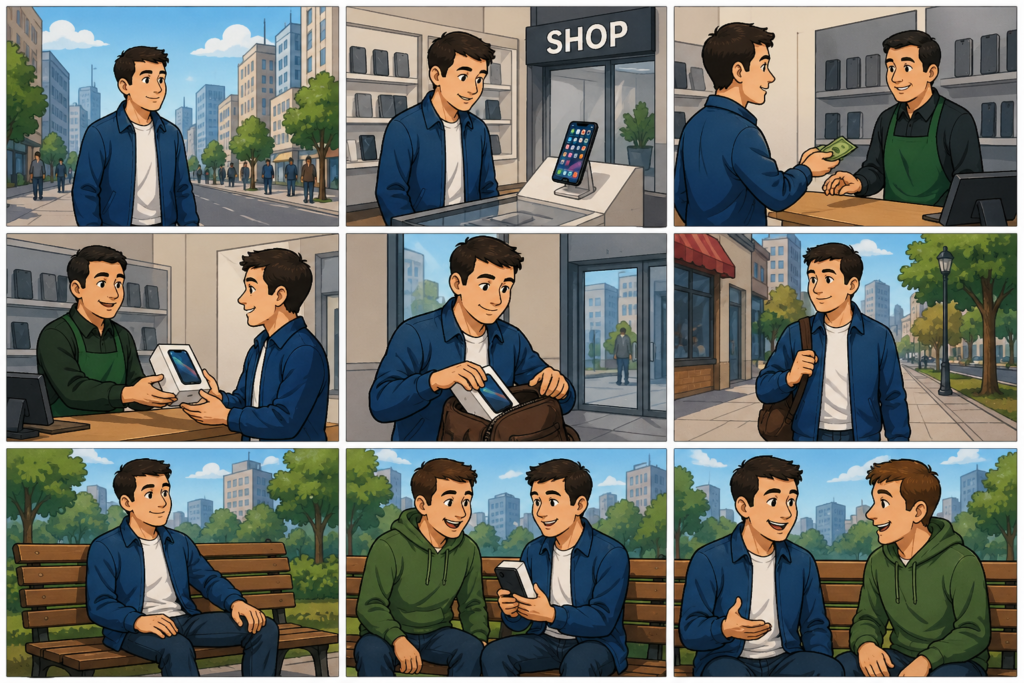
Story 1:
There __________ (be) a man in a city. He __________ (go) to a shop and __________ (see) a mobile phone. He __________ (want) it and __________ (pay) for it. The shopkeeper __________ (give) him the phone. The man __________ (take) it and __________ (put) it in his bag. He __________ (walk) outside and __________ (sit) on a bench. A friend __________ (come) and __________ (look at) the mobile phone. They both __________ (like) it and __________ (talk) aboout it. Both men __________ (be) happy.
———————————
Correct version:
There was a man in a city. He went to a shop and saw a mobile phone. He wanted it and paid for it. The shopkeeper gave him the phone. The man took it and put it in his bag. He walked outside and sat on a bench. A friend came and looked at the mobile phone. They both liked it and talked about it. Both men were happy.
###############
Story 2:
There __________ (be) a boy at school. He __________ (go) to the classroom. He __________ (see) the teacher. He __________ (sit) at his desk. He __________ (look) at the board. The teacher __________ (say) “Start.” The boy __________ (do) the test. He __________ (think) a little. He __________ (write) slowly. He __________ (hear) the clock. He __________ (stop). A boy __________ (point out) a mistake. He __________ (laugh). He __________ (change) it. He __________ (give) the paper to the teacher. The teacher __________ (read) it. He __________ (say) “Good.” The boy __________ (be) happy. He __________ (leave) the classroom.
——————————–
Correct version:
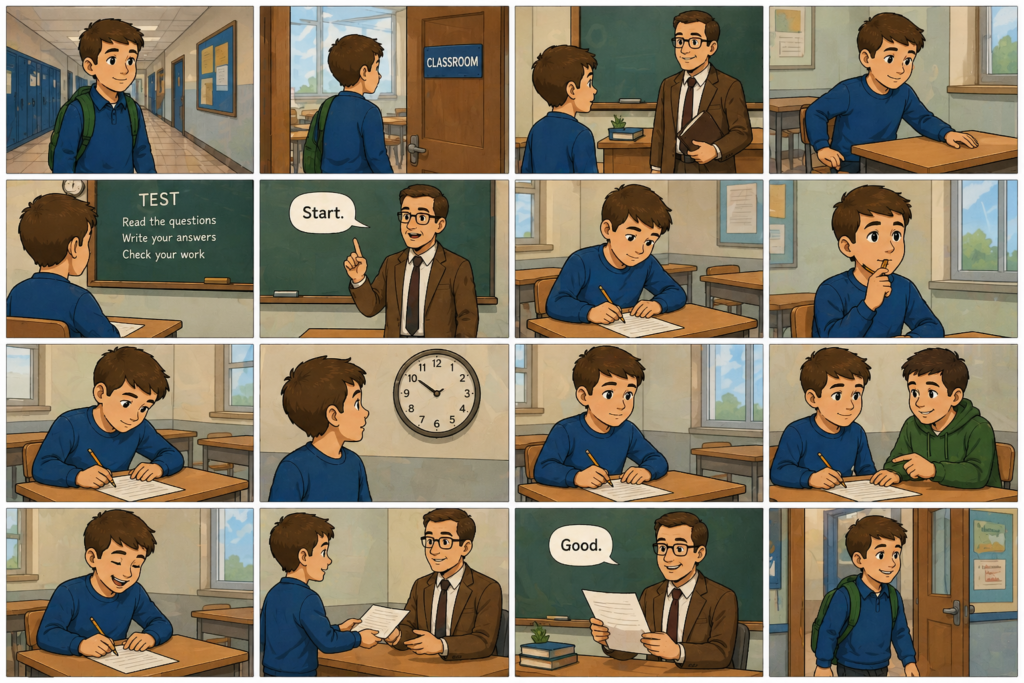
There was a boy at school. He went to the classroom. He saw the teacher. He sat at his desk. He looked at the board. The teacher said “Start.” The boy did the test. He thought a little. He wrote slowly. He heard the clock. He stopped. A boy pointed out a mistake. He laughed. He changed it. He gave the paper to the teacher. The teacher read it. He said “Good.” The boy was happy. He left the classroom.
################
Story 3:
There __________ (be) a football match. A boy __________ (go) to the stadium. He __________ (see) his friends. They __________ (sit) on the seats. The match __________ (start). The boy __________ (watch) the game. He __________ (hear) the crowd. His team __________ (do) well and __________ (take) the lead. The fans __________ (jump up) and __________ (laugh). The boy __________ (point) at the field. He __________ (look) at the players. The referee __________ (stop) the game for a moment. The boy __________ (think) about the game. Later the match __________ (end). The boy __________ (be) happy and __________ (leave) the stadium.
——————————–
Correct version:
There was a football match. A boy went to the stadium. He saw his friends. They sat on the seats. The match started. The boy watched the game. He heard the crowd. His team took the lead. The fans jumped up and laughed. The boy pointed at the field. He looked at the players. The referee stopped the game for a moment. The boy thought about the game. Later the match ended. The boy was happy and left the stadium.
################
- Most verbs: add -ed
-
🥸😳👻🤠The moving statue (A1, beginners, present simple, listening comprehension only)🤠👻😳🥸
- a guard sees something strange in the museum

Vocabulary:
- a statue → a big figure of a person or animal (stone or metal)
- a guard → a person who watches a place and keeps it safe
- something strange → something not normal, a little different
- to check paintings → to look at paintings to see if they are okay
- to be quiet → to make no noise
- to hear a noise → to hear a sound
- to move one’s head → to turn or change the position of your head
- to be surprised → to feel something new or unexpected
- to smile → to show you are happy with your face
- to close one’s eyes → to shut your eyes
- to laugh → to make a happy sound (ha ha)
- to be sure → to know something is true
LISTEN ONLY,
DO NOT LOOK AT TEXTSListen to the story, then do the following exercises below
(full text at the end of the exercise):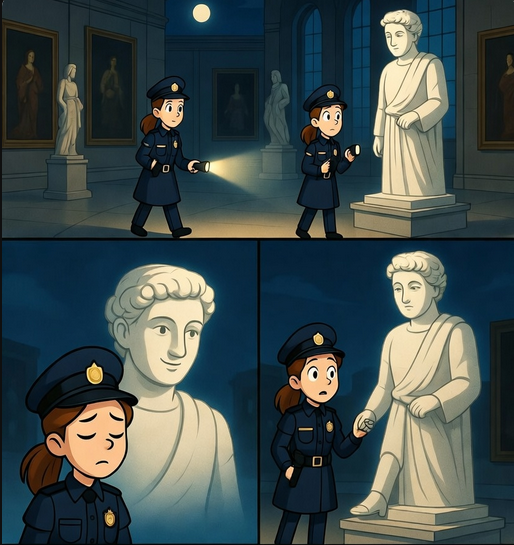
##############
LISTEN ONLY
True or false:
- Anna hears a noise.
- Anna works in a school.
- The statue smiles at Anna.
- The boss believes Anna.
- The museum is quiet at night.
- Anna runs through the museum.
- She checks the paintings and statues.
- The statue moves its head.
- Anna works in a museum.
- The noise comes from a door.
- Anna tells her boss in the morning.
- Anna laughs when she sees the statue.
- She is a night guard.
- The museum is very loud at night.
- The statue talks to Anna.
- Anna walks through the rooms.
- The statue runs fast.
- Anna is sure the statue is normal.
- The noise comes from a statue.
- She works in the morning.
____________________________
True: 1,3,5,7,8,9,11,13,16,19
####################
LISTEN ONLY
Which one is correct?
- Does Anna work in a school or in a museum?
- Is she a manager or a night guard?
- Is the museum noisy or quiet at night?
- Does Anna check paintings and statues or books and computers?
- Does she run through the rooms or walk through the rooms?
- Does Anna see a light or hear a noise?
- Does the noise come from a statue or a door?
- Does the statue move its head or its arms?
- Does the statue frown or smile at Anna?
- Does Anna tell her boss in the morning or in the evening?
- Is Anna bored or surprised when the statue moves?
- Does Anna close her eyes or laugh when she sees the statue?
- Does the boss laugh at her or believe Anna?
- Does the statue talk to Anna or stay silent?
- Does the statue walk slowly or run fast?
- Is Anna not sure or sure about the statue?
- Does Anna work at night or in the morning?
- Does she feel happy or surprised in the museum?
- Does the museum have paintings or computers?
- Does Anna like her job or dislike her job?
__________________
Correct answers:
- Does Anna work in a school or in a museum? – museum
- Is she a manager or a night guard? – night guard
- Is the museum noisy or quiet at night? – quiet
- Does Anna check paintings and statues or books and computers? – paintings and statues
- Does she run through the rooms or walk through the rooms? – walk
- Does Anna see a light or hear a noise? – hear a noise
- Does the noise come from a statue or a door? – statue
- Does the statue move its head or its arms? – head
- Does the statue frown or smile at Anna? – smile
- Does Anna tell her boss in the morning or in the evening? – morning
- Is Anna bored or surprised when the statue moves? – surprised
- Does Anna close her eyes or laugh when she sees the statue? – close her eyes
- Does the boss laugh at her or believe Anna? – laugh
- Does the statue talk to Anna or stay silent? – stay silent
- Does the statue walk slowly or run fast? – slowly
- Is Anna not sure or sure about the statue? – not sure
- Does Anna work at night or in the morning? – at night
- Does she feel happy or surprised in the museum? – surprised
- Does the museum have paintings or computers? – paintings
- Does Anna like her job or dislike her job? – like
###################
LISTEN ONLY
- What is Anna’s job?
- a) Night guard
- b) Teacher
- Where does Anna work?
- a) School
- b) Museum
- When does Anna walk through the rooms?
- a) At night
- b) During the day
- What does Anna hear one night?
- a) Music
- b) A noise
- Where does the noise come from?
- a) A statue
- b) A door
- What does the statue do?
- a) Runs fast
- b) Moves its head
- How does Anna feel when she sees the statue move?
- a) Surprised
- b) Bored
- What does Anna do after she sees the statue move?
- a) Shouts
- b) Closes her eyes
- When does Anna tell her boss about the statue?
- a) In the evening
- b) In the morning
- What does the boss say?
- a) It is only a statue
- b) He believes her
- Does Anna check paintings and statues or books?
- a) Paintings and statues
- b) Books
- Is the museum quiet or noisy at night?
- a) Noisy
- b) Quiet
- Does the statue smile or frown at Anna?
- a) Smile
- b) Frown
- Does Anna walk or run through the museum?
- a) Run
- b) Walk
- Is Anna sure or not sure about the statue?
- a) Not sure
- b) Sure
- Does Anna work during the day or at night?
- a) During the day
- b) At night
- Does the statue stay silent or talk to Anna?
- a) Talk
- b) Stay silent
- Does the statue move slowly or fast?
- a) Fast
- b) Slowly
- Does Anna feel happy or surprised in the museum?
- a) Happy
- b) Surprised
- Does the boss laugh or believe Anna?
- a) Believe
- b) Laugh
_________________________
Correct answers:
- a, 2. b, 3. a, 4. b, 5. a, 6. b, 7. a,
8. b, 9. b, 10. a, 11. a, 12. b, 13. a, 14. b,
15. a, 16. b, 17. b, 18. b, 19. b, 20. b
#############
Anna works in a museum. She is a night guard. Every evening, she walks through the rooms and checks the paintings and statues. The museum is very quiet at night.One night, Anna hears a noise. She stops and listens. The noise comes from a big statue. It is a statue of a man.
Anna looks at the statue. At first, nothing happens. Then, the statue moves its head. Anna is very surprised. She cannot speak.
The statue looks at Anna and smiles. Then it walks slowly across the room.
Anna closes her eyes. When she opens them again, the statue is still. It does not move.
In the morning, Anna tells her boss. He laughs and says, “It is only a statue.”
But Anna is not sure.
- a guard sees something strange in the museum
-
🌉🐏Two proud goats – getting wet (A1, beginners, present simple)🐏🌉
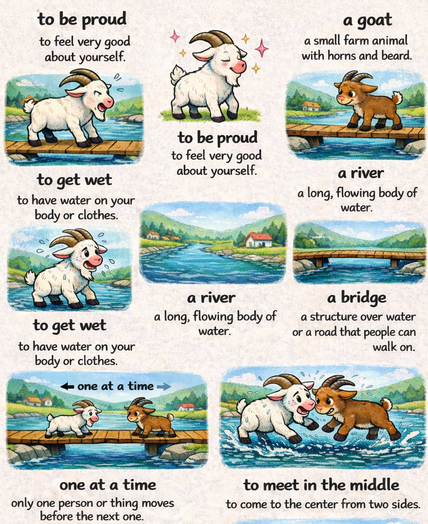
Two goats live near a river.
One goat is big. One goat is small.There is a small bridge over the river. Only one goat can walk on it at a time.
One day, the big goat walks on the bridge. At the same time, the small goat walks from the other side. They meet in the middle.
The big goat says, “Move! I am big and strong.”
The small goat says, “Please do not be proud. We can both cross.”Both goats are proud. They push each other.
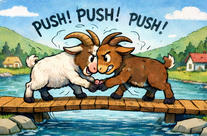
They lose balance and fall into the cold river. Splash!
They swim to the shore. They are wet and cold.
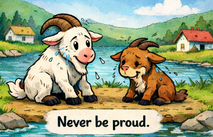
The lesson: Never be proud.
____________________________
Vocabulary:
to be proud – to feel very good about yourself, sometimes too much.
a goat – a small farm animal with horns and a beard.
to get wet – to have water on your body or clothes.
a river – a long, flowing body of water.
a bridge – a structure over water or a road that people can walk on.
one at a time – only one person or thing moves before the next one.
to meet in the middle – to come to the center from two sides.
to be strong – to have a lot of power or muscles.
both – the two people or things together.
to lose balance – to fall or almost fall because you are not stable.
to fall into the river – to drop into the river by accident.
to swim to the shore – to move in the water with your arms and legs until you reach land.
#############
Word match to definition
Words:
- to be proud
- a goat
- to get wet
- a river
- a bridge
- one at a time
- to meet in the middle
- to be strong
- both
- to lose balance
- to fall into the river
- to swim to the shore
Definitions (random order):
A. To move in the water with your arms and legs until you reach land.
B. Only one person or thing moves before the next one.
C. To feel very good about yourself.
D. Two people or things together.
E. A long, flowing body of water.
F. A small farm animal with horns and a beard.
G. To drop into the river by accident.
H. A structure over water or a road that people can walk on.
I. To have water on your body or clothes.
J. To come to the center from two sides.
K. To fall or almost fall because you are not stable.
L. To have a lot of power or muscles.
______________________
Answers:
1=C, 2=F, 3=I, 4=E, 5=H, 6=B,
7=J, 8=L, 9=D, 10=K, 11=G, 12=A______________________
Correct version:
to be proud – to feel very good about yourself
a goat – a small farm animal with horns and a beard
to get wet – to have water on your body or clothes
a river – a long, flowing body of water
a bridge – a structure over water or a road that people can walk on
one at a time – only one person or thing moves before the next one
to meet in the middle – to come to the center from two sides
to be strong – to have a lot of power or muscles
both – two people or things together
to lose balance – to fall or almost fall because you are not stable
to fall into the river – to drop into the river by accident
to swim to the shore – to move in the water with your arms and legs until you reach land################
True or false?
- A goat is a small farm animal with horns.
- To be proud means to feel sad about yourself.
- One at a time means only one person moves before the next.
- A river is dry land.
- To get wet means to stay dry.
- Both means only one person or thing.
- To meet in the middle means to come to the center from two sides.
- To be strong means to have a lot of power or muscles.
- To lose balance means to stay very still.
- To swim to the shore means to move in the water to reach land.
- A bridge is a structure you can walk on over water or a road.
- To fall into the river means to jump safely into the river.
- To get wet means to feel dry.
- Both means two people or things together.
___________________________
True: 1,3,7,8,10,11,14
______________________Correct version:
- A goat is a small farm animal with horns. – T
- To be proud means to feel sad about yourself. – F – True is: To be proud means to feel very good about yourself.
- One at a time means only one person moves before the next. – T
- A river is dry land. – F – True is: A river is a long, flowing body of water.
- To get wet means to stay dry. – F – True is: To get wet means to have water on your body or clothes.
- Both means only one person or thing. – F – True is: Both means two people or things together.
- To meet in the middle means to come to the center from two sides. – T
- To be strong means to have a lot of power or muscles. – T
- To lose balance means to stay very still. – F – True is: To lose balance means to fall or almost fall because you are not stable.
- To swim to the shore means to move in the water to reach land. – T
- A bridge is a structure you can walk on over water or a road. – T
- To fall into the river means to jump safely into the river. – F – True is: To fall into the river means to drop into the river by accident.
- To get wet means to feel dry. – F – True is: To get wet means to have water on your body or clothes.
- Both means two people or things together. – T
##############
Fill in, words below:
goat – middle – Another – shore – river –
push – big – bridge –
walks – on- Two goats live near a __________.
- One goat is __________.
- __________ goat is small.
- A small __________ goes over the river.
- Only one __________ can walk on the bridge at a time.
- The big goat walks __________ the bridge.
- The small goat __________ from the other side.
- In the __________, they meet.
- Both __________ each other.
- They fall into the cold river and swim to the __________.
___________________
Correct version:
- Two goats live near a river.
- One goat is big.
- Another goat is small.
- A small bridge goes over the river.
- Only one goat can walk on the bridge at a time.
- The big goat walks on the bridge.
- The small goat walks from the other side.
- In the middle, they meet.
- Both push each other.
- They fall into the cold river and swim to the shore.
###############
Put the words in order:
- two / the/ goats / near / river / the / live
- one / on/ goat / big / left / side / is /the
- small / the/ goat / right / side / walks / the / on
- the / a / small / goes / over / river / bridge
- the / big / goat / walks / on / bridge
- of / bridge / in / the / they / meet / middle / the
- river / both / the / goats / push / each / other / into
______________________
Correct answers:
- The two goats live near the river.
- One big goat is on the left side.
- The small goat walks on the right side.
- A small bridge goes over the river.
- The big goat walks on the bridge.
- They meet in the middle of the bridge.
- Both goats push each other into river.
##############
Rewrite the dialogue, match question and answer:
Questions:
- Where do the goats live?
- How many goats are there?
- Is one goat big or small?
- Is the other goat big or small?
- What do the goats do on the bridge?
- Do the goats meet in the middle?
- Are the goats proud?
- What happens when they push each other?
- Do they get wet?
- What do the goats do after they fall?
Randomized Answers:
A. One goat is big.
B. Yes, they get wet.
C. They walk on the bridge.
D. Yes, both goats are proud.
E. The goats live near the river.
F. Two goats.
G. They swim to the shore.
H. The other goat is small.
I. Yes, they meet in the middle.
J. They fall into the cold river.
_____________________
Answers: 1=E, 2=F, 3=A, 4=H, 5=C,
6=I, 7=D, 8=J, 9=B, 10=G
_____________________Correct version:
- Where do the goats live? – The goats live near the river.
- How many goats are there? – Two goats.
- Is one goat big or small? – One goat is big.
- Is the other goat big or small? – The other goat is small.
- What do the goats do on the bridge? – They walk on the bridge.
- Do the goats meet in the middle? – Yes, they meet in the middle.
- Are the goats proud? – Yes, both goats are proud.
- What happens when they push each other? – They fall into the cold river.
- Do they get wet? – Yes, they get wet.
- What do the goats do after they fall? – They swim to the shore.
##################
-
🥸🤓Help! (U 13, pp 110-118, present/past forms, stories in the past, accident, emergency, Saxon Genitive, A1)🥳🤓
German English Definition (simple) (110) ein Notfall an emergency a dangerous or serious situation ein Rettungsdienst an emergency service people who help in an emergency Bergrettung mountain rescue help people in mountains jemanden retten to rescue somebody help someone in danger Bombenentschärfung a bomb disposal make a bomb safe ein Krankenwagen an ambulance car for sick or hurt people Küstenwache coastguard people who help at the sea Feuerwehr fire brigade people who fight fire ein Wortschlange a word snake a game with words (111) verbinden to link connect two things abholen to pick up take something or someone Schultasche a school bag bag for school things eine Tür öffnen to open a door make a door open jemanden anrufen to phone somebody call someone on the phone jemanden einladen to invite somebody ask someone to come müde sein to be tired not have energy den Fernseher ausschalten to switch off the TV make the TV stop langweilig sein to be boring not interesting schwierig sein to be difficult not easy Abendessen kochen to cook dinner make food in the evening schreien to shout say something loudly drücken to push move something with your hand sich ändern to change become different ausrutschen to slip fall because of water or ice tragen to carry hold and move something springen to jump move up in the air ankommen to arrive get to a place sich erinnern to remember not forget something (112) sammeln to collect get things together aufgeregt sein to be excited feel very happy or nervous einen Film schauen to watch a film look at a movie ein Fenster öffnen to open a window make the window open an die Tür klopfen to knock at the door hit the door with your hand segeln to sail move a boat on water jagen to chase run after someone or something wütend sein to be angry feel very mad (113) plötzlich suddenly happens very fast interviewen to interview ask questions to someone (114) nass sein to be wet have water on you ein Jetpack a jetpack a flying machine you wear (115) Interesse wecken to arouse interest make someone want to know more ermutigen to encourage help someone feel confident jemanden vom Fahrrad schubsen to push somebody off the bike make someone fall from a bike schrecklich sein to be terrible very bad eine Prüfung bestehen to pass a test succeed in a test abschließen to complete finish something erstaunlich sein to be amazing very good or surprising (116) eine Notsituation an emergency situation a dangerous problem windig sein to be windy have a lot of wind brennen to be on fire have fire etwas bemerken to notice something see or realize something prüfen to check look carefully ein Unfall an accident something bad that happens buchstabieren to spell say the letters of a word (117) um Hilfe rufen to shout for help call someone to help you Glück haben to be lucky good things happen to you sich das Bein brechen to break one’s leg hurt your leg badly ein Land a country a place with people and rules ein Verbrechen a crime break the law in Gefahr sein to be in danger something bad can happen in die Berge fliegen to fly up the mountains go to mountains by air (118) jemanden funken to radio somebody talk to someone by radio ein Felsen a rock big hard stone ausrutschen to slip fall because of water or ice ein Sturm a storm very bad weather with wind and rain ankommen to arrive get to a place sicher sein to be safe not in danger träumen to dream see things in your mind while sleeping hinfallen to fall down drop to the ground auf einem Berg landen to land on a mountain get down on a mountain Medizin medicine something to make you better der Himmel the sky above the earth dunkel sein to be dark not light allein sein to be alone no people with you ein Rucksack a backpack bag you carry on your back jemanden jagen to chase somebody run after someone Klassenvertreter a class speaker a student who speaks for class Bürgermeister a mayor the leader of a town abstimmen to vote choose by raising your hand or paper ein Knopf a button small thing you press eine Wolke a cloud white thing in the sky sterben to die stop living ein Wald a forest many trees together eine Einführung an introduction first talk or text about something Weltraum space area outside the earth etwas bemerken to notice something see or realize something einen Knopf drücken to press a button push a button ein Bildschirm a screen where you see pictures or words ein Abenteuer an adventure an exciting event eine Figur a character a person in a story Rate mal? Guess what? ask someone to guess Erzähl mir mehr Tell me more ask someone to say more
#####################
180 common irregular verbs
#####################
#####################
Past simple tense
We use the simple past to talk about actions that
=>>> finished in the past
e.g. with words like yesterday, last week, two years ago._____________________
1. Regular verbs
Regular verbs add “-ed” in the past tense.
Examples:
- play → played
- work → worked
- watch → watched
- clean → cleaned
- visit → visited
2. Irregular verbs (the complete list)
Irregular verbs change their form in the past tense. They do not add “-ed.”
Examples:
- go → went
- eat → ate
- have → had
- see → saw
- come → came
###################
Verbs in text:
Infinitive (to…) Past tense to rescue rescued to link linked to pick up picked up to open opened to phone phoned to invite invited to be tired was/were tired to switch off switched off to shout shouted to push pushed to change changed to slip slipped to carry carried to jump jumped to arrive arrived to remember remembered to collect collected to be excited was/were excited to watch watched to knock knocked to sail sailed to chase chased to be angry was/were angry to interview interviewed to be wet was/were wet to arouse interest aroused interest to encourage encouraged to push somebody off pushed somebody off to be terrible was/were terrible to pass passed to complete completed to be amazing was/were amazing to notice noticed to check checked to spell spelled/spelt to shout for help shouted for help to be lucky was/were lucky to break broke to be in danger was/were in danger to fly flew to radio radioed to fall fell to dream dreamed/dreamt to land landed to press pressed to vote voted #################
List of irrgular verbs, e.g. to fall – fell – fallen
#################
Fill in, correct past simple :
- He ___________________ (jump) into the swimming pool.
- She ___________________ (fall) down in the forest.
- He ___________________ (break) his leg in an accident.
- They ___________________ (fly) up the mountains.
- She ___________________ (dream) about an adventure.
- He ___________________ (be) alone in the forest.
- We ___________________ (be) lucky after the storm.
- She ___________________ (be) wet after the rain.
- They ___________________ (be) in danger on the mountain.
- He ___________________ (arrive) at the mountain rescue.
- She ___________________ (radio) the emergency service.
- He ___________________ (press) a button on the screen.
- They ___________________ (shout) for help in the forest.
- She ___________________ (notice) a rock on the ground.
- He ___________________ (land) on a mountain.
- We ___________________ (collect) information for the interview.
- She ___________________ (watch) a film in the evening.
- He ___________________ (carry) a backpack in the forest.
- They ___________________ (open) a window in the room.
- She ___________________ (knock) at the door.
- He ___________________ (invite) the mayor.
- We ___________________ (vote) for the class speaker.
- She ___________________ (check) the screen.
- He ___________________ (spell) the word.
- They ___________________ (shout) loudly.
- She ___________________ (slip) on a rock.
- He ___________________ (push) the button.
- We ___________________ (encourage) the class speaker.
- She ___________________ (complete) the introduction.
- He ___________________ (pass) the test.
_________________________
Correct answers:
- He jumped into the swimming pool.
- She fell down in the forest.
- He broke his leg in an accident.
- They flew up the mountains.
- She dreamed about an adventure.
- He was alone in the forest.
- We were lucky after the storm.
- She was wet after the rain.
- They were in danger on the mountain.
- He arrived at the mountain rescue.
- She radioed the emergency service.
- He pressed a button on the screen.
- They shouted for help in the forest.
- She noticed a rock on the ground.
- He landed on a mountain.
- We collected information for the interview.
- She watched a film in the evening.
- He carried a backpack in the forest.
- They opened a window in the room.
- She knocked at the door.
- He invited the mayor.
- We voted for the class speaker.
- She checked the screen.
- He spelled / spelt the word.
- They shouted loudly.
- She slipped on a rock.
- He pushed the button.
- We encouraged the class speaker.
- She completed the introduction.
- He passed the test.
#################
Find past tenses, write down infinitive (irregular verbs)
Word Snake 1:
jumpedfellbrokewasarrivedlanded
YOU WRITE:
to jump – jumped
_____-______
_____-______
_____-______
_____-______
_____-______
Word Snake 2:
flewdreamedwereswas
Word Snake 3:
noticedcheckedpressedradioedshouted
Word Snake 4:
pushedcarriedopenedknockedinvitedvoted
Word Snake 5:
slippedfellbrokedreamedflewlandedpassed
_______________________
Corect answers:
Word Snake 1
jumped
fell
broke
was
arrived
landed
Word Snake 2
flew
dreamed
were
was
Word Snake 3
noticed
checked
pressed
radioed
shouted
Word Snake 4
pushed
carried
opened
knocked
invited
voted
Word Snake 5
slipped
fell
broke
dreamed / dreamt
flew
landed
passed
#################
Order the sentence:
- the / he / into / jumped / swimming / pool
YOU WRITE:
He jumped into the swimming pool. - accident / leg / in / broke / her / she / the
- up / flew / they / mountains / the
- an / adventure / dreamed / about / he
- forest / alone / in / was / the / he
- help / shouted / forest / they / in / for / the
- backpack / carried / he / the / a / in / forest
- at / knocked / door / the / she
- on / pressed / screen / button / a / he / the
- in / watched / she / the / evening / film / a
- invited / he / mayor / the
- voted / class / speaker / we / the / for
- checked / screen / she / the
- noticed / rock / she / a / on / the / ground
- landed / mountain / on / he / a
- collected / we / information / for / interview / the
- slipped / she / on / rock / a
- carried / he / medicine / the
- shouted / they / loudly
- completed / introduction / she / the
________________________
Correct answers:
- He jumped into the swimming pool.
- She broke her leg in the accident.
- They flew up the mountains.
- He dreamed / dreamt about an adventure.
- He was alone in the forest.
- They shouted for help in the forest.
- He carried a backpack in the forest.
- She knocked at the door.
- He pressed a button on the screen.
- She watched a film in the evening.
- He invited the mayor.
- We voted for the class speaker.
- She checked the screen.
- She noticed a rock on the ground.
- He landed on a mountain.
- We collected information for the interview.
- She slipped on a rock.
- He carried the medicine.
- They shouted loudly.
- She completed the introduction.
#################
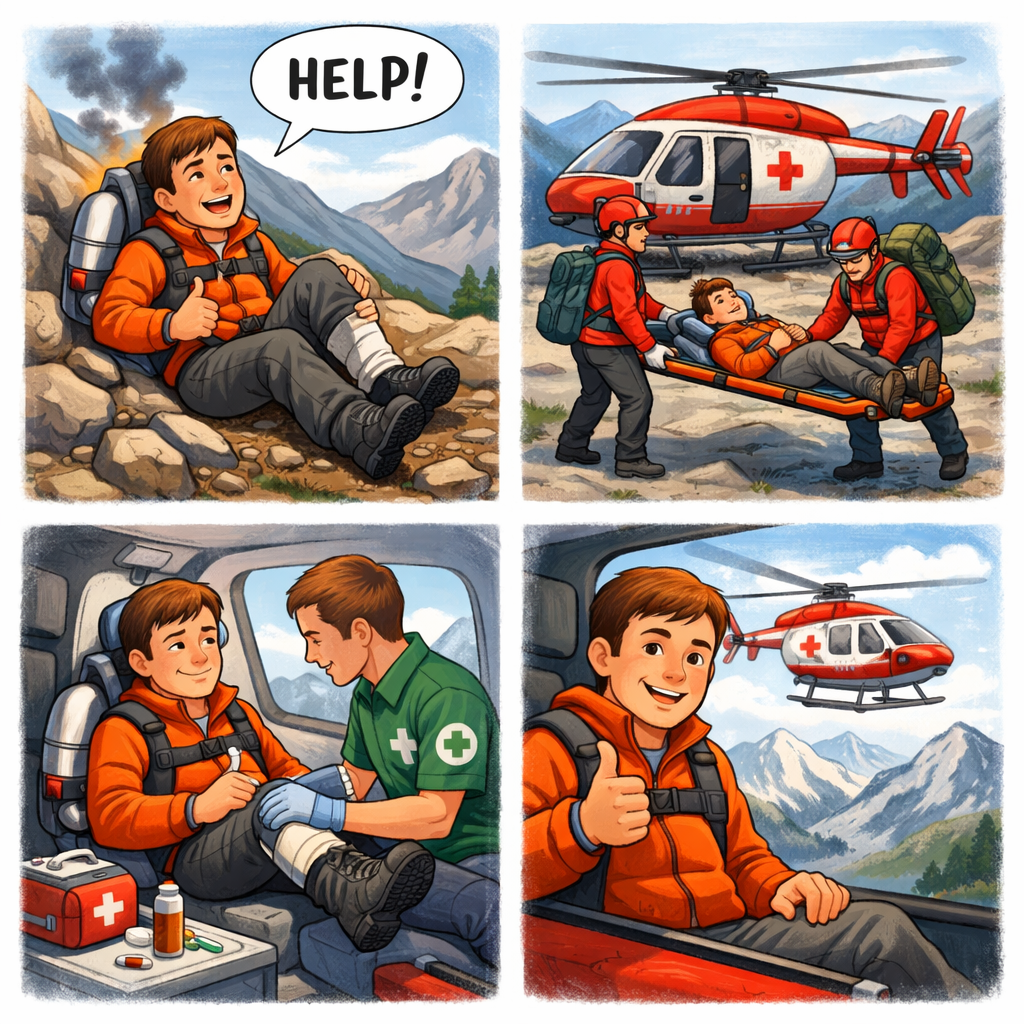
Fill in the correct verb in past tense, verbs below:
carry – dream – fly – check –
arrive – be – slip –
remember –
breakEmergency in the Mountains
Yesterday, Tom __________ up the mountains with a jetpack. Suddenly, he __________ on a rock and __________ his leg. He shouted for help. A mountain rescue team __________quickly. They __________Tom to the helicopter. The emergency service __________ his leg and gave him medicine. Tom was wet and tired, but he __________safe. He __________to thank the rescue team. Tom __________ about his next adventure.
————————————-
Correct version:
Yesterday, Tom flew up the mountains with a jetpack. Suddenly, he slipped on a rock and broke his leg. He shouted for help. A mountain rescue team arrived quickly. They carried Tom to the helicopter. The emergency service checked his leg and gave him medicine. Tom was wet and tired, but he was safe. He remembered to thank the rescue team. Tom dreamed about his next adventure.
#################
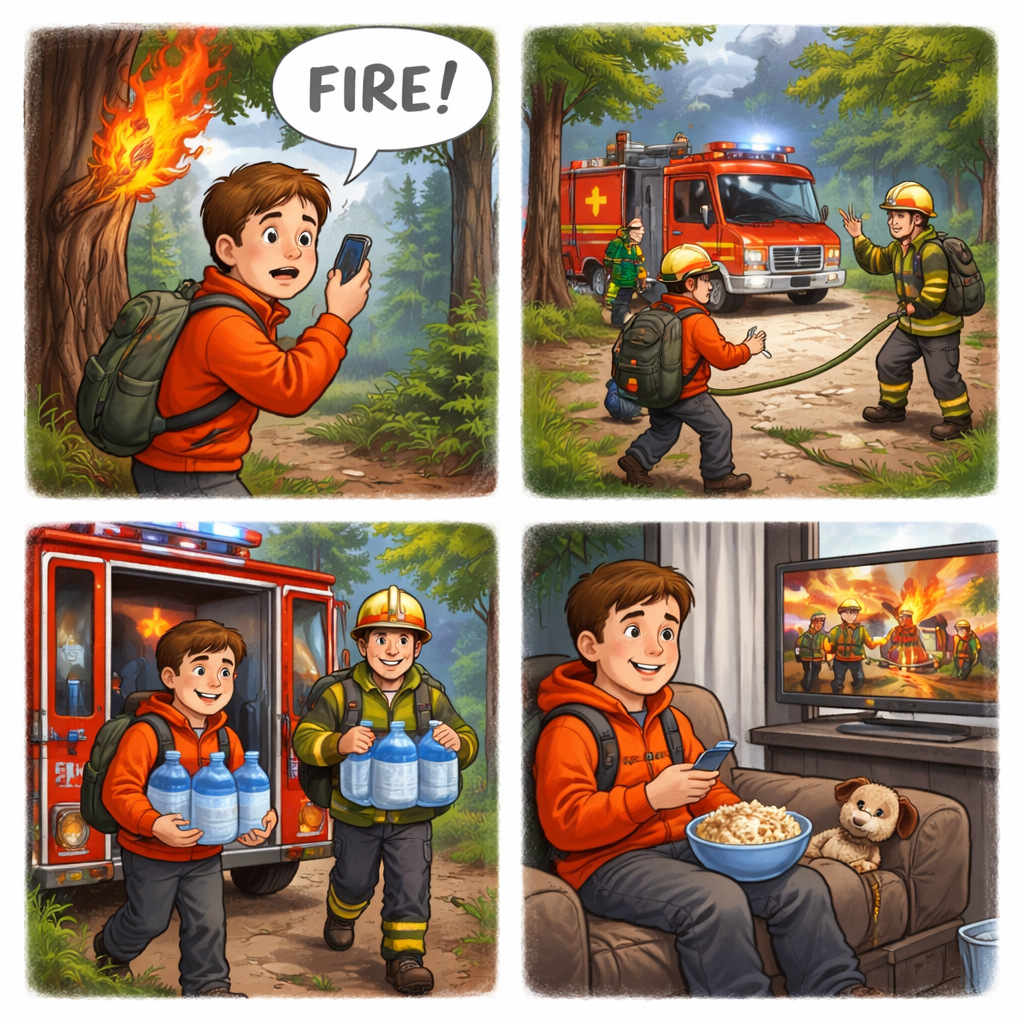
Fill in the correct verb in past tense, verbs below:
be – dream – call – help –
notice – rememberFire in the Forest
Yesterday, Max was in the forest. Suddenly, a tree was on fire. He __________ the smoke and __________ the fire brigade. The fire brigade arrived quickly. They checked the forest and put out the fire. Max __________ them carry water bottles. He __________ tired but happy. Later, he watched a film about fire safety and __________ the emergency. Max __________ about becoming a firefighter one day.
————————————-
Correct version:
Yesterday, Max was in the forest. Suddenly, a tree was on fire. He noticed the smoke and called the fire brigade. The fire brigade arrived quickly. They checked the forest and put out the fire. Max helped them carry water bottles. He was tired but happy. Later, he watched a film about fire safety and remembered the emergency. Max dreamed about becoming a firefighter one day.
#################
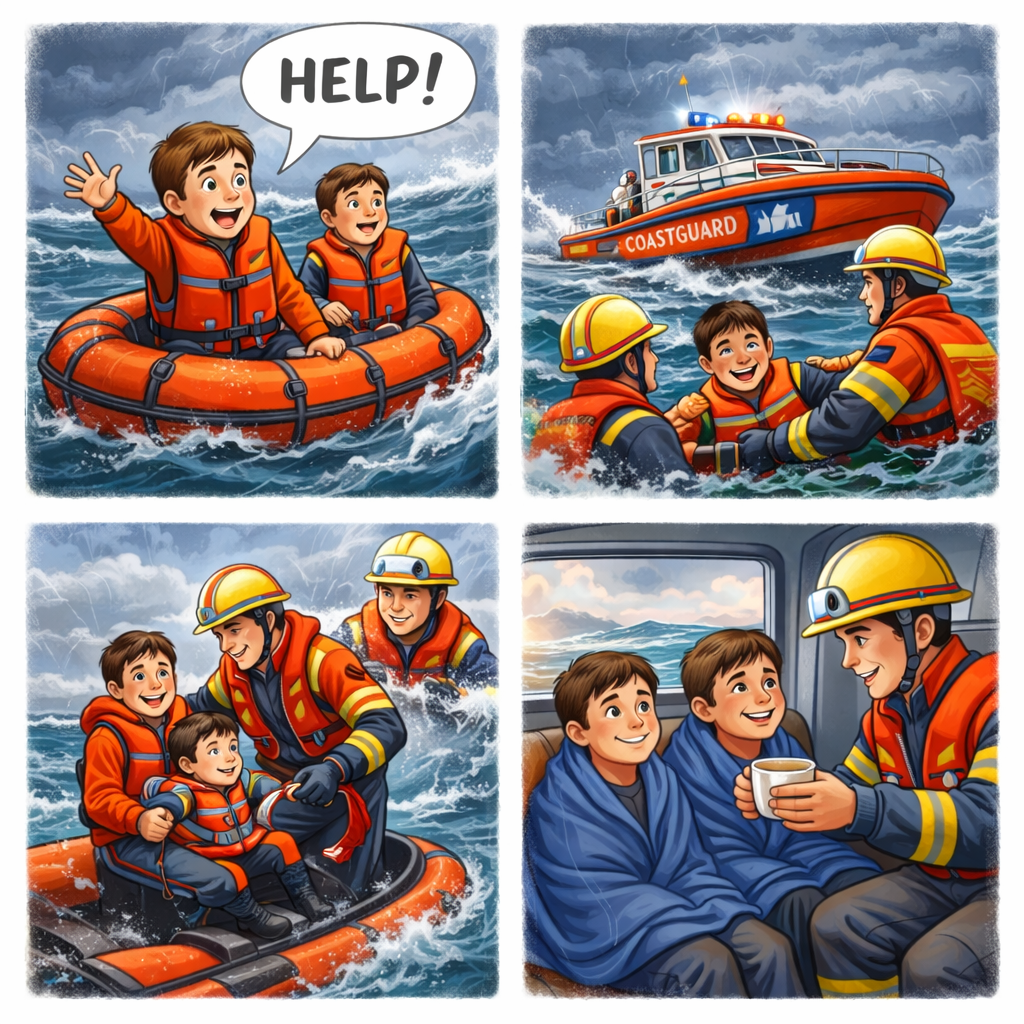
Fill in the correct verb in past tense, verbs below:
check – be – dream – arrive –
fall – help – shout –
give————————————-
Correct version:Yesterday, Leo was sailing near the coast. Suddenly, the wind was strong, and he fell into the water. He shouted for help. A coastguard arrived with a rescue boat. They helped Leo and carried him safely on board. Leo was wet and tired. The coastguard checked that he was okay and gave him medicine. Later, Leo remembered the adventure and dreamed about flying with a jetpack again.
#################
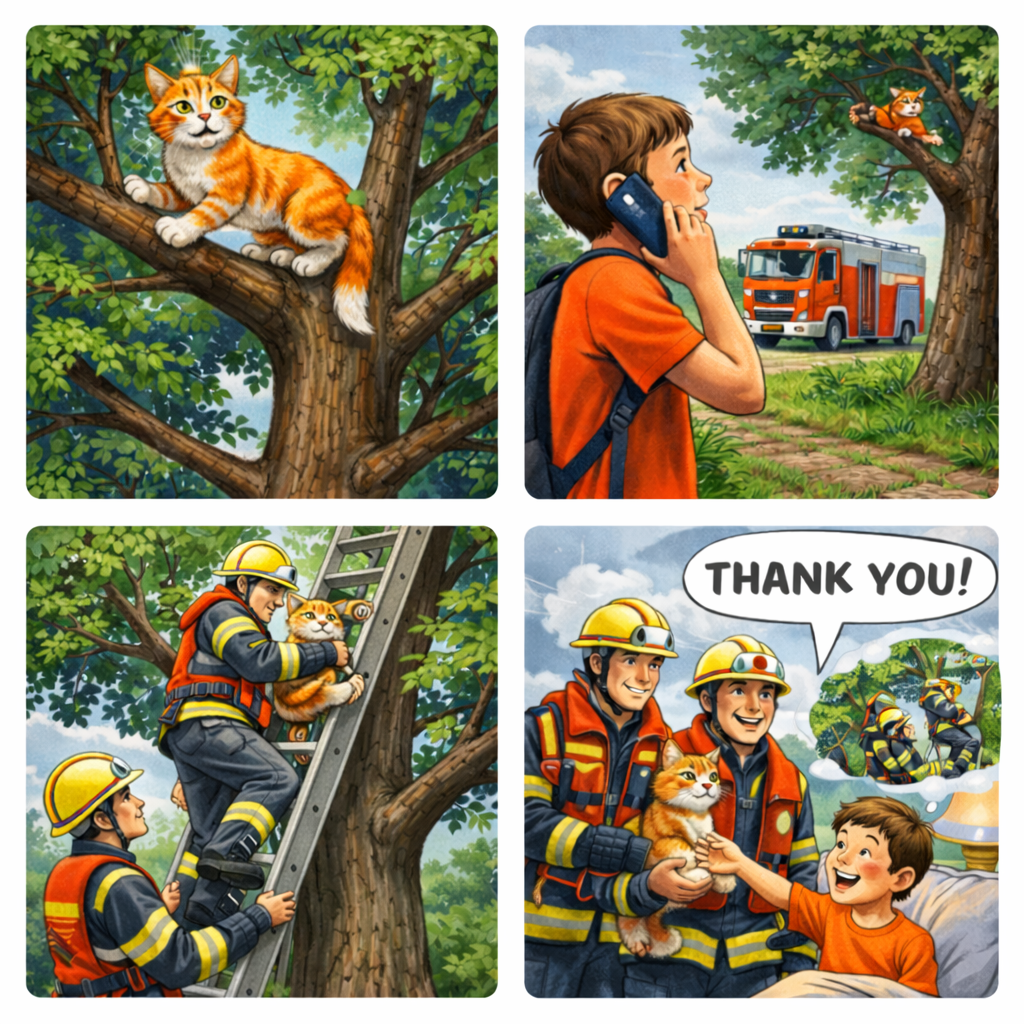
Fill in the correct verb in past tense, verbs below:
notice – be – climb – remember –
shout – carry –
call – dreamCat Rescue
Yesterday, a cat was stuck on a tree. It was high and in danger. A child __________ the cat and __________the fire brigade. The firefighters arrived quickly. They __________ the tree and __________ the cat safely down. The cat was wet but safe. The child __________ happy and __________ “thank you!” Later, the child __________ the rescue and __________ about helping animals again.
————————————
Correct version:Yesterday, a cat was stuck on a tree. It was high and in danger. A child noticed the cat and called the fire brigade. The firefighters arrived quickly. They climbed the tree and carried the cat safely down. The cat was wet but safe. The child was happy and shouted “thank you!” Later, the child remembered the rescue and dreamed about helping animals again.
################
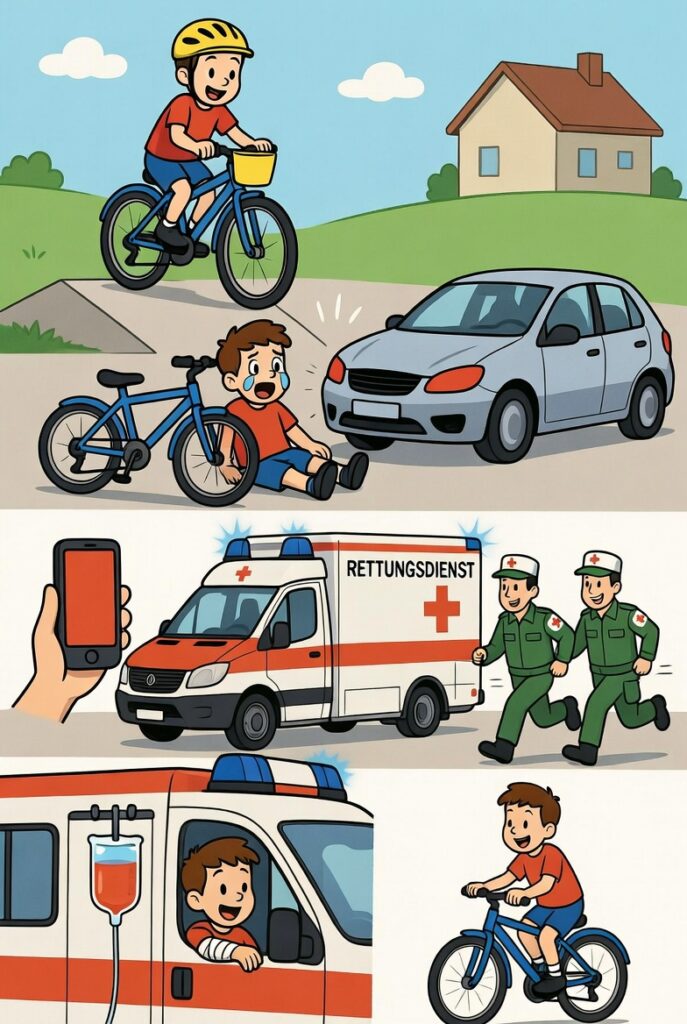
Fill in the correct verb in past tense, verbs below:
help – cry – smile – ride –
give – push – promise –
arriveBiker Emergency
Tom lives in Austria.
He jumped on his bike and __________ to school. Suddenly, a car __________ him off the bike. He __________ loudly. People called the emergency service. An ambulance __________ fast. The paramedics __________ Tom and lifted him into the ambulance. They __________ him medicine. Tom looked at the sky and felt safe. Later, he __________and __________ to be careful on his bike.———————————–
Corrrect version:Tom lives in Austria.
He jumped on his bike and rode to school. Suddenly, a car pushed him off the bike. He cried loudly. People called the emergency service. An ambulance arrived fast. The paramedics helped Tom and lifted him into the ambulance. They gave him medicine. Tom looked at the sky and felt safe. Later, he smiled and promised to be careful on his bike.##################
True or false:
- Tom jumped on his bike and rode to school.
- A car pushed him off the bike.
- Tom jumped into a river.
- He cried loudly.
- People carried Tom on a stretcher to the mountains.
- The ambulance arrived fast.
- He fell asleep in the forest.
- People called the emergency service.
- The paramedics helped Tom and lifted him into the ambulance.
- He looked at the sky and felt safe.
- An ambulance arrived slowly.
- Tom smiled and promised to be careful on his bike.
- They gave him medicine.
- Tom lives in Germany.
______________________
Answers:T, T, F, T, F, T, F, T, T, T, F, T, T, F______________________
Correct version:
- Tom jumped on his bike and rode to school.
- A car pushed him off the bike.
- Tom jumped into a river. True is: Tom was pushed off his bike by a car.
- He cried loudly.
- People carried Tom on a stretcher to the mountains. True is: People called the emergency service.
- The ambulance arrived fast.
- He fell asleep in the forest. True is: He looked at the sky and felt safe.
- People called the emergency service.
- The paramedics helped Tom and lifted him into the ambulance.
- He looked at the sky and felt safe.
- An ambulance arrived slowly. True is: The ambulance arrived fast.
- Tom smiled and promised to be careful on his bike.
- They gave him medicine.
- Tom lives in Germany. True is: Tom lives in Austria.
################
Help!
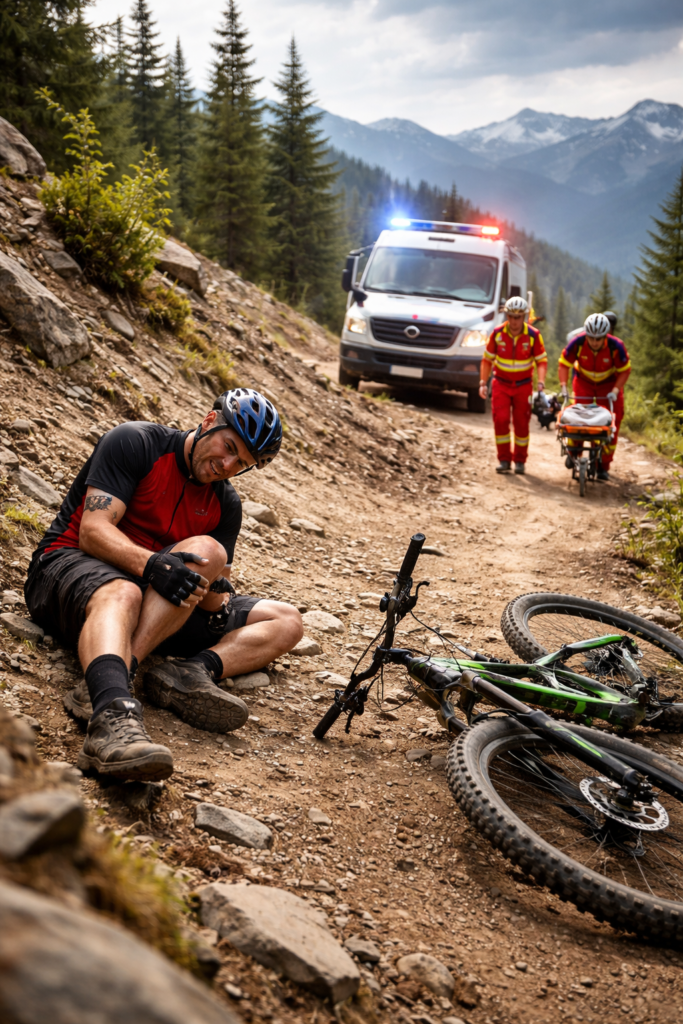
Fill in, in past simple:
A man (sit) __________on a rock on the mountain.
He __________ (fall) on the ground.
His bike __________ (break).
The man __________ (shout) for help.
Two paramedics __________ (arrive).
They __________ (carry) a bag and medicine.
The man __________ (notice) the ambulance.
The lights __________ (be) on.
The man __________ (look) at his bike.
The paramedics __________ (help) the man.
They __________ (rescue) him.
The man __________ (be) lucky.
_______________________Correct version:
A man sat on a rock on the mountain.
He fell on the ground.
His bike broke.
The man shouted for help.
Two paramedics arrived.
They carried a bag and medicine.
The man noticed the ambulance.
The lights were on.
The man looked at his bike.
The paramedics helped the man.
They rescued him.
The man was lucky.###############
LISTEN –
IF NECESSARY
TWICE OR THREE TIMES –
AND COMPLETE
if necessary use the
button!
part 1:
Yesterday Anna and Tom __________ up the mountains in a small plane.
Suddenly the plane had a __________.
They were in __________.
Anna __________ for help.
Tom called the __________ service.
The mountain rescue __________ quickly.
The pilot landed on a mountain near a big__________.
Anna slipped and __________ her leg.
——————————
part 2:
Tom __________ her.
The __________ arrived.
The paramedics __________ Anna.
They __________ her medicine.
Anna was __________ but safe.
—————————-
part 3:
Everyone was lucky.
Later Anna __________ the adventure and smiled.
The rescue __________ was amazing.
Tom __________ thank you.
It was a terrible __________, but in the end all were safe.
——————————————
Correct version:
Yesterday Anna and Tom flew up the mountains in a small plane. Suddenly the plane had a problem. They were in danger.Anna shouted for help. Tom called the rescue service. The mountain rescue arrived quickly.The pilot landed on a mountain near a big rock. Anna slipped and broke her leg.Tom carried her.The ambulance arrived. The paramedics helped Anna. They gave her medicine. Anna was tired but safe.
Everyone was lucky. Later Anna remembered the adventure and smiled. The rescue team was amazing. Tom said thank you.It was a terrible situation, but in the end all were safe.
###################
Saxon genitive (’s) –
showing possessionThe Saxon genitive shows that something belongs to someone. We add ’s to a name or noun.
Basic rule:
👉 person/animal + ’s + thing
Examples:
- John’s book = the book belongs to John
- Anna’s bag = the bag belongs to Anna
- The cat’s food = the food belongs to the cat
If the name ends in -s (like James):
We still usually add ’s:
- James’s book = the book belongs to James
- James’s car = the car belongs to James
Plural nouns:
If the word is plural and already ends in -s, we just add an apostrophe ’:
- the boys’ room = the room of the boys
- the teachers’ office = the office of the teachers
Easy way to remember:
Instead of saying “the book of John”, we say:
👉 John’s bookIf you want, I can also give you a short quiz to practice it.
#################
Rewrite with Saxon genitive
- the book of James → __________
YOU WRITE:
James’s book - the car of Lucas → __________
- the house of Elias → __________
- the toys of the boys → __________
- the bag of Anna → __________
- the bike of Tom → __________
- the room of the students → __________
- the phone of James → __________
- the dog of Lucas → __________
- the jacket of Elias → __________
- the games of the children → __________
- the house of the teachers → __________
- the birthday of James → __________
- the notebook of Lucas → __________
- the pencil of Elias → __________
- the cars of the boys → __________
- the work of the students → __________
- the garden of James → __________
- the friends of Lucas → __________
- the school of Elias → __________
————————
Correct answers:
- James’s book
- Lucas’s car
- Elias’s house
- the boys’ toys
- Anna’s bag
- Tom’s bike
- the students’ room
- James’s phone
- Lucas’s dog
- Elias’s jacket
- the children’s games
- the teachers’ house
- James’s birthday
- Lucas’s notebook
- Elias’s pencil
- the boys’ cars
- the students’ work
- James’s garden
- Lucas’s friends
- Elias’s school
-
😊😊Introducing yourself, how to……….. (beginners, dialogues, A1)😊😊

Dialogue 1: Basic introduction
A: Hello.
B: Hi.
A: My name is Anna. What is your name?
B: My name is Tom.
A: Nice to meet you.
B: Nice to meet you too.______________________
A: Hello.
B: Hi.
A: My name is Anna. What is your name?
B: My name is Tom.
A: Nice to meet you, Tom.
B: Nice to meet you too, Anna.
A: Where are you from?
B: I am from Canada.
A: And you?
B: I am from Spain.
################
Dialogue 2: Name and country
A: Hello! What is your name?
B: My name is Sara.
A: Where are you from?
B: I am from Brazil.
A: Oh, nice!_____________________
A: Hello! What is your name?
B: My name is Sara.
A: Nice to meet you, Sara.
B: Nice to meet you too.
A: Where are you from?
B: I am from Brazil.
A: Do you live here?
B: Yes, I live here now.
A: Welcome!
B: Thank you!
################
Dialogue 3: Name and age
A: Hi.
B: Hello.
A: How old are you?
B: I am 18 years old.
A: And you?
B: I am 20._____________________
A: Hi.
B: Hello.
A: How old are you?
B: I am 18 years old.
A: And you?
B: I am 20 years old.
A: Are you a student?
B: Yes, I am a student.
A: Nice to meet you.
B: Nice to meet you too.______________________
More on numbers and the alphabet
################
Dialogue 4: Job or study
A: Hello. What do you do?
B: I am a student.
A: What do you study?
B: I study English.__________________
A: Hello. What do you do?
B: I am a student.
A: What do you study?
B: I study English.
A: Where do you study?
B: I study at a school.
A: Do you like English?
B: Yes, I like it.
#############
Dialogue 5: Work
A: Hi!
B: Hi!
A: What is your job?
B: I am a nurse.
A: Where do you work?
B: I work in a hospital.__________________
A: Hi!
B: Hi!
A: What is your job?
B: I am a nurse.
A: Where do you work?
B: I work in a hospital.
A: Is the hospital near?
B: Yes, it is near.
A: Nice!
B: Thank you.__________________
a nurse – a person who helps sick [not healthy; feeling ill]people.
a hospital – a place where sick people go to get help.
near – close in distance [how far one place is from another].#############
Dialogue 6: Likes
A: Hello.
B: Hi.
A: What do you like?
B: I like music and coffee.
A: Me too!_____________________
A: Hello.
B: Hi.
A: What do you like?
B: I like music and coffee.
A: Do you like tea?
B: No, I don’t like tea.
A: Oh, okay.
B: And you?
A: I like coffee too.
B: Me too!###############
Dialogue 7: First day in class
A: Hello. Are you new here?
B: Yes, I am.
A: What is your name?
B: My name is Alex.
A: Welcome, Alex!
B: Thank you.____________________
A: Hello. Are you new here?
B: Yes, I am.
A: What is your name?
B: My name is Alex.
A: Nice to meet you, Alex.
B: Nice to meet you too.
A: Where are you from?
B: I am from Australia.
A: Welcome to the class!
B: Thank you very much.##############
Match the questions with the correct answers.
Questions:
- Hello!
- What is your name?
- Nice to meet you.
- Where are you from?
- How old are you?
- What do you do?
- What do you study?
- Do you like English?
- Do you like music?
- Where do you live?
Answers:
A. I am 19 years old.
B. I study English.
C. Hi!
D. I live in Madrid.
E. I am from Spain.
F. Yes, I like music too.
G. I am a student.
H. My name is Sara.
I. Nice to meet you too.
J. Yes, I like it.
___________________________
Correct answers:
1→C, 2→H, 3→I, 4→E, 5→A,
6→G, 7→B, 8→J, 9→F, 10→D
___________________________Correct dialogue:
A: Hello!
B: Hi!A: What is your name?
B: My name is Sara.A: Nice to meet you.
B: Nice to meet you too.A: Where are you from?
B: I am from Spain.A: How old are you?
B: I am 19 years old.A: What do you do?
B: I am a student.A: What do you study?
B: I study English.A: Do you like English?
B: Yes, I like it.A: Do you like music?
B: Yes, I like music too.A: Where do you live?
B: I live in Madrid.
####################

Another dialogue, a bit more elaborate [very detailed, with many parts, not simple]:
A: Hello!
B: Hi! How are you?A: I’m fine, thank you. What is your name?
B: My name is Sara. And you?A: My name is Tom. Nice to meet you.
B: Nice to meet you too, Tom.A: Where are you from?
B: I am from Spain. And you?A: I am from Canada. How old are you?
B: I am 19 years old.A: What do you do?
B: I am a student. I study English.A: That’s great! Do you like English?
B: Yes, I like it very much.A: Do you like music?
B: Yes, I like music too. I also like dancing.A: Where do you live?
B: I live in Madrid. It’s a nice city.A: Oh, I’ve heard Madrid is very beautiful!
___________________________
elaborate – with many details.
nice – pleasant or good.
city – a large town with many people and buildings.
beautiful – very nice to see.####################
Another dialogue, even more elaborate, but still A1
A: Hello!
B: Hi! How are you today?A: I’m fine, thank you. And you?
B: I’m good, thank you.A: What is your name?
B: My name is Sara. And your name?A: My name is Tom. Nice to meet you, Sara.
B: Nice to meet you too, Tom.A: Where are you from?
B: I am from Spain. I live in Madrid. And you?A: I am from Canada. I live in Toronto. How old are you?
B: I am 19 years old. And you?A: I am 20 years old. What do you do?
B: I am a student. I study English at a language school.A: That’s great! Do you like English?
B: Yes, I like it very much. I want to speak English well.A: Do you like music?
B: Yes, I like music a lot. I also like dancing and singing.A: That sounds fun! Where do you usually listen to music?
B: I usually listen to music at home or on the bus.A: Oh, I see. Madrid is a very beautiful city, isn’t it?
B: Yes, it’s very nice. There are many parks and cafés.A: Wow! I hope I can visit it one day.
_______________________
to study – to learn something.
a language – the words people use to talk (like English, Spanish).
to speak English well – to talk in English correctly.
That sounds fun! – It seems very nice or enjoyable [something that is fun or makes you happy.].
usually – most of the time.
to listen to music – to hear songs.
at home – in your house.
to hope – to want something to happen.
to visit – to go to a place for a short time.
################
-
🤓🥳Birthday cake (U 12, pp 102-109, ordinal numbers, was/were, time prepositions, A1)🥳🤓
German English Simple English definition Ordnungszahlen ordinal numbers numbers that show order (first, second) Schlange a snake a long animal with no legs Geburtstag a birthday the day you were born Gedicht a poem short text with rhythm or rhyme sich krank fühlen to feel ill to not feel well unordentlich essen to be a messy eater to eat and make a lot of mess Jacke a jacket clothes you wear when it is cold Zeitpräposition a time preposition a word for time (at, on, in) einen Kuchen backen to bake a cake to make a cake in the oven wütend sein to be angry to feel mad Bibliothek a library a place with many books Zeitpräposition preposition of time a word that shows time Badezimmer a bathroom a room with a toilet or shower Esszimmer a dining room a room where you eat traurig sein to be sad to feel unhappy Angst haben to be scared to feel fear Raubüberfall a robbery when someone takes things by force stehlen to steal (past: stole) to take something that is not yours teuer expensive costing a lot of money Gemälde a painting a picture made with paint interviewen to interview to ask someone questions lügen to (tell a) lie to say something not true Räuber a robber a person who steals Aufgabe a task a small job to do jemanden anrufen to phone somebody to call someone klopfen to knock to hit a door Kerzen anzünden to light candles to make candles burn brennen to burn to be on fire verwirrt sein to be confused to not understand Flur, Gang a hall a space inside a house krank sein to be ill to not be healthy ein Kinderspiel a piece of cake something very easy Kino a cinema a place to watch films ausgezeichnet sein to be excellent to be very good endlich finally at last Fußballspiel a football match a football game Datum a date a day like February 2, 2026 Monat a month one part of the year lecker sein to be delicious to taste very good letzte Nacht last night the night before today Raubüberfall a robbery a crime where people steal Wecker an alarm clock a clock that wakes you up wahrscheinlich probably maybe yes Gut für dich! Good for you! well done Wie kannst du es wagen! How dare you! strong anger words Das war knapp! That was close almost bad, but okay Bitte schön! You are welcome answer to thank you
#####################
#####################
Ordinal Numbers
What are ordinal numbers?
- Ordinal numbers tell us the order or position of things.
- They are not the same as numbers that show how many.
- Example:
- Number → how many: one, two, three
- Ordinal → order: first, second, third
1️⃣ Most ordinal numbers: add “-th”
- For most numbers, just add -th to the number.
- Examples:
- four → fourth
- six → sixth
- seven → seventh
- ten → tenth
Rule: number + th → ordinal
2️⃣ Special ordinal forms (irregular)
Some ordinals don’t follow the “-th” rule. You need to learn them by heart:
Number Ordinal Word 1 1st first 2 2nd second 3 3rd third 5 5th fifth 8 8th eighth 9 9th ninth 12 12th twelfth
3️⃣ Numbers ending in “-y”
- Change -y to -ie and add -th
- Examples:
- twenty → twentieth
- thirty → thirtieth
- forty → fortieth
4️⃣ Using ordinal numbers in sentences
- This is my first day.
- She lives on the third floor.
- My birthday is on the second of May.
5️⃣ Using ordinal numbers with dates
- Ordinals are used to talk about dates:
- February 2nd → “the second of February”
- July 21st → “the twenty-first of July”
6️⃣ Quick beginner tips
- Numbers → how many: 1, 2, 3 …
- Ordinals → order: 1st, 2nd, 3rd …
- Remember the special ones: first, second, third, fifth, eighth, ninth, twelfth
##################
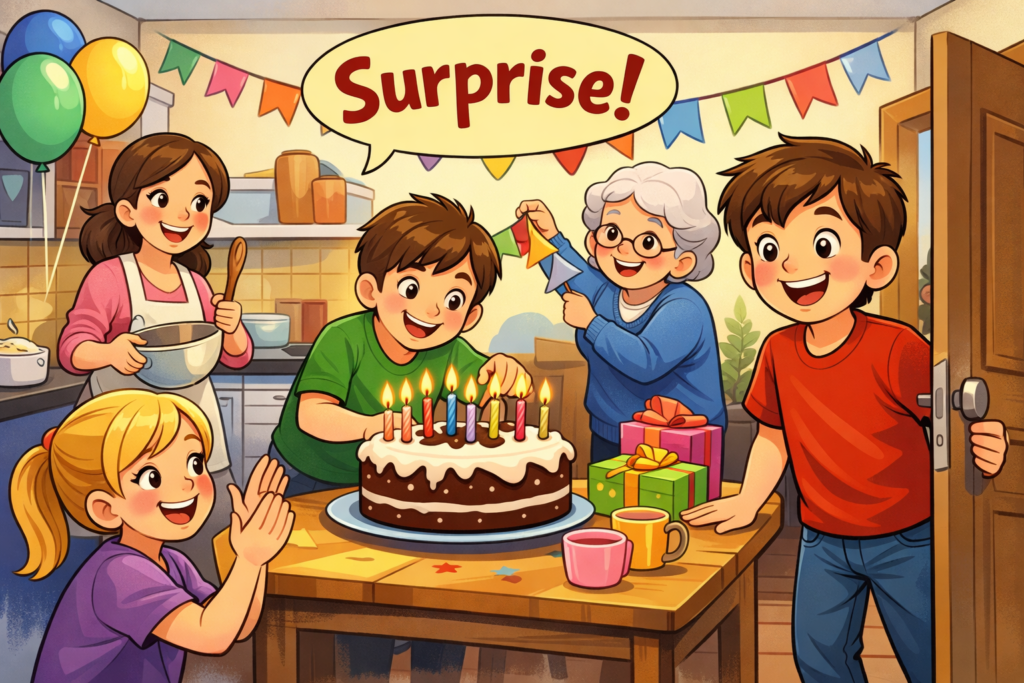
The Birthday Surprise
Today is Tom’s birthday. His friends are at his house.
Maria is in the kitchen. She is baking a cake. The cake is delicious.
Fred is in the living room. He is putting candles on the cake.
Susan is in the hall. She is knocking on the door.
Grandma Sue is in the dining room. She is helping with decorations.
Finally, Tom is in the bedroom. His friends are ready.
“Surprise!” they say. Tom is very happy.
They are eating the cake and playing games. The birthday is excellent.
[Look at the hand, the door – AI at its worst ;-]
##################
Fill in the blanks:
Numbers 1–10
- Today is my _______ birthday. (1)
- He lives on the _______ floor. (3)
- I finished _______ in the football match. (2)
- This is her _______ jacket. (5)
- She came _______ in the race. (8)
- My book is on the _______ shelf. (4)
- I knocked on the _______ door. (7)
Numbers 11–20
- My birthday is on the _______ of March. (12)
- The painting is on the _______ wall. (11)
- We baked a cake on the _______ of February. (13)
- She felt sad on the _______ day of the month. (15)
- My alarm clock rang on the _______ morning. (18)
- He phoned for the _______ time yesterday. (16)
- I lost the match for the _______ time. (20)
Numbers 21–30
- The cinema opened on the _______ of July. (21)
- They interviewed the _______ person in the hall. (30)
- I got a ticket on the _______ floor. (22)
- We celebrated on the _______ of April. (25)
- The robbery happened on the _______ street. (28)
- My friend came _______ in the game. (24)
____________________
Correct answers:
Numbers 1–10
- Today is my first birthday.
- He lives on the third floor.
- I finished second in the football match.
- This is her fifth jacket.
- She came eighth in the race.
- My book is on the fourth shelf.
- I knocked on the seventh door.
Numbers 11–20
- My birthday is on the twelfth of March.
- The painting is on the eleventh wall.
- We baked a cake on the thirteenth of February.
- She felt sad on the fifteenth day of the month.
- My alarm clock rang on the eighteenth morning.
- He phoned for the sixteenth time yesterday.
- I lost the match for the twentieth time.
Numbers 21–30
- The cinema opened on the twenty-first of July.
- They interviewed the thirtieth person in the hall.
- I got a ticket on the twenty-second floor.
- We celebrated on the twenty-fifth of April.
- The robbery happened on the twenty-eighth street.
- My friend came twenty-fourth in the game.
########################
Write dates in words:
- 5 January → _______
YOU WRITE:
the fifth of January - 12 July → _______
- 23 March → _______
- 1 October → _______
- 31 December → _______
- 16 May → _______
- 8 August → _______
- 29 June → _______
- 14 February → _______
- 21 September → _______
- 3 November → _______
- 26 April → _______
- 7 January → _______
- 18 July → _______
- 2 March → _______
- 30 October → _______
- 11 December → _______
- 19 May → _______
- 4 August → _______
- 25 June → _______
- 9 February → _______
- 22 September → _______
- 6 November → _______
- 27 April → _______
—————————
Correct answers:
- 5 January → the fifth of January
- 12 July → the twelfth of July
- 23 March → the twenty-third of March
- 1 October → the first of October
- 31 December → the thirty-first of December
- 16 May → the sixteenth of May
- 8 August → the eighth of August
- 29 June → the twenty-ninth of June
- 14 February → the fourteenth of February
- 21 September → the twenty-first of September
- 3 November → the third of November
- 26 April → the twenty-sixth of April
- 7 January → the seventh of January
- 18 July → the eighteenth of July
- 2 March → the second of March
- 30 October → the thirtieth of October
- 11 December → the eleventh of December
- 19 May → the nineteenth of May
- 4 August → the fourth of August
- 25 June → the twenty-fifth of June
- 9 February → the ninth of February
- 22 September → the twenty-second of September
- 6 November → the sixth of November
- 27 April → the twenty-seventh of April
###################
Time Prepositions
Time prepositions tell us when something happens.
1️⃣ at
Use: for a time / moment
- at 7 o’clock
- at noon
- at night
Examples:
- The lesson starts at 9 o’clock.
- I sleep at night.
👉 Think: exact time
2️⃣ on
Use: for days and dates
- on Monday
- on my birthday
- on May 5th
Examples:
- I work on Monday.
- My birthday is on June 3rd.
👉 Think: day
3️⃣ in
Use: for longer time (months, years, parts of the day)
- in March
- in 2026
- in the morning
Examples:
- I was born in July.
- We meet in the afternoon.
👉 Think: long time
Very easy tip ⭐
Preposition Use at exact time on day / date in long time
##################
Fill in the correct preposition: at, on, or in.
- My birthday is ___ February 2.
- I was ___ the cinema last night.
- We have a football match ___ Monday.
- I get up ___ seven o’clock.
- I was born ___ March.
- I read a poem ___ the library.
- The alarm clock rings ___ six.
- We bake a cake ___ my birthday.
- I felt ill ___ last night.
- The interview is ___ ten o’clock.
- We meet ___ the cinema.
- The robbery happened ___ night.
- The painting is in the library ___ April.
- I wear my jacket ___ winter.
- The football match is ___ February 2, 2026.
————————————
Correct version:
- My birthday is on February 2.
- I was at the cinema last night.
- We have a football match on Monday.
- I get up at seven o’clock.
- I was born in March.
- I read a poem in the library.
- The alarm clock rings at six.
- We bake a cake on my birthday.
- I felt ill last night.
- The interview is at ten o’clock.
- We meet at the cinema.
- The robbery happened at night.
- The painting is in the library in April.
- I wear my jacket in winter.
- The football match is on February 2, 2026.
###################
Was/were?
We use was / were to talk about actions or situations in the past — things that are finished.
- I was at home yesterday.
- She was ill last night.
- We were at the cinema.
Easy rule ⭐
- Now → am / is / are
- Past → was / were
###################
Was / Were
1️⃣ When do we use WAS?
Use was with:
- I
- he
- she
- it
- one person / one thing
Examples:
- I was tired.
- She was at home.
- The cinema was closed.
2️⃣ When do we use WERE?
Use were with:
- you
- we
- they
- more than one person / thing
Examples:
- You were late.
- We were at the library.
- They were happy.
- The dogs were in the garden.
3️⃣ Easy table
Subject Past of “be” I was you (singular) were he was she was it was we were you (plural) were they were
✅ Tip:
- Was → I, he, she, it
- Were → you, we, you (plural), they
Examples:
- I was at home.
- We were at the library.
- You (plural) were at school.
- They were happy.
4️⃣ Short sentences
- I was ill last night.
- She was angry.
- We were at the cinema.
- They were scared.
5️⃣ Very important tip ⚠️
❌ I were tired.
✅ I was tired.❌ They was at home.
✅ They were at home.
###############
Was/were – fill in:
- I ___ at the library yesterday.
- Tom ___ angry last night.
- He ___ scared of the robbery.
- She ___ sad because she lost her jacket.
- It ___ a robbery last night.
- We ___ at the cinema yesterday.
- Tom and Jerry ___ happy after the football match.
- They ___ messy eaters at lunch.
- I ___ excellent in the football match.
- Tom ___ at the birthday party.
- He ___ ill last night.
- She ___ baking a cake yesterday.
- It ___ delicious.
- We ___ confused about the task.
- Tom and Jerry ___ at the football match.
- They ___ scared of the alarm clock.
- I ___ in the dining room.
- Tom ___ interviewing the robber.
- She ___ telling a lie.
- We ___ finally at the library.
—————————-
Correct answer:
- I was at the library yesterday.
- Tom was angry last night.
- He was scared of the robbery.
- She was sad because she lost her jacket.
- It was a robbery last night.
- We were at the cinema yesterday.
- Tom and Jerry were happy after the football match.
- They were messy eaters at lunch.
- I was excellent in the football match.
- Tom was at the birthday party.
- He was ill last night.
- She was baking a cake yesterday.
- It was delicious.
- We were confused about the task.
- Tom and Jerry were at the football match.
- They were scared of the alarm clock.
- I was in the dining room.
- Tom was interviewing the robber.
- She was telling a lie.
- We were finally at the library.
################
The Miller family, fill in, was/were:
- Yesterday, the Miller family ___ at home.
- Tom ___ in the hall.
- Susan ___ in the kitchen.
- Maria ___ in the dining room.
- Fred ___ in the bathroom.
- Granddad Doug ___ in the library.
- Granny Sue ___ in the living room.
- The alarm clock ___ in the bedroom.
- The cake ___ on the kitchen table.
- The football match ___ on the TV in the cinema room.
- Tom and Fred ___ in the hall.
- Susan and Maria ___ in the kitchen.
- Granddad Doug and Granny Sue ___ in the living room.
- The Miller family ___ happy.
- Everyone ___ in a different room.
- The cake ___ delicious.
- Fred ___ ill.
- Maria ___ a messy eater.
- The alarm clock ___ silent.
- The football match ___ excellent.
- The house ___ busy.
——————————–
Correct version:
Yesterday, the Miller family was at home.
Tom was in the hall.
Susan was in the kitchen.
Maria was in the dining room.
Fred was in the bathroom.
Granddad Doug was in the library.
Granny Sue was in the living room.The alarm clock was in the bedroom.
The cake was on the kitchen table.
The football match was on the TV in the cinema room.
Tom and Fred were in the hall.
Susan and Maria were in the kitchen.
Granddad Doug and Granny Sue were in the living room.The Miller family was happy.
Everyone was in a different room.
The cake was delicious.
Fred was ill.
Maria was a messy eater.
The alarm clock was silent.
The football match was excellent.
The house was busy.
##################
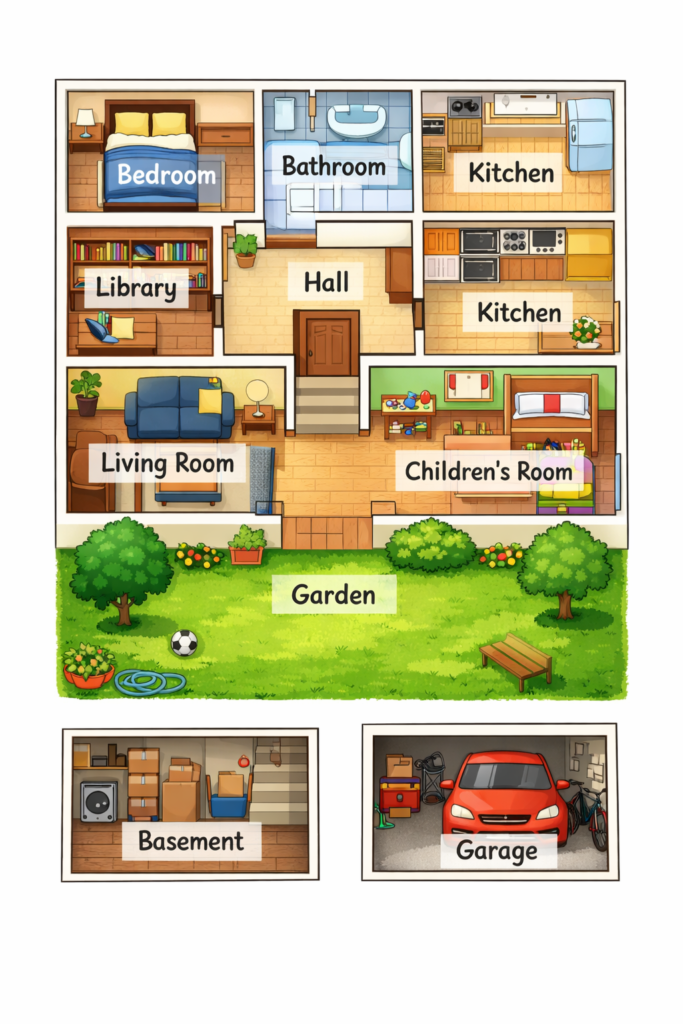
An interview:
Inspector Clyde: Last night, there was a robbery in the Miller’s house. Diamonds were stolen. I need to know where everyone was.
Tom: I was in the living room. I was watching TV.
Maria: I was in the dining room. I was reading a newspaper.
Susan: I was in the kitchen.
Fred: I was in the kitchen. I was cooking.
Granny Sue: I was in the bedroom.
Granddad Doug: I was in the bedroom.
Inspector Clyde: So, everyone was in a different room. Were the diamonds safe?
Tom: No, the diamonds were stolen.
Maria: We were all in the house.
Fred: No one was outside the house.
Susan: The alarm clock was in the bedroom.
Granny Sue: Everything was quiet until the robbery.
Granddad Doug: We were safe in our rooms.
Inspector Clyde: Thank you. I understand.
___________________________
Answer:
- Who was in the living room last night?
- Who was cooking in the kitchen?
- Where was Maria?
- Where were Granny Sue and Granddad Doug?
- When was the robbery?
- What was stolen from the house?
- Which room was the alarm clock in?
- Why were you all in different rooms?
- Who was watching TV last night?
- Where was Fred?
______________________________
Answers:- Who was in the living room last night?
- Tom was in the living room last night.
- Who was cooking in the kitchen?
- Fred was cooking in the kitchen.
- Where was Maria?
- Maria was in the dining room.
- Where were Granny Sue and Granddad Doug?
- Granny Sue and Granddad Doug were in the bedroom.
- When was the robbery?
- The robbery was last night.
- What was stolen from the house?
- Diamonds were stolen from the house.
- Which room was the alarm clock in?
- The alarm clock was in the bedroom.
- Why were you all in different rooms?
- We were all in different rooms because we were at home.
- Who was watching TV last night?
- Tom was watching TV last night.
- Where was Fred?
- Fred was in the kitchen.
#######################
The house of Salas:
Hello! My name is Salas. I live in a big house. It has three storeys and a basement.
In the basement, I have a garage. I park my car there.
On the ground floor, I have a living room, a kitchen, a hall, and a bathroom. I cook in the kitchen. I watch TV in the living room. I wash in the bathroom. I open the front door in the hall.
On the first floor, I have a children’s room (*). My brother plays there. I study there too.
On the second floor, I have a bedroom and a library. I sleep in my bedroom. I read books in the library.
Outside, I have a garden. I play football there.
My house is big and comfortable. I like my house very much!
______________________
(*) children’s room = room of the children_____________________
Match the room with what you do:
Rooms:
- Garden
- Children’s Room
- Kitchen
- Hall
- Bathroom
- Living Room
- Basement
- Bedroom
- Library
- Garage
Activities:
a) Play football and walk
b) Store things
c) Watch TV and relax
d) Sleep and rest
e) Open the front door and welcome guests
f) Cook and eat
g) Play games and study
h) Park your car
i) Wash and brush your teeth
j) Read books and study
___________________
Answer Key:
1 → a) Play football and walk
2 → g) Play games and study
3 → f) Cook and eat
4 → e) Open the front door and welcome guests
5 → i) Wash and brush your teeth
6 → c) Watch TV and relax
7 → b) Store things
8 → d) Sleep and rest
9 → j) Read books and study
10 → h) Park your car
################
-
🐅🐆🦌The black panther (A1, beginners)🐅🐆🦌
Deutsch English Definition eine Tierart a kind of animal a type of animal, like a dog, cat, or panther Haut skin the outside part of an animal’s body Fell fur the soft hair on an animal’s body Fleck a spot a small round mark on an animal’s skin or fur Dschungel a jungle a very big forest with many trees and animals einen Baum klettern to climb a tree to go up a tree using hands and feet sich vor Gefahr verstecken to hide from danger to stay safe so no one or no animal can hurt you sich in einem Baum ausruhen to rest in a tree to stop and sleep or relax in a tree Fleischfresser a carnivore an animal that eats meat Hirsch a deer a wild animal with four legs and antlers Jäger a hunter a person or animal that looks for animals to catch or eat jagen to hunt to look for and catch animals to eat meistens mostly usually or most of the time sich im Dunkeln verstecken to hide in the dark to stay where it is very dark so no one can see you sich leise bewegen to move quietly to walk or go without making noise weit springen to jump far to move from one place to another in the air a long distance Lärm machen to make noise to make a sound brüllen to roar a very loud sound that an animal makes beschützen to protect to keep someone or something safe Tiere erschrecken to scare animals to make animals afraid Junges a cub a baby animal, like a baby panther or bear sich um etwas kümmern to take care of something to help and watch something so it is safe and healthy am Leben erhalten to keep alive to help something stay alive zerstören to destroy to break something or make it stop existing in Gefahr sein to be in danger to be in a situation where you can be hurt or die Abholzung deforestation cutting down many trees in a forest illegal sein to be illegal something that is against the law zusammenfassend in conclusion at the end, when you say the final idea stark sein to be powerful to have a lot of strength or ability respektieren to respect to be kind and careful with someone or something schützen to protect to keep safe from danger or harm
#################
The black panther is a big and strong wild animal. It is very beautiful and very fast. The black panther is not a different kind of animal. It is a leopard or a jaguar with black color. The black color comes from the skin and the fur. Sometimes, if the sun is bright, you can see spots on its body. These spots are like the normal leopard or jaguar.
Black panthers live in warm places. They live in forests and jungles. Some live in Africa, some in Asia, and some in South America. They like places with many trees. Trees are important for them. Panthers can climb trees and hide from danger. They also rest in trees during the day.
The black panther is a
carnivore.
This means it eats meat. It eats animals like deer, birds, and small animals. The black panther is a very good hunter. It hunts mostly at night. At night, it can see very well. Its black color helps it hide in the dark. When it moves quietly, other animals do not see it.The black panther is very fast and strong. It can run quickly and jump far. It can also climb very high. Sometimes, it jumps from tree to tree. It is very quiet. It does not make much noise. But when it wants, it can roar. Its roar is very loud. It uses the roar to protect its home or to scare other animals.
Black panthers usually live alone. They do not live in groups like lions. They meet other panthers only to have babies. A baby panther is called a cub. The mother panther takes care of her cubs. She teaches them how to hunt and how to live in the forest. Cubs stay with their mother for a long time. Then, they go to live alone.
The black panther is important for nature. It helps keep the forest alive. It controls the number of other animals. Without black panthers, some animals can eat too much food and destroy the forest.Today, black panthers are in danger. People cut the forests to build houses and roads. This is called deforestation. It is very bad for panthers. Some people also hunt black panthers for their fur. This is illegal in many countries, but it still happens. We must protect the black panther and its home.
In conclusion, the black panther is a beautiful, strong, and smart animal. It is quiet, fast, and powerful. It lives in forests and jungles, hunts at night, and climbs trees very well. We should respect black panthers and protect the forests where they live.
###############
Match word and definition, part 1:
Words:
- a kind of animal
- skin
- fur
- a spot
- a jungle
- to climb a tree
- to hide from danger
- to rest in a tree
- a carnivore
- a deer
- a hunter
- to hunt
- mostly
- to hide in the dark
- to move quietly
- to jump far
- to make noise
Definitions
A. to go up a tree using hands and feet
B. usually or most of the time
C. a very big forest with many trees and animals
D. an animal that eats meat
E. to stay where it is very dark so no one can see you
F. to walk or go without making noise
G. a type of animal, like a dog, cat, or panther
H. to look for and catch animals to eat
I. a wild animal with four legs and antlers [horns]
J. a person or animal that looks for animals to catch or eat
K. the outside part of an animal’s body
L. to make a sound
M. a baby animal, like a baby panther or bear
N. the soft hair on an animal’s body
O. to stay safe so no one or no animal can hurt you
P. to stop and sleep or relax in a tree
Q. a small round mark on an animal’s skin or fur
R. to move from one place to another in the air a long distance
________________
Answers
1-G, 2-K, 3-N, 4-Q, 5-C, 6-A,
7-O, 8-P, 9-D, 10-I, 11-J, 12-H,
13-B, 14-E, 15-F, 16-R, 17-L###########
Match word and definition, part 2:
Words (18–32):
18. to roar
19. to protect
20. to scare animals
21. a cub
22. to take care of something
23. to keep alive
24. to destroy
25. to be in danger
26. deforestation
27. to be illegal
28. in conclusion
29. to be powerful
30. to respect
31. antlersDefinitions:
A. a baby animal, like a baby panther or bear
B. to keep safe from danger or harm
C. at the end, when you say the final idea
D. to break something or make it stop existing
E. to be in a situation where you can be hurt or die
F. cutting down many trees in a forest
G. something that is against the law
H. a very loud sound that an animal makes
I. to have a lot of strength or ability
J. to be kind and careful with someone or something
K. to help and watch something so it is safe and healthy
L. to make animals afraid
M. to help something stay alive
N. the big, hard branches on the head of some animals, like a deer
___________________
Answers:
18-H, 19-B, 20-L, 21-A, 22-K,
23-M, 24-D, 25-E, 26-F, 27-G,
28-C, 29-I, 30-J, 31-N
##############
True or False:
- Panthers eat deer and birds.
- Panthers move quietly when they hunt.
- Panthers cannot jump far.
- Panthers climb trees to hide from danger.
- Antlers [horns] are on black panthers.
- Panthers mostly hunt during the day.
- Panthers rest in trees during the day.
- Panthers usually live in groups.
- A cub is a baby panther.
- Panthers are always safe in the forest.
- Black panthers are powerful animals.
- It is legal to hunt black panthers.
- Panthers have spots that are sometimes visible [can be seen] in sunlight.
- Panthers have no fur.
- To protect the panther means to keep it safe from danger.
- Deforestation makes it easier for panthers to live.
- Panthers usually live alone.
- Panthers are carnivores.
- Panthers have black fur.
____________________
Answers:
1-T, 2-T, 3-F, 4-T, 5-F, 6-F, 7-T,
8-F, 9-T, 10-F, 11-T, 12-F, 13-T,
14-F, 15-T, 16-F, 17-T, 18-T, 19-T
___________________
Correct version:
- Panthers eat deer and birds.
- Panthers move quietly when they hunt.
- Panthers cannot jump far. True is: Panthers can jump far.
- Panthers climb trees to hide from danger.
- Antlers are on black panthers. True is: Antlers are on deer, not panthers.
- Panthers mostly hunt during the day. True is: Panthers mostly hunt at night.
- Panthers rest in trees during the day.
- Panthers usually live in groups. True is: Panthers usually live alone.
- A cub is a baby panther.
- Panthers are always safe in the forest. True is: Panthers are often in danger because of humans.
- Black panthers are powerful animals.
- It is legal to hunt black panthers. True is: Hunting black panthers is illegal.
- Panthers have spots that are sometimes visible in sunlight.
- Panthers have no fur. True is: Panthers have black fur.
- To protect the panther means to keep it safe from danger.
- Deforestation makes it easier for panthers to live. True is: Deforestation destroys panther homes.
- Panthers usually live alone.
- Panthers are carnivores.
- Panthers have black fur.
##################
Fill in, words below:
at night – keep it safe – fur – animals –
deer – trees – forest – rest – alone –
spots – hunt – meat-
black – food –
cub
- The black panther is a strong carnivore that eats __________.
- Black panthers have black __________ that sometimes has small spots.
- A __________ is a baby panther that stays near its mother.
- Panthers climb __________ to hide from danger and to rest safely.
- Panthers __________ in trees during the day and wait quietly.
- Panthers move quietly when they __________ other animals.
- Panthers mostly hunt __________ when it is dark.
- Panthers usually live __________ and do not stay in groups.
- Panthers can jump far to catch their __________.
- Panthers eat animals like __________ in the forest or jungle.
- Panthers have ___________ on their fur that can sometimes be seen in the sunlight.
- To protect the panther means to __________ from danger and hunters.
- Deforestation destroys the __________ and makes it hard for panthers.
- Hunting __________ panthers is illegal [not allowed]
- Black panthers are very powerful __________ and people must respect them.
_______________________
Correct version:
- The black panther is a strong carnivore that eats meat.
- Black panthers have black fur that sometimes has small spots.
- A cub is a baby panther that stays near its mother.
- Panthers climb trees to hide from danger and to rest safely.
- Panthers rest in trees during the day and wait quietly.
- Panthers move quietly when they hunt other animals.
- Panthers mostly hunt at night when it is dark.
- Panthers usually live alone and do not stay in groups.
- Panthers can jump far to catch their food.
- Panthers eat animals like deer in the forest or jungle.
- Panthers have spots on their fur that can sometimes be seen in the sunlight.
- To protect the panther means to keep it safe from danger and hunters.
- Deforestation destroys the forest and makes it hard for panthers.
- Hunting black panthers is illegal.
- Black panthers are very powerful animals and people must respect them.
#################
Connect the sentences:
- The black panther is a carnivore
- A cub is a baby panther
- Panthers climb trees
- Panthers rest in trees
- Panthers move quietly
- Panthers mostly hunt at night
- Panthers usually live alone
- Panthers can jump far
- To protect the panther
- Hunting black panthers
Second Part:
A. to keep it safe from danger.
B. that sometimes has spots on its fur.
C. when it is dark.
D. to hide from danger and rest safely.
E. and wait quietly during the day.
F. to catch their food.
G. and do not stay in groups.
H. is illegal and against the law.
I. that stays near its mother.
J. when they hunt other animals.
____________________
Answers:1-B, 2-I, 3-D, 4-E, 5-J, 6-C,
7-G, 8-F, 9-A, 10-H____________________
Corrrect sentences:
- The black panther is a carnivore that sometimes has spots on its fur.
- A cub is a baby panther that stays near its mother.
- Panthers climb trees to hide from danger and rest safely.
- Panthers rest in trees and wait quietly during the day.
- Panthers move quietly when they hunt other animals.
- Panthers mostly hunt at night when it is dark.
- Panthers usually live alone and do not stay in groups.
- Panthers can jump far to catch their food.
- To protect the panther is to keep it safe from danger.
- Hunting black panthers is illegal and against the law.
################
Answer:
- Does a black panther eat plants or meat?
YOU WRITE:
A black panther eats meat. - Is a baby panther called a cub or a deer?
_______________________________ - Does a panther rest in a tree or on the ground?
_______________________________ - Can a panther climb a tree or a mountain?
_______________________________ - Does a panther hunt at night or during the day?
_______________________________ - Does a panther move quietly or loudly when it hunts?
_______________________________ - Does a panther usually live alone or in groups?
_______________________________ - Does a panther eat a deer or grass?
_______________________________ - Is it legal or illegal to hunt black panthers?
_______________________________ - Does a panther have fur or antlers [horns]?
_______________________________
——————————–
Correct answers:
- A black panther eats meat.
- A baby panther is called a cub.
- A panther rests in a tree.
- A panther can climb a tree.
- A panther hunts at night.
- A panther moves quietly when it hunts.
- A panther usually lives alone.
- A panther eats a deer.
- It is illegal to hunt black panthers.
- A panther has fur.
###############
BONUS DIALOGUE
Interview with an expert on the black panther
Q: What is a black panther?
A: The black panther is a big and strong wild animal. It is very beautiful and very fast.Q: Is the black panther a different kind of animal?
A: No, the black panther is not a different kind of animal. It is a leopard or a jaguar with black color.Q: Where does the black color come from?
A: The black color comes from the skin and the fur.Q: When can we see spots on its body?
A: Sometimes, if the sun is bright, you can see spots on its body.Q: What are these spots like?
A: These spots are like the normal leopard or jaguar.Q: Where do black panthers live?
A: Black panthers live in warm places.Q: Do they live in forests and jungles?
A: Yes, they live in forests and jungles.Q: Which places do they live in?
A: Some live in Africa, some in Asia, and some in South America.Q: Why are trees important for them?
A: They like places with many trees. Trees are important for them.Q: What can panthers do with trees?
A: Panthers can climb trees and hide from danger.Q: Where do they rest during the day?
A: They rest in trees during the day.Q: What does the black panther eat?
A: The black panther is a carnivore. This means it eats meat.Q: What animals does it eat?
A: It eats animals like deer, birds, and small animals.Q: Is the black panther a good hunter?
A: Yes, the black panther is a very good hunter.Q: When does it hunt?
A: It hunts mostly at night.Q: How does it see at night?
A: At night, it can see very well.Q: How does its black color help it?
A: Its black color helps it hide in the dark.Q: How is the black panther’s body?
A: The black panther is very fast and strong.Q: What can it do when it moves?
A: It can run quickly and jump far.Q: Can it climb and jump in trees?
A: It can climb very high. Sometimes, it jumps from tree to tree.Q: Is it noisy?
A: It is very quiet. It does not make much noise.Q: When does it roar?
A: When it wants, it can roar. Its roar is very loud.Q: Why does it use the roar?
A: It uses the roar to protect its home or to scare other animals.Q: Do black panthers live in groups?
A: No, black panthers usually live alone.Q: When do they meet other panthers?
A: They meet other panthers only to have babies.Q: What is a baby panther called?
A: A baby panther is called a cub.Q: Who takes care of the cubs?
A: The mother panther takes care of her cubs.Q: What does the mother teach the cubs?
A: She teaches them how to hunt and how to live in the forest.Q: How long do cubs stay with the mother?
A: Cubs stay with their mother for a long time.Q: Why is the black panther important for nature?
A: The black panther is important for nature. It helps keep the forest alive.Q: What happens without black panthers?
A: Without black panthers, some animals can eat too much food and destroy the forest.Q: Are black panthers in danger today?
A: Yes, today, black panthers are in danger.Q: Why is deforestation bad for panthers?
A: People cut the forests to build houses and roads. This is called deforestation. It is very bad for panthers.Q: Do people hunt black panthers?
A: Some people hunt black panthers for their fur.Q: Is this legal?
A: This is illegal in many countries, but it still happens.Q: What should we do?
A: We must protect the black panther and its home.#########################
#########################
Interview with a black panther
Q: Hello, black panther. Can you tell me about yourself?
A: Hello. I am a black panther. I am big and strong. I am very fast and very quiet. I am also very beautiful.Q: Are you a different kind of animal?
A: No. I am not a different kind of animal. I am a leopard or a jaguar with black color.Q: Why is your color black?
A: My black color comes from my skin and my fur. When the sun is bright, you can see spots on my body.Q: Where do you live?
A: I live in warm places. I live in forests and jungles. Some of us live in Africa, some in Asia, and some in South America.Q: Why are trees important for you?
A: Trees are very important. I can climb trees and hide from danger. I also rest in trees during the day.Q: What do you do at night?
A: At night, I hunt. I can see very well at night. My black color helps me hide in the dark.Q: What animals do you eat?
A: I eat meat. I eat deer, birds, and small animals. I am a very good hunter.Q: Are you loud or quiet?
A: I am very quiet. I do not make much noise. But sometimes I roar. My roar is very loud.Q: Why do you roar?
A: I roar to protect my home or to scare other animals.Q: Do you live with other black panthers?
A: No. I usually live alone. I do not live in groups like lions.Q: What about baby panthers?
A: A baby panther is called a cub. The mother panther takes care of her cubs. Cubs stay with their mother for a long time.Q: What problems do you have today?
A: Today, we are in danger. People cut the forests. This is called deforestation. It is very bad for us.Q: Is hunting a problem?
A: Yes. Some people hunt us for our fur. This is illegal in many countries, but it still happens.Q: What do you want people to know?
A: We are important for nature. We help keep the forest alive. People must protect us and our home.
-
🐅🐆🦌The cheetah (A1, beginners)🐅🐆🦌
Vocabulary:
Deutsch English Definition ein Landtier a land animal An animal that lives on land, not in water. hauptsächlich mainly Most of the time / in the biggest part. selten sein to be rare Not many exist / very few. ein offener Platz an open place A place with no trees or buildings, empty and big. ein Grasland a grassland Big area with a lot of grass, no trees. eine Savanne a savanna Big open area with grass and some trees (like in Africa). jagen to hunt To run after animals and catch them for food. viel Platz a lot of space Very big area to move. frei bewegen to move freely To go where you want, no walls or problems. ein schlanker Körper a slim body A long and thin body (not fat). das Gleichgewicht halten to keep balance To not fall when you run fast. ein Fell a fur The hair on an animal’s body. ein Fleck / ein Punkt a spot A small round mark (black on yellow, for example). sich verstecken to hide To go where others cannot see you. vor der Sonne schützen to protect from the sun To keep safe from hot sun. ein Fleischfresser a carnivore An animal that eats meat. ein Hirsch a deer An animal with horns that eats grass. ein Hase a rabbit A small animal with long ears that jumps. eine Antilope an antelope A fast animal with horns that lives in Africa. eine Beute fangen to catch a prey To run and take an animal to eat. für kurze Zeit for a short time Only a little time, not long. sich ausruhen to rest To stop moving and sleep or relax. müde werden to get tired To feel no energy after running. jagen beibringen to teach how to hunt To show young animals how to catch food. ein Junges a cub A baby cheetah or big cat. süß sein to be cute To look very nice and lovely. verspielt sein to be playful To like playing and running for fun. vor Gefahr schützen to protect from danger To keep safe from bad things or enemies. in Gefahr sein to be in danger To have big problems, maybe die. zerstören to destroy To break or make something bad. ein sicherer Ort a safe place A good place with no danger. ein Lebensraum / Habitat a habitat The home where an animal lives (with food, water…). zum Schluss in conclusion At the end / to finish. die Natur retten to save nature To help animals, plants and the world stay alive. The cheetah is a beautiful and interesting animal. It is a wild animal and it lives in nature. The cheetah is famous because it is the fastest land animal in the world. Many people like the cheetah because it is strong, fast, and elegant.
The cheetah lives mainly in Africa. Some cheetahs also live in parts of Asia, but they are very rare there. Cheetahs like open places such as grasslands and savannas. These places are good for running and hunting. The cheetah needs a lot of space to live and move freely.
The cheetah has a slim body and long legs. Its body is made for speed. It has a small head and a long tail. The tail helps the cheetah keep balance when it runs. The cheetah has yellow fur with black spots all over its body. These spots help the cheetah hide in the grass. The cheetah also has black lines on its face. These lines go from the eyes to the mouth and help protect its eyes from the sun.
The cheetah eats meat. It is a
carnivore.
It hunts animals like deer, rabbits, and small antelopes. The cheetah hunts during the day. It uses its strong legs and fast speed to catch its prey. The cheetah can run very fast, up to 100 kilometers per hour, but only for a short time. After running, the cheetah needs to rest because it gets tired quickly._______________
Cheetahs usually live alone, but sometimes they live in small groups. A mother cheetah lives with her babies. She takes care of them and teaches them how to hunt. Baby cheetahs are called cubs. They are very cute and playful. The mother protects them from danger.
Today, cheetahs are in danger. There are not many cheetahs left in the world. People destroy their homes and hunt animals that cheetahs eat. Because of this, cheetahs cannot find enough food or safe places to live. Many organizations work to protect cheetahs and their habitats.
In conclusion, the cheetah is an amazing animal. It is fast, beautiful, and important for nature. We should learn about cheetahs and help protect them. Saving cheetahs means saving nature and the future of our planet.
 Good luck!
Match word and definition, part 1:- a land animal
- mainly
- to be rare
- an open place
- a grassland
- a savanna
- to hunt
- a lot of space
- to move freely
- a slim body
- to keep balance
- a fur
- a spot
- to hide
- to protect from the sun
- a carnivore
- a deer
Definitions:
A. An animal that eats meat.
B. Big area with a lot of grass, no trees.
C. To run after animals and catch them for food.
D. Very big area to move.
E. To not fall when you run fast.
F. A long and thin body (not fat).
G. To go where you want, no walls or problems.
H. To go where others cannot see you.
I. An animal with horns that eats grass.
J. An animal that lives on land, not in water.
K. The hair on an animal’s body.
L. Big open area with grass and some trees (like in Africa).
M. A small round mark (black on yellow, for example).
N. To keep safe from hot sun.
O. Not many exist / very few.
P. A place with no trees or buildings, empty and big.
Q. Most of the time / in the biggest part.
_____________________
Answers:
1-J, 2-Q, 3-O, 4-P, 5-B, 6-L,
7-C, 8-D, 9-G, 10-F, 11-E, 12-K,
13-M, 14-H, 15-N, 16-A, 17-I###############
Match word and definition, part 2:
18. an antelope
19. to catch a prey
20. for a short time
21. to rest
22. to get tired
23. to teach how to hunt
24. a cub
25. to be cute
26. to be playful
27. to protect from danger
28. to be in danger
29. to destroy
30. a safe place
31. a habitat
32. in conclusion
33. to save nature
34. a rabbit
Definitions:
A. To break or make something bad.
B. To help animals, plants and the world stay alive.
C. The home where an animal lives (with food, water…).
D. A baby cheetah or big cat.
E. To have big problems, maybe die.
F. To show young animals how to catch food.
G. A fast animal with horns that lives in Africa.
H. A good place with no danger.
I. Only a little time, not long.
J. At the end / to finish.
K. To feel no energy after running.
L. To stop moving and sleep or relax.
M. An animal with long ears that jumps.
N. To like playing and running for fun.
O. To run and take an animal to eat.
P. To look very nice and lovely.
Q. To keep safe from bad things or enemies._________________
Answers:
18-G, 19-O, 20-I, 21-L, 22-K, 23-F,
24-D, 25-P, 26-N, 27-Q, 28-E, 29-A,
30-H, 31-C, 32-J, 33-B, 34-M#############
True or false:- A cheetah is a land animal.
- Cheetahs mainly live in the sea.
- Cheetahs are very common animals.
- A savanna is an open place with a lot of trees.
- A grassland has a lot of grass.
- Cheetahs hunt rabbits and deer.
- Cheetahs like small places with no space.
- A cheetah has a fat body.
- Spots on fur help a cheetah to hide.
- A carnivore eats only grass.
- An antelope is faster than a cheetah for a long time.
- Cheetahs run for a short time and then get tired.
- A cub is an old cheetah.
- Cubs are cute and playful.
- Mothers teach cubs how to hunt.
- Cheetahs rest a lot after they hunt.
- Cheetahs are in danger because people destroy their habitat.
- A safe place is bad for animals.
- In conclusion, we must save nature.
- A rabbit is a carnivore.
______________________
True: 1,5,6,9,12,14,15,16,17,19
################
Correct answers:
- A cheetah is a land animal.
- Cheetahs mainly live in the sea.
→ False
True is: Cheetahs mainly live on land / in a savanna. - Cheetahs are very common animals.
→ False
True is: Cheetahs are rare animals. / Cheetahs to be rare. - A savanna is an open place with a lot of trees.
→ False
True is: A savanna is an open place with a lot of grass and some trees. - A grassland has a lot of grass.
- Cheetahs hunt rabbits and deer.
- Cheetahs like small places with no space.
→ False
True is: Cheetahs like a lot of space to move freely. - A cheetah has a fat body.
→ False
True is: A cheetah has a slim body. - Spots on fur help a cheetah to hide.
- A carnivore eats only grass.
→ False
True is: A carnivore eats meat. - An antelope is faster than a cheetah for a short time.
→ False
True is: A cheetah is faster than an antelope for a short time. - Cheetahs run for a short time and then get tired.
- A cub is an old cheetah.
→ False
True is: A cub is a baby cheetah. - Cubs are cute and playful.
- Mothers teach cubs how to hunt.
- Cheetahs rest a lot after they hunt.
- Cheetahs are in danger because people destroy their habitat.
- A safe place is bad for animals.
→ False
True is: A safe place is good for animals. - In conclusion, we must save nature.
- A rabbit is a carnivore.
→ False
True is: A rabbit is not a carnivore. / A rabbit eats grass (not meat).
################
Fill in, words below:
prey – cubs – protect – grassland – savanna –
carnivore – destroy – hunt – playful –
fur – danger – trees –
mother – cheetahs –
slim- A cheetah is a fast land animal that lives mainly in a __________.
- Cheetahs need a lot of space to move freely and to __________.
- A savanna is an open place with a lot of grass and some __________.
- A __________ is a big open place where cheetahs can run fast.
- Cheetahs have a __________ body and spots on their fur.
- The spots on the __________ help the cheetah to hide very well.
- A cheetah is a __________ and it hunts an antelope or a deer.
- Cheetahs catch __________ very fast but only for a short time.
- After they hunt, __________ get tired and they need to rest.
- A cub is a baby cheetah and it is very cute and __________.
- The cubs like to be playful and they move freely with their __________.
- Mothers teach their __________ how to hunt in the savanna.
- Cheetahs are rare [not many]and they are in ___________ in many places.
- People __________ the habitat and this makes cheetahs in danger.
- In conclusion, we must save nature to __________ the cheetahs and their safe place.
———————————
Correct version:
- A cheetah is a fast land animal that lives mainly in a savanna.
- Cheetahs need a lot of space to move freely and to hunt.
- A savanna is an open place with a lot of grass and some trees.
- A grassland is a big open place where cheetahs can run fast.
- Cheetahs have a slim body and spots on their fur.
- The spots on the fur help the cheetah to hide very well.
- A cheetah is a carnivore and it hunts an antelope or a deer.
- Cheetahs catch prey very fast but only for a short time.
- After they hunt, cheetahs get tired and they need to rest.
- A cub is a baby cheetah and it is very cute and playful.
- The cubs like to be playful and they move freely with their mother.
- Mothers teach their cubs how to hunt in the savanna.
- Cheetahs are rare and they are in danger in many places.
- People destroy the habitat and this makes cheetahs in danger.
- In conclusion, we must save nature to protect the cheetahs and their safe place.
##################
Connect:
- Cheetahs mainly live | a. how to hunt
- A cheetah has spots on its fur | b. because they are rare
- Cheetahs need a lot of space | c. in a savanna
- A cub is very cute | d. to hide
- Mothers teach their cubs | e. to move freely
- Cheetahs get tired | f. after a short time
- Cheetahs are in danger | g. and playful
- A grassland and a savanna | h. to catch prey
- Cheetahs run very fast | i. are good habitats
- In conclusion, we must | j. save nature
_____________________
Answers:
1-c, 2-d, 3-e, 4-g, 5-a,
6-f, 7-b, 8-i, 9-h, 10-j_____________________
Correct version:
- Cheetahs mainly live in a savanna.
- A cheetah has spots on its fur to hide.
- Cheetahs need a lot of space to move freely.
- A cub is very cute and playful.
- Mothers teach their cubs how to hunt.
- Cheetahs get tired after a short time.
- Cheetahs are in danger because they are rare.
- A grassland and a savanna are good habitats.
- Cheetahs run very fast to catch prey.
- In conclusion, we must save nature.
################Answer:
- Is a cheetah the slowest or fastest land animal?
YOU WRITE:
A cheetah is the fastetst land animal. - Does the cheetah live in Africa or South America?
______________________________ - Does the cheetah like open grasslands or dense forests?
______________________________ - Does a cheetah have a slim body or a heavy body?
______________________________ - Is the cheetah’s tail used for balance or sleeping?
______________________________ - Does the cheetah eat meat or plants?
______________________________ - Does the cheetah hunt during the day or at night?
______________________________ - Can a cheetah run fast for a long time or a short time?
______________________________ - Are baby cheetahs called cubs or calves?
______________________________ - Are cheetahs safe today or in danger?
______________________________
—————————-
Correct answers:- A cheetah is the fastest land animal in the world.
- The cheetah lives mainly in Africa.
- The cheetah likes open grasslands and savannas.
- The cheetah has a slim body.
- The cheetah’s tail is used for balance.
- The cheetah eats meat.
- The cheetah hunts during the day.
- A cheetah can run fast for a short time.
- Baby cheetahs are called cubs.
- Cheetahs are in danger today.
###################
BONUS DIALOGUE
Interview with an expert on the cheetah
Interviewer: What does the cheetah eat?
Expert: The cheetah eats meat. It is a carnivore.Interviewer: Where do we find cheetahs?
Expert: The cheetahs live mainly in Africa.Interviewer: How fast can the cheetah run?
Expert: It can run up to 100 kilometers per hour.Interviewer: Who teaches the cubs to hunt?
Expert: The mother teaches them how to hunt.Interviewer: Why are cheetahs in danger today?
Expert: People destroy their homes and hunt the animals that cheetahs eat.Interviewer: Which places does the cheetah like?
Expert: Cheetahs like open places such as grasslands and savannas.Interviewer: When does the cheetah hunt?
Expert: The cheetah hunts during the day.Interviewer: What is special about the cheetah?
Expert: The cheetah is the fastest land animal in the world.Interviewer: How long can it run at this speed?
Expert: Only for a short time. After running, it needs to rest.Interviewer: Who lives with the cheetah cubs?
Expert: The mother cheetah lives with her babies and protects them.Interviewer: Why does the cheetah need a lot of space?
Expert: The cheetah needs space to live and move freely.Interviewer: Which animals does the cheetah hunt?
Expert: It hunts deer, rabbits, and small antelopes.Interviewer: What does the cheetah look like?
Expert: The cheetah has a slim body, long legs, a small head, and a long tail.Interviewer: Where can you find cheetahs in Asia?
Expert: Some cheetahs live in parts of Asia, but they are very rare there.Interviewer: Why are grasslands good for cheetahs?
Expert: Grasslands and savannas are good for running and hunting.Interviewer: What is a cheetah?
Expert: The cheetah is a beautiful and interesting wild animal.Interviewer: What do the black spots do?
Expert: The spots help the cheetah hide in the grass.Interviewer: What are the black lines on the cheetah’s face for?
Expert: They protect the eyes from the sun.Interviewer: How does the tail help the cheetah?
Expert: The tail helps the cheetah keep balance when it runs.Interviewer: How does the cheetah hunt?
Expert: It uses strong legs and very fast speed to catch animals.Interviewer: Why is it important to save cheetahs?
Expert: Saving cheetahs means saving nature and the future.Interviewer: How many cheetahs are left in the world?
Expert: There are not many cheetahs left.Interviewer: Which color is the cheetah?
Expert: The cheetah has yellow fur with black spots.
####################
####################
Interview with a cheetah
Interviewer: Who are you?
Cheetah: I am a cheetah. I am a wild animal. I live in nature.Interviewer: What kind of animal are you?
Cheetah: I am strong, fast, and elegant. I am famous because I am the fastest land animal in the world.Interviewer: Where do you live?
Cheetah: I live mainly in Africa. Some cheetahs live in Asia, but they are very rare.Interviewer: Which places do you like?
Cheetah: I like grasslands and savannas. These open places are good for running.Interviewer: Why are open places important for you?
Cheetah: I need a lot of space to move freely and hunt.Interviewer: How does your body help you run?
Cheetah: I have long legs and a slim body. My body is made for speed.Interviewer: What helps you keep balance?
Cheetah: My long tail helps me when I run fast.Interviewer: What color is your fur?
Cheetah: My fur is yellow with black spots. The spots help me hide in the grass.Interviewer: What are the black lines on your face for?
Cheetah: They protect my eyes from the sun.Interviewer: What do you eat?
Cheetah: I eat meat. I hunt deer, rabbits, and small antelopes.Interviewer: When do you hunt?
Cheetah: I hunt during the day.Interviewer: How fast can you run?
Cheetah: I can run up to 100 kilometers per hour, but only for a short time.Interviewer: What do you do after running?
Cheetah: I need to rest because I get tired quickly.Interviewer: How do cheetahs live?
Cheetah: We usually live alone. Sometimes we live in small groups.Interviewer: Who takes care of the babies?
Cheetah: The mother takes care of the cubs and teaches them how to hunt.Interviewer: Why are cheetahs in danger today?
Cheetah: People destroy our homes and hunt animals that we eat.Interviewer: What should people do now?
Cheetah: People should protect cheetahs and habitats. Saving cheetahs means saving nature and the future of our planet.
-
🥰🤓👍Referat halten – dein Vortrag – und Körpersprache👍🤓🥰
Tipps für dein Englisch-Referat
1. Aufstehen und nach vorne gehen
Was du tun sollst:
- Steh langsam auf.
- Geh ruhig nach vorne.
- Lass dir Zeit.
- Bleib vorne kurz stehen.
- Atme einmal tief ein.
- Dann fang an.
Warum?
Wenn du langsam gehst, wirkt das sicher.
Die anderen merken: Sie weiß, was sie tut.Was du nicht tun sollst:
- Nicht aufspringen
- Nicht rennen
- Nicht auf den Boden schauen
- Nicht nervös lachen
2. Wie du vorne stehst
So ist es gut:
- Beide Füße fest auf dem Boden
- Rücken gerade
- Schultern locker
- Kopf hoch
Deine Arme:
- Locker am Körper
- Oder eine Hand hält den Zettel ruhig
Warum?
Wenn dein Körper ruhig ist, wird dein Kopf auch ruhiger.Nicht machen:
- Nicht wackeln
- Nicht hin und her laufen
- Nicht mit den Händen spielen
3. Anfang vom Referat
Bevor du sprichst:
- Warte, bis es still ist
- Schau kurz in die Klasse
Dann sagst du ruhig:
- „Today I want to talk about …“
Ganz wichtig:
- Sprich langsam
- Sprich laut genug
Nicht machen:
- Nicht flüstern
- Nicht sagen: „Ich bin nervös“
- Nicht lachen, weil du Angst hast
4. Während du sprichst
So sprichst du gut:
- Ein Satz → kurze Pause
- Nächster Satz → wieder Pause
- Lieber langsam als schnell
Blickkontakt:
- Schau kurz zur Lehrerin
- Dann zu einem Mitschüler
- Dann zu einem anderen
👉 Du musst nicht alle anschauen.
Nicht machen:
- Nicht nur auf den Zettel schauen
- Nicht den Boden anschauen
- Nicht an dir herumzupfen
5. Dein Zettel
Der Zettel ist erlaubt!
- Er hilft dir
- Er ist nur zur Erinnerung
So benutzt du ihn:
- Kurz drauf schauen
- Kopf wieder hoch
- Weitersprechen
Nicht machen:
- Nicht alles ablesen
- Nicht den Zettel fest zerknüllen
6. Wenn du ein Wort vergisst
Ganz wichtig: Das ist NORMAL!
Was du tun kannst:
- Kurz stoppen
- Tief einatmen
- Das Wort anders sagen
- Oder einfach weitermachen
Denk daran:
Niemand weiß, was du sagen wolltest.
Nur du weißt das.Nicht machen:
- Nicht „Ich hab’s vergessen!“ sagen
- Nicht aufhören
7. Wenn du sehr nervös wirst
Hilft sofort:
- Tief einatmen
- Langsamer sprechen
- Einen Punkt an der Wand anschauen
Sag dir im Kopf:
„Ich schaffe das.“
8. Am Ende
Letzter Satz:
- „Thank you for listening.“
Dann:
- Kurz lächeln
- Ruhig zurückgehen
- Hinsetzen
Nicht machen:
- Nicht schnell weglaufen
- Nicht einfach aufhören
9. Das Wichtigste von allem ❤️
- Du musst nicht perfekt sein
- Fehler sind erlaubt
- Mut ist wichtiger als perfektes Englisch
###################
1️⃣ Spickzettel für das Referat
(eine Seite – zum Mitnehmen)
Bevor ich nach vorne gehe
- Ich stehe langsam auf
- Ich gehe ruhig nach vorne
- Ich atme einmal tief ein
- Ich lächle ein bisschen
👉 Ich habe Zeit.
Wie ich vorne stehe
- Beide Füße stehen fest
- Rücken gerade
- Schultern locker
- Kopf hoch
👉 Ich stehe ruhig.
So spreche ich
- Ich spreche laut
- Ich spreche langsam
- Nach jedem Satz mache ich eine kleine Pause
👉 Langsam ist gut.
Wohin ich schaue
- Zur Lehrerin
- Zu einem Mitschüler
- Zu einem anderen Mitschüler
👉 Ich schaue hoch, nicht auf den Boden.
Mein Zettel
- Ich darf auf den Zettel schauen
- Ich lese nicht alles ab
- Ich schaue kurz – dann wieder hoch
👉 Der Zettel hilft mir.
Wenn ich ein Wort vergesse
- Ich bleibe ruhig
- Ich atme kurz ein
- Ich sage es anders
- Oder ich mache weiter
👉 Das ist nicht schlimm.
Am Ende
- Ich sage:
“Thank you for listening.” - Ich lächle
- Ich gehe ruhig zurück
2️⃣ Spiegel-Übung zum Üben
(5–10 Minuten, sehr gut für Zuhause)
Schritt 1: Hinstellen
- Stell dich vor einen Spiegel
- Füße fest auf den Boden
- Rücken gerade
- Schultern locker
👉 Schau dich an und sag:
„So stehe ich gut.“
Schritt 2: Atmen
- Atme langsam ein
- Atme langsam aus
- Mach das dreimal
👉 Dein Körper wird ruhig.
Schritt 3: Sprechen üben
- Sag den ersten Satz laut
- Schau dir dabei selbst in die Augen
- Sprich langsam
👉 Lieber langsam als schnell.
Schritt 4: Mit Fehlern üben
- Sag extra ein Wort falsch
- Dann sprich ruhig weiter
👉 So lernt dein Kopf:
Fehler sind nicht schlimm.
Schritt 5: Ende üben
- Sag laut:
“Thank you for listening.” - Lächle dir im Spiegel zu
👉 Diese Übung macht mutig.
3️⃣ Mut-Spruch für kurz vor dem Referat
(zum Auswendiglernen)
Du kannst ihr sagen, sie soll ihn leise im Kopf sagen:
„Ich bin gut vorbereitet.
Ich spreche langsam.
Ich darf Fehler machen.
Ich schaffe das.“Oder noch kürzer:
„Ich bin ruhig.
Ich schaffe das.“
################
#######################
Körpersprache beim Referat – Erklärung für die Schule
Wenn du ein Referat hältst, ist nicht nur wichtig, was du sagst, sondern auch wie du dich zeigst. Das nennt man Körpersprache. Sie hilft den Zuhörern, dich zu verstehen, und macht dein Referat interessanter.
1. Haltung
- Steh gerade, nicht schief oder zusammengesunken.
- Eine gute Haltung zeigt, dass du selbstbewusst bist und sicher in deinem Vortrag.
- Hände locker an den Seiten oder leicht bewegend – nicht in die Taschen oder verschränkt.
2. Blickkontakt
- Schau deine Zuhörer an, nicht nur deine Notizen oder die Wand.
- Blickkontakt zeigt, dass du mit ihnen sprichst und sie aufmerksam sein sollen.
- Du musst nicht jeden einzelnen ständig anschauen, aber immer wieder zu verschiedenen Personen schauen.
3. Gestik (Bewegung mit den Händen)
- Nutze deine Hände, um das zu zeigen, was du sagst.
- Zum Beispiel: „Es war sehr groß“ – die Hände etwas auseinander halten.
- Gesten machen dein Referat lebendiger und die Zuhörer merken sich die Infos besser.
4. Bewegung
- Steh ruhig, wackel nicht zu viel hin und her.
- Ein kleiner Schritt nach links oder rechts ist okay, wenn du etwas betonen willst.
- Zu viel Bewegung kann ablenken.
5. Gesichtsausdruck
- Lächeln ist gut – es macht dich freundlich und die Zuhörer hören lieber zu.
- Zeige auch Gefühle, die zu deinem Thema passen, z. B. Erstaunen oder Freude.
6. Stimme und Betonung
- Sprich deutlich und laut genug, dass alle dich hören können.
- Variiere die Stimme, also nicht immer gleich schnell oder leise.
- Betonung hilft den Zuhörern, die wichtigen Dinge zu merken.
Warum ist Körpersprache so wichtig?
- Sie zeigt, dass du selbstbewusst bist.
- Sie hilft den Zuhörern, dir zuzuhören und dich zu verstehen.
- Sie macht dein Referat spannender – Zuhörer langweilen sich weniger.
- Sie unterstützt deine Worte – manchmal versteht man Dinge besser durch Gesten und Mimik als nur durch Worte.