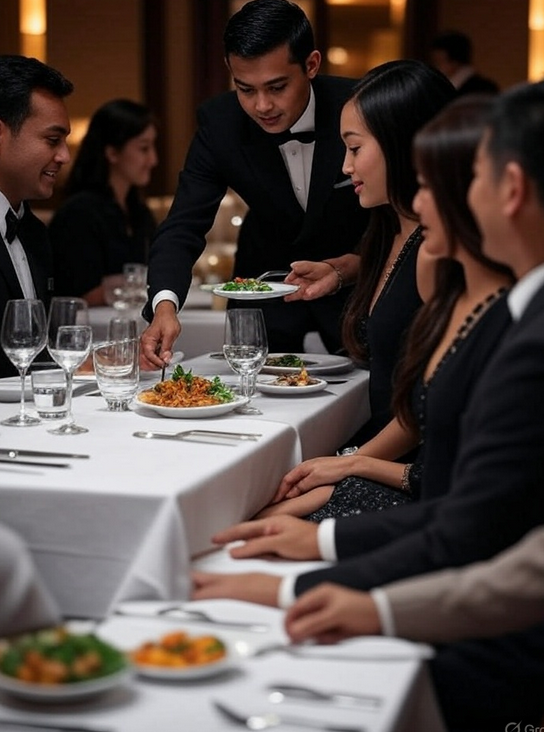
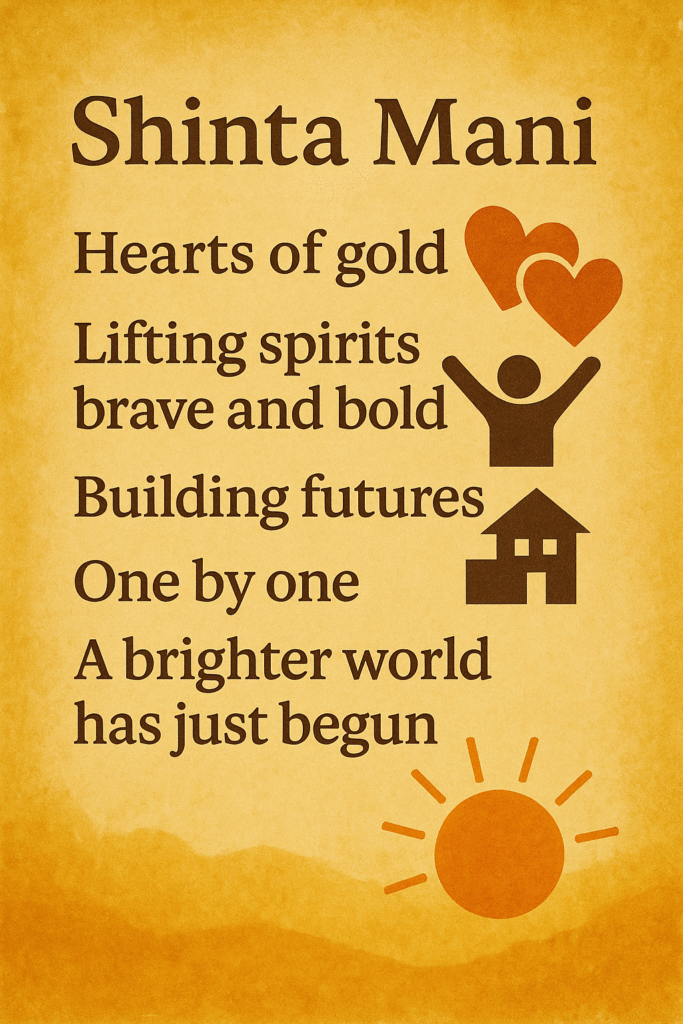
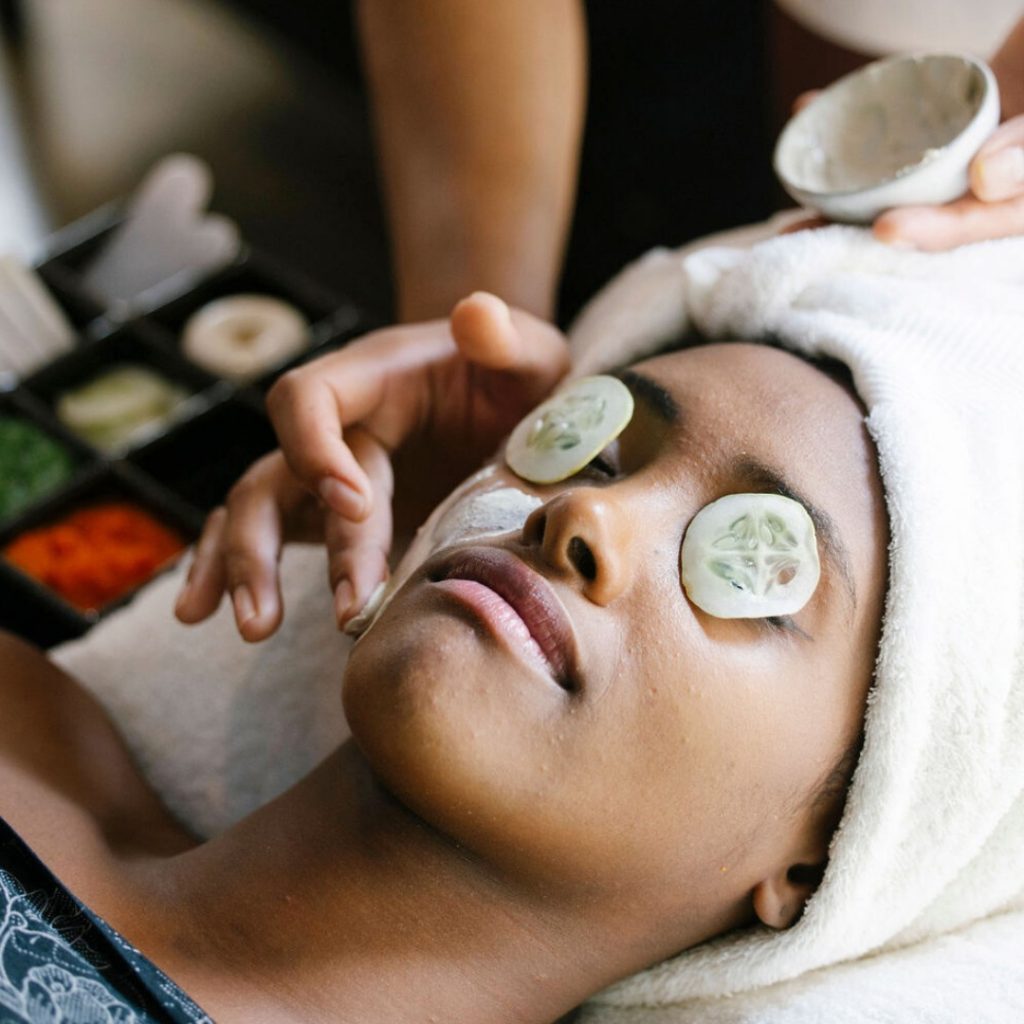
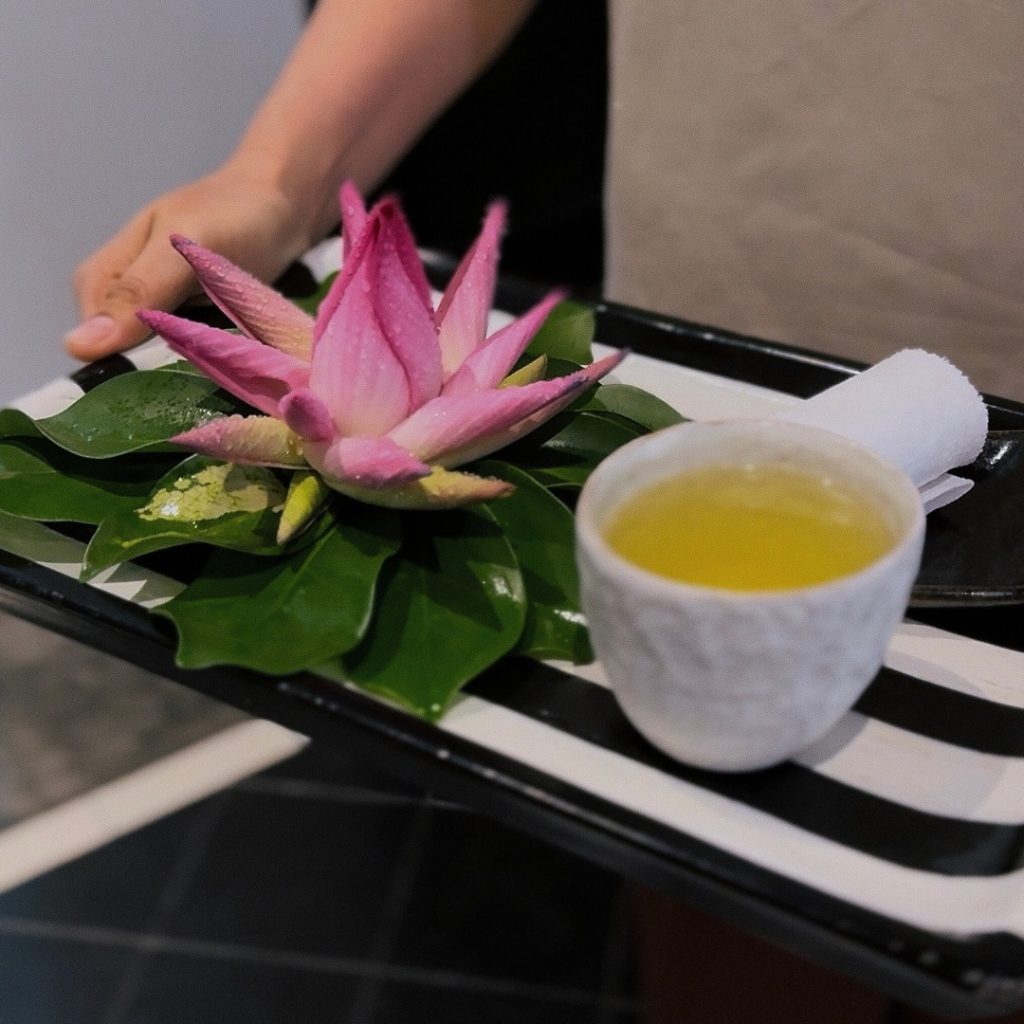
Thanks to a hospitality school just steps from the luxe Shinta Mani Angkor, Cambodia’s next generation of hotel managers might just be Khmer (I would love that, there a great men and women with great motivation)
Shinta Mani Angkor is a beautiful hotel in Siem Reap, Cambodia. It is also helping poor young people. The hotel gives money to the Shinta Mani Foundation. This foundation started a school for hotel jobs in 2004.
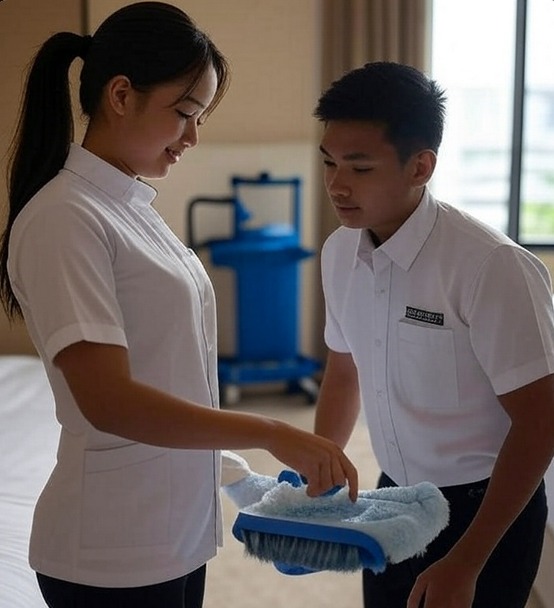
Each year, the school teaches about 34 students. They are 17 to 24 years old. They come from poor families. They learn English, computer skills, and hotel work. They can choose jobs like cleaning rooms, cooking food, or working at the front desk.
The students live at the school. They also work in the hotel to practice. One student, Monirath Mon, now works at the front desk. She wants to be a manager one day. Another woman, Chhunnin Neat, went to a hotel school too. Now she helps run the foundation.
The foundation also helps poor families. It builds houses, gives baby food, and helps small shops.
The school gives young people a better life. Some students now work in big hotels, even in other countries. The goal is for Cambodian people to run hotels in their own country. The school is changing many lives.
####################
>>>>>B1:
In Cambodia, a hotel called Shinta Mani Angkor is helping local people build better futures. It works closely with a hospitality school that is just a few steps away. This school gives free training to young Cambodians who come from poor families. Students learn important skills to work in hotels, such as cooking, cleaning, and taking care of guests. After finishing the program, many of them find jobs in luxury hotels like Shinta Mani Angkor.
The goal is to give locals a chance to work in good jobs and become hotel managers one day. This way, tourism in Cambodia can benefit Cambodian people, not just foreigners. The school and hotel were started by a man named Bill Bensley, a famous hotel designer. He wanted to make tourism more fair and helpful for the local community.
This project also helps the local economy. When people have jobs, they can support their families and spend money in their towns. Many former students are now working in big hotels, some even in other countries.
Overall, Shinta Mani Angkor and the school are giving hope and opportunities to young Cambodians, showing that tourism can make a real difference in people’s lives.
The Shinta Mani Foundation – Building a Better Life
The Shinta Mani Foundation is in Cambodia. It helps poor families who live in the countryside. Many people do not have clean water, toilets, or good houses. Life is hard for them. The Shinta Mani Foundation wants to change this.
The team from the foundation visits many families. They talk to them and listen to their problems. They ask, “What do you need?” Some families say they need water. Some need a toilet. Others need a new house. The foundation gives the right help to each family.
They build wells, so people can get clean water. They build toilets to help with health. They also make gardens, so families can grow vegetables. This gives them healthy food to eat. The foundation also builds strong houses. These houses are safe, clean, and better than the old ones.
Now the families feel happy. Their homes are safe, and their lives are better. Children can go to school. Parents can work. Everyone is more healthy.
The Shinta Mani Foundation helps one family at a time. They don’t just give money. They give real help. They listen, they care, and they change lives. This is how they build a better future for Cambodia.
_______________________
Vocabulary:
Countryside – a place outside the city, with farms, trees, and small villages. Example: I live in the countryside. There are many animals and green fields.
To change something – to make something different or new. Example: We want to change the old house into a new one.
A well – a deep hole in the ground where people get water. Example: The family gets water from the well.
Clean water – water that is good to drink, not dirty. Example: Children need clean water to stay healthy.
Health – the way your body feels; not sick. Example: Good food and clean water are good for your health.
To grow vegetables – to plant vegetables and help them become big. Example: My mother grows vegetables in the garden.
Healthy food – food that is good for your body. Example: Fruits and vegetables are healthy food.
To be safe – not in danger; protected. Example: The new house is strong. The family is safe.
To care – to help or show love for someone. Example: The nurse cares for the baby.
#########################
Vocabulary test:
1. What can you find in the countryside? A. Tall buildings B. Green fields C. Farms
2. What does it mean to change something? A. Make it different B. Keep it the same C. Fix or improve it
3. What is a well used for? A. To get water B. To wash clothes C. To find fish
4. What is clean water? A. Dirty water B. Safe to drink C. Not from the sea
5. What is good for your health? A. Clean water B. Junk food C. Exercise
6. What do people grow in a garden? A. Vegetables B. Rocks C. Flowers
7. Which food is healthy? A. Ice cream B. Apples C. Rice
8. What does it mean to be safe? A. You are in danger B. You are OK and protected C. You are in a strong house
9. What does it mean to care for someone? A. To help them B. To forget them C. To love and listen to them
Answers: 1. B, C 2. A, C 3. A 4. B, C 5. A, C 6. A, C 7. B, C 8. B, C 9. A, C
#########################
Fill in, words below:
The Shinta Mani Foundation helps people in the __________.
Many families do not have __________water.
The team builds a well for the __________.
Children __________ clean water every day.
Good __________ is important for health.
Families grow __________ in the garden.
Vegetables are __________ food.
The foundation builds strong __________.
Now the people are __________ and happy.
The team cares for every __________.
____________________________
houses – water – countryside – family – village – healthy – clean – safe – vegetables – drink
_____________________________
Answers:
The Shinta Mani Foundation helps people in the countryside.
Many families do not have clean water.
The team builds a well for the village.
Children drink clean water every day.
Good water is important for health.
Families grow vegetables in the garden.
Vegetables are healthy food.
The foundation builds strong houses.
Now the people are safe and happy.
The team cares for every family.
###########################
True or false, answer in complete sentences:
Do they build houses or garages?
Does clean water come from a well or a bottle?
Do families live in the city or the countryside?
Does the foundation care about people or money?
Do they grow vegetables or flowers in the garden?
Does a strong house help people feel safe or scared?
Do children eat healthy food or sweets?
Does the team talk or only send money?
Do people drink clean or dirty water?
Does the well give water or food?
__________________________
Answers:
They build houses, not garages.
Clean water comes from a well.
Families live in the countryside, not the city.
The foundation cares about people, not money.
They grow vegetables in the garden, not flowers.
A strong house helps people feel safe, not scared.
Children eat healthy food, not sweets.
The team talks to people, not only sends money.
People drink clean water, not dirty water.
The well gives water, not food.
######################
######################
Fill in:
People in the ______ live on farms.
A ______ gives clean water to families.
We need ______ water to drink every day.
It is good for your ______ to eat healthy food.
Farmers ______ vegetables in the garden.
The foundation helps to ______ lives in the village.
A strong house keeps people ______.
The team ______ for the families and listens to them.
The children drink ______ water from the well.
Families want to ______ their homes and lives.
______________________________
Answers: 1 countryside 2 well 3 clean 4 health 5 grow 6 change 7 safe 8 care 9 clean 10 change
######################
Order the sentences:
The countryside helps foundation in families.
They clean wells for clean water build .
for Families healthy grow vegetables food.
water good for Clean is health.
people houses safe Strong keep
The families cares team for. _______________________
Answers:
The foundation helps families in countryside.
They build wells for clean water.
Families grow vegetables for healthy food.
Clean water is good for health.
Strong houses keep people safe.
The team cares for families.
#######################

An interview with a foundation representative.
Interviewer: What is the Shinta Mani Foundation? Representative: We help families in the countryside.
Interviewer: Where do you work? Representative: We work in rural villages.
Interviewer: Who do you help? Representative: We help poor families and children.
Interviewer: Why do you build wells? Representative: To give clean water to people.
Interviewer: When do you visit families? Representative: We visit them every week.
Interviewer: How do you help the families? Representative: We build wells and strong houses.
Interviewer: What do families grow? Representative: They grow vegetables in gardens.
Interviewer: How do you know what they need? Representative: We listen to their stories and problems.
Interviewer: Who works in the team? Representative: Our team has doctors and builders.
Interviewer: Why is clean water important? Representative: Clean water keeps people healthy.
#####################
Complete, fill in:
Interviewer: What does your __________do? Representative: We help families with water and __________.
Interviewer: Where do you _________wells? Representative: We build wells in small __________.
Interviewer: Who lives in the __________? Representative: Many families and children live there.
Interviewer: Why do people need __________ water? Representative: Clean water is good for __________.
Interviewer: When do you start a new project? Representative: We start when __________ ask for help.
Interviewer: How do you build __________ houses? Representative: We use good materials and help people.
Interviewer: What do families eat? Representative: They eat vegetables and __________ food.
Interviewer: How many families do you __________? Representative: We visit forty families every month.
Interviewer: __________ is in your team? Representative: We have builders, doctors, and teachers.
Interviewer: Where do you get __________? Representative: People and companies give us money.
______________________
Complete interview:
Interviewer: What does your foundation do? Representative: We help families with water and houses.
Interviewer: Where do you build wells? Representative: We build wells in small villages.
Interviewer: Who lives in the countryside? Representative: Many families and children live there.
Interviewer: Why do people need clean water? Representative: Clean water is good for health.
Interviewer: When do you start a new project? Representative: We start when families ask for help.
Interviewer: How do you build strong houses? Representative: We use good materials and help people.
Interviewer: What do families eat? Representative: They eat vegetables and healthy food.
Interviewer: How many families do you visit? Representative: We visit forty families every month.
Interviewer: Who is in your team? Representative: We have builders, doctors, and teachers.
Interviewer: Where do you get money? Representative: People and companies give us money.
You don’t need a university degree to be a good hotel manager. Many managers start with small jobs and learn everything step by step. Here is what you need:
✅ 1. Learn from Experience
Start with jobs like receptionist, cleaner, waiter, or bellboy.
Work in different parts of the hotel to understand how everything works.
Ask questions and try to learn every day.
✅ 2. Be a Good Leader
Help your team and be kind.
Stay calm when problems happen.
Support your staff and show them how to do things well.
✅ 3. Think About the Guest
Always smile and be friendly.
Try to guess what the guest needs before they ask.
If there is a problem, fix it quickly and politely.
✅ 4. Speak Clearly and Be Friendly
Talk to guests, workers, and your boss in a clear and nice way.
Listen carefully to others.
Speak good English. More languages are a plus.
✅ 5. Work Hard
Always come on time and do your best.
Be ready to work on weekends or in the evening.
Be active — a good manager moves around and checks everything.
✅ 6. Solve Problems
Fix issues quickly.
Make good decisions — fast but careful.
Stay calm when things go wrong.
✅ 7. Pay Attention to Details
5-star hotel guests want everything perfect.
Check rooms, uniforms, flowers, lights, and smiles!
Walk around the hotel every day and check everything.
✅ 8. Keep Learning
Watch other good managers and copy what they do.
Take short courses online or in person (for example: customer service or hotel work).
Try to improve a little every day.
⭐ Tips to Help You Grow:
Find a Mentor: A good manager can teach you many things.
Short Training: Small certificates (like customer service) can help you get better jobs.
Languages: Speaking English and another language is very useful in 5-star hotels.
####################
All the best, go for gold, stay focused, live your dreams!
“He who blames others has a long way to go. He who blames himself is halfway there. He who blames no one has arrived.”
This quote gives good advice. It helps us understand how to grow and reach our goals.
Some people always blame others. They say, “It’s not my fault.” These people do not learn. They stop trying. They do not get better.
Other people blame themselves. They say, “I made a mistake.” These people want to change. They try again. They learn from their mistakes. This is a good step.
The best people blame no one. They understand that problems happen. They stay calm and work hard. They don’t waste time. They keep moving forward.
To reach a goal, we must work every day. We must believe in ourselves. We must learn and grow. We must not give up.
Blaming does not help. Learning and trying again helps a lot. That is how we succeed.
______________________ Vocabulary:
To blame others – to say another person did something wrong. Example: He broke the glass and blamed his sister.
Halfway – in the middle, not at the start or end. Example: We are halfway to school.
An advice(correct form: advice) – good words to help someone decide or do better. Example: My teacher gave me advice to study more.
To reach a goal – to get what you want after working for it. Example: I studied hard and reached my goal of passing the test.
A fault – something wrong or bad, a mistake. Example: It was my fault that we were late.
To stop trying – to give up, not try anymore. Example: She stopped trying after one mistake.
A mistake – something you do wrong. Example: I made a mistake in my homework.
To learn from mistakes – to understand your mistake and do better next time. Example: I lost the game, but I learned from my mistakes.
A step – one small part of doing something. Example: Writing the name is the first step in the test.
To stay calm – to not get angry or scared. Example: He stayed calm during the storm.
To waste time – to do nothing useful with your time. Example: Watching too much TV is a waste of time.
To keep moving – to continue, not stop. Example: Even when tired, she kept moving.
To believe in oneself – to think you can do something. Example: I believe in myself. I can do it!
To learn and grow – to get better and smarter over time. Example: Children learn and grow every day.
####################
Match the words with their definitions
Words/Phrases:
To blame others
Halfway
Advice
To reach a goal
A fault
To stop trying
A mistake
To learn from mistakes
A step
To stay calm
To waste time
To keep moving
To believe in oneself
To learn and grow
Definitions:
A. Something you do wrong. B. To understand your mistake and do better. C. Good words to help someone decide or do better. D. To say another person did something wrong. E. One small part of doing something. F. In the middle, not at the start or end. G. To get what you want after working for it. H. To give up, not try anymore. I. To not get angry or scared. J. To continue, not stop. K. To think you can do something. L. To do nothing useful with your time. M. Something wrong or bad. N. To get better and smarter over time.
Answers: 1. Believe in yourself to reach your dreams. 2. Learning from mistakes helps you grow every day. 3. Don’t blame others; take responsibility for your actions. 4. Stay calm when problems come your way. 5. Keep moving forward, even when it feels hard. 6. A small step can lead to big success. 7. Good advice helps us make better decisions. 8. Halfway means you are closer to your goal. 9. Mistakes are chances to learn, not to give up. 10. Always try your best and never stop trying.
######################
True or false?
Believing in yourself helps you reach your goals.
Blaming others solves your problems.
Making mistakes is a part of learning.
Staying calm is not important when you are angry.
Taking small steps can lead to big success.
Good advice can help you make better choices.
Giving up is a good way to reach your goal.
Halfway means you are close to finishing.
Learning from mistakes helps you grow.
You should never try again after failing.
__________________
True: 1,3,5,6,8,9
####################
Put the words in order
yourself / believe / you / in / must
learn / mistakes / from / we / our
for / blame / don’t / others / problems / your
calm / stay / you / should / always
step / small / take / one
help / good / advice / us / can
goal / reach / you / can / your
keep / forward / moving / you / must
to / mistakes / chances / are / learn
stop / trying / never / you / should
_______________________
1-You must believe in yourself. 2-We learn from our mistakes. 3-Don’t blame others for your problems. 4-You should always stay calm. 5-Take one small step. 6-Good advice can help us. 7-You can reach your goal. 8-You must keep moving forward. 9-Mistakes are chances to learn. 10-You should never stop trying. #######################
a motivational reminder that success often comes not from being the most talented, but from being the most disciplined and consistent.
#RoleModel
Discipline is Important
You don’t need to be better than other people to do something. It is more important to be disciplined.
Discipline means you work every day. You do your work on time. You don’t stop, even if it is hard.
If you want to learn something, you must practice. If you practice a little every day, you get better.
Some people want to be the best right away. But this is not easy. It is better to work hard and keep going.
When you have discipline, you do not give up. You do not wait for a good day. You do your work every day.
In the end, people who are disciplined can reach their goals. They learn more and do more.
So, you don’t have to be better than others. You only need to be more disciplined. This helps you to be successful.
______________________
Vocabulary:
Discipline: To work hard and do things every day without stopping.
To mean: To say or show something.
On time: To do something when you should, not late.
To practice: To do something again and again to get better.
To give up: To stop trying.
To reach a goal: To do what you want or finish what you plan.
To be successful: To do well or get what you want.
#######################
Match words, meaning:
Discipline
To mean
On time
To practice
To give up
To reach a goal
To be successful
a) To stop trying b) To do something again and again c) To work hard every day d) To do something when you should e) To say or show something f) To do well or get what you want g) To finish what you want
______________________
Fill in the blanks with the correct word
Words: discipline, practice, on time, give up, reach a goal
I study every day. This is called _________.
I want to be good at football. I ________ every afternoon.
I do my homework ________. I am never late.
If the work is hard, don’t ________. Keep trying!
When you ________, you do what you want.
################
True, false?
Discipline means to work every day.
To practice is to do something one time.
Being on time means doing things late.
To give up means to stop trying.
You must be better than others to be successful.
To reach a goal means to finish what you want.
Discipline helps people not to stop.
To mean is to say or show something.
Practicing helps you get better.
Being successful means you do not work hard.
_________________
True: 1,4,6,7,9
########################
Fill-in-the-blank sentences, words below:
Words: discipline, practice, on time, give up, reach a goal, successful, mean, work, better, every day
To be ________, you must try hard and not stop.
If you want to learn, you must ________ a lot.
Discipline means to ________ hard _________.
It is good to do your homework _________.
Don’t ________ when it is difficult.
To ________ a goal means to finish what you want.
You don’t have to be ________ than others.
To ________ something is to say or show it.
People who have discipline ________ hard.
If you want to be successful, you should try _________.
___________________________-
1 successful, 2 practice, 3 work every day, 4 on time, 5 give up, 6 reach, 7 better, 8 mean, 9 work, 10 every day
##########################
Choose the correct word:
You need (discipline / give up) to do your work well.
To get better, you must (practice / mean) every day.
Don’t (give up / reach) when something is hard.
Being (on time / better) means doing things when you should.
To (mean / work) is to say or show something.
You don’t have to be (better / discipline) than others.
To (reach / give up) a goal, you must keep trying.
People who (practice / give up) every day get better.
(Discipline / Mean) helps you keep working even when it is hard.
To be (successful / better), you must work hard and not stop.
___________________
1 discipline, 2 practice, 3 give up, 4 on time, 5 mean, 6 better, 7 reach, 8 practice, 9 discipline, 10 successful #######################
Put the words in the right order:
hard / work / every day / must / you
up / give / must / not / you
practice / you / better / when / get / you
on time / must / be / you
can / reach / goal / a / you
succeed / discipline / helps / to / you
be / have / better / don’t / to / you
does / what / mean / it
working / day / keep / you / every
comes / from / hard / success / work
_____________________ 1 You must work hard every day, 2 You must not give up, 3 You get better when you practice, 4 You must be on time, 5 You can reach a goal, 6 Discipline helps you to succeed, 7 You don’t have to be better, 8 What does it mean, 9 You keep working every day, 10 Success comes from hard work
#########################
Multiple-choice questions, more than one answer can be correct for each:
1. What does discipline mean? a) To work hard every day b) To stop trying c) To be lazy d) To do things on time
2. What helps you get better? a) Practice b) Not trying c) Giving up d) Working every day
3. What does “on time” mean? a) Doing something late b) Being early or at the right time c) Forgetting your work d) Doing something when you should
4. What does it mean to give up? a) To stop trying b) To keep practicing c) To work hard d) To be successful
5. How can you reach a goal? a) By giving up b) By practicing every day c) By being disciplined d) By being late
6. To be successful, you must: a) Work hard b) Give up easily c) Stop practicing d) Be disciplined
7. Which of these are good habits? a) Being on time b) Giving up quickly c) Not working hard d) Practicing every day
8. What does “to mean” mean? a) To say or show something b) To stop working c) To give up d) To practice
__________________ 1 a d, 2 a d, 3 b d, 4 a, 5 b c, 6 a d, 7 a d, 8 a
######################
Match questions and answers
Questions:
What do you need to do every day?
What does “give up” mean?
When should you be on time?
How do you reach a goal?
Do you have to be better than others?
What helps you get better?
Who works hard?
What does discipline help you do?
Answers: a) To stop trying b) You don’t have to be better c) Practice every day d) Work hard people e) Be on time f) Discipline helps you g) Keep trying h) Every day
_________________
1 c, 2 a, 3 e, 4 g, 5 b, 6 c, 7 d, 8 f ######################
Subject: Our Sincere Apologies for Your Breakfast Experience
Dear [Guest’s Name],
Thank you for sharing your feedback with us. I am truly sorry to hear that your experience at our breakfast buffet did not meet your expectations. Please accept our sincerest apologies for both the quality of the food and the service you received.
At [Hotel Name], we take great pride in providing excellent hospitality and a high standard of food and service. I regret that we clearly fell short during your visit, and I fully understand your frustration.
Your comments regarding the buffet selection and the behavior of our staff are being taken very seriously. I have personally shared your feedback with our F&B Manager and the team to ensure immediate improvements are made. Additional training and supervision are already being implemented to prevent such situations from happening again.
We greatly value your feedback—it helps us grow and improve. I hope you will give us another chance to provide the quality experience you rightfully expect from us. If there is anything further we can do to make amends, please do not hesitate to let me know directly.
Thank you again for bringing this to our attention.
Thank you for taking the time to share your thoughts. I’m sorry to hear that your experience with our breakfast buffet and staff was disappointing.
We try to provide good food and friendly service every day, so it’s unfortunate to hear that things didn’t go well during your visit. I understand this must have been frustrating.
Your feedback has been shared with the team, and we’ll try to improve. While we cannot change what happened, we hope you will consider giving us another opportunity to provide a better experience next time.
################### Which one do you like, and why? Comment, send your text to me at SMFrockZ(at)gmx(dot)at, I’ll go over it, correct, comment, and send it back.
Today, many hotels and travel companies use AI (artificial intelligence) to help communicate with guests. This technology is becoming more common because it can answer questions quickly, any time of the day or night. Guests can ask about room availability, check-in and check-out times, hotel services, or nearby attractions, and get a fast reply. AI can also write in many languages, which is helpful for international travelers.
Using AI saves time for hotel staff. It can answer simple and repeated questions, so staff can focus on more important tasks or help guests in person. AI also allows companies to reply to many guests at the same time, which is useful during busy seasons.
However, AI also has some disadvantages. It can sound cold or too formal. It might not understand special requests or emotional situations, like complaints or personal problems. Some guests feel unhappy if they receive a reply that seems like it was written by a robot.
The best way is to use AI together with human communication. AI is good for fast, simple answers, but real people should handle more complex or sensitive topics. In tourism and hospitality, friendly and personal service is very important. AI can help, but it should not replace the human touch.
___________________
Vocabulary:
To communicate – to give or receive information by speaking, writing, or using signs. Example: I use email to communicate with the hotel.
To be common – to happen often or be seen a lot. Example: It is common to see tourists in this city.
Availability – when something is free to use or take. Example: I asked about the availability of rooms.
A reply – an answer to a question or message. Example: I sent an email and got a reply one hour later.
To save time – to do something faster so you have more time later. Example: Using a map can save time when you travel.
Hotel staff – the people who work at a hotel. Example: The hotel staff cleaned my room and helped with my bags.
Repeated – done again and again. Example: She asked the same question in repeated emails.
To focus on something – to give all your attention to one thing. Example: Please focus on your work.
A task – a job or thing you have to do. Example: Cleaning the room is a daily task for the hotel staff.
A busy season – a time when many people travel or visit. Example: Summer is a busy season for hotels.
A disadvantage – something bad or not good about something. Example: A disadvantage of AI is that it can feel unfriendly.
To sound cold – to not sound friendly or warm. Example: The email sounded cold, like a robot wrote it.
A request – when you ask for something. Example: I made a request for a room with a sea view.
A complaint – when you say something is wrong or bad. Example: She made a complaint about the noise.
A sensitive topic – something that can make people feel upset or emotional. Example: Talking about illness is a sensitive topic.
###################
Multiple-choice , one answer correct:
1. To communicate means to: a) travel to a new place b) give or receive information c) clean a room
2. If something is common, it: a) happens often b) is very rare c) is finished quickly
3. Availability means: a) something is free to use b) something is broken c) something is far away
4. A reply is: a) a question you ask b) a letter or message you get back c) a problem to fix
5. To save time means to: a) do something faster b) waste time c) stop working
6. Hotel staff are: a) people who work at a hotel b) guests who stay at a hotel c) the hotel building
7. Repeated means: a) done again and again b) done very fast c) done only once
8. To focus on something means to: a) pay attention to one thing b) forget everything c) do many things at once
9. A task is: a) a problem you cannot solve b) a job or something to do c) a person who works
10. A busy season is: a) a time when many people travel b) a quiet time with few people c) a long holiday
11. A disadvantage is: a) a good thing b) a problem or bad point c) a special offer
12. To sound cold means: a) to sound unfriendly b) to speak very loudly c) to speak happily
13. A request is: a) to ask for something b) to give something away c) to say thank you
14. A complaint is: a) to say something is wrong b) to ask for help c) to make a new friend
15. A sensitive topic is: a) a subject that can make people upset b) an easy question c) a funny story
Matching exercise, words and definitions mixed up:
Words: A. A complaint B. To focus on something C. A disadvantage D. To save time E. Hotel staff F. A reply G. To communicate H. Repeated I. Availability J. A sensitive topic K. To sound cold L. To be common M. A request N. A task O. A busy season
Definitions:
When something is free to use or take
To not sound friendly or warm
To happen often or be seen a lot
A job or thing you have to do
When you say something is wrong or bad
Something bad or not good about something
A time when many people travel or visit
To give all your attention to one thing
To do something faster so you have more time later
When you ask for something
To give or receive information
Done again and again
The people who work at a hotel
Something that can make people feel upset or emotional
An interview with a front desk manager about the pros and cons of AI in hospitality:
1. Interviewer: What is AI in hotel communication? Manager: AI helps us to communicate with guests faster and easier.
2. Interviewer: How does AI save time for hotel staff? Manager: AI gives quick replies to repeated questions, so staff can focus on other tasks.
3. Interviewer: Is AI common in hotels now? Manager: Yes, many hotels use AI, especially in busy seasons when many guests ask for availability.
4. Interviewer: What is one big advantage of AI? Manager: It saves time and helps with many requests at the same time.
5. Interviewer: Are there any disadvantages of AI? Manager: Sometimes AI can sound cold and not friendly, which guests do not like.
6. Interviewer: Can AI handle sensitive topics? Manager: No, sensitive topics need a human because AI may not reply correctly.
7. Interviewer: Does AI replace hotel staff? Manager: No, AI helps staff but cannot do all tasks or understand feelings.
8. Interviewer: How do guests feel about AI replies? Manager: Some guests like fast replies, but others want personal answers.
9. Interviewer: What is repeated in hotel communication? Manager: Guests often ask the same questions, so AI answers repeated requests quickly.
10. Interviewer: Will AI be more common in the future? Manager: Yes, but hotels must use AI carefully to keep good communication with guests.
################
A front desk manager and his statement on AI in the hospitality business:
When we use AI to reply to guest emails, staff must follow some important rules. First, always check the AI reply before sending it. Make sure it answers the guest’s request clearly. If the email is about a complaint or a sensitive topic, do not use AI. A real person should reply. AI is helpful for repeated questions about room availability or check-in times. It saves time, especially in a busy season. But we must not let replies sound cold. Always add a warm sentence or greeting. AI helps with tasks, but hotel staff must still focus on good communication. This way, we give the best service to our guests.
Do you agree? If you want, write a statement, about 100-130 words, send the statement to me via SMFrockZ(at)gmx(dot)at, I’ll go over it, comment, correct, and send it back.
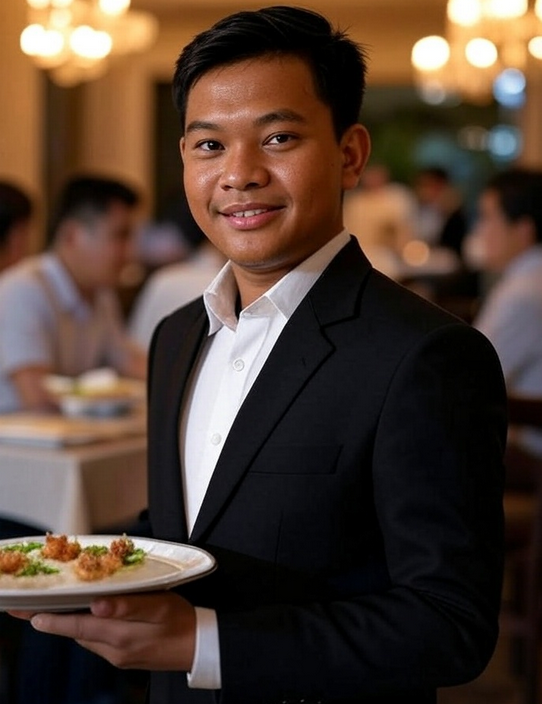
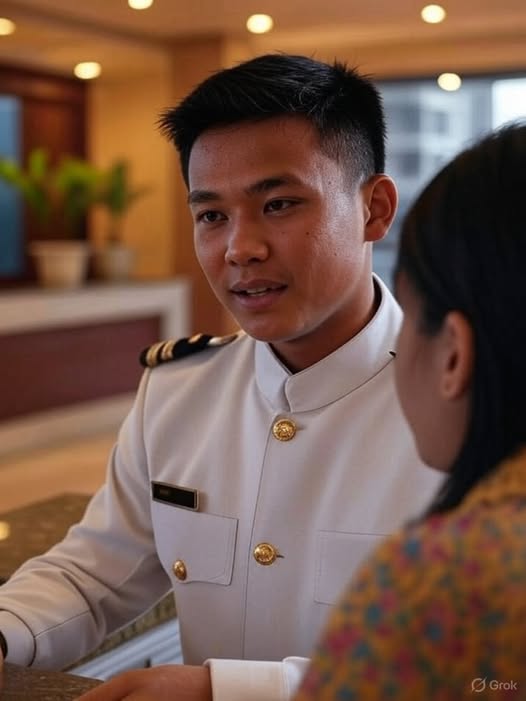
Sorn Chivoan works as Assistant Head Butler at Shinta Mani Angkor and Bensley Collection Pool Villas in Siem Reap. He helps the butler team and makes sure guests are happy. Sorn likes meeting people from many countries and sharing about Cambodia. He started as a bell boy and worked hard to get his job now.
A butler helps guests, is friendly, and makes their stay special. Sorn’s favorite food as a child was roasted chicken with young jackfruit, cooked by his father. For fun, he likes visiting temples and fishing.
Sorn talks about the Shinta Mani Foundation. It helps poor people in the countryside. The hotel also tries to protect nature by using less plastic. Guests who come in the low season can see temples with fewer people and enjoy cool weather. The hotel business is very important for Cambodia because it gives many jobs to people.
____________________________
Vocabulary:
to make sure: to check or do something so that it is correct or safe
to meet people: to see and talk with new or other people
a country: a place where people live with its own rules and land, like Cambodia or France
to share something: to give some of what you have to others or tell others about something
a bell boy: a person who helps with bags and doors in a hotel
to make a stay special: to do things that make someone’s time in a place very good and happy
a roasted chicken: chicken cooked by heat, usually in an oven or on fire
a jackfruit: a big green fruit with sweet yellow inside
to protect nature: to keep plants, animals, and the earth safe and healthy
low season: the time when fewer tourists visit a place
to enjoy: to feel happy and have fun doing something
########################
Match the words with the correct definitions:
to make sure
to meet people
a country
to share something
a bell boy
to make a stay special
a roasted chicken
a jackfruit
to protect nature
low season
to enjoy
Definitions: A. To give some of what you have to others or tell others about something B. Chicken cooked by heat, usually in an oven or on fire C. The time when fewer tourists visit a place D. To check or do something so that it is correct or safe E. To feel happy and have fun doing something F. A person who helps with bags and doors in a hotel G. A place where people live with its own rules and land H. To keep plants, animals, and the earth safe and healthy I. To see and talk with new or other people J. To do things that make someone’s time in a place very good and happy K. A big green fruit with sweet yellow inside
What does to make sure mean? A) To talk to many people B) To check or do something so it is correct C) To cook something very well
What does to meet people mean? A) To sleep in a hotel B) To see and talk with new or other people C) To write a letter
What is a country? A) A type of food B) A place with shops C) A place where people live with rules and land
What does to share something mean? A) To eat everything by yourself B) To take something without asking C) To give or tell others about something
What is a bell boy? A) A person who helps with bags and doors in a hotel B) A person who writes the menu C) A person who cleans the pool
What does to make a stay special mean? A) To visit many countries B) To do things that make someone’s time very good and happy C) To sleep in a very big bed
What is a roasted chicken? A) A chicken cooked with oil in a pan B) A raw chicken C) Chicken cooked by heat in an oven or fire
What is a jackfruit? A) A small round red fruit B) A big green fruit with sweet yellow inside C) A kind of meat
What does to protect nature mean? A) To pick all the flowers B) To keep plants, animals, and the earth safe and healthy C) To make noise in the forest
What is low season? A) The time when everything is closed B) The time when fewer tourists visit a place C) The hottest time of the year
What does to enjoy mean? A) To work very hard B) To be bored C) To feel happy and have fun
A1: I work as a butler at Shinta Mani Bensley Villa in Siem Reap. My job is to help the guests. I want the guests to feel happy and comfortable.
Every day, I check the rooms. I make sure the rooms are clean. I put clean towels and things in the rooms. I get the villa ready for the guests.
When the guests come, I say hello. I help with their bags. I show them the villa. I tell them where to go.
During the day, I help the guests. I bring drinks and food. I help them find places to visit. I can also help with cars and tours.
I work with other workers in the villa. We work as a team. I like to meet many guests. I like to help them.
My job is to make the guests happy. I want the guests to have a good time at the villa.
##################### #####################
A2:
I work as a butler at Shinta Mani Bensley Villa in Siem Reap. My job is to help the guests and make sure they feel comfortable during their stay.
Every morning, I check the rooms and the villa to make sure everything is clean and tidy. I put fresh towels and other things in the rooms for the guests. I prepare the villa before the guests arrive.
When guests come to the villa, I welcome them warmly. I help carry their bags and show them around the villa. I explain the villa’s services and answer their questions.
During the day, I help guests with different needs. I serve drinks and snacks. I help guests find interesting places to visit in Siem Reap. Sometimes, I arrange tours or transportation for them.
I also work with the cleaning and kitchen staff to make sure everything runs smoothly. I enjoy meeting guests from many countries and helping them have a nice stay. My goal is to make all guests feel happy and relaxed.
###################
###################
B1:
I work as a butler at Shinta Mani Bensley Villa in Siem Reap. My main job is to take care of the guests and make sure they feel comfortable and welcome during their stay.
Every morning, I check the rooms and the villa to make sure everything is clean and well organized. I prepare the rooms with fresh towels, toiletries, and other items that guests might need. I get everything ready before the guests arrive.
When guests come to the villa, I greet them warmly, help with their luggage, and show them around. I explain the services and answer any questions they have.
During the day, I help guests with different requests. I serve drinks, arrange tours or transportation, and provide information about local attractions. I also work closely with the housekeeping and kitchen teams to ensure smooth service.
I enjoy meeting guests from all over the world and helping them have a great experience. My goal is to make sure every guest feels happy, relaxed, and well cared for.
################### ###################
B2:
I work as a butler at Shinta Mani Bensley Villa in Siem Reap. My role is to ensure that every guest feels comfortable, welcomed, and well looked after throughout their stay.
Each morning, I inspect the villa and guest rooms to ensure they are spotless and properly prepared. I arrange fresh towels, toiletries, and personalized amenities to meet the guests’ needs before their arrival.
When guests check in, I warmly welcome them, assist with their luggage, and give a detailed introduction to the villa’s facilities and services. I am always available to answer questions and provide recommendations.
Throughout the day, I attend to various guest requests such as serving drinks, arranging customized tours, or organizing transportation. I collaborate closely with the housekeeping and kitchen staff to guarantee a seamless and high-quality service.
I take pride in meeting guests from diverse backgrounds and helping them enjoy their visit to Siem Reap. My objective is to create a relaxing and memorable experience, ensuring that each guest feels valued and cared for.
################### ###################
C1:
As a butler at Shinta Mani Bensley Villa in Siem Reap, my primary responsibility is to provide impeccable service that ensures each guest enjoys a comfortable, personalized, and memorable stay.
Every morning, I conduct a thorough inspection of the villa and guest accommodations to ensure they meet the highest standards of cleanliness and presentation. I meticulously prepare rooms with fresh linens, toiletries, and tailored amenities designed to exceed guests’ expectations.
Upon guests’ arrival, I extend a warm welcome, assist with luggage, and offer a comprehensive orientation of the villa’s facilities and services. I remain attentive throughout their stay, anticipating needs and responding promptly to any requests.
My daily duties include coordinating bespoke tours, arranging transportation, serving refreshments, and liaising closely with housekeeping and culinary teams to deliver seamless and exceptional service.
I greatly value the opportunity to engage with guests from diverse cultural backgrounds, sharing insights about Siem Reap and enhancing their overall experience. Ultimately, my goal is to cultivate a refined, welcoming atmosphere where every guest feels genuinely cared for and thoroughly satisfied.
##################
##################
C2:
As a butler at Shinta Mani Bensley Villa in Siem Reap, my foremost responsibility is to curate an unparalleled, bespoke experience that anticipates and fulfills every guest’s need with discretion and professionalism. Each day begins with a meticulous inspection of the villa and guest suites to ensure immaculate cleanliness and an ambiance of refined elegance. I prepare the rooms with carefully selected linens, amenities, and personalized touches tailored to each guest’s preferences.
Upon arrival, I provide a gracious welcome, assist with luggage, and offer a comprehensive orientation of the villa’s extensive facilities and bespoke services. Throughout their stay, I remain ever attentive and proactive, anticipating requests and orchestrating seamless arrangements — from bespoke excursions to curated transportation and attentive in-villa service.
Collaboration with the housekeeping, culinary, and concierge teams is essential to uphold the villa’s exacting standards. Engaging with a diverse clientele, I take pride in enriching their understanding of Siem Reap’s rich cultural heritage while ensuring their stay is both luxurious and effortlessly comfortable. My ultimate aim is to cultivate an environment of genuine warmth, discretion, and impeccable service, leaving an indelible impression on every guest.