Autor: wolfgang kugler

  • Meet Sokheng, a mixologist (A1+, 3/3)

    a role-model, a career, staying focused


    part 1: https://www.fluglehrer.at/?p=9785
    part 2: https://www.fluglehrer.at/?p=892
    part 3: https://www.fluglehrer.at/?p=878


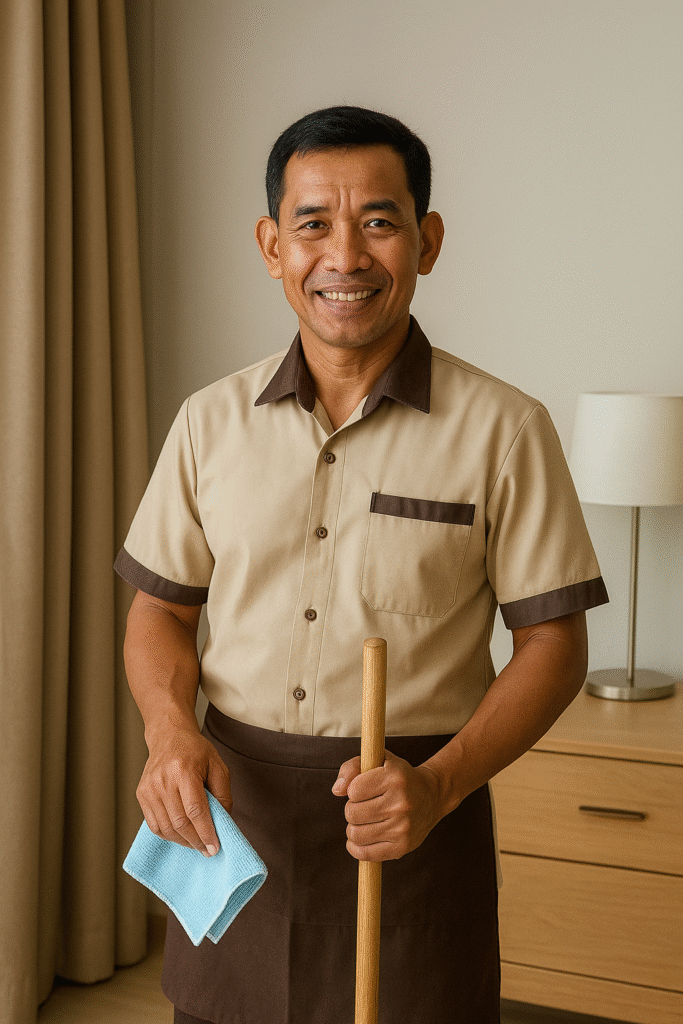
    Sokheng started his journey as an F&B intern after finishing hospitality school. He was young, excited, and ready to learn. Every day, he worked hard and always gave his best. He was friendly with guests and kind to his team.

    Step by step, Sokheng learned more about drinks and service. He watched, practiced, and asked questions. He wanted to be better every day.

    Now, Sokheng is a bartender at Bensley’s Bar. He does not just make drinks – he creates special cocktails that taste like fun and adventure! Each drink is full of flavor, color, and a little surprise.

    What makes Sokheng a great bartender? He is creative, friendly, and loves his work. He listens to guests and gives them drinks they enjoy. His smile and energy make everyone feel welcome.

    We are very proud of Sokheng. He started from the bottom and worked his way up with heart and hard work. We are excited to see what he does next. His mixology journey is just beginning!

    __________________

    Vocabulary:


    a mixologist – a person who makes special drinks (cocktails)
    a bartender – a person who makes and gives drinks in a bar
    an intern – a student or new worker who is learning a job
    hospitality – working in hotels, restaurants, or bars to help guests
    to be excited – to feel very happy and full of energy
    step by step – doing something slowly, one part at a time
    to practice – to do something again and again to get better
    to create – to make something new
    to taste – to try food or a drink in your mouth
    an adventure – a fun or new experience
    flavor – the taste of food or a drink (like sweet or spicy)
    a surprise – something you don’t expect
    to enjoy – to like something
    to feel welcome – to feel happy and comfortable in a place
    from the bottom – to start with no experience or power
    a journey – a story of going from one place or level to another


    #####################
    Test your vocabulary:


    1. What is a mixologist?
    a) a person who cooks food in a restaurant
    b) a person who makes special drinks
    c) a person who fixes cars

    2. What is an intern?
    a) a student or new worker learning a job
    b) a guest in a hotel
    c) a teacher in a school

    3. What does “to be excited” mean?
    a) to feel sleepy
    b) to feel very happy and full of energy
    c) to feel hungry

    4. What does “to practice” mean?
    a) to do something one time
    b) to do something again and again to get better
    c) to read a book quickly

    5. What is a surprise?
    a) something you know is coming
    b) something you don’t expect
    c) something you don’t like

    6. What is an adventure?
    a) a fun or new experience
    b) a boring day at home
    c) a shopping trip to the store

    7. What is flavor?
    a) the color of food
    b) the size of a drink
    c) the taste of food or a drink

    8. What does “from the bottom” mean?
    a) to start with no experience
    b) to be the boss from the start
    c) to leave a job quickly

    9. What is a journey?
    a) a short talk with a friend
    b) a story of going from one place or level to another
    c) a time to sleep during the day

    10. What does a mixologist make?
    a) clothes
    b) special drinks
    c) paintings


    ___________________________

    1 b 2 a 3 b 4 b 5 b 6 a 7 c 8 a 9 b 10 b

    ##################

    10 multiple-choice questions with 4 answer options each. More than one answer may be correct:


    1. Where did Sokheng start his career?
    a) As a bartender
    b) As an F&B intern
    c) At hospitality school
    d) At Bensley’s Bar

    2. What qualities helped Sokheng succeed?
    a) Hustle
    b) Heart
    c) Luck
    d) Being quiet

    3. What does Sokheng create?
    a) Food dishes
    b) Cocktails
    c) Spirits of adventure
    d) Coffee drinks

    4. What does Sokheng’s work at Bensley’s Bar show?
    a) His passion for mixology
    b) His cooking skills
    c) His teamwork
    d) His joy in mixing drinks

    5. What can you say about Sokheng’s journey?
    a) He worked hard step by step
    b) He started at the top
    c) He learned a lot on the way
    d) He gave up quickly

    6. What is mixology?
    a) The art of making cocktails
    b) The study of coffee
    c) Making drinks that taste good
    d) Cleaning bars

    7. What is important for a great bartender?
    a) Passion for mixology
    b) Good communication
    c) Being fast
    d) Creating drinks that taste good

    8. What kind of drinks does Sokheng make?
    a) Drinks that taste like pure joy
    b) Drinks that look boring
    c) Cocktails with unique flavors
    d) Simple soft drinks

    9. What shows Sokheng’s success?
    a) He is behind Bensley’s Bar
    b) He is proud of his team
    c) He started fresh out of school
    d) He has a secret

    10. What does “shaking up the bar” mean?
    a) Mixing drinks in a fun way
    b) Changing how things are done
    c) Cleaning the bar
    d) Making the bar noisy


    ___________________________

    1 b c 2 a b 3 b c 4 a d 5 a c 6 a c 7 a d 8 a c 9 a c d 10 a b

    ######################


    Match the vocabulary with the correct definition below:

    Vocabulary:

    a) mixologist
    b) intern
    c) practice
    d) surprise
    e) adventure
    f) flavor
    g) journey
    h) excited
    i) create
    j) from the bottom

    Definitions:

    1. to make something new
    2. a person who makes special drinks
    3. a fun or new experience
    4. to do something again and again to get better
    5. a person learning a job
    6. to feel very happy and full of energy
    7. the taste of food or a drink
    8. something you do starting with no experience
    9. something you do not expect
    10. a story of going from one place or level to another

    _____________________

    answers:
    a 2 b 5 c 4 d 9 e 3 f 7 g 10 h 6 i 1 j 8

    #######################

    True/false ?


    1. Sokheng started as a bartender at Bensley’s Bar.
    2. He worked hard and with heart to reach his position.
    3. Sokheng creates cocktails that taste like pure joy.
    4. He is not proud to be part of the team.
    5. Mixology means making special drinks.
    6. Sokheng’s secret is cleaning the bar.
    7. He began his career fresh out of hospitality school.
    8. Being excited means feeling very tired.
    9. Sokheng’s drinks capture the spirit of adventure.
    10. A great bartender needs passion for mixology.

    ____________________

    Correct: 2,3,5,7,9,10

    ##########################

    Fill in (words below)

    Sokheng started as an __________ after finishing hospitality school.
    He worked __________ and with heart.
    Now he makes special __________ at Bensley’s Bar.
    His drinks taste like joy and adventure.
    Sokheng is good at __________ because he loves it and practices a lot.
    We are ___________to have him on our team.
    His story __________ that with hard work and passion, anyone can start from the bottom and reach the __________.

    mixology – top – cocktails – shows – intern – proud – hard

    #######################

    Interview with Sokheng:


    1. What is your job?
    I am a mixologist. I make special drinks called cocktails.

    2. How did you start your job?
    I started as an intern after school. I learned a lot.

    3. What do you like about your job?
    I like making drinks that people enjoy. It makes me happy.

    4. What is your secret to making good cocktails?
    I practice a lot and use fresh ingredients.

    5. Do you like working at Bensley’s Bar?
    Yes, I love it. The team is great.

    6. What is your favorite drink to make?
    I like to make fruity cocktails with pineapple and other flavors.

    7. How do you feel when people like your drinks?
    I feel very excited and proud.

    8. What skills do you need to be a good mixologist?
    You need to practice, be creative, and love your job.

    9. What advice do you have for new bartenders?
    Work hard and never stop learning.

    10. What is your goal for the future?
    I want to keep making great drinks and be the best mixologist I can be.


    ######################

    Interviewing a friend about Sokheng:


    1. What is Sokheng’s job?
    He is a mixologist. He makes special drinks called cocktails.

    2. How did Sokheng start his job?
    He started as an intern after school. He learned a lot.

    3. What does Sokheng like about his job?
    He likes making drinks that people enjoy. It makes him happy.

    4. What is Sokheng’s secret to making good cocktails?
    He practices a lot and uses fresh ingredients.

    5. Does Sokheng like working at Bensley’s Bar?
    Yes, he loves it. The team is great.

    6. What is Sokheng’s favorite drink to make?
    He likes to make fruity cocktails with pineapple and other flavors.

    7. How does Sokheng feel when people like his drinks?
    He feels very excited and proud.

    8. What skills does Sokheng need to be a good mixologist?
    He needs to practice, be creative, and love his job.

    9. What advice does Sokheng have for new bartenders?
    Work hard and never stop learning.

    10. What is Sokheng’s goal for the future?
    He wants to keep making great drinks and be the best mixologist he can be.


    ######################

    Every day at Bensley’s Bar is special.

    I clean my tools and get fresh fruits ready. I feel happy because I love my job. When guests come, I smile and listen carefully. I make drinks that surprise them and taste good. Sometimes, I try new recipes and practice a lot. It is fun and makes me excited. I work with my team, and we help each other. When guests say “thank you,” I feel proud. My job is about making cocktails and making people happy. I love being a mixologist and look forward to tomorrow.

    ######################

    Use story above, continue text below, make all changes necessary:

    Every day at Bensley’s Bar is special.
    He cleans his tools and gets fresh fruits ready.
    He feels happy because he loves his job………………

    ######################

    Every day at Bensley’s Bar is special for Sokheng. He cleans his tools and gets fresh fruits ready. He feels happy because he loves his job. When guests come, he smiles and listens carefully. He makes drinks that surprise them and taste good. Sometimes, he tries new recipes and practices a lot. It is fun and makes him excited. He works with his team, and they help each other. When guests say “thank you,” he feels proud. His job is about making cocktails and making people happy. He loves being a mixologist and looks forward to tomorrow.

  • Bensley Collection Pool Villas (A2)


    a review in TheHotelJournal

    The Bensley Collection Pool Villas are at Shinta Mani Angkor hotel in Siem Reap. There are 10 private villas with big pools. The villas are very beautiful and have a mix of old and new styles. They have nice decorations and are quiet and peaceful.

    The villas have big bedrooms, a small kitchen, and a nice bathroom with a stone bathtub outside. There is a private pool and a rooftop place to relax. The staff, called butlers, help guests anytime. They bring coffee, food, and help with travel.

    You can eat food in your villa or go to the hotel’s restaurants. The restaurants serve Cambodian food and food from other countries. One restaurant has a special 7-course meal with traditional Khmer food. There is also a bar with many kinds of gin drinks.

    The hotel helps local people with a charity. This charity trains poor people to work in hotels. Part of the hotel money goes to this charity to help communities and animals.

    There is a spa with Khmer massages and treatments to help guests relax.
    The villas are a perfect place for a quiet and special holiday in Siem Reap.
    _______________________

    Vocabulary:

    • Decoration: Things used to make a place look nice.
    • Quiet: No loud noise.
    • Peaceful: Calm and nice, without noise or problems.
    • Stone bathtub: A big bath made from stone to wash or relax in.
    • Rooftop: The top part of a building where you can go outside.
    • To relax: To rest and feel calm, not tired or worried.
    • Staff: People who work in a hotel, restaurant, or place to help guests.
    • To serve food: To bring food to people or give them food to eat.
    • A charity: A group that helps people or animals who need support.
    • To train people: To teach people how to do a job or skill.
    • A community: A group of people who live in the same place or share something.
    • A treatment (in a spa): Care or special actions to help your body feel better, like a massage.
      #################


      10 questions, only one answer is correct:

      1. What is a decoration?
      a) Something to eat
      b) Something to make a place look nice
      c) Something to wear

    • 2. What does quiet mean?
      a) No loud noise
      b) Very noisy
      c) Very fast

    • 3. What is peaceful?
      a) Calm and nice, no problems
      b) Angry and loud
      c) Busy and crowded

    • 4. What is a stone bathtub?
      a) A big bath made from stone to relax in
      b) A chair made from wood
      c) A small table for drinks

    • 5. What is a rooftop?
      a) The bottom of a building
      b) The top part of a building you can go outside on
      c) The door of a building

    • 6. What does it mean to relax?
      a) To rest and feel calm
      b) To run fast
      c) To work hard

    • 7. Who are the staff?
      a) People who work and help guests
      b) People who visit a hotel
      c) People who sell things

    • 8. What does it mean to serve food?
      a) To eat food
      b) To bring or give food to people
      c) To cook food only

    • 9. What is a charity?
      a) A group that helps people or animals who need support
      b) A store that sells clothes
      c) A restaurant for food

    • 10. What is a treatment in a spa?
      a) A massage or care to help your body feel better
      b) A trip to the beach
      c) A type of food
      ___________________
    1. b
    2. a
    3. a
    4. a
    5. b
    6. a
    7. a
    8. b
    9. a
    10. a

    #####################

    Match the word with its correct definition:


    Words:

    1. Decoration
    2. Quiet
    3. Peaceful
    4. Stone bathtub
    5. Rooftop
    6. Relax
    7. Staff
    8. Serve food
    9. Charity
    10. Treatment

    Definitions:

    a) People who work and help guests
    b) A big bath made from stone to relax in
    c) Calm and nice, no problems
    d) To bring or give food to people
    e) Things used to make a place look nice
    f) The top part of a building you can go outside on
    g) No loud noise
    h) To rest and feel calm
    i) A group that helps people or animals who need support
    j) Care or actions to help your body feel better


    ______________________

    1. e
    2. g
    3. c
    4. b
    5. f
    6. h
    7. a
    8. d
    9. i
    10. j

    #################

    10 multiple choice questions , more than one answer may be correct:


    1. Where are the Bensley Collection Pool Villas located?
    a) Siem Reap
    b) Phnom Penh
    c) Shinta Mani Angkor hotel
    d) Angkor Wat

    2. How many villas are in the Bensley Collection Pool Villas?
    a) 5
    b) 10
    c) 15
    d) 20

    3. What style is the villa design?
    a) Traditional
    b) Modern
    c) Art Deco
    d) Minimalist

    4. What services do the Bensley Butlers provide?
    a) Deliver coffee and pastries
    b) Help with flight details
    c) Cook all meals
    d) Assist guests 24 hours

    5. What can you find in the villa’s kitchenette?
    a) Dual fridges
    b) Espresso machine
    c) Washing machine
    d) Mini-bar

    6. What food options are available at the hotel?
    a) International comfort food
    b) Khmer street food
    c) Seven-course Khmer degustation menu
    d) Only fast food

    7. What does the hotel support through the Shinta Mani Foundation?
    a) Local communities
    b) Animals and ecosystems
    c) Building shopping malls
    d) Training under-privileged locals

    8. What features does the villa bathroom have?
    a) Glass floor-to-ceiling walls
    b) Outdoor stone bathtub
    c) Rain shower
    d) Private sauna

    9. What can you do at the Khmer Tonics Spa?
    a) Relax with traditional Khmer treatments
    b) Get a massage
    c) Play sports
    d) Use a swimming pool

    10. Why did the reviewer like the villas?
    a) They are private and quiet
    b) The design is creative
    c) The location is noisy
    d) The staff are helpful


    ___________________

    1. a, c
    2. b
    3. a, c
    4. a, b, d
    5. a, b, d
    6. a, b, c
    7. a, b, d
    8. a, b, c
    9. a, b
    10. a, b, d

    ######################

    Complete the text, words below:


    Interviewer: Hello! Can you tell us about the Bensley Collection Pool Villas?
    Manager: Hello! Yes, our villas are private and very quiet. We have 10 __________ villas in Siem Reap.

    Interviewer: What is special about the villa design?
    Manager: The villas have Art Deco style with traditional and modern __________. They are very comfortable.

    Interviewer: What services do you offer to guests?
    Manager: We have 24-hour __________. They help with many things like serving food and arranging tours.

    Interviewer: Can guests eat in their villa?
    Manager: Yes, but they can also go to our restaurant for Khmer and international food.

    Interviewer: How big are the villas?
    Manager: Each villa is at least 156 square meters. There is a private __________ and garden.

    Interviewer: What is the Shinta Mani Foundation?
    Manager: It is a __________ that helps local people, animals, and nature. We give part of our money to support it.

    Interviewer: Do you help local people with jobs?
    Manager: Yes, the Foundation __________ under-privileged people to work in hotels.

    Interviewer: What can guests do to relax at the villa?
    Manager: They can __________ in the stone bathtub or visit the Khmer Tonics Spa for treatments.

    Interviewer: What is your favorite part of the villas?
    Manager: I like the__________ sky lounge. It is peaceful and perfect for relaxing.

    Interviewer: Why should people stay at Bensley Collection Pool Villas?
    Manager: Because it is a __________, private place with great design and helpful staff. Guests feel like home here.


    _______________________

    relax – charity – quiet – beautiful – trains – decorations – rooftop – pool – butlers

    ########################

  • Meet Bill Bensley (A1)

    an interview summarized


    He is known for his fun and creative ideas. People love his work because it is beautiful and different. Bill cares a lot about nature and wants to protect the planet. He designs hotels that are not only nice places to stay, but also help local people and the environment.

    Bill created a group of special hotels called the Bensley Collection. These hotels are small, private, and full of style. But they are also more than just luxury. Bill wants his hotels to have a purpose. This means they should do good things, like support local communities or protect animals and nature.

    In an interview, Bill talked about new ideas in hotel design. He said that building hotels should not just be about making money. It should also be about helping the world. For Bill, design, nature, and people are all important. He wants guests to enjoy their stay and also learn something. That’s why Bill Bensley is not just a hotel designer – he is someone who wants to make the world better through his work.

    ___________________

    Vocabulary:

    • fun – something that makes you happy and laugh
    • to care about – to think something is important and want to help
    • to protect – to keep something safe
    • the environment – the world around us (like trees, animals, rivers, and air)
    • to create a group – to make a team or collection of people or things
    • to have a purpose – to have a good reason or goal
    • to support – to help someone or something
    • a community – a group of people living in the same place
    • to make money – to get money by working or doing business
    • to enjoy a stay – to feel happy and relaxed while staying somewhere (like a hotel)

      ################

    Multiple-choice test, only 1 answer is correct:


    1. What does “fun” mean?
    A. Something that makes you tired
    B. Something that makes you happy and laugh
    C. Something that makes you angry


    2. What does it mean “to care about” something?
    A. To forget something quickly
    B. To break something
    C. To think something is important and want to help


    3. What does “to protect” mean?
    A. To keep something safe
    B. To throw something away
    C. To look at something


    4. What is “the environment”?
    A. The food in a hotel
    B. The world around us like trees, animals, rivers, and air
    C. A room inside a house


    5. What does “to create a group” mean?
    A. To sleep outside
    B. To make a team or collection of people or things
    C. To sing with friends


    6. What does “to have a purpose” mean?
    A. To play games
    B. To eat food
    C. To have a good reason or goal


    7. What does “to support” mean?
    A. To help someone or something
    B. To walk away
    C. To stop working


    8. What is “a community”?
    A. A group of people living in the same place
    B. A kind of food
    C. A big tree


    9. What does “to make money” mean?
    A. To lose your job
    B. To get money by working or doing business
    C. To find a toy


    10. What does “to enjoy a stay” mean?
    A. To feel happy and relaxed while staying somewhere
    B. To clean your room
    C. To go home quickly


    _______________
    Answer key

    1. B
    2. C
    3. A
    4. B
    5. B
    6. C
    7. A
    8. A
    9. B
    10. A

    ######################

    Match the word (1–12) with the correct definition (A–L).


    Vocabulary words:

    1. designer
    2. hotel
    3. idea
    4. nature
    5. planet
    6. special
    7. guest
    8. different
    9. to help
    10. to build
    11. to learn
    12. to talk

    Definitions:

    A. a place where people sleep when they travel
    B. a person who makes new things look nice
    C. not the same
    D. to speak with someone
    E. the Earth
    F. trees, animals, rivers, and the outside world
    G. something new you think of
    H. to give support or do something kind for someone
    I. to know something new
    J. to make something with your hands or tools
    K. someone who stays in a hotel
    L. not normal or usual, in a good way


    ____________________

    1. B
    2. A
    3. G
    4. F
    5. E
    6. L
    7. K
    8. C
    9. H
    10. J
    11. I
    12. D

    #####################

    Fill in, words below:

    1. Bill Bensley is a famous and creative hotel __________.
    2. He wants his hotels to help __________and nature.
    3. The hotels are special and look very __________.
    4. Bill cares about the planet and the __________.
    5. He talks about his ideas for good __________design.
    6. The guest can __________ a stay and learn something.
    7. Bill does not just want to __________ money.
    8. He wants to __________ build with a real purpose.
    9. Nature and people are important in every __________hotel.
    10. His work is fun, but it also __________ others.

    ________________

    a) build b) environment c) designer d) helps e) hotel
    f) make g) different h) Bensley i) people j) enjoy

    #######################

    Complete the interview:


    Interviewer: Hello, Mr. Bensley! Can I ask you some questions?
    Bill Bensley: Yes, please!


    1. Interviewer: __________
    Bill Bensley: I am a hotel designer.

    2. Interviewer: Do you like your job?
    Bill Bensley: Yes, I like it very much.

    3. Interviewer: What do you design?
    Bill Bensley: __________

    4. Interviewer: __________
    Bill Bensley: They help people and protect nature.

    5. Interviewer: __________
    Bill Bensley: I care about the planet and the environment.

    6. Interviewer: __________
    Bill Bensley: It is my group of special hotels.

    7. Interviewer: Do guests enjoy their stay?
    Bill Bensley: __________

    8. Interviewer: Do you want to make money?
    Bill Bensley: __________

    9. Interviewer: What is your big idea?
    Bill Bensley: __________

    10. Interviewer: Why do you design hotels?
    Bill Bensley: ___________


    ___________________

    a) Hotels can be fun and good for the world.
    b) What do you care about?
    c) What is your job?
    d) Yes, but helping is more important.
    e) Why are your hotels special?
    f) What is the Bensley Collection?
    g) Yes, guests like to stay and feel happy.
    h) I design hotels and beautiful places.
    i) I want to help people and protect nature.
    #######################

    Third person – rewrite this story in the 3rd person singular (present simple):

    I am Bill Bensley. I design hotels all over the world. I love to make hotels special and beautiful. My hotels help people and protect nature. I care about the planet. I want my hotels to have a good purpose. Guests enjoy their stay and learn about the world. For me, design is not just about money. It is about making a difference. That is my story.


    You write:

    His name is Bill Bensley. He designs hotels……………….


    __________________________
    Correct version:

    He is Bill Bensley. He designs hotels all over the world. He loves to make hotels special and beautiful. His hotels help people and protect nature. He cares about the planet. He wants his hotels to have a good purpose. Guests enjoy their stay and learn about the world. For him, design is not just about money. It is about making a difference. That is his story.

  • The perfect waitress (B1)

    a speech in class

    Hello everyone, today I want to talk about someone special who makes our dining experiences wonderful – the perfect waitress. You know, the friendly person who takes our orders and makes
    sure we have everything we need during our meal. Even though we might not always notice, their job is really important. So, let’s take a moment to appreciate all they do for us.

    Firstly, let’s talk about what makes a waitress perfect. It’s things like being patient, paying attention to what customers need, and being friendly and helpful. A perfect waitress stays calm
    even when things get busy, and she always has a smile on her face.

    Now, let’s look at what a perfect waitress does during our meal. She starts by welcoming us warmlywhen we come in and makes sure our table is set up nicely. Then, she helps us choose what to eat by giving good suggestions. She’s always there when we need something, like refilling our drinks or bringing extra napkins. And if there’s ever a problem, she knows how to handle it politely and
    make things right.
    And you know what? A perfect waitress knows that teamwork is important too. She works well with her co-workers to make sure everything runs smoothly. Together, they make sure we have a great time eating out.

    So, let’s give a big round of applause to the perfect waitress! She might not wear a cape, but she’s definitely a superhero in her own way. Her hard work and kindness make our meals extra special.
    Next time you see a waitress, don’t forget to say thank you – they deserve all the appreciation we can give. Thank you for listening.


    Definitions

    1. Experiences: Things that happen to you or things you do that you remember.
    2. Appreciate: To understand the value or importance of something or someone.
    3. Patient: Being able to wait calmly and not get upset easily.
    4. Pay attention: To listen to or watch someone or something carefully.
    5. Customers: People who buy goods or services from a shop or business.
    6. Calm: Being peaceful and not getting upset or worried easily.
    7. Suggestions: Ideas or recommendations about what someone should do or try.
    8. Napkins: Pieces of cloth or paper used to wipe your hands or mouth while eating.
    9. Handle a problem: To deal with or solve a difficult situation.
    10. Politely: Behaving in a respectful and courteous manner towards others.
    11. Smoothly: When something happens without any problems or interruptions.
    12. Cape: A piece of clothing that hangs loosely from your shoulders, often worn as part of a
      costume or uniform.
    13. Kindness: Being friendly, generous, and considerate towards others.
    14. Deserve: To have earned or be worthy of something because of your actions or qualities.
    15. Appreciation: Showing gratitude or recognition for something or someone.


    Correct or incorrect?

    1. The text discusses the importance of appreciating the role of the perfect waitress.
    2. The perfect waitress is described as someone who takes orders but doesn’t pay attention to
      customers‘ needs.
    3. Being patient and attentive are mentioned as qualities of a perfect waitress.
    4. According to the text, a perfect waitress stays calm even in busy situations.
    5. The text emphasizes that a perfect waitress always has a frown on her face.
    6. It is mentioned in the text that the perfect waitress greets customers with a warm smile.
    7. The text suggests that a perfect waitress doesn’t help customers with choosing their meals.
    8. Bringing extra napkins and refilling drinks are tasks mentioned in the text as part of a perfect
      waitress’s job.
    9. The text implies that a perfect waitress may handle problems rudely instead of politely.
    10. Teamwork is highlighted as an important aspect of a perfect waitress’s job in the text.
    11. Saying thank you to a waitress is not mentioned as a way to show appreciation in the text.
    12. The text implies that a perfect waitress’s job is to make customers‘ meals miserable.
    13. The text states that the perfect waitress works alone and doesn’t cooperate with her colleagues.
    14. The text mentions that a perfect waitress brings joy to diners‘ experiences.
    15. The text emphasizes that a perfect waitress’s job is easy and requires no effort.
    16. According to the text, the perfect waitress works hard to ensure customers have a great time
      eating out.
    17. It is stated in the text that a perfect waitress’s job is unimportant.
    18. The text discusses the importance of tipping the perfect waitress generously.
    19. The text suggests that a perfect waitress always gets orders wrong.
    20. The text mentions that a perfect waitress wears a cape during work.

    FILL IN – CHECK YOURSELF:

    THE PERFECT WAITRESS

    Hello everyone, today I want to talk about someone special who makes our dining
    __________ wonderful – the perfect waitress. You know, the friendly
    person who takes our orders and makes sure we have everything we need during our
    _____. Even though we might not always notice, their job is really
    important. So, let’s take a moment to ______ all they do for us.

    Firstly, let’s talk about what makes a waitress perfect. It’s things like being
    ______, paying attention to what customers need, and being friendly
    and helpful. A perfect waitress stays calm even when things get _, and
    she always has a __
    on her face.
    Now, let’s look at what a perfect waitress does during our meal. She starts by
    ________ us warmly when we come in and makes sure our table is set

    up _______. Then, she helps us choose what to eat by giving good
    _________. She’s always there when we need something, like refilling
    our drinks or bringing extra napkins. And if there’s ever a problem, she knows how to
    handle it _____ and make things right.
    And you know what? A perfect waitress knows that ______ is
    important too. She works well with her co-workers to make sure everything runs
    smoothly. ____, they make sure we have a great time eating out.

    So, let’s give a big round of applause to the perfect waitress! She might not wear a
    ________, but she’s definitely a superhero in her own way. Her hard
    work and kindness make our meals extra ____. Next time you see a
    waitress, don’t forget to say thank you – they deserve all the _____ we
    can give. Thank you for listening.

    FILL IN:
    smile – teamwork – nicely – politely – patient – cape – meal – welcoming – suggestions – appreciate – experiences – special – busy – together

  • Should a 7-year-old have a mobile phone? (A1)


    pro – con, some arguments


    Many parents ask if a 7-year-old should use a mobile phone. There are good and bad sides.

    First, a mobile phone can help keep the child safe. If the child is alone or lost, they can call their parents. Some phones also have GPS, so parents can see where the child is. Phones also have learning apps. These apps can help children read, count, or learn new things. Sometimes, games and videos are fun too.

    But there are also problems. A child may spend too much time on the phone. This is not healthy. They may stop playing with friends or doing homework. Also, some things on the internet are not good for kids. A child can see bad pictures or get messages from strangers.

    In conclusion, a mobile phone can be good for a child, but parents must be careful. They should set rules, use child settings, and check the phone often. If used the right way, a phone can be safe and helpful for a 7-year-old.

    ———————————–

    Vocabulary:


    1. To keep a child safe – To protect a child from danger or harm.
    2. A learning app – A phone or tablet program that helps you learn things, like reading or math.
    3. To count – To say numbers in order: one, two, three, etc.
    4. Healthy – Good for your body or mind; not sick.
    5. A message – Words you send to someone by phone or online.
    6. A stranger – A person you do not know.
    7. A conclusion – The last part of a talk or text; what you decide after thinking.
    8. To be careful – To watch out for danger or problems.
    9. To set rules – To make clear what is okay and what is not okay.
    10. A setting (mobile phone) – A part of the phone where you can change how it works (like volume or time limits).
    11. To check – To look and see if something is okay.
    12. To be helpful – To do something that makes things easier or better for someone.

    #################

    Test your vocabulary, each question has one correct answer:


    1. What does “to keep a child safe” mean?

    A) To give the child candy
    B) To stop the child from danger
    C) To teach the child to dance


    2. What is a “learning app”?

    A) A book with many pictures
    B) A phone program that helps you learn
    C) A toy that makes noise


    3. What does “to count” mean?

    A) To say numbers in order
    B) To draw pictures
    C) To cook food


    4. What does “healthy” mean?

    A) Feeling good and not sick
    B) Feeling sleepy
    C) Feeling sad


    5. What is a “message”?

    A) A game on your phone
    B) A phone call from school
    C) Words you send to someone


    6. What is a “stranger”?

    A) Your mother’s friend
    B) A person you do not know
    C) Your teacher


    7. What is a “conclusion”?

    A) The first part of a story
    B) The middle of a story
    C) The last part of a talk or story


    8. What does “to be careful” mean?

    A) To run fast
    B) To watch out for danger
    C) To sing loudly


    9. What does “to set rules” mean?

    A) To make things fun
    B) To make clear what is okay and not okay
    C) To clean your room


    10. What is a “setting” on a mobile phone?

    A) A place where you eat
    B) A part of the phone you can change
    C) A photo on your screen

    ___________________-


    Correct answers: 1b, 2b, 3a, 4a, 5c, 6b, 7c, 8b, 9b, 10b.

    #########################


    Fill in, words below:

    1. A __________ can be helpful if used right.

    2. A phone can help keep a __________ safe.

    3. The child can __________their parents.

    4. Some phones have GPS for __________.

    5. Phones have fun learning __________.

    6. Too much phone time is not __________

    7. Children may stop playing with __________.

    8. __________things are on the internet.

    9. __________ can send messages to kids.

    10. Parents should __________ phone rules.
    _________________

    a) healthy b) set c) phone d) parents e) friends f) strangers

    g) apps h) child i) bad j) call
    ######################

    10 multiple-choice questions, more than one answer can be correct.


    1. Why can a phone be good for a child?

    A) It can help them call parents.
    B) It helps them sleep better.
    C) It has learning apps.
    D) It makes them run faster.


    2. What can a child do with a phone?

    A) Watch videos.
    B) Fly a kite.
    C) Play games.
    D) Talk to friends.


    3. What is a problem with too much phone use?

    A) The child becomes healthier.
    B) The child may not do homework.
    C) The child may sleep less.
    D) The child learns more.


    4. Why do parents use GPS on a phone?

    A) To see where the child is.
    B) To play games.
    C) To keep the child safe.
    D) To read books.


    5. What can be bad on the internet?

    A) Fun music.
    B) Strangers sending messages.
    C) Bad pictures.
    D) Learning games.


    6. What happens if a child uses a phone too much?

    A) They play less with friends.
    B) They get more toys.
    C) They may stop homework.
    D) They go outside more.


    7. What should parents do with phones?

    A) Set rules.
    B) Use child settings.
    C) Buy many games.
    D) Check the phone.


    8. What is a learning app?

    A) A program that helps you read.
    B) A place to cook food.
    C) A game for numbers.
    D) A phone camera.


    9. What does “to be careful” mean?

    A) To play loud music.
    B) To look for danger.
    C) To stop and think.
    D) To run fast.


    10. When is a phone helpful for a child?

    A) When used with rules.
    B) When used at night in bed.
    C) When it helps them learn.
    D) When they use it all day.


    ________________________

    1. A, C
    2. A, C, D
    3. B, C
    4. A, C
    5. B, C
    6. A, C
    7. A, B, D
    8. A, C
    9. B, C
    10. A, C

    ##########################

    An interview with a mom who is against her 7-year-old use a mobile phone:


    Interviewer: Why no phone for your 7-year-old?
    Mom: I want to keep my child safe.

    Interviewer: What is not good about phones?
    Mom: Too much phone time is not healthy.

    Interviewer: Are you afraid of strangers or bad pictures?
    Mom: Yes, the internet can have bad pictures and strangers.

    Interviewer: How do you call your child if you need to?
    Mom: I call the home phone or the school.

    Interviewer: Can a phone help a child learn?
    Mom: Some apps help, but books are better.

    Interviewer: How do you tell your child about your phone rule?
    Mom: I say, “Phones are for older kids.”

    Interviewer: What does your child do without a phone?
    Mom: My child plays outside and reads books.

    Interviewer: Will your child get a phone later?
    Mom: Yes, when my child is older and careful.


    ####################

    An interview with a mom who is in favor of her 7-year-old using a mobile phone


    Interviewer: Why do you want your 7-year-old to have a phone?
    Mom: A phone can keep my child safe.

    Interviewer: How can a phone keep a child safe?
    Mom: The child can call me if there is a problem.

    Interviewer: Can a phone help your child learn?
    Mom: Yes, there are learning apps on the phone.

    Interviewer: Are you worried about too much phone time?
    Mom: We set rules to be careful with phone use.

    Interviewer: What do you do to keep your child safe online?
    Mom: I check the phone and use settings for safety.

    Interviewer: How does your child use the phone?
    Mom: My child counts, plays games, and sends messages.

    Interviewer: What do you tell your child about strangers?
    Mom: I say, “Do not talk to strangers on the phone.”

    Interviewer: Do you think a phone is helpful for children?
    Mom: Yes, a phone is helpful when used with rules.


    ###############


    What is your opinion?
    Write an essay, about 120 words, give your opinion on that topic.

    You can send your text to me via SMFrockZ(at)gmx(dot)at,
    I‘ll have a look at it, comment, correct it, if necessary, and send the text back again.

  • Form questions in present simple

    useful link

    READ THE FOLLOWING STORY:

    Kiko lives with his family in the countryside.

    He has 2 brothers and 1 sister.

    Kiko is 8 years old. His brothers are twins, they are 10 years old.

    And his sister is 14 years old.

    Kiko’s father works in a hotel. His father gets up at 6am every day. At 7am he rides his bike to the hotel.

    Kiko’s mother works in her own store. She sells fruits and vegetables. She grows these in her garden.

    Kiko and his sibblings go to school. They like school a lot.


    NOW FORM QUESTIONS TO WHICH THE FOLLOWING WORDS ARE THE ANSWER:

    example:

    (1) in the countryside

    YOU WRITE:

    (1) Where does Kiko live with his family?


    NOW YOU TRY:
    (2) 2

    (3) 1

    (4) 10 years

    (5) 14 years

    (6) in a hotel

    (7) at 6am

    (8 ) gets up

    (9) his bike

    (10) when

    (11) in her own store

    (12) fruits and vegetables

    (13) these

    (14) in her garden

    (15) to school

    (16) a lot


    Some help on how to form questions in present simple:
    https://learnenglish.britishcouncil.org/grammar/english-grammar-reference/present-simple

    PS: if you’ve done the exercise, send your text to me via SMFrockZ(at)gmx(dot)at, I’ll have a look at it, if necessary correct it, and send it back with information on mistakes.

  • How to not get hooked on social media – some thoughts

    1. **Limit Your Time:** Decide on certain times when you’ll use social media and stick to them.

    2. **Use Apps to Help:** There are apps that can remind you when you’ve spent too much time on social media.

    3. **Turn Off Notifications:** Those little pop-up messages can make you want to check social media all the time. Turn them off to help you focus on other things.

    4. **Pick Tech-Free Zones:** Choose places or times where you won’t use any electronic devices, including social media.

    5. **Do Fun Things Offline:** Find hobbies or spend time with friends and family instead of always being on social media.

    6. **Pay Attention to How You Feel:** Notice if social media makes you feel good or bad, and try to use it in a way that makes you feel good.

    7. **Choose Who You Follow Wisely:** Only follow accounts that make you feel good or teach you something interesting.

    8. **Have Goals:** Decide why you’re using social media and try to stick to those reasons.

    9. **Ask for Help:** If you’re having trouble controlling how much you use social media, talk to someone you trust about it.

    10. **Take Breaks:** Sometimes it’s good to take a break from social media to see how you feel without it.

  • What is it? (A2)

    definitions are given


    WHAT IS IT?

    1. You use this to dry your hands or your body after washing. It is soft and made of cloth. → What is it?
    2. This is something you carry when it rains to keep yourself dry. → What is it?
    3. You use this to make your hair look nice. You move it through your hair. → What is it?
    4. You use this to heat food quickly. It is usually in the kitchen. → What is it?
    5. You use this when your clothes are dirty. It makes them clean again. → What is it?
    6. You use this to keep food cold and fresh. → What is it?
    7. You wear these on your feet at home to stay warm and comfortable. → What is it?
    8. You wear this when you take a shower to keep your hair dry. → What is it?
    9. You use this to clean the floor. It has a long handle and soft parts at the bottom. → What is it?
    10. This wakes you up in the morning with a sound. → What is it?
    11. You use this to carry your money and cards. It’s small and goes in your pocket or bag. → What is it?
    12. You wear this on your wrist to see the time. → What is it?
    13. You use this to write or draw. It needs to be sharpened. → What is it?
    14. You wear this when you sleep. It is soft and comfortable. → What is it?
    15. You use this to open a can of food. → What is it?
    16. This helps you find the meaning of words or how to spell them. → What is it?
    17. You use this to listen to music without disturbing others. You wear it in or over your ears. → What is it?
    18. You use this to cut paper. It has two sharp parts. → What is it?
    19. You sit on this in the kitchen or dining room to eat. → What is it?
    20. You use this to clean your teeth. It comes in a tube. → What is it?

  • Working at the front desk (A1)

    so much fun………..

    Why Working at the Front Desk of a 5-Star Hotel is Fun

    Working at the front desk of a 5-star hotel is fun for many reasons. First, you meet people from all over the world. They come from different countries and speak different languages. It is interesting to talk to them and learn new things.

    Second, every day is different. Sometimes it is busy, and sometimes it is quiet. You never feel bored because there is always something new to do.

    Third, you help guests. When you help someone and they smile or say thank you, it feels very good. You know you made their day better.

    Fourth, you learn many new skills. You learn how to talk to people, solve problems, and stay calm when it is busy. These skills help you in life and in other jobs.

    Also, speaking English is very important. Many guests speak English. If you speak English well, it is easier to help them. You can answer questions, give information, and solve problems. English helps you do your job better and makes you more confident.

    In conclusion, working at the front desk is a fun and interesting job. You learn a lot, meet many people, and English helps you every day.
    __________________________

    Vocabulary:

    • A reason – Why something happens or is done.
    • A language – Words and rules people use to speak or write.
    • Busy – Having many things to do.
    • Quiet – With little or no sound.
    • To feel bored – To feel that something is not interesting.
    • To smile – To move your mouth to show you are happy.
    • A skill – Something you can do well.
    • To solve a problem – To find the answer to a problem.
    • To stay calm – To be quiet and relaxed, not afraid or angry.
    • A question – Something you ask to get information.
    • Confident – Sure that you can do something well.
    • A conclusion – The last part or the end of something.

    #####################

    You remember?


    1. What is a reason?
    A. A place to sleep
    B. Why something happens
    C. A kind of food


    2. What is a language?
    A. A sport
    B. A drink
    C. Words people use to speak or write


    3. What does „busy“ mean?
    A. Having many things to do
    B. Feeling cold
    C. Being on holiday


    4. What does „quiet“ mean?
    A. Full of noise
    B. With little or no sound
    C. Very fast


    5. What does it mean to feel bored?
    A. To feel excited
    B. To feel not interested
    C. To feel hungry


    6. What does it mean to smile?
    A. To sleep
    B. To cry
    C. To move your mouth to show happiness


    7. What is a skill?
    A. A tool for cooking
    B. Something you can do well
    C. A part of a house


    8. What does it mean to solve a problem?
    A. To find the answer
    B. To forget the problem
    C. To make it bigger


    9. What does it mean to stay calm?
    A. To be angry
    B. To be noisy
    C. To be quiet and relaxed


    10. What is a question?
    A. Something you ask to get information
    B. A kind of food
    C. A place in a city


    11. What does „confident“ mean?
    A. Not sure about something
    B. Sure you can do something well
    C. Very tired


    12. What is a conclusion?
    A. The last part of something
    B. The first page of a book
    C. A new idea


    ####################

    Fill in, words given below:

    1. The hotel is very __________ in the afternoon when many people come.
    2. The lobby is __________in the evening, not much to do, and I like it.
    3. I always smile when a guest comes to the __________ desk.
    4. I feel __________ when I answer questions in English.
    5. The __________ asks a question, and I try to help.
    6. I __________ a problem when a guest cannot open the door.
    7. I do not feel __________ because I always have work to do.
    8. Speaking English is a __________I use every day at work.
    9. I stay _________ when the phone rings and guests are waiting.

    guest – busyboredquietskill – front – calmconfidentsolve

    ##################

    True/false?

    1. The hotel is busy in the morning.
    2. The front desk is always quiet.
    3. I smile when I help guests.
    4. Guests never ask questions.
    5. I feel confident when I speak English.
    6. I solve problems for the guests.
    7. I feel bored when I have nothing to do.
    8. English is a language I use at work.
    9. I stay calm when the hotel is busy.
    10. Smiling makes guests unhappy.

    ________________________-

    false: 2,4, 10

    ##################

    Answer in complete sentences:
    :

    1. Is the hotel busy or quiet in the morning?
    2. Do you smile when guests come?
    3. What do guests ask at the front desk?
    4. Do you solve problems for guests?
    5. What language do you speak at work?
    6. How do you feel when you speak English well?
    7. Do you feel bored when there is no work?
    8. What do you do when the hotel is busy?
    9. Is smiling good for guests?
    10. Why do you work at the hotel?

    ___________________

    Possible answers:

    1. The hotel is busy or quiet in the morning.
    2. Yes, I smile when guests come.
    3. Guests ask questions at the front desk.
    4. Yes, I solve problems for guests.
    5. I speak English at work.
    6. I feel confident when I speak English well.
    7. Sometimes, I feel bored when there is no work.
    8. I stay calm when the hotel is busy.
    9. Yes, smiling is good for guests.
    10. I work at the hotel for a good reason.

    ###############

    Complete the interview:


    1. Q: Is your office busy or quiet?
    A: __________

    2. Q: __________
    A: Yes, I smile every day.

    3. Q: Do people ask questions at your office?
    A: __________

    4. Q: __________
    A: Yes, I solve problems for my team.

    5. Q: What language do you speak at work?
    A: __________

    6. Q: __________
    A: Yes, I feel confident.

    7. Q: Do you feel bored sometimes?
    A: __________

    8. Q: __________
    A: I stay calm and work hard.

    9. Q: Is smiling good at work?
    A: __________

    10. Q: __________
    A: I like my job because I help people.


    _______________

    Fill in above:


    1. I speak English at work.
    2. What do you do when the office is busy?
    3. Why do you like your job?
    4. Do you solve problems at your job?
    5. My office is busy in the morning.
    6. Do you feel confident when you speak English?
    7. Yes, smiling is good for everyone.
    8. Do you smile at your coworkers?
    9. Sometimes, I feel bored when it is quiet.
    10. Yes, people ask many questions.
      ####################

    Now you interview one of the friends of Salas about him – how to form questions and give answers in present simple:


    1. Q: Is Salas’s office busy or quiet?
    A: His office is busy in the morning.

    2. Q: Does Salas smile at his coworkers?
    A: Yes, he smiles every day.

    3. Q: Do people ask Salas questions at his office?
    A: Yes, people ask him many questions.

    4. Q: Does Salas solve problems at his job?
    A: Yes, he solves problems for his team.

    5. Q: What language does Salas speak at work?
    A: He speaks English at work.

    6. Q: Does Salas feel confident when he speaks English?
    A: Yes, he feels confident.

    7. Q: Does Salas feel bored sometimes?
    A: Sometimes, he feels bored when it is quiet.

    8. Q: What does Salas do when the office is busy?
    A: He stays calm and works hard.

    9. Q: Is smiling good for Salas at work?
    A: Yes, smiling is good for him and everyone.

    10. Q: Why does Salas like his job?
    A: He likes his job because he helps people.

  • Some useful vocabulary for tourism (A2/B1)

    pump up your vocabulary


    Types of Accommodation
    When you travel, the place where you stay is essential. Understanding the various types of accommodation
    will help you choose the right place for your needs and budget. Let’s explore some common options you
    may encounter (words to fill in at end of text).

    • ______________ a commercial establishment offering lodging; rooms typically rented per night.
    • ______________a budget-friendly option; often shared rooms with communal facilities.
    • _____________a small hotel; usually in the countryside, provides meals and rooms.
    • _ a roadside hotel; designed for motorists, often with parking adjacent to rooms.
    • _____________a vacation destination; offers recreational facilities like pools and restaurants.
    • _: a small lodging establishment; offers overnight accommodation and breakfast.
    • _____________a luxurious house; often rented for vacations, may include private pools.
    • _________________a private home offering paid lodging; typically more affordable.
    • __ offers apartment-style rooms; includes kitchen facilities.
    • __________________a small and stylish hotel; emphasizes unique design and personalized service.
    • _ a small, rustic dwelling; often found in rural areas.
    • _ a property with a divided ownership; often used for vacation purposes.


      FILL IN:
      villa, hostel, apartment hotel, inn, boutique hotel, cabin, hotel, resort, timeshare, bed&breakfast (B&B), motel, guesthouse,


      Room Types
      Selecting the right room type is key to a comfortable stay. Whether you’re traveling alone, with a partner, or
      with family, knowing the words from hotels related to room types will guide you in making the right choice.
      Here’s a look at some common room types.
    • ________ a room with one single bed; suitable for one person.
    • __________ a room with one double bed; suitable for two people.
    • ____ a room with two single beds; suitable for two people.
    • _________________a luxurious room; often includes living space and additional amenities.
    • ____________________rooms with a connecting door; suitable for families.
    • ____________________a room designed for families; typically more spacious.
    • _______ a room designed for disabled guests; includes accessibility features.
    • ___________________a luxurious apartment or suite; typically on the top floor of a hotel.
    • ______ a room with an outdoor balcony; offers additional outdoor space.
    • ____________________a room with a view of the ocean; it may come at a premium.
    • _________ a room where smoking is allowed; usually designated in specific areas.
    • ____________________a room where smoking is not allowed; common in many hotels.

    FILL IN:
    non-smoking room, penthouse, connecting rooms, single room, balcony room, twin room, ocean view room, double rom, accessible room, smoking room, suite, family room


    Booking and Check-in/Check-out

    Booking a hotel involves more than just selecting a room. Understanding the words used in the hotel industry related to reservations, check-in, and check-out is vital for a smooth experience. Here are some essential terms to help you navigate this process.

    • ___________________booking a room in advance; ensures room availability.
    • ________ the process of registering upon arrival; usually requires identification.
    • ________ the process of leaving and paying; typically by a specific time.
    • ___ an upfront payment; secures the reservation.
    • _____________________terminating a reservation; may result in a fee.
    • ________ checking into the hotel before the regular time; may incur a fee.
    • _________ checking out of the hotel after the regular time; may incur a fee.
    • ____________ a number that confirms your reservation; provided by the hotel.
    • ____ failing to arrive without canceling; often results in a fee.
    • ________ the percentage of available rooms that are occupied; used in hotel
      management.
    • ______ a list of people waiting for a room; used when the hotel is fully booked.
    • ________ moving to a better room category; may be complimentary or for a fee.


      FILL IN:
      deposit, waitlist, latecheck-out, reservation, upgrade, cancellation, check-out, no-show, occupancy rate, check-in, confirmatoin number, early check-in

    General Services

    In a hotel, there are many services provided to make your stay as pleasant as possible. These services range from assistance with your luggage to transportation and spa treatments. Let’s explore the words in English for the hotel industry related to these general services so you can take full advantage of what your hotel has to offer.

    • _______ hotel staff that assists guests; helps with directions, reservations, etc.
    • ________________wireless internet connection; usually free or at a cost.
    • ____________________meals or other services delivered to the room; available at specific hours.
    • ____________________washing, drying, and ironing of clothes; usually for an additional fee.
    • _______________________a staff member who helps with the luggage; offers assistance upon
      arrival or departure.
    • _________ transportation provided by the hotel; usually to nearby attractions or the
      airport.
    • ________ a facility offering health and beauty treatments; includes massages, facials,
      etc.
    • ___ an area with exercise equipment; available for guests.
    • _____________ a service where staff park and retrieve your car; usually for a fee.
    • _______ a place where lost items are kept; can be inquired at the front desk.
    • _____________________a place with computers, printers, and other office facilities; for guest use.


      FILL IN:

    lost and found, conciewrge, shuttle service, laundry, spa, valet parking, wi-fi, gym, room service, bellman, business center

    Food and Beverage
    When staying at a hotel, you’ll likely enjoy some meals and refreshments on-site. Understanding the hotel
    words related to food and beverage services will enhance your dining experience, whether you’re having
    breakfast in your room or enjoying happy hour at the bar. Let’s examine these terms to make your culinary
    experience at the hotel more delightful.

    • _________________on-site dining option; serves meals at specific times.
    • ______________a place to purchase alcoholic drinks; may also serve light snacks.
    • ___________________a self-service meal option; a variety of foods displayed for selection.
    • ________ breakfast provided with room booking; usually a buffet or set menu.
    • ____________________a casual dining option; serves coffee, tea, and light meals.
    • __________________a small refrigerator in the room; stocked with drinks and snacks for purchase.
    • __________ a period with discounts on drinks; usually in the hotel bar.
    • ______________________adding purchases to your room bill; payable at check-out.
    • ____________________a package including all meals and drinks; usually at a resort.
    • ______________________a machine offering snacks and drinks; operates with coins or cards.
    • _______________________a menu catering to specific dietary needs; e.g. vegetarian, gluten-free.

      FILL IN:
      special diet menue, bar, minibar, all inclusive, café, restaurant, happy hours, room charge, buffet, vending machine, breakfast included


      adapted from https://promova.com/english-vocabulary/hotels-vocabulary-terms#common_hotel_terms