Kategorie: Shinta Mani Foundation

  • Siem Reap – new airport – going big

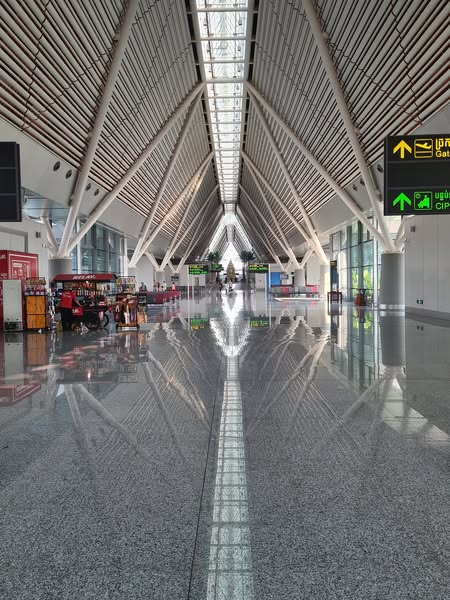
    Siem Reap has a new airport called the Siem Reap-Angkor International Airport. It opened in October 2023 and is about 40 kilometers from the city and Angkor Wat. The old airport was very close to Angkor Wat, which caused worries about damage to the ancient temples because of airplane noise and pollution. So, the new airport was built farther away to protect the site.

    The new airport is bigger and can handle more flights, which will help bring more tourists to the area. This is especially important as Cambodia’s tourism was affected by the COVID-19 pandemic. The airport will make it easier for people to visit the famous Angkor temples and help the local economy grow. A new area is also being developed nearby, with homes, businesses, and tourist attractions.
    Definitions:

    1. Cause: To make something happen.
    2. Worries: Concerns or things that make you feel anxious.
    3. Damage: Harm or injury that makes something broken or not work properly.
    4. Ancient: Very old, from a long time ago.
    5. Noise: A sound, especially one that is loud or unpleasant.
    6. Pollution: Harmful things in the air, water, or land that are bad for the environment.
    7. Farther away: At a greater distance.
    8. To protect: To keep something safe from harm or damage.
    9. To handle flights: To manage or deal with airplane travel.
    10. To be affected: To be changed or influenced by something.
    11. Famous: Well-known by many people.
    12. Economy: The system of money and business in a country or region.
    13. To develop: To grow or improve over time.

    ############

    ############

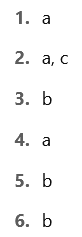
    Here are 6 multiple choice questions based on the definitions:


    1. What does „cause“ mean?
    a) To make something happen
    b) To fix something
    c) To stop something from happening


    2. Which of the following are examples of „worries“?
    a) Feeling nervous about a test
    b) Being excited about a vacation
    c) Thinking about something that might go wrong


    3. What can „damage“ refer to?
    a) Something that is fixed
    b) Harm or injury to something
    c) Making something better


    4. Which of the following words mean „very old“?
    a) Ancient
    b) New
    c) Modern


    5. What is „pollution“?
    a) Clean air and water
    b) Harmful things in the environment
    c) Healthy plants and animals


    6. What does „to develop“ mean?
    a) To stay the same
    b) To grow or improve over time
    c) To make something worse


    ###################

    ###################

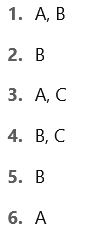
    Here are 6 multiple-choice questions, more than one may be correct

    1. Why was a new airport built in Siem Reap?

    • A) To make it easier for tourists to visit Angkor Wat.
    • B) To protect Angkor Wat from airplane noise and pollution.
    • C) To replace the old airport that was too far from the city.

    2. When did the Siem Reap-Angkor International Airport open?

    • A) October 2020
    • B) October 2023
    • C) January 2023

    3. What will the new airport help improve?

    • A) More international flights to Cambodia.
    • B) Protecting the environment.
    • C) Cambodia’s tourism and economy.

    4. What is one of the features of the new airport?

    • A) It is located near the center of Siem Reap.
    • B) It has a larger terminal than the old airport.
    • C) It can handle larger airplanes.

    5. How far is the new airport from Angkor Wat?

    • A) 5 kilometers
    • B) 40 kilometers
    • C) 10 kilometers

    6. What is being developed near the new airport?

    • A) A new city with homes and businesses.
    • B) A new shopping mall.
    • C) More temples and historical sites.
      ###############
  • APOPO, rats, the heroes, that save lives (B1)

    Training Rats to Detect Landmines –
    a must-visit when in Siem Reap

    In Siem Reap, Cambodia, a unique method is employed to detect landmines: training rats. These rodents possess a keen sense of smell, which makes them valuable assets in detecting explosive devices buried underground. Let’s delve into how this extraordinary training process works.

    Training Method:

    Firstly, baby rats, called pups, are selected for training. These rats are introduced to the smell of TNT, the explosive found in landmines. They learn to associate this scent with rewards, such as food or praise. This forms the basis of their training.

    Practical Training:

    As the rats grow, they undergo practical field training. They are taken to areas suspected of containing landmines. Guided by their trainers, the rats sniff around the ground. When they detect the scent of TNT, they signal by scratching the earth’s surface.

    Positive Reinforcement:

    Each time a rat successfully identifies a landmine, they receive a reward. This reinforces their behavior and encourages them to continue searching diligently. Trainers closely monitor the rats‘ progress, providing support and guidance throughout the process.

    Conclusion:

    In conclusion, training rats to detect landmines in Siem Reap involves conditioning them to recognize the scent of TNT and rewarding them for signaling its presence. This innovative approach offers a cost-effective and efficient solution to the ongoing challenge of landmine detection, ultimately saving lives and making communities safer.“
    ############
    ############

    **Interview with an APOPO Expert**

    **1. What is APOPO and what do you do there?**

    APOPO is a group that trains rats to help find landmines and detect diseases. I’m an expert there, helping to train and care for these special rats.

    **2. How do rats help find landmines?**

    Rats have a great sense of smell. We train them to sniff out the explosives in landmines. When they find one, they scratch at the ground to let us know.

    **3. Why use rats instead of other animals or machines?**

    Rats are small and light, so they don’t trigger the landmines. Plus, they’re really good at learning and can cover a lot of ground quickly.

    **4. How do you train these rats to detect landmines?**

    We start by teaching them to recognize the smell of explosives using a reward system. When they find the scent, they get a tasty treat. It’s like a game for them.

    **5. Is it safe for the rats to be around landmines?**

    Yes, it’s safe for them because they’re too light to set off the landmines. They’re trained to stay on a leash or in a safe area while they work.

    **6. How accurate are the rats at detecting landmines?**

    The rats are very accurate. They have a success rate of over 95%, which is much better than other methods like metal detectors.

    **7. What happens after a rat detects a landmine?**

    When a rat finds a landmine, we mark the area and then have experts safely remove or detonate the landmine.

    **8. Apart from landmines, what other tasks can these rats perform?**

    These rats are also trained to detect diseases like tuberculosis by sniffing samples of human saliva. They’re helping to save lives in different ways.

    **9. How do you take care of these rats?**

    We make sure they have plenty of food, water, and a clean place to live. They also get regular check-ups to make sure they’re healthy.

    **10. What impact has APOPO had on landmine clearance and disease detection?**

    APOPO has made a big difference. We’ve helped clear thousands of landmines, making land safer for people to use. And with disease detection, we’re helping to catch illnesses early so people can get treatment sooner.“

  • Apsara

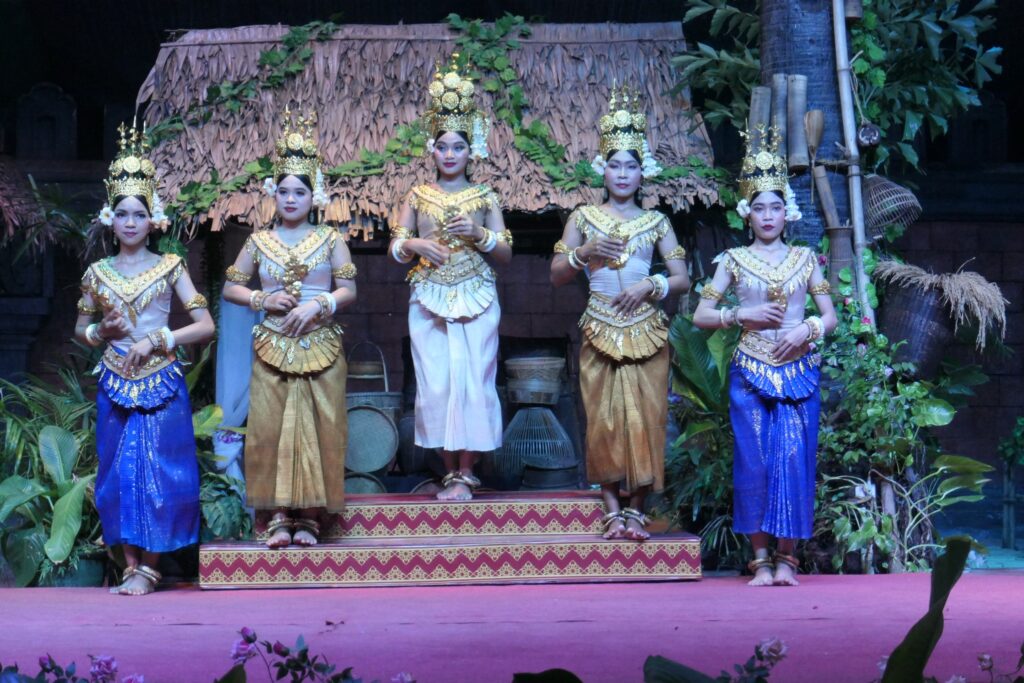
    An Apsara is a magical lady from ancient stories. She dances and plays music in the sky. People thought she lived in heaven. She is very pretty and graceful. Apsaras are known for dancing and making beautiful music. Sometimes, they are seen as messengers of the gods. They bring happiness and harmony. Artists draw and sculpt them. They wear colorful clothes. Apsaras are symbols of beauty and joy in stories.

    Find answers in the text:

    1. What is an Apsara?

    2. Where do people think Apsaras live?

    3. What are Apsaras known for?

    4. How do artists show Apsaras?

    5. What do Apsaras wear?

    6. How do Apsaras bring happiness?

    7. Are Apsaras believed to be messengers?

    8. In what cultures are Apsaras found?

    9. What do Apsaras do in the sky?

    10. Why are Apsaras considered symbols of beauty and joy?

  • Shadow puppet theater, Khmer culture

    a guest apporaches you at the front desk, he wants to have information on the shadow puppet theater.

    Khmer Shadow Puppet Theater is a traditional form of storytelling in Cambodia. It is called “Sbek Thom” in the Khmer language. People use large, flat puppets made from cow leather. The puppets are cut into beautiful shapes and show people, animals, or gods. They are held on sticks and moved behind a white screen with a bright light.

    The light makes the puppet shadows appear on the screen, and the audience watches the shadows. While the puppets move, people tell stories, sing, and play traditional music. Many stories come from the Reamker, the Khmer version of the Ramayana, an old and famous story from India.

    This kind of theater is usually performed during special festivals, ceremonies, or important events. It is a way to share culture, history, and religion. Khmer Shadow Puppet Theater is very old and has been part of Cambodian culture for hundreds of years. It is a beautiful mix of art, music, and storytelling.

    ——————————————–

    Below are simple English definitions for each of the terms you provided:

    • flat: A surface that is even and smooth, without bumps or curves.
    • leather: A durable material made from animal skin that has been treated to be soft and strong.
    • a stick: A thin, small piece of wood that usually comes from a tree.
    • a screen: A flat surface, like on a TV or computer, where images or videos are shown.
    • bright light: A strong, intense light that makes things look clear and well-lit.
    • a shadow: A dark shape that appears on a surface when something blocks light.
    • to appear: To become visible or come into sight.
    • the audience: The group of people who are watching or listening to a performance or event.
    • to perform: To put on a show, act, or carry out an activity for others to watch.
    • an event: A planned public or social occasion, like a concert, party, or sports game.
    • to share: To give some of what you have with others or to tell someone about something you know.

    #################

    #################

    Here are 10 multiple-choice questions based on the Khmer Shadow Puppet Theater text. Each question has 4 answer choices, and more than one answer may be correct.


    1. What is the Khmer Shadow Puppet Theater called in the Khmer language?
    A. Sbek Thom
    B. Reamker
    C. Angkor Wat
    D. Sbek Touch


    2. What material are the shadow puppets made from?
    A. Wood
    B. Plastic
    C. Cow leather
    D. Paper


    3. What do the puppets usually show?
    A. Cars and planes
    B. People, animals, or gods
    C. Buildings
    D. Trees and flowers


    4. What is used to hold and move the puppets?
    A. Ropes
    B. Wires
    C. Sticks
    D. Strings


    5. What makes the puppet shadows appear on the screen?
    A. The wind
    B. A bright light
    C. The moon
    D. A flashlight
    ✅ Correct: B, D


    6. What do people do during a puppet performance?
    A. Sleep
    B. Tell stories
    C. Sing
    D. Play traditional music


    7. Where do many of the stories in the performances come from?
    A. The Bible
    B. The Reamker
    C. The Ramayana
    D. Cambodian newspapers


    8. When is the Khmer Shadow Puppet Theater usually performed?
    A. At special festivals
    B. During lunch breaks
    C. At ceremonies
    D. At important events


    9. What are the main parts of the Khmer Shadow Puppet Theater?
    A. Art
    B. Music
    C. Sports
    D. Storytelling


    10. What does the puppet theater help to share?
    A. Fashion
    B. Culture
    C. History
    D. Religion


    Sure! Here are 10 multiple-choice questions based on the Khmer Shadow Puppet Theater text. Each question has 4 answer choices, and more than one answer may be correct.


    1.
    ✅ Correct: A


    2.
    ✅ Correct: C


    3.
    ✅ Correct: B


    4.
    ✅ Correct: C


    5.
    ✅ Correct: B, D


    6.
    ✅ Correct: B, C, D


    7.
    ✅ Correct: B, C


    8.
    ✅ Correct: A, C, D


    9.
    ✅ Correct: A, B, D


    10.
    ✅ Correct: B, C, D


    #################

    #################

    Correct or incorrect?


    1. Khmer Shadow Puppet Theater is a modern art form.
    2. The puppets are made from cow leather.
    3. People use computers to move the puppets.
    4. The theater is called “Sbek Thom” in the Khmer language.
    5. The puppets are shown in the middle of the day in sunlight.
    6. A bright light makes shadows appear on a screen.
    7. The audience watches the shadows, not the puppets.
    8. The stories are usually about science and technology.
    9. This theater is part of Cambodian culture.
    10. The puppets are made from plastic and metal.

    ______________

    1. ❌
    2. ✅
    3. ❌
    4. ✅
    5. ❌
    6. ✅
    7. ✅
    8. ❌
    9. ✅
    10. ❌

    ##########################

    ##########################

    Answer these statements:


    1. Are the puppets made of leather or wood?
      They are ________________
    2. Is the puppet theater called „Sbek Thom“ or „Sbek Touch“?
      It is ________________
    3. Do the puppets move behind a screen or in front of it?
      They move ________________
    4. Is the light used to create shadows bright or dim?
      It is used ________________
    5. Are the stories in the puppet theater from the Reamker or the Bible?
      They are ________________
    6. Is the Khmer Shadow Puppet Theater performed during festivals or at work?
      It is performed ________________
    7. Are the puppets made by hand or by machine?
      They are ________________
    8. Do people tell stories, sing, and play music during the performance or just watch the puppets?
      People ________________
    9. Is the puppet theater a recent tradition or hundreds of years old?
      It is ________________
    10. Are the puppets used in Khmer Shadow Puppet Theater small or large?
      The puppets are ________________

    ######################

    ######################

  • Oum’s daily life when 21 (A2)

    in a more elaborate language.

    Oum is 21 and just started working at a hotel. Everything is new for her. Her first language is Khmer, so English is a bit hard for her. But she’s trying her best to learn.

    Her job at the hotel includes helping guests and cleaning rooms. Sometimes, understanding English instructions is tough for her.

    But Oum doesn’t give up. Every day, she practices speaking English with her coworkers. She listens carefully and watches how they talk to guests.

    Even though it’s hard, Oum is getting better. She feels happy when she can understand what guests want or talk to them in English. Her coworkers cheer her on and help her learn.

    Oum knows that learning English will help her at work and in life. She’s determined to keep going, step by step.

    +++++++++++++++++++++++++++++++++++++++++++

    FIND THE WORDS IN THE TEXT DEFINED BELOW.

    1. Steps or directions to help do something.

    2. To understand or discover new things.

    3. Doing something again and again to get better.

    4. To shout or show happiness or support.

    5. Language spoken in Cambodia.

    6. A place where people stay when they’re away from home.

    7. Someone who stays at a hotel or visits a place.

    8. The words and sounds people use to communicate.

    9. To stop trying or to quit.

    10.People who work together at the same place, like friends at work.

    11.Feeling good or joyful.

    ##################

    ##################

  • Listen to the published texts….

    you simply copy the text, paste it, and listen =>


    link

  • Your manager has asked you to accompany a guest on a sightseeing trip to Tonle Sap. He asks you to brief the guest on what she is going to see, before leaving the hotel (B1)

    „Hello! Today, we’re going on a sightseeing trip to Tonle Sap. It’s a big lake in Cambodia, and it’s really cool!

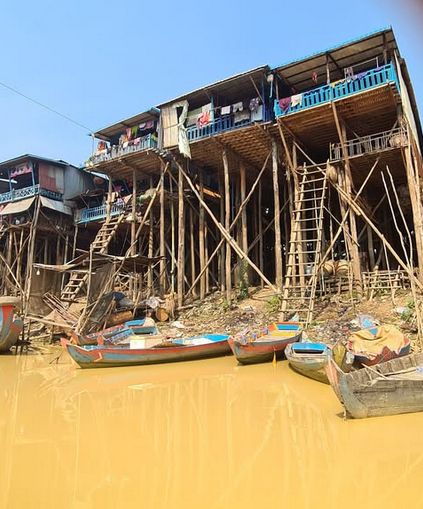
    First, we’ll see the floating villages. People live on houses that float on the water. They have schools, shops, and even a floating basketball court! It’s amazing to see how they live on the water.

    Next, we’ll take a boat ride around the lake. You’ll get to see lots of different birds and animals that live there. Keep your eyes peeled for some crocodiles sunbathing on the riverbanks!

    Then, we’ll visit a floating market. You can buy all sorts of things like fresh fruits, snacks, and souvenirs from the local vendors. It’s a fun experience to shop on the water!

    After that, we’ll visit a floating restaurant for lunch. You’ll get to try delicious Cambodian dishes while enjoying the beautiful view of the lake.

    Finally, we’ll visit a floating school. It’s incredible to see how children go to school on boats! You might even get to meet some of the students and learn about their daily life.

    Overall, you’re in for a fantastic day of exploring Tonle Sap and seeing the unique way of life on the water. Get ready for an adventure!

    ###################

    ###################

    FIND THE FOLLOWING WORDS IN THE TEXT:

    1. Going to visit interesting places and attractions.

    2. Giving someone important information or instructions about something.

    3. Something that stays on the surface of water without sinking.

    4. A small community where people live, often in houses close to each other.

    5. Traveling on a boat across water.

    6. The sides of a river or stream.

    7. A place where people buy and sell things, like food, clothes, or souvenirs.

    8. People who sell goods or services.

    9. Objects that you buy to remember a place you visited.

    10. Tasting very good and enjoyable.

    11. Something that is amazing or hard to believe.

    12. People who go to school to learn.

    13. An exciting or unusual experience.

    ####################

    ####################

  • You are the GM of a hotel and you to address the staff trying to motivate them – let’s see what you could say (B1+/B2)

    Team,

    I want to take a moment to talk about something important – our motivation. I’ve heard some concerns, and I want you to know that I’m listening. Your happiness and motivation matter to me, and I’m here to support you.

    Firstly, I want to say thank you. Each and every one of you plays a vital role in making our hotel a great place to stay. Your hard work and dedication don’t go unnoticed.

    I understand that sometimes things can feel tough, and motivation might dip. But I want you to know that it’s okay to feel that way sometimes. We’re a team, and we’re here to lift each other up.

    Let’s remember why we’re here. We’re not just providing rooms or meals; we’re creating experiences. We have the power to make someone’s day, to turn their trip into something unforgettable. That’s pretty special if you ask me.

    I believe in each of you. You have unique skills and talents that make our team stronger. Let’s embrace those strengths and support each other along the way.

    If you ever feel like you’re struggling or need a boost, please don’t hesitate to reach out. Whether it’s me, a colleague, or a friend, we’re all here for each other.

    Together, we can overcome any challenges and achieve great things. Let’s stay positive, stay motivated, and continue to make our hotel the best it can be.

    Thank you for all that you do. Let’s go out there and make today amazing!

    ################

    ################

    What do you think? Think about what you would say.

  • Why somebody loves working in tourism….. (A2/B1-)

    a statement.

    I love working in tourism, especially at a hotel, because it’s exciting and fun. Every day, I get to meet new people from all over the world. I help them feel welcome and make sure they have a great time during their stay. It feels amazing to see them smile and enjoy their vacation.

    Another thing I love is that my job is never boring. There’s always something different happening, whether it’s helping guests with their requests, organizing events, or solving problems. It keeps me on my toes and makes every day interesting.

    Plus, I enjoy being part of a team. We work together to make sure everything runs smoothly and guests have a fantastic experience. It feels great to know that I’m contributing to creating happy memories for people.

    Overall, working in tourism at a hotel is fantastic because I get to meet new people, have exciting days, and be part of a great team that makes guests happy. It’s the best job ever!

    ####################

    Only on answer is correct:

    1. Why does the person love working in tourism at a hotel?

    a) Because it’s boring

    b) Because he/she gets to meet new people

    c) Because he/she can work alone

    2. What makes every day interesting for the person?

    a) Having the same routine

    b) Doing nothing at work

    c) Dealing with various tasks and challenges

    3. What aspect of the job does the person find exciting?

    a) Predictability

    b) Sitting idle

    c) Meeting new people and organizing events

    4. How does the person feel about contributing to creating happy memories for guests?

    a) Indifferent

    b) Bored

    c) Great

    5. Why is every day different for the person?

    a) Because he/she does the same thing every day

    b) Because there’s always something new happening

    c) Because he/she dislikes change

    6. What aspect of the job does the person enjoy being a part of?

    a) Working in isolation

    b) Taking all the credit

    c) Being part of a team

    7. What does the person feel when they see guests smiling and enjoying their vacation?

    a) Sadness

    b) Happiness

    c) Anger

    8. How does the person describe their job in tourism?

    a) Fantastic

    b) Terrible

    c) Average

    9. What keeps the person on his/her toes at work?

    a) Doing the same thing repeatedly

    b) Dealing with new challenges

    c) Sleeping at work

    10. What does the person think about their job overall?

    a) He/She loves it

    b) He/she dislikes it

    c) He/she feels neutral about it

    11. What is the person’s attitude toward working with a team?

    a) He/she prefers working alone

    b) He/she finds it challenging

    c) He/she enjoys it