INTERVIEW WITH DUL HING, A YOUNG MAN SUPPORTED BY SHINTA MANI FOUNDATION
1. Interviewer: Hello, Dul Hing! Could you start by telling us a bit about yourself? Dul Hing: Hello! My name is Dul Hing, and I come from a small village in Cambodia. Growing up, I faced many challenges, but through the support I received from the Shinta Mani Foundation, I was able to transform my life and pursue opportunities I never thought possible.
2. Interviewer: How did you first come across the Shinta Mani Foundation? Dul Hing: I was introduced to the Foundation through a person in my community. After learning about their mission and the opportunities they offer, I knew it was the chance I had been waiting for, so I decided to apply.
3. Interviewer: Can you explain how the Foundation supported you during your journey? Dul Hing: The Foundation played a critical role in providing both practical and emotional support. They gave me access to education and helped me develop valuable skills. Beyond that, they provided mentorship, encouragement, and a sense of belonging, which made all the difference in my personal growth.
4. Interviewer: In what ways has your life been impacted since joining the program? Dul Hing: The impact has been profound. Since I joined the program, I’ve gained new knowledge, built confidence, and acquired skills that have helped me not only improve my own life but also positively influence those around me. I feel empowered to contribute to my community in meaningful ways.
5. Interviewer: Before joining the program, what was the biggest obstacle you had to face? Dul Hing: One of the biggest obstacles was the lack of financial resources to continue my education. I had big dreams, but no way of reaching them. The Shinta Mani Foundation opened the door to those dreams, providing the support I needed to make them a reality.
6. Interviewer: What would you say to young people who may be struggling or feeling hopeless? Dul Hing: I would tell them to never give up. Your current circumstances do not define your future. It’s important to remember that there are always people willing to help you overcome challenges and offer opportunities for growth. Keep believing in yourself and stay open to the possibilities.
7. Interviewer: What keeps you motivated to continue striving toward your goals? Dul Hing: My motivation comes from my desire to help others, particularly those who have faced similar struggles. I want to show people that no matter how hard life may seem, it’s possible to overcome difficulties and achieve success. My own journey is proof of that.
8. Interviewer: What does the phrase “dream big” mean to you, and how has it influenced your journey? Dul Hing: “Dream big” means having the courage to aim high, even when the path ahead seems uncertain. It’s about thinking beyond the limits of your current situation and working toward a vision that excites and challenges you. For me, dreaming big has pushed me to work harder, learn more, and accomplish things I once thought were impossible.
9. Interviewer: If you had to describe the Shinta Mani Foundation in one sentence, what would you say? Dul Hing: The Shinta Mani Foundation is an organization that opens doors, offering guidance, opportunity, and unwavering support to those who are committed to building a better future for themselves and their communities.
10. Interviewer: Looking ahead, what are your hopes and aspirations for the future? Dul Hing: My hope for the future is to continue growing, learning, and sharing the knowledge and experiences I’ve gained. I want to inspire others to dream big and work towards their goals, just as the Foundation inspired me. Ultimately, I hope to give back to my community by supporting others who are striving for better opportunities.
1. Interviewer: Can you please tell us your name and a little about yourself? Dul Hing: My name is Dul Hing. I’m from Cambodia. I grew up in a small village, and life was not always easy. But today, I am proud of who I’ve become—thanks to the support I received.
2. Interviewer: How did you first hear about the Shinta Mani Foundation? Dul Hing: I heard about the Foundation from someone in my community. I applied to their program because I really wanted to study and change my life.
3. Interviewer: What kind of support did the Foundation give you? Dul Hing: They gave me the chance to get an education, learn job skills, and build confidence. They supported me like family and helped me grow.
4. Interviewer: How has your life changed since joining the program? Dul Hing: My life changed completely. I have more knowledge, more skills, and more hope. I can now help my family and give back to my community.
5. Interviewer: What was the biggest challenge you had before joining? Dul Hing: My biggest challenge was not having the money to study. I had dreams, but I didn’t know how to reach them. The Foundation gave me that path.
6. Interviewer: What would you say to young people who are feeling hopeless? Dul Hing: Please don’t give up. Your situation now is not your forever. There are people who care and want to help you grow. Keep believing in your dreams.
7. Interviewer: What motivates you to keep going? Dul Hing: My dream to help others motivates me. I want to show people like me that they can also rise. I want to serve my community and be a good example.
8. Interviewer: What does “dream big” mean to you? Dul Hing: It means don’t be afraid to think big, even if life is hard. When you believe in big dreams, you work harder—and you can achieve more than you think.
9. Interviewer: How would you describe the Shinta Mani Foundation in one sentence? Dul Hing: The Shinta Mani Foundation opens doors and hearts—they change lives with love and care.
10. Interviewer: What is your hope for the future? Dul Hing: I hope to keep learning, growing, and helping others like the Foundation helped me. I want to be someone who brings hope to others.
#############
Vocabulary:
To grow up – to become older and change from a child to an adult. Example: Children grow up to become big and strong.
To support – to help someone in a kind way. Example: My friend supports me when I have a problem.
To receive – to get something. Example: I received a gift on my birthday.
Community – a group of people who live in the same place or care about each other. Example: People in my village are part of my community.
To apply – to ask to join something, like a school or program. Example: I applied to the training program.
Job skills – the things you need to know to do a job. Example: Learning to use a computer is a job skill.
Challenge – something that is hard to do. Example: Climbing a mountain is a challenge.
To join – to become part of something. Example: I joined the class last week.
Forever – for all time, never ending. Example: I will remember this forever.
To believe – to think something is true or possible. Example: I believe I can succeed.
To motivate – to give someone a reason to do something. Example: My teacher motivates me to study.
To rise – to move up or become better. Example: I want to rise and have a better life.
To achieve – to reach a goal or finish something important. Example: I achieved my dream of finishing school.
Love and care – to feel kind, warm feelings and to help or look after someone. Example: My parents show me love and care every day.
#######################
True or false?
Dul Hing got help from the Shinta Mani Foundation.
The Foundation gave Dul Hing a motorbike.
Dul Hing said he grew up in a big city.
The program helped Dul Hing get education and job skills.
Dul Hing wants to help his community.
He believes we should all dream big.
Dul Hing said there is no hope for poor people.
The Foundation helped him believe in himself.
He works in a hospital because of the Foundation.
Dul Hing says the Foundation opens hearts and doors.
—————————
Dul Hing got help from the Shinta Mani Foundation. ✅
The Foundation gave Dul Hing a motorbike. ❌
Dul Hing said he grew up in a big city. ❌
The program helped Dul Hing get education and job skills. ✅
Dul Hing wants to help his community. ✅
He believes we should all dream big. ✅
Dul Hing said there is no hope for poor people. ❌
The Foundation helped him believe in himself. ✅
He works in a hospital because of the Foundation. ❌
Dul Hing says the Foundation opens hearts and doors. ✅
################
10 multiple-choice questions , more than one answer may be correct:
1. What did the Shinta Mani Foundation help Dul Hing with? a) Gave him a motorbike b) Gave him education c) Gave him job skills d) Gave him a house
2. Where did Dul Hing grow up? a) In a small village b) In a big city c) In the countryside d) In another country
3. What does Dul Hing say about dreaming big? a) You can achieve big results if you dream big b) Dreaming big is not important c) He doesn’t believe in dreaming big d) Dreaming big will bring success
4. How did Dul Hing feel about his situation before joining the Foundation? a) He felt hopeless b) He was excited c) He didn’t have money for education d) He didn’t have any dreams
5. What message does Dul Hing want to share with others? a) Don’t give up on your dreams b) Life is easy and always fair c) Everyone should stop dreaming d) There are people who want to help you succeed
6. What does the Shinta Mani Foundation do for people? a) Opens doors for education b) Gives people food and shelter c) Opens hearts and gives support d) Helps people become famous
7. What did Dul Hing want to achieve after his education? a) To travel the world b) To help his community c) To become a teacher d) To work in a company
8. What advice does Dul Hing give to young people? a) Always believe in yourself b) Don’t worry about challenges c) Stop dreaming and focus on work d) Keep dreaming big
9. What is the biggest challenge Dul Hing faced before joining the program? a) Lack of family support b) Not having enough money for education c) Being too young d) Not knowing what he wanted to do
10. How does Dul Hing describe the Shinta Mani Foundation? a) It opens hearts and doors b) It makes people famous c) It only helps rich people d) It changes lives with love and care
——————————
Correct answers:
1. What did the Shinta Mani Foundation help Dul Hing with? a) Gave him education b) Gave him job skills
2. Where did Dul Hing grow up? a) In a small village
3. What does Dul Hing say about dreaming big? a) You can achieve big results if you dream big d) Dreaming big will bring success
4. How did Dul Hing feel about his situation before joining the Foundation? a) He felt hopeless c) He didn’t have money for education
5. What message does Dul Hing want to share with others? a) Don’t give up on your dreams d) There are people who want to help you succeed
6. What does the Shinta Mani Foundation do for people? a) Opens doors for education c) Opens hearts and gives support
7. What did Dul Hing want to achieve after his education? b) To help his community
8. What advice does Dul Hing give to young people? a) Always believe in yourself d) Keep dreaming big
9. What is the biggest challenge Dul Hing faced before joining the program? b) Not having enough money for education
10. How does Dul Hing describe the Shinta Mani Foundation? a) It opens hearts and doors d) It changes lives with love and care
#######################
Match words and meanings:
Words
Support
Dream
Achieve
Motivate
Community
Opportunity
Believe
Challenge
Grow
Heart
Meanings
a) To encourage or inspire someone to take action. b) To help or assist someone in reaching a goal. c) A group of people living in the same area or with a shared interest. d) To succeed in completing something or reaching a goal. e) Something that can make you succeed or progress in life. f) The feeling or belief that something is possible or true. g) The act of trying something difficult, even if it is risky. h) To develop or improve over time. i) A wish or goal that you want to achieve. j) The emotional center of a person; used symbolically to represent care or love.
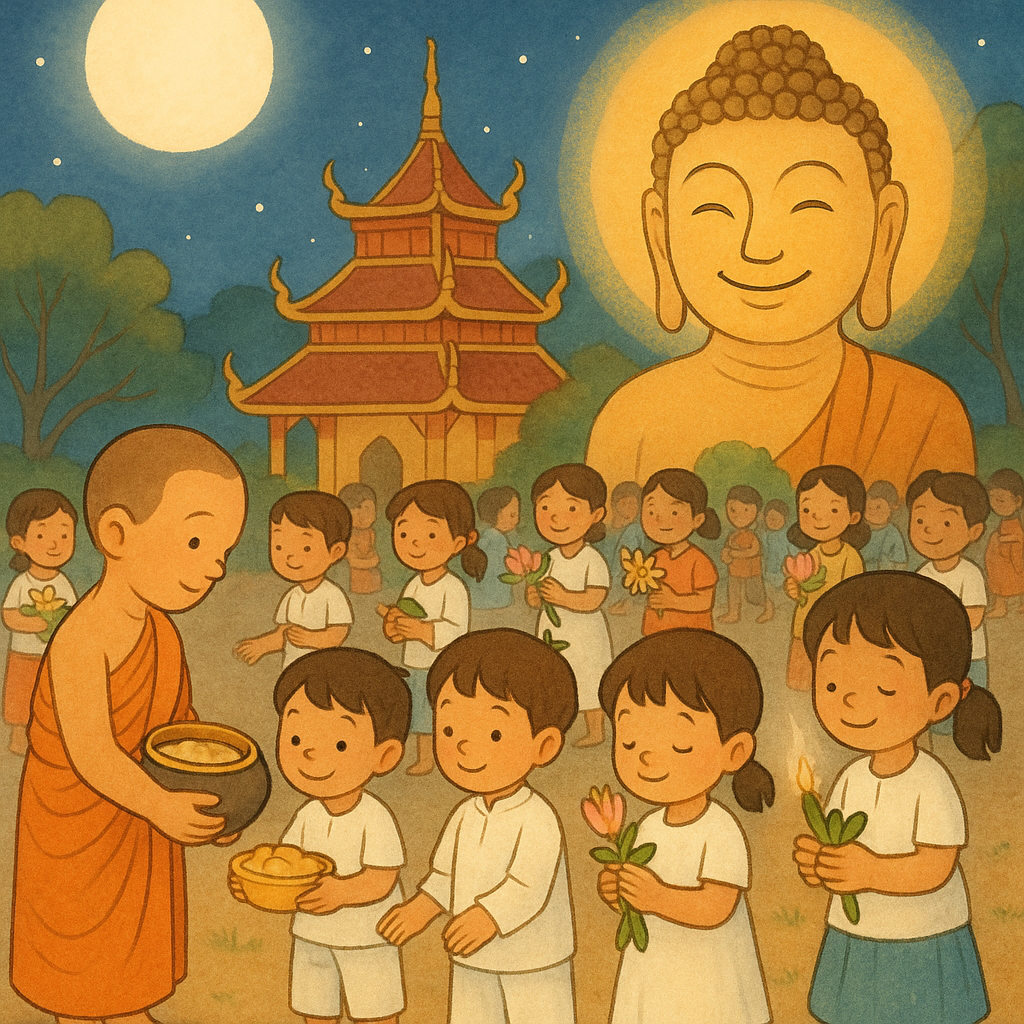
The day that day remembers three big events in the life of the Buddha.
Visaka Bochea Day is a very important day for Buddhists. People in Cambodia, Thailand, Sri Lanka, and other countries celebrate it. It is a public holiday in Cambodia.
This day remembers three big events in the life of the Buddha. On this day, the Buddha was born. He also became enlightened on this day. Later, he died and reached Nirvana on the same day. All these things happened on the full moon of the month called Visakha.
On Visaka Bochea Day, people wake up early. They go to the pagoda to pray. They bring food, flowers, candles, and incense. They give food to the monks. People listen to the monks chanting. They also do good things, like giving to the poor or setting animals free.
People wear white clothes. They try to think good thoughts and do good actions. They remember the Buddha’s teachings. These teachings say: do not hurt others, be kind, and do not want too many things.
Visaka Bochea is a day of peace and respect. It helps people live a good and simple life.
Vocabulary:
To celebrate – to do something special for a happy day.
A public holiday – a day when many people do not work or go to school.
To remember – to think about something from the past.
To be enlightened – to understand everything clearly and feel peace inside.
To pray – to talk to a god or spirit quietly or in your heart.
Incense – sticks that make a nice smell when you burn them.
A monk – a man who lives a simple life and spends time praying and learning about religion.
To chant – to say or sing words again and again in a special way.
A good thought – a kind or nice idea in your mind.
Teachings – important things someone says to help others learn how to live.
To hurt somebody – to make someone feel pain or sad.
Peace – when there is no fighting or trouble; everything is calm.
Respect – to be kind and show that someone or something is important.
################
10 statements , four of them are incorrect
Visaka Bochea Day is an important day for Buddhist people.
On this day, people go to the cinema to watch movies.
People give food to monks at the pagoda.
The Buddha was born, became enlightened, and died on the same day.
People wear red clothes on Visaka Bochea Day.
Monks chant prayers at the pagoda.
Visaka Bochea Day is a time to do bad things.
People light candles and incense on this day.
Visaka Bochea Day is a day of peace and respect.
The holiday is only celebrated in America.
—————————————-
2. On this day, people go to the cinema to watch movies. ❌ 5. People wear red clothes on Visaka Bochea Day. ❌ 7. Visaka Bochea Day is a time to do bad things. ❌ 10. The holiday is only celebrated in America. ❌
###################
10 multiple choice questions, one or more correct answers
1. What is Visaka Bochea Day? A. A Buddhist holiday B. A day to eat a lot of food C. A day to remember the Buddha D. A sports day
2. What do people do on Visaka Bochea Day? A. Go to the pagoda B. Watch TV all day C. Pray and give food to monks D. Dance in the streets
3. What do people take to the pagoda? A. Flowers B. Incense C. Toys D. Candles
4. What do monks do on this day? A. Play music B. Chant prayers C. Sleep all day D. Receive food from people
5. What do people wear on Visaka Bochea Day? A. White clothes B. Black clothes C. Red clothes D. Simple clothes
6. What are the three big events remembered on this day? A. Buddha’s birth B. Buddha’s wedding C. Buddha’s enlightenment D. Buddha’s death
7. What do the Buddha’s teachings say? A. Be kind B. Hurt people C. Don’t want too many things D. Take more than you need
8. What is incense? A. A sweet fruit B. A stick that smells nice when burned C. A kind of flower D. Something people use when they pray
9. What does “to chant” mean? A. To say or sing special words again and again B. To shout loudly C. To talk to a monk D. To say prayers in a slow, calm voice
10. What do people try to feel on Visaka Bochea Day? A. Anger B. Peace C. Respect D. Excitement for shopping
—————————— 1 ac, 2 ac, 3 a b d, 4 bd, 5 ad, 6 acd, 7 ac, 8 bd, 9 ad, 10 bc ###################
What is correct? Answer in complete sentences:
Do people bring food and flowers or books and toys to the pagoda?
Do monks sing or chant on this day?
Do people pray or play games at the pagoda?
Do people wear white clothes or colorful party clothes?
Do people think good thoughts or bad thoughts on this day?
Do people try to do good things or bad things?
Do people light candles and incense or use flashlights and balloons?
Is Visaka Bochea Day a day of peace and respect or a day of noise and fun?“
#################
Fill in the missing word, do not look at text:
Visaka Bochea Day is a very _______ day for Buddhists.
People celebrate Visaka Bochea Day in countries like Cambodia, Thailand, and _______.
On this day, the Buddha was born, became _______ and reached Nirvana.
All these things happened on the full _______ of the month called Visakha.
People wake up _______ on Visaka Bochea Day.
They go to the _______ to pray and do good things.
People bring food, _______ and incense to the pagoda.
People wear _______ clothes on Visaka Bochea Day.
People try to think good _______ and do good actions.
Visaka Bochea Day is a day of _______ and respect.
#######################
Answer in complete sentences:
What is Visaka Bochea Day about?
Where do people go to pray on Visaka Bochea Day?
What do people bring to the pagoda?
What do people try to do on this day?
What three things do people remember on Visaka Bochea Day?
What time do people wake up on Visaka Bochea Day?
What color clothes do people wear on Visaka Bochea Day?
Do people give food to monks on this day?
What do people listen to at the pagoda on Visaka Bochea Day?
————————-
Here are the short answers to the questions:
What is Visaka Bochea Day about? It remembers the Buddha’s birth, enlightenment, and death.
Where do people go to pray on Visaka Bochea Day? People go to the pagoda.
What do people bring to the pagoda? People bring food, flowers, candles, and incense.
What do people try to do on this day? People try to do good things and think good thoughts.
What three things do people remember on Visaka Bochea Day? The Buddha’s birth, enlightenment, and death.
What time do people wake up on Visaka Bochea Day? People wake up early.
What color clothes do people wear on Visaka Bochea Day? People wear white clothes.
Do people give food to monks on this day? Yes, people give food to monks.
What do people listen to at the pagoda on Visaka Bochea Day? People listen to monks chanting.
#######################
Match the two parts of the sentences– fill in (words given, see below):
People wear _______ clothes.
People give food to _______ on Visaka Bochea Day.
People do good things like _______ to the poor.
People listen to _______ at the pagoda.
Visaka Bochea Day helps people live a _______ life.
People wake up _______ on Visaka Bochea Day.
Visaka Bochea Day remembers the Buddha’s _______ and death.
People bring _______ and flowers to the pagoda.
People try to think _______ thoughts on this day.
Visaka Bochea Day is a day of _______ and respect.
to protect children from bad luck; traditions elsewhere
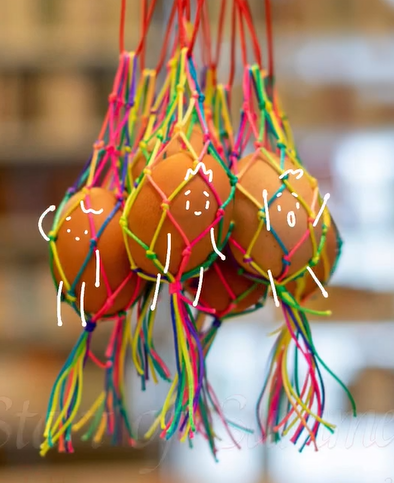
In Jiangsu, parents make boiled (cooked in hot water) eggs and put them in colorful (having many bright colors) knitted (made by hand using wool or thread) pouches (small bags).
They hang these pouches around their children’s neck (the part of the body between the head and shoulders).
This tradition is believed (thought to be true) to protect (keep safe) children from bad luck (unlucky events or situations) and evil spirits (bad, magical beings).
The colorful pouches are often handmade, showing how much parents care for their children. The eggs are thought to bring safety (the state of being free from harm or danger) because they are strong and round.
This custom (a traditional way of doing something) is a way to wish children good luck and happiness. It’s a special tradition that connects (brings together) families and shows love for their children.
##########################
True or false?
Parents in Jiangsu make boiled (cooked in hot water) eggs for their children.
The eggs are placed in colorful knitted (made by hand using wool or thread) pouches (small bags).
The pouches are always made of cotton.
The tradition is believed to protect children from bad luck and evil spirits.
The eggs are thought to bring safety (the state of being free from harm or danger) because they are strong and round.
This custom is a way to wish children good luck and happiness.
The pouches are often handmade, showing how much parents care for their children.
The eggs are thought to bring bad luck.
The custom connects families and shows love for their children.
This tradition is only practiced during Chinese New Year.
————————————–
False statements:
>>The pouches are always made of cotton.
This is false because the text mentions that the pouches are knitted, which suggests they are made from wool or thread, not cotton.
>>The eggs are thought to bring bad luck.
This is false because the text says that the eggs are believed to protect children from bad luck and evil spirits, not bring bad luck.
>>This tradition is only practiced during Chinese New Year.
This is false because the text does not limit the tradition to Chinese New Year. It only mentions that the tradition happens during special occasions or when parents want to protect their children.
>>The eggs are thought to bring safety (the state of being free from harm or danger) because they are strong and round.
This is false because the text says that the eggs are thought to bring safety because they are strong and round, but this is not explained correctly. The text actually connects the eggs‘ strength and roundness to their ability to protect from bad luck and evil spirits, not just bring safety.
##############################
Here are 10 multiple-choice questions based on the text, each with four answers where more than one can be correct:
1. What do parents in Jiangsu put the boiled eggs in?
a) Wooden boxes b) Colorful knitted pouches c) Paper bags d) Silk pouches
2. What is believed to be the purpose of hanging boiled eggs around children’s necks?
a) To decorate the children b) To bring bad luck c) To protect children from bad luck and evil spirits d) To make children feel happy
3. What are the pouches usually made from?
a) Thread or wool b) Silk c) Cotton d) Plastic
4. What do the eggs symbolize?
a) Strength and roundness b) Protection from bad luck c) Good health d) Safety (being free from harm or danger)
5. What does the tradition show about parents?
a) They care for their children b) They want their children to be fashionable c) They are celebrating a festival d) They want to keep their children safe
6. When is this tradition commonly practiced?
a) During Chinese New Year b) On birthdays c) On special occasions d) Every day
7. What does the tradition of hanging boiled eggs represent?
a) Good luck b) A way to keep children healthy c) A way to connect families d) A way to keep children warm
8. What is the significance of the eggs being round and strong?
a) They are decorative b) They are thought to bring safety c) They symbolize good health d) They are believed to protect from bad luck
9. How are the pouches made?
a) By machine b) Handmade c) Purchased from stores d) Pre-made by factories
10. What is the meaning of the tradition in Jiangsu?
a) To keep children protected from harm b) To show love and care for children c) To celebrate family members d) To bring bad luck to children
——————————–
1. What do parents in Jiangsu put the boiled eggs in?
Correct answers: b) Colorful knitted pouches
2. What is believed to be the purpose of hanging boiled eggs around children’s necks?
Correct answers: c) To protect children from bad luck and evil spirits
3. What are the pouches usually made from?
Correct answers: a) Thread or wool
4. What do the eggs symbolize?
Correct answers: b) Protection from bad luck d) Safety (being free from harm or danger)
5. What does the tradition show about parents?
Correct answers: a) They care for their children d) They want to keep their children safe
6. When is this tradition commonly practiced?
Correct answers: a) During Chinese New Year c) On special occasions
7. What does the tradition of hanging boiled eggs represent?
Correct answers: a) Good luck c) A way to connect families
8. What is the significance of the eggs being round and strong?
Correct answers: b) They are thought to bring safety d) They are believed to protect from bad luck
9. How are the pouches made?
Correct answers: b) Handmade
10. What is the meaning of the tradition in Jiangsu?
Correct answers: a) To keep children protected from harm b) To show love and care for children
######################
What is correct? Do not look at original text, write down the answer. At the end of the 10 questions you find the correct answers.
The eggs are boiled in water or oil?
The pouches are knitted with thread or cotton?
The eggs are believed to bring good luck or bad luck?
The tradition is practiced during Chinese New Year or Halloween?
The pouches are colorful or plain?
The eggs are thought to protect from bad luck or good fortune?
The pouches are handmade or machine-made?
The tradition connects families or separates them?
The eggs are round and strong or square and weak?
The custom is believed to show love or hate for children?
————————————
Answers to the questions:
The eggs are boiled in water.
The pouches are knitted with thread or wool.
The eggs are believed to bring good luck and protect from bad luck.
The tradition is practiced during special occasions, including Chinese New Year.
The pouches are colorful.
The eggs are thought to protect from bad luck.
The pouches are handmade.
The tradition connects families and shows love for children.
The eggs are round and strong.
The custom is believed to show love and care for children.
############################
Complete – here are 5 easy fill-in-the-blank sentences based on the text:
The eggs are thought to bring __________ because they are strong and __________.
Parents in Jiangsu make __________ eggs and put them in colorful __________ pouches.
The eggs are believed to protect children from __________ and evil __________.
The pouches are often __________, showing how much parents care for their children.
This tradition is a way to wish children __________ and __________. #######################
Match word and definition:
Boiled – __________
Knitted – __________
Pouches – __________
Hang – __________
Protect – __________
Luck – __________
Evil – __________
Colorful – __________
Custom – __________
Connect – __________
Fill in:
a) To put something up so it stays in place.
b) Having many different colors.
c) Cooked in hot water.
d) To join or link together.
e) Made by weaving thread or yarn together.
f) Chance or fortune, either good or bad.
g) Small bags or containers.
h) Very bad or harmful.
i) To keep safe from harm or danger.
j) A usual way of doing something, a tradition.
#########################
Match questions and answers:
What do parents in Jiangsu put the eggs in? __________
Why do parents hang boiled eggs around their children’s necks? __________
What are the eggs believed to bring? __________
What is special about the pouches? __________
What do the eggs symbolize? __________
When do parents practice this tradition? __________
What is the tradition meant to show? __________
What are the eggs described as? __________
What does the tradition help to connect? __________
What is the main purpose of the custom? __________
a) The eggs are described as round and strong.
b) The eggs symbolize protection and strength.
c) The main purpose of the custom is to protect children from bad luck and evil spirits.
d) Parents in Jiangsu put the eggs in colorful knitted pouches.
e) Parents practice this tradition during special occasions, like Chinese New Year.
f) The eggs are believed to bring good luck and safety.
g) Parents hang boiled eggs around their children’s necks to protect them from bad luck and evil spirits.
h) The tradition helps to connect families.
i) The pouches are special because they are often handmade.
j) The tradition is meant to show love and care for children.
##########################
We are in the year 2060, the old tradition of eggs in knitted pouches has been forgotten. Retell the story in past tense (how to………., check useful link)
In Jiangsu, parents __________ boiled eggs and __________ them in colorful knitted pouches. They __________ these pouches around their children’s necks.
This tradition __________ believed to protect children from bad luck and evil spirits. The colorful pouches __________ often handmade, showing how much parents care for their children.
The eggs __________ thought to bring safety because they __________ strong and round. This custom __________ a way to wish children good luck and happiness.
It __________ a special tradition that connects families and __________ love for their children.
——————————-
In Jiangsu, parents made boiled eggs and put them in colorful knitted pouches. They hung these pouches around their children’s necks. This tradition was believed to protect children from bad luck and evil spirits. The colorful pouches were often handmade, showing how much parents cared for their children. The eggs were thought to bring safety because they were strong and round. This custom was a way to wish children good luck and happiness. It was a special tradition that connected families and showed love for their children. ###################
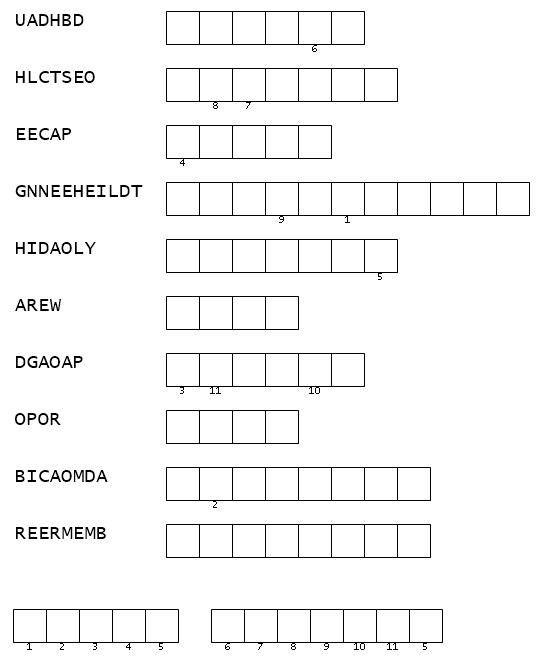
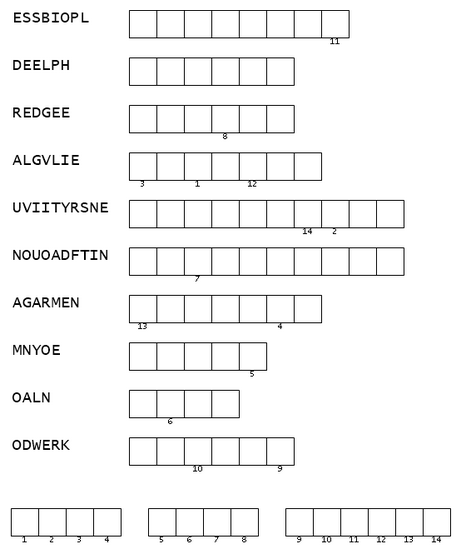
And finally, a word puzzle. First find word in the text. Then, which phrase are we looking for:
Everyone has a dream, but to achieve it, a young person must first know exactly what they want. A clear goal gives direction and helps stay focused. Without a goal, it is easy to get lost and distracted.
2. Make a Plan
A dream without a plan is just a wish. To succeed, one must break the dream into small steps and follow them daily. Planning helps in staying organized and tracking progress.
3. Stay Motivated
Challenges and failures will come, but staying motivated is important. A young person should always remember why they started. Reading success stories, listening to inspiring people, and staying positive can help maintain motivation.
4. Surround Yourself with Supportive People
Having the right people around makes a big difference. Supportive friends, family, and mentors provide encouragement and useful advice. They help during difficult times and keep the dream alive.
5. Learn from Mistakes
Failure is not the end; it is a lesson. Every mistake teaches something valuable. The key is to never give up and keep improving. Many successful people failed before they achieved their dreams.
Conclusion
With clear goals, hard work, motivation, and learning from mistakes, any young person can turn their dream into reality. The journey may not be easy, but determination will lead to success.
#####################
If you had to give a presentation on the topic, your keywords could look like that:
Main Topic:How a Young Person Can Achieve Their Dream
1. Set a Clear Goal
Know exactly what you want
Helps stay focused
Avoid distractions
2. Make a Plan
Break the dream into small steps
Follow the steps daily
Stay organized and track progress
3. Stay Motivated
Challenges will come, don’t give up
Remember why you started
Read success stories, stay positive
4. Surround Yourself with Supportive People
Good friends and mentors give advice
Encouragement during hard times
Keeps the dream alive
5. Learn from Mistakes
Failure is a lesson, not the end
Improve with each mistake
Success comes with persistence
Conclusion
Hard work, patience, and learning lead to success
Stay determined and never stop trying
———————————-
To achieve– To reach or get something you worked for.
A goal– Something you want to do or get in the future.
To stay focused – To keep paying attention to something without getting distracted.
To get lost– To not know where to go or what to do.
To get distracted – To stop paying attention because of something else.
To succeed– To do something well and reach your goal.
To track– To check progress and see how well you are doing.
To be motivated – To feel excited and ready to do something.
A challenge– Something hard that you have to try to do.
A failure – When something does not go well or does not work.
A success– When something goes well and works.
To inspire– To make someone feel excited to do something.
To maintain– To keep something the same way over time.
To surround– To be all around something or someone.
Supportive– Helping and caring about someone.
An encouragement – Words or actions that make someone feel good and want to keep going.
An advice– A helpful idea or suggestion.
Valuable – Very useful or important.
To improve– To get better at something.
To fail– To not succeed in something.
Determination– The strong feeling to never give up.
################################
There are 3 spelling errors in each sentence – find them.
I want to acheve my gole and be succesful. achieve – goal – successful
She trys to stay focased but getts distrackted.
He was lost becuse he did not plan propperly.
Hard work helps you sucseed in life and rech your dreems.
We must track our proggress to see impruvement.
She is motiveted by her famly and freinds.
Every chalenge makes you stronger and smarter.
Failyer is not the end, its a lesson to lern.
He inspiers others with his kind words and suport.
Deturmination helps you keap going even when its hard.
################################
More than 1 answer may be correct!
1. What is the first step to achieving a dream?
A) Working hard every day B) Setting a clear goal C) Waiting for the right time D) Making a plan
2. Why is it important to make a plan?
A) It helps you stay organized B) It makes the goal easier to achieve C) It makes success happen instantly D) It helps track progress
3. How can a person stay motivated?
A) By remembering why they started B) By avoiding all challenges C) By reading success stories D) By staying positive
4. What helps a person overcome difficulties?
A) Giving up when things get hard B) Having supportive friends and mentors C) Learning from failures D) Staying determined
5. What does it mean to be distracted?
A) To focus on your goal B) To stop paying attention because of something else C) To get lost and not know what to do D) To succeed in life
6. Why is failure not the end?
A) It helps you learn and improve B) It means you should stop trying C) It is part of the journey to success D) It teaches valuable lessons
7. What makes a person successful?
A) Hard work B) Determination C) Never making mistakes D) Learning from challenges
8. What does it mean to track progress?
A) To check how well you are doing B) To forget about your goals C) To see if you are improving D) To stop working toward success
################################
Here’s a conversation where a young student asks a senior for advice on how to live her dream and stay focused – complete (useful answers/questions at the end of the text):
Student: How do I start living my dream? Senior:_____________________________
Student:____________________________ Senior: Set a clear goal. Write it down and keep it in front of you.
Student:How can I stay focused on my goal? Senior:Break it into small steps. Focus on one step at a time.
Student:___________________________ Senior: When you feel distracted, remind yourself why you started. Stay strong.
Student:______________________________ Senior:Challenges are part of the journey. Face them with patience and learn from them.
Student:What should I do when I feel like giving up? Senior:______________________
Student:___________________________ Senior: Think about the rewards when you reach your goal, and keep a positive attitude.
Student:_____________________________ Senior: Yes, but choose people who support and encourage you.
Student:How do I learn from my mistakes? Senior: See mistakes as lessons. They help you grow and do better next time.
Student:____________________________ Senior: Track your steps. Look back and see how far you’ve come.
a) Should I tell others about my dream?
b) What if I get distracted?
c) Keep pushing forward. Even small progress is important.
d) How do I know if I’m making progress?
e) Start by knowing exactly what your dream is. Be clear about it.
f) How do I deal with challenges along the way?
g) What’s the first thing I should do?
h) How can I keep myself motivated? ##############################
Shakespeare would have written:
**A Dream Beyond the Dust**
He came from fields where hopes were hard to grow, Where hunger taught the only truth he’d know. His father gone, the future seemed a wall, Too high to climb, too dark, too cold, too tall.
Yet still he dreamed, though skies were cracked and gray, And dared to see a life beyond the day. With help from hearts who choose to give, not keep, He found a path where once the climb was steep.
The Shinta Mani hands reached out with grace— A loan, a light, a hope to take his place. He worked in hotels, learned the business way, And graduation crowned his rising day.
Now Hing commands a spa of high renown, A five-star crown upon his earned new town. His story speaks of what your gift allows: A life transformed, because you dared—and now’s.
To those who give: you open doors and hearts, And build new worlds where every journey starts.
This is the story of Dul Hing. He is a young man from a poor village. His father died when he was young. He wanted to go to university, but his family had no money.
Then, the Shinta Mani Foundation gave him a student loan. This helped him study.
He worked in hotels and studied hard. He graduated with a business degree. Now, he works at a five-star hotel. He is the manager of the spa.
Hing’s life shows what is possible with help and hard work. —————–
Vocabulary:
Village: A small group of houses in the countryside, not a city.
Success: When you do something well or achieve what you wanted.
Poor: Having little or no money, things, or food.
A loan: Money that you borrow and need to pay back later.
To study: To learn something, usually in school or by reading.
To graduate: To finish your studies at a school or university and get a certificate or degree.
A business degree: A certificate or title you get after studying business in university.
A spa: A place where people go to relax, often with massages, hot baths, and other treatments.
#######################
True/False?
1. Dul Hing is from a poor village.
2. Dul Hing’s father is still alive.
3. Dul Hing wanted to study at a university.
4. Dul Hing was given a job by the Shinta Mani Foundation.
5. Dul Hing graduated with a business degree.
6. Dul Hing works at a restaurant in a five-star hotel.‘
7. Dul Hing is the manager of the spa at the hotel.
———————————————
Dul Hing is from a poor village. (True)
Dul Hing’s father is still alive. (False)
Dul Hing wanted to study at a university. (True)
Dul Hing was given a job by the Shinta Mani Foundation. (False)
Dul Hing graduated with a business degree. (True)
Dul Hing works at a restaurant in a five-star hotel. (False)
Dul Hing is the manager of the spa at the hotel. (True)
####################
Answer
Write a sentence about his family.
Write a sentence about his father.
Write a sentence about what he wanted to do.
Write a sentence about who helped him.
Write a sentence about what he studied.
Write a sentence about his job now.
#####################
Complete the story:
From a Small _________ to a Big Success
This is the story of Dul Hing. He is a young man from a _________ village. His father died when he was _________. He wanted to go to _________, but his family had no _________.
Then, the Shinta Mani Foundation gave him a student _________ This helped him _________.
He worked in hotels and _________ hard. He graduated with a business _________. Now, he _________ at a five-star hotel. He is the manager of the _________.
Hing’s life shows what is _________ with help and hard work. #######################
Interview with Dul Hing
1. Q: Where are you from? A: I am from a small village.
2. Q: What was your life like as a child? A: My family was poor, and my father died when I was young.
3. Q: What did you want to do when you were young? A: I wanted to study at a university.
4. Q: Was it easy to go to school? A: No, it was hard because we had no money.
5. Q: Who helped you? A: The Shinta Mani Foundation gave me a student loan.
6. Q: What did you study? A: I studied business.
7. Q: Did you finish your studies? A: Yes, I graduated with a business degree.
8. Q: Where do you work now? A: I work at a five-star hotel.
9. Q: What is your job at the hotel? A: I am the manager of the spa.
10. Q: How do you feel about your life now? A: I am happy and proud. My dream came true.
####################
An interview with Sochea, a friend of Dul Hing, talking about him
1. Q: Who is Dul Hing? A: He is my good friend.
2. Q: Where is he from? A: He is from a small village.
3. Q: Was his family rich? A: No, his family was poor.
4. Q: What happened to his father? A: His father died when he was young.
5. Q: What did he want to do? A: He wanted to study at a university.
6. Q: Who helped him go to school? A: The Shinta Mani Foundation helped him.
7. Q: What did he study? A: He studied business.
8. Q: Did he graduate? A: Yes, he graduated with a business degree.
9. Q: Where does he work now? A: He works at a five-star hotel.
10. Q: What is his job there? A: He is the manager of the spa. I am very proud of him.
######################
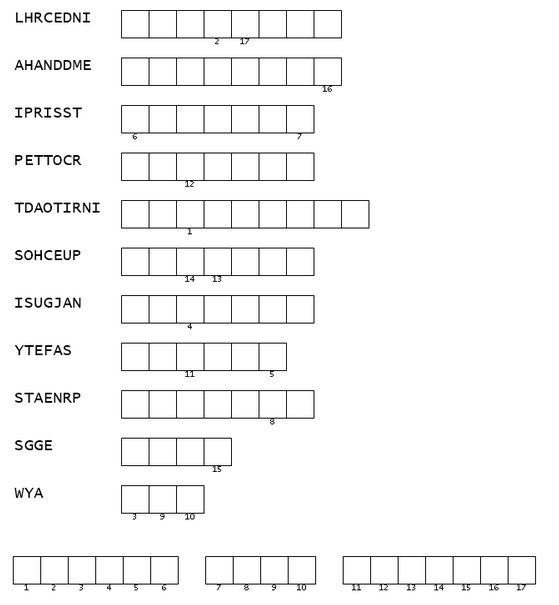
Find words in text, then, which phrase are we looking for?
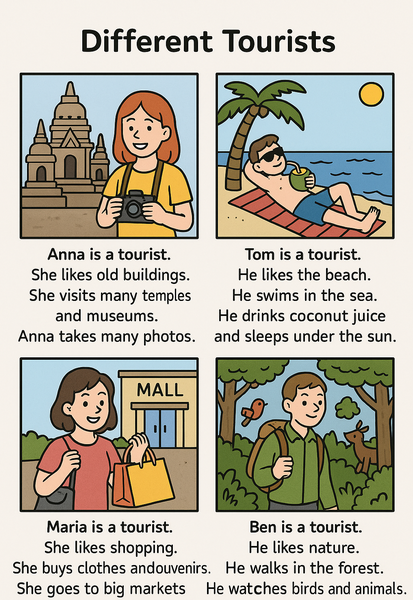
Maria is a tourist. She likes shopping. She buys clothes and souvenirs. She goes to big markets and malls.
7 True or False statements – which are false?
Maria is a tourist.
She likes shopping.
She buys food and drinks.
She buys clothes and souvenirs.
She goes to small villages.
She goes to malls and markets.
She does not like shopping.
✅ Maria is a tourist. → True
✅ She likes shopping. → True
❌ She buys food and drinks. → False (She buys clothes and souvenirs, not food and drinks)
✅ She buys clothes and souvenirs. → True
❌ She goes to small villages. → False (She goes to big malls and markets)
✅ She goes to malls and markets. → True
❌ She does not like shopping. → False (She does like shopping)
#####################
Answer these questions
Who is Maria?
What does Maria like?
What does she buy?
Does she buy food?
Where does she go?
She is a tourist.
She likeshopping.
She buys clothes and souvenirs.
No, she buys food and souvenirs.
She goes to big markets and malls,
########################
Complete, do not look at the original text:
Maria is a _____.
She likes _____.
She buys _____ and _____.
She goes to big _____ and _____.
########################
Rearrange the words:
1. is / Maria / tourist / a
2. likes / shopping / she
3. buys / clothes / souvenirs / she / and
4. goes / she / to / malls / markets / and
########################
Complete the interview, answers below:
Interviewer: _______ Maria: My name is Maria.
Interviewer: _______ Maria: Yes, I am a tourist.
Interviewer: What do you like? Maria: _______
Interviewer: What do you buy? Maria: _______
Interviewer: _______ Maria: I go to malls and markets.
————— I like shopping. Hello, what’s your name? I buy clothes and souvenirs. Where do you go shopping? Are you a tourist? ##########################
An interview with Tom about Maria – complete.
Interviewer: Hi Tom, do you know Maria? Tom: Yes, _______ my friend.
Interviewer: Is Maria a tourist? Tom: Yes, she _______ a tourist.
Interviewer: What does she like? Tom: She l_______ shopping.
Interviewer: What does she buy? Tom: She buys _______.
Interviewer: Where does she go shopping? Tom: She _______ to malls and markets.
——————–
Interviewer: Hi Tom, do you know Maria? Tom: Yes, she is my friend.
Interviewer: Is Maria a tourist? Tom: Yes, she is a tourist.
Interviewer: What does she like? Tom: She likes shopping.
Interviewer: What does she buy? Tom: She buys clothes and souvenirs.
Interviewer: Where does she go shopping? Tom: She goes to malls and markets.
####################
Your best friend is Sophea. What does she like, what does she dislike? Write a short story about her, about 80 words. You can send result to me at SMFrockZ(at)gmx(dot)at, and I’ll have a look over it, if necessary I’ll comment, correct.
Tom plays football. ————————————— Tom is not a tourist.
Tom does not like the beach.
Tom does not swim in the sea.
He does not drink coconut juice.
He does not sleep under the sun.
Tom does not like the mountains.
He does not swim in a pool.
Tom does not drink orange juice.
He does not sleep in a hotel.
######################
Answer in complete sentences:
Does he swim in the sea or in a pool? YOU WRITE: He swims in the sea.
Does he drink orange juice or coconut juice? ______________________________
Does he sleep under the sun or under a tree? ______________________________
Does he like the beach or the mountains? ______________________________
Does he swim or run on the beach? ______________________________
Does he drink water or coconut juice? ______________________________
Does he sleep in a hotel or under the sun? ______________________________
Does he like the sea or the forest? ______________________________
Does he drink coconut juice or soda? ______________________________
Does he swim in the lake or the sea? ______________________________ —————————————— ______________________________
He swims in the sea.
He drinks ococonut juice.
He sleeps under the sun.
He likes the beach.
He swims on the beach.
He drink coconut juice.
He sleeps under the sun.
He likes the sea.
He drinks coconut juice.
He swims in the sea.
######################
A couple of questions – can you answer?
🔹 Wh- Questions
Who is Tom?
What does Tom like?
Where does Tom swim?
What does Tom drink?
Where does Tom sleep?
Who swims in the sea?
What does Tom do under the sun?
What does Tom like to do at the beach?
What kind of juice does he drink?
Where does Tom relax?
—————————————-
Who is Tom? → A tourist
What does Tom like? → The beach
Where does Tom swim? → In the sea
What does Tom drink? → Coconut juice
Where does Tom sleep? → Under the sun
Who swims in the sea? → Tom
What does Tom do under the sun? → He sleeps
What does Tom like to do at the beach? → Swim, drink juice, and sleep
What kind of juice does he drink? → Coconut juice
Where does Tom relax? → On the beach / Under the sun
####################### Put sentences into the correct order:
under Tom sun sleeps the
not Tom like the does beach.
beach on football the He plays
the Tom every swims sea day in
#######################
Match word and definition:
Tourist – _______
Beach – _______
Swim – _______
Drink – _______
Coconut juice – _______
Sleep – _______
Sun – _______
The bright light in the sky during the day. To take liquid into your mouth. A person who visits a place for fun. Liquid from inside a coconut. To move in water using your body. To rest with your eyes closed. Land next to the sea, with sand.
————————–
Tourist – A person who visits a place for fun.
Beach – Land next to the sea, with sand.
Swim – To move in water using your body.
Drink – To take liquid into your mouth.
Coconut juice – Liquid from inside a coconut.
Sleep – To rest with your eyes closed.
Sun – The bright light in the sky during the day.
#########################
Interview with Tom
Interviewer: Hello, Tom. Are you a tourist? Tom: Yes, I am a tourist.
Interviewer: Do you like the beach? Tom: Yes, I like the beach.
Interviewer: Where do you swim? Tom: I swim in the sea.
Interviewer: Do you swim in a pool? Tom: No, I swim in the sea.
Interviewer: What do you drink? Tom: I drink coconut juice.
Interviewer: Do you drink orange juice? Tom: No, I drink coconut juice.
Interviewer: What do you do under the sun? Tom: I sleep under the sun.
Interviewer: Do you like the sun? Tom: Yes, I like the sun.
————————–
Interview with Anna about Tom
Interviewer: Who is Tom? Anna: Tom is a tourist.
Interviewer: What does Tom like? Anna: He likes the beach.
Interviewer: Where does Tom swim? Anna: He swims in the sea.
Interviewer: Does Tom drink coconut juice or orange juice? Anna: He drinks coconut juice.
Interviewer: What does Tom do under the sun? Anna: He sleeps under the sun.
Interviewer: Does Tom like the mountains? Anna: No, he likes the beach.
Interviewer: Does Tom swim in a pool? Anna: No, he swims in the sea.
Interviewer: Is Tom happy on the beach? Anna: Yes, he is happy on the beach.
#######################
Interview with Anna about Tom – Fill in the Blanks
Interviewer: Who is Tom? Anna: Tom is a __________________.
Interviewer: What does Tom like? Anna: He likes the __________________.
Interviewer: Where does Tom swim? Anna: He swims in the __________________.
Interviewer: Does Tom drink coconut juice or orange juice? Anna: He drinks __________________.
Interviewer: What does Tom do under the sun? Anna: He __________________ under the sun.
Interviewer: Does Tom like the mountains? Anna: No, he likes the __________________.
Interviewer: Does Tom swim in a pool? Anna: No, he swims in the __________________.
Interviewer: Is Tom happy on the beach? Anna: Yes, he is __________________ on the beach.
Anna: „I am a tourist. Every day, I visit old buildings and temples. I like to see new places. I take many photos. The buildings are beautiful, and the temples are calm. I enjoy walking around and looking at everything. At the end of the day, I look at my photos and remember my day.“ ——————————
Correct or incorrect?
Anna is a tourist.
Anna visits old buildings and temples.
Anna likes to see new places.
Anna takes many photos.
Anna only visits museums.
Anna enjoys walking around.
Anna looks at her photos at the end of the day.
Anna visits only modern buildings.
Anna sees beautiful buildings and calm temples.
Anna stays at home all day.
Incorrect statements: 5, 8, 10 ###############
Rewrite the text in the 3rd person present simple – make any changes necessary:
Anna is a tourist. Every day, she visits old buildings and temples. She _________ to see new places. She ___________ many photos. The buildings are beautiful, and the temples are calm. She _________walking around and looking at everything. At the end of the day, she _________ at ______photos and ________ _____ day.
——————— What you should have: Anna is a tourist. Every day, she visits old buildings and temples. She likes to see new places. She takes many photos. The buildings are beautiful, and the temples are calm. She enjoys walking around and looking at everything. At the end of the day, she looks at her photos and remembers her day.
################
An interview with Anna – find the proper questions:
1. __________________________ My name is Anna.
2. __________________________ I am from Germany.
3. __________________________ I like to visit old buildings and temples.
4. __________________________ I take photos to remember the places I visit.
5. __________________________ I travel many times a year.
6. __________________________ I like visiting temples the most.
7. __________________________ Yes, I visit many museums.
8. __________________________ Yes, I enjoy walking around and exploring new places.
9. __________________________ Yes, I travel alone most of the time.
10. __________________________ I look at the photos I took during the day. ————————
a) How often do you travel? b) Do you visit museums? c) What do you do at the end of the day? d) What is your name? e) What is your favorite place to visit? f) What do you like to do? g) Do you travel alone? h) Where are you from? i) Do you like walking around? j) Why do you take photos?
####################
Interview with Robert about Anna – complete (don’t forget, 3rd person __’s__ in present simple!):
1. What is her name? ________________
2. Where is Anna from? ________________
3. What does Anna like to do? ________________
4. Why does Anna take photos? ________________
5. Does Anna travel often? ________________
6. What is Anna’s favorite place to visit? ________________
7. Does Anna visit museums? ________________
8. Does Anna like walking around? ________________
9. Does Anna travel alone? ________________
10. What does Anna do at the end of the day? ________________
—————————– Here’s a simple interview with Robert about Anna:
1. What is Anna’s name? Her name is Anna.
2. Where is Anna from? She is from Germany.
3. What does Anna like to do? She likes to visit old buildings and temples.
4. Why does Anna take photos? She takes photos to remember the places she visits.
5. Does Anna travel often? Yes, she travels many times a year.
6. What is Anna’s favorite place to visit? She likes visiting temples the most.
7. Does Anna visit museums? Yes, she visits many museums.
8. Does Anna like walking around? Yes, she enjoys walking around and exploring new places.
9. Does Anna travel alone? Yes, she travels alone most of the time.
10. What does Anna do at the end of the day? She looks at the photos she took during the day.