Autor: wolfgang kugler
-
A typical person in hospitality and tourism business (A2)
- a profile:
- Likes to Meet People
- Enjoys talking to guests
- Friendly and polite
- Smiles a lot
- Good Communication Skills
- Speaks English
- Learns other languages (French, Chinese)
- Uses computer (emails, bookings)
- Knows local culture and places
- Flexibility
- Works weekends and holidays
- Stays calm with problems
- Finds quick solutions
- Works well in a team
- Appearance and Attitude
- Clean and neat appearance
- Good hygiene
- Patient and positive attitude
- Willing to learn and grow
##############
Profile of a Typical Person in Hospitality and Tourism
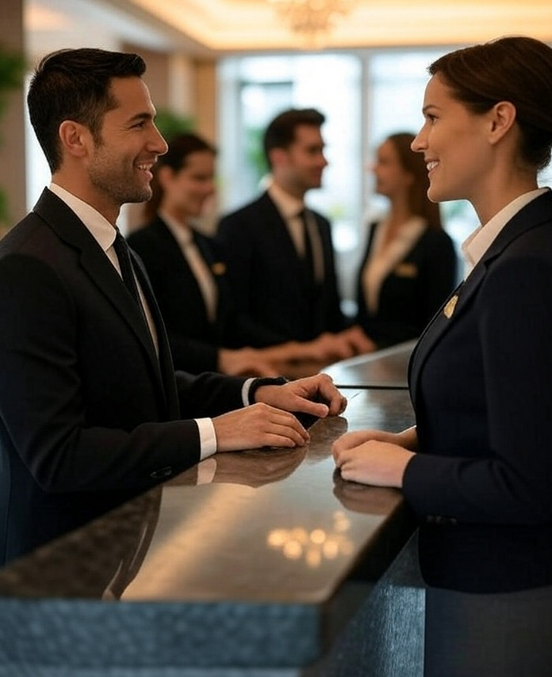
A person who works in hospitality and tourism likes to meet people. They enjoy talking with guests and helping them. Being friendly and polite is very important. They smile a lot because tourists come from many countries. A kind smile makes guests feel welcome.
Good communication skills are necessary. The person usually speaks English. Sometimes, they learn other languages like French or Chinese. This helps them talk to more guests. They also use a computer to send emails and make bookings. It is helpful to know about local culture and places. This way, they can answer tourists’ questions.
Flexibility is very important in this job. People often work on weekends and holidays. They must stay calm when guests have problems. They try to find quick solutions. Teamwork is also important because many people work together in hotels and tours. Everyone helps each other.
Finally, the person must look clean and neat. Good hygiene shows respect for the guests. Patience and a positive attitude help the person enjoy their work. They like to learn new things every day. With these skills and qualities, a person can do well and grow in hospitality and tourism.
[exercises to come…………………]
###############
The top three qualities for a person in hospitality and tourism are:
- Friendliness and Politeness – Being kind and polite helps guests feel welcome and comfortable. It makes a big difference in their experience.
- Good Communication Skills – Speaking English and other languages, and being able to listen and help guests clearly, is essential for good service.
- Flexibility and Calmness – The ability to work different hours and stay calm when problems happen helps the person handle difficult situations well.
################
A1 (Beginner)
The top three qualities for a person in hospitality and tourism are:
Friendliness and Politeness – Being nice and polite helps guests feel happy and welcome. It makes their time better.
Good Communication Skills – Speaking English and other languages and listening well helps guests.
Flexibility and Calmness – Being able to work different hours and stay calm when there are problems helps a person do their job well.
A2 (Elementary)
The top three qualities for someone in hospitality and tourism are:
Friendliness and Politeness – Being kind and polite helps guests feel welcome and comfortable. It makes a big difference for their experience.
Good Communication Skills – Speaking English and other languages and listening carefully helps guests.
Flexibility and Calmness – The ability to work different hours and stay calm when problems happen helps the person handle hard situations well.
B1 (Intermediate)
The top three qualities for a person in hospitality and tourism are:
Friendliness and Politeness – Being kind and polite helps guests feel welcome and comfortable. It really improves their experience.
Good Communication Skills – Speaking English and other languages, and listening carefully to help guests, is important for good service.
Flexibility and Calmness – The ability to work different hours and stay calm when problems happen helps a person manage difficult situations well.
B2 (Upper-Intermediate)
The top three qualities for a person working in hospitality and tourism are:
Friendliness and Politeness – Being friendly and polite makes guests feel welcomed and comfortable, greatly enhancing their experience.
Good Communication Skills – Speaking English and other languages, and being able to listen and assist guests clearly, is essential for providing excellent service.
Flexibility and Calmness – The ability to work varied hours and remain calm when problems occur allows a person to handle difficult situations effectively.
C1 (Advanced)
The top three qualities for an individual in hospitality and tourism are:
Friendliness and Politeness – Demonstrating kindness and politeness helps guests feel truly welcome and at ease, significantly impacting their overall experience.
Good Communication Skills – Proficiency in English and other languages, combined with attentive listening, is crucial for delivering clear and effective guest assistance.
Flexibility and Calmness – The capacity to adapt to varying work schedules and maintain composure under pressure enables effective management of challenging situations.
C2 (Proficient)
The top three qualities essential for a professional in hospitality and tourism are:
Friendliness and Politeness – Consistently exhibiting genuine kindness and courtesy fosters a welcoming and comfortable atmosphere, profoundly influencing guests’ experiences.
Good Communication Skills – Mastery of English and multiple languages, alongside exceptional listening skills, is indispensable for providing articulate and empathetic guest support.
Flexibility and Calmness – Demonstrating adaptability to diverse working hours and unwavering calmness during crises equips one to navigate complex and difficult scenarios with professionalism.
-
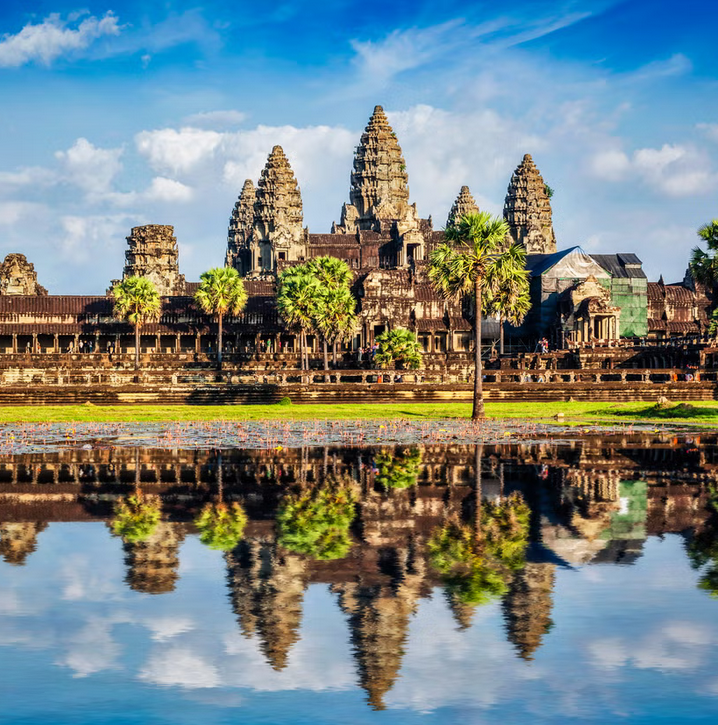
Cambodia’s Siem Reap is the gateway to ancient Angkor –
here’s how to get the best out of your trip (from INDEPENDENT)
Siem Reap is a city in north‑west Cambodia. It is the main starting point to visit the famous Angkor temples. Recently, a new international airport opened near Siem Reap. This new airport is much larger and more modern than the old one. It can welcome more flights and makes travel easier for people coming from Thailand, Vietnam, and other countries in Asia.
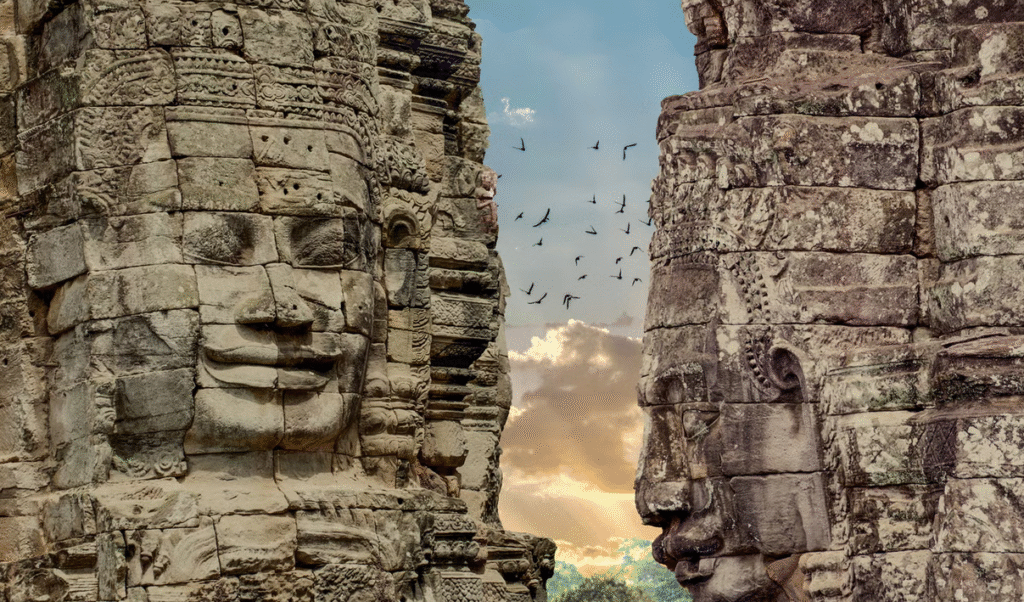
The Angkor Archaeological Park is one of the most important historical sites in the world. It includes hundreds of temples built by the Khmer Empire from the 9th to the 15th centuries. The most famous temple is Angkor Wat, which is so important that it appears on the Cambodian flag. The temples are surrounded by jungle, and many visitors are amazed by the carvings, towers, and quiet atmosphere.
Siem Reap is becoming more popular with tourists because of the new airport. Many travelers visit it as part of a longer trip in Southeast Asia. The city itself also offers markets, cultural shows, and hotels for different budgets.
A trip to Siem Reap gives people a chance to see both Cambodian culture today and the country’s great history. Walking through the ruins of Angkor feels like stepping back in time and is an unforgettable experience.
______________
Vocabulary:
- a gateway – a main way to enter a place
- ancient – very, very old
- recently – a short time ago
- to make travel easy – to help people go somewhere without problems
- to include – to have something inside a group or list
- an empire – a very big country ruled by one king or group
- to appear – to be seen or shown
- a flag – a piece of cloth with colors or a picture that shows a country
- to be surrounded – to have something all around you
- a jungle – a forest with many trees and plants
- to be amazed – to feel very surprised in a good way
- a carving – a picture or shape cut into stone or wood
- quiet – with little or no noise
- to offer – to give someone something or to make it available
- a market – a place where people sell and buy food, clothes, etc.
- hotels for different budgets – hotels for people with more or less money
- to step back in time – to feel like you are living in the past
- unforgettable – something so special you will always remember it
- experience – something you do or feel in real life
##############
Multiple choice test, one answer correct:
1. What is a gateway?
A) A main way to enter a place
B) A place where you sleep at night
C) A type of food
2. What does ancient mean?
A) Very new
B) Very, very old
C) Very big
3. What does recently mean?
A) A short time ago
B) In the future
C) A long time ago
4. What does it mean to make travel easy?
A) To stop people from going anywhere
B) To help people go somewhere without problems
C) To build a new road
5. What does to include mean?
A) To forget something
B) To have something inside a group or list
C) To put something outside
6. What is an empire?
A) A big shop
B) A small village
C) A very big country ruled by one king or group
7. What does to appear mean?
A) To hide
B) To be seen or shown
C) To go away
8. What is a flag?
A) A piece of cloth that shows a country
B) A picture on the wall
C) A street sign
9. What does to be surrounded mean?
A) To stand in one place
B) To have something all around you
C) To have nothing around you
10. What is a jungle?
A) A very dry desert
B) A place with snow and ice
C) A forest with many trees and plants
11. What does to be amazed mean?
A) To feel bored and tired
B) To feel very surprised in a good way
C) To feel very angry
12. What is a carving?
A) A kind of soft drink
B) A picture or shape cut into stone or wood
C) A very tall mountain
13. What does quiet mean?
A) Very loud and noisy
B) Very fast
C) With little or no noise
14. What does to offer mean?
A) To throw something away
B) To keep something secret
C) To give someone something or make it available
15. What is a market?
A) A big farm where cows live
B) A place where people sell and buy food, clothes, etc.
C) A very quiet park
16. What are hotels for different budgets?
A) Hotels only for students
B) Hotels only for rich people
C) Hotels for people with more or less money
17. What does to step back in time mean?
A) To walk very slowly backwards
B) To forget something from the past
C) To feel like you are living in the past
18. What does unforgettable mean?
A) Something you forget very fast
B) Something very difficult to carry
C) Something so special you will always remember it
19. What is an experience?
A) Something you do or feel in real life
B) A kind of food
C) A place where you sleep
20. What does to make travel easy mean?
A) To walk in the mountains
B) To help people go somewhere without problems
C) To close the road for people
Answers: 1A, 2B, 3A, 4B, 5B, 6C, 7B, 8A, 9B,
10C, 11B, 12B, 13C, 14C, 15B, 16C, 17C, 18C, 19A, 20B
#####################
Fill the gap, one answer only:
- A ______ is a big forest with many trees.
a) jungle
b) desert
c) mountain - The old temple is very ______. It is many years old.
a) new
b) ancient
c) small - A ______ is a place where people buy and sell things.
a) hotel
b) school
c) market - When you feel very surprised, you are ______.
a) tired
b) amazed
c) angry - A ______ is a piece of cloth that shows a country.
a) flag
b) window
c) book - To ______ means to give or help someone.
a) offer
b) forget
c) hide - The city is ______ by mountains all around.
a) empty
b) small
c) surrounded - To ______ means to have something inside a group or list.
a) close
b) include
c) lose - When you ______, you can see something suddenly.
a) disappear
b) appear
c) run - An ______ is a very big country ruled by a king.
a) empire
b) village
c) school - When there is little noise, it is ______.
a) loud
b) fast
c) quiet - To make travel easy means to help people ______ without problems.
a) wait
b) go
c) stay - A carving is a ______ in wood or stone.
a) cut
b) drawing
c) story - Hotels for different budgets means hotels for people with more or less ______.
a) food
b) money
c) clothes - To step back in time means to feel like you live in the ______.
a) future
b) city
c) past - Something unforgettable is easy to ______.
a) lose
b) remember
c) forget - A gateway is a main way to ______ a place.
a) enter
b) leave
c) build - Recently means a short time ______.
a) ago
b) later
c) tomorrow - An experience is something you do or ______.
a) sleep
b) eat
c) see - Quiet means with little or no ______.
a) light
b) people
c) noise
Answers
1a, 2b, 3c, 4b, 5a, 6a, 7c, 8b, 9b, 10a, 11c,
12b, 13a, 14b, 15c, 16c, 17a, 18c, 19c, 20c################
Match word and definition:
Words
- a gateway
- ancient
- recently
- to make travel easy
- to include
- an empire
- to appear
- a flag
- to be surrounded
- a jungle
- to be amazed
- a carving
- quiet
- to offer
- unforgettable
Definitions:
a) To have trees or mountains all around you.
b) A very big country ruled by one king.
c) A place with many trees, plants, and animals.
d) Not loud; little or no noise.
e) To give something to someone.
f) To feel very surprised.
g) Something you cannot forget.
h) A piece of cloth that shows a country.
i) To have something inside a group or list.
j) A main way to enter a place.
k) Something very old.
l) To make moving from one place to another simple.
m) A picture or shape cut into wood or stone.
n) To see or come into view suddenly.
o) Happened not long ago.
_____________________
Answers:
1j, 2k, 3o, 4l, 5i, 6b, 7n, 8h, 9a,
10c, 11f, 12m, 13d, 14e, 15g####################
True or false?
- Siem Reap is called the gateway to Angkor Wat.
- The temples of Angkor were built only 50 years ago.
- Angkor Wat is surrounded by a jungle.
- Recently, Siem Reap built new roads to make travel easier for tourists.
- The city has no markets for visitors to explore.
- Carvings on the temples show old stories and gods.
- Siem Reap does not have hotels for different budgets.
- Visiting the temples feels like stepping back in time.
- The Cambodian flag shows a picture of Angkor Wat.
- The temples are very quiet because no tourists visit them.
- The Angkor temples were part of a great empire.
- Many people are amazed when they see the size of Angkor Wat.
____________________
True: 1,3,4,6,8,9,11,12
################Gap-fill exercise:
amazed – market – gateway – unforgettable – flag – surrounded – quiet – ancient – jungle – include
Siem Reap is the __________ to the temples of Angkor. These __________ temples were built many centuries ago and are now one of Cambodia’s most famous sights. The temples are __________ by thick trees and a green __________. Visitors are often __________ by the size and detail of the carvings. The Cambodian __________ shows Angkor Wat in the middle. A visit to Siem Reap can also __________ walking through a local __________, where people sell food and crafts. Some areas near the temples are very __________, making the experience even more __________ for travelers.
___________________________
Listen to story – check your answerswers:
###############
-
A story of success – Mr.Sam(A2/B1-)
- a manager today – a hero
Please meet Sin Samney, but everyone here calls him Sam. Many of our guests know him as Sam the Concierge or say, “Sam is the Man!”
Sam joined Hansar Samui in July 2011. He is easy to recognize because of his big smile and friendly attitude. Sam loves to help people and always tries his best to make every guest happy. If you have a request, Sam will do everything he can to help you.
Sam is from Cambodia. He started working in hotels 11 years ago as a bell boy. Before joining Hansar Samui, he was the Front Office Manager at the famous Hotel de la Paix in Cambodia.
Sam’s love for hospitality is the same as Hansar Samui’s philosophy – finding joy in every moment. The word Hansar is from Sanskrit and means happiness and joy. At Hansar Samui, we want every guest to have a happy and memorable experience.
If you want ideas about what to do on the island, visit Sam at the Front Desk. He will be happy to assist you.
_________________________
Vocabulary:
- success – when something goes well, and you get what you wanted
- a concierge – a hotel worker who helps guests with information or special needs
- to join a team – to start working or playing with a group of people
- to recognize – to know who someone is because you have seen them before
- a smile – when you move your mouth up to show you are happy
- a friendly attitude – being kind and nice to other people
- to try one’s best – to do everything you can to do something well
- to make guests happy – to do things so visitors feel good and enjoy their time
- a request – when you ask for something politely
- a bell boy – a hotel worker who carries bags for guests
- famous – known by many people
- hospitality – being kind and welcoming to visitors
- a philosophy – an idea about how to live or do things
- to find joy – to feel happy about something
- happiness – a good feeling when you are happy
- joy – a very strong feeling of happiness
- a memorable experience – something special you will remember for a long time
- to assist somebody – to help someone
##################
Find correct answer – only one:
1. What is success?
a) when something goes well and you get what you wanted
b) when something goes wrong
c) when you do nothing
2. Who is a concierge in a hotel?
a) a person who helps guests with information or special needs
b) a person who cleans rooms
c) a person who cooks food
3. What does it mean to join a team?
a) to sit alone in a room
b) to finish working with a group
c) to start working or playing with a group of people
4. What does to recognize someone mean?
a) to know who someone is because you have seen them before
b) to forget their name
c) to ask them questions
5. What is a smile?
a) when you sleep
b) when you move your mouth up to show you are happy
c) when you cry
6. What is a friendly attitude?
a) being kind and nice to other people
b) being angry with people
c) being quiet and shy
7. What does it mean to try one’s best?
a) to do something very fast
b) to do everything you can to do something well
c) to do something only a little
8. What does it mean to make guests happy?
a) to make guests wait for a long time
b) to give guests extra work to do
c) to do things so visitors feel good and enjoy their time
9. What is a request?
a) when you give someone a gift
b) when you ask for something politely
c) when you shout at someone
10. Who is a bell boy?
a) a hotel worker who carries bags for guests
b) a person who fixes the elevator
c) a person who sells food
11. What does famous mean?
a) only known by your family
b) very quiet and secret
c) known by many people
12. What is hospitality?
a) staying in the hospital
b) being tired at work
c) being kind and welcoming to visitors
13. What is a philosophy?
a) a place where you buy food
b) an idea about how to live or do things
c) a kind of music
14. What does to find joy mean?
a) to play a game with friends
b) to look for your lost shoes
c) to feel happy about something
15. What is happiness?
a) a kind of sport
b) a good feeling when you are happy
c) a time when you are very tired
16. What is joy?
a) a very big house
b) a very strong feeling of happiness
c) a kind of food
17. What is a memorable experience?
a) something that is very boring
b) something special you will remember for a long time
c) something you forget quickly
18. What does to assist somebody mean?
a) to help someone
b) to run away from someone
c) to play with someone
Answer key:
1 a, 2 a, 3 c, 4 a, 5 b, 6 a, 7 b, 8 c, 9 b,
10 a, 11 c, 12 c, 13 b, 14 c, 15 b, 16 b, 17 b, 18 a
###############
Match the words with their definitions:
Words:
- success
- concierge
- smile
- friendly attitude
- request
- bell boy
- famous
- hospitality
- philosophy
- joy
- happiness
- memorable experience
- recognize
- assist
- join a team
Definitions:
a) to help someone
b) a hotel worker who carries bags for guests
c) when something goes well and you get what you wanted
d) a good feeling when you are happy
e) to start working or playing with a group of people
f) a person who helps guests with information or special needs
g) when you move your mouth up to show you are happy
h) being kind and welcoming to visitors
i) something special you will remember for a long time
j) being kind and nice to other people
k) to ask for something politely
l) an idea about how to live or do things
m) to know who someone is because you have seen them before
n) known by many people
o) a very strong feeling of happiness__________________
1 c, 2 f, 3 g, 4 j, 5 k, 6 b, 7 n, 8 h, 9 l,
10 o, 11 d, 12 i, 13 m, 14 a, 15 e
###############True or false:
- Sam’s full name is Sin Samney.
- Guests often call him “Sam is the Man.”
- Sam joined Hansar Samui in July 2021.
- Sam is easy to recognize because of his big smile.
- Sam is from Cambodia.
- Sam first worked in hotels as a chef.
- Before Hansar Samui, Sam worked at a hotel in Thailand.
- The word Hansar means happiness and joy in Sanskrit.
- Hansar Samui wants guests to feel happy and have good memories.
- Sam does not like helping people.
True: 1, 2, 4, 5, 8, 9
###################
Fill in:happiness – smile – guests – calls – works – loves – began
This is Sam. His full name is Sin Samney, but everyone _________him Sam. He __________ at Hansar Samui hotel. Sam started working here in July 2011. You can know him by his big _________ and nice, friendly way. Sam __________ to help guests and wants to make them happy. He is from Cambodia. Sam __________ working in hotels 11 years ago as a bell boy, carrying bags for _________. Before this hotel, Sam was the Front Office Manager at Hotel de la Paix in Cambodia. Sam believes in __________ and joy. You can ask him for ideas at the Front Desk.
The full story: -
FKC helps children in Siem Reap (A1)
- free school and skills for poor families
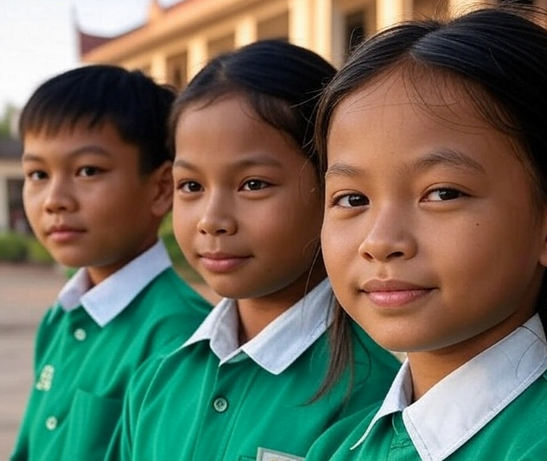
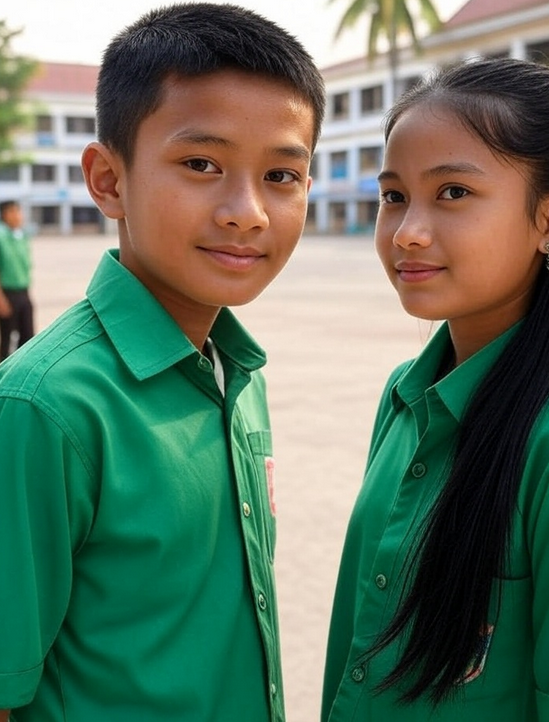
FKC is a group in Siem Reap, Cambodia. FKC helps poor families. Many families do not have money for school. Their children cannot go to school. FKC gives free school for these children. This means children can go to school for free.
At school, children learn many things. They learn to read and write. They learn math too. These things help children in their life.
FKC also teaches children how to do jobs. Children learn skills like sewing and cooking. They also learn to use computers. These skills help children get work when they grow up.
FKC cares about children and their families. They want to help families have a better life. FKC wants children to be happy and healthy. FKC works with the people in the village. They help many families in Siem Reap.
Many children are happy at FKC. They can learn and make new friends. FKC gives children hope for the future. FKC is a good place for poor families. It helps children and their families every day.
____________________
Vocabulary:
poor
no money. people need help.money
what we use to buy things.free school
school you do not pay for.to mean
to say or show something.to read
look at words and know what they say.to write
make words on paper.math (subject)
learning numbers and counting.to teach children
help children learn new things.to do a job
work to earn money.skills
things you can do well.to sew
use a needle and thread to make clothes.to cook
make food.to use computers
work with a computer.to grow up
become an adult.to care about children
love and help children.to have a better life
live happy and with enough things.healthy
feel good and not sick.a village
a small place where people live.to make friends
meet new people and like them.to give children hope
help children feel happy about the future.
################
Multiple Choice Test – only one answer correct
- What does poor mean?
a) no money, needs help
b) has a lot of money
c) very happy - What is money?
a) a type of food
b) what we use to buy things
c) a school subject - What is free school?
a) school you pay for
b) school only for adults
c) school you do not pay for - What does to mean mean?
a) to eat food
b) to say or show something
c) to go to school - What does to read mean?
a) look at words and understand
b) write words on paper
c) count numbers - What does to write mean?
a) run fast
b) make words on paper
c) use a computer - What is math?
a) singing songs
b) learning numbers and counting
c) playing sports - What does to teach children mean?
a) help children learn new things
b) help children sleep
c) help children eat - What does to do a job mean?
a) work to earn money
b) play with friends
c) go to school - What are skills?
a) toys to play with
b) things you can do well
c) clothes you wear - What does to sew mean?
a) use needle and thread to make clothes
b) cook food
c) run fast - What does to cook mean?
a) sew clothes
b) read books
c) make food - What does to use computers mean?
a) write with a pencil
b) work with a computer
c) sing a song - What does to grow up mean?
a) become an adult
b) eat food
c) learn math - What does to care about children mean?
a) teach adults
b) love and help children
c) play games - What does to have a better life mean?
a) live in a big house only
b) live happy and have enough things
c) have many toys - What does healthy mean?
a) feel hungry
b) feel tired
c) feel good and not sick - What is a village?
a) a big city
b) a school
c) a small place where people live - What does to make friends mean?
a) meet new people and like them
b) play alone
c) go to school - What does to give children hope mean?
a) make children sad
b) help children feel happy about the future
c) teach children to cook
Answer Key:
1a, 2b, 3c, 4b, 5a, 6b, 7b, 8a, 9a, 10b, 11a, 12c, 13b, 14a, 15b, 16b, 17c, 18c, 19a, 20b
###############
Fill in:
- Poor people do not have much ______.
a) money
b) food
c) house - School is free. It is a ______ school.
a) big
b) free
c) hard - I like to ______ books.
a) write
b) read
c) sew - We learn ______ like math at school.
a) skills
b) books
c) money - I can ______ clothes with a needle.
a) sew
b) cook
c) read - To cook means to make ______.
a) food
b) clothes
c) books - Children want to ______ friends.
a) make
b) do
c) write - I use a computer to ______.
a) sew
b) work
c) cook - The village is a small ______.
a) city
b) school
c) place - We learn how to do a ______ to work later.
a) game
b) job
c) book - Healthy people feel ______.
a) sick
b) good
c) tired - The teacher ______ children how to read.
a) reads
b) teaches
c) cooks
Answers
1a, 2b, 3b, 4a, 5a, 6a, 7a, 8b, 9c, 10b, 11b, 12b
################
True or False?
- Cooking means to make clothes.
- Children learn to write at school.
- A job is work you do.
- Poor people have a lot of money.
- Using a computer can help you work.
- Sewing means to make food.
- Free school means you do not pay money.
- A village is a small place.
- Children do not want to make friends.
- Math is a sport.
- Healthy people feel good.
- Teachers do not teach children to read.
___________________
True: 2, 3, 5, 7, 8, 11
#################
Fill in, words below:
sew, help, every, life,
math, job, home, play
My Day at FKC School
Hello! My name is Sochea.
I go to FKC school __________day.
At school, I learn to read and write.
I learn __________ too. I like to learn.I learn to __________ and cook.
I learn to use the computer.
These help me get a __________ later.I have many friends at school.
We __________ and learn together.
The teachers __________ me.
I am happy at school.After school, I go __________.
I tell my family what I learn.
I want a good __________.
FKC helps me and my friends
+ + + + + + + + + + + + + +Correct version:
My Day at FKC School
Hello! My name is Sochea.
I go to FKC school every day.
At school, I learn to read and write.
I learn math too. I like to learn.I learn to sew and cook.
I learn to use the computer.
These help me get a job later.I have many friends at school.
We play and learn together.
The teachers help me.
I am happy at school.After school, I go home.
I tell my family what I learn.
I want a good life.
FKC helps me and my friends.##############.
Rewrite the story starting withHello! Her name is Sochea. She goes….
and make all changes necessary.
____________________
Correct version:
Hello! Her name is Sochea. She goes to FKC school every day.
At school, she learns to read and write. She learns math too. She likes to learn.She learns to sew and cook. She learns to use the computer. These help her get a job later.
She has many friends at school. They play and learn together. The teachers help her. She is happy at school.
After school, she goes home. She tells her family what she learns. She wants a good life. FKC helps her and her friends.
-
The role of a concierge (A2/B1-)
´- they’ve got a solution
A concierge is a professional who works in hotels or apartment buildings and helps guests with many different requests. Their main goal is to make every stay comfortable and enjoyable. You usually find concierges in higher‑class or luxury hotels, where guests expect personal service. They often sit at a desk near the reception so they are easy to find.
Concierges provide a wide range of services. They can book taxis, restaurants, or sightseeing tours and recommend interesting places to visit. They also give maps, directions, and advice about local events. When guests have problems, such as lost luggage or a medical emergency, the concierge finds a quick and practical solution. In addition, they arrange special surprises, like flowers, birthday cakes, or private guides, which make the stay feel unique.
The word “concierge” comes from French and originally described workers in castles who looked after candles and visitors. Later, in Paris, concierges lived in apartment buildings and monitored the people who entered.
Today, concierges are still very important in many hotels. Some belong to a famous group called Les Clefs d’Or and wear gold keys on their jackets as a sign of quality and experience.
______________________
Vocabulary:
a concierge – a person in a hotel who helps guests with things like taxis tours or problems
to assist – to help someone
a need – something you must have or want
a goal – something you try to do or reach
a stay hotel – the time you spend in a hotel
comfortable – nice and easy to use making you feel relaxed
enjoyable – something that is fun or pleasant
reception area – the front part of a hotel where guests check in
to provide services – to give help or do things for someone
to recommend – to say something is good and that someone should try it
lost luggage – bags that are missing when you travel
an emergency – a serious problem that needs help fast
a solution – a way to fix a problem
to arrange – to plan or organize something
a surprise – something you do to make someone happy without telling them first
unique – special only one of its kind
to describe – to say what something is like
a castle – a big old building where kings or queens lived
a candle – a stick of wax that gives light when it burns
to watch over residents – to look after people who live in a place
property – things that belong to someone
to belong to a group – to be part of a team or club
a key – a small object used to open a door or lock
a jacket – a short coat you wear over clothes
a sign of quality – something that shows something is good
skilled – good at doing something because you learned and practiced it#################
Multiple choice, one answer correct:
1. what is a concierge?
a) a person who helps guests in a hotel
b) a person who cleans rooms
c) a person who cooks food2. what does “to assist” mean?
a) to wait for someone
b) to help someone
c) to watch something3. what is a “need”?
a) something you throw away
b) something you want or must have
c) something you see on tv4. what is a “goal”?
a) a place to sleep
b) something you try to do or reach
c) a kind of food5. what is a “stay” in a hotel?
a) a trip to the city
b) the time you sleep at home
c) the time you spend in a hotel6. what does “comfortable” mean?
a) very noisy
b) nice and easy to use
c) very expensive7. what is the “reception area”?
a) the hotel kitchen
b) the front part of a hotel where guests check in
c) the hotel pool8. what does “to recommend” mean?
a) to say something is bad
b) to buy something
c) to say something is good9. what is “lost luggage”?
a) bags that are missing when you travel
b) new bags you buy
c) bags you carry yourself10. what is an “emergency”?
a) a holiday
b) a fun event
c) a serious problem needing fast help11. what is a “solution”?
a) a place to visit
b) a type of food
c) a way to fix a problem12. what does “to arrange” mean?
a) to lose something
b) to forget something
c) to plan or organize something13. what is a “surprise”?
a) something you do to make someone happy without telling them first
b) something expected
c) a problem14. what does “unique” mean?
a) very big
b) normal and usual
c) special; only one of its kind15. what is a “castle”?
a) a hotel
b) a big old building where kings lived
c) a small house16. what is a “candle”?
a) a type of food
b) a stick of wax that gives light when it burns
c) a book17. what does “to watch over residents” mean?
a) to look after people who live in a place
b) to sleep at night
c) to leave people alone18. what is “property”?
a) cars on the street
b) animals in the park
c) things that belong to someone19. what is a “key”?
a) a shoe
b) a piece of paper
c) a small object used to open a door or lock20. what is a “jacket”?
a) a hat
b) a short coat you wear over clothes
c) a type of shoe
________________________
Answers:
1a 2b 3b 4b 5c 6b 7b 8c 9a 10c 11c 12c
13a 14c 15b 16b 17a 18c 19c 20b
#################Fill in:
- A __________ helps guests in a hotel.
a) concierge
b) jacket
c) candle - To __________ means to belong to a group.
a) to watch
b) to lose
c) to belong - A __________ is a stick that gives light when it burns.
a) jacket
b) key
c) candle - To __________ means to plan or organize something.
a) to arrange
b) to watch
c) to assist - When something special happens, it is a __________.
a) surprise
b) need
c) goal - When your suitcase is missing, it is __________.
a) lost
b) unique
c) skilled - To __________ means to help someone.
a) to recommend
b) to assist
c) to describe - A __________ means a way to fix a problem.
a) goal
b) solution
c) stay - To __________ means to say what something is like.
a) to assist
b) to arrange
c) to describe - When people live in a building, the __________ watch over them.
a) concierges
b) castles
c) candles - A __________ is a big old building where kings lived.
a) castle
b) solution
c) surprise - A __________ is a short coat you wear over clothes.
a) jacket
b) key
c) candle - To __________ means to say something is good for others.
a) to recommend
b) to assist
c) to watch - A __________ is a small object to open a door.
a) jacket
b) key
c) candle - The hotel __________ is where guests get information.
a) concierge
b) reception area
c) property - When you feel good and relaxed, you are __________.
a) lost
b) comfortable
c) skilled - To __________ means to say something is good and others should try it.
a) to recommend
b) to assist
c) to watch - When you don’t have something important, you have a __________.
a) goal
b) need
c) property - An __________ is something special and one of a kind.
a) lost
b) unique
c) emergency - To __________ means to plan or organize something.
a) to arrange
b) to watch
c) to assist
________________________
Answers:
1 a, 2 c, 3 c, 4 a, 5 a, 6 a, 7 b, 8 b, 9 c, 10 a,
11 a, 12 a, 13 a, 14 b, 15 b, 16 b, 17 a, 18 b, 19 c, 20 a
##################
Match the words with their correct definitions.
Words:
- concierge
- assist
- need
- goal
- stay
- comfortable
- reception area
- recommend
- lost luggage
- emergency
- solution
- arrange
- surprise
- castle
- key
Definitions:
a) A large old building where kings or nobles lived
b) To help someone
c) A place where guests get information in a hotel
d) Something special that happens unexpectedly
e) A plan or purpose you want to achieve
f) To organize or plan something
g) Something that opens a door or lock
h) When your bags do not arrive with you
i) A way to fix a problem
j) A short visit or time you spend somewhere, like a hotel
k) Feeling relaxed and happy with no pain or problems
l) A sudden serious situation that needs quick action
m) To say something is good and others should try it
n) Something necessary or wanted
o) An employee in a hotel who helps guests with many services
____________________
Answers:
1 o, 2 b, 3 n, 4 e, 5 j, 6 k, 7 c, 8 m, 9 h,
10 l, 11 i, 12 f, 13 d, 14 a, 15 g
###############True or false:
- A concierge helps guests with different services in a hotel.
- Lost luggage means your keys are missing.
- To recommend means to say something is good for others.
- A castle is a small modern building.
- An emergency is a situation that needs quick action.
- To arrange means to lose something important.
- Comfortable means feeling relaxed and happy.
- A reception area is where you park your car.
- A goal is something you want to achieve.
- To assist means to ignore someone’s needs.
- A key is used to open doors or locks.
- A surprise is always planned and expected.
_______________________
True:
1, 3, 5, 7, 9, 11
##################Fill in:
I am Sam, and I work as a ___________ at a big hotel. Every day, I help guests with many things. In the morning, I greet people at the reception area. I answer __________ and give information about the city. I help guests with their luggage and call __________ for them. If someone loses their luggage, I try to find it. I also __________ good restaurants and plan __________ for visitors. Sometimes, I arrange surprises like __________ or gifts. I like my job because I meet many people. I work hard to make every stay comfortable and __________.
_______________________recommend – questions – concierge – flowers – enjoyable – taxis – tours
_______________________
Correct version:
I am Sam, and I work as a concierge at a big hotel. Every day, I help guests with many things. In the morning, I greet people at the reception area. I answer questions and give information about the city. I help guests with their luggage and call taxis for them. If someone loses their luggage, I try to find it. I also recommend good restaurants and plan tours for visitors. Sometimes, I arrange surprises like flowers or gifts. I like my job because I meet many people. I work hard to make every stay comfortable and enjoyable. - A __________ helps guests in a hotel.
-
Oh my God, a mistake (A1,A2,B1,B2,C1,C2)

A1 (Beginner)
If you see a mistake in my exercise, please tell me.
You can write to me on Facebook/Messenger or email me at SMFrockZ@gmx.at
A2 (Elementary)
If you find a mistake in one of my exercises, please let me know.
You can contact me through Facebook/Messenger or send me an email at SMFrockZ@gmx.at
B1 (Intermediate)
If you notice any mistakes in my exercises, please let me know so I can fix them.
You can contact me via Facebook/Messenger or email me at SMFrockZ@gmx.at
B2 (Upper Intermediate)
Should you come across any mistakes in my exercises, please inform me so I can correct them.
You can either reach me on Facebook/Messenger or send me an email at SMFrockZ@gmx.at
C1 (Advanced)
If you happen to notice any errors in my exercises, I’d greatly appreciate it if you could let me know so that I can make the necessary corrections.
Feel free to contact me via Facebook/Messenger or email me at SMFrockZ@gmx.at
C2 (Proficient)
Should you identify any inaccuracies in my exercises, I would be grateful if you could notify me so I can address them promptly.
You may reach out to me through Facebook/Messenger or, alternatively, email me at SMFrockZ@gmx.at