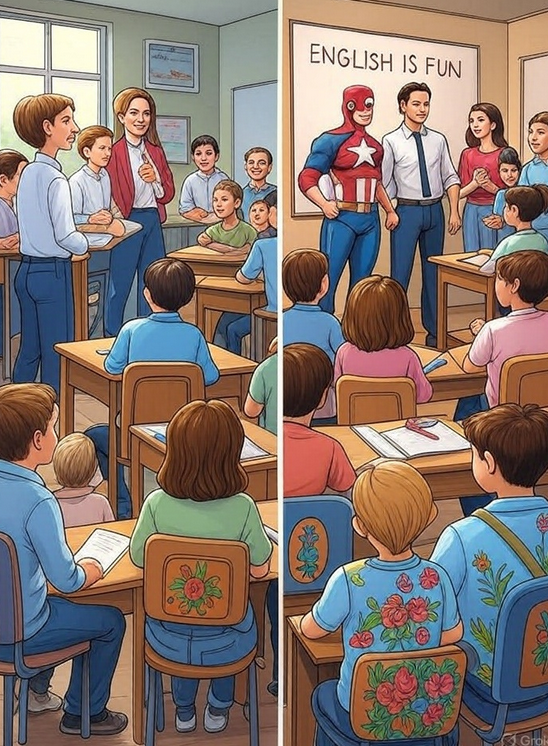
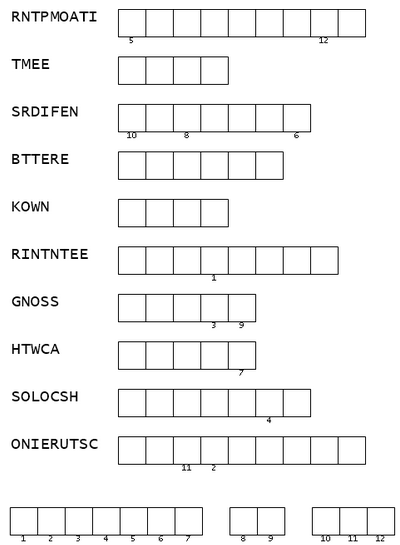
I am Ben. I wake up at 7 o’clock. I eat bread and milk. Then I go to school. I play football with my friends. After school I go home. I eat pizza with my family. I am happy. _________________
to wake up = open your eyes in the morning
to eat = put food in your mouth
bread = food, white or brown, you can eat it with butter
milk = white drink from a cow
to play football = kick a ball with your feet, with friends
a friend = a person you like
home = the place where you live
a family = mother, father, sister, brother … people who live together
Anna wakes up at seven o’clock. She wears her warm school uniform, coat, scarf, and gloves. She eats bread and tea for breakfast and walks to school. School starts at eight o’clock with English, math, and science. At midday, she eats lunch in the school canteen. In the afternoon, she has history and art, which she enjoys. School finishes at three o’clock. At home, Anna does her homework. In the evening, she eats dinner with her parents and sometimes watches TV. She goes to bed at nine o’clock.
#################
#################
#################
Anna’s Winter School Day
Anna is a student. In winter, her school day starts early. She wakes up at seven o’clock. It is cold outside, so she puts on her warm school uniform: a white shirt, a blue sweater, and a dark skirt. She also wears a coat, scarf, and gloves.
At half past seven, Anna eats breakfast with her family. She usually has bread and tea. Then she walks to school. The streets are sometimes snowy, and Anna likes the white trees.
School starts at eight o’clock. In the morning, Anna has English, math, and science. At midday, she eats lunch in the school canteen. In the afternoon, she has history and art. Anna enjoys drawing in art class.
At three o’clock, school finishes. Anna goes home and does her homework. She writes in her notebook and reads a book for English.
In the evening, Anna has dinner with her parents. They often eat soup, rice, and vegetables. After dinner, she sometimes watches TV or talks with her mother.
At nine o’clock, Anna goes to bed. She feels tired after her school day. Outside, the winter night is cold, but Anna is warm in her bed.
English is important because it is used in many countries. People use English to talk, travel, and work. Learning English helps you meet new friends from other countries. You can watch movies, listen to songs, and read books in English. English is also useful for the internet, schools, and jobs. Many companies want people who can speak English. If you know English, you can understand more and communicate better. It opens new chances for learning and work. English is easy to start, and with practice, you can speak and understand it better every day. ________________________ Vocabulary:
to be cool – to be nice, fun, or popular
to be important – to matter, to be needed
a country – a place with its own people, land, and rules
to talk – to use words to speak with someone
to travel – to go to different places
to work – to do a job
to meet friends – to see and talk with friends
to watch a movie – to see a story on a screen
to listen to a song – to hear music and words
to read a book – to look at words in a book and understand them
to be useful – to help you, to be good for something
a company – a business where people work
people (in a company) – the workers in a company
to understand – to know the meaning of something
to communicate – to share ideas or talk with someone
to open a chance – to make a new opportunity possible
with practice – by doing something many times to get better
#################
Multiple-choice test, one answer correct:
1. What does “to be cool” mean? a) to be nice, fun, or popular b) to be tired c) to be old
2. What does “to be important” mean? a) to be small b) to matter, to be needed c) to be fast
3. What is “a country”? a) a place with its own people, land, and rules b) a type of food c) a small toy
4. What does “to talk” mean? a) to run fast b) to use words to speak with someone c) to sleep
5. What does “to travel” mean? a) to stay at home b) to go to different places c) to eat a lot
6. What does “to work” mean? a) to sleep b) to play c) to do a job
7. What does “to meet friends” mean? a) to eat food alone b) to see and talk with friends c) to read a book
8. What does “to watch a movie” mean? a) to see a story on a screen b) to listen to music c) to draw
9. What does “to listen to a song” mean? a) to sleep b) to hear music and words c) to write
10. What does “to read a book” mean? a) to talk b) to look at words in a book and understand them c) to listen to a song
11. What does “to be useful” mean? a) to help you, to be good for something b) to be boring c) to be expensive
12. What is “a company”? a) a place to sleep b) a school c) a business where people work
13. Who are people (in a company)? a) children at school b) animals c) the workers in a company
14. What does “to understand” mean? a) to forget b) to run c) to know the meaning of something
15. What does “to communicate” mean? a) to eat b) to sleep c) to share ideas or talk with someone
16. What does “to open a chance” mean? a) to close a door b) to watch TV c) to make a new opportunity possible
She wants to travel to different countries next summer.
Tom is very cool. Everyone likes him.
We can watch a movie on TV tonight.
John wants to read a new book in English.
Learning English is important for school and jobs.
A company is a place where many people work.
I like to listen to music when I am happy.
We can meet new friends at school.
If you practice every day, you can understand English better.
Speaking English helps you communicate with people in other countries.
Learning a language can open new chances for learning and work.
#####################
Match the words with the correct meaning:
Words
to travel
to work
to meet friends
to watch a movie
to listen to a song
to read a book
to be important
a country
a company
to understand
Definitions: a) to see and talk with friends b) to go to different places c) a place with its own people, land, and rules d) to do a job e) to look at words in a book and know the meaning f) to know the meaning of something g) a business where people work h) to be needed, to matter i) to hear music and words j) to see a story on a screen
Find the words in the text – which phrase are we looking for?
________________________________ Correct words: important meet friends better know internet songs watch schools countries ________________________________
Cloze story
Fill in the blanks with the correct words from the box:
My name is Veera. I have a big dream for my future job. I want to work with numbers. But I want to do this in a beautiful, luxury hotel. This kind of job is in the hospitality business. I know this will be a difficult path. But I also believe it will make me very happy and proud.
First, I need to learn a lot. I will go to university to study accounting. This is how you learn to work with money and numbers for a company. After I finish school, I will try to get a special professional certificate. One important certificate is called a CPA *. This certificate is proof that I am very good with accounting rules. This knowledge will be my most important tool for my career.
However, I know I need more than just school. I need to understand how a hotel works every day. I plan to start with an internship job at a hotel. This will let me learn about the front desk, the rooms, and the things the hotel buys. I also need to learn computer programs that hotels use for their money. I want to understand how my number job helps guests have a perfect stay. Good money management helps the hotel give great service.
I am ready for this work. It is a mix of being very careful with details and also thinking about the big picture. I am excited to join a team. This team makes sure the hotel is successful and has a famous, good name. I know my journey will have many challenges. But I am a hard worker, and I will not quit. I am committed to achieving my goal.
__________________________ *CPA: Certified Public Accountant. A CPA in Cambodia is a certified accountant. They check company accounts, make financial reports, and help businesses follow laws. They pass special exams to work professionally.
__________________________
Vocabulary – part 1:
Precision: Being very, very careful. Doing something with no mistakes.
Passion: A very strong feeling of liking something a lot. Loving what you do.
Hospitality business: The business of making people feel welcome. It includes hotels and restaurants.
Accounting: The job of watching and managing money for a company.
To work with numbers: To do a job that uses math, like adding and subtracting.
A difficult path: A way to your goal that is not easy. It has many problems.
To believe: To think that something is true or good.
To be proud: To feel happy and good about something you did.
A professional certificate: A special paper that says you are an expert in something.
To be proof: To show that something is true.
Accounting rules: The special instructions for how to manage money correctly.
Knowledge: The things that you know and have learned.
A tool: A thing that helps you do a job. A hammer is a tool for building. Knowledge is a tool for your mind.
An internship: A temporary job for a student to learn and get experience.
Front desk (in a hotel): The place in a hotel where guests go when they arrive. They get their room key there.
Money management: The job of deciding how to use money wisely.
To give great service: To help people very well and make them happy.
A mix: When two or more different things are put together.
A big picture: The idea of the whole plan, not just the small details.
To be excited: To feel very happy and eager about something that will happen.
To join a team: To become part of a group that works together.
To be successful: To do well and reach your goals.
Famous: Known by many people.
A journey: A trip from one place to another. It can be a real trip or the path to a goal in life.
A challenge: Something that is difficult to do.
To quit: To stop doing something.
To be committed: To promise yourself that you will not quit. You will keep trying.
To achieve a goal: To successfully do what you wanted to do. ###############
Multiple choice, one answer correct, part 1:
1. Precision a) to work very fast b) to be very careful with no mistakes c) to be very strong
2. Passion a) a very strong feeling of love for something b) a very difficult job c) a special paper for your job
3. Hospitality business a) the business of building houses b) the business of selling cars c) the business of hotels and restaurants
4. Accounting a) the job of cooking food b) the job of managing money for a company c) the job of cleaning a hotel
5. To work with numbers a) to paint pictures b) to use math in your job c) to write stories
6. A difficult path a) a very wide road b) a way to a goal that has many problems c) a short walk to school
7. To believe a) to think something is true or good b) to eat something quickly c) to run very fast
8. To be proud a) to feel sad about something b) to feel happy about something you did c) to feel very tired
9. A professional certificate a) a special key for a door b) a special paper that says you are an expert c) a new computer
10. To be proof a) to show that something is true b) to hide something c) to make a mistake
11. Accounting rules a) instructions for how to play a game b) instructions for how to manage money correctly c) instructions for how to cook
12. Knowledge a) the things you have learned and know b) the food you eat c) the money you have
13. A tool a) something that helps you do a job b) a type of shoe c) a song you sing
14. An internship a) a long vacation b) a permanent job for experts c) a temporary job for students to learn
__________________
Correct Answers:
Precision: to be very careful with no mistakes (b)
Passion: a very strong feeling of love for something (a)
Hospitality business: the business of hotels and restaurants (c)
Accounting: the job of managing money for a company (b)
To work with numbers: to use math in your job (b)
A difficult path: a way to a goal that has many problems (b)
To believe: to think something is true or good (a)
To be proud: to feel happy about something you did (b)
A professional certificate: a special paper that says you are an expert (b)
To be proof: to show that something is true (a)
Accounting rules: instructions for how to manage money correctly (b)
Knowledge: the things you have learned and know (a)
A tool: something that helps you do a job (a)
An internship: a temporary job for students to learn (c)
############################
Multiple choice, one answer correct, part 2:
Front desk (in a hotel) a) the kitchen where food is made b) the place where guests go when they arrive c) the room where people sleep
Money management a) the job of spending money quickly b) the job of deciding how to use money wisely c) the job of finding money on the street
To give great service a) to help people very well and make them happy b) to sell things to people c) to tell people what to do
A mix a) when one thing is alone b) when two or more different things are put together c) when something is very old
A big picture a) a very large painting b) a photograph of a big family c) the idea of the whole plan, not just the small details
To be excited a) to feel very tired and sleepy b) to feel very happy and eager about something that will happen c) to feel angry about something
To join a team a) to watch a group play a game b) to become part of a group that works together c) to leave a group because you are tired
To be successful a) to do well and reach your goals b) to try something new c) to lose a game or competition
Famous a) known by very few people b) known by many people c) very expensive to buy
A journey a) a short walk to the store b) a trip from one place to another; it can be a real trip or the path to a goal in life c) a meal you eat in the morning
A challenge a) something that is very easy to do b) something that is difficult to do c) a type of game with cards
To quit a) to start doing something new b) to stop doing something c) to try very hard
To be committed a) to promise yourself that you will not quit; you will keep trying b) to forget to do something important c) to be late for an appointment
To achieve a goal a) to forget what you wanted to do b) to make a new plan for the future c) to successfully do what you wanted to do
_______________
Correct answers:
15. Front desk (in a hotel): the place where guests go when they arrive (b) 16. Money management: the job of deciding how to use money wisely (b) 17. To give great service: to help people very well and make them happy (a) 18. A mix: when two or more different things are put together (b) 19. A big picture: the idea of the whole plan, not just the small details (c) 20. To be excited: to feel very happy and eager about something that will happen (b) 21. To join a team: to become part of a group that works together (b) 22. To be successful: to do well and reach your goals (a) 23. Famous: known by many people (b) 24. A journey: a trip from one place to another; it can be a real trip or the path to a goal in life (b) 25. A challenge: something that is difficult to do (b) 26. To quit: to stop doing something (b) 27. To be committed: to promise yourself that you will not quit; you will keep trying (a) 28. To achieve a goal: to successfully do what you wanted to do (c) #####################
Fill in, one answer correct:
Veera wants to work in the hospitality ________. a) business b) rules c) goal
2. She wants to give great ________ at a luxury hotel. a) accounting b) service c) management
3. She knows it will be a difficult ________. a) path b) picture c) team
4. First, she will study ________ at university. a) numbers b) accounting c) software
5. Then, she will get a professional ________. a) certificate b) proof c) goal
6. Her life will be an interesting ________. a) knowledge b) service c) journey
7. She needs to learn more than just ________. a) numbers b) pictures c) tools
8. She feels ________ about her new career. a) internship b) accounting c) excitement
9. She will ________ her best effort to the job. a) work b) give c) manage
10. She will learn about the ________ where guests arrive. a) management b) front desk c) accounting
11. She has a ________ for her work. a) precision b) passion c) challenge
12. She is ________ about her future team. a) excited b) committed c) proud
13. She will help protect the hotel’s ________. a) health b) rules c) reputation
14. She will not ________ when it gets difficult. a) achieve b) believe c) quit
15. Veera is ________ to her plan. a) committed b) successful c) famous
16. She wants to ________ her dreams. a) quit b) achieve c) believe
17. She ________ in her future success. a) achieves b) believes c) quits
18. She remains ________ to her studies. a) excited b) proud c) committed
19. She will learn money ________ skills. a) management b) certificate c) picture
20. Her work will be ________ of her ability. a) service b) tool c) proof ____________________
Correct version:
Veera wants to work in the hospitality business. (a)
She wants to give great service at a luxury hotel. (b)
She knows it will be a difficult path. (a)
First, she will study accounting at university. (b)
Then, she will get a professional certificate. (a)
Her life will be an interesting journey. (c)
She needs to learn more than just numbers. (a)
She feels excitement about her new career. (c)
She will give her best effort to the job. (b)
She will learn about the front desk where guests arrive. (b)
She has a passion for her work. (b)
She is excited about her future team. (a)
She will help protect the hotel’s reputation. (c)
She will not quit when it gets difficult. (c)
Veera is committed to her plan. (a)
She wants to achieve her dreams. (b)
She believes in her future success. (b)
She remains committed to her studies. (c)
She will learn money management skills. (a)
Her work will be proof of her ability. (c)
#####################
Match the word with its definition:
Words
business
service
path
accounting
certificate
journey
numbers
excitement
give
front desk
passion
excited
reputation
quit
committed
Meanings
A. a strong feeling of happiness and eagerness B. to stop doing something C. the way to a goal D. the work of helping people well E. a trip through life F. the job of managing money G. a place in a hotel where guests go first H. a strong feeling of love for something I. to provide or offer something to others J. a company or type of work K. feeling very happy about something future L. promised to not give up M. math symbols like 1, 2, 3 N. a paper that says you are an expert O. what people think about someone or something
Answers:
business: a company or type of work
service: the work of helping people well
path: the way to a goal
accounting: the job of managing money
certificate: a paper that says you are an expert
journey: a trip through life
numbers: math symbols like 1, 2, 3
excitement: a strong feeling of happiness and eagerness
gives: to provide or offer something to others
front desk: a place in a hotel where guests go first
passion: a strong feeling of love for something
excited: feeling very happy about something future
reputation: what people think about someone or something
quit: to stop doing something
committed: promised to not give up _____________________________
committed / is / She / her goal / to _____________________ Answers:
Veera wants to work in a hotel.
She will get an accounting degree.
She needs to learn more than numbers.
She will be an intern.
She is committed to her goal. ###############
Yes, she does? No, she doesn’t? If negative answer, give correct information.
Does she want to work in a hotel?
Does she want to be a teacher?
Does she need to get a degree?
Does she think her path is easy?
Does she want to get a professional certificate?
Does she only learn about numbers?
Does she want to join a team?
Answers:
Yes, she does.
No, she doesn’t. She wants to be an accountant.
Yes, she does.
No, she doesn’t. She thinks it is difficult.
Yes, she does.
No, she doesn’t. She learns more than numbers.
Yes, she does. ____________________________
Does she want to work in a hotel? Yes, she does.
Does she want to be a teacher? No, she doesn’t. She wants to be an accountant.
Does she need to get a degree? Yes, she does.
Does she think her path is easy? No, she doesn’t. She thinks it is difficult.
Does she want to get a professional certificate? Yes, she does.
Does she only learn about numbers? No, she doesn’t. She learns more than numbers.
Does she want to join a team? Yes, she does.
################### Fill in, words below:
hard – accounting – numbers – committed – internship – dream – career
___________________
My name is Veera. My __________ is to be an accountant in a beautiful, luxury hotel. I will study __________ at university and get a CPA certificate. I also plan to do an __________ to learn how a hotel works every day. I want to understand how my job with __________ helps guests have a perfect stay. I am a __________worker and ready for this challenge. I will not quit. I am __________ to achieving my goal for a happy _________. __________________
Correct version:
My name is Veera. My dream is to be an accountant in a beautiful, luxury hotel. I will study accounting at university and get a CPA certificate. I also plan to do an internship to learn how a hotel works every day. I want to understand how my job with numbers helps guests have a perfect stay. I am a hard worker and ready for this challenge. I will not quit. I am committed to achieving my goal for a happy career. #################
Now rewrite the exact story, starting with
Her name is Veera. Her dream is……..
make all changes necessary.
________________________
Correct version:
Her name is Veera. Her dream is to be an accountant in a beautiful, luxury hotel. She will study accounting at university and get a CPA certificate. She also plans to do an internship to learn how a hotel works every day. She wants to understand how her job with numbers helps guests have a perfect stay. She is a hard worker and ready for this challenge. She will not quit. She is committed to achieving her goal for a happy career.
Der Übergang von der Volksschule in eine weiterführende Schule wie das Gymnasium ist eine der bedeutendsten Veränderungen in der Schullaufbahn. Hier ist eine extrem ausführliche und detaillierte Anleitung, wie man diese Herausforderung meistern und von Beginn an erfolgreich sein kann.
Phase 1: Die Vorbereitung (Noch vor dem ersten Schultag)
Materialcheck:
Besorge nicht nur die Grundausstattung, sondern denke an die Details: einen hochwertigen Taschenrechner (evtl. mit Ersatzbatterien), einen robusten, übersichtlichen Jahresplaner (nicht nur ein Heft), verschiedenfarbige Stifte zum Markieren, Textmarker in mehreren Farben, Post-it-Zettel für Notizen, einen Locher und einen Tacker für die Ordnerführung.
Richte für jedes Fach einen eigenen, farblich gekennzeichneten Ordner (z.B. Blau für Mathematik, Grün für Deutsch) mit Registerkarten ein. Die Kategorien könnten sein: „Unterrichtsnotizen“, „Arbeitsblätter“, „Tests & Klausuren“, „Eigene Zusammenfassungen“.
Mentaler Check:
Sprich mit älteren Schülern oder Geschwistern. Frage sie nach ihren Erfahrungen: Was war die größte Umstellung? Was würden sie anders machen?
Mache dir bewusst, dass Fehler und anfängliche Unsicherheit absolut normal und erwartet sind. Niemand erwartet, dass du vom ersten Tag an alles perfekt beherrschst.
Sieh die neue Schule als Chance: Neue Freunde, neue Interessen, neue Fächer und die Möglichkeit, deine Persönlichkeit weiterzuentwickeln.
Phase 2: Organisation & System – Das Fundament deines Erfolgs
Der Planer (Dein Kommandostand):
Trage nicht nur Hausaufgaben ein, sondern auch die voraussichtlichen Termine für Tests und große Projekte, sobald sie angekündigt werden.
Nutze ihn für langfristige Planung. Siehst du, dass in einer Woche drei Tests anstehen, musst du die Lernzeit bereits in der Vorwoche einplanen.
Schreibe auch private Termine (Sport, Geburtstage) hinein, um Überschneidungen und Überlastung zu vermeiden.
Das perfekte Heft/Der perfekte Ordner:
Mitschrift-Techniken: Lerne, nicht jedes Wort des Lehrers mitzuschreiben. Entwickle Abkürzungen und eigene Symbole (z.B. „→“ für „führt zu“, „⚡“ für „wichtig“). Schreibe Stichpunkte, nicht ganze Sätze.
Struktur: Lasse nach jeder Stunde eine Zeile frei und beginne die nächste Stunde mit einem neuen Datum. So behältst du die Übersicht.
Korrekturen: Hebe Fehler in Tests und Hausaufgaben farbig hervor und notiere dir daneben die richtige Lösung. Diese Fehler sind deine persönliche Lernkartei für die nächste Prüfung.
Die Schultasche:
Entwickle eine Routine: Jeden Abend, nachdem die Hausaufgaben erledigt sind, wird die Tasche für den nächsten Tag gepackt. Der Stundenplan ist deine Checkliste.
Halte die Tasche sauber! Räume sie einmal pro Woche komplett aus und entsorge unnötigen Müll.
Phase 3: Lernstrategien & Wissensmanagement – Vom Auswendiglernen zum Verstehen
Die Hausaufgaben:
Ort & Zeit: Suche dir einen festen, ruhigen Arbeitsplatz ohne Ablenkungen (Handy weg!). Fange jeden Tag zur ähnlichen Zeit an. Die „Pomodoro-Technik“ (25 Min. konzentriert arbeiten, 5 Min. Pause) kann Wunder wirken.
Priorisierung: Erledige zuerst die schwierigen oder unangenehmen Aufgaben („Eat the frog first“). So hast du danach ein Erfolgserlebnis und mehr Motivation für den Rest.
Aktives vs. Passives Lernen:
Passiv (ineffektiv): Einfaches Durchlesen des Stoffs, Markieren ohne System.
Aktiv (extrem effektiv):
Selbsterklärung: Erkläre den Stoff laut, als wärst du der Lehrer. Nutze eine Whiteboard oder einfach ein Blatt Papier.
Karteikarten (digital oder analog): Perfekt für Vokabeln, Formeln, Definitionen und Jahreszahlen. Apps wie Anki oder Quizlet nutzen spaced repetition, um den Stoff im Langzeitgedächtnis zu verankern.
Zusammenfassungen schreiben: Fasse den Stoff in deinen eigenen Worten zusammen. Das zwingt dich, ihn zu durchdringen.
Übungsaufgaben: Besorge dir zusätzliche Übungsbücher oder finde Aufgaben online. Anwendung ist der beste Weg zum Verständnis.
Vorbereitung auf Leistungsnachweise:
Früh anfangen: Beginne mindestens eine Woche vor einem Test mit der intensiven Vorbereitung.
Lernplan erstellen: Teile den Stoff in Portionen auf und weise jedem Tag ein Thema zu. Der letzte Tag vor dem Test ist nur für Wiederholung reserviert.
Alte Tests durchgehen: Wenn möglich, löse alte Prüfungen unter Zeitdruck, um ein Gefühl für die Fragestellungen zu bekommen.
Phase 4: Soziales & Verhalten – Die Kunst des Miteinanders
Umgang mit Mitschülern:
Initiative zeigen: Gehe auf andere zu. Stelle Fragen („Was hattet ihr denn in Mathe auf?“). Ein Lächeln und Augenkontakt wirken Wunder.
Gruppenarbeit: Sei ein verlässlicher Partner. Erledige deine Teile der Arbeit termingerecht und zuverlässig. Bringe dich konstruktiv ein, höre anderen aber auch zu.
Mobbing: Sei kein Zuschauer. Wenn du mitbekommst, dass jemand gemobbt wird, suche das Gespräch mit dem Betroffenen und wende dich an eine Vertrauensperson (Klassenlehrer, Schulpsychologen).
Umgang mit Lehrpersonen:
Respektvolles Auftreten: Pünktlichkeit, Aufmerksamkeit im Unterricht und Höflichkeit (Siezen!) sind die Grundlage.
Sprechstunden nutzen: Das ist deine Chance! Gehe hin, wenn du etwas nicht verstehst, Fragen zu einer Note hast oder Feedback zu deiner Leistung möchtest. Das zeigt großes Engagement.
Ehrlichkeit wahren: Eine vergessene Hausaufgabe einzuräumen und nachzureichen ist immer besser, als sich eine lahme Ausrede auszudenken.
Phase 5: Work-Life-Balance & Gesundheit
Pausen und Erholung: Dein Gehirn braucht Pausen, um Gelerntes zu verarbeiten. Plane bewusst freie Zeit ein, in der du nicht an die Schule denkst.
Schlafhygiene: Schlaf ist nicht verhandelbar. 8-9 Stunden qualitativer Schlaf sind essentiell für Konzentration, Gedächtnis und psychische Gesundheit. Vermeide Bildschirme mindestens eine Stunde vor dem Schlafengehen.
Ernährung und Bewegung: Ein gesundes Frühstück und ausreichend Wasser trinken während der Schule halten dein Energielevel hoch. Sport und Bewegung bauen Stress ab und sorgen für einen klaren Kopf.
Digital Detox: Lege feste Zeiten fest, in denen das Handy aus oder in einem anderen Raum ist – besonders während der Lernphasen. Benutze es nicht als Ablenkung in kurzen Pausen.
Phase 6: Mindset & Einstellung
Growth Mindset: Verabschiede dich vom Gedanken „Darin bin ich einfach schlecht“. Denke stattdessen: „Noch habe ich es nicht verstanden, aber ich kann es lernen.“ Herausforderungen sind Chancen zu wachsen.
Fehlerkultur: Siehe Fehler nicht als Niederlage, sondern als die wertvollste Feedback-Methode. Sie zeigen dir genau, wo du noch Schwächen hast und was du verbessern musst.
Hilfe annehmen: Du musst nicht alles alleine schaffen. Suche dir Hilfe bei Lehrern, Mitschülern, älteren Geschwistern oder Nachhilfelehrern, wenn du merkst, dass du in einem Fach den Anschluss verlierst. Das ist ein Zeichen von Stärke, nicht von Schwäche.
Diese Umstellung erfordert Zeit und Geduld. Probiere die verschiedenen Tipps aus und finde das System, das perfekt für dich funktioniert. Viel Erfolg auf deiner neuen spannenden Reise!
Die Unterschiede zwischen Volksschule und Gymnasium sind beträchtlich und betreffen nicht nur den Lernstoff, sondern die gesamte Art zu lernen.
### 1. Fächer und Fachlehrer:in
* **Volksschule:** Meistens unterrichtet eine Klassenlehrerin oder ein Klassenlehrer den Großteil der Fächer. Die Kinder haben eine feste Bezugsperson.
* **Gymnasium:** Für jedes Fach gibt es eine eigene, spezialisierte Lehrkraft. Das bedeutet, dass man an einem Tag viele verschiedene Lehrer:innen sieht. Man muss sich daran gewöhnen, dass jede:r Lehrer:in andere Methoden, Regeln und Erwartungen hat.
### 2. Stoffumfang und Tempo
* **Volksschule:** Der Stoff wird oft gemeinsam und in einem langsameren Tempo erarbeitet. Es wird viel Wert auf Wiederholung und Festigung gelegt.
* **Gymnasium:** Das Tempo ist deutlich höher. Es wird mehr Stoff in kürzerer Zeit durchgenommen. Von den Schüler:innen wird erwartet, dass sie dem Unterricht folgen können und sich auch selbstständig neues Wissen aneignen.
### 3. Anforderungen an die Selbstständigkeit
Das ist einer der größten Unterschiede: * **Volksschule:** Die Hausaufgaben werden oft gemeinsam besprochen und kontrolliert. Die Lehrer:innen erinnern aktiv an anstehende Tests.
* **Gymnasium:** Die Schüler:innen sind selbst für ihre Organisation verantwortlich. Sie müssen sich ihren Lernstoff eigenständig einteilen, Hausaufgaben ohne ständige Erinnerung erledigen und sich rechtzeitig auf Tests und Schularbeiten vorbereiten. Ein Hausaufgabenheft oder Planner wird unverzichtbar!
### 4. Arbeitsweise und Denken
* **Volksschule:** Der Fokus liegt oft auf dem **Wissen** und **Verstehen**: „Was ist passiert?“
* **Gymnasium:** Der Fokus verschiebt sich zum **Analysieren**, **Interpretieren** und **Bewerten**: „Warum ist es passiert?“, „Welche Folgen hatte das?“, „Wie bewerte ich das?“. In Deutsch liest man nicht nur Geschichten, sondern interpretiert sie. In Geschichte lernt man nicht nur Daten, sondern diskutiert über Ursachen und Zusammenhänge.
### 5. Leistungsdruck und Noten
* **Volksschule:** Die Noten sind oft noch etwas großzügiger, und der Druck hält sich in Grenzen.
* **Gymnasium:** Die Bewertung ist strenger und objektiver. Es gibt mehr Tests und Schularbeiten, die einen größeren Stoffumfang abdecken. Die Noten sind für den weiteren Bildungsweg (z.B. Matura) entscheidend, was den Druck erhöhen kann.
### 6. Neue Fächer
Am Gymnasium kommen viele neue, anspruchsvolle Fächer dazu, die es so in der Volksschule nicht gab:
* **Zweite Lebende Fremdsprache** (meist Französisch, Italienisch oder Spanisch) * **Physik, Chemie, Biologie** werden als eigene Fächer unterrichtet (statt nur „Sachunterricht“) * **Geographie** und **Geschichte** werden getrennt und viel detailreicher unterrichtet. * **Informatik** oder **Philosophie** können dazukommen.
### 7. Soziales Umfeld
* **Volksschule:** Die Klasse besteht meist aus Kindern aus dem direkten Wohnumfeld.
* **Gymnasium:** Die Kinder kommen aus der gesamten Stadt oder dem gesamten Bezirk. Es ist eine Chance, viele neue Freund:innen mit unterschiedlichen Hintergründen kennenzulernen, erfordert aber auch, sich in einer neuen, größeren Gruppe zurechtzufinden.
### Tipps für den Start im Gymnasium:
* **Organisation ist alles:** Besorge dir einen Kalender oder nutze eine App, um alle Termine, Hausaufgaben und Tests im Blick zu behalten. * **Trau dich, Fragen zu stellen:** Alle anderen sind auch neu und haben die gleichen Fragen. * **Finde eine Lerngruppe:** Gemeinsam mit anderen zu lernen, macht nicht nur mehr Spaß, sondern hilft auch, den Stoff besser zu verstehen. * **Scheu dich nicht, um Hilfe zu bitten:** Wenn es in einem Fach hakt, sprich frühzeitig mit der Lehrkraft oder den Eltern. Nachhilfe ist keine Schande, sondern zeigt Verantwortungsbewusstsein. * **Nicht den Mut verlieren:** Die ersten Noten sind vielleicht schlechter als in der Volksschule. Das ist normal! Man muss sich erst an das neue System und die neuen Anforderungen gewöhnen.
Der Wechsel ist eine große Veränderung, aber auch eine fantastische Chance, Neues zu lernen und zu entdecken.
Viel Erfolg für den Start!
Anmerkung: Das Wort „Gymnasium“ stammt aus dem Griechischen „gymnasion“ (γυμνάσιον), was „Schule“ oder „Übungsplatz“ bedeutet. Es leitet sich von „gymnos“ (γυμνός), was „nackt“ heißt, ab, da in der Antike die körperlichen Übungen oft ohne Kleidung durchgeführt wurden. Ursprünglich war ein Gymnasium in der griechischen Kultur ein Ort für körperliche Ausbildung und sportliche Aktivitäten, wie sie in den Olympischen Spielen üblich waren. Im Laufe der Zeit entwickelte sich der Begriff weiter. In der hellenistischen und römischen Ära wurde das Gymnasium auch ein Ort für geistige Bildung, insbesondere für die Oberschicht. Im modernen deutschen Sprachgebrauch bezeichnet „Gymnasium“ eine bestimmte Art von Schule, die auf eine akademische Ausbildung und den Hochschulzugang (Matura) ausgerichtet ist. Der Begriff wurde im 16. Jahrhundert in Europa, besonders durch die Humanisten, wiederbelebt, um Schulen zu beschreiben, die sich an den antiken Bildungsidealen orientierten.
*********************************
*********************************
Summary in English (A1)
School Changes: New School, New Rules
Soon, you will start a new school called Gymnasium. It is different from your old school.
First, you will have a new teacher for every subject. You will meet many teachers in one day.
Second, you must be more organized. You need to remember your homework and tests by yourself. Write everything in a planner.
Third, you will learn new and harder subjects like Physics, Chemistry, and a new foreign language.
Fourth, the lessons are faster. You need to learn more things quickly. The teachers will ask „why“ more than „what“.
Finally, you will meet many new children from different places. It is a chance to make new friends.
It is normal to feel nervous. Ask your teachers questions if you don’t understand. Be organized and you will do well!
My name is Veata. I am 14 years old. I live in Cambodia. I have a dream for the future. I want to work in tourism. I want to work in a hotel. I think a hotel is a very good place. Many people come from other countries. They come for holidays. I want to help them and make them happy
I know some things I need for this dream. I must speak English well. English is important because many tourists speak English. I also want to learn another language, maybe Chinese. I must be friendly and polite. I must smile every day. I must be on time and work hard. I must like people and talk to them.
How can I reach my dream? I go to school and study. I read books. I watch English films. I can talk with tourists in my town. This helps me learn. Later, I want to study at a hotel school. I can learn how to welcome guests, how to show rooms, how to work in a restaurant, how to answer the phone, how to give information about the city, how to help with bags, and how to smile when people need help. I also want to learn about accounting because money is important in a hotel. I want to learn about advertising because a hotel must tell people about its rooms and services.
Sometimes it is not easy. But I believe I can do it. I will try every day. My dream is strong. One day I will work in a hotel as a manager.
_________________ Vocabularies:
to try: to attempt to do something.
to have a dream: to want to do something very much in the future.
a country (plural: countries): a place like Cambodia, Thailand, or England.
to come for a holiday: to travel to a place for vacation and fun.
to make somebody happy: to do something that makes another person feel good.
important: something you must do or have. You need it.
maybe: it is possible, but you are not sure. Perhaps.
to be friendly: to be kind and nice to other people.
to be polite: to have good manners; to say „please“ and „thank you“.
to smile: to make a happy face with your mouth.
to be on time: to not be late; to arrive at the correct time.
to work hard: to use a lot of energy and try your best to do something.
to talk to people: to speak with other people.
to reach a dream: to get what you want for your future; to make your dream real.
to study at school: to learn things in a classroom.
to watch a film: to look at a movie for fun.
to answer the phone: to say „hello“ when the telephone rings.
a bag: a thing you use to carry your things, like clothes.
accounting (hotel): the work of watching and counting the hotel’s money.
advertising: telling many people about a thing to make them want to buy it.
a service (in a hotel): help that the hotel gives you, like clean rooms or food.
sometimes: not always and not never; on some occasions.
to believe: to feel sure that something is true or possible. #################
Match the word with the meaning
a dream
a country
to be friendly
to be polite
to smile
important
to be on time
to work hard
to answer the phone
a bag
accounting
advertising
a service
to believe
to try
a) to use a lot of energy to do something well b) to feel sure something is true or possible c) to say „hello“ when the telephone rings d) a place like Cambodia or Vietnam e) to have good manners f) to make a happy face with your mouth g) something you need to do or have h) to be kind and nice to people i) to not be late j) a thing you use to carry your clothes k) telling people about something to make them buy it l) help that a hotel gives you m) to want to do something very much in the future n) to attempt to do something o) the work of watching and counting money
1. She wants to work in a shop. Answer: No, she doesn’t. She wants to work in a hotel. 2. She wants to be a hotel manager. Answer: Yes, she does. 3. She likes to meet people from other countries. Answer: Yes, she does. 4. She thinks English is not important. Answer: No, she doesn’t. She thinks English is important. 5. She goes to school. Answer: Yes, she does. 6. She hates studying. Answer: No, she doesn’t. She studies hard. 7. She watches English films. Answer: Yes, she does. 8. She talks to tourists in her town. Answer: Yes, she does. 9. She wants to learn Spanish. Answer: No, she doesn’t. She wants to learn Chinese, as well 10. She believes she can succeed. Answer: Yes, she does. #################### Interview with Veata – fill in, words below:
hotel – watch – dream – work – fourteen – talk – help – polite – hard – manage
————————— 1. What is your name? My name is Veata. 2. How old are you? I am __________ years old. 3. Where do you live? I live in Cambodia. 4. What is your dream job? My dream job is to __________ in a hotel. 5. Why do you like hotels? I like hotels because many tourists come and I can __________ them. 6. What languages do you want to speak? I want to speak English and Chinese. 7. How do you learn English? I read books, __________ films, and __________ to tourists. 8. What is important for a hotel job? It is important to be friendly, __________, and smile. 9. Do you work hard? Yes, I work very __________ for my dream. 10. Where do you want to study? I want to study at a __________school. 11. What do you want to learn there? I want to learn how to help guests and _________ a hotel. 12. Do you believe in your __________? Yes, I believe I can do it!
Listen => link ################## A1+ Interview: talking with Sreyroth (Veata’s Friend) – fill in, words below:
school – fourteen – welcome – meets – smart – town – smile – speak – dream – hotel – reads – talks – welcome __________________
Interviewer: Hello, Sreyroth. Can you tell me about your best friend? Sreyroth: Yes, of course. .
What is your friend’s name? Her name is Veata.
How old is she? She is __________ years old.
Where does she live? She lives in Cambodia, in my _________.
What is her dream job? She wants to work in a __________.
Why does she like hotels? She likes hotels because she _________ tourists and helps them.
What languages does she want to speak? She wants to __________ English and Chinese.
How does she learn English? She __________ books, watches films, and __________ to tourists.
What is important for her future job? It is important to be friendly, polite, and to __________.
Does she work hard? Yes, she works very hard for her __________.
Where does she want to study? She wants to study at a hotel __________.
What does she want to learn there? She wants to learn how to __________ guests and manage a hotel.
Do you think she can succeed? Yes, I believe she can do it because she is __________ and kind.
Interviewer: Thank you, Sreyroth. Sreyroth: You are __________.
Interviewer: Hello, Sreyroth. Can you tell me about your best friend? Sreyroth: Yes, of course.
What is your friend’s name? Her name is Veata.
How old is she? She is fourteen years old.
Where does she live? She lives in Cambodia, in my town.
What is her dream job? She wants to work in a hotel.
Why does she like hotels? She likes hotels because she meets tourists and helps them.
What languages does she want to speak? She wants to speak English and Chinese.
How does she learn English? She reads books, watches films, and talks to tourists.
What is important for her future job? It is important to be friendly, polite, and to smile.
Does she work hard? Yes, she works very hard for her dream.
Where does she want to study? She wants to study at a hotel school.
What does she want to learn there? She wants to learn how to welcome guests and manage a hotel.
Do you think she can succeed? Yes, I believe she can do it because she is smart and kind.
Interviewer: Thank you, Sreyroth. Sreyroth: You are welcome. #################
Read:
My name is Veata. I am fourteen years old. I live in Cambodia. My dream is to work in a hotel. I want to help tourists and make them happy. I study English very hard. I read books and watch films. I also talk to tourists in my town. I want to be friendly and polite. I must smile and work hard. Later, I want to study at a hotel school. I want to learn how to welcome guests and manage a hotel. I believe in my dream. I will try until I succeed (=to get what you want).
Her name is Veata. She is fourteen years old. She lives……….
and make all changes necessary. _____________
Correct version:
Her name is Veata. She is fourteen years old. She lives in Cambodia. Her dream is to work in a hotel. She wants to help tourists and make them happy. She studies English very hard. She reads books and watches films. She also talks to tourists in her town. She wants to be friendly and polite. She must smile and work hard. Later, she wants to study at a hotel school. She wants to learn how to welcome guests and manage a hotel. She believes in her dream. She will try until she succeeds.