Autor: wolfgang kugler

  • Meet Sophea 1b (A1, past simple, her family)

    -looking back at her childhood

    ######################
    ######################

    Before you do that text, please do the following topics first:

    # https://www.fluglehrer.at/?p=470
    # https://www.fluglehrer.at/?p=1800

    ######################
    ######################

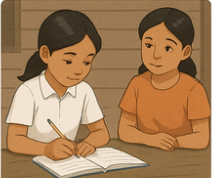
    Sophea is a happy grandmother, now remembering the times when she was a young, 10 year old girl.

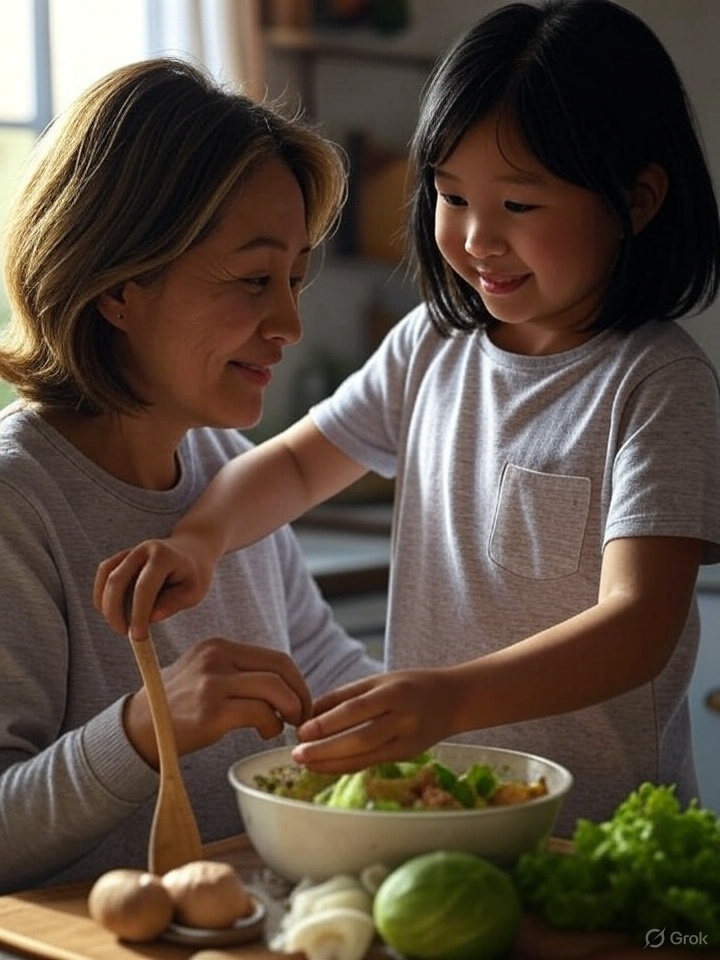
    She lived with her family. Her family was small but happy. Sophea had a mother, a father, and a little brother. Her mother’s name was Anna. Anna was kind and loved to cook. Her father’s name was Tom. Tom was strong and worked hard.

    Sophea’s little brother was Ben. Ben was 4 years old. He was funny and loved to play with toys. Sophea and Ben liked to laugh together.

    Sophea loved her family. They loved her too. They were always happy when they were together.
    ____________________

    Vocabulary:

    • to look back (past simple=>looked) – to think about the past
    • childhood – the time when you are a child
    • grandmother – the mother of your mother or father
    • to remember (remembered) – to keep something in your mind
    • small – not big
    • happy – feeling good, not sad
    • to be kind (was/were) – to be nice and helpful
    • to love to cook (loved) – to like cooking very much
    • to be strong (was/were) – to have power in your body
    • to work hard (worked) – to do a lot of work
    • to be funny (was/were) – to make people laugh
    • to play (played) – to do fun things, like games
    • toys – things children use to play, like dolls or cars
    • to laugh together (laughed) – to make a happy sound with someone
    • always – every time, at all times
    • to be together (was/were) – to be with other people

    ###################

    Topic: Asking past tense questions when the answer is the subject

    1. Normal past questions with “did”:
      • When the answer is not the subject, we use:
        Did + subject + infinitive?
        Example:
        • Question: Did she buy a book?
        • Answer: Yes, she bought a book.
    2. When the answer is the subject:
      • If the answer itself is the subject, we do not use “did” in the question.
      • Instead, we ask:
        Who + past verb?
        Example:
        • Statement: She bought a book.
        • Question: Who bought a book?
        • Answer: She bought a book.

    ###################

    True or false?

    1. Sophea was 10 years old.
    2. Sophea lived with her grandmother.
    3. Sophea’s family was big.
    4. Sophea’s mother was Anna.
    5. Anna was kind and loved to cook.
    6. Tom was weak.
    7. Tom worked hard.
    8. Ben was 8 years old.
    9. Ben loved to play with toys.
    10. Sophea and Ben never ( zero times) laughed together.
    11. Sophea loved her family.
    12. They were never happy together.

    True: 1,4,5,7,9,11
    ###################


    ___________________

    Now make the following sentences negative:

    1. Sophea was a young girl.
    2. She was 10 years old.
    3. She lived with her family.
    4. Her family was small.
    5. Her mother’s name was Anna.
    6. Anna was kind.
    7. Her father’s name was Tom.
    8. Tom worked hard.
    9. Sophea’s little brother was Ben.
    10. Sophea and Ben liked to laugh together.

    _________________________________

    Correct version:

    1. Sophea was not a young girl.
    2. She was not 10 years old.
    3. She did not live with her family.
    4. Her family was not small.
    5. Her mother’s name was not Anna.
    6. Anna was not kind.
    7. Her father’s name was not Tom.
    8. Tom did not work hard.
    9. Sophea’s little brother was not Ben.
    10. Sophea and Ben did not like to laugh together.

    ####################

    Now rewrite the following sentences as questions:

    1. Sophea was a young girl.
    2. She was 10 years old.
    3. She lived with her family.
    4. Her family was small but happy.
    5. Her mother’s name was Anna.
    6. Anna was kind.
    7. Her father’s name was Tom.
    8. Tom worked hard.
    9. Sophea’s little brother was Ben.
    10. Sophea and Ben liked to laugh together.

    _____________________

    You write:

    1. Was Sophea a young girl?

      3. Did she live with her family?

      _________________

    Correct version:

    1. Was Sophea a young girl?
    2. Was she 10 years old?
    3. Did she live with her family?
    4. Was her family small but happy?
    5. Was her mother’s name Anna?
    6. Was Anna kind?
    7. Was her father’s name Tom?
    8. Did Tom work hard?
    9. Was Sophea’s little brother Ben?
    10. Did Sophea and Ben like to laugh together?

    ##################

    Correct the following sentences.

    1. Sophea was 12 years old.
      You write: No, she was not 12 years old. She was 10 years old.
    2. She lived with her grandmother.
      You write: No, she didn’t live with her grandmmother. She live with her family.
      ——————————
    1. Sophea was 12 years old.
    2. She lived with her grandmother.
    3. Her family was big.
    4. Her mother’s name was Mary.
    5. Anna was unfriendly.
    6. Her father’s name was Jack.
    7. Tom was weak.
    8. Tom worked only on weekdays.
    9. Sophea’s little brother was 6 years old.

    __________________________
    Correct version:

    1. No, she was not 12 years old. She was 10 years old.
    2. No, she did not live with her grandmother. She lived with her family.
    3. No, her family was not big. Her family was small.
    4. No, her mother’s name was not Mary. Her mother’s name was Anna.
    5. No, Anna was not unfriendly. She was kind.
    6. No, her father’s name was not Jack. His name was Tom.
    7. No, Tom was not weak. He was strong.
    8. No, Tom did not only work on weekdays. He worked hard.
    9. No, Sophea’s little brother was not 6 years old. He was 4 years old.

    ######################

    Fill in the correct form of the verb in past simple:

    Sophea __________ (to be) a young girl.
    She __________ (to be) 10 years old.
    She __________ (live) with her family.
    Her family __________ (to be) small but happy.
    Sophea has a mother, a father, and a little brother.
    Her mother’s name is Anna.
    Anna __________ (to be) kind and loves to cook.
    Her father’s name __________ (to be) Tom.
    Tom __________ (to be) strong and works hard.
    Sophea’s little brother __________ (to be) Ben.
    Ben __________ (to be)4 years old.
    He __________ (to be) funny and __________ (love) to play with toys.
    Sophea and Ben __________ (like) to laugh together.
    Sophea __________ (love) her family.
    They __________ (love) her too.
    They __________ (to be) always happy when they __________ (to be)together.

    ————————————-

    Correct version:
    Sophea was a young girl. She was 10 years old. She lived with her family.

    Her family was small but happy. Sophea had a mother, a father, and a little brother. Her mother’s name was Anna. Anna was kind and loved to cook. Her father’s name was Tom. Tom was strong and worked hard.

    Sophea’s little brother was Ben. Ben was 4 years old. He was funny and loved to play with toys. Sophea and Ben liked to laugh together.

    Sophea loved her family. They loved her too. They were always happy when they were together.
    #################


    Exercise 1: form questions

    Rewrite the sentences as questions in the past simple.

    1. She visited her grandmother yesterday. →
      Did she____________________?
    2. Tom played football last weekend. → ____________________?
    3. They watched a movie on Friday.
      → ____________________?
    4. Ben helped his mother in the garden. → ____________________?
    5. Sophea laughed with her brother. → ____________________?

    Answer examples:

    1. Did she visit her grandmother yesterday?
    2. Did Tom play football last weekend?
    3. Did they watch a movie on Friday?
    4. Did Ben help his mother in the garden?
    5. Did Sophea laugh with her brother?

    Exercise 2: questions

    Write questions using the words in parentheses.

    1. She baked a cake yesterday. (What) → What____________________?
    2. Tom cleaned his room last night. (Who) → ____________________?
    3. They went to the park on Saturday. (Where) → ____________________?
    4. Ben read a book last evening. (Which book) → ____________________?
    5. Sophea painted a picture yesterday. (When) → ____________________?

    Answer examples:

    1. What did she bake yesterday?
    2. Who cleaned his room last night?
    3. Where did they go on Saturday?
    4. Which book did Ben read last evening?
    5. When did Sophea paint a picture?

    Exercise 3: Gap-Filling Questions

    Complete the questions in Past Simple.

    1. Did you_______ (you / see) the new movie yesterday?
    2. _______ (she / play) tennis last weekend?
    3. _______ (they / go) to school on Monday?
    4. _______ (he / eat) pizza for lunch?
    5. _______ (we / have) fun at the party?

    Answer examples:

    1. Did you see the new movie yesterday?
    2. Did she play tennis last weekend?
    3. Did they go to school on Monday?
    4. Did he eat pizza for lunch?
    5. Did we have fun at the party?

    Exercise 4: Correct the questions – what is wrong?

    1. Did she visited her friend yesterday? → ____________________
    2. Did they goes to the park last weekend? → ____________________
    3. Did he played football on Saturday? → ____________________
    4. Did you eated breakfast this morning? → ____________________
    5. Did we saw the movie yesterday? → ____________________

    Answers:

    1. Did she visit her friend yesterday?
    2. Did they go to the park last weekend?
    3. Did he play football on Saturday?
    4. Did you eat breakfast this morning?
    5. Did we see the movie yesterday?

    ################

    Form questions to which the word/s given is/are the answer:

    Example 1: Sophea loved her family.


    a) Sophea: Who loved her family?
    b) her family: Who did she love?
    c) loved her family: What did Sophea do?

    Example 2: Her mother loved to cook fish soup.

    a) Her mother: Who loved to cook fish soup?
    b) loved to cook fish soup: What did she do?
    d) to cook fish soup: What did her mother love to do?
    e) fish soup: What did her mother love to cook?
    f) fish: Which soup did her mother love to cook?

    Now try yourself:

    1. Her brother liked Italian pizza:
      a) Her brother:__________
      b) liked Italian pizza: __________
      c) Italian pizza:__________
    2. Her father worked in the garden.
      a) Her father:__________
      b) worked in the garden: __________
      c) in the garden:__________
    3. Her brother had many toys.
      a) Her brother:__________
      b) many toys: __________
      c) Her: __________
    4. Sophea and her brother laughed a lot.
      a) Sophea and her brother:__________
      b) laughed a lot: __________
    5. Her brother cooked fish soup every day.
      a) Her brother:__________
      b) Her:__________
      c) cooked fish soup: __________
      d) fish soup: __________
      e) fish: __________

    ——————————

    Correct answers:

    1. Her brother liked Italian pizza:
    a) Her brother: Who liked Italian pizza?
    b) liked Italian pizza: What did her brother do?
    c) Italian pizza: What did her brother like?

    2. Her father worked in the garden:
    a) Her father: Who worked in the garden?
    b) worked in the garden: What did her father do?
    c) in the garden: Where did her father work?

    3. Her brother had many toys:
    a) Her brother: Who had many toys?
    b) many toys: What did her brother have?
    c) Her: Whose brother had many toys?

    4. Sophea and her brother laughed a lot:
    a) Sophea and her brother: Who laughed a lot?
    b) laughed a lot: What did Sophea and her brother do?

    5. Her brother cooked fish soup every day:
    a) Her brother: Who cooked fish soup every day?
    b) Her: Whose brother cooked fish soup every day?
    c) cooked fish soup: What did her brother do every day?
    d) fish soup: What did her brother cook every day?
    e) fish: Which soup did her brother cook?

    #################


    Her sister baked chocolate cake every Sunday.

    a) Her sister: ___________________________
    b) Her: ___________________________
    c) baked chocolate cake: ___________________________
    d) chocolate cake: ___________________________
    e) chocolate: ___________________________

    ———————-
    Answer key:
    1:
    a) Who baked chocolate cake every Sunday?
    b) Whose sister baked chocolate cake every Sunday?
    c) What did her sister do every Sunday?
    d) What did her sister bake every Sunday?
    e) Which cake did her sister bake?

    ################

    Some more again:


    1. His father repaired the old car every Saturday.

    a) His father: ___________________________
    b) His: ___________________________
    c) repaired the old car: ___________________________
    d) the old car: ___________________________
    e) car: ___________________________

    Answers:
    a) Who repaired the old car every Saturday?
    b) Whose father repaired the old car every Saturday?
    c) What did his father do every Saturday?
    d) What did his father repair every Saturday?
    e) Which car did his father repair?


    2. My brother painted the bedroom last weekend.

    a) My brother: ___________________________
    b) My: ___________________________
    c) painted the bedroom: ___________________________
    d) the bedroom: ___________________________

    Answers:
    a) Who painted the bedroom last weekend?
    b) Whose brother painted the bedroom last weekend?
    c) What did my brother do last weekend?
    d) What did my brother paint last weekend?


    3. Her mother planted flowers in the garden.

    a) Her mother: ___________________________
    b) Her: ___________________________
    c) planted flowers: ___________________________
    d) flowers: ___________________________
    e) in the garden: ___________________________

    Answers:
    a) Who planted flowers in the garden?
    b) Whose mother planted flowers in the garden?
    c) What did her mother do?
    d) What did her mother plant in the garden?
    e) Where did her mother plant flowers?


    4. Their teacher talked a lot in the lesson.

    a) Their teacher: ___________________________
    b) Their: ___________________________
    c) talked in the lesson: ___________________________
    d) in the lesson: ___________________________

    Answers:
    a) Who talked a lot in the lesson?
    b) Whose teacher talked a lot in the lesson?
    c) What did their teacher do in the lesson?
    d) When did their teacher talk a lot?


    5. Our friends watched the movie yesterday.

    a) Our friends: ___________________________
    b) Our: ___________________________
    c) watched the movie: ___________________________
    d) the movie: ___________________________
    e) yesterday: ___________________________

    Answers:
    a) Who watched the movie yesterday?
    b) Whose friends watched the movie yesterday?
    c) What did our friends do yesterday?
    d) What did our friends watch yesterday?
    e) When did our friends watch the movie?


    ############

  • Kevin’s hotel adventure…oops! (A1, present simple)

    • how not to work in tourism: lessons from Kevin – but one day he will succeed, he says.

    Kevin wants to work in tourism and hotels. He thinks the job is easy and fun. He wants a good salary and a nice life. But the job is very different.

    Kevin does not have the right skills. He is not good at talking to customers. He does not listen to them. He does not work well with his team. He is not patient. He often makes mistakes.

    The work is also very hard. Kevin works many hours every day. Sometimes he works at night. Sometimes he works on weekends. He feels tired and stressed. He does not finish his tasks on time.

    Kevin does not plan his career. He changes jobs very often. He does not know how to get better jobs. He does not ask for help from his teachers or older workers. He does not learn new skills.

    Kevin also has a bad attitude. He does not want to do small jobs. He wants only the easy and fun work. He does not respect the rules. He does not follow the instructions of his managers.

    Because of this, Kevin does not succeed in hospitality and tourism. He leaves his job. He feels unhappy and disappointed.


    >>>>>>>Do not be Kevin<<<<<<<


    ____________________

    Vocabulary:


    an adventure – an exciting or unusual experience
    to be easy – not difficult
    to be fun – something that makes you happy
    salary – the money you get for work
    the right skills – the abilities you need to do a job
    talk to customers – speak with the people who buy things or use services
    to listen – to pay attention to what someone says
    to be patient – to wait without getting angry
    to make a mistake – to do something wrong
    sometimes – not always, only now and then
    at night – when it is dark, after the evening
    to feel tired – to be without energy
    to be stressed – to feel worried or nervous
    to finish a task – to complete a job or work
    on time – not late, at the right time
    to change a job – to stop one job and start another
    skills – the abilities to do things well
    a bad attitude – thinking or acting in a wrong or negative way
    a small job – an easy or little task
    fun work – work that is enjoyable
    to respect rules – to follow the rules
    to follow instructions – to do what someone tells you
    to succeed – to do something well or reach your goal
    hospitality business – jobs in hotels, restaurants, or tourism
    to be disappointed – to feel unhappy because something is not good or does not happen


    ################

    Multiple-choice, one answer correct – part 1:


    1. an adventure
      a) to wait without getting angry
      b) an exciting or unusual experience
      c) not difficult
    2. to be easy
      a) not difficult
      b) to feel worried or nervous
      c) to do something wrong
    3. to be fun
      a) to pay attention to what someone says
      b) the money you get for work
      c) something that makes you happy
    4. salary
      a) to stop one job and start another
      b) the money you get for work
      c) not always, only now and then
    5. the right skills
      a) to follow the rules
      b) to complete a job or work
      c) the abilities you need to do a job
    6. talk to customers
      a) speak with the people who buy things or use services
      b) to feel without energy
      c) to do something wrong
    7. to listen
      a) thinking or acting in a wrong way
      b) to wait without getting angry
      c) to pay attention to what someone says
    8. to be patient
      a) not difficult
      b) to wait without getting angry
      c) to feel tired
    9. to make a mistake
      a) to do something wrong
      b) work that is enjoyable
      c) something that makes you happy
    10. sometimes
      a) to follow instructions
      b) to do something well
      c) not always, only now and then
    11. at night
      a) when it is dark, after the evening
      b) to complete a task
      c) to speak with customers
    12. to feel tired
      a) to do something wrong
      b) to be without energy
      c) not difficult
    13. to be stressed
      a) to complete a job or work
      b) to feel worried or nervous
      c) an easy or little task
      —————————————-

    Answers:

    1. b, 2. a, 3. c, 4. b, 5. c,
      6. a, 7. c, 8. b, 9. a, 10. c,
      11. a, 12. b, 13. b

    ________________________

    Full version:


    an adventure – that means: an exciting or unusual experience
    to be easy – that means: not difficult
    to be fun – that means: something that makes you happy
    salary – that means: the money you get for work
    the right skills – that means: the abilities you need to do a job
    talk to customers – that means: speak with the people who buy things or use services
    to listen – that means: to pay attention to what someone says
    to be patient – that means: to wait without getting angry
    to make a mistake – that means: to do something wrong
    sometimes – that means: not always, only now and then
    at night – that means: when it is dark, after the evening
    to feel tired – that means: to be without energy
    to be stressed – that means: to feel worried or nervous


    ###################

    Multiple-choice, one answer correct – part 2:

    14. to finish a task
    a) to wait without getting angry
    b) to feel unhappy
    c) to complete a job or work

    15. on time
    a) not late, at the right time
    b) to do something wrong
    c) to follow instructions

    16. to change a job
    a) work that is enjoyable
    b) to stop one job and start another
    c) to feel sad

    17. skills
    a) the abilities to do things well
    b) not difficult
    c) to follow the rules

    18. a bad attitude
    a) thinking or acting in a wrong or negative way
    b) work that is enjoyable
    c) an easy or little task

    19. a small job
    a) to follow rules
    b) an easy or little task
    c) to feel unhappy

    20. fun work
    a) to complete a task
    b) to do what someone tells you
    c) work that is enjoyable

    21. to respect rules
    a) to follow the rules
    b) to stop one job and start another
    c) to feel tired

    22. to follow instructions
    a) thinking or acting in a wrong way
    b) to do what someone tells you
    c) to do something well

    23. to succeed
    a) to do something well or reach your goal
    b) work that is enjoyable
    c) to complete a job or work

    24. hospitality business
    a) to feel unhappy
    b) an easy or little task
    c) jobs in hotels, restaurants, or tourism

    25. to be disappointed
    a) to follow the rules
    b) to feel unhappy
    c) to feel unhappy because something is not good or does not happen


    Answers:
    14. c, 15. a, 16. b, 17. a, 18. a,
    19. b, 20. c, 21. a, 22. b,
    23. a, 24. c, 25. c


    ——————–

    Full version:


    14. to finish a task – that means: to complete a job or work
    15. on time – that means: not late, at the right time
    16. to change a job – that means: to stop one job and start another
    17. skills – that means: the abilities to do things well
    18. a bad attitude – that means: thinking or acting in a wrong or negative way
    19. a small job – that means: an easy or little task
    20. fun work – that means: work that is enjoyable
    21. to respect rules – that means: to follow the rules
    22. to follow instructions – that means: to do what someone tells you
    23. to succeed – that means: to do something well or reach your goal
    24. hospitality business – that means: jobs in hotels, restaurants, or tourism
    25. to be disappointed – that means: to feel unhappy because something is not good or does not happen


    ##################


    Gap-fill exercise , one answer correct – part 1:

    1. Kevin must pay attention and __________ to his teacher.
    a) listen
    b) talk to customers
    c) have fun

    2. Kevin is not good at talking. He finds it hard __________.
    a) to make a mistake
    b) to listen
    c) talk to customers

    3. He works long hours __________.
    a) have fun
    b) sometimes
    c) at night

    4. Some jobs need special abilities. Kevin needs __________.
    a) the right skills
    b) to be stressed
    c) to be easy

    5. He feels happy because the work is __________.
    a) salary
    b) fun
    c) at night

    6. Kevin speaks with customers every day. He has to __________.
    a) be patient
    b) talk to customers
    c) listen

    7. Kevin has many problems. He is very __________.
    a) stressed
    b) tired
    c) an adventure

    8. After work, Kevin has no energy. He __________.
    a) to be easy
    b) feels tired
    c) sometimes

    9. The money he gets every month is his __________.
    a) fun
    b) sometimes
    c) salary

    10. Kevin wants to go on __________.
    a) be stressed
    b) fun
    c) an adventure

    11. He sometimes does something wrong. He __________.
    a) makes a mistake
    b) talks to customers
    c) listens

    12. He must wait without getting angry. He has to __________.
    a) be patient
    b) the right skills
    c) at night

    13. Kevin must pay attention and __________ to understand instructions.
    a) talk to customers
    b) listen
    c) make a mistake


    Answers:

    1. a, 2. c, 3. c, 4. a, 5. b,
      6. b, 7. a, 8. b, 9. c, 10. c,
      11. a, 12. a, 13. b

    __________________

    Correct version:

    1. Kevin must pay attention and listen to his teacher.

    2. Kevin is not good at talking. He finds it hard talk to customers.

    3. He works long hours at night.

    4. Some jobs need special abilities. Kevin needs the right skills.

    5. He feels happy because the work is fun.

    6. Kevin speaks with customers every day. He has to talk to customers.

    7. Kevin has many problems. He is very stressed.

    8. After work, Kevin has no energy. He feels tired.

    9. The money he gets every month is his salary.

    10. Kevin wants to go on an adventure.

    11. He sometimes does something wrong. He makes a mistake.

    12. He must wait without getting angry. He has to be patient.

    13. Kevin must pay attention and listen to understand instructions.


    ################

    Gap-fill exercise , one answer correct – part 2:


    14. I always try __________ my work before the deadline.
    a) to finish
    b) to change a job
    c) fun work

    15. If you want to be successful, you need __________.
    a) to follow instructions
    b) to succeed
    c) a small job

    16. I am late today, but I usually arrive __________.
    a) on time
    b) at night
    c) to feel tired

    17. Kevin decided to __________ because he did not like his old position.
    a) fun work
    b) change a job
    c) a small job

    18. She has many __________ that help her do her job well.
    a) skills
    b) to follow instructions
    c) to respect rules

    19. Tom has a __________; he does not listen and often complains.
    a) a bad attitude
    b) fun work
    c) a small job

    20. This job is very easy and enjoyable. It is __________.
    a) to follow instructions
    b) fun work
    c) a small job

    21. In hotels and restaurants, the __________ is very important for the economy.
    a) hospitality business
    b) to succeed
    c) skills

    22. You must always __________ when your manager tells you something.
    a) to be disappointed
    b) to follow instructions
    c) fun work

    23. Every worker must always __________ to keep the company organized.
    a) fun work
    b) respect rules
    c) to succeed

    24. Peter was __________ because the project was canceled.
    a) a small job
    b) fun work
    c) disappointed

    25. My first task is very simple. It is __________.
    a) a small job
    b) success
    c) fun work

    26. She completes all her tasks very well and always reaches her goals. She wants __________.
    a) to follow instructions
    b) to get more money
    c) to succeed


    Answer Key (one line, exactly 4 a, 4 b, 5 c):

    1. a, 15. b, 16. a, 17. b, 18. a,
      19. a, 20. b, 21. a, 22. b, 23. b,
      24. c, 25. a, 26. c

    _________________________

    14. I always try to finish my work before the deadline. (a)

    15. If you want to be successful, you need to succeed. (b)

    16. I am late today, but I usually arrive on time. (a)

    17. Kevin decided to change a job because he did not like his old position. (b)

    18. She has many skills that help her do her job well. (a)

    19. Tom has a bad attitude; he does not listen and often complains. (c)

    20. This job is very easy and enjoyable. It is fun work. (b)

    21. In hotels and restaurants, the hospitality business is very important for the economy. (a)

    22. You must always follow instructions when your manager tells you something. (b)

    23. Every worker must always respect rules to keep the company organized. (b)

    24. Peter was disappointed because the project was canceled. (c)

    25. My first task is very simple. It is a small job. (a)

    26. She completes all her tasks very well and always reaches her goals. She wants to succeed. (c)

    ################


    True or false:

    1. Kevin often makes mistakes at work.
    2. He likes every task in hospitality.
    3. Kevin sometimes feels tired after work.
    4. He wants to succeed in his job.
    5. Kevin always follows instructions perfectly.
    6. He changes jobs because he does not like his old position.
    7. Kevin is happy with all his results.
    8. He sometimes completes tasks successfully.
    9. Kevin has a bad attitude sometimes.
    10. He arrives late to work at times.
    11. Kevin works only at night.
    12. He finishes all tasks on time.
    13. Kevin respects rules only sometimes.
    14. He struggles in hospitality because of mistakes.

    ______________________


    True: 1, 3, 4, 6, 8, 9, 10, 13

    ______________________

    Correct version:

    1. Kevin often makes mistakes at work. True
    2. He likes every task in hospitality. False – true is: Kevin does not like every task in hospitality.
    3. Kevin sometimes feels tired after work. True
    4. He wants to succeed in his job. True
    5. Kevin always follows instructions perfectly. False – true is: Kevin does not always follow instructions.
    6. He changes jobs because he does not like his old position. True
    7. Kevin is happy with all his results. False – true is: Kevin is often disappointed with his results.
    8. He sometimes completes tasks successfully. True
    9. Kevin has a bad attitude sometimes. True
    10. He arrives late to work at times. True
    11. Kevin works only at night. False – true is: Kevin does not work only at night.
    12. He finishes all tasks on time. False – true is: Kevin does not finish all tasks on time.
    13. Kevin respects rules only sometimes. True
    14. He struggles in hospitality because of mistakes. True

    #################


    Match the words with their correct definitions:

    Words:

    1. to succeed
    2. a small job
    3. to be stressed
    4. skills
    5. hospitality business
    6. to finish a task
    7. a bad attitude
    8. to be disappointed
    9. to follow instructions
    10. fun work
    11. to change a job
    12. to respect rules
    13. to listen
    14. salary


    Definitions:

    a) work that is enjoyable
    b) jobs in hotels, restaurants, or tourism
    c) to complete a job or work
    d) to stop one job and start another
    e) to feel unhappy because something is not good or does not happen
    f) the abilities to do things well
    g) money you get for your work
    h) to do something well or reach your goal
    i) an easy or little task
    j) to do what someone tells you
    k) to feel worried or tired because of pressure
    l) to think or act in a wrong or negative way
    m) to pay attention when someone speaks
    n) to follow the rules


    _________________________

    Correct answers:

    1.h, 2. i, 3. k, 4. f, 5. b,
    6. c, 7. l, 8. e, 9. j, 10. a,
    11. d, 12. n, 13. m, 14. g
    _________________

    Correct version:

    1. to succeed is to do something well or reach your goal
    2. a small job is an easy or little task
    3. to be stressed is to feel worried or tired because of pressure
    4. skills is the abilities to do things well
    5. hospitality business is jobs in hotels, restaurants, or tourism
    6. to finish a task is to complete a job or work
    7. a bad attitude is to think or act in a wrong or negative way
    8. to be disappointed is to feel unhappy because something is not good or does not happen
    9. to follow instructions is to do what someone tells you
    10. fun work is work that is enjoyable
    11. to change a job is to stop one job and start another
    12. to respect rules is to follow the rules
    13. to listen is to pay attention when someone speaks
    14. salary is money you get for your work

    ############


    Sentence Matching – complete

    1. Kevin has
    2. Kevin changes jobs
    3. He sometimes
    4. He is
    5. Kevin
    6. Kevin wants
    7. He does not always
    8. He sometimes

    to be added:
    A. to succeed
    B. a bad attitude
    C. finishes tasks successfully
    D. feels tired
    E. makes mistakes
    F. disappointed because a project was canceled
    G. follow instructions
    H. because he does not like his old position

    __________________

    Correct version:

    1. Kevin has a bad attitude.
    2. Kevin changes jobs because he does not like his old position.
    3. He sometimes finishes tasks successfully.
    4. He is disappointed because a project was canceled.
    5. Kevin makes mistakes.
    6. Kevin wants to succeed.
    7. He does not always follow instructions.
    8. He sometimes feels tired.

    ###############


    Answer with ‚Yes, he does‘, or ‚No, he doesn’t‘; if answer is negative add correct statement:

    1. Does Kevin want to succeed?
    2. Does Kevin always finish tasks on time?
    3. Does Kevin sometimes make mistakes?
    4. Does Kevin have a bad attitude sometimes?
    5. Does Kevin always follow instructions?
    6. Does Kevin sometimes feel tired?
    7. Does he change jobs because he does not like his old position?
    8. Does Kevin sometimes finish tasks successfully?
    9. Does Kevin respect rules only sometimes?
    10. Does Kevin struggle in hospitality because of mistakes?
    11. Does Kevin enjoy every task?
    12. Does Kevin always arrive on time?
    13. Does Kevin work only at night?
    14. Does Kevin always succeed in his job?

    Answers

    1. Yes, he does. Kevin wants to succeed.
    2. No, he doesn’t. Kevin does not always finish tasks on time.
    3. Yes, he does. Kevin sometimes makes mistakes.
    4. Yes, he does. Kevin has a bad attitude sometimes.
    5. No, he doesn’t. Kevin does not always follow instructions.
    6. Yes, he does. Kevin sometimes feels tired.
    7. Yes, he does. He changes jobs because he does not like his old position.
    8. Yes, he does. Kevin sometimes finishes tasks successfully.
    9. Yes, he does. Kevin respects rules only sometimes.
    10. Yes, he does. Kevin struggles in hospitality because of mistakes.
    11. No, he doesn’t. Kevin does not enjoy every task.
    12. No, he doesn’t. Kevin does not always arrive on time.
    13. No, he doesn’t. Kevin does not work only at night.
    14. No, he doesn’t. Kevin does not always succeed in his job.

    ###################

    Complete, fill in, words below:

    adventure – instructions – tasks – hospitality –
    stressed – change – mistakes – succeed

    I work in the ___________ business. I want to succeed, but every day is difficult.
    I try to finish tasks, but I make __________ all the time.
    I do not always follow __________ and sometimes have a bad attitude.
    I __________ jobs because I do not like my old position. I sometimes finish __________ successfully, but not often.
    I feel tired and __________, and some work is not fun. I respect rules only sometimes.
    Every day is an __________, but I fail again and again.
    Maybe one day I will __________!

    ###################

    Correct version:

    Kevin works in the hospitality business. He wants to succeed, but every day is difficult. He tries to finish tasks, but he makes mistakes all the time. He does not always follow instructions and sometimes has a bad attitude. Kevin changes jobs because he does not like his old position. He sometimes finishes tasks successfully, but not often. He feels tired and stressed, and some work is not fun. Kevin respects rules only sometimes. Every day is an adventure, but Kevin fails again and again. Maybe one day he will succeed!

    ###################

    Rewrite the story starting with:

    >>>>>>>>>>I work in the hospitality business. I want to…………

    and make all changes necessary.
    _________________
    Correct version:

    I work in the hospitality business. I want to succeed, but every day is difficult. I try to finish tasks, but I make mistakes all the time. I do not always follow instructions and sometimes have a bad attitude. I change jobs because I do not like my old position. I sometimes finish tasks successfully, but not often. I feel tired and stressed, and some work is not fun. I respect rules only sometimes. Every day is an adventure, but I fail again and again. Maybe one day I will succeed!

  • Is tourism good or bad for Cambodian culture? Some arguments (A1+/A2-), present simple)

    • tourism brings life to Cambodian traditions?
    • some thoughts, inspired by a discussion of the Shinta Mani Foundation youngsters.

    version 1:

    version 2:


    Tourism is good because it helps people. Tourists come to see temples, markets, and villages. They pay for guides, food, and souvenirs. This money helps families and communities. People can also learn about their culture and keep traditions alive. For example, young people can learn traditional dances, crafts, and music because tourists are interested. Tourism can also help protect old buildings and temples. Without tourists, some places might be forgotten or destroyed.

    But tourism can be bad too. Sometimes tourists do not respect local rules. They can make noise or touch holy places. Some traditions can change because people do them only for money. Many shops and hotels take space in villages, and some people move to the city. The culture can lose its original meaning.

    In my opinion, tourism is good if people are careful.
    Visitors should respect the culture and traditions.
    Local people should share their culture in a natural way, not only for money.
    If tourism is responsible, it can help Cambodian culture grow and survive for the future.

    __________________

    Vocabulary:

    • an argument – a reason to agree or disagree with something
    • a tradition – something people do in a group for a long time
    • to be inspired – to feel excited to do something
    • a village – a small place where people live
    • a guide – a person who shows tourists a place
    • a community – a group of people who live or work together
    • a culture – the way people live, their beliefs, and their habits
    • to keep traditions alive – to continue old customs and ways
    • for example – to show an example
    • a craft – something made by hand, like art or tools
    • to be interested – to want to know or learn about something
    • to protect – to keep safe
    • to forget – to not remember
    • to be destroyed – to be broken or ruined
    • to respect – to treat well or politely
    • local rules – laws or rules in a place
    • to take a space – to use an area for something
    • to move to the city – to leave the village and live in a city
    • to lose meaning – to no longer be important or special
    • an opinion – what someone thinks about something
    • to be careful – to pay attention and avoid problems
    • to share culture – to show your culture to others
    • for money – to do something to get money
    • to be responsible – to do things in the right way
    • to grow – to get bigger or better
    • to survive – to live and continue
    • the future – the time that comes after now

    ##################

    Multiple choice, one answer correct:

    1-19


    1. What is an argument?
    a) A type of game
    b) A reason to agree or disagree with something
    c) A kind of food

    2. What is a tradition?
    a) Something people do in a group for a long time
    b) A new game
    c) A type of music

    3. What does it mean to be inspired?
    a) To feel excited to do something
    b) To be hungry
    c) To be tired

    4. What is a village?
    a) A small place where people live
    b) A big city
    c) A type of market

    5. Who is a guide?
    a) A person who cooks food
    b) A person who shows tourists a place
    c) A person who cleans houses

    6. What is a community?
    a) A group of animals
    b) A type of building
    c) A group of people who live or work together

    7. What does culture mean?
    a) The way people live, their beliefs, and their habits
    b) A sports game
    c) A type of music only

    8. What does “to keep traditions alive” mean?
    a) To continue old customs and ways
    b) To eat new food
    c) To build new houses

    9. What does “for example” mean?
    a) To tell a secret
    b) To show an example
    c) To ask a question

    10. What is a craft?
    a) Something made by hand, like art or tools
    b) A kind of dance
    c) A type of food

    11. What does “to be interested” mean?
    a) To run fast
    b) To want to know or learn about something
    c) To sleep

    12. What does it mean to protect?
    a) To break
    b) To keep safe
    c) To forget

    13. What does “to forget” mean?
    a) To not remember
    b) To teach
    c) To remember

    14. What does “to be destroyed” mean?
    a) To be built
    b) To be painted
    c) To be broken or ruined

    15. What does respect mean?
    a) To hit someone
    b) To treat well or politely
    c) To laugh

    16. What are local rules?
    a) Games to play
    b) Laws or rules in a place
    c) Types of food

    17. What does “to take a space” mean?
    a) To eat in a place
    b) To clean a room
    c) To use an area for something

    18. What does “to move to the city” mean?
    a) To leave the village and live in a city
    b) To stay at home
    c) To visit a friend

    19. What does “to lose meaning” mean?
    a) To teach something
    b) To no longer be important or special
    c) To understand something
    ————————-

    20-27

    20. What is an opinion?
    a) A building
    b) A type of food
    c) What someone thinks about something

    21. What does “to be careful” mean?
    a) To run fast
    b) To sleep
    c) To pay attention and avoid problems

    22. What does “to share culture” mean?
    a) To show your culture to others
    b) To eat food
    c) To hide your culture

    23. What does “for money” mean?
    a) To do something for fun
    b) To do something to get money
    c) To do something for free

    24. What does “to be responsible” mean?
    a) To make mistakes
    b) To do things in the right way
    c) To ignore rules

    25. What does “to grow” mean?
    a) To get bigger or better
    b) To sleep
    c) To get smaller

    26. What does “to survive” mean?
    a) To fall
    b) To live and continue
    c) To forget

    27. What is the future?
    a) The time to sleep
    b) The time that comes after now
    c) The time that is past


    __________________

    Answers:

    1 b, 2 a, 3 a, 4 a, 5 b, 6 c, 7 a,

    8 a, 9 b, 10 a, 11 b, 12 b, 13 a,

    14 c, 15 b, 16 b, 17 c, 18 a, 19 b,

    20 c, 21 c, 22 a, 23 b, 24 b,

    25 a, 26 b, 27 b

    __________________

    Full version:

    1-18


    1. What is an argument?
    That means: a reason to agree or disagree with something (b)

    2. What is a tradition?
    That means: something people do in a group for a long time (a)

    3. What does it mean to be inspired?
    That means: to feel excited to do something (a)

    4. What is a village?
    That means: a small place where people live (a)

    5. Who is a guide?
    That means: a person who shows tourists a place (b)

    6. What is a community?
    That means: a group of people who live or work together (c)

    7. What does culture mean?
    That means: the way people live, their beliefs, and their habits (a)

    8. What does “to keep traditions alive” mean?
    That means: to continue old customs and ways (a)

    9. What does “for example” mean?
    That means: to show an example (b)

    10. What is a craft?
    That means: something made by hand, like art or tools (a)

    11. What does “to be interested” mean?
    That means: to want to know or learn about something (b)

    12. What does it mean to protect?
    That means: to keep safe (b)

    13. What does “to forget” mean?
    That means: to not remember (a)

    14. What does “to be destroyed” mean?
    That means: to be broken or ruined (c)

    15. What does respect mean?
    That means: to treat well or politely (b)

    16. What are local rules?
    That means: laws or rules in a place (b)

    17. What does “to take a space” mean?
    That means: to use an area for something (c)

    18. What does “to move to the city” mean?
    That means: to leave the village and live in a city (a)
    ——————————–

    19-27

    19. What does “to lose meaning” mean?
    That means: to no longer be important or special (b)

    20. What is an opinion?
    That means: what someone thinks about something (c)

    21. What does “to be careful” mean?
    That means: to pay attention and avoid problems (c)

    22. What does “to share culture” mean?
    That means: to show your culture to others (a)

    23. What does “for money” mean?
    That means: to do something to get money (b)

    24. What does “to be responsible” mean?
    That means: to do things in the right way (b)

    25. What does “to grow” mean?
    That means: to get bigger or better (a)

    26. What does “to survive” mean?
    That means: to live and continue (b)

    27. What is the future?
    That means: the time that comes after now (b)


    ##############

    Gap-fill exercise – part 1


    1. An _______ is a reason to agree or disagree with something.
    a) craft
    b) argument
    c) guide

    2. A _______ is something people do for a long time.
    a) tradition
    b) culture
    c) village

    3. He felt _______ to try something new.
    a) inspired
    b) forgotten
    c) protected

    4. A small place where people live is a _______.
    a) community
    b) village
    c) craft

    5. A person who shows tourists a place is a _______.
    a) guide
    b) culture
    c) tradition

    6. A group of people who live or work together is a _______.
    a) craft
    b) community
    c) inspired

    7. The way people live, their beliefs, and habits is called _______.
    a) destroyed
    b) culture
    c) village

    8. To continue old customs and ways is _______.
    a) keeping traditions alive
    b) forgetting
    c) inspired

    9. “_______” is used to show an example.
    a) craft
    b) tradition
    c) for example

    10. Something made by hand, like art or tools, is a _______.
    a) craft
    b) destroyed
    c) guide

    11. To want to know or learn about something is to be _______.
    a) interested
    b) protected
    c) forgotten

    12. To keep safe is to _______.
    a) inspired
    b) protect
    c) craft

    13. To not remember is to _______.
    a) keeping traditions alive
    b) forget
    c) culture

    14. To be broken or ruined is to be _______.
    a) inspired
    b) interested
    c) destroyed


    Answers:
    1 b, 2 a, 3 a, 4 c, 5 a, 6 b, 7 b,
    8 c, 9 c, 10 c, 11 a, 12 b, 13 b, 14 c
    ________________________

    Full answers:


    1. An argument is a reason to agree or disagree with something. (b)

    2. A tradition is something people do for a long time. (a)

    3. He felt inspired to try something new. (a)

    4. A small place where people live is a village. (c)

    5. A person who shows tourists a place is a guide. (a)

    6. A group of people who live or work together is a community. (b)

    7. The way people live, their beliefs, and habits is called culture. (b)

    8. To continue old customs and ways is keeping traditions alive. (c)

    9. “For example” is used to show an example. (c)

    10. Something made by hand, like art or tools, is a craft. (c)

    11. To want to know or learn about something is to be interested. (a)

    12. To keep safe is to protect. (b)

    13. To not remember is to forget. (b)

    14. To be broken or ruined is to be destroyed. (c)


    ################


    Gap-fill exercise, part 2:

    15. Tourists usually ______ temples when they visit.
    a) respect
    b) forget
    c) break

    16. Every town ______ local rules for visitors.
    a) dances
    b) has
    c) sings

    17. A new shop ______ a space on the street.
    a) sleeps
    b) runs
    c) takes

    18. Many families ______ to the city for work.
    a) move
    b) eat
    c) play

    19. A tradition sometimes ______ meaning if people do it only for money.
    a) runs
    b) eats
    c) loses

    20. Every person ______ an opinion about important things.
    a) has
    b) throws
    c) sleeps

    21. She always ______ careful when she crosses the road.
    a) sings
    b) is
    c) forgets

    22. The school ______ culture with the students.
    a) shares
    b) hides
    c) closes

    23. He ______ dances for money at the festival.
    a) sings
    b) plays
    c) does

    24. A good student ______ responsible in class.
    a) sleeps
    b) is
    c) cries

    25. The tree ______ quickly in the sun.
    a) grows
    b) falls
    c) jumps

    26. The animal ______ in the forest without help.
    a) forgets
    b) paints
    c) survives

    27. Nobody ______ what happens in the future.
    a) runs
    b) eats
    c) knows


    Answers: 15 a, 16 b, 17 c, 18 a, 19 c, 20 a,
    21 b, 22 a, 23 c, 24 b, 25 a, 26 c, 27 c


    _________________
    Full version:

    1. Tourists usually respect temples when they visit.
    2. Every town has local rules for visitors.
    3. A new shop takes a space on the street.
    4. Many families move to the city for work.
    5. A tradition sometimes loses meaning if people do it only for money.
    6. Every person has an opinion about important things.
    7. She always is careful when she crosses the road.
    8. The school shares culture with the students.
    9. He does dances for money at the festival.
    10. A good student is responsible in class.
    11. The tree grows quickly in the sun.
    12. The animal survives in the forest without help.
    13. Nobody knows what happens in the future.

    ################


    True or false:

    1. Visitors should respect culture and traditions.
    2. Tourism never brings money to families and communities.
    3. Sometimes tourists make noise in holy places.
    4. Without tourists, some places may be forgotten.
    5. Shops and hotels always help the village stay the same.
    6. Young people can learn traditional dances and crafts because of tourism.
    7. Local people should only share their culture for money.
    8. Some people move to the city because of tourism.
    9. Tourists never visit villages.
    10. Tourism can help protect temples and old buildings.
    11. Traditions can change if people do them only for money.
    12. The writer thinks tourism is good if people are careful.
    13. Tourists always respect local rules.
    14. Tourism can never change the culture.

    _______________________
    Answers:

    1 True, 2 False, 3 True, 4 True, 5 False,
    6 True, 7 False, 8 True, 9 False, 10 True,
    11 True, 12 True, 13 False, 14 False
    _______________________

    Full version:


    1. Visitors should respect culture and traditions. ✅
    2. Tourism never brings money to families and communities. ❌
      True is: Tourism brings money to families and communities.
    3. Sometimes tourists make noise in holy places. ✅
    4. Without tourists, some places may be forgotten. ✅
    5. Shops and hotels always help the village stay the same. ❌
      True is: Shops and hotels can take space in villages.
    6. Young people can learn traditional dances and crafts because of tourism. ✅
    7. Local people should only share their culture for money. ❌
      True is: Local people should share their culture in a natural way, not only for money.
    8. Some people move to the city because of tourism. ✅
    9. Tourists never visit villages. ❌
      True is: Tourists do visit villages.
    10. Tourism can help protect temples and old buildings. ✅
    11. Traditions can change if people do them only for money. ✅
    12. The writer thinks tourism is good if people are careful. ✅
    13. Tourists always respect local rules. ❌
      True is: Tourists sometimes do not respect local rules.
    14. Tourism can never change the culture. ❌
      True is: Tourism can change the culture.


    ################

    Interview, fill in, words below:

    guides – rules – community – grow –
    villages – money – take space – good –
    crafts – respect – culture – sometimes


    Interview: Is Tourism Good or Bad for Cambodia?

    Journalist (J): Hello! Thank you for talking with me today.

    SMF Member (S): Hello! I am happy to answer your questions.
    ———————————

    J: 1. Who are you and what is your job?
    S: My name is Sok. I work for a local __________ group.

    J: 2. What do you think about tourism in Cambodia?
    S: I think tourism can be __________ for families and communities.

    J: 3. How does tourism help local people?
    S: Tourists pay for __________, souvenirs, and other things. This gives money to families.

    J: 4. Why can tourism help keep traditions alive?
    S: Young people learn dances, music, and _________ because tourists are interested.

    J: 5. Which places benefit from tourism the most?
    S: Temples, markets, and __________ benefit from tourists.

    J: 6. Can tourism ever be bad?
    S: Yes, __________ tourism is bad.

    J: 7. How can tourism be bad for villages?
    S: Some tourists do not _________ local rules. They make noise or touch holy places.

    J: 8. What changes can happen to traditions because of tourism?
    S: Some traditions change if people do them only for _________.

    J: 9. Where do people go because of tourism problems?
    S: Some people move to the city when shops and hotels _________ in villages.

    J: 10. What should tourists do to respect local culture?
    S: Tourists should follow the__________ and respect traditions.

    J: 11. How should local people share their __________?
    S: They should share it naturally, not only for money.

    J: 12. Why is responsible tourism important for the future?
    S: Responsible tourism can help Cambodian culture __________ and survive.


    #################

    Full version:


    Interview: Is Tourism Good or Bad for Cambodia?

    Journalist (J): Hello! Thank you for talking with me today.

    SMF Member (S): Hello! I am happy to answer your questions.
    ——————————

    J: 1. Who are you and what is your job?
    S: My name is Sopheak. I work for a local community group.

    J: 2. What do you think about tourism in Cambodia?
    S: I think tourism can be good for families and communities.

    J: 3. How does tourism help local people?
    S: Tourists pay for guides, souvenirs, and other things. This gives money to families.

    J: 4. Why can tourism help keep traditions alive?
    S: Young people learn dances, music, and crafts because tourists are interested.

    J: 5. Which places benefit from tourism the most?
    S: Temples, markets, and villages benefit from tourists.

    J: 6. Can tourism ever be bad?
    S: Yes, sometimes tourism is bad.

    J: 7. How can tourism be bad for villages?
    S: Some tourists do not respect local rules. They make noise or touch holy places.

    J: 8. What changes can happen to traditions because of tourism?
    S: Some traditions change if people do them only for money.

    J: 9. Where do people go because of tourism problems?
    S: Some people move to the city when shops and hotels take space in villages.

    J: 10. What should tourists do to respect local culture?
    S: Tourists should follow the rules and respect traditions.

    J: 11. How should local people share their culture?
    S: They should share it naturally, not only for money.

    J: 12. Why is responsible tourism important for the future?
    S: Responsible tourism can help Cambodian culture grow and survive.


    ####################

  • Personal pronouns, possessive pronouns, possessive adjectives (A1, beginner, revised version)

    Example Pattern

    • I have a house.
    • It is my house.
    • It is mine.
    • It belongs to me.

    Practice Sentences

    You

    • You have a bike.
    • It is your bike.
    • It is yours.
    • It belongs to you.

    He

    • He has a car.
    • It is his car.
    • It is his.
    • It belongs to him.

    She

    • She has a book.
    • It is her book.
    • It is hers.
    • It belongs to her.

    It

    • It has a tail.
    • It is its tail.
    • The tail is its.
    • It belongs to it.

    We

    • We have a garden.
    • It is our garden.
    • It is ours.
    • It belongs to us.

    They

    • They have a dog.
    • It is their dog.
    • It is theirs.
    • It belongs to them.

    ###################

    • cat – a small animal that people often keep as a pet
    • bag – something you use to carry things
    • shoes – things you wear on your feet
    • room – a part of a house or building with walls and a door
    • ball – a round object used for playing games
    • pen – something you use to write
    • car – a vehicle that people drive
    • hat – something you wear on your head
    • books – objects with pages that you read
    • wallet – a small case for money and cards
    • house – a building where people live
    • dog – an animal often kept as a pet
    • kitchen – a room where people cook food
    • dress – clothes that women or girls wear
    • newspaper – pages with news that people read
    • chair – something you sit on
    • phone – a device for calling or texting people
    • table – furniture with a flat top used for working or eating
    • book – an object with pages that you read


    ###################


    ✏️ Fill in the blanks:

    1. This is _her_ cat. (she)
    2. That is _____ bag. (I)
    3. He is wearing _____ shoes. (he)
    4. We are cleaning _____ room. (we)
    5. They are playing with _____ ball. (they)
    6. This is _____ pen. (you)
    7. That is _____ car. (I)
    8. She loves _____ hat. (she)
    9. They forgot _____ books. (they)
    10. He found _____ wallet. (he)
    11. This is _____ house. (we)
    12. That is _____ dog. (you)
    13. We are cooking in _____ kitchen. (we)
    14. She can’t find _____ dress. (she)
    15. He is reading _____ newspaper. (he)
    16. This is _____ chair. (I)
    17. They are cleaning _____ room. (they)
    18. That is _____ phone. (you)
    19. This is _____ table. (we)
    20. She is holding _____ book. (she)

    _______________
    ✅ Answers:

    1. This is her cat. (she)
    2. That is my bag. (I)
    3. He is wearing his shoes. (he)
    4. We are cleaning our room. (we)
    5. They are playing with their ball. (they)
    6. This is your pen. (you)
    7. That is my car. (I)
    8. She loves her hat. (she)
    9. They forgot their books. (they)
    10. He found his wallet. (he)
    11. This is our house. (we)
    12. That is your dog. (you)
    13. We are cooking in our kitchen. (we)
    14. She can’t find her dress. (she)
    15. He is reading his newspaper. (he)
    16. This is my chair. (I)
    17. They are cleaning their room. (they)
    18. That is your phone. (you)
    19. This is our table. (we)
    20. She is holding her book. (she)

    ###################


    ✏️ Fill in the blanks:

    1. This bag is _hers_ (she).
    2. That pen is ___________ (I).
    3. These shoes are ___________ (he).
    4. This hat is ___________ (you).
    5. That house is ___________ (we).
    6. These books are ___________ (they).
    7. This cat is ___________ (she).
    8. That dog is ___________ (he).
    9. This table is ___________ (I).
    10. Those chairs are ___________ (we).
    11. This phone is ___________ (you).
    12. These keys are ___________ (they).
    13. This dress is ___________ (she).
    14. That wallet is ___________ (he).
    15. This car is ___________ (we).
    16. These cups are ___________ (I).
    17. This bag is ___________ (you).
    18. That ball is ___________ (they).
    19. This book is ___________ (he).
    20. These shoes are ___________ (she).

    —————————–

    Answers:

    1. This bag is hers. (she)
    2. That pen is mine. (I)
    3. These shoes are his. (he)
    4. This hat is yours. (you)
    5. That house is ours. (we)
    6. These books are theirs. (they)
    7. This cat is hers. (she)
    8. That dog is his. (he)
    9. This table is mine. (I)
    10. Those chairs are ours. (we)
    11. This phone is yours. (you)
    12. These keys are theirs. (they)
    13. This dress is hers. (she)
    14. That wallet is his. (he)
    15. This car is ours. (we)
    16. These cups are mine. (I)
    17. This bag is yours. (you)
    18. That ball is theirs. (they)
    19. This book is his. (he)
    20. These shoes are hers. (she)

    ###################


    ✏️ Fill in the blanks;

    1. This is my bag and that is __your__ (you) bag.
    2. This is my pen and that is ________ (he) pen.
    3. This is my book and that is ________ (she) book.
    4. This is my chair and that is ________ (we) chair.
    5. This is my ball and that is ________ (they) ball.
    6. This is your house and that is ________ (I) house.
    7. This is your phone and that is ________ (she) phone.
    8. This is your dog and that is ________ (he) dog.
    9. This is your car and that is ________ (we) car.
    10. This is your table and that is ________ (they) table.
    11. This is his bike and that is ________ (I) bike.
    12. This is his hat and that is ________ (you) hat.
    13. This is his bed and that is ________ (she) bed.
    14. This is her dress and that is ________ (he) dress.
    15. This is her cup and that is ________ (we) cup.
    16. This is her bag and that is ________ (they) bag.
    17. This is our room and that is ________ (you) room.
    18. This is our garden and that is ________ (she) garden.
    19. This is our cat and that is ________ (he) cat.
    20. This is their toy and that is ________ (I) toy.


    Answers:

    1. This is my bag and that is your (you) bag.
    2. This is my pen and that is his (he) pen.
    3. This is my book and that is her (she) book.
    4. This is my chair and that is our (we) chair.
    5. This is my ball and that is their (they) ball.
    6. This is your house and that is my (I) house.
    7. This is your phone and that is her (she) phone.
    8. This is your dog and that is his (he) dog.
    9. This is your car and that is our (we) car.
    10. This is your table and that is their (they) table.
    11. This is his bike and that is my (I) bike.
    12. This is his hat and that is your (you) hat.
    13. This is his bed and that is her (she) bed.
    14. This is her dress and that is his (he) dress.
    15. This is her cup and that is our (we) cup.
    16. This is her bag and that is their (they) bag.
    17. This is our room and that is your (you) room.
    18. This is our garden and that is her (she) garden.
    19. This is our cat and that is his (he) cat.
    20. This is their toy and that is my (I) toy.

    ###############


    ✏️ Fill in the blanks with the correct possessive pronoun

    1. This is my bag, it is _mine_ (I).
    2. This is your pen, it is __________ (you).
    3. This is his book, it is __________ (he).
    4. This is her chair, it is __________ (she).
    5. This is our ball, it is __________ (we).
    6. This is their house, it is __________ (they).
    7. This is my phone, it is __________ (I).
    8. This is your dog, it is __________ (you).
    9. This is his car, it is __________ (he).
    10. This is her cup, it is __________ (she).
    11. This is our table, it is __________ (we).
    12. This is their bike, it is __________ (they).
    13. This is my hat, it is __________ (I).
    14. This is your bag, it is __________ (you).
    15. This is his bed, it is __________ (he).
    16. This is her dress, it is __________ (she).
    17. This is our room, it is __________ (we).
    18. This is their cat, it is __________ (they).
    19. This is my shoes, it is __________ (I).
    20. This is your toy, it is __________ (you).

    ———————–


    Answers :

    1. This is my bag, it is mine (I).
    2. This is your pen, it is yours (you).
    3. This is his book, it is his (he).
    4. This is her chair, it is hers (she).
    5. This is our ball, it is ours (we).
    6. This is their house, it is theirs (they).
    7. This is my phone, it is mine (I).
    8. This is your dog, it is yours (you).
    9. This is his car, it is his (he).
    10. This is her cup, it is hers (she).
    11. This is our table, it is ours (we).
    12. This is their bike, it is theirs (they).
    13. This is my hat, it is mine (I).
    14. This is your bag, it is yours (you).
    15. This is his bed, it is his (he).
    16. This is her dress, it is hers (she).
    17. This is our room, it is ours (we).
    18. This is their cat, it is theirs (they).
    19. This is my shoes, it is mine (I).
    20. This is your toy, it is yours (you).

    ####################


    ✏️ Fill in the blanks

    1. This is _my_ (I) bag. It belongs to _me_ (I). It is not _theirs_ (they).
    2. This is _______ (you) pen. It belongs to _______ (you). It is not _______ (he).
    3. This is _______ (he) book. It belongs to _______ (he). It is not _______ (she).
    4. This is _______ (she) chair. It belongs to _______ (she). It is not _______ (we).
    5. This is _______ (we) ball. It belongs to _______ (we). It is not _______ (they).
    6. This is _______ (they) house. It belongs to _______ (they). It is not _______ (I).
    7. This is _______ (I) phone. It belongs to _______ (I). It is not _______ (you).
    8. This is _______ (you) dog. It belongs to _______ (you). It is not _______ (he).
    9. This is _______ (he) car. It belongs to _______ (he). It is not _______ (she).
    10. This is _______ (she) cup. It belongs to _______ (she). It is not _______ (we).
    11. This is _______ (we) table. It belongs to _______ (we). It is not _______ (they).
    12. This is _______ (they) bike. It belongs to _______ (they). It is not _______ (I).
    13. This is _______ (I) hat. It belongs to _______ (I). It is not _______ (you).
    14. This is _______ (you) bag. It belongs to _______ (you). It is not _______ (he).
    15. This is _______ (he) bed. It belongs to _______ (he). It is not _______ (she).
    16. This is _______ (she) dress. It belongs to _______ (she). It is not _______ (we).
    17. This is _______ (we) room. It belongs to _______ (we). It is not _______ (they).
    18. This is _______ (they) cat. It belongs to _______ (they). It is not _______ (I).
    19. These are _______ (I) shoes. They belong to _______ (I). They are not _______ (you).
    20. This is _______ (you) toy. It belongs to _______ (you). It is not _______ (he).

    ————————


    ✅ Answers:

    This is my bag. It belongs to me. It is not theirs.

    This is your pen. It belongs to you. It is not his.

    This is his book. It belongs to him. It is not hers.

    This is her chair. It belongs to her. It is not ours.

    This is our ball. It belongs to us. It is not theirs.

    This is their house. It belongs to them. It is not mine.

    This is my phone. It belongs to me. It is not yours.

    This is your dog. It belongs to you. It is not his.

    This is his car. It belongs to him. It is not hers.

    This is her cup. It belongs to her. It is not ours.

    This is our table. It belongs to us. It is not theirs.

    This is their bike. It belongs to them. It is not mine.

    This is my hat. It belongs to me. It is not yours.

    This is your bag. It belongs to you. It is not his.

    This is his bed. It belongs to him. It is not hers.

    This is her dress. It belongs to her. It is not ours.

    This is our room. It belongs to us. It is not theirs.

    This is their cat. It belongs to them. It is not mine.

    These are my shoes. They belong to me. They are not yours.

    This is your toy. It belongs to you. It is not his.

    ##################


    ✏️ Fill in the blanks

    1. This is not _my_ (I) bag. It belongs to _them_ (they). It is not _mine_ (I), but _theirs_ (they).
    2. This is not ______ (you) pen. It belongs to ______ (he). It is not ______ (you), but ______ (he).
    3. This is not ______ (he) book. It belongs to ______ (she). It is not ______ (he), but ______ (she).
    4. This is not ______ (she) chair. It belongs to ______ (we). It is not ______ (she), but ______ (we).
    5. This is not ______ (we) ball. It belongs to ______ (they). It is not ______ (we), but ______ (they).
    6. This is not ______ (they) house. It belongs to ______ (I). It is not ______ (they), but ______ (I).
    7. This is not ______ (I) phone. It belongs to ______ (you). It is not ______ (I), but ______ (you).
    8. This is not ______ (you) dog. It belongs to ______ (he). It is not ______ (you), but ______ (he).
    9. This is not ______ (he) car. It belongs to ______ (she). It is not ______ (he), but ______ (she).
    10. This is not ______ (she) cup. It belongs to ______ (we). It is not ______ (she), but ______ (we).
    11. This is not ______ (we) table. It belongs to ______ (they). It is not ______ (we), but ______ (they).
    12. This is not ______ (they) bike. It belongs to ______ (I). It is not ______ (they), but ______ (I).
    13. This is not ______ (I) hat. It belongs to ______ (you). It is not ______ (I), but ______ (you).
    14. This is not ______ (you) bag. It belongs to ______ (he). It is not ______ (you), but ______ (he).
    15. This is not ______ (he) bed. It belongs to ______ (she). It is not ______ (he), but ______ (she).
    16. This is not ______ (she) dress. It belongs to ______ (we). It is not ______ (she), but ______ (we).
    17. This is not ______ (we) room. It belongs to ______ (they). It is not ______ (we), but ______ (they).
    18. This is not ______ (they) cat. It belongs to ______ (I). It is not ______ (they), but ______ (I).
    19. This is not ______ (I) phone. It belongs to ______ (you). It is not ______ (I), but ______ (you).
    20. This is not ______ (you) toy. It belongs to ______ (he). It is not ______ (you), but ______ (he).


    —————————–
    Answers:


    1. This is not my bag. It belongs to them. It is not mine, but theirs.
    2. This is not your pen. It belongs to him. It is not yours, but his.
    3. This is not his book. It belongs to her. It is not his, but hers.
    4. This is not her chair. It belongs to us. It is not hers, but ours.
    5. This is not our ball. It belongs to them. It is not ours, but theirs.
    6. This is not their house. It belongs to me. It is not theirs, but mine.
    7. This is not my phone. It belongs to you. It is not mine, but yours.
    8. This is not your dog. It belongs to him. It is not yours, but his.
    9. This is not his car. It belongs to her. It is not his, but hers.
    10. This is not her cup. It belongs to us. It is not hers, but ours.
    11. This is not our table. It belongs to them. It is not ours, but theirs.
    12. This is not their bike. It belongs to me. It is not theirs, but mine.
    13. This is not my hat. It belongs to you. It is not mine, but yours.
    14. This is not your bag. It belongs to him. It is not yours, but his.
    15. This is not his bed. It belongs to her. It is not his, but hers.
    16. This is not her dress. It belongs to us. It is not hers, but ours.
    17. This is not our room. It belongs to them. It is not ours, but theirs.
    18. This is not their cat. It belongs to me. It is not theirs, but mine.
    19. This is not my phone. It belongs to you. It is not mine, but yours.
    20. This is not your toy. It belongs to him. It is not yours, but his.

    #################

  • F&B – Sareth’s dream (A1, present simple)

    • learning, helping, and smiling every day

    Sareth wants to work in Food & Beverage (F&B) in a luxury hotel. She is told to contact Siti, a young lady, who is F&B manager at Senggigi beach on Java via WhatsApp.
    Siti summarizes a couple of important facts.

    F&B workers are very important in hotels and restaurants. They do many jobs to help guests enjoy their meals. Some F&B workers serve food and drinks. Some work in the kitchen to cook and prepare meals. Some clean tables and rooms. Some make drinks like coffee or juice.

    A good F&B worker is friendly and polite. They always smile and treat guests with respect. They work fast and carefully. Mistakes can make guests unhappy, so they must pay attention.

    F&B workers also need to be clean and organized. They wash hands, wear a clean uniform, and keep the dining area tidy. This helps guests feel safe and comfortable.

    Teamwork is very important. F&B workers help each other and follow instructions from the manager. They also learn new skills like English, computer, and hotel rules.

    Being an F&B worker is not easy, but it is very good. They make guests happy, learn many skills, and can get a good job in the future. F&B workers are the heart of the restaurant or hotel.
    _______________________
    Vocabulary:

    1. food: things we eat, like rice, bread, or vegetables.
    2. beverage: a drink, like water, coffee, or juice.
    3. to smile: to make a happy face with your mouth.
    4. to summarize: to say the most important facts in a short way.
    5. a couple (number): two; a small number of things (e.g., 2 or 3).
    6. important: something that is very useful or necessary.
    7. to help guests: to do things for people staying at the hotel.
    8. to enjoy: to like something and think it is good.
    9. a meal: the food we eat at one time (e.g., breakfast, lunch, dinner).
    10. to serve food: to bring food to guests at their table.
    11. to prepare meals: to make food ready for cooking or eating.
    12. to clean tables: to make tables dirty from food to clean.
    13. to make drinks: to create drinks for guests, like coffee or juice.
    14. friendly: nice and kind to other people.
    15. polite: having good manners; saying „please“ and „thank you“.
    16. to treat guests with respect: to be very polite and kind to guests.
    17. to work carefully: to do your job well and not make mistakes.
    18. a mistake: something that is not correct; an error.
    19. to pay attention: to look at, listen to, or think about something carefully.
    20. to be organized: to have a plan and keep things in order.
    21. to wear a uniform: to have special clothes for your job.
    22. to keep tidy: to make sure a place is clean and not messy.
    23. to feel safe: to feel that no danger or problem will happen.
    24. comfortable: to feel good, relaxed, and happy.
    25. to follow instructions: to listen and do what your manager says.
    26. a skill: something you can do well because you learned it.
    27. hotel rules: the things you can and cannot do in the hotel.
    28. to be the heart of a hotel: to be the most important part that makes it good.

    ####################


    Mulitple choice test, one answer correct:

    1. What is ‚food‘?
      a) things we drink
      b) things we eat
      c) things we wear
    2. What does ‚to serve food‘ mean?
      a) to cook the food
      b) to buy the food
      c) to bring food to guests
    3. If you ’smile‘, what do you do?
      a) make a happy face
      b) make a sad face
      c) close your eyes
    4. What is a ‚beverage‘?
      a) a type of food
      b) a drink
      c) a uniform
    5. What does ‚a couple‘ mean?
      a) many
      b) two or a few
      c) zero
    6. What is a ’skill‘?
      a) a problem
      b) a mistake
      c) something you can do well
    7. What does ‚to prepare meals‘ mean?
      a) to eat the food
      b) to make the food ready
      c) to clean the food
    8. If something is ‚important‘, it is…
      a) not necessary
      b) very useful and necessary
      c) very small
    9. What does ‚to follow instructions‘ mean?
      a) to ignore the manager
      b) to do what your manager says
      c) to give orders
    10. What does ‚to summarize‘ mean?
      a) to make something longer
      b) to say the most important facts
      c) to ask many questions
    11. A ‚polite‘ person says…
      a) „please“ and „thank you“
      b) nothing
      c) „go away“
    12. What does ‚to help guests‘ mean?
      a) to ignore people at the hotel
      b) to do things for people at the hotel
      c) to only talk to the manager
    13. What does ‚to enjoy‘ mean?
      a) to like something
      b) to hate something
      c) to break something
    14. What is a ‚meal‘?
      a) a single piece of fruit
      b) a drink like water
      c) the food we eat at one time
    15. What does ‚to clean tables‘ mean?
      a) to make tables dirty
      b) to make tables clean
      c) to eat from tables
    16. A ‚friendly‘ person is…
      a) angry and loud
      b) nice and kind
      c) quiet and shy
    17. What does ‚to make drinks‘ mean?
      a) to create drinks for guests
      b) to drink everything
      c) to spill drinks
    18. What is a ‚mistake‘?
      a) something correct
      b) a type of skill
      c) something that is not correct
    19. To ‚treat guests with respect‘ means to be…
      a) very polite and kind
      b) very slow
      c) very funny
    20. What does ‚to work carefully‘ mean?
      a) to work very slowly
      b) to work very quickly
      c) to do your job well
      ———————————-

    1. What does ‚to pay attention‘ mean?
      a) to think about something carefully
      b) to give money
      c) to look at the sky
    2. To ‚be organized‘ means to…
      a) be very messy
      b) be always late
      c) have a plan and keep things in order
    3. What does ‚to wear a uniform‘ mean?
      a) to wear pajamas
      b) to wear a costume
      c) to have special job clothes
    4. What does ‚to keep tidy‘ mean?
      a) to make a place messy
      b) to make a place clean
      c) to leave a place
    5. To ‚feel safe‘ means to feel…
      a) very scared
      b) very hungry
      c) that no danger will happen
    6. If you are ‚comfortable‘, you feel…
      a) nervous and worried
      b) tired and sleepy
      c) good and relaxed
    7. What are ‚hotel rules‘?
      a) suggestions for guests
      b) the hotel menu
      c) things you can and cannot do
    8. What does it mean to be ‚the heart of a hotel‘?
      a) to be the oldest worker
      b) to work at the reception
      c) to be the most important part

    _____________________
    Answers:
    1b 2c 3a 4b 5b 6c 7b
    8b 9b 10b 11a 12b 13a 14c
    15b 16b 17a 18c 19a 20c 21a
    22c 23c 24b 25c 26c 27c 28c
    _____________________

    Full version:

    1. What is ‚food‘? things we eat
    2. What does ‚to serve food‘ mean? to bring food to guests
    3. If you ’smile‘, what do you do? make a happy face
    4. What is a ‚beverage‘? a drink
    5. What does ‚a couple‘ mean? two or a few
    6. What is a ’skill‘? something you can do well
    7. What does ‚to prepare meals‘ mean? to make the food ready
    8. If something is ‚important‘, it is… very useful and necessary
    9. What does ‚to follow instructions‘ mean? to do what your manager says
    10. What does ‚to summarize‘ mean? to say the most important facts
    11. A ‚polite‘ person says… „please“ and „thank you“
    12. What does ‚to help guests‘ mean? to do things for people at the hotel
    13. What does ‚to enjoy‘ mean? to like something
    14. What is a ‚meal‘? the food we eat at one time
    15. What does ‚to clean tables‘ mean? to make tables clean
    16. A ‚friendly‘ person is… nice and kind
    17. What does ‚to make drinks‘ mean? to create drinks for guests
    18. What is a ‚mistake‘? something that is not correct
    19. To ‚treat guests with respect‘ means to be… very polite and kind
    20. What does ‚to work carefully‘ mean? to do your job well
    21. What does ‚to pay attention‘ mean? to think about something carefully
    22. To ‚be organized‘ means to… have a plan and keep things in order
    23. What does ‚to wear a uniform‘ mean? to have special job clothes
    24. What does ‚to keep tidy‘ mean? to make a place clean
    25. To ‚feel safe‘ means to feel… that no danger will happen
    26. If you are ‚comfortable‘, you feel… good and relaxed
    27. What are ‚hotel rules‘? things you can and cannot do
    28. What does it mean to be ‚the heart of a hotel‘? to be the most important part

    ###################

    Gap-fill test

    1. Pizza and rice are types of __.
      a) beverage
      b) skill
      c) food
    2. The waiter will __ our dinner soon.
      a) enjoy
      b) serve
      c) clean
    3. When I am happy, I __.
      a) pay attention
      b) summarize
      c) smile
    4. Coffee and juice are a __.
      a) couple
      b) meal
      c) beverage
    5. I have a __ of books to read.
      a) skill
      b) couple
      c) food
    6. Speaking English is a useful __.
      a) mistake
      b) skill
      c) meal
    7. Chefs __ in the kitchen before we eat.
      a) enjoy meals
      b) prepare meals
      c) serve food
    8. This document is very __, please read it.
      a) important
      b) polite
      c) tidy
    9. Good workers __ from their boss.
      a) follow instructions
      b) help guests
      c) treat with respect
    10. To __ means to give the main ideas.
      a) enjoy
      b) summarize
      c) serve
    11. A __ person has good manners.
      a) important
      b) polite
      c) friendly
    12. It is my job to __ at the hotel.
      a) help guests
      b) make drinks
      c) pay attention
    13. I __ reading a good book.
      a) enjoy
      b) serve
      c) clean
    14. Breakfast is my favorite __.
      a) beverage
      b) food
      c) meal

    Correct Answers:
    1c 2b 3c 4c 5b
    6b 7b 8a 9a 10b
    11b 12a 13a 14c
    _________________

    Correct version:

    1. Pizza and rice are types of food.
    2. The waiter will serve our dinner soon.
    3. When I am happy, I smile.
    4. Coffee and juice are a beverage.
    5. I have a couple of books to read.
    6. Speaking English is a useful skill.
    7. Chefs prepare meals in the kitchen before we eat.
    8. This document is very important, please read it.
    9. Good workers follow instructions from their boss.
    10. To summarize means to give the main ideas.
    11. A polite person has good manners.
    12. It is my job to help guests at the hotel.
    13. I enjoy reading a good book.
    14. Breakfast is my favorite meal.

    ###############

    Gap-Fill Test

    1. Please _ the tables after the guests leave.
      a) clean
      b) dirty
      c) break
    2. A _ person is nice and kind to everyone.
      a) friendly
      b) angry
      c) shy
    3. The bartender will _ like coffee and juice.
      a) spill drinks
      b) make drinks
      c) drink everything
    4. I am sorry, that was a _. I will fix it.
      a) skill
      b) correct thing
      c) mistake
    5. We must _ all our guests with respect.
      a) ignore
      b) laugh at
      c) treat
    6. You must _ to avoid accidents.
      a) work slowly
      b) work carefully
      c) work quickly
    7. Please _ to the teacher during the lesson.
      a) pay attention
      b) give money
      c) look at the sky
    8. An _ desk helps you find things easily.
      a) organized
      b) messy
      c) old
    9. All staff must _ a uniform.
      a) wear
      b) buy
      c) wash
    10. It is important to _ the kitchen tidy.
      a) forget
      b) keep
      c) leave
    11. A good hotel makes guests _ safe.
      a) taste
      b) feel
      c) hear
    12. The chairs are soft, so you will be _.
      a) nervous
      b) tired
      c) comfortable
    13. You must follow the _ of the hotel.
      a) menus
      b) suggestions
      c) rules
    14. The F&B team is _ of the hotel.
      a) the building
      b) the heart
      c) the owner

    Answers:
    15a 16a 17b 18c 19c 20b
    21a 22a 23a 24b 25b
    26c 27c 28b
    _____________________

    Full version:

    The F&B team is the heart of the hotel.

    Please clean the tables after the guests leave.

    A friendly person is nice and kind to everyone.

    The bartender will make drinks like coffee and juice.

    I am sorry, that was a mistake. I will fix it.

    We must treat all our guests with respect.

    You must work carefully to avoid accidents.

    Please pay attention to the teacher during the lesson.

    An organized desk helps you find things easily.

    All staff must wear a uniform.

    It is important to keep the kitchen tidy.

    A good hotel makes guests feel safe.

    The chairs are soft, so you will be comfortable.

    You must follow the rules of the hotel.

    ##################

    True or False?

    1. F&B workers are not very important in hotels.
    2. Mistakes can make guests happy.
    3. They learn new skills like English and computer.
    4. F&B workers cannot get a good job in the future.
    5. They wash hands and wear a clean uniform.
    6. A good F&B worker is sometimes friendly and polite.
    7. They are the heart of the restaurant or hotel.
    8. Some F&B workers serve food and drinks.
    9. Teamwork is not important for F&B workers.
    10. They help each other and follow the manager’s instructions.
    11. The job of an F&B worker is very easy.
    12. F&B workers do not need to be clean.
    13. They make guests happy.
    14. F&B workers only learn how to cook.
      ——————

    True:3, 5, 7, 8, 10, 13
    ___________________

    Full version:

    F&B workers only learn how to cook.
    True is: F&B workers learn many skills, not only cooking.

    F&B workers are not very important in hotels.
    True is: F&B workers are very important in hotels.

    Mistakes can make guests happy.
    True is: Mistakes can make guests unhappy.

    They learn new skills like English and computer.

    F&B workers cannot get a good job in the future.
    True is: F&B workers can get a good job in the future.

    They wash hands and wear a clean uniform.

    A good F&B worker is sometimes friendly and polite.
    True is: A good F&B worker is always friendly and polite.

    They are the heart of the restaurant or hotel.

    Some F&B workers serve food and drinks.

    Teamwork is not important for F&B workers.
    True is: Teamwork is very important for F&B workers.

    They help each other and follow the manager’s instructions.

    The job of an F&B worker is very easy.
    True is: The job of an F&B worker is not easy.

    F&B workers do not need to be clean.
    True is: F&B workers need to be clean.

    They make guests happy.
    ##############

    Matching exercise:

    Words

    1. comfortable
    2. to serve
    3. mistake
    4. uniform
    5. to prepare
    6. skill
    7. to enjoy
    8. beverage
    9. to treat
    10. important
    11. to follow
    12. safe
    13. meal
    14. tidy

    Meanings

    a. special clothes for a job
    b. to behave in a kind way towards someone
    c. the food we eat at one time
    d. to make food ready for eating
    e. to like something and think it is good
    f. something that is not correct; an error
    g. to do what someone tells you to do
    h. a drink
    i. to bring food or drinks to someone
    j. very useful or necessary
    k. clean and in order, not messy
    l. something you can do well because you learned it
    m. feeling good, relaxed, and happy
    n. protected from danger and harm

    ____________________
    Answers:
    1m 2i 3f 4a 5d 6l 7e
    8h 9b 10j 11g 12n 13c 14k
    ____________________

    Full version:

    tidy – that means: clean and in order, not messy

    comfortable – that means: feeling good, relaxed, and happy

    to serve – that means: to bring food or drinks to someone

    mistake – that means: something that is not correct; an error

    uniform – that means: special clothes for a job

    to prepare – that means: to make food ready for eating

    skill – that means: something you can do well because you learned it

    to enjoy – that means: to like something and think it is good

    beverage – that means: a drink

    to treat – that means: to behave in a kind way towards someone

    important that means: very useful or necessary

    to follow – that means: to do what someone tells you to do

    safe – that means: protected from danger and harm

    meal – that means: the food we eat at one time
    ##############

    Questions (useful link on present simple)

    1. Does Sareth want to work in F&B or in housekeeping?
      YOU:
      Sareth does not want to work in housekeeping. She wants to work in F&B.
    2. Is Siti the F&B manager or the reception manager?
    3. Should Sareth contact Siti via WhatsApp or by letter?
    4. Are F&B workers important in hotels and restaurants or in shops and offices?
    5. Do some F&B workers serve food and drinks or clean the rooms?
    6. Do some F&B workers cook in the kitchen or in the guest rooms?
    7. Do some F&B workers make drinks like coffee or repair furniture?
    8. Is a good F&B worker friendly and polite or angry and loud?
    9. Can mistakes make guests unhappy or very happy?
    10. Must F&B workers pay attention or look out the window?
    11. Do F&B workers wear a clean uniform or their own clothes?
    12. Do F&B workers keep the dining area tidy or the city park tidy?
    13. Do F&B workers help each other or only help the manager?
    14. Do F&B workers follow instructions from the manager or only their own ideas?

    ______________
    Answers:

    1. No, she doesn’t want to work in housekeeping, she wants to work in F&B.
    2. No, she isn’t the reception manager, she is the F&B manager.
    3. No, she shouldn’t contact her by letter, she should contact her via WhatsApp.
    4. No, they aren’t important in shops and offices, they are important in hotels and restaurants.
    5. No, they don’t clean the rooms, they serve food and drinks.
    6. No, they don’t cook in the guest rooms, they cook in the kitchen.
    7. No, they don’t repair furniture, they make drinks like coffee.
    8. No, a good F&B worker isn’t angry and loud, they are friendly and polite.
    9. No, mistakes cannot make guests very happy, they can make them unhappy.
    10. No, they must not look out the window, they must pay attention.
    11. No, they don’t wear their own clothes, they wear a clean uniform.
    12. No, they don’t keep the city park tidy, they keep the dining area tidy.
    13. No, they don’t only help the manager, they help each other.
    14. No, they don’t only follow their own ideas, they follow instructions from the manager.

    ##################

    Interview Siti and Sareth, fill in, words below:

    kitchen – luxury – future – drinks – dining –
    guests – restaurants – manager – polite –
    each other – unhappy – clean

    Siti: Hello Sareth. Why do you want to work in F&B?
    Sareth: Because I want to work in a __________ hotel.

    Siti: Where are F&B workers important?
    Sareth: They are important in hotels and __________.

    Siti: What do some F&B workers serve?
    Sareth: They serve food and __________.

    Siti: Where do some workers cook the food?
    Sareth: Some workers cook in the __________.

    Siti: How is a good F&B worker?
    Sareth: A good worker is friendly and ___________.

    Siti: What can mistakes do?
    Sareth: Mistakes can make guests __________

    Siti: Who must F&B workers treat with respect?
    Sareth: They must treat all __________with respect.

    Siti: What must workers wear?
    Sareth: They must wear a __________ uniform.

    Siti: What area must they keep tidy?
    Sareth: They must keep the __________ area tidy.

    Siti: Who do the workers help?
    Sareth: They help __________

    Siti: Which instructions do they follow?
    Sareth: They follow instructions from the __________.

    Siti: When can they get a good job?
    Sareth: They can get a good job in the __________

    #################


    Full version:

    Siti: Hello Sareth. Why do you want to work in F&B?
    Sareth: Because I want to work in a luxury hotel.

    Siti: Where are F&B workers important?
    Sareth: They are important in hotels and restaurants.

    Siti: What do some F&B workers serve?
    Sareth: They serve food and drinks.

    Siti: Where do some workers cook the food?
    Sareth: Some workers cook in the kitchen.

    Siti: How is a good F&B worker?
    Sareth: A good worker is friendly and polite.

    Siti: What can mistakes do?
    Sareth: Mistakes can make guests unhappy.

    Siti: Who must F&B workers treat with respect?
    Sareth: They must treat all guests with respect.

    Siti: What must workers wear?
    Sareth: They must wear a clean uniform.

    Siti: What area must they keep tidy?
    Sareth: They must keep the dining area tidy.

    Siti: Who do the workers help?
    Sareth: They help each other.

    Siti: Which instructions do they follow?
    Sareth: They follow instructions from the manager.

    Siti: When can they get a good job?
    Sareth: They can get a good job in the future.

    #################

    Siti about her job:

    I am a good F&B worker. I am friendly and polite to all guests.
    I always smile. I work carefully and I pay attention.
    I do not like mistakes. I wear a clean uniform and I wash my hands.
    I keep the dining area tidy. I help my team. I follow the manager’s instructions.
    I learn English and computer skills. My job is not easy, but I like it.
    I make guests happy. I am the heart of the hotel.
    ___________________

    Rewrite the story, starting with:

    She is a good F&B worker……

    and make all changes necessary.

    __________________

    Correct version:

    Siti is a good F&B worker. She is friendly and polite to all guests. She always smiles.
    She works carefully and she pays attention.
    She does not like mistakes. She wears a clean uniform and she washes her hands.
    She keeps the dining area tidy. She helps her team.
    She follows the manager’s instructions.
    She learns English and computer skills.
    Her job is not easy, but she likes it. She makes guests happy.
    She is the heart of the hotel.
    ##############

  • Staying in a villa with a butler at Shinta Mani in Siem Reap – what can you generally expect from such a service (A2, present simple, revised version)

    • luxury, comfort, and care – just for you

    A future guest requests information on what he and his wife can expect from a relaxing holiday in a Shinta Mani Bensley Villa, with butler service.

    ####################


    Subject: Your Villa Stay with Butler Service at Shinta Mani

    Dear [Guest Name],

    Thank you very much for your kind message. We are delighted that you are considering a stay with us at Shinta Mani in Siem Reap. I am pleased to share what you can expect when booking a villa with butler service.

    On arrival, your butler will welcome you warmly, assist with your luggage, and make the check-in process smooth and easy. During your stay, the butler will be happy to help with all arrangements, such as restaurant reservations, transport, or tours of the temples.

    If you wish to enjoy meals, snacks, or drinks in your villa, your butler will serve them at any time. The butler will also ensure that your villa is always clean, tidy, and comfortable.

    For a truly special stay, your butler can arrange unique experiences, such as a private poolside dinner, a small class, or a surprise celebration. At the same time, your privacy will always be respected. The service is attentive but never intrusive.

    Finally, please note that the butler service is available 24 hours a day, so assistance is always close at hand.

    We very much look forward to welcoming you and making your stay relaxing and memorable.

    Warm regards,
    [Your Name]

    _________________

    Vocabulary:


    • to stay – to spend time in a place, like a hotel.
    • generally – usually, most of the time.
    • to expect – to think something will happen.
    • revised – changed to be better or more correct.
    • comfort (hotel) – the feeling of being relaxed and happy in a hotel.
    • care (hotel) – help and service from hotel staff.
    • to request – to ask politely for something.
    • a relaxing holiday – a holiday where you rest and feel calm.
    • a butler – a hotel worker who helps you with personal service.
    • a kind message – a nice note or words from someone.
    • to be delighted – to be very happy.
    • to consider a stay (hotel) – to think about staying in a hotel.
    • to be pleased – to feel happy about something.
    • to share – to give something to others, or tell something.
    • on arrival – when you come to the hotel.
    • to assist – to help.
    • luggage – bags and suitcases for travel.
    • check-in process (hotel) – the steps when you arrive and get your room.
    • smooth – easy and without problems.
    • an arrangement – a plan or preparation.
    • to enjoy a meal – to eat food with pleasure.
    • snacks – small things to eat between meals.
    • to serve drinks – to bring drinks to people.
    • at any time – always, whenever you want.
    • to ensure – to make sure something happens.
    • to be tidy – to be clean and in order.
    • truly – really.
    • to arrange – to organize or plan something.
    • a unique experience – a special and different experience.
    • a surprise – something you don’t expect.
    • a celebration – a happy event, like a birthday or wedding.
    • to respect – to be polite and show care for others.
    • to be attentive – to listen and notice what people need.
    • to be intrusive – to disturb or come too close without being asked.
    • to note – to see or remember something important.
    • to be available – to be free to help.
    • assistance – help or support.
    • to be at hand – to be close and ready to help.
    • memorable – something very special you will not forget.

    ###################


    Multiple choice, one answer correct – part 1:

    1. to stay – What does it mean?
      a) to go shopping
      b) to spend time in a place, like a hotel
      c) to drive a car
    2. generally – What does it mean?
      a) never
      b) always
      c) usually, most of the time
    3. to expect – What does it mean?
      a) to forget something
      b) to be surprised
      c) to think something will happen
    4. revised – What does it mean?
      a) very expensive
      b) changed to be better or more correct
      c) very old
    5. comfort (hotel) – What does it mean?
      a) the staff uniforms
      b) the hotel building
      c) the feeling of being relaxed and happy
    6. care (hotel) – What does it mean?
      a) help and service from hotel staff
      b) breakfast menu
      c) when the hotel closes
    7. to request – What does it mean?
      a) to take without asking
      b) to pay for something
      c) to ask politely for something
    8. a relaxing holiday – What is it?
      a) a holiday with no sleep
      b) a holiday where you rest and feel calm
      c) a holiday with many meetings
    9. a butler – Who is this?
      a) a hotel worker who helps with personal service
      b) the driver of the taxi
      c) the person who sells tickets
    10. a kind message – What is it?
      a) a rude note
      b) a bill from the hotel
      c) a nice note or words from someone
    11. to be delighted – What does it mean?
      a) to be very happy
      b) to be very tired
      c) to be very angry
    12. to consider a stay (hotel) – What does it mean?
      a) to decide to go home
      b) to think about staying in a hotel
      c) to ask for the bill
    13. to be pleased – What does it mean?
      a) to feel bored
      b) to feel hungry
      c) to feel happy about something
    14. to share – What does it mean?
      a) to give something to others
      b) to keep everything
      c) to hide something
    15. on arrival – What does it mean?
      a) before leaving home
      b) when you come to the hotel
      c) when you check out
    16. to assist – What does it mean?
      a) to watch
      b) to wait
      c) to help
    17. luggage – What is it?
      a) hotel towels
      b) bags and suitcases for travel
      c) restaurant chairs
    18. check-in process (hotel) – What is it?
      a) the steps when you arrive and get your room
      b) the hotel rules
      c) the breakfast menu

    Answer Key

    1b, 2a, 3c, 4b, 5c, 6a, 7c, 8b, 9a, 10c, 11a, 12b, 13c, 14a, 15b, 16c, 17b, 18a
    ___________________


    Correct answers:

    1. to stay – to spend time in a place, like a hotel (b)
    2. generally – usually, most of the time (a)
    3. to expect – to think something will happen (c)
    4. revised – changed to be better or more correct (b)
    5. comfort (hotel) – the feeling of being relaxed and happy (c)
    6. care (hotel) – help and service from hotel staff (a)
    7. to request – to ask politely for something (c)
    8. a relaxing holiday – a holiday where you rest and feel calm (b)
    9. a butler – a hotel worker who helps with personal service (a)
    10. a kind message – a nice note or words from someone (c)
    11. to be delighted – to be very happy (a)
    12. to consider a stay (hotel) – to think about staying in a hotel (b)
    13. to be pleased – to feel happy about something (c)
    14. to share – to give something to others (a)
    15. on arrival – when you come to the hotel (b)
    16. to assist – to help (c)
    17. luggage – bags and suitcases for travel (b)
    18. check-in process (hotel) – the steps when you arrive and get your room (a)

    ##############

    Multiple choice, one answer correct – part 2:


    1. smooth
    a) easy and without problems
    b) rough and difficult
    c) messy

    2. an arrangement
    a) a place to stay
    b) a plan or preparation
    c) a small gift

    3. to enjoy a meal
    a) to cook food for someone
    b) to eat food with pleasure
    c) to wash dishes

    4. snacks
    a) a type of drink
    b) a big meal
    c) small things to eat between meals

    5. to serve drinks
    a) to clean glasses
    b) to bring drinks to people
    c) to buy drinks

    6. at any time
    a) always, whenever you want
    b) only in the morning
    c) never

    7. to ensure
    a) to forget something
    b) to make sure something happens
    c) to hide something

    8. to be tidy
    a) to be loud
    b) to be clean and in order
    c) to be late

    9. truly
    a) really
    b) slowly
    c) badly

    10. to arrange
    a) to organize or plan something
    b) to break something
    c) to throw something

    11. a unique experience
    a) a usual event
    b) a special and different experience
    c) a bad experience

    12. a surprise
    a) something very usual
    b) a problem
    c) something unexpected

    13. a celebration
    a) a happy event, like a birthday or wedding
    b) a small gift
    c) a loud noise

    14. to respect
    a) to ignore someone
    b) to shout at someone
    c) to be polite and show care for others

    15. to be attentive
    a) to listen and notice what people need
    b) to be asleep
    c) to run fast

    16. to be intrusive
    a) to disturb or come too close without being asked
    b) to help politely
    c) to say thank you

    17. to note
    a) to forget everything
    b) to see or remember something important
    c) to write a story

    18. to be available
    a) to be busy all the time
    b) to be far away
    c) to be free to help

    19. assistance
    a) money
    b) help or support
    c) a hotel room

    20. to be at hand
    a) to be late
    b) to be lost
    c) to be close and ready to help

    21. memorable
    a) something very special you will not forget
    b) very small
    c) very boring


    Answers :
    1a, 2b, 3b, 4c, 5b, 6a, 7b, 8b,
    9a, 10a, 11b, 12c, 13a, 14c, 15a,
    16a, 17b, 18c, 19b, 20c, 21a

    _________________

    Correct matches:


    smooth – easy and without problems
    an arrangement – a plan or preparation
    to enjoy a meal – to eat food with pleasure
    snacks – small things to eat between meals
    to serve drinks – to bring drinks to people
    at any time – always, whenever you want
    to ensure – to make sure something happens
    to be tidy – to be clean and in order
    truly – really
    to arrange – to organize or plan something
    a unique experience – a special and different experience
    a surprise – something you don’t expect
    a celebration – a happy event, like a birthday or wedding
    to respect – to be polite and show care for others
    to be attentive – to listen and notice what people need
    to be intrusive – to disturb or come too close without being asked
    to note – to see or remember something important
    to be available – to be free to help
    assistance – help or support
    to be at hand – to be close and ready to help
    memorable – something very special you will not forget


    ##################

    Matching exercise:


    Words:

    1. to stay
    2. generally
    3. to expect
    4. revised
    5. comfort (hotel)
    6. care (hotel)
    7. to request
    8. a relaxing holiday
    9. a butler
    10. a kind message
    11. to be delighted
    12. to consider a stay
    13. to be pleased
    14. to share
    15. on arrival
    16. to assist

    Definitions:

    a) a nice note or words from someone
    b) usually, most of the time
    c) changed to be better or more correct
    d) a hotel worker who helps you personally
    e) to give or tell something to others
    f) when you arrive
    g) the feeling of being relaxed and happy in a hotel
    h) to help
    i) a holiday where you rest and feel calm
    j) to ask politely for something
    k) to think about staying in a hotel
    l) to feel happy about something
    m) help and service from hotel staff
    n) to spend time in a place
    o) to be very happy
    p) to think something will happen


    _________________


    Answers:
    1n, 2b, 3p, 4c, 5g, 6m, 7j, 8i, 9d, 10a,
    11o, 12k, 13l, 14e, 15f, 16h


    _________________


    to stay – that means to spend time in a place (n)
    generally – that means usually, most of the time (b)
    to expect – that means to think something will happen (p)
    revised – that means changed to be better or more correct (c)
    comfort (hotel) – that means the feeling of being relaxed and happy in a hotel (g)
    care (hotel) – that means help and service from hotel staff (m)
    to request – that means to ask politely for something (j)
    a relaxing holiday – that means a holiday where you rest and feel calm (i)
    a butler – that means a hotel worker who helps you personally (d)
    a kind message – that means a nice note or words from someone (a)
    to be delighted – that means to be very happy (o)
    to consider a stay – that means to think about staying in a hotel (k)
    to be pleased – that means to feel happy about something (l)
    to share – that means to give or tell something to others (e)
    on arrival – that means when you arrive (f)
    to assist – that means to help (h)


    ##################


    Gap-fill exercise, fill in, words below:

    delighted, tidy, assist, share, smooth,
    luggage, stay, request, memorable, enjoy,
    organize, comfortable, consider,
    relax, ensure, smile

    1. When you _______ at a hotel, the staff will help you with your luggage.
    2. The check-in process is usually very _______ if the hotel is well organized.
    3. A relaxing holiday is a good way to _______ after a busy year.
    4. On arrival, the receptionist will give you your _______.
    5. If you need something extra in your room, you can _______ it politely.
    6. The hotel staff always try to make sure guests feel _______ and comfortable.
    7. A butler can help you _______ your clothes and suitcases.
    8. Many people feel _______ when they receive a kind message from the hotel.
    9. Before you decide to stay, you might want to _______ the hotel online.
    10. Hotels often provide snacks and drinks to help guests _______ their time.
    11. The staff are there to _______ you whenever you need help.
    12. When guests arrive, it is important to greet them with a _______.
    13. Some guests like to _______ their experiences with friends or family.
    14. The hotel wants to _______ that everything is ready for your stay.
    15. After a long trip, it is nice to find your room clean and _______.
    16. A well-organized hotel stay can be a _______ experience for guests.

    ___________________________

    Correct sentences:


    1. When you stay at a hotel, the staff will help you with your luggage.
    2. The check-in process is usually very smooth if the hotel is well organized.
    3. A relaxing holiday is a good way to relax after a busy year.
    4. On arrival, the receptionist will give you your luggage.
    5. If you need something extra in your room, you can request it politely.
    6. The hotel staff always try to make sure guests feel comfortable and happy.
    7. A butler can help you organize your clothes and suitcases.
    8. Many people feel delighted when they receive a kind message from the hotel.
    9. Before you decide to stay, you might want to consider the hotel online.
    10. Hotels often provide snacks and drinks to help guests enjoy their time.
    11. The staff are there to assist you whenever you need help.
    12. When guests arrive, it is important to greet them with a smile.
    13. Some guests like to share their experiences with friends or family.
    14. The hotel wants to ensure that everything is ready for your stay.
    15. After a long trip, it is nice to find your room clean and tidy.
    16. A well-organized hotel stay can be a memorable experience for guests.

    ##################

    True or false:


    1. The staff help guests with their luggage when they arrive.
    2. Guests must clean their rooms themselves.
    3. A relaxing holiday helps people feel calm after a busy year.
    4. The check-in process is always slow and difficult.
    5. Guests can request extra items in their room politely.
    6. A butler can organize guests’ clothes and suitcases.
    7. Guests are never greeted when they arrive at the hotel.
    8. A kind message from the hotel can make guests feel delighted.
    9. Guests cannot enjoy snacks and drinks provided by the hotel.
    10. The hotel ensures that everything is ready for guests’ stay.
    11. Guests are encouraged to share their experiences with friends or family.
    12. The hotel staff ignore guests’ needs.
    13. A well-organized hotel stay can be a memorable experience.
    14. Guests have to carry their luggage to the room by themselves.
    15. Guests always feel uncomfortable in a hotel.
    16. Rooms are kept tidy and clean for guests.

    ___________________

    True:
    1, 3, 5, 6, 8, 10, 11, 13, 16

    ___________________

    Full version:


    1. The staff help guests with their luggage when they arrive.
    2. Guests must clean their rooms themselves. True is: The staff help keep the rooms clean for guests.
    3. A relaxing holiday helps people feel calm after a busy year.
    4. The check-in process is always slow and difficult. True is: The check-in process is usually smooth and easy.
    5. Guests can request extra items in their room politely.
    6. A butler can organize guests’ clothes and suitcases.
    7. Guests are never greeted when they arrive at the hotel. True is: Guests are greeted when they arrive.
    8. A kind message from the hotel can make guests feel delighted.
    9. Guests cannot enjoy snacks and drinks provided by the hotel. True is: Guests can enjoy snacks and drinks provided by the hotel.
    10. The hotel ensures that everything is ready for guests’ stay.
    11. Guests are encouraged to share their experiences with friends or family.
    12. The hotel staff ignore guests’ needs. True is: The hotel staff assist guests and pay attention to their needs.
    13. A well-organized hotel stay can be a memorable experience.
    14. Guests have to carry their luggage to the room by themselves. True is: Staff or a butler help guests with their luggage.
    15. Guests always feel uncomfortable in a hotel. True is: Guests usually feel comfortable in a hotel.
    16. Rooms are kept tidy and clean for guests.

    ####################

    Complete, fill in, words below:

    politely – organize – luggage – unique –
    rooms – comfortable – whenever –
    make sure – arrangements –
    stay -experience
    at any time


    _______________________


    Interview with a Bensley Butler

    1. Q: What is your job?
    A: I am a butler at Bensley Hotel. I help guests and make their __________ comfortable.

    2. Q: How do you help guests when they arrive?
    A: I greet them with a smile and help them with their __________.

    3. Q: Can you organize guests’ __________ ?
    A: Yes, I organize clothes and suitcases and make sure everything is tidy.

    4. Q: Do you serve drinks and snacks?
    A: Yes, I serve drinks and snacks ___________ guests want.

    5. Q: Are guests allowed to request extra items?
    A: Yes, guests can request anything __________ and I provide it.

    6. Q: Why do you help guests relax?
    A: I make their stay relaxing and ensure they feel __________.

    7. Q: Who do you share information with about the hotel?
    A: I share information with guests about hotel services and __________.

    8. Q: Do you assist with celebrations or surprises?
    A: Yes, I help __________ celebrations or surprises for guests.

    9. Q: How do you care about guests’ comfort?
    A: I __________ guests feel happy and truly comfortable.

    10. Q: Can guests share their __________ with you?
    A: Yes, guests can share their thoughts or ideas with me.

    11. Q: Are you always available for guests?
    A: Yes, I am at hand to assist __________.

    12. Q: What makes your job special?
    A: I give a __________ experience and try to make every stay memorable.


    ______________________

    Full version:


    1. Q: What is your job?
    A: I am a butler at Bensley Hotel. I help guests and make their stay comfortable.

    2. Q: How do you help guests when they arrive?
    A: I greet them with a smile and help them with their luggage.

    3. Q: Can you organize guests’ rooms?
    A: Yes, I organize clothes and suitcases and make sure everything is tidy.

    4. Q: Do you serve drinks and snacks?
    A: Yes, I serve drinks and snacks whenever guests want.

    5. Q: Are guests allowed to request extra items?
    A: Yes, guests can request anything politely, and I provide it.

    6. Q: Why do you help guests relax?
    A: I make their stay relaxing and ensure they feel comfortable.

    7. Q: Who do you share information with about the hotel?
    A: I share information with guests about hotel services and arrangements.

    8. Q: Do you assist with celebrations or surprises?
    A: Yes, I help organize celebrations or surprises for guests.

    9. Q: How do you care about guests’ comfort?
    A: I make sure guests feel happy and truly comfortable.

    10. Q: Can guests share their experience with you?
    A: Yes, guests can share their thoughts or ideas with me.

    11. Q: Are you always available for guests?
    A: Yes, I am at hand to assist at any time.

    12. Q: What makes your job special?
    A: I give a unique experience and try to make every stay memorable.


    #################

    Read the follwing text:


    I am a butler at a hotel.
    My job is to help guests and make their stay comfortable.
    When guests arrive, I greet them with a smile and help with their luggage.
    I organize their clothes and suitcases and make sure the room is tidy.
    Guests can request drinks, snacks, or other items, and I provide them.
    I help guests relax and enjoy their holiday.
    I share information about the hotel and assist with celebrations or surprises.
    I am always at hand to help.
    My job is special because I make every stay memorable.

    ————————
    Rewrite the text starting with

    >>>>>>>>>>>>>>He is a butler at a hotel.
    >>>>>>>>>>>>>>His job………….

    and make all changes necessary!

    _________________

    Correct version:

    He is a butler at a hotel. His job is to help guests and make their stay comfortable. When guests arrive, he greets them with a smile and helps with their luggage. He organizes their clothes and suitcases and makes sure the room is tidy. Guests can request drinks, snacks, or other items, and he provides them. He helps guests relax and enjoy their holiday. He shares information about the hotel and assists with celebrations or surprises. He is always at hand to help. His job is special because he makes every stay memorable.

    #############


  • A guest asks you about what >Apsara< is – you explain in simple English (A2, present simple, revised)

    • the living spirit of Cambodia


    Apsara is a traditional dance from Cambodia. It is one of the most famous parts of Cambodian culture. People love this dance because it tells stories in a very special way. The dancers wear beautiful, colorful costumes, and they look like angels or spirits. When they move, their hands and bodies are soft and slow, like poetry without words. Every movement has a meaning and shows feelings such as love, sadness, or joy.

    The stories in Apsara usually come from Cambodian legends, old myths, or religious books like the Ramayana. These stories are very old and belong to the history and beliefs of the Cambodian people. Because of this, the dance is not only art but also a way to remember the past.

    Apsara is more than entertainment. It is a symbol of Cambodia’s identity. It shows beauty, grace, and a connection with the spiritual world. Many Cambodians feel proud when they see the Apsara dance because it represents the richness of their culture.

    Tourists who visit Cambodia often want to watch an Apsara performance. For them, it feels like traveling back in time. By watching the dance, they can understand Cambodian traditions and experience the magic of its history.

    _______________________

    Vocabulary:

    • to explain – to make something clear so another person can understand
    • revised – changed to be better or more correct
    • part of a culture – something important in the life and traditions of a people
    • to tell a story (stories) – to say or show what happens in an event, real or imaginary
    • to wear a costume – to put on special clothes for a dance, play, or celebration
    • colorful – having many bright colors
    • an angel – a spirit from heaven, often shown with wings
    • a spirit (figurative) – something like a ghost or special power, not a body
    • to be soft – gentle, not hard or strong
    • sadness – the feeling of being unhappy
    • joy – a strong feeling of happiness
    • a legend – an old story about heroes or special events, sometimes not true
    • a myth – an old traditional story about gods or nature
    • to belong – to be part of something
    • a belief – something people think is true or have faith in
    • art – creative work like music, painting, dance, or theater
    • to remember – to keep something in your mind from the past
    • entertainment – things people do for fun, like music, movies, or shows
    • Cambodia’s identity – what makes Cambodia special and different from other countries
    • beauty – something that looks very nice
    • grace – moving in a beautiful and smooth way
    • connection with a spiritual world – a link with things that are holy, religious, or not of this world
    • to feel proud – to be happy about something you or your country has
    • to represent – to show or stand for something
    • a richness (culture) – many interesting and valuable things in culture
    • to watch a performance – to look at a show like dance, theater, or music
    • to travel back in time – to feel like you are in the past
    • to experience the magic – to feel something very special, beautiful, or exciting

    ###################

    Multiple-choice, one answer correct – part 1:

    1. What does to explain mean?
      a) To make something clear
      b) To forget something
      c) To ask a question
    2. What does revised mean?
      a) Very old
      b) Changed to be better
      c) Easy to do
    3. What is part of a culture?
      a) A problem in a country
      b) Something important in the life of a people
      c) A new idea
    4. What does to tell a story mean?
      a) To play music
      b) To eat with friends
      c) To say or show events
    5. What does to wear a costume mean?
      a) To put on special clothes for a dance or show
      b) To make a costume
      c) To buy clothes
    6. What does colorful mean?
      a) Very quiet
      b) Having many bright colors
      c) Having no color
    7. What is an angel?
      a) A person from the sea
      b) A type of music
      c) A spirit from heaven
    8. What is a spirit (figurative)?
      a) A kind of food
      b) A teacher at school
      c) A special power or ghost, not a body
    9. What does to be soft mean?
      a) Hard and strong
      b) Easy to break
      c) Gentle, not hard
    10. What is sadness?
      a) The feeling of being hungry
      b) The feeling of being angry
      c) The feeling of being unhappy
    11. What is joy?
      a) A strong feeling of happiness
      b) A small mistake
      c) A kind of game
    12. What is a legend?
      a) An old story about heroes or events
      b) A story about gods and nature
      c) A new movie
    13. What is a myth?
      a) A history book
      b) A true story from today
      c) An old traditional story about gods or nature
    14. What does to belong mean?
      a) To lose something
      b) To be part of something
      c) To give something
    15. What is a belief?
      a) Something people eat
      b) Something people sell
      c) Something people think is true
    16. What is art?
      a) A kind of food
      b) Creative work like music, painting, or dance
      c) A place to live
    17. What does to remember mean?
      a) To forget the past
      b) To write something down
      c) To keep something in your mind
    18. What is entertainment?
      a) Something very difficult
      b) Work at a job
      c) Things people do for fun, like music or shows

    Answer Key

    1-a, 2-b, 3-b, 4-c, 5-a, 6-b, 7-c, 8-c,
    9-c, 10-c, 11-a, 12-a, 13-c, 14-b,
    15-c, 16-b, 17-c, 18-c
    ____________________


    1. To explain means to make something clear.
    2. Revised means changed to be better.
    3. Part of a culture means something important in the life of a people.
    4. To tell a story means to say or show events.
    5. To wear a costume means to put on special clothes for a dance or show.
    6. Colorful means having many bright colors.
    7. An angel is a spirit from heaven.
    8. A spirit (figurative) is a special power or ghost, not a body.
    9. To be soft means gentle, not hard.
    10. Sadness is the feeling of being unhappy.
    11. Joy is a strong feeling of happiness.
    12. A legend is an old story about heroes or events.
    13. A myth is an old traditional story about gods or nature.
    14. To belong means to be part of something.
    15. A belief is something people think is true.
    16. Art is creative work like music, painting, or dance.
    17. To remember means to keep something in your mind.
    18. Entertainment is things people do for fun, like music or shows.


    #################

    Multiple-choice, one answer correct – part 2:


    1. Can you _______ this lesson so I understand it better?
      a) sleep
      b) explain
      c) eat
    2. The teacher gave us a _______ version of the exercise.
      a) heavy
      b) soft
      c) revised
    3. Music is an important _______ of many societies.
      a) part of a culture
      b) chair
      c) ball
    4. My grandmother likes _______ stories about her childhood.
      a) to write
      b) to tell a story
      c) to run
    5. For the play, the children had _______ to put on.
      a) to play football
      b) to wear a costume
      c) to eat a sandwich
    6. The festival was very _______ with decorations and lights.
      a) boring
      b) colorful
      c) quiet
    7. In the painting, the girl looks like _______ with wings.
      a) a dog
      b) an angel
      c) a table
    8. Some people believe they can see _______ in old houses.
      a) a pencil
      b) a car
      c) a spirit
    9. The pillow is very _______ and comfortable.
      a) soft
      b) to run fast
      c) to eat quickly
    10. He felt _______ when he lost his favorite toy.
      a) a tree
      b) sadness
      c) a chair
    11. She felt great _______ when she won the game.
      a) a rock
      b) joy
      c) a window
    12. Hercules is a hero from _______.
      a) a legend
      b) a chair
      c) a pen
    13. Zeus and other gods are from _______.
      a) a cat
      b) a dog
      c) a myth

    __________________
    Answers:

    1b, 2c, 3a, 4b, 5b, 6b, 7b,
    8c, 9a, 10b, 11b, 12a, 13c
    __________________

    Full version:


    1. Can you explain this lesson so I understand it better.
    2. The teacher gave us a revised version of the exercise.
    3. Music is an important part of a culture of many societies.
    4. My grandmother likes to tell a story about her childhood.
    5. For the play, the children had to wear a costume.
    6. The festival was very colorful with decorations and lights.
    7. In the painting, the girl looks like an angel with wings.
    8. Some people believe they can see a spirit in old houses.
    9. The pillow is very soft and comfortable.
    10. He felt sadness when he lost his favorite toy.
    11. She felt great joy when she won the game.
    12. Hercules is a hero from a legend.
    13. Zeus and other gods are from a myth.

    ##################

    True or false:


    1. The dancers move gracefully, like angels or spirits from old Cambodian stories.
    2. Apsara is only a dance and not a symbol of Cambodian identity.
    3. Apsara stories are modern and not part of Cambodia’s history.
    4. People in Cambodia are not proud of the Apsara dance.
    5. Tourists in Cambodia often want to see Apsara.
    6. The dancers move quickly and without grace.
    7. Their movements are like poetry, showing feelings and telling tales without words.
    8. Watching Apsara does not help understand Cambodia’s past.
    9. Apsara is a traditional dance that comes from Cambodia.
    10. When you watch Apsara, you see dancers wearing beautiful costumes.
    11. These stories are part of Cambodia’s history and beliefs.
    12. Apsara represents beauty, grace, and the spiritual world.
    13. The stories told by Apsara are often from Cambodian mythology or ancient religious books like the Ramayana.
    14. Apsara is not important in Cambodian culture.

    ______________________

    True: 1,5,7,9,10,11,12,13
    ______________________
    Full version:


    1. The dancers move gracefully, like angels or spirits from old Cambodian stories.
    2. Apsara is only a dance and not a symbol of Cambodian identity. True is: Apsara is more than just a dance—it is a symbol of Cambodian identity.
    3. Apsara stories are modern and not part of Cambodia’s history. True is: The stories they tell are often from long ago, from Cambodian mythology or ancient religious books like the Ramayana.
    4. People in Cambodia are not proud of the Apsara dance. True is: People in Cambodia are proud of their Apsara dance because it shows their culture’s richness and beauty.
    5. Tourists in Cambodia often want to see Apsara.
    6. The dancers move quickly and without grace. True is: They move gracefully, like angels or spirits from old Cambodian stories.
    7. Their movements are like poetry, showing feelings and telling tales without words.
    8. Watching Apsara does not help understand Cambodia’s past. True is: Watching the dance is a way to understand the country’s past and appreciate its traditions.
    9. Apsara is a traditional dance that comes from Cambodia.
    10. When you watch Apsara, you see dancers wearing beautiful costumes.
    11. These stories are part of Cambodia’s history and beliefs.
    12. Apsara represents beauty, grace, and the spiritual world.
    13. The stories told by Apsara are often from Cambodian mythology or ancient religious books like the Ramayana.
    14. Apsara is not important in Cambodian culture. True is: Apsara is very important in Cambodian culture because it tells stories in a special way.

    ####################

    Match the word with its definition:


    Words:

    1. to belong
    2. joy
    3. a spirit
    4. to explain
    5. sadness
    6. beauty
    7. colorful
    8. a legend
    9. part of a culture
    10. to tell a story
    11. an angel
    12. to wear a costume
    13. grace
    14. a myth
    15. to be soft

    Definitions:

    A. Something important in the life and traditions of a people
    B. To put on special clothes for a dance, play, or celebration
    C. A strong feeling of happiness
    D. To make something clear so another person can understand
    E. To be part of something
    F. Gentle, not hard or strong
    G. An old story about heroes or special events, sometimes not true
    H. Something like a ghost or special power, not a body
    I. Having many bright colors
    J. A spirit from heaven, often shown with wings
    K. A traditional or old story about gods or nature
    L. To say or show what happens in an event, real or imaginary
    M. The quality that makes something attractive or pleasing
    N. A strong feeling of being unhappy
    O. Smoothness and elegance in movement


    Answers:

    1 – E, 2 – C, 3 – H, 4 – D, 5 – N, 6 – M, 7 – I, 8 – G, 9 – A, 10 – L, 11 – J, 12 – B, 13 – O, 14 – K, 15 – F
    _______________________

    Full version:

    To belong means to be part of something.

    Joy is a strong feeling of happiness.

    A spirit is something like a ghost or special power, not a body.

    To explain means to make something clear so another person can understand.

    Sadness is a strong feeling of being unhappy.

    Beauty is the quality that makes something attractive or pleasing.

    Colorful means having many bright colors.

    A legend is an old story about heroes or special events, sometimes not true.

    Part of a culture is something important in the life and traditions of a people.

    To tell a story means to say or show what happens in an event, real or imaginary.

    An angel is a spirit from heaven, often shown with wings.

    To wear a costume means to put on special clothes for a dance, play, or celebration.

    Grace is smoothness and elegance in movement.

    A myth is a traditional or old story about gods or nature.

    To be soft means gentle, not hard or strong.

    #################


    Interview – fill in, words below:


    angels – history – culture – traditional –
    past – words – grace – stories –
    back in time – costumes – books – watch

    _____________________________


    Interviewer: Hello! Can you tell us about Apsara?
    Expert: Yes, Apsara is a__________ dance from Cambodia.

    Interviewer: Why is Apsara important in Cambodia?
    Expert: It is very important because it tells __________ in a special way.

    Interviewer: What do people see when they watch Apsara?
    Expert: They see dancers wearing beautiful __________.

    Interviewer: How do the dancers move?
    Expert: They move gracefully, like __________ or spirits from old Cambodian stories.

    Interviewer: Do the dancers use __________ to tell the stories?
    Expert: No, they show the stories with their movements, like poetry.

    Interviewer: Where do the stories come from?
    Expert: They come from Cambodian mythology and ancient religious __________ like the Ramayana.

    Interviewer: Are the stories important in Cambodian culture?
    Expert: Yes, they are part of Cambodia’s __________ and beliefs.

    Interviewer: What does Apsara represent?
    Expert: It represents beauty, __________, and the spiritual world.

    Interviewer: Are people in Cambodia proud of Apsara?
    Expert: Yes, people are proud because it shows the richness and beauty of their __________.

    Interviewer: Do tourists like to see Apsara?
    Expert: Yes, tourists often want to __________ the dance.

    Interviewer: How does watching Apsara feel for the audience?
    Expert: It is like traveling __________ and seeing the magic of ancient Cambodia.

    Interviewer: What can people learn from Apsara?
    Expert: They can understand Cambodia’s __________ and appreciate its traditions.


    —————————————-

    Full version:


    Interviewer: Hello! Can you tell us about Apsara?
    Expert: Yes, Apsara is a traditional dance from Cambodia.

    Interviewer: Why is Apsara important in Cambodia?
    Expert: It is very important because it tells stories in a special way.

    Interviewer: What do people see when they watch Apsara?
    Expert: They see dancers wearing beautiful costumes.

    Interviewer: How do the dancers move?
    Expert: They move gracefully, like angels or spirits from old Cambodian stories.

    Interviewer: Do the dancers use words to tell the stories?
    Expert: No, they show the stories with their movements, like poetry.

    Interviewer: Where do the stories come from?
    Expert: They come from Cambodian mythology and ancient religious books like the Ramayana.

    Interviewer: Are the stories important in Cambodian culture?
    Expert: Yes, they are part of Cambodia’s history and beliefs.

    Interviewer: What does Apsara represent?
    Expert: It represents beauty, grace, and the spiritual world.

    Interviewer: Are people in Cambodia proud of Apsara?
    Expert: Yes, people are proud because it shows the richness and beauty of their culture.

    Interviewer: Do tourists like to see Apsara?
    Expert: Yes, tourists often want to watch the dance.

    Interviewer: How does watching Apsara feel for the audience?
    Expert: It is like traveling back in time and seeing the magic of ancient Cambodia.

    Interviewer: What can people learn from Apsara?
    Expert: They can understand Cambodia’s past and appreciate its traditions.


    #################

  • My spa world (A2, present simple, revised version)

    • from training to daily work in a luxury hotel

    Hello, my name is Sokunthea. I work in the spa of a big luxury hotel. Many people ask me what it takes to get this job and what my daily life looks like.

    If you want to work in a hotel spa, you study massage therapy in a training school. You learn different techniques, like relaxing massage and foot massage. You also get a certificate, because hotels usually want people with training. You practice a lot and you improve your English, so you can speak with guests from many countries.

    Now I work in the spa. I start in the morning. I check the rooms and I make sure everything is clean and ready. When guests arrive, I welcome them with a smile. I listen to what kind of massage they want and I make sure they feel comfortable. I prepare oils, towels, and music. During the massage, I give them a calm and relaxing time.

    I also work with other spa staff. We help each other and we keep the place peaceful. At the end of the day, I clean up and I prepare for tomorrow.

    Working in the spa is sometimes hard, but I like my job and I feel happy when guests feel good.
    ____________________

    Vocabulary:


    • Spa – a place where people go to relax, have massages, or beauty treatments.
    • What it takes – the things you need to do or have to be successful in something.
    • To get a job – to find work and start working.
    • Daily life – the things you do every day, like working, eating, or going home.
    • Massage therapy – special body treatment where someone uses their hands to relax your body and muscles.
    • A training school – a place where you study and learn a skill, like massage.
    • Different techniques (spa) – different ways or styles to give a massage or treatment.
    • Relaxing – making you calm and not stressed.
    • Foot (plural: feet) – the part of your body at the end of your leg.
    • A certificate – an official paper that shows you finished a course or training.
    • To practice – to do something many times so you get better at it.
    • To improve – to make something better or become better.
    • A country (plural: countries) – a place with its own land, people, and government.
    • To check a room – to look at the room to see if everything is okay.
    • To make sure – to look carefully so you know something is correct or good.
    • To be clean – to have no dirt.
    • To be ready – to be prepared to start.
    • A smile – the happy look on your face when your mouth turns up.
    • To feel comfortable – to feel relaxed and safe.
    • To prepare – to get something ready.
    • A towel – a piece of cloth you use to dry your body.
    • Calm – quiet and relaxed, not worried.
    • Relaxing – helping you to feel calm and peaceful.
    • Staff – the people who work in a place, like a hotel or spa.
    • Peaceful – very calm, quiet, and without stress.
    • To clean up – to make a place tidy and clean.
    • To feel good – to feel happy and healthy.

    #################


    Multiple choice test , one answer correct:

    1. A place where people go to relax and have massages is called a:
      a) Spa
      b) School
      c) Office
    2. The things you need to do or have to be successful is:
      a) To get a job
      b) What it takes
      c) A towel
    3. To find work and start working is:
      a) To improve
      b) To get a job
      c) To practice
    4. The things you do every day, like working or eating, is:
      a) Daily life
      b) Relaxing
      c) Staff
    5. A special body treatment using hands to relax muscles is:
      a) Massage therapy
      b) Certificate
      c) Calm
    6. A place where you study and learn a skill is:
      a) A country
      b) A training school
      c) To check a room
    7. Different ways or styles to give a massage are called:
      a) Relaxing
      b) Different techniques
      c) Peaceful
    8. Making you calm and not stressed is:
      a) Relaxing
      b) To improve
      c) A smile
    9. The part of your body at the end of your leg is:
      a) A towel
      b) Foot
      c) Staff
    10. An official paper showing you finished a course is:
      a) A certificate
      b) Calm
      c) Daily life
    11. To do something many times to get better is:
      a) To practice
      b) To prepare
      c) To clean up
    12. To make something better or become better is:
      a) To improve
      b) To feel comfortable
      c) Spa
    13. A place with its own land, people, and government is:
      a) Staff
      b) A country
      c) Relaxing
    14. To look at the room to see if everything is okay is:
      a) To check a room
      b) Peaceful
      c) To get a job
    15. To look carefully so you know something is correct is:
      a) To make sure
      b) To feel good
      c) A smile
    16. To have no dirt is:
      a) To be clean
      b) Daily life
      c) Massage therapy
    17. To be prepared to start is:
      a) To be ready
      b) Calm
      c) A towel
    18. The happy look on your face when your mouth turns up is:
      a) A smile
      b) Relaxing
      c) Staff
    19. To feel relaxed and safe is:
      a) To feel comfortable
      b) To prepare
      c) Spa
    20. To get something ready is:
      a) To prepare
      b) Foot
      c) Peaceful
    21. A piece of cloth you use to dry your body is:
      a) Different techniques
      b) To clean up
      c) A towel
    22. Quiet and relaxed, not worried is:
      a) A certificate
      b) Massage therapy
      c) Calm
      ______________________________
    23. Helping you to feel calm and peaceful is:
      a) To make sure
      b) Relaxing
      c) A country
    24. The people who work in a place, like a hotel, are:
      a) Daily life
      b) To check a room
      c) Staff
    25. Very calm, quiet, and without stress is:
      a) To feel good
      b) Peaceful
      c) Spa
    26. To make a place tidy and clean is:
      a) To practice
      b) To clean up
      c) Relaxing
    27. To feel happy and healthy is:
      a) Staff
      b) Calm
      c) To feel good


    —————————


    Full version – answers:

    1. A spa is a place where people go to relax and have massages. (a)
    2. “What it takes” means the things you need to do or have to be successful. (b)
    3. To get a job means to find work and start working. (c)
    4. Daily life is the things you do every day, is daily life. (a)
    5. Massage therapy is a special body treatment using hands to relax muscles. (c)
    6. A training school is a place where you study and learn a skill. (b)
    7. Different techniques are different ways or styles to give a massage. (b)
    8. Relaxing means making you calm and not stressed. (a)
    9. A foot is the part of your body at the end of your leg. (b)
    10. A certificate is an official paper showing you finished a course. (a)
    11. To practice means to do something many times to get better. (a)
    12. To improve means to make something better or become better. (a)
    13. A country is a place with its own land, people, and government. (b)
    14. To check a room means to look at the room to see if everything is okay. (a)
    15. To make sure means to look carefully so you know something is correct. (a)
    16. To be clean means to have no dirt. (a)
    17. To be ready means to be prepared to start. (a)
    18. A smile is the happy look on your face when your mouth turns up. (a)
    19. To feel comfortable means to feel relaxed and safe. (a)
    20. To prepare means to get something ready. (a)
    21. A towel is a piece of cloth you use to dry your body. (c)
    22. Calm means quiet and relaxed, not worried. (c)
    23. Relaxing means helping you to feel calm and peaceful. (b)
    24. Staff are the people who work in a place, like a hotel. (c)
    25. Peaceful means very calm, quiet, and without stress. (b)
    26. To clean up means to make a place tidy and clean. (b)
    27. To feel good means to feel happy and healthy. (c)

    ###############


    Match the word to the definition

    Words:

    1. Spa
    2. What it takes
    3. To get a job
    4. Daily life
    5. Massage therapy
    6. A training school
    7. Different techniques
    8. Relaxing
    9. Foot
    10. A certificate
    11. To practice
    12. To improve
    13. A country


    Definitions:
    a. A special body treatment using hands to relax muscles
    b. To do something many times to get better
    c. A piece of land with its own people and government
    d. Making you calm and not stressed
    e. The things you do every day, like working or eating
    f. An official paper showing you finished a course
    g. The things you need to do or have to be successful
    h. Different ways or styles to give a massage
    i. To find work and start working
    j. A part of your body at the end of your leg
    k. A place where people go to relax and have massages
    l. A place where you study and learn a skill
    m. To make something better or become better


    Answers:

    1-k, 2-g, 3-i, 4-e, 5-a, 6-l, 7-h,
    8-d, 9-j, 10-f, 11-b, 12-m, 13-c


    _____________

    Full version:

    1. Spa is a place where people go to relax and have massages. (k)
    2. What it takes means the things you need to do or have to be successful. (g)
    3. To get a job means to find work and start working. (i)
    4. Daily life is the things you do every day, like working or eating. (e)
    5. Massage therapy is a special body treatment using hands to relax muscles. (a)
    6. A training school is a place where you study and learn a skill. (l)
    7. Different techniques are different ways or styles to give a massage. (h)
    8. Relaxing means making you calm and not stressed. (d)
    9. Foot is a part of your body at the end of your leg. (j)
    10. A certificate is an official paper showing you finished a course. (f)
    11. To practice means to do something many times to get better. (b)
    12. To improve means to make something better or become better. (m)
    13. A country is a piece of land with its own people and government. (c)

    ###############

    True or false?

    1. She starts her work in the spa in the morning.
    2. Guests usually bring their own oils and towels for the massage.
    3. She listens to the guests and ensures they feel comfortable.
    4. She only works alone and never with other staff.
    5. She works together with other spa staff to keep the place peaceful.
    6. She feels happy when guests feel good after their massage.
    7. Sokunthea works in the spa of a big luxury hotel.
    8. She never interacts with the guests directly.
    9. She learned massage therapy at a training school.
    10. At the end of the day, she leaves the rooms messy to save time.
    11. She only gives massages and does not prepare music or oils.
    12. She improves her English to speak with guests from many countries.
    13. Sometimes her job can be hard, but she enjoys it.
    14. She checks the rooms to make sure everything is clean and ready.

    ______________________

    Answers:

    1. She starts her work in the spa in the morning.
    2. Guests usually bring their own oils and towels for the massage. False – the spa provides oils and towels for the guests.
    3. She listens to the guests and ensures they feel comfortable.
    4. She only works alone and never with other staff. False – she works together with other spa staff.
    5. She works together with other spa staff to keep the place peaceful.
    6. She feels happy when guests feel good after their massage.
    7. Sokunthea works in the spa of a big luxury hotel.
    8. She never interacts with the guests directly. False – she welcomes guests and talks with them about the massage.
    9. She learned massage therapy at a training school.
    10. At the end of the day, she leaves the rooms messy to save time. False – she cleans up and prepares for the next day.
    11. She only gives massages and does not prepare music or oils. False – she also prepares oils, towels, and music for the massage.
    12. She improves her English to speak with guests from many countries.
    13. Sometimes her job can be hard, but she enjoys it.
    14. She checks the rooms to make sure everything is clean and ready.

    #################


    Match the words to the definition – again 😉

    Words:

    1. Spa
    2. What it takes
    3. To get a job
    4. Daily life
    5. Massage therapy
    6. A training school
    7. Different techniques
    8. Relaxing
    9. Foot
    10. A certificate
    11. To practice
    12. To improve
    13. A country
    14. To be ready

    Definitions:

    a. A special body treatment using hands to relax muscles
    b. To do something many times to get better
    c. A piece of land with its own people and government
    d. Making you calm and not stressed
    e. The things you do every day, like working or eating
    f. An official paper showing you finished a course
    g. The things you need to do or have to be successful
    h. Different ways or styles to give a massage
    i. To find work and start working
    j. A part of your body at the end of your leg
    k. A place where people go to relax and have massages
    l. A place where you study and learn a skill
    m. To make something better or become better
    n. To be prepared to start


    Answers:

    1-k, 2-g, 3-i, 4-e, 5-a, 6-l, 7-h,
    8-d, 9-j, 10-f, 11-b, 12-m, 13-c, 14-n


    1. Spa is a place where people go to relax and have massages. (k)
    2. What it takes means the things you need to do or have to be successful. (g)
    3. To get a job means to find work and start working. (i)
    4. Daily life is the things you do every day, like working or eating. (e)
    5. Massage therapy is a special body treatment using hands to relax muscles. (a)
    6. A training school is a place where you study and learn a skill. (l)
    7. Different techniques are different ways or styles to give a massage. (h)
    8. Relaxing means making you calm and not stressed. (d)
    9. Foot is a part of your body at the end of your leg. (j)
    10. A certificate is an official paper showing you finished a course. (f)
    11. To practice means to do something many times to get better. (b)
    12. To improve means to make something better or become better. (m)
    13. A country is a piece of land with its own people and government. (c)
    14. To be ready means to be prepared to start. (n)

    ################

    Interview with Sokunthea, fill in, words below:


    smile – massage – clean – training –
    guests – spa – techniques – morning –
    study – staff – countries – towels

    ___________________________

    Q1: Where do you work?
    A1: I work in the __________ of a big luxury hotel.

    Q2: What do you study to get this job?
    A2: I __________ massage therapy in a training school.

    Q3: What do you learn there?
    A3: I learn different __________, like relaxing massage and foot massage.

    Q4: Do you get a certificate?
    A4: Yes, I get a certificate because hotels want people with __________.

    Q5: How do you practice?
    A5: I practice a lot to get better at _________.

    Q6: Why do you improve your English?
    A6: I improve my English to speak with guests from many __________.

    Q7: When do you start your work in the spa?
    A7: I start in the __________

    Q8: What do you do first?
    A8: I check the rooms and make sure everything is __________ and ready.

    Q9: How do you welcome guests?
    A9: I welcome them with a __________.

    Q10: What do you prepare for the massage?
    A10: I prepare oils, __________, and music.

    Q11: How do you work with other staff?
    A11: I work with other spa __________ and we keep the place peaceful.

    Q12: How do you feel about your job?
    A12: I feel happy when __________ feel good.


    __________________
    Full version:

    ###################

    Can you answer these questions:

    1. Where does Sokunthea work?
    2. What does she study to get her job?
    3. What techniques does she learn in training school?
    4. Does she get a certificate after her training?
    5. Why does she improve her English?
    6. When does she start her work in the spa?
    7. What does she do first in the morning?
    8. How does she welcome the guests?
    9. What does she prepare for the massage?
    10. How does she feel when the guests feel good?

    _________________________

    Answers:


    1. Where does Sokunthea work?
      She works in the spa of a big luxury hotel.
    2. What does she study to get her job?
      She studies massage therapy in a training school.
    3. What techniques does she learn in training school?
      She learns relaxing massage and foot massage.
    4. Does she get a certificate after her training?
      Yes, she gets a certificate because hotels want people with training.
    5. Why does she improve her English?
      She improves her English to speak with guests from many countries.
    6. When does she start her work in the spa?
      She starts her work in the morning.
    7. What does she do first in the morning?
      She checks the rooms and makes sure everything is clean and ready.
    8. How does she welcome the guests?
      She welcomes the guests with a smile.
    9. What does she prepare for the massage?
      She prepares oils, towels, and music.
    10. How does she feel when the guests feel good?
      She feels happy when the guests feel good.

  • Your next career move starts at the front desk (A2+, present simple, a profile)

    • grow with us as an Assistant Front Office Manager in a luxury environment.

    A luxury hotel expects an Assistant Front Office Manager to be professional, reliable, and very guest-focused. The main quality is excellent communication, both face-to-face and on the phone. Guests in a five-star hotel often have special requests, so the Assistant Manager must listen carefully, respond politely, and make sure every detail is correct.

    Strong leadership skills are also important. The Assistant Front Office Manager supports the Front Office Manager by supervising the reception, concierge, and bell team. They must be able to motivate staff, give clear instructions, and solve small conflicts in a positive way. Good teamwork is needed, because this role works closely with housekeeping, reservations, and other departments.

    Problem-solving is another key quality. Guests may have complaints about rooms, payments, or services. The Assistant Manager should remain calm, think quickly, and find a solution that makes the guest happy while protecting hotel standards.

    Attention to detail is essential. The Assistant Manager checks bookings, VIP arrivals, and daily reports. They also need good computer and system skills.

    Finally, flexibility and a positive attitude are highly valued. The Assistant Front Office Manager often works shifts, including weekends and holidays, and must always show a smart appearance and warm hospitality.

    _______________________

    Vocabulary:

    • to grow (in a job) – to learn more and become better at your work
    • an environment – the place or situation where you live or work
    • to expect – to think something will happen
    • to be reliable – people can trust you to do your job well
    • to be guest-focused – to think first about what guests need and want
    • communication – giving and sharing information by talking, writing, or email
    • face-to-face – talking to someone in person, not on the phone
    • a request – when someone asks for something
    • to respond politely – to answer in a kind and respectful way
    • to make sure – to check that something is correct
    • leadership skills – the ability to guide and help a team
    • to support – to help someone in their work
    • to supervise – to watch over people’s work and guide them
    • a concierge – a hotel worker who helps guests with special services, like taxis or tickets
    • the bell team (hotel) – staff who help with luggage and show guests to their rooms
    • to motivate – to make people feel positive and ready to work
    • to give instructions – to tell people what to do
    • to solve conflicts – to fix problems between people
    • a role – a job or position in a team
    • housekeeping – the hotel department that cleans rooms and public areas
    • a department (in a hotel) – a part of the hotel with a special job, like front office or housekeeping
    • a key quality – an important characteristic of a person
    • a complaint – when a guest says they are not happy with something
    • a payment – money given for a service
    • to remain calm – to stay relaxed and not get upset
    • a solution – a way to fix a problem
    • to protect – to keep something safe
    • attention to detail – being careful with small things
    • to be essential – to be very important
    • flexibility – the ability to work at different times or do different tasks
    • a positive attitude – being cheerful and ready to help
    • to be highly valued – people think something is very important
    • to work shifts – to work at different times of the day, like morning or night
      ———————-
    • a smart appearance – looking neat and professional
    • warm hospitality – being very friendly and welcoming to guests

    ################

    Multiple-choice test, only one answer correct – part 1:


    1. What does to grow (in a job) mean?
      a) To learn more and become better at your work
      b) To leave the job
      c) To stay the same
    2. What is an environment?
      a) A type of plant
      b) The place or situation where you live or work
      c) A hotel department
    3. What does to expect mean?
      a) To do something quickly
      b) To teach someone
      c) To think something will happen
    4. What does to be reliable mean?
      a) People can trust you to do your job well
      b) To speak politely
      c) To solve a problem
    5. What does to be guest-focused mean?
      a) To work with plants
      b) To think first about what guests need and want
      c) To clean rooms
    6. What is communication?
      a) Paying guests
      b) Giving and sharing information by talking, writing, or email
      c) Supervising staff
    7. What does face-to-face mean?
      a) Talking to someone in person, not on the phone
      b) Writing an email
      c) Working alone
    8. What is a request?
      a) A department
      b) A problem at the hotel
      c) When someone asks for something
    9. What does to respond politely mean?
      a) To stay calm
      b) To answer in a kind and respectful way
      c) To supervise staff
    10. What does to make sure mean?
      a) To leave work early
      b) To check that something is correct
      c) To clean a room
    11. What are leadership skills?
      a) A hotel department
      b) The ability to guide and help a team
      c) A guest complaint
    12. What does to support mean?
      a) To complain
      b) To help someone in their work
      c) To motivate yourself only
    13. What does to supervise mean?
      a) To watch over people’s work and guide them
      b) To leave work
      c) To make a payment
    14. What is a concierge?
      a) A hotel worker who helps guests with special services
      b) A payment
      c) A team leader
    15. What is the bell team (hotel)?
      a) A hotel office
      b) Staff who help with luggage and show guests to their rooms
      c) The cleaning staff
    16. What does to motivate mean?
      a) To stay calm
      b) To answer politely
      c) To make people feel positive and ready to work
    17. What does to give instructions mean?
      a) To request something
      b) To tell people what to do
      c) To make a payment
      ———————
    18. What does to solve conflicts mean?
      a) To clean rooms
      b) To fix problems between people
      c) To supervise staff

    _______________

    Answers:
    1a 2b 3c 4a 5b 6b 7a
    8c 9b 10b 11b 12b
    13a 14a 15b 16c 17b 18b

    _________________

    Full version:


    1. To grow in a job means to learn more and become better at your work.
    2. An environment is the place or situation where you live or work.
    3. To expect means to think that something will happen.
    4. To be reliable means that people can trust you to do your job well.
    5. To be guest-focused means to think first about what guests need and want.
    6. Communication is giving and sharing information by talking, writing, or email.
    7. Face-to-face means talking to someone in person, not on the phone.
    8. A request is when someone asks for something.
    9. To respond politely means to answer in a kind and respectful way.
    10. To make sure means to check that something is correct.
    11. Leadership skills are the ability to guide and help a team.
    12. To support means to help someone in their work.
    13. To supervise means to watch over people’s work and guide them.
    14. A concierge is a hotel worker who helps guests with special services.
    15. The bell team in a hotel are staff who help with luggage and show guests to their rooms.
    16. To motivate means to make people feel positive and ready to work.
    17. To give instructions means to tell people what to do.
    18. To solve conflicts means to fix problems between people.

    ##################

    Multiple-choice test, only one answer correct – part 2:


    1. What is a role?
      a) A job or position in a team
      b) Staff who clean rooms
      c) Money given for a service
    2. What is housekeeping?
      a) A positive attitude
      b) The hotel department that cleans rooms
      c) A hotel department for paperwork
    3. What is a department (in a hotel)?
      a) To fix a problem
      b) Being cheerful and ready to help
      c) A part of the hotel with a special job
    4. What is a key quality?
      a) To protect something
      b) An important characteristic of a person
      c) To give instructions
    5. What is a complaint?
      a) Looking neat and professional
      b) When a guest says they are not happy with something
      c) A hotel office
    6. What is a payment?
      a) Money given for a service
      b) To check that something is correct
      c) To stay relaxed and not get upset
    7. What does to remain calm mean?
      a) To lead a team
      b) To stay relaxed and not get upset
      c) To motivate staff
    8. What is a solution?
      a) To clean rooms
      b) To fix a problem
      c) To watch over staff
    9. What does to protect mean?
      a) To speak politely
      b) To respond politely
      c) To keep something safe
    10. What is attention to detail?
      a) Being careful with small things
      b) Working shifts at different times
      c) To motivate staff
    11. What does to be essential mean?
      a) To help someone in their work
      b) To be very important
      c) To respond politely
    12. What is flexibility?
      a) A department in a hotel
      b) The ability to work at different times or do different tasks
      c) To check bookings
    13. What is a positive attitude?
      a) To remain calm
      b) Being cheerful and ready to help
      c) To speak face-to-face politely
    14. What does to be highly valued mean?
      a) To motivate staff
      b) People think something is very important
      c) To protect guests’ data
    15. What does to work shifts mean?
      a) Looking neat and professional
      b) To work at different times of the day
      c) To give instructions
    16. What is a smart appearance?
      a) Looking neat and professional
      b) To solve conflicts
      c) To respond politely
    17. What is warm hospitality?
      a) To protect guests’ data
      b) To motivate staff
      c) Being very friendly and welcoming to guests
      ————————
    18. What is a concierge?
      a) Staff who clean rooms
      b) A hotel manager
      c) A hotel worker who helps guests with special services.

    ___________________
    Answers:

    1a 2b 3c 4b 5b 6a 7b 8b
    9c 10a 11b 12b 13b 14b
    15b 16a 17c 18c


    _______________________

    Full version:


    1. A role is a job or position in a team.
    2. Housekeeping is the hotel department that cleans rooms.
    3. A department in a hotel is a part of the hotel with a special job.
    4. A key quality is an important characteristic of a person.
    5. A complaint is when a guest says they are not happy with something.
    6. A payment is money given for a service.
    7. To remain calm means to stay relaxed and not get upset.
    8. A solution is a way to fix a problem.
    9. To protect means to keep something safe.
    10. Attention to detail is being careful with small things.
    11. To be essential means to be very important.
    12. Flexibility is the ability to work at different times or do different tasks.
    13. A positive attitude is being cheerful and ready to help.
    14. To be highly valued means that people think something is very important.
    15. To work shifts means to work at different times of the day.
    16. A smart appearance is looking neat and professional.
    17. Warm hospitality is being very friendly and welcoming to guests.
    18. A concierge is a hotel worker who helps guests with special services.

    ##################

    True or false?


    1. Housekeeping staff are responsible for preparing invoices in the story.
    2. To remain calm means to stay relaxed even in a difficult situation.
    3. In the story, the assistant manager motivates the front office team.
    4. A key quality is an unimportant characteristic of a person.
    5. The bell team shows guests to their rooms and helps with luggage.
    6. Guests at the hotel always have to carry their own luggage.
    7. Warm hospitality is being friendly and welcoming to guests.
    8. To respond politely means to ignore a guest’s request.
    9. To be reliable means people can trust you to do your job well.
    10. The story shows that a positive attitude is not important for hotel staff.
    11. Attention to detail means not caring about small mistakes.
    12. The assistant manager handles guest complaints and finds solutions.
    13. Flexibility is the ability to work only at one specific time.
    14. Leadership skills help a manager guide and support their team.
    15. A payment is money given for a service.
    16. The story describes the concierge ignoring guest requests.
    17. To grow in a job means to learn and improve your skills over time.
    18. A concierge helps guests with services like tickets or taxis.
    19. Communication is not important for hotel staff when dealing with guests.
    20. A positive attitude is being cheerful and ready to help.


      True: 2,3, 5,7,9,12,14,15,17,18,20
      _____________________

    ________________________

    Correct version:


    1. Housekeeping staff are responsible for preparing invoices in the story. They are not; they clean rooms and public areas. F
    2. To remain calm means to stay relaxed even in a difficult situation. T
    3. In the story, the assistant manager motivates the front office team. T
    4. A key quality is an unimportant characteristic of a person. It is actually an important characteristic of a person. F
    5. The bell team shows guests to their rooms and helps with luggage. T
    6. Guests at the hotel always have to carry their own luggage. They do not; the bell team assists them. F
    7. Warm hospitality is being friendly and welcoming to guests. T
    8. To respond politely means to ignore a guest’s request. It actually means to answer guests in a kind and respectful way. F
    9. To be reliable means people can trust you to do your job well. T
    10. The story shows that a positive attitude is not important for hotel staff. A positive attitude is important for hotel staff to provide good service. F
    11. Attention to detail means not caring about small mistakes. It actually means being careful with small mistakes. F
    12. The assistant manager handles guest complaints and finds solutions. T
    13. Flexibility is the ability to work only at one specific time. It actually means the ability to work at different times or do different tasks. F
    14. Leadership skills help a manager guide and support their team. T
    15. A payment is money given for a service. T
    16. The story describes the concierge ignoring guest requests. The concierge actually helps guests and does not ignore requests. F
    17. To grow in a job means to learn and improve your skills over time. T
    18. A concierge helps guests with services like tickets or taxis. T
    19. Communication is not important for hotel staff when dealing with guests. It actually is important for hotel staff when dealing with guests. F
    20. A positive attitude is being cheerful and ready to help. T

    #################


    Gap-fill sentences, one answer correct:

    1. The assistant manager always tries to ______ the team.
      a) motivate
      b) ignore
      c) cancel
    2. Housekeeping staff ______ the rooms every day.
      a) fix
      b) clean
      c) buy
    3. A concierge helps guests with ______ like tickets or taxis.
      a) services
      b) complaints
      c) payments
    4. To remain calm means to stay ______ in difficult situations.
      a) nervous
      b) relaxed
      c) angry
    5. Attention to detail means being careful with ______.
      a) small mistakes
      b) large furniture
      c) money only
    6. Warm hospitality is being ______ and welcoming to guests.
      a) friendly
      b) quiet
      c) strict
    7. Guests do not have to carry their luggage; the bell team ______ it.
      a) ignores
      b) carries
      c) breaks
    8. Flexibility means you can work at different ______ or do different tasks.
      a) times
      b) hotels
      c) clothes
    9. Leadership skills help a manager ______ the team.
      a) cancel
      b) hide
      c) guide
    10. To respond politely means to answer guests in a ______ way.
      a) kind
      b) rude
      c) fast
    11. To be reliable means people can ______ you to do your job well.
      a) avoid
      b) forget
      c) trust
    12. A key quality of a hotel worker is being ______.
      a) important
      b) lazy
      c) careful
    13. A payment is ______ given for a service.
      a) money
      b) time
      c) equipment
    14. To grow in a job means to learn more and ______ better.
      a) stay
      b) become
      c) ignore

    ——————————
    Answers:

    1a 2b 3a 4b 5a 6a 7b 8a
    9c 10a 11c 12c 13a 14b


    __________________

    Full version:


    1. The assistant manager always tries to motivate the team. a
    2. Housekeeping staff clean the rooms every day. b
    3. A concierge helps guests with services like tickets or taxis. a
    4. To remain calm means to stay relaxed in difficult situations. b
    5. Attention to detail means being careful with small mistakes. a
    6. Warm hospitality is being friendly and welcoming to guests. a
    7. Guests do not have to carry their luggage; the bell team carries it. b
    8. Flexibility means you can work at different times or do different tasks. a
    9. Leadership skills help a manager guide the team. c
    10. To respond politely means to answer guests in a kind way. a
    11. To be reliable means people can trust you to do your job well. c
    12. A key quality of a hotel worker is being careful. c
    13. A payment is money given for a service. a
    14. To grow in a job means to learn more and become better. b

    ################
    Fill in, words below:

    money – friendly – motivates –
    attention – guide – skills –
    grow – tickets – qualities – luggage


    The text is about important jobs and __________in a hotel.
    The assistant manager __________ the team, and housekeeping staff clean the rooms.
    The concierge helps guests with services like __________ or taxis.
    Hotel staff should stay relaxed, be careful, and pay __________ to small details.
    Warm hospitality means being __________ and welcoming.
    The bell team carries guests’ __________.
    Flexibility and leadership skills help staff work well and __________the team.
    Staff must respond politely, be reliable, and __________in their job.
    Payments are __________ given for services.
    Key __________ are important for good work.

    —————————-

    Correct version:


    The text is about important jobs and skills in a hotel. The assistant manager motivates the team, and housekeeping staff clean the rooms. The concierge helps guests with services like tickets or taxis. Hotel staff should stay relaxed, be careful, and pay attention to small details. Warm hospitality means being friendly and welcoming. The bell team carries guests’ luggage. Flexibility and leadership skills help staff work well and guide the team. Staff must respond politely, be reliable, and grow in their job. Payments are money given for services. Key qualities are important for good work.
    ##############

    Interview with GM about qualities of assistant front desk manager –
    fill in:


    reliable – small – quality – job –
    politely – motivate – guests –
    problems – skills – happy –
    different – grow
    —————————


    GM: What is the main job of the Assistant Front Desk Manager?
    Staff: The main __________ is to support the front desk team.

    GM: How should they treat __________?
    Staff: They should be polite and friendly.

    GM: Why is it important to be __________?
    Staff: Guests and staff can trust them to do their work well.

    GM: What about communication?
    Staff: They must speak clearly and respond __________to everyone.

    GM: How should they handle __________?
    Staff: They should stay calm and find a solution.

    GM: What is attention to detail?
    Staff: It means to be careful with __________ things.

    GM: Why is warm hospitality important?
    Staff: It helps guests feel welcome and _________.

    GM: What does flexibility mean?
    Staff: They can work at __________ times and do different tasks.

    GM: How should they work with the team?
    Staff: They should __________ and guide the staff.

    GM: What is a key __________ for this role?
    Staff: To be careful, polite, and reliable.

    GM: How can they __________ in their job?
    Staff: By learning more and doing their work better.

    GM: Why are leadership __________needed?
    Staff: To support the team and solve conflicts when needed.
    ————————————–


    Full version:


    GM: What is the main job of the Assistant Front Desk Manager?
    Staff: The main job is to support the front desk team.

    GM: How should they treat guests?
    Staff: They should be polite and friendly.

    GM: Why is it important to be reliable?
    Staff: Guests and staff can trust them to do their work well.

    GM: What about communication?
    Staff: They must speak clearly and respond politely to everyone.

    GM: How should they handle problems?
    Staff: They should stay calm and find a solution.

    GM: What is attention to detail?
    Staff: It means to be careful with small things.

    GM: Why is warm hospitality important?
    Staff: It helps guests feel welcome and happy.

    GM: What does flexibility mean?
    Staff: They can work at different times and do different tasks.

    GM: How should they work with the team?
    Staff: They should motivate and guide the staff.

    GM: What is a key quality for this role?
    Staff: To be careful, polite, and reliable.

    GM: How can they grow in their job?
    Staff: By learning more and doing their work better.

    GM: Why are leadership skills needed?
    Staff: To support the team and solve conflicts when needed.


    ################

  • What makes a great housekeeper, part 1/2 (A1, present simple, revised version)

    • a good one makes a difference


    A great housekeeper is very important for a hotel. They make the hotel clean, nice, and comfortable. Guests feel happy and relaxed when the hotel is clean.

    A great housekeeper is careful. They look at small things. The bed is clean. The floor is clean. The bathroom is clean. Towels are neat. Everything is in the right place. Careful housekeepers see things that other people do not see.

    A great housekeeper is fast. They finish work on time. Guests do not like to wait for their room. Fast housekeepers help the hotel work well. They make sure every room is ready quickly.

    A great housekeeper is reliable. They come to work every day. They do their job well. Guests and other staff can trust them.

    A great housekeeper is strong. They lift towels and move things. Cleaning is hard work, and strength is important.

    A great housekeeper is polite. They speak nicely to guests. They answer questions and help guests feel welcome.

    A great housekeeper works well with other staff. They help each other. Teamwork makes the hotel better.

    A great housekeeper is careful, fast, reliable, strong, polite, and a good team worker. They make the hotel a very good place for all guests.


    ___________________

    Vocabulary:

    • a housekeeper (hotel) – a person who cleans and takes care of hotel rooms
    • clean – not dirty
    • nice – good or pleasant
    • comfortable – making you feel relaxed and happy
    • to feel relaxed – to feel calm and not worried
    • to be careful – to do something without making mistakes
    • floor – the bottom part of a room where you walk
    • a neat towel – a towel that is clean and folded well
    • to be fast – to do something quickly
    • to finish on time – to complete work when it should be done
    • to be ready quickly – to be prepared soon
    • to be reliable – to do your work well and always on time
    • staff – all the people who work in a hotel or place
    • to trust somebody – to believe that someone will do the right thing
    • to lift towels – to pick up towels with your hands
    • strength – the power to move or lift heavy things
    • to be polite – to speak and behave in a nice way
    • to speak nicely – to talk in a kind and friendly way
    • to answer questions – to give information when someone asks
    • to feel welcome – to feel happy and comfortable in a place
    • teamwork – people working together to do a job well

    ###############


    Multiple-choice test, one answer correct:

    1. What does a housekeeper do in a hotel?
      a) Cleans rooms and takes care of them
      b) Serves food in the restaurant
      c) Drives guests to the airport
    2. What does clean mean?
      a) Very big
      b) Not dirty
      c) Expensive
    3. What does nice mean?
      a) Bad or unpleasant
      b) Good or pleasant
      c) Hard to do
    4. What does comfortable mean?
      a) Makes you feel relaxed and happy
      b) Makes you work hard
      c) Makes you feel tired
    5. What does it mean to feel relaxed?
      a) To feel calm and not worried
      b) To feel hungry
      c) To feel busy and stressed
    6. What does to be careful mean?
      a) To do something very quickly
      b) To do something without making mistakes
      c) To do something loudly
    7. What is a floor?
      a) A chair
      b) A window
      c) The bottom part of a room where you walk
    8. What is a neat towel?
      a) A towel that is dirty
      b) A towel that is clean and folded well
      c) A towel that is broken
    9. What does it mean to be fast?
      a) To do something carefully
      b) To do something quickly
      c) To do something slowly
    10. What does to finish on time mean?
      a) To complete work when it should be done
      b) To start work very late
      c) To leave work early
    11. What does to be ready quickly mean?
      a) To wait for a long time
      b) To be very slow
      c) To be prepared soon
    12. What does to be reliable mean?
      a) To forget your work
      b) To do your work well and always on time
      c) To do nothing
    13. Who are staff?
      a) All the people who work in a hotel or place
      b) All the furniture in a hotel
      c) All the guests in a hotel
    14. What does to trust somebody mean?
      a) To take someone’s things
      b) To not speak to someone
      c) To believe someone will do the right thing
    15. What does to lift towels mean?
      a) To fold towels on the floor
      b) To throw towels away
      c) To pick up towels with your hands
    16. What is strength?
      a) The power to sleep well
      b) The power to move or lift heavy things
      c) The power to talk loudly
    17. What does to be polite mean?
      a) To speak and behave in a nice way
      b) To shout at people
      c) To ignore people
    18. What does to speak nicely mean?
      a) To talk in a kind and friendly way
      b) To talk loudly
      c) To talk quickly
    19. What does to answer questions mean?
      a) To give information when someone asks
      b) To ask questions
      c) To stay silent
    20. What does to feel welcome mean?
      a) To feel happy and comfortable in a place
      b) To feel sad
      c) To feel angry
    21. What is teamwork?
      a) People working alone
      b) People watching others work
      c) People working together to do a job well

    Answers:
    1 a, 2 b, 3 b, 4 a, 5 a, 6 b, 7 c,
    8 b, 9 b, 10 a, 11 c, 12 b, 13 a, 14 c, 15 c,
    16 b, 17 a, 18 a, 19 a, 20 a, 21 c


    ###################

    Answers:


    1. What does a housekeeper do in a hotel? – A housekeeper cleans rooms and takes care of them.
    2. What does clean mean? – Clean means not dirty.
    3. What does nice mean? – Nice means good or pleasant.
    4. What does comfortable mean? – Comfortable means it makes you feel relaxed and happy.
    5. What does it mean to feel relaxed? – To feel relaxed means to feel calm and not worried.
    6. What does to be careful mean? – To be careful means to do something without making mistakes.
    7. What is a floor? – A floor is the bottom part of a room where you walk.
    8. What is a neat towel? – A neat towel is a towel that is clean and folded well.
    9. What does it mean to be fast? – To be fast means to do something quickly.
    10. What does to finish on time mean? – To finish on time means to complete work when it should be done.
    11. What does to be ready quickly mean? – To be ready quickly means to be prepared soon.
    12. What does to be reliable mean? – To be reliable means to do your work well and always on time.
    13. Who are staff? – Staff are all the people who work in a hotel or place.
    14. What does to trust somebody mean? – To trust somebody means to believe someone will do the right thing.
    15. What does to lift towels mean? – To lift towels means to pick up towels with your hands.
    16. What is strength? – Strength is the power to move or lift heavy things.
    17. What does to be polite mean? – To be polite means to speak and behave in a nice way.
    18. What does to speak nicely mean? – To speak nicely means to talk in a kind and friendly way.
    19. What does to answer questions mean? – To answer questions means to give information when someone asks.
    20. What does to feel welcome mean? – To feel welcome means to feel happy and comfortable in a place.
    21. What is teamwork? – Teamwork is people working together to do a job well.

    ##################


    Gap-fill exercise , one answer correct:

    1. A __________ works in a hotel and cleans the rooms.
      a) housekeeper
      b) guest
      c) driver
    2. The bathroom is __________. It is not dirty.
      a) heavy
      b) clean
      c) broken
    3. The hotel is __________. It is good and pleasant.
      a) nice
      b) towel
      c) late
    4. The bed is soft and __________.
      a) noisy
      b) careful
      c) comfortable
    5. After work I sit in a chair and __________.
      a) feel relaxed
      b) move things
      c) lift towels
    6. The housekeeper is __________. She does her work without mistakes.
      a) careful
      b) fast
      c) angry
    7. The __________ is where you walk in a room.
      a) chair
      b) flower
      c) floor
    8. A __________ towel is clean and folded well.
      a) broken
      b) neat
      c) reliable
    9. The housekeeper is __________. She does her work quickly.
      a) weak
      b) fast
      c) teamwork
    10. I must __________ my job when the time is right.
      a) finish on time
      b) sleep
      c) shout
    11. The room must __________. The guest is coming soon.
      a) be sad
      b) be ready quickly
      c) be angry
    12. The man is __________. He always comes to work and does his job well.
      a) reliable
      b) towel
      c) guest
    13. The hotel __________ work together: reception, housekeepers, cooks.
      a) staff
      b) bathroom
      c) flowers
    14. I __________ my friend. I believe she will do the right thing.
      a) trust
      b) ignore
      c) walk
    15. The housekeeper must __________ towels from the floor.
      a) run
      b) sit
      c) lift
    16. The housekeeper needs __________ to move the heavy bed.
      a) noise
      b) strength
      c) chair
    17. The worker is __________. She speaks and behaves in a nice way.
      a) polite
      b) welcome
      c) angry
    18. The boy can __________ to his teacher in a kind way.
      a) jump
      b) speak nicely
      c) sleep
    19. The student can __________ when the teacher asks something.
      a) shout
      b) clean
      c) answer questions
    20. Guests __________ when the staff are friendly.
      a) be strong
      b) be ready
      c) feel welcome
    21. Good __________ means people work together to do a job well.
      a) flower
      b) guest
      c) teamwork

    Answers:
    1a, 2b, 3a, 4c, 5a, 6a, 7c,
    8b, 9b, 10a, 11b, 12a, 13a, 14a,
    15c, 16b, 17a, 18b, 19c, 20c, 21c

    ______________________


    Answers:

    1. A housekeeper works in a hotel and cleans the rooms.
    2. The bathroom is clean. It is not dirty.
    3. The hotel is nice. It is good and pleasant.
    4. The bed is soft and comfortable.
    5. After work I sit in a chair and feel relaxed.
    6. The housekeeper is careful. She does her work without mistakes.
    7. The floor is where you walk in a room.
    8. A neat towel is clean and folded well.
    9. The housekeeper is fast. She does her work quickly.
    10. I must finish on time my job when the time is right.
    11. The room must be ready quickly. The guest is coming soon.
    12. The man is reliable. He always comes to work and does his job well.
    13. The hotel staff work together: reception, housekeepers, cooks.
    14. I trust my friend. I believe she will do the right thing.
    15. The housekeeper must lift towels from the floor.
    16. The housekeeper needs strength to move the heavy bed.
    17. The worker is polite. She speaks and behaves in a nice way.
    18. The boy can speak nicely to his teacher in a kind way.
    19. The student can answer questions when the teacher asks something.
    20. Guests feel welcome when the staff are friendly.
    21. Good teamwork means people work together to do a job well.

    ##############

    True or false:


    1. A housekeeper works in a hotel.
    2. Guests feel unhappy when the hotel is clean.
    3. A great housekeeper is careful.
    4. The floor should be dirty.
    5. A housekeeper must be slow.
    6. Guests like to wait for their room.
    7. A great housekeeper is reliable.
    8. A housekeeper comes to work every day.
    9. Teamwork makes the hotel better.
    10. A housekeeper does not need strength.
    11. A great housekeeper is polite.
    12. Polite means speaking nicely to guests.
    13. A housekeeper works alone.
    14. The bed should be clean.
    15. A great housekeeper is fast.
    16. Everything should be in the right place.
    17. Guests feel uncomfortable when the hotel is clean.
    18. A housekeeper helps guests with questions.
    19. A great housekeeper is careless.
    20. Strength is needed to lift towels and move things.

    True: 1,3,7,8,9,11,12,14,15,16,18,20


    1. A housekeeper works in a hotel.
    2. Guests feel unhappy when the hotel is clean. – Guests feel happy and comfortable when the hotel is clean.
    3. A great housekeeper is careful.
    4. The floor should be dirty. – The floor should be clean.
    5. A housekeeper must be slow. – A housekeeper must be fast.
    6. Guests like to wait for their room. – Guests do not like to wait for their room.
    7. A great housekeeper is reliable.
    8. A housekeeper comes to work every day.
    9. Teamwork makes the hotel better.
    10. A housekeeper does not need strength. – A housekeeper needs strength to lift towels and move things.
    11. A great housekeeper is polite.
    12. Polite means speaking nicely to guests.
    13. A housekeeper works alone. – A housekeeper works well with other staff.
    14. The bed should be clean.
    15. A great housekeeper is fast.
    16. Everything should be in the right place.
    17. Guests feel uncomfortable when the hotel is clean. – Guests feel comfortable when the hotel is clean.
    18. A housekeeper helps guests with questions.
    19. A great housekeeper is careless. – A great housekeeper is careful.
    20. Strength is needed to lift towels and move things.

    ##################
    Match the word with its definition – part 1

    Words:

    A. housekeeper
    B. clean
    C. nice
    D. comfortable
    E. to feel relaxed
    F. to be careful
    G. floor
    H. a neat towel
    I. to be fast
    J. to finish on time

    Definitions:

    1. Something that is good or pleasant.
    2. To complete work when it should be done.
    3. The bottom part of a room where you walk.
    4. To do something without making mistakes.
    5. A person who cleans rooms in a hotel.
    6. A towel that is folded well and not dirty.
    7. To feel calm and not worried.
    8. To do something quickly.
    9. Not dirty.
    10. Something that makes you feel happy and relaxed when you sit or lie down.

    Answers:

    A-5, B-9, C-1, D-10, E-7, F-4, G-3, H-6, I-8, J-2

    A – housekeeper is a person who cleans rooms in a hotel.
    B – clean means not dirty.
    C – nice means something that is good or pleasant.
    D – comfortable means something that makes you feel happy and relaxed when you sit or lie down.
    E – to feel relaxed means to feel calm and not worried.
    F – to be careful means to do something without making mistakes.
    G – floor is the bottom part of a room where you walk.
    H – a neat towel is a towel that is folded well and not dirty.
    I – to be fast means to do something quickly.
    J – to finish on time means to complete work when it should be done.

    ______________

    ###################


    Match the word with its definition -part 2

    Words:

    A. to be ready quickly
    B. to be reliable
    C. staff
    D. to trust somebody
    E. to lift towels
    F. strength
    G. to be polite
    H. to speak nicely
    I. to answer questions
    J. to feel welcome
    K. teamwork

    Definitions:

    1. People who work in a hotel or place.
    2. To believe someone will do the right thing.
    3. To pick up towels with your hands.
    4. The power to move or lift heavy things.
    5. To speak and behave in a nice way.
    6. To complete preparations soon.
    7. To talk in a kind and friendly way.
    8. To give information when someone asks.
    9. People working together to do a job well.
    10. To feel happy and comfortable in a place.
    11. Someone who always does their work well and on time.

    Answers:

    A-6, B-11, C-1, D-2, E-3, F-4, G-5, H-7, I-8, J-10, K-9

    A – to be ready quickly means to complete preparations soon.
    B – to be reliable means someone who always does their work well and on time.
    C – staff are people who work in a hotel or place.
    D – to trust somebody means to believe someone will do the right thing.
    E – to lift towels means to pick up towels with your hands.
    F – strength is the power to move or lift heavy things.
    G – to be polite means to speak and behave in a nice way.
    H – to speak nicely means to talk in a kind and friendly way.
    I – to answer questions means to give information when someone asks.
    J – to feel welcome means to feel happy and comfortable in a place.
    K – teamwork means people working together to do a job well.


    ##################

    Cloze exercise, fill in – part 1:

    1. A __________ works in a hotel and cleans the rooms.
    2. The hotel must be __________ and nice for the guests.
    3. Guests feel __________ when the hotel is clean.
    4. A great housekeeper is always __________ and checks small things.
    5. The __________ is clean and tidy in every room.
    6. A __________ towel is folded well on the bed.
    7. A great housekeeper is __________ and finishes work quickly.
    8. They always try to __________ their work on time.
    9. A great housekeeper is __________ and comes to work every day.
    10. The hotel __________ can trust the housekeeper to do her job well.
      ————————————

    Fill in:
    to finish on time, clean, floor, a neat towel,
    nice, to be careful, to be fast, staff,
    comfortable, housekeeper, to feel relaxed,
    to be reliable

    ________________________

    Answers:

    1. A housekeeper works in a hotel and cleans the rooms.
    2. The hotel must be clean and nice for the guests.
    3. Guests feel comfortable when the hotel is clean.
    4. A great housekeeper is always careful and checks small things.
    5. The floor is clean and tidy in every room.
    6. A neat towel is folded well on the bed.
    7. A great housekeeper is fast and finishes work quickly.
    8. They always try to finish on time their work.
    9. A great housekeeper is reliable and comes to work every day.
    10. The hotel staff can trust the housekeeper to do her job well.

    #################


    Cloze exercise, fill in – part 2

    1. Guests can __________ the housekeeper because she is reliable.
    2. The housekeeper uses her __________ to lift towels and move things.
    3. Cleaning rooms needs a lot of __________.
    4. A great housekeeper is __________ and speaks politely to guests.
    5. She knows how __________ to guests and answers their questions.
    6. Guests __________ when the housekeeper helps them.
    7. Good __________ helps all the staff work together well.
    8. A great housekeeper helps the hotel be __________ for all guests.
    9. She tries __________ and makes the room ready for guests quickly.
    10. A great housekeeper is careful, fast, reliable, strong, polite, and a good __________ worker.

    Fill in:
    to be polite, comfortable, to answer questions,

    teamwork, staff, to speak nicely, strength,
    to lift towels, to be ready quickly,
    to trust somebody, to feel welcome

    _____________________________

    Answers:

    1. Guests can trust somebody because the housekeeper is reliable.
    2. The housekeeper uses her strength to lift towels and move things.
    3. Cleaning rooms needs a lot of strength.
    4. A great housekeeper is polite and speaks politely to guests.
    5. She knows how to speak nicely to guests and answers their questions.
    6. Guests feel welcome when the housekeeper helps them.
    7. Good teamwork helps all the staff work together well.
    8. A great housekeeper helps the hotel be comfortable for all guests.
    9. She tries to be ready quickly and makes the room ready for guests quickly.
    10. A great housekeeper is careful, fast, reliable, strong, polite, and a good teamwork worker.

    ##############


    Interview with a housekeeper – fill in:

    reliable – staff. – can – housekeeper – polite – clean – careful – towels – teamwork – floor – questions.- on time.

    _______________________

    Q1: What is your job?
    A1: I am a __________in a hotel.

    Q2: Why is your job important?
    A2: My job is important because I make the hotel __________ and nice.

    Q3: What do you do first in a room?
    A3: I check the bed, the __________, and the bathroom.

    Q4: Do you look at small things?
    A4: Yes, I am __________ and look at small things.

    Q5: Do you work fast?
    A5: Yes, I am fast. I finish my work __________ .

    Q6: Are you __________?
    A6: Yes, I come to work every day and do my job well.

    Q7: Do guests trust you?
    A7: Yes, guests and other staff __________ trust me.

    Q8: Is your work hard?
    A8: Yes, I am strong. I lift __________ and move things.

    Q9: Are you polite to guests?
    A9: Yes, I speak nicely and help guests with ___________

    Q10: Do you work with other staff?
    A10: Yes, I work well with other __________ We help each other.

    Q11: What makes the hotel better?
    A11: __________ makes the hotel better.

    Q12: What qualities does a great housekeeper have?
    A12: A great housekeeper is careful, fast, reliable, strong, __________, and a good team worker.


    Full version:


    Q1: What is your job?
    A1: I am a housekeeper in a hotel.

    Q2: Why is your job important?
    A2: My job is important because I make the hotel clean and nice.

    Q3: What do you do first in a room?
    A3: I check the bed, the floor, and the bathroom.

    Q4: Do you look at small things?
    A4: Yes, I am careful and look at small things.

    Q5: Do you work fast?
    A5: Yes, I am fast. I finish my work on time.

    Q6: Are you reliable?
    A6: Yes, I come to work every day and do my job well.

    Q7: Do guests trust you?
    A7: Yes, guests and other staff can trust me.

    Q8: Is your work hard?
    A8: Yes, I am strong. I lift towels and move things.

    Q9: Are you polite to guests?
    A9: Yes, I speak nicely and help guests with questions.

    Q10: Do you work with other staff?
    A10: Yes, I work well with other staff. We help each other.

    Q11: What makes the hotel better?
    A11: Teamwork makes the hotel better.

    Q12: What qualities does a great housekeeper have?
    A12: A great housekeeper is careful, fast, reliable, strong, polite, and a good team worker.


    #################

    Interview with the GM of a hotel about Sally, a housekeeper:


    What is Sally’s job?
    She is a housekeeper in a hotel.

    Why is her job important?
    Her job is important because she makes the hotel clean and nice.

    What does she do first in a room?
    She checks the bed, the floor, and the bathroom.

    Does she look at small things?
    Yes, she is careful and looks at small things.

    Does she work fast?
    Yes, she is fast. She finishes her work on time.

    Is she reliable?
    Yes, she comes to work every day and does her job well.

    Do guests trust her?
    Yes, guests and other staff can trust her.

    Is her work hard?
    Yes, she is strong. She lifts towels and moves things.

    Is she polite to guests?
    Yes, she speaks nicely and helps guests with questions.

    Does she work with other staff?
    Yes, she works well with other staff. They help each other.

    What makes the hotel better?
    Teamwork makes the hotel better.

    What qualities does a great housekeeper have?
    A great housekeeper is careful, fast, reliable, strong, polite, and a good team worker.


    ##################
    ##################

    Read, follow instructions:

    I am a housekeeper in a hotel. I make the hotel clean and nice.

    I check the bed, the floor, and the bathroom. I am careful and fast.

    I lift towels and move things. I am reliable and come to work every day.

    I am polite and speak nicely to guests. I work well with other staff and help them.

    Teamwork makes the hotel better.

    _________________

    Rerwite the story starting with

    He is a housekeeper…..

    and make all changes necessary

    _________________

    Full version:

    He is a housekeeper in a hotel. He makes the hotel clean and nice. He checks the bed, the floor, and the bathroom. He is careful and fast. He lifts towels and moves things. He is reliable and comes to work every day. He is polite and speaks nicely to guests. He works well with other staff and helps them. Teamwork makes the hotel better.