By the end of this module, staff should be able to:
Handle guest complaints professionally and with empathy.
Turn negative experiences into opportunities for guest loyalty.
Apply a clear step-by-step framework to resolve issues confidently.
Understand the level of authority they have to provide solutions.
#######################
In a five-star hotel, it is very important for staff to handle guest complaints in a professional way. This means that staff should always stay calm and polite, even if the guest is angry or unhappy. Staff should listen carefully to the guest and try to understand their problem. They should show that they care and that they want to help. Using kind words and a friendly attitude can make the guest feel better. Staff should also try to solve the problem quickly and correctly. If the staff can handle complaints well, the guest will feel respected and happy. This can help the hotel have a good reputation and make the guest want to come back. Professional complaint handling is a very important skill for everyone working in a hotel, because it shows respect, care, and good service at all times.
———————————- Vocabulary:
to handle a complaint – to listen to a problem and try to fix it
to stay calm – to be quiet and not angry or worried
to be polite – to use nice words and good manners
to be angry – to feel upset or mad
to listen carefully – to pay close attention to what someone says
to care for somebody – to want to help and be kind to someone
a friendly attitude – acting kind, nice, and happy with people
to solve a problem correctly – to fix a problem in the right way
to feel respected – to feel that people treat you well and fairly
a good reputation – people think well about you or your hotel
to make the guest want to come back – to help a guest like the hotel so they return
a skill – something you can do well because you learned it
to show respect – to act in a way that makes people feel important
to show care – to act in a kind way and help people
at all times – always, every time
############### Cheat sheet :
Phrase
Meaning
Example
to handle a complaint
To listen to a problem and try to fix it
“I will handle your complaint and find a solution.”
to stay calm
To be quiet and not angry or worried
“Stay calm even if the guest is upset.”
to be polite
To use nice words and good manners
“Always be polite: say ‘please’ and ‘thank you.’”
to be angry
To feel upset or mad
“The guest is angry because the room is not ready.”
to listen carefully
To pay close attention to what someone says
“Listen carefully to understand the guest’s problem.”
to care for somebody
To want to help and be kind
“Care for the guest and make them happy.”
a friendly attitude
Acting kind, nice, and happy with people
“Smile and have a friendly attitude at work.”
to solve a problem correctly
To fix a problem in the right way
“Solve the guest’s problem correctly and quickly.”
to feel respected
To feel that people treat you well and fairly
“Guests feel respected when staff listen and help them.”
a good reputation
People think well about you or your hotel
“The hotel has a good reputation for great service.”
to make the guest want to come back
To help a guest like the hotel so they return
“Good service makes the guest want to come back.”
a skill
Something you can do well because you learned it
“Handling complaints is an important skill for staff.”
to show respect
To act in a way that makes people feel important
“Always show respect to every guest.”
to show care
To act in a kind way and help people
“Show care by helping guests with their problems.”
at all times
Always, every time
“Staff must be polite and friendly at all times.”
################
Summary:
In a five-star hotel, it is very important for staff to handle guest complaints in a professional way.
Staff should always stay calm and polite, even if the guest is angry or unhappy.
Staff should listen carefully to the guest and try to understand their problem.
Staff should show that they care and want to help the guest.
Using kind words and a friendly attitude can make the guest feel better.
Staff should try to solve the problem quickly and correctly.
Handling complaints well makes the guest feel respected and happy.
Good complaint handling helps the hotel have a good reputation.
It can also make the guest want to come back to the hotel.
Professional complaint handling is an important skill for everyone in the hotel because it shows respect, care, and good service.
When you go to your job interview, it is important to make a good first impression. When you enter the room, walk slowly and stand tall. Smile at the people in the panel and say hello in a clear and friendly voice. Look at each person for a moment. If someone offers you a handshake, take it and shake their hand gently. This shows respect and confidence.
When they invite you to sit down, move calmly to the chair. Sit with your back straight and both feet on the floor. Put your hands on your lap or on the table. Do not cross your arms, because this looks closed. Do not play with your phone or a pen, because it looks nervous. Sit in a way that shows you are ready to listen and speak.
During the interview, listen carefully. Nod your head a little to show you understand. Look at the person who asks the question, and sometimes look at the other people too. When you answer, speak slowly and clearly. Lean a little forward to show interest, but do not move too much.
Good body language with a smile, open hands, and calm movements will help you look professional and confident.
——————– Vocabulary:
important – something that matters a lot
a first impression – the first feeling someone has when they see you
to enter a room – to go into a room
to stand tall – to stand straight and high
to smile at the panel – to make a happy face to the people who ask questions
a clear voice – a voice that is easy to hear and understand
for a moment – for a short time
to show respect – to act in a polite and kind way
to show confidence – to act like you believe in yourself
to move calmly – to move slowly and not nervously
sit with your back straight – sit without bending your back
hands on the lap – put your hands on your legs
to cross arms – put your arms over your chest
to look closed (body language) – to look like you do not want to talk
to be ready to speak – to be ready to talk
to listen carefully – to hear and understand well
to nod the head – to move your head up and down to say “yes” or “I understand”
to lean forward – to move your body a little forward
a calm movement – a slow and quiet movement
to look professional – to look like you know your job
to be confident – to believe in yourself
###############
Multiple choice, one answer correct:
Important means… a) something that matters a lot b) something small c) something not needed
A first impression is… a) the last feeling someone has b) the first feeling someone has c) the middle feeling someone has
To enter a room means… a) to leave a room b) to go into a room c) to walk outside
To stand tall means… a) to bend your back b) to stand straight and high c) to sit straight
To smile at the panel means… a) to look at the floor b) to look at your phone c) to look happy at the people
A clear voice is… a) a voice that is fast b) a voice that is quiet c) a voice that is easy to hear
For a moment means… a) forever b) for a short time c) for a long time
To show respect means… a) to ignore people b) to act politely c) to shout loudly
To show confidence means… a) to act like you believe in yourself b) to hide your hands c) to speak very quietly
To move calmly means… a) to run quickly b) to move slowly and not nervously c) to jump fast
Sit with your back straight means… a) sit on the floor b) sit without bending your back c) lean to one side
Hands on the lap means… a) put your hands on your legs b) put your hands in your pockets c) hold your head
To cross arms means… a) put your hands on your legs b) wave your arms c) put your arms over your chest
To look closed (body language) means… a) to smile a lot b) to look like you do not want to talk c) to jump up and down
To be ready to speak means… a) to run outside b) to be ready to talk c) to sleep
To listen carefully means… a) to close your eyes b) to look at your phone c) to hear and understand well
To nod the head means… a) to jump b) to move your head up and down to say yes c) to shake your hands
To lean forward means… a) to stand on one foot b) to sit on the floor c) to move your body a little forward
A first impression – the first feeling someone has
To enter a room – to walk outside
To stand tall – to stand straight and high
To smile at the panel – to look happy at the people
A clear voice – a voice that is fast
For a moment – for a short time
To show respect – to shout loudly
To show confidence – to act like you believe in yourself
To move calmly – to move slowly and not nervously
Sit with your back straight – lean to one side
Hands on the lap – put your hands on your legs
To cross arms – put your arms over your chest
To look closed (body language) – to look like you do not want to talk
To be ready to speak – to sleep
To listen carefully – to hear and understand well
To nod the head – to move your head up and down to say yes
To lean forward – to stand on one foot
###############
Match the word to its definition;
Words:
important
first impression
to enter a room
to stand tall
to smile at the panel
a clear voice
for a moment
to show respect
to show confidence
to move calmly
sit with your back straight
hands on the lap
to cross arms
to nod the head
Definitions:
a) To place your hands on your legs while sitting. b) To make a positive feeling when people first see you. c) To walk into a place. d) To keep your body upright while sitting. e) To lift your head slightly to signal understanding. f) To express politeness to someone. g) Very necessary or significant. h) To show that you believe in yourself. i) To smile at the people in front of you politely. j) To stay still and not move nervously. k) A short period of time. l) To fold your arms across your chest. m) To speak so everyone can hear clearly. n) To keep your body upright while standing.
—————————– It is very important to make a good first __________ at a job interview. When you enter the room, walk slowly and stand __________. Smile at the people on the __________ and speak in a clear, friendly voice. If someone offers a -_________ , shake it gently. When you sit, __________ your back straight and hands on your __________. Do not __________ your arms or play with your phone. Look at each person for a moment and listen __________. __________ to show you understand. Speak slowly and lean a little forward to show _________ Calm movements, a smile, and __________ posture help you look professional, polite, and ready to speak.
———————————-
Full version:
It is very important to make a good first impression at a job interview. When you enter the room, walk slowly and stand tall. Smile at the people on the panel and speak in a clear, friendly voice. If someone offers a handshake, shake it gently. When you sit, keep your back straight and hands on your lap. Do not cross your arms or play with your phone. Look at each person for a moment and listen carefully. Nod to show you understand. Speak slowly and lean a little forward to show interest. Calm movements, a smile, and confident posture help you look professional, polite, and ready to speak.
#####################
SUMMARY:
Job Interview – Steps and Tips
1. First Impression
Walk slowly into the room.
Stand tall.
Smile at the panel.
Say hello in a clear voice.
Look at each person for a moment.
2. Handshake
If someone gives a handshake, take it.
Shake gently.
This shows respect and confidence.
3. Sitting Down
Move calmly to your chair.
Sit with your back straight.
Put your hands on your lap.
Do not cross your arms.
Do not play with your phone or pen.
Sit ready to listen and speak.
4. During the Interview
Listen carefully to questions.
Nod your head to show understanding.
Look at the person asking, sometimes look at others.
In the interview, one person on the panel looks at me and asks directly: “Will you leave this job if you find a better one?”
I [smile politely] and [take a short breath]. I say: “Thank you for this question.” Then I continue: “For me, a better job does not only mean more money. A better job means good colleagues, a friendly team, fair treatment, and a chance to learn new skills. It also means a place where I feel safe, respected, and happy.”
I [look at the panel with confidence] and explain more: “If I can find all these things in this company, I will not want to leave. I will feel that this job is already the best one for me.”
Then I add: “For me, stability is very important. When I accept a job, I want to give my best. I want to work hard every day and grow step by step. I want to make a good difference in the company.”
I [pause for a moment] and say: “Of course, nobody can see the future, but my plan is very clear. I want to stay in this job, I want to learn, and I want to grow together with your company.”
At the end, I [smile again] and say clearly: “So, no, I will not leave this job if I find a better one. My goal is to stay loyal, to give my best, and to build my future with your team.”
This answer shows that I am serious, positive, and ready to commit.
################## Structured version:
The panel asks: “Will you leave this job if you find a better one?”
My first reaction:
I smile politely.
I take a short breath.
I say: “Thank you for this question.”
I explain what “a better job” means:
“For me, a better job does not only mean more money.”
“A better job means good colleagues and a friendly team.”
“It means fair treatment from managers.”
“It also means chances to learn new skills.”
“And it means a place where I feel safe, respected, and happy.”
I explain why I would stay:
“If I can find all these things in this company, I will not want to leave.”
“I will feel that this job is already the best one for me.”
I talk about stability and commitment:
“For me, stability is very important.”
“When I accept a job, I want to give my best every day.”
“I want to work hard and grow step by step.”
“I also want to make a good difference in the company.”
I explain about the future:
“Of course, nobody can see the future.”
“But my plan is very clear.”
“I want to stay in this job, learn, and grow together with your company.”
Final answer:
“So, no, I will not leave this job if I find a better one.”
“My goal is to stay loyal, give my best, and build my future with your team.”
#############
More details:
The panel asks: “Will you leave this job if you find a better one?
My first reaction:
I smile politely to show respect and a positive attitude.
I sit straight and keep eye contact, so they can see I am confident.
I take a short breath to give myself one moment to think.
I do not answer too fast, because I want to show that I take the question seriously.
I say with a calm voice: “Thank you for this question.”
By saying this, I show that I respect the panel and that I am happy to give an honest answer.
My tone is friendly but also clear, so they know I am sure about my answer.
——————————–
I explain what “a better job” means:
I speak slowly and clearly, to make sure the panel understands me.
I say: “For me, a better job does not only mean more money.” I want them to know that I care about more than salary.
I continue: “A better job means good colleagues and a friendly team.” I explain that working with kind and helpful people is very important for me.
I add: “It means fair treatment from managers.” I want the panel to see that respect and fairness are very important in a workplace.
I say: “It also means chances to learn new skills.” I show that I want to grow and improve myself in this job.
Finally, I say: “And it means a place where I feel safe, respected, and happy.” I explain that a good environment helps me work better and stay motivated.
While I speak, I keep eye contact with the panel to show that I am serious and honest.
I nod sometimes to show that I am confident about my answer.
I speak in a calm voice, not too fast, to make my ideas clear.
——————————–
I explain why I would stay:
I speak calmly and with confidence, so the panel can see that I am serious.
I say: “If I can find all these things in this company, I will not want to leave.” I explain that a good team, respect, learning opportunities, and a friendly environment are more important to me than just money.
I continue: “I will feel that this job is already the best one for me.” I want the panel to understand that I will be happy and motivated if I work here.
I add that when I like my workplace, I can do my work better and help the company succeed.
I keep eye contact with the panel to show honesty and commitment.
I nod slightly to show that I believe in my words.
I speak slowly and clearly, so they can see I am thoughtful and not giving a quick or careless answer.
I explain that I want to stay and grow step by step in the company. I want to show that I am loyal and responsible.
I end this part with a calm smile, so they feel that I am positive and serious about this job.
———————————-
I talk about stability and commitment:
I speak slowly and clearly to show that I am serious about my words.
I say: “For me, stability is very important.” I explain that I want a long-term job where I can feel safe and comfortable.
I continue: “When I accept a job, I want to give my best every day.” I want the panel to understand that I am hardworking and responsible.
I add: “I want to work hard and grow step by step.” I explain that I am ready to learn new things slowly and improve myself little by little.
I also say: “I want to make a good difference in the company.” I want to show that I care not only about myself but also about the success of the team and the company.
While I speak, I keep eye contact with the panel to show honesty and confidence.
I nod slightly sometimes to emphasize my words and show that I am serious.
I speak in a calm voice, not too fast, to make sure my message is clear.
I want the panel to see that I am loyal, responsible, and ready to work for a long time in the company.
————————————–
I explain about the future:
I speak calmly and slowly to show that I am serious and thoughtful.
I say: “Of course, nobody can see the future.” I explain that I know things can change, but I want to show that I am realistic and honest.
I continue: “But my plan is very clear.” I want the panel to understand that I have a strong goal and a clear idea of my work and career.
I add: “I want to stay in this job, learn, and grow together with your company.” I explain that my goal is to improve myself step by step and help the company at the same time.
While I speak, I keep eye contact to show that I am confident and sincere.
I nod slightly sometimes to emphasize that I am sure about my plan.
I speak with a calm and friendly tone to show that I am motivated and positive about the future.
I want the panel to understand that I am loyal and that I will focus on this job for a long time.
I also show with my tone and gestures that I am ready to grow with the company and learn new skills every day.
—————————————–
Final answer:
I smile politely and look at the panel to show respect and confidence.
I speak clearly and slowly to make sure my message is understood.
I say: “So, no, I will not leave this job if I find a better one.” I want to make my answer strong and honest.
I continue: “My goal is to stay loyal, give my best, and build my future with your team.” I explain that I want to be committed, work hard every day, and grow with the company.
I nod slightly to show that I am serious and confident about my answer.
I maintain calm eye contact with the panel to show that I mean what I say.
I use a friendly and positive tone, so the panel can feel my motivation and honesty.
I add in my mind that loyalty, responsibility, and teamwork are very important to me.
By finishing with this answer, I show that I am focused on this job and on giving my best, not just looking for other opportunities.
I end with a small smile to leave a positive impression and to show that I am confident about my decision and my future with the company.
###################
>>>>>>>>>>>>>>>>>Summary in A1:
The panel asks:“Will you leave this job if you find a better one?”
My first reaction:
I smile politely.
I sit straight and look at the panel.
I take a short breath.
I say: “Thank you for this question.”
I want to show that I think about the question and I am serious.
I explain what “a better job” means:
I say: “For me, a better job is not only more money.”
“A better job means good colleagues and a friendly team.”
“It means fair treatment from managers.”
“It also gives a chance to learn new skills.”
“And it is a place where I feel safe, respected, and happy.”
I speak slowly and look at the panel to show I am honest.
I explain why I would stay:
I say: “If I find all these things in this company, I will not want to leave.”
“I will feel that this job is already the best one for me.”
I explain that when I like my job, I can work better and help the company.
I smile to show I am serious and positive.
I talk about stability and commitment:
I say: “For me, stability is very important.”
“When I start a job, I want to give my best every day.”
“I want to work hard and grow step by step.”
“I also want to make a good difference in the company.”
I speak clearly and look at the panel to show I am loyal and responsible.
I explain about the future:
I say: “Of course, nobody can see the future.”
“But my plan is very clear.”
“I want to stay in this job, learn, and grow together with your company.”
I speak slowly and smile to show I am honest and motivated.
Final answer:
I say: “So, no, I will not leave this job if I find a better one.”
“My goal is to stay loyal, give my best, and build my future with your team.”
I smile and look at the panel to show confidence and honesty.
#####################
Some more thoughts (A2):
Reasons to Stay in a Job Even If Another Company Offers Work
Enjoy Work – I like my daily tasks and feel proud of what I do. When work is interesting, I am motivated to stay.
Good Boss and Colleagues – I work with friendly colleagues and a supportive boss. A good team makes work more comfortable and happy.
Job Safety – My job is stable and secure. I know I can stay in this job for a long time without problems.
Salary and Benefits – I earn enough money and have benefits like health insurance, paid holidays, or retirement plans. Money is important, but benefits make work easier and safe.
Work-Life Balance – My job allows me time for family, friends, and hobbies. If work does not take all my time, I feel happier.
Opportunities to Grow – I can learn new skills, get training, and have a chance for promotion. A job with future possibilities is valuable.
Comfort and Respect – I feel comfortable, happy, and respected at work. If the workplace is positive, I want to stay.
✅ Conclusion: Even if another company offers more money, I may stay in my current job because of comfort, safety, respect, and growth opportunities.
Sophea, now in her sixties remembers the time she spent with her parents, and, Mother’S Day.
Sophea was a ten-year-old girl. She lived in the countryside iwith her family. She loved her mother very much. Her mother was kind and helped her every day.
Sophea and her mother did many things together. They cooked food and cleaned the house. Sometimes they went to the market. Sophea liked to help her mother.
Her father and brother also helped at home. Her dad worked in the garden and carried water. Her brother fed the chickens and helped clean. The family worked together.
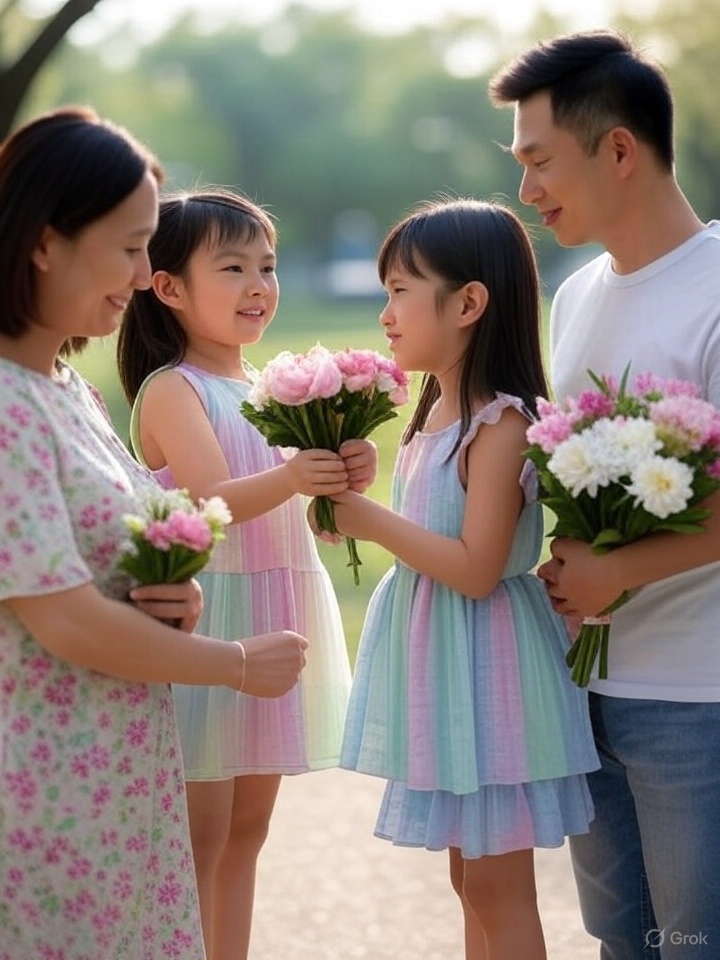
On Mother’s Day, Sophea wanted to make her mother happy. She picked flowers from the garden and gave them to her. She also drew a picture and wrote, “I love you, Mommy.”
Her dad and brother said “Happy Mother’s Day” too. They all smiled and hugged. It was a special and happy day for the whole family.
_____________________________
Verbs:
to be (was/were) – to exist, to describe something or someone
to live (lived) – to have your home in a place
to love (loved) – to like someone very much
to help (helped) – to make something easier for someone
to do (did) – to make or complete something
to cook (cooked) – to prepare food
to clean (cleaned) – to make something not dirty
to go (went) – to move from one place to another
to like (liked) – to enjoy something
to work (worked) – to do a job or activity
to carry (carried) – to hold something and take it somewhere
to feed (fed) – to give food to someone or an animal
to want (wanted) – to wish for something
to make (made) – to create or produce something
to pick (picked) – to take flowers, fruit, or something with your fingers
to give (gave) – to let someone have something
to draw (drew) – to make a picture with a pen or pencil
to write (wrote) – to put words on paper
to say (said) – to speak words
to smile (smiled) – to make a happy face with your mouth
to hug (hugged) – to put your arms around someone
to have (had) – to own or experience something
###################
Questions and answers in past simple:
Example:
Did Sophea live in the city when she was ten?
YOU WRITE: No, she did not. She lived in the countryside.
Did Sophea dislike her mother? _________________________________
Did Sophea and her mother go to school together? _________________________________
Did her mother work in the garden? _________________________________
Did Sophea feed the chickens? _________________________________
Did Sophea give flowers to her father on Mother’s Day? _________________________________
Did her father draw a picture for Mother’s Day? _________________________________
Did the family go to the city for Mother’s Day? _________________________________
Did Sophea clean the garden by herself? _________________________________
Did Sophea forget to say “I love you” to her mother? _________________________________
—————————— Correct answers:
Did Sophea live in the city when she was ten? No, she did not. She lived in the countryside.
Did Sophea dislike [not like] her mother? No, she did not. She loved her mother very much.
Did Sophea and her mother go to school together? No, they did not. They cooked and cleaned together.
Did her mother work in the garden? No, she did not. Her father worked in the garden.
Did Sophea feed the chickens? No, she did not. Her brother fed the chickens.
Did Sophea give flowers to her father on Mother’s Day? No, she did not. She gave flowers to her mother.
Did her father draw a picture for Mother’s Day? No, he did not. Sophea drew the picture.
Did the family go to the city for Mother’s Day? No, they did not. They stayed at home and celebrated.
Did Sophea clean the garden by herself? No, she did not. She helped her mother in the house.
Did Sophea forget to say “I love you” to her mother? No, she did not. She wrote, “I love you, Mommy.”
####################
True?
Example:
Sophea lived in a city when she was ten years old.
YOU WRITE:
Sophea did not live in a city when she was ten years old. She lived in the countryside.
Sophea and her mother went to school together. ___________________________________
Her father carried water in the house. ___________________________________
Sophea gave a present to her father on Mother’s Day. ___________________________________
Sophea cleaned the garden with her mother. ___________________________________
Her mother worked in the garden sometimes. ___________________________________
The family went to the city on Mother’s Day. ___________________________________
Sophea forgot to draw a picture for her mother. ___________________________________
Sophea did not pick flowers for her mother. ___________________________________
——————————————– Correct version:
Sophea lived in a city when she was ten years old. Sophea did not live in a city when she was ten years old. She lived in the countryside.
Sophea and her mother went to school together. Sophea did not go to school with her mother. She sometimes went to the market and cooked with her mother.
Her father carried water in the house. Her father did not carry water in the house. He carried water outside.
Sophea gave a present to her father on Mother’s Day. Sophea did not give a present to her father on Mother’s Day. She gave it to her mother.
Sophea cleaned the garden with her mother. Sophea did not clean the garden with her mother. She cleaned the house with her mother.
Her mother worked in the garden sometimes. Her mother did not work in the garden sometimes. She helped Sophea at home.
The family went to the city on Mother’s Day. The family did not go to the city on Mother’s Day. They stayed at home.
Sophea forgot to draw a picture for her mother. Sophea did not forget to draw a picture for her mother. She drew a picture for her.
Sophea did not pick flowers for her mother. Sophea did not forget to pick flowers for her mother. She picked flowers from the garden.
####################
When Sophea was ten years old – complete:
Sophea ______________________ (want) to help her mother.
Sophea and her mother ______________________ (like) to cook together.
Sometimes, Sophea ______________________ (go) to the market with her mother.
On Mother’s Day, Sophea ______________________ (want) to make her mother happy.
She ______________________ (pick) flowers to give to her mother.
Sophea ______________________ (draw) a picture to show her love.
She ______________________ (write) “I love you, Mommy” to say how she felt.
Her father ______________________ (work) in the garden to carry water.
Her brother ______________________ (help) at home to clean the house.
The family ______________________ (smile) and ________________ (give) hugs to celebrate Mother’s Day.
Sophea ______________________ (like) to help her mother with cooking and cleaning.
Her father ______________________ (say) “Happy Mother’s Day.” to Sophea’s mother.
Mother’s Day ______________________ (be) special for the family to enjoy together.
———————————-
Correct version:
Sophea wanted to help her mother.
Sophea and her mother liked to cook together.
Sometimes, Sophea went to the market with her mother.
On Mother’s Day, Sophea wanted to make her mother happy.
She picked flowers to give to her mother.
Sophea drew a picture to show her love.
She wrote “I love you, Mommy” to say how she felt.
Her father worked in the garden to carry water.
Her brother helped at home to clean the house.
The family smiled and gave hugs to celebrate Mother’s Day.
Sophea liked to help her mother with cooking and cleaning.
Her father said “Happy Mother’s Day” to Sophea’s mother.
Mother’s Day was special for the family to enjoy together.
#################
Correct the mistakes, do not use a ’not‘ construction::
Example:
Sophea lived in a city when she was ten years old.
YOU WRITE: She lived in a village when she was ten years old.
Sophea hated her mother. __________________________
Sophea and her mother went to school together. __________________________
Sophea helped no one at home. __________________________
Her father worked inside the house instead of the garden. __________________________
Her brother played all day and did not help. __________________________
Sophea gave flowers to her father on Mother’s Day. __________________________
Sophea forgot to draw a picture for her mother. __________________________
The family forgot Mother’s Day. __________________________
Mother’s Day was not special for the family. __________________________
Sophea wrote a letter to her father. __________________________
Her mother was unfriendly to Sophea. __________________________
—————————————-
Correct version:
Sophea loved her mother.
Sophea and her mother cooked and cleaned together.
Sophea helped her mother at home.
Her father worked in the garden.
Her brother helped at home.
Sophea gave flowers to her mother on Mother’s Day.
Sophea drew a picture for her mother.
The family celebrated Mother’s Day.
Mother’s Day was special for the family.
Sophea wrote a letter to her mother.
Her mother was kind to Sophea.
###################
Make the sentences negative:
Example:
Sophea lived in a city when she was ten years old.
YOU WRITE:
Sophea did not live in the city when she was ten years old.
——————————-
Sophea hated her mother.
Sophea and her mother went to school together.
Sophea stayed at home all the time.
Her father worked inside the house.
Her brother played all day.
Sophea gave flowers to her father on Mother’s Day.
Sophea forgot to draw a picture for her mother.
The family ignored Mother’s Day.
Mother’s Day was a day like all the others for the family.
——————————— Answers:
Sophea did not hate her mother.
Sophea and her mother did not go to school together.
Sophea did not stay at home all the time.
Her father did not work inside the house.
Her brother did not play all day.
Sophea did not give flowers to her father on Mother’s Day.
Sophea did not forget to draw a picture for her mother.
The family did not ignore Mother’s Day.
Mother’s Day was a special day.
#######################
Interview with Sophea, fill in, words below:
sometimes – carried – every day – kind – write – family – fed – cleaned – kitchen – very much – countryside – drew – together
______________________________
Q: Where did you live when you were ten? A: I lived in the __________.
Q: Who did you live with? A: I lived with my family.
Q: Did you love your mother? A: Yes, I loved my mother __________.
Q: How was your mother? A: My mother was __________.
Q: What did you do with your mother? A: I cooked and __________ with my mother.
Q: Did you go to the market with your mother? A: Yes, __________ I went to the market with my mother.
Q: What did your father do at home? A: My father worked in the garden and __________ water.
Q: Did your brother help at home? A: Yes, my brother __________ the chickens.
Q: What did you do on Mother’s Day? A: I picked flowers and __________ a picture for my mother.
Q: Did you __________ something for your mother? A: Yes, I wrote “I love you, Mommy.”
Q: Who said “Happy Mother’s Day”? A: My father and my brother said “Happy Mother’s Day.”
Q: Did your __________ smile and hug on Mother’s Day? A: Yes, we smiled and hugged.
Q: Why was Mother’s Day special? A: It was special because we were all happy ___________.
Q: Did you like helping your mother? A: Yes, I liked helping my mother in the __________.
Q: How often did your mother help you? A: My mother helped me __________.
Q: Did your family work together? A: Yes, my family worked together.
—————————————-
Correct version:
Q: Where did you live when you were ten? A: I lived in the countryside.
Q: Who did you live with? A: I lived with my family.
Q: Did you love your mother? A: Yes, I loved my mother very much.
Q: How was your mother? A: My mother was kind.
Q: What did you do with your mother? A: I cooked and cleaned with my mother.
Q: Did you go to the market with your mother? A: Yes, sometimes I went to the market with my mother.
Q: What did your father do at home? A: My father worked in the garden and carried water.
Q: Did your brother help at home? A: Yes, my brother fed the chickens.
Q: What did you do on Mother’s Day? A: I picked flowers and drew a picture for my mother.
Q: Did you write something for your mother? A: Yes, I wrote “I love you, Mommy.”
Q: Who said “Happy Mother’s Day”? A: My father and my brother said “Happy Mother’s Day.”
Q: Did your family smile and hug on Mother’s Day? A: Yes, we smiled and hugged.
Q: Why was Mother’s Day special? A: It was special because we were all happy together.
Q: Did you like helping your mother? A: Yes, I liked helping my mother in the kitchen.
Q: How often did your mother help you? A: My mother helped me every day.
Q: Did your family work together? A: Yes, my family worked together.
When Sophea was a ten-year-old girl she lived in a small village in the countryside. Every morning, she helped her mother before school. Then she walked to school with her friends.
Sophea liked school, and her favorite subject was English. She knew English was important for her future. She wanted to be a tour guide and talk to people from other countries.
In class, she listened carefully and learned new words. At home, she watched English videos and read small books. She also taught her little brother simple English words.
Sophea studied hard because she had big dreams. She wanted to speak English well and visit other countries one day.
She was proud of her progress and kept trying, even when it was difficult. Sophea believed that English would help her do many things in life.
She was a smart and brave girl who never gave up.
___________________________
Verbs:
to be (was/were) – to exist; to have a certain quality
to live (lived) – to have your home in a place
to help (helped) – to do something for someone
to walk (walked) – to move with your feet
to like (liked) – to enjoy something
to know (knew) – to have information in your mind
to want (wanted) – to wish for something
to talk (talked) – to speak
to listen (listened) – to pay attention to sounds
to learn (learned) – to get knowledge or skill
to watch (watched) – to look at something for a time
to read (read [pronounced “red”]) – to look at words and understand them
to teach (taught) – to help someone learn
to study (studied) – to learn about something at school or at home
to speak (spoke) – to say words
to visit (visited) – to go to a place for a short time
to keep (kept) – to continue doing something
to try (tried) – to make an effort
to believe (believed) – to think that something is true
to do (did) – to perform an action
to give up (gave up) – to stop trying
################
Questions and answers in past simple:
Example:
Did Sophea live in a city when she was ten years old?
YOU WRITE: No, she did not live in a city when she was ten years old. She lived in a village.
Did Sophea walk to school alone? ___________________________
Did she want to be a doctor?___________________________
Did Sophea skip class every day?___________________________
Did she help her teacher in the morning?___________________________
Did she teach her little brother difficult English words?___________________________
Did Sophea stop studying English?___________________________
Did she give up when learning English was easy?___________________________
Did Sophea avoid learning new words in class?___________________________
Did she watch French videos at home?___________________________
——————————– Correct version:
Did Sophea live in a city when she was ten years old? No, she did not live in a city when she was ten years old. She lived in a village.
Did Sophea walk to school alone? No, she did not walk to school alone. She walked with her friends.
Did she want to be a doctor? No, she did not want to be a doctor. She wanted to be a tour guide.
Did Sophea skip class every day? No, she did not skip class every day. She went to class and listened carefully.
Did she help her teacher in the morning? No, she did not help her teacher in the morning. She helped her mother.
Did she teach her little brother difficult English words? No, she did not teach her little brother difficult English words. She taught him simple English words.
Did Sophea stop studying English? No, she did not stop studying English. She studied hard at home and at school.
Did she give up when learning English was easy? No, she did not give up when learning English was easy. She kept trying even when it was difficult.
Did she avoid learning new words in class? No, she did not avoid learning new words in class. She listened carefully and learned new words.
Did she watch French videos at home? No, she did not watch French videos at home. She watched English videos at home.
##################
True?
Example:
Sophea lived in a city when she was ten years old.
YOU WRITE: Sophea did not live in a city when she was ten years old. She lived in a village.
Sophea walked to school alone. _______________________________
Sophea wanted to be a doctor. _______________________________
Sophea skipped [to not go to school or a lesson] class every day. _______________________________
Sophea helped her teacher in the morning. _______________________________
Sophea taught her little brother difficult English words. _______________________________
Sophea gave up when learning English was difficult. _______________________________
Sophea disliked [to not like] school. _______________________________
Sophea avoided [to stay away from something or not do something.] learning new words in class. _______________________________
——————————————-
Correct version:
Sophea lived in a city when she was ten years old. Sophea did not live in a city when she was ten years old. She lived in a village.
Sophea walked to school alone. Sophea did not walk to school alone. She walked with her friends.
Sophea wanted to be a doctor. Sophea did not want to be a doctor. She wanted to be a tour guide.
Sophea skipped class every day. Sophea did not skip class every day. She went to class and listened carefully.
Sophea helped her teacher in the morning. Sophea did not help her teacher in the morning. She helped her mother.
Sophea taught her little brother difficult English words. Sophea did not teach her little brother difficult English words. She taught him simple English words.
Sophea stopped studying English. Sophea did not stop studying English. She studied hard at home and at school.
Sophea gave up when learning English was difficult. Sophea did not give up when learning English was difficult. She kept trying.
Sophea disliked school. Sophea did not dislike school. She liked school.
Sophea avoided learning new words in class. Sophea did not avoid learning new words in class. She listened carefully and learned new words.
######################
When Sophea was ten years old – complete:
Every morning, Sophea ___ (help) her mother before school.
She ___ (walk) to school with her friends.
Sophea ___ (like) going to school.
Her favorite subject ___ (be) English.
She ___ (know) that English was important for her future.
She ___ (want) to be a tour guide.
In class, she ___ (listen) carefully to her teacher.
She ___ (learn) new English words at school.
At home, she ___ (watch) English videos.
She ___ (like) to read small English books at home.
Sophea also ___ (teach) her little brother simple English words.
She ___ (study) hard because she had big dreams.
Even when it was difficult, she ___ (keep) trying.
Sophea ___ (believe) that English would help her do many things in life.
————————–
Correct version:
Every morning, Sophea helped her mother before school.
She walked to school with her friends.
Sophea liked going to school.
Her favorite subject was English.
She knew that English was important for her future.
She wanted to be a tour guide.
In class, she listened carefully to her teacher.
She learned new English words at school.
At home, she watched English videos.
She liked to read small English books at home.
Sophea also taught her little brother simple English words.
She studied hard because she had big dreams.
Even when it was difficult, she kept trying.
Sophea believed that English would help her do many things in life.
#################
Correct the mistakes:
Example:
Sophea lived in a city.
YOU WRITE: She lived in a village.
She walked to school alone. ______________________________
Sophea wanted to be a doctor. ______________________________
She skipped class every day. ______________________________
When Sophea was ten years old she lived in a village in the countryside. After school, she walked home. At home, she took off her shoes and said hello to her family.
She changed her clothes and washed her hands and face. Then she took her school bag and opened her books. Sophea sat at the table or outside near the house. She did her homework. She wrote and read. Sometimes she asked her cousin or aunt for help.
After homework, she put her books back in her bag. Then she helped at home. She watered the plants or played with her little brother. In the evening, she ate dinner with her family.
_________________________________
be – was/we = to exist; to live in a place; to describe someone or something.
live – lived = to have your home in a place.
walk – walked = to move on foot.
take off – took off = to remove clothes, shoes, or other things you wear.
say – said = to use words to speak.
change – changed = to put on different clothes.
wash – washed = to clean something with water (and usually soap).
take – took = to pick up or carry something with you.
open – opened = to make something not closed.
sit – sat = to rest on your bottom, usually on a chair or the ground.
do – did = to perform an action; here: to complete homework.
write – wrote = to make words with a pen or pencil.
read – read (same spelling, past is pronounced red) = to look at and understand written words.
ask – asked = to put a question to someone.
put – put = to move something into a place.
help – helped = to do something for someone to make work easier.
water – watered = to pour water on plants.
play – played = to do things for fun, often with toys or games.
eat – ate = to put food in your mouth and swallow it.
###############
Questions and answers in past simple:
Example:
Did Sophea live in a city when she was ten years old?
YOU WRITE: No, she didn’t live in a city. She lived in a village.
Did Sophea go home by bus after school? ___________________________
Did Sophea keep her shoes on at home? ___________________________
Did Sophea say hello to her teacher at home? ___________________________
Did Sophea wash her feet at home? ___________________________
Did Sophea open her school bag and play games? ___________________________
Did Sophea sit in bed to do her homework? ___________________________
Did Sophea always do her homework alone? ___________________________
Did Sophea play with her cousin after homework? ___________________________
Did Sophea eat dinner in the morning? ___________________________
———————————-
Correct version:
Did Sophea live in a city when she was ten years old? No, she didn’t live in a city. She lived in a village.
Did Sophea go home by bus after school? No, she didn’t go home by bus. She walked home.
Did Sophea keep her shoes on at home? No, she didn’t keep her shoes on. She took off her shoes.
Did Sophea say hello to her teacher at home? No, she didn’t say hello to her teacher. She said hello to her family.
Did Sophea wash her feet at home? No, she didn’t wash her feet. She washed her hands and face.
Did Sophea open her school bag and play games? No, she didn’t open her school bag and play games. She opened her school bag and books.
Did Sophea sit in bed to do her homework? No, she didn’t sit in bed. She sat at the table or outside near the house.
Did Sophea always do her homework alone? No, she didn’t always do her homework alone. Sometimes she asked her cousin or aunt for help.
Did Sophea play with her cousin after homework? No, she didn’t play with her cousin. She played with her little brother.
Did Sophea eat dinner in the morning? No, she didn’t eat dinner in the morning. She ate dinner in the evening with her family.
####################
True?
Example:
Sophea lived in a city when she was ten years old.
YOU WRITE: Sophea did not live in a city when she was ten years old. She lived in a village.
She went home by bicycle after school. ___________________________
At home, she kept her shoes on. ___________________________
She said hello to her teacher at home. ___________________________
She washed her feet after school. ___________________________
She opened her school bag and played games. ___________________________
Sophea sat in bed to do her homework. ___________________________
She always did her homework alone. ___________________________
After homework, she played with her cousin. ___________________________
She ate dinner in the morning. ___________________________
———————————
Correct version:
Sophea lived in a city when she was ten years old. No, she did not live in a city when she was ten years old. She lived in a village.
She went home by bicycle after school. No, she did not go home by bicycle after school. She walked home.
At home, she kept her shoes on. No, she did not keep her shoes on. She took off her shoes.
She said hello to her teacher at home. No, she did not say hello to her teacher at home. She said hello to her family.
She washed her feet after school. No, she did not wash her feet after school. She washed her hands and face.
She opened her school bag and played games. No, she did not open her school bag and play games. She opened her school bag and books.
Sophea sat in bed to do her homework. No, she did not sit in bed to do her homework. She sat at the table or outside near the house.
She always did her homework alone. No, she did not always do her homework alone. Sometimes she asked her cousin or aunt for help.
After homework, she played with her cousin. No, she did not play with her cousin after homework. She played with her little brother.
She ate dinner in the morning. No, she did not eat dinner in the morning. She ate dinner in the evening with her family.
###################
When Sophea was ten years old:
Sophea ___ (live) in a village in the countryside.
After school, she ___ (walk) home.
At home, she ___ (take off) her shoes.
She ___ (say) hello to her family.
She ___ (change) her clothes.
She ___ (wash) her hands and face.
Then she ___ (take) her school bag.
She ___ (open) her books.
Sophea ___ (sit) at the table or outside near the house.
She ___ (do) her homework.
She ___ (write) and ___ (read).
Sometimes she ___ (ask) her cousin or aunt for help.
After homework, she ___ (put) her books back in her bag.
In the evening, she ___ (eat) dinner with her family.
—————————-
Correct version:
Sophea lived in a village in the countryside.
After school, she walked home.
At home, she took off her shoes.
She said hello to her family.
She changed her clothes.
She washed her hands and face.
Then she took her school bag.
She opened her books.
Sophea sat at the table or outside near the house.
She did her homework.
She wrote and read.
Sometimes she asked her cousin or aunt for help.
After homework, she put her books back in her bag.
In the evening, she ate dinner with her family.
###################
Correct the mistakes:
Example:
Sophea lived in a city. →
YOU WRITE: She lived in a village.
She went home by bus after school. __________________________
At home, she kept her shoes on. __________________________
She said hello to her teacher at home. __________________________
She washed her feet after school. __________________________
She opened her school bag and played games. __________________________
Sophea sat in bed to do her homework. __________________________
She always did her homework alone. __________________________
After homework, she played with her cousin. __________________________
She ate dinner in the morning. __________________________
——————————– Correct version:
Sophea lived in a city. → She lived in a village.
She went home by bus after school. → She walked home after school.
At home, she kept her shoes on. → She took off her shoes.
She said hello to her teacher at home. → She said hello to her family.
She washed her feet after school. → She washed her hands and face.
She opened her school bag and played games. → She opened her school bag and books.
Sophea sat in bed to do her homework. → She sat at the table or outside near the house.
She always did her homework alone. → Sometimes she asked her cousin or aunt for help.
After homework, she played with her cousin. → She played with her little brother.
She ate dinner in the morning. → She ate dinner in the evening with her family.
####################
Make the sentence negative:
Example:
Sophea lived in a village.
YOU WRITE: Sophea did not live in a city.
She walked home after school. ____________________________
At home, she took off her shoes. ____________________________
She said hello to her family. ____________________________
She changed her clothes. ____________________________
She washed her hands and face. ____________________________
She did her homework. ____________________________
She asked her cousin or aunt for help. ____________________________
She played with her little brother. ____________________________
She ate dinner with her family. ____________________________
———————————- Correct version:
Sophea lived in a village. → Sophea did not live in a city.
She walked home after school. → She did not take a bus home.
At home, she took off her shoes. → She did not keep her shoes on.
She said hello to her family. → She did not say hello to her teacher.
She changed her clothes. → She did not stay in the same clothes.
She washed her hands and face. → She did not wash her feet.
She did her homework. → She did not skip her homework.
She asked her cousin or aunt for help. → She did not ask her friends for help.
She played with her little brother. → She did not play with her cousin.
She ate dinner with her family. → She did not eat dinner alone.
####################
Multiple choice, one answer correct:
After school, Sophea … a) walked home b) took a bus c) stayed at school
At home, she … a) kept her shoes on b) took off her shoes c) went outside
She said hello to … a) her teacher b) her friends c) her family
She changed … a) her clothes b) her shoes c) her books
She washed … a) her hands and face b) her feet c) her clothes
She took … a) her books b) her toys c) her school bag
She opened … a) her notebook and toys b) her bag and shoes c) her school bag and books
Sophea sat … a) on her bed b) at the table c) in the classroom
She did … a) her homework b) nothing c) her chores
She wrote … a) and read b) and played c) and sang
Sometimes she asked … a) her cousin or aunt b) her teacher c) her friends
After homework, she … a) went to bed b) played with her little brother c) read a book alone
She watered … a) the plants b) the flowers c) the vegetables
She played with … a) her cousin b) her little brother c) her friends
She ate dinner … a) alone b) in the morning c) with her family
Café – a small place to drink coffee or tea and eat snacks.
Pub – a place to drink beer or other drinks, sometimes with food.
Diner – a simple, often American-style restaurant.
Waiter / Waitress / Server – a person who brings food and drinks to the table.
Host / Hostess – the person at the door who shows you to a table.
Chef / Cook – the person who makes the food.
Customer / Guest – a person who comes to eat.
Menu – a paper or book that shows the food and drinks you can order.
Bill / Check – the paper that shows how much money you must pay.
Reservation – when you call or book a table before you come.
Table for two / four – a table with space for two / four people.
Takeaway / Takeout – food you buy and eat at home, not in the restaurant.
Tip / Service charge – extra money you give to the waiter for good service.
🍽️ Table & Seating
Table – flat furniture where you put food and drinks.
Chair – something you sit on.
Booth – a seat in a restaurant with high backs, usually for 2–6 people.
Counter – a long table where people can sit, often in a bar or café.
Tablecloth – fabric that covers the table.
Napkin / Serviette – small cloth or paper to clean your mouth or hands.
Placemat – a small mat under your plate.
High chair – a tall chair for small children to sit at the table.
🍴 Cutlery / Silverware
Knife – a tool with a sharp edge to cut food.
Fork – a tool with points (prongs) to pick up food.
Spoon – a tool with a round end to eat soup or soft food.
Teaspoon – a small spoon, usually for tea or dessert.
Tablespoon – a big spoon, often for serving.
Soup spoon – a round spoon for soup.
Dessert spoon – a spoon for cake or ice cream.
Chopsticks – two sticks used to eat food in Asia.
Steak knife – a sharp knife for cutting meat.
🍷 Glasses & Cups
Glass – something you drink from, usually clear.
Wine glass – a tall glass with a stem for wine.
Champagne flute – a tall, thin glass for champagne.
Beer mug – a big glass with a handle for beer.
Cup – small container for drinks.
Mug – a big cup, usually for tea or coffee.
Teacup – a small cup for tea.
Coffee cup – a cup for coffee.
🍽️ Plates & Bowls
Plate – flat dish for food.
Dish – another word for plate, or food prepared in a special way.
Bowl – round, deep dish for soup or cereal.
Soup bowl – a bowl for soup.
Salad plate – a small plate for salad.
Side plate – a small plate for bread or side dishes.
Dessert plate – a small plate for cake or sweets.
Tray – flat surface to carry food and drinks.
🧂 Other Table Items
Salt shaker – small container for salt.
Pepper shaker – small container for pepper.
Condiments – sauces like ketchup or mustard.
Oil and vinegar set – bottles of oil and vinegar for salad.
Butter dish – a small plate for butter.
Sugar bowl – a small bowl for sugar.
Toothpick – a small stick to clean teeth after eating.
###################
Summary in A2:
Hello! My name is Emma, and I work in a small restaurant. Every day, I clean the tables and chairs. Some customers sit in booths, and some sit at the counter. I put a tablecloth on each table and place a placemat for every guest. I also give a napkin to each person, and sometimes a high chair for small children.
I set the cutlery carefully. I put a knife, fork, and spoon at each place. I also put a teaspoon for tea, a tablespoon for serving, a soup spoon for soup, and a dessert spoon for cake or ice cream. Some customers use chopsticks, and people with meat use a steak knife.
I set the plates and bowls. I use a plate for the main food, a dish for special meals, a bowl for soup or cereal, a soup bowl for soup, a salad plate for salad, a side plate for bread, and a dessert plate for sweets. I carry the food on a tray.
I also prepare the other table items. I put the salt shaker, pepper shaker, condiments, oil and vinegar set, butter dish, sugar bowl, and toothpick on the table.
I also prepare the drinks. I give glasses for water, a wine glass for wine, a champagne flute for champagne, a beer mug for beer, a cup for tea, a mug for coffee, a teacup for tea, and a coffee cup for coffee.
I like my job. I see happy people eat and enjoy their meals. Every day is busy, but I love it!
Perfect tourism is when people travel and feel happy and safe. Tourists can see beautiful places. They can visit mountains, beaches, forests, and cities. They can also learn about new cultures, traditions, and history.
Tourists like clean hotels and comfortable rooms. Friendly staff and good service make the trip better. A perfect day can start with breakfast and visiting famous places. In the afternoon, tourists can walk in the city, take photos, or join a small activity. In the evening, they can rest and enjoy the calm atmosphere.
Perfect tourism protects the environment. Tourists should not throw trash and should save water and energy. They should respect plants, animals, and nature. Sustainable tourism is important. It helps local people and keeps the planet safe.
Tourists should also be polite and friendly to local people. They can learn about life in the village or city. Perfect tourism makes people happy and creates good memories.
It is about learning, enjoying, and protecting nature. Sustainability, respect, and care for the environment are very important. Perfect tourism is good for tourists and for local communities. _____________________ Vocabulary:
To travel – to go from one place to another. To feel safe – to not be afraid or in danger. A mountain – a very high hill. A beach – a place with sand near the sea or ocean. A forest – a large area with many trees. Traditions – things people do in their culture for a long time. Clean – not dirty. Comfortable – nice and easy to use or sit on. Friendly staff – workers who are kind and helpful. To join an activity – to take part in a game or event. To rest – to stop working and relax. A calm atmosphere – a quiet and peaceful place. To protect the environment – to take care of nature. To throw trash – to put rubbish somewhere. To save water – to use water carefully. To respect – to be kind and careful with people, animals, or things. Sustainable tourism – travel that is good for people, nature, and communities. To keep something safe – to protect something. To be polite – to use good manners. Local people – people who live in a place. To make somebody happy – to give someone joy. To create memories – to have experiences that you remember. Sustainability – caring for nature and people so things stay good in the future. To care for the environment – to help nature and keep it safe. A local community – a group of people who live in the same area.
######################
Multiple choice test, one answer correct
audio file 1 – 16
audio file 17 – 25
What does to travel mean? a) To cook at home every day b) To go from one place to another c) To sleep all day long
What does to feel safe mean? a) To be very tired and hungry b) To not be afraid or in danger c) To move very fast and run
What is a mountain? a) A very high hill or land b) A small and quiet river side c) A flat and long street road
What is a beach? a) A city with many shops and cars b) A place with sand near the sea c) A large forest with many trees
What is a forest? a) A building full of many rooms b) A large area with many trees c) A place with very soft sand
What are traditions? a) Games that children play outside b) Foods that people like to eat c) Things people do in their culture
What does clean mean? a) Very fast and moving quickly b) Not dirty or full of dust c) Very big and very heavy
What does comfortable mean? a) Very far and hard to reach b) Nice and easy to use or sit c) Very loud and full of noise
Who are friendly staff? a) Children who play outside daily b) Workers who are kind and helpful c) People who are angry or rude
What does to join an activity mean? a) To take part in a game or event b) To walk very fast on streets c) To stay at home all the time
What does to rest mean? a) To eat food and drink water b) To stop working and relax now c) To travel far to new places
What is a calm atmosphere? a) A fast and busy street zone b) A quiet and peaceful place c) A noisy and crowded area
What does to protect the environment mean? a) To build very large houses b) To play games with friends daily c) To take care of nature and land
What does to throw trash mean? a) To put rubbish in the right place b) To cook food for family now c) To take pictures of flowers
What does to save water mean? a) To drink water very fast now b) To wash clothes very quickly c) To use water carefully every day
What does to respect mean? a) To eat all food very fast b) To be kind and careful with all c) To run and jump very high
————end audio 1———
What is sustainable tourism? a) Travel only by plane and train b) Travel to visit friends in city c) Travel that is good for nature and people
What does to keep something safe mean? a) To protect it from danger or harm b) To move it from place to place c) To clean it with water and soap
What does to be polite mean? a) To eat food without saying thanks b) To speak very loudly and fast c) To use good manners with everyone
Who are local people? a) Visitors from another country b) Children playing in the school c) People who live in this place
What does to make somebody happy mean? a) To play alone without talking b) To give someone joy or pleasure c) To take something from a friend
What does to create memories mean? a) To travel without any plan b) To forget things very quickly c) To have experiences you remember
What is sustainability? a) Moving fast and working hard b) Caring for nature and people always c) Eating food and drinking water
What does to care for the environment mean? a) To walk fast in the city streets b) To clean your house every day c) To help nature and keep it safe
What is a local community? a) People living in the same area b) Workers in a big factory nearby c) Tourists visiting for a short time
What does to travel mean? – That means: to go from one place to another
What does to feel safe mean? – That means: to not be afraid or in danger
What is a mountain? – That means: a very high hill or land
What is a beach? – That means: a place with sand near the sea
What is a forest? – That means: a large area with many trees
What are traditions? – That means: things people do in their culture
What does clean mean? – That means: not dirty or full of dust
What does comfortable mean? – That means: nice and easy to use or sit
Who are friendly staff? – That means: workers who are kind and helpful
What does to join an activity mean? – That means: to take part in a game or event
What does to rest mean? – That means: to stop working and relax now
What is a calm atmosphere? – That means: a quiet and peaceful place
What does to protect the environment mean? – That means: to take care of nature and land
What does to throw trash mean? – That means: to put rubbish in the right place
What does to save water mean? – That means: to use water carefully every day
What does to respect mean? – That means: to be kind and careful with all
What is sustainable tourism? – That means: travel that is good for nature and people
What does to keep something safe mean? – That means: to protect it from danger or harm
What does to be polite mean? – That means: to use good manners with everyone
Who are local people? – That means: people who live in this place
What does to make somebody happy mean? – That means: to give someone joy or pleasure
What does to create memories mean? – That means: to have experiences you remember
What is sustainability? – That means: caring for nature and people always
What does to care for the environment mean? – That means: to help nature and keep it safe
What is a local community? – That means: people living in the same area
#############
Gap-fill exercise:
Every summer, many people like _____ to new countries. a) to travel b) to rest c) to save water
Tourists want to _____ when they are away from home. a) feel safe b) join an activity c) throw trash
Everest is the highest _____ in the world. a) hill b) mountain c) forest
I like to sit on the sand at the _____ and watch the sea. a) mountain b) forest c) beach
A large area with many trees is called _____. a) forest b) mountain c) beach
People celebrate old _____ like festivals and dances. a) sustainable tourism b) traditions c) local community
My hotel room is very _____; I like it a lot. a) calm b) expensive c) clean
A soft bed makes a hotel room very _____. a) comfortable b) calm c) clean
The hotel has very kind workers. They are _____. a) friendly staff b) local people c) traditions
We can _____ and play games in the afternoon. a) travel b) rest c) join an activity
After a long walk, I want _____ for a while. a) to rest b) to travel c) to join an activity
The library is quiet and peaceful. It has a _____ . a) clean room b) calm atmosphere c) friendly staff
Tourists must help _____ by not leaving trash. a) protect the environment b) save water c) respect nature
Never _____ in the park; use a bin. a) travel b) throw trash c) rest
We should _____ and not waste water. a) save water b) protect the environment c) care for the environment
Tourists must always _____ local people and customs. a) join an activity b) respect c) make somebody happy
Travel that is good for nature and people is called _____. a) sustainable tourism b) protect the environment c) traditions
We must _____ objects and places from danger. a) keep safe b) respect c) protect
Always _____ by saying “please” and “thank you.” a) be polite b) care for the environment c) create memories
The people who live in the village are called _____. a) local people b) friendly staff c) local community
Doing something kind can _____. a) save water b) rest c) make somebody happy
Visiting new places helps you _____ for the future. a) create memories b) travel c) join an activity
Caring for nature and people in the long term is called _____. a) sustainable tourism b) sustainability c) traditions
It is important _____ to keep nature safe. a) to care for the environment b) to protect the environment c) to respect
People living in the same area are called a _____. a) local community b) friendly staff c) traditions
___________________ Answers:
1. a, 2. a, 3. b, 4. c, 5. a, 6. b, 7. c, 8. a, 9. a, 10. c, 11. a, 12. b, 13. a, 14. b, 15. a, 16. b, 17. a, 18. c, 19. a, 20. c, 21. c, 22. a, 23. b, 24. b, 25. b
___________________ Correct answers:
Every summer, many people like to travel to new countries.
Tourists want to feel safe when they are away from home.
Everest is the highest mountain in the world.
I like to sit on the sand at the beach and watch the sea.
A large area with many trees is called forest.
People celebrate old traditions like festivals and dances.
My hotel room is very clean; I like it a lot.
A soft bed makes a hotel room very comfortable.
The hotel has very kind workers. They are friendly staff.
We can join an activity and play games in the afternoon.
After a long walk, I want to rest for a while.
The library is quiet and peaceful. It has a calm atmosphere.
Tourists must help protect the environment by not leaving trash.
Never throw trash in the park; use a bin.
We should save water and not waste it.
Tourists must always respect local people and customs.
Travel that is good for nature and people is called sustainable tourism.
We must protect objects and places from danger.
Always be polite by saying “please” and “thank you.”
The people who live in the village are called local community.
Doing something kind can make somebody happy.
Visiting new places helps you create memories for the future.
Caring for nature and people in the long term is called sustainability.
It is important to protect the environment to keep nature safe.
People living in the same area are called a local community.
#############
Match the word to its definition:
Words:
sustainability
traditions
calm atmosphere
local community
to travel
mountain
friendly staff
protect the environment
beach
save water
join an activity
clean
make somebody happy
to rest
Definitions:
A. An area with sand and sea B. To look after nature and prevent damage C. People living in the same area D. To move from one place to another E. To participate in an organized event F. To relax and stop working for a while G. Keeping things free from dirt H. People at work who are kind and helpful I. Customs and practices passed down over time J. A tall natural hill K. To avoid wasting water L. Creating long-term care for people and nature M. Making someone feel joyful N. A quiet and peaceful feeling in a place
____________________ Answers:
1. L, 2. I, 3. N, 4. C, 5. D, 6. J, 7. H, 8. B, 9. A, 10. K, 11. E, 12. G, 13. M, 14. F
____________________ Full answers:
sustainability → that means: creating long-term care for people and nature
traditions → that means: customs and practices passed down over time
calm atmosphere → that means: a quiet and peaceful feeling in a place
local community → that means: people living in the same area
to travel → that means: to move from one place to another
mountain → that means: a tall natural hill
friendly staff → that means: people at work who are kind and helpful
protect the environment → that means: to look after nature and prevent damage
beach → that means: an area with sand and sea
save water → that means: to avoid wasting water
join an activity → that means: to participate in an organized event
clean → that means: keeping things free from dirt
make somebody happy → that means: making someone feel joyful
to rest → that means: to relax and stop working for a while
#############
True or false:
A mountain is a tall natural hill.
To travel means to stay at home all the time.
Traditions are customs passed down over time.
Saving water means wasting it as little as possible.
A calm atmosphere is noisy and busy.
Local community refers to people living in the same area.
Friendly staff are workers who are helpful and kind.
Protecting the environment means damaging nature.
Clean means keeping things free from dirt.
A beach is an area with sand and sea.
To join an activity means to participate in an event.