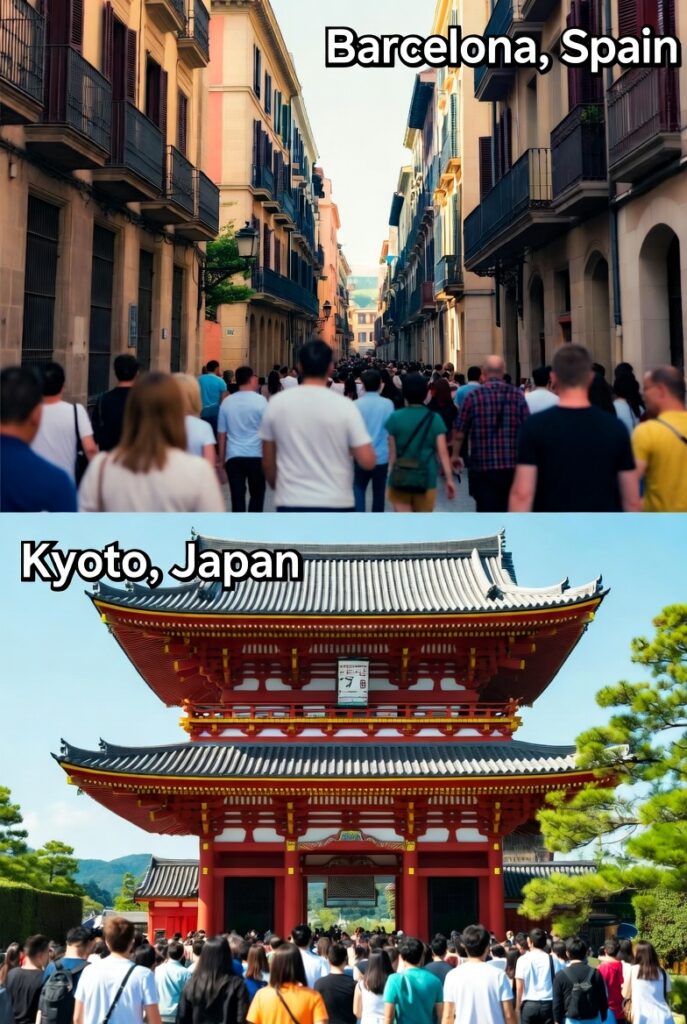
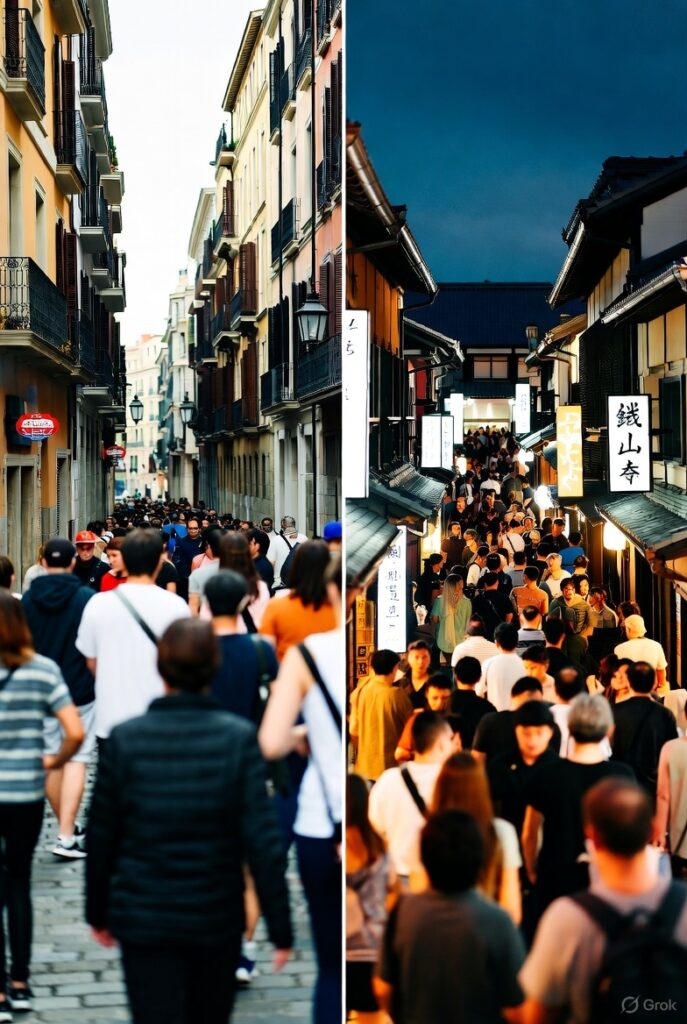
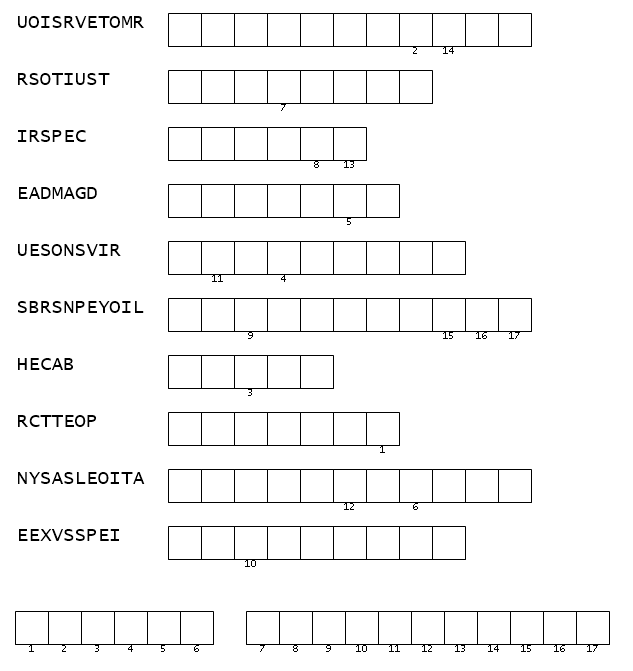
Used when actions are happening at the present moment, now, at the moment of speaking.
I, You, etc.
am, is, are
Verb + ing
I
am
eating
You
are
running
He/She/It
is
sleeping
We
are
talking
They
are
playing
Pronoun
Negative
Question
I
I am not eating
Am I eating?
You
You are not running
Are you running?
He
He is not sleeping
Is he sleeping?
She
She is not reading
Is she reading?
It
It is not raining
Is it raining?
We
We are not talking
Are we talking?
You
You are not playing
Are you playing?
They
They are not working
Are they working?
Describe, as many sentences as possible. (send me your sentences, I’ll have a look at them: SMFrockZ@gmx.at
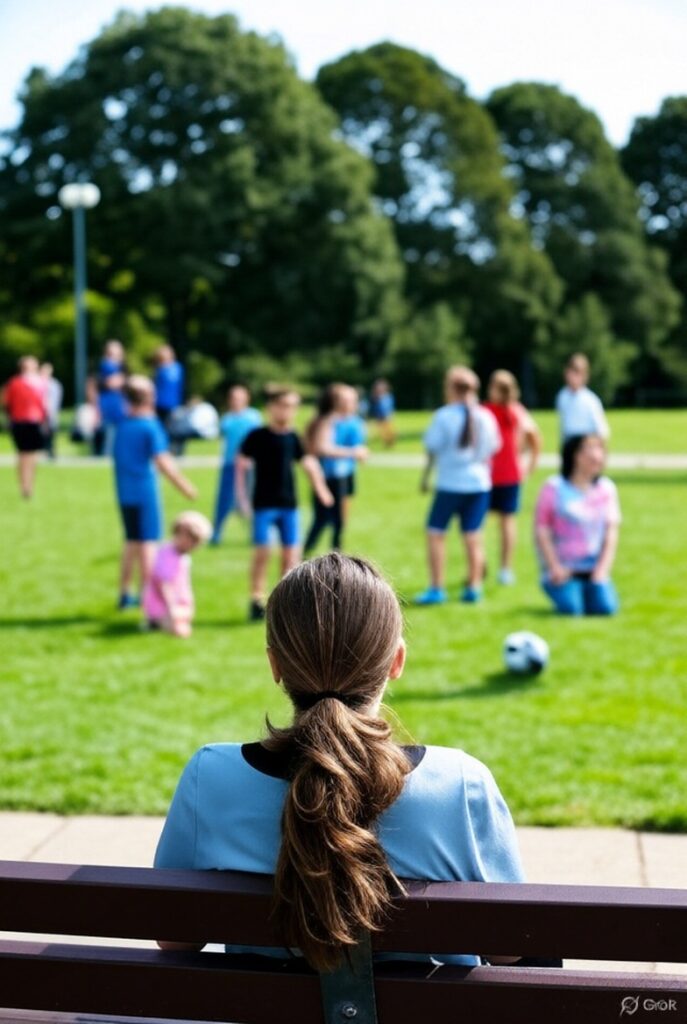
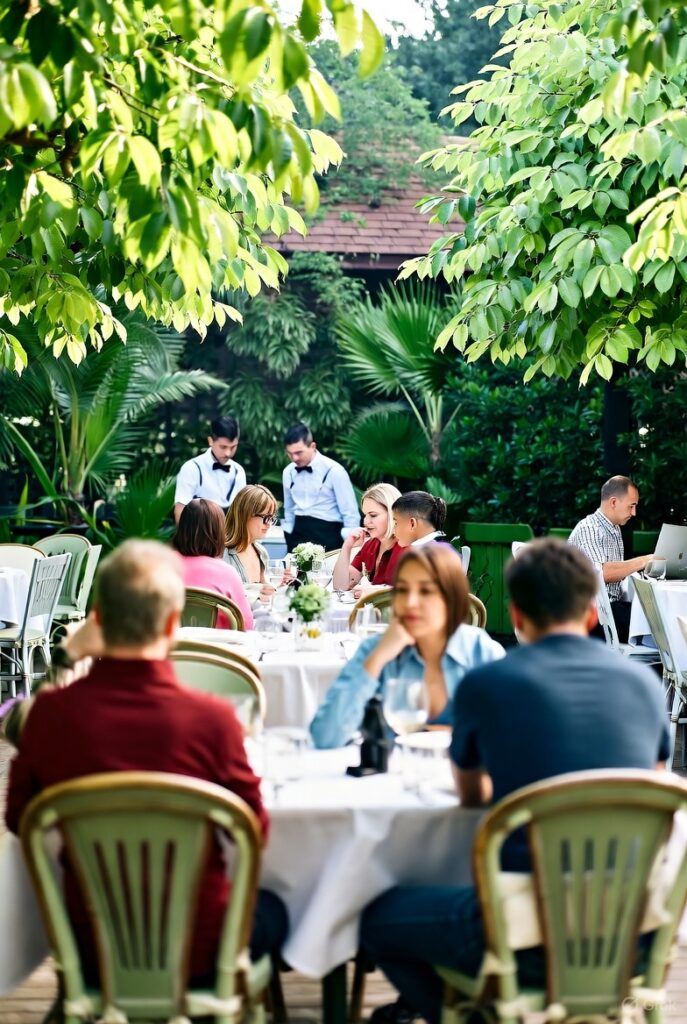
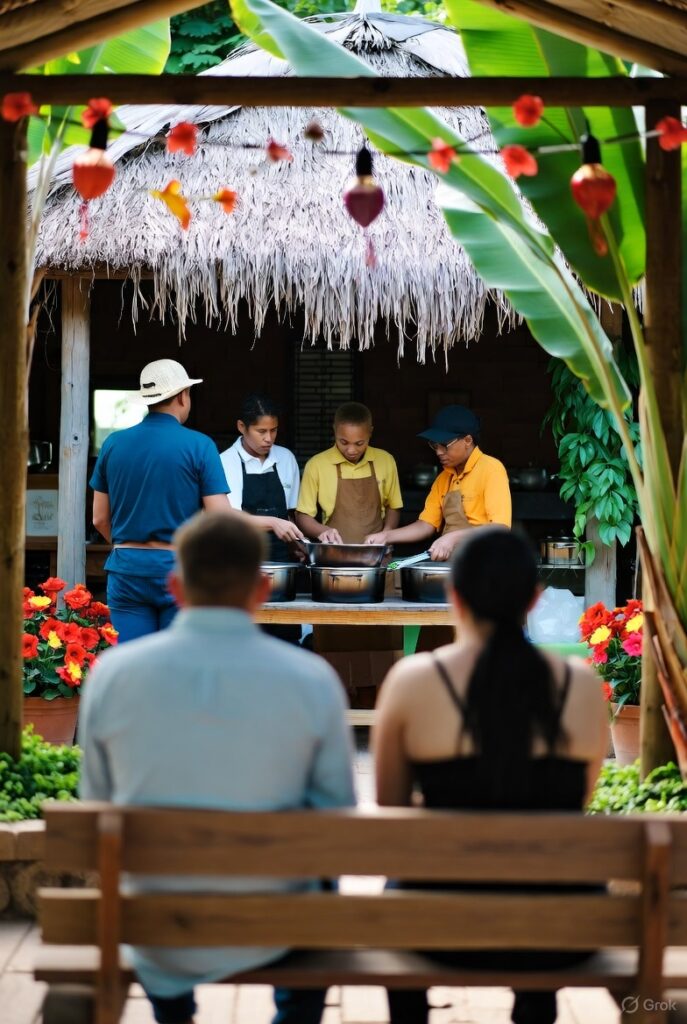
Picture 1:
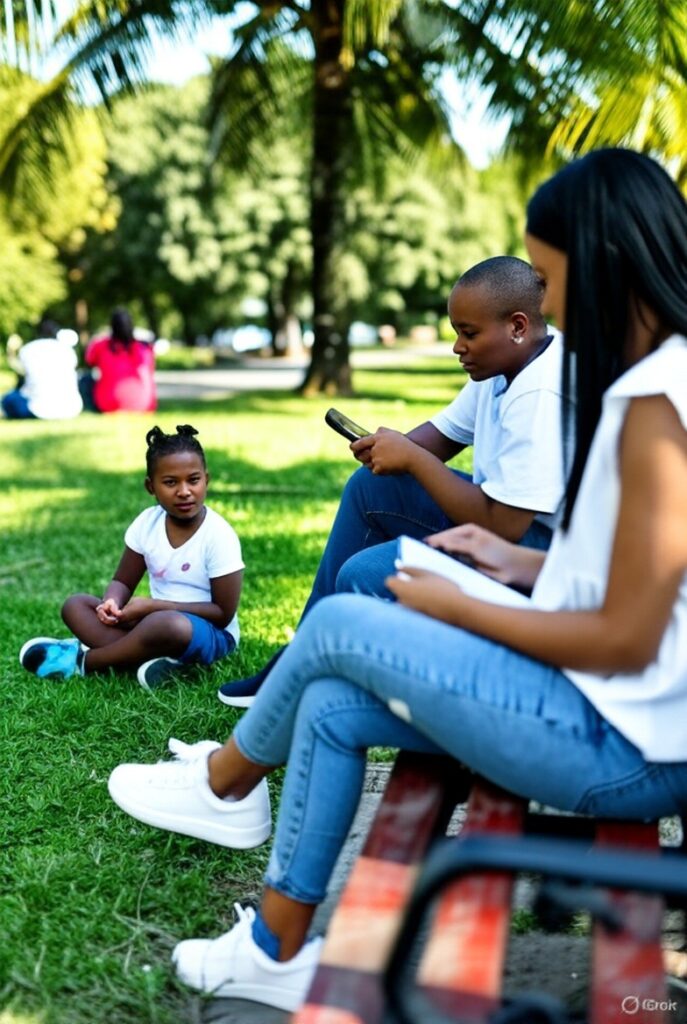
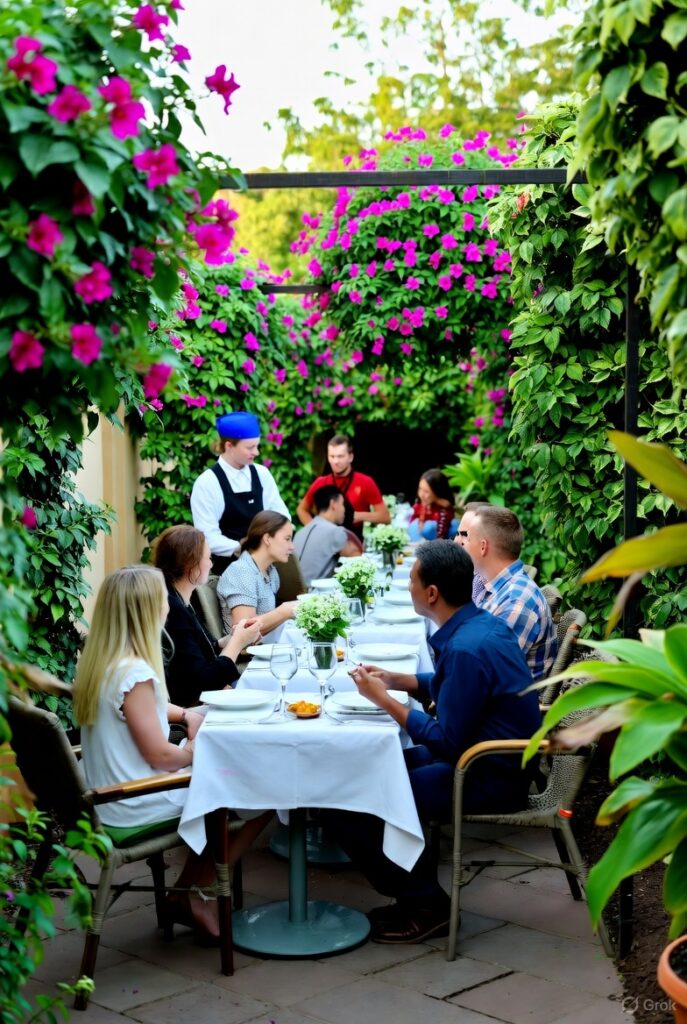
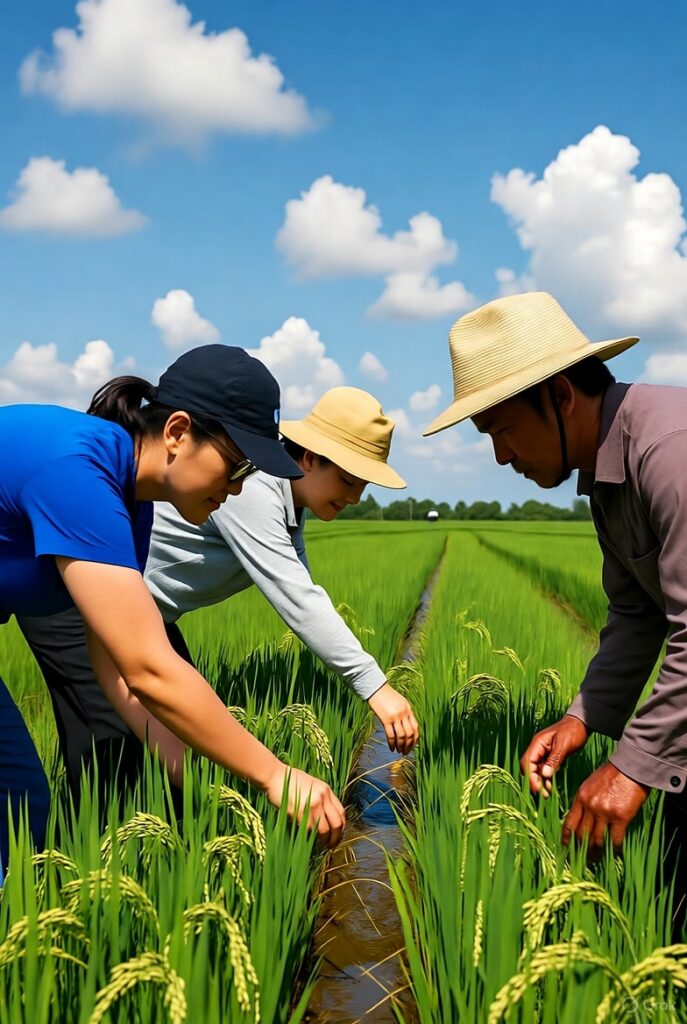
Picture 2:
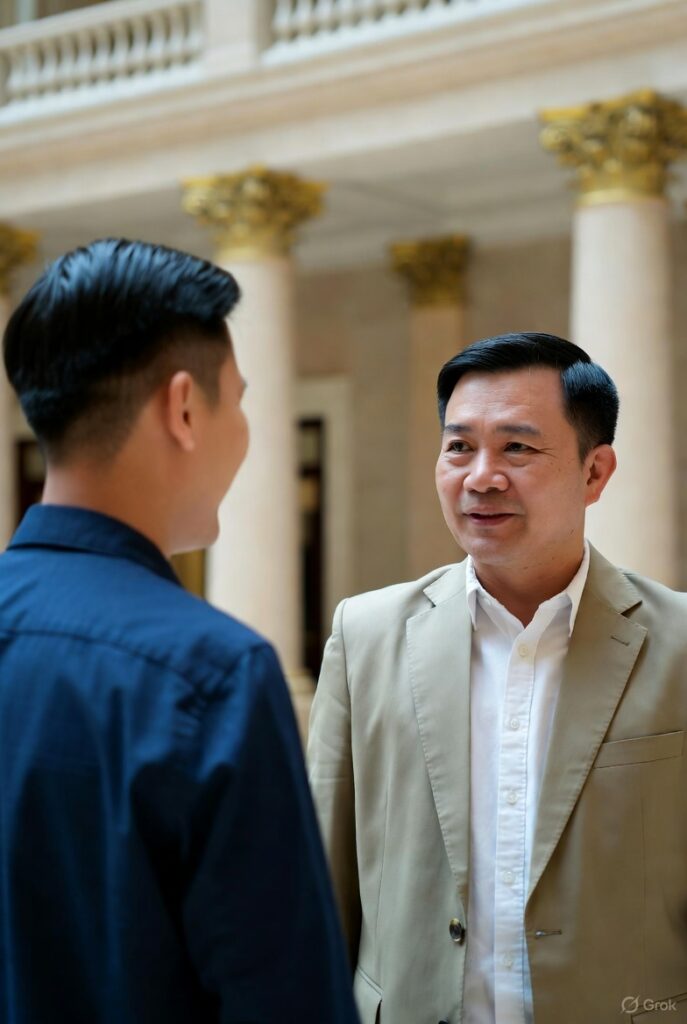
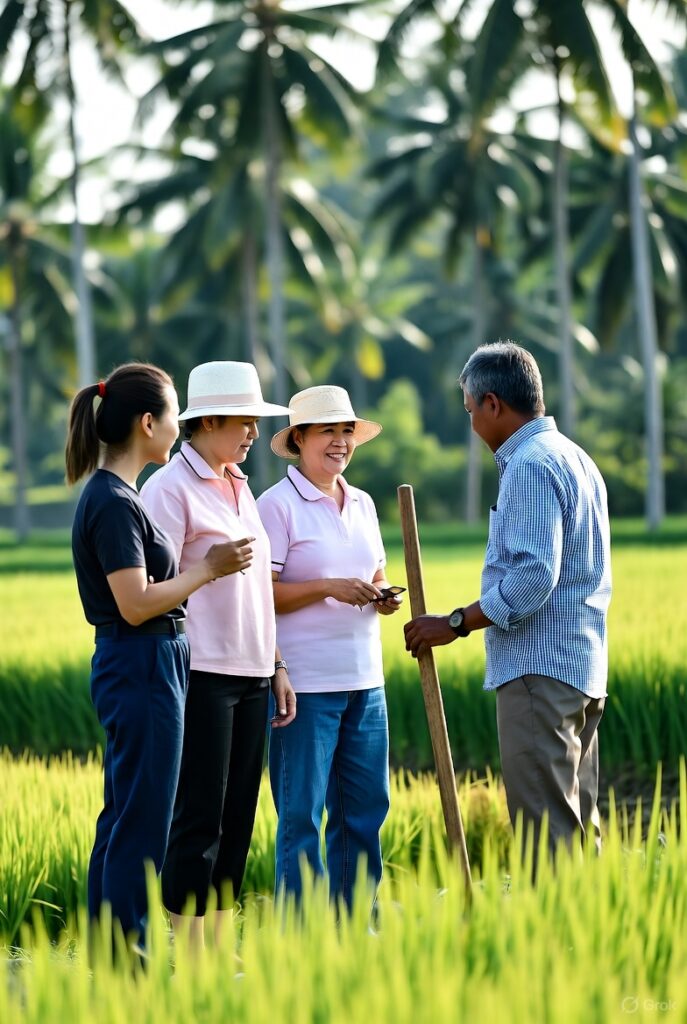
Picture 3:
The people are sitting in a park. The sun is shining and the grass is very green. A little girl is sitting on the grass. She is wearing a white T-shirt and blue shorts. She is looking at the other people. A man is sitting next to her. He is looking at his phone. A woman is sitting on a bench. She is holding a notebook. The people are relaxing and are enjoying the nice day. Other people are sitting in the background. Everyone is happy and calm.
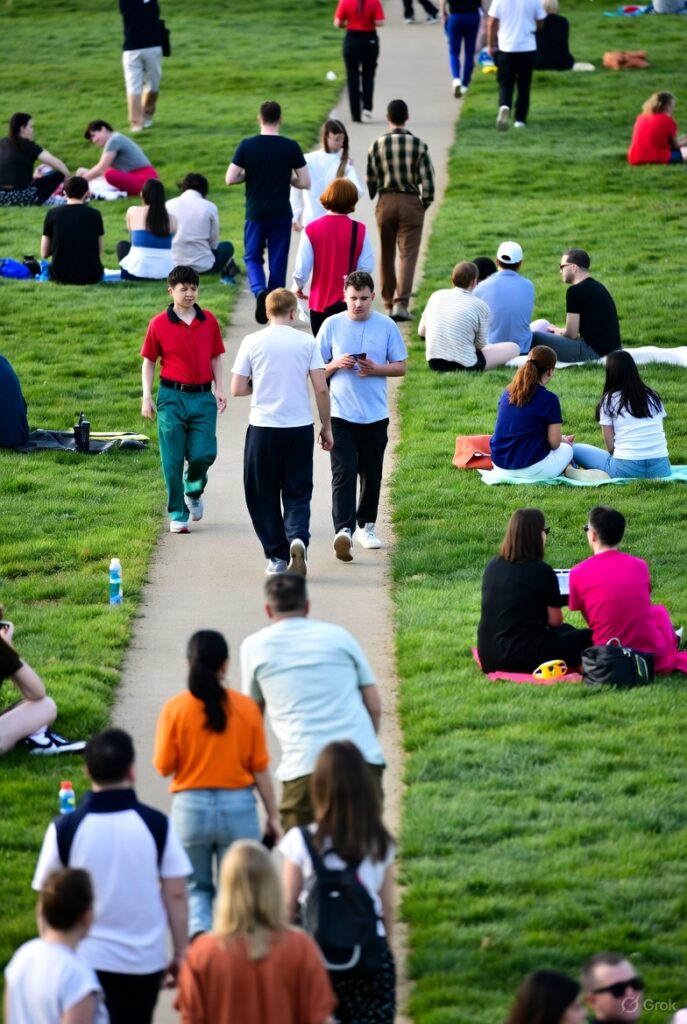
#################
People are walking along the path.
Some individuals are sitting on the grass.
A person is holding a phone.
Others are chatting with each other.
A group is lying on a blanket.
Someone is drinking from a bottle.
A couple is walking hand in hand.
People are relaxing under the trees.
A person is wearing a red shirt.
Another individual is carrying a backpack.
Some are enjoying the sunny weather.
A person is looking at a laptop.
Others are sitting in small groups.
Someone is adjusting their cap.
People are spreading out picnic items.
A group is walking towards the distance.
Someone is taking a photo.
Individuals are wearing colorful clothes.
People are enjoying the park environment.
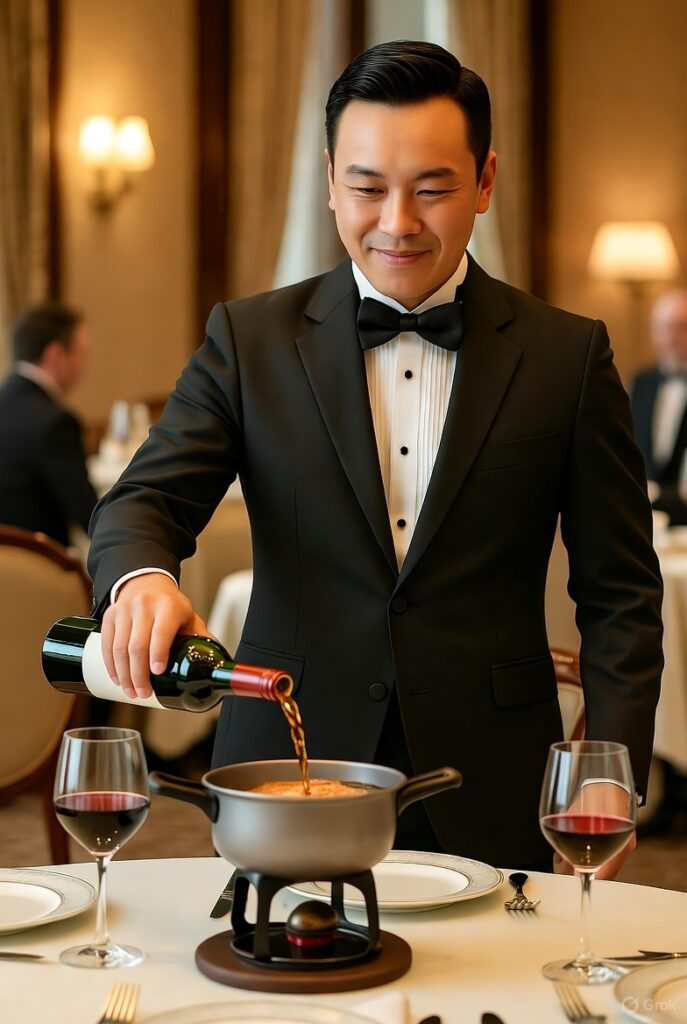
Picture 4:
People are eating now. They are sitting at tables. The tables are outside. Green trees are around them. Waiters are standing and helping. One waiter is talking to people. Girls are drinking and talking. A man is using a laptop. Everyone is enjoying the food. The sun is shining. Flowers are on the tables. It is a happy time. People are smiling and eating. The place is beautiful and green.
################# Picture 5:
People are sitting at a table. They are eating food. They are talking and smiling. A waiter is standing and helping. Pink flowers are hanging above. Green leaves are growing around. Girls are drinking water. Men are using forks. The sun is shining now. Everyone is enjoying the meal. The garden is beautiful and everybody is having fun.
– learning to communicate, serve, and grow in tourism
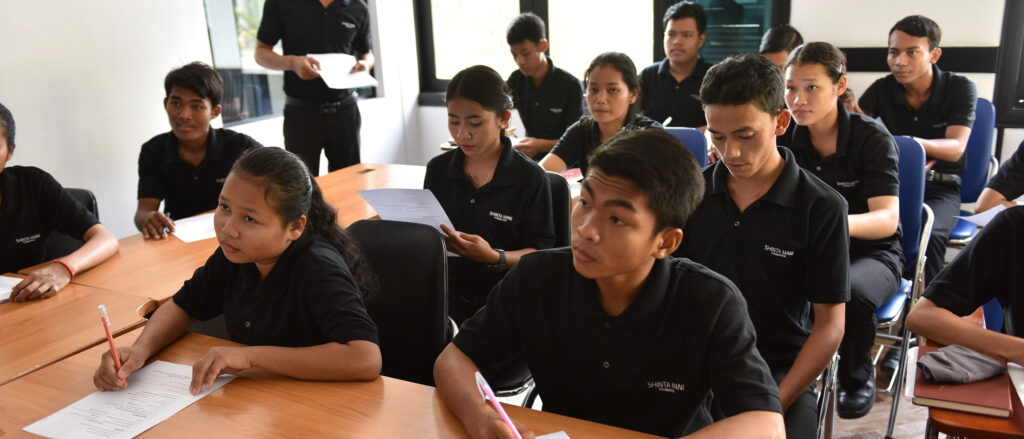
Tourism and hospitality are very popular jobs for young people today. These fields are full of energy and offer many chances to meet people from all over the world. Working in a hotel, restaurant, or travel company can be exciting and rewarding. But before starting, young people should know some important things.
First, they need to have good communication skills. People in tourism talk to guests every day. It is important to smile, be polite, and speak clearly. Knowing English or other foreign languages helps a lot because guests often come from many different countries.
Second, they should learn about customer service. Guests like to feel welcome and special. Being friendly, patient, and helpful makes a big difference. Good service brings guests back again.
Third, it is useful to understand new technology. Today, hotels and travel companies use computers, online booking, and social media. Young people who can use these tools are more successful at work.
Finally, it is important to think about sustainable tourism. More travelers now care about protecting nature and respecting local culture. Young workers should support these ideas and work in a responsible way.
In conclusion, a job in tourism and hospitality can be a great choice for young people who like people, learning, and helping others.
_____________________________
Vocabulary:
Self-assessment – checking your own skills, knowledge, or abilities.
A cheat sheet – a short paper or table that helps you remember important information.
To be full of energy – to have a lot of power, strength, or motivation.
To offer chances – to give opportunities to do something.
To be exciting – to make you feel happy, interested, or enthusiastic.
To be rewarding – to give you a good feeling because it is useful or helpful.
Communication skills – the ability to speak, listen, and understand others.
To smile – to show happiness by moving your mouth upwards.
To be polite – to behave in a kind and respectful way.
Customer service – helping and taking care of people who buy something or visit a business.
Patient – able to wait calmly without getting angry.
To make a difference – to change something in a good or important way.
A tool – something you use to do a job or task.
To be successful – to reach your goal or do well in something.
Sustainable tourism – tourism that protects nature, helps local people, and does not harm the environment.
To care about protecting nature – to want to keep plants, animals, and the environment safe.
To respect local cultures – to be polite and careful with the traditions, habits, and beliefs of local people.
To support – to help or give help to someone or something.
A responsible way – doing something in a careful, safe, and correct way.
In conclusion – a phrase to show the final idea or summary at the end of a text or speech.
_______________________
Word / Phrase
Meaning
Example Sentence
Self-assessment
Checking your own skills or abilities
I did a self-assessment to see what I can do well.
Cheat sheet
A short paper that helps you remember important information
I used a cheat sheet to learn new English words.
To be full of energy
To have a lot of power or motivation
She is full of energy in her new job.
To offer chances
To give opportunities
The school offers chances to join clubs.
To be exciting
To make you happy or interested
Traveling to a new country is exciting.
To be rewarding
To give a good feeling or be useful
Helping tourists can be very rewarding.
Communication skills
Ability to speak and understand others
Good communication skills are important in hotels.
To smile
To show happiness with your mouth
The guide smiled at all the guests.
To be polite
To behave in a kind and respectful way
Always be polite to customers.
Customer service
Helping people who buy or visit
Good customer service makes guests happy.
Patient
Able to wait calmly
You must be patient when guests have questions.
To make a difference
To change something in a good way
Volunteers make a difference in the community.
Tool
Something you use to do a job
A computer is an important tool at work.
To be successful
To reach your goal
She is successful because she works hard.
Sustainable tourism
Tourism that protects nature and local people
Sustainable tourism helps local villages and animals.
To care about protecting nature
To want to keep the environment safe
Tourists should care about protecting nature.
To respect local cultures
To be polite with local traditions
Visitors must respect local cultures.
To support
To help someone or something
We support small local businesses.
A responsible way
Doing something carefully and correctly
We should travel in a responsible way.
In conclusion
A phrase for the final idea or summary
In conclusion, tourism can help local people.
#################
Multiple choice, one answer correct:
audio 1:
audio 2:
1. What is a self-assessment? A) Checking your own skills and abilities B) Reading a book about skills at school C) Listening to instructions from the teacher
2. What is a cheat sheet? A) A large book with many details and pictures B) A short paper that helps you remember information C) A note from a friend to copy answers
3. What does “to be full of energy” mean? A) To feel tired and want to sleep all day B) To have a lot of power and motivation C) To sit quietly and do nothing important
4. What does “to offer chances” mean? A) To stay home and not do anything at all B) To give opportunities to try something new C) To take away chances from other people
5. What does “to be exciting” mean? A) To make you feel tired or sleepy quickly B) To be boring and not fun at all C) To make you happy, interested, or curious
6. What does “to be rewarding” mean? A) To give a good feeling or be useful B) To have no effect or nothing important C) To be very difficult and make you fail
7. What are communication skills? A) The ability to run, jump, or move quickly B) The ability to speak and understand other people C) The ability to draw, paint, or create art
8. What does “to smile” mean? A) To show happiness with your mouth and face B) To close your eyes and ignore others C) To say words in a loud and angry voice
9. What does “to be polite” mean? A) To shout, push, or ignore other people B) To run fast and not listen to anyone C) To behave in a kind and respectful way
10. What is customer service? A) Only cleaning rooms and washing dishes daily B) Helping people who visit or buy from a business C) Only cooking food for guests or workers
11. What does “patient” mean? A) Able to wait calmly without getting angry B) Easily angry or annoyed when things take time C) Always in a hurry and never waiting long
——-end of audio 1———
12. What does “to make a difference” mean? A) To stay the same and do nothing important B) To change something in a good and important way C) To leave problems for someone else to fix
13. What is a tool? A) Something useful to help you do a task or job B) Something you wear or carry in your pocket C) Something you eat to stay healthy every day
14. What does “to be successful” mean? A) To fail at everything you try to do B) To reach your goal or do something well C) To rest, sleep, or not do much at all
15. What is sustainable tourism? A) Tourism that only happens in big cities B) Tourism that wastes resources and causes damage C) Tourism that helps nature and local people
16. What does “to care about protecting nature” mean? A) To cut trees, pollute rivers, or harm animals B) To want to keep the environment safe and clean C) To not care about plants, animals, or rivers
17. What does “to respect local cultures” mean? A) To ignore customs and take whatever you want B) To break rules and behave badly in the area C) To be polite and careful with local traditions
18. What does “to support” mean? A) To leave people alone and not offer help B) To help someone or something in a kind way C) To take things without asking or caring
19. What does “a responsible way” mean? A) Doing something carefully and in the right way B) Doing nothing and ignoring what you should do C) Doing something quickly without thinking at all
20. What does “in conclusion” mean? A) A phrase at the start of a paragraph or story B) A phrase used to show the final idea or summary C) A question asked at the beginning of a text
What is a self-assessment? – Checking your own skills and abilities
What is a cheat sheet? – A short paper that helps you remember information
What does “to be full of energy” mean? – To have a lot of power and motivation
What does “to offer chances” mean? – To give opportunities to try something new
What does “to be exciting” mean? – To make you happy, interested, or curious
What does “to be rewarding” mean? – To give a good feeling or be useful
What are communication skills? – The ability to speak and understand other people
What does “to smile” mean? – To show happiness with your mouth and face
What does “to be polite” mean? – To behave in a kind and respectful way
What is customer service? – Helping people who visit or buy from a business
What does “patient” mean? – Able to wait calmly without getting angry
What does “to make a difference” mean? – To change something in a good and important way
What is a tool? – Something useful to help you do a task or job
What does “to be successful” mean? – To reach your goal or do something well
What is sustainable tourism? – Tourism that helps nature and local people
What does “to care about protecting nature” mean? – To want to keep the environment safe and clean
What does “to respect local cultures” mean? – To be polite and careful with local traditions
What does “to support” mean? – To help someone or something in a kind way
What does “a responsible way” mean? – Doing something carefully and in the right way
What does “in conclusion” mean? – A phrase used to show the final idea or summary
#####################
Word-definition matching exercise :
Words:
Self-assessment
Cheat sheet
To be full of energy
To offer chances
To be exciting
To be rewarding
Communication skills
To smile
To be polite
Customer service
Patient
To make a difference
Tool
To be successful
Sustainable tourism
To care about protecting nature
To respect local cultures
To support
A responsible way
In conclusion
Definitions:
A. To behave in a kind and respectful way B. A short paper that helps you remember information C. To have a lot of power and motivation D. Doing something carefully and in the right way E. To help someone or something in a kind way F. To change something in a good and important way G. A phrase used to show the final idea or summary H. Something useful to help you do a task or job I. To give opportunities to try something new J. Tourism that helps nature and local people K. To show happiness with your mouth and face L. Able to wait calmly without getting angry M. To be happy, interested, or curious N. Checking your own skills and abilities O. Helping people who visit or buy from a business P. The ability to speak and understand other people Q. To give a good feeling or be useful R. To want to keep the environment safe and clean S. To be polite and careful with local traditions T. A phrase at the end of a paragraph or story
Self-assessment – Checking your own skills and abilities
Cheat sheet – A short paper that helps you remember information
To be full of energy – To have a lot of power and motivation
To offer chances – To give opportunities to try something new
To be exciting – To make you happy, interested, or curious
To be rewarding – To give a good feeling or be useful
Communication skills – The ability to speak and understand other people
To smile – To show happiness with your mouth and face
To be polite – To behave in a kind and respectful way
Customer service – Helping people who visit or buy from a business
Patient – Able to wait calmly without getting angry
To make a difference – To change something in a good and important way
Tool – Something useful to help you do a task or job
To be successful – To reach your goal or do something well
Sustainable tourism – Tourism that helps nature and local people
To care about protecting nature – To want to keep the environment safe and clean
To respect local cultures – To be polite and careful with local traditions
To support – To help someone or something in a kind way
A responsible way – Doing something carefully and in the right way
In conclusion – A phrase used to show the final idea or summary
#####################
True or false:
To support someone means helping them in a kind way.
Communication skills are about drawing and painting well.
To make a difference means to stay the same and do nothing.
Being full of energy means having a lot of motivation.
A cheat sheet is a long book with many pages.
Customer service means ignoring visitors and customers.
To smile shows happiness with your mouth and face.
Being patient means getting angry when you wait.
To be rewarding gives a good feeling or is useful.
Sustainable tourism helps nature and local people.
To offer chances means giving opportunities to try new things.
To be polite means to behave in a kind and respectful way.
In conclusion is a phrase used at the start of a text.
A tool is something useful to help you do a task or job.
________________ True: 1,4,7,9,10,11,12,14
________________
Correct answers:
To support someone means helping them in a kind way.
Communication skills are about drawing and painting well. True is: The ability to speak and understand other people
To make a difference means to stay the same and do nothing. True is: To change something in a good and important way
Being full of energy means having a lot of motivation.
A cheat sheet is a long book with many pages. True is: A short paper that helps you remember information
Customer service means ignoring visitors and customers. True is: Helping people who visit or buy from a business
To smile shows happiness with your mouth and face.
Being patient means getting angry when you wait. True is: Able to wait calmly without getting angry
To be rewarding gives a good feeling or is useful.
Sustainable tourism helps nature and local people.
To offer chances means giving opportunities to try new things.
To be polite means to behave in a kind and respectful way.
In conclusion is a phrase used at the start of a text. True is: A phrase used to show the final idea or summary
A tool is something useful to help you do a task or job.
#####################
Fill in, words below:
rewarding, smile, full of energy, customer service, communication skills, offer chances, cheat sheet, polite, exciting, self-assessment
Before starting a new job, it is good to do a __________ to check your skills.
A small paper that helps you remember important information is called a __________.
Being __________ helps you work well and enjoy your day.
Good companies always __________ to try new ideas for employees.
Visiting a new city can be very __________ if you see interesting places.
Helping guests and seeing them happy is very __________.
In hotels, it is important to have good __________ to understand and help customers.
When you meet guests, it is friendly to __________.
Always be __________ when talking to people from different cultures.
Good __________ means helping visitors and answering their questions politely.
_____________________________
Correct answers:
Before starting a new job, it is good to do a self-assessment to check your skills.
A small paper that helps you remember important information is called a cheat sheet.
Being full of energy helps you work well and enjoy your day.
Good companies always offer chances to try new ideas for employees.
Visiting a new city can be very exciting if you see interesting places.
Helping guests and seeing them happy is very rewarding.
In hotels, it is important to have good communication skills to understand and help customers.
When you meet guests, it is friendly to smile.
Always be polite when talking to people from different cultures.
Good customer service means helping visitors and answering their questions politely.
#####################
Interview, fill in, words below:
support – self-assessment – full of energy – patient – rewarding – communication skills – exciting – better – customer service – polite – smile – offer chances – cheat sheet – exciting
—————————————
Title:Interview: How to Be Successful in Tourism
1. Youngster: Hello! I want to work in tourism. What is the first thing I should do? Expert: First, do a __________ to check your skills and see what you are good at.
2. Youngster: Why is a self-assessment important? Expert: It helps you know your strengths and weaknesses. Then you can improve and work __________.
3. Youngster: Do I need to talk to guests? Expert: Yes, good __________ are very important. You must talk and listen to guests carefully.
4. Youngster: What does being polite mean in tourism? Expert: Being __________means speaking kindly and respecting all guests, even if they are upset.
5. Youngster: How about being patient? Expert: Being __________ helps when guests ask many questions or need help. It shows you care.
6. Youngster: Should I smile to the guests? Expert: Absolutely! A __________ makes guests feel welcome and happy.
7. Youngster: What if I forget something important? Expert: You can use a __________ to remember key information about the hotel or city.
8. Youngster: How can I help guests in different ways? Expert: Good __________ means answering questions, solving problems, and making guests comfortable.
9. Youngster: Can I give guests new experiences? Expert: Yes, you can __________ for them to try activities or visit special places.
10. Youngster: Is tourism always fun? Expert: It can be very _________, because you meet new people and see new places.
11. Youngster: Is it hard work? Expert: Sometimes it is busy, but if you are__________, you can manage and enjoy your work.
12. Youngster: Will I feel happy in this job? Expert: Yes! Tourism is very __________ when you help guests and see them enjoy their stay.
13. Youngster: Should I support my team? Expert: Always. To __________ your colleagues is important. You can work better together and help guests faster.
14. Youngster: Any final advice to be successful? Expert: Respect local culture, be polite, smile, help guests, and stay full of energy. If you do all this, tourism can be __________ and rewarding.
_____________________________
Full version:
Title:Interview: How to Be Successful in Tourism
1. Youngster: Hello! I want to work in tourism. What is the first thing I should do? Expert: First, do a self-assessment to check your skills and see what you are good at.
2. Youngster: Why is a self-assessment important? Expert: It helps you know your strengths and weaknesses. Then you can improve and work better.
3. Youngster: Do I need to talk to guests? Expert: Yes, good communication skills are very important. You must talk and listen to guests carefully.
4. Youngster: What does being polite mean in tourism? Expert: Being polite means speaking kindly and respecting all guests, even if they are upset.
5. Youngster: How about being patient? Expert: Being patient helps when guests ask many questions or need help. It shows you care.
6. Youngster: Should I smile to the guests? Expert: Absolutely! A smile makes guests feel welcome and happy.
7. Youngster: What if I forget something important? Expert: You can use a cheat sheet to remember key information about the hotel or city.
8. Youngster: How can I help guests in different ways? Expert: Good customer service means answering questions, solving problems, and making guests comfortable.
9. Youngster: Can I give guests new experiences? Expert: Yes, you can offer chances for them to try activities or visit special places.
10. Youngster: Is tourism always fun? Expert: It can be very exciting, because you meet new people and see new places.
11. Youngster: Is it hard work? Expert: Sometimes it is busy, but if you are full of energy, you can manage and enjoy your work.
12. Youngster: Will I feel happy in this job? Expert: Yes! Tourism is very rewarding when you help guests and see them enjoy their stay.
13. Youngster: Should I support my team? Expert: Always. To support your colleagues is important. You can work better together and help guests faster.
14. Youngster: Any final advice to be successful? Expert: Respect local culture, be polite, smile, help guests, and stay full of energy. ——————-end of audio ;-)———– If you do all this, tourism can be exciting and rewarding.
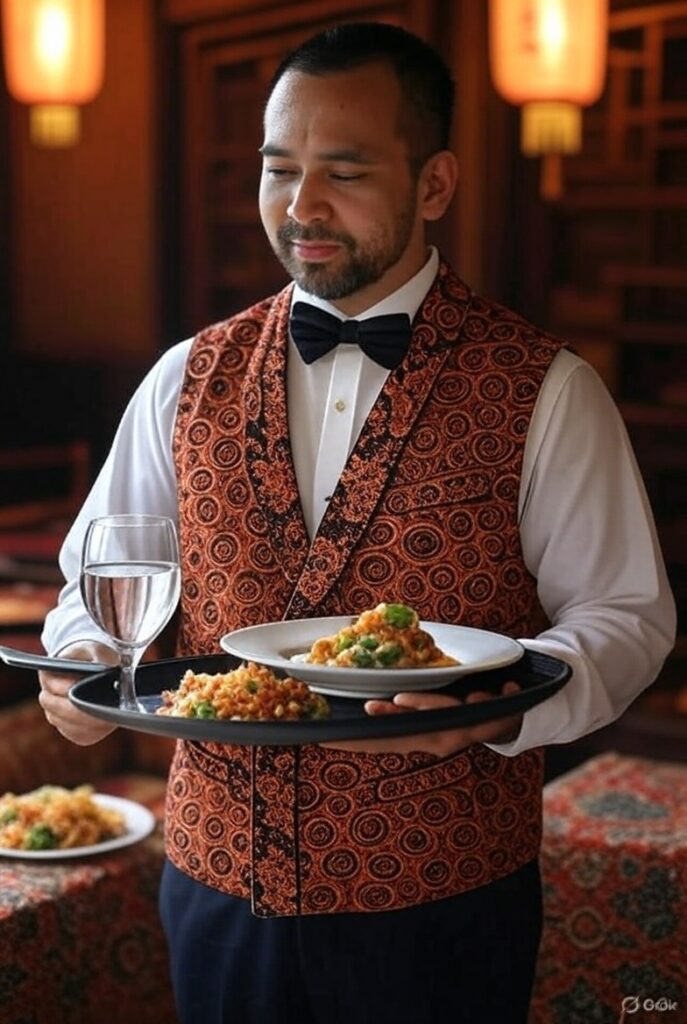
Ari works in a big hotel. It is a 5-star hotel. He works in the restaurant.
Every morning Ari gets up early. He takes a shower, puts on his clean uniform, and eats breakfast. Then he goes to work and smiles. He says hello to his friends. He looks at the tables. The tables must be clean. The chairs must be in the right place. The glasses must be nice. The flowers on the tables must look fresh.
The guests come. Ari says, “Good morning!” He helps them find a table. He brings food and drinks. He always says, “Please” and “Thank you.” Sometimes it is very busy. Many people want food. Sometimes a guest is not happy. Ari stays calm and friendly. He speaks softly and helps. The guests like Ari. They say, “Thank you!” and smile.
Ari likes his job. He meets many people every day from many countries. Last month he was “Staff of the Month.” He was very happy and proud. His boss said, “Good job, Ari!” Ari works hard and always does his best. He wants to learn more and be even better.
________________________
Vocabulary:
to get up early – to leave your bed in the morning when it is still early
to take a shower – to wash your body with water
to put on a uniform – to dress in special clothes for work or school
clean – not dirty
to smile – to make a happy face with your mouth
in the right place – in the correct spot, where it should be
to look fresh – to look new, nice, and not old or tired
to be busy – to have a lot of work, not have free time
to stay calm – to be quiet and not get angry or afraid
to be friendly – to be kind and nice to other people
to speak softly – to talk in a quiet voice
a country – a place like Thailand, France, or Japan
staff of the month – the best worker in one month
to be proud – to feel happy about your good work
to be better – to do something more well than before
####################
Ari’s best friend, Maurice
Match the words with their meanings:
Words:
to get up early
to take a shower
to put on a uniform
clean
to smile
in the right place
to look fresh
to be busy
to stay calm
to be friendly
to speak softly
a country
staff of the month
to be proud
to be better
Definitions:
A. to talk in a quiet voice B. to leave your bed in the morning when it is still early C. to feel happy about your good work D. to have a lot of work, not have free time E. to wash your body with water F. the best worker in one month G. to be quiet and not get angry or afraid H. to look new, nice, and not old or tired I. not dirty J. a place like Thailand or Japan K. in the correct spot, where it should be L. to make a happy face with your mouth M. to be kind and nice to other people N. to dress in special clothes for work or school O. to do something more well than before
to get up early – to leave your bed in the morning when it is still early to take a shower – to wash your body with water to put on a uniform – to dress in special clothes for work or school clean – not dirty to smile – to make a happy face with your mouth in the right place – in the correct spot, where it should be to look fresh – to look new, nice, and not old or tired to be busy – to have a lot of work, not have free time to stay calm – to be quiet and not get angry or afraid to be friendly – to be kind and nice to other people to speak softly – to talk in a quiet voice a country – a place like Thailand or Japan staff of the month – the best worker in one month to be proud – to feel happy about your good work to be better – to do something more well than before
###################
Gap-fill sentences, fill in, words below:
guests, proud, staff, restaurant, tables, busy, best, smile, calm, people
———————————-
Every morning Ari _______ on his clean uniform.
Ari works in a big 5-star _______.
He looks at the _______. The tables must be clean.
Ari says, “Good morning!” and helps the _______ find a table.
Sometimes it is very _______ in the restaurant.
Ari stays calm and _______ when a guest is not happy.
The guests like Ari. They say, “Thank you!” and _______.
Last month Ari was “_______ of the Month.”
Ari likes his job. He meets many _______ every day.
Ari works hard and always does his _______.
——————————— Correct version:
Every morning Ari puts on his clean uniform.
Ari works in a big 5-star hotel.
He looks at the tables. The tables must be clean.
Ari says, “Good morning!” and helps the guests find a table.
Sometimes it is very busy in the restaurant.
Ari stays calm when a guest is not happy.
The guests like Ari. They say, “Thank you!” and smile.
Last month Ari was “Staff of the Month.”
Ari likes his job. He meets many people every day.
Ari works hard and always does his best.
###################
True or false, if false provide the correct answer:
Ari works in a restaurant.
Ari works in a 3-star hotel.
The tables are clean.
Ari says “Good night” to the guests.
Ari stays calm when a guest is unhappy.
Ari brings food and drinks to the guests.
Ari meets many people every day.
Last month Ari was staff of the week.
Ari is unfriendly to the guests.
The glasses are nice.
Ari works hard and does his best.
Ari dislikes his job.
__________________________ True: 1,3,5,6,7,10,11
__________________________
Correct version:
Ari works in a restaurant.
Ari works in a 3-star hotel. True is: Ari works in a 5-star hotel.
The tables are clean.
Ari says “Good night” to the guests. True is: Ari says “Good morning” to the guests.
Ari stays calm when a guest is unhappy.
Ari brings food and drinks to the guests.
Ari meets many people every day.
Last month Ari was staff of the week. True is: Last month Ari was staff of the month.
Ari is unfriendly to the guests. True is: Ari is friendly to the guests.
The glasses are nice.
Ari works hard and does his best.
Ari dislikes his job. True is: Ari likes his job.
###################
Short answers, basics:
Example Sentence
Yes
No
I learn the alphabet.
Yes, I do.
No, I don’t.
You read signs.
Yes, you do.
No, you don’t.
He practices speaking.
Yes, he does.
No, he doesn’t.
She watches cartoons.
Yes, she does.
No, she doesn’t.
It helps us learn English.
Yes, it does.
No, it doesn’t.
We use apps like Duolingo.
Yes, we do.
No, we don’t.
You read labels.
Yes, you do.
No, you don’t.
They make mistakes sometimes.
Yes, they do.
No, they don’t.
Question
Yes
No
Do I learn the alphabet?
Yes, I do.
No, I don’t.
Do you read signs?
Yes, you do.
No, you don’t.
Does he practice speaking?
Yes, he does.
No, he doesn’t.
Does she watch cartoons?
Yes, she does.
No, she doesn’t.
Does it help us learn English?
Yes, it does.
No, it doesn’t.
Do we use apps like Duolingo?
Yes, we do.
No, we don’t.
Do you read labels?
Yes, you do.
No, you don’t.
Do they make mistakes sometimes?
Yes, they do.
No, they don’t.
Question
Yes
No
Am I big?
Yes, I am.
No, I am not.
Are you big?
Yes, you are.
No, you aren’t.
Is he big?
Yes, he is.
No, he isn’t.
Is she big?
Yes, she is.
No, she isn’t.
Is it big?
Yes, it is.
No, it isn’t.
Are we big?
Yes, we are.
No, we aren’t.
Are you big?
Yes, you are.
No, you aren’t.
Are they big?
Yes, they are.
No, they aren’t.
#####################
Short answers:
Ari works in a restaurant.
YOU WRITE: Yes, he does.
Ari works in a 3-star hotel. _______________________
The tables are clean. _______________________
Ari says “Good night” to the guests. _______________________
Ari stays calm when a guest is unhappy. _______________________
Ari brings food and drinks to the guests. _______________________
Ari meets many people every day. _______________________
Ari likes to be staff of the week. _______________________
Ari is unfriendly to the guests. _______________________
The glasses are nice. _______________________
Ari works hard and does his best. _______________________
Ari dislikes his job. _______________________
————————————
Correct answers:
Ari works in a restaurant. Yes, he does.
Ari works in a 3-star hotel. No, he doesn’t.
The tables are clean. Yes, they are.
Ari says “Good night” to the guests. No, he doesn’t.
Ari stays calm when a guest is unhappy. Yes, he does.
Ari brings food and drinks to the guests. Yes, he does.
Ari meets many people every day. Yes, he does.
Ari likes to be staff of the week. Yes, he does.
Ari is unfriendly to the guests. No, he isn’t.
The glasses are nice. Yes, they are.
Ari works hard and does his best. Yes, he does.
Ari dislikes [not ike] his job. No, he doesn’t.
###################
True or false, correct answers:
Ari works in a hotel garden.
YOU WRITE: No, he doesn’t. He works in a hotel
Ari works in a 3-star hotel. __________________________
Ari wears casual clothes at work. __________________________
The tables are dirty. __________________________
Ari says “Good night” to the guests. __________________________
Ari is angry when guests are unhappy. __________________________
Ari brings only drinks to the guests. __________________________
Ari meets few people every day. __________________________
Ari likes to be staff of the week. __________________________
Ari is unfriendly to the guests. __________________________
The glasses are dirty. __________________________
Ari dislikes his job. __________________________
———————————
Correct version:
Ari works in a hotel garden. No, he doesn’t. He works in a hotel restaurant.
Ari works in a 3-star hotel. No, he doesn’t. He works in a 5-star hotel.
Ari wears casual clothes at work. No, he doesn’t. He wears a clean uniform.
The tables are dirty. No, they aren’t. The tables are clean.
Ari says “Good night” to the guests. No, he doesn’t. He says “Good morning” to the guests.
Ari is angry when guests are unhappy. No, he isn’t. He stays calm when guests are unhappy.
Ari brings only drinks to the guests. No, he doesn’t. He brings food and drinks to the guests.
Ari meets few people every day. No, he doesn’t. He meets many people every day.
Ari dislikes to be staff of the week. No, he doesn’t. He likes to be staff of the week.
Ari is unfriendly to the guests. No, he isn’t. He is friendly to the guests.
The glasses are dirty. No, they aren’t. The glasses are nice.
Ari dislikes his job. No, he doesn’t. He likes his job.
###################
Answer in complete sentences:
Does Ari work in a hotel or in a garden?
YOU WRITE: Ari works in a hotel.
Does Ari wear a uniform or casual clothes? ________________________________
Does Ari work in a 5-star hotel or a 3-star hotel? ________________________________
Does Ari bring food and drinks or only drinks? ________________________________
Does Ari meet many people or few people every day? ________________________________
Does Ari stay calm or get angry when a guest is unhappy? ________________________________
Does Ari say “Good morning” or “Good night” to the guests? ________________________________
Does Ari work in the restaurant or in the kitchen? ________________________________
Does Ari like or dislike being staff of the month? ________________________________
Are the tables clean or dirty?________________________________
Are the glasses nice or broken? ________________________________
——————— Correct answers:
Ari works in a hotel.
Ari wears a uniform.
Ari works in a 5-star hotel.
Ari brings food and drinks.
Ari meets many people every day.
Ari stays calm when a guest is unhappy.
Ari says “Good morning” to the guests.
Ari works in the restaurant.
Ari likes being staff of the month.
The tables are clean.
The glasses are nice.
##################
Answer these questions:
What does Ari do every morning?
YOU WRITE: Ari puts on his clean uniform and goes to work.
Where does Ari work?
Who does Ari help in the restaurant?
How does Ari greet the guests?
When does Ari start work?
Why does Ari stay calm with unhappy guests?
Which hotel does Ari work in?
How many people does Ari meet every day?
What does Ari wear at work?
How does Ari feel when he is staff of the month?
______________________
Correct answers:
Ari feels happy and proud.
Ari puts on his clean uniform and goes to work.
Ari works in the restaurant of a 5-star hotel.
Ari helps the guests.
Ari says “Good morning.”
Ari starts work every morning.
Ari stays calm to help the guests and be friendly.
Ari works in a 5-star hotel.
Ari meets many people every day.
Ari wears a clean uniform.
#################
Interview with Ari, fill in, words below:
smile -clean – uniform – many – guests – friendly – 5-star – proud – at work – nice
—————————————–
1. Q: What do you do every morning? A: I put on my clean __________ and go to work.
2. Q: Where do you work? A: I work in the restaurant of a __________ hotel.
3. Q: Who do you help in the restaurant? A: I help the __________.
4. Q: How do you greet the guests? A: I say “Good morning” and __________.
5. Q: When do you start work? A: I start work every morning.
6. Q: Why do you stay calm with unhappy guests? A: I stay calm to help them and be __________.
7. Q: Which hotel do you work in? A: I work in a 5-star hotel.
8. Q: How many people do you meet every day? A: I meet _________ people every day.
9. Q: What do you wear __________? A: I wear a clean uniform.
10. Q: How do the tables look? A: The tables are __________.
11. Q: How do the glasses look? A: The glasses are__________.
12. Q: How do you feel when you are staff of the month? A: I feel happy and __________.
———————–
Correct version:
1. Q: What do you do every morning? A: I put on my clean uniform and go to work.
2. Q: Where do you work? A: I work in the restaurant of a 5-star hotel.
3. Q: Who do you help in the restaurant? A: I help the guests.
4. Q: How do you greet the guests? A: I say “Good morning” and smile.
5. Q: When do you start work? A: I start work every morning.
6. Q: Why do you stay calm with unhappy guests? A: I stay calm to help them and be friendly.
7. Q: Which hotel do you work in? A: I work in a 5-star hotel.
8. Q: How many people do you meet every day? A: I meet many people every day.
9. Q: What do you wear at work? A: I wear a clean uniform.
10. Q: How do the tables look? A: The tables are clean.
11. Q: How do the glasses look? A: The glasses are nice.
12. Q: How do you feel when you are staff of the month? A: I feel happy and proud.
#################
Now you interview Salas about Ari, and you want to know as much as possible about Ari. Use dialogue above.
START WITH: Q: What does he do every morning? A: He puts in his clean uniform and gies to work.
Q: Where does……………….? A:………………………………………
———————————- Correct dialogue:
Interview with Salas about Ari
1. Q: What does he do every morning? A: He puts on his clean uniform and goes to work.
2. Q: Where does he work? A: He works in the restaurant of a 5-star hotel.
3. Q: Who does he help in the restaurant? A: He helps the guests.
4. Q: How does he greet the guests? A: He says “Good morning” and smiles.
5. Q: When does he start work? A: He starts work every morning.
6. Q: Why does he stay calm with unhappy guests? A: He stays calm to help them and be friendly.
7. Q: Which hotel does he work in? A: He works in a 5-star hotel.
8. Q: How many people does he meet every day? A: He meets many people every day.
9. Q: What does he wear at work? A: He wears a clean uniform.
10. Q: How do the tables look? A: The tables are clean.
11. Q: How do the glasses look? A: The glasses are nice.
12. Q: How does he feel when he is staff of the month? A: He feels happy and proud.
############### Read the following story:
My name is Ari. I work in a big 5-star hotel. I work in the restaurant. Every morning I put on my clean uniform and go to work. I smile and say hello to the guests. I bring food and drinks. Sometimes it is very busy, but I stay calm and friendly. The guests like me. I meet many people every day. I want to be staff of the month again. I like my job and always do my best.
—————————–
Rewrite the story, starting with:
>>>>>>>>>>>>His name is Ari. He works……………….
and make all changes necessary.
____________________
Correct version:
His name is Ari. He works in a big 5-star hotel. He works in the restaurant. Every morning he puts on his clean uniform and goes to work. He smiles and says hello to the guests. He brings food and drinks. Sometimes it is very busy, but he stays calm and friendly. The guests like him. He meets many people every day. He wants to be staff of the month again. He likes his job and always does his best.
#################
BONUS version:
His name is Ari. He works in a big 5-star hotel. He works in the restaurant. Every morning he puts on his clean uniform and goes to work. He smiles and says hello to his friends and colleagues. He looks at the tables. The tables must be clean and ready for the guests. The glasses must be nice and shiny.
When the guests come, Ari says, “Good morning!” He helps the guests find a table. He brings food and drinks. He serves the guests carefully. He carries the plates and glasses with both hands. Sometimes it is very busy. Many people want food at the same time. Sometimes a guest is unhappy or has a problem. Ari stays calm and friendly. He speaks softly and helps the guests. The guests like Ari. They say, “Thank you!” and smile.
Ari likes his job. He meets many people every day. He sees new faces and smiles at the guests. He cleans the tables and the glasses. He always checks the restaurant to make sure everything is ready. Last month he was “Staff of the Month.” He was happy and proud. Ari works hard and always does his best. He enjoys his job very much. He wants to be a good worker every day and make the guests happy.
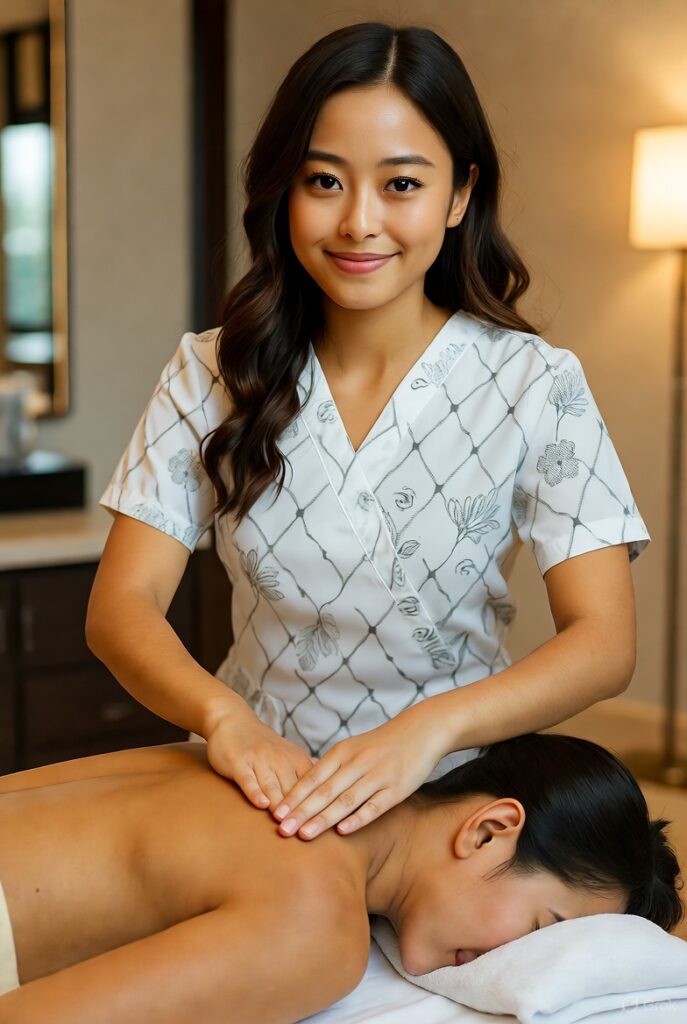
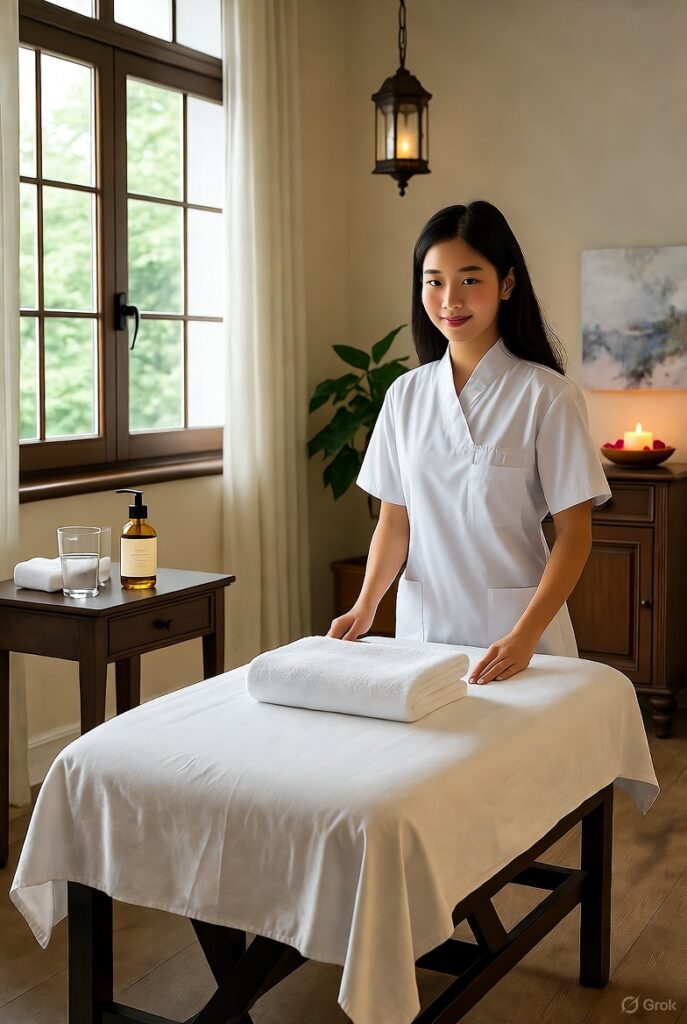
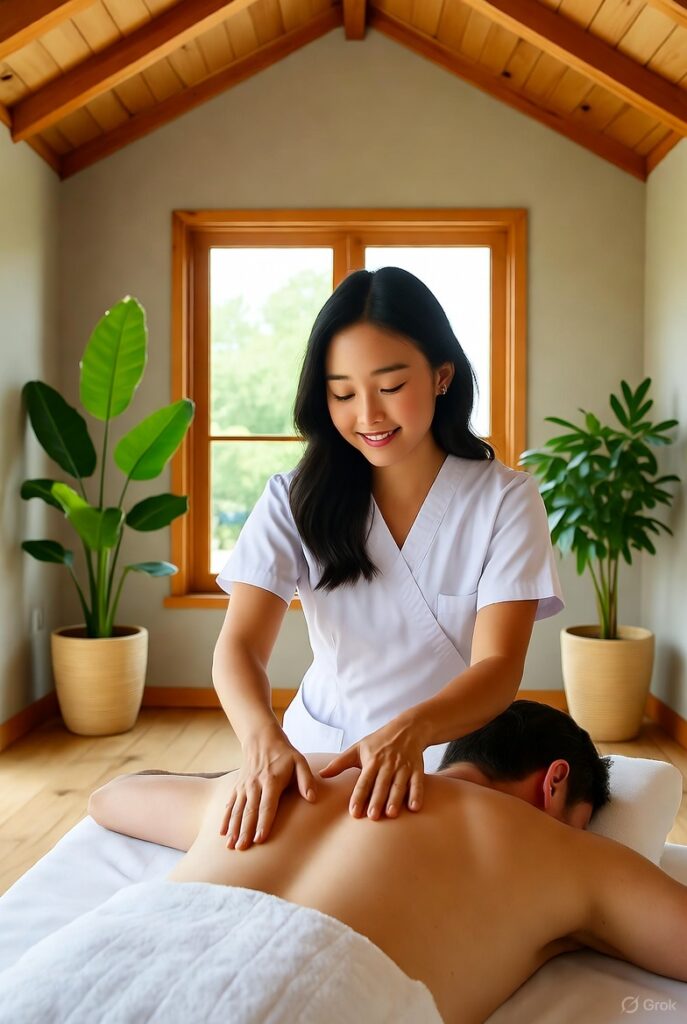
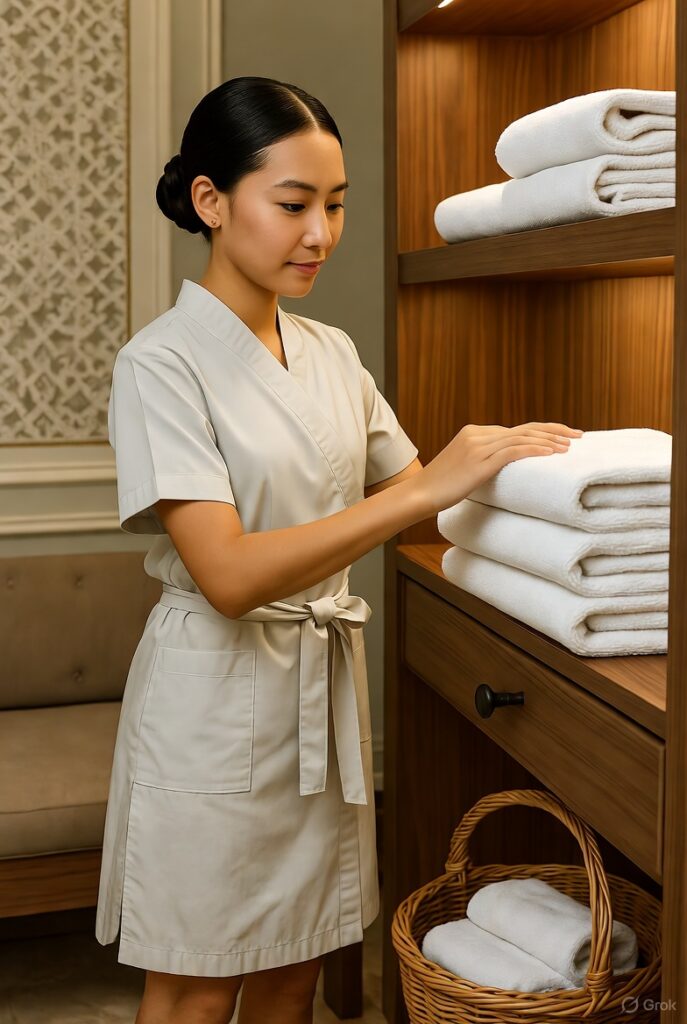
My name is Maya. I work in the spa of a five-star hotel. My day starts in the morning. I clean the spa and make everything ready. I prepare towels, oils, and tea for the guests. When guests come, I smile and say, “Welcome!” I speak softly and help them feel calm. Some guests want a massage, some want to relax in the sauna. I take them to the room and make sure they feel comfto feel good,
ortable. I give them water and ask if they need anything. I want every guest to feel happy and peaceful. When they leave, I say, “Thank you, have a nice day!” I like my job because I help people feel good and relax. At the end of the day, I clean again and prepare for tomorrow. It is a nice and peaceful job.
____________________ Vocablary:
a spa – a place where people go to relax and feel good.
to clean – to wash or make something not dirty.
to make ready – to get something ready for use.
to prepare something – to do things before you use it.
a towel – a soft cloth you use to dry your body.
to smile – to move your mouth to show you are happy.
to speak softly – to talk in a quiet, gentle voice.
to feel calm – to not feel nervous or afraid.
to relax – to rest and feel good.
to feel comfortable – to feel good and not tired or afraid.
to feel peaceful – to feel quiet and happy inside.
#####################
Match the words with their meanings
Words:
a spa
to clean
to make ready
to prepare something
a towel
to smile
to speak softly
to feel calm
to relax
to feel comfortable
to feel peaceful
Definitions:
A. to rest and feel good B. to wash or make something not dirty C. to talk in a quiet, gentle voice D. to feel quiet and happy inside E. to not feel nervous or afraid F. a soft cloth you use to dry your body G. to move your mouth to show you are happy H. a place where people go to relax and feel good I. to get something ready for use J. to do things before you use it K. to feel good and not tired or afraid
a spa – a place where people go to relax and feel good to clean – to wash or make something not dirty to make ready – to get something ready for use to prepare something – to do things before you use it a towel – a soft cloth you use to dry your body to smile – to move your mouth to show you are happy to speak softly – to talk in a quiet, gentle voice to feel calm – to not feel nervous or afraid to relax – to rest and feel good to feel comfortable – to feel good and not tired or afraid to feel peaceful – to feel quiet and happy inside
Maya drives a car for the guests. ______________________________
At the end of the day, Maya cleans the restaurant again. ______________________________
Guests play in the spa rooms. ______________________________
Maya smiles at the people in the street. ______________________________
Maya makes everything ready after guests arrive. ______________________________
———————————- Correct version:
Maya cleans the car in the morning. No, she does not. Maya cleans the spa in the morning.
Guests drink coke in the spa. No, they do not. Guests drink tea in the spa.
Maya prepares apples and oils for the guests. No, she does not. Maya prepares towels and oils for the guests.
Maya shouts to the guests when they arrive. No, she does not. Maya speaks softly to the guests when they arrive.
Some guests want to sleep in the sauna. No, they do not. Some guests want to relax in the sauna.
Maya helps guests feel uncomfortable. No, she does not. Maya helps guests feel comfortable and calm.
Maya drives a car for the guests. No, she does not. Maya works in the spa and does not drive a car.
At the end of the day, Maya cleans the restaurant again. No, she does not. Maya cleans the spa again at the end of the day.
Guests play in the spa rooms. No, they do not. Guests relax in the spa rooms.
Maya smiles at the people in the street. No, she does not. Maya smiles at the guests in the spa.
Maya makes everything ready after guests arrive. No, she does not. Maya makes everything ready before guests arrive.
##################
Answer in complete sentences:
Does Maya clean a car or the spa in the morning?
YOU WRITE: Maya cleans the spa in the morning.
Do guests drink coke or tea in the spa? ____________________________
Does Maya prepare apples or towels for the guests? ____________________________
Does Maya shout or speak softly to the guests when they arrive? ____________________________
Do some guests want to sleep or relax in the sauna? ____________________________
Does Maya help guests feel uncomfortable or comfortable? ____________________________
Does Maya drive a car or work in the spa for the guests? ____________________________
Does Maya clean the restaurant or the spa at the end of the day? ____________________________
Do guests play or relax in the spa rooms? ____________________________
Does Maya smile at people in the street or at the guests in the spa? ____________________________
Does Maya make everything ready before or after guests arrive? ____________________________
———————————— Correct answers:
Maya cleans the spa in the morning.
Guests drink tea in the spa.
Maya prepares towels for the guests.
Maya speaks softly to the guests when they arrive.
Some guests want to relax in the sauna.
Maya helps guests feel comfortable.
Maya works in the spa for the guests.
Maya cleans the spa at the end of the day.
Guests relax in the spa rooms.
Maya smiles at the guests in the spa.
Maya makes everything ready before guests arrive.
#################
Answer these questions:
Who works in the spa?
YOU WRITE: Maya works in the spa.
What does Maya clean in the morning? _______________________________
What does Maya prepare for the guests? _______________________________
How does Maya speak to the guests? _______________________________
Where does Maya help the guests relax? _______________________________
When does Maya make everything ready? _______________________________
Why does Maya smile at the guests? _______________________________
Who does Maya help feel comfortable? _______________________________
What does Maya give to the guests? _______________________________
How does Maya make the spa ready? _______________________________
——————————-
Answers:
Maya works in the spa. Maya cleans the spa in the morning. Maya prepares towels and oils for the guests. Maya speaks softly to the guests. Maya helps the guests relax in the sauna. Maya makes everything ready before the guests arrive. Maya smiles at the guests to make them happy. Maya helps the guests feel comfortable. Maya gives water and tea to the guests. Maya cleans and organizes the spa to make it ready.
##################
Interview with Maya, fill in, words below:
guests -clean – morning – comfortable – arrive – towels – happy – five-star – relax – softly – the next day
———————————————–
Interviewer: What is your name? Maya: My name is Maya.
Interviewer: Where do you work? Maya: I work in the spa of a __________ hotel.
Interviewer: What do you do in the morning? Maya: I __________ the spa and make everything ready.
Interviewer: What do you prepare for the guests? Maya: I prepare __________, oils, and tea for the guests.
Interviewer: Who comes to the spa? Maya: __________ come to the spa.
Interviewer: How do you speak to the guests? Maya: I speak __________ to the guests.
Interviewer: How do you make the guests feel? Maya: I help them feel calm and __________.
Interviewer: Where do some guests relax? Maya: Some guests __________ in the sauna.
Interviewer: When do you clean the spa? Maya: I clean the spa in the __________ and at the end of the day.
Interviewer: Why do you smile at the guests? Maya: I smile to make the guests __________
Interviewer: How do you make the spa ready? Maya: I clean and prepare everything before the guests __________ .
Interviewer: What do you do at the end of the day? Maya: I clean the spa again and prepare for__________.
————————- Correct version:
Interviewer: What is your name? Maya: My name is Maya.
Interviewer: Where do you work? Maya: I work in the spa of a five-star hotel.
Interviewer: What do you do in the morning? Maya: I clean the spa and make everything ready.
Interviewer: What do you prepare for the guests? Maya: I prepare towels, oils, and tea for the guests.
Interviewer: Who comes to the spa? Maya: Guests come to the spa.
Interviewer: How do you speak to the guests? Maya: I speak softly to the guests.
Interviewer: How do you make the guests feel? Maya: I help them feel calm and comfortable.
Interviewer: Where do some guests relax? Maya: Some guests relax in the sauna.
Interviewer: When do you clean the spa? Maya: I clean the spa in the morning and at the end of the day.
Interviewer: Why do you smile at the guests? Maya: I smile to make the guests happy.
Interviewer: How do you make the spa ready? Maya: I clean and prepare everything before the guests arrive.
Interviewer: What do you do at the end of the day? Maya: I clean the spa again and prepare for tomorrow.
#################
Now you interview Salas about Maya, and you want to know as much as possible about Maya. Use dialogue above.
START WITH:
Interviewer: What is _her_ name? Salas: _Her_ name is Maya.
Interviewer: Where _does she_ work?
Salas:……………………..
make all changes necessary.
_________________________ Correct version:
Interviewer: What is her name? Salas: Her name is Maya.
Interviewer: Where does she work? Salas: She works in the spa of a five-star hotel.
Interviewer: What does she do in the morning? Salas: She cleans the spa and makes everything ready.
Interviewer: What does she prepare for the guests? Salas: She prepares towels, oils, and tea for the guests.
Interviewer: Who comes to the spa? Salas: Guests come to the spa.
Interviewer: How does she speak to the guests? Salas: She speaks softly to the guests.
Interviewer: How does she make the guests feel? Salas: She helps them feel calm and comfortable.
Interviewer: Where do some guests relax? Salas: Some guests relax in the sauna.
Interviewer: When does she clean the spa? Salas: She cleans the spa in the morning and at the end of the day.
Interviewer: Why does she smile at the guests? Salas: She smiles to make the guests happy.
Interviewer: How does she make the spa ready? Salas: She cleans and prepares everything before the guests arrive.
Interviewer: What does she do at the end of the day? Salas: She cleans the spa again and prepares for tomorrow.
##################
Read the fowllowing story:
My name is Maya. I work in the spa of a five-star hotel. In the morning. I clean the spa and make everything ready. I prepare towels, oils, and tea for the guests. When guests arrive, I smile and speak softly. I help them feel calm and comfortable. Some guests relax in the sauna or have a massage. I always check that everything is ready. At the end of the day, I clean the spa again. I like my job because I help guests feel happy and peaceful.
_____________________
Rewrite the story, starting with:
Her name is Maya. She works………..
and make all changes necessary.
_____________________
Correct version:
Her name is Maya. She works in the spa of a five-star hotel. In the morning, she cleans the spa and makes everything ready. She prepares towels, oils, and tea for the guests. When guests arrive, she smiles and speaks softly. She helps them feel calm and comfortable. Some guests relax in the sauna or have a massage. She always checks that everything is ready. At the end of the day, she cleans the spa again. She likes her job because she helps guests feel happy and peaceful.
###############
BONUS version:
Her name is Maya. She works in the spa of a five-star hotel. She likes her job very much. Every morning, she comes to the spa early. The first thing she does is clean the spa. She cleans the floors, the tables, the chairs, and the windows. She checks all the rooms to make sure they are clean. She prepares towels, oils, and water for the guests. She makes tea and puts it in the rooms. She makes everything ready for the guests before they arrive.
When guests come, Maya smiles and says, “Welcome!” She speaks softly and politely. She wants the guests to feel calm and happy. Some guests want a massage. Some guests want to relax in the sauna. Maya takes the guests to the rooms and gives them towels, oils, and tea. She asks if they need anything. She helps the guests feel comfortable. She watches them and makes sure they are safe.
During the day, Maya works in the spa. She cleans again if it is necessary. She prepares new towels and oils. She makes sure the tea and water are ready. She always checks that the spa is clean and calm. At the end of the day, Maya cleans the spa again and prepares everything for tomorrow. She likes her job because she helps guests feel happy, calm, and relaxed. She enjoys seeing the guests smile and feel comfortable in the spa.
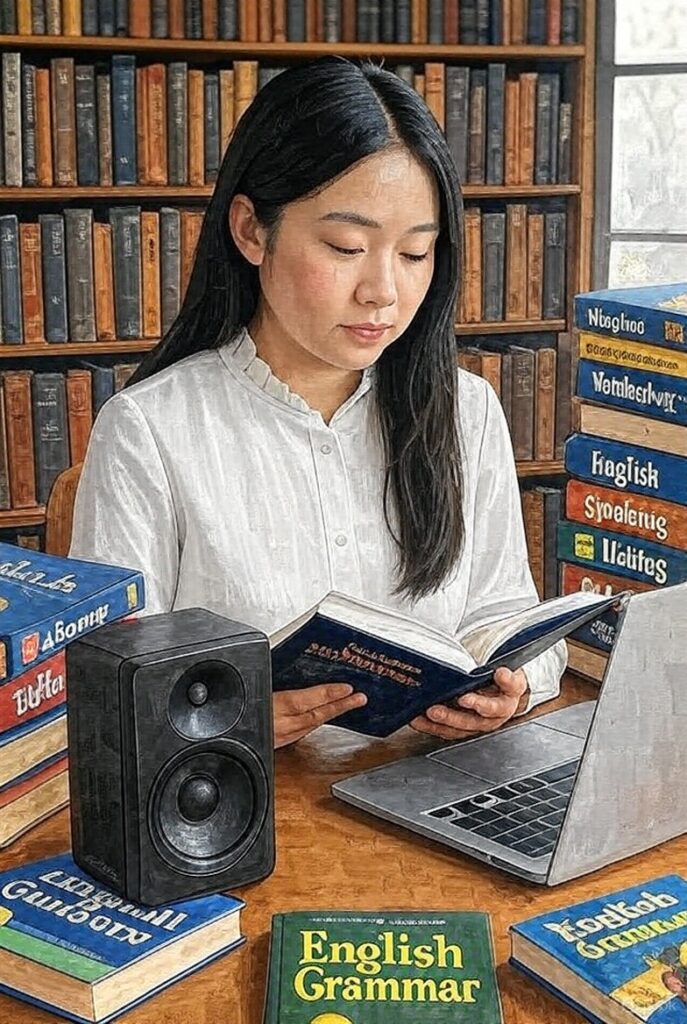
Learning English can be easy and fun if you practice every day. First, start with the basics. Learn the alphabet and simple words like “hello,” “goodbye,” and “thank you.” These words are useful and easy to remember.
Next, practice speaking English as much as you can. You can talk to yourself or with a friend who knows English. Try to say simple sentences like “My name is Anna” or “I like music.” Listening is also very important. Watch English cartoons, movies, or listen to songs. This helps you understand the sounds and rhythm of English.
Reading is another good way to learn. Start with short and easy books or stories. You can also read signs or labels in English around you. Many apps and websites, like Duolingo or BBC Learning English, can help you learn more.
Remember to practice every day. Even ten minutes can make a difference. Don’t worry if you make mistakes — it’s normal and part of learning. Set small goals and try to reach them step by step. Most of all, have fun! Enjoy learning English and celebrate your progress. Every day, you will get better and more confident.
________________________
Vocabulary:
a revised version – a new or better version of something
exciting – very interesting or fun
a step – one small action you do
to practice – to do something many times to get better
to be useful – to help you do something
to remember – to keep something in your mind
a sentence – a group of words that has a complete meaning
to watch cartoons – to see animated videos for fun
to listen to a song – to hear music and words
the rhythm of English – the way English sounds and moves when people speak
a sign – a piece of paper or board with words or information
a label – a small piece on a product with its name or information
to make a difference – to change something in a good way
to worry – to feel afraid or nervous about something
to make a mistake – to do something wrong
to set a goal – to decide what you want to do or achieve
step by step – to do things slowly, one after another
to celebrate a progress – to feel happy about the improvements you make
to be confident – to feel sure about yourself and what you can do
######################
Multiple-choice, one answer correct:
What is “a revised version”? a) A new plan to improve [to make better] b) Something old and heavy c) A short sentence text
What does “exciting” mean? a) Slow and not exciting b) Very interesting or fun c) Small and very easy
What is “a step”? a) One small action to do b) A big place or building c) A short song or poem
What does “to practice” mean? a) To sleep or to rest now b) To do something many times c) To eat some food today
What does “to be useful” mean? a) To be heavy or long now b) To be old or new piece c) To help you do something
What does “to remember” mean? a) To keep something in your mind b) To eat or drink some food c) To jump and run very fast
What is “a sentence”? a) A short song or poem text b) A cat or small dog thing c) A group of words with meaning
What does “to watch cartoons” mean? a) To see animated videos b) To read a book or text c) To eat or drink some food
What does “to listen to a song” mean? a) To sleep or to rest now b) To hear music and words c) To write or draw a picture
What is “the rhythm of English”? a) A small action or step b) A type of food or drink c) The way English sounds move
What is “a sign”? a) A short story or song text b) A piece of paper or board c) A cat or small dog thing
What is “a label”? a) A small piece on a product b) A big book or notebook thing c) A sentence or short text
What does “to make a difference” mean? a) To sleep or to rest now b) To make a mistake or error c) To change something in a good way
What does “to worry” mean? a) To eat or drink some food b) To feel afraid or nervous c) To run or jump very fast
What does “to make a mistake” mean? a) To do something wrong now b) To celebrate or play now c) To do something right now
What does “to set a goal” mean? a) To eat or drink some food b) To decide what you want to do c) To sleep or rest for now
What does “step by step” mean? a) To do everything at the same time b) To jump or run very fast c) To do things slowly one after another
—-end of audio—-
What does “to celebrate a progress” mean? a) To feel happy about your improvements b) To feel sad or tired now c) To worry or wait now
What does “to be confident” mean? a) To sleep or to rest now b) To feel afraid or shy c) To feel sure about yourself
What is a revised version? – A new plan to improve
What does exciting mean? – Very interesting or fun
What is a step? – One small action to do
What does to practice mean? – To do something many times
What does to be useful mean? – To help you do something
What does to remember mean? – To keep something in your mind
What is a sentence? – A group of words with meaning
What does to watch cartoons mean? – To see animated videos
What does to listen to a song mean? – To hear music and words
What is the rhythm of English? – The way English sounds move
What is a sign? – A piece of paper or board
What is a label? – A sentence or short text
What does to make a difference mean? – To change something in a good way
What does to worry mean? – To feel afraid or nervous
What does to make a mistake mean? – To do something wrong now
What does to set a goal mean? – To decide what you want to do
What does step by step mean? – To do things slowly one after another
What does to celebrate a progress mean? – To feel happy about your improvements
What does to be confident mean? – To feel sure about yourself
##############
Match the word to its definition
Words:
Improve
Exciting
Step
Practice
Useful
Remember
Sentence
Watch cartoons
Listen to a song
Rhythm
Sign
Label
Make a difference
Worry
Make a mistake
Set a goal
Step by step
Celebrate progress
Confident
Definitions:
a) To feel sure about yourself b) To see animated videos c) One small action you do d) To feel afraid or nervous e) To hear music and words f) To get better at something g) To keep something in your mind h) A group of words with meaning i) To do something slowly one after another j) To help you do something k) To do something wrong l) Very interesting or fun m) A piece of paper or board n) A sentence or short text o) To change something in a good way p) To celebrate your improvements q) To do something many times r) To decide what you want to do s) The way English sounds move
Improve – To get better at something Exciting – Very interesting or fun Step – One small action you do Practice – To do something many times Useful – To help you do something Remember – To keep something in your mind Sentence – A group of words with meaning Watch cartoons – To see animated videos Listen to a song – To hear music and words Rhythm – The way English sounds move Sign – A piece of paper or board Label – A sentence or short text Make a difference – To change something in a good way Worry – To feel afraid or nervous Make a mistake – To do something wrong Set a goal – To decide what you want to do Step by step – To do something slowly one after another Celebrate progress – To celebrate your improvements Confident – To feel sure about yourself
######################
True or false:
Learning English can be easy if you practice every day.
You should start learning with very difficult words.
Saying simple sentences helps you practice speaking.
Watching cartoons in English helps you listen to sounds.
Reading English signs is not useful for beginners.
Using apps like Duolingo can help you learn English.
You must spend many hours at once to improve.
Making mistakes is normal when learning English.
You should never set goals in learning English.
Practicing every day can make a difference.
The rhythm of English can help you understand the language.
You will not get better if you enjoy learning.
Talking to a friend in English can help you practice.
It is bad to celebrate your progress in English.
_________________ True: 1,3,4,6,8,10,11,13
_________________ Correct version:
Learning English can be easy if you practice every day.
You should start learning with very difficult words. True is: You should start learning with simple words.
Saying simple sentences helps you practice speaking.
Watching cartoons in English helps you listen to sounds.
Reading English signs is not useful for beginners. True is: Reading English signs is useful for beginners.
Using apps like Duolingo can help you learn English.
You must spend many hours at once to improve. True is: You can improve by practicing a little every day.
Making mistakes is normal when learning English.
You should never set goals in learning English. True is: You should set small goals in learning English.
Practicing every day can make a difference.
The rhythm of English can help you understand the language.
You will not get better if you enjoy learning. True is: You will get better if you enjoy learning.
Talking to a friend in English can help you practice.
It is bad to celebrate your progress in English. True is: It is good to celebrate your progress in English.
###############
Correct the statements as shown:
You start learning English with very difficult words.
YOU WRITE:
No, you do not start learning English with very difficult words. You start learning with easy words.
You practice speaking only by reading books. ________________________________
Watching cartoons makes English harder to understand. ________________________________
Reading signs and labels does not help you learn. ________________________________
You spend all your time learning English at once. ________________________________
Making mistakes stops you from learning English. ________________________________
Celebrating your progress makes learning worse. ________________________________
You ignore listening to songs when you learn English. ________________________________
You skip practicing English every day. ________________________________
You only write sentences and never speak with a friend. ________________________________
———————————– Correct version:
You start learning English with very difficult words. No, you do not start learning English with very difficult words. You start learning with simple words.
You practice speaking only by reading books. No, you do not practice speaking only by reading books. You practice speaking by talking to yourself or a friend.
Watching cartoons makes English harder to understand. No, watching cartoons does not make English harder to understand. Watching cartoons helps you understand English sounds.
Reading signs and labels does not help you learn. No, reading signs and labels does not fail to help you learn. Reading signs and labels is useful for learning.
You spend all your time learning English at once. No, you do not spend all your time learning English at once. You improve by practicing a little every day.
Making mistakes stops you from learning English. No, making mistakes does not stop you from learning English. Making mistakes is normal and helps you learn English.
Celebrating your progress makes learning worse. No, celebrating your progress does not make learning worse. Celebrating your progress helps you enjoy learning.
You ignore listening to songs when you learn English. No, you do not ignore listening to songs when you learn English. Listening to songs helps you understand English.
You skip practicing English every day. No, you do not skip practicing English every day. Practicing every day helps you get better.
You only write sentences and never speak with a friend. No, you do not only write sentences and never speak with a friend. You speak simple sentences with a friend to practice.
###################
Answer in full sentences:
Do I read English books or French books?
YOU WRITE: I read English books.
Do you watch cartoons in English or only watch cartoons in French? ________________________
Does he practice speaking with a friend or just sit quietly? ________________________
Does she listen to English songs or ignore songs completely? ________________________
Does watching cartoons help you understand English or make English harder? ________________________
Do we use apps like Duolingo or throw away our books? ________________________
Do you study signs and labels or forget all signs? ________________________
Do they make mistakes when they learn English or never make mistakes? ________________________
Do I practice English every day or do nothing at all? ________________________
Do you celebrate your progress or ignore all progress? ________________________
______________________
Correct version:
Do I read English books or French books? I read English books.
Do you watch cartoons in English or only watch cartoons in French? I watch cartoons in English.
Does he practice speaking with a friend or just sit quietly? He practices speaking with a friend.
Does she listen to English songs or ignore songs completely? She listens to English songs.
Does watching cartoons help you understand English or make English harder? Watching cartoons helps me understand English.
Do we use apps like Duolingo or throw away our books? We use apps like Duolingo.
Do you study signs and labels or forget all signs? I study signs and labels.
Do they make mistakes when they learn English or never make mistakes? They make mistakes when they learn English.
Do I practice English every day or do nothing at all? I practice English every day.
Do you celebrate your progress or ignore all progress? I celebrate my progress.
##################
Short answers, basics:
Example Sentence
Yes
No
I learn the alphabet.
Yes, I do.
No, I don’t.
You read signs.
Yes, you do.
No, you don’t.
He practices speaking.
Yes, he does.
No, he doesn’t.
She watches cartoons.
Yes, she does.
No, she doesn’t.
It helps us learn English.
Yes, it does.
No, it doesn’t.
We use apps like Duolingo.
Yes, we do.
No, we don’t.
You read labels.
Yes, you do.
No, you don’t.
They make mistakes sometimes.
Yes, they do.
No, they don’t.
Question
Yes
No
Do I learn the alphabet?
Yes, I do.
No, I don’t.
Do you read signs?
Yes, you do.
No, you don’t.
Does he practice speaking?
Yes, he does.
No, he doesn’t.
Does she watch cartoons?
Yes, she does.
No, she doesn’t.
Does it help us learn English?
Yes, it does.
No, it doesn’t.
Do we use apps like Duolingo?
Yes, we do.
No, we don’t.
Do you read labels?
Yes, you do.
No, you don’t.
Do they make mistakes sometimes?
Yes, they do.
No, they don’t.
###################
Short answers:
I learn the alphabet and difficult words first.
YOU WRITE: No, I don’t.
You say words like “hello” and “thank you.” ________________________________
He practices speaking with a friend every now and then. ________________________________
She watches cartoons to listen to English.________________________________
We read signs and labels in French. ________________________________
They use apps like games to practice English. ________________________________
It helps us improve when we practice every day. ________________________________
I make no mistakes when I learn English. ________________________________
You set big goals in learning English. ________________________________
He celebrates his progress when he finishes tasks. ________________________________
———————————– Correct answers:
I learn the alphabet and difficult words first. No, I don’t.
You say words like “hello” and “thank you.” Yes, you do.
He practices speaking with a friend every now and then. No, he doesn’t.
She watches cartoons to listen to English. Yes, she does.
We read signs and labels in French. No, we don’t.
They use apps like Need and Speed to practice English. No, they don’t.
It helps us improve when we practice every day. Yes, it does.
I make no mistakes when I learn English. Yes, I do.
You set big goals in learning English. No, you don’t.
He celebrates his progress when he finishes tasks. Yes, he does.
###################
Short answers:
Do I learn the alphabet and difficult words first?
YOU WRITE: No, I don’t.
Do you say words like “hello” and “thank you”? _________________________________
Does he practice speaking with a friend every now and then? _________________________________
Does she watch cartoons to listen to English? _________________________________
Do we read signs and labels in French? _________________________________
Do they use apps like Need and Speed to practice English? _________________________________
Does it help us improve when we practice every day? _________________________________
Do I make no mistakes when I learn English? _________________________________
Do you set big goals in learning English? _________________________________
Does he celebrate his progress when he finishes tasks? _________________________________
——————————
Correct answers:
Do I learn the alphabet and difficult words first? – No, I don’t.
Do you say words like “hello” and “thank you”? – Yes, you do.
Does he practice speaking with a friend every now and then? – No, he doesn’t.
Does she watch cartoons to listen to English? – Yes, she does.
Do we read signs and labels in French? – No, we don’t.
Do they use apps like Need and Speed to practice English? – No, they don’t.
Does it help us improve when we practice every day? – Yes, it does.
Do I make no mistakes when I learn English? – Yes, I do.
Do you set big goals in learning English? – No, you don’t.
Does he celebrate his progress when he finishes tasks? – Yes, he does.
###################
1. **Start with the Basics:**
Learn the alphabet and common words like „hello,“ „goodbye,“ and „thank you.“
2. **Practice Speaking:**
Talk to yourself in English or with a friend who knows English. Practice simple sentences like „My name is…“ or „I like…“
3. **Listen to English:**
Watch English cartoons, movies, or listen to English songs. This helps you get used to the sounds of the language.
4. **Read English Books:**
Start with simple books or stories. You can also read signs, labels, or menus in English.
5. **Use English Apps or Websites:**
There are many apps and websites that can help you learn English, like Duolingo or BBC Learning English.
6. **Practice Every Day:**
Spend a little time each day practicing English. Consistency is key to improving!
7. **Find a Language Partner:**
Talk to someone who speaks English. This could be a friend, a family member, or even someone online.
8. **Don’t Be Afraid to Make Mistakes:**
Making mistakes is normal! Learn from them and keep practicing.
9. **Set Goals:**
Decide what you want to achieve in English and set small, achievable goals for yourself.
10. **Have Fun:**
Learning a new language can be challenging, but it’s also a lot of fun! Enjoy the process and celebrate your progress along the way.
#######################
Cheat sheet:
Tip
Explanation
Start with the Basics
Learn the alphabet and common words like “hello,” “goodbye,” and “thank you.”
Practice Speaking
Talk to yourself in English or with a friend who knows English.
Practice simple sentences like “My name is…” or “I like…”
Listen to English
Watch English cartoons, movies, or listen to English songs.
This helps you get used to the sounds of the language.
Read English Books
Start with simple books or stories.
You can also read signs, labels, or menus in English.
Use English Apps or Websites
There are many apps and websites that can help you learn English, like Duolingo or BBC Learning English.
Practice Every Day
Spend a little time each day practicing English.
Consistency is key to improving!
Find a Language Partner
Talk to someone who speaks English.
This could be a friend, a family member, or even someone online.
Don’t Be Afraid to Make Mistakes
Making mistakes is normal!
Learn from them and keep practicing.
Set Goals
Decide what you want to achieve in English and set small, achievable goals for yourself.
Have Fun
Learning a new language can be challenging, but it’s also a lot of fun!
Enjoy the process and celebrate your progress along the way.
A good foundation can help young people have a better life and good work in tourism. It gives education and training in important skills. Students can learn English, computer skills, and hotel work, like serving guests, cleaning rooms, or working in restaurants. They also learn life skills, such as teamwork, responsibility, and communication.
A strong foundation also gives practical experience. Students can work in real hotels or tourist places to use what they learn in class. This experience helps them feel confident and ready for work. The foundation should support students with free classes, meals, uniforms, and sometimes a place to live. This is very important for students from poor families or far villages.
A good foundation teaches young people to care for the environment and local culture. They learn to respect nature, protect animals, and understand traditions.
The main goal of a good foundation is to help students find jobs and have a better future. With training, support, and experience, young people can grow and succeed. They can work in hotels or tourist places and help the community. Foundations like this make life better for young people and their families, and also improve tourism by having skilled and responsible workers.
__________________________
Vocabulary:
To shine – To do very well or to be very good at something.
A foundation – An organization that helps people.
Education – Learning at school or in classes.
Skills – Things you can do well.
To serve guests – To give food, drinks, or help to visitors.
To clean rooms – To make rooms tidy and clean.
Responsibility – Doing what you should do and taking care of things.
Communication – Talking or sharing ideas with other people.
Practical experience – Doing real work to learn skills.
To feel confident – To feel sure about yourself and your abilities.
To support – To help someone.
A village – A small town or group of houses in the countryside.
To care for the environment – To keep nature clean and safe.
To respect nature – To be careful and kind to animals, plants, and the earth.
To protect animals – To keep animals safe from harm.
To understand traditions – To know about old customs and ways of life.
A goal – Something you want to do or achieve.
Support – Help or assistance.
To succeed – To do something well or reach your goal.
A community – A group of people living or working together.
To improve tourism – To make visiting a place better for tourists.
A skilled worker – A person who can do a job well.
To be responsible – To do what you must do and take care of your duties.
#################
Multiple-choice, one answer correct:
1. What does “to shine” mean? A) To do very well or be very good B) To make something bright C) To look like a star
2. What is a “foundation”? A) The bottom of a building B) A group that helps people in need C) A type of makeup
3. What is “education”? A) Reading books at home B) Learning at school or in classes C) Watching TV for fun
4. What are “skills”? A) Things you play with B) Things you wear C) Things you can do well
5. What does “to serve guests” mean? A) To play games with visitors B) To give food or drinks to visitors C) To clean your own room
6. What does “to clean rooms” mean? A) To make rooms tidy B) To paint rooms with colors C) To move furniture
7. What is “responsibility”? A) Having fun every day B) Doing what you should and taking care of things C) Sleeping all the time
8. What is “communication”? A) Reading silently at home B) Writing a long book C) Talking or sharing ideas with people
9. What is “practical experience”? A) Doing real work to learn skills B) Watching videos at home C) Reading stories in class
10. What does “to feel confident” mean? A) To feel very excited B) To feel nervous and shy C) To feel sure about yourself
11. What does “to support” mean? A) To carry heavy things alone B) To help someone C) To run very fast
12. What is a “village”? A) A small town in the countryside B) A big city with many buildings C) A house in the forest
13. What does “to care for the environment” mean? A) To make your house beautiful B) To keep nature clean C) To plant flowers at home
14. What does “to respect nature” mean? A) To visit mountains often B) To take pictures of forests C) To be careful and kind to plants and animals
15. What does “to protect animals” mean? A) To feed animals at home B) To watch animals in a zoo C) To keep animals safe
16. What does “to understand traditions” mean? A) To learn a new language B) To know old customs and ways of life C) To play new games
—–end of audio———–
17. What is a “goal”? A) A place to sleep B) Something you want to do C) A toy you like
18. What is “support”? A) Help or assistance B) Food for children C) A place to stay
19. What does “to succeed” mean? A) To try and fail B) To do something well or reach your goal C) To rest all day
20. What is a “community”? A) A place with many trees B) A small house in the forest C) A group of people living or working together
21. What does “to improve tourism” mean? A) To clean streets in a city B) To build new houses C) To make visiting a place better for tourists
22. What is a “skilled worker”? A) A child in school B) A person who can do a job well C) A visitor in a hotel
23. What does “to be responsible” mean? A) To have fun all the time B) To play games with friends C) To do what you must and take care of duties
What does “to shine” mean? – To do very well or be very good
What is a “foundation”? – A group that helps people in need
What is “education”? – Learning at school or in classes
What are “skills”? – Things you can do well
What does “to serve guests” mean? – To give food or drinks to visitors
What does “to clean rooms” mean? – To make rooms tidy
What is “responsibility”? – Doing what you should and taking care of things
What is “communication”? – Talking or sharing ideas with people
What is “practical experience”? – Doing real work to learn skills
What does “to feel confident” mean? – To feel sure about yourself
What does “to support” mean? – To help someone
What is a “village”? – A small town in the countryside
What does “to care for the environment” mean? – To keep nature clean
What does “to respect nature” mean? – To be careful and kind to plants and animals
What does “to protect animals” mean? – To keep animals safe
What does “to understand traditions” mean? – To know old customs and ways of life
What is a “goal”? – Something you want to do
What is “support”? – Help or assistance
What does “to succeed” mean? – To do something well or reach your goal
What is a “community”? – A group of people living or working together
What does “to improve tourism” mean? – To make visiting a place better for tourists
What is a “skilled worker”? – A person who can do a job well
What does “to be responsible” mean? – To do what you must and take care of duties
#################
Match the words with the correct definitions:
Words:
to shine
a foundation
education
skills
to serve guests
to clean rooms
responsibility
communication
practical experience
to feel confident
to support
a village
to care for the environment
to respect nature
to protect animals
to understand traditions
a goal
support
to succeed
a community
to improve tourism
a skilled worker
to be responsible
Definitions:
A. Doing what you should and taking care of things B. To know old customs and ways of life C. Things you can do well D. To feel sure about yourself E. A group that helps people F. Learning at school or in classes G. To give food or drinks to visitors H. To make visiting a place better for tourists I. A group of people living or working together J. To keep animals safe K. Help or assistance L. Talking or sharing ideas with people M. Doing real work to learn skills N. To do very well or be very good O. To carry out work or tasks in real life P. To make rooms tidy Q. A small town in the countryside R. To help someone S. A person who can do a job well T. To be careful and kind to plants and animals U. To keep nature clean V. Something you want to do or achieve W. To do something well or reach your goal
1. Q: What does your foundation do? A: Our foundation trains young people in tourism and __________. We help them learn skills, get education, and gain practical experience.
2. Q: Who can join your programs? A: Only young people can join. We focus on those from rural areas or poor backgrounds who would not have any __________ for training.
3. Q: Which skills do you teach? A: We teach practical __________ like cleaning rooms, serving guests, communication, teamwork, and responsibility.
4. Q: Where do the activities take place? A: Activities happen in hotels, our training center, local __________, and sometimes in community projects.
5. Q: When can young people get practical __________? A: They can join during workshops or training programs where they work in real hotels and tourist places.
6. Q: Why do you focus on young people from rural or poor areas? A: These young people usually have no chance for __________ or training. Our foundation gives them opportunities to succeed in tourism and hospitality.
7. Q: What traditions do you teach? A: We teach local __________, culture, and traditional ways of life, so young people understand and respect them.
8. Q: How can volunteers help? A: Volunteers can teach, organize activities, help in hotels, and care for the __________ and animals.
9. Q: Who benefits most from your foundation? A: Young people from _________ or poor backgrounds gain skills, confidence, and practical experience. Communities also benefit from tourism projects.
10. Q: Which activities involve tourists? A: Tourists can visit programs, see local life, and __________ about culture, hotels, and hospitality work.
11. Q: How long has your foundation been working? A: The foundation has been active for over ten years and has trained hundreds of _________ people.
12. Q: What is the main goal of your foundation? A: The main goal is to help young people from poor backgrounds __________ in tourism and hospitality, support communities, and respect culture and nature.
#################
Correct version:
. Q: What does your foundation do? A: Our foundation trains young people in tourism and hospitality. We help them learn skills, get education, and gain practical experience.
2. Q: Who can join your programs? A: Only young people can join. We focus on those from rural areas or poor backgrounds who would not have any chance for training.
3. Q: Which skills do you teach? A: We teach practical skills like cleaning rooms, serving guests, communication, teamwork, and responsibility.
4. Q: Where do the activities take place? A: Activities happen in hotels, our training center, local villages, and sometimes in community projects.
5. Q: When can young people get practical experience? A: They can join during workshops or training programs where they work in real hotels and tourist places.
6. Q: Why do you focus on young people from rural or poor areas? A: These young people usually have no chance for education or training. Our foundation gives them opportunities to succeed in tourism and hospitality.
7. Q: What traditions do you teach? A: We teach local customs, culture, and traditional ways of life, so young people understand and respect them.
8. Q: How can volunteers help? A: Volunteers can teach, organize activities, help in hotels, and care for the environment and animals.
9. Q: Who benefits most from your foundation? A: Young people from rural or poor backgrounds gain skills, confidence, and practical experience. Communities also benefit from tourism projects.
10. Q: Which activities involve tourists? A: Tourists can visit programs, see local life, and learn about culture, hotels, and hospitality work.
11. Q: How long has your foundation been working? A: The foundation has been active for over ten years and has trained hundreds of young people.
12. Q: What is the main goal of your foundation? A: The main goal is to help young people from poor backgrounds succeed in tourism and hospitality, support communities, and respect culture and nature.
There are very few official rules for eco-tourism. Some tours are really good for nature and local people, but others are bad. Tourists cannot always know if a hotel, guide, or tour is really eco-friendly. Without rules, some companies may cheat or lie about helping nature, and local people may not get fair benefits.
##################
One big problem with eco-tourism is that there are very few clear rules or standards. Some eco-tourism tours are really good. They help nature, protect animals, and give money to local people. But other tours are not good. They may look like eco-tourism, but they can harm nature, animals, or local communities.
Tourists often do not know if a hotel, guide, or tour is really eco-friendly. Sometimes companies say they care about the environment, but they do not. Without clear rules, it is easy for companies to cheat. For example, a hotel can say it is eco-friendly, but it may use a lot of water or energy. A tour company may say it helps local people, but local communities may not get any money.
This problem is very serious. Tourists want to make good choices, but it is hard to know which tours are honest. Local people can also lose if companies do not follow fair rules. Good eco-tourism needs clear standards, inspections, and certificates. Without rules, eco-tourism can be more harmful than helpful.
————————-
Vocabulary:
a rule – something you must do or must not do
a standard – a level of quality that is normal or correct
an official rule – a rule made by the government or an authority
eco-friendly – good for nature and the environment
to cheat – to lie or do something wrong to get an advantage
fair benefits – good things that are given to everyone in the right way
to protect animals – to keep animals safe from danger or harm
local people – people who live in the area
to harm nature – to hurt plants, animals, or the environment
a local community – a group of people living in the same area
to care about the environment – to think it is important to keep nature safe and clean
to make a good choice – to choose the best or right thing
to be honest – to tell the truth and not lie
to be a loser – to fail or not succeed
fair rules – rules that are good and equal for everyone
an inspection – a careful check to see if something is correct or safe
a certificate – an official paper that shows something is true or correct
to be harmful – to be bad or dangerous for people, animals, or nature
####################
Multiple choice:
1. A rule is… a) a paper you get at school b) a place where people live c) something you must do or not do
2. A standard is… a) a type of thing that people use b) a level of quality that is normal c) a rule that everyone must follow
3. An official rule is… a) a law made by the government b) a rule only for some people c) a rule that can change often
4. Eco-friendly means… a) safe for people to use always b) good for nature and the environment c) useful for jobs or activities
5. To cheat means… a) to do something others dislike b) to lie or do something wrong c) to try to win in the wrong way
6. Fair benefits are… a) good things that everyone gets b) helpful things for each person c) things that give the same help
7. To protect animals means… a) to keep animals safe b) to make animals work c) to watch animals
8. Local people are… a) people who live in the area b) people who work close to home c) people who stay near the village
9. To harm nature means… a) to make plants, rivers, or soil unsafe b) to hurt plants, animals, or land c) to damage trees, rivers, or soil
10. A local community is… a) a set of people who live nearby b) a group of people in one place c) a group of people who live near
11. To care about the environment means… a) to think it is important to keep nature safe b) to try to keep the world clean and safe c) to want to protect trees, water, and land
12. To make a good choice means… a) to pick the correct thing to do b) to choose the right thing c) to select the thing that is the best
13. To be honest means… a) to speak in a truthful and fair way b) to tell the truth and not lie c) to always say what is correct
14. To be a loser means… a) to lose and not reach the goal b) to fail or not succeed c) to try but not win at something
15. Fair rules are… a) rules that give the same chance to all b) rules that apply to everyone c) rules that are equal and fair
———–end of audio———
16. An inspection is… a) a review to see if something is right b) a careful check to see if things are correct c) a close look to make sure things are okay
17. A certificate is… a) a paper that proves something is correct b) an official paper that says it is correct c) a document that shows something is true
18. To be harmful means… a) to make things unsafe for people or animals b) to cause harm to people, animals, or plants c) to be bad or dangerous for people, animals, or nature
An official rule is – a law made by the government
Eco-friendly means – good for nature and the environment
To cheat means – to lie or do something wrong
Fair benefits are – good things that everyone gets
To protect animals means – to keep animals safe
Local people are – people who live in the area
To harm nature means – to hurt plants, animals, or land
A local community is – a group of people who live near
To care about the environment means – to think it is important to keep nature safe
To make a good choice means – to pick the correct thing to do
To be honest means – to tell the truth and not lie
To be a loser means – to fail or not succeed
Fair rules are – rules that are equal and fair
An inspection is – a careful check to see if things are correct
A certificate is – an official paper that says it is correct
To be harmful means – to be bad or dangerous for people, animals, or nature
##################
Match the word with its definition
Words:
a rule
a standard
an official rule
eco-friendly
to cheat
fair benefits
to protect animals
local people
to harm nature
a local community
to care about the environment
to make a good choice
to be honest
to be a loser
fair rules
an inspection
a certificate
to be harmful
Definitions:
A. to keep animals safe B. a careful check to see if things are correct C. to lie or do something wrong D. to think it is important to keep nature safe E. a level of quality that is normal F. rules that are equal and fair G. a group of people who live near H. something you must do or not do I. a paper that shows something is true or correct J. to be bad or dangerous for people, animals, or nature K. to fail or not succeed L. to hurt plants, animals, or land M. a law made by the government N. to pick the correct thing to do O. to tell the truth and not lie P. good things that everyone gets Q. people who live in the area R. good for nature and the environment
Interviewer: Hello! Today we talk about eco-tourism. Can you tell us what one big problem is? Expert: Yes. One big problem is that there are very few clear rules or standards for __________.
Interviewer: What does that mean? Expert: It means there are no official __________ to show if a tour or hotel is really eco-friendly.
Interviewer: Are all eco-tours bad? Expert: No, not at all. Some tours are really good. They help nature, __________ animals, and give money to local people.
Interviewer: But some tours are not good, right? Expert: That’s right. Some only look like eco-tourism, but they can harm nature or __________.
Interviewer: How can a tour harm nature? Expert: It can use too many cars, make a lot of __________, or throw rubbish in natural places.
Interviewer: And what about local people? Expert: Sometimes local __________ do not get any money, even when the tour says it helps them.
Interviewer: Why can this happen? Expert: Because there are no clear rules or inspections to check if companies tell the__________.
Interviewer: Can some companies cheat? Expert: Yes, they can. A hotel can say it is eco-friendly, but maybe it uses a lot of water or __________.
Interviewer: What can tourists do? Expert: Tourists can ask questions, read reviews, and try to choose __________ tours and hotels.
Interviewer: Is it easy for tourists to make a good choice? Expert: No, it is not easy. Without __________ standards, it is hard to know which tours are really good.
Interviewer: Who loses when companies are not honest? Expert: Both tourists and local people lose. Tourists lose trust, and local people lose _________ and jobs.
Interviewer: What can help to solve this problem? Expert: We need fair rules, inspections, and __________ to show which tours are truly eco-friendly.
Interviewer: Why are clear rules so important? Expert: Because without rules, eco-tourism can become more harmful than __________ for nature and people.
___________________________
Interview: The Problem with Eco-tourism Rules
Interviewer: Hello! Today we talk about eco-tourism. Can you tell us what one big problem is? Expert: Yes. One big problem is that there are very few clear rules or standards for eco-tourism.
Interviewer: What does that mean? Expert: It means there are no official rules to show if a tour or hotel is really eco-friendly.
Interviewer: Are all eco-tours bad? Expert: No, not at all. Some tours are really good. They help nature, protect animals, and give money to local people.
Interviewer: But some tours are not good, right? Expert: That’s right. Some only look like eco-tourism, but they can harm nature or animals.
Interviewer: How can a tour harm nature? Expert: It can use too many cars, make a lot of noise, or throw rubbish in natural places.
Interviewer: And what about local people? Expert: Sometimes local communities do not get any money, even when the tour says it helps them.
Interviewer: Why can this happen? Expert: Because there are no clear rules or inspections to check if companies tell the truth.
Interviewer: Can some companies cheat? Expert: Yes, they can. A hotel can say it is eco-friendly, but maybe it uses a lot of water or energy.
Interviewer: What can tourists do? Expert: Tourists can ask questions, read reviews, and try to choose honest tours and hotels.
Interviewer: Is it easy for tourists to make a good choice? Expert: No, it is not easy. Without clear standards, it is hard to know which tours are really good.
Interviewer: Who loses when companies are not honest? Expert: Both tourists and local people lose. Tourists lose trust, and local people lose money and jobs.
Interviewer: What can help to solve this problem? Expert: We need fair rules, inspections, and certificates to show which tours are truly eco-friendly.
Interviewer: Why are clear rules so important? Expert: Because without rules, eco-tourism can become more harmful than helpful for nature and people.
4. Travel pollution To visit eco-tourism places, tourists often use planes, cars, or motorboats. These vehicles create carbon dioxide (CO₂), which is bad for the climate and air. Even if the place is “eco,” the journey itself can make a big pollution problem. Sometimes, local buses or boats are not modern or clean, and this adds to air and water pollution.
###################
Eco-tourism tries to protect nature and help local people, but traveling to eco-places can still cause pollution. Many eco-tourism spots are far away, so tourists often need planes, cars, or motorboats to get there. These vehicles use fuel and make carbon dioxide (CO₂), which warms the Earth and harms the air. Even when people travel to “eco” places, the trip itself can hurt the environment.
Airplanes make a lot of CO₂, and cars and buses also create smoke when they burn petrol or diesel. In some places, local buses and boats are old and not clean, so they add to air and water pollution. Some motorboats even leak oil into rivers or the sea, which is bad for fish and other animals.
However, this does not mean eco-tourism should stop. It can still be good if people travel carefully. Tourists can choose trains instead of planes, share cars, or take direct flights. They can stay longer in one place instead of moving often. Eco-tourism can also teach people to protect nature and respect local life. So, even if travel causes some pollution, eco-tourism can still help the planet when it is done responsibly.
_______________________
Vocabulary:
Pollution – when air, water, or land becomes dirty.
Climate – the usual weather in a place.
A journey – when you travel from one place to another.
To add to something – to make something bigger or worse.
To try – to make an effort to do something.
To protect nature – to keep animals, plants, and the environment safe.
To cause pollution – to make the air, water, or land dirty.
Fuel – something (like petrol or gas) that makes cars, planes, or boats work.
To harm the air – to make the air dirty or bad for breathing.
To hurt the environment – to damage nature, animals, or plants.
To burn petrol – to use petrol to make a car or machine work.
Water pollution – when water becomes dirty or unsafe.
To leak oil – when oil comes out of a machine or boat by accident.
However – a word to show a different or opposite idea.
To share a car – to travel in one car with other people.
Instead of – in place of something else.
To respect local life – to be kind and polite to people and their way of living.
To do something responsibly – to do something in a careful and good way.
##################
Mulitple choice:
Pollution is when … a) air or water becomes dirty b) people build new houses c) the sun is shining
The climate in Thailand is … a) very noisy b) always hot and wet c) full of traffic
A journey means … a) a trip from one place to another b) a kind of food c) a local dance
Too many cars add to the city’s problems because … a) they make the city cleaner b) they make new parks c) they make more pollution
People try to live green when they … a) sleep all day b) throw away plastic c) care about nature
Eco-tourists want to protect nature by … a) keeping it clean b) cutting down trees c) feeding wild animals
Factories cause pollution when they … a) make dirty smoke b) clean the river c) paint the walls
Cars need fuel to … a) stop and rest b) move and work c) cool the air
Smoke from cars harms the air because … a) it helps people breathe b) it makes the air dirty c) it smells like flowers
Throwing trash in the forest hurts the environment because … a) it looks beautiful b) it helps the animals c) it damages nature
Cars burn petrol when … a) they drive b) they stop c) they park
Water pollution happens when … a) the river is clean b) it rains a lot c) the water becomes dirty
A boat can leak oil when … a) oil comes out by mistake b) it goes very fast c) it stops at the port
However, some tourists … a) like long flights b) do not think before they travel c) sleep in hotels
You can share a car to … a) travel with friends b) buy a new car c) walk faster
You can take the train instead of … a) flying by plane b) going to school c) reading a book
Tourists should respect local life by … a) talking very loudly b) taking photos of everything c) being kind to local people
To do something responsibly means … a) to do it in a careful way b) to do it only once c) to do it very fast
To respect local life – being kind to local people
To do something responsibly – to do it in a careful way
##################
Word/s-definition match:
Words:
Pollution
Climate
A journey
To add to something
To try
To protect nature
To cause pollution
Fuel
To harm the air
To hurt the environment
To burn petrol
Water pollution
To leak oil
However
To share a car
Instead of
To respect local life
To do something responsibly
Definitions:
A. To travel in one car with other people B. When water becomes dirty or unsafe C. To keep animals, plants, and the environment safe D. When you travel from one place to another E. To use petrol to make a car or machine work F. To make an effort to do something G. A word to show a different or opposite idea H. The usual weather in a place I. To make something bigger or worse J. Something that makes cars, planes, or boats work K. To do something in a careful and good way L. To make the air dirty or bad for breathing M. To damage nature, animals, or plants N. When air or water becomes dirty O. In place of something else P. To be kind and polite to people and their way of living Q. When oil comes out of a machine or boat by accident R. To make the air, water, or land dirty
To travel “instead of” flying means not flying but going another way.
Eco-tourism always helps the planet and never causes pollution. True is: Eco-tourism can help the planet but traveling can still cause pollution.
“Fuel” means something that makes cars, planes, or boats work.
To “add to” pollution means to make it smaller. True is: To “add to” pollution means to make it bigger or worse.
Old boats can leak oil into rivers and seas.
“Climate” means the usual weather in a place.
Tourists should respect local life by being noisy and rude. True is: Tourists should respect local life by being polite and careful.
Eco-tourism can still be good if tourists travel carefully.
To “protect nature” means to keep animals and plants safe.
Cars and planes create carbon dioxide, which is bad for the air.
To “do something responsibly” means to do it in a careful and good way.
Water pollution means the air becomes dirty. True is: Water pollution means the water becomes dirty or unsafe.
To “try” means to make an effort to do something.
“However” shows a different or opposite idea.
####################
Fill in the blanks, words given below:
leak oil – share a car – add to – climate – fuel – respect local life – water pollution – journey – burn petrol – try – do something responsibly – protect nature – harm the air – instead of – however – pollution
Tourists can ___________ by taking trains or buses instead of planes.
Cars and planes use ___________ to move.
A long ___________ to an eco-tourism place can make the environment dirty.
Eco-tourists want to ___________ by keeping animals and plants safe.
Old motorboats can ___________ into rivers and lakes.
Smoke from cars can ___________ and make it dirty.
Factories and cars create ___________ in the air and water.
To be polite to local people means to ___________.
People should ___________ to protect the planet when they travel.
Tourists should not throw trash because it can ___________ the environment.
Cars ___________ petrol to drive.
Rivers and lakes can get ___________ if boats leak or people throw trash.
Tourists can ___________ to reduce the number of cars on the road.
___________, travel can still cause pollution even if the place is “eco.”
“Climate” means the usual weather in a place.
To ___________ means to do something in a careful and good way.
——————————-
Full version:
Tourists can take trains or buses instead of planes.
Cars and planes use fuel to move.
A long journey to an eco-tourism place can make the environment dirty.
Eco-tourists want to protect nature by keeping animals and plants safe.
Old motorboats can leak oil into rivers and lakes.
Smoke from cars can harm the air and make it dirty.
Factories and cars create pollution in the air and water.
To be polite to local people means to respect local life.
People should try to protect the planet when they travel.
Tourists should not throw trash because it can add to the environment problems.
Cars burn petrol to drive.
Rivers and lakes can get water pollution if boats leak or people throw trash.
Tourists can share a car to reduce the number of cars on the road.
However, travel can still cause pollution even if the place is “eco.”
Climate means the usual weather in a place.
To do something responsibly means to do it in a careful and good way.
#####################
Dialogue, fill in, words below:
eco-tourism – sharing – planet – boats – protects – pollution – environment – choose – culture – responsibility – traveling – a lot – local – respect
———————————–
J: Why does travel create pollution? E: Travel creates pollution because planes, cars, and __________ release carbon dioxide.
J: When is travel most harmful to the __________? E: It is most harmful during long flights or when old vehicles are used.
J: Who is responsible for travel pollution? E: Everyone—tourists, transport companies, and governments share __________ .
J: Where is __________ the most useful? E: In places with fragile nature or small communities, where local people benefit.
J: Which vehicles make the most carbon dioxide? E: Airplanes make the most CO₂, but old cars and boats also pollute __________.
J: Why should tourists respect local life? E: Because it __________ the culture and helps communities live safely.
J: How can travel still be eco-friendly? E: By using trains, __________ cars, staying longer, and avoiding too many trips.
J: What is the main idea of eco-tourism? E: Visiting a place in a way that is good for nature and __________ people.
J: When should tourists plan their trips? E: Before __________, to reduce journeys and avoid pollution.
J: Who benefits from eco-tourism? E: Local people, nature, and also the tourists, because they learn __________.
J: Which is better for short trips, planes or trains? E: Trains are better because they create less __________.
J: Why is it important to avoid water pollution? E: Dirty rivers and seas harm fish, plants, and people living nearby.
J: Where can tourists learn about local _________? E: In villages, markets, and through eco-tourism programs.
J: Why should people __________ eco-friendly travel? E: Because it allows them to see the world without harming the __________.
——————————-
Correct version:
J: Why does travel create pollution? E: Travel creates pollution because planes, cars, and boats release carbon dioxide.
J: When is travel most harmful to the environment? E: It is most harmful during long flights or when old vehicles are used.
J: Who is responsible for travel pollution? E: Everyone—tourists, transport companies, and governments share responsibility.
J: Where is eco-tourism the most useful? E: In places with fragile nature or small communities, where local people benefit.
J: Which vehicles make the most carbon dioxide? E: Airplanes make the most CO₂, but old cars and boats also pollute a lot.
J: Why should tourists respect local life? E: Because it protects the culture and helps communities live safely.
J: How can travel still be eco-friendly? E: By using trains, sharing cars, staying longer, and avoiding too many trips.
J: What is the main idea of eco-tourism? E: Visiting a place in a way that is good for nature and local people.
J: When should tourists plan their trips? E: Before traveling, to reduce journeys and avoid pollution.
J: Who benefits from eco-tourism? E: Local people, nature, and also the tourists, because they learn respect.
J: Which is better for short trips, planes or trains? E: Trains are better because they create less pollution.
J: Why is it important to avoid water pollution? E: Dirty rivers and seas harm fish, plants, and people living nearby.
J: Where can tourists learn about local culture? E: In villages, markets, and through eco-tourism programs.
J: Why should people choose eco-friendly travel? E: Because it allows them to see the world without harming the planet.
Often, money from eco-tourism goes to big companies or people outside the village, not to local families. Sometimes, villagers lose their land or are forced to change their homes for tourists. Local culture, traditions, and festivals can become like a show for visitors instead of real life. People may get jobs with low pay or only work in restaurants or shops for tourists, not in their normal farming or craft work.
#################
Tourism can bring money to villages and towns. It can help people have jobs and make more money. But often, local people do not get enough benefit. Many times, most of the money goes to big companies or to people who live outside the village. Local families may get only small jobs with low pay. They may work in shops, restaurants, or as guides for tourists, but they cannot earn much from their normal work, like farming, fishing, or making crafts.
Sometimes, tourism can harm local people. Villagers may lose their land or homes to make space for hotels, resorts, or tourist attractions. This is not fair because the local people cannot use their land anymore. Also, tourism can change local culture and traditions. Festivals, dances, and ceremonies that were once part of real life may become shows only for tourists. This is not real life and can make traditions lose their true meaning.
Eco-tourism should help local people and the environment. Villagers should get fair jobs and fair money. They should keep their land and continue their normal life. Tourists should respect local life and traditions. If tourism only brings money to outsiders, local people can lose their home, work, and culture.
___________________
Vocabulary:
to benefit – to get help, money, or something good from something.
a villager – a person who lives in a village.
to be forced – to have to do something even if you do not want to.
instead of – not this, but that; as a replacement.
low pay job – work where you get little money.
farming work – work on a farm, like growing plants or looking after animals.
craft work – making things by hand, like baskets, clothes, or art.
to earn money – to get money by working.
to make crafts – to make things by hand, like art or useful objects.
sometimes – not always; now and then.
to harm people – to hurt people or make life worse for them.
to make space for something – to clear an area so something else can be there.
to lose meaning – to stop being important or real.
environment – the world around us, like nature, rivers, and land.
a fair job – a job that is good and just, with fair rules.
fair money – money that is enough and right for the work.
to respect local life – to be polite and careful about the way people live.
an outsider – a person who is not from the village or local area.
#################
Multiple choice test:
To benefit means… a) to get help b) to lose money c) to work hard
A villager is… a) a person who travels b) a person who lives there c) a city worker
To be forced means… a) to choose freely b) to have to do it c) to help someone
Instead of means… a) not this, but that b) very fast c) at the same time
Low pay job is… a) work with much money b) work with little money c) work for fun
Farming work is… a) work in a shop b) work on a farm c) work at home
Craft work is… a) running fast b) cleaning house c) making things
To earn money means… a) to get money b) to give money c) to spend money
To make crafts means… a) make things b) cook food c) read books
Sometimes means… a) every day b) not always c) never
To harm people means… a) speak softly b) help people c) hurt people
To make space for something means… a) clear area b) hide things c) take away
To lose meaning means… a) happen often b) stop being inportant c) be clear
Environment is… a) type of building b) person outside c) world around
A fair job is… a) very easy b) only for kids c) good rules
Fair money is… a) enough money b) very small c) never given
To respect local life means… a) be polite b) change life c) ignore rules
An outsider is… a) farm worker b) not from village c) village person
A. to hurt people or make life worse B. a person who lives in a village C. money that is enough and right for work D. to have to do something even if you do not want E. to get money by working F. making things by hand, like art or useful objects G. to stop being important or real H. not this, but that I. work on a farm, like growing plants or looking after animals J. to clear an area so something else can be there K. work where you get little money L. to be polite and careful about the way people live M. not always N. a person who is not from the village O. to get help, money, or something good from something P. work of making things by hand, like baskets, clothes, or art Q. a job that is good and just, with fair rules R. the world around us, like nature, rivers, and land
to benefit – to get help, money, or something good from something
a villager – a person who lives in a village
to be forced – to have to do something even if you do not want
instead of – not this, but that
low pay job – work where you get little money
farming work – work on a farm, like growing plants or looking after animals
craft work – work of making things by hand, like baskets, clothes, or art
to earn money – to get money by working
to make crafts – making things by hand, like art or useful objects
sometimes – sometimes; not always
to harm people – to hurt people or make life worse
to make space for something – to clear an area so something else can be there
to lose meaning – to stop being important or real
environment – the world around us, like nature, rivers, and land
a fair job – a job that is good and just, with fair rules
fair money – money that is enough and right for work
to respect local life – to be polite and careful about the way people live
an outsider – a person who is not from the village
################
True or false:
Villagers often lose their land to make space for tourists.
Local people always earn most of the money from tourism.
Festivals and traditions can become shows for visitors.
Big companies often take most of the money from eco-tourism.
Villagers can always continue their normal farming work when tourists come.
Tourism can bring jobs with low pay for local people.
Local culture never changes because of tourism.
Sometimes villagers are forced to change their homes.
Tourism can make local traditions lose their real meaning.
Villagers sometimes work in restaurants or shops for tourists.
Tourism can bring some money and benefits to local people.
Local culture and life always stay the same when tourism comes.
Villagers always get high pay and full control over tourism projects.
Eco-tourism can harm local people if it only benefits outsiders.
_______________________
True: 1,3,4,6,8,9,10,11,14
_______________________
Correct version:
Villagers often lose their land to make space for tourists.
Local people always earn most of the money from tourism. True is: Local people often do not earn most of the money from tourism.
Festivals and traditions can become shows for visitors.
Big companies often take most of the money from eco-tourism.
Villagers can always continue their normal farming work when tourists come. True is: Villagers sometimes cannot continue their normal farming work when tourists come.
Tourism can bring jobs with low pay for local people.
Local culture never changes because of tourism. True is: Local culture can change because of tourism.
Sometimes villagers are forced to change their homes.
Tourism can make local traditions lose their real meaning.
Villagers sometimes work in restaurants or shops for tourists.
Tourism can bring some money and benefits to local people.
Local culture and life always stay the same when tourism comes. True is: Local culture and life can change when tourism comes.
Villagers always get high pay and full control over tourism projects. True is: Villagers often get low pay and have little control over tourism projects.
Eco-tourism can harm local people if it only benefits outsiders.
###################
Reorder the sentences:
1.
Villagers
lose
their land
often
to build hotels or attractions
YOU WRITE: Villagers often lose their land to build hotels or attractions.
2.
for visitors
festivals and traditions
instead of real life
can become
shows
______________________________________
3.
take
big companies
most of the money
from eco-tourism
and outsiders
______________________________________
4.
in shops or restaurants
sometimes
villagers
work
for tourists
______________________________________
5.
if
tourism
it only benefits outsiders
can
harm local people
______________________________________
6.
Villagers
their normal work
cannot
continue
sometimes
______________________________________
7.
Local culture
lose
its meaning
can
because of tourism
______________________________________
———————— Correct order:
Villagers often lose their land to build hotels or attractions.
Festivals and traditions can become shows for visitors instead of real life.
Big companies and outsiders take most of the money from eco-tourism.
Villagers sometimes work in shops or restaurants for tourists.
Tourism can harm local people if it only benefits outsiders.
Sometimes villagers cannot continue their normal work.
Local culture can lose its meaning because of tourism.
#################
Interview with a local on the influence of tourism on his village, complete, fill in, words below:
villagers – outsiders – jobs – problems – traditions – watch – guides – perform – homes – here
———————————
1. Q: What is your name? A: My name is Sita.
2. Q: Where do you live? A: I live in Ban Phu Village.
3. Q: Who lives in your village? A: Many families and __________ live here.
4. Q: How long do you live here? A: I live ___________ all my life.
5. Q: Why do tourists come to your village? A: Tourists come to see our farms, houses, and__________ .
6. Q: How does tourism affect villagers? A: Tourism gives _________, but big companies take most money.
7. Q: What jobs do villagers do for tourists? A: Villagers work in shops, restaurants, or as __________ .
8. Q: Who earns most money from tourism? A: Big companies and __________ earn most money.
9. Q: What do villagers lose because of tourism? A: Villagers lose land, space for farming, and sometimes __________.
10. Q: When do festivals change? A: Festivals change when tourists visit and __________ them.
11. Q: How do traditions feel now? A: Traditions feel different because we __________ mainly for tourists.
12. Q: Does tourism bring only good things? A: No, tourism brings some money, but it also brings __________ for villagers.
______________________
Full version:
1. Q: What is your name? A: My name is Sita.
2. Q: Where do you live? A: I live in Ban Phu Village.
3. Q: Who lives in your village? A: Many families and villagers live here.
4. Q: How long do you live here? A: I live here all my life.
5. Q: Why do tourists come to your village? A: Tourists come to see our farms, houses, and traditions.
6. Q: How does tourism affect villagers? A: Tourism gives jobs, but big companies take most money.
7. Q: What jobs do villagers do for tourists? A: Villagers work in shops, restaurants, or as guides.
8. Q: Who earns most money from tourism? A: Big companies and outsiders earn most money.
9. Q: What do villagers lose because of tourism? A: Villagers lose land, space for farming, and sometimes homes.
10. Q: When do festivals change? A: Festivals change when tourists visit and watch them.
11. Q: How do traditions feel now? A: Traditions feel different because we perform mainly for tourists.
12. Q: Does tourism bring only good things? A: No, tourism brings some money, but it also brings problems for villagers.
tourism’s biggest problem – be part of the solution?
Overtourism – A Problem We All Create
Today, many people travel to the same popular places. This is called overtourism, and it causes problems for nature, local people, and also for tourists themselves.
In cities like Venice, Barcelona, and Kyoto, there are too many visitors. Streets and monuments are full, and local people cannot live normally. In Thailand, Maya Bay was closed because tourists damaged the beach and coral.
Tourism also hurts nature. Planes, cars, and cruise ships make a lot of pollution. Many tourists leave trash on mountains and beaches, and hotels use too much water. This is bad for the environment.
Local people suffer too. Prices go up, and apartments become too expensive because owners rent to tourists. Traditional shops close, and only souvenir stores stay. The real local life and culture start to disappear.
The problem of seasonality makes it worse — in summer, some places are too full, and in winter, they are empty.
Tourists are part of this problem, but they can also be part of the solution. We can travel in the off-season, visit less famous places, respect local people, and protect nature.
If everyone travels responsibly, tourism can be good for locals, tourists, and the planet.
—————————— Vocabulary:
to create a problem / to cause a problem – to make something bad happen.
a monument – a big and important building or statue.
to damage – to break or hurt something.
coral – small colorful animals that live in the sea and make coral reefs.
to hurt nature – to make the planet dirty or weak.
pollution – dirty air, water, or land.
to leave trash – to throw away rubbish and not pick it up.
a mountain – a very high hill.
environment – the world around us: air, water, animals, and plants.
to suffer – to feel pain or to have a bad time.
prices go up – things become more expensive.
an owner – a person who has something (a house, a shop, etc.).
to rent – to pay money to use something for some time (a room, a car, etc.).
souvenir stores – shops that sell small gifts from a place.
to disappear – to go away or to stop existing.
seasonality – when something happens only in one part of the year.
to make something worse – to make a bad thing even more bad.
to be empty – when there are no people or things.
to be part of a problem – to also help make the problem happen.
a solution – a way to fix a problem.
off-season – the time of year when few tourists come.
less famous – not very well known.
to respect – to be kind and polite to people and places.
to protect nature – to keep animals, plants, and the planet safe.
to travel responsibly – to travel in a good way that does not hurt people or nature.
####################
Multiple choice:
When tourists do something bad, they ______. a) create a problem b) clean the streets c) open a restaurant
A monument is ______. a) a city near water b) an important building c) a tall office block
If tourists walk on old stones, they can ______ them. a) damage b) paint c) repair
Coral lives ______. a) in the sea b) on a tree c) in the air
When people throw rubbish in nature, they ______. a) watch birds b) hurt nature c) buy tickets
Cars and planes make ______. a) pollution b) flowers c) music
It is bad to ______ after a picnic. a) leave trash b) wash dishes c) close the bag
A mountain is ______. a) a high hill b) a deep lake c) a long road
The environment means ______. a) the people we meet b) the world around us c) the food we eat
Local people ______ when life is too expensive. a) relax b) suffer c) travel
When prices go up, it means ______. a) money is free b) people pay less c) things cost more
An owner is ______. a) a person who has something b) a person who sells fruit c) a person who drives cars
Tourists sometimes ______ an apartment for a week. a) paint b) rent c) sell
Souvenir stores sell ______. a) local gifts b) school books c) fresh food
Old traditions can ______ when too many tourists come. a) continue b) improve c) disappear
Seasonality means tourism happens ______. a) in every month b) in one part of the year c) in every country
Loud tourists can ______ the situation _______ a) make____funny b) make____worse c) make____easy
In winter, some hotels are ______. a) noisy with music b) full of guests c) empty of people
When many tourists come, we are all ______. a) ready to help b) free to relax c) part of a problem
A solution is ______. a) a place to buy food b) a way to fix a problem c) a new type of shop
The off-season is when ______. a) buses are full b) fewer tourists visit c) hotels are cheapest
A less famous place is ______. a) very well known b) not very well known c) new and modern
To respect local people means ______. a) to walk very fast b) to be kind and polite c) to talk very loudly
We should protect nature by ______. a) leaving trash behind b) driving less often c) keeping it clean
To travel responsibly means ______. a) to travel in a good way b) to visit big cities c) to travel very fast
When tourists do something bad, they create a problem.
A monument is an important building.
If tourists walk on old stones, they can damage them.
Coral lives in the sea.
When people throw rubbish in nature, they hurt nature.
Cars and planes make pollution.
It is bad to leave trash after a picnic.
A mountain is a high hill.
The environment means the world around us.
Local people travel when life is too expensive.
When prices go up, it means people pay less.
An owner is a person who has something.
Tourists sometimes rent an apartment for a week.
Souvenir stores sell local gifts.
Old traditions can disappear when too many tourists come.
Seasonality means tourism happens in one part of the year.
Loud tourists can make it worse the situation.
In winter, some hotels are empty of people.
When many tourists come, we are all part of a problem.
A solution is a way to fix a problem.
The off-season is when hotels are cheapest.
A less famous place is not very well known.
To respect local people means to be kind and polite.
We should protect nature by keeping it clean.
To travel responsibly means to travel very fast.
#################
Match the Word to the Definition
Words:
monument
pollution
to rent
coral
souvenir stores
seasonality
to damage
off-season
to respect
environment
to hurt nature
prices go up
to disappear
a solution
Definitions: A. A way to fix a problem B. Small colorful animals that live in the sea C. When tourism happens only in part of the year D. Shops that sell small gifts from a place E. To pay money to use something for some time F. The world around us: air, water, animals, and plants G. To be kind and polite to people and places H. A big and important building or statue I. Dirty air, water, or land J. When things become more expensive K. To break or hurt something L. When something goes away or stops existing M. The time of year when few tourists come N. To make the planet or nature weak or damaged
Too many tourists can make streets, beaches, and monuments very full.
Overtourism does not make life more expensive for local people.
Airplanes, cars, and cruise ships cause pollution.
Maya Bay beach in Thailand was closed because tourists damaged nature.
Local shops never change because of tourists.
Long lines and crowded photos can make tourists’ experiences stressful.
Using too much water in hotels is a problem in some places.
Visiting less famous places can help reduce overtourism.
Tourism can never hurt the environment.
Seasonality means people travel at the same time every year.
Tourists should always put their trash in bins.
Learning a few words in the local language is a way to respect locals.
Traveling only in the high season is better for local people.
Historic sites can get damaged if too many people visit.
______________________ True: 1,3,4,6,7,8,10,14
______________________
Correct version:
Too many tourists can make streets, beaches, and monuments very full.
Overtourism does not make life more expensive for local people. True is: Overtourism makes life more expensive for local people.
Airplanes, cars, and cruise ships cause pollution.
Maya Bay beach in Thailand was closed because tourists damaged nature.
Local shops never change because of tourists. True is: Local shops can change because of tourists.
Long lines and crowded photos can make tourists’ experiences stressful.
Using too much water in hotels is a problem in some places.
Visiting less famous places can help reduce overtourism.
Tourism can never hurt the environment. True is: Tourism can hurt the environment.
Seasonality means people travel at the same time every year.
Tourists should always put their trash in bins. True is: Tourists should always put their trash in bins to protect the environment.
Learning a few words in the local language is a way to respect locals. True is: Learning a few words in the local language is a way to respect locals and local culture.
Traveling only in the high season is better for local people. True is: Traveling in the off-season is better for local people and the environment.
Historic sites can get damaged if too many people visit.
Today, many tourists go to the same __________ places. This is __________ overtourism. It causes problems for the __________, local people, and tourists. Famous cities and __________ are too full. Historic __________ can get damaged. Local life becomes __________ and shops change for tourists. Pollution, too much trash, and water use __________ nature. Seasonality is another problem: places are very __________ in some months and empty in others. The solution is to travel __________: visit less famous places, travel in the off-season, __________ local people, protect nature, and support the local economy. This helps __________.
________________________
Full version:
Today, many tourists go to the same popular places. This is called overtourism. It causes problems for the environment, local people, and tourists. Famous cities and beaches are too full. Historic sites can get damaged. Local life becomes expensive, and shops change for tourists. Pollution, too much trash, and water use hurt nature. Seasonality is another problem: places are very crowded in some months and empty in others. The solution is to travel responsibly: visit less famous places, travel in the off-season, respect local people, protect nature, and support the local economy. This helps everyone.
###################
Unscramble words, all in text, find the phrase we are looking for: